
The Weekly Wealth Podcast
284 episodes — Page 2 of 6
S1 Ep 231Ep 231: QRLT
Schedule your TEN-MINUTE VISION CALL www.weeklywealthpodcast.com/vision Email [email protected] with any questions🎙️ Episode OverviewIn this episode, host David Chudyk, CFP®, kicks off the Fall Webinar Series with a powerful conversation with Greg Towner, Chief Investment Officer at Parallel Financial. Together, they dive deep into the guiding principles of portfolio management and the importance of investor behavior.Greg introduces the QRLT framework (you’ll have to listen in to discover what each letter stands for!) and shares insights into how disciplined, rules-based investing can help investors avoid the costly pitfalls of fear, greed, and emotional decision-making.Whether you’re an experienced investor or just starting to think about your financial future, this episode offers timeless lessons on quality investments, tax efficiency, and building long-term wealth.What You’ll Learn in This Episode:✅ The QRLT investment process and why it matters for your portfolio✅ How fear, greed, and overtrading erode returns—and how to avoid them✅ Why rules-based investing creates better long-term outcomes✅ The role of tax efficiency in wealth preservation✅ Insights from the live Q&A, including questions from listeners like Archie JohnsonAbout Our Guest: Greg TownerGreg Towner is the Chief Investment Officer at Parallel Financial. With decades of experience in portfolio management, he combines deep knowledge of markets with a disciplined, process-driven approach to building investment strategies that help clients achieve financial security.About the Fall Webinar SeriesThis conversation with Greg is the first in a three-part Fall Webinar Series hosted by Parallel Financial. Upcoming sessions include:September – Greg Towner on portfolio management and investor behaviorOctober – Gordon Short on historical tax preservation trustsNovember – Kam Knight on mindset and behavioral financeConnect with Us📧 Email David directly: [email protected]🌐 Learn more: www.parallelfinancial.com🎧 Listen to past episodes: The Weekly Wealth Podcast
S1 Ep 230Ep 230: Your kids will be poor if you don't listen to this episode
👉 Connect with us on social media for more wealth-building tips:📸 Instagram: @weeklywealthpodcast👍 Facebook: Weekly Wealth Podcast Community🌐 Website: www.weeklywealthpodcast.comIt’s that time of year again—back to school season! And while our kids are busy hitting the books, many of them are missing out on some of the most important lessons of all: how to handle money.In this week’s episode of The Weekly Wealth Podcast, Certified Financial Planner™ David Chudyk shares 10 financial truths he wishes schools would teach kids—plus one powerful bonus tip. These are lessons every parent, student, and young adult needs to hear.💡 Money isn’t just dollars and cents—it’s a tool. A tool to reduce stress, improve lives, and create opportunities. Whether you’re a parent raising teens or a young adult navigating early career decisions, these insights can shape a lifetime of financial confidence.What You’ll Learn in This Episode:💼 Lesson #1: Why the harder you are to replace, the more you get paid🎓 Lesson #2: How college and career choices are some of the biggest financial decisions you’ll ever make💳 Lesson #3: The real cost of credit cards and debt (and how it sneaks up on you)🧾 Lesson #4: The basics of taxes everyone should understand before getting a paycheck📈 Lesson #5: How compounding interest can turn small savings into massive wealth💡 Lesson #6: Why budgeting isn’t about restriction—it’s about priorities⏳ Lesson #7: The opportunity cost of small daily choices (like skipping that $13 lunch)🏠 Lesson #8: Why your parents’ lifestyle took decades to build—and yours will too🛡 Lesson #9: The unsexy but critical role of insurance and risk management😊 Lesson #10: Why money alone won’t make you happy (and what actually does)⭐ Bonus Tip: Choose your hard—both financial sacrifice and financial stress are hard, but one leads to freedomWhy This Episode MattersMost financial stress isn’t about not making enough money—it’s about not handling it wisely. By teaching these lessons early (or learning them now), we can reduce stress, avoid debt traps, and build lives of financial freedom and peace.Resources & Links Mentioned📌 Book your 10-Minute Wealth Vision Call → weeklywealthpodcast.com/vision🎙 Share this episode with a parent, student, or friend who could benefit from learning these lessons!

S1 Ep 229Ep 229: FREE STUFF FOR YOU!
As always, email [email protected] with any questions!Thank you so much for listening to this episode. PLEASE tell a friend about it.Free Tools for IndividualsDebt Snowball CalculatorPersonal Balance Sheet GeneratorPersonalized Risk Number10-Minute Vision Call with DavidFree Tools for Business OwnersValue Builder Score AssessmentPreScore™ – Personal Readiness to ExitFreedom Point CalculationFree eBooksThe End GameInside the Mind of the AcquirerThe Subscription EconomyThe Riches are in the NichesFamous or Rich?It’s About TimeFreedom Point BookUpcoming WebinarsAugust Webinar – Investor Behavior & Process-Driven Investing📅 Friday, August 22nd at 12 PM ETRegister HereSeptember Webinar – Historic Preservation Trusts (with Gordon Short, GBX Systems)October Webinar – Mindsets & Overcoming Barriers (with Kam Knight)Work With DavidSchedule a ConversationBe a Guest on the PodcastApply HereFollow The Weekly Wealth PodcastInstagramYouTubeFacebook Group
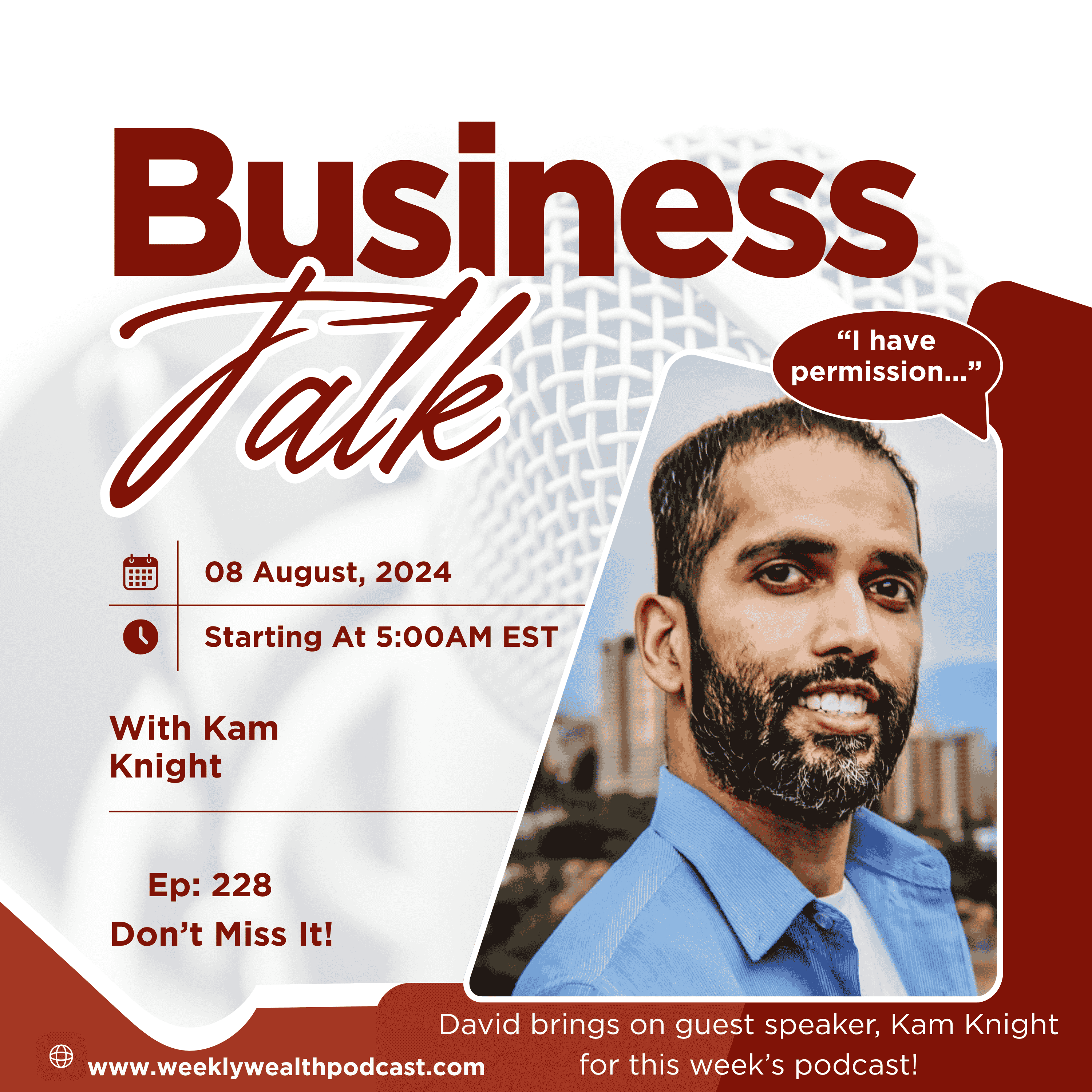
S1 Ep 228Ep 228: Rewiring Your Mindset for Wealth and Worthiness – with Kam Knight
Contact David via email [email protected] your VALUE BUILDER SCORE www.weeklywealthpodcast.com/valuebuilderscoreSchedule your 10-minute VISION CALLIn this episode of The Weekly Wealth Podcast, host and Certified Financial Planner David Chudyk welcomes personal development author and mindset coach Kam Knight to dive deep into the psychology of self-worth, resistance, internal dialogue, and financial growth.🔑 Key Topics Covered:Why internal resistance grows when your desires grow—and how to reduce itThe real reason many people sabotage financial opportunitiesPowerful mindset programming techniques for wealth and successThe “Three Statements” Kam gives to his clients to unlock self-worth and productivityHow affirmations and mental reconditioning can eliminate procrastination and create abundanceThe connection between emotional permission and financial success🧠 Kam’s Core Self-Talk Statements:“I deserve.”“I have permission.”“I am having good things.”Kam explains how these seemingly simple affirmations create subconscious permission to take action, earn more, and live a more prosperous life.📚 Bonus Content:At the end of the episode, David shares a list of essential books to help reinforce a success-oriented mindset, including:As a Man Thinketh by James AllenThink and Grow Rich by Napoleon HillAtomic Habits by James Clear…and of course, Kam Knight’s own powerful works on mindset, memory, and focus.🔗 Resources Mentioned:Kam Knight’s Books on AmazonThe Weekly Wealth Podcast Facebook Group – Join the conversation and share your favorite mindset books!
S1 Ep 227Ep 227: Lessons from Hulk Hogan, Theo Huxtable, Ozzy, and Ryne Sandburg
🔗 Resources and Links:10-Minute Wealth Vision Call: WeeklyWealthPodcast.com/vision – Quick, no-pressure financial clarity session.Business Value Builder Score: WeeklyWealthPodcast.com/valuebuilder – Find out how sellable your business is and how to increase its value.Join the Conversation: Weekly Wealth Podcast Facebook Group – Share your thoughts and get accountability on updating your estate plan. What You’ll Learn in This Episode:Why Estate Planning Matters – Key components every plan should include to protect your loved ones and your wealth.Beneficiary Designations – How simple oversights can push your assets into probate and delay inheritance for your heirs.Powers of Attorney Explained – The critical role of financial and medical POAs in incapacity situations.Business Owner Planning – Buy-sell agreements, key person insurance, and succession strategies to keep businesses running smoothly after an owner’s death.Maintaining Privacy – Tools like revocable living trusts and beneficiary designations to avoid public probate proceedings.Celebrity Estate Planning Mistakes – Real-life lessons from Prince, Aretha Franklin, James Gandolfini, Howard Hughes, Heath Ledger, and others.📈 Bonus Strategy:Lifetime Gifting – How gifting assets while alive can reduce estate taxes, simplify probate, and allow you to see loved ones benefit from your generosity now.
S1 Ep 226Ep 226: Budgetting is a bad word, money psychology, and the worst kinds of financial advice
Don't forget to share this episode with a friend, family member, colleague, or co-worker. Learn more about David by listening to episode 215: Who is David Chudyk and what does he do? <-- Click here to listen!In this powerful episode of The Weekly Wealth Podcast, Certified Financial Planner David Chudyk pulls back the curtain on why traditional budgeting advice often fails—and how a smarter, psychology-driven approach to spending can lead to long-term wealth.This week’s episode covers three high-impact financial topics:🧠 1. The Psychology of SpendingWhy do we overspend—even when we know better?Learn how your brain tricks you into spending and how you can fight back using:Dopamine control hacks (like the 48-hour rule)Emotional spending triggers to watch out forThe “Would I buy this twice?” litmus testThe impact of comparison culture and social media envy💰 2. Why Budgeting Often Fails (and How to Fix It)Let’s stop calling it a budget—and start building a Spending Plan.David breaks down:Why most high-income earners still struggle with cash flowThe importance of financial margin and how to create itReal-life examples of poor spending habits—even among the wealthyHow to align your expenses with your actual financial goals🚫 3. The Worst Financial Advice Out ThereYou won’t believe some of the terrible advice David’s clients have received!From half-baked Roth conversion ideas to TikTok influencers pushing risky schemes, you’ll hear:The difference between a product pusher and a true fiduciaryWhy “broke friends” shouldn’t be your financial role modelsHow to vet advice—even if it’s from someone you trustRed flags in annuity, insurance, and investment sales pitches🎧 Whether you’re just starting to get control of your spending or you’re a high earner feeling like money slips through your fingers, this episode will challenge your mindset, sharpen your strategy, and help you make better money decisions.🔥 Bonus Hack:Don’t forget to include money for FUN in your spending plan! Financial freedom includes joy—just make sure it fits your financial reality.👉 Liked the episode?Share it with a friend, colleague, or family member. We’re building a tribe of financially empowered listeners, and your share helps us grow!📲 Follow us on Instagram: @weekly_wealth_podcast📺 Watch episodes on YouTube: @theweeklywealthpodcast🌐 Learn more at: www.weeklywealthpodcast.com 🎤 Hosted by David Chudyk, CFP® — Helping high earners, business owners, and the mass affluent make smarter financial decisions and build true wealth.
S1 Ep 225Ep 225: RICH
📩 Let’s Connect!We want to hear from you! Join the discussion in the Weekly Wealth Podcast Facebook Group or email David directly at [email protected] with your thoughts on what being rich means to you.📞 Ready for Clarity?If you're a high earner or business owner and want help taking the next smart step in your financial life, book a free 10-Minute Wealth Vision Call with David today—no pressure, just clarity.📢 Help Us Grow!If you found value in this episode, please share it with a friend, colleague, or family member. Text them a link and say, "I think you'd enjoy this—it's changed the way I think about money."💰 Episode OverviewWhat does it really mean to be rich? In this thought-provoking solo episode, David Chudyk, Certified Financial Planner and founder of Chudyk Financial Services, dives deep into both the quantitative and qualitative aspects of wealth.From net worth benchmarks and income thresholds to real-life examples and pop culture case studies, this episode explores how financial success is about more than just numbers. It’s about freedom, intentionality, and making decisions that improve your life—and the lives of those around you.📌 Topics CoveredIRS and Federal Reserve stats: Who qualifies as top 10%, 5%, and 1% in income and net worth?The Schwab Wealth Survey: What Americans think it takes to be considered wealthyWhy no podcast guest has ever defined wealth in dollarsFreedom vs. income: Why the highest earners don’t always have the best livesReal stories of people who are “rich” in different waysHard choices: Delayed gratification vs. financial insecurity in retirementSmart money behaviors of the truly wealthyStrategic investing and building multiple income streamsThe importance of risk management for wealth preservationSelf-reflection: Is your money helping or hurting your life?🧠 Key TakeawaysBeing rich isn't just about money—it's about freedom, flexibility, and peace of mind.Living below your means and avoiding lifestyle creep is one of the simplest paths to long-term wealth.Financial margin = power—those who can weather a storm without tapping into investments are in control.Risk management matters: Insure against the catastrophic, plan for the unexpected, and protect what you've built.Smart people ask for help: Wealthy individuals often lean on trusted professionals for advice and strategy.🧭 Self-Reflection QuestionAre your current financial decisions improving your life and the lives of those around you—or are they just growing your account balances without real meaning?

S1 Ep 224Episode 224: Breaking Down the Big Beautiful Bill: What You Need to Know
As always, please contact me to connect. Whether it's to chat about this week's podcast episode or anything else on your mind: David's CalendarTakeaways: The Big Beautiful Bill is a massive 900-page law that includes tax reforms and spending changes. One major change is the extension of the 2017 tax cuts for individuals, which helps many taxpayers. Seniors will benefit from an additional $6,000 exemption, providing them with more tax relief. Another key point is the introduction of a tax credit for contributions to scholarship organizations. The standard deduction has increased by 10%, making it easier for many to reduce their taxable income. It's crucial to consult with a CPA for tax planning to maximize benefits from the new law. Links referenced in this episode:weeklywealthpodcast.comdavidarallelfinancial.comcalendly.cominstagram.comyoutube.comfacebook.com1weeklywealthpodcast.com

S1 Ep 223EP 223: Freedom Isn't Free: Smart Strategies for Financial Independence
In celebration of Independence Day, this episode dives into a different kind of freedom—financial freedom. David Chudyk, Certified Financial Planner, shares powerful insights on what financial independence truly means for high earners, business owners, and the mass affluent.Spoiler: It’s not just about having a big income—it’s about creating financial margin, controlling your time, and building true wealth.💥 What You’ll Learn:Why 66% of high earners still live paycheck to paycheckThe definition of financial margin and why it's the fuel for freedomHow to spot and stop lifestyle creep before it sabotages your wealthWhy business owners need an exit plan and diversified assetsThe difference between building wealth vs. buying stuffWhy you need investments outside of retirement accountsThe 5-part Declaration of Financial Freedom🧨 David’s Declaration of Financial Freedom:I will grow my financial margin.I will resist lifestyle creep.I will invest in assets that build freedom.I will create a financial vision aligned with my values.I will buy back my time.🧠 BONUS: Snowball Method ExplainedDavid shares a simple and motivating strategy to get out of debt using the snowball method, perfect for anyone ready to crush financial obligations and gain momentum on the path to independence.🎯 Want to Build Your Financial Vision?📞 Schedule your 10 Minute Wealth Vision Call today:👉 www.weeklywealthpodcast.com/visionThis no-pressure Zoom call is designed to bring you clarity, confidence, and direction.📊 Are You a Business Owner?Take the free Value Builder Score assessment to start planning your ideal exit:👉 www.weeklywealthpodcast.com/valuebuilderscore💬 Connect with Us:📸 Instagram: @weekly_wealth_podcast▶️ YouTube: The Weekly Wealth Podcast💬 Facebook Group: Link in bio/show notes
S1 Ep 222Ep 222: Aleatory, Umbrellas & Other Weird Insurance Terms That Actually Matter
💡 Episode SummaryWe all love talking about growing our money—stocks, ETFs, crypto, and dividends. But what about protecting what we've already worked so hard to earn?In this episode, Certified Financial Planner and property & casualty agency owner David Chudyk dives deep into one of the most overlooked, least "sexy"—but absolutely essential—tools in your financial toolkit: property and casualty insurance. Whether you're a homeowner, a driver, or a business owner, understanding this coverage can protect your financial future in a big way.🧠 What You'll Learn✅ What is Property & Casualty Insurance?A simple breakdown of what it covers—and why you need both sides of the equation.✅ Aleatory Contracts ExplainedDiscover why insurance is not like buying a T-shirt and what that means for your premiums.✅ How Insurance Rates Are CalculatedUnpack the "insurance math" behind your home and auto premiums—what’s in your control and what’s not.✅ Common (and Costly) Insurance MistakesDavid outlines real-world scenarios where people unknowingly void their policies or risk financial ruin.✅ How to Read Your Policy Like a ProLearn the importance of policy exclusions, deductibles, declarations pages, and more.✅ Why “Full Coverage” Doesn’t ExistAnd why your agent should never use that term.✅ The Power of Liability Limits and Umbrella PoliciesProtect your nest egg by going beyond the state minimums.🎧 Listen to our episode on personal liability umbrellas📣 Resources & Links Mentioned🔗 Book your 10-Minute Wealth Vision Call – Get quick clarity on your biggest financial question📱 Follow us on Instagram – For wealth-building tips, mindset strategies, and podcast clips👥 Join our Facebook Group – Ask your questions, share your wins, and connect with fellow listeners🎥 Watch on YouTube – Quick, helpful financial videos for real people🎯 Action StepsTake 5 minutes to review your home and auto insurance policies. Do you know your deductibles? Your exclusions?Schedule a review with a qualified independent insurance agent.Ask your agent about umbrella liability coverage if you don’t already have it.DM David on Instagram or leave a voice message via the podcast website with your insurance questions.🔊 Episode Quote“Insurance isn’t sexy—but it protects everything else you’ve worked so hard for. It’s not about paperwork—it’s about peace of mind.” – David Chudyk🎧 Listen & SubscribeNever miss an episode that helps you build true wealth—financially, mentally, and emotionally.👉 Apple Podcasts👉 Spotify👉 YouTube👉 Visit our Website

S1 Ep 221Ep 221: Finding Your Voice in a Crowded Market with Munira Zahabi, The Niche Navigator
🎧 EPISODE SUMMARY:In this episode of The Weekly Wealth Podcast, host David Chudyk sits down with Munira Zahabi—consultant, author, podcast host, and the renowned Niche Navigator. They explore what it really takes to stand out in today’s noisy marketplace and how giving your business a voice can dramatically shift your visibility and profitability.Whether you’re an entrepreneur feeling unseen or just looking for smarter ways to market yourself, this conversation is packed with real talk, personal stories, and actionable strategies to help you grow with purpose.You’ll learn:What it means to give your business a “voice” (and how to do it right)How being a podcast guest can attract your ideal clientsWhy repetition of your core message = powerful brandingWhy so many business owners feel invisible—and how to fix itThe mindset shifts needed to step into your authority🔥 CALL TO ACTION:🎯 Ready to get clear on your financial direction?👉 VISIT www.weeklywealthpodcast.com/vision to schedule your 10 Minute Wealth Vision Call—a quick, no-pressure Zoom chat to gain financial clarity and take one step closer to your goals.🔗 RESOURCES & LINKS MENTIONED:🌐 Connect with Munira Zahabi at: www.thenichenavigator.com📕 Check out her book Invisible No More on Amazon. CLICK HERE 📩 CLICK HERE to contact Munira via the "Contact" tab on her website to schedule a free 30-minute consult🎙️ Watch David’s appearance on Munira’s Musings:https://www.youtube.com/watch?v=PSkYTEa1OiQ📱 CONNECT WITH US ON SOCIAL MEDIA:Stay connected with The Weekly Wealth Podcast and join the conversation:Instagram → @weeklywealthpodcastYouTube → Weekly Wealth Podcast ChannelFacebook → Weekly Wealth Podcast Community💬 QUOTE FROM THE EPISODE:“If you’re not talking about your business, you’re not giving it a voice. And if your business has no voice, it’s invisible.”

S1 Ep 220Ep 220: Business Ownership: Hard Yes. Worth It? Also Yes.
🔑 Episode SummaryIn Episode 220 of The Weekly Wealth Podcast, David Chudyk flips the script from last week’s focus on business challenges to highlight the powerful benefits of entrepreneurship. From unlimited income and legacy-building to personal growth and purpose, this episode is your reminder of why business ownership is one of the most rewarding journeys you can take — financially and personally.🧠 What You’ll LearnThe true upside of owning a business (hint: it's not just money)How business ownership unlocks the 4 Freedoms: time, money, relationships, and purposeWhy your business is your most valuable appreciating assetHow to reverse engineer your ideal life and build your business to fund itWhy personal growth as a business owner creates unstoppable resilienceThe real meaning of generational wealth — and how your business can be the key💬 Quote of the Episode“Let’s make the world a better place by how we handle our money.” — David Chudyk🎯 Action StepTry this: Forward this episode to 5 business owners or friends who could use a reminder that their entrepreneurial journey is worth it. Help us grow the tribe of purpose-driven business leaders.📺 Watch on YouTube🎥 Watch the full episode on YouTube: @theweeklywealthpodcast🔔 Like, comment, and subscribe to stay in the loop!🛠 Resources & Links📊 Take the Value Builder Score → www.weeklywealthpodcast.com/valuebuilderscore📅 Book your free 10-Minute Wealth Vision Call → www.weeklywealthpodcast.com/vision📞 Stay Connected with David Chudyk🔗 Website: www.weeklywealthpodcast.com📸 Instagram: @weeklywealthpodcast📺 YouTube: @theweeklywealthpodcast💼 Facebook Group: Search “Weekly Wealth Podcast”📩 Email: [email protected]🙌 Help Us Spread the Message✅ Forward this episode to 5 business owners⭐ Leave a quick review on Apple or Spotify📲 Share your thoughts on Instagram and tag @weeklywealthpodcast🎯 Hashtag: #WeeklyWealthPodcast
S1 Ep 219Ep 219: Owning a business is hard
🔑 Episode SummaryIn this episode of The Weekly Wealth Podcast, David Chudyk gets real with business owners — from startup entrepreneurs to seven-figure professionals — and shares the six most common mistakes that sabotage business success and financial peace. This is a must-listen if you want to run a more profitable, less stressful business and finally build lasting wealth.🧠 What You’ll LearnWhy treating your business bank account like a personal ATM leads to disasterHow not knowing your numbers is killing your profitWhy you’re probably undercharging — and what to do about itHow niche focus and diversified income create long-term sustainabilityThe danger of over-reliance on a single client, platform, or employeeWhat subscription models can teach you about cash flow consistency💬 Quote of the Episode"Profit isn’t a bad word — it’s the fuel that lets your business improve lives." — David Chudyk🎯 Action StepTry this: Review your pricing model, track your actual expenses this month, and email David at [email protected] to talk about how a fractional CFO could help your business grow.📺 Watch the Full Episode on YouTubeWant to see the visuals or prefer watching?📲 Subscribe to our YouTube channel: @theweeklywealthpodcast🔔 Don’t forget to like and hit the bell for future episodes!🛠 Resources & Links Mentioned📘 Download the free eBook: The Subscription Economy – 9 Models Any Business Can Use → www.weeklywealthpodcast.com/subscriptioneconomy🧮 Take the Value Builder Assessment → www.weeklywealthpodcast.com/valuebuilderscore📅 Book a 5-minute discovery call with David → [Insert link]📞 Stay Connected with David Chudyk🔗 Website: www.weeklywealthpodcast.com📸 Instagram: @weeklywealthpodcast🎧 Listen to more episodes → https://podcasts.apple.com/us/podcast/the-weekly-wealth-podcast/id1506823732🧠 Want David as your personal CFO? www.calendly.com/davidpf🙌 If You Found This Valuable✅ Share the episode with a friend or business owner⭐ Leave a quick review on Apple or Spotify📲 Tag @weeklywealthpodcast on Instagram🎯 Hashtag: #WeeklyWealthPodcast

S1 Ep 218Episode 218: Financial Reality Check: Learning from Tommy Paul
As always, you can email me at [email protected] to connect. Takeaways: Making a lot of money doesn't mean you won't face financial struggles down the road. Many high earners face unexpected financial issues despite their wealth and earnings. It's important to manage your spending wisely, regardless of how much you earn. Impulse buying can lead to regret and financial instability, so be mindful of spending. Regular financial check-ins can help keep your money situation in check and prevent issues. Even busy people must confront their financial realities to avoid future problems. Links referenced in this episode:weeklywealthpodcast.comcelebritynetworth.comdavidarallelfinancial.comweeklywealthpodcastinstagram.com/WeeklyWealthPodcastyoutube.com/WeeklyWealthPodcastfacebook.com/WeeklyWealthPodcastCompanies mentioned in this episode: Yahoo Sports Ford CelebrityNetWorth.com Parallel Financial Reebok

S1 Ep 217Episode 217: The End of Two Eras
[email protected] if you would like to connect on any matter. Takeaways: We learned that enjoying the journey in life is as important as the destination. Witnessing our kids grow through sports has taught us invaluable life lessons. Human nature leads us to focus on negatives; we should aim for a balanced view. Developing a strong network while in college can greatly impact future career opportunities. Sports and college experiences teach us resilience, helping us navigate life's ups and downs. Friendships built during these eras enrich our lives and help us grow together. Links referenced in this episode:weeklywealthpodcast.com
S1 Ep 216Ep 216: From Job to Asset: Transform Your Business Mindset
Email [email protected] Download the free ebook www.weeklywealthpodcast.com/subscriptioneconomyInstagram YoutubeTakeaways: Small business owners face unique financial challenges that require careful planning and strategy. Managing personal and business finances simultaneously can be overwhelming for many business owners. Establishing strong financial habits is essential for business owners to achieve long-term success. Creating a retirement plan can help attract talent and ensure personal financial security for business owners. Recurring revenue models can significantly enhance the financial stability of a business over time. Utilizing resources like PEOs can provide small businesses with HR and insurance support they might lack. Mentioned in this episode:Weekly Wealth Website
S1 Ep 215Ep 215: Who is David Chudyk and what does he do?
Don't forget to email [email protected] www.weeklywealthpodcast.com/valuebuilderscoreInstagram(88) The Weekly Wealth Podcast - YouTube In this episode, I share what my financial planning practice does to help clients succeed. I emphasize the importance of understanding each client's unique financial goals and needs. Financial planning is about more than just investments; it includes tax planning and risk management. I explain the seven-step financial planning process that guides my work with clients effectively. I highlight how accountability plays a key role in achieving financial goals for my clients. We discuss the importance of having accurate financial statements to make informed decisions. Mentioned in this episode:Inside the Mind of an AquirerWeekly Wealth Website

S1 Ep 214Episode 214: From Employee to Entrepreneur: Key Considerations
Please email me, David Chudyk, with any questions, or if you just want to connect: [email protected] Takeaways: Freelancers and independent contractors have more control over their work compared to employees. It's important to remember that freelance income is subject to self-employment taxes, unlike W2 income. Planning for irregular cash flow is crucial for freelancers and independent contractors. Independent contractors can deduct business expenses, which can lower their taxable income significantly. Having a good relationship with a tax professional is essential for managing freelance income. Freelancers must handle their own training and professional development expenses, which can add up. Links referenced in this episode:www.allofmyassets.comdavid@parallelfinancial.comwww.weeklywealthpodcast.com Mentioned in this episode:Inside the Mind of an AquirerWeekly Wealth Website

S1 Ep 213Episode 213 - Diving into Asset Classes: What You Need to Know
Email David Chudyk at [email protected] with your questions. Takeaways: In 2025, stock market volatility is a big deal, and we're here to help you make solid financial choices. Understanding different asset classes can empower you to build a stronger investment portfolio. Stocks can be great for long-term value, but they come with market risks and emotional challenges. Bonds are usually more stable than stocks, but they might offer lower returns over time. Real estate offers passive income and tax benefits, but requires careful management and can be illiquid. Cryptocurrency is the new frontier of investment, with huge potential but also extreme volatility and regulatory uncertainty. Links referenced in this episode:weeklywealthpodcast.comyoutube.cominstagram.comfacebook.comCompanies mentioned in this episode: Apple CNBC Federal Deposit Insurance Corporation Parallel Financial

S1 Ep 212EP 212: Space Whiskey and Business Wisdom: A Chat with Adam Anderson
Get your Personal Financial Balance sheet at www.weeklywealthpodcast.com/balancesheetEmail [email protected] with your questions.Reach Adam Anderson on Linkedin 🚀Adam Anderson | LinkedInTakeaways: In this episode, we dive into the exciting concept of space whiskey and its potential market. Adam shares his journey of transitioning from a CEO to focusing on his entrepreneurial passions in space. We discuss the unique challenges and opportunities of aging whiskey in space using sound waves. The podcast covers how community and networking play a crucial role in entrepreneurial success. We explore the importance of having a solid sales process when stepping back from direct sales. Adam emphasizes the need for entrepreneurial resilience and adapting to challenges in business. Links referenced in this episode:threatcaptain.comlinkedin.com/in/adamandersonceoCompanies mentioned in this episode: Fire Forge Brewer Wall Street Greenville NASA Richard Branson Necker island Threat Captain Mentioned in this episode:Inside the Mind of an AquirerWeekly Wealth WebsiteInside the Mind of an AquirerWeekly Wealth Website

S1 Ep 211Episode 211: Trump's Tariffs: Who's Paying the Price (and Who's Going Broke?)
Make sure to email David Chudyk with your questions, [email protected]: In this episode, we discussed how tariffs are taxes on imported goods that affect prices. We explored the history of tariffs in the U.S. and their impact on the economy since 1789. The pros and cons of tariffs were examined, including their effects on domestic industries and consumer prices. We talked about the potential consequences of recent tariffs, including increased costs for consumers and trade tensions. The idea that our businesses are designed to give us current results was emphasized and discussed. Finally, we encouraged listeners to think critically about tariffs and their broader economic implications. Links referenced in this episode:www.parallelfinancial.com instagram.com/weeklywealthpodcastMentioned in this episode:Weekly Wealth Website

S1 Ep 210Episode 210: Understanding the Market: Your Guide to Smart Investing
Make sure to email David Chudyk with your questions, [email protected] Takeaways: In investing, there is never a perfect time to start; it's always a bit scary. Being informed about investment terms helps you make smarter financial decisions over time. Market conditions fluctuate, so your investments may not reflect the overall market trends. Understanding metrics like alpha and beta can empower you to evaluate your investments better. The S&P 500 is a popular index, but not all investments follow it equally in performance. Professional financial management adds accountability and systematic decision-making to your investment strategy. Links referenced in this episode:www.weeklywealthpodcast.comMentioned in this episode:Inside the Mind of an AquirerWeekly Wealth Website
S1 Ep 209Ep 209: Copywriting and Comedy: The Perfect Duo for Your Business
Make sure to email David Chudyk with your question [email protected] can find out more about Jill Pavlov by visiting her website copy-pop.comTakeaways: We had our first comedian guest, Jill Pavlov, who brings humor to serious topics. This episode dives into how copywriting can enhance your business strategy effectively. Jill shared her journey in comedy and how laughter serves as a coping mechanism. We discussed the importance of understanding financial tools like credit cards to avoid costly mistakes. The conversation highlighted how humor can bridge tough financial discussions with clients. We emphasized the value of outsourcing tasks like copywriting to focus on business growth. Mentioned in this episode:Weekly Wealth Website
S1 Ep 208Ep 208: Market Volatility 101: Essential Questions for Smart Investors
Make sure to email [email protected] us on Instagram Join our FACEBOOK GROUPTakeaways: In times of stock market volatility, it's important to ask how it impacts your personal financial situation. Consider potential opportunities in the market; downturns can lead to undervalued assets worth investing in. Diversification is key; make sure your investments are not overly concentrated in one area or asset class. Evaluate your investment time horizon; long-term investors might tolerate short-term volatility better than short-term ones. Have a solid investment strategy that aligns with your goals and avoid impulsive decisions based on trends. Your financial habits should reflect your long-term goals; prioritize needs over wants to reduce stress. Mentioned in this episode:Weekly Wealth Website

S1 Ep 207Episode 207: Trump's Tariffs and Stock Market Woes: What You Need to Know
Email [email protected] with any questions. CLICK HERE TO GET YOUR VALUE BUILDER SCORETakeaways: In this episode, we discuss how recent stock market volatility is affecting investors' emotions and financial decisions. We emphasize the importance of having different buckets of money for short-term and long-term investments to manage risks better. The podcast covers financial instruments like indexed annuities and buffered ETFs that can help protect against market downturns. We talk about the significance of maintaining adequate cash reserves, especially for those nearing retirement, to weather financial storms. We explore the impact of political events, like potential tariffs and their effects on market stability, to understand broader economic trends. Links referenced in this episode:facebook.com/[email protected] Mentioned in this episode:Inside the Mind of an AquirerWeekly Wealth Website
S1 Ep 206Ep: 206 Trina's Journey: From Barista to Business Boss
Email [email protected] with any questions Don't forget to get your valuebuilder score by visiting www.weeklywealthpodcast.com/valuebuilderscorePlease connect with Trina Julian by going to:trinajulian.comtrinajulian.com/newslettertrinajulian.com/instagramTakeaways: This episode dives into how business owners can improve profitability and automate operations. Trina Julian shares her journey of building and selling her landscaping business successfully. Building a business requires systems and processes that can operate without constant oversight. It's essential for business owners to let go of perfectionism and delegate tasks effectively. The right mindset can help entrepreneurs justify their need for freedom and balance in work-life. Creating relationships with clients is key to retaining business and ensuring customer satisfaction. Mentioned in this episode:Weekly Wealth Website
S1 Ep 205Ep. 205: Leadership Skills that Can Boost Your Business
As always, make sure to email [email protected] with any questions. Don't forget to get your VALUEBUILDER SCORE at www.weeklywealthpodcast.com/valuebuilderscore Leadership is a skill that can be improved with practice, just like any other skill. Great leaders show vulnerability and admit their shortcomings to their teams regularly. Leaders should lead by example, demonstrating the behaviors they want to see in their teams. Defining success clearly for your organization is essential to align team efforts effectively. Providing recognition for both big and small accomplishments fosters a positive team culture. Effective communication skills are vital for a leader's influence and earning potential. Mentioned in this episode:Weekly Wealth Website
S1 Ep 204Ep 204: Dive into Wealth Strategies with David Steele
As always, email [email protected] with any questions and get your value builder score at www.weeklywealthpodcast.com/valuebuilderscoreLearn more about David Steele by visiting https://davidsteel.xyz/Takeaways: In this episode, we dive into the principles of business success with David Steele, who is a seasoned entrepreneur. David Steele shares how his journey blends finance, creativity, and philanthropy to build sustainable wealth. The conversation emphasizes the importance of making financial decisions based on facts rather than assumptions or feelings. Successful entrepreneurs need to focus on building generational businesses instead of chasing quick exits for financial gain. We discuss how essential it is for business owners to delegate tasks effectively to scale their operations without micromanaging. David highlights the importance of having a solid financial foundation before venturing into entrepreneurship, ensuring personal stability. Links referenced in this episode:davidsteel.xyzMentioned in this episode:Weekly Wealth Website

S1 Ep 203Think Before You Click: Navigating Financial Advice on Social Media
Email [email protected]'t forget to visit www.weeklywealthpodcast.comJoin our FACEBOOK GROUPSchedule your time with David at www.calendly.com/davidpfTakeaways: Social media can be a source of misleading financial advice, so be cautious. Understand the motivation behind financial influencers, as they often promote their own products. 401(k) plans can be beneficial, especially with employer matches and Roth options available. Not all financial advice is suitable for everyone; it's important to assess personal circumstances. Be wary of bold claims made by influencers that may not reflect reality. Consult a certified financial planner to create a customized financial roadmap tailored to your goals. www.weeklywealthpodcast.comMentioned in this episode:Weekly Wealth Website

S1 Ep 202Ep 202...The Wealth Blueprint: Advanced Techniques for Financial Success
Email [email protected] Join us on Facebook Takeaways: Understanding basic financial planning is crucial before diving into advanced strategies. Tax mitigation strategies such as state tax credits can significantly reduce your tax burden. Participating in tax credit funds requires accredited investor status and can offer substantial savings. Utilizing 1031 exchanges allows for deferring capital gains taxes on real estate investments. Cost segregation studies can accelerate depreciation deductions, increasing cash flow for investors. Private market investments provide opportunities for diversification but come with higher risks and illiquidity. Links referenced in this episode:www.weeklywealthpodcast.comdavidarallelfinancial.com

S1 Ep 201Ep 201: High Net Worth Financial Fundamentals
Contact David via email [email protected] Don't forget to visit www.weeklywealthpodcast.com Takeaways: Mastering financial basics is crucial for long-term success, just like athletes rely on fundamentals. Establishing an emergency fund of six to twelve months of expenses reduces financial stress. Understanding your investment risk tolerance is essential for aligning your portfolio with your goals. Consistently reviewing your insurance coverage helps protect your financial assets from unexpected events. Clarifying your money philosophy with family can guide better financial decisions in the future. Regularly check your beneficiary designations to ensure they align with your current wishes. #financialbasics #highnetworth #investing #personalfinance #weeklywealthpodcast #financialgoals #massaffluent #riskmanagement #financialstress

S1 Ep 200Ep 200: Behind the Microphone: My Story and the Future of the Weekly Wealth Podcast
Email [email protected] with any questions or suggestions for topics.www.weeklywealthpodcast.comwww.weeklywealthpodcast.com/valuebuilderscoreMAIN TAKEAWAYS FROM THIS WEEK'S EPISODE: Reaching 200 episodes of the weekly Wealth Podcast is a rare achievement in podcasting. David Chudyk shares his journey from financial services representative to wealth management professional. The podcast aims to help mass affluent individuals improve their financial lives and understanding. David discusses his focus on business owners, high net worth individuals, and average persons. Financial planning is essential for business owners, who face unique financial challenges and decisions. The podcast will continue to provide diverse content for various audiences, including guests and experts.
S1 Ep 199Unlocking Success in 2025: Ditch Resolutions for Real Change
Email [email protected] with any questionsVisit www.weeklywealthpodcast.com/endgame to get your FREE copy of the book END GAME.Leave your comments or questions at www.weeklywealthpodcast.com/voicemaiTakeaways: New Year's resolutions often fail, with 80% abandoned by mid-February each year. Instead of resolutions, consider identity changes that align with your financial goals. To achieve financial success, focus on daily habits rather than just on end goals. Building wealth requires a mindset shift; think and act like financially secure individuals. Successful people track their finances and understand their spending habits regularly. Generosity and giving back can significantly enhance your financial and personal well-being. Links referenced in this episode:www.weeklywealthpodcast.comwww.weeklywealthpodcast.comendgamewww.weeklywealthpodcast.com>> The discussion surrounding New Year’s resolutions takes center stage as David Chudyk marks the beginning of 2025 with a thought-provoking analysis of why these resolutions often fail. He cites troubling statistics indicating that a significant number of individuals abandon their goals shortly after the New Year, prompting an exploration of the underlying reasons for this trend. Rather than simply dismissing resolutions as ineffective, Chudyk invites listeners to reconsider their approach by shifting their focus from the goals themselves to the mindset and identity that drive their behavior. Chudyk posits that many people enter the New Year with high hopes for change, but the resolutions they set are often too broad or unrealistic. Instead of saying, “I want to be fit” or “I want to save more money,” he suggests that individuals adopt an identity-based approach: “I am a healthy person” or “I am financially savvy.” This kind of identity shift encourages individuals to engage in daily actions that are consistent with their desired self-image, making it easier to cultivate behaviors that lead to successful outcomes. Through practical examples, Chudyk illustrates how he has applied this identity approach in his own life and encourages listeners to critically assess their self-descriptions and beliefs.Moreover, the episode delves into the significance of establishing sustainable habits and systems that support long-term goals. Chudyk emphasizes that while setting ambitious resolutions can be energizing, it is the small, consistent actions that ultimately lead to success. He shares insights on effective financial practices, the importance of enjoying one’s money, and the transformative power of generosity. By fostering a mindset of abundance and accountability, listeners are empowered to take proactive steps toward achieving their aspirations. This comprehensive approach to personal development offers a refreshing perspective on goal-setting, encouraging individuals to embrace their desired identities and craft a fulfilling and prosperous 2025.
S1 Ep 19824 Lessons Learned in 2024: A Year-End Reflection
Make sure to visit www.weeklywealthpodcast.com Email [email protected] Leave a message or comment at www.weeklywealthpodcast.com/voicemailAs we reflect on the past year, it's crucial to recognize the valuable lessons we've learned that can guide us into the future. This episode highlights 24 key insights from 2024, emphasizing the importance of maintaining a long-term perspective on finances and the necessity of having financial margins to reduce stress. Join me as we delve into these lessons to inspire a prosperous and fulfilling year ahead.Takeaways: Our health is precious, and we should actively work to optimize it. Creating financial margin can significantly reduce stress and prepare you for unexpected expenses. Excellence in your work is the best sales tool; prioritize quality and integrity over flashy tactics. It's essential to maintain a long-term perspective on investments, even during market fluctuations. Consistent small efforts in health and finances lead to significant results over time. Being generous not only helps others but enriches our own lives, so give freely. #lessonsof2024 #lowcarb #carnivore #accountability #goals #excellence #financialtips #health #weightloss #stockmarkets #optimize #weeklywealthpodcast
S1 Ep 197Ep 197: Maximize Your Wealth: Year-End Financial Planning
Year-End Financial Planning for High Net Worth IndividualsIn this episode, David Chudyk, a Certifed Financial Planner(tm) practitioner with Parallel Financial, discusses various financial planning strategies for high net worth and mass affluent individuals as the year comes to a close. He covers topics such as holiday spending plans, Roth IRA conversions, charitable giving, asset allocation reviews, business expense preparations, and end-of-year financial checks. Additionally, David emphasizes the benefits of performing a 'happiness audit' on spending, practicing random acts of kindness, and teaching children about money. Listeners are encouraged to reach out with questions or to consider working with David for personalized financial advice.00:00 Introduction and Podcast Overview01:34 Holiday Spending Plans03:09 Understanding Roth Conversions05:18 Charitable Giving Strategies08:57 Year-End Investment Check-Up10:43 Business Owner Year-End Tips13:40 Non-Traditional Financial Planning16:36 Conclusion and Contact Information
S1 Ep 196Thanksgiving Reflections: What We're Grateful For in 2024
Don't forget to visit www.weeklywealthpodcast.comEmail David at [email protected] a Great Thanksgiving!David Chudyk shares a heartfelt Thanksgiving episode of the Weekly Wealth Podcast, emphasizing the importance of being purposefully thankful every day. He reflects on personal gratitude, including celebrating 25 years of marriage, improved health, and the accomplishments of his children. To deepen the theme of thankfulness, David invites friends, colleagues, and clients to share what they are thankful for, creating a rich tapestry of gratitude that underscores the significance of connection and support in our lives. The episode serves as a reminder to appreciate the blessings we have, whether they be family, health, or community. With moving reflections from various contributors, this episode encourages listeners to express their gratitude and cherish the moments that matter most.Thanksgiving serves as a backdrop for this heartwarming episode of the Weekly Wealth Podcast, where host David Chudyk delves into the significance of gratitude in our daily lives. He articulates how being purposefully thankful can transform perspectives and foster a sense of contentment. David shares personal stories from his family life, particularly the tradition of playing the 'thankful game' with his children, which has instilled in them a lasting appreciation for even the simplest joys. This practice, he argues, is not just a family bonding activity but a crucial element in building a prosperous mindset that can influence one's financial decisions and overall wealth management.Throughout the episode, David reflects on the many blessings he has experienced over the past year. Highlighting his 25-year marriage to his wife Jill, significant health improvements through dietary changes, and the academic achievements of his children, he paints a picture of a fulfilling and grateful life. These personal anecdotes serve to remind listeners of the importance of recognizing and celebrating successes, both big and small. David also expresses gratitude for the supportive network surrounding his wealth management practice, emphasizing that a strong team is vital for both personal and professional growth.The episode takes an engaging turn as David invites friends, colleagues, and clients to share their own expressions of gratitude. This segment features a variety of voices, each reflecting on what they are thankful for, from family and health to community support and personal achievements. The diverse contributions create a rich, communal atmosphere that underscores the episode's central theme: gratitude is a powerful force that connects us all. David encourages listeners to not only reflect on their own blessings but also to articulate their thankfulness to those around them, reinforcing the podcast's message of connection and appreciation during the holiday season.Takeaways: David emphasizes the importance of practicing gratitude daily, not just during Thanksgiving. He shares personal reflections on family, health, and the joy of togetherness. Listeners contribute their own thankful messages, showcasing diverse reasons for gratitude. Chudyk highlights the significance of community support during challenging times. He believes that expressing gratitude can enhance our overall mindset and well-being. The podcast encourages everyone to recognize and appreciate the good in their lives.
S1 Ep 195Episode 195 - Financial Faux Pas: 7 Steps to Ensure You Stay Broke
Email [email protected] with any questionsFollow us on Instagram!Like us on Facebook!Schedule a time to meet!This week's episode of the Weekly Wealth Podcast takes a humorous yet insightful look at how to stay broke. David Chudyk outlines several key strategies that can lead to financial stagnation, such as failing to provide value in your career, surrounding yourself with financially struggling friends, and succumbing to lifestyle creep as your income increases. The discussion emphasizes the importance of taking responsibility for your financial situation rather than blaming external factors. David also shares tips specifically for business owners, highlighting the pitfalls of control-freak behavior and neglecting proper financial management. While the advice is presented with a touch of sarcasm, the underlying message encourages listeners to reflect on their financial habits and consider how to improve their financial well-being.Takeaways: To stay broke, avoid making yourself valuable by solving big problems in your career. Surround yourself with financially struggling friends and imitate their behaviors to ensure you also stay broke. Always purchase the most expensive home and car that banks will lend you money for, ignoring long-term consequences. Maintain a victim mentality by blaming external factors for your financial struggles rather than taking personal responsibility. Embrace lifestyle creep by spending every raise you receive, ensuring you never save for the future. Don't seek professional advice from experts, as this can lead to financial improvement you want to avoid.

S1 Ep 194Episode 194: Bankruptcy Unveiled: Debunking Myths with Adrienne Hines
Email [email protected] with any questionsFollow us on Instagram!Like us on Facebook!Schedule a time to meet!Delving deep into the subject of bankruptcy, this episode features Adrienne Hines, an established bankruptcy attorney, who aims to reshape the narrative surrounding this often stigmatized financial solution. Hines begins by addressing the misconceptions that plague public perception of bankruptcy, arguing that it is a necessary tool for many who face overwhelming debt due to unforeseen life events such as job loss, medical emergencies, or divorce. Rather than viewing bankruptcy as a failure, Hines encourages listeners to see it as a brave step towards regaining financial stability. Through her experience, she brings to light the reality that many people find themselves in debt not due to poor choices but rather due to circumstances beyond their control.The podcast explores the technical aspects of bankruptcy, detailing the distinctions between Chapter 7 and Chapter 13 filings. Hines clarifies that Chapter 7 allows individuals to eliminate unsecured debts like credit cards and medical bills, while Chapter 13 involves a structured repayment plan for those who wish to keep their assets. She emphasizes that bankruptcy is a transparent process that does not equate to moral failure, but rather reflects a legal right designed to help individuals recover from financial distress. Hines also provides a candid overview of the financial implications post-bankruptcy, assuring listeners that it is possible to rebuild credit scores and achieve financial goals in the years following a bankruptcy filing.Ultimately, Hines advocates for a shift in how society views bankruptcy, arguing for a more compassionate understanding of those who file. The episode serves as a resourceful guide for anyone contemplating bankruptcy, highlighting the importance of seeking legal advice to navigate this complex process. With her passion for demystifying bankruptcy, Hines empowers listeners to take control of their financial futures, illustrating that bankruptcy can be a pivotal step towards financial freedom and wealth building.Takeaways: Bankruptcy is often misunderstood; it should be viewed as a financial tool rather than a moral failing. A Chapter 7 bankruptcy discharges unsecured debts like credit cards and medical bills, but income limits apply. Many people face bankruptcy due to life events like job loss, divorce, or medical emergencies, not just overspending. The process of bankruptcy is transparent, and courts typically do not deny it unless there's fraud. Post-bankruptcy, individuals can rebuild credit quickly, often achieving a good score within 12 to 18 months. Seeking advice from a bankruptcy attorney is crucial before making financial decisions that may impact your situation. Links referenced in this episode:[email protected]
S1 Ep 193Episode 193: Unlocking Financial Success: 3 Game-Changing Words You Need to Know
Email [email protected] with any questionsFollow us on Instagram!Like us on Facebook!Schedule a time to meet!This week's episode of the Weekly Wealth Podcast centers around three transformative words that can enhance your financial mindset and overall life: abundance, margin, and risk. David Chudyk dives deep into the transformative power of three key financial concepts that can reshape your approach to money. The first concept is 'abundance,' which encourages listeners to adopt a mindset that sees financial opportunities as limitless rather than scarce. David emphasizes how this perspective can influence not just financial decisions but overall life satisfaction, advocating for a shift from fear-based thinking to one of generosity and optimism. By embracing an abundance mindset, individuals can open themselves up to new income-generating opportunities and foster a culture of lifelong learning that is essential for adapting to an ever-changing economic landscape.The second concept discussed is 'margin,' specifically financial margin, which refers to the buffer created by the gap between income and expenses. David highlights the psychological benefits of having financial margin, such as reduced anxiety and a more relaxed approach to financial obligations. He encourages listeners to evaluate their spending habits, especially regarding subscriptions and debt, to create more breathing room in their budgets. By doing so, they can enhance their mental well-being and be better prepared for unexpected expenses or emergencies, ultimately leading to a more fulfilling life.Lastly, David introduces the idea of 'risk'—not as a reckless gamble but as a necessary component of growth and progress. He shares personal anecdotes that illustrate how taking calculated risks can lead to significant rewards, both financially and personally. The episode culminates in a call to action, urging listeners to reflect on their own lives and identify areas where they can embrace risk, thereby enriching their experiences and potentially transforming their financial futures. Through these three foundational words—abundance, margin, and risk—David provides listeners with practical tools to enhance their financial literacy and overall quality of life.Takeaways: Adopting an abundance mindset allows you to see opportunities for growth and income. Financial margin is crucial for reducing stress and improving mental well-being in life. Taking calculated risks can lead to personal growth and unexpected opportunities in life. Emphasizing lifelong learning increases financial well-being and adaptability to changing markets. Cultivating a mindset of generosity stems from believing in abundance for everyone. Making financial decisions that enhance your margin can lead to a more fulfilling life. Links referenced in this episode:www.weeklywealthpodcast.comwww.weeklywealthpodcast.com/endgame
S1 Ep 192Ep: 192 Unlocking the Secrets of Net Unrealized Appreciation: A Deep Dive with the Professor
Email [email protected] [email protected]'t forget to visit www.weeklywealthpodcast.comCLICK HERE to download the FREE EBOOK, INSIDE THE MIND OF AN ACQUIRER: Understanding the Potential Buyers of your Business. An exploration of Net Unrealized Appreciation (NUA) takes center stage as David Chudyk engages in a dialogue with financial planner Justin Chastain. NUA represents the unrealized gains from employer stock within retirement accounts and can significantly affect the tax implications when an employee retires or changes jobs. Chastain explains how this concept can save clients substantial amounts in taxes if managed wisely, particularly by rolling over stock into a brokerage account rather than a traditional retirement account, thus allowing for more favorable capital gains tax treatment. What YOU need to know: Net Unrealized Appreciation (NUA) allows employees to manage stock appreciation differently for tax benefits. Understanding NUA can significantly lower tax obligations by utilizing capital gains rates instead of ordinary income tax. When rolling over employer stock, it’s crucial to separate shares into a brokerage account for tax advantages. Timing distributions from your retirement account can save substantial amounts in taxes over the long term. Being proactive with NUA planning involves knowing your tax situation before making major financial decisions. Seeking help from financial advisors can prevent costly mistakes regarding retirement stock plans and distributions. Mentioned in this episode:Weekly Wealth Website

S1 Ep 191Episode 191: Money Matters: Building Trust and Teamwork in Relationships
Email [email protected] with any questionsFollow us on Instagram!Like us on Facebook!Schedule a time to meet!Money is often the number one stressor in relationships, and in this episode, David Chudyk and couples financial coach Adam Kol dive deep into how couples can navigate financial discussions to foster trust and safety. They discuss the importance of understanding each partner's relationship with money, shaped by their upbringing and past experiences. Adam emphasizes that financial harmony can lead to a stronger partnership, allowing couples to achieve their shared goals without the burden of financial anxiety. The conversation also explores the dynamics of spending and saving within relationships, highlighting that both roles have their merits and challenges. Ultimately, the episode encourages listeners to approach money conversations with openness and collaboration, paving the way for a fulfilling life together.The conversation tackles the complex dynamics of money management within relationships, underscoring the importance of trust and safety in financial discussions. Adam Kol stresses that many couples inadvertently allow their financial anxieties to dictate their interactions, creating a cycle of stress and misunderstanding. He advocates for open, reflective conversations about money, encouraging couples to examine their individual backgrounds and beliefs about finances before making joint decisions. The episode highlights the necessity of approaching financial discussions not as confrontations but as opportunities for connection. By sharing their financial histories and aspirations, partners can cultivate an environment of empathy and support that transforms money discussions into collaborative efforts rather than contentious debates. Chudyk and Kol advocate for a mindset shift where financial planning becomes a shared journey, allowing couples to align their goals and dreams while navigating financial challenges together. This episode serves as a valuable resource for listeners looking to enrich their relationships through improved financial communication and strategy.Takeaways: Building a healthy relationship requires addressing the intertwined aspects of financial and relational health. Reflecting on personal money histories can ease financial discussions between partners significantly. Money is often the leading stressor in relationships, not necessarily the root cause of divorce. Effective communication about finances involves understanding each other's perspectives and emotional triggers. Couples should aim to align their financial goals and create a plan that supports both partners' needs. Developing a financial strategy together can enhance teamwork and intimacy in a relationship. Links referenced in this episode:couplesfinancialcoach.comhttps://www.couplesfinancialcoach.com/[email protected]

S1 Ep 190Episode #190: The Truth About Tax Credits: Are They Too Good to Be True?
Email [email protected] with any questionsFollow us on Instagram!Like us on Facebook!Schedule a time to meet!This week on the Weekly Wealth Podcast, we delve into the often-overlooked world of tax credits and how they can significantly reduce your state income tax liability. Host David Chudyk is joined by Harris Sinsley, a corporate tax attorney turned tax credit expert, who explains the legitimacy and benefits of these credits. Listeners will learn about various types of tax credits available, particularly in South Carolina, and how even individuals who aren't developers can take advantage of them to save money. Harris shares insights on how to navigate the complexities of tax credits and emphasizes the importance of year-round tax planning. Whether you're an accredited investor or simply looking to keep more of your hard-earned money, this conversation provides valuable information to enhance your financial strategy.Navigating the intricate world of taxes can often feel daunting, but this week’s discussion sheds light on a valuable tool available to individuals and developers alike: tax credits. David Chudyk, a certified financial planner, engages with tax expert Harris Sinsley to explore how tax credits can significantly reduce state income tax liabilities. Harris begins by demystifying tax credits, explaining them as a dollar-for-dollar reduction in tax owed, and highlighting their role as government incentives aimed at encouraging positive behaviors, such as investing in renewable energy or historic preservation. The conversation delves into specific types of credits available in South Carolina, including historic and low-income housing tax credits, and addresses common misconceptions surrounding their legitimacy. Listeners are encouraged to consider how they might leverage these credits to enhance their financial strategies, with insights into the requirements for becoming an accredited investor to participate in these opportunities.Takeaways: Tax credits are a dollar-for-dollar reduction of tax liability, incentivizing positive behavior by the government. Developers can use state-level tax credits to reduce their tax liabilities significantly. An accredited investor can save substantially on taxes through participation in tax credit funds. Investing in tax credits requires a capital contribution, typically at a discounted rate. Many CPAs may not be aware of tax credits, leading to underutilization by clients. Tax planning is a year-round strategy, not just something to address during tax season. Links referenced in this episode:[email protected]@monarchprivate.comhttps://www.monarchprivate.com/https://www.linkedin.com/in/harris-sinsley-a99347116/
S1 Ep 189Are You Stuck in a Dead-End Job? Tips for Making the Leap to Freedom
Email [email protected] with any questionsFollow us on Instagram!Like us on Facebook!Schedule a time to meet!If you find yourself stuck in a dead-end job, feeling unfulfilled and yearning for change, this conversation is for you. Karin Freeland, a certified life coach and former corporate workaholic, shares her journey of transformation and offers valuable insights on how to break free from the golden handcuffs that keep many high-achieving women tethered to their unfulfilling careers. We explore the emotional struggles of making a career pivot and the importance of addressing fears related to finances, self-worth, and purpose. Karin emphasizes the need for a clear plan and the power of support from professionals and peers as you navigate this challenging transition. By turning inward and exploring what truly excites you, you can uncover your true calling and start living a life aligned with your values and passions.Takeaways: Transitioning from a corporate job to pursuing your passion requires a clear plan and support. Understanding your fears is crucial; write them down to overcome them effectively. Living a fulfilled life enhances your roles, making you a better partner and parent. Exploring new interests can lead to unexpected career opportunities and personal growth. Confidence is built through action; taking small steps can lead to significant change. Wealth encompasses time, freedom, health, and relationships beyond just financial stability. Links referenced in this episode:karinfreeland.comBuy Karin's book here https://x.com/KarinFreelandhttps://www.instagram.com/karinfreeland/https://www.facebook.com/KarinFreelandLifeCoachinghttps://www.youtube.com/@karinfreelandhttps://www.linkedin.com/in/karinfreelandaviles/karinfreeland.com/podcast
S1 Ep 188Disaster-Proof Your Finances: Lessons from Hurricane Helene
As always, email [email protected] with any questions.Schedule a ChatHurricane Helene has caused significant destruction across several states, particularly in North Carolina, prompting Certified Financial Planner(tm) David Chudyk to share essential disaster preparedness tips. David talked about the importance of reviewing insurance coverage, including homeowners, renters, and auto policies, to ensure adequate protection against floods and other natural disasters. David also highlights the need for emergency cash on hand, as many areas may face power outages that disrupt access to ATMs and banks. Additionally, he stresses the importance of backing up critical documents and being aware of disaster relief programs while remaining vigilant against potential scams that often arise in the aftermath of such events. This emergency episode aims to equip listeners with practical strategies to safeguard their finances and assist their communities during challenging times. Takeaways: It's essential to review your insurance policies, especially for flood and wind coverage. Keep some cash on hand for emergencies when power outages disrupt electronic payments. Establish an emergency fund with three to six months' worth of accessible savings. Digitally back up important documents like insurance policies and estate planning papers. Be aware of post-disaster scams and verify the legitimacy of relief offers. HELO others in your community during disasters, as support is crucial. Links referenced in this episode:www.weeklywealthpodcast.com
S1 Ep 187Ep 187: The Safety net that you need, but probably don't have
Schedule a Chat (weeklywealthpodcast.com)Email your questions to [email protected] This week's episode talks about a neglected risk management tool... DISABILITY INSURANCE.It the core, disability insurance protects your paycheck and can allow you to be able to continue paying your bills when/if you are unable to work and get paid.
S1 Ep 186Ep 186: The insurance industry is a dumpster fire right now.
Email [email protected] with any questions.Download the e-book ENDGAME at www.weeklywealthpodcast.com/endgameCLICK HERE to set your time to speak with David If you are in SC, NC, or GA and have any property and casualty insurance questions, email [email protected] this episode of the Weekly Wealth Podcast, David Chudyk dives into the rising costs of home and auto insurance rates.Many people are shocked by the steep increases in their insurance bills and points out how important, yet often overlooked, financial planning tools like property and casualty insurance are. The episode aims to break down the complexities behind these rate hikes and offers insights into the factors driving up insurance costs.THE REAL NUMBERSDavid also shares his personal experience with rising insurance rates, noting that since 2021, his home insurance premiums have surged by over 40% without any claims, while his auto insurance has risen by 74.6%. THE INDUSTRYHe then provides a detailed explanation of how property and casualty insurance works, touching on the industry's financial losses, including a $14 billion underwriting loss by State Farm in 2023. ACTION ITEMSFor your auto insurance make sure to:Keep a clean driving record. Speeding tickets are almost 100% preventable.Do not EVER let your insurance lapse.If your company offers a usage-based rating system, consider using it.Work with a good local independent agency who can shop your policies, if needed.For your home insurance:Make sure that you are keeping your home in good repair.Avoid hazards (debris in front yard, unfenced pools, etc)Work with a good local independent agency who can shop your policies, if needed.
S1 Ep 185Ep 185: You MUST know these answers
In this episode of the Weekly Wealth Podcast, host David explores the impact of financial habits, behaviors, and philosophies on our lives. He encourages listeners to reflect on key questions such as "What does money mean to you?" and "What financial lessons do you want to pass on to your children or grandchildren?" David discusses various perspectives on money, including its role in providing security, freedom, and power, as well as the importance of teaching positive financial habits like budgeting, saving, and financial literacy to the next generation. He also emphasizes the need to confront negative money behaviors, such as living beyond one's means and impulse spending, and their potential effects on family life.David dives into the significance of money in relationships, particularly marriage, highlighting how financial stability can reduce stress and strengthen teamwork through shared goals. He also touches on the business owner's perspective, encouraging entrepreneurs to view their businesses as tools for improving their lives and those of their loved ones. Finally, David addresses the sensitive topic of end-of-life planning, stressing the importance of having clear directives regarding financial distribution, advanced medical care, and funeral preferences to ease the burden on loved ones.Here are somethings to think about:How do your financial habits and behaviors impact your life and relationships?What does money mean to you personally—security, freedom, or something else?What financial lessons do you believe are important to pass on to future generations?How can parents teach children about budgeting and financial responsibility?How does financial stability contribute to a healthy marriage or relationship?What role should shared financial goals play in building teamwork between spouses or partners?Email questions do [email protected] your appointment at www.calendly.com/davidpfDownload ENDGAME www.weeklywealthpodcast.com/endgame

S1 Ep 184Ep 184: Ask the Professor...
In this episode of the Weekly Wealth podcast, the focus is on understanding the Solo 401(k) plan, a valuable tool for entrepreneurs and business owners. Host David introduces a new monthly segment called "Ask the Professor," where he and his guest, Justin Chastain, will dive deeply into various financial products and concepts. Justin, who is also a financial advisor and educator, discusses the Solo 401(k) plan, highlighting its unique benefits for those who are self-employed or own a small business with no employees other than themselves. The Solo 401(k) allows for significant tax-deferred contributions and offers flexibility in investment choices, making it an attractive option for individuals with substantial cash flow.The conversation covers key aspects of the Solo 401(k), including contribution limits, which mirror those of traditional 401(k) plans but allow for higher maximum contributions, especially if you’re over 50. Justin explains that this plan is ideal for business owners who have higher income levels and seek to maximize their retirement savings. Additionally, the Solo 401(k) offers various investment options and potentially lower fees compared to traditional 401(k) plans, though it does require careful management to avoid complications, especially as the account grows. The episode wraps up with advice for business owners on how to evaluate whether a Solo 401(k) is the right choice for them and how they can get in touch with Justin for further guidance.Email [email protected] or [email protected] ENDGAME at www.weeklywealthpodcast.com/endgame

S1 Ep 183Ep 183: Financial goals and the HACKS that can help you to achieve them.
In this episode of the Weekly Wealth Podcast, Certified Financial Planner(tm) David Chudyk discusses the psychology behind financial decision-making, focusing on whether individuals are more motivated by the fear of losing or the desire to win. David explores how these motivations can impact financial behavior, while emphasizing the importance of understanding your own mindset when setting and achieving financial goals. He also highlights the role of positive reinforcement, like the dopamine release from winning, in encouraging good financial habits and building confidence. David encourages listeners to reflect on their own motivations and consider how they influence their financial decisions.David also delves into common financial goals for individuals and business owners, such as paying off debt, saving for major purchases, and planning for business exits. He emphasizes the importance of breaking goals into smaller steps, seeking accountability, and visualizing success to stay motivated. By understanding the psychological drivers behind financial decisions, listeners can better align their actions with their goals and ultimately achieve greater financial success.Here are some questions to consider:How does mindset influence financial decisions?What impact does dopamine from winning have on financial behavior?What strategies help maintain motivation for YOUR financial goals?Email [email protected] Visit www.weeklywealthpodcast.com for all previous episodes.CLICK HERE to download ENDGAME.
S1 Ep 182Ep 182: Do you love winning or hate losing (your money)?
In this episode of the Weekly Wealth Podcast, David Chudyk delves into the psychology behind financial motivation. He begins by asking listeners whether they are more driven by the fear of losing or the desire to win, relating this to financial goals versus financial fears. Drawing parallels with sports legends like Michael Jordan and Serena Williams, David explores how different motivations can influence our financial decisions. He discusses the importance of recognizing these motivations in managing money and achieving financial success.David also provides practical advice for addressing common financial fears. He emphasizes the importance of having a solid spending plan, maintaining buffer assets like cash equivalents, and considering annuities for guaranteed income in retirement. Additionally, he covers the significance of life and disability insurance for young families, ensuring financial security in case of unexpected events. David wraps up by discussing investment fears, advocating for diversification, holding bonds, and exploring alternative asset classes to mitigate risks in the stock market.Here's something to think about:How does David suggest listeners can support the Weekly Wealth podcast?What does David believe is the impact of how we handle our money?What type of clients does David focus on in his wealth management practice?What common fear among retirees or pre-retirees does David discuss in the podcast?What are two strategies David mentions to prevent running out of money in retirement?Why does David think having a buffer asset is important?Email [email protected] www.weeklywealthpodcast.comDownload ENDGAME at www.weeklywealthpodast.com/endgame