
The Weekend University
313 episodes — Page 6 of 7

The Psychodynamics of Social Networking – Dr Aaron Balick, PhD
Online social networks like Facebook, Instagram, and Twitter can be seen as a virtual extension of our psychological and emotional selves. They also happen to be an essential technology that mediates our relationships in contemporary society. The architecture of different online social networking sites enable certain aspects of self-expression while inhibiting others. The consequence is that self-expression and online relationships are necessarily altered by what different online social networking sites can or cannot do. Drawing on insights from his book The Psychodynamics of Social Networking: connected-up instantaneous culture and the self, Dr. Balick will be exploring how online social networking mediates self-expression and interpersonal relationships today. This seminar is an application of contemporary relational psychoanalysis and other related disciplines to modern technology. In this model, online social networking is seen as a product and deployment, however, faulty, of the basic human unconscious motivation to relate to others. The way in which this motivation is mediated through these platforms has important consequences for individuals, relationships to others, and society as a whole. --- Aaron Balick, PhD is a psychotherapist, cultural theorist and author applying ideas from depth psychology to culture and technology. He is an Honorary Senior Lecturer at the Department for Psychosocial and Psychoanalytic Studies at the University of Essex (UK). He is a founding member and former executive chair of The Relational School UK. His books include ‘The Psychodynamics of Social Networking: Connected-up Instantaneous Culture and the Self’ and the illustrated children’s self-help book: ‘Keep Your Cool: How to Deal with Life’s Worries and Stress’. ‘The Little Book of Calm’ was released in January of 2018. Aaron is the director of Stillpoint Spaces, a psychology, co-working, therapy, and events hub in London. --- Links: - Get our latest psychology lectures emailed to your inbox: http://bit.ly/new-talks - Check out our next event: http://theweekenduniversity.com/events/ - Dr Aaron Balick’s website: https://www.aaronbalick.com - Dr Aaron Balick’s Book: https://amzn.to/32QzXTr

Culture and Mental Health – Prof Kate Pickett & Prof Richard Wilkinson
Why is the incidence of mental illness in the UK twice that in Germany? Why are Americans three times more likely than the Dutch to develop gambling problems? Why is child well-being so much worse in New Zealand than Japan? The answer to all of these questions, hinges on inequality. This talk will explore how inequality affects us individually, how it alters how we think, feel and behave. You’ll learn about the overwhelming evidence showing that material inequalities have powerful psychological effects: when the gap between rich and poor increases, so does the tendency to define and value ourselves and others in terms of superiority and inferiority. The speakers will then go on to demonstrate that societies based on fundamental equalities, sharing and reciprocity generate much higher levels of well-being, and lay out a path towards making them a reality. Kate Pickett is Professor of Epidemiology in the Department of Health Sciences at the University of York and leads the Public Health and Society research group. She is the co-author of The Spirit Level and The Inner Level, with Richard Wilkinson, and her work addresses the social determinants of health and well-being. She was a National Institute for Health Research Career Scientist from 2007-2012, is a Fellow of the RSA and a Fellow of the UK Faculty of Public Health. Richard Wilkinson is a British social epidemiologist, author, advocate, and political activist. He is Professor Emeritus of Social Epidemiology at the University of Nottingham, having retired in 2008. He is also Honorary Professor of Epidemiology and Public Health at University College London and Visiting Professor at University of York. In 2009, Richard co-founded The Equality Trust and was awarded the Charles Cully Memorial Medal in 2014 by the Irish Cancer Society. Links: - Get our latest psychology lectures emailed to your inbox: http://bit.ly/new-talks - Check out our next event: http://theweekenduniversity.com/events/ - Kate & Richard’s books: https://amzn.to/37RwoNY
The Evolutionary Origins of Human Culture – Professor Bill von Hippel
The most basic aspects of our psychology were shaped by the “social leap” our distant ancestors made from the rainforest to the savannah. In their struggle to survive on the open grassland, our ancestors prioritized cooperation and teamwork over physical prowess, creating a new form of social intelligence that set the stage for our rise to the top of the food chain. In this talk I trace our evolutionary history over the last six million years to show how events in our distant past guide our lives today. William von Hippel is an evolutionary psychologist and the author of the bestselling book: ‘The Social Leap’. He grew up in Alaska, got his B.A. at Yale and his PhD at the University of Michigan, and then taught for a dozen years at Ohio State University before finding his way to Australia, where he is a professor of psychology at the University of Queensland. He has published more than a hundred articles, chapters, and edited books, and his research has been featured in The New York Times, USA Today, The Economist, the BBC, Le Monde, El Mundo, Der Spiegel, and The Australian. He lives with his wife and two children in Brisbane, Australia. Links: - Get our latest psychology lectures emailed to your inbox: http://bit.ly/new-talks - Check out our next event: http://theweekenduniversity.com/events/ - Professor von Hippel’s book: https://amzn.to/31glOP0 - Two Monkeys Were Paid Unequally: Excerpt from Frans de Waal's TED Talk: https://youtu.be/meiU6TxysCg
Acceptance & Commitment Therapy And The Ecological Self - Martin Wilks
Martin Wilks is a Chartered Counselling Psychologist, Associate fellow of the British Psychological Society, and is a registered applied psychology practice supervisor. Martin specialises as an Acceptance and Commitment Therapy (ACT) Practitioner, and in this interview, we discuss some of the core ideas of the approach, psychological flexibility, the benefits of living a values based life, and the link between ACT and ‘The Ecological Self’. You can learn more about Martin’s work on his website: www.martinwilks.com.
The Science of Psychedelics & Nature Connectedness – Dr David Luke, PhD
The traditional use of psychoactive plants and fungi for spiritual and shamanic purposes has occurred for thousands of years, whereas the Western scientific research of these substances has only been explored in the last 100 years or so, and prohibition stalled 50 years of this. Now that scientific research is resuming, what do psychedelics tell us about the stranger and more exotic side of human consciousness and its connection with the natural world, and what can be learned from the traditional shamanic practices with these substances? Exploring the nature-connectedness, interspecies interactions and eco-consciousness arising from the use of psychedelics this talk considers what can be learned from animism and shamanism in informing both psychology and ecology. Fusing research from parapsychology, transpersonal psychology, ecopsychology, ethnobotany and the scientific investigation of psychedelics a perspective of transpersonal ecopsychology views plant/fungus-human interactions as meaningful, potentially transformative and sorely needed given the current rate of manmade species extinction on Earth. --- Dr David Luke is Senior Lecturer in Psychology at the University of Greenwich and Honorary Senior Lecturer at the Centre for Psychedelic Research, Imperial College. His research focuses on transpersonal experiences, anomalous phenomena and altered states of consciousness, especially via psychedelics, having published more than 100 academic papers in this area, including ten books, most recently Otherworlds: Psychedelics and Exceptional Human Experience (2nd ed., 2019). When he is not running clinical drug trials with LSD, conducting DMT field experiments or observing apparent weather control with Mexican shamans he directs the Ecology, Cosmos and Consciousness salon at the Institute of Ecotechnics, London, and is a cofounder and director of Breaking Convention: International Conference on Psychedelic Consciousness. He has given over 300 invited public lectures and conference presentations; won teaching, research and writing awards; organised numerous festivals, conferences, symposia, seminars, retreats, expeditions, pagan cabarets and pilgrimages; and has studied techniques of consciousness alteration from South America to India, from the perspective of scientists, shamans and Shivaites. He lives life on the edge, of Sussex. --- - Get our latest psychology lectures emailed to your inbox: http://bit.ly/new-talks - Check out our next event: http://theweekenduniversity.com/events/ - Dr Luke’s book: https://amzn.to/2ADz85p
The Psychology of Climate Change – Professor Geoffrey Beattie, PhD
This lecture will explore the evidence for our changing environment, and suggest that there are significant cognitive biases in how we think about, and act on climate change. It will examine how organisations have attempted to mobilise the public in the fight against climate change, but these initiatives have often failed due to the public’s unwillingness to adapt their behaviour. The talk will also explore why some people deny climate change altogether, and the influence that these climate change deniers can have on global action to mitigate further damage. By analysing our attitudes to the environment, Professor Beattie will argue that we must think differently about climate change to protect our planet, as a matter of great urgency. --- Professor Geoffrey Beattie, PhD, is an internationally acclaimed psychologist, author and broadcaster. He is Professor of Psychology at Edge Hill University and in recent years a Masters supervisor on the Sustainability Leadership Programme at the University of Cambridge and Visiting Professor at the University of California, Santa Barbara. He was Professor of Psychology at the University of Manchester from 1994-2012. He was awarded the Spearman Medal by the British Psychological Society for ‘published psychological research of outstanding merit’ and the internationally acclaimed Mouton d’Or for his work in semiotics. He is both a Chartered Psychologist and a Chartered Scientist. He is a Fellow of the British Psychological Society, a Fellow of the Royal Society of Medicine, a Fellow of the Royal Society of Arts and an ex-President of the Psychology Section of the British Association for the Advancement of Science (B.A.). You can learn more about his work at: www.geoffbeattie.com/ --- - Get our latest psychology lectures emailed to your inbox: http://bit.ly/new-talks - Check out our next event: http://theweekenduniversity.com/events/ - Prof Beattie’s website: https://geoffbeattie.com/ - Prof Beattie’s book: https://amzn.to/3gDOlCW
Nietzsche & Becoming Who You Are - Sasha van Deurzen-Smith
Friedrich Nietzsche was a fascinating, eccentric, and sometimes controversial philosopher in the Existential and Nihilist tradition. In this lecture, we will look at his literary works and his personal life, as well as the impact of his legacy on the world. You’ll learn: – How can Nietzsche help us live more authentically? – Who was he and how did this inform his philosophy? – What is his legacy – in philosophy, to individuals, and in media? Together we will translate philosophical theory into life practice, always with a critical lens. --- Sasha is the course leader of the MA in Existential Coaching at the New School of Psychotherapy and Counselling in London. She has a background in performance, having worked professionally as a presenter and actor. Sasha has coached many creative artists including fashion designers, writers and singers, helping them to find inspiration, confidence and a strong sense of what they wish to share with the world and how. She is particularly interested in providing a safe space for neurodiverse and LGBTQ+ individuals, and has a special interest in working with these groups. You can find out more about Sasha’s work at: https://sashasmithcoaching.com/ Links: - Get our latest psychology lectures emailed to your inbox: http://bit.ly/new-lectures - Check out our next event: http://theweekenduniversity.com/events/ - Support this channel on Patreon: https://www.patreon.com/theweekenduniversity - Sasha’s website: https://sashasmithcoaching.com/
A Conscious Universe? – Dr Rupert Sheldrake
The sciences are pointing toward a new sense of a living world. The cosmos is like a developing organism, and so is our planet, Gaia. The laws of Nature may be more like habits. Partly as a result of the ‘hard problem’ of finding space for human consciousness in the materialist worldview, there is a renewed interest in panpsychist philosophies, according to which some form of mind, experience or consciousness is associated with all self-organizing systems, including atoms, molecules and plants. Maybe the sun is conscious, and so are other stars, and entire galaxies. If so, what about the mind of the universe as a whole? Rupert Sheldrake will explore some of the implications of this idea. Rupert Sheldrake is a biologist and author of more than 85 scientific papers, and was named among the top 100 Global Thought Leaders for 2013. He studied natural sciences at Cambridge University, where he was a Scholar of Clare College, took a double first class honours degree and was awarded the University Botany Prize in 1963. Dr Sheldrake then studied philosophy and the history of science at Harvard before returning to Cambridge, where he took a Ph.D. in biochemistry in 1967. He is the author of 13 books, and in 2012 he published ‘The Science Delusion’. This book examines the ten dogmas of modern science, and shows how they can be turned into questions that open up new vistas of scientific possibility. It received the Book of the Year Award from the British Scientific and Medical Network. His most recent book: ‘Ways To Go Beyond, And Why They Work’ was published in 2019, and looks at seven spiritual practices that are personally transformative and have scientifically measurable effects. You can keep up to date with Rupert’s work on his website: www.sheldrake.org. Links: - Get our latest psychology lectures emailed to your inbox: http://bit.ly/new-talks5 - Check out our next event: http://theweekenduniversity.com/events/ - Rupert’s website: http://sheldrake.org/ - Rupert’s books: https://amzn.to/2Gbvijy
CBT, Stoicism & Overcoming Adversity - Jules Evans
Cognitive Behavioural Therapy (CBT) is perhaps the most evidence-based therapy for emotional problems. It was directly inspired by Stoicism, an ancient Greek and Roman philosophy which teaches people how to take care of their minds and souls. In this talk, Philosopher Jules Evans will look at practical methods from Stoicism and CBT to help cope with adversity and find resilience even in emergencies. Jules Evans is Policy Director at the Centre for the History of Emotions at Queen Mary, University of London and a leading researcher into ecstatic experience. He also runs the world’s biggest philosophy club, the London Philosophy Club, which has over 6,000 members. Jules’ first book, Philosophy for Life and Other Dangerous Situations was published in 19 countries and was selected by Matthew Syed as a Times Book of the Year. He has written for The Times, Financial Times, Guardian, Spectator and WIRED and is a BBC New Generation Thinker. You can keep up to date with Jules’ work on his website: www.philosophyforlife.org. Links: - Get our latest psychology lectures emailed to your inbox: http://bit.ly/new-lectures - Check out our next event: http://theweekenduniversity.com/events/ - Support this channel on Patreon: https://www.patreon.com/theweekenduniversity - Jules’ website: www.philosophyforlife.org - Jules’ books: https://amzn.to/357LkpT
Matter and Consciousness – Dr Iain McGilchrist
It has become customary to talk about consciousness as the great unsolved problem of our age. I argue that consciousness itself is not the problem; the problem is our customary mode of thinking. I will outline the thesis of a new book, The Matter with Things, in which I suggest that, because of our allegiance to a certain model of the world, demonstrably associated with the left hemisphere of the brain, we misunderstand the fundamental nature of the world, and as a result run into predictable problems in trying to make sense of it. These problems are in evidence all around us in the modern West. For the purposes of this talk I will focus on the relationship between matter and consciousness, and ask: are they two things or one? Are they things at all? If they are different in what way? How necessary are brains to consciousness? And why do we have consciousness at all? Dr Iain McGilchrist is a Psychiatrist and Writer, who lives on the Isle of Skye, off the coast of North West Scotland. He is committed to the idea that the mind and brain can be understood only by seeing them in the broadest possible context, that of the whole of our physical and spiritual existence, and of the wider human culture in which they arise – the culture which helps to mould, and in turn is moulded by, our minds and brains. He was formerly a Consultant Psychiatrist of the Bethlem Royal and Maudsley NHS Trust in London, where he was Clinical Director of their southern sector Acute Mental Health Services. Dr McGilchrist has published original research and contributed chapters to books on a wide range of subjects, as well as original articles in papers and journals, including the British Journal of Psychiatry, American Journal of Psychiatry, The Wall Street Journal, The Sunday Telegraph and The Sunday Times. He has taken part in many radio and TV programmes, documentaries, and numerous podcasts, and interviews on YouTube, among them dialogues with Jordan Peterson, David Fuller of Rebel Wisdom, and philosopher Tim Freke. His books include Against Criticism, The Master and his Emissary: The Divided Brain and the Making of the Western World, The Divided Brain and the Search for Meaning, and Ways of Attending. He is currently working on his latest book: The Matter With Things, a book of epistemology and metaphysics, to be published by Penguin/Random House. You can keep up to date with his work at www.iainmcgilchrist.com. Links: - Get our latest psychology lectures emailed to your inbox: http://bit.ly/new-talks5 - Check out our next event: http://theweekenduniversity.com/events/ - Dr McGilchrist’s website: https://amzn.to/2IcAnIM - Dr McGilchrist’s books: https://iainmcgilchrist.com/
The Psychology of Personality Change - Dr Benjamin Hardy, PhD
Dr Benjamin Hardy is an organisational psychologist, entrepreneur, TED speaker and bestselling author, with an interesting story to tell. He went from being broke and sleeping on his cousin’s sofa at the age of 20, to completing a PhD, building a 7 figure business, and becoming the #1 writer in the world on Medium.com. Ben and his wife Lauren adopted three children from the foster system in February 2018, and one month later, Lauren got pregnant with twins who were born in December 2018 - so almost over night, he went from a situation of having no kids, to suddenly having five. His first book: ‘Willpower Doesn’t Work’ debunks the willpower myth, and explores how proactively shaping your environment is the key to achieving your goals and thriving in today’s fast paced, information-overloaded world. His latest book is called ‘Personality Isn’t Permanent’ and was released this week. It explores the latest groundbreaking research in the psychology of personality, and how you can use this information to design your ideal future and break free from self limiting beliefs and false cultural myths. This is a game changing book that has the potential to dramatically improve the life of anyone who reads it. You can find out more about Benjamin’s work on his website: http://benjaminhardy.com and get the book here: https://bit.ly/2MNOp5Z Links: Get our latest psychology lectures emailed to your inbox: http://bit.ly/new-talks Check out our next event: http://theweekenduniversity.com/events/ Dr Hardy’s book: https://amzn.to/3a3567v Dr Hardy’s website: http://benjaminhardy.com

Neuroplasticity and Behaviour Change – Dr Gabija Toleikyte
Have you ever come up with amazing New Year’s resolutions such as losing extra weight, starting saving up money, starting your own business, exercising regularly, changing your career, eating much healthier or quitting smoking? You pumped yourself up with great enthusiasm and thought things are going to be very different this year. Fast forward – what happened a month down the line? If you are like the majority of us, you’ve probably gone back to where you started. We form habits subconsciously without even realising it and yet we often struggle to change them. Although our brains have an enormous ability to change (neuroplasticity), following old habits require much less energy and effort. Also, our brains resist a sudden change and we get emotional conform from following the same old ways. Therefore, creating a lasting behavioural change is not easy. If you are fed up with this yo-yo effect and want to gradually create a lasting change, then you might want to consider learning from a neuroscientist and performance coach Dr Gabija Toleikyte about what conditions does your brain need to activate neuroplasticity and create a lasting behavioural change. In this talk you will learn: Which parts of the brain are responsible for creating and maintaining old habits? Which parts of the brain are required for creating a lasting change? What is neuroplasticity and when is it active? A brain-based explanation on why we fall back to old habits Brain-based practical tips on how to create lasting behavioural changes. Recommended reading: The Power of Habit by Charles Duhigg The Brain That Changes Itself by Norman Doidge Brain Rules by John Medina Mindset by Carol Dweck Dr Gabija Toleikyte is a neuroscientist and business coach. She completed her PhD at the University College London on the neuronal basis of memory and navigation. During her PhD, Gabija acquired a business coach qualification and worked as an internal coach at UCL for senior academics and administrative staff. Combining coaching experience with neuroscience insights allows Gabija to develop unique seminars, where solid neuroscience research is presented in the context of the topics relevant for individuals and organisations. Links: - Get our latest psychology lectures emailed to your inbox: http://bit.ly/new-talks - Check out our next event: http://theweekenduniversity.com/events/ - Support this channel on Patreon: https://www.patreon.com/theweekenduniversity - Gabija's website: http://www.mybrainduringtheday.com/
How to Change Your Life – Fiona Buckland
If you are living your life right, then a time will come when you sense the need to grow and fulfil your potential. Yet we can find ourselves poorly equipped to move ourselves forward, and seek insight in our stuckness through running inventories of our skills and experiences. Even less helpful, we ask ourselves “What do I want?”, and stare into a chasm of uncertainty and confusion, led by scripts of what we “should” be and do. But the quality of our answers and our lives lie in the questions we ask and live. Success is less about a job title that fits, but alignment between our authentic selves and how we show up in the world. In a practical journey of self-reflection to align yourself and set meaningful goals, you will work through interactive exercises and there will also be time to reflect on what you’ve learnt. You will leave the day energised and inspired, with notes on your values and motivations and an action plan for your next steps. --- Fiona is a Life & Leadership Coach, facilitator and author, passionate about helping people develop deeper, wiser leadership of themselves. She is delighted to count world-leading business and cultural organizations among her clients, including The Wall Street Journal, Alexander McQueen and Viacom. In addition to her coaching and facilitation practice, she leads workshops on authentic leadership, runs Guardian Masterclasses and contributes to The Guardian, the Independent and Psychologies. She is also a guest lecturer in Coaching at Birkbeck University of London. Her book The Thoughtful Leader is published in 2021. Links: - Get our latest psychology lectures emailed to your inbox: http://bit.ly/new-lectures - Check out our next event: http://theweekenduniversity.com/events/ - Support this channel on Patreon: https://www.patreon.com/theweekenduniversity - Fiona’s website: http://www.fionabucklandcoaching.com/
The Science of Intention – Juliet Adams
Intention underpins your every action and already influences every aspect of your life. Whether you dream of changing the world, escaping the rat race, earning a monthly five-figure income, living more and working less, or finding happiness, intention will play a vital role. Over the last five years, author and speaker Juliet Adams has researched the science that underpins intention. Recent research highlights the powerful role that intention plays in transforming a desire or wish into reality, and that intention is a cognitive skill that can be learned. This talk will offer an evidence informed, practical guide that will enable you to consciously focus your intention to get the things you most want from life, without the need for a guru! You’ll learn about the fascinating science that underpins intention, and how to apply it to start living the life you really want. -- Juliet Adams is Director of ‘A Head for Work’. She specialises in Leadership and Workplaceproductivity, helping individuals and their organisations thrive in times of change and uncertainty. She is a major driving force for mindfulness in the workplace internationally, recently delivering workshops and keynotes in the UK, Netherlands, the USA and China. Juliet has been working in the field of leadership and organisational development for the last 25 years. Her unique approach is based on the latest neuroscience, leadership and intention research findings. Her passion is transforming the way individuals and organisations think, behave, and perform. Mindfulness is at the heart of her work due to its effectiveness in increasing awareness of behaviour and mind-sets – providing the foundation for lasting behaviour change. Juliet’s best selling books, master classes, and workshops have helped thousands of people across the world to focus their attention, manage their minds, and discover new, more effective ways of living and working. Links: - Get our latest psychology lectures emailed to your inbox: http://bit.ly/new-lectures - Check out our next event: http://theweekenduniversity.com/events/ - Support this channel on Patreon: https://www.patreon.com/theweekenduniversity - Juliet’s website: https://www.aheadforwork.com/ - Juliet’s book: https://amzn.to/2WCjb7v

Placebos and Behaviour Change – Rory Sutherland
Why should aspirin be expensive? Why are branded analgesics more effective? The psychologist Nicholas Humphrey argues that placebos work by prompting the body to invest more of its limited resources in recovery. He believes that human immune systems evolved for an environment much harsher than the one we are currently living in, so we have evolved capabilities to ‘trick’ our unconscious into believing the conditions for recovery are much more favourable for our immune system to work at full tilt. The ministrations of doctors (witch or NHS), exotic potions (homeopathic or antibiotic), or the caring presence of relatives and friends can all create this benign illusion. Yet policymakers hate the idea of any solution which involves unconscious processes. If you suggested that the NHS invest more in elaborate drugs packaging, they’d have conniptions. Too little is spent researching the placebo effect in proportion to its importance. Why is this? In this talk, Ogilvy Vice Chairman Rory Sutherland will explore how we can hack the amazing power of placebos for changing behaviour; both on a personal, and societal level. Reading Recommendations: Rory is the Vice Chairman of Ogilvy in the UK, and the co-founder of a behavioral science practice within the agency. He works with a consulting practice of psychology graduates who look for ‘unseen opportunities’ in consumer behaviour – these are the very small contextual changes which can have enormous effects on the decisions people make – for instance tripling the sales rate of a call centre by adding just a few sentences to the script. Before founding Ogilvy’s behavioral science practice, Rory was a copywriter and creative director at Ogilvy for over 20 years, having joined as a graduate trainee in 1988. He has variously been President of the IPA, Chair of the Judges for the Direct Jury at Cannes, and has spoken at TED Global. He writes regular columns for the Spectator, Market Leader and Impact, and also occasional pieces for Wired. He is the author of two books: The Wiki Man, available on Amazon at prices between £1.96 and £2,345.54, depending on whether the algorithm is having a bad day, and Alchemy, The surprising Power of Ideas which don’t make Sense, which was published in the UK and US in March 2019. Rory is married to a vicar and has twin daughters of 17. He lives in the former home of Napoleon III – unfortunately in the attic. He is a trustee of the Benjamin Franklin House in London and of Rochester Cathedral. Links: - Get our latest psychology lectures emailed to your inbox: http://bit.ly/new-talks - Check out our next event: http://theweekenduniversity.com/events/ - Support this channel on Patreon: https://www.patreon.com/theweekenduniversity - Follow Rory on twitter: @rorysutherland - Rory’s books: https://amzn.to/2NERlTx
Single Session Therapy – Professor Windy Dryden
While Carl Rogers discussed the importance of the ‘core conditions’ in counselling and therapy, clients often claim that what is also therapeutic is being seen at the point of their need rather than at the point of service availability. In this workshop, Professor Dryden will discuss the nature, principles and practice of single-session therapy that has been developed to provide a response to that need and to reflect the fact that the most frequent number of sessions that clients have internationally in publicly-funded therapy is ‘1’. The lecture will make the point that single-session is best viewed as a mindset rather than as an approach and will stress that SST can be practised by therapists using their preferred orientation. Professor Dryden will demonstrate his approach to SST with a volunteer from the audience. Windy Dryden is one of the leading practitioners and trainers in the UK in the Cognitive Behaviour Therapy (CBT) tradition of psychotherapy. He is best known for his work in Rational-Emotive Cognitive Behaviour Therapy (RECBT), a leading CBT approach. He has been working in the field of counselling and psychotherapy since 1975 and was one of the first people in Britain to be trained in CBT. Professor Dryden has published over 200 books and has trained therapists all over the world, in as diverse places as the UK, the USA, South Africa, Turkey and Israel. He is Emeritus Professor of Psychotherapeutic Studies at Goldsmiths University of London. Links: - Get our latest psychology lectures emailed to your inbox: http://bit.ly/new-talks - Check out our next event: http://theweekenduniversity.com/events/ - Support this channel on Patreon: https://www.patreon.com/theweekenduniversity - Windy’s website: https://www.windydryden.com/ - Windy’s books: https://amzn.to/33J9GDV
Mindfulness, Buddhism & Modern Psychology - Dr Steven Stanley
The United Kingdom arguably represents the leading front in the globalised therapeutic culture of ‘mindfulness’. Promoted predominantly as an effective therapeutic technique for the relief of stress, depression, and anxiety, mindfulness has moved rapidly from the Buddhist monasteries of Southeast Asia and into the mainstream of Western societies. In this talk, Dr Steven Stanley, will discuss the multiple ways in which ‘mindfulness’ is made manifest across sectors of health, education, work, politics and spirituality, and analyse the mainstream turn to mindfulness against the background of cutting-edge work at the borderlands of psychology, religion, and spirituality. Dr Steven Stanley is a critical psychologist and Senior Lecturer in the School of Social Sciences at Cardiff University, Wales. His academic background is in Psychology, and his research is focused on the therapeutic cultures of late modernity, with a particular focus on social studies of mindfulness. Dr Stanley has a 20-year meditation practice, and has undertaken the two-year Committed Dharma Practitioner Programme at Gaia House, Devon, and Pāli Summer School at Oxford Centre for Buddhist Studies, Oxford. Currently, he is collaborating internationally on a series of studies of mindfulness, meditation, and mind wandering. You can follow him on twitter @Dr_SteveStanley. Links: Get our latest psychology lectures emailed to your inbox: http://bit.ly/new-talks Check out our next event: http://theweekenduniversity.com/events/ Support this channel on Patreon: https://www.patreon.com/theweekenduni... Dr Stanley’s Bio and Publications: http://bit.ly/2KcGS28 The Handbook of Ethical Foundations of Mindfulness: http://bit.ly/2G7vOzr
The Psychology of Intention - Juliet Adams
Juliet Adams is Director of ‘A Head for Work’ and a leading expert in the science and psychology of intention. She specialises in Leadership and Workplace productivity, helping individuals and their organisations thrive in times of change and uncertainty. She is a major driving force for mindfulness in the workplace internationally, recently delivering workshops and keynotes in the UK, Netherlands, the USA and China. Juliet has been working in the field of leadership and organisational development for the last 25 years. Her unique approach is based on the latest neuroscience, leadership and intention research findings. This interview focuses on Juliet’s most recent book: ‘Intention Matters’ which covers the science underpinning intention, how it is a cognitive skill that can be learned, and how to use it to create your ideal future. You can learn more about Juliet’s work at www.aheadforwork.com Links: Get our latest psychology lectures emailed to your inbox: http://bit.ly/new-talks Check out our next event: http://theweekenduniversity.com/events/ Learn more about Juliet’s work: https://www.aheadforwork.com/ Learn more about Juliet’s book: https://www.intention-matters.com/ See a preview here: https://www.book2look.com/book/fycrRsfdNU

Existential Approaches to Human Development – Martin Adams
What is life for, existentially? We are born and then we die and our life task is to make something of the time in between with no way of knowing how long we have got. In living towards an unknown future we are challenged daily with the paradox that while life will always be a mystery, it is this that makes life worth living. So, what do we mean when we say that human beings develop, and what are the limits to human potential? In the first part of this talk, Martin will look at what six existential philosophers, Søren Kierkegaard, Friedrich Nietzsche, Martin Heidegger, Jean-Paul Sartre, Maurice Merleau-Ponty and Simone de Beauvoir have said about how we become who we are. In the second part, he will draw out some common themes and relate these to everyday life and by implication, to therapeutic practice. Martin Adams is an existential psychotherapist, lecturer, supervisor and writer. He is a visiting lecturer at Regents University and the New School of Psychotherapy and Counselling in London. Martin is the author of several books, including: ‘A Concise Introduction to Existential Counselling’, ‘Skills in Existential Counselling and Psychotherapy’ which he co-authored with Emmy van Deurzen, and most recently: An Existential Approach to Human Development’, which was published by Palgrave in 2018. He has contributed to Case Studies in Existential Therapy and to the Wiley World Handbook for Existential Therapy. In his spare time, he is also a sculptor. Links: - Get our latest psychology lectures emailed to your inbox: http://bit.ly/new-talks - Check out our next event: http://theweekenduniversity.com/events/ - Support this channel on Patreon: https://www.patreon.com/theweekenduniversity - Check out Martin’s books: https://amzn.to/2MdRdso

Positive Psychology & Human Potential – Vanessa King
Positive psychology, or the ‘science of optimal human functioning’ as it was originally termed by psychologists Dr Martin Seligman and Dr Mihalyi Cziskmihayli, emerged at the turn of this century as a focus of scientific research. Traditionally the field of psychology had predominantly studied how the mind worked and how it goes wrong i.e. the causes, cures and management of psychological dysfunction. Although this was important, it wasn’t the full picture. Relatively little research attention had been given to what enables human beings to both feel and function at their best and if and why that really matters. In the last twenty years however, there has been an exponential increase in the publication of peer reviewed studies in this area. A growing evidence base is emerging that can help us understand how we can make the most of ourselves, live happy and fulfilling lives and enable our societies to flourish. In this talk, Vanessa King will provide an overview of some key concepts from positive psychology and some practical ways these can be applied to help you realise more of your potential, and also how to help others do the same. Vanessa is an author, speaker and Board member of Action for Happiness, the leading UK-based not-for-profit that focuses on proactively building skills for psychological wellbeing and resilience. She leads the translation of psychological research into practical action for individuals, organisations and communities, as well as Action for Happiness’ consulting work with organisations. She is one of a small group people globally to have completed a Masters degree in Applied Positive Psychology at the University of Pennsylvania, studying under Martin Seligman, Adam Grant, and Mihalyi Csikzentmihalyi. She speaks internationally, and has given two TEDx talks as well as a Guardian Masterclass. Her work has been featured in the Sunday Telegraph, the Financial Times, the Sunday Express, and the Huffington Post. Vanesa is the author of two books on positive psychology: The 10 Keys to Happier Living, and 50 Ways to Feel Happy. You can follow her on twitter @changespace Links: - Get our latest psychology lectures emailed to your inbox: http://bit.ly/new-talks - Check out our next event: http://theweekenduniversity.com/events/ - Support this channel on Patreon: https://www.patreon.com/theweekenduniversity - Check out Vanessa’s books: https://amzn.to/2VhrcN0 - Action for Happiness website: https://www.actionforhappiness.org/

Carl Jung & Individuation – Dr Kevin Lu, PhD
In this lecture, we will look at Jung’s theory of individuation, where he maps out a path of psychological personality development that, ideally, culminates in greater self-knowledge. Intricately linked to this process is a gradual unfolding of the archetypal Self, which can be understood as an ideal image that both drives and is the end goal of individuation. While this lecture seeks to provide an in-depth introduction to this central concept in Jung’s psychology, we will also ask some important critical questions: Is individuation an elitist endeavour? Can individuation be achieved without being in relationship to others? Most importantly, is individuation, as Jung conceived it, still possible in our hi-tech and digitally connected world? Dr Kevin Lu, PhD, is Director of Graduate Studies and Director of the MA Jungian and Post-Jungian Studies in the Department of Psychosocial and Psychoanalytic Studies, University of Essex. He is a former member of the Executive Committee of the International Association for Jungian Studies. Dr. Lu’s publications include articles and chapters on Jung’s relationship to the discipline of history, critical assessments of the theory of cultural complexes, and Jungian perspectives on graphic novels and their adaptation to film. Links: - Get our latest psychology lectures emailed to your inbox: http://bit.ly/new-talks - Want to give a Weekend University experience as a gift to someone else? Check out our gift vouchers: http://bit.ly/twu-vouchers - Check out our next event: http://theweekenduniversity.com/events/ - Support this channel on Patreon: https://www.patreon.com/theweekenduniversity - Information on the MA in Jungian & Post Jungian Studies: https://vimeo.com/67385596
The Neuroscience of Laughter - Prof Sophie Scott, PhD
Why do we laugh? Is it really all about comedy and humour? Can we ever take laughter seriously? In this talk, Professor Sophie Scott will explore the evolutionary roles of laughter and explore its use by mammals. The lecture will establish the complex ways that humans use laughter, from social bonding to jokes, address how we learn to laugh, and how our understanding of laughter changes as we age. Professor Scott will then go on to discuss individual differences in laughter and what this may mean, explore the brain basis of laughter, and look at laughter as a communicative behaviour. Finally, the talk will establish the ways that laughter can be used, jointly, to regulate stressful situations, and the kinds of relationships where this use of laughter may be possible. Professor Sophie Scott is a British neuroscientist, Wellcome Trust Senior Fellow at University College London, and a pioneering researcher in the science of laughter. She was the recipient of a Provost’s Award for Public Engagement in 2012, and her 2015 TED talk: ‘Why we Laugh’ has been viewed more than 3 million times. Professor Scott’s research investigates the cognitive neuroscience of voices, speech and laughter – particularly speech perception, speech production, vocal emotions and human communication. As deputy director of the University College London’s Institute of Cognitive Neuroscience, Sophie seeks out the neurological basis of communication, whether it’s speech or vocalized emotion. In her spare time, she is a stand up comedian with UCL’s bright club. Links: - Get our latest psychology lectures emailed to your inbox: http://bit.ly/new-talks - Check out our next event: http://theweekenduniversity.com/events/ - Support this channel on Patreon: https://www.patreon.com/theweekenduniversity

The Psychology of Motivation – Dr Raj Persaud
Strong motivation has to be part of any formula for achieving what you want in life. In this talk, Dr Raj Persaud will reveal the surprising science at the heart of motivation that can take you across the finishing line – no matter where that might be. To be compelled by a forceful drive is vital for a life worth living. It’s the key tool you need for achieving your goals. But beyond that, above all its material benefits, motivation is advantageous because at a spiritual or transcendent level, it brings real meaning to our lives. However, motivation also has a dark side that can drive us to the deepest despair in the face of disappointment. The clinically depressed and suicidal are often the casualties of failed aspiration. Dr Persaud will examine this issue in the talk, and suggest ways of avoiding the pitfalls associated with a strong sense of being impelled forward. The key is to be in charge of your motivation, rather than for it to be in control of you. So, motivation is clearly a psychological conundrum because on the one hand it can take us towards what is most meaningful to us in life, but on the other, it can plunge us into the abyss of hopelessness when we encounter setbacks. I contend in this talk that the answer to the conundrum won’t come from motivational gurus, but instead lies firmly in the scientific study of the psyche. Dr Raj Persaud is a Consultant Psychiatrist who has worked at some of the leading teaching, research and clinical institutions in psychiatry in Europe and the USA, including; the Bethlem Royal and Maudsley NHS Hospitals in London, and the Institute of Psychiatry, University of London. He is a fellow of The University College London, and has been a Research Fellow at Johns Hopkins Hospital in the USA and the Institute of Neurology at Queens Square. Unusually for a psychiatrist, Dr Persaud also holds a degree in psychology has been awarded over 8 degrees and diplomas including a Masters in Statistics. He has been awarded the Royal College of Psychiatrists Research Medal, The Maudsley Hospital’s Denis Hill Prize and the Osler Medal. He is the author of several bestselling books, including ‘The Mind: A User’s Guide’, ‘Staying Sane’, and ‘The Motivated Mind’.You can keep up to date with Dr Persaud’s work on his website: www.drrajpersaud.com Links: - Get our latest psychology lectures emailed to your inbox: http://bit.ly/new-talks - Check out our next event: http://theweekenduniversity.com/events/ - Support this channel on Patreon: https://www.patreon.com/theweekenduniversity - Dr Persaud’s website: http://www.drrajpersaud.com/
The Neuroscience of Psychotherapy - Professor Oliver Turnbull
This lecture surveys the parts of the brain-mind that are at the heart of psychotherapy. It begins with a brief survey of the basic emotion systems, including their anatomy and chemistry. Examples include the separation between ‘wanting’ and ‘liking’, a distinction which can be very helpful clinically. This literature also suggests that these emotion systems are ‘ancient’ (in evolutionary terms), that they are based on a wide range of subcortical brain regions, and that they appear to be evolutionarily conserved – certainly across mammals (and probably other vertebrate species). The literature also suggests the role of these emotion systems in recreational drug use, and in the pharmacotherapies that are at the heart of organic psychiatry. These findings therefore bring together several elements of the neuroscience of mental health, in a way which is scientifically very satisfying, and suggests genuine progress in the field. Finally, the lecture focuses on the neuropsychology of emotion regulation, showing which brain areas are responsible for skills that underpin psychotherapy. This includes key therapeutic abilities such as reappraisal and response modulation, and also the role of emotion in decision-making and delusional beliefs. Notably, these findings allow us to investigate the way that therapeutic experience and outcome are altered (or not) after brain injury, suggesting that a genuine ‘neuroscience of psychotherapy’ is within our grasp: an inter-discipline which has important clinical implications for how we design and implement treatment. Professor Turnbull is a neuropsychologist, with an interest in emotion and its many consequences for mental life. He is also a clinician, whose work is with patients with neurological lesions, especially those who have suffered cerebro-vascular accident (stroke) and traumatic brain injury. He is the author of roughly 150 publications on these topics, and (together with Mark Solms) is the co-author of the popular science book ‘The Brain and the Inner World’, which has been translated into 11 languages. For many years, he was the Editor of the interdisciplinary journal Neuropsychoanalysis, and Secretary of the International Neuropsychoanalysis Society. Links: - Get our latest psychology lectures emailed to your inbox: http://bit.ly/new-talks - Check out our next event: http://theweekenduniversity.com/events/ - Support this channel on Patreon: https://www.patreon.com/theweekenduniversity - Oliver’s book: https://amzn.to/2X8XEjW

The Evolution of the Self – Will Storr
We are living in an age of heightened individualism. Success is a personal responsibility. Our culture tells us that to succeed is to be slim, rich, happy, extroverted, popular – flawless. The pressure to conform to this ideal has changed who we are. We have become self-obsessed. And our expectation of perfection comes at a cost. Millions are suffering under the torture of this impossible fantasy. It was not always like this. To explain how we got here, Will Storr will take us on a journey across continents and centuries. Full of thrilling and unexpected connections between history, psychology, economics, neuroscience and more, this talk will help you make sense of who you are, where you come from, and the origins of some of our most basic assumptions about the world. Will Storr is an award-winning writer. He’s the author of five critically acclaimed books, including the novel The Hunger and The Howling of Killian Lone. His journalism has appeared in The Guardian, The Sunday Times, The New Yorker and The New York Times. His prizes include a National Press Club award for excellence and the AFM award for Best Investigative Journalism. His work on sexual violence against men earned the Amnesty International Award and a One World Press Award. He’s also been presented with the AIB Award for Best Investigative Documentary for his BBC radio series. He teaches popular storytelling classes in London and has been invited to present his Science of Storytelling workshop all over the world, from Bangkok to Istanbul to the European Parliament. Will is also an in-demand ghostwriter whose books have spent months at the top of The Sunday Times bestseller chart. You can follow him on twitter @wstorr. Links: - Get our latest psychology lectures emailed to your inbox: http://bit.ly/new-talks - Check out our next event: http://theweekenduniversity.com/events/ - Support this channel on Patreon: https://www.patreon.com/theweekenduniversity - Check out Will’s books: https://amzn.to/2NsoWR3 - Will’s website: http://willstorr.com/

The Neuroscience of Near Death Experiences - Dr Tamara Russell, PhD
Join neuroscientist and clinical psychologist Dr. Tamara Russell as she dives into this dense topic in a fun and interactive talk. Discover the phenomena of near-death experiences and how this research area continues to develop as more and more individuals share their observations following contact with “temporary” death. Learn about the neuroscientific attempts to understand these shifts in consciousness and the debates arising about what is considered “data” on this topic. Are near death experiences a paradigm-shifting challenge to the materialist position of “mind equals brain”, or just images and impressions that represent the last gasp of the dying brain as consciousness ebbs and flows? Adopting a mindful and compassionate lens of investigation, Tamara will present both positions and offer a route to accommodating diversity of thinking that evolves the standard (predominantly western) bio-medical model. This vantage point allows us to stay curious, consider more culturally diverse opinions and hold an awareness of multiple models so we can extract the best of all positions. What can emerge if we can hold such a position of “not knowing” and willingness to be “wrong” or let go of the brain-dependent view of consciousness? At the heart of the matter, the phenomenology of the lived experience is our primary source of data, so what is a skillful way to understand these (often transformative) experiences in a way that can benefit humanity? Are you ready? Let’s dive in …. Dr. Tamara Russell is a clinical psychologist and neuroscientist who works with individuals and organisations advising on how to use mindfulness techniques to optimise performance and improve mental and physical well-being. She is the Director of the Mindfulness Centre of Excellence, London, which has as its aim the evaluation of creative yet authentic mindfulness applications for all spheres of life. Combining her clinical, neuroscience and martial arts training, Dr. Russell’s approach engages both body and mind, for a total solution to manage the stressors of our modern working environment. She specialises in delivering mindfulness training in the health sector, running introductory workshops for mental health workers and other health professionals. She is also the co-founder of ‘The Death Incubator’ – an immersive and interactive learning experience which aims to improve individuals’ understanding of how to relate to end of life experiences. Links: - Get our latest psychology lectures emailed to your inbox: http://bit.ly/new-talks - Check out our next event: http://theweekenduniversity.com/events/ - Support this channel on Patreon: https://www.patreon.com/theweekenduniversity - Learn more about the Death Incubator: https://www.virtual-awakening.com/deepdiveworkshops - Tamara’s books: https://amzn.to/2Xdbzpd - Tamara’s website: https://www.mindfulnesscentreofexcellence.com/

The Neuroscience Of Emotional Intelligence – Dr Gabija Toleikyte PhD
An emotional component is vital for our wellbeing and personal fulfilment, but feeling anxiety, stress or fear can ruin even the best experiences. We now know that the daily and life choices we make, from what food we eat, to whom we choose to date, or what jobs we take are largely affected by our emotions – no matter how rational we think we are. Emotions carry valuable information about our internal and external environment. And yet emotions are a topic we very rarely discuss or have much understanding of. The positive psychology movement has backfired in this area by teaching us to suppress unpleasant emotions and pump ourselves up with positive thoughts. Unfortunately, ‘positive thinking’ makes us even less aware of our true feelings about the events, with the result that we often make bad decisions, lose true happiness, and even become depressed. In this talk, Dr Gabija Toleikyte will explain the real nature and importance of emotions, what happens in the brain when you experience them and how to let them guide you into making the best choices for you. Moreover, you will learn why we make very poor judgements under intense emotional states such as stress and anxiety, and how best to deal with these situations. In this talk, you will learn: Why do we have emotions? Where in the brain are emotions created? Why do strong emotions influence the way we think? How can you best understand your emotions? Why are emotions important in our decision making? Practical tips on how to best manage emotions we don’t like. Dr Gabija Toleikyte is a neuroscientist and business coach. She completed her PhD at the University College London on the neuronal basis of memory and navigation. During her PhD, Gabija acquired a business coach qualification and worked as an internal coach at UCL for senior academics and administrative staff. Combining coaching experience with neuroscience insights allows Gabija to develop unique seminars, where solid neuroscience research is presented in the context of the topics relevant for individuals and organisations. - Get our latest psychology lectures emailed to your inbox: http://bit.ly/new-talks - Check out our next event: http://theweekenduniversity.com/events/ - Gabija's website: http://www.mybrainduringtheday.com/

Trauma and Mental Health - Dr Lucy Johnstone
Do you still need your psychiatric diagnosis? Or should we be asking not: “What is wrong with you?” but rather: “What has happened to you?” Mental distress is very real. But what we are very rarely told is that the dominant explanations for these experiences – such as that they are ‘symptoms’ of an ‘illness’ caused by a ‘chemical imbalance’ which psychiatric drugs will rectify – has never had any evidence to support it. This may come as a surprise, since what is referred to as the ‘biomedical model’ of distress has taken such a hold in public consciousness. At the same time, levels of distress seem to be increasing along with a rise in prescriptions. Something has gone badly wrong. We now have a range of alternatives to the diagnostic approach. They can be summarised as various ways of listening to people’s stories – stories that often, though not always, involve trauma, abuse, loss, neglect, poverty and discrimination. The Power Threat Meaning Framework is a recent project developed in partnership with users of mental health services. By drawing on and expanding these ideas, it has the potential to move us beyond the failed diagnostic paradigm once and for all. Please click here for resources, videos and guided discussion on The Power Threat Meaning Framework. Dr Lucy Johnstone, CPsychol, is a UK clinical psychologist, trainer, speaker and writer, and a long-standing critic of biomedical model psychiatry. She has worked in adult mental health settings for many years, alternating with academic posts. She is the former Programme Director of the Bristol Clinical Psychology Doctorate, a highly regarded course which was based on a critical, politically-aware and service-user informed philosophy, along with an emphasis on personal development. Lucy has authored a number of books, articles and chapters on topics such as psychiatric diagnosis, formulation, the psychological effects of ECT, and the role of trauma in breakdown. She was a contributor to the Division of Clinical Psychology ‘Position Statement on Classification’ 2013. Lucy has spent over five years working alongside a team of the UK’s leading psychologists to develop ‘The Power Threat Meaning Framework’, which offers an alternative to more traditional models of psychiatric diagnoses, and a new perspective on why people experience mental distress. Her latest book: A Straight Talking Introduction to Psychiatric Diagnosis was published in 2014. You can follow Lucy on twitter @ClinpsychLucy Links: Get our latest psychology lectures emailed to your inbox: http://bit.ly/new-talks Check out our next event: http://theweekenduniversity.com/events/ Dr Johnstone’s books: https://amzn.to/348dbEb The Power Threat Meaning Framework: http://bit.ly/38nAD3y

Psychiatry & Big Pharma: Exposed - Dr James Davies, PhD
Why, without solid scientific justification, has the number of mental disorders risen from 106 in the 1960s, to around 370 today? Why has the definition of mental disorder expanded to include ever more domains of human experience? In the first part of this lecture, Dr James Davies will take us behind the scenes of how the psychiatrist’s bible, the DSM, was actually written – did science drive the construction of new mental disorder categories like ADHD and major depression or were less scientific and more unexpected processes at play? His exclusive interviews with the creators of the DSM reveal the answer. The second part will address why psychiatry is such big business, and why, on the whole, it may be doing more harm than good. You’ll get insider knowledge on how psychiatry has put riches and medical status above patients’ well-being. The charge sheet is damning; negative drug trials routinely buried; antidepressants that work no better than placebos; research regularly manipulated to produce positive results; doctors, seduced by huge pharmaceutical rewards, creating more disorders and prescribing more pills; and ethical, scientific and treatment flaws unscrupulously concealed by mass-marketing. You’ll learn the true human cost of an industry that, in the name of helping others, has actually been helping itself. Dr James Davies graduated from the University of Oxford in 2006 with a DPhil in Social and Medical Anthropology. He is a Reader in Social Anthropology and Mental Health at the University of Roehampton and a practicing psychotherapist. James has delivered lectures at universities such as Harvard, Yale, Oxford, Oslo, Brown, UCL and Columbia. He has written for The Times, The New Scientist, The Guardian and Salon, and is author of the bestselling book: Cracked: why psychiatry is doing more harm than good. James is the co-founder of the Council for Evidence-based Psychiatry, now secretariat to the All-Party Parliamentary Group for Prescribed Drug Dependence. His latest book: ‘Mental Health in Crisis’ will be published later this year. Links: Get our latest psychology lectures emailed to your inbox: http://bit.ly/new-talks Check out our next event: http://theweekenduniversity.com/events/ Dr Davies’ book: https://amzn.to/33OAMuc
The Psychology Of Lucid Dreaming – Charlie Morley
We sleep for a third of our lives. For millennia the Tibetan Buddhists, Toltec-Mexhicas and Sufi mystics have used that lost third for waking up to their highest potential through lucid dreaming. In this talk, lucid dreaming teacher Charlie Morley will explore how this ancient art is now being studied by modern day neuroscience and how these studies have been as insightful for the mystics as they have been for the scientists. Lucid dreaming can be used to consciously direct the dream so that we can learn, train, meditate and gain answers to some of life’s biggest questions while we dream. Sourced from over 10 years of teaching the subject, Charlie’s talk will open you up to the possibility of engaging deep change while you sleep deeply. The talk will include an overview of the history, science and practice of lucid dreaming from both the Western science and the mystic traditions as well as explorations on how to engage the wider holistic benefits of lucid dreaming and conscious sleeping which these practices offer. Charlie Morley is a bestselling author and teacher of lucid dreaming & shadow integration. He was “authorised to teach” within the Kagyu school of Tibetan Buddhism by Lama Yeshe Rinpoche in 2008 and has since developed a holistic approach to dream work called Mindfulness of Dream & Sleep and written three books which have been translated into 13 languages. He’s spoken about lucid dreaming at Cambridge University, “Buddhism and Youth Culture” at The Houses of Parliament, is a regular expert panellist for The Guardian and has been named one of The Next Generation of Meditation Teachers. In 2018 he was awarded a Churchill Fellowship grant to research “mindfulness based PTSD treatment” and continues to teach on retreats for armed forces veterans. For over 10 years Charlie has run retreats and workshops in more than 20 countries and continues to teach internationally. Links: Get our latest psychology lectures emailed to your inbox: http://bit.ly/new-talks Check out our next event: http://theweekenduniversity.com/events/ Charlie’s website: https://www.charliemorley.com/ Charlie’s books: https://amzn.to/325nGXY

The Neuroscience of Productivity – Dr Gabija Toleikyte, PhD
Your brain is constantly changing. Did you have much better memory as a child? Were you able to concentrate on reading a book for a long period of time whereas now you can barely finish a full article on the Internet? Do you tend to procrastinate and feel unable to stop no matter how hard you try? Were you once a much more optimistic person, but now you struggle to feel happy about your life? These are just a few examples of how your brain changes based on what it experiences most often (scientists call this “activity-dependent brain plasticity”). In this talk, neuroscientist Dr. Gabija Toleikyte will explain the mechanisms underlying high performance, memory formation, attention and productivity. You’ll learn how you can use these insights to be more efficient and effective at work, boost your memory, overcome procrastination, and optimise your cognitive functioning to get more done with less effort and in less time. Dr Gabija Toleikyte is a neuroscientist and business coach. She completed her PhD at the University College London on the neuronal basis of memory and navigation. During her PhD, Gabija acquired a business coach qualification and worked as an internal coach at UCL for senior academics and administrative staff. Combining coaching experience with neuroscience insights allows Gabija to develop unique seminars, where solid neuroscience research is presented in the context of the topics relevant for individuals and organisations. You can keep up to date with Gabija’s work on her website: www.mybrainduringtheday.com. Links: - Get our latest psychology lectures emailed to your inbox: http://bit.ly/new-talks - Check out our next event: http://theweekenduniversity.com/events/ - Support this channel on Patreon: https://www.patreon.com/theweekenduniversity - Dr Toleikyte’s website: www.mybrainduringtheday.com

Meaning and Mental Health - Dr Joel Vos, PhD
We live in an era of political, economic and climatic crises. Any normal individual would be emotionally affected by such events. Therefore, it is not a surprise that some experts claim that we currently face the largest mental health crisis mankind has ever experienced. In fact, almost one in two people will now experience a severe mental health problem at some point during their lifetime. The first part of this presentation will describe how the current mental health crisis may be caused by socio-economic circumstances that prevent individuals from living a meaningful life. Specifically, it will address how structural community crises, governmental austerity measures, societal existential crisis, educational and academic crises affect our ability to experience meaning in life. The second part will describe how the current mental health care system is in crisis, and how, instead of helping people, can actually make problems worse. Specifically, it will examine the role played by biomedical lobbies, financial crises, and unfounded psychiatric diagnoses in causing these problems. The sum of these examples suggest that a small group of powerful individuals benefit from current system, whereas many more suffer unnecessarily. The third section will explore evidence-based ways individuals can live meaningful lives – despite these circumstances. You’ll learn about the latest research on the link between meaning in life and mental health; specifically, how increasing meaning can act as a safeguard against mental health problems, and improve emotional wellbeing. The lecture will conclude with a vision for an alternative mental health care system; one which focuses on the social context of individuals and empowers them to live meaningful and satisfying lives. Dr Joel Vos, PhD, CPsychol (joelvos.com) is psychologist and philosopher. He is deputy course leader of the professional doctorate in Existential Psychotherapy and Counselling at the New School of Psychotherapy and Counselling. He also works as lecturer and chair of the Meaningful Living Research Group at the Metanoia Institute London. Joel is director of the internet platform Meaning Online and is chair of the successful IMEC International Meaning Conferences London (meaning.org.uk) the next of which will be held 12-14 July 2019. Joel has over 70 scientific publications to his name, including the books ‘Meaning in Life: an Evidence-Based Handbook for Practitioners’ (Palgrave McMillan) and ‘Fifty Pictures of Living a Meaningful Life’ (amazon.co.uk). His latest book, ‘Mental Health in Crisis’, was published in 2019. Links: Get our latest psychology lectures emailed to your inbox: http://bit.ly/new-talks Check out our next event: http://theweekenduniversity.com/events/ Support this channel on Patreon: https://www.patreon.com/theweekenduniversity Joel’s books: https://amzn.to/2Y58toc Joel’s website: https://joelvos.com/

Evolutionary Psychology: An Introduction - Dr Diana Fleischman
The only reason you’re here, reading this, is because there is an unbroken chain leading back from you to the origin of life itself. In nature, adaptations shaped by environments to solve the problems of survival and mating: Endless forms of beautiful complexity like echolocation, courtship dances, and lactation. For millions of years we’ve had to find food, find mates and take care of our children and for hundreds of thousands of years we’ve used language to communicate, made tools, formed societies and shared our cultural innovations. Evolutionary psychology sees the human mind as shaped by the problems we faced over and over again throughout our deep history. According to evolutionary psychologists nothing about human nature makes sense except in light of evolution. The endless forms in the human mind include emotions, thought patterns, perceptions, and social interactions which can be discovered and examined by investigating their possible function in solving problems of survival and reproduction. Evolutionary psychology has had a massive influence on the field of psychology and public’s perception of the human mind. But, detractors also criticize evolutionary psychology for being biologically determinist, reactionary, and lacking falsifiability and scientific rigour. In this talk I’ll introduce you to the field of evolutionary psychology, its foundational principles and methods as well as common misunderstandings, questions and legitimate concerns. Diana Fleischman, PhD is a Senior Lecturer in Evolutionary Psychology at the University of Portsmouth. After an internship at a chimpanzee research facility, Diana earned her PhD in evolutionary psychology at the University of Texas at Austin studying hormonal influences on disgust sensitivity. After two research positions, one investigating handwashing and the other looking at hormonal influences on women’s psychology, Diana arrived at Portsmouth where she researches disgust and teaches a course on the Psychology of Human Sexuality. Diana is currently working on a popular book applying evolutionary psychology and animal training to romantic relationships. You can follow Diana on twitter @sentientist. Links: Get our latest psychology lectures emailed to your inbox: http://bit.ly/new-talks Check out our next event: http://theweekenduniversity.com/events/ Support this channel on Patreon: https://www.patreon.com/theweekenduni... Diana’s website: http://www.dianafleischman.com/ Follow Diana on twitter: @sentientist

Positive Psychology, Existentialism & Behaviour Change - Yannick Jacob
Existential Coaching Workshop with Yannick: http://bit.ly/2T02ak9 Change is the holy grail of psychology. Sometimes it’s easy. But often, we’re so caught up in our pre-existing patterns, beliefs and habits, that it seems impossible to think or do things differently. We find ourselves riddled by inner conflicts fuelled by mutually exclusive desires. We want to lose weight and also eat what we like. We want to have lots of financial success, but also live comfortably without taking risks. We want to find the right partner, but prefer not to open up and make ourselves vulnerable. We don’t want change when life’s good, but if it stays static for too long, we get bored or even depressed – no matter how good it seems from the outside. In this talk, Yannick Jacob will present a positive-existential perspective on behaviour change. The lecture will integrate findings from the new science of positive psychology within a framework of existential philosophy as applied in the coaching room with clients from all walks of life. Yannick Jacob is an Existential Coach, Positive Psychologist, Coach Trainer & Supervisor, Mediator and the FMR Programme Leader of the MSc Coaching Psychology at the University of East London. He works with coaches and leaders to help them gain clarity, make difficult choices, build resilience and navigate their life. For over a decade Yannick, has studied optimal human functioning and all things wellbeing, as well as the depths and complexities of the human condition. His first book, An Introduction to Existential Coaching, will be published by Routledge in early 2019. Learn more about Yannick’s work and philosophy at existential.coach. Links: Get our latest psychology lectures emailed to your inbox: http://bit.ly/new-talks Check out our next event: http://theweekenduniversity.com/events/ Support this channel on Patreon: https://www.patreon.com/theweekenduniversity Yannick’s book: https://amzn.to/2OAgS35
Carl Jung and the Archetypes - Dr Kevin Lu, PhD
The term: ‘archetype’ was coined by the Swiss psychoanalyst and psychiatrist: Carl Gustav Jung. Jung’s work has been influential not only in psychology, but also in anthropology, archaeology, literature, philosophy, and religious studies. The archetypes, Jung argued, influence the unfolding of human development, are the sources of our dreams, and are enacted in the myths and rituals of almost every culture that has ever existed in human history. In this lecture, Dr Kevin Lu, will explore Carl Jung’s theory of archetypes – one of the distinctive features of his analytical psychology. The talk will examine the various ways in which the archetypal concept may be understood, and will focus on the distinction made between archetypes and archetypal images. Dr Lu will also discuss some of the more notable archetypes, including the shadow, the persona, the anima/animus and the Self. Dr Kevin Lu, PhD, is Director of Graduate Studies and Director of the MA Jungian and Post-Jungian Studies in the Department of Psychosocial and Psychoanalytic Studies, University of Essex. He is a former member of the Executive Committee of the International Association for Jungian Studies. Dr. Lu’s publications include articles and chapters on Jung’s relationship to the discipline of history, critical assessments of the theory of cultural complexes, and Jungian perspectives on graphic novels and their adaptation to film. Links: Get our latest psychology lectures emailed to your inbox: http://bit.ly/new-talks Check out our next event: http://theweekenduniversity.com/events/ Support this channel on Patreon: https://www.patreon.com/theweekenduniversity Information on the MA in Jungian & Post Jungian Studies: https://vimeo.com/67385596
Science and Spiritual Practices - Dr Rupert Sheldrake
The effects of spiritual practices are now being investigated scientifically as never before, and many studies have shown that religious and spiritual practices generally make people happier and healthier. In this talk, Rupert Sheldrake will summarize the latest scientific research on what happens when we take part in these practices, and suggest ways you can explore some of these fields for yourself. In particular, the talk will focus on how science helps validate seven practices which underpin all the major world religions, and discuss some of them in more detail: - Meditation - Gratitude - Connecting with nature - Relating to plants - Rituals - Singing and chanting - Pilgrimage and holy places. For those who are religious, you’ll learn about the evolutionary origins of your own traditions and gain a new appreciation of their power. For the non-religious, the talk will show how the core practices of spirituality are accessible to all, without the need to subscribe to a religious belief system. Dr. Rupert Sheldrake is a biologist and author of more than 85 scientific papers and 13 books. He is a leading researcher into anomalous phenomena and was among the top 100 Global Thought Leaders for 2013, as ranked by the Duttweiler Institute, Zurich, Switzerland’s leading think tank. He studied biology and biochemistry at Cambridge University where he earned his Ph.D., followed by a fellowship at Harvard where he spent a year studying philosophy and history. His books include: ‘Science and Spiritual Practices’ (2017), ‘The Science Delusion’ (2012), and ‘The Sense of Being Stared At, And Other Aspects of The Extended Mind.’ sheldrake.org Links: Get our latest psychology lectures emailed to your inbox: http://bit.ly/new-talks Check out our next event: http://theweekenduniversity.com/events/ Support this channel on Patreon: https://www.patreon.com/theweekenduni... Rupert’s website: http://sheldrake.org/ Rupert’s books: https://amzn.to/2Gbvijy
Spiritual Science - Dr Steve Taylor, PhD
It’s often assumed that there are two ways of interpreting the world: a rational scientific way, or an irrational religious way. In this talk, Dr. Steve Taylor offers a third alternative: a view of reality that transcends both conventional science and religion, and answers many of the riddles that neither can explain. Steve will suggest that the primary reality is not matter, but consciousness. The standard model of science has had little success in explaining such areas as human consciousness, the influence of the mind over the brain and body, altruism and ‘anomalous’ phenomena such as near-death experiences and spiritual experiences. Focusing specifically on consciousness, altruism and spiritual experiences, Steve will show that these phenomena are much easier to make sense of, if we assume the existence of a fundamental consciousness of spirit. Steve will draw on the on the insights of philosophers, physicists, mystics, as well as spiritual traditions and indigenous cultures, offering a vision of the world as sacred and interconnected, and of human life as meaningful. Dr. Steve Taylor is a senior lecturer in psychology at Leeds Beckett University. He is the author of several best-selling books on psychology and spirituality, including Making Time, The Leap and his new book Spiritual Science. Eckhart Tolle has described his work as ‘an important contribution to the shift in consciousness happening on our planet’ and he has twice been named in Mind, Body, Spirit magazine’s list of the ‘100 most spiritually influential living people’. Links: Get our latest psychology lectures emailed to your inbox: http://bit.ly/new-talks Check out our next event: http://theweekenduniversity.com/events/ Support this channel on Patreon: https://www.patreon.com/theweekenduniversity Steve’s books: https://amzn.to/2XwFblC Steve’s website: https://www.stevenmtaylor.com/
The Science of Out of Body Experiences - Dr Susan Blackmore
In an out-of-body experience (OBE), people feel as though they have left their physical body and can see the world from outside it. What are these experiences, and are they spiritual? As a 19 year-old psychology student, Susan Blackmore had an extraordinarily powerful OBE that lasted for hours and culminated in a mystical experience of transformation and oneness. Her determination to understand what had happened led Susan to becoming a parapsychologist – a profession she later gave up, zen training, and decades of research into the nature of mind and consciousness. In this talk, Susan will explore the surprising science of out-of-body experiences, whether anything really leaves the body during an OBE, and their profound effect on our sense of self. Sue Blackmore is a psychologist, lecturer and writer researching consciousness, memes, and anomalous experiences, and a Visiting Professor at the University of Plymouth. She is a TED lecturer, blogs for the Guardian, and often appears on radio and television. The Meme Machine (1999) has been translated into 16 other languages; more recent books include Conversations on Consciousness (2005), Zen and the Art of Consciousness (2011), Seeing Myself: The new science of out-of-body experiences (2017) and a textbook Consciousness: An Introduction (3rd Ed 2018). Links: Get our latest psychology lectures emailed to your inbox: http://bit.ly/new-talks Check out our next event: http://theweekenduniversity.com/events/ Support this channel on Patreon: https://www.patreon.com/theweekenduniversity Susan’s book: https://amzn.to/2Y3tlwx Susan’s website: https://www.susanblackmore.uk/ Donate to Sue’s chosen charity (Anyone’s Child): https://anyoneschild.org/

The Science Of A Meaningful Life - Dr Joel Vos, PhD
At school, we learn how to write and to calculate. From our parents we learn how to behave. But who teaches us how to live a meaningful life? And how can we find meaning in an era of scepticism and continuous stress from the economic ratrace? The first part of this lecture will describe ten key findings from scientific research about meaning in life. This will not only show the importance and feasibility of living a meaningful life, but will also show the importance of being sceptical towards our own lives. It will also be shown how clients can strongly benefit from meaning-centred therapies and practices. The second part will put our quest for meaning in a wider social-historical context. This will show the uniqueness and challenges of how we live our lives. Specific attention will be given to the Capitalist Life Syndrome, which describes the psychological discomfort that individuals may experience in capitalist societies. This includes a focus on materialistic, hedonic and self-oriented types of meaning, a functionalistic approach to life, and a combination of both identifying with this capitalist lifestyle as well as feeling trapped and helpless, like the Stockholm syndrome. With the help of the scientific insights from the first part of the lecture, it will be shown how we can overcome this Capitalist Life Syndrome, and live a meaningful and satisfying life in our sceptic and capitalist era. Dr Joel Vos (joelvos.com) is clinical psychologist, philosopher and director of the internet platform Meaning Online (meaningonline.org). He works as researcher and lecturer at The Metanoia Institute and the New School for Psychotherapy and Counselling in London. He is chair of the successful IMEC International Meaning Conferences London (meaning.org.uk) Joel has over 70 scientific publications, including the books ‘Meaning in life: an evidence-based handbook for practitioners’ (Palgrave McMillan) and ‘Fifty pictures of living a meaningful life’ (amazon.co.uk). Links: CPD Masterclass on Meaning Centred Psychotherapy: http://bit.ly/mct-podcast Get our latest psychology lectures emailed to your inbox: http://bit.ly/new-talks Check out our next event: http://theweekenduniversity.com/events/ Support this channel on Patreon: https://www.patreon.com/theweekenduniversity Joel’s books: https://amzn.to/2Y58toc Joel’s website: https://joelvos.com/
Meaning Centred Psychotherapy - Dr Joel Vos, PhD
Can psychotherapy help you uncover a sense of purpose and meaning in life? A deep desire in every human being is the search for a fulfilling life – one worthy of its time, endeavour and pain, a life with value and meaning. Although most therapies offer clients some tools to live a meaningful life, meaning-centered therapies explicitly and systematically help people do this. A recently published review of 60 clinical trials found meaning-centered therapy to be extremely effective in reducing psychological problems and improving quality of life. In this lecture, Dr Joel Vos, PhD, will give an introduction into this exciting new field; starting with the work of Viktor Frankl, to the latest scientific research on meaning in life. You’ll learn about the different skills practitioners use to help clients, and also how you can adopt these approaches for your own life. Dr Joel Vos (www.joelvos.com) is clinical psychologist, philosopher and director of the internet platform Meaning Online. He works as researcher and lecturer at The Metanoia Institute and the New School for Psychotherapy and Counselling in London. He is chair of the successful IMEC International Meaning Conferences London. Joel has over 70 scientific publications to his name, including the books ‘Meaning in Life: an Evidence-Based Handbook for Practitioners’ (Palgrave McMillan) and ‘Fifty Pictures of Living a Meaningful Life’ (amazon.co.uk). Links: One Day Introductory Course on Meaning Centred Psychotherapy: http://bit.ly/mct-pod Get our latest psychology lectures emailed to your inbox: http://bit.ly/new-talks Check out our next event: http://theweekenduniversity.com/events/ Support this channel on Patreon: https://www.patreon.com/theweekenduniversity Joel’s books: https://amzn.to/2Y58toc Joel’s website: https://joelvos.com/
Science and Spirituality – Dr Oliver Robinson, PhD
Despite the dominance of science and technology as forces that shape our lives, and the decline in religious attendance and affiliation in many Western countries, spirituality is becoming increasingly popular. Why is it that “spirituality-beyond-religion” is thriving in our time of science? This talk presents an answer; it argues that science and spirituality have both separated from institutionalised religion over the modern era, to become independent yet overlapping domains of enquiry. The relationship between science and spirituality can be conceived dialectically via seven polarities. To embrace these polarities, and thus to integrate science and spirituality, brings about a “complex harmony” of head and heart, that is the basis for wisdom. Dr Oliver Robinson is a Senior Lecturer in Psychology at the University of Greenwich, and the course coordinator for Adult Development and Mental Health. His research focuses on how identity, wellbeing and mental health are affected by major life transitions, crises and ageing processes during adulthood. Dr Robinson’s work has gained attention from the New Scientist, The Guardian, BBC Radio 4, The Telegraph and The Times. Links: Get our latest psychology lectures emailed to your inbox: http://bit.ly/new-talks Check out our next event: http://theweekenduniversity.com/events/ Support this channel on Patreon: https://www.patreon.com/theweekenduniversity Oliver’s books: https://amzn.to/2GWtb54 Oliver’s website & newsletter: https://www.oliverrobinson.info/
The Evolution Of Consciousness - Dr Mark Vernon
It’s been noted that the human experience of life has changed over time, and that during an “axial age”, in the middle of the first millennium BCE, a consciousness that is akin to our own first began to emerge. It’s why, in the west, we feel that philosophy began with figures like Socrates who lived then. So what are the features of this consciousness, what preceded it, and how has it evolved in the centuries since, particularly in the modern period during which it may have been shifting again? This lecture will explore how the human experience has changed over time, and how this can account for the birth of philosophy, as we tend to think of it, and the emergence of psychotherapy in the 20th century. Dr Mark Vernon is a writer, broadcaster, psychotherapist and former Anglican priest, with an interest in Ancient Philosophy. His work focuses on the skills and insights that illuminate our inner lives. He contributes regularly to programmes on the BBC, comments and reviews for the national press, as well as giving talks and leading workshops. Dr Vernon has degrees in physics and theology, and a PhD in Ancient Greek philosophy. He is a member of the teaching faculty at the School of Life, and works as a psychotherapist in private practice and at the Maudsley hospital. Links: Get our latest psychology lectures emailed to your inbox: http://bit.ly/new-talks Check out our next event: http://theweekenduniversity.com/events/ Support this channel on Patreon: https://www.patreon.com/theweekenduniversity Mark’s books: https://amzn.to/2P7vL9C Mark’s website: www.markvernon.com
Jung, Maslow & The Mechanics Of Meaning - Gary Lachman
Jung famously remarked that the majority of people who came to him were not suffering from any neurosis or other psychological disorder, but from a lack of meaning in their life. This, he said, was the central question in the second half of life, after one has already established oneself in the world. Material comfort and a high standard of living did not necessarily lead to happiness; indeed they often got in its way, and it was not unusual for seekers of meaning to put themselves in uncomfortable circumstances, because of an unconscious instinct that comfortable ones would kill them. But the challenge of meaning concerns our inner life, and Jung believed he had hit upon the mechanism through which a “flat, stale and unprofitable” life could be transformed into one of purpose and growth. This required a new alignment of the polarity between our conscious and unconscious minds, which would make things “just right.” Jung called this the Transcendent Function and this talk will focus on its part in Jung’s search for meaning. Gary Lachman is a founding member of the rock group Blondie, and now a full time writer with more than a dozen books to his name, on topics ranging from the evolution of consciousness and the western esoteric tradition, to literature and suicide, and the history of popular culture. Lachman writes frequently for many journals in the US and UK, and lectures on his work in the US, UK, and Europe. Links: Get our latest psychology lectures emailed to your inbox: http://bit.ly/new-talks Check out our next event: http://theweekenduniversity.com/events/ Support this channel on Patreon: https://www.patreon.com/theweekenduniversity Gary's books: https://amzn.to/2HBtxOH Gary's website: https://garylachman.co.uk/
Free Will Vs Determinism - Dr Julian Baggini, PhD
Do you have free will? Or are you simply a product of your culture? How much responsibility should you take for your actions? Are your neural pathways fixed early on by a mixture of nature and nurture, or is the possibility of comprehensive, intentional psychological change always open? What role does your brain play in the construction of free will, and how much scientific evidence is there for the existence of it? In this talk, Julian Baggini will explore free will from every angle, blending neuroscience, philosophy, sociology and cognitive science. Contemporary thinking tells us that free will is an illusion, but Baggini challenges this position, providing instead a new, more positive understanding of our sense of personal freedom: a freedom worth having. Julian Baggini is a British philosopher and author of several books including ‘The Ego Trick’, ‘The Pig that Wants to be Eaten’, ‘Freedom Regained’, and most recently ‘A Short History of Truth.’ He runs the popular blog: Microphilosophy, and writes regularly for national newspapers and magazines such as the Guardian, the Financial Times, the TLS and Prospect. He is a regular guest on BBC Radio 4, and tweets at @microphilosophy. Links: Get our latest psychology lectures emailed to your inbox: http://bit.ly/new-talks Check out our next event: http://theweekenduniversity.com/events/ Support this channel on Patreon: https://www.patreon.com/theweekenduniversity Julian’s books: https://amzn.to/2TDKTAf Julian’s website: http://microphilosophy.net
Turning Quarter Life Crisis Into Opportunity - Dr Oliver Robinson, PhD
If you log onto Facebook, you will see reams of photos of your friends doing happy and fulfilling things, and seemingly cruising through life. Yet below this surface of carefully-staged online impression management, life is a far rougher ride for many adults that they would be likely to admit. Indeed, in a nationwide survey, participants were asked to evaluate whether their life was in a major crisis. 22% said yes, 33% said maybe, and 45% said no. So why is crisis so prevalent in adult life? Does it have a function, or are humans just inherently fragile? In this talk, Dr Oliver Robinson explores how crises can help you unlock new potential that would otherwise remain dormant, that they have a clear function in acting as a stimulus for seeking new information, making positive changes, and making new (sometimes hard) discoveries about ourselves and the reality around us. Dr Oliver Robinson is a Senior Lecturer in Psychology at the University of Greenwich, and the course coordinator for Adult Development and Mental Health. His research focuses on how identity, wellbeing and mental health are affected by major life transitions, crises and ageing processes during adulthood. Dr Robinson’s work has gained attention from the New Scientist, The Guardian, BBC Radio 4, The Telegraph and The Times. Links: Get our latest psychology lectures emailed to your inbox:http://bit.ly/new-talks Check out our next event: http://theweekenduniversity.com/events/ Support this channel on Patreon: https://www.patreon.com/theweekenduniversity Oliver’s books: https://amzn.to/2GWtb54 Oliver’s website & newsletter: https://www.oliverrobinson.info/

Johann Hari - Depression: The Real Causes (& Unexpected Solutions)
What really causes depression and anxiety – and how can we really solve them? In this talk, award winning journalist Johann Hari will discuss his recent 40,000-mile journey across the world, where he interviewed social scientists uncovering evidence that depression and anxiety are not caused by a chemical imbalance in our brains – but rather, are largely caused by key problems with the way we live today. Hari’s journey took him from an Amish community in Indiana, to a mind-blowing series of experiments in Baltimore, to an uprising in Berlin. Along the way, he uncovered nine real causes of depression and anxiety, which eventually led him to the scientists who are discovering seven very different solutions – ones that work. Johann Hari is a New York Times best-selling author. His book ‘Chasing the Scream’ has been translated into 15 languages and is currently being adapted into a major Hollywood film, and into a non-fiction documentary series. With over 20 million views, he is one of the most-watched TED speakers of all time. He has written for the New York Times, the Los Angeles Times, the Guardian, and was twice named ‘National Newspaper Journalist of the Year’ by Amnesty International. Links: Get our latest psychology lectures emailed to your inbox: http://bit.ly/new-talks Check out our next event: http://theweekenduniversity.com/events/ Support this channel on Patreon: https://www.patreon.com/theweekenduniversity Johann’s book: https://amzn.to/2DJeUEO Support Johann on Patreon: https://www.patreon.com/johannhari Check out Johann’s website: https://thelostconnections.com/
The Neuroscience Of Consciousness - Anil Seth
Right now, billions of neurons in your brain are working together to generate your conscious experience. How does this happen? According to neuroscientist Anil Seth, we’re all hallucinating all the time; when we agree about our hallucinations, we call it “reality.” This talk will provide an insight into how consciousness emerges from the material brain, and how changes to our brain can result in bizarre experiences of consciousness. You’ll learn about the latest research in the new science of consciousness and how cutting-edge experiments in neuroscience are shedding light on the underlying neural mechanisms that give us our conscious experience in normal life, as well as in neurological and psychiatric conditions. Anil Seth is professor of cognitive and computational neuroscience at the University of Sussex, and co-director of the Sackler centre for consciousness science. He is the co-author of the 30 Second Brain and contributes regularly to a variety of media including the New Scientist, The Guardian, and the BBC. Links: - If you are interested in hiring Professor Seth to speak at your conference, please enquire at: http://www.anilseth.com/contact - Get our latest psychology lectures emailed to your inbox: http://bit.ly/new-talks - Check out our next event: http://theweekenduniversity.com/events/ - Support this channel on Patreon: https://www.patreon.com/theweekenduni... - Anil’s book: https://amzn.to/2ATvqkK - Check out Anil’s website: http://www.anilseth.com/ - Check out the neuroscience of consciousness journal: https://academic.oup.com/nc - Donate to Brighton & Hove Impetus: https://www.justgiving.com/BHimpetus

The Neuroscience Of Learning - Dr Michelle Ellefson
‘Learning how to learn is life’s most important skill.’ Tony Buzan. This talk from a leading Cambridge Neuroscientist will show you how to tap into your hidden potential using discoveries from the neuroscience of learning. Whether you want to master a new language, learn a new skill, or ace an upcoming exam, developing an understanding of the science of learning is one of the most effective things you can do. The talk will explore the neural mechanisms involved in the learning process, how the brain processes and stores new information, and will conclude with practical strategies you can use to accelerate your own learning process. Dr. Michelle Ellefson is a senior lecturer in Psychology & Education at the University of Cambridge. Her work integrates cognition, neuroscience, child development, and education into a multi-disciplinary research, international research programme. Links: - Get our latest psychology lectures emailed to your inbox: http://bit.ly/new-talks - Check out our next event: http://theweekenduniversity.com/events/ - Support this channel on Patreon: https://www.patreon.com/theweekenduniversity - Michelle’s bio: https://www.educ.cam.ac.uk/people/staff/ellefson/ - Info on the INSTRUCT Research Group: https://sites.google.com/site/instructlab/
The Self Illusion - Why There's No 'You' Inside Your Head - Professor Bruce Hood
Most of us believe that we are unique and coherent individuals, but are we? The idea of a “Self” has existed ever since humans began to live in groups and become sociable. Those who embrace the self as an individual in the West, or a member of the group in the East, feel fulfilled and purposeful. This experience seems incredibly real, but a wealth of recent scientific evidence reveals that this notion of the independent, coherent self is an illusion – it is not what it seems. In this talk, Professor Bruce Hood reveals how the self emerges during childhood and how the architecture of the developing brain enables us to become social animals dependent on each other. You’ll learn how the self is the product of our relationships and interactions with others, and it exists only in our brains. Prof Hood argues, however, that though the self is an illusion, it is one that humans cannot live without. Professor Bruce Hood is the Professor of Developmental Psychology in Society in the School of Experimental Psychology at the University of Bristol. He has been a research fellow at Cambridge University and University College London, a visiting scientist at MIT and a faculty professor at Harvard. He has been awarded an Alfred Sloan Fellowship in neuroscience, the Young Investigator Award from the International Society of Infancy Researchers, the Robert Fantz memorial award and voted to Fellowship status by the society of American Psychological Science. He is the founder of the world’s largest expert speaker database Speakezee.org, and the bestselling author of ”Supersense”, ‘The Self Illusion”, and the ”Domesticated Brain.’ His new book, “Possessed” is published by Allen Lane in 2019. Links: Get our latest psychology lectures emailed to your inbox: http://bit.ly/new-talks Check out our next event: http://theweekenduniversity.com/events/ Support this channel on Patreon: https://www.patreon.com/theweekenduniversity Follow Bruce on twitter: @profbrucehood Check out Bruce’s books: https://amzn.to/2LPwuul For more information on Speakezee, please see: http://speakezee.org
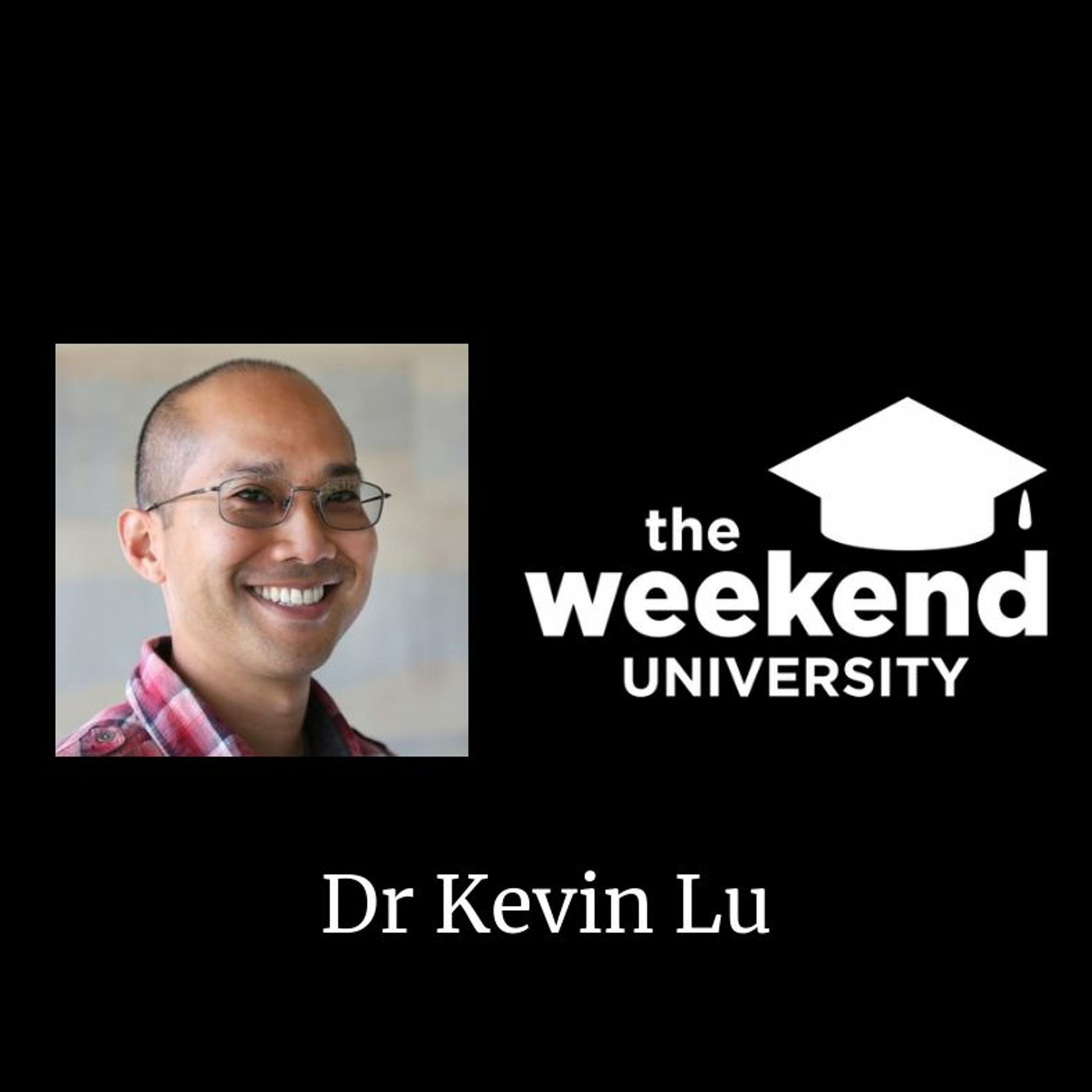
Carl Jung & His Approach To The Psyche - Dr Kevin Lu
Dr Kevin Lu will explore Jung’s model of the psyche, with special attention to the definitive concepts differentiating analytical psychology from Freudian psychonanalysis. In particular, the talk will critically assess Jung’s formulation of the archetypal Self, which acts as the end goal of the individuation process. While critiques of Jung’s search for universal patterns of human experience and action — which in turn may have limited his appreciation of the influence exerted by social and contextual factors — are duly noted, Dr Lu suggests that the true contribution of Jung’s psychology cannot be divorced from one of its major limitations: it seeks to say something both general and specific about the human condition. What Jung yearns for is not an imitation of old, worn out patterns, but a creative engagement with them that allows us to experience the fullness of life in all its complexities. Dr Kevin Lu, PhD, is Director of Graduate Studies and Director of the MA Jungian and Post-Jungian Studies in the Department of Psychosocial and Psychoanalytic Studies, University of Essex. He is a former member of the Executive Committee of the International Association for Jungian Studies. Links: Get our latest psychology lectures emailed to your inbox:http://bit.ly/new-talks Check out our next event: http://theweekenduniversity.com/events/ Support this channel on Patreon: https://www.patreon.com/theweekenduniversity For more info on the MA in Jungian & Post Jungian Studies: https://vimeo.com/67385596