
The Vinyl Guide - Artist Interviews for Record Collectors and Music Nerds
582 episodes — Page 1 of 12
Ep566: Chad Channing - Love Buzz, Bleach & Early Nirvana
Ep565: Coop - Poster Boy, Record Collector
Ep564: Laura Jane Grace - Record Collector
Ep563: WTF Happened To Punk In The Park?
Ep562: The Discipline of Tony Levin
Ep561: Chad Kassem & The Road to The Vinyl Summit
Ep560: Captain Sensible of The Damned
Ep559: Rhino Records Co-Founder Richard Foos
Ep558: John McCrea of CAKE
Ep557: The Secret Return of Neurosis with Steve Von Till
Ep556: Shapel Lacey - Punk, Comedy & Rising Above
Ep555: The Taj Mahal Interview
Ep554: Everlast - From Rhyme Syndicate to Embers to Ashes
Ep553: The Ghosts That Haunt Peter Hook
Ep552: The Gospel According to Swamp Dogg
Ep551: Lydia Lunch - Confrontationalist, Poet, No Wave Pioneer
Ep550: Black Flag Vocalist Max Zanelly
Ep549: Dave Markey & The Secret Lives of Bill Bartell
Jack Douglas (1945-2026) - The Vinyl Guide interview
Ep548: After the Astronaut - Butthole Surfers' Lost Album w Paul Leary & King Coffey
Ep547: Greg Ginn - Black Flag, SST Records
Ep546: One-Step Audiophile Vinyl w Tom Grover Biery
Ep545: Zev Feldman Returns for Record Store Day 2026
Ep544: Zakk Wylde - Ozzy's Final Chapter, Pantera's Future, and Black Label Society
Ep543: Remembering Rozz Williams & Christian Death

Ep 542Ep542: Music Documentary Producer Jeanne Elfant Festa
Documentary producer & record collector Jeanne Elfant Festa has made films about The Beatles, Foo Fighters, Pavarotti, Bee Gees and more. Today she discusses her latest movie on Billy Preston — revealing rare archive footage, Olivia Harrison's key role, and Eric Clapton's emotional on-camera tribute and a lot more. Check outtrailer and documentary screenings here Topics Include: Jeanne lost her entire vinyl collection in the Palisades fire. Her family and animals all escaped the fire safely. A custom-built, mathematically designed sound room housed the collection. Rebuilding takes time — the turntable alone hasn't been replaced yet. Music passion began with her Brooklyn-raised parents' rich jazz collection. Her dad snuck into the Apollo Theater via the fire escape. He carried a saxophone, jamming with musicians at the loading dock. The family soundtrack: Billie Holiday, Dinah Washington, Miles Davis, Charlie Parker. Jeanne and her dad bonded over Bruce Springsteen's sax player. Her father did house calls exclusively for one patient — Miles Davis. Storytelling instincts came from parents who loved plays, movies, and performance. Her own record collection ranged from Rage Against the Machine to Supertramp. Vinyl's tactile magic: liner notes, textures, and each album's unique smell. Albums are movies — side one plays straight through, no skipping. Documentary filmmaking is passion-driven, not a path to big money. The Foo Fighters doc came from being in the right place. Business partner Nigel Sinclair's credits include Bob Dylan and George Harrison docs. Billy Preston first entered her life through her parents' living room stereo. Filming subjects who've passed requires diaries, archives, and extraordinary research teams. A granddaughter's undeveloped home movies transformed the Beach Boys documentary entirely. A stranger's undeveloped Beatles footage, found under a childhood bed, changed everything. Olivia Harrison unlocked archive footage and connected the team to Ringo and Clapton. Eric Clapton opened up in a way rarely seen on camera. Documentary ethics: three sources minimum, no gossip, no stunt casting ever. The Billy Preston film explores forgiveness, contradiction, and the full human condition. Extended and High resolution version of this podcast is available at: www.Patreon.com/VinylGuide Apple: https://tinyurl.com/tvg-ios Spotify: https://tinyurl.com/tvg-spot Amazon Music: https://tinyurl.com/tvg-amazon Support the show at Patreon.com/VinylGuide

Ep 541Ep541: TV Smith - 50 Years of The Adverts
TV Smith joins Nate to discuss the 50th anniversary of The Adverts, an Australian tour backed by The Hard-Ons, and a career full of great songs and terrible label luck. Topics Include: TV Smith is touring Australia in April with The Hard-Ons. The tour celebrates the 50th anniversary of The Adverts. The Hard-Ons are already learning the surprisingly complex Adverts songs. TV finds it odd but joyful to still be performing. He got back into vinyl to quality-check his own releases. Bowie, Roxy Music, and reggae were key early influences for TV. The Sex Pistols made TV believe he could actually do this. The Roxy Club punk scene started with just 30 people. Brian James of The Damned personally recommended The Adverts to Stiff. They recorded One Chord Wonders in a single afternoon at Pathway. Stiff misspelled the title and controversially centred Gaye Advert on the cover. Gary Gilmore's Eyes was TV's satirical response to exploitative media coverage. The BBC was deeply reluctant to air Gary Gilmore's Eyes on TV. Anchor Records collapsed mid-momentum, leaving The Adverts suddenly without a label. Crossing the Red Sea was recorded at Abbey Road with John Leckie. Gary Gilmore's Eyes was left off the album deliberately — vinyl runtime constraints. RCA signed them against their own A&R team's wishes — chaos followed. Cast of Thousands suffered a botched mix, a terrible cover, label indifference. Channel 5 was finally properly remastered after the producer found a safety tape. TV is bringing vinyl to the merch table — especially the Handwriting LP. High resolution version of this podcast is available at: www.Patreon.com/VinylGuide Apple: https://tinyurl.com/tvg-ios Spotify: https://tinyurl.com/tvg-spot Amazon Music: https://tinyurl.com/tvg-amazon Support the show at Patreon.com/VinylGuide

Ep 540Ep540: Swami John Reis - Record Collector
Swami John Reis of Rocket from the Crypt and Drive Like Jehu digs deep on record collecting, the thrill of the hunt, running Swami Records, and why the next release always matters most. Get yer tix to the Punk Rock Museum's 3rd Anniversary Show here Topics Include: Swami John Reis joins to talk record collecting and Punk Rock Museum. His collection is evolving — trading old hardcore for more desired records. Collection is 95% 45s, driven by a lifelong musical pursuit. Early punk led him to hunt for MC5, Stooges, Velvet Underground. The thrill: records still exist that nobody knows about yet. Digging through boxes feels calming, healthy, and satisfying every time. Hawaii vintage shop surprise — radio station collection hidden outside for decades. Detroit and Pittsburgh are his highest strike-rate cities for finds. Always ask the clerk — the best stuff is never on the floor. Styrene vs vinyl: the label sticker is the definitive tell. Making records informed his collecting — plain white sleeves, big hole 45s. Pressing plant relationships are everything; affordability is the biggest challenge. Customs delays under the current administration are wrecking release schedules badly. Major labels scrapped their own pressing plants — now everyone competes for time. Marketing records stopped making sense; the artist always drives interest anyway. Every record is essentially limited and out of print from day one. Smaller runs mean no unsold closet stock and more collector value later. Hot Snakes packaging and Rick Griffin's creativity still inspire him deeply. Upcoming: Sultans reissue, Mrs. Magician LP, new Swami John Reis record. Schizophonics collaboration in the works — the next thing is always the thing. High resolution version of this podcast is available at: www.Patreon.com/VinylGuide Apple: https://tinyurl.com/tvg-ios Spotify: https://tinyurl.com/tvg-spot Amazon Music: https://tinyurl.com/tvg-amazon Support the show at Patreon.com/VinylGuide

Ep 539Ep539: Dr Strange Records' Summer Bash Festival
Dr. Strange Records' Bill Plaster talks Summer Bash and the chaos of booking a festival, punk history, record collecting, Live Strange, and how punk rock can genuinely change lives. Get Summer Bash tix here | Follow Dr Strange for Live Strange here Topics Include: Bill Plaster of Dr. Strange Records joins to discuss the upcoming Summer Bash. Punk Rock Bowling's cancellation — visa bans, politics, venue loss — created the opportunity. Bill connected with Gallo, who runs the Fox Theater and the Cathedral in Pomona. The Cathedral: a stunning, refurbished 1921 four-story YMCA venue hosting the event. A massive two-day lineup — 30-plus bands across punk, hardcore, and old-school SoCal. Notable acts include the Effigies, Channel 3, the Skulls, featuring Kevin from Green Day. Every band asked said yes — Bill takes no money, purely doing it for the community. Dealing with booking agents was the biggest headache of organising the festival. Planning started in November; Bill hopes Summer Bash becomes an annual event. The Punk in the Park cancellations discussed — Bill argues protest with your vote, not boycotts. Bill credits Rod for building Dr. Strange's social media profile and making the festival possible. Bill's mentorship philosophy: punk rock can genuinely change lives for the better. The Dr. Strange "family" ethos — making fun of people with love, never punching down. Bill's book discussed — early punk discoveries via Damned, Buzzcocks, and XTC seven-inches. The brutal gang violence at early 80s LA/SoCal punk shows — constantly watching your back. A close call at Spanky's: the guy next to Bill got stabbed during a Guttermouth gig. Biggest missed show regret: skipped Oingo Boingo due to peer pressure from girls in line. Never saw Black Flag — their reputation for brutality genuinely scared him off. Eight years of mail order before opening the store; Voodoo Glow Skulls his biggest-selling record. Live Strange runs Wednesdays and Fridays — the cowbell is Bill's money-back guarantee. High resolution version of this podcast is available at: www.Patreon.com/VinylGuide Apple: https://tinyurl.com/tvg-ios Spotify: https://tinyurl.com/tvg-spot Amazon Music: https://tinyurl.com/tvg-amazon Support the show at Patreon.com/VinylGuide

Ep 538Ep538: John Flansburgh of They Might Be Giants Returns!
John Flansburgh of They Might Be Giants talks rare vinyl rarities, the chaotic story behind the new album's cover art, why re-recording old music is almost always a mistake and lots more Order the new album "The World Is to Dig" here Topics Include: Flansburgh owns roughly 2,000 records across three turntable setups at home He doesn't identify as a collector — just a serious listener His rarest record: an Andy Warhol-autographed Sticky Fingers with wild provenance photos He also owns a peeled-banana Velvet Underground and a Blonde on Blonde rarity Deep dive into what makes each of those pressings so collectible TMBG's new album title comes from a Maurice Sendak-illustrated children's book That led to a fascinating detour on painter Ad Reinhardt's secret black-on-black canvases Flansburgh has been TMBG's de facto art director for 35 years The new album's cover art was nearly a Washington Post-licensed sinkhole photo Washington Post's mass layoffs killed the deal at the last possible moment A Hudson Valley School painting of Yosemite became the actual cover Flansburgh and Linnell don't stockpile songs — cuts are made for specific artistic reasons He once had to shelve a song because Linnell came in with a nearly identical opening line TMBG song titles are uniquely searchable — except the new one referencing Wu-Tang Flansburgh is firmly against re-recording old material — cites Zappa as a cautionary tale Great discussion on remastering: Beatles got it right, Hendrix remaster was disorienting TMBG evolved from NYC performance art venues to rock clubs — crowd energy changed everything Their boutique 8-track manufacturer couldn't keep up when TMBG needed a thousand units Dolby Atmos debate: Flansburgh is skeptical, Nate makes the case for spatial audio Nate's most collectible record is a Nevermind test pressing — rejected pressings are worth more Extended & High resolution version of this podcast is available at: www.Patreon.com/VinylGuide Apple: https://tinyurl.com/tvg-ios Spotify: https://tinyurl.com/tvg-spot Amazon Music: https://tinyurl.com/tvg-amazon Support the show at Patreon.com/VinylGuide

Ep 537Ep537: Bongo Fury at 50 – Zappa, Beefheart and the Vaultmeister
Zappa Vaultmeister Joe Travers discusses the Bongo Fury box set, the Frank and Beefheart origin story, Frank's cutting edge approach and what may be next from the Zappa Universe. Order the Zappa/Beefheart Bongo Fury 50th Anniversary editions here Topics Include: Joe and Nate bond over the Stooges and unreleased raw recordings Bongo Fury turns 50 with 48 previously unheard tracks Two complete Armadillo shows finally presented unedited in sequence Portuguese Lunar Landing emerges from rehearsal tapes—a true nugget Frank kept tour itineraries but few detailed production notes Joe worked solo digitizing tapes for decades under Gail's direction Universal now controls the vault—the process has changed significantly Frank's Mac had one gigabyte—they dumped mixes to tape constantly Kennedy backup tapes and Synclavier data may be unplayable forever Racing against tape decay and obsolete machines that can't be replaced Heartbreak: 1630 tapes getting stuck and destroyed inside malfunctioning machines Early history of Frank and Captain Beefheart The Soots recorded together—Tiger Roach released, two covers still unreleased Frank invited Beefheart to join tour to get him some money Beefheart was unpredictable—lyrics in paper bags, sketching onstage mid-show "Born to Suck" captures spontaneous studio magic with Snoop tape banter Frank constantly taped everything—jokes often sparked future song ideas Post-tour darkness: Herb Cohen fallout left Frank uncertain about everything Frank and Beefheart reconnected—hour-long phone calls in Frank's final months Warner Brothers failed to promote One Size Fits All and Bongo Fury Cheaper Than Cheap footage sat in vault for decades—sync issues unresolved Joe finally identified the mystery tapes; Universal funded the restoration More Atmos projects coming—Joe teases a big announcement next month Extended & High resolution version of this podcast is available at: www.Patreon.com/VinylGuide Apple: https://tinyurl.com/tvg-ios Spotify: https://tinyurl.com/tvg-spot Amazon Music: https://tinyurl.com/tvg-amazon Support the show at Patreon.com/VinylGuide

Ep 536Ep536: Danny Goldberg - Bumping Into Geniuses (Led Zeppelin, Nirvana, & more)
Danny Goldberg shares insider stories from his 50-year career as Led Zeppelin's publicist and Nirvana's manager, revealing Kurt Cobain's creative genius and the first-hand dynamics behind rock's biggest bands. Order Danny's book "Bumping Into Geniuses" here Topics Include: Danny discusses the 2026 reissue of "Bumping into Genius" Admits his turntables are mostly for show, prefers streaming now Kept about 100 vinyls including The Fugs on ESP Records Answered a Billboard ad not knowing music business existed Found his calling through enthusiasm and sensitivity to artists Became Led Zeppelin's US publicist in 1973 for Houses of the Holy The biggest band in the world had never gotten positive press Peter Grant described them as "just mild barbarians" Bonzo would arrive early to tune drums for each room's acoustics Jimmy Page avoided TV—felt it couldn't deliver Zeppelin's true sound Physical Graffiti era: Danny became Swan Song Records vice president His blues tribute pitch rejected—later repurposed for Foghat Robert Plant was eloquent and handled most press duties willingly Jimmy's Crowley interest rarely came up in day-to-day interactions Met Ringo, never John or George—All Things Must Pass is essential Nirvana's 92 Australian tour produced the Rolling Stone cover shoot Kurt's "Corporate magazines still suck" shirt was pure tightrope genius He storyboarded every Nirvana video shot by shot himself Appeared on Headbangers Ball in a dress to subvert metal culture Nevermind hit five radio formats simultaneously—unprecedented crossover success Kurt agreed to edit In Utero packaging for Walmart-only kids Fame invaded his privacy—tabloid coverage of Courtney infuriated him Depression and heroin predated fame—confirmed by Chris Novoselic Danny dismisses conspiracy theories—Seattle PD had no coverup motive Sub Pop planned "Cash Cow"—Kurt licensed it back as Incesticide Incesticide liner notes rank among Kurt's most remarkable creative statements Danny calls In Utero Kurt's best songwriting, his personal favorite Bonnie Raitt's Nick of Time gave Danny credibility to expand management John Silva brought Redd Kross, leading to Sonic Youth, then Nirvana Born Innocent documentary on Redd Kross earns Danny's recommendation High resolution version of this podcast is available at: www.Patreon.com/VinylGuide Apple: https://tinyurl.com/tvg-ios Spotify: https://tinyurl.com/tvg-spot Amazon Music: https://tinyurl.com/tvg-amazon Support the show at Patreon.com/VinylGuide
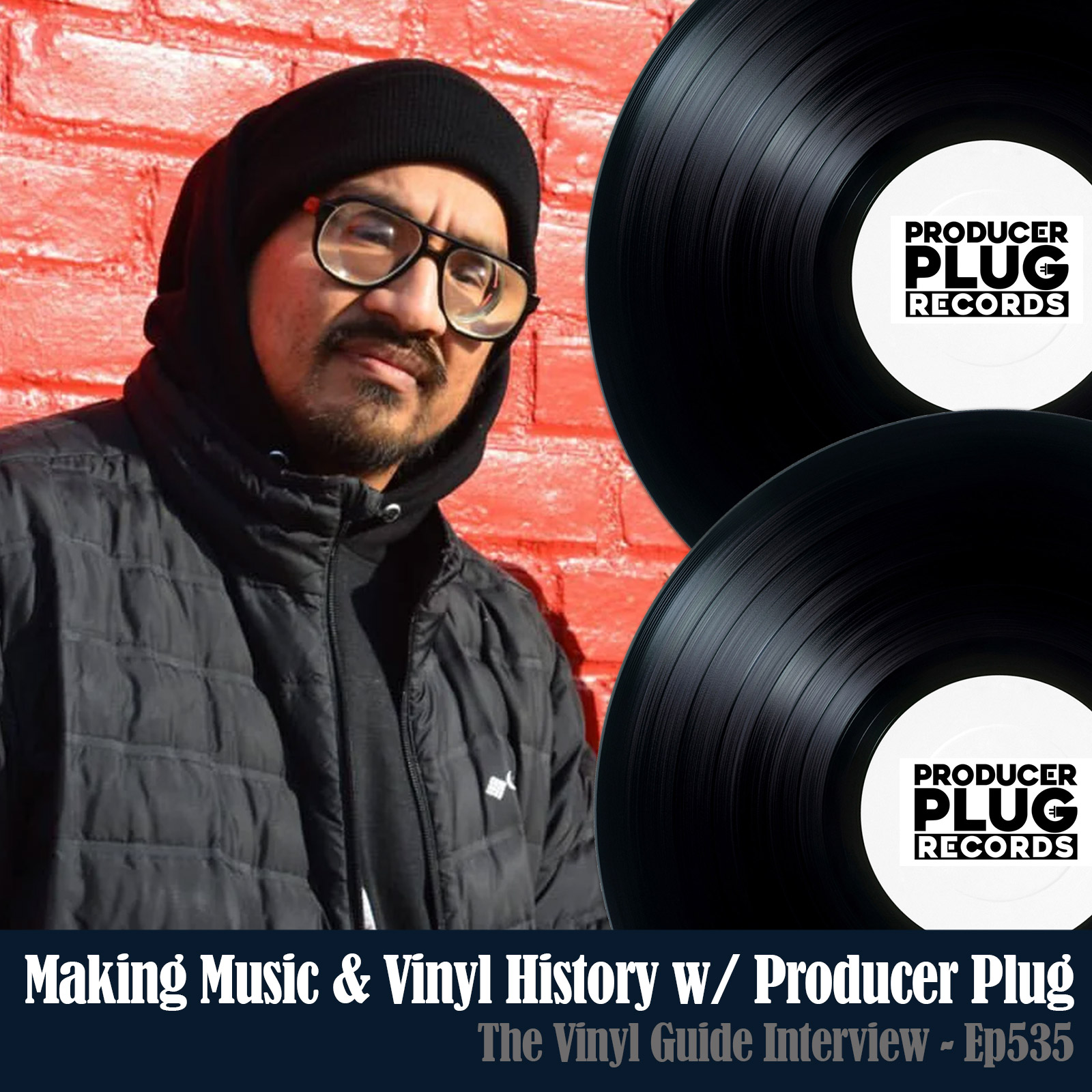
Ep 535Ep535: Making Music & Vinyl History w Producer Plug
Producer Plug discusses his journey from New York DJ to hip hop producer for Wu-Tang members, running multiple record stores, and launching R&G Records in Inglewood with Snoop Dogg. Topics Include: Producer Plug discusses meeting again at Austin Record Fair His three superpowers: DJing, executive producing, and music production Born in Flushing Queens with father's influential Fisher sound system Father introduced him to WCBS-FM and classic disc jockeys The Fugees "Killing Me Softly" became his first musicology lesson Father taught him to stay curious and humble about music Started buying records at Nobody Beats The Wiz and Coconuts Carried white garbage bag of records through high school All The Right Records shop combined haircuts and vinyl shopping Made popular mixtapes across Queens neighborhoods, sold as CDs Got on record label promo lists by showcasing his tapes Mixtapes evolved into producing albums with original beats naturally Career progression through DJing, A&R, and label executive roles Opened multiple Records & Goods locations across different cities R&G stores feature unique Grail Museum showcasing rare pressings Hip hop's importance: taking best moments from every music genre Each store represents a spiritual piece of his father Haradio Sound Lab offers vinyl meditation space for listening sessions Tom Silverman's advice: learn from my billion-dollar mistakes instead Vinyl On Demand releases reissues plus upcoming Big Boo collaboration High resolution version of this podcast is available at: www.Patreon.com/VinylGuide Apple: https://tinyurl.com/tvg-ios Spotify: https://tinyurl.com/tvg-spot Amazon Music: https://tinyurl.com/tvg-amazon Support the show at Patreon.com/VinylGuide
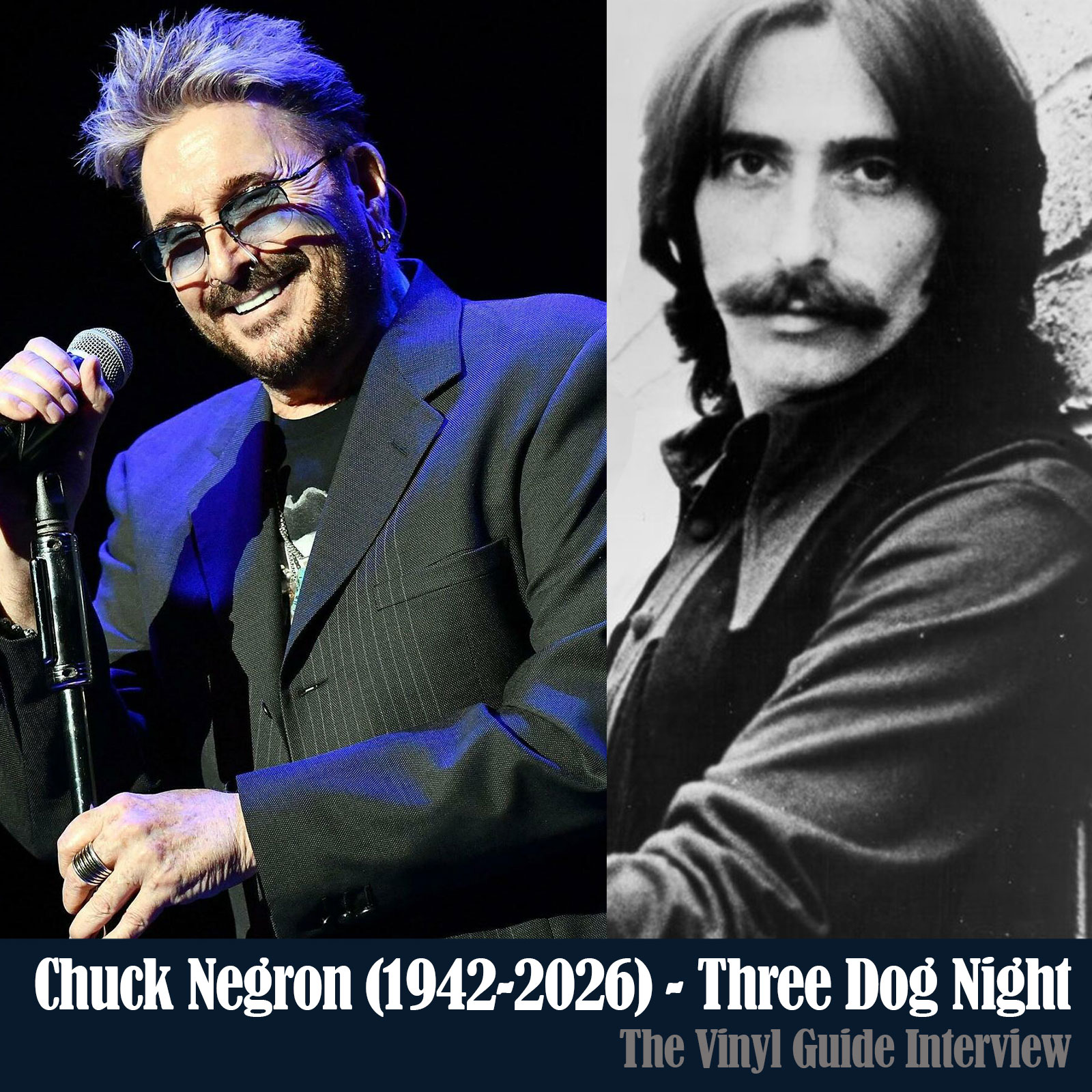
Ep 534Chuck Negron (1942-2026) - The Vinyl Guide interview
Co-founder and former Three Dog Night frontman Chuck Negron (1942-2026) discusses the collectible records of his career, the early releases on small labels, the rare and recalled albums of Three Dog Night and mega-smash excesses and turnaround of his life and career. Interview from July 2022 Topics Include: Chuck's autobiography Three Dog Nightmare . Basketball was first passion growing up in Bronx schoolyards. Made first record "Oh Baby" in 1958 at age fifteen. Early releases on tiny Bronx Records label extremely rare today. Progressed through Rondelles, Marlinda, and Heart Van regional California labels. "I Dream of an Angel" became regional hit across central California. Columbia Records offered deal while playing college basketball at Hancock. Chose to finish basketball season, damaging initial Columbia Records excitement. Learned hard lesson about commitment after squandering early industry enthusiasm. Bill Sharman offered Cal State LA scholarship but chose music. Left school permanently, ending high-level basketball career for music industry. Three Dog Night formed with three lead singers sharing spotlight. Band's strategy: find great songs, not write them themselves exclusively. "One" by Harry Nilsson became breakthrough hit launching massive success. Achieved 21 consecutive Top 40 hits selling over 60 million records. "Joy to the World" became worldwide number one, band's biggest success. "Black and White" addressed racial integration as mainstream social statement message. Hard Labor's controversial birthing cover recalled after hundreds of thousands distributed. Now hosts weekly WhatNot show selling rare Three Dog Night collectibles. At 80, credits basketball training for vocal stamina and survival. High resolution version of this podcast is available at: www.Patreon.com/VinylGuide Apple: https://tinyurl.com/tvg-ios Spotify: https://tinyurl.com/tvg-spot Amazon Music: https://tinyurl.com/tvg-amazon Support the show at Patreon.com/VinylGuide

Ep 534Ep534: Celebrating Chess Records with Steve Jordan
Legendary drummer & producer Steve Jordan (The Rolling Stones, Bruce Springsteen, Jon Batiste, SNL & more), discusses the history and deep personal reverence for the music of Chess Records and the 75th vinyl reissue series. Topics Include: Steve Jordan discusses touring with John Batiste at Davos Economic Summit He's producing Robert Cray's new album at Fame Studios in Muscle Shoals JayVee Records finishing Willie Mitchell documentary, The Verbs album, and Tony Joe White posthumous record Chess Records called arguably the cornerstone of modern music New vinyl reissue campaign marks first proper Chess reissues in decades Steve's compilation "Let's Play Chess" features personally meaningful recordings The Dells were his first Chess records—Chicago's hardcore R&B answer to Motown Tommy Tucker's "High Heel Sneakers" on Checker was childhood obsession British Invasion reintroduced American blues that establishment had suppressed racially Etta James "At Last" originals fetch four to five hundred dollars Universal fire destroyed masters; some duplicates recovered from Europe thankfully Early stereo versions often poorly done with hard-panned instruments and fake echo Chess building preserved physically but control room was completely stripped of gear Steve brought API console and ribbon mics for 2010 session there Correctly guessed drum placement; Hubert Sumlin confirmed the next day Otis Spann's piano still vibrates sympathetically when musicians play the room Jack Wiener designed Chess gear and later mastered recordings in basement Mastering represents twenty-five percent of the mix, often overlooked historically Jamie Krentz alerted Universal to Chess catalog's 75th anniversary reissue potential Rarities campaign revealed extraordinary alternate takes including deep Lowell Fulsom version Willie Mitchell spent years perfecting Royal Recording's signature snare drum sound Keith Richards session led to lifelong friendship with Willie Mitchell Willie gave Steve one of Al Jackson's tom-toms from Al Green recordings Recording, overdubbing, and mixing in same room captures authentic studio sound John Lennon was his white whale—missed meeting him by five minutes Finally played with Paul McCartney on Rolling Stones' Hackney Diamonds album Blues Brothers debuted on SNL's third season finale with Saturday Night Live band Matt Guitar Murphy was a Chess session player—Steve's first Chess connection unknowingly John Belushi educated Steve nightly on deep Chess catalog from his Chicago roots Devo's SNL performance was a life-changing moment Steve witnessed firsthand High resolution version of this podcast is available at: www.Patreon.com/VinylGuide Apple: https://tinyurl.com/tvg-ios Spotify: https://tinyurl.com/tvg-spot Amazon Music: https://tinyurl.com/tvg-amazon Support the show at Patreon.com/VinylGuide
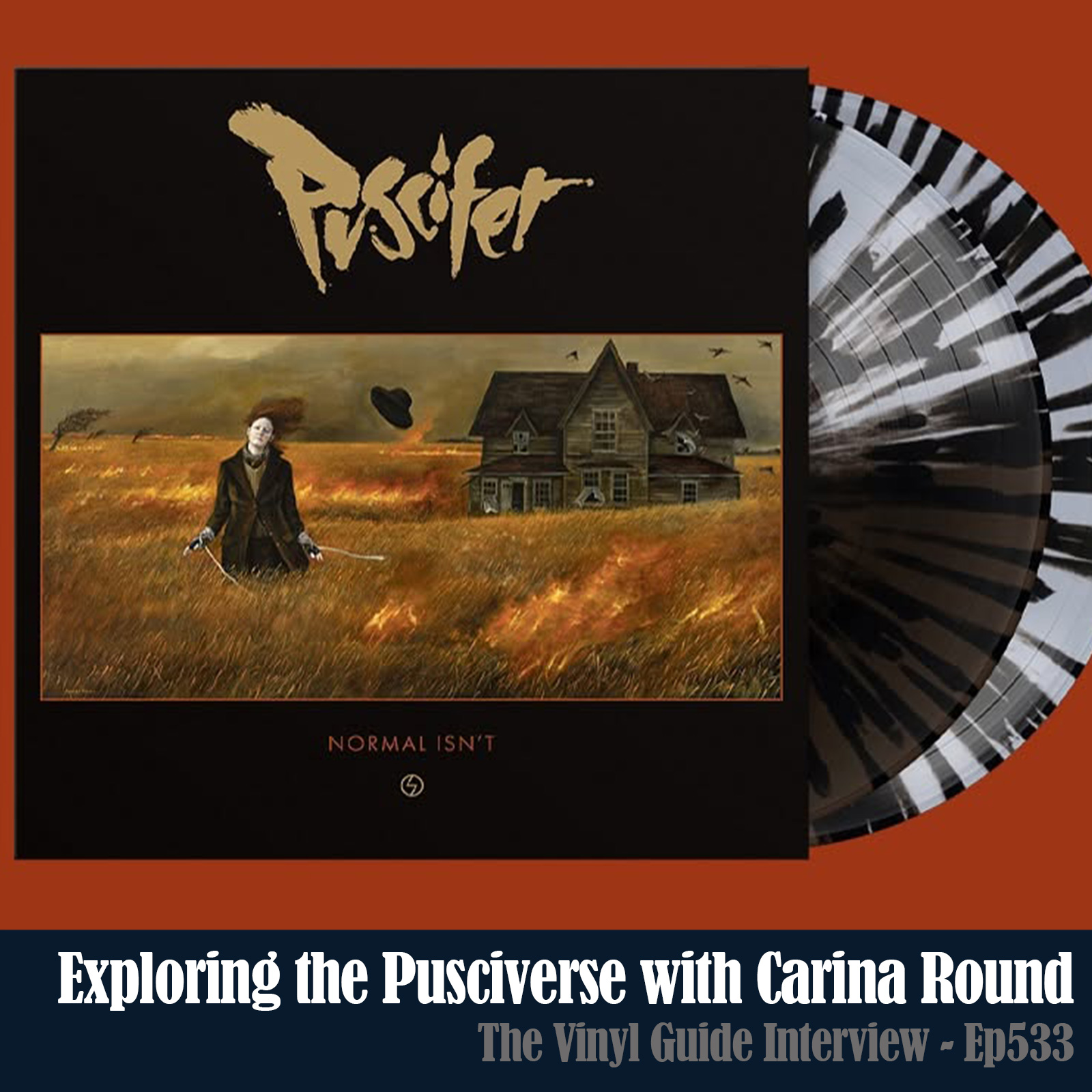
Ep 533Ep533: Exploring the Pusciverse with Carina Round
Carina Round discusses the new Puscifer album "Normal Isn't", their creative partnership, how motherhood transformed her songwriting, the emotional experience of revisiting The Disconnection and much more. Topics Include: New Puscifer album "Normal Isn't" and concert film drop February 6th Puscifer described as dark multimedia project with interconnecting 20-year storyline New characters introduced: Belendia Black, Fanny Gray, the Synth Whisperer Writing began post-Existential Reckoning; Mat keeps a magical idea folder Maynard learned Logic software, contributed more initial musical sketches this time Carina waits for lyrics—word rhythms shape her vocal approach entirely Mat masters specific gear per album: Fairlight, Synclavier, custom guitars Carina sang through Eventide effects unit, letting it shape melodies Mat designs all stage plots, lighting, and visual concepts himself Carina recently started improv classes—facing her worst nightmare on purpose Mat discovered her at LA show; V is for Vagina hooked her Maynard conveys mood clearly while leaving lyrics open to interpretation Humbling River audition taught her: no preciousness about ideas here Maynard's response—"as long as it doesn't interfere with me"—was freeing Having an eight-year-old son completely changed her creative process Revisiting The Disconnection live revealed surprising wisdom in her youth Music became her way to connect rather than dissociate emotionally She bootlegged her own Interscope album just to have it on vinyl Kids today skip songs constantly—no commitment to full album journeys Rare Ocean Blue pressing was a happy accident—only 13 copies exist High resolution version of this podcast is available at: www.Patreon.com/VinylGuide Apple: https://tinyurl.com/tvg-ios Spotify: https://tinyurl.com/tvg-spot Amazon Music: https://tinyurl.com/tvg-amazon Support the show at Patreon.com/VinylGuide
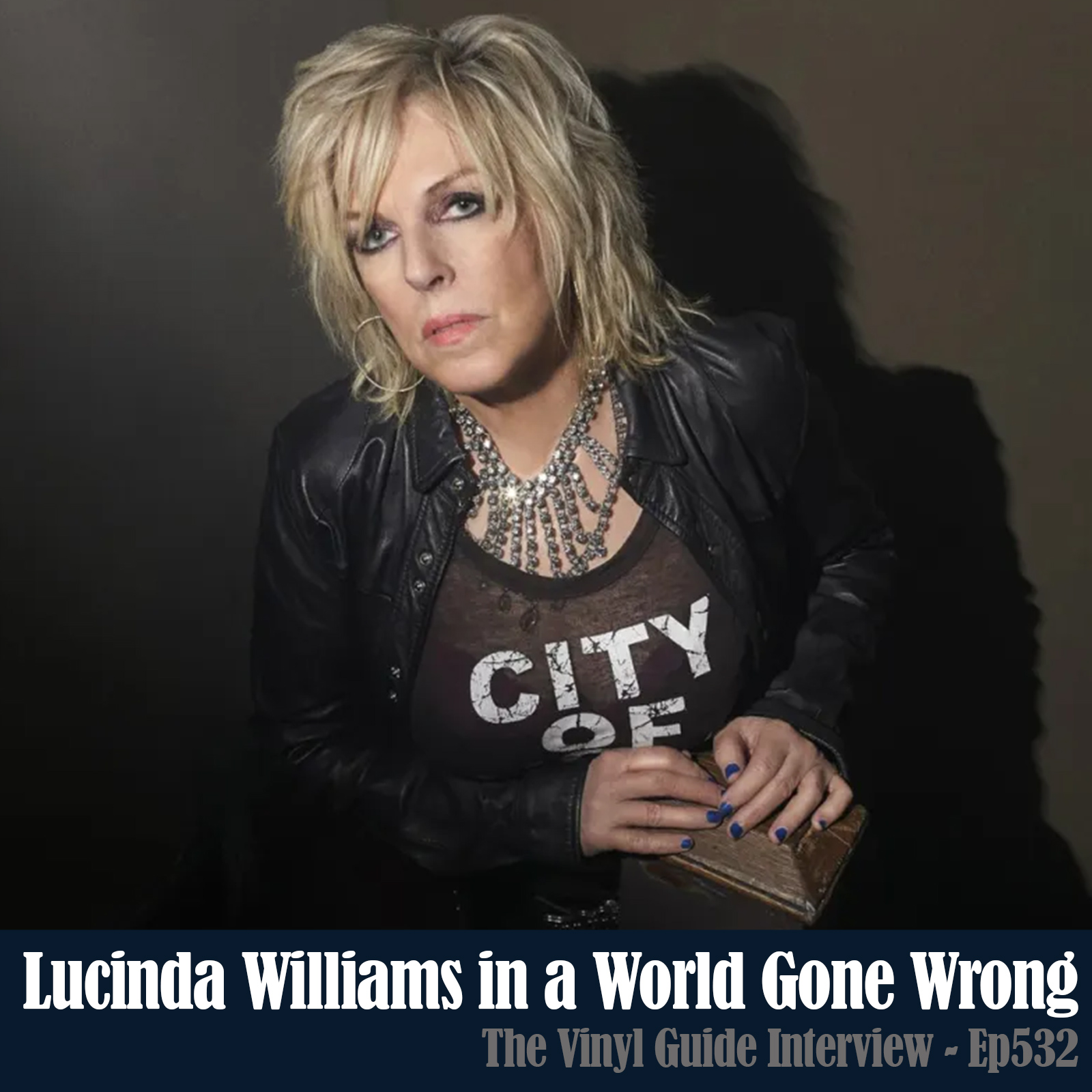
Ep 532Ep532: Lucinda Williams in a World Gone Wrong
Lucinda Williams discusses her recent creative surge with multiple tribute albums, paying homage to the masters, Folkways days, post-stroke recovery and the new album World's Gone Wrong Topics Include: Lucinda announces her 18th album "World's Gone Wrong" releasing January 23rd Reveals dramatic shift from releasing albums every 3-8 years recently Credits husband-manager Tom Overby for keeping creative momentum going post-stroke Explains how new band members made working out songs fun Describes creative process challenges between inspiration and studio deadlines Shares need for quiet, private spaces to write freely Reveals hotel rooms as unexpected creative sanctuaries like John Prine Discusses how songs emerge either formed or requiring detailed work Explains editing process of refining and "trimming the fat" Details collaboration with Tom Overby on "We've Come Too Far" Talks recording at Ray Kennedy's Room and Board studio Shares Steve Earle connection from Car Wheels on Gravel Road Laments losing song ideas when unable to record immediately Recalls taking control in studio despite band's initial surprise Tells sweet story of meeting Ringo Starr at Capitol Records Discusses transformative Beatles albums from early work to Sergeant Pepper Names Bob Dylan as her North Star musical mentor Explains The Doors' influence especially their dark poetic imagery Connects tribute album work to preparing for original songwriting Previews future projects including Neil Young tribute and stroke treatment High resolution version of this podcast is available at: www.Patreon.com/VinylGuide Apple: https://tinyurl.com/tvg-ios Spotify: https://tinyurl.com/tvg-spot Amazon Music: https://tinyurl.com/tvg-amazon Support the show at Patreon.com/VinylGuide
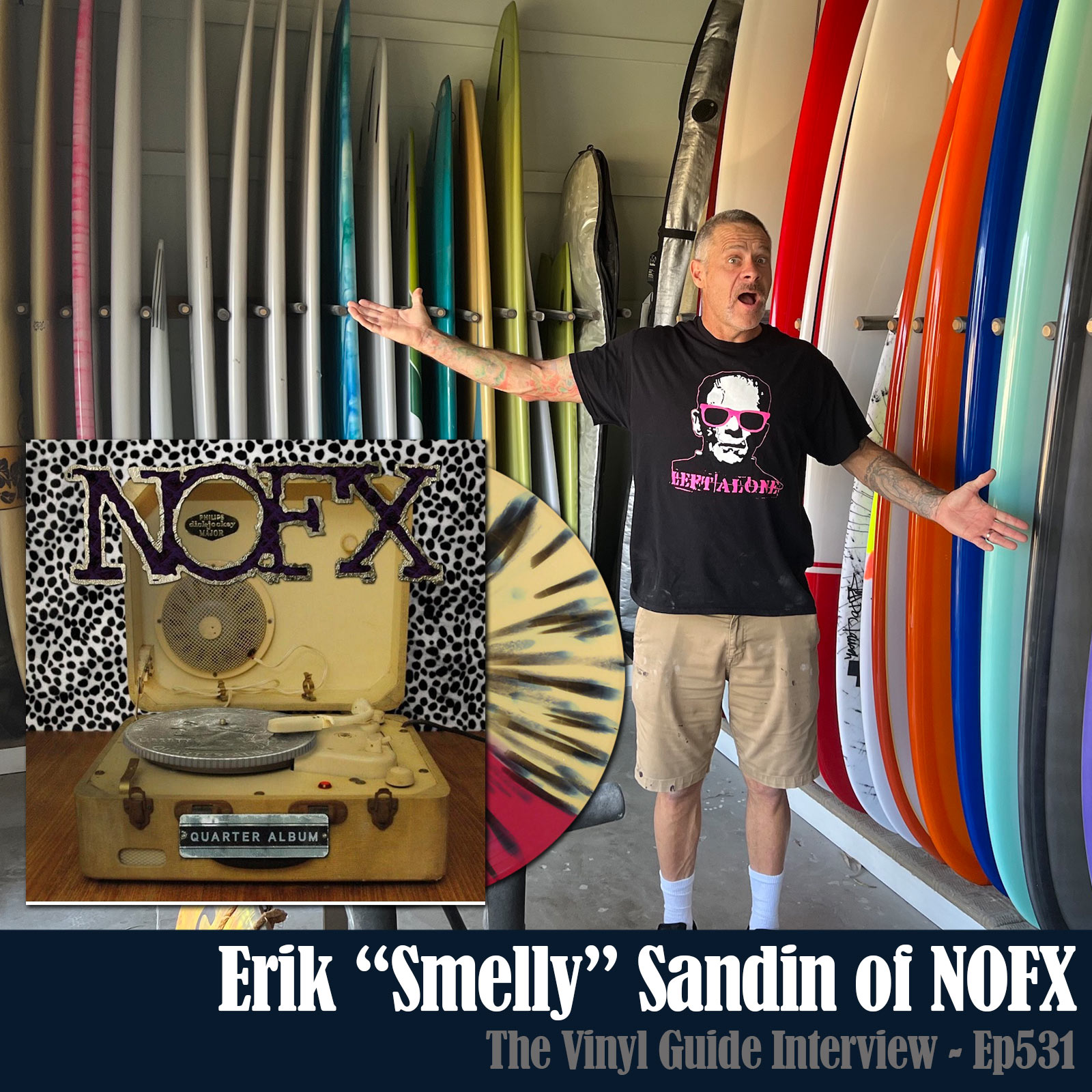
Ep 531Ep531: Erik "Smelly" Sandin of NOFX
Erik "Smelly" Sandin discusses NOFX life after touring, new music, sobriety through the NOFX hurricane, the Las Vegas incident controversy, the upcoming NOFX Retrospective at the Punk Rock Museum and more. Topics Include: NOFX didn't break up, just stopped touring, still recording new music together Band recorded 6-7 new songs three months ago in the studio Mike constantly writes new material, has lots of unreleased songs ready January 16-18 NOFX retrospective exhibit opening at Las Vegas Punk Rock Museum Smelly will give personal tours but doesn't know what artifacts they'll display Never kept any memorabilia from 42 years, always gave everything away immediately Shocked that original PMRC records now sell for $5,000+ on collector market Band relationships remain same, they talk regularly but need space between tours Currently playing drums with Randy from Pennywise, Cameron Webb Fills in with the Vandals when Josh Freese tours with other bands Recorded drums on Vandals' Christmas album 30 years ago, including transgender song Early drug experimentation began with acid at 16, escalated quickly into addiction Became homeless junkie living on streets for years during darkest period Got clean in 1992, has maintained sobriety for over 30 years now Joined NOFX through classified ad, instant chemistry with Mike during first jam Band went through multiple lineup changes before finding the classic NOFX formula Fascinated by ancient mysteries like underground Turkish cities, pre-Incan megalithic structures Favorite museum artifact: Joe Strummer's original "London Calling" lyrics with water stains His museum tour focuses on how punk rock saved his life story High resolution version of this podcast is available at: www.Patreon.com/VinylGuide Apple: https://tinyurl.com/tvg-ios Spotify: https://tinyurl.com/tvg-spot Amazon Music: https://tinyurl.com/tvg-amazon Support the show at Patreon.com/VinylGuide
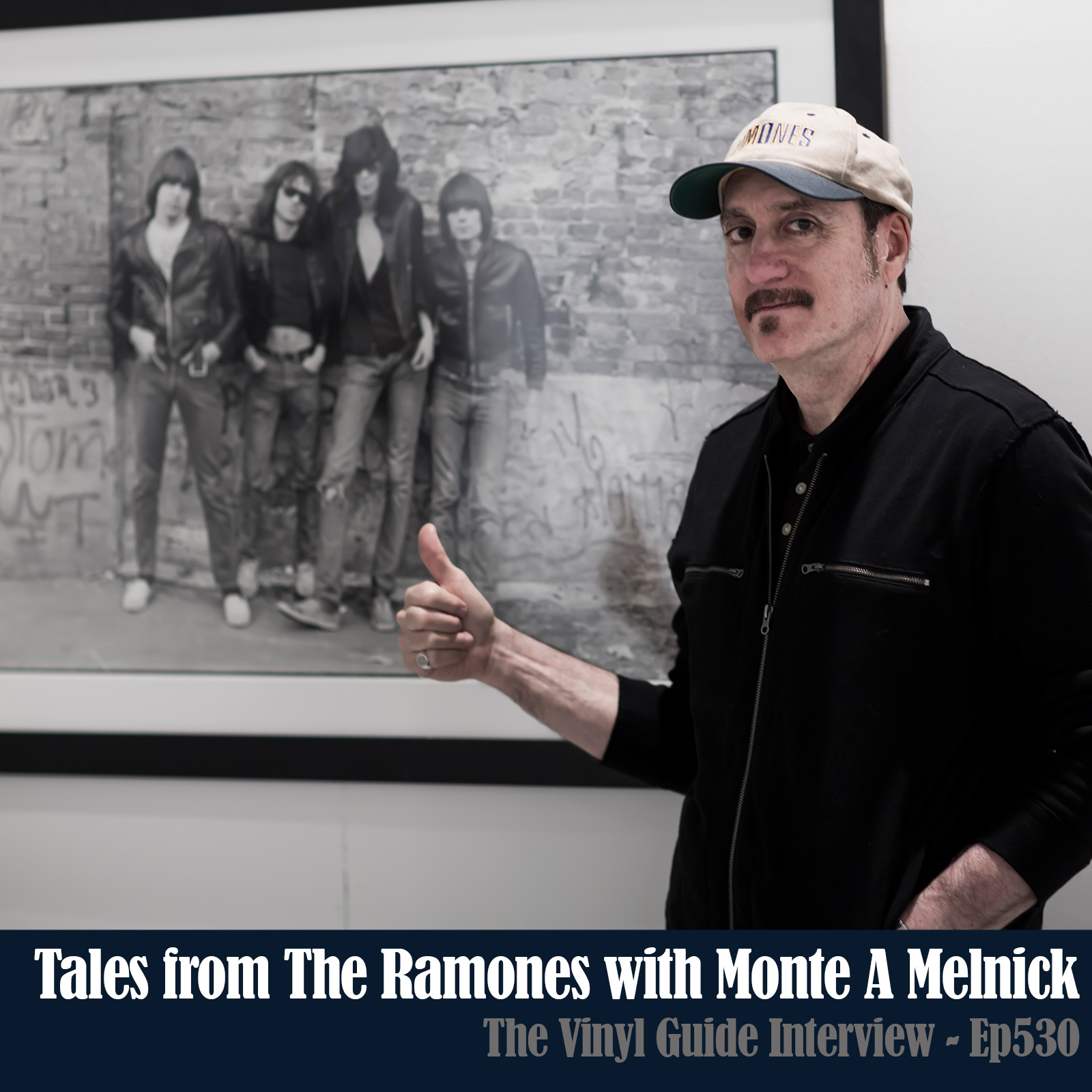
Ep 530Ep530: Tales of The Ramones with Monte A Melnick
The Ramones influenced generations despite critical dismissal and radio absence. Ramones tour manager Monte A Melnick reveals insider history, promotional collectables, diplomatic strategies for handling volatile band dynamics and the journey of the revival and current cultural adoration of the band. "On The Road with The Ramones" book is available here. Topics Include: Monte Melnick's bonus edition adds 40 pages to his Ramones road stories collection Full-color book features posters, tour passes, and interactive visual design beyond typical text Monte served as diplomat, psychologist, babysitter, and mediator between wildly different band personalities Managing crazy crews, promoters, and venues doubled the nutty people Monte handled daily He delayed writing until after Joey's death to avoid discussing uncomfortable personal problems Frank Meyer co-authored as musician and Ramones fan, earning full credit beyond ghostwriter Book structured as oral history combining new interviews with archived quotes from multiple sources Early reviews dismissed the Ramones as "crap" unlike today's celebrated 10/10 album ratings Sex Pistols' anarchy lumped Ramones into punk danger zone, killing radio station support Major acts like Talking Heads, B-52s, and Blondie opened for Ramones before surpassing The band never considered quitting despite frustration, constantly seeking new producers for radio Johnny Ramone insisted on maintaining consistent sound while others wanted musical growth experimentation The Ramones acted as "Johnny Appleseeds," inspiring kids worldwide to form their own bands 1996 Lollapalooza tour revealed Metallica and Soundgarden formed bands inspired by Ramones performances Record labels rarely interfered except removing "Carbona Not Glue" fearing potential lawsuits The Simpsons appearance was considered an honor with special studio recording and commemorative jackets John Holmstrom created Rocket to Russia artwork and illustrations later used for merchandise Monte immortalized in song lyrics: "Monty's driving me crazy, it's like being in the Navy" 1977 "It's Alive" album represents peak original four members captured in live perfection The Ramones legacy: showing kids worldwide they could form bands without virtuoso skills High resolution version of this podcast is available at: www.Patreon.com/VinylGuide Apple: https://tinyurl.com/tvg-ios Spotify: https://tinyurl.com/tvg-spot Amazon Music: https://tinyurl.com/tvg-amazon Support the show at Patreon.com/VinylGuide
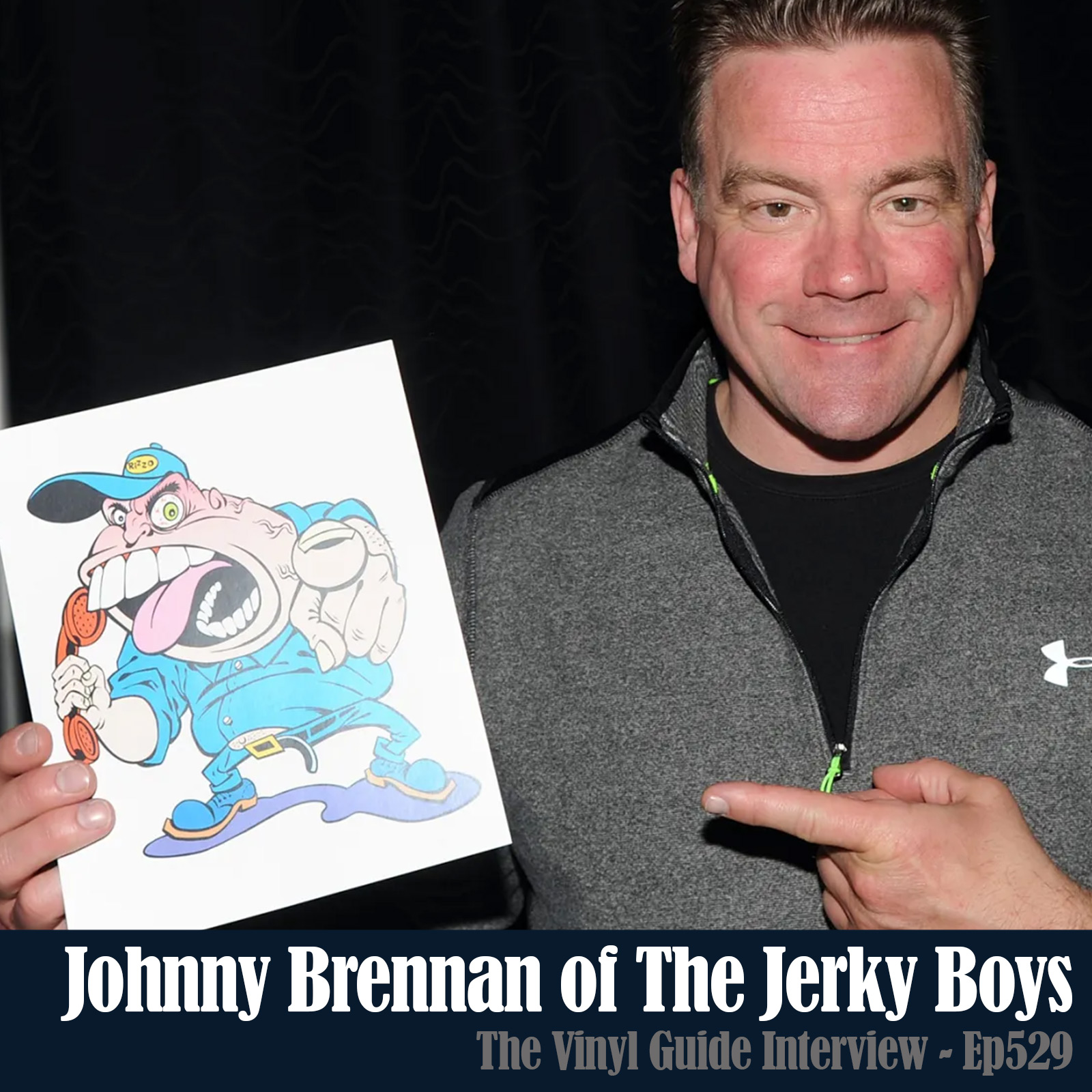
Ep 529Ep529: Johnny Brennan of The Jerky Boys
Johnny Brennan reveals how The Jerky Boys' underground cassette tapes became an American comedy phenomenon, spreading from NYC musicians to Howard Stern's radar before landing an Atlantic Records deal and finding success with voiceover work on Family Guy. Get yerself (or a friend) a Cameo holiday video from Johnny Brennan here Topics Include: Johnny Brennan reveals The Jerky Boys infiltrated American vocabulary for over five decades People still answer phones with "tough guy" and use Jerky Boys catchphrases daily Johnny started creating characters on tape for his brothers back in the 1960s Father's threat to "put boot in ass" drove kids to creative outdoor activities Nine-year-old Johnny was already doing fake sportscasting with neighborhood friends on tape Looking through Buy Lines magazine for trucks sparked idea to record prank calls First recordings made on boombox intended just for family gatherings upstate New York All characters based on real people: Frank Rizzo was Johnny's father's personality Sweet innocent voice character came directly from observing his mother's speaking style Friend Kamal discovered forgotten tapes and declared them funniest things he'd ever heard Kamal distributed copies to musician friends throughout NYC's Village music scene underground Tape trading exploded nationwide through word-of-mouth before internet or computers existed Howard Stern desperately searched on-air for mysterious Frank Rizzo character's true identity Atlantic Records' Ahmet Ertegun signed band after discovering underground cult phenomenon spreading Johnny's mom actually came up with "The Jerky Boys" name for the act Catchphrases like "sizzle chest" and "milky licker" were completely spontaneous during calls Johnny spent incredible week with Ozzy Osbourne filming The Jerky Boys movie Currently voices Mort Goldman on Family Guy for over twenty-one consecutive years Records at professional studio thirty seconds from home, works with hardcore bands Offers personalized Cameo messages, giving special shoutout to Australian fans after forty years High resolution version of this podcast is available at: www.Patreon.com/VinylGuide Apple: https://tinyurl.com/tvg-ios Spotify: https://tinyurl.com/tvg-spot Amazon Music: https://tinyurl.com/tvg-amazon Support the show at Patreon.com/VinylGuide
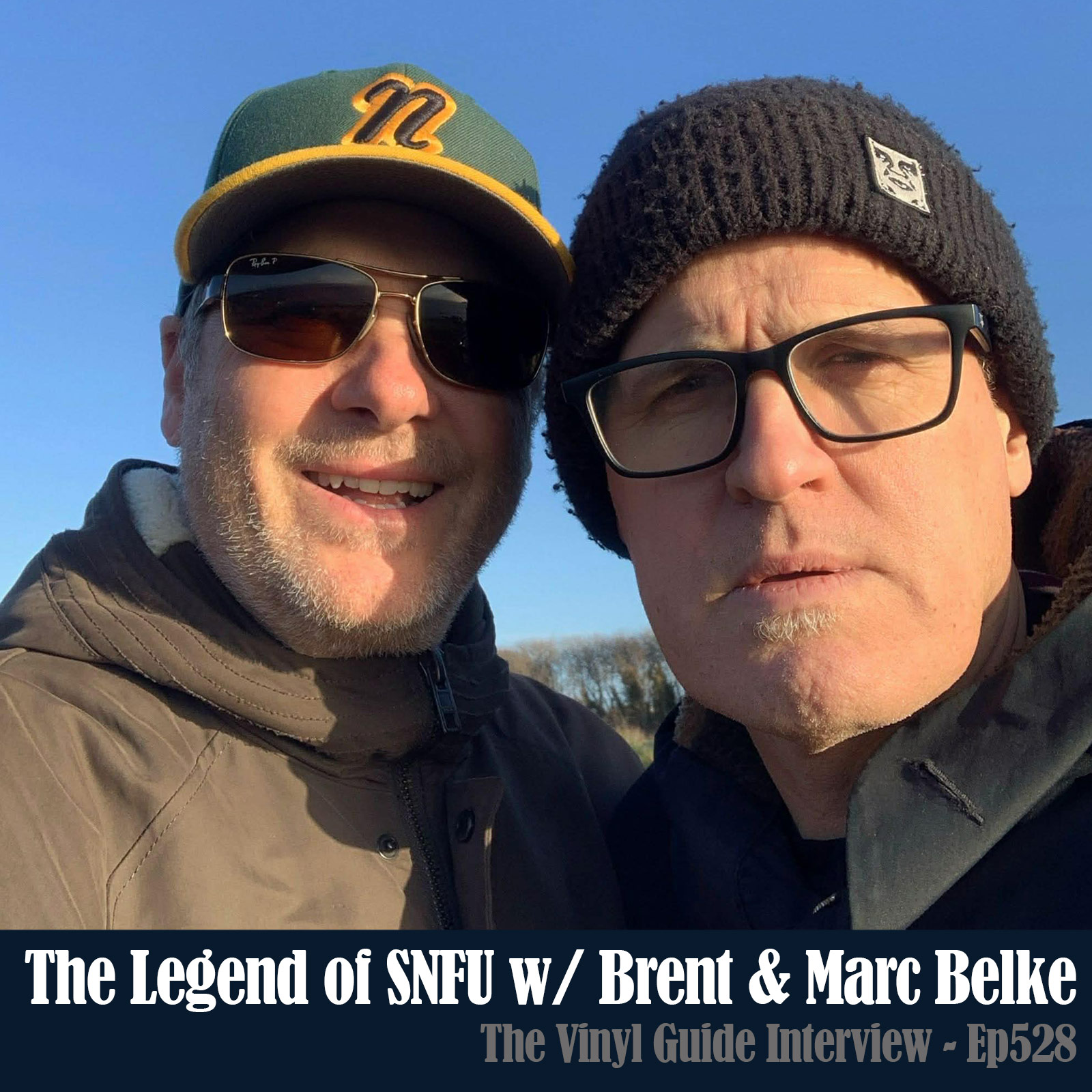
Ep 528Ep528: The Legacy of SNFU with Brent & Marc Belke
SNFU founders Marc and Brent Belke discuss band history, rare recordings, records, vinyl reissues on Trust Records, upcoming events at the Punk Rock Museum & more. Topics Include: Marc and Brent Belke join from Vancouver and Victoria to discuss SNFU's December 5th Punk Rock Museum exhibit and album re-release. The exhibit coincides with Trust Records' re-release of SNFU's debut album "...And No One Else Wanted to Play" with extensive extras. The re-release includes a 53-page booklet with rare photos, interview excerpts, and a full record of early demos and alternate versions. The exhibit features band paraphernalia, posters, t-shirts, and artwork, originally displayed at a Saskatchewan museum last summer before moving to Vegas. Marc and Brent will provide guided tours at the Punk Rock Museum and participate in a roundtable discussion on December 5th. The brothers describe Edmonton's early 1980s scene as intimate with only 50 people, mixing new wave, rockabilly, and emerging hardcore sounds. Getting punk records in Alberta meant ordering from New York stores via mail, waiting two months, and receiving only 25% of selections. Pivotal records included Bad Brains' ROIR cassette, Let Them Eat Jellybeans compilation, Sex Pistols' debut, and Minor Threat's Out of Step. The LA hardcore scene heavily influenced SNFU, with bands like Circle Jerks, Social Distortion, and Youth Brigade making significant impressions. SNFU formed when Marc and Brent's band lost members, recruiting bassist Curtis and drummer Evan Kaufmann based on personality over experience. Singer Chi Pig brought irreverent humor and sarcastic lyrics that became central to SNFU's identity and separated them from serious hardcore bands. The band recorded their debut album in two weeks with limited preparation, creating the raw energy that defined their sound. Early SNFU combined hardcore speed with melodic elements, drawing from both aggressive punk and bands like The Damned and Buzzcocks. The band signed with BYO Records for their second album, appreciating the DIY ethos and direct artist-to-label relationship. SNFU toured extensively across North America, playing everywhere from established venues to DIY spaces and experiencing varied punk scenes nationwide. The brothers discuss how the band's legacy feels incomplete, with the Trust re-release helping emphasize positive aspects of their history. Brent left SNFU to attend music school, studying jazz and strings, and now works creating music for film projects. Marc emphasizes Trust Records' meticulous approach, taking four years to perfect the release compared to SNFU's tendency to rush. Both brothers have never visited the Punk Rock Museum and look forward to experiencing it while giving tours on December 5th. High resolution version of this podcast is available at: www.Patreon.com/VinylGuide Apple: https://tinyurl.com/tvg-ios Spotify: https://tinyurl.com/tvg-spot Amazon Music: https://tinyurl.com/tvg-amazon Support the show at Patreon.com/VinylGuide
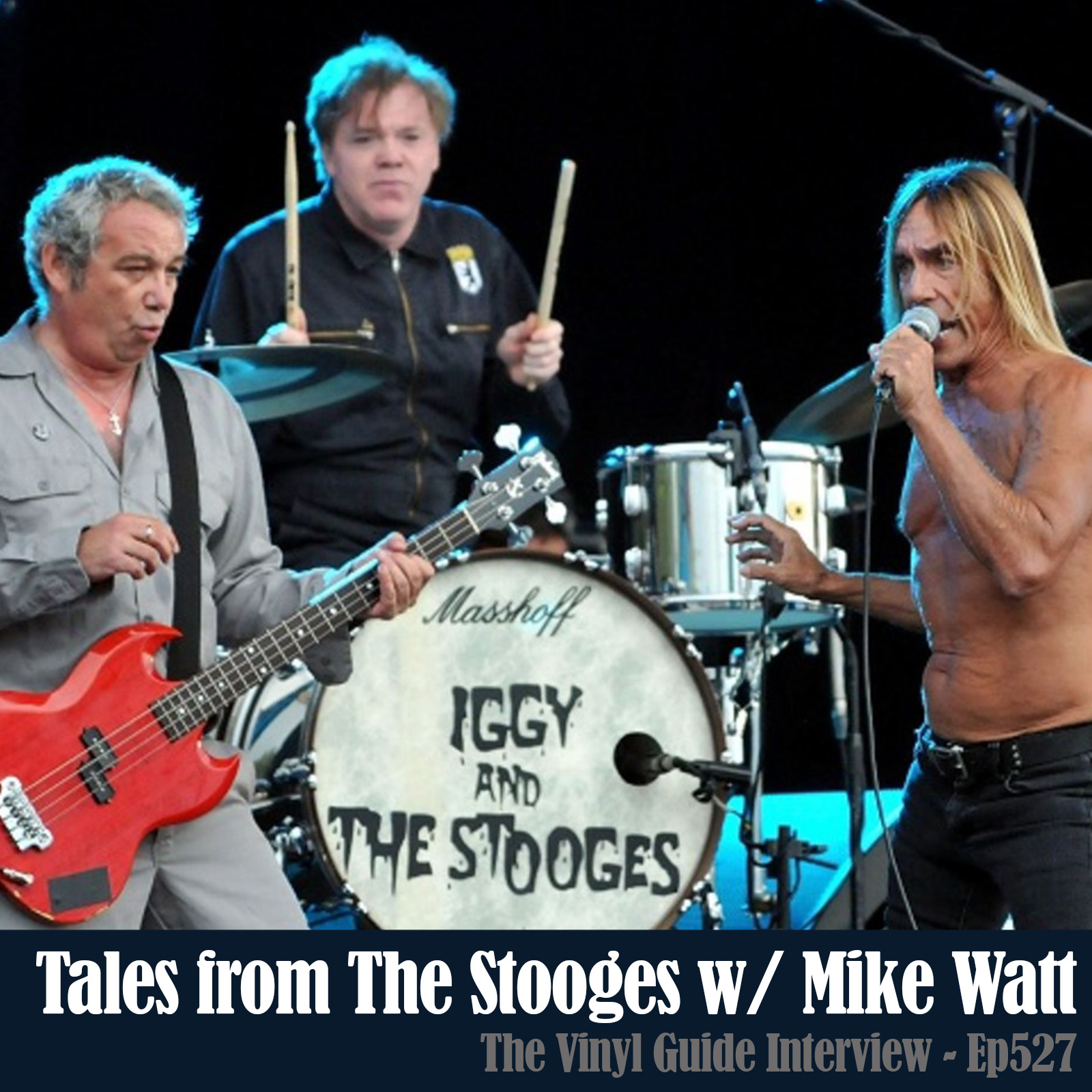
Ep 527Ep527: Tales from the Stooges with Mike Watt
Mike Watt played with Iggy & The Stooges for over 10 years - today he shares all about his times with the brotherhood - Iggy, the Asheton Brothers, Steve Mackay, the comeback tours, The Weirdness, the end of the road and more! Topics Include: Mike Watt discusses new Record Store Day release: 40-minute version of "We Will Fall" Without the Stooges, Watt believes punk movement wouldn't have existed as we know it Played with Stooges for 126 months after Iggy Pop called him in 2003 First heard Funhouse in 1970-71 when most people dismissed the band entirely Stooges music helped Watt recover from serious illness 25 years ago Initially met Ronnie Asheton at Minutemen gigs in Detroit's Greektown neighborhood Played with Ronnie in 1996 for Todd Haynes film Velvet Goldmine Iggy and Ronnie hadn't spoken for 29 years before 2003 reunion Watt received fateful call at Tallahassee club: "Ronnie says you're the man" Iggy's first concern: Would Watt wear T-shirt instead of flannel? "Fuck yeah" Thought Coachella would be one-off gig, became decade-long musical journey Being youngest member at 45 allowed Watt to absorb everything from legends Asheton brothers had telepathic connection, communicated through rhythm more than words Lost Ronnie in 2009, Brother Steve in 2014-2015: "You always think you got time" Watt never wore same T-shirt twice during entire Stooges tenure One time played shirtless in New Orleans after wearing orange triggered Iggy's nightmare After Ronnie died, switched from T-shirts to black flannel honouring his memory Final years wore Dickies work clothes, embracing mechanic aesthetic Iggy appreciated Still calls Iggy every April 21st for his birthday, ringtone is "TV Eye" Instrumental tribute albums with Larry Mullins represent "paying back the debt" High resolution version of this podcast is available at: www.Patreon.com/VinylGuide Apple: https://tinyurl.com/tvg-ios Spotify: https://tinyurl.com/tvg-spot Amazon Music: https://tinyurl.com/tvg-amazon Support the show at Patreon.com/VinylGuide
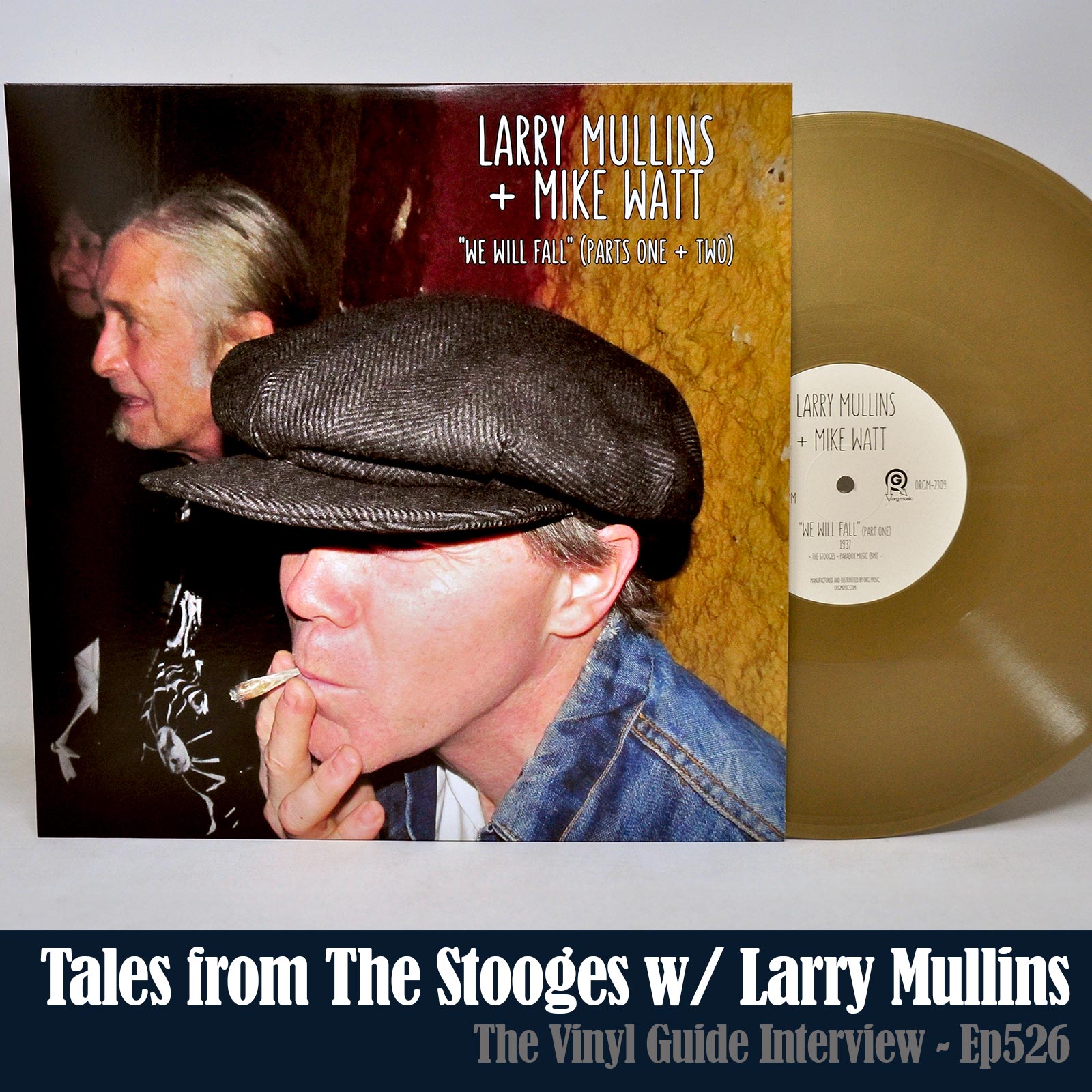
Ep 526Ep526: Tales From The Stooges with Larry Mullins
Larry Mullins (Stooges, Swans, Nick Cave) discusses his love of the Stooges, playing with Iggy and the Asheton Brothers and shares how he and Mike Watt reworked several Stooges tracks for multiple Record Store Day releases, including a 40-minute version of "We Will Fall", available RSD-BF 2025. Topics Include: Larry Mullins discusses Stooges tribute project with Mike Watt, creating extended instrumental versions Record Store Day release features 40-minute version of "We Will Fall" from the Stooges Mike Watt initiated project after Steve Mackay's death as band tribute without vocals Recording involves aggressive nine-minute live takes with bass representing lead vocal parts Sessions happen in San Pedro with releases on seven-inch records that fade between sides Songs like TV Eye, 1969, 1970, Fun House only available on limited seven-inch releases Pandemic interrupted recording process, forcing creative remote collaboration between Berlin and San Pedro "We Will Fall" chosen specifically because original had no drums, allowing remote recording Brian Kehew mastered Rhino reissues, revealed original Stooges takes were 12-15 minutes long John Cale edited and faded original lengthy jams into known three-minute song versions Stooges wrote most songs at Chelsea Hotel night before recording first album sessions Band originally performed as wild improvisational psychedelic jam band before structured songs Recording process involved jamming songs for entire tape reel length, then editing down Story reveals Steve Mackay's green saxophone matched his deteriorating health but sounded fantastic Limited to 1,000 copies globally, pushing boundaries furthest of all their tribute releases High resolution version of this podcast is available at: www.Patreon.com/VinylGuide Apple: https://tinyurl.com/tvg-ios Spotify: https://tinyurl.com/tvg-spot Amazon Music: https://tinyurl.com/tvg-amazon Support the show at Patreon.com/VinylGuide
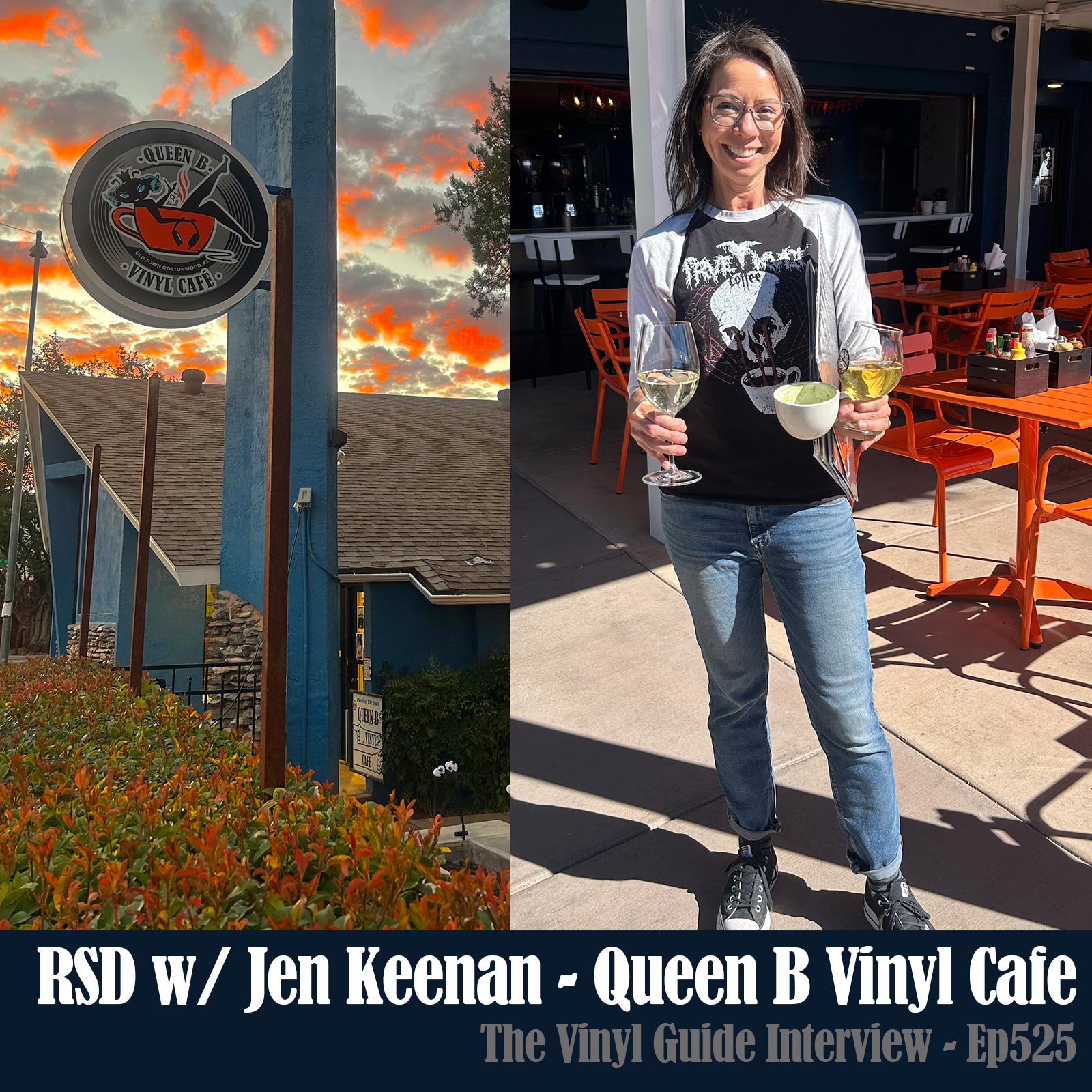
Ep 525Ep525: RSD with Jen Keenan - Queen B Vinyl Cafe
Jen Keenan reveals how she built a thriving vinyl destination in rural Arizona, Queen B Vinyl Cafe, combining record sales with coffee roasting, ramen, and live music in a 12,000-person town. Topics Include: Jen Keenan owns Queen B Vinyl in Cottonwood, Arizona, a unique multi-business destination spot Record Store Day philosophy focuses on obscure, abstract, and smaller indie bands over mainstream releases RSD features 9am opening, numbered line system, DJs, live bands, and free chair massage Record stores can choose RSD titles but quantities received remain unpredictable surprises Queen B Vinyl spans two buildings with courtyard, housing vinyl, cafe, barbershop, ramen house Coffee roasting happens in-house alongside direct-to-garment printing press and live music stage Cottonwood serves as crossroads for tourists heading to Jerome, Sedona, and Grand Canyon Maynard James Keenan's presence helped amplify area's wine industry from handful to 100 wineries Rural record stores require more advertising and unique inventory unavailable at big box stores Used vinyl comprises 30% of inventory, with curated selection over quantity focus Jen drives five hours to Tucson for quality collections like 80s metal acquisitions After school music programs inspired Jen's punk rock journey from trumpet to cello Band Glitter Wizard emerged from record store workplace, requiring careful schedule coordination Queen B stocks diverse punk releases, carefully avoiding exclusion based on political perspectives Vinyl manufacturing delays from nine-month backlog created significant challenges for store operations Small town stores thrive through exceptional customer service recognizing individual preferences and needs Pandemic surprisingly improved business by bringing new audiences to smaller town locations Falconry hobby involves training hawks with telemetry tracking within one-mile range Jen and Maynard maintain separate vinyl collections despite sharing everything else Tool vinyl represses remain frustratingly delayed, creating bootleg market opportunities Rural record stores serve as essential community spaces beyond commercial transactions High resolution version of this podcast is available at: www.Patreon.com/VinylGuide Apple: https://tinyurl.com/tvg-ios Spotify: https://tinyurl.com/tvg-spot Amazon Music: https://tinyurl.com/tvg-amazon Support the show at Patreon.com/VinylGuide
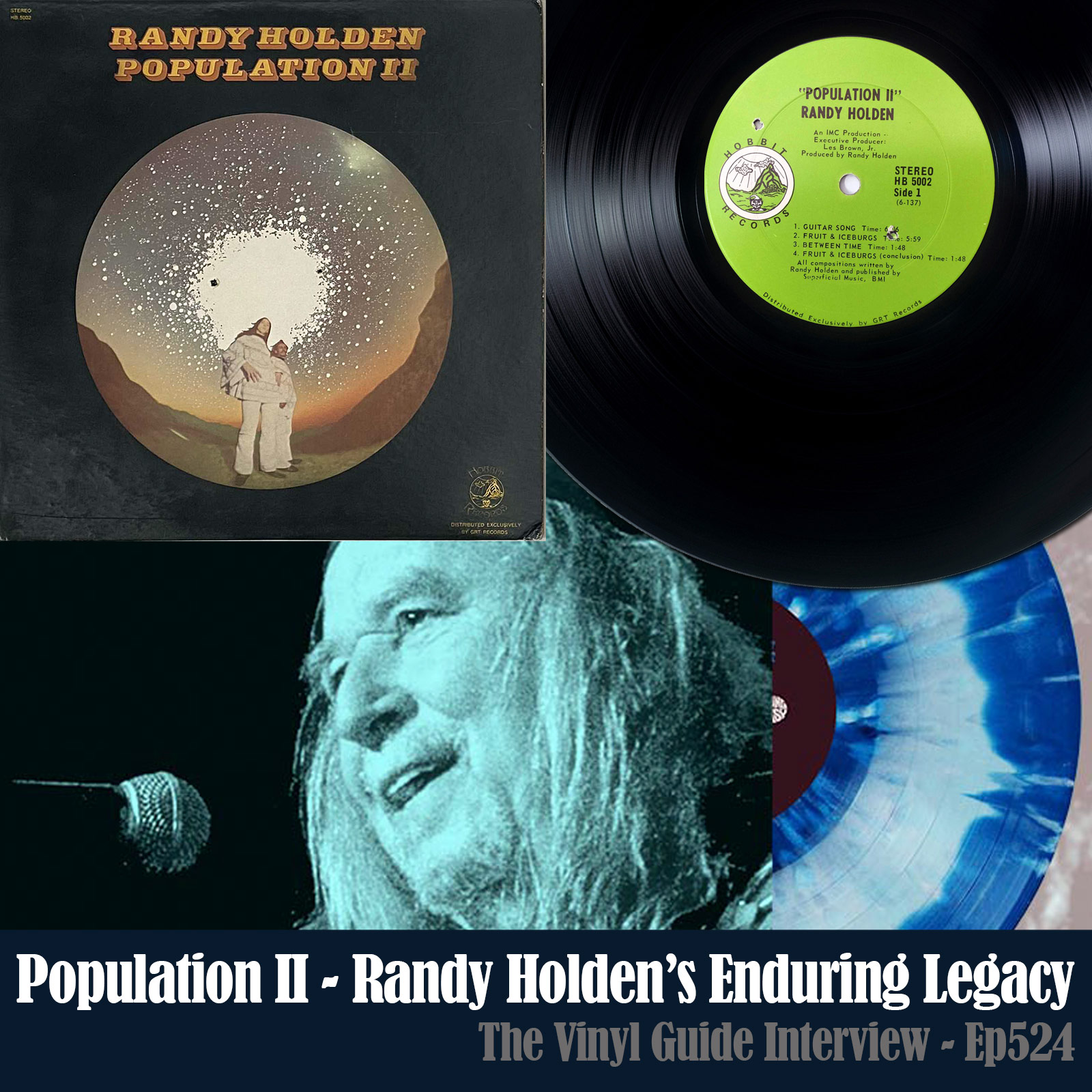
Ep 524Ep524: Population II - Randy Holden's Enduring Legacy
Guitar pioneer Randy Holden reveals how record label incompetence destroyed his 1970 masterpiece Population II, leading to depression, exile in Hawaii, and eventual vindication through cult status. Get Population II and III at Riding Easy Records or preorder Population II reissue at Noble Records online Topics Include: Randy Holden is surprised Population II remains influential after recording it in 1970 He knew it would be big—there was nothing like it musically then Population II was ready to release with Sun Amplifiers sponsoring monthly magazine ads National promoters wanted to book shows but needed the album released first Hobbit Records delayed release for eight or nine months, destroying Randy's career The label wouldn't release the record or let Randy out of his contract Owner Leonard Poncher's background was Latino music and auto parts wholesaling Randy was creating a new form of music that became known as heavy metal Poncher's lawsuit with MCA distribution completely tied up the album's release Recording Population II went smoothly with Randy overdubbing all bass parts himself He used four to eight amps recording through a Fender Jazz Bass Engineer Hank Cicalo placed three mics at different distances for guitar tone Randy pioneered mixing through car speakers instead of massive studio monitors His original mix had full dynamics with sweeping highs and lows Mastering engineers destroyed the mix, cutting frequencies to prevent needle skips Randy joined Blue Cheer replacing Dickie Peterson but left over musical differences Blue Cheer wanted shorter songs while Randy pursued extended musical compositions He formed Population II with Chris Lockheed on keyboards and organ bass pedals The name meant two people creating massive sound usually requiring four musicians Randy's guitar journey began with Fender IV, then Sons of Adam The Other Half featured Randy's early heavy guitar work before Blue Cheer He recorded Guitar God album in 1997 after decades away from music Nobody knows the original Population II pressing number Recent remasters by engineers in New York and Smokey Taylor improved the sound Randy's broken ring finger now prevents him from playing guitar properly He manipulated audiences' emotions playing solos through walls of amps for thousands Randy considers music like movies—"Land of the Sun" is theatrical drama Playing live was his reason for living, creating heavenly musical moments His legacy continues through reissues on Riding Easy Records reaching new generations Extended and High resolution version of this podcast is available at: www.Patreon.com/VinylGuide Apple: https://tinyurl.com/tvg-ios Spotify: https://tinyurl.com/tvg-spot Amazon Music: https://tinyurl.com/tvg-amazon Support the show at Patreon.com/VinylGuide
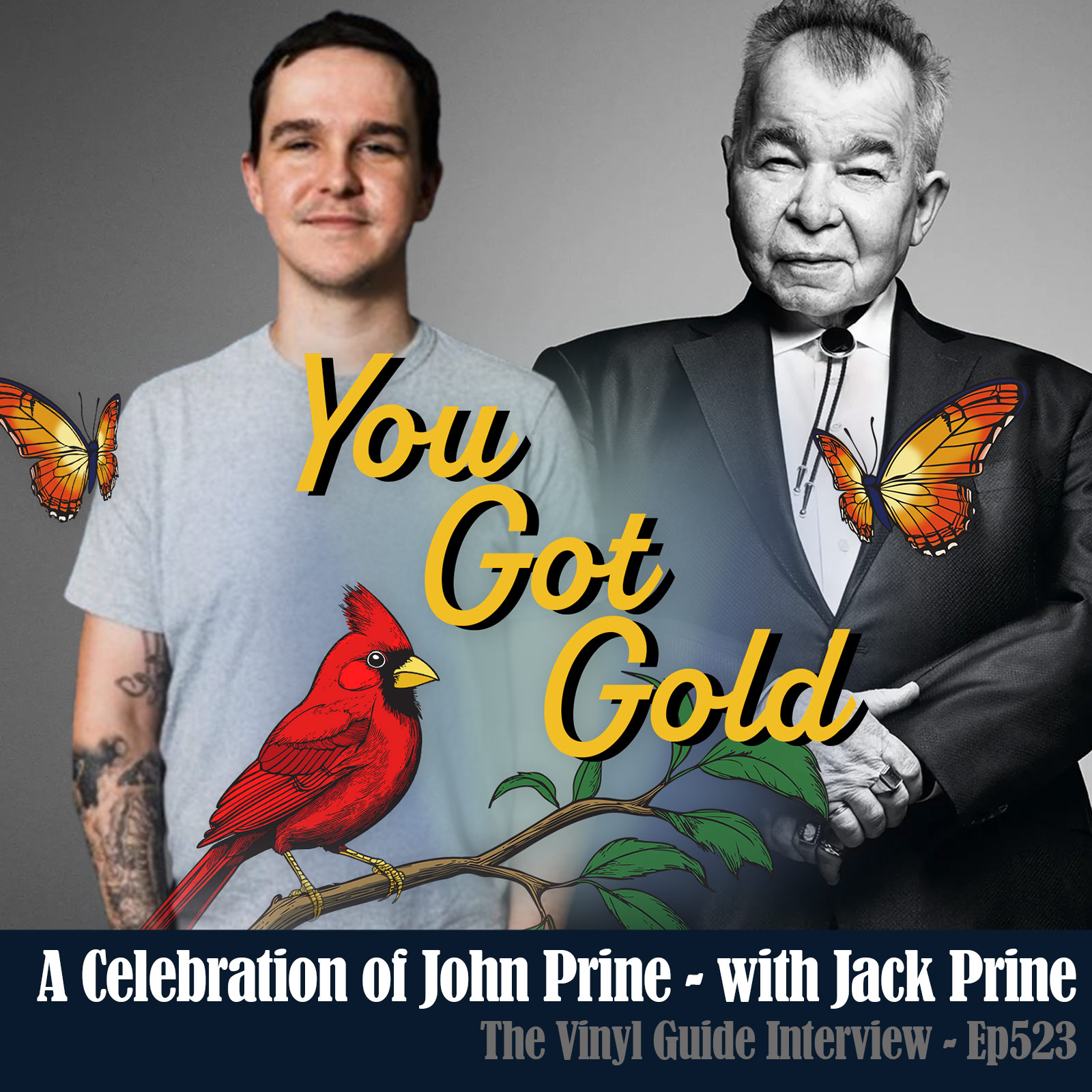
Ep 523Ep523: Celebrating John Prine w Jack Prine
Jack Prine shares intimate stories about his legendary father John Prine, discusses the new "You Got Gold" movie, the history and state of "Oh Boy Records" and reveals intentions for unreleased recordings from the family archives. Check out screenings of "You Got Gold - A Celebration of John Prine" here Topics Include: Jack Prine discusses "You Got Gold" film celebrating his father John Prine's legacy Film originated through family friend connection at Radical Media, directed by Michael John Warren Documentary captures 2022 Ryman concert series benefiting the Hello In There Foundation Foundation started after John's death in April 2020, helping family navigate grief Jack reflects on balancing family's personal grief with fans' collective loss Film features collaborators like Bonnie Raitt, Lucinda Williams sharing stories and performances Many people know John Prine's songs without realizing he wrote them Movie bridges generations from Dwight Yoakam to Tyler Childers and Jason Isbell Tyler Childers shares quirky story about John keeping Dairy Queen coupon in wallet Jack's legal name is John Patrick Prine; uses Jack to separate identity Growing up in Nashville, didn't have special musicians' kids friend group Jack joined family business at Oh Boy Records after college, learning the ropes Worked in warehouse initially, understanding physical product and distribution fundamentals Oh Boy Records started in 1984 as fiercely independent label maintaining creative control Archives contain decades of unreleased recordings being carefully curated for future releases Lost Dogs deluxe edition recently released with unheard track "Hey, Aw, Nothing" John Prine disliked his debut album cover showing him on hay bale John was technologically simple, kept flip phone until he died, browsed cars on eBay 80th birthday celebration planned for October, possibly in Chicago rather than Nashville Jack's lessons from father: live in the moment and always give to others Extended and High resolution version of this podcast is available at: www.Patreon.com/VinylGuide Apple: https://tinyurl.com/tvg-ios Spotify: https://tinyurl.com/tvg-spot Amazon Music: https://tinyurl.com/tvg-amazon Support the show at Patreon.com/VinylGuide
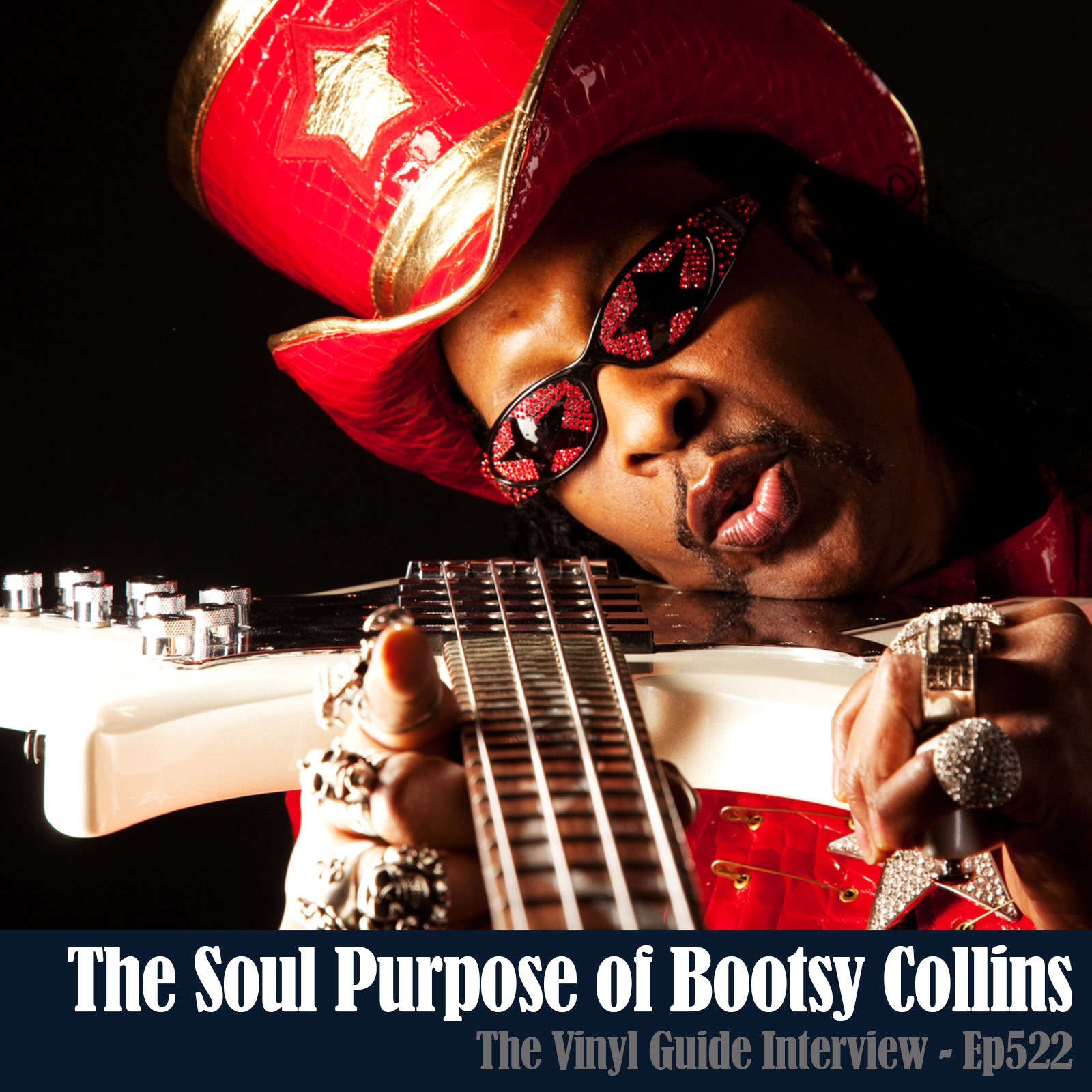
Ep 522Ep522: The Soul Purpose of Bootsy Collins
Bootsy Collins shares tales of P-Funk, Praxis, Buckethead and community work, philanthropy and mental health advocacy. Bootsy online | Bootsy & Buckethead single | "Is there Anybody Out There" podcast Topics Include: Bootsy's philanthropy and community work Bootsy reveals music now has purpose beyond just making people feel good "If you ain't chasing something, there's no reason to hunt" - finding new motivation From chasing girls and highs on tour to discovering why he still makes music Always gave back to unknown musicians like Buckethead before they became famous Opens up about mental health struggles when he got "too blown up" New "Metal Health" album with Buckethead addresses mental health for everyone First Buckethead collaboration was 1991's "Bucketheadland" recorded in Cincinnati Praxis exploded when Bill Laswell joined Bootsy, Buckethead, Bernie Worrell, and Brain Complete Strangers caught King Records' attention, leading to James Brown discovering them James Brown demanded everything tight; George Clinton allowed creative freedom and experimentation Most P-Funk classics were created spontaneously "while the tape was running" Both Bootsy and Buckethead must wear their signature headgear while recording Eddie Hazel's solo album used Bootsy's instrumental tracks - George's "superhero" vision Reveals George Duke's "Reach For It" is the funk hit he wishes he was on High resolution version of this podcast is available at: www.Patreon.com/VinylGuide Apple: https://tinyurl.com/tvg-ios Spotify: https://tinyurl.com/tvg-spot Amazon Music: https://tinyurl.com/tvg-amazon Support the show at Patreon.com/VinylGuide
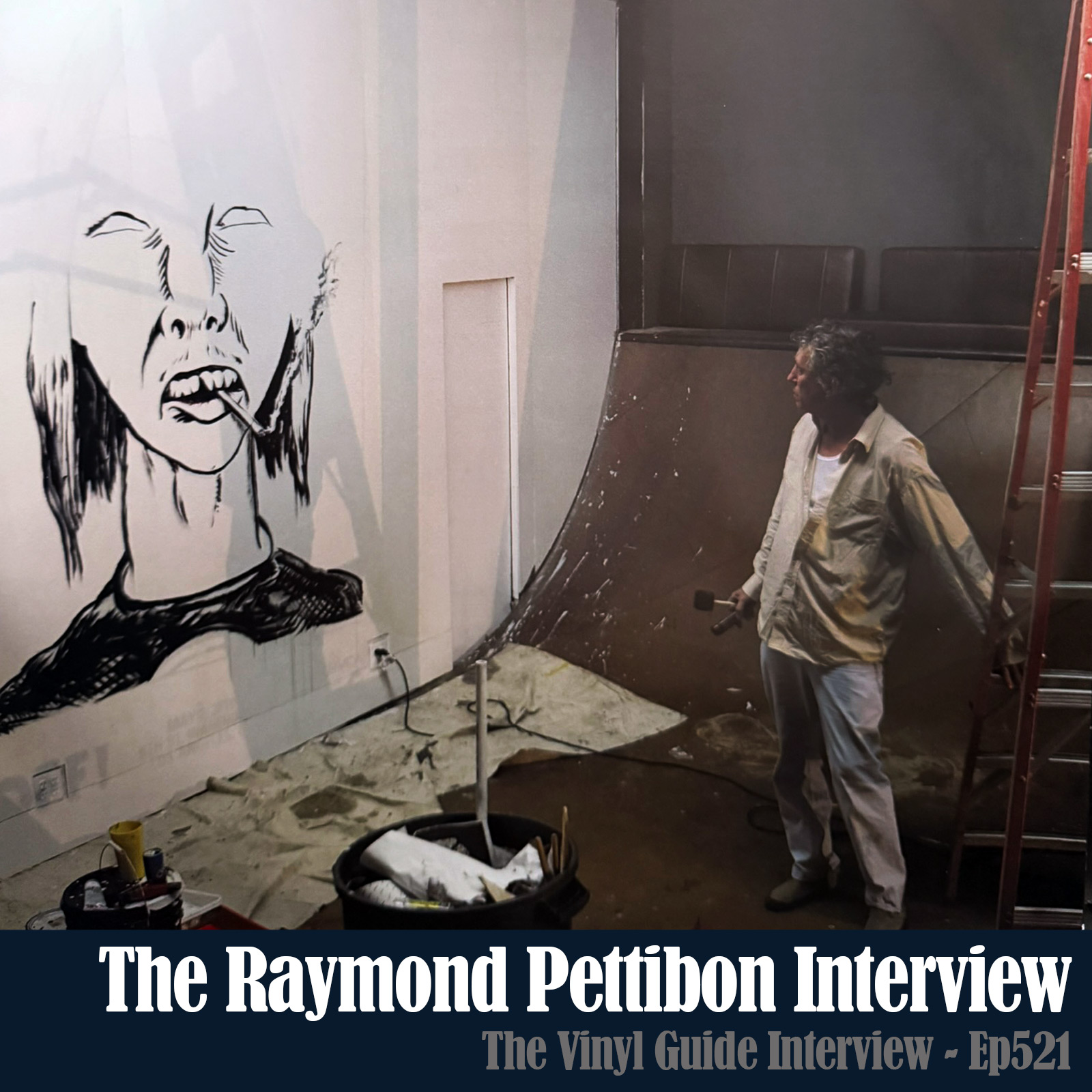
Ep 521Ep521: The Raymond Pettibon Interview
In an extraordinarily rare interview, artist Raymond Pettibon discusses his journey, from early punk rock works to present day artistic themes, technique and rhythms, the Getty archives and more. Topics Include: Raymond Pettibon has been drawing constantly since childhood, "always with a pen in hand" Started with crayons, pastels, pencil - India ink came later as too messy Early influences included Albrecht Dürer, etchings, and comic book art equally Self-taught artist who learned through trial and error, never attended art school Studied economics in college, bringing analytical thinking to his art practice Approaches work as fine art, not commercial art, values creative freedom Rarely takes commissions - the more constraints, the less he likes it Band artwork usually selected from existing drawings rather than commissioned pieces Black Flag's "Nervous Breakdown" images came from his "Captive Chains" book Artwork inspired by "Blackboard Jungle" film - students destroying teacher's jazz records Has experience teaching, can identify with teacher-student conflicts from that period Left SST Records in 1985-86 due to oppressive environment Describes certain subjects he returns to repeatedly over the decades Works on multiple drawings simultaneously, some remaining unfinished for years Enters a meditative "fugue state" when drawing or writing Never experiences artist's block - blank paper doesn't intimidate him Believes he can write about any subject with natural fluency Doesn't plan series - they develop organically through returning to themes Sometimes works directly on gallery walls during exhibitions for coherence Used to work all day and night when deeply engaged Dislikes deadlines - they make work harder, not easier for him Sees deadlines as triggering psychological rebellion despite wanting to please collectors Hates when people suggest ideas - it "breaks the spell" Admits he's not the greatest draftsman but learned on the job Recently donated personal archive to Getty Research Institute for scholarly access Participated in Getty's research scholar program, one artist among academics Program reconnected him with economics after years away from the discipline Still has unfinished drawings in studio, some over 30 years old Currently creating less due to frustrations with art world dynamics Values complete artistic freedom - no curator has ever asked him to change High resolution version of this podcast is available at: www.Patreon.com/VinylGuide Photo by John Newsom Apple: https://tinyurl.com/tvg-ios Spotify: https://tinyurl.com/tvg-spot Amazon Music: https://tinyurl.com/tvg-amazon Support the show at Patreon.com/VinylGuide
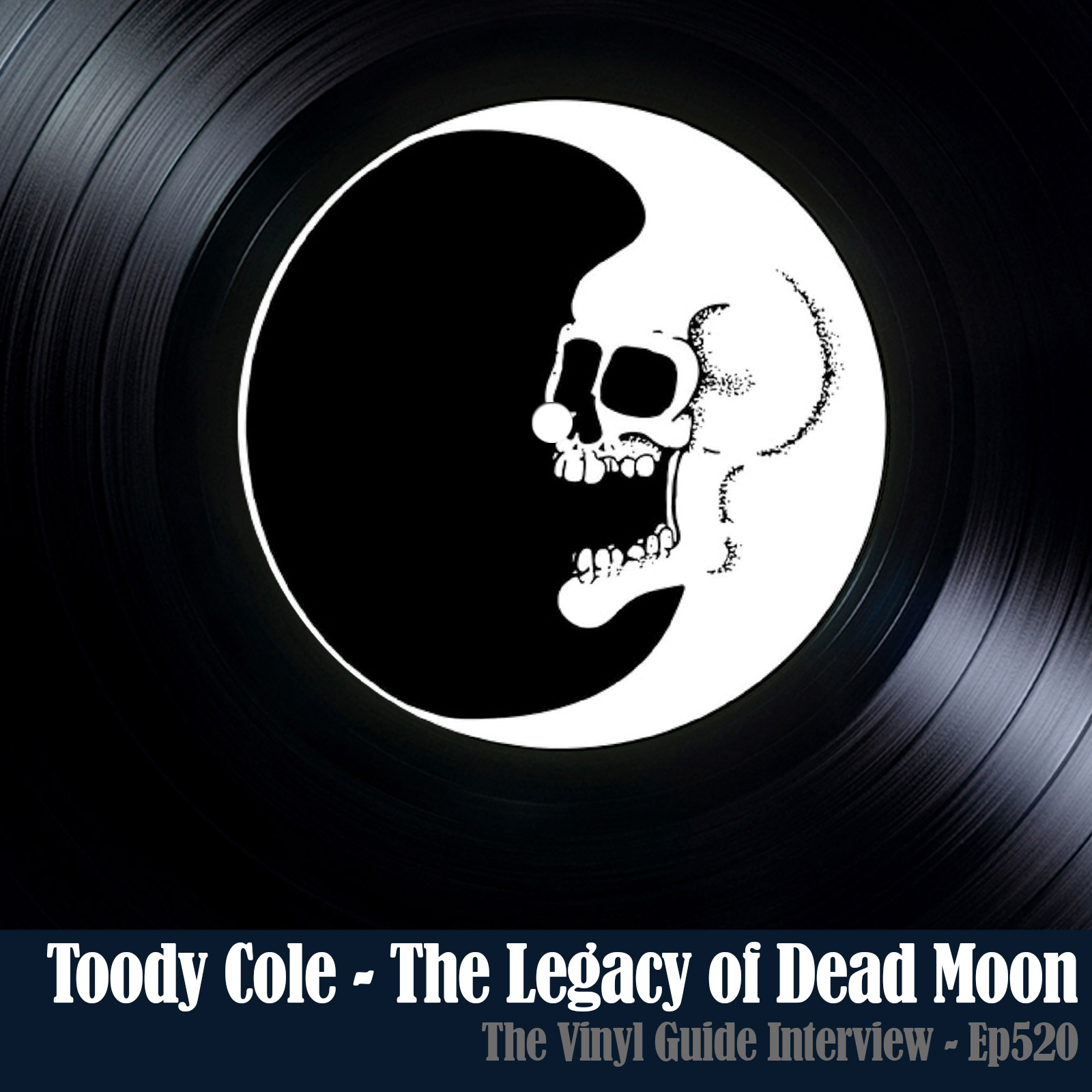
Ep 520Ep520: Toody Cole - The Legacy of Dead Moon
Toody Cole of Dead Moon discusses their vinyl rarities, the DIY ethic of the band, owning a mono cutting lathe, refusing major labels, inspiring a generation of musicians around the world. DeadMoonUSA.com | Zipper LP Reissue | Melbourne 2025 shows Topics Include: Toody Cole rushing to airport to retrieve guitar from Spain before Australian tour November 2025 Melbourne shows - jumping on Jenny Don't and the Spurs tour dates First time in New Zealand described as most fun tour ever - prehistoric landscapes Missed Nirvana tour opportunity due to Fred's rule: never cancel committed gigs Fred restored a 1954 mono cutting lathe from pieces using xeroxed manual Machine had tubes like mason jars that dimmed house lights when powered up First 45 cut on the lathe was "Hey Joe" and "Parchment Farm" The Weeds played Vegas Teen Beat Club in the hullabaloo/shindig TV era Teen Beat Records pressing was probably only 300-500 copies maximum Fred never owned original Weeds single - got it back from younger sister Lollipop Shop nightmare: Fred sold publishing for $1, forced into pink sweater Manager claimed Fred Cole was stage name, real name "Freddy Colletti" - totally false Zipper lived in their house, practiced in basement - "70s butt rock" era Captain Whizeagle store name came from Fred's children's story about Snake Troopers 1970 Yukon homesteading attempt broke down outside Whitehorse, changed everything Dead Moon started after splitting business partnership, opening Tombstone Music in 1986 Kelly Manahan drew logo through dozen iterations - Fred kept demanding "gnarlier!" Fred hand-cut moon into graveyard photo for first album cover artwork All early Dead Moon records were mono because lathe couldn't cut stereo Major labels approached during grunge explosion - Fred refused after Lollipop Shop experience Seattle grunge bands were young kids attending Dead Moon's late-80s shows Fred embarrassed by "godfather of grunge" label despite obvious influence on scene Everything DIY: owned stores, cut masters, designed covers, kept all control Portland celebrates Dead Moon Night annually on October 5th with cover bands Fred handpicked songs for Echoes compilation - now 4LP vinyl box set 2017 final European tour with Fred already sick from bone cancer Fred passed November 2017 leaving unfinished songs Toody can only hear mentally House is unofficial Dead Moon museum: lathe, stampers, posters, worn cowboy boots New documentary coming with backstage footage showing band's view of audiences Toody's favorite Dead Moon song "My Escape" was never performed live High resolution version of this podcast is available at: www.Patreon.com/VinylGuide Apple: https://tinyurl.com/tvg-ios Spotify: https://tinyurl.com/tvg-spot Amazon Music: https://tinyurl.com/tvg-amazon Support the show at Patreon.com/VinylGuide
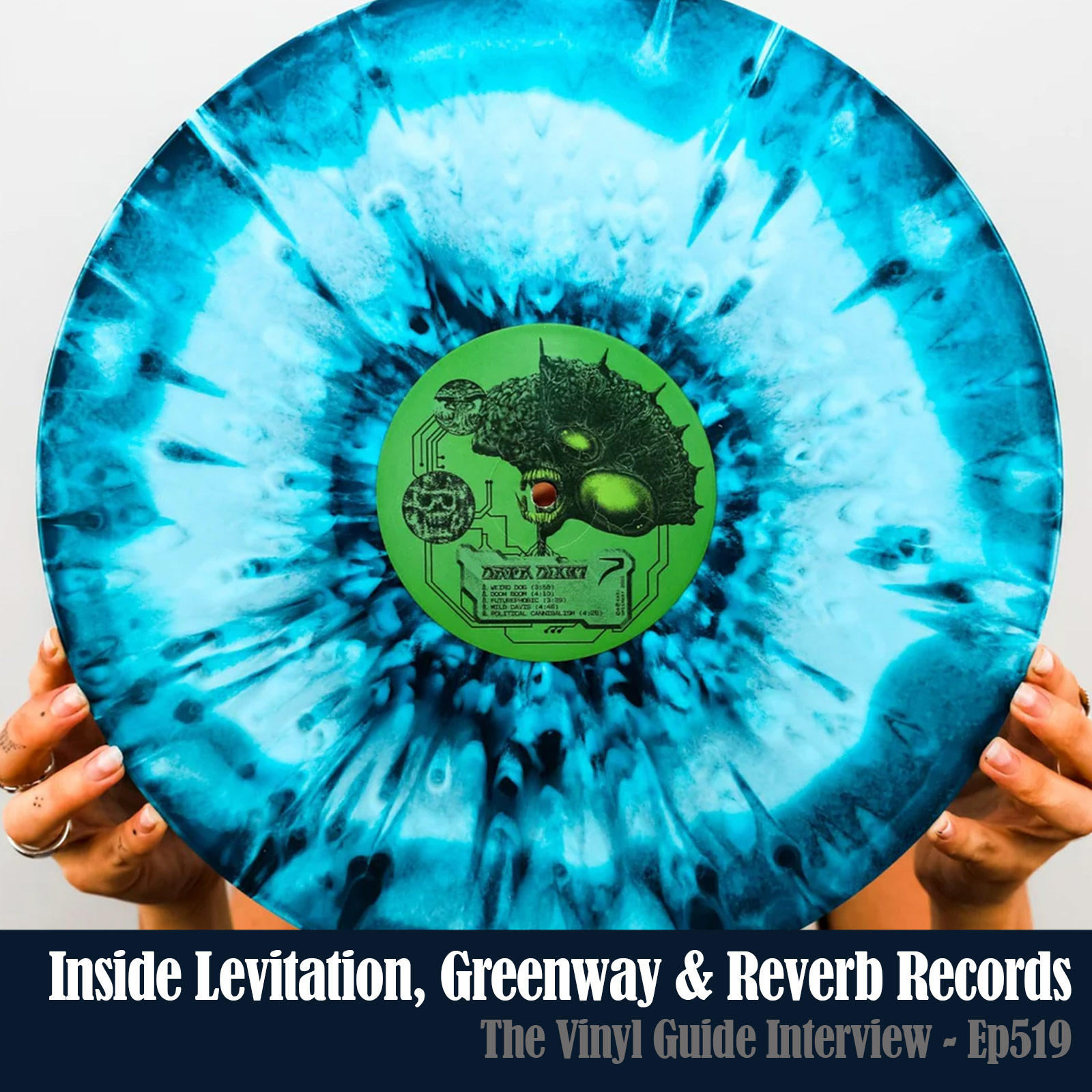
Ep 519Ep519: Inside Levitation, Greenway & Reverb Records w/ Harry Portnof
Record nerd Harry Portnof started Greenway Records, revived Reverb Appreciation Society, and now leads Levitation's label operations - today we discuss the elaborate vinyl variants and the clear passion for music the Levitation festival inspires. Topics Include: Harry Portnof runs Greenway Records, Levitation, and Reverberation Appreciation Society labels. Dad blasted southern rock and Allman Brothers at excessive volumes throughout childhood. Discovered dad's CD collection, dove deep into classic rock discographies. Taught himself guitar in high school after getting kicked off tennis team. Found grandmother's records in attic with broken turntable playing in mono. Mesmerized by grooves holding information, felt more futuristic than digital files. Got Project turntable in college, started seriously collecting vinyl records. College dorm had file sharing programs to download everyone's music collections. Became obsessed with seven-inch singles and exclusive B-side hunting on Discogs. Studied accounting, got CPA, worked Manhattan while spending money on records. Brooklyn DIY scene 2010-12: Death by Audio, Glasslands, 285 Kent venues thriving. Third Man Records inspired with collectible releases, impossible to get from New York. Playing in surf rock cover band The Midnight Snacks around Long Island. Started Greenway with friend Joey's pop punk band, 300 hand-screened seven-inches sold. Online forum of ten new labels supporting each other, Greenway only one remaining. Artist Dan Curran created lino cut covers for first thirty Greenway releases. Met LA Witch outside Music Hall, promised European tour records in two months. LA Witch success led to more touring bands wanting Greenway releases. Met Levitation founder Rob Fitzpatrick backstage at Desert Daze festival in California. Pandemic hit, launched Levitation Sessions producing concert films with thirty bands. Suddenly working with dream artists like Ty Segall and The Oh Sees. Levitation started as Austin Psych Fest in 2008, became major three-day festival. Flash flood disaster canceled festival one year despite bands and fans arriving. Austin's psych legacy rooted in 13th Floor Elevators and Rocky Erickson era. Levitation Sessions are filmed concerts; Live at Levitation are actual festival recordings. King Gizzard bootleg program allows labels to press their live shows freely. Learned vinyl manufacturing hands-on at New Jersey plant, experimenting with color pours. Most proud of Frankie and the Witch Fingers KEXP recording for Record Store Day. Market tightened post-pandemic, had to adjust pressing quantities and strategy accordingly. Creates regional variants for Australia, UK, EU retailers using Precision Record Pressing. High resolution version of this podcast is available at: www.Patreon.com/VinylGuide Apple: https://tinyurl.com/tvg-ios Spotify: https://tinyurl.com/tvg-spot Amazon Music: https://tinyurl.com/tvg-amazon Support the show at Patreon.com/VinylGuide