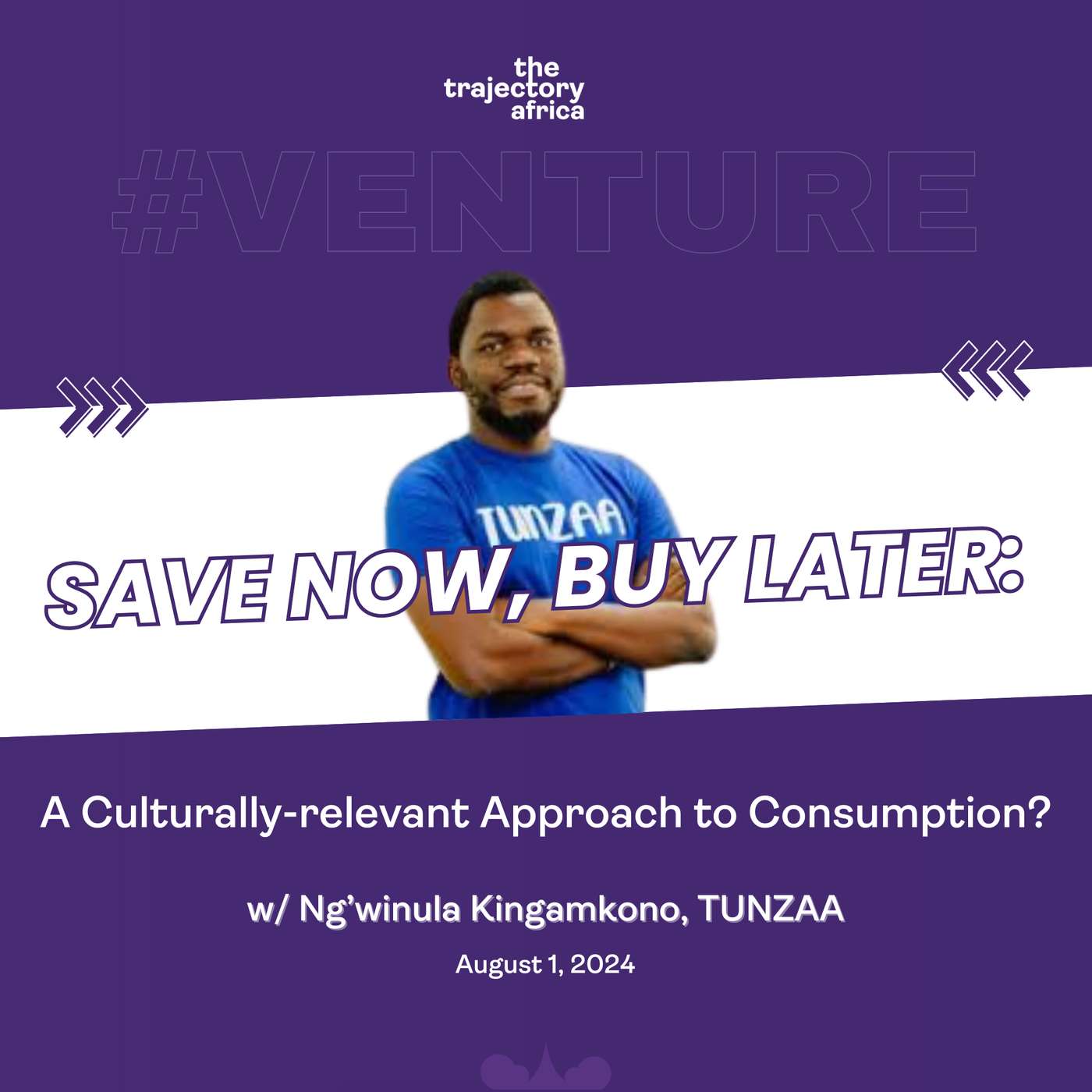
Save Now, Buy Later: A Culturally-relevant Approach to Consumption?
Audio is streamed directly from the publisher (media.transistor.fm) as published in their RSS feed. Play Podcasts does not host this file. Rights-holders can request removal through the copyright & takedown page.
Show Notes
In the previous episode of The Trajectory Africa, we explored the art and science of community lending to microbusinesses. In this episode, we turn from business lending to consumer savings, but as an antidote to a consumer lending model called buy now, pay later, or BNPL.
BNPL emerged as a global trend in the wake of COVID-19 and the tough macroeconomic environment that accompanied it. As inflation increased the cost of living, people started using these short term loans issued, after a quick credit check at the point of sale, to get by.
According to Afridigest, these solutions also proliferated across the continent, delivered by companies like LipaLater, Klump and Float. But SNBL products, otherwise known as save now buy later, are being offered by innovators who believe that BNPL lacks a viable business model, promotes cyclical indebtedness in its users, and contradicts cultural norms that favor saving over lending. Ng’winula Kingamkono, Founder and CEO of Tunzaa is on a mission to transform the financial habits of everyday Africans (and improve the business operations of merchants while he’s at it).
Tune in to hear about:
[1:49] - Ng’winula’s “alter ego”
[5:45] - Why save now buy later
[8:15] - How Tunzaa works
[16:28] - Building a two-sided marketplace, API first
[25:06] - Savings vs. credit culture
[30:50] - Product suite evolution and growth
[47:27] Beliefs about consumption and the impact of the macroeconomic environment, consumer behavior
[55:00] - Counterintuitive first principle
Recommendations:
- Save now, buy later: an emerging fintech model. This episode is inspired by Afridigest’s reporting on the save now, buy later model.
- Chasing Outliers. Why Context Matters for Early Stage Investing in Africa, a report I co-authored on VC investing in Africa.
Connect on social media: