The Thinking Muslim
338 episodes — Page 6 of 7
A Thinking Muslim’s Guide to Ramadan with Dr Sohail Hanif
Please help us this Ramadan by making a donation to the show - more information here: https://www.thinkingmuslim.com/DonateThis fascinating interview with Dr Sohail Hanif looks to uncover the secrets of Ramadan. What should the month indeed mean to believers? And what should we be striving to achieve this month? How should we treat its minutes and hours? And how do we know whether, as the hadith suggests, we have lost its blessings or gained success out of it? Dr Sohail is the Chief Executive of the National Zakat Foundation. He previously held the position of BA Manager and Lecturer at Cambridge Muslim College and has also held the position of Head of Sciences at Qasid Arabic Institute in Amman. He studied extensively with traditional scholars and holds a PhD from Oxford University. His PhD thesis, which explores Islamic legal epistemology, won the 2019 prize of the British Association for Islamic Studies. He has lectured widely on Islamic law and Qur’anic studies in academic, public and traditional settings.Join our Telegram group here: https://t.me/thinkingmuslim Follow us on Twitter here: https://twitter.com/jalalayn and https://twitter.com/thinking_muslimWebsite Archive: thinkingmuslim.com Hosted on Acast. See acast.com/privacy for more information.
Is poor mental health the product of weak Iman? - with Psychiatrist Dr Imran Waheed
Dr Imran Waheed is a consultant psychiatrist who specialises in acute mental health cases. We ask him about the mental health crisis, whether the lack of iman has a role in its prevalence and whether Islam has role in its cure. We look at consumer capitalism and sadness, the absence of community and faith and how one can build mental resilience.Join our Telegram group here: https://t.me/thinkingmuslim You can donate to the show here: https://www.thinkingmuslim.com/contributeFollow us on Twitter here: https://twitter.com/jalalayn and https://twitter.com/thinking_muslimWebsite Archive: thinkingmuslim.com Hosted on Acast. See acast.com/privacy for more information.
Hadith: What orientalists and modernists get wrong - with Dr Jonathan Brown
Dr Jonathan Brown joins us this week to engage in an in-depth discussion about the Hadith corpus and why contemporary arguments forwarded by orientalists and modernists lack rigour. He takes us on a journey of informed exploration of some of the key personalities and thinkers of early Islam and the lengths they went through to determine the veracity of a tradition attributed to the Messenger of Allah (saw). His books include The Canonization of al-Bukhari and Muslim: The Formation and Function of the Sunni Hadith Canon, Hadith: Muhammad’s Legacy in the Medieval and Modern World (Oneworld, 2009) and His most recent book, Misquoting Muhammad: The Challenges and Choices of Interpreting the Prophet’s Legacy (Oneworld, 2014), was named one of the top books on religion in 2014 by the Independent. He is the Alwaleed bin Talal Chair of Islamic Civilization in the School of Foreign Service at Georgetown University. Join our Telegram group here: https://t.me/thinkingmuslim You can donate to the show here: https://www.thinkingmuslim.com/contributeFollow us on Twitter here: https://twitter.com/jalalayn and https://twitter.com/thinking_muslimWebsite Archive: thinkingmuslim.com Hosted on Acast. See acast.com/privacy for more information.
Why did the Ottoman Caliphate fall 99 years ago? - with Dr Yakoob Ahmed
99 years ago, the Ottoman Caliphate, the world's last widely recognised caliphate, was abolished on 3 March 1924 (27 Rajab 1342 AH) by decree of the Grand National Assembly of Turkey. The process was one of Atatürk's reforms following the replacement of the Ottoman Empire with the Republic of Turkey. Abdulmejid II was deposed as the last Ottoman caliph, as was Mustafa Sabri as the last Ottoman shaykh al-Islām.We explore the circumstances that led to this momentous event. Why the Ottoman caliphate fell. What this date should mean to us? And the impact this decision had on Muslims at the time and has on us today.Dr Yakoob Ahmed holds a PhD graduate from SOAS, University of London. An Ottoman historian, he is currently teaching Islamic history at Istanbul University and was a visiting fellow at the Modern Turkish Studies Centre at Istanbul Şehir University. His research focuses are Muslim intellectual thought in the nineteenth and twentieth centuries, Islamic constitutionalism, identity, nationalism and collective memory construction.Join our Telegram group here: https://t.me/thinkingmuslim You can donate to the show here: https://www.thinkingmuslim.com/contributeFollow us on Twitter here: https://twitter.com/jalalayn and https://twitter.com/thinking_muslimWebsite Archive: thinkingmuslim.com Hosted on Acast. See acast.com/privacy for more information.
Is the British government looking to outlaw Islam? – Dr Layla Aitlhadj on the Shawcross Review
The British Conservative government has for some time embarked upon a project to make life difficult for ordinary Muslims. We have spoken previously about its policy of Prevent, an extraordinary state plan to compel all public servants to monitor Muslims in their midst and report on them if they showed signs of extremism. This project has enveloped the community within a cloud of suspicion, spread fear and self censorship and led to a series of malicious or ignorant allegations that has scarred thousands. The project has failed to root out violent extremism and has alienated a large number of Muslims, yet the response of the government is to tighten the screws. It’s failure is because it is not punitive enough according to the Home Secretary. This is where the new Shawcross review comes in. William Shawcross, known for his anti-Islamic opinions was cynically commissioned to lead an independent review into Prevent and suggest a way forward. The report suggests that normative Muslim positions should be viewed with suspicion, including believing that Islam should be the basis of one’s identity. Dr Layla Aitlhadj, my guest today, has been a tenacious campaigner to expose the extent of to which the government has violated the most basic rights of ordinary Muslim citizens. Her organisation Prevent Watch has helped countless Muslim families that have been caught up in this net of accusation. We ask her about the Shawcross review and its implications with some truly chilling revelations.Join our Telegram group here: https://t.me/thinkingmuslim You can donate to the show here: https://www.thinkingmuslim.com/contributeFollow us on Twitter here: https://twitter.com/jalalayn and https://twitter.com/thinking_muslimWebsite Archive: thinkingmuslim.com Hosted on Acast. See acast.com/privacy for more information.
Are Earthquakes a Punishment from Allah? With Imam Omar Suleiman
The sadness we feel after the earthquakes in Turkiye and Syria is heightened by our Ummatic feelings of closeness to the worldwide muslim community. Many of those affected have been subject to years of civil war at the hands of a brutal dictator. Sadly, this is yet another disaster that has befallen this Umma and we pray that Allah has mercy on those that died and enter them into a place where there is eternal peace. This week we interview Dr Omar Suleiman to discuss the issue of earthquakes and whether they are a punishment from Allah, as many ascribe to these natural events or whether they are a test. Human beings can never understand the wisdom of Allah (swt) and we are without knowledge of the ultimate good and bad impacts of natural disasters. We ask Dr Suleiman to give us an understanding of the texts from the Quran and sunna that explain these events to us. Sadly, many especially in the West who may have not consolidated their Iman on a strong footing, question the wisdom of Allah and fail to develop the intellectual and spiritual resilience that is required to be a believer. We tackle how to build up this store of resilience. We also take the opportunity to discuss some of his political views on the broader Syrian civil war and the inconsistencies in some political activists. As always, you can comment your thoughts below. You can donate to the show here: Join our Telegram group here: https://t.me/thinkingmuslim You can donate to the show here: https://www.thinkingmuslim.com/contributeFollow us on Twitter here: https://twitter.com/jalalayn and https://twitter.com/thinking_muslimWebsite Archive: thinkingmuslim.com - Hosted on Acast. See acast.com/privacy for more information.
Islam without Compromise with Moazzam Begg
The war on terror, a US-led strategy that saw deadly interventions in the Muslim world, has transformed a generation of Muslims. Some, like my guest today, unwittingly got caught up in this mindless campaign and 21 years after the events of 9/11, we still feel the aftereffects of programmes that placed every Muslim in categories, moderate or extreme, good and bad, loyal or disloyal.Moazzam Begg, a former Guantanamo detainee upon his release, has been a tireless campaigner for the truth, exposing its lies and deceits. In the process, he and his organisation CAGE international have tactically contacted non-Muslim sympathisers and wider Human Rights organisations. But I asked him about the risks involved in this strategy. Many a time, Muslims that receive such support are forced to compromise. The left wants Islam to change and come with various social positions we find problematic. The right often possesses a chauvinism that calls upon Muslims to accept a secondary role in society. I ask Moazzam to conceptualise how he navigates these binaries.Join our Telegram group here: https://t.me/thinkingmuslim You can donate to the show here: https://www.thinkingmuslim.com/contributeFollow us on Twitter here: https://twitter.com/jalalayn and https://twitter.com/thinking_muslimWebsite Archive: thinkingmuslim.com - Hosted on Acast. See acast.com/privacy for more information.
Hamza Tzortzis on Muslim Men, Misogyny & Masculinity
After a brief pause, we are back and now on YouTube video. In this episode, we explore with Hamza Tzortzis the crisis of the modern Muslim man. We live in a fast-paced world dominated by technology. Social media has enhanced our lives and given space for Muslims to build networks, raise the profile of beleaguered members of our ummah and forward the call of Islam.With the goodness that comes from this compression of time and space, there are also challenges. In their eagerness to contribute to da’wah, many young men often lack the necessary characters to meet its requirements. Borrowing from the worst marketing strategies, they employ click-bait, shock and awe tactics and cheap stunts as a shortcut to achieve electronic likes and fame. Response videos and futile debates are used to curry favour with their growing base. Hamza Tzortsis shares the same concerns about this approach to dawah. We ask him about his journey and how he believes the community must address the absence of good mentoring and a programme of personal development. We also discuss the general perceptions, right or wrong, about young Muslim men.Join our Telegram group here: https://t.me/thinkingmuslim You can donate to the show here: https://www.thinkingmuslim.com/contributeFollow us on Twitter here: https://twitter.com/jalalayn and https://twitter.com/thinking_muslimWebsite Archive: thinkingmuslim.com - Hosted on Acast. See acast.com/privacy for more information.
My Journey from the Far-Right to Islam with Joram van Klaveren
Joram van Klaveren understands the far right in Europe, this is because he was one of them. As a leading member of Geert Wilder’s Dutch Freedom Party and MP in parliament, he argued for a Netherlands without Islam. This was until he decided to write a book to attack Islam, and his research ultimately led him to embrace the faith. Today he calls for Europe to reconsider its irrational hatred towards Muslims. I ask him to tell us his story, address immigration and explain how the far-right functions.Thanks to the team: Riaz Hasan, Adeel Alam, Yusra Zainuddin, Ahaz Atif and Umar Abdul Salam.Join our Telegram group here: https://t.me/thinkingmuslim You can donate to the show here: https://www.thinkingmuslim.com/contributeFollow us on Twitter here: https://twitter.com/jalalayn and https://twitter.com/thinking_muslimWebsite Archive: thinkingmuslim.com - Hosted on Acast. See acast.com/privacy for more information.
American Muslims, Social Liberalism & the Culture Wars with Mobeen Vaid
Mobeen Vaid has been at the forefront of addressing the creeping liberalisation of social attitudes of the Muslim community and how these opinions often are way out of sync with the global Muslim ummah and Islam. Mobeen’s erudite commentary has looked to counter and critique these trends and today he lectures at Mosques and community centres across the US.Thanks to the team: Riaz Hasan, Musab Muhammad, Reem Walid, Adeel Alam, Yusra Zainuddin, Ahaz Atif and Umar Abdul Salam. Join our Telegram group here: https://t.me/thinkingmuslim You can donate to the show here: https://www.thinkingmuslim.com/contribute Follow us on Twitter here: https://twitter.com/jalalayn and https://twitter.com/thinking_muslim Website Archive: thinkingmuslim.com - Hosted on Acast. See acast.com/privacy for more information.
The British Conservative Government & Prevent with Dr. Layla Aitlhadj
Prevent, a statutory duty of all public officials, looks to find what the government calls signs of radicalisation. Often, these indicators are conflated with Islamic practice or subject to the prejudices of teachers and other officials that have been whipped up in a McCarthyite-style frenzy.Dr Layla Aitlhadj is the Director of PreventWatch, she Is an academic and activist who has been following the trail of mayhem caused by Prevent and has for years held the government to account. Thanks to the team: Riaz Hasan, Musab Muhammad, Reem Walid, Adeel Alam, Yusra Zainuddin, Ahaz Atif and Umar Abdul Salam.Join our Telegram group here: https://t.me/thinkingmuslimYou can donate to the show here: https://www.thinkingmuslim.com/contributeFollow us on Twitter here: https://twitter.com/jalalayn and https://twitter.com/thinking_muslimWebsite Archive: thinkingmuslim.com - Hosted on Acast. See acast.com/privacy for more information.
Muslims and the making of 'The Enemy Within' with Peter Oborne
The journalist Peter Oborne stands out as one of the few defenders of our community in the mainstream press. Over the past two decades he has worked tirelessly to speak truth to power. He is currently a writer for the Middle East Eye and was named as British Press Awards Columnist of the Year in 2013. Previously he worked as the chief political columnist of the Daily Telegraph until he resigned in 2015. His latest book is The Fate of Abraham: Why the West is Wrong about Islam, which takes a look at the often-opaque world of the Islamophobia industry. Importantly, Oborne is a conservative and until 2019 was a member of the Conservative Party until he resigned in disgust at Boris Johnson’s leadership.Thanks to the team: Riaz Hasan, Musab Muhammad, Reem Walid, Adeel Alam, Yusra Zainuddin, Ahaz Atif and Umar Abdul Salam.Join our Telegram group here: https://t.me/thinkingmuslimYou can donate to the show here: https://www.thinkingmuslim.com/contributeFollow us on Twitter here: https://twitter.com/jalalayn and https://twitter.com/thinking_muslimWebsite Archive: thinkingmuslim.com - Hosted on Acast. See acast.com/privacy for more information.
Islamic Manhood, Chivalry & Red Pill - with Imam Dawud Walid
Imam Dawud Walid has recently published a serious contribution to the subject of manhood. He argues that the rich classical scholarly works detailing how to bring up young men have been forgotten. This sacred idea of chivalry may look out of place in modernity, but it produced well-balanced young men that combine courage with humility, strength with forgiveness and public duty with prayer. Imam Dawud Walid believes Islamic masculinity is not naturally acquired but has to come from revelation and reinforced by models of manhood within families and communities. He has recently authored a brilliant book titled, Futuwwah: and raising males into sacred manhood. A timely contribution to the topic.You can follow Imam Dawud Walid's Telegram group here https://t.me/dawudwalidThanks to the team: Riaz Hasan, Musab Muhammad, Reem Walid, Adeel Alam, Yusra Zainuddin, Ahaz Atif and Umar Abdul Salam. Join our Telegram group here: https://t.me/thinkingmuslimYou can donate to the show here: https://www.thinkingmuslim.com/contributeFollow us on Twitter here: https://twitter.com/jalalayn and https://twitter.com/thinking_muslim Website Archive: thinkingmuslim.com - Hosted on Acast. See acast.com/privacy for more information.
Remembering Death & The Afterlife with Kamal Abu Zahra (Repeat)
This is a repeat of a show first published in early 2020Death has become a part of our everyday lives. Covid-19 and its spread have brought home to us the undeniable reality that we are mortal beings and our accumulation of wealth, prestige and power will come to an end. How we think about death impacts on how we think about life. So how should death be conceptualised? How should we really remember death, beyond the occasional thoughts about it? How do we make death our partners and our guide in conditioning our present? To understand this idea, I have invited Kamal Abu Zahra – a lecturer in Islamic studies, currently completing his PhD in looking at the minority fiqh and its compatibility with classical notions of scholarship. I ask Kamal some searching questions about death and how we should see it, how we should confront its claims upon us, and how we should address it when death falls on someone close to us. Thanks to the team: Musab Muhammad, Reem Walid, Adeel Alam, Yusra Zainuddin, Ahaz Atif and Umar Abdul Salam. You can donate to the show here: https://www.thinkingmuslim.com/contribute Follow us on Twitter here: https://twitter.com/jalalayn and https://twitter.com/thinking_muslim Website: thinkingmuslim.com Hosted on Acast. See acast.com/privacy for more information.
Constructing an Ummatics Centered Caliphate – with Prof. Ovamir Anjum
Our guest this week, Professor Ovamir Anjum argues that any future reconstruction of this sacred institution has to be premised upon what he calls an Ummatics framework, an ummah-centric model. He argues that the rashidun model was fundamentally based on the consent of the ummah, and through shura, that is, consultation, and this is how the earlier caliphs successfully built an empire unlike any other. In this interview, Muhammad Jalal asks him to spell out what it means to think in an ummatic way and elucidate on the practicalities.Ovamir Anjum is the Imam Khattab Chair of Islamic Studies at the Department of Philosophy, University of Toledo; he wrote the article ‘Who Wants a Caliphate’ found here: https://yaqeeninstitute.org/read/paper/who-wants-the-caliphateOur 2019 interview with Prof. Anjum here: https://www.thinkingmuslim.com/podcast/17The Ummatics Colloquium website can be found here: https://ummaticscolloquium.org Thanks to the team: Riaz Hasan, Musab Muhammad, Reem Walid, Adeel Alam, Yusra Zainuddin, Ahaz Atif and Umar Abdul Salam.You can donate to the show here: https://www.thinkingmuslim.com/contributeFollow us on Twitter here: https://twitter.com/jalalayn and https://twitter.com/thinking_muslimWebsite: thinkingmuslim.com - Join our Telegram group here: https://t.me/thinkingmuslim Hosted on Acast. See acast.com/privacy for more information.
The Problems with Islamic Finance & The Case for Bitcoin with Harris Irfan
Our guest this week is an insider turned sceptic. Harris Irfan takes on the essential purpose and complexities of Islamic finance and questions whether it has fulfilled its lofty Islamic objectives. Harris is the author of “Heaven’s Bankers: Inside the hidden world of Islamic Finance”.In this discussion with Riaz Hasan, he talks candidly about how much Islamic finance depends on a capitalist riba-based architecture. He recalls his part in acquiring funding for the Makkah clock tower, a project he now regrets. This is a fascinating look at the players and motives of an industry. Harris also offers his views on Bitcoin as a more Islamic alternative above the gold standard, traditionally accepted as a stable shariah-based currency.Thanks to the team: Musab Muhammad, Reem Walid, Adeel Alam, Yusra Zainuddin, Ahaz Atif and Umar Abdul Salam.You can donate to the show here: https://www.thinkingmuslim.com/contributeFollow us on Twitter here: https://twitter.com/jalalayn and https://twitter.com/thinking_muslimWebsite: thinkingmuslim.com Hosted on Acast. See acast.com/privacy for more information.
Jordan Peterson, White Supremacy & the Perils of Engagement - with Yahya Birt
Is there a problem with Muslim public intellectuals and scholars that engage with the political right? My guest this week, Yayha Birt, believes that white convert scholars that interact with the likes of Jordan Peterson should evaluate whether they risk confirming their anti-Islam prejudices and a distasteful pro-white ideology that today undergirds the populist white nativist backlash. In a recent piece he penned, found here: https://www.ihrc.org.uk/the-unbearable-whiteness-of-being-convert-leaders-in-the-west-and-the-new-ethno-nationalism/ Birt, a Muslim convert, is critical of those that belong to the neo-traditionalist school, an Islamic persuasion he shares, who need to ask more profound questions about their outreach activities with the right-wing and whether by doing so they undermine second and third generation Muslims who face racial and religious hatred in the mainstream.Yahya Birt is a research director at the Ayaan Institute in London and is a community historian who has taught at the University of Leeds. He has published over a dozen peer-reviewed articles on Islam in Britain and co-edited British Secularism and Religion (2016), Islam in Victorian Liverpool (2021) and The Collected Poems of Abdullah Quilliam (2021).His most recent book on Abdullah Quilliam can be found here: https://www.amazon.co.uk/Islam-Victorian-Liverpool-Britains-Community/dp/1800119828/ More about Yahya Birt here https://ayaaninstitute.com/yahya-birt/ Thanks to the team: Riaz Hasan, Musab Muhammad, Reem Walid, Adeel Alam, Yusra Zainuddin, Ahaz Atif and Umar Abdul Salam.You can donate to the show here: https://www.thinkingmuslim.com/contributeFollow us on Twitter here: https://twitter.com/jalalayn and https://twitter.com/thinking_muslimWebsite: thinkingmuslim.com Hosted on Acast. See acast.com/privacy for more information.
Roe v. Wade, Abortion & Islam with Dr Tahseen Shareef and Ustadh Iyad Hilal
Our guests this week, distinguished in their fields take a deeper look at the issues arising from the revocation of abortion as a constitutional right. What exactly is the position of shari’ah regarding abortion? What did the classical scholars say about the issue and is there a difference with more modern takes? How do we appreciate the political context of the Supreme Court decision and what are the social repercussions? My guests have a rich background and expertise and as you know, this podcast wants to move our thinking away from the ill-informed vox pop style contributions everyone seems to want to make without the depth of study required.Dr Tahseen Shareef is a US based physician specialising in internal medicine. She started two Islamic schools in her home state California, delivers Islamic circles to women, and is currently pursuing Islamic studies on top of her busy clinical responsibilities. Iyad Hilal is an author of an acclaimed book on Usul al Fiqh and regular Friday khateeb at Mosques in California.Thanks to the team: Riaz Hasan, Musab Muhammad, Reem Walid, Adeel Alam, Yusra Zainuddin, Ahaz Atif and Umar Abdul Salam.You can donate to the show here: https://www.thinkingmuslim.com/contributeFollow us on Twitter here: https://twitter.com/jalalayn and https://twitter.com/thinking_muslimWebsite: thinkingmuslim.com Hosted on Acast. See acast.com/privacy for more information.
Islamophobia & The Trojan Horse Affair with Tahir Alam
The trojan horse affair upended education policy in the UK and gave rise to one of the most problematic policies, the prevent duty. If you haven’t already, The New York Times Serial podcast on the subject is worth a listen – Tahir and his colleagues were vindicated as concerned parents caught up in a systematic programme of islamophobia. Riaz Hasan and Muhammad Jalal caught up with Tahir Alam - the man at the centre of the scandal - to try to understand the broader motivations of government and others hell bent on tuning back the tide of young Muslim achievement and in the process stoking Islamophobia.Thanks to the team: Riaz Hasan, Musab Muhammad, Reem Walid, Adeel Alam, Yusra Zainuddin, Ahaz Atif and Umar Abdul Salam. You can donate to the show here: https://www.thinkingmuslim.com/contributeFollow us on Twitter here: https://twitter.com/jalalayn (Host) and https://twitter.com/thinking_muslim Website: thinkingmuslim.com Hosted on Acast. See acast.com/privacy for more information.
Is Modernity Destroying the Human Mind? - with Shaykh Abdal Hakim Murad
You can donate to the show here: https://www.thinkingmuslim.com/contributeIs modernity destroying the human mind? This is the question we ask our guest this week, Shaykh Abdal Hakim Murad (Dr Tim Winters of the Cambridge Muslim College). Many of us are fortunate to live in a world where every desire we have are met yet curiously our ability to process these blessings leads many to a dark place, a state of mental anguish. It seems the more we have the less happy we are. The more we live in concrete jungles the more anxious we become. This begs a larger question, is there a fundamental problem with the way we live, is there a problem with modernity?Dr Tim Winters is Founder and Dean of the Cambridge Muslim College, Aziz Foundation Professor of Islamic Studies at both Cambridge Muslim College and Ebrahim College, Director of Studies at Wolfson College and Lecturer of Islamic Studies in the Faculty of Divinity at University of Cambridge. He has translated classical works including a translation of two volumes of the Islamic scholar al-Ghazali's Ihya Ulum al-Din. Thanks to the team: Riaz Hasan, Musab Muhammad, Reem Walid, Adeel Alam, Yusra Zainuddin, Ahaz Atif and Umar Abdul Salam.Follow us on Twitter here: https://twitter.com/jalalayn and https://twitter.com/thinking_muslimWebsite: thinkingmuslim.com Hosted on Acast. See acast.com/privacy for more information.
French Muslims and Macron's campaign of 'Systematic Obstruction' with Rayan Freschi
At the time of this episode’s release, the outcome of the French presidential election has yet to be announced. It is likely the incumbent, Emmanuel Macron, will come back to office, once again defeating his hard-right rival Marine Le Pen. Many Muslims may breathe a sigh of relief, Le Pen stands out as a viscerally anti-Muslim candidate in a country where it’s hard to find any moderate voices. But in many ways, Macron’s return to power is meaningless for the Muslim community in France. For all the calls for greater political participation, the choice for many is between one form of Islamophobia over another.Muslims in France find themselves wedged between a rock and a hard place. Today, our guest, Rayan Freschi, a legal expert and researcher for CageUK has recently authored a disturbing report on the French government’s policy of “systematic obstruction” of the Muslim community. He uncovers how the French state under Macron has targeted peaceful Muslims, shut down Mosques, closed charities, hounded Islamic schools and made it impossible for civil society to operate independently from the state. His report, found in the show notes, makes a chilling read. Rayan tells me that the French state is shutting down Islam in France. We talk about how this systematic obstruction has manifested and the consequence for Europe’s largest Muslim community.Download the report here https://www.cage.ngo/we-are-beginning-to-spread-terror-report Thanks to the team: Riaz Hasan, Musab Muhammad, Reem Walid, Adeel Alam, Yusra Zainuddin, Ahaz Atif and Umar Abdul Salam.You can donate to the show here: https://www.thinkingmuslim.com/contributeFollow us on Twitter here: https://twitter.com/jalalayn and https://twitter.com/thinking_muslimWebsite: thinkingmuslim.com Hosted on Acast. See acast.com/privacy for more information.
An Intelligent Guide to Zakat with Dr Osman Umarji
Zakat is often mischaracterised as merely the act of paying individual alms. In reality it is a sophisticated system of wealth redistribution and spiritual sacrifice that helps to nurture a true Muslim fraternity. It is customary to pay Zakat in Ramadan, as this is when the reward is greatest for all deeds but also the heightened sense of brotherhood and the absence of Shaytaan’s whispers asking us to hold back, means that charitable donations flood various causes.But what is Zakat? To whom can it be paid? How do we calculate Zakat? Which organisations can we offer our money to? What if we have debt? These questions and more will be answered by my learned guest today. Dr Osman Umarji is a director at Yaqeen Institute, he is also a Professor in the School of Education at UC Irvine and has studied at Al Azhar university.Thanks to the team: Riaz Hasan, Musab Muhammad, Reem Walid, Adeel Alam, Yusra Zainuddin, Ahaz Atif and Umar Abdul Salam.You can donate to the show here: https://www.thinkingmuslim.com/contributeFollow us on Twitter here: https://twitter.com/jalalayn and https://twitter.com/thinking_muslimWebsite: thinkingmuslim.com Hosted on Acast. See acast.com/privacy for more information.
Russia's War on Ukraine with Professor Joseph Kaminski
Russia’s invasion of Ukraine dominates the news. This audacious attack on a neighbouring country has shocked Europe with its sheer brutality. Of course, Muslims have experience of Russia’s tactics in war, from Grozny in Chechnya to East Aleppo and beyond – the Russian military machine is neither guided by morality nor humanity. In Aleppo alone, some 30,000 civilians were slaughtered, leaving the few that remained to painfully evacuate their city.But when all is said about the double standards, Muslims are confronted with two big questions, how should we understand the crisis and how should we respond. Sadly on both counts many have opted to either embrace the left’s anti-imperialism narrative and in turn sound like they sympathise or support Putin’s actions.This week invite back onto The Thinking Muslim, Professor of International Relations Joseph Kaminski from the International University of Sarajevo. Joseph speaks to me about the crisis, how to view the actions of America and the impact upon Muslims in Bosnia, who are once again facing a belligerent Serbian movement, supported by Russia. He also passionately discusses some of the takes that have been circulating the Muslim twitter-sphere.Thanks to the team: Riaz Hasan, Musab Muhammad, Reem Walid, Adeel Alam, Yusra Zainuddin, Ahmed Serag, Ahaz Atif and Umar Abdul Salam.You can donate to the show here: https://www.thinkingmuslim.com/contributeFollow us on Twitter here: https://twitter.com/jalalayn and https://twitter.com/thinking_muslimWebsite: thinkingmuslim.com Hosted on Acast. See acast.com/privacy for more information.
The Trojan Horse Affair – Britain’s Anti-Terror Industry with Fahad Ansari and Dr Rob Faure Walker
We are back after a short pause. Britain for the past 21 years has been overtaken by what can only be described as a national hysteria. The recent jaw-dropping investigation by the New York Times Serial podcast into the so-called Trojan Horse affair in Birmingham, revealed how this hysteria translated into a deep-seated national display of Islamophobia.Fahad Ansari is a lawyer and public activist, who in his professional career has defended many Muslims who have fallen foul of Britain’s nationality laws, including very high-profile cases of citizenship deprivation.Dr Rob Faure Walker is an academic and author specialising in critiquing Britain’s anti-terror educational policy, also known as Prevent. His book can be found here: https://www.waterstones.com/book/the-emergence-of-extremism/dr-rob-faure-walker/9781350199507 Thanks to the team: Riaz Hasan, Musab Muhammad, Reem Walid, Adeel Alam, Yusra Zainuddin, Ahmed Serag, Ahaz Atif and Umar Abdul Salam.You can donate to the show here: https://www.thinkingmuslim.com/contributeFollow us on Twitter here: https://twitter.com/jalalayn and https://twitter.com/thinking_muslimWebsite: thinkingmuslim.com Hosted on Acast. See acast.com/privacy for more information.
On Jihad, Empire and Solidarity - a Conversation with Dr Darryl Li and Dr Ovamir Anjum
This past week marks twenty years since the opening of the infamous detention centre, Guantanamo Bay. It remains a symbol of the hollowness of the very values that underpin the liberal world order. Camp X ray was to house dangerous ‘jihadists’, a nebulous general term that is used to describe those foreign fighters that would for no 'explicable' reason travel to distant parts of the world to fight other peoples wars. Within time, the term came to explain a universal ideology, from Bosnia to Afghanistan, Palestine to Kashmir – those that crossed national boundaries to fight for an oppressed ummah were lumped into a singular narrative, stripped of acceptable political motives and removed of their humanity.Dr Daryl Li is a practicing lawyer and anthropologist who has written a brilliant work on global jihad mobilisation in Bosnia. His book, titled The Universal Enemy: Jihad, Empire, and the Challenge of Solidarity, challenges the prevailing narrative – and attempts to ask more searching and important questions. Joining us is Professor Ovamir Anjum, who reflects on Dr Li’s work and the broader themes that come from it.Thanks to the team: Riaz Hasan, Musab Muhammad, Reem Walid, Adeel Alam, Yusra Zainuddin, Ahmed Serag, Ahaz Atif and Umar Abdul Salam.You can donate to the show here: https://www.thinkingmuslim.com/contributeFollow us on Twitter here: https://twitter.com/jalalayn and https://twitter.com/thinking_muslimWebsite: thinkingmuslim.com Hosted on Acast. See acast.com/privacy for more information.
The Importance of Community in Islam - With Dr Shadee Elmasry
Today we invite back Dr Shadee Elmasry, Imam and community leader who has worked tirelessly at the local level to develop strong communities premised upon an Islamic framework. We ask Dr Shadee to spell out the importance of communities in Islam and how the modern maladies that come from individualism can be remedied.Thanks to the team: Riaz Hasan, Musab Muhammad, Reem Walid, Adeel Alam, Yusra Zainuddin, Ahmed Serag, Ahaz Atif and Umar Abdul Salam.You can donate to the show here: https://www.thinkingmuslim.com/contributeFollow us on Twitter here: https://twitter.com/jalalayn and https://twitter.com/thinking_muslimWebsite: thinkingmuslim.com Hosted on Acast. See acast.com/privacy for more information.
France's War in the Sahel - with Dr Alex Thurston
The Sahel, a region spanning the countries of West Africa, has been rocked by instability for the past few years. There is what the West calls an Islamist insurgency that has provoked international intervention, from France (the former colonial power) but also the United States. The region is one of the richest in the world in terms of natural resources, including oil, gold and uranium. Yet it’s one of the poorest in the world, the proceeds of these extractive industries rarely reaches the people.This week, we talk to Dr Alex Thurston, a specialist in the region, and Assistant Professor of Political Science at the University of Cincinnati to explain why the Sahel is important. Alex has written extensively about the Sahel and is an authority, regularly contributing to reports and discussions.You can donate to the show here: https://www.thinkingmuslim.com/contributeFollow us on Twitter here: https://twitter.com/jalalayn and https://twitter.com/thinking_muslimWebsite: thinkingmuslim.com Hosted on Acast. See acast.com/privacy for more information.
The Ottoman Ulema 2: The Printing Press, Coffee and Secularisation with Dr Yakoob Ahmed
In this second part of an extended interview with Ottoman historian, Dr Yakoob Ahmed from Istanbul University, we take a look at some of the challenges and controversies that are associated with the ulema during the latter period of the Ottoman Empire. We ask Dr Ahmed to explain why it is said that the ulema were an obstruction to the progress of the Caliphate and scrutinise the claims that the ulema outlawed the printing press and coffee.You can donate to the show here: https://www.thinkingmuslim.com/contributeFollow us on Twitter here: https://twitter.com/jalalayn and https://twitter.com/thinking_muslimWebsite: thinkingmuslim.com Hosted on Acast. See acast.com/privacy for more information.
The Ottoman Ulema 1: Osman, The Caliphate & The Mamluks - With Dr Yakoob Ahmed
In this two part show we talk Dr Yakoob Ahmed from Istanbul University about the relationship between the ulema (scholars) and the Ottoman empire. Were they mere political apparatchiks, steeped in the power and patronage of powerful sultans?In this first part we take a look at the Ottoman ulema in the early period, the issue of the 'caliphate', Sultan Fatih's ilmiyah reforms and Sultan Selim's defeat of the Mamluks and the response of the Arab ulema and the independence of the ulema system.You can donate to the show here: https://www.thinkingmuslim.com/contributeFollow us on Twitter here: https://twitter.com/jalalayn and https://twitter.com/thinking_muslimWebsite: thinkingmuslim.com Hosted on Acast. See acast.com/privacy for more information.
US Liberalism & Islamic Exceptionalism with Dr Shadi Hamid
As you all know, this podcast is no stranger to dissecting the narrative forwarded by liberals in general and those within our community that self-identify as Muslim liberals. And if you know me you would know that I don’t particularly find the modernist narrative appealing nor elegant in their appeals to what I and I think most Muslims see as the ideas of an incoherent worldview that has undermined human societies the world over.With these caveats in mind, this episode we dedicate to a discussion with an American Muslim liberal, Dr Shadi Hamid. I have followed his work for some years and although we part company on a number of issues, as you will hear, I do feel Shadi is a reluctant liberal, open to criticise not only those inconsistencies he witnesses but also he attempts to make sense of American foreign policy in light of his values and I am not sure he is always successful in reaching a satisfactory answer.We discuss American liberalism, the trends towards nativism, exemplified in the near re-election of Donald Trump last year but also how he reconciles his liberal worldview with his Islamic faith, which I know he thinks a lot about. Shadi has written a number of books on the Muslim world, this is where he made his name in American political and academic circles, so we spend time talking about the attitudes of Muslims in the Muslim world towards Islam as well as the often-simplistic way US policy treats the Middle East and Islamic parties.For more links to Shadi Hamid's biography and works, please view the Insights page on the show Follow us on Twitter here: https://twitter.com/jalalayn and https://twitter.com/thinking_muslimWebsite: thinkingmuslim.com Hosted on Acast. See acast.com/privacy for more information.
Islamic Governance, Caliphates and Emirates - with Iyad Hilal and Kamal Hussain
Since the demise of the Ottoman Caliphate, the Muslim world has moved from one crisis to another. The parlous state of the ummah is now the subject of many discussions and numerous Islamic groups have attempted to find the magic formula to reverse this decline. Invariably and correctly, the subject of a return to Islamic governance has become a rallying call for many that seek to return to a place where the ummah was a leading one.Yet recently, the rise of ISIS and the return to the Taliban government has given us two very different yet for some, very troubling models of how a shariah ruled state should run. Beyond these examples, contemporary Islamic study on the topic either negates well-known Islamic precedents found in our tradition or offers models of authoritarianism where a caliph has the control over all and is one step away from repression.Today we have brought together two Islamic thinkers and scholars that have been working for some time on rethinking Islamic governance. Ustadh Iyad Hilal is no stranger to this show, he is an instructor at the al-Arqam Institute in California and is a regular imam and khateeb at Masajids across his state. Kamal Hussain is a lecturer and legal expert who recently delivered a paper to academics and scholars on ‘al Sultan-al Ummah’ the authority of the Ummah, he argues that this Islamic principle has been lost over time, with many theorists viewing the role of the people as no more than passive citizens in a caliphate structure.An earlier version of this episode had some formatting errors. This has now been fixed. Follow us on Twitter here: https://twitter.com/jalalayn and https://twitter.com/thinking_muslimWebsite: thinkingmuslim.com Hosted on Acast. See acast.com/privacy for more information.
The Taliban & The End of US Hegemony - with Sami Hamdi and Ibrahim Moiz
This week we bring together two commentators and analysts to make sense of the regional and international dimensions to the crisis. Sami Hamdi is the Editor-in-Chief of the International Interest. An experienced geopolitical analysts, he is a frequent guest on Aljazeera, Sky News, TRT World, and other outlets. Ibrahim Moiz is a writer and researcher on South Asia with considerable insight into Afghanistan and Pakistan. He writes for TRT World and other outlets. We consider the events of the past twenty years and what next for America and the Muslim world.Follow us on Twitter here: https://twitter.com/jalalayn and https://twitter.com/thinking_muslimWebsite: thinkingmuslim.com Hosted on Acast. See acast.com/privacy for more information.
Does Islam need a liberal reformation? Mustafa Akyol and Dr Ovamir Anjum
This episode we bring together two scholars, each on either side of the reform debate. Mustafa Akyol is probably the most notable Muslim modernist and reformer, he has authored several best-selling books on the subject, most recently “Reopening Muslim Minds: A Return to Reason, Freedom, and Tolerance”. His argument, as we will hear, is certainly well-articulated and nuanced. He writes regularly for the New York Times and other publications. And his is joined with Professor Ovamir Anjum who is Imam Khattab Endowed Chair of Islamic Studies at the Department of Philosophy and Religious Studies, University of Toledo. Ovamir penned a recent piece on the need for a Caliphate and argues against the reform agenda and has written extensively about Ibn Taymiyyah, who was the subject of his research.Follow us on Twitter here: https://twitter.com/jalalayn and https://twitter.com/thinking_muslimWebsite: thinkingmuslim.com Hosted on Acast. See acast.com/privacy for more information.
Why Islam is Incompatible with Liberalism with Professor Joseph Kaminski
We live in a world crafted by the tenets of liberalism. Western societies, of all hues, broadly base their politics, laws and thinking around this very idea. Inevitably, Muslims have been impacted by liberalism, not least because after the fall of the Ottoman caliphate, the Muslim world became subject to a liberal intellectual inquisition. Today many of us cannot see the tradition except through a liberal lens, this is most pronounced with Muslims living in western societies.This week we have probably one of the most learned authorities on the subject. Professor Joseph Kaminski from the University of Sarajevo has recently published a really important academic work on the subject, titled Islam, Liberalism and Ontology. His book is available here: https://www.routledge.com/Islam-Liberalism-and-Ontology-A-Critical-Re-evaluation/Kaminski/p/book/9780367534110Follow us on Twitter here: https://twitter.com/jalalayn and https://twitter.com/thinking_muslim Hosted on Acast. See acast.com/privacy for more information.
Ottoman Decline & Muslim Collective Amnesia with Dr Yakoob Ahmed
The Ottoman state was the last Islamic Caliphate, that at its height brought diverse Muslims together under one banner. Yet, for a state that dominated world politics and created a unique order in the world, very little of its details are studied and understood by Muslims. According to Dr Yakoob Ahmed, my guest this week, this ‘collective amnesia’ was deliberately devised as a means to consolidate the modern nation state. I initially asked Dr Ahmed to discuss Ottoman decline, why this vast empire fell in 1924, but as you will hear – his rich understanding of Ottoman history takes the conversation to many fascinating places.Dr Ahmed has become an authority on Ottoman history, and we talk about his research on Ottoman decline, his move from London to Istanbul, his quest to reorient a Muslim thinking of history, the phenomenon that is Ertrugul and how he believes any Caliphate project has to be profoundly wedded to an accurate reading of our history.I found my discussion with him enlightening and in many ways he challenged my previously held assumptions about the Ottomans during the latter period. I would suggest you take your time to listen to this interview to the very end.As always, we value your feedback, you can leave a comment on our website. We also request that if you like the show, please alert others to it and please leave a review on Apple podcasts, this helps us in the podcast rankings.Follow us on Twitter here: https://twitter.com/jalalayn and https://twitter.com/thinking_muslim To sign up to Muhammad Jalal's international politics briefing, click here: https://jalalayn.substack.com/ Hosted on Acast. See acast.com/privacy for more information.
The significance of Jerusalem (al-Quds) and Al Aqsa Mosque - with Ustadh Iyad Hilal
Masjid al-Aqsa is a sacred mosque on a sacred site, observed by Muslims to be the third most revered religious site in Islam. In this episode, we talk to Ustadh Iyad Hilal from al-Arqam Institute about how Muslims should understand this Masjid and its precincts. He takes a look at the contemporary attempt to reduce its importance in the eyes of the ummah and reflects on his own families experience after the nakba in 1948. We also cover the history of Islam’s entry into Palestine at the time of the second Caliph, Umar (ra), the Crusades and Iyad talks about the parlous situation today as Gaza remains under siege and Al-Aqsa comes under renewed threat from right-wing extremists.You can donate to this podcast here: https://www.thinkingmuslim.com/contribute To access our archive: https://www.thinkingmuslim.com/ Hosted on Acast. See acast.com/privacy for more information.
France - Unveiling the Muslim Woman in Colonial Algeria with Zara Choudhary
France, like many European countries, were once the colonising force in the Muslim world. And like many of these countries, colonialism was sold as a benevolent project, looking to civilise the savages. France’s history is at times brutal, but the French also had a strong commitment to spreading so-called enlightenment values to the east. In the process, it sought to bring the good message of French liberalism to the Muslim orient. This French obsession remains to today, with the most recent proposals to ban the hijab for under 18-year olds and Macron’s so-called anti separatism bill – looking to further marginalise an already impoverished community.But it’s France in Algeria that is the subject of todays show. Farhat Amin speaks to Zara Choudhary founder and Editor-in-Chief of Sacred Footsteps. Zara talks about her recent article "Unveiling the Algerienne, French colonial photography", which looks at the central obsession of French colonialism to unveil Muslim women. There are indeed many parallels to today.Zara's article can be found here: https://www.sacredfootsteps.org/2021/03/21/unveiling-the-algerienne-french-colonial-photography/You can donate to this podcast here: https://www.thinkingmuslim.com/contributeTo access our archive: https://www.thinkingmuslim.com/ Farhat Amin also hosts the Smart Muslima podcast found here: https://smartmuslima.com/podcast Hosted on Acast. See acast.com/privacy for more information.
Al-Aqsa attacks, Sheikh Jarrah & Gaza with Dr Azzam Tamimi
For most Muslims, Ramadan’s routine of prayer, reflection and dua was interrupted by the horrific acts of savagery perpetrated by the Israelis against Palestinians. It started with the Sheikh Jarrah land grab, the latest episode in the ongoing project of settler colonialism and then the sanctities of Al-Aqsa was defiled by police officers hell-bent on provoking the sentiments of worshippers.This week we discuss the politics of Palestine with the veteran commentator Dr Azzam Tamimi.Support this podcast by donating https://www.thinkingmuslim.com/contribute Hosted on Acast. See acast.com/privacy for more information.
In Conversation with Mohamedou Slahi - the most tortured man in Guantanamo Bay
Mohamedou Slahi’s period of unlawful detention in Guantanamo Bey has recently been portrayed in the film ‘The Mauritanian’. His resilience and sense of human dignity comes through in the movie. In this episode, we reached out to Mohamedou to find out about his fortitude, what gave him the ability to remain strong throughout his ordeal? I asked him about his childhood, the context of his arrest and his ability to contextualise his incarceration and not descend into bitterness. I start with some of our pre-formal discussion where he talks about the restrictions that remain upon him, which prevents him from travelling to the UK.Follow us on Twitter here: https://twitter.com/jalalayn & https://twitter.com/thinking_muslim To sign up to Muhammad Jalal's international politics briefing, click here: https://jalalayn.substack.com/ Hosted on Acast. See acast.com/privacy for more information.
Building an Intimate Relationship with the Qur'an - Ustadh Nuh Saunders
In the month of Ramadan we commonly hear that this is the month of the Qur’an. Usually, we associate this with its increased recitation in say taraweeh prayers. But how do we gain an intimate relationship with the book of Allah?This week we speak to Nuh Saunders who has given a lifetime of service to inculcating a love for the book of Allah. His passion for the Qur’an can be seen through his social media interactions, in a recent post he talked of his desire to build a Qur’an school in every black inner-city neighbourhood in America.Nuh Saunders can be found on Twitter https://twitter.com/NuhSaundersFollow us on Twitter here: https://twitter.com/jalalayn & https://twitter.com/thinking_muslim Hosted on Acast. See acast.com/privacy for more information.
Understanding Ramadan Moonsighting with Ustadh Iyad Hilal
The subject of the sighting of the moon has become a metaphor for our broader division as an ummah. We have disputes over the correct day to start and end Ramadan and invariably this leads to division. This weeks guest Ustadh Iyad Hilal argues that in origin what constitutes sighting has been subject to differences between the classical scholars. To insist on one way, as some Islamic groups do, in the absence of a caliphal authority, comes from a shallow understanding of the lawfulness of difference of opinion in Islam and contravenes notions of adab of iktilaaf. He talks through all the evidences on the matter and discusses issues of using calculations, local vs global sighting, what is a witness and following countries such as Saudi Arabia.To sign up to Muhammad Jalal's international politics briefing, click here: https://jalalayn.substack.com/ and follow him on Twitter here: https://twitter.com/jalalayn Hosted on Acast. See acast.com/privacy for more information.
The Mauritanian with Moazzam Begg
If you want to see a film that simultaneously depicts the horrors of man’s excessive barbarism but also the indominable spirit of human resilience, you have to watch The Mauritanian. Set in the legally dubious post-9/11 world, it tells the gripping story of Mohamedou Ould Slahi and his rendition to the infamous ex-Soviet airbase, Bagram in Afghanistan and then Guantanamo Bey. Slahi was falsely accused of links to Al-Qaeda and without recourse to due process, international treaties and conventions and the so-called cherished principles of the US constitution, he ended up spending 14-long years in Camp X-ray. Yet the power of the human spirit and his Islamic convictions prevailed and he returned to his home country of Mauritania, exonerated of any wrongdoing.But the film left many unanswered questions. We invited Moazzam Begg from the campaigning group CageUK, also a former Guantanamo prisoner, to talk about the film, his relationship with Slahi and to put into context the geopolitical and legal issues that led to what some describe as a scar on American democracy.To sign up to Muhammad Jalal's international politics briefing, click here: https://jalalayn.substack.com/ and follow him on Twitter here: https://twitter.com/jalalayn Hosted on Acast. See acast.com/privacy for more information.
Demystifying social science and the religion of liberal economics with Dr Asad Zaman (Pakistan)
The social sciences, the humanities, politics, geography and the like are looked upon with the same reverence as natural sciences. And the queen of these sciences is economic science. Economists in the new era have convinced us that they have unearthed the universal truth of human economic activity and the markets are infallible. We often hear newsreaders speak of ‘the markets’ as if they were a natural law, a deity that cannot be questioned.Our guest this episode is Dr Asad Zaman has a unique view of modern economics and he concludes capitalism is a house of cards masquerading as objective truths. He should know, he spent many years studying and then lecturing at America’s most elite institutions, mixing with the likes of Joseph Stiglitz. He calls for a revival of Islamic thinking on the subject. Riaz Hassan spoke to him from his home in Pakistan.For further reading and to listen to and view Dr Zaman's insightful lectures, check out our episode insights page: https://www.thinkingmuslim.com/insights/demystifying-social-science-liberal-economics-asad-zaman To sign up to Muhammad Jalal's weekly international politics briefing, click here: https://jalalayn.substack.com/ Hosted on Acast. See acast.com/privacy for more information.
Understanding the Objectives of the Shari'ah (Maqasid al Shari'ah)
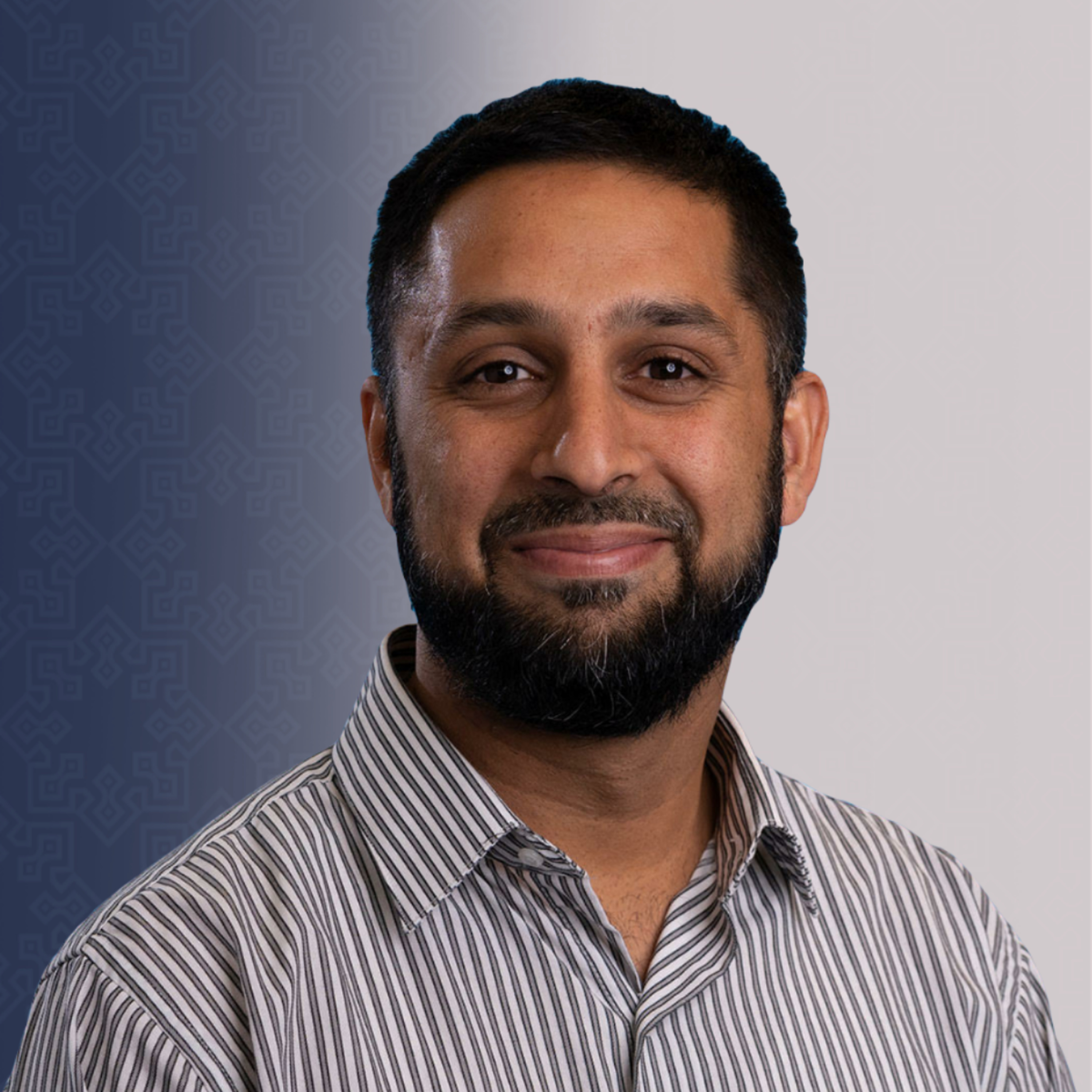
We live in a world where Islam is subject to an almighty project of reform. In this difficult environment, the simple truths of Islam and the age-old process of arriving at such truths have been muddied by modernist constructions that at their heart hope to reconcile Islam with a dominant ideological narrative.To give this campaign a fig leaf of legitimacy, the traditional principle of al-maqasid al-shariah, loosely translated as the general goals of the shariah, has been co-opted by liberals and secularists as a means to open up Islam to the so-called universal values of liberalism. But what is the traditional conception of al-maqasid? To take a deeper look at this idea, Riaz Hassan and I spoke to Dr. Osman Umarji a director at the Yaqeen Institute who studied Islam at al-Azhar University in Cairo. To comment - go to https://www.thinkingmuslim.comFollow us on twitter: https://twitter.com/thinking_muslim/Presenter: https://twitter.com/jalalayn Hosted on Acast. See acast.com/privacy for more information.
Freedom of Speech and Muslims with Hamza Tzortzis
A Special Extended InterviewFreedom of speech is an idea we all naturally gravitate towards. Who would want to live in a society where certain types of speech were outlawed or regulated? Or where we had to watch what we say at every turn. To understand this subject further, we have Hamza Tzortzis to break down the idea and to give us an Islamic perspective. Hamza is the author of The Divine Reality: God, Islam & The Mirage of Atheism. He is a public speaker, instructor and essayist and a founding member of the Sapience Institute.For more information and to view our archive, visit https://www.thinkingmuslim.com/podcastFollow us on twitter: https://twitter.com/thinking_muslim/Presenter: https://twitter.com/jalalayn Hosted on Acast. See acast.com/privacy for more information.
Understanding Vaccines with Dr Hisham Abdallah
Vaccines are in the news. As the coronavirus ravages the world, causing untold damage to lives, communities and livelihoods, a glimmer of hope has come in the production of new vaccines. This breakthrough, however has not been universally embraced. Theories abound, across the internet and on social media, suggesting a number of reasons why vaccines are dangerous.So how should we think about vaccines? Well the first step is to consult a trustworthy expert so we can make an informed decision. And we have such a person this week. Dr Hisham Abdullah has a lifetimes work looking at vaccines and research. He holds a degree in pharmacy and a doctorate in pharmaceutical sciences and clinical research. He started his career as a scientist at the US Food and Drug Administration and he has, since then, worked on various pharmaceutal projects in industry. On top of that, Dr Hisham has acquired qualifications in Islamic studies and has spent the past 30 years teaching Usul al-Fiqh and is active in Islamic circles in the US.For more information and to view our archive, visit https://www.thinkingmuslim.com/podcastFollow us on twitter Twitter: https://twitter.com/thinking_muslim/Presenter: https://twitter.com/jalalayn Hosted on Acast. See acast.com/privacy for more information.
The Islamic view on vaccines, fake news and expertise with Ustadh Iyad Hilal
This week we invite back onto the show Ustadh Iyad Hilal from California’s Al Arqam Institute. Ustadh Iyad has expertise in usul ul-fiqh and has recently presented a stimulating and accessible online usul course. We ask him to untangle the issues of vaccines, medicines in general and we discuss how a Muslim should arrive at judgments and our responsibilities to not fall prey to theories not grounded in reality.For more information and to view our archive, visit https://www.thinkingmuslim.com/podcastFollow us on twitter Twitter: https://twitter.com/thinking_muslim/Presenter: https://twitter.com/jalalayn Email: [email protected] Hosted on Acast. See acast.com/privacy for more information.
Capitalism and Socialism - Thoughts on Islamic Economics - with Almir Colan
Riaz Hasan speaks to Almir Colan, a thinker on Islamic economics and host of the thought provoking Islamic Finance podcast and Director of the Australian Centre for Islamic Finance. He speaks to us about the problems with the current paradigms of capitalism and socialism and how greater thinking on Islamic economics needs to take place. He also speaks about his 'Shepherds Model', the manner we need to look at economy. You can listen to his Islamic finance podcast here https://podcasts.apple.com/au/podcast/islamic-finance-podcast-with-almir-colan/id569462639?mt=2 For more information and to view our archive, visit https://www.thinkingmuslim.com/podcastFollow us on twitter Twitter: https://twitter.com/thinking_muslim/ Hosted on Acast. See acast.com/privacy for more information.
The Return of Tyrants and Foiled Dreams with Iyad El-Baghdadi
This episode, I speak at length to the Arab Spring activist Iyad El-Baghdadi about his valuable experience, analysis and forecast about the years ahead. He rose to prominence in the aftermath of the Arab revolutions of 2011 before being summarily arrested and forcibly exiled from his home in the UAE in April 2014. Today he is recognized among the most influential and prominent Arab voices online. He lives in Oslo, Norway, where he has been granted political asylum, and writes regularly for both Norwegian and international media, and his Twitter account received over 180 million views in last year. He is also founder and editor-in-chief of the Arab Tyrant Manual, a platform for the study of authoritarian behaviour and tactics.For more information and to view our archive, visit https://www.thinkingmuslim.com/podcastFollow us on twitter Twitter: https://twitter.com/thinking_muslim/Presenter: https://twitter.com/jalalayn Hosted on Acast. See acast.com/privacy for more information.
Macron’s France and the “Muslim Problem” - with Dr Yasir Qadhi
To help us understand the current crises in France, I am delighted to have on The Thinking Muslim Sheikh Yasir Qadhi. Dr Yasir Qadhi is well known in the Muslim community, he is a scholar and since 2001, he has served as Dean of Academic Affairs at the Al-Maghrib Institute, with a center in Houston, Texas. He is currently the resident scholar of the East Plano Islamic Center in Texas.Dr Qadhi has raised some searching questions over the past few weeks about French policy towards Muslims, violence perpetrated by a minority of those Muslims and, he argues, the potential for the ‘French model’ to be exported to other countries where Muslims are a minority. We ask Dr Qadhi about Islamic justifications for violence, how we should defend the honour of the Messenger of Allah (saw), the position of minority communities, the role of scholarship in politics and raising awareness about these issues and we also speak about the current problem with many Islamic scholars who chose to remain silent instead of speak truth to power, less they lose their position, usually gained through political patronage or they lose their following. Inevitably the thorny subject of scholars and despotic rulers comes up, and Dr Qadhi gives his frank opinion on the matter.Website: http://thinkingmuslim.comTwitter: https://twitter.com/thinking_muslim/ Presenter: https://twitter.com/jalalayn Email: [email protected] Hosted on Acast. See acast.com/privacy for more information.