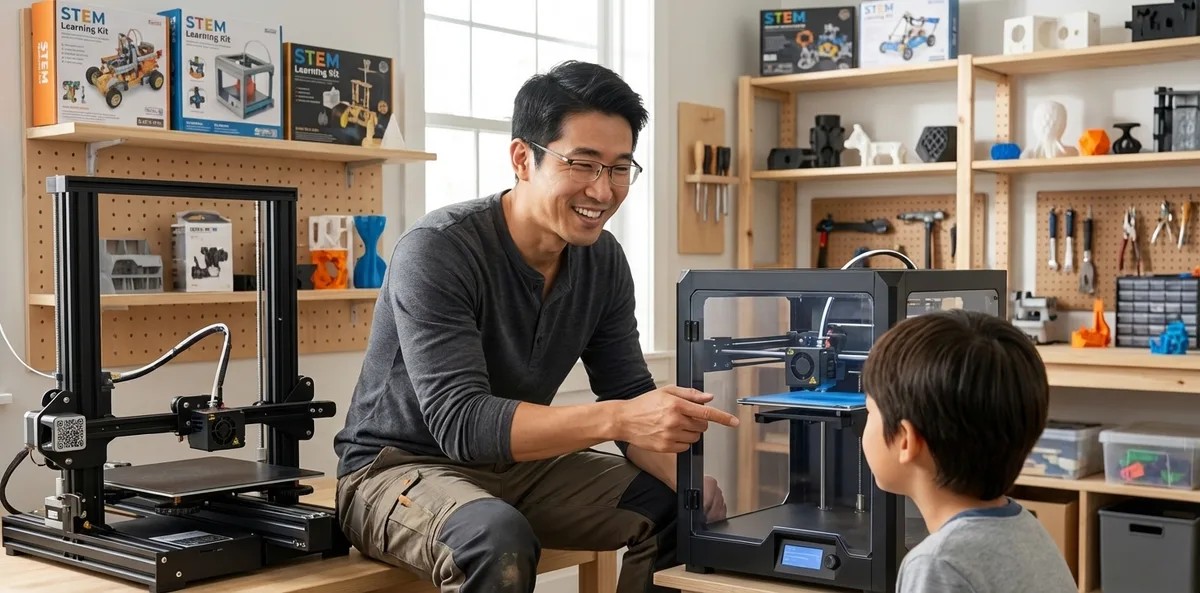
Enclosed vs Open Frame 3D Printers for Kids: Safety and Performance Compared
The STEM Lab · The Stem Lab
Audio is streamed directly from the publisher (content.rss.com) as published in their RSS feed. Play Podcasts does not host this file. Rights-holders can request removal through the copyright & takedown page.
Show Notes
Choosing a 3D printer for your child involves more than just comparing price tags—it's a decision that affects their safety, learning trajectory, and the skills they'll carry into future maker projects. This episode dives into the real differences between enclosed and open-frame 3D printers based on over 800 hours of observation with young learners ages 8 to 17. Whether you're a parent setting up a home workshop or an educator outfitting a makerspace, you'll discover which design actually matches your supervision capacity, material needs, and long-term educational goals.
- Enclosed printers offer HEPA filtration, finger guards, and automatic door shutoffs, allowing parents to leave the room during prints—but this protection can create a false sense of safety that limits hazard awareness development.
- Open-frame printers require constant supervision for kids under 13, yet learners using them diagnosed bed adhesion failures 40% faster than those on enclosed machines because they could see problems as they happened.
- Material choice should drive your decision: PLA works safely on either design, but ABS and PETG require enclosed printers with filtration—open-frame ABS printing spiked formaldehyde levels to 8x higher than the same print in an enclosed machine.
- Thermal stability dramatically affects print success, with enclosed printers showing only 5–8°C temperature variance compared to 12–15°C swings on open frames, resulting in 35% fewer warp failures.
- Budget differences are significant—youth-appropriate enclosed models run $350–$900 while comparable open-frame printers cost $200–$500, though consumable costs remain identical.
- Each design builds different career-relevant skills: enclosed printers mirror industrial Stratasys and Ultimaker systems used in prototyping careers, while open frames teach mechanics-first troubleshooting that transfers to advanced CoreXY builds.
Read the full article: https://stemlabguide.com/enclosed-vs-open-frame-3d-printers-for-kids