Complete 3D Printer Safety Checklist for Kids and Teens
The STEM Lab · The Stem Lab
Audio is streamed directly from the publisher (content.rss.com) as published in their RSS feed. Play Podcasts does not host this file. Rights-holders can request removal through the copyright & takedown page.
Show Notes
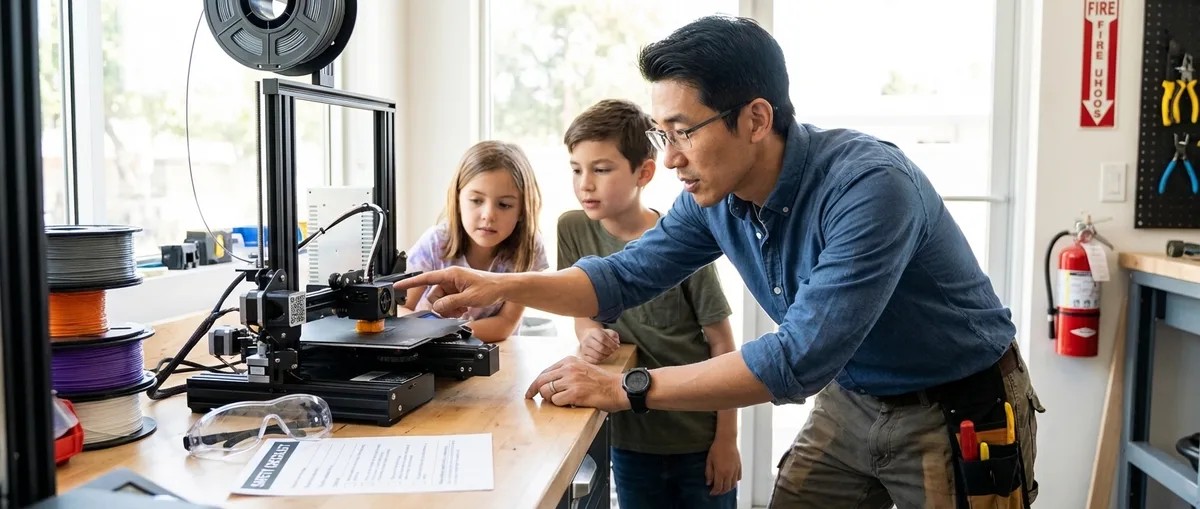
Whether you're setting up a 3D printer for your child's first project or managing a school makerspace, knowing which safety concerns actually matter—and which are overblown—can be the difference between confident supervision and constant anxiety. In this episode, fabrication lab consultant Kazuki Tanaka shares the exact safety framework he uses when auditing makerspaces for insurance compliance, drawing from eight years of experience supervising kids as young as eight. You'll learn how to set up your workspace, choose the right equipment, and establish protocols that prevent the injuries that actually happen in real printing environments.
- Your workspace setup determines roughly 80 percent of safety outcomes—place printers on stable, heat-resistant surfaces with at least 15 centimeters of clearance on all sides and one meter minimum from anything flammable.
- For children ages 8–12, position the printer so the build plate sits at chest level, which prevents them from reaching over hot components like the nozzle and heated bed.
- Enclosed printers are strongly recommended for makers under 14 or those prone to distraction, as enclosures physically prevent fingers from reaching moving belts, hot nozzles, or the build plate mid-print.
- Every printer should have a physical emergency stop button that users can locate and press with their eyes closed—building muscle memory before the first print matters when someone gets startled.
- Most 3D printing injuries are minor burns from touching hot nozzles or pinched skin from moving parts, so keep a basic first aid kit with burn gel and tweezers within arm's reach.
- Configure slicer software with maximum temperature limits appropriate for each filament type—for PLA, cap the hot end at 220°C and the bed at 70°C to prevent inexperienced users from accidentally overheating materials.
Read the full article: https://stemlabguide.com/complete-3d-printer-safety-checklist-for-kids-and-teens