The Steady State Sentinel
48 episodes
Spies, Yachts & Kleptocrats: Alex Finley on Russia’s Hidden Money
You Don’t Set Quotas for Law Enforcement Because Bad Things Are Going to Happen
143 Day incarceration : A Lawful Permanent Resident, a Bad $25 Check, and the Cost of America's Immigration System
No Cloak, No Dagger: A Professor's Secret Life Inside the CIA
From West Point to Congress: A Veteran Runs on Common Sense and Service
A Million-Dollar Lawsuit and the State of American Intelligence
The Autocrats' Worst Enemy: Why Despots Fear Mayors
Cornucopia of Vectors of Theft: How China Is Stealing America's Economic Future
The Intelligence You Don't See: A Career Analyst Warns about Systemic Weaponization of the Intelligence Community
The Iran You Don't See: The Regime, the People, and What America Gets Wrong
America's Nuclear Guardians: A Conversation on Security, Espionage, and Speaking Truth to Power
Breaking the Cockpit Barrier: One Pilot's Fight to Engineer Inclusion into the Military
The Recruiter's Recruiter: Trust, Treason, and the Human Elements of Espionage with Jim Lawler
Phillips O'Brien on America's Strategic Collapse
The Making of a Public Servant: Lauren C. Anderson's Journey to the Senior Ranks of the FBI
The Uncrowned King: Ambassador Charles A. Ray on America’s Authoritarian Turn
The Bob Mueller Standard: Justice, Integrity, and Public Service
Inside the Situation Room: Larry Pfeiffer on the Politicization of Intelligence, Professional Integrity, and the Cost of Truth
Common Sense for a Democracy in Crisis
Hunting Weapons of Mass Destruction (with Andy Weber)
Afraid to Speak, Afraid for Democracy: New Poll Finds Widespread Concern About Authoritarianism
The War on the Press: How Trump Attacks the First Amendment
Birds, Ducks and the Surveillance State
Saving My Life's Work: Eric Rubin on the Dismantling of American Diplomacy
The Fragile Glue: Mark Zaid on Whistleblowers, Retaliation, and the Rule of Law
The MAGA Crack-Up: David Corn on Iran, the FBI, and a Democracy Under Siege
Protecting Liberty in the Age of Surveillance
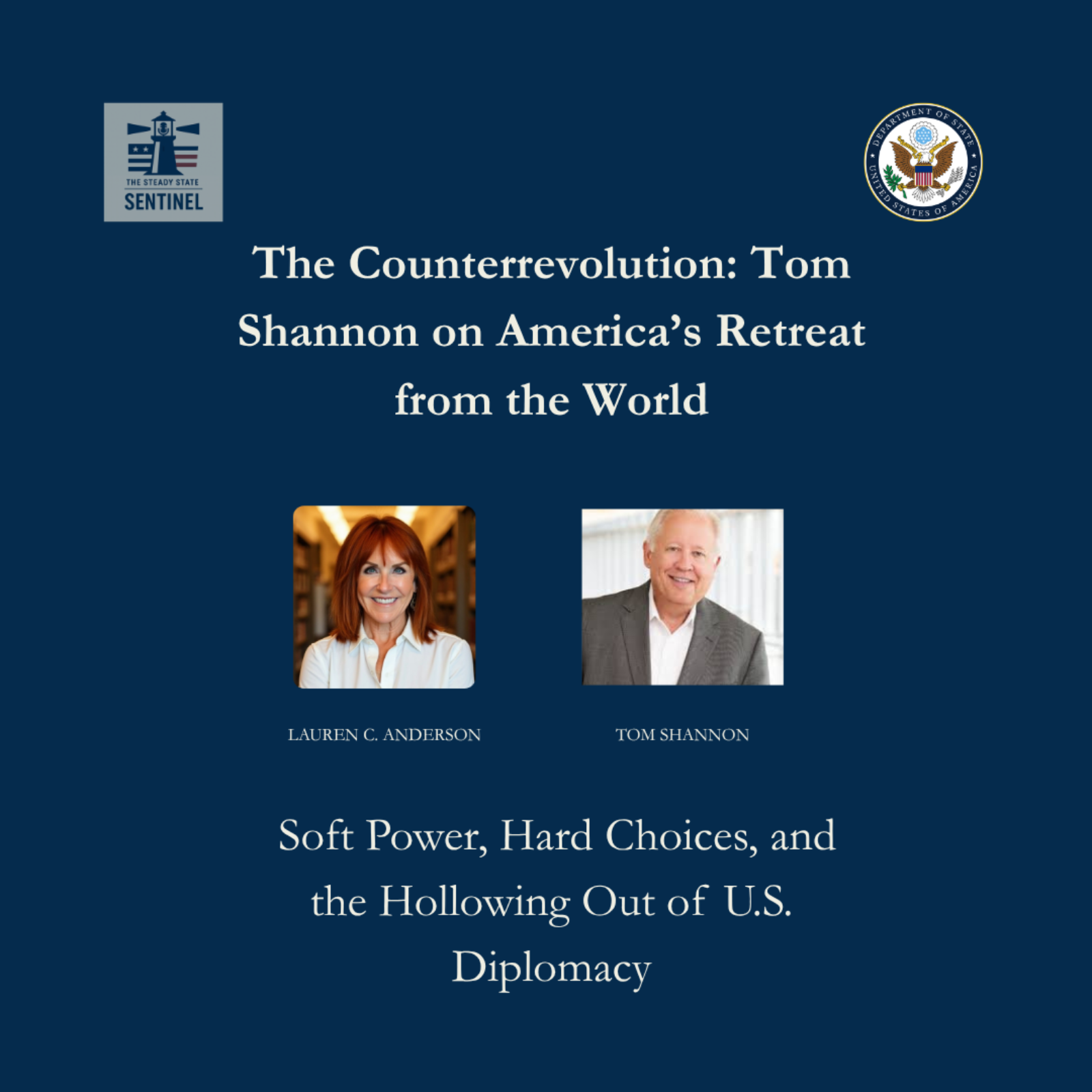
Ep 20The Counterrevolution: Tom Shannon on America’s Retreat from the World
Soft Power, Hard Choices, and the Hollowing Out of U.S. DiplomacyIn this edition of the Sentinel podcast, host Lauren Anderson, former senior FBI executive, sits down with Ambassador Tom Shannon, one of the most experienced diplomats of his generation. They discuss what Shannon describes as a "counterrevolution" in U.S. foreign policy – a shift away from the post-WWII alliance-based system toward a more unilateral "America First" approach. Shannon warns that the erosion of institutional expertise at agencies like the State Department and FBI, and across the national security enterprise, will have long-term consequences for U.S. effectiveness abroad. He also emphasizes the enduring importance of soft power, including programs like the International Visitor Leadership Program (IVLP), in shaping global relations. The conversation closes with a look at how Gen Z students, including those Shannon teaches at Princeton, view America’s role in a chaotic world.Thomas A Shannon Jr. is one of the United States’ most experienced career diplomats, with more than 35 years in the Foreign Service. He served as Under Secretary of State for Political Affairs, the State Department’s top career diplomat, and held senior roles across multiple administrations, including as U.S. Ambassador to Brazil and Assistant Secretary of State for Western Hemisphere Affairs. He also led the department through the transition between the Obama and Trump administrations. Now teaching at Princeton University, Shannon brings deep expertise in diplomacy, U.S. foreign policy, and America’s role in a rapidly changing world.View the episode transcript.
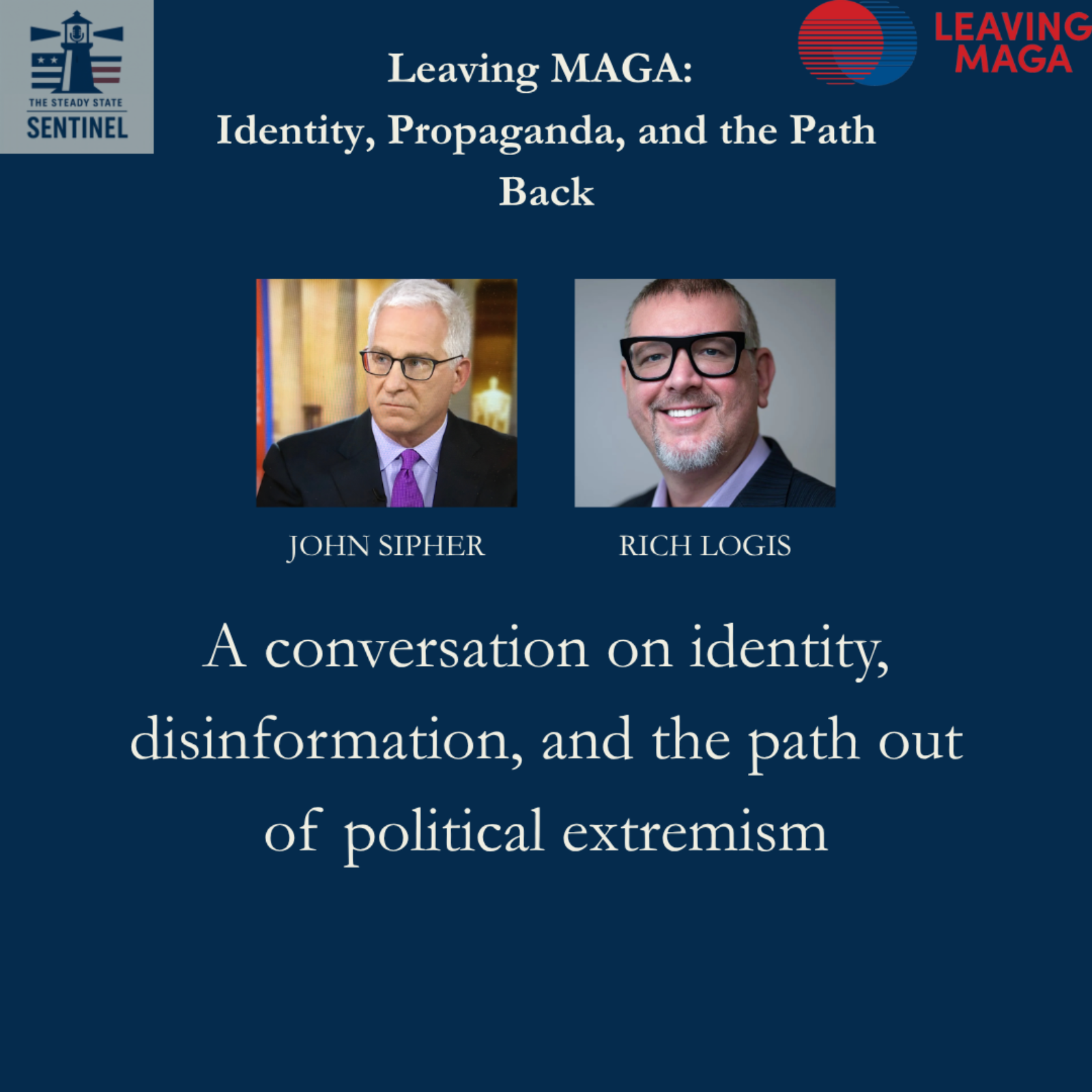
Ep 19Leaving MAGA: Identity, Propaganda, and the Path Back
A conversation on identity, disinformation, and the path out of political extremismIn this week's episode of the Sentinel podcast, John Sipher speaks with Rich Logis, founder of Leaving MAGA, about his journey into—and out of—the movement. They explore how identity, belonging, and media ecosystems shape political belief, why leaving can be so difficult, and what ultimately breaks the cycle. Logis also shares insights on disinformation, “anger addiction,” and how families can support loved ones questioning deeply held views.Watch and listen to new Sentinel episodes each Tuesday. Subscribe and review us on your favorite podcast platform.Guest Info: Rich Logis is the founder and executive director of Leaving MAGA, an organization that supports people who are leaving or questioning the MAGA movement and helps families navigate reconciliation.https://leavingmaga.org/memoir/Read the full transcript here.
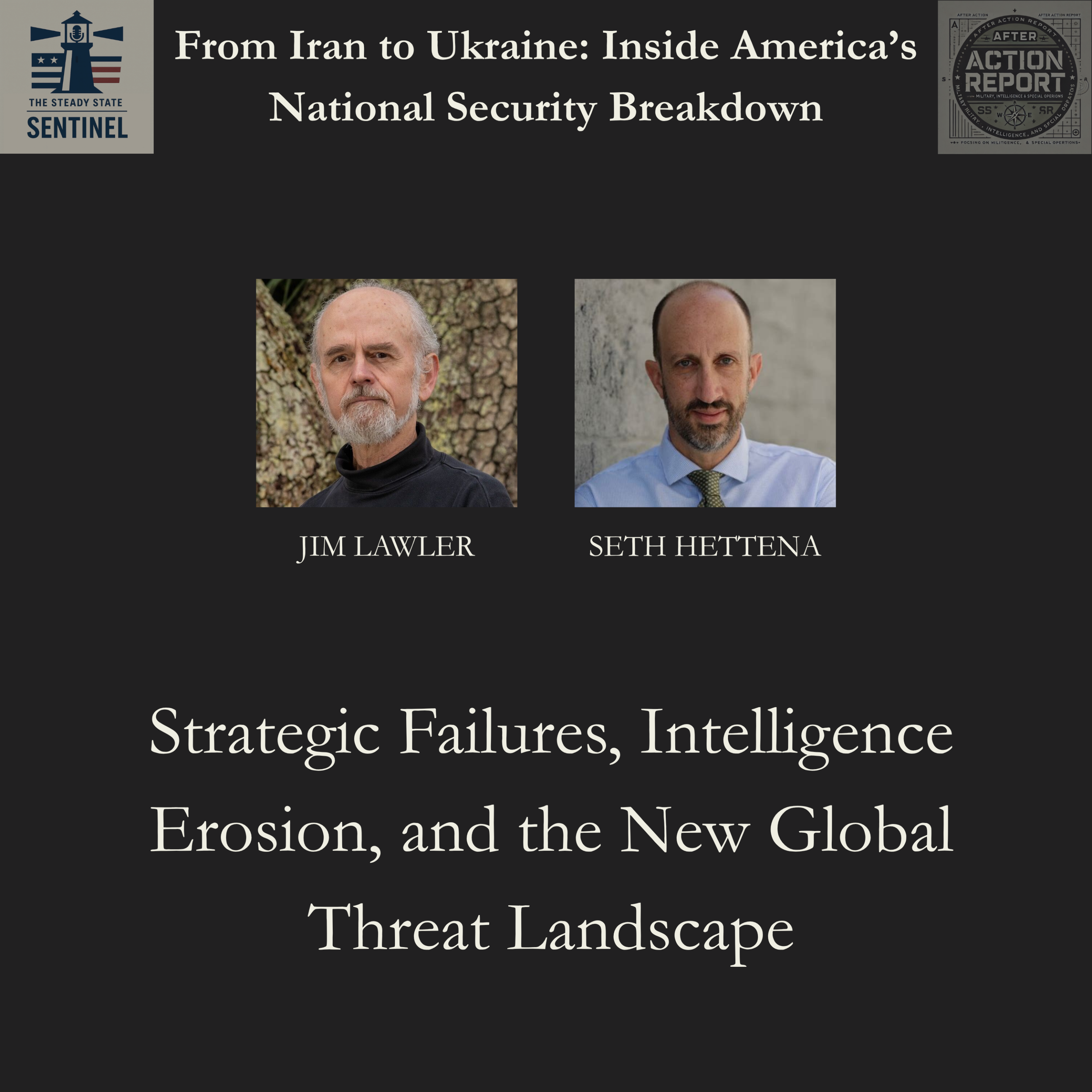
Ep 18From Iran to Ukraine: Inside America’s National Security Breakdown
Strategic Failures, Intelligence Erosion, and the New Global Threat LandscapeIn the latest episode of the Sentinel podcast, Jim Lawler hosts investigative journalist Seth Hettena to discuss the U.S. war with Iran, domestic security, and global policy challenges. Domestically, they discuss the weakened state of our institutions, loss of expertise, and politicization of decision-making. Globally, they highlight strained credibility, particularly regarding Ukraine, and the declining trust in the U.S. of our allies. The conversation also raises concerns about expanding government surveillance capabilities enabled by modern technology.About: Seth Hettena is a veteran national security reporter covering intelligence and special operations. He is currently writing “The IceMan,” a book about a 2003 incident in Iraq in which a Navy SEAL Platoon was blamed for the death of a CIA detainee under torture. The victim, Manadel Aljamadi, was referred to as “The Iceman.” You can find Seth on Substack.View the full transcript. Join us each Tuesday for the latest episode everywhere you get podcasts and in video on YouTube.
Ep 17Allies, Intelligence, and a Fraying American Center
In this week's episode, Lauren Anderson and Phil Gurski discuss the Five Eyes partnership, the FBI’s challenges, and why politicized intelligence endangers everyone.Summary: Former FBI executive Lauren Anderson sits down with Canadian intelligence veteran Phil Gurski, the first international guest on the Steady State Sentinel, to explore how America looks from the perspective of a close ally. Together they unpack the history and purpose of the Five Eyes partnership, the vital but often invisible fabric of liaison relationships, and the indispensable teamwork between analysts, case agents, and linguists in counterterrorism work. Gurski warns about the politicization of intelligence and the hollowing out of expertise in agencies like the FBI and CIA, and explains how these trends threaten not just U.S. security but Canada’s safety and the resilience of shared democratic values.About: Phil Gurski is a former senior strategic analyst with the Canadian Security Intelligence Service (CSIS), Canada’s civilian security intelligence agency. Before joining CSIS, he spent 17 and a half years at the Communications Security Establishment (CSE), Canada’s signals intelligence organization and functional counterpart to the NSA, working as a multilingual foreign intelligence analyst and cryptanalyst in roughly ten languages. Over a 32-plus-year career in intelligence, Gurski specialized in Iran, Arabic-language targets, and jihadi terrorism, regularly supporting source debriefings, operational teams, and joint work with partners across the Five Eyes alliance. He is the president of Borealis Threat and Risk Consulting, host of the podcast “Spies Like Us,” and the author of multiple books on terrorism and intelligence, including a forthcoming volume marking the 25th anniversary of 9/11. You can find Phil’s work through Borealis Threat and Risk Consulting and his “Spies Like Us” podcast, where he examines intelligence, terrorism, and security issues for a wider public audience.International Centre or Counter-TerrorismFull transcript.
Ep 16Reporting in the Crosshairs: Shane Harris on Politicized Intelligence, Press Freedom, and America’s Allies
Inside the risks of reporting on intelligence in an era of political pressure and weakening institutional guardrailsJohn Sipher sits down with The Atlantic’s Shane Harris for a wide-ranging conversation on intelligence reporting, the unraveling of trust in American institutions, threats to press freedom, and what U.S. allies now fear most about Washington. Harris also reflects on one of the most extraordinary source relationships of his career and what it reveals about journalism, secrecy, and risk.Shane Harris is a staff writer at The Atlantic covering national security and intelligence. He has written about intelligence, security, and foreign policy for more than two decades, including as a staff writer for The Washington Post, where he was part of the team that won the 2022 Pulitzer Prize for Public Service. In 2023, he co-reported the documentary The Discord Leaks with PBS Frontline, which was nominated for an Emmy for outstanding investigative news coverage. He is the author of two books, The Watchers and @War.Full episode summary.
Ep 15Might Makes Right? Michael Morell on U.S. Power, Allies, and Adversaries
Former CIA deputy director Michael Morell joins former senior CIA operations officers Jim Lawler and John Sipher to reflect on post 9/11 overcorrection towards counterterrorism. They assess the current “might makes right” approach to foreign policy, and weigh the arguments for and against efforts for regime change in Iran. Mr. Morell also explores how we can strengthen U.S. intelligence, public trust, and future decision-making in an era of great power competition and complex global threats.This episode was recorded 12 hours before the US launched attacks against Iran.Watch on YouTube and view the transcript.
Ep 14An Apolitical FBI is Vital to National Security
Host Lauren Anderson leads a candid conversation with retired FBI officials Mark Ferbrache, Nikki Rutman, and Mae Syed. Their discussion covers successfully resolved cases, the value of the FBI to civil society, and the reputational damage caused by politicization of law enforcement.
Ep 13America’s “Strategic Self-Immolation”
National Security reporter and author Tim Weiner and host Jim Lawler discuss how the Trump Administration’s politicization of our national security institutions, attacks on our constitution and rule of law, and betrayal of our allies are putting us in danger of losing our civil liberties at home and increasing our national security threats abroad.
Ep 12Chilling Racial Cleansing
Host Peter Mina interviews Bill Braniff and Dexter Ingram, two renowned experts on countering extremism who issue a red alert on the executive branch’s shameless reliance on white supremacist symbolism and arguments to defend its actions. (recorded 1-16-26)
Ep 11No Rules of Engagement
ELieutenant General (Retired) Ben Hodges speaks out on the improper use of the U.S. military, its impact on U.S. defense and our allies’ growing distrust. (Recorded 12-4-2025)
Ep 10We are Living Through a Giant Civics Lesson
In this episode, Dr. Ruth Ben-Ghiat, an NYU professor and expert in fascism and authoritarian leaders speaks with host Jim Lawler about the threats from authoritarianism in the United States and what can be done to push back on this rising tide. (Recorded 1-27-2026)
Ep 9Rubicon Moments
EWhat are the consequences for national security when experienced professionals face personal and professional costs for telling truth to power? Co-hosts Lauren Anderson, James Lawler, Peter Mina, and John Sipher discuss the personal costs of professional integrity and how those pressures, when repeated across institutions, can weaken the systems responsible for protecting national security. (recorded 2-6-2026)
Ep 8The Most Perilous Time
What happens when an astronaut who’s seen Earth from 250 miles up—and an Air Force fighter pilot who’s defended it from the ground—decides that American democracy is now in more danger than at any point in his lifetime? In this conversation, Terry Virts makes a blunt, urgent case for why he’s running for Congress, why service still matters, and why the country needs leaders willing to put truth over tribe before it’s too late.(recorded 11-14-25)
Ep 7We’re Sitting on a Powder Keg
EPolitical analyst Jack Hopkins shares three red flags with The Steady State Sentinel guest host Margaret Henoch, warning that Iran, attacks on the judiciary, and targeting of U.S. citizens by the government are potentially incendiary threats to U.S. democracy and national security. (recorded 01-14-2026)
Ep 6A Terrible Way to Govern
The Steady State Chair and seasoned diplomat Jim O’Brien denounces one-man rule and transactional foreign policy decisions in conversations with host Peter Mina, criticizing the Trump-created environment of cruelty that shadows our nation. (recorded 01-15-2026)
Ep 5The Country is Suffering
EDenver Riggleman, a former Republican member of Congress, reveals the soul-killing costs of trying to uphold the Constitution in a party that upholds Trump first. From affordability to foreign policy, he tells co-hosts Jim Lawler and John Sipher, the consequences for America are profound.
Ep 4America's Soul: Adam Kinzinger on Courage and Country
Former Congressmember Adam Kinzinger shares the human toll of standing up to the cult of Donald Trump and putting country before party. Speaking with co-hosts and former CIA experts Jim Lawler and John Sipher, Kinzinger bares all about what 10 years of Donald Trump has done to America’s soul. (recorded 12-15-2025)
Ep 3No One Is Protected: Immigration, Institutional Trust, and Arbitrary Enforcement
What happens when the rules stop protecting those who follow them? Immigration attorney Amy Peck and former FBI executive Lauren Anderson examine how unpredictable enforcement erodes trust, legitimacy, and the rule of law—and why the consequences extend far beyond immigration.
Ep 2An Existential Threat to the Republic
The Steady State Executive Director Steven Cash draws on decades of experience watching foreign democracies fail to highlight the existential risks the United States faces under President Donald Trump. Award-winning CIA operative James Lawler conducts this provocative discussion about encroaching dictatorship in the United States.
Ep 1Too Many Of Our Leaders Are No Longer Accountable
On the anniversary of the January 6, 2021 attack on the U.S. Capitol, veteran national-security leaders and Steady State Sentinel hosts Lauren Anderson, James Lawler, Peter Mina and John Sipher break their silence. Drawing on decades of service in the CIA, FBI, and Homeland Security (DHS), they share where they were that day, what they understood immediately, and how the events signaled accelerating democratic decline. They’ve spent their careers defending the guardrails of American democracy at home and around the world. Now they’re sharing their expertise to explain what happens when those guardrails erode, institutions are politicized, and public servants become targets.
Too Many Of Our Leaders Are No Longer Accountable (Teaser)
On the anniversary of the January 6, 2021 attack on the U.S. Capitol, veteran national-security leaders and Steady State Sentinel hosts Lauren Anderson, James Lawler, Peter Mina and John Sipher break their silence. Drawing on decades of service in the CIA, FBI, and Homeland Security (DHS), they share where they were that day, what they understood immediately, and how the events signaled accelerating democratic decline. They’ve spent their careers defending the guardrails of American democracy at home and around the world. Now they’re sharing their expertise to explain what happens when those guardrails erode, institutions are politicized, and public servants become targets.