Zigbee Motion Sensors vs Z-Wave Motion Sensors: Latency and Reliability Compared
The Smart Home Setup Podcast · My Smart Home Setup
Audio is streamed directly from the publisher (content.rss.com) as published in their RSS feed. Play Podcasts does not host this file. Rights-holders can request removal through the copyright & takedown page.
Show Notes
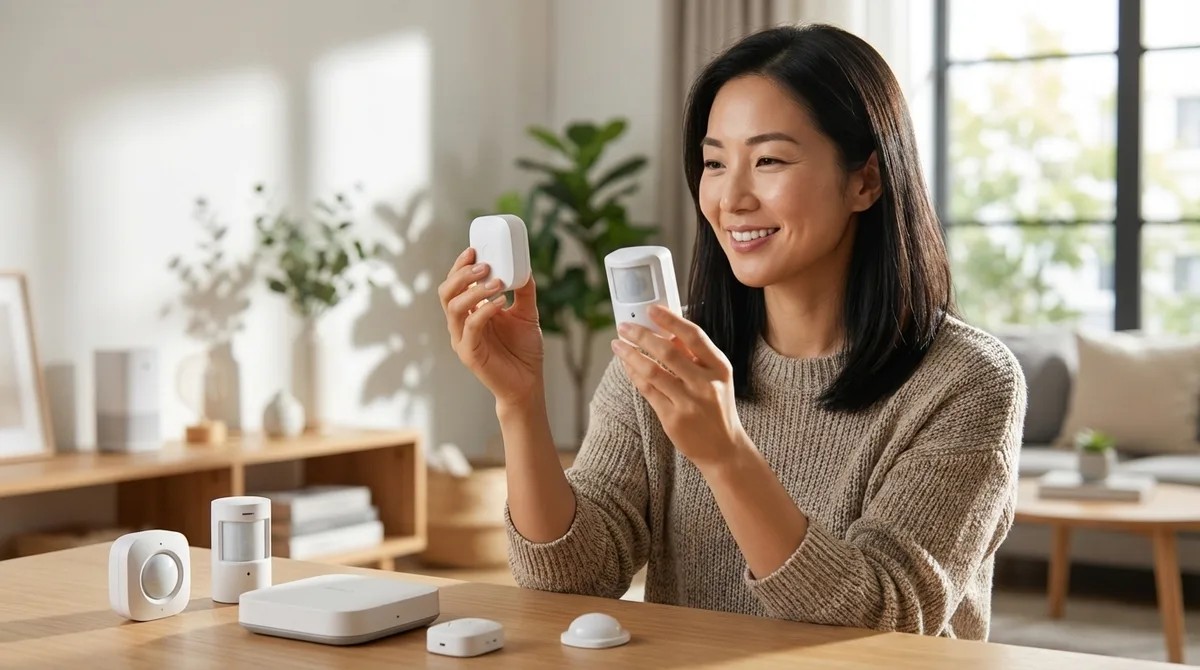
Ever walked into a dark room expecting the lights to snap on instantly, only to stand there awkwardly for three seconds? That frustrating inconsistency often comes down to your choice of motion sensor protocol. This episode breaks down the real-world differences between Zigbee and Z-Wave motion sensors—not just the spec sheet numbers, but how each protocol actually performs when you're navigating your home at 3 a.m. Whether you're building your first smart home or troubleshooting automation that feels sluggish, Keiko Tanaka unpacks the latency, mesh behavior, and reliability factors that determine whether your setup feels invisible or infuriating.
- Zigbee motion sensors respond 100–200 milliseconds faster than Z-Wave equivalents on paper, but Z-Wave's longer per-hop range (30+ meters vs. 10–15 meters) often means fewer hops and more consistent timing in larger homes.
- Z-Wave operates on a quieter sub-gigahertz frequency band that penetrates thick walls, brick, and metal studs more effectively, while Zigbee's 2.4 GHz band competes with Wi-Fi, Bluetooth, and even your microwave for airspace.
- Consistency matters more than raw speed—a Zigbee sensor that occasionally takes 1,200 milliseconds due to mesh dropout feels more broken than a Z-Wave sensor that reliably delivers 350 milliseconds every time.
- Battery life differs significantly: Zigbee sensors typically last 1–2 years, while Z-Wave sensors push 2–3 years on the same batteries.
- In a real-world test with exposed steel beams, Zigbee required three additional plug routers to maintain acceptable latency, while Z-Wave needed zero additional devices.
- End-to-end automation latency (motion detected to light on) typically lands at 200–350 milliseconds for Zigbee and 300–500 milliseconds for Z-Wave—both imperceptible to most people under normal conditions.
Read the full article: https://mysmarthomesetup.com/zigbee-motion-sensors-vs-z-wave-motion-sensors