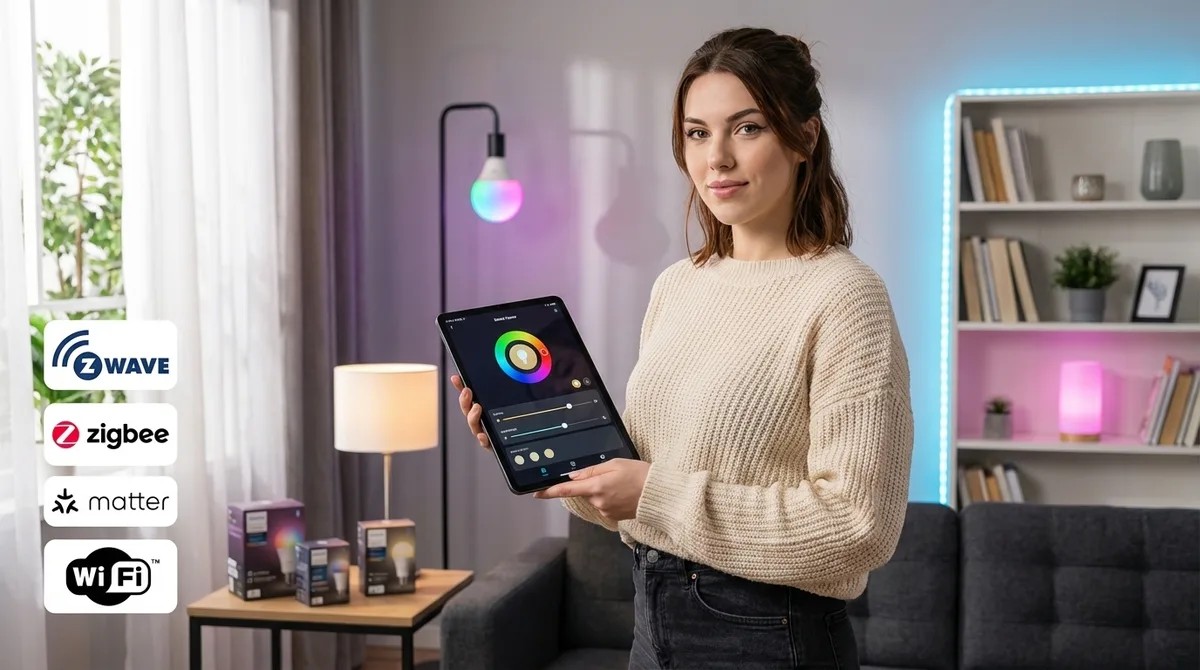
Smart Lighting for Home Automation: Complete Guide to Zigbee, Z-Wave, Matter & Wi-Fi Systems
The Smart Home Setup Podcast · My Smart Home Setup
Audio is streamed directly from the publisher (content.rss.com) as published in their RSS feed. Play Podcasts does not host this file. Rights-holders can request removal through the copyright & takedown page.
Show Notes
Think your smart lights are just listening to your commands? They're also talking back—to corporate servers that log when you wake up, when you leave, and when you come home. In this episode, Chelsea Miller breaks down exactly how smart lighting protocols work at the technical level after discovering her own "smart" bulbs were phoning home every ninety seconds, even when switched off. Whether you're building a new system or auditing an existing one, this guide reveals which protocols keep your data local and which ones are quietly uploading your daily patterns to third-party analytics domains.
- Most commercial smart lighting from brands like Philips Hue, LIFX, and TP-Link defaults to cloud-first architecture, creating 200–800ms latency and detailed activity logs that companies monetize through data sales and targeted advertising.
- Zigbee and Z-Wave bulbs controlled through Home Assistant or Hubitat can operate entirely offline, with response times under 80 milliseconds and zero internet dependency.
- Zigbee runs on 2.4GHz channels that overlap with Wi-Fi, causing latency spikes during video calls—mapping your Wi-Fi channels and selecting Zigbee channel 15 or 25 eliminates most interference.
- Z-Wave operates at 900MHz with better wall penetration and no Wi-Fi interference, and Z-Wave Plus 800 series switches can achieve 40ms response times over three mesh hops.
- Matter's promise of cross-platform local control has a catch: Matter 1.0 required cloud commissioning, and while Matter 1.4 makes local-only commissioning mandatory, many existing devices won't receive the firmware updates needed to support it.
- Wi-Fi bulbs connect directly to your router without a hub, but this simplicity is exactly why they leak data so effectively—most manufacturers gate local control behind firmware that quietly enables cloud dependencies.
Read the full article: https://mysmarthomesetup.com/smart-lighting-for-home-automation