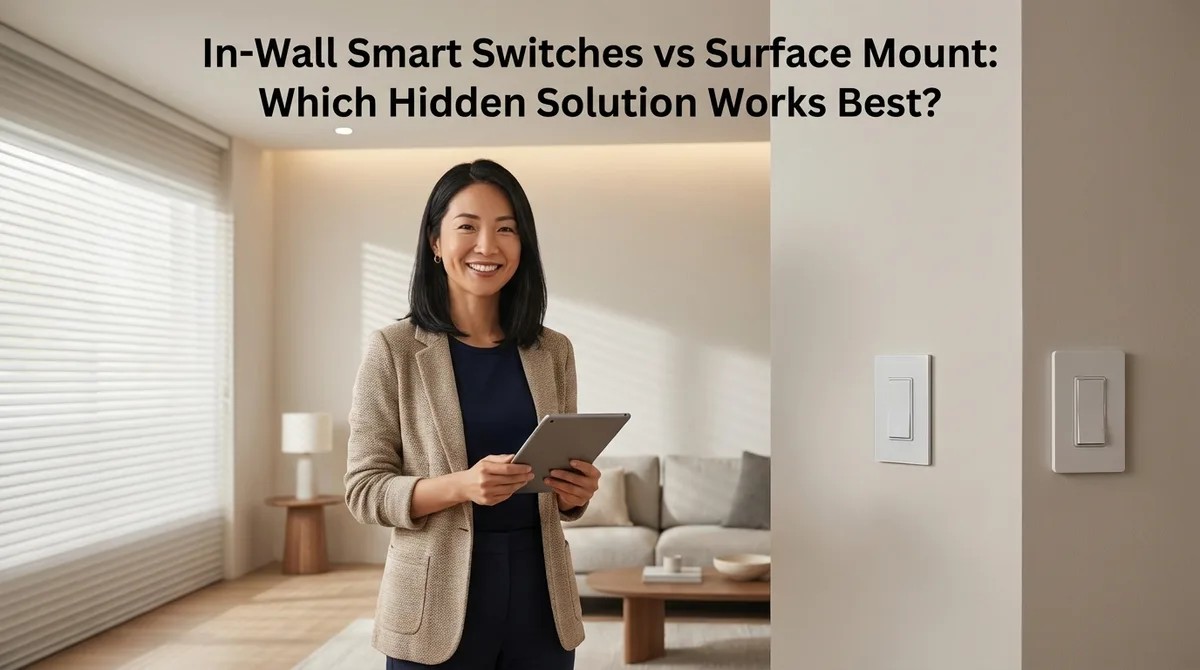
In-Wall Smart Switches vs Surface Mount: Which Hidden Solution Works Best?
The Smart Home Setup Podcast · My Smart Home Setup
Audio is streamed directly from the publisher (content.rss.com) as published in their RSS feed. Play Podcasts does not host this file. Rights-holders can request removal through the copyright & takedown page.
Show Notes
Ever walked into a beautifully designed room and felt something was just slightly off? That glossy plastic button stuck to the wall or the mismatched switch plate might be the culprit. In this episode, Keiko Tanaka dives into one of the most overlooked decisions in smart home design: whether to install switches inside your walls or mount them on the surface. If you're torn between seamless aesthetics and installation simplicity, this breakdown of protocols, costs, reliability, and the daily visual experience will help you make the right call for your space.
- In-wall smart switches require a neutral wire in most cases, and homes built before the 1980s often lack this third wire—forcing you into expensive rewiring, specialty switches like Lutron Caseta, or surface-mount alternatives altogether.
- Surface-mount switches install in seconds with adhesive or minimal screws, but they protrude 3–15mm from your wall and can visually disrupt clean lines, especially in raking afternoon light.
- Protocol choice matters more than you'd think: in-wall switches typically use Zigbee or Z-Wave requiring a hub, while surface-mount options increasingly favor Thread for self-healing mesh networks without hub dependency.
- Wi-Fi-based in-wall switches can flood your network—fifteen switches transmitting status updates may degrade video call quality and overall network performance.
- Cost differences are dramatic: in-wall switches run $150–400 total including professional installation, while surface-mount devices cost $25–70 with no installation expense.
- Reliability trade-offs cut both ways—in-wall switches are hardwired with no battery anxiety and offer manual fallback via physical paddles, but surface-mount batteries need replacement every 12–24 months and adhesive can fail in humid environments.
Read the full article: https://mysmarthomesetup.com/in-wall-smart-switches-vs-surface-mount