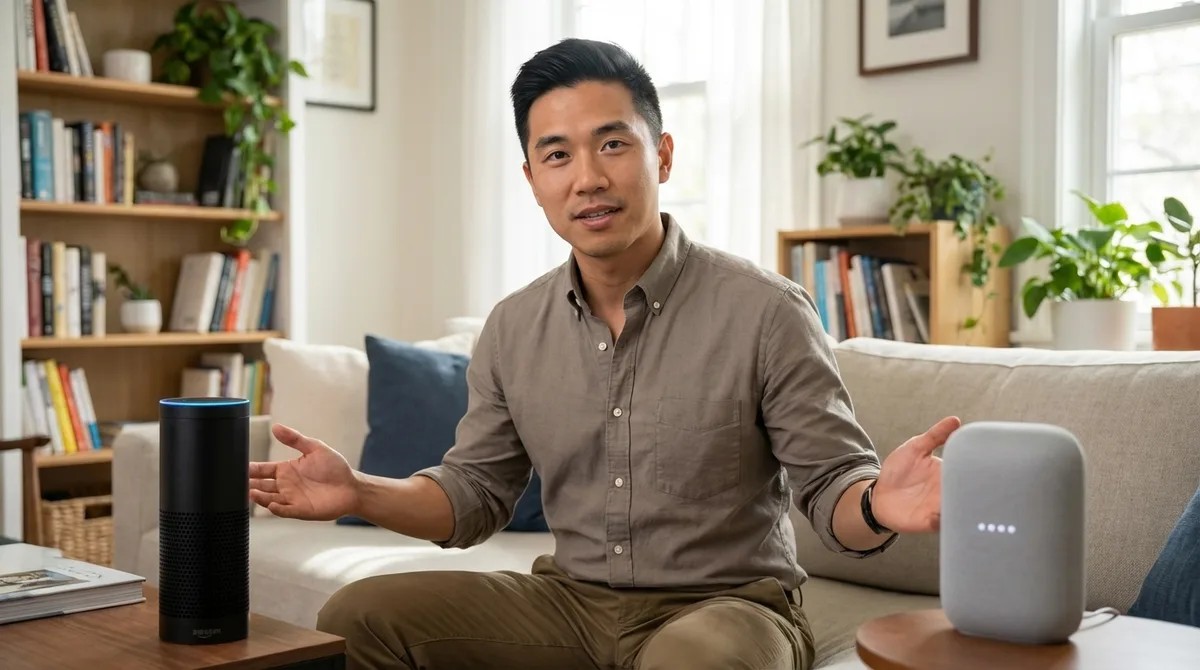
Amazon Alexa vs Google Home for Senior Citizens: Which Is Easier to Use?
The Smart Home Setup Podcast · My Smart Home Setup
Audio is streamed directly from the publisher (content.rss.com) as published in their RSS feed. Play Podcasts does not host this file. Rights-holders can request removal through the copyright & takedown page.
Show Notes
Choosing a smart speaker for an aging parent isn't about flashy features—it's about what happens when things go wrong. In this episode, Marcus Chen draws on hundreds of installations for seniors to compare Amazon Alexa and Google Home through the lens of real-world usability challenges. You'll discover which platform better understands softer voices and accented speech, how each handles emergency situations, and the critical fallback behaviors that most tech reviews completely ignore. If you're setting up smart home technology for someone over 65, this comparison covers what actually matters.
- Google Home achieves 89% voice recognition accuracy with seniors compared to Alexa's 82%, handling softer voices, regional accents, and medication-affected speech patterns significantly better in field testing across 60+ installations.
- Amazon's Emergency Assist subscription ($6/month) connects to live agents within 8–12 seconds and integrates directly with Life Alert-compatible devices, while Google's Emergency SOS requires an Android phone nearby and offers limited medical alert integration.
- Behind-the-ear hearing aids with Bluetooth enabled cause 15–20% accuracy drops on both platforms—the fix is positioning speakers 4–6 feet away and disabling Bluetooth during voice interactions.
- Alexa supports over 140,000 devices with built-in Zigbee and Thread protocols, making it the better choice if your parent needs specialized medical monitoring equipment or existing smart home devices.
- Google's setup process requires only 8 steps compared to Alexa's 12 steps, and medication reminders accept natural language like "remind me to take my pills every morning at 8" rather than requiring rigid command structures.
- Response latency matters more than you'd think—seniors notice delays above 300 milliseconds as sluggish and often repeat commands, causing confusion. Google's local processing delivers 150–220ms response times versus Alexa's 180–280ms.
Read the full article: https://mysmarthomesetup.com/amazon-alexa-vs-google-home-for-senior-citizens