The Skillful Art Of Manipulation | Mastering Psychology & Influence
516 episodes — Page 2 of 11
She Used Respect Like a Weapon
In a Jamaican community where reputation moves faster than truth, a man agrees to a “small favor” for a woman everyone respects. What begins as a harmless act of witness turns into a slow moral trap, where respect becomes leverage and silence becomes proof of guilt. As rumors spread and facts dissolve, he learns how quickly community pressure can turn protection into threat—and how once your name is stained, telling the truth only makes things worse. This is a story about social power, enforced loyalty, and the quiet violence of being made complicit while everyone watches.
I Thought Silence Was Safer — Until I Became the Lock on Her Door
I told myself I was neutral. Just the building super. Just the guy with keys, a clipboard, and enough distance to stay out of trouble. When Dahlia moved into our Scarborough high-rise with her son and a life held together by paperwork, she looked like someone you could either help or quietly crush. Management chose the second option—and I became the tool that made it work. At first, my “silence” felt smart. Safer. I wasn’t the landlord. I wasn’t the one writing threats or raising rent. I just stopped returning calls. “Misplaced” mail. Enforced rules like they were law. Every time she came to me shaking, asking for basic dignity, I answered with calm nothingness—policy-shaped silence. And the building learned from me. Neighbours stopped looking at her. Doors stopped opening. Help stopped arriving. I didn’t lock her in a room. I helped shrink the world around her until fear was the only thing that fit. Then she brought a legal advocate into the lobby, and her son held up a phone. One recording. One moment where my mouth got sloppy—too much rage, too many swear words—and suddenly my quiet complicity had a voice. My name got written down. My behaviour became evidence. And the same people who used my silence turned around and reminded me how replaceable I was. I thought staying quiet would protect me. It didn’t. It turned me into infrastructure—into the lock on someone else’s door—until the door finally slammed and I was left holding nothing but the damage.

She Called It “Mutual”
She never forced me. That’s the part everyone keeps coming back to. There were texts. There were replies. There were nights I didn’t leave. She knew how to point to all of it and smile like the case was already closed. This story unfolds from inside a woman’s slow realization that consent can be rewritten after the fact—laundered through screenshots, selective memory, and the quiet pressure to stay agreeable. What begins as flirtation slips into something colder, where hesitation is reframed as desire and discomfort becomes proof of participation. The manipulator doesn’t need threats or violence. She uses language, timing, and documentation to make resistance look like initiation. As the narrator tries to name what felt wrong, she’s met with receipts instead of empathy. Every doubt is answered with evidence. Every boundary is reinterpreted as mixed signals. And the more she explains herself, the more she sounds guilty. By the time the word mutual becomes the official version of events, the narrator is trapped defending her own memory—questioning her body, her silence, her complicity. This isn’t a story about misunderstanding. It’s about how power hides inside intimacy, and how easily violation can be dressed up as agreement once someone else controls the narrative.
I Signed Because Everyone Else Had
He didn’t read the contract. He didn’t need to. Everyone else had already signed, and that felt like safety. Like culture. Like belonging. In this episode, a man recounts how his hunger for status turned him into an enabler inside a firm that weaponized contracts, silence, and collective responsibility. What started as casual compliance—skimming terms, backing decisions he didn’t fully understand, reassuring others to keep things moving—slowly became professional entrapment. When the fallout hit, the culture vanished, the protection dissolved, and the paperwork spoke louder than any loyalty ever had. Told from inside the rationalizations of someone who believed following the room was the same as making the right choice, this story exposes how contractual abuse doesn’t need villains or coercion—just ambition, quiet consent, and the fear of being the only one who hesitates. He signed because everyone else had. Now he’s the only one still paying for it.

She Let Me Hear Myself Beg
She thought the worst thing about being vulnerable was getting hurt in private. She was wrong. In Kingston, where reputation is currency and shame travels faster than truth, a woman learns what it means to lose control of her own voice. Late-night calls turn into evidence. Confessions meant for one person are clipped, edited, and replayed until they sound like a joke everyone is invited to laugh at. This episode follows a female narrator who isn’t chased, beaten, or blackmailed for money—but slowly trained to beg, apologize, and shrink, until her desperation becomes public entertainment. What starts as intimacy curdles into reputation destruction, and the fear that guides her choices isn’t heartbreak—it’s social ruin. As private voice notes resurface in the wrong mouths and the wrong rooms, she realizes the damage isn’t just what was shared, but how easily her dignity was negotiated away. There is no villain monologue. No clean escape. Only the permanent knowledge that once your humiliation becomes communal property, silence feels safer than truth. She Let Me Hear Myself Beg is a story about emotional coercion, public shame, and the specific cruelty of having your most vulnerable moments replayed without context—until your own voice no longer belongs to you.
I Thought I Was Helping Her Leave
He thought he was saving her. When Althea showed up frightened, displaced, and quietly unraveling, he stepped in the way “good men” are taught to. He gave her a place to stay. He listened. He paid for things. He told himself he was protecting her from an abusive relationship—and from bad decisions she wasn’t ready to make. What he didn’t recognize was how easily help turns into leverage. As her options narrowed, his importance grew. Every choice rerouted through him. Every escape passed through his approval. What began as rescue slowly hardened into control, wrapped in patience, money, and concern. He never raised his voice. Never threatened. Never called it ownership. He just made himself necessary. Set against the quiet pressures of Kingston—church gossip, masculinity expectations, informal housing, and economic precarity—this episode traps the listener inside the mindset of a false savior who confuses care with entitlement. By the time the truth surfaces, the damage is already done, and the realization is sickening: he wasn’t her way out. He was just the exit strategy.

HR Wasn’t Neutral — I Just Needed Them To Be
She believed in process. In documentation. In the idea that if you followed the rules carefully enough, the system would have no choice but to protect you. Working inside Atlanta’s corporate healthcare machine, she trusted HR to be neutral—just a procedural referee between her and a supervisor who was quietly undermining her authority. She did everything right. Reported up. Took notes. Saved emails. Spoke calmly. Signed what she was told to sign. What she didn’t understand was that neutrality is a myth, and paperwork is a weapon. This episode follows a woman who mistakes compliance for safety as HR slowly reframes her complaint into a performance problem, her professionalism into resistance, and her silence into consent. There are no raised voices. No dramatic confrontations. Just meetings, policies, development plans, and the steady erasure of a career—fully documented and legally clean. By the time the process ends, there is no villain to point at. Only forms. Only signatures. Only the realization that the system didn’t malfunction. It worked exactly as intended.

She Made Me Think It Was My Idea
He thought he was leading. He thought every step forward was his decision—earned, desired, and controlled. She made sure of that. In She Made Me Think It Was My Idea, a confident man mistakes validation for power and sexual access for dominance, only to discover that every choice he celebrated had already been anticipated, encouraged, and quietly recorded. What begins as intoxicating affirmation turns into a slow, erotic tightening of the leash, where masculinity, ambition, and desire are used as bargaining chips. By the time the truth surfaces, there’s no dramatic confrontation—just documentation, exposure, and the humiliating realization that his ego didn’t make him strong. It made him usable.
She Talked Me Into Signing the Consent Form — Then Used My Body as Her Cover Story
People imagine coercion as force. Raised voices. Threats. Someone backed into a corner. This story destroys that fantasy. She didn’t push him. She didn’t rush him. She leaned in close, spoke softly, and framed obedience as trust. When he hesitated, she made doubt feel like betrayal. When he asked questions, she made curiosity sound like instability. The consent form became a test of loyalty, not understanding—and he failed it the moment he picked up the pen. What followed wasn’t chaos. It was procedure. Paperwork. Calm explanations. A perfectly constructed narrative where she was the caring partner and he was the confused liability. Every decision was justified. Every protest reframed. His fear became evidence. His consent became her shield. This episode places you inside the mind of a woman who understands how systems really work—and how easily agency can be signed away when intimacy is used as leverage. There are no villains shouting orders. Just a steady voice, a warm hand, and a man slowly losing ownership of his own body. Exposure doesn’t come from outrage. It comes from patterns. From someone who recognizes the language. From realizing how often her “support” ends the same way. This isn’t a story about evil acts. It’s a story about how easy it is to call them care—until it’s too late.

She Held My Papers Like a Collar — One Text From Her Could’ve Gotten Me Deported
I met her while I was trying to survive quietly. Keep my head down. Stay invisible. Don’t give anyone a reason to look too closely at my life. She saw that tension immediately—and instead of backing off, she leaned into it. She didn’t threaten me. She didn’t raise her voice. She smiled. She asked questions framed as concern. She offered help like it was intimacy. And before I realized what was happening, my immigration status wasn’t just paperwork anymore—it was leverage she wore like perfume. She made dependency feel sexy. She turned fear into foreplay. Every form, every deadline, every document passed through her hands until my future lived in her inbox. When I asked for clarity, she called me paranoid. When I pushed back, things got “delayed.” When I needed reassurance, she pulled away just long enough to make me apologize for needing it. Then came the favor. Quiet. Shady. Framed as loyalty. She didn’t have to say the threat out loud—she just reminded me how fragile my situation was. And I complied, because she’d trained me to believe that her calm was the only thing keeping me safe. When everything unraveled, she played the concerned partner while I looked like the unstable one. My fear, my anger, my private messages—all of it was used against me. The truth only surfaced when someone else followed the paper trail and saw the pattern I was too scared to name. She wasn’t my savior. She was my cage—with a smile.

I Signed the Contract Because She Was Naked — It Cost Me a Body and My Name
I didn’t fall for her because she was seductive. I fell for her because I was broke, panicking, and desperate to feel like I still had options. She didn’t flirt like she wanted me — she negotiated like she already owned the room. Every conversation circled money, favors, leverage, and consent dressed up as choice. When she finally undressed, it wasn’t intimacy. It was strategy. She brought a contract into the bedroom and made it feel reasonable. Protective. Temporary. I skimmed instead of reading because my head was loud and my judgment was shot. The language was clean, professional, and quietly predatory. She let me believe I was clever for agreeing — like I’d found a shortcut out of fear instead of signing myself into it. What followed wasn’t betrayal fueled by emotion. It was procedural. She routed money through my name. Asked me to hold things that burned the moment I touched them. When someone died, the paperwork told a story where my consent looked eager, informed, and motivated — and hers looked distant, advisory, untouched. When the questions came, she didn’t panic. She produced documents, emails, timelines that made me look reckless and dangerous. Every crude joke I’d made trying to impress her became evidence. Every favor looked like motive. She stayed dressed. Calm. Clean. Her exposure didn’t save me. It just confirmed the truth I can’t escape: she didn’t trap me by lying. She trapped me by letting me sign my own destruction while I was distracted by what she let me see.

I Let Her Turn Me Into Her Attack Dog — Then She Put Me Down
He thought he was protecting her. Standing up for her. Being the man she leaned on when things got uncomfortable or ugly. She never told him to hurt anyone — she didn’t need to. She fed him stories of disrespect and fear, rewarded his anger with intimacy that felt sexual without ever crossing a clear line, then punished him the moment his loyalty became visible. Praise turned into concern. Desire turned into documentation. And the more he tried to prove himself, the more dangerous he looked next to her calm. This episode explores how manipulation doesn’t always command — sometimes it invites. How violence can be reframed as devotion. And how being exposed as the problem doesn’t mean you weren’t engineered to fail. By the time the pattern is revealed, the damage is already permanent — and the person who pulled the strings is long gone.
She Let Me Think I Was in Control — Then Took Everything While I Was Watching
He thought control meant confidence. He thought silence meant consent. And he thought being wanted meant being powerful. In this episode, a man recounts how a woman carefully fed his ego—praising his decisiveness, encouraging his dominance, letting him believe he was leading the dynamic—while quietly documenting every line he crossed. What felt like mutual desire and control was, in reality, a slow psychological setup. She never pushed back. She never corrected him. She simply let him become the worst version of himself out loud. As conversations were reframed, words were replayed without context, and confidence turned into evidence, the narrator realizes too late that the power he thought he held was always provisional. When the exposure finally comes, it isn’t dramatic—it’s surgical. Screenshots replace nuance. Silence replaces defense. And the man who believed he was in control is left watching his identity collapse in real time. This is a story about ego baiting, false dominance, and the terrifying moment when you realize no one had to force you—you did the damage yourself.

She Turned My Desire Into a Weapon — Then Let Me Pull the Trigger
Desire didn’t make him reckless. It made him obedient. He never thought of himself as manipulated. He thought he was chosen. Trusted. Different. She never asked for his secrets—she made silence feel unbearable. She never gave orders—she let his hunger volunteer. Sexual tension became leverage. Shame became discipline. Loyalty was tested without ever being named. This episode follows a man who mistakes relief for intimacy and control for closeness. Drawn into a web of flirtation, withheld affection, and moral compromise, he slowly hands over his judgment while convincing himself he’s acting freely. Every message, every confession, every crude joke feels like proof of connection—until it becomes evidence. When the manipulation is exposed, it doesn’t feel like justice. It feels like humiliation. Because while her strings are finally visible, so is everything he was willing to do for the promise of being wanted. This is a first-person psychological thriller about complicity, sexual power dynamics, and how easily desire can be turned into a weapon—especially when you’re the one begging to hold it.

I Let Him Think He Was the Only One Touching Me — That’s How I Owned Him
She never promised him exclusivity—she just let him believe it. In this episode, a woman recounts how she engineered obsession through implication, jealousy, and carefully controlled intimacy. By offering attention without commitment and desire without access, she allowed him to construct his own fantasy of being chosen while she quietly maintained control. As his fixation deepened, he began taking risks, offering loyalty, and crossing boundaries he believed were justified by their unspoken closeness. What he experienced as passion and connection was, in reality, a calculated cycle of praise and withdrawal designed to keep him insecure, compliant, and invested without ever being claimed. When private messages surface and narratives collide, the illusion finally fractures. His jealousy and desperation are exposed publicly, and the behavior he once believed proved devotion becomes evidence of his unraveling. She does not intervene. She does not protect him. When accountability eventually turns toward her, she offers no apology—only the uncomfortable truth. She never lied. She simply allowed desire to do the work for her. The fallout leaves both of them permanently marked, but only one of them fully aware of how deliberate the damage was.

I Turned His Guilt Into My Alibi
He came to her drowning in guilt, desperate for someone to tell him he wasn’t a monster. She listened. She reassured. She guided him—carefully, deliberately—until his need for absolution became her shield. Told entirely from the manipulator’s perspective, this episode explores how guilt can be weaponized, how empathy can be shaped into leverage, and how accountability can be redirected without a single lie being told. As one man confesses and self-destructs, the narrator quietly steps back from the blast radius—until the truth begins to circle. This is a story about moral engineering, about the seductive power of feeling justified, and about the moment when manipulation stops working—not because it was cruel, but because it was seen. You may understand why she did it. That’s the most unsettling part.

I Was in Love With Someone Who Was Studying Me
He thought he was building intimacy. She was collecting data. Every argument felt constructive. Every reconciliation felt deeper. What he believed was emotional growth was actually a series of controlled tests—calibrated conflicts designed to measure his reactions, compliance, and limits. The closer he felt to her, the more invisible he became to himself. Told entirely from his perspective, this episode follows a man who mistakes being analyzed for being understood. As boundaries blur and self-doubt replaces instinct, he slowly realizes that vulnerability has been weaponized against him—disguised as care, maturity, and emotional intelligence. This is a story about feigned intimacy, psychological control, and the quiet damage of being loved conditionally. No shouting. No obvious cruelty. Just careful manipulation—and the moment it’s finally exposed. You’ll understand why he stayed. And that’s the unsettling part.

She Used Sex Like a Knife — I Didn’t Feel It Until I Was Bleeding Out
He didn’t fall in love. He was conditioned. In this episode, a man unravels how desire was weaponized against him—not through force or lies, but through patience, intimacy, and strategic withholding. What began as late-night conversations and sexual tension slowly became a system of control, where access was always promised and never given, and vulnerability was treated like currency. She framed restraint as depth. Teasing as connection. Silence as safety. And every time he adjusted himself to keep her close, he mistook humiliation for maturity and compliance for strength. By the time consequences surfaced, his own words had become evidence, his desire had become a liability, and she remained untouched. Told entirely in first person, this is a confessional account of sexual leverage, emotional manipulation, and how complicity forms long before betrayal is visible. The exposure comes—but it offers no relief. Only clarity, damage, and the terrifying realization that control doesn’t require touch to leave scars. This is not a story about seduction. It’s about how wanting someone can hollow you out—slowly, willingly, and in plain sight.

I Didn’t Need to Lie — I Just Let Him Assume
She never asked for favors. She never told a lie. She simply stayed quiet—and let him do the rest. Told entirely from the manipulator’s point of view, this episode follows a woman who discovers that silence can be more powerful than deception. By withholding clarification, refusing to interrupt, and allowing a man in authority to narrate his own virtue, she lets him justify escalating sacrifices in her name—financial, professional, emotional, and sexual. As his need to feel generous and righteous grows, her omissions become intentional. Each pause tightens the trap. Each uncorrected assumption deepens his complicity. What begins as help turns into dependency, then into betrayal disguised as choice. When exposure finally comes, there is no single lie to point to—only a trail of silence, benefit, and moral evasion. The fallout is swift, public, and irreversible, forcing the narrator to confront the truth she avoided: omission does not absolve guilt—it perfects it. This is a story about power without commands, consent without clarity, and the terrifying ease of letting someone destroy themselves while believing it was their idea.

I Thought I Was Protecting Her — I Was Just Being Used
He thought he was being loyal. Protective. Necessary. She never asked him to hurt anyone—she just framed fear like intimacy and danger like a shared secret. Every time he stepped in, she rewarded him. Every time he crossed a line, she stayed quiet. Slowly, without realizing it, he became the threat everyone else could see. This episode explores how protection instincts can be weaponized, how praise can replace consent, and how manipulation doesn’t always look like control—it can look like trust. When the truth finally surfaces, the manipulator is exposed, but the damage doesn’t disappear. Reputation, guilt, and memory don’t reset just because intent was distorted. I Thought I Was Protecting Her — I Was Just Being Used is a first-person psychological thriller about complicity, misplaced righteousness, and the terrifying realization that you can understand exactly why you did something wrong… even when you can never undo it.

I Made Him Feel Chosen — That’s Why He Took The Fall

I Helped Her Get Revenge — Then Realized I Was the Last Name on Her List
She never asked me to take revenge. She never told me what to do. She just shared her trauma piece by piece, letting my anger and sense of justice fill in the gaps. What felt like protection slowly became destruction — and I didn’t realize who was really in control until she began to disappear from the fallout. This episode explores how weaponized trauma turns empathy into a tool, how silence can be more manipulative than demands, and how doing the “right thing” for the wrong reasons can cost you everything. As the consequences pile up and the truth comes into focus, I’m forced to confront the most devastating realization of all: I wasn’t helping her get revenge — I was the revenge. A psychological thriller about manipulation, misplaced righteousness, and the quiet danger of believing a story too completely.

I Ruined Three People Without Touching Them Once
I never yelled. I never threatened. I never touched anyone. I only listened. Three people trusted me with their insecurities, their private resentments, their quiet comparisons. I didn’t twist their words—I simply let them hear each other through carefully placed silence. Jealousy did the rest. As doubt spread, loyalty collapsed. Conversations turned into accusations. Admiration curdled into suspicion. And when the tension finally erupted into violence, they needed someone to blame. This episode is a first-person psychological confession from a woman who weaponized intimacy and watched a triangle destroy itself. It’s a story about how easily people betray one another when they believe they’re being measured—and how manipulation doesn’t require force, only access. When the truth comes out, I’m exposed. They call me evil. I don’t argue. I just wonder why they never noticed how willingly they ruined themselves.

My Wife Said We Were a Team — I Didn’t Know I Was the Exit Plan
We built our marriage on transparency. Shared passwords. Shared accounts. Shared confessions that were never meant to leave the room. Every mistake I made, she framed as something we were surviving together. I didn’t realize she was keeping score. As pressure mounted, she became calmer. More organized. More supportive. She helped me “prepare,” helped me explain myself, helped me believe I was protected by intimacy. When questions turned into investigations, she cried harder than anyone. I thought it meant loyalty. It meant preparation. This episode is a first-person confession about how trust can be weaponized, how vulnerability can be archived, and how manipulation doesn’t always look like cruelty. Sometimes it looks like partnership. Sometimes it looks like love. And sometimes, by the time the truth becomes visible, the story has already been written without you. This is not a story about being framed by a stranger. It’s about realizing too late that the person who knew you best was also planning her exit.

I Taught Him How to Trust Me — Then I Ruined His Life
She never lied to him. She just curated the truth. In this episode of The Skillful Art of Manipulation, a woman recounts how she slowly became the center of a man’s world—by listening, withholding, comforting, and stepping back at precisely the right moments. What begins as intimacy turns into isolation. What feels like loyalty becomes self-destruction. As his life quietly unravels under the weight of choices he believes are his own, the narrator reveals how seduction, reassurance, and silence can be more devastating than force. No threats. No ultimatums. Just a careful rearranging of trust until collapse feels inevitable. This is a story about control disguised as love, about the danger of wanting to be needed, and about the moment when realization arrives too late to save anything. Listen carefully. Nothing here is accidental.
I Confessed Everything for Her — Then Found Out She Was Recording Me
He thought he was finally safe to speak. In the quiet hours of late-night conversations, a man unravels pieces of himself he’s never dared to say out loud—mistakes, guilt, memories he’s spent years burying. She listens patiently. Kindly. Without judgment. She makes him feel human again. What he doesn’t realize is that every confession is being collected. What feels like intimacy slowly becomes evidence. What feels like healing becomes exposure. And by the time the truth surfaces, it’s already too late to take his words back. This episode explores how emotional validation can be weaponized, how trust can be engineered, and how the need to be heard can leave someone devastatingly vulnerable. It’s not about love. It’s not about justice. It’s about the moment you realize that the person who made you feel safest was quietly preparing to destroy you. The most unsettling part? He never stopped being grateful for her listening. Listener discretion advised. This episode contains intense psychological themes and emotional manipulation intended for mature audiences.

The Mentor’s Fund
A young protégé is offered something that looks like opportunity and sounds like wisdom: a private fund, a trusted guide, a chance to learn how power actually works. What begins as mentorship slowly hardens into obligation, then complicity, as each decision feels smaller than the last—and harder to refuse. Told in first-person, The Mentor’s Fund traces the quiet psychology of consent: how admiration becomes dependence, how ethical lines blur when framed as education, and how authority doesn’t need to coerce when it can convince. The narrator realizes the truth only when the money is gone and the lesson is complete—by which point escape no longer feels clean, or even possible. This episode isn’t about a scam. It’s about how easily guidance becomes grooming, how trust can be weaponized without force, and how the most damaging lessons are the ones you agree to learn. The aftermath lingers. Not as closure—but as a question the listener may not want to answer.
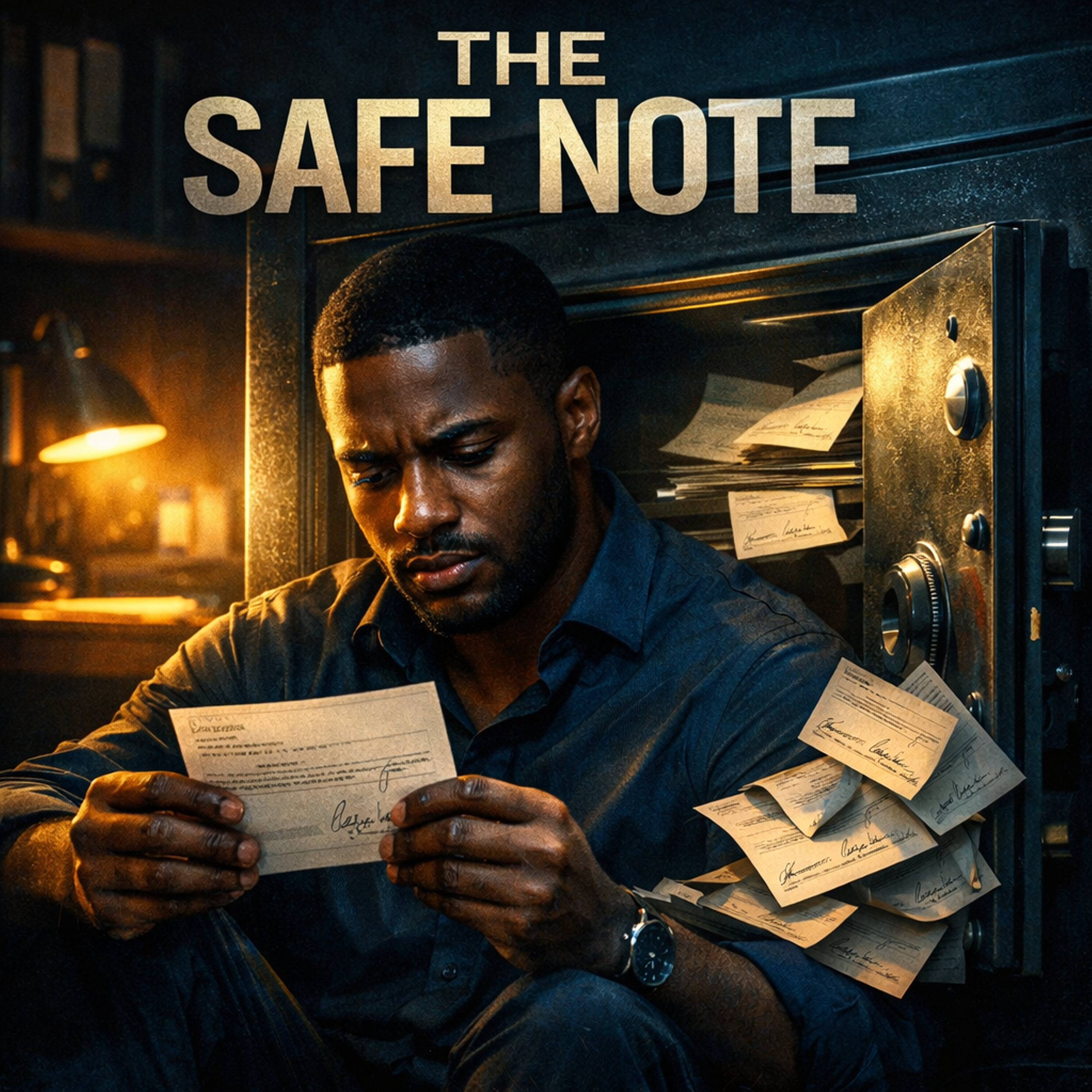
The Safe Note
A quiet favor becomes a permanent mark. When financial relief arrives wrapped in patience, professionalism, and trust, it’s easy to stop asking questions—especially when the paperwork looks perfect. In The Safe Note, a man discovers that the most dangerous manipulation doesn’t announce itself with threats or urgency, but with calm assurances and documents that appear safer than memory itself. As promissory notes accumulate and signatures repeat with unsettling confidence, relief curdles into doubt. What begins as gratitude slowly transforms into complicity, forcing a reckoning not just with forged ink, but with the willingness to accept a version of consent that was never truly given. This episode explores how trust can be laundered through legitimacy, how identity can be quietly rewritten on paper, and how the deepest damage occurs when the victim realizes they helped maintain the lie. There are no villains shouting. No dramatic escape. Only the chilling understanding that by the time the truth is clear, survival itself may depend on pretending the signature was always yours.

The Holiday Bonus Lie
A quiet promise arrives at exactly the wrong moment. Framed as a “seasonal payout,” it offers relief without warning—and demands trust without time. What follows is not a sudden collapse, but a carefully paced unraveling, where reassurance replaces doubt, urgency overrides instinct, and each small decision tightens the trap. The Holiday Bonus Lie explores how hope can be engineered, how pressure can feel like care, and how desperation becomes a point of entry rather than a warning sign. Told entirely from inside the experience, the story follows a narrator who doesn’t realize they’re being manipulated until participation itself becomes the injury. This episode lingers in the aftermath: the silence after loss, the shame that follows belief, and the unsettling realization that the most effective betrayals don’t feel violent at all—they feel reasonable. By the end, what’s gone isn’t just money. It’s the ability to trust relief when it finally appears.

The Vineyard Dream
The Vineyard Dream is a psychological financial thriller about trust, paperwork, and the quiet violence of certainty delivered too easily. Drawn by the promise of land ownership and generational wealth, a first-time investor believes he’s secured a pristine vineyard—only to discover, too late, that the dream was already buried under layers of hidden debt. As foreclosure notices arrive and institutions speak in calm, rehearsed tones, he realizes the danger isn’t a single villain, but a system that rewards confidence, delay, and plausible deniability. What begins as optimism curdles into dread as every signature, every “routine” assurance, and every professional smile is reexamined under pressure. The vineyard never changes—but its meaning does. The land becomes a ledger. Hope becomes leverage. And ownership reveals itself as something far more fragile than promised. This episode explores how manipulation doesn’t always shout or threaten. Sometimes it reassures. Sometimes it smiles. And sometimes it hands you a dream that’s already been sold—twice—before you ever arrive.
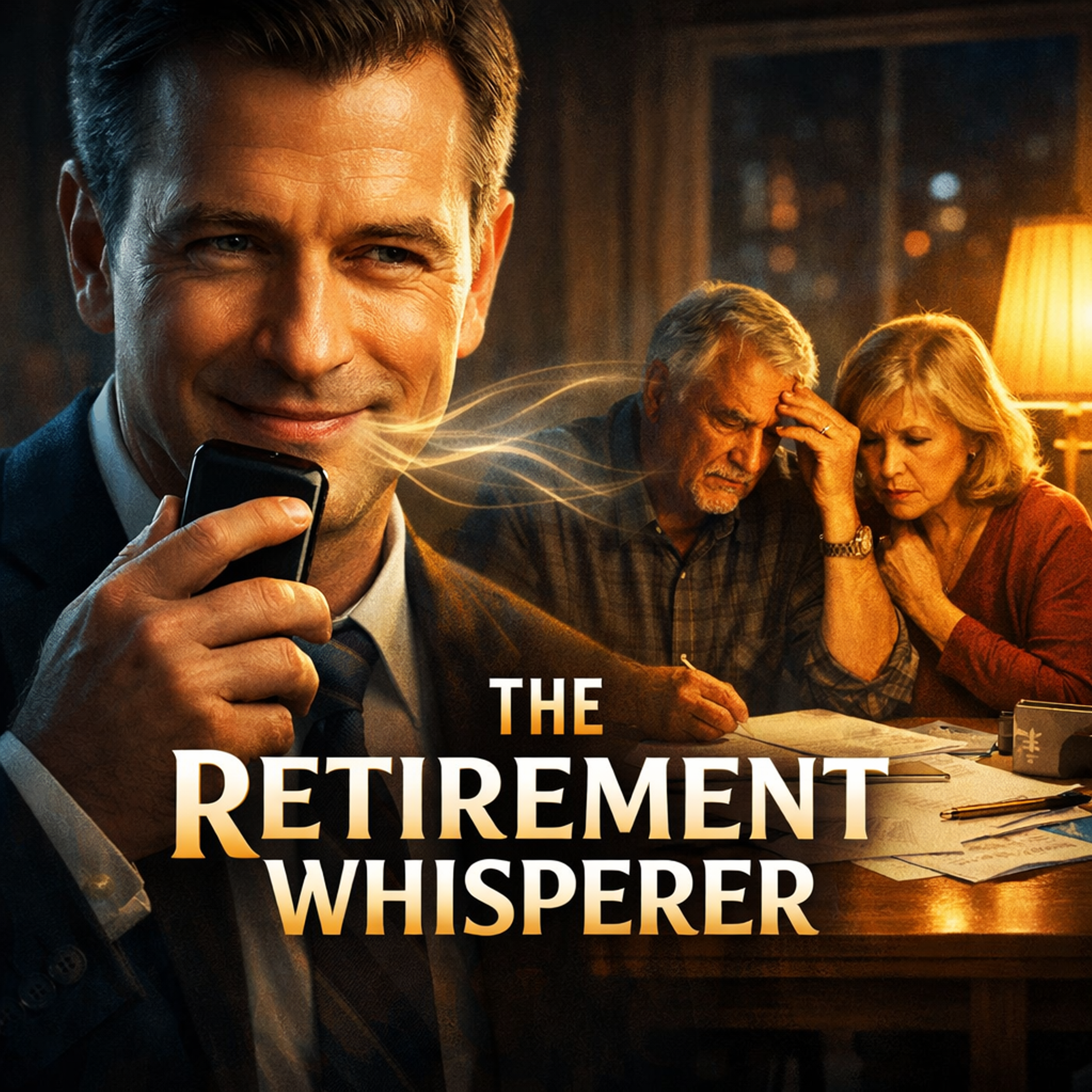
The Retirement Whisperer
He never raised his voice. He never told anyone what to do. He only made things feel safe. The Retirement Whisperer follows a man whose calm, measured voice becomes a refuge for people standing on the edge of retirement. Through scheduled calls and quiet reassurances, he offers clarity in a world that feels financially hostile and overwhelming. Decisions are never rushed. Pressure is never applied. Everything feels voluntary. Until it doesn’t. As pensions are quietly cashed out and certainty replaces caution, the narrator begins to confront what his voice has actually been doing—how relief can override instinct, how trust can be transferred without force, and how damage doesn’t always arrive loudly. This episode explores the unsettling space between consent and influence, professionalism and exploitation, comfort and control. There are no villains here. No shouted warnings. Only a steady tone, a pause at the right moment, and consequences that arrive long after the reassurance fades. By the end, the question isn’t whether anyone was manipulated. It’s whether calm itself can be dangerous.

The Diamond Desk
The Diamond Desk is a psychological thriller about authority without oversight and the quiet danger of paperwork that feels official enough to trust. Told in first-person, the episode follows a man who positions himself as a calm, credible gatekeeper in the world of gemstones—issuing documents that look indistinguishable from legitimacy, produced quickly, affordably, and without external verification. What begins as a service framed around access and efficiency slowly becomes something more corrosive: a system where belief replaces truth, and presentation replaces proof. As volume increases and scrutiny fades, the narrator’s role shifts from evaluator to architect of certainty. Doubt doesn’t arrive as panic or guilt—it arrives as math, procedure, and rationalization. By the time attention finally turns toward his operation, the structure he built is technically sound, emotionally hollow, and impossible to undo cleanly. The Diamond Desk explores how authority is constructed, how trust is outsourced, and how easily harm can hide inside professionalism—leaving the listener unsettled by how little wrongdoing is required for damage to become permanent.

The Micro-Loan Miracle
The Micro-Loan Miracle follows a man who believes he is helping lift people out of poverty—until he realizes the system he helped design is working exactly as intended. Through first-person narration, the episode traces how charitable micro-loans, celebrated as acts of dignity and empowerment, quietly funnel into gambling and loss, not through abuse, but through design. As the narrator moves from optimism to unease, the story exposes how moral language, data, and bureaucracy can normalize harm without ever appearing cruel. Each rational adjustment meant to “improve outcomes” deepens his complicity, blurring the line between oversight and orchestration. No villains announce themselves. No rules are technically broken. What remains is a suffocating realization: sometimes exploitation doesn’t require force—only trust, scale, and the willingness to look away. Disturbing, unresolved, and morally claustrophobic, this episode leaves the listener questioning where responsibility truly begins when harm is automated and good intentions are rewarded.

The Charity Flip
What begins as a clean solution to fundraising friction turns into a slow, suffocating moral trap. In The Charity Flip, a nonprofit fundraiser believes he’s found a way to protect donors, scale impact, and shield a struggling charity from bureaucratic limits. The systems look legitimate. The language is polished. The receipts arrive on time. And the money keeps coming. But as donations move faster, something else starts to shift—ownership, accountability, and truth. Funds don’t disappear; they transform. Routed through layers of shell nonprofits and compliance language, goodwill becomes a commodity, and altruism becomes infrastructure. The narrator’s realization doesn’t arrive with sirens or sudden violence. It arrives quietly, buried in contracts, footnotes, and friendly reassurances. By the time he understands what he’s helped build, the damage is already structural—and irreversible. This episode explores how manipulation doesn’t always coerce. Sometimes it reassures. Sometimes it thanks you. Sometimes it asks you to sign. The Charity Flip is a psychological thriller about complicity, moral laundering, and the terrifying moment when being “careful” becomes the mechanism of harm.

The Legacy Fund
In a world where reputation is more valuable than money, a man builds a career selling protection to powerful families desperate to keep their names clean. Through an exclusive financial vehicle known as The Legacy Fund, scandals are quietly erased, narratives are curated, and “family honor” becomes a form of collateral more binding than cash. Told entirely in first-person, the episode follows a polished, confident insider who believes he is preserving dignity and stability—until a single transaction forces him to confront the true cost of what he’s selling. As private agreements deepen into lifelong obligations, the line between protection and captivity dissolves. What begins as professional stewardship becomes something far more disturbing: a system that doesn’t just silence people, but inherits them. Slow-burning, intimate, and chillingly plausible, The Legacy Fund explores how tradition can be weaponized, how consent can be engineered, and how easily morality can be reframed as responsibility—especially when the system was quietly built to include you long before you realized it.

Quiet Partnerships
In Quiet Partnerships, a husband reflects on the slow unraveling of trust inside a marriage built on silence. What begins as a mutual, unspoken agreement—separate finances, quiet independence, no unnecessary worry—turns into something far more corrosive when hidden investments on both sides quietly disappear. As polite reassurances replace hard answers and procedural language smothers accountability, the narrator confronts an unsettling truth: secrecy framed as protection can hollow out intimacy without ever raising its voice. This episode explores how omission can feel like love, how control can hide inside calm, and how some losses don’t break a marriage outright—they simply leave an absence that never stops being felt.

The Fake Custodian
When Miles accepts a one-day custodial job at what appears to be a legitimate bank, he expects anonymity, routine, and a quick paycheck. Instead, he finds himself inside a space that feels too perfect—too clean, too calm, too reassuring. As customers arrive carrying fear and desperation, Miles begins to understand that his role isn’t maintenance. It’s validation. The bank operates like a well-rehearsed performance. Every detail reinforces trust. Every interaction smooths doubt. And Miles, in his uniform, becomes part of the architecture—silent proof that nothing is wrong. As the day unfolds, invisible pressures close in. Instructions arrive without explanation. Boundaries blur. Memory begins to feel unreliable. By the time Miles realizes what is truly happening, escape is no longer a simple decision—it’s a moral one. The Fake Custodian is a slow-burn psychological thriller about manufactured legitimacy, coerced complicity, and the terrifying ease with which ordinary people become part of something they never agreed to understand. It explores how authority is staged, how trust is built without consent, and how the most dangerous manipulations don’t feel like force at all—until it’s too late.

Ep 404Handshake to Nowhere: The $20 Million Georgia Investment Scheme
Handshake to Nowhere: The $20 Million Georgia Investment Scheme is a gritty investigative narrative that follows a circle of Georgia investors drawn into private, handshake-based investment deals promising steady, low-risk returns. Built on personal trust rather than formal safeguards, the scheme unravels when payments slow, explanations shift, and investors discover there are no real underlying assets. As complaints quietly accumulate, federal scrutiny exposes a widening gap between what was promised and where the money actually went. What begins as confidence in a familiar face becomes a stark lesson in how easily trust can be exploited when oversight is absent.
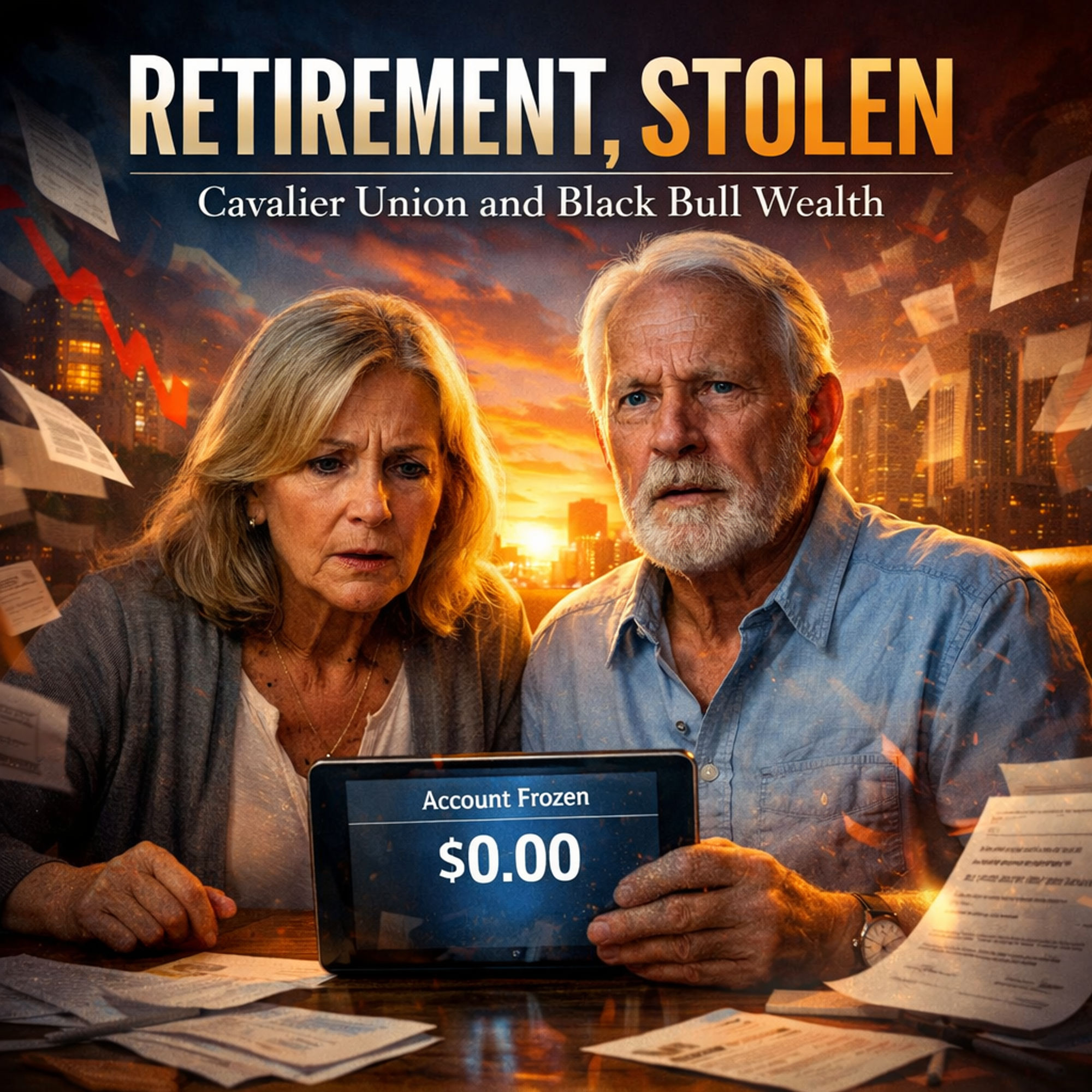
Ep 403Retirement, Stolen: Cavalier Union and Black Bull Wealth
Retirement, Stolen is an investigative, gritty examination of how trust becomes a weapon when it is pointed at people who can no longer afford mistakes. In Virginia, retirees seeking safety are drawn to firms that promise conservative stewardship of their life savings. What begins as reassurance slowly turns into silence, delay, and contradiction. As questions mount, victims learn their retirement funds were not where they were promised, and that the future they planned for may already be gone. Told with restraint and pressure, the story follows the human cost of financial betrayal, where loss is measured not only in dollars, but in years, health, and dignity.

Ep 402The Ramp-and-Dump: Two Hundred Fourteen Million Dollars in Social-Media Stock Hype
The Ramp-and-Dump: Two Hundred Fourteen Million Dollars in Social-Media Stock Hype examines a modern financial fraud built for the age of online influence. Posing as U.S. investment advisers, offshore operators use calm authority, patriotic imagery, and private social-media groups to guide investors into thinly traded stocks. As prices surge, the promoters quietly exit, leaving followers trapped in sudden collapses. Told through a gritty investigative lens, the series exposes how trust, timing, and digital platforms combined to move hundreds of millions of dollars before regulators could react.

Ep 401Global Mirage: The Eighteen Million Dollar “Safe” Investment Network
Global Mirage: The Eighteen Million Dollar “Safe” Investment Network examines an eight-year international fraud that succeeded by rejecting hype and selling calm. Marketed as conservative, diversified, and secure, the scheme drew victims through trust-based referrals, professional language, and the promise of protection rather than profit. As delays quietly replaced stability, investigators unraveled a system built on control, misrepresentation, and patience. The case traces how four men used the appearance of safety to siphon off approximately eighteen million dollars before the structure finally collapsed under forensic scrutiny.

Ep 400Community Targeted: A Three Hundred Million Dollar Latino Crypto Ponzi
Community Targeted: A Three Hundred Million Dollar Latino Crypto Ponzi examines how a crypto investment program, promoted as safe and community-focused, spread through Latino neighborhoods using trust, language, and familiarity as its foundation. Built on regulatory filings and court records, the story traces how promises of steady returns and financial inclusion masked a structure that allegedly depended on new investor money to survive. Told in a forensic, non-sensational voice, the narrative focuses on systems, timelines, and consequences rather than spectacle, showing how opportunity language can become a tool of harm when oversight and transparency disappear.

Ep 399Buying the Clubs: 777 Partners and the Five Hundred Million Dollar Fraud Charges
Buying the Clubs examines the rise and collapse of 777 Partners, an investment firm that used prestige, speed, and sports ownership to project legitimacy while allegedly hiding deep financial instability. As lenders poured in more than five hundred million dollars, prosecutors say the firm recycled collateral, obscured risk, and kept money moving long after the math no longer worked. What begins as an aggressive private credit strategy ends as a criminal case that exposes how complexity, access, and confidence can be weaponized to delay collapse.

Ep 398The HyperFund Dream: A $1.7 Billion Crypto Pyramid
The HyperFund Dream: A $1.7 Billion Crypto Pyramid is a forensic, three-chapter true-crime narrative that tracks the rise and collapse of a global crypto “membership” program that promised steady, passive returns. Marketed through polished videos, community language, and aggressive referral incentives, HyperFund drew in everyday people across continents, many with little investing experience. What appeared to be a stable opportunity slowly revealed itself, through delays, rebrands, and shifting rules, as a system under strain. Regulatory enforcement filings later described the operation as a massive pyramid scheme, leaving investors facing losses estimated at about one point seven billion dollars. This story examines how trust was built, how pressure replaced transparency, and how belief outpaced reality until the structure finally gave way.

Ep 397Unregulated Empire: FTX and Sam Bankman-Fried
Unregulated Empire: FTX and Sam Bankman-Fried is a gritty investigative account of one of the largest financial collapses of the digital age. Told with a hard-edged, documentary tone, the series traces how a crypto exchange built on speed, trust, and charisma concealed deep structural risks while operating outside meaningful oversight. As markets turned and confidence cracked, the promise of safety unraveled, exposing alleged misuse of customer funds and a system that depended on belief more than boundaries. What followed was not just a corporate failure, but a global reckoning over power, accountability, and the cost of unchecked innovation.

Ep 396Pushing the Pain: Insys Therapeutics and Fentanyl Prescriptions
Pushing the Pain is a gritty nonfiction forensic series that traces how a powerful fentanyl spray moved from a narrow medical purpose into widespread misuse through corporate pressure, financial incentives, and compromised judgment. Told with restraint and urgency, the story follows the path from sales targets and speaker fees to pharmacies, emergency rooms, and courtrooms, exposing how a system designed to manage pain instead amplified harm. This is not a story of a single villain, but of incentives strong enough to bend ethics, medicine, and trust until the consequences could no longer be contained.

Ep 395Poisoned Trust: Dr. Farid Fata and Unnecessary Chemo
Poisoned Trust: Dr. Farid Fata and Unnecessary Chemo examines one of the most disturbing health care fraud cases in modern American medicine. In suburban Detroit, patients entered an oncology clinic believing they were fighting aggressive cancer. Many were not sick at all. Through falsified diagnoses and exaggerated medical claims, respected oncologist Farid Fata ordered chemotherapy that patients did not need, exposing them to toxic drugs while billing insurers millions. Told through a forensic, evidence-driven lens, this series traces how trust became a weapon, how warning signs were ignored, and how the damage extended far beyond the courtroom.
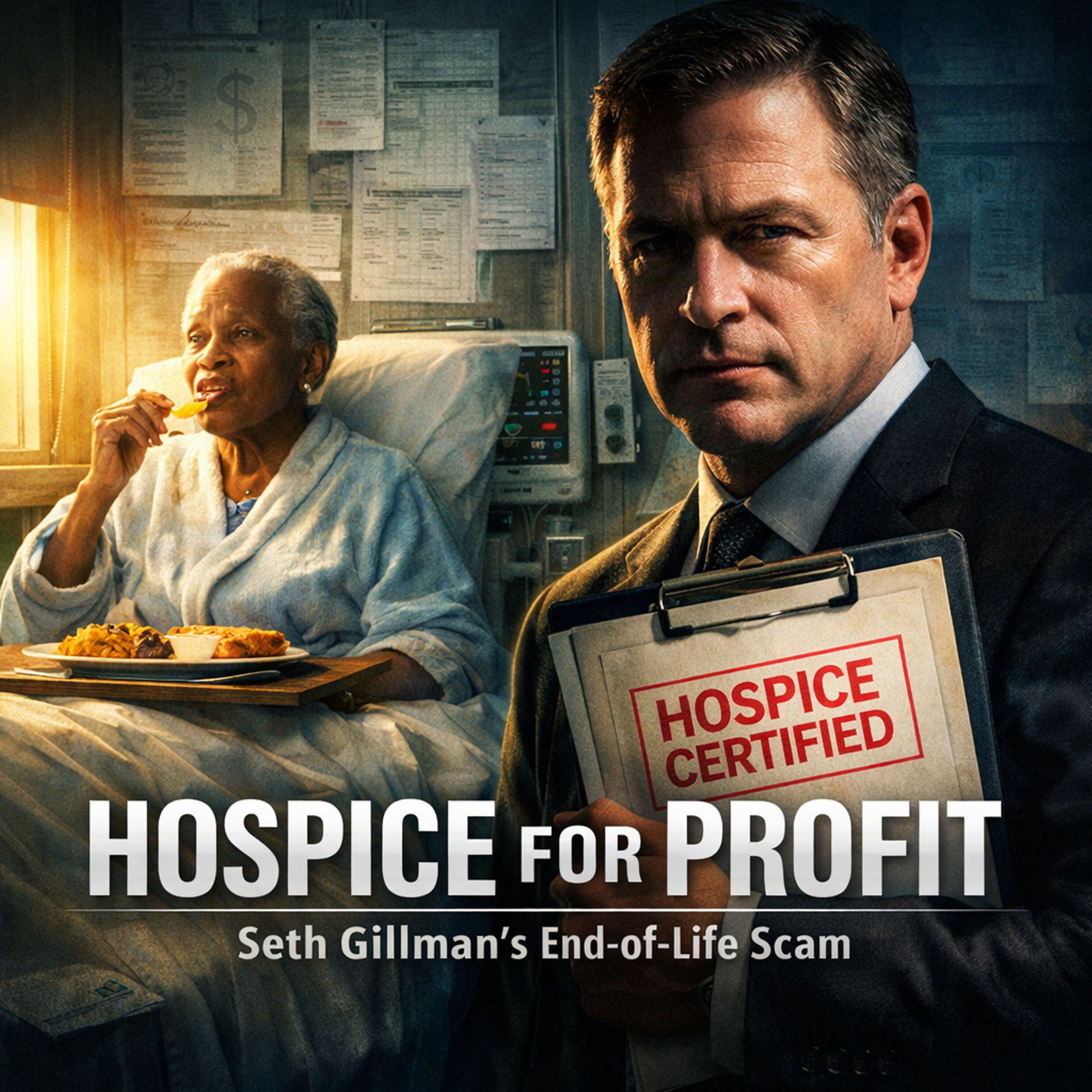
Ep 394Hospice for Profit: Seth Gillman’s End-of-Life Scam
Hospice for Profit: Seth Gillman’s End-of-Life Scam is an investigative examination of how a for-profit hospice operation allegedly exploited Medicare’s end-of-life benefit by enrolling patients who were not terminally ill. Through regulatory scrutiny, internal accounts, and systemic analysis, the story traces how financial incentives, weak oversight, and pressure for growth turned hospice care from a safeguard for the dying into a lucrative numbers game. The series focuses on allegations surrounding businessman Seth Gillman, while placing the case within a broader national crisis affecting trust, ethics, and vulnerability at the end of life.
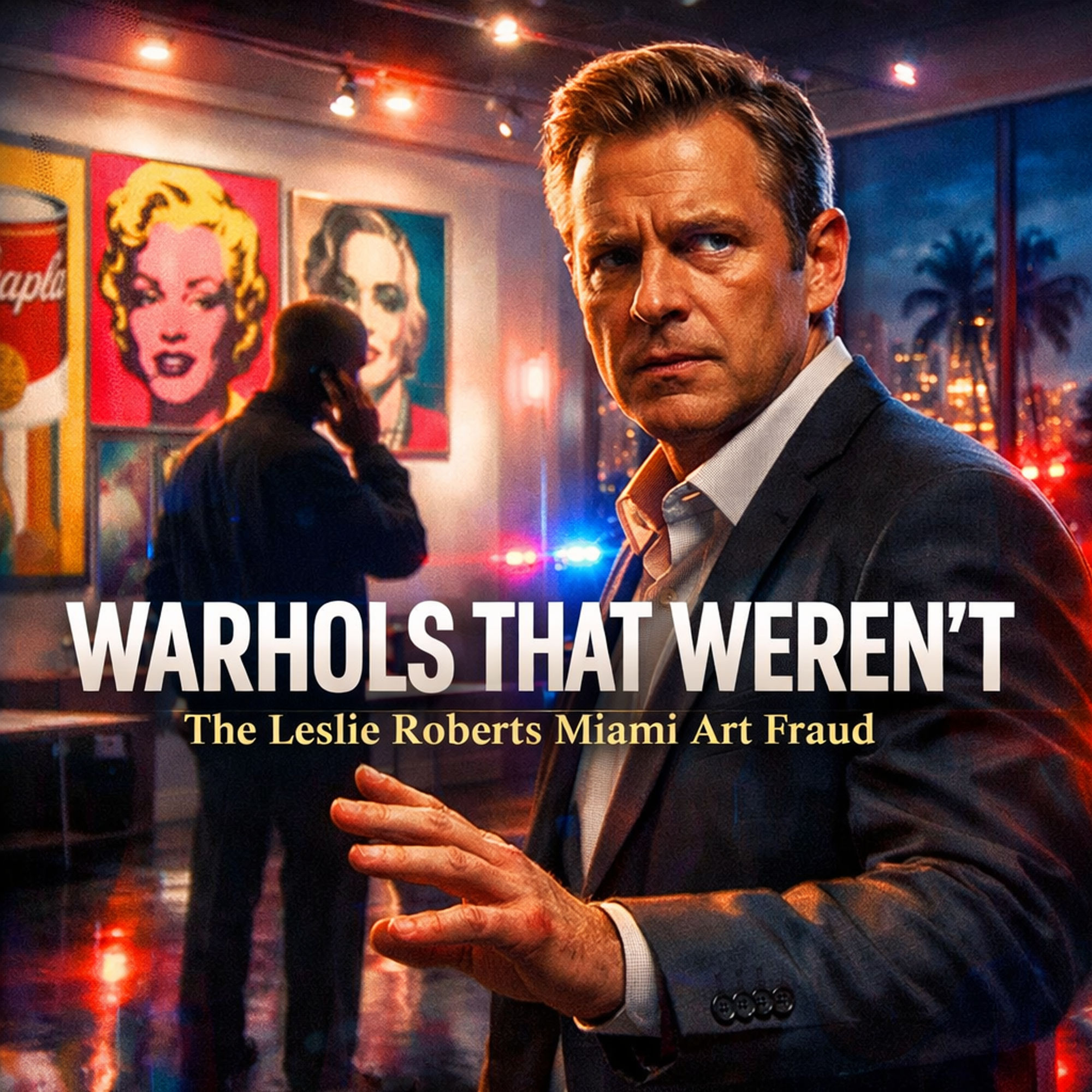
Ep 393Confirmed: Warhols That Weren’t: The Leslie Roberts Miami Art Fraud
Warhols That Weren’t: The Leslie Roberts Miami Art Fraud examines an alleged six-million-dollar art scheme centered on forged Andy Warhol works sold through a Miami gallery. As collectors begin asking routine questions after the sales close, they are allegedly routed to fake foundation contacts and impersonators posing as institutional authorities who “authenticate” the art. What begins as quiet doubt escalates into a federal investigation, exposing how trust, reputation, and simulated authority can be weaponized in the opaque world of high-end art sales.

Ep 392Masterpieces on Paper Only: The Knoedler Gallery Forgeries
Masterpieces on Paper Only: The Knoedler Gallery Forgeries examines how one of New York’s most respected art institutions helped legitimize dozens of fake masterpieces attributed to twentieth-century giants. Sold quietly through private rooms and whispered provenance stories, the paintings moved millions of dollars before science, not taste, exposed the truth. The series traces how prestige, profit, and professional silence allowed forgeries painted in a Queens garage to pass as lost works, revealing a system where trust replaced proof and doubt became a liability.