The Science Show - Full Program Podcast
301 episodes — Page 4 of 7
Lab Notes: Where's my needle-free vaccine?
Hate getting needles? You're in good company — one in five people in Australia have needle fear.
The wonder of sharks surviving for 500 million years
Sharks have survived 500 million years while mass extinctions have wiped out other species. Now, sharks are under threat.
Lab Notes: Why did NASA spend a billion bucks on Lucy?
Somewhere out past Mars in the early hours of Easter Monday, a space probe called Lucy whizzed by an asteroid named Donaldjohanson.Lucy then sent back images showing Donaldjohanson is about five kilometres wide and shaped like a peanut.It's one of a handful of asteroids on Lucy's 12-year itinerary.So what does the billion-dollar mission hope to achieve?
The power of palaeontology
Palaeontology helps reveal why some animals are in desperate need of help while others thrive.
Lab Notes: Why sprinting sensation Gout Gout is so fast
Gout Gout is fast becoming the face of Australian athletics, regularly clocking blisteringly quick times over 100- and 200-metre sprints.And he's only 17. Many think the best is yet to come.So what is it about Gout that makes him such an impressive sprinter at such a young age?
New findings show how genetic mutations drive autoimmunity.
A protein in the immune system, DECTIN-1 - primarily responsible for defending the body against fungal infections, has been found to control the severity of autoimmune diseases such as irritable bowel disease (IBS), type 1 diabetes, eczema, and other chronic disorders.
Lab Notes: How to decommission a nuclear power plant
We've been hearing a lot about a certain proposal to get nuclear power up and running in Australia, but little's been said about what happens when plants reach the end of their life.Decommissioning a single nuclear power plant can cost hundreds of millions of dollars and take decades.So what's involved, and why is the process so long and expensive?
A new approach for democracy, tracing ancient dead stars and does the soil have a biome?
Soils are too often neglected but caring for them brings many benefits for plant nutrition, human health and a boost for the farm economy.
Lab Notes: Should we be putting pig parts in people?
Hearts, kidneys and now livers — over the past couple of years, surgeons have taken all these from gene-edited pigs and put them in people.
Net zero carbon emissions – a review of progress
Nick Rowley reviews out progress towards net zero carbon emissions, Jared Diamond proposes mining the sea floor, and California’s legacy of Albert Einstein.
Lab Notes: Why have Saturn's rings 'vanished'?
As far as planets go, they don't get much more iconic than Saturn. A huge golden ball encircled by gigantic rings. But those distinctive rings — the very things that give Saturn its pizzazz — have seemingly disappeared. So what’s going on, and when will they be back?
Landscape and islands
Lord Howe Island may appear an island paradise, but its ecology has been under intense pressure from invasive species such as rats and pigs. Now birds are being found with stomachs full of plastic.
Lab Notes: The extreme conditions F1 drivers face in a race
They might be the epitome of cool, but Formula 1 race car drivers can get hot — really hot.An F1 cockpit can heat up to 60 degrees Celsius, and this affects cognition — the last thing you want when you're fanging around a track at 300kph.This year, a new rule was introduced to give F1 drivers a bit of relief from that heat … which is just one of the risks of F1 racing.Because we often hear about the performance of the cars in the race, but what about the humans behind the wheel?
Your exposome, Kavli awards and more improbable research
80% of diseases are impacted by environment or lifestyle described as your exposome. Thomas Hartung expects information from studying the exposome will bring benefits on par with those brought by studying the human genome.
Lab Notes: 1 in 3 women get this infection. To cure it, treat men
For women who get bacterial vaginosis or BV, a common condition that can cause a fishy-smelling discharge, many will get it again (and again).Why some people were prone to recurrent BV was a mystery … until now. Australian researchers have shown that BV-related bugs can be sexually transmitted, and treating male partners significantly cuts recurrence rates.
A crisis, an opera, and one of the greatest photos in history - The AAAS rides again.
America’s top research institutions face an uncertain future.
Lab Notes: How Ozempic stops food cravings
A weekly injection that stops that hankering for hot chips and donuts?Many people on Ozempic and similar medications report this phenomenon, saying they no longer have incessant thoughts about sweets and fried food.So how do these drugs, known as GLP-1 agonists, work in the brain to dial down "food noise" and help people lose weight?
Naomi Oreskes The Big Myth and a new theory for the origin of black holes
Naomi Oreskes talks about Donald Trump and her latest book The Big Myth ahead of her visit to Australia in early March.
Lab Notes: Are we on the brink of another pandemic?
The H5N1 strain of avian influenza is currently ripping through the US, infecting wild animals, livestock and people. One person has died, and around 70 more infections have been confirmed.Meanwhile, the Trump administration has made massive cuts to the nation's leading science and health agencies, and announced plans to withdraw from the World Health Organization.As the risk of another pandemic rises, what does all this mean for us in Australia?
Scope for all as some cities leap ahead with green initiatives
San Antonio Texas has restored the San Antonio River encouraging plants and animals back to the city.
Lab Notes: What history can teach us about ‘city-killer’ asteroids
An asteroid dubbed 2024 YR4 is causing a stir among the space community and a frenzy in the media. It currently has a 2.3 per cent chance of crashing into Earth three days before Christmas in 2032. But this is not our first asteroid rodeo. Get in touch with us: [email protected]
Vale Felicia Huppert
Vale the Professor of Happiness Felicia Huppert
Lab Notes: Varroa is here but honey bees strike back
Varroa is the parasite responsible for destroying bee colonies all around the world and is regarded as "the greatest biological threat to Australia's honey bee population."The good news is that some honey bees can fight back. And they're being helped by breeders, scientists and artificial insemination on the tiniest scale.Learn more on Lab Notes, the show that brings you the science of new discoveries and current events. Get in touch with us: [email protected]
The wonder of Australia’s deserts
Unlike other deserts, Australian deserts experience occasional high rainfall. It supports a unique ecology.
Lab Notes: Why the Australian sun has a real sting to it
Australia's summer UV levels are high enough to cause sunburn in as little as 11 minutes.Yet the summer sun in the Northern Hemisphere rarely feels that full on.So why does our sunlight have that extra "bite"?Spoiler: it's not the hole in the ozone layer.Learn more on Lab Notes, the show that brings you the science of new discoveries and current events.Get in touch with us: [email protected]
Old rocks, old humans, old sharks, and links to today
Opals, ancient humans and sharks dating back 465 million years. This week we see how today’s world has been shaped from the distant past.
Lab Notes: More than whale food — krill are climate heroes
Antarctic krill (Euphausia superba) do much more than fill whales' bellies. These tiny crustaceans also play a huge role in Earth's carbon cycle.They sequester around 40 million tonnes of carbon each year, mostly in their poo — that's the equivalent of taking 35 million cars off the road.Yet there's plenty we don't know about these thumb-sized critters.Now a new study has revealed what they get up to under the Antarctic winter sea ice, and how this behaviour affects carbon calculations.Dive into the secret life of krill on Lab Notes, the show that brings you the science of new discoveries and current events.Get in touch with us: [email protected]
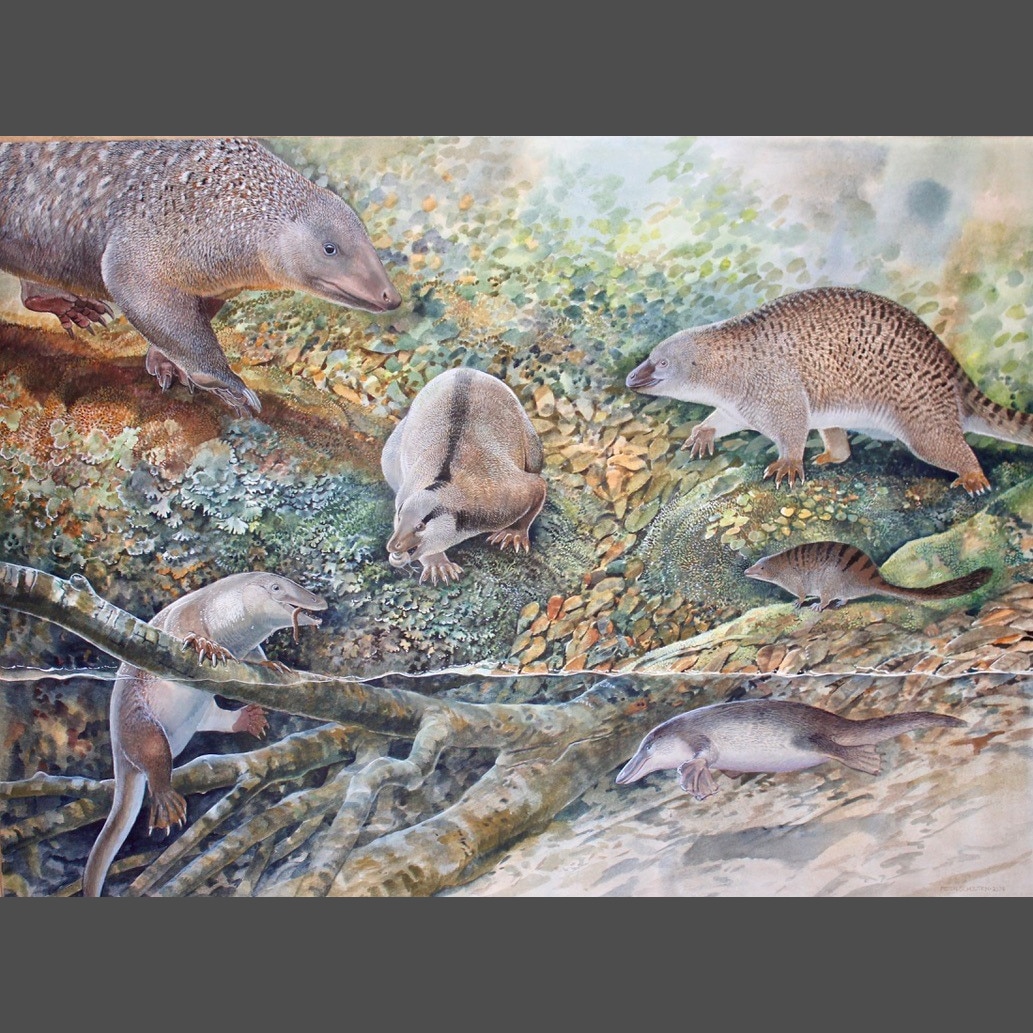
Science Show Summer - Australia’s “Indiana Jones” and the lost Age of Mammals
Opalised fossils previously overlooked at the Australian Museum have overturned our understanding of the origin of mammals with the emergence of a whole new age of mammals: The Age of Monotremes.
Lab Notes: A debunked vaccine theory rears its ugly head — again
Robert F Kennedy Jr is tipped to lead the US Department of Health and Human Services. Over the years, RFK Jr has repeatedly pushed the claim that childhood vaccines cause autism spectrum disorder — a theory that's been well and truly debunked.So where did this idea come from? What's bowel disease got to do with it? And what might the US expect with an anti-vaxxer at the helm of health and human services?Learn more on Lab Notes, the new show that brings you the science of new discoveries and current events. Get in touch with us: [email protected]
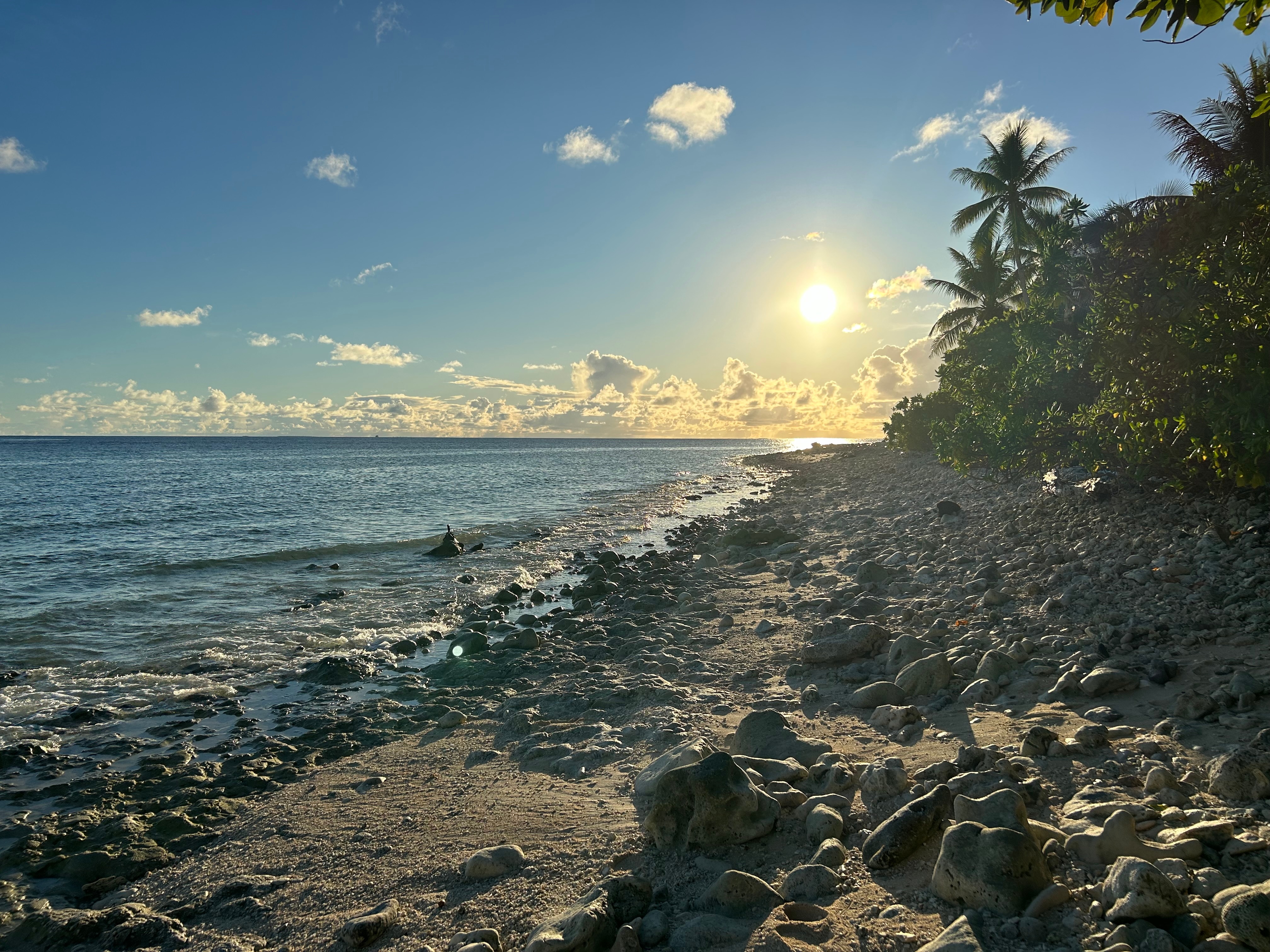
Micronesian community and scientists unite to protect remote Ulithi atoll
A remote community in the western Pacific is working with scientists to battle the effects of invasive species, a leaking WW2 oil tanker and climate change.
Science Extra: Echoes of a tsunami
Strewn throughout the sands of an island in the Great Barrier Reef, shards of pottery lay for thousands of years before an archaeologist quite literally stumbled across them 20 years ago.As more pieces were lifted from the sand, a question was also raised: Who shaped and fired these clay pots?We also get to the bottom of a strange phenomenon that had the earth ringing like a bell for nine days -- and earthquake scientists abuzz for a year.Solve these mysteries and more with science reporters Jacinta Bowler and Carl Smith.

Science Show Summer - Hedy Lamarr - actress, inventor, and amateur engineer
Hollywood promoted her as the most beautiful woman in the world. But Hedy Lamarr was more than good looks. She invented and patented a new form of communication which is used widely today and even allows mobile phones to work.
Science Extra: The anatomy of a scam
Do you get texts telling you there’s an unclaimed parcel waiting for you at the post office?Turns out scammers can find out if we’re expecting something in the post and time a scam text to coincide with our online purchases -- and it could all be completely legal.And while 2024 saw advances in artificial intelligence, they didn’t seem to wow us like they did in 2023. Are we simply harder to impress now?Breaking all this down -- and more -- are technology reporters Ange Lavoipierre and James Purtill.
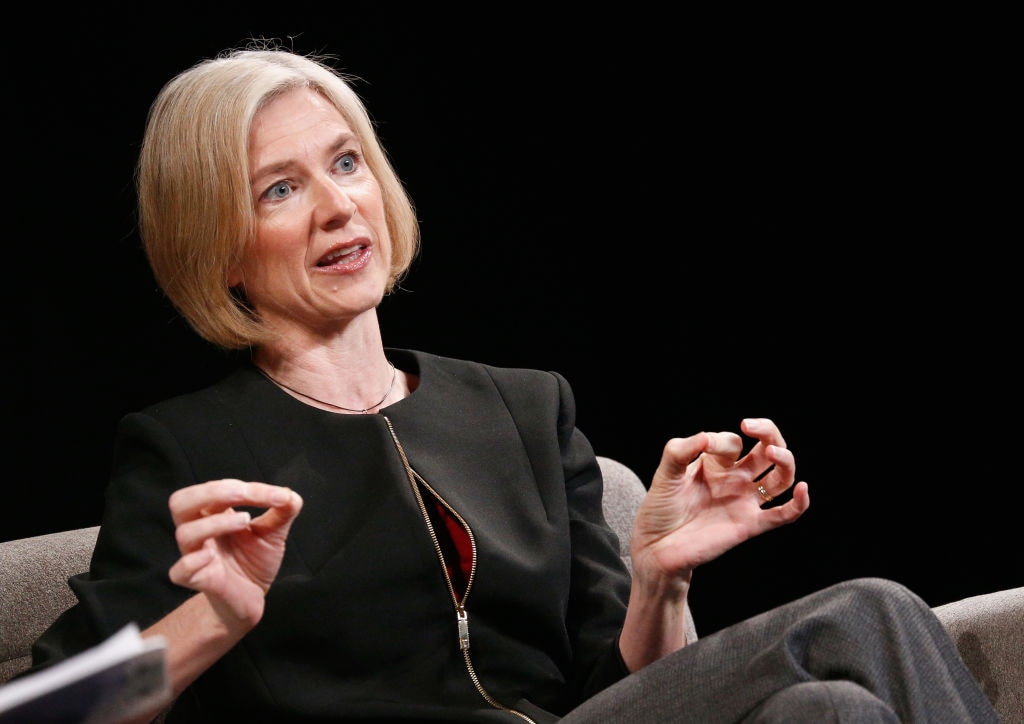
Science Show Summer - Merlin meets Dr Crispy
CRISPR is the most powerful means of gene editing ever developed. It led to Jennifer Doudna and Emmanuelle Charpentier being awarded the Nobel Prize for chemistry in 2020. Jennifer Doudna speaks with Merlin Crossley about CRISPR, its capability, and the ethical questions which arise.
Science Extra: March of the cane toads
Up with the sparrows or hanging with the night owls: we humans like to put ourselves into one of two camps.But when it comes to native animals, this idea of either being awake during the day or at night just doesn’t hold up.And while cane toads have already traversed most of northern Australia, there is an ambitious project to stop the pests from infiltrating the Pilbara -- but time is running out to put the plan in motion.We chat all things nature with environment reporter Peter de Kruijff and ABC presenter and nature nerd Dr Ann Jones.

Science Show Summer - The Extremely Large Telescope
It might be the largest telescope humans will ever build. Jonathan Webb visits the site in Chile’s high dry Atacama Desert.
Science Extra: Weight of the world
Once considered a problem for high-income countries, being overweight is now on the rise in low- and middle-income parts of the world. At least 2.5 billion adults are now overweight or obese. What’s causing this collective weight gain?And if 2023 was the year of hype about weight-loss drugs like Ozempic, 2024 felt like the year of acceptance. We find out why weight-loss drugs are here to stay.This week we’re joined by health journalist and Radio National presenter Tegan Taylor.
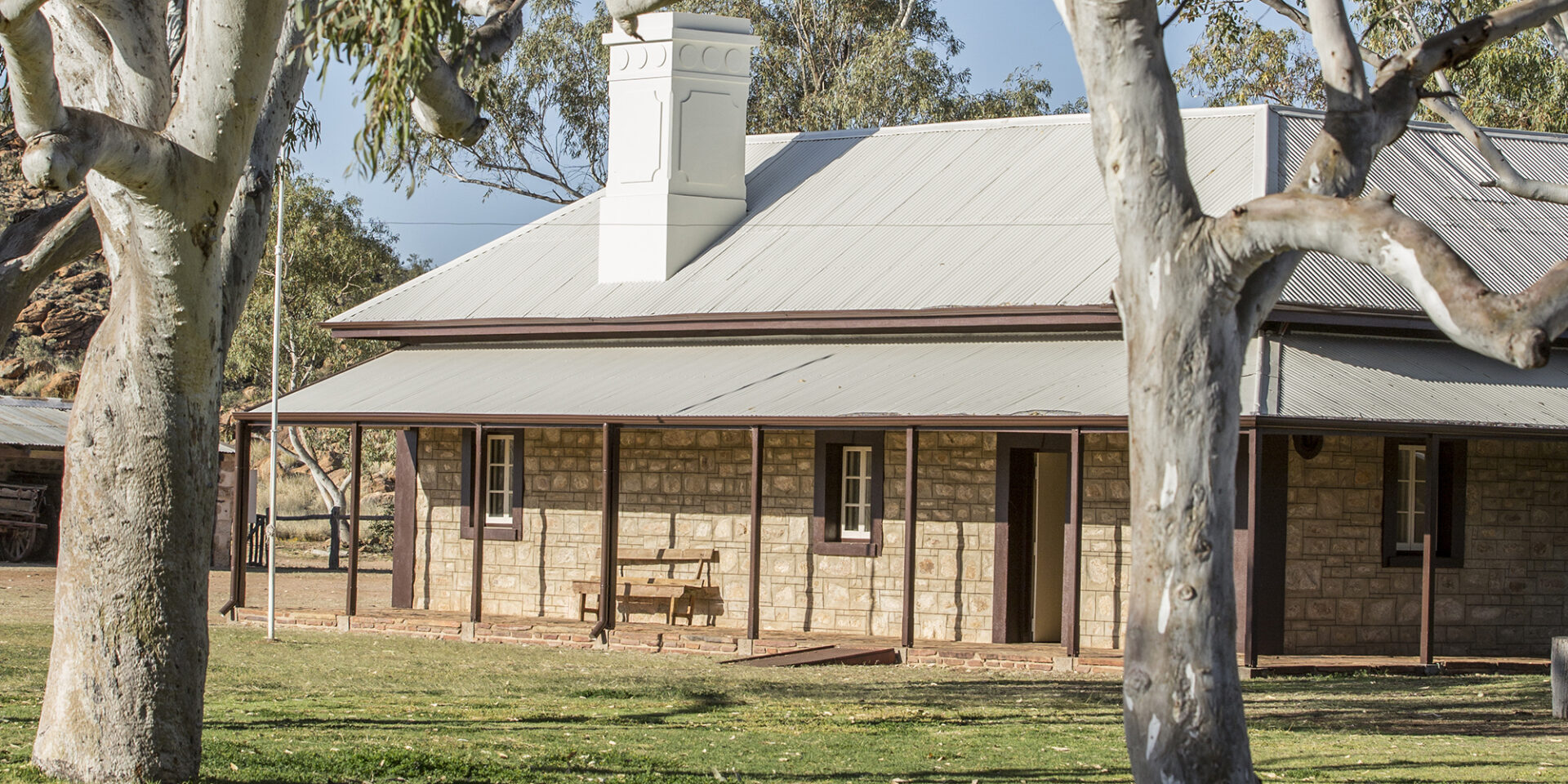
Science Show Summer - A wire around the world
Paul Davies retraces one of the great engineering achievements of the 19th century – the construction of a telegraph wire from the UK to Australia.
Science Extra: More auroras in store?
More than 30 years ago, astronomers came up with the bold idea to build the world’s biggest radio telescopes.One is now taking shape in the Western Australian outback, where scientists and engineers are installing more than 130,000 Christmas-tree-shaped antennas onto the red earth.And those stunning auroras over the past year? There’s a good chance we’ll see more colourful displays in 2025.All that and more with ABC Science digital executive producer Genelle Weule and University of Sydney astronomer and 2024 ABC Science Top Fiver Dr Laura Driessen.
Science books for Christmas and a portrait of Matthew Bailes
Bianca Nogrady traces the scientific journey of astronomer and Prime Minister’s Science Prize winner Matthew Bailes.
Mysterious signal and a mysterious place
A signal that stumped seismologists for a year has finally been identified. And an author takes us to a distant location.
PM’s Innovation Prize for childhood cancer drug
Momelotinib, a drug to help treat myelofibrosis has been approved by the US Food and Drug Administration, a rare achievement for an all-Australian team.
Australia’s “Indiana Jones” and the lost Age of Mammals
Opalised fossils previously overlooked at the Australian Museum have overturned our understanding of the origin of mammals with the emergence of a whole new age of mammals: The Age of Monotremes.
Prime Minister’s teaching prizes, platypuses with high PFAS and house bricks from sugar cane waste
Platypuses in NSW are carrying PFAS chemicals many times over accepted levels indicate widespread contamination
Big astronomical flash imminent and gay behaviour across the animal world
Gay behaviour has been observed amongst at least 1,500 animal species.
Cheaper hydrogen, marine invertebrates and European wasps threaten biodiversity
Tianyi Ma at RMIT Melbourne has won the Prime Minister’s Physical Science Prize for his work producing cheaper hydrogen and using captured carbon dioxide for the green production of basic chemicals.
Stephen Hawking’s voice – and what he left behind!
Tim Mendham tells us about Alfred Russel Wallace who worked with Darwin establishing theories of evolution and natural selection but who is barely known.
Bryde’s whales prolific in east coast Australian waters
Bryde’s whale seen year-round in Australian east coast waters and reports from the British Science Festival.
Nobel Prizes, Prime Minister's Science Prizes, unis under pressure, and remembering Mawson
The Science Show gives Australians unique insights into the latest scientific research and debate.
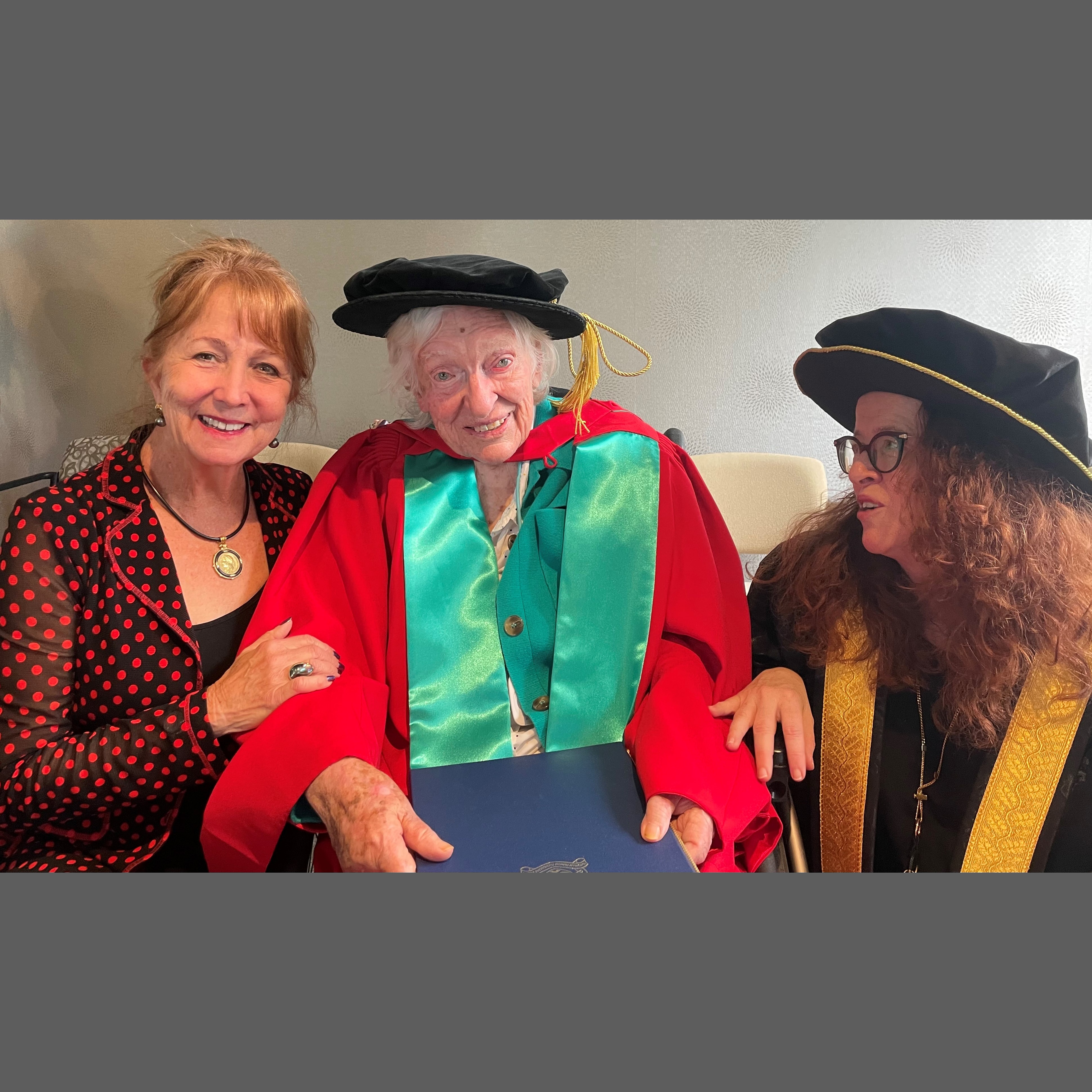
Surprise Hon Doc for Rose, but why did we forget Louise?
This week we look at some brilliant figures in science who after being allowed to fade from memory are now at last being recognised.