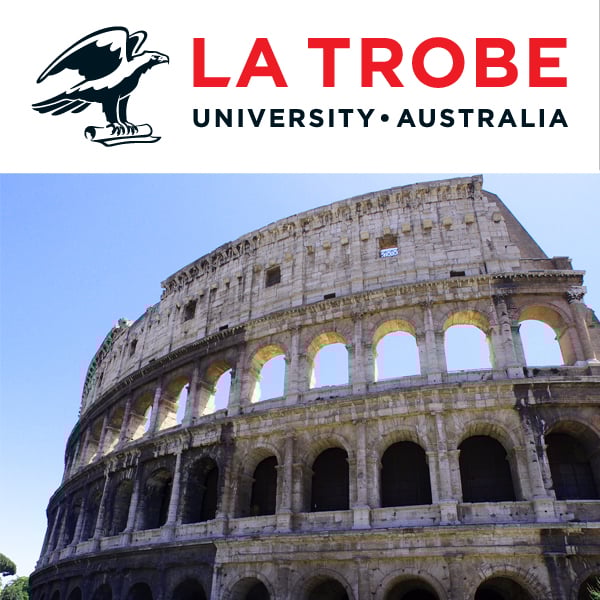
The Roman World
50 episodes
Empire and Symbol
Ancient Rome and its culture still exerts an enormous influence on modern culture, particularly in the west. Through media such as film, literature, art, architecture, law codes and political institutions we are still influenced by Rome and we continue to reuse and reinvent Roman forms.This lecture considers some of the ideas which are transmitted when we tell narratives of Rome (for example in the films Gladiator or The Life of Brian) or make reference to ancient Rome in buildings, paintings and even in the classroom. While Rome is still alive for us, we can see that each historical era has reconfigured ancient culture to suit its own ends and remade Rome in its own image. Copyright 2013 La Trobe University, all rights reserved. Contact for permissions.
Empire and Symbol (handout)
Ancient Rome and its culture still exerts an enormous influence on modern culture, particularly in the west. Through media such as film, literature, art, architecture, law codes and political institutions we are still influenced by Rome and we continue to reuse and reinvent Roman forms.This lecture considers some of the ideas which are transmitted when we tell narratives of Rome (for example in the films Gladiator or The Life of Brian) or make reference to ancient Rome in buildings, paintings and even in the classroom. While Rome is still alive for us, we can see that each historical era has reconfigured ancient culture to suit its own ends and remade Rome in its own image. Copyright 2013 La Trobe University, all rights reserved. Contact for permissions.
Pompeii
Buried under the ash from the cataclysmic eruption of the volcano Vesuvius in AD 79, Pompeii and other sites around the Bay of Naples provide extraordinary insights into a Roman town –not just what it looked liked, but how it functioned also. This lecture looks at some of the main public buildings of Pompeii, and especially the development of Pompeii immediately after it was made a Roman colony, and then later in the early Imperial period. What emerges is the role of architecture and other urban adorment in the promotion of individual careers in Pompeii – also reflected in the homes of Pompeiians. Copyright 2013 La Trobe University, all rights reserved. Contact for permissions.
Roman Spectacle
Amphitheatres are notorious as the places where the Romans held their more gruesome forms of "entertainment", including gladiatorial fights, executions of condemned prisoners, and wild beast hunts. As such displays grew more complicated and imaginative in their staging and special effects, so too did the design of the amphitheatres in order to accommodate elaborate performances and the Colosseum in Rome represents the culmination of this architectural development. However, Roman amphitheatres were not just about entertaining the masses: the structures and the events held in them were tightly linked to Roman society and especially to the careers of prominent Romans, who used this form of entertainment as a way to claw their way up the political ladder - and to stay there. This lecture also deals with the wildly popular horse and chariot racing in the circus, a form of entertainment even more closely tied to political factionalism and with huge popular appeal. Copyright 2013 La Trobe University, all rights reserved. Contact for permissions.
Pompeii (handout)
Buried under the ash from the cataclysmic eruption of the volcano Vesuvius in AD 79, Pompeii and other sites around the Bay of Naples provide extraordinary insights into a Roman town –not just what it looked liked, but how it functioned also. This lecture looks at some of the main public buildings of Pompeii, and especially the development of Pompeii immediately after it was made a Roman colony, and then later in the early Imperial period. What emerges is the role of architecture and other urban adorment in the promotion of individual careers in Pompeii – also reflected in the homes of Pompeiians. Copyright 2013 La Trobe University, all rights reserved. Contact for permissions.
Roman Spectacle (handout)
Amphitheatres are notorious as the places where the Romans held their more gruesome forms of "entertainment", including gladiatorial fights, executions of condemned prisoners, and wild beast hunts. As such displays grew more complicated and imaginative in their staging and special effects, so too did the design of the amphitheatres in order to accommodate elaborate performances and the Colosseum in Rome represents the culmination of this architectural development. However, Roman amphitheatres were not just about entertaining the masses: the structures and the events held in them were tightly linked to Roman society and especially to the careers of prominent Romans, who used this form of entertainment as a way to claw their way up the political ladder - and to stay there. This lecture also deals with the wildly popular horse and chariot racing in the circus, a form of entertainment even more closely tied to political factionalism and with huge popular appeal. Copyright 2013 La Trobe University, all rights reserved. Contact for permissions.
Flavian Rome
After Nero's suicide in 68 CE Rome was plunged into civil war again, as successive military commanders were declared emperor. The victor was Flavius Vespasian, who managed to found a new (Flavian) dynasty. Vespasian oversaw the building of the Colosseum, and both he and his son, Titus, remained popular. However, the third Flavian, Domitian, is depicted as one of the most sinister, paranoid and tyrannical of all Roman emperors, and his murder in 96 brought an end to Rome's second dynasty. Copyright 2013 La Trobe University, all rights reserved. Contact for permissions.
Flavian Rome (handout)
After Nero's suicide in 68 CE Rome was plunged into civil war again, as successive military commanders were declared emperor. The victor was Flavius Vespasian, who managed to found a new (Flavian) dynasty. Vespasian oversaw the building of the Colosseum, and both he and his son, Titus, remained popular. However, the third Flavian, Domitian, is depicted as one of the most sinister, paranoid and tyrannical of all Roman emperors, and his murder in 96 brought an end to Rome's second dynasty. Copyright 2013 La Trobe University, all rights reserved. Contact for permissions.
Freedmen and Satire: Petronius
Nero’s subversive courtier, Petronius, is almost certainly the Petronius Arbiter who wrote the satirical work Satyricon, one of the most interesting and bizarre pieces of Roman literature which survives. This novel deals with the nefarious adventures and sexual exploits of three characters travelling through southern Italy, and unusually in Roman literature, primarily involves characters of low status. Freedmen are oftencentral, particularly in the ‘Dinner of Trimalchio’ episode, which satirises the extraordinarily rich but uneducated and vulgar freedman, Trimalchio, whose tyrannical behaviour and aspirations to greatness have led some to see him as a satirical version of Nero himself. Copyright 2013 La Trobe University, all rights reserved. Contact for permissions.
Freedmen and Satire: Petronius (handout)
Nero’s subversive courtier, Petronius, is almost certainly the Petronius Arbiter who wrote the satirical work Satyricon, one of the most interesting and bizarre pieces of Roman literature which survives. This novel deals with the nefarious adventures and sexual exploits of three characters travelling through southern Italy, and unusually in Roman literature, primarily involves characters of low status. Freedmen are oftencentral, particularly in the ‘Dinner of Trimalchio’ episode, which satirises the extraordinarily rich but uneducated and vulgar freedman, Trimalchio, whose tyrannical behaviour and aspirations to greatness have led some to see him as a satirical version of Nero himself. Copyright 2013 La Trobe University, all rights reserved. Contact for permissions.
Workers and Freedmen
Work is represented as something dirty and sordid by the Roman elite, particularly Cicero, while freedmen always retained some of the stigma associated with their former slave status. This lecture looks at the way workers and freedmen were represented in both elite texts and by themselves, and shows a quite different picture emerging from the tombstones and inscriptions put up by non-elites. Copyright 2013 La Trobe University, all rights reserved. Contact for permissions.
Workers and Freedmen (handout)
Work is represented as something dirty and sordid by the Roman elite, particularly Cicero, while freedmen always retained some of the stigma associated with their former slave status. This lecture looks at the way workers and freedmen were represented in both elite texts and by themselves, and shows a quite different picture emerging from the tombstones and inscriptions put up by non-elites. Copyright 2013 La Trobe University, all rights reserved. Contact for permissions.
Another Renaissance: Neronian Culture
Nero seems to have encouraged innovative art and architecture (including his own extravagant houses), and to have fostered literary achievement. But his 'Golden House' in particular proved unpopular, as it dominated Rome and gave rise to the rumour that Nero himself started the fire of 64 CE so that he could rebuild the city (and then blamed the Christians). Meanwhile the significant literary figures of his reign (Seneca, Lucan and Petronius), who were also members of Nero's imperial court, all fell from grace spectacularly and were forced to suicide. This lecture explores Neronian culture and the key elements of its artistic and literary output. Copyright 2013 La Trobe University, all rights reserved. Contact for permissions.
Another Renaissance: Neronian Culture (handout)
Nero seems to have encouraged innovative art and architecture (including his own extravagant houses), and to have fostered literary achievement. But his 'Golden House' in particular proved unpopular, as it dominated Rome and gave rise to the rumour that Nero himself started the fire of 64 CE so that he could rebuild the city (and then blamed the Christians). Meanwhile the significant literary figures of his reign (Seneca, Lucan and Petronius), who were also members of Nero's imperial court, all fell from grace spectacularly and were forced to suicide. This lecture explores Neronian culture and the key elements of its artistic and literary output. Copyright 2013 La Trobe University, all rights reserved. Contact for permissions.
Bad Emperors: Claudius and Nero
Claudius is famous as the survivor of the Julio-Claudian family – an unlikely emperor according to both ancient historians and Robert Graves alike. His apparent devotion to his wives led Tacitus and Suetonius to ridicule him, and may he may have been murdered by his fourth wife, Agrippina, the mother of Nero. Nero, in turn, is Rome's most infamous emperor: accused of incest, matricide, sexual deviance and arson. This lecture investigates the reasons why both emperors are represented in such outrageous terms. It also considers the perils faced by those in the imperial court, as well as Nero's interest in Greek culture, and the path which led to his violent death. Copyright 2013 La Trobe University, all rights reserved. Contact for permissions.
Bad Emperors: Claudius and Nero (handout)
Claudius is famous as the survivor of the Julio-Claudian family – an unlikely emperor according to both ancient historians and Robert Graves alike. His apparent devotion to his wives led Tacitus and Suetonius to ridicule him, and may he may have been murdered by his fourth wife, Agrippina, the mother of Nero. Nero, in turn, is Rome's most infamous emperor: accused of incest, matricide, sexual deviance and arson. This lecture investigates the reasons why both emperors are represented in such outrageous terms. It also considers the perils faced by those in the imperial court, as well as Nero's interest in Greek culture, and the path which led to his violent death. Copyright 2013 La Trobe University, all rights reserved. Contact for permissions.
After Augustus: the Julio-Claudians
When Augustus died in 14 CE, he had successfully established a dynastic form of monarchy which was confirmed by the continuation of the principate. This is despite the loss of all of the male heirs related to him by blood, as his successor was his stepson, Tiberius, seen as gloomy and paranoid in ancient sources. He was in turn succeeded by Caligula - a short-lived emperor who nevertheless made his mark as one of Rome’s most notoriously cruel and deviant rulers. Copyright 2013 La Trobe University, all rights reserved. Contact for permissions.
After Augustus: the Julio-Claudians (handout)
When Augustus died in 14 CE, he had successfully established a dynastic form of monarchy which was confirmed by the continuation of the principate. This is despite the loss of all of the male heirs related to him by blood, as his successor was his stepson, Tiberius, seen as gloomy and paranoid in ancient sources. He was in turn succeeded by Caligula - a short-lived emperor who nevertheless made his mark as one of Rome’s most notoriously cruel and deviant rulers. Copyright 2013 La Trobe University, all rights reserved. Contact for permissions.
Augustan Culture: Rebuilding Rome
Augustus continued the late Republican trend of utilising public building as a propagandist tool, to promote himself and his regime. However, Augustan monuments are also notable for their elevation of the emperor's dynasty and their portrayal of women and children – a first in Roman public art. These buildings are therefore useful tools for popularising Augustus' regime and preparing the way for his succession, as well as further cementing his family values in ahighly public way. Copyright 2013 La Trobe University, all rights reserved. Contact for permissions.
Augustan Culture: Rebuilding Rome (handout)
Augustus continued the late Republican trend of utilising public building as a propagandist tool, to promote himself and his regime. However, Augustan monuments are also notable for their elevation of the emperor's dynasty and their portrayal of women and children – a first in Roman public art. These buildings are therefore useful tools for popularising Augustus' regime and preparing the way for his succession, as well as further cementing his family values in ahighly public way. Copyright 2013 La Trobe University, all rights reserved. Contact for permissions.
Augustan Love: Propertius and Ovid
Love poetry during the Augustan period is notable for the elegiac genre, a short-lived but significant body of poetry which represents the poet as enslaved and entirely dominated by his mistress. This lectures examines the love poetry of Propertius and Ovid, and also looks at Ovid's controversial poem, The Art of Love, which trivialised the family values being promoted by Augustus, and was probably responsible for the harsh punishment imposed by the emperor: the poet's exile to the Black Sea. Copyright 2013 La Trobe University, all rights reserved. Contact for permissions.
Augustan Love: Propertius and Ovid (handout)
Love poetry during the Augustan period is notable for the elegiac genre, a short-lived but significant body of poetry which represents the poet as enslaved and entirely dominated by his mistress. This lectures examines the love poetry of Propertius and Ovid, and also looks at Ovid's controversial poem, The Art of Love, which trivialised the family values being promoted by Augustus, and was probably responsible for the harsh punishment imposed by the emperor: the poet's exile to the Black Sea. Copyright 2013 La Trobe University, all rights reserved. Contact for permissions.
Roman Myth as Poetry: War in Italy
War is the central theme of Aeneid 7-12, as Aeneas faces opposition to his settlement in Italy, primarily from the Rutulian prince, Turnus. This lecture concentrates on books 7, 10 and 12, showing how Juno, via Allecto manipulates Turnus and other characters to create conflict and bloodshed in Italy. Throughout, Virgil reminds us of the sorrow and loss involved in warfare, concentrating particularly on the father-son relationship. However, unlike Homer's Iliad, Vergil gives no reconciliation at the end of his epic, leaving this poem open to multiple interpretations. Copyright 2013 La Trobe University, all rights reserved. Contact for permissions.
Roman Myth as Poetry: War in Italy (handout)
War is the central theme of Aeneid 7-12, as Aeneas faces opposition to his settlement in Italy, primarily from the Rutulian prince, Turnus. This lecture concentrates on books 7, 10 and 12, showing how Juno, via Allecto manipulates Turnus and other characters to create conflict and bloodshed in Italy. Throughout, Virgil reminds us of the sorrow and loss involved in warfare, concentrating particularly on the father-son relationship. However, unlike Homer's Iliad, Vergil gives no reconciliation at the end of his epic, leaving this poem open to multiple interpretations. Copyright 2013 La Trobe University, all rights reserved. Contact for permissions.
Roman Myth as Poetry: Future Rome
Although the Aeneid is set in the remote, mythical past, it deals with Vergil's present, most prominently in books 6 and 8. In book 6, Aeneasvisits the Underworld, and, after meeting figures from his past, sees a parade of future Roman heroes, who are, for the contemporary reader, leaders from Roman history and recent past. This history is again depicted in book 8, this time in artistic form, as a design on the divine shield made for Aeneas, which showcases Augustus' victory over Cleopatra VII as its centrepiece. Copyright 2013 La Trobe University, all rights reserved. Contact for permissions.
Roman Myth as Poetry: Future Rome (handout)
Although the Aeneid is set in the remote, mythical past, it deals with Vergil's present, most prominently in books 6 and 8. In book 6, Aeneasvisits the Underworld, and, after meeting figures from his past, sees a parade of future Roman heroes, who are, for the contemporary reader, leaders from Roman history and recent past. This history is again depicted in book 8, this time in artistic form, as a design on the divine shield made for Aeneas, which showcases Augustus' victory over Cleopatra VII as its centrepiece. Copyright 2013 La Trobe University, all rights reserved. Contact for permissions.
Roman Myth as Poetry: Love and Hate
The doomed love affair of Aeneas and Dido is, on the face of it, an unusual tale for ancient epic. This lecture shows how Vergil's account of Dido's passion and death relates to Rome's wars with Carthage and to its association with another Eastern queen, Cleopatra VII. This book also introduces the themes of passion and madness into the epic - forces which Aeneas should overcome and reject - while giving us a compelling account of Dido's descent from serene leader of her people to a wild, passionate and suicidal woman. Copyright 2013 La Trobe University, all rights reserved. Contact for permissions.
Roman Myth as Poetry: Love and Hate (handout)
The doomed love affair of Aeneas and Dido is, on the face of it, an unusual tale for ancient epic. This lecture shows how Vergil's account of Dido's passion and death relates to Rome's wars with Carthage and to its association with another Eastern queen, Cleopatra VII. This book also introduces the themes of passion and madness into the epic - forces which Aeneas should overcome and reject - while giving us a compelling account of Dido's descent from serene leader of her people to a wild, passionate and suicidal woman. Copyright 2013 La Trobe University, all rights reserved. Contact for permissions.
Roman Myth as Poetry: Trojan Ancestors II
The fall of Troy might be the most famous myth from Classical antiquity. In the second book of the Aeneid, Aeneas himself tells the story of Troy's destruction, as a first hand account to Dido, in Carthage. This lecture investigates the Greek antecedents for this myth in Homeric epic, and what it tells us about the fate of Troy and Aeneas himself. Copyright 2013 La Trobe University, all rights reserved. Contact for permissions.
Roman Myth as Poetry: Trojan Ancestors II (handout)
The fall of Troy might be the most famous myth from Classical antiquity. In the second book of the Aeneid, Aeneas himself tells the story of Troy's destruction, as a first hand account to Dido, in Carthage. This lecture investigates the Greek antecedents for this myth in Homeric epic, and what it tells us about the fate of Troy and Aeneas himself. Copyright 2013 La Trobe University, all rights reserved. Contact for permissions.
Roman Myth as Poetry: Trojan Ancestors
Vergil's Aeneid is one of the highlights of Roman literature, and its influence over all later Roman writing, as well as post antique European literature, is immeasurable. Composed during the Augustan era, it is a multilayered text: it persistently engages with contemporary Roman politics and society, even though it is an epic poem set in the remote, mythical past, narrating the fate of Aeneas, a refugee from Troy, who seeks a new home in the Mediterranean after the fall of his city. This lecture introduces Vergil, his poetry and the themes of the Aeneid as set out in Book 1 of this 12 book epic. Copyright 2013 La Trobe University, all rights reserved. Contact for permissions.
Roman Myth as Poetry: Trojan Ancestors (handout)
Vergil's Aeneid is one of the highlights of Roman literature, and its influence over all later Roman writing, as well as post antique European literature, is immeasurable. Composed during the Augustan era, it is a multilayered text: it persistently engages with contemporary Roman politics and society, even though it is an epic poem set in the remote, mythical past, narrating the fate of Aeneas, a refugee from Troy, who seeks a new home in the Mediterranean after the fall of his city. This lecture introduces Vergil, his poetry and the themes of the Aeneid as set out in Book 1 of this 12 book epic. Copyright 2013 La Trobe University, all rights reserved. Contact for permissions.
Roman Revolution: The Augustan Principate
The rise of Augustus is often represented as a political and cultural revolution at Rome. Julius Caesar's heir claimed to be restoring the Republic after years of civil war, but in fact he inaugurated a dynastic system of one-man rule, which we call the Empire. This lecture explores these changes, as a backdrop to the literary and artistic developments of the years 27 BCE to 14 CE (the period now known as the 'Augustan era'), which we shall be looking at in depth over the next seven lectures. Copyright 2013 La Trobe University, all rights reserved. Contact for permissions.
Roman Revolution: The Augustan Principate (handout)
The rise of Augustus is often represented as a political and cultural revolution at Rome. Julius Caesar's heir claimed to be restoring the Republic after years of civil war, but in fact he inaugurated a dynastic system of one-man rule, which we call the Empire. This lecture explores these changes, as a backdrop to the literary and artistic developments of the years 27 BCE to 14 CE (the period now known as the 'Augustan era'), which we shall be looking at in depth over the next seven lectures. Copyright 2013 La Trobe University, all rights reserved. Contact for permissions.
Republican Spaces: Power and Monumentality
The city of Rome was a space for individual competition during the Republic. Triumphant generals dedicated public buildings such as temples or basilicas as a means of preserving the memory of their victory, as well as transferring glory to their descendants. But Roman monuments and sculpture was always a delicate balancing act between respecting tradition and incorporating innovative elements. This lecture introduces the language of visual culture at Rome and explores some of the significant monuments of the Republic, and tracing the way that the struggle between Caesar and Pompey was manifested in their portraiture and rival building programmes. Copyright 2013 La Trobe University, all rights reserved. Contact for permissions.
Republican Spaces: Power and Monumentality (handout)
The city of Rome was a space for individual competition during the Republic. Triumphant generals dedicated public buildings such as temples or basilicas as a means of preserving the memory of their victory, as well as transferring glory to their descendants. But Roman monuments and sculpture was always a delicate balancing act between respecting tradition and incorporating innovative elements. This lecture introduces the language of visual culture at Rome and explores some of the significant monuments of the Republic, and tracing the way that the struggle between Caesar and Pompey was manifested in their portraiture and rival building programmes. Copyright 2013 La Trobe University, all rights reserved. Contact for permissions.
The Republic: Politics as War
Cicero was the most prominent orator of his day and a significant political figure in the late Republic. However his success was anything but expected: Cicero did not come from a well-known elite family, and he prided himself on achieving political power by his own talents as a great speaker and law advocate. Paradoxically Cicero backed the conservative forces of the aristocracy in Rome’s power struggles, and was on the losing side in the civil war, but he never quite fitted in and his life and literary works are an important testament to the complex political structures of late republican Rome and how they were being gradually broken down. Copyright 2013 La Trobe University, all rights reserved. Contact for permissions.
The Republic: Politics as War (handout)
Cicero was the most prominent orator of his day and a significant political figure in the late Republic. However his success was anything but expected: Cicero did not come from a well-known elite family, and he prided himself on achieving political power by his own talents as a great speaker and law advocate. Paradoxically Cicero backed the conservative forces of the aristocracy in Rome’s power struggles, and was on the losing side in the civil war, but he never quite fitted in and his life and literary works are an important testament to the complex political structures of late republican Rome and how they were being gradually broken down. Copyright 2013 La Trobe University, all rights reserved. Contact for permissions.
Building the Empire: Julius Caesar
The last hundred years of the Republic saw tensions between competing military and political leaders at Rome, out of which grew urban violence, politically-motivated murders and brutal civil war. Today we trace the historical background of the years 133-44 BCE, beginning with the Gracchi brothers' revolutionary attempts to deal with the urban poor, and concluding with the dictatorship and assassination of Gaius Julius Caesar. Copyright 2013 La Trobe University, all rights reserved. Contact for permissions.
Julius Caesar Timeline (handout)
A timeline of Caesar's life.
Building the Empire: Julius Caesar (handout)
The last hundred years of the Republic saw tensions between competing military and political leaders at Rome, out of which grew urban violence, politically-motivated murders and brutal civil war. Today we trace the historical background of the years 133-44 BCE, beginning with the Gracchi brothers' revolutionary attempts to deal with the urban poor, and concluding with the dictatorship and assassination of Gaius Julius Caesar. Copyright 2013 La Trobe University, all rights reserved. Contact for permissions.
Plautus and Pseudolus
Comic plays are the earliest complete literary texts we have from Rome, and the comedies of the mid-Republican poet Plautus have been enormously influential on European drama. In this lecture we look at what Plautus takes from Greek New Comedy, what is especially Roman about his plays, and how he plays with convention in the Pseudolus. Copyright 2013 La Trobe University, all rights reserved. Contact for permissions.
Plautus and Pseudolus (handout)
Comic plays are the earliest complete literary texts we have from Rome, and the comedies of the mid-Republican poet Plautus have been enormously influential on European drama. In this lecture we look at what Plautus takes from Greek New Comedy, what is especially Roman about his plays, and how he plays with convention in the Pseudolus. Copyright 2013 La Trobe University, all rights reserved. Contact for permissions.
The Republic: History and Literature
Rome's growing power in the Mediterranean during the mid-Republic (4th to 2nd centuries BCE) gave it wealth, luxury goods and access to new cultures. This lecture will investigate the history of the mid-Republic and how this affected early Roman literature, particularly the comic drama of Plautus. Copyright 2013 La Trobe University, all rights reserved. Contact for permissions.
The Republic: History and Literature (handout)
Rome's growing power in the Mediterranean during the mid-Republic (4th to 2nd centuries BCE) gave it wealth, luxury goods and access to new cultures. This lecture will investigate the history of the mid-Republic and how this affected early Roman literature, particularly the comic drama of Plautus. Copyright 2013 La Trobe University, all rights reserved. Contact for permissions.
The Republic: Slaves and Conquerors
This lecture looks at Roman slavery and power structures during the Roman Republic. Although the foundation of the Republic was represented by the Romans as an attempt to overthrow tyranny, Republican government clearly favoured rule by the elite. At the other end of the social scale, slaves were the most clearly excluded from power and even personal autonomy. We explore the extent to which we can determine what a slave's life might have been like. Copyright 2013 La Trobe University, all rights reserved. Contact for permissions.
The Republic: Slaves and Conquerors (handout)
This lecture looks at Roman slavery and power structures during the Roman Republic. Although the foundation of the Republic was represented by the Romans as an attempt to overthrow tyranny, Republican government clearly favoured rule by the elite. At the other end of the social scale, slaves were the most clearly excluded from power and even personal autonomy. We explore the extent to which we can determine what a slave's life might have been like. Copyright 2013 La Trobe University, all rights reserved. Contact for permissions.
Roman Myth as History
This lecture will explore the stories which Romans believed formed their earliest history, including the myth of Romulus and Remus, the arrival of Aeneas from Troy, and the kings of Rome. As we shall see, these tales can tell us a great deal about the Romans' own sense of identity, and, in particular the virtues and values they considered significant. Copyright 2013 La Trobe University, all rights reserved. Contact for permissions.
Roman Myth as History (handout)
This lecture will explore the stories which Romans believed formed their earliest history, including the myth of Romulus and Remus, the arrival of Aeneas from Troy, and the kings of Rome. As we shall see, these tales can tell us a great deal about the Romans' own sense of identity, and, in particular the virtues and values they considered significant. Copyright 2013 La Trobe University, all rights reserved. Contact for permissions.
Death and Burial in Ancient Rome
The disposal and commemoration of the dead gives us significant insight into a society. This is particularly true of the Romans, who venerated their ancestors and kept images of them in their homes. Funerary monuments were an indicator of wealth, status and aspiration for both elites and freedmen, but slaves are almost entirely excluded from the record - in death as in life. Copyright 2012 La Trobe University, all rights reserved. Contact for permissions.