The Real Story
444 episodes — Page 9 of 9
Saudi Arabia's Grand Vision
This week, Owen Bennett Jones and his guests are looking at a radical new economic and social vision for the country proposed by the Saudi monarchy. It’s not simply a set of proposals to end Saudi Arabia’s dependence on oil. Beyond this, it seeks to provide new job opportunities for a generation of frustrated young Saudis, both men and women. With the end of the Saudi oil bonanza in sight, and draining military expenditure on foreign wars, the House of Saud is taking radical steps to maintain growth and stay in power. But can it successfully achieve these changes in the face of strong opposition both within and outside the country?Photo: Saudi people walk through a sand and dust storm in Riyadh. Credit: AFP/Getty Images
The Cost of Corruption
This week, Owen Bennett Jones and his guests tackle the world of tax havens, financial transparency and money laundering. World leaders, activists and experts met in London for a major conference on fighting global corruption, but what practical measures can be taken to make financial flows more transparent, prevent the proceeds of corruption from being hidden away, whilst at the same time allowing legitimate business to flourish?Photo Credit: Thinkstock
The Philippines: a Pivotal Election?
On Monday the Philippines holds what are seen as the most hotly contested elections in its history. The country is a key regional ally for the United States as part of its ‘Pivot to Asia’ strategy, but it is also a nation of extreme of wealth and poverty that has faced a long-standing Islamist insurgency. The leading candidates include the son of ex-dictator Ferdinand Marcos, and the front-runner for the presidency, Rodrigo Duterte, has drawn widespread comparisons to Donald Trump for his populist style and unscripted remarks. The Philippines has experienced a period of sustained growth over the past few years, but there are fears that this could be undermined by politicians who reject the strategies that have led to that success. Owen Bennett Jones and his expert guests discuss the state of democracy in the Philippines, its economic prospects and its future as a regional power.(Ferdinand Marcos Jr, a vice-presidential candidate and son of the late dictator Ferdinand Marcos, campaigns in Manila. Photo credit: Getty Images)
US Sport: Money and Power
Owen Bennett-Jones is at the University of Texas in Austin, discussing sport and empowerment in the United States. The major professional sports in America make billions of dollars in revenue, and great wealth to a select few top athletes. But college players, many of whom are African-American and whose sports generate huge amounts of money, are paid nothing. Join Owen Bennett-Jones and his panel made up of an academic, journalist, player and a coach, as they discuss the politics of top level sport in America. (Photo: Kodi Burns of the Auburn Tigers runs for a 35-yard touchdown against the Oregon Ducks at the University of Phoenix Stadium. Credit: Getty Images)
The End of Feminism?
Owen Bennett Jones is in New Orleans, debating with his guests the relevance of feminism today. In many ways things have never been better for women; there are more female college graduates than men, the gender pay gap is the narrowest it has ever been, and the next president of the United States could well be a woman. So, is feminism really a political movement with clear goals, or has it become just a marketing label? And how do feminists defend the charge that its cause is dominated by the voices of well-off liberal white women?(Photo: A reveler makes her way through the French Quarter during Mardi Gras in New Orleans. Credit: Getty Images)
Oklahoma: Reclaiming Native America?
Oklahoma has one of the largest Native American populations in the United States. By using their right to govern themselves, Oklahoma’s tribes have become economic powerhouses, contributing hugely to the state economy. But is Oklahoma as much of a success story as it seems? Has the political influence of Native Americans – and the treatment of their culture – changed in line with growing economic success? And, are there valuable lessons to be learned from Oklahoma for indigenous peoples in the rest of the United States and around the world?(Photo: Native American's in traditional costumes and headdress. Credit: Elizabeth Davies)
Should Britain Be Ashamed Of Its Colonial Past?
This week, Owen Bennett Jones and guests are at the Oxford Literary Festival.Across the world student bodies have been have been asking universities to distance themselves from historical symbols of oppression. In Oxford, the protests took the form of the ‘Rhodes Must Fall’ campaign which began in South Africa and targeted statues of Cecil Rhodes - a committed champion of the British Empire. How representative are these protests of current sentiments in Britain and its former colonies? So how Britain should acknowledge this part of its identity? Should it apologise and pay reparations, or embrace its history with pride?Photo Credit: Getty Images
Can Iraq Avoid Fragmentation?
Ever since the invasion in 2003 Iraq has faced ceaseless conflict. Today there are two parallel crises. In Baghdad protesters are demanding an end to elite corruption. And, on the battlefield, the Iraqi army and Shia militias are fighting so-called Islamic State. But Iraqis are wondering about the battles to come. Will the central government have to cede power to armed groups that control their own areas? Owen Bennett-Jones is in Baghdad, along with his guests to discuss the forces threatening Iraq's fragmentation.(Photo: Protest by supporters of the Shia cleric Muqtada al-Sadr. Credit: AP/Khalid Mohammed)
Tanzania: Can Language Unite a Nation?
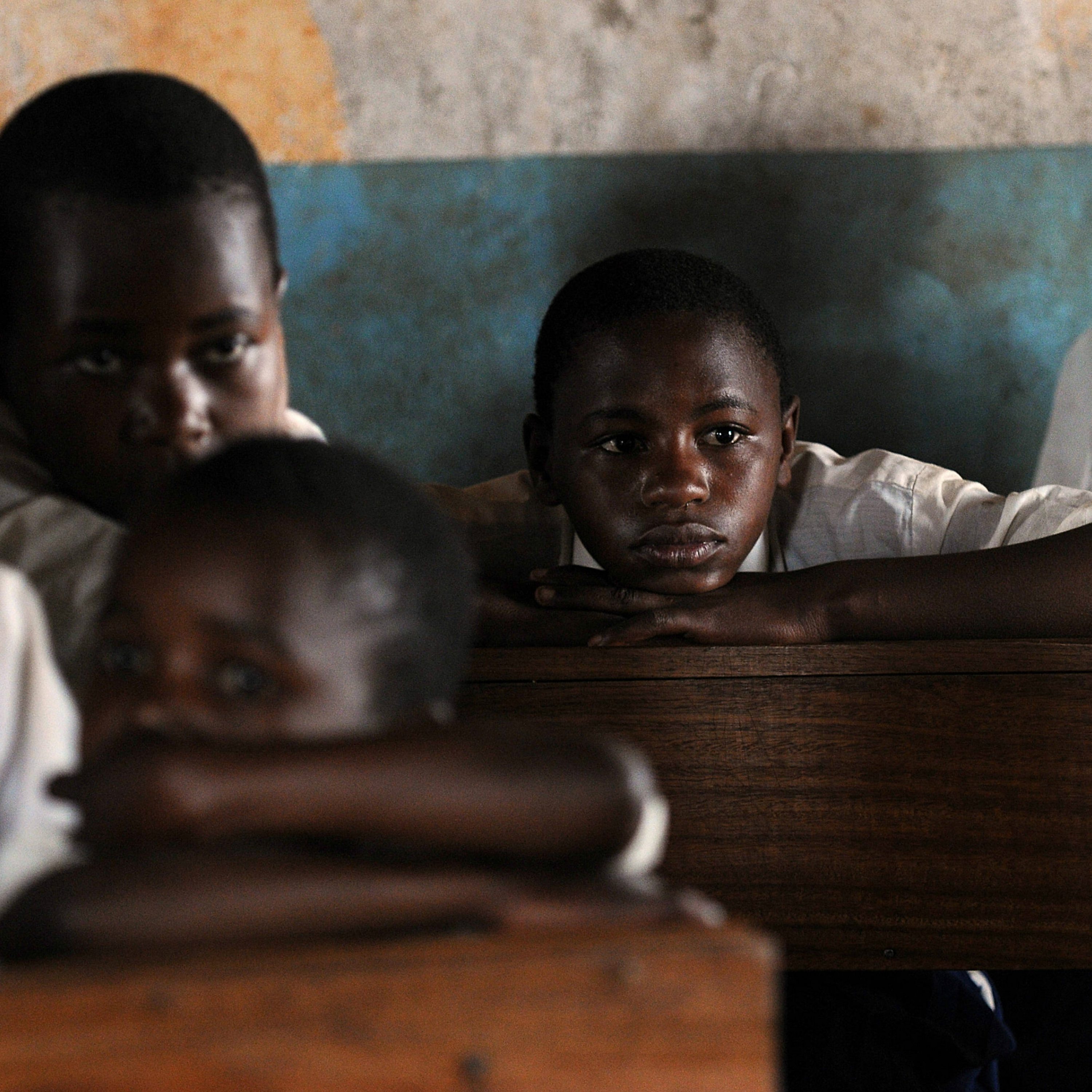
We travel to Dar es Salaam in Tanzania - a country that many believe can teach a lesson to others seeking unity and stability, because right from the start the first post-independence leader Julius Nyerere insisted that everyone should learn Swahili. Well over a 100 other languages are still spoken in Tanzania but many people believe that Nyerere – partly because of his language policy - was a successful nation builder. Join Owen Bennett Jones and his guests as they discuss language and politics in Tanzania.(Photo: School children sitting in a classroom. Credit: Getty Images)
Colombia: Peace at Last?
Is half a century of civil war about to come to an end in Colombia? Negotiators from the government and the FARC rebels are currently hammering out the final terms of a deal. The agreement will ultimately see disarmament and re-integration of FARC fighters, but serious hurdles remain. Colombia is one of the world’s largest producers and exporters of cocaine, and the hope is that a lasting peace will enable drug control policies to be tackled more effectively. Join Owen Bennett Jones and his panel of guests as they discuss Colombia’s future and the prospects for a lasting peace after decades of violent conflict.
Understanding North Korea
What does North Korea’s leader want? And, what do we really know about who runs the country? As the international community ramps up sanctions in response to Pyongyang’s latest nuclear test, will anything change? Join Owen Bennett Jones and his panel of experts – including a young North Korean defector – as they take an in-depth look at one of the world’s most secretive political systems.(Photo Credit: Getty Images)
Money for Nothing?
What if governments paid all their citizens a basic income? Whether rich or poor, you would receive the same amount of money, and you would keep it whether you went out to work and received a salary or not. It is an idea that has been around for centuries, but one that has been gaining traction in recent times as welfare payments become ever more complex and expensive to administer. Proponents also argue that it would remove the 'poverty trap' where people are dissuaded from seeking work because they would lose their benefits if they did so. There is also the issue of machines taking over many of the jobs that we all do to earn a living - not just basic manual tasks, but increasingly 'intelligent' work that will in the future be carried out by robots. Join Owen Bennett Jones and his panel of expert guests as they discuss the future of work and how we pay for it. Should we give free money to everyone and let robots take the strain?Photo: One hundred dollar notes. Credit: Getty Images)
Is Iran Changing?
Iran is holding its first elections since the nuclear agreement was signed last year under which international sanctions against Iran were lifted. We take a look inside Iran and asking whether real social, economic and political change is taking place inside the country, and if so, in what direction and what will it mean? Join Owen Bennett Jones and his panel of Iranian guests living both within and outside the country as they discuss Iran’s future.Photo Credit: Getty Images
What Hope For Peace in Syria?
In the four years since the Syrian conflict began, a quarter of a million people have been killed and 11 million people - half the country’s population - have fled their homes. Despite each new set of talks, peace seems no closer to hand and as the fighting drags on, international powers become more and more involved. Owen Bennett Jones and his panel of experts discuss what each of the players in the conflict actually want, and what would their future Syria look like? Could the country remain united, or is it more likely to resemble the Balkans, broken up into smaller parts? Can we learn any lessons from resolutions of other civil wars? Or is the Syria conflict more likely to spark a wider regional conflagration?(Photo: A rebel fighter, reportedly belonging to the Faylaq al-Rahman brigade, looks up from his hiding spot. Credit: Amer Almohibany/Getty Images)
Getting the World Online
Billions of the world’s poorest people have no access to the internet. Connectivity is growing fast in many parts of the globe, but not everywhere. In large parts of Africa and South Asia, for example, the barriers to joining the information age are simply too great. So why has the Indian government just banned Facebook and others from operating free-access platforms to provide internet access? And why do some of the most influential advocates of a free-for-all internet support the Indian ban? In this week’s Newshour Extra, Owen Bennett Jones and his guests discuss why it matters that the world’s poorest are able to use the internet, and ask what can be done to achieve universal access for all?Photo credit: Getty Images
Zika and the Next Global Pandemic
As fears grow over the impact of the Zika virus and its suspected links to birth defects, Newshour Extra brings together a panel of global experts to discuss how best to tackle the virus and the dangers of global transmission. Owen Bennett-Jones and his guests also ask whether global health authorities should be taking more drastic steps to combat the spread of mosquito-borne diseases, and whether we can predict and prevent the next global pandemic.(Photo: Mosquito on a person's arm. Credit: Thinkstock)
Cities of the Future
What will the cities of the future look like, and will we like living in them? Vast mega-cities are emerging, notably in the developing world, as people migrate towards urban centres in search of work. Cities in the richer world also need to find ways improve the quality of life for their inhabitants. How should urban planners cope with these pressures and develop strategies for the future? Owen Bennett Jones and his guests discuss how best to make these urban spaces the best possible places to live and work.Photo Credit: Thinkstock
One Rule for the Rich…
The world’s wealthiest business executives and most influential politicians are meeting this weekend in the exclusive Swiss ski resort, Davos. They’ll be striking deals, making decisions that will affect all our lives and fawned over by the world’s media. But how accountable are they? Join Owen Bennett Jones and his guests as they discuss whether a tiny fraction of the world’s wealthiest live by different rules when it comes to national laws, taxation and citizenship, and if so whether this is a problem – do the super-rich bring benefits to us all?Photo Credit: Getty Images
A New Deal for Libya?
After the fall of Muammar Gaddafi in 2011, Libya has descended into a chaos of warring factions. Western forces that initially supported the uprising are now largely absent and Islamic State militants have taken advantage of the power vacuum. The breakdown of a coherent administration has also allowed Libya to become a major route for African migrants seeking to cross the Mediterranean into Europe. Now, after lengthy and difficult negotiations, there is a glimmer of hope with the main factions agreeing to form a unity government, and the deadline for the formation of this administration this weekend. Join Owen Bennett Jones and his panel of guests on Newshour Extra as they discuss the prospects for peace in Libya.(Photo credit: Getty Images)
The End of Oil?
In recent months oil prices have fallen to historically low levels. The impact is being felt from Saudi Arabia to Venezuela – revenues are collapsing, and producers are in trouble. Why has the price collapsed and what are the long term consequences? In this week’s Newshour Extra we ask whether global policies to cap carbon emissions could lead to a world in which alternative energy sources will force fossil fuels out of business. Join Owen Bennett Jones and his guests as they discuss the future of oil, and the changing world order it heralds.Contributors: Obiageli Ezekwesili - former Nigerian cabinet minister and World Bank official Luay al-Khateeb - Brookings Doha Jeffrey Mankoff - Centre for Strategic and Interanational Studies Tom Burke - Environmentalist Bill Walker - Governor of Alaska Bjorn Otto Sverdrup - Head of Sustainability, Statoil(Photo: An Oil drill against the backdrop of a setting sun. Credit: Getty Images)
Reaching for the Stars
What does the future hold for human space exploration? With more countries getting involved and costs falling, increasingly ambitious projects are being proposed. Is a permanent base on the Moon feasible? Are there vast mineral resources to be harvested in space? Will our descendants be forced to abandon planet Earth to live elsewhere? Join Owen Bennett Jones and his panel of extra-terrestrial experts – including science fiction writer Kim Stanley Robinson – as they discuss humanity’s future in space. This week's contributors: Lord Martin Rees, British Astronomer Royal; Dr Jill Stuart, specialist in space politics at the London School of Economics; Monica Grady, Professor of Planetary and Space Sciences at the Open University; Dr David Parker, chief executive of the UK Space Agency.(Picture credit: NASA)
Exodus from Eritrea
Why are so many Eritreans fleeing their country? With a population of just six million, this young country in the Horn of Africa has accounted for the third largest flow of refugees into Europe this year, behind only Syria and Afghanistan. Join Owen Bennett Jones and his panel of guests on Newshour Extra this week as we try to understand the forces driving hundreds of thousands of Eritreans risking their lives in the hope of a better future.Contributors: Ahmed Mohammed Mahmud, Chairman of the British Eritrean Community Organisation Network Feruz Werede, Eritrean human rights activist Bronwyn Bruton, Deputy Director of the Atlantic Council's Africa Centre Ghirmai Negash, Professor of English and African literature, Ohio University Alex Last, former BBC correspondent in EritreaPhoto Credit: AFP/Getty Images
Adapting to a Warmer World
Our world is getting warmer despite the best efforts of the scientists, politicians and diplomats. A global agreement in Paris on mitigating greenhouse gas emissions may help slow the rise in temperature, but it's rising nonetheless. What might the world look like if the temperature keeps rising? There will be many losers – but who are the likely winners? And what does humanity need to do to adapt to the inevitable changes ahead? Owen Bennett Jones and a star cast of guests discuss how humanity can survive in a warming world.Contributors: James Lovelock - Environmentalist and originator of Gaia theory; Heather McGray - Director of the Vulnerability & Adaptation programme at the World Resources Institute in Washington, DC; Saleemul Huq - Director, International Centre for Climate Change and Development in Bangladesh; Mark Maslin - Professor of Climatology at University College London; McKenzie Funk - Journalist and author of 'Windfall' Rutger de Graaf - Delta Sync a Dutch company developing climate-adaptation concepts; Paulo Bacigalupi - Climate fiction ('cli-fi') authorPhoto Credit: AFP/Getty Images
Editing the Human Genome
Remarkable new techniques for ‘editing’ DNA – chemically cutting and splicing sections of genetic code – are revolutionising research in laboratories around the world. The potential for eradicating hereditary diseases is enormous. But are the benefits outweighed by the risks involved? And should these techniques ever be used on humans? On Newshour Extra this week, Owen Bennett Jones and his panel of expert guests discuss the scientific and ethical consequences of this latest research, and ask whether mankind should be tinkering with our genetic inheritance.Contributors: Prof Robin Lovell-Badge - Head of Stem Cell Biology and Developmental Genetics at the Francis Crick Institute; Michael Le Page -New Scientist magazine; Dr Annelien Bredenoord - Associate Professor of Biomedical Ethics at the University Medical Centre in Utrecht; Marcy Darnovsky - Executive Director of the Center for Genetics and Society, Berkeley, California; James Rushbrooke - playwrite; Edward Perello - co-founder of Desktop GeneticsPhoto Credit: Thinkstock
What Drives Islamic State?
The rise of the Islamic State group has been both shocking and unprecedented. With ever more violent attacks on civilian targets come outpourings of anger and frustration at the inability of governments and security services to defeat them. The aftermath of the Paris attacks has been no exception. President Hollande has spoken of waging a “pitiless war” against those responsible. Amid the atrocities committed by IS, it’s difficult to perceive a coherent ideology. So in this week’s Newshour Extra, Owen Bennett Jones and his guests discuss where the group came from, what its leaders want, and whether it’s succeeding in its aims. In understanding such motivations, are we better equipped to defeat it?This week's contributors: Jason Burke - Guardian newspaper and author of "The New Threat from Islamic Militancy"; Jessica Stern - Harvard lecturer and the co-author of "ISIS: The State of Terror"; Hassan Hassan - Chatham House and co-author of "ISIS: Inside the Army of Terror"; Ghias Aljundi -Syrian writer and human rights activist.(Photo Credit: AFP/Getty)
Global Trade: the New Imperialism?
In December, the World Trade Organisation will hold major talks in Nairobi, Kenya – the first time ever one of its high-level summits has been in Africa. Global trade has brought enormous economic benefits, but has the WTO failed in its prime directive to “eradicate extreme poverty and hunger” through more equitable trading relationships? Is the world trade regime fair, or is the game fundamentally rigged against developing countries? And as the major powers increasingly turn to regional agreements like the recent Trans-Pacific Partnership, does the WTO even matter anymore?Join Owen Bennett-Jones and his panel of experts, including a former director general of the WTO, as they discuss the future of global trade, and whether developing countries can ever reap the benefits.(picture credit: Getty images)
The Obama Doctrine
When Obama first came to office there was a huge amount of global expectation riding on his foreign policy. He promised to heal the breach with the Islamic world, restore America’s good name, and fight fewer wars. But as his time in the White House draws to a close, how should we judge Obama’s record? Is the world a safer place now than when he took office? And behind all the policy making, is there an over-riding vision – what commentators have called “an Obama doctrine”? Join Owen Bennett-Jones and a panel of global experts, as they discuss President Obama’s foreign policy legacy and America’s place in the world today. (Photo: President Obama addresses US troops in Afghanistan, May 2014. Credit: Getty Images)
Egypt: Democracy or Dictatorship?
More than two years after the overthrow of elected president Mohammed Morsi, Egyptians are going to the polls in the final stage of a promised return to parliamentary democracy. Morsi, whose government was backed by the Muslim Brotherhood, remains in jail; President Sisi, who led the overthrow of Morsi’s government, has been accused of treating his opponents harshly - and press freedoms have been severely curtailed. So, is this democratic process meaningful, or merely a veil for control by the military establishment? Join Owen Bennett Jones and his guests as they discuss Egypt’s democratic path.(Photo: Egyptian protesters. Credit: AFP/Getty Images)
A Scramble for the Arctic
The Arctic is the fastest-warming region of the globe, with temperatures rising at least twice as quickly as the rest of the planet. While that means hardship for much of the area’s wildlife and indigenous peoples, it’s also creating many opportunities. As the ice melts, new, lucrative shipping routes are opening up and improving access to potential new oil fields, while valuable minerals are being discovered under vanishing glaciers.But with new opportunities comes increased interest. In the past few years Arctic countries have expanded their presence in the Far North, opening new military bases and building powerful new icebreakers. They’ve also been trying to further expand their borders under the Arctic Ocean - with three countries claiming ownership of the North Pole.Will the Arctic become the next "Great Game"? Could this competition lead to conflict? Or have negotiations in the Arctic so far proven that it can remain a zone of co-operation?Owen Bennett Jones presents a special edition of Newshour Extra from the Arctic Circle conference in Reykjavik, Iceland.(Photo: an iceberg in Ilulissat, Greenland. Credit: Getty Images)
Is Europe Broken?
As European leaders gather in Brussels to discuss the many crises facing the continent, we ask whether the Union can survive the multiple shocks of migration, economic stress and the possibility of losing at least one of its key members. Join Owen Bennett-Jones and his panel in Brussels as they discuss the future of Europe. Has the dream of its founders, that of ever closer economic and political union, fallen victim to pragmatic survival?(Photo: European Union flag. Credit: Thinkstock)
Doing Business with Mr Putin
A special edition of Newshour Extra, recorded at the annual conference of the governing UK Conservative Party, discussing appropriate responses to Russia's actions in Ukraine and Syria. Should EU and US sanctions, imposed following Russia's annexation of Crimea, be re-assessed or perhaps used as a bargaining chip in negotiations over joint military action in Syria? Join James Coomarasamy for this week's debate in front of a live audience as they discuss the question: should the West be doing business with Putin’s Russia?Photo credit: Alexander Nemenova/AFP/Getty Images
Watching Big Brother
When former CIA employee Edward Snowden blew the lid on the extent of digital surveillance by western governments two years ago, it sparked a fierce debate about the rights of citizens to privacy versus the duty of governments to protect against the threat of global terror. Having been exposed as colluding with these surveillance programmes, communications companies have recently sought to distance themselves from state monitoring and new technologies are emerging designed to give consumers the option of greater privacy. In this week’s Newshour Extra, Owen Bennett Jones and his guests discuss whether Snowden’s revelations have been a gift to terrorists or whether personal freedoms have been rescued from the grip of Big Brother.(Photo: Digital art of a human eye. Credit: Science Photo Library)
Does Power Make You Mad?
Should political leaders be subject to term limits? Is power so intoxicating that too much of it sends you mad? There are those in power who seem convinced that if they stood aside the consequences would be disastrous, but perhaps allowing them to remain is far more damaging. The US has term limits on its national leaders, most of Europe does not. So why do European countries often insist that African leaders should step down after two terms in office. Join Owen Bennett Jones and his distinguished panel of guests as they discuss the merits and abuses of personal power.Photo: Getty Images/ Jacques-Louis David's 1801 painting of Napoleon Bonaparte Crossing the Alps by the Great Saint Bernard Pass
Who Runs Pakistan?
Owen Bennett Jones and his guests are in Islamabad to discuss who is actually governing Pakistan. Two years into the civilian premiership of Nawaz Sharif, there is much talk of the growing influence of the military in all the key decisions. The army chief Raheel Sharif is also increasingly in the public eye, with what appears to be a concerted social media campaign to raise his national profile. Are the men in uniform treating the civilian government as a democratic veneer for martial law by stealth? What are the consequences for both Pakistan and its neighbours?(Photo: Raheel Sharif (left). Credit: AFP/Getty Images. Nawaz Sharif (right). Credit: Getty Images)

Argentina's Lessons for Greece?
The Greek government is facing a critical test. Wracked with debt, can it keep its economy afloat whilst staying within the European currency zone? And if it does fail to reach a deal with creditors over the coming days, what would be the consequences of a default? In this week's programme, we look at Argentina, which went through its own economic crisis over a decade ago, eventually defaulting on its debts. What happened next for Argentina? Did it recover or did it become a financial pariah - shunned by bankers and lending institutions? Did it achieve sustained long term growth or lurch from crisis to crisis? Join Owen Bennett Jones and his panel of expert guests to discuss what lessons there are for Greece in the Argentinian experience.(Photo: Workers of an Argentine shoe factory light a bonfire outside the Foreign Ministry, as they protest against the importation of Brazils shoes. The poster reads One Brazilian shoe is more misery for Argentina. Credit: AP)
Britain's Battle with Radical Islam
This week a young British suicide-bomber has been killed in Iraq; three sisters travelled to Syria taking their children along with them; and a white British muslim convert died fighting with the Somali islamist group al-Shabab. What motivated them to leave the UK to support jihadist causes abroad? We consider the influences on them, and ask what can be done to counter such radicalisation. Join Razia Iqbal and her distinguished panel of guests as they discuss these issues on Newshour Extra.(Photo: This image posted on a militant website is said by his parents to be Talha Asmal, the British 17-year-old who killed himself in a suicide bombing in Iraq. Credit: AP)
Have we Forgotten to Fear the Bomb?
Have we lost our fear of the bomb? And, how successful have efforts been to limit its spread? Seventy years ago, the very first nuclear weapon was detonated by the US army in the deserts of New Mexico. Since then, diplomats and politicians have sought to strictly limit the number of nations capable of following suit – and after years of tortuous negotiation a deal has finally been reached to limit Iran’s ability to construct its own bomb. So what is the state of the nuclear threat today? Join Owen Bennett Jones and his distinguished panel of experts, including former nuclear inspector Hans Blix and former British Foreign Secretary Jack Straw as they discuss how safe the world now is from nuclear catastrophe.(Photo: Israeli Prime Minister Benjamin Netanyahu holds up a graphic of a bomb. Credit: Reuters)
How Close Are We to an Independent Kurdistan?
***This broadcast features an interview with an individual, 28, referred to as Macer Gifford. We have been asked to clarify that this is not his real name but a pseudonym.*** For millions of Kurds in the Middle East, the drive for a state of their own has been a long and - to date - vain pursuit. But with Kurdish fighters winning the fight against the forces of the Islamic State group in Syria and Iraq, does that improve their prospects? Or will any gratitude from the international community for their efforts be short lived come tomorrow? How far can Kurds rely on the United States for help? Join David Eades and his panel of experts as they discuss the question - will the world ever allow an independent Kurdistan?(Photo: The flag of the Kurdistan Workers' Party, PKK. Credit: AFP/Getty Images)
Haiti Aid: Throwing Good Money After Bad?
Five and a half years ago Haiti was hit by a massive earthquake, affecting three million people. It was already the poorest country in the Americas, and the disaster prompted an unprecedented response – including the largest-ever humanitarian appeal launched by the UN in the wake of a natural disaster. Haiti is now choosing its new parliament and the Prime Minister has described the elections as a “significant moment” for the country.So is Haiti a “republic of NGOs” or a burgeoning democracy? Is it an example of the success of aid, or the poster child of “disaster capitalism”? Join Owen Bennett Jones and his panel of experts as they discuss how the international community can make sure that its response to natural disasters doesn’t do more harm than good.Photo: A US Navy helicopter by Haiti's presidential palace, shortly after the January 2010 earthquake. Photo credit: AP Photo
China's Embattled Lawyers
In the past two months over 200 Chinese lawyers and their associates have been detained – some have even vanished completely. The Chinese government says that they’ve been abusing their positions to influence the outcome of court decisions, and “breaching laws for personal profits”. The lawyers say that the crackdown is a politically-motivated attempt to discredit them and curtail their activities.Less than a year ago the Chinese Communist Party held its annual plenary session, focused on a specific theme: the rule of law. That’s the idea that, among other things, nobody should be above the law, and nobody should be punished except according to the law, after a fair trial in front of an independent judge. But the Party emphasised that they would pursue a rule of law with specifically “Chinese characteristics”. What does that mean?Join Owen Bennett Jones and a panel of experts as they discuss the state of the rule of law in China. Do ordinary people have access to justice? And how is the Chinese legal system changing?(Photo: Activists protest outside the Chinese embassy in Bangkok. Credit: Getty Images)
Dangerous Games
There is now compelling scientific evidence that repeated head injuries in contact sports can result in permanent brain damage. But how seriously are sporting authorities taking this latest research? The Rugby World Cup kicks off this weekend in Britain with new tighter regulations intended to reduce severe concussion injuries. The American Football season is also getting under way with the country’s most popular sport under fire from former players and doctors for its failure to protect players adequately. James Coomarasamy will be joined by an expert panel, including medical experts and former players. Should more drastic measures be taken to reduce such injuries? Should some sporting contests be banned outright? And, how best to protect those playing in schools and colleges from the dangers inherent in these sports?Photo Credit: Glyn Kirk/AFP/Getty Images
India’s Education Boom
Across the developing world there is an unprecedented demand for education, and to meet it countries are rapidly developing their higher education systems. It’s seen as a vital path to success and a way out of poverty. But existing education systems are increasingly unable to cope with a rapidly growing global population. How will India find employment for the many tens of millions of students seeking to enter the workplace over the next twenty years? Will those students find their education has been a worthwhile investment? And is the Western education system really the best model for success in a more connected world? Owen Bennett Jones tackles these questions with a panel of experts at one of India's brand new institutions - Shiv Nader University, near Delhi.(Picture: Indian pupils listen to a radio broadcast of a speech marking Teachers Day at a school in Bhopal, India. Credit: EPA)
Yemen's Forgotten War
The conflict in Yemen has descended into a humanitarian crisis of devastating proportions, largely unseen by the rest of the world. What began during the Arab Spring with a popular uprising to oust a long-time autocrat, has developed into a complex proxy war that's drawn in both Saudi Arabia and Iran, the two great Sunni and Shia powers in the Middle East. And into this fractured state, jihadists from both al-Qaeda and Islamic State are gaining ground. Join Owen Bennett Jones and his panel of experts as they discuss whether regional solutions to the crisis can be found, and whether the forces pulling Yemen apart have wider implications for instability across the Arab world.Photo Credit: AFP/Getty Images (Yemeni supporters of the Huthi rebels at a rally in the capital Sana'a protesting against air strikes by the Saudi-led coalition)
Crash, Contagion or Correction?
Are global financial markets on the edge of a precipice, or have the dramatic falls in China’s markets been contained? After the crash of 2008, President Obama assured the world that secure measures had been put in place to prevent another financial crisis. But markets are fluctuating alarmingly and traders from New York to Shanghai are nervous about what the next few weeks will bring. Have we learned the right lessons from previous financial crises? And are we passing those lessons on to the economists of tomorrow? In this week’s Newshour Extra, Owen Bennett Jones is joined by a panel of experts to consider if the global financial system is fundamentally flawed, or whether it’s performing exactly as it should, self-correcting inflated markets to reflect fundamental economic realities.(Photo: A Paris trader in August 2011. Credit: AFP Photo)