Show overview
The Raise Your Average™ Podcast has been publishing since 2021, and across the 5 years since has built a catalogue of 98 episodes. That works out to roughly 130 hours of audio in total. Releases follow a monthly cadence.
Episodes typically run an hour to ninety minutes — most land between 1h 9m and 1h 25m — and the run-time is fairly consistent across the catalogue. None of the episodes are flagged explicit by the publisher. It is catalogued as a EN-US-language Business show.
The show is actively publishing — the most recent episode landed 2 weeks ago, with 15 episodes already out so far this year. The busiest year was 2021, with 28 episodes published. Published by Pierre Daillie.
From the publisher
This is Raise Your Average, dedicated to making you a better long term investor. Join us and our co-hosts from ReSolve Asset Management, as we sit down with some of the most interesting names in finance to discuss and debate macro, markets, investment strategies, and more.
Latest Episodes
View all 98 episodesCorgi Invest's Jeff Weniger: Big Wall of Worry, Fears, No Bubble. Not Yet.
Ric Edelman: What everyone gets wrong about Bitcoin in 2026
Is the Biggest Investing Solution Becoming the Market's Biggest Problem?
Why 0% in Bitcoin & Blockchain is Actually a Riskier Bet Than 1%
David Dziekanski: The End of the Options-Based Income ETF Trade-Off
Justin Huhn: Uranium is the Missing Layer Beneath the AI Trade
Larry Swedroe: The Adaptive Market & The Undiversified Investor
The Covered Call ETF Gap | Zed Francis and Devin Anderson
Dave Nadig: The ETF Bubble Nobody is Talking About
Paul Kornfeld: Don't Fight the Market—Align With It
The Party Always Ends: How to Build a Portfolio for the Morning After | Meb Faber

Ep 90Alfonso Peccatiello: You're not diversified. You just think you are.
The bond market — not equities — is the most fragile and most misunderstood foundation of your entire portfolio, and most investors have no idea what's coming. Episode SummaryPierre Daillie and Mike Philbrick sit down with Alfonso Peccatiello — former ING bond portfolio manager of $20 billion and founder of macro hedge fund Palinuro Capital — for a masterclass in navigating a world where the old rules no longer apply.With decades of disinflation now behind us, Alfonso makes the case that the classic 60/40 portfolio is structurally ill-equipped for today's macro regime. Drawing from his own eight-quadrant savings portfolio model, he walks through how investors should think about building resilient, all-weather portfolios using risk parity principles, leverage as a diversification tool, and a mix of equities, bonds, gold, CTAs, and the U.S. dollar.The conversation shifts to the current geopolitical shock — a potential disruption in global oil supply through the Strait of Hormuz — and why taking directional risk in a nonlinear, unpredictable event is closer to gambling than investing. Alfonso closes with a bold macro outlook: the most underappreciated story of the next year may not be the U.S. at all, but the rest of the world.3 Key Takeaways• The 60/40 Is Structurally Broken.The 40-year disinflationary tailwind that made bonds a reliable hedge for equities is over. In today's high-debt, inflation-prone environment, stocks and bonds can fall together — as 2022 proved — making traditional portfolio construction dangerously inadequate.• Leverage Is a Defense, Not a Weapon.Alfonso's eight-quadrant framework uses leverage not to chase returns, but to free up capital for genuine diversifiers: gold, CTAs, macro hedge funds, and long USD exposure — each sized to contribute equal units of risk across inflation, deleveraging, and growth scenarios.• When You Can't Predict the Variable, Don't Take the Risk.In a geopolitical supply shock like a Strait of Hormuz closure, no amount of macro skill gives you an edge. The honest answer is to reduce risk, not gamble on a nonlinear binary outcome — a lesson most active managers ignore.⏱️ Timestamped Chapters00:0000:5615:1517:0022:2133:5036:4038:2940:2843:2845:2450:5356:1258:001:00:061:08:161:10:201:12:24 Closing thoughts & farewell#MacroInvesting #PortfolioConstruction #BondMarket #RiskParity #AlphonsoPeccatiello #GlobalMacro #Inflation #60_40Portfolio #GoldInvesting #CTAStrategy #FiscalDominance #GeopoliticalRisk #InvestingStrategy #WealthManagement #RaiseYourAverage #FinancialAdvisor #AssetAllocation #RetirementPlanning #MacroHedgeFund #InvestingIn2025

Ep 89Rotation, Int'l Stocks, Defense-Tech, Japan, USD and the Gold Gap with Jeremy Schwartz and Jeff Weniger
While everyone is arguing about AI disrupting software stocks, WisdomTree's Jeremy Schwartz and Jeff Weniger quietly explain why the most important market story of 2026 has nothing to do with the SaaS selloff — and everything to do with where capital is actually moving.WisdomTree Global CIO Jeremy Schwartz and Head of Equity Strategy Jeff Weniger join Pierre Daillie and Mike Philbrick on Raise Your Average to cut through the noise of the AI disruption panic and make the case for a broader, more structural story unfolding in global markets. From the defense tech supercycle reshaping international equity allocations, to the gold gap most North American portfolios haven't fixed, to a contrarian call on the US dollar at a moment of record-extreme bearish positioning — this conversation covers the ideas that matter most for advisors and investors navigating 2026. Japan, small caps, monetary policy lag, and the behavioral biases keeping investors anchored to a 15-year-old playbook all come into the discussion. If you manage money for clients — or your own — this episode is essential listening.CHAPTERS00:00 — Introduction & what's happening in markets right now08:16 — Guests join: Jeremy Schwartz & Jeff Weniger on the SaaSpocalypse10:27 — Is the AI disruption panic overblown? The BlackBerry parallel16:09 — Rotation: structural shift or head fake?19:35 — AI, jobs, and the history of innovation28:09 — Who actually benefits from the AI buildout?31:50 — The 15-year mega-cap tech bull market is ending — here's what's next32:39 — Jeremy Schwartz introduces the defense tech supercycle35:36 — The dollar: why Weniger is a contrarian bull right now40:30 — Gold: the 10–12% neutral allocation most portfolios are missing44:29 — Why the gold-dollar relationship has changed46:34 — Bitcoin liquidation and the case for gold & silver in 202648:06 — The gold gap: US investors vs. European investors51:14 — International flows: the 80/20 problem and how to fix it55:53 — Japan: the most underowned trade of the decade57:07 — Currency hedging, volatility, and the case for DXJ01:01:45 — Is US mega-cap dominance cracking or just pausing?01:04:16 — The biggest mistake advisors make translating macro into allocation01:05:26 — The Fed lag effect: why 2026 may surprise to the upside01:14:02 — Japan deep dive: debt-to-GDP, Buffett's trade, and OPPJ01:20:41 — Jeremy's top idea: the Japan Opportunities Fund (OPPJ)01:26:28 — Jeff's top idea: the contrarian dollar trade and small caps01:30:37 — Market internals: why most portfolios are actually in the black01:35:14 — What surprises advisors most in the next 12 months?01:39:22 — Uncertainty vs. actual losses — the disconnect in 202601:40:27 — Closing thoughts & thank you5 Key Takeaways1. Market is healthier than the headlines suggest. Ten of eleven S&P sectors were positive over the prior three months. Mid and small caps were outperforming large by 500–700 basis points. Most diversified portfolios were in the black — the pain is concentrated in software and AI-disruption names, not the market as a whole.2. The defense tech supercycle is the structural story most advisors are missing. Rising defense budgets across NATO, Japan, Korea, and India are the seed capital for the next generation of global technology — just as DARPA spending gave us the internet and the cell phone. Europe and Japan are becoming technology investment destinations in their own right.3. Gold belongs at 10–12% in a neutral portfolio — and almost no one is there. US investors allocate less than 2% of ETF assets to commodities versus four to five times that in Europe. Falling yields, Bitcoin liquidation flows, and persistent central bank buying from Asia make 2026 one of the strongest setups for gold in years.4. Dollar bearishness has reached historically extreme levels — a classic contrarian signal. BofA's Fund Manager Survey showed record negative dollar positioning. Every major economy is now running large deficits, weakening the relative case for selling dollars. Weniger's best idea for the next 12 months: the greenback surprises to the upside.5. Japan remains the most underowned and underappreciated equity market in the world. Currency-hedged Japanese equities have compounded at 14–15% annually since 2012, driven by real earnings and dividend growth — not multiple expansion. Japanese equities trade at 15–16x earnings with competitive earnings growth. The biggest mistake: betting on the yen rather than hedging it.#WisdomTree #RaiseYourAverage #GlobalMacro #InternationalStocks #JapanEquities #GoldInvesting #DefenseTech #MarketRotation #PortfolioStrategy #AssetAllocation #AIInvesting #SmallCaps #CurrencyHedging #InvestingIn2026 #FinancialAdvisors

Ep 86Energy Is Destiny: War, China, Gold, Canada & the 60/40 Era
If energy is destiny and stockpiles signal intent, then this episode may completely change how you see oil, gold, China, Canada—and your portfoliIn this high-conviction macro deep dive, hosts Pierre Daillie and Mike Philbrick sit down with returning guest Doomberg to dismantle the comfortable narratives investors use to understand energy, geopolitics, and portfolio construction. Doomberg reframes the global order through a resource-first lens: energy is destiny, stockpiles signal intent, and technology is rewriting the rules of commodities. From Venezuela and Guyana to China’s war rations, from shale’s molecular revolution to Saskatchewan’s overlooked strategic wealth, this episode challenges the assumptions underpinning the traditional 60/40 portfolio. If the last 50 years were defined by efficiency, globalization, and financialization, the next regime may be defined by resilience, reshoring, and resource leverage. This is not just a discussion about oil. It’s about power. 🔑 3 Key Takeaways1. Energy Is No Longer “Just Oil” Shale has fundamentally changed hydrocarbon markets. Crude oil, natural gas, and natural gas liquids are co-produced — meaning price signals can no longer be analyzed in isolation. • What CNBC calls “oil” is no longer just crude. Natural gas arbitrage, LNG flows, and AI-driven electricity demand are quietly reshaping global pricing dynamics.2. The World Is Quietly Re-Industrializing Doomberg argues we are witnessing a regime shift: • Deflationary outsourcing → inflationary reshoring • Strong dollar orthodoxy → weaker dollar tolerance • Efficiency → resilience Trump’s trade posture, sovereign capital repositioning, gold’s breakout, and private infrastructure flows all point toward one theme: industrial renaissance is attempting to replace financial engineering. Implication: The classic 60/40 portfolio may be structurally underexposed to energy, infrastructure, and real assets. 3. China Is Acting Like a Wartime Economy China is stockpiling oil, metals, grains, and gold at unprecedented levels. That behavior can be interpreted two ways: • Defensive hardening • Pre-offensive preparation Either way, the signal is clear: global trade assumptions are shifting toward fragmentation and strategic leverage. Implication: Resource-rich jurisdictions (e.g., Saskatchewan) become strategically relevant in a “might-is-right” world.🕒 Timestamped Chapters 00:00 – Introduction: Energy Is Destiny 01:56 – Venezuela, Guyana & Resource-First Thinking 05:08 – Why Markets Misprice Geopolitical Risk 08:07 – Europe’s Deindustrialization Problem 12:06 – Weak Dollar, Gold & the Industrial Pivot 14:30 – Political Constraints & Capital Cycles 20:24 – How to Separate Signal from Propaganda 26:10 – The Molecular Shift in Oil Markets 33:18 – Natural Gas vs Crude: The Arbitrage Story 37:52 – Propane, Engine Switching & Energy Substitution 40:17 – Energy Exposure & the 60/40 Portfolio 46:01 – Why Producers Are Price Takers 48:25 – China’s “War Rations” Strategy 53:29 – Entering a “Might Is Right” Regime 56:03 – Inverting the 50-Year Investment Playbook 01:05:00 – Saskatchewan: Strategic Resource Wealth 01:13:21 – Canada, Culture & Capital Formation Where to find Doomberg

Ep 87AI is Splitting the Market - The Hidden Winners Beyond NVIDIA with Ivana Delevska
AI isn’t just about Nvidia anymore — it’s quietly rewiring the entire industrial economy, and most investors don’t even realize where the real money will be made.In this episode of Raise Your Average, hosts Pierre Daillie and Mike Philbrick sit down with Ivana Delevska, Founder and CIO of Spear Advisors, to unpack how AI is splitting the market — creating massive dispersion between winners and losers — and why passive index exposure may no longer be enough.While most investors believe they’re diversified through Nasdaq or S&P 500 index funds, Delevska explains that passive exposure is heavily concentrated in mega-cap hyperscalers. The real opportunity, she argues, lies deeper in the AI value chain — in networking, optical components, semiconductor capital equipment, electrification, cybersecurity infrastructure, and even space.This conversation goes beyond the hype cycle. Delevska outlines why AI CapEx — projected to reach $600B this year — is fundamentally different from past tech cycles. The sheer dollar magnitude is forcing multi-year infrastructure buildouts, creating 10-year visibility rather than the traditional 3–5 year tech cycle. Yet while hardware beneficiaries remain durable, SaaS and application-layer companies face real disruption risk as AI-native competitors rapidly reshape the software landscape.For investors, this isn’t about abandoning mega-cap tech — it’s about understanding dispersion. In an AI-driven world, alpha will increasingly come from identifying where capital is flowing, how physical constraints shape adoption, and which companies sit at the most critical points in the industrial tech stack.🔑 3 Key Takeaways1️⃣ Passive Exposure Isn’t True AI DiversificationOwning the Nasdaq or S&P 500 mostly means owning hyperscalers. The broader AI opportunity extends into semiconductor equipment, optical networking, power infrastructure, cybersecurity, and industrial tech — areas largely underrepresented in passive indices.2️⃣ AI CapEx Is Structurally Different This TimeWith hyperscalers spending ~$600B annually, the infrastructure buildout has 10-year visibility due to land, power, and supply constraints. This isn’t a short tech cycle — it’s a physical industrial transformation.3️⃣ Massive Dispersion = Massive Alpha PotentialAI will create both winners and losers. Hardware suppliers and infrastructure players may benefit from durable demand, while legacy SaaS and application companies risk disruption. Stock selection and disciplined process matter more than ever.⏱️ Timestamped Chapters00:00 – Introduction & Why This Conversation Matters02:00 – $600B in AI CapEx: Where Is the Money Going?04:00 – Why Industrial Tech Was Underinvested for 15 Years07:00 – The Myth of Diversification in Passive AI Exposure12:00 – Networking, Optical, Semi Cap Equipment: Hidden Winners16:00 – SaaS Under Pressure: AI Disruption in Software19:00 – Spear’s Mental Model for Navigating the AI Stack22:00 – Space, Electrification & Defense as AI Enablers31:00 – The Physical World Bottleneck: S-Curves vs J-Curves33:00 – Dispersion, Alpha & Why Active Management Matters48:00 – Behavioral Mistakes Investors Make in Tech Cycles51:00 – What Could Break the AI Thesis?54:00 – Closing Thoughts & SPEAR ETF (SPRX) #AIInvesting #ArtificialIntelligence #StockMarket #TechStocks #Semiconductors #IndustrialTech #Cybersecurity #DataCenters #ActiveManagement #ETFInvesting #GrowthStocks #SPRX #LongTermInvesting #InvestmentStrategy #RaiseYourAverageCopyright © AdvisorAnalyst.com
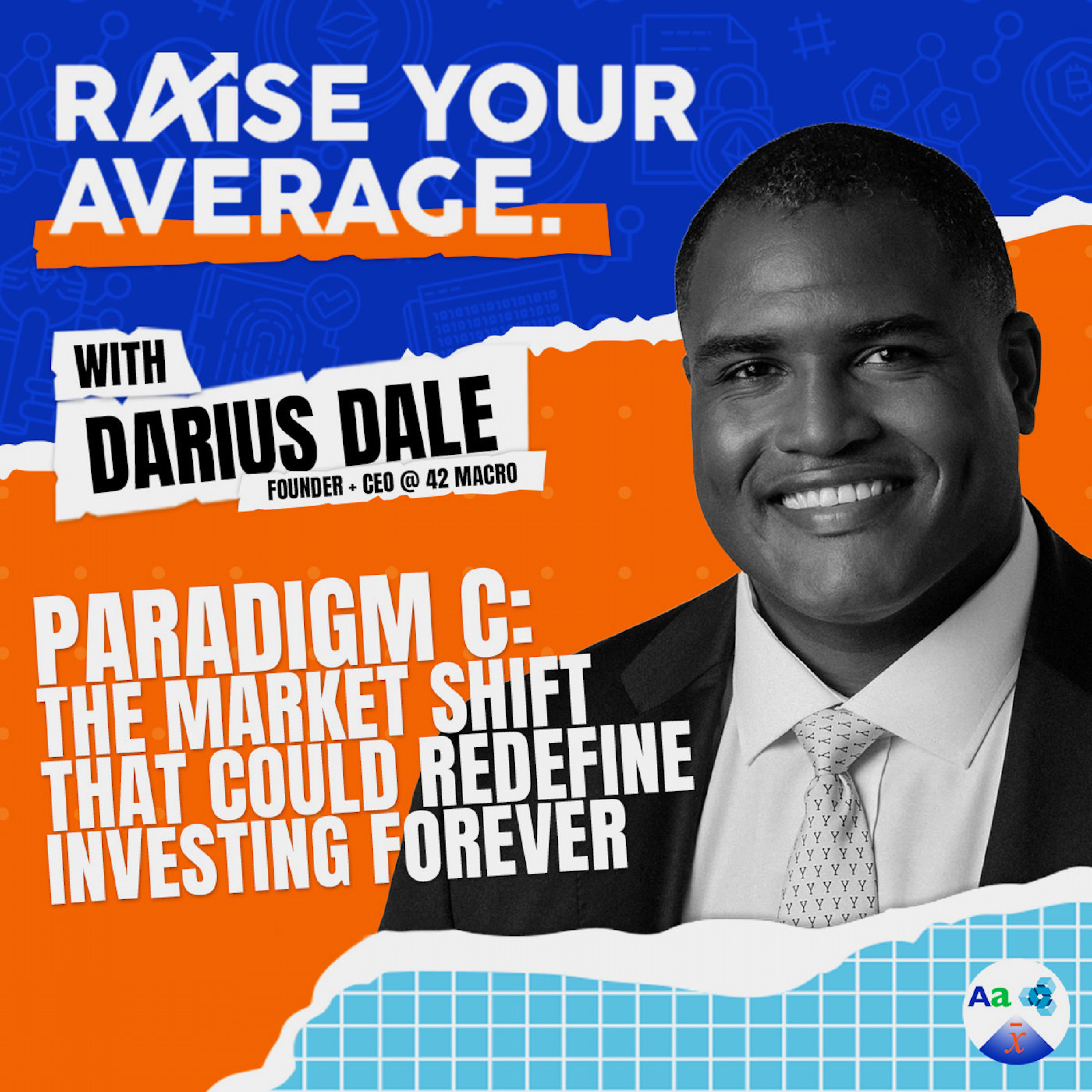
Ep 85The 4th Turning of Markets: Paradigm C, Inflation, Debt & Investing in 2025 with Darius Dale
What if everything you thought you knew about the Fed, fiscal policy, and recession playbooks is already obsolete? In this episode, Darius Dale reveals why the U.S. economy has entered “Paradigm C” — a regime of fiscal dominance, deregulation, and coordinated support — and what it means for portfolios, the Fed, and your financial future.📖 Episode SummaryIn this powerhouse conversation, hosts Pierre Daillie, Mike Philbrick, and Adam Butler welcome back Darius Dale, Founder of 42 Macro LLC, to dissect the seismic shifts reshaping markets in 2025.Dale explains why April’s bond market shock was the most important event since Lehman, forcing the U.S. into Paradigm C: a policy mix of fiscal dominance, deregulation, and an implicit partnership between the Treasury and the Fed. He argues that recession is no longer bullish for Treasuries, that the Fed’s outdated 2% inflation target is crushing those at the bottom of the “K-shaped” economy, and that retail investors have a once-in-a-generation edge over institutions if they stop chasing factor bets.From the decline of U.S. exceptionalism risk to the emergence of financial repression, Dale outlines why the simple KISS portfolio — may be the smartest way to retire on time and comfortably.This is a must-listen for advisors, investors, and anyone trying to navigate the most uncertain macro environment in decades.🔑 4 Key Takeaways1. Paradigm C Defined – The U.S. has shifted to a regime of fiscal dominance and deregulation, aiming to “outgrow” its debt problem rather than cut or print immediately.2. The End of Old Playbooks – Recession is now bearish for Treasuries, Fed independence is eroding, and the 2% inflation target is increasingly destructive.3. The Retail Investor Advantage – Unlike institutions, individuals can flexibly shift exposure, avoid factor risks, and stick to a simplified but powerful asset mix.4. The KISS Portfolio – Darius champions a three-part framework as the most effective way to capture upside while hedging against fiscal repression and monetary debasement.📺 Timestamped Chapters00:00 – Introduction & Darius Dale’s mission at 42 Macro05:00 – Paradigm A → B → C: How policy shifted after April’s bond shock13:00 – Fiscal dominance explained: deficits, tariffs, and untouchable spending20:00 – Why the Fed has lost independence and why inflation targeting is broken30:00 – K-shaped economy: winners at the top, losers at the bottom40:00 – The dollar’s future, sector plays, and EM opportunities46:00 – The KISS portfolio: why retail investors should stop chasing factors55:00 – Reactions, testimonials, and the simplicity that worksMore...42 Macro LLCDarius Dale on Linkedin
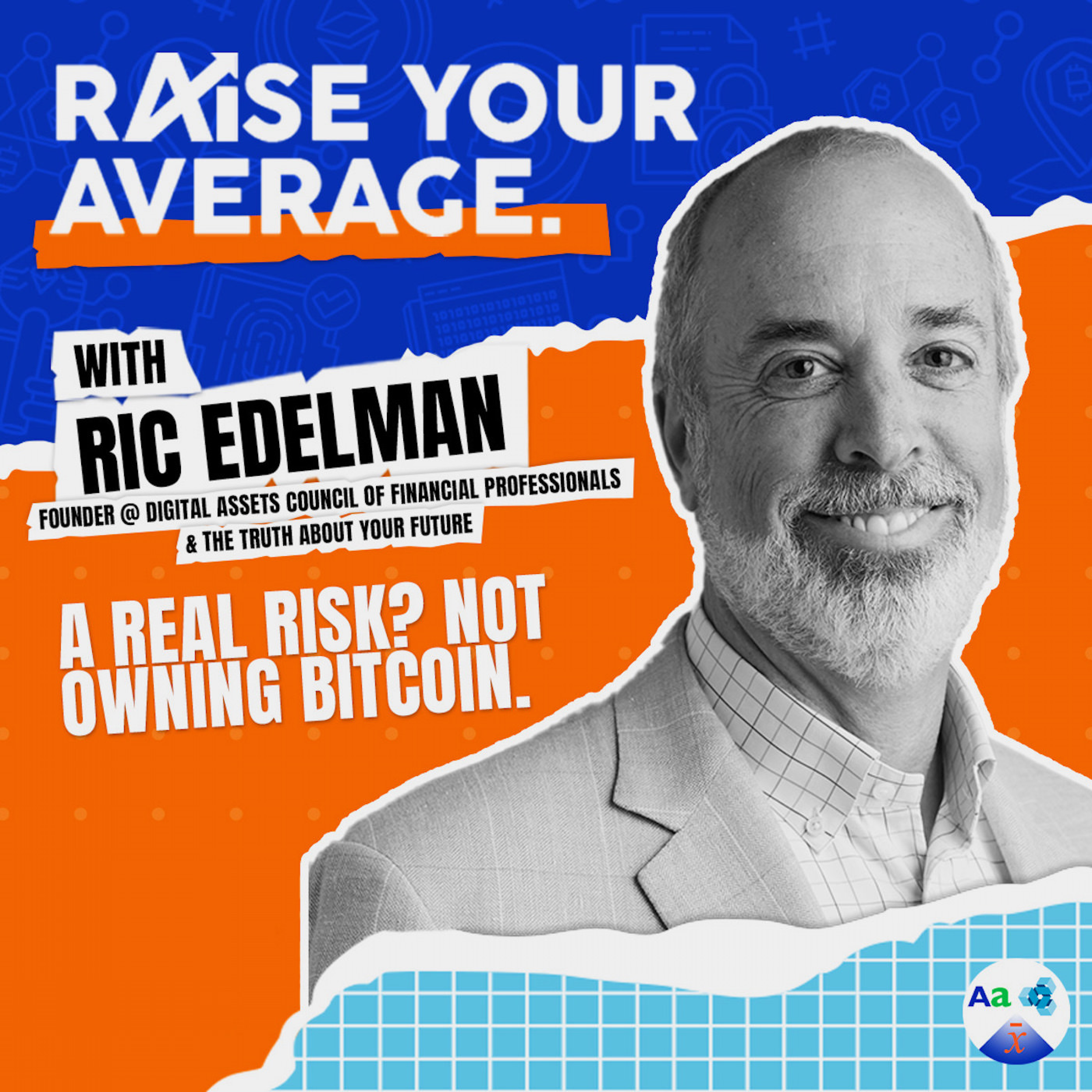
Ep 84Ric Edelman - A Real Risk - Not owning bitcoin
What if the riskiest move in your portfolio isn’t owning crypto—but ignoring it? In this episode of Raise Your Average, hosts Pierre Daillie and Mike Philbrick sit down with legendary advisor, founder of the largest US RIA firm, author, and futurist Ric Edelman, Founder of DACFP (Digital Assets Council of Financial Professionals). Edelman, long known as a trusted voice in personal finance, now makes his most provocative case yet: advisors and investors may need to rethink the role of crypto—moving beyond token allocations toward a meaningful presence in portfolios. Ric explains why today’s environment—marked by regulatory clarity, institutional adoption, and longer human lifespans—has shifted the crypto conversation from speculation to necessity. He argues that traditional 60/40 models are broken in a world of longevity risk, rising rates, and monetary debasement, and calls for a bold reallocation: 80/20 with up to half of the equity/growth sleeve in crypto-related equities and including somewhere between 10% and 40% allocated of that directly to bitcoin and other digital assets e.g. Ethereum, Solana, etc. The conversation spans regulatory breakthroughs, the psychology of allocation, fiduciary responsibility, and the mindset shifts advisors must embrace. As Edelman puts it, “Not owning crypto today is effectively shorting it.” This episode is a must-watch for financial professionals navigating the future of portfolio construction. 🔑 Key Takeaways1. From Fringe to Foundational – With regulatory clarity under the Trump administration and institutional adoption accelerating, crypto is no longer a speculative bet but an investable, regulated asset class.2. Longevity Changes Everything – Advances in healthcare and aging science mean people will live far longer, forcing portfolios to outlast retirements that could stretch 40+ years; Edelman argues this demands higher equity and crypto allocations.3. The New 80/20 – The classic 60/40 portfolio has reached its limits; Edelman calls for 80% equities—with bitcoin and crypto-related equities making up as much as half of that equity sleeve with between a low of 10% to high of 40% directly allocated to bitcoin—for true long-term resilience.4. Advisor Imperative – Compliance officers are shifting from resistance to acceptance as rules clarify, but Edelman warns that advisors who stay at zero risk reputational damage as clients begin to demand crypto exposure.⏱️ Timestamped Chapters 00:00 – Ric Edelman on diversification myths and hidden biases 02:00 – Why crypto deserves a 3%+ passive allocation 04:00 – Ric’s bold new thesis: 10–40% crypto allocation 07:00 – Regulatory clarity and the Trump administration’s policy shift 12:00 – Why low single-digit crypto allocations underserve investors 18:00 – Compliance barriers and regulatory breakthroughs 22:00 – The best time in Bitcoin’s history to invest 27:00 – Longevity risk: why retirement planning must change 31:00 – The end of 60/40: why 80/20 with crypto is the future 40:00 – Demographics, pensions, and the failing glide path model 50:00 – Crypto allocation frameworks: Bitcoin, Ethereum, picks & shovels 56:00 – Why crypto is safer now than ever before 1:03:00 – Volatility as a feature, not a bug 1:08:00 – Behavioral hurdles and myths keeping investors sidelined 1:13:00 – Advisors’ fiduciary duty in the new landscape 1:17:00 – Final thoughts: longevity, technology, and the advisor imperative More...• DACFP (Digital Assets Council of Financial Professionals)• Ric Edelman's Bitcoin Allocation Strategy• Earn your CBDA (Certified in Blockchain and Digital AssetsSM) Designation#CryptoInvesting#BitcoinETF#DigitalAssets#FinancialAdvisors#WealthManagement#PortfolioStrategy#CryptoAdoption#RaiseYourAverage#FutureOfFinance#CryptoEducation

Ep 83Stacking Strategic Gold and Bitcoin with RSSX with ReSolve's Mike Philbrick
In a world where inflation, currency debasement, and geopolitical shocks threaten portfolios, what if you could keep your core equity exposure and add the asymmetric upside of Bitcoin and the timeless stability of gold—without triggering investor panic or selling winners? In this episode, host Pierre Daillie sits down with Mike Philbrick, CEO at ReSolve Asset Management, co-founders, along with Newfound Research, of the Return Stacked ETFs Suite, to unpack a strategy that’s been in the institutional playbook for decades but is now accessible to everyday investors: return stacking. Against today’s backdrop of persistent inflation, volatile markets, and shifting perceptions of alternative assets, Philbrick explains why gold and Bitcoin are moving from “fringe” to “foundational” in modern portfolios—and how the RSSX ETF offers a disciplined, behaviorally resilient way to integrate them without sacrificing the stocks and bonds investors know and trust. From the behavioral traps that cause investors to abandon diversifiers at the worst moments, to the portfolio math that shows how modest allocations can improve returns and reduce risk, this conversation delivers both the “why” and the “how” of strategic diversification. Philbrick also addresses the shifting reputational risk for advisors—from owning Bitcoin to not owning it—and the growing regulatory clarity that’s opening the floodgates for institutional adoption. Whether you’re an advisor, allocator, or investor who wants to strengthen a core portfolio without selling winners, this episode offers a blueprint for adding crisis alpha before the next crisis hits. 4 Key Takeaways:• From Fringe to Foundational: Gold’s centuries-old role as a store of value and Bitcoin’s fixed-supply, asymmetric upside make them compelling diversifiers in today’s inflationary, volatile environment.• Behavioral Risk Management: Return stacking helps avoid the tracking error and emotional selling that often plague diversifier allocations.• RSSX Structure: The ETF delivers 100% S&P 500 exposure plus an 80/20 gold-Bitcoin overlay, equal risk-weighted to manage volatility and rebalanced for efficiency.• Shifting Reputational Risk: Advisors now face greater professional risk in not understanding or allocating to Bitcoin and gold than in owning them—especially as regulatory clarity improves.Timestamps:00:00 – Why uncorrelated assets matter now02:00 – Gold and Bitcoin as strategic, not just tactical, diversifiers04:30 – Behavioral challenges of sticking with diversifiers06:00 – Return stacking explained: adding without selling08:00 – Volatility context: stocks, gold, Bitcoin10:00 – Inside the RSSX ETF structure and allocation12:00 – Implementation examples for advisors and investors14:00 – Rebalancing mechanics and volatility adjustments15:30 – Diversifying before the crisis, not after17:00 – Small starts and building from a position of strength19:00 – Institutional adoption trends and parallels21:00 – Reducing tracking error and client friction22:00 – The reputational risk shift for advisors23:30 – Regulatory clarity and institutional green lights24:30 – The mission: improve outcomes without sacrificing core equity enginesMore...🧠 Learn more at: https://returnstacked.com📘 Read more at: https://investresolve.com📊 ETFs: RSSX (Stocks + Gold & Bitcoin) #PortfolioDiversification #ReturnStacking #GoldInvestment #BitcoinStrategy #InflationHedge #AsymmetricUpside #ETFInvesting #BehavioralFinance #WealthManagement #InvestmentStrategies #MikePhilbrick #ReSolveAssetManagement #RSSXETF

Ep 82ETFs That Overlay Carry: Adding Alpha to Portfolios Without Subtracting Core Exposure with Adam Butler
Chances are, you're already using carry strategies in your portfolio—without even realizing it. Problem is, if you’re not doing it deliberately, it might be doing more harm than good. 🔍 Episode Summary In this special episode of Raise Your Average, Pierre is joined by Adam Butler, Chief Investment Officer at ReSolve Asset Management, co-creators along with Newfound Research of the Return Stacked ETF suite, to unpack the misunderstood world of carry strategies. They dig into what carry really is—beyond just currency trades—and why most investors unknowingly take on carry risk without any plan to manage it. Adam breaks down how carry strategies work across currencies, bonds, equities, and commodities, and why combining them in a diversified portfolio can offer powerful, uncorrelated returns. He also explains how return stacking solves a long-standing advisor dilemma: how to add diversification without cutting into your core stock or bond holdings. Now, thanks to ETFs like RSSY and RSBY, retail investors can finally tap into strategies that used to be locked behind hedge fund doors. If you're an advisor or investor looking to build smarter, more resilient portfolios—without giving up performance—this conversation is a must. 💡 Key TakeawaysWhat Carry Really Means: It’s the income you get from holding an asset—like dividends, bond interest, or yield differentials between currencies.You’re Already Exposed (Probably): Many portfolios contain carry trades by accident, especially when investing internationally.Diversification That Works: A global, long/short carry strategy across multiple asset classes offers true diversification without piling on risk.Now in ETF Form: Carry strategies were once only for institutions. Now anyone can access them through ETFs like RSSY and RSBY.No Need to Sell Your Core Assets: With return stacking, you don’t have to sell stocks or bonds—you just add carry on top.Built-In Behavior Benefit: Carry becomes part of your total return, so it’s less likely to get cut when it’s underperforming.Realistic Return Potential: Expect 3–5% excess return over time at 10% volatility—similar to equities but with a different risk profile.Why This Matters: The macro space is still relatively inefficient—meaning carry has room to outperform without competition.⏱️ Chapters 00:00 – Intro: What Is Carry, Really? 01:00 – The Currency Carry Trade 101 04:00 – Beyond Currency: Carry Across Asset Classes 07:00 – Why Carry Happens Everywhere in Your Portfolio 10:00 – Absolute Return vs. Uncorrelated Return 12:00 – Accidental Carry Exposure (And How to Fix It) 14:00 – The Case for a More Deliberate Strategy 17:30 – How Return Stacking Solves the Diversification Dilemma 22:00 – Why RSSY and RSBY Are Built Differently 26:00 – Behavioral Bonus: Less Line-Item Regret 30:00 – What You Can Expect from Carry Over Time 33:00 – The Limits of Stock Picking & the Power of Macro 36:00 – Why Carry Could Be Retail’s Most Underused Advantage 40:00 – Where to Learn More and Take Action 📌 More... 🧠 Learn more at: https://returnstacked.com 📘 Read more at: https://investresolve.com 📊 ETFs: RSSY (Stocks + Carry) | RSBY (Bonds + Carry) 👍 Like, comment, and subscribe if you want more tools to stack your returns without breaking your portfolio.Copyright © AdvisorAnalyst

Ep 81How to Add Trend Following Alpha Without Sacrificing Your Core Portfolio with Rodrigo Gordillo
🎯 What if you could protect your portfolio during market crashes, boost returns, and still keep your core investments intact? That’s not a fantasy—it’s the power of trend following / managed futures via return stacking, and it's finally accessible to everyday investors. 🎙️ In this episode of Raise Your Average, Pierre Daillie sits down with Rodrigo Gordillo, President of ReSolve Asset Management, co-creators of the Return Stacked ETFs suite, for a deep dive into one of investing’s best-kept secrets: managed futures. Long embraced by institutions for their ability to deliver uncorrelated, crisis-resistant returns, managed futures are finally breaking into mainstream portfolios—thanks to innovations in return stacking. Rodrigo breaks it all down: why trend following works, how behavioral biases create opportunities, and how stacking strategies like RSST and RSBT let you keep your equities and bonds while adding diversifiers like managed futures on top. It’s a smarter way to use leverage, designed not to chase returns, but to smooth them out—even in the roughest markets. Whether you're trying to improve performance, reduce downside, or ease your clients’ diversification anxiety, this episode gives you the tools to rethink how portfolios are built in the modern era. ✅ Key Takeaways: Trend following works because human behavior is predictable—anchoring, herding, and slow adjustments to new info create patterns to exploit. Managed futures offer rare benefits: real diversification, low correlation to stocks and bonds, and strong upside when markets tumble. Return stacking lets you “stack” strategies like managed futures on top of your core holdings, without having to sell your stocks or bonds. ETFs like RSST and RSBT make return stacking simple and accessible—bringing institutional tools to retail investors. You can use them to amplify returns or solve behavioral roadblocks—like line-item regret or clients abandoning good strategies at the wrong time. Leverage becomes your friend when applied to uncorrelated assets. Used correctly, it reduces drawdowns and improves compounding. ⏱️ Chapters: 00:00 – Welcome & What This Episode Is About 01:00 – What Are Trend Following and Managed Futures? 03:00 – Why Trend Works: Human Psychology & Risk Dynamics 04:30 – Managed Futures = Real Diversification 06:00 – Crisis Alpha in Action: 2008 and 2022 08:00 – Why Retail Investors Missed Out (Until Now) 10:00 – How Institutions Use Return Stacking 12:00 – How RSST and RSBT Work (Mechanics Explained) 15:00 – Portfolio Use Cases & Applications 17:00 – Why Return Stacking Beats Stock Picking 20:00 – What Is “Defensive Leverage”? 24:00 – Better Compounding Math with Low Correlation 25:00 – Solving for Behavior: Make Diversification Easy to Hold 27:00 – Hiding the Line Item: Reduce Regret Risk 28:00 – What This Means for the Future of Portfolio Construction 🏷️ #ReturnStacking #ManagedFutures #PortfolioDiversification #InvestSmarter #ETFStrategies Copyright © AdvisorAnalyst