
The Prestige
220 episodes — Page 2 of 5
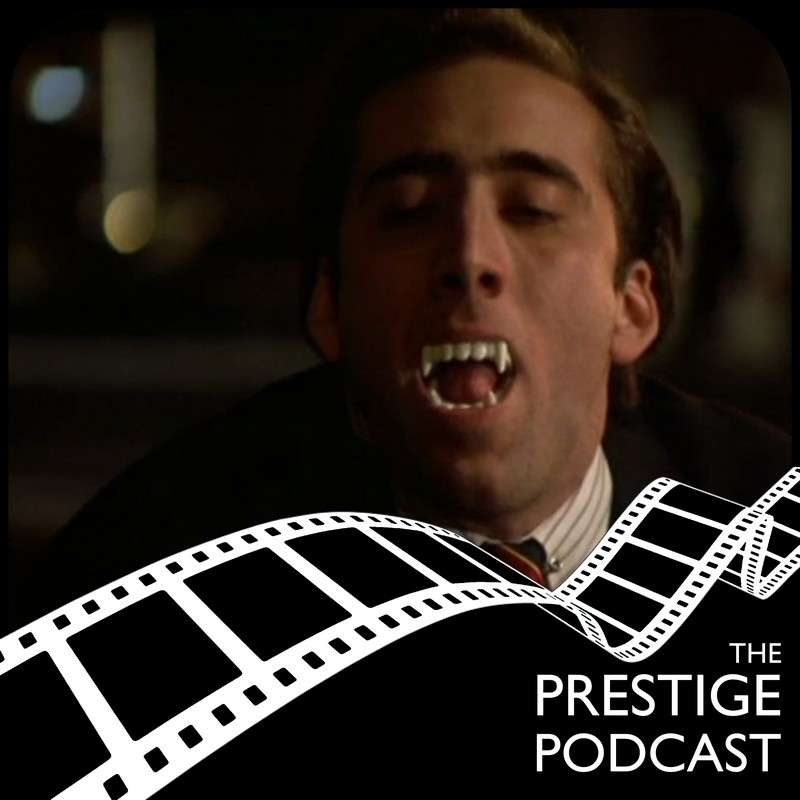
S4 Ep 174.17 - VAMPIRE’S KISS (1988) and Parasitism
This week’s film is the 1988 vehicle for a young Nicolas Cage: VAMPIRE’S KISS. After some mixed reviews (this episode is basically one of us trying to persuade the other of the merits of this film…), and a little discussion of aesthetics versus narrative, we talk about misogyny, corporate greed, and the changing symbolism of vampire movies. Next Time Next up in our journey through the vampire genre is another film led by an iconic personality of modern Hollywood: the 1998 Wesley Snipes feature BLADE. Recent Media KINGSMAN: THE SECRET SERVICE (2014): Matthew Vaughn, Colin Firth, Taron Egerton THE GREAT BRITISH BAKE OFF (2010–): Anna Beattie, Sandi Toksvig, Noel Fielding Recommendations KICK-ASS (2010): Matthew Vaughn, Aaron Taylor-Johnson, Nicolas Cage FLASHDANCE (1983): Adrian Lyne, Jennifer Beals, Michael Nouri THE RUNNING MAN (1987): Paul Michael Glaser, Arnold Schwarzenegger, Maria Conchita Alonso RUSSIAN DOLL (2019): Natasha Lyonne, Greta Lee, Yul Vasquez Footnotes This is good on the concept of aesthetics on film, a la Rob: www.filmtheory.org/aesthetics-films, while this is more in Sam’s wheelhouse: www.study.com/academy/lesson/narrative-film-introduction-history.html. Here’s more about the idea of the yuppie, which we talk about quite extensively: www.study.com/academy/lesson/narrative-film-introduction-history.html/terms/y/yuppie.asp. Finally, having talked a fair bit about misogyny and masculine identity in crisis this week, this is a good book: www.books.google.co.uk/books?hl=en&lr=&id=G5ll1ykr2IkC&oi=fnd&pg=PR7&dq=info:heSUVrsrwmgJ:scholar.google.com/&ots=zEb85PzLPu&sig=jl1rG0bwlzsqs65WYODUD5U2SeE&redir_esc=y#v=onepage&q&f=false.

S4 Ep 164.16 - GANJA & HESS (1973) and Ecstasy
This week we look at the 1973 film GANJA & HESS. After some pretty favourable reviews, we talk about the thoroughly confusing nature of the film, the idea of cinema as an immersive experience, and the different versions of the movie Bill Gunn was forced into making (and wanted to make) — all the while dancing around the idea of the ecstatic or out-of-body experience. (We don’t actually talk about it in the episode, but it seemed very appropriate as a theme for this week’s Prestige, given our discussions of religion, blood, sex, and race.) Next Time We move from the…well, not sublime to the ridiculous, but it is a change of tone! Our next film is the 1989 black comedy VAMPIRE’S KISS. Recent Media THE GREAT BRITISH MENU (2006–): Jennie Bond, Mark Bazeley, Wendy Lloyd THE CHEFS’ BRIGADE (2019–): Jason Atherton, Anna Maxwell Martin JAMES ACASTER: REPERTOIRE (2018): James Acaster Recommendations NIGHT OF THE LIVING DEAD (1968): George A. Romero, Duane Jones, Judith O’Dea VALHALLA RISING (2009): Nicolas Winding Refn, Mads Mikkelsen, Maarten Stevenson SCROOGED (1988): Richard Donner, Bill Murray, Karen Allen GET OUT (2017): Jordan Peele, Daniel Kaluuya, Allison Williams Footnotes After our discussion of the importance of sound in this film, this seems a good article to start off with: www.popularmechanics.com/culture/movies/a19566/a-brief-history-of-sound-in-cinema. It turns out ‘ululation’ is the right word: https://en.wikipedia.org/wiki/Ululation. Rob mentions cinéma vérité when discussing the church scenes: https://en.wikipedia.org/wiki/Cinéma_vérité. This book is good on Blaxploitation cinema in general: https://books.google.co.uk/books?id=1EeSAgAAQBAJ&printsec=frontcover&source=gbs_ge_summary_r&cad=0#v=onepage&q&f=false, and this article has more on BLACULA in particular: https://film.avclub.com/blacula-blew-some-fresh-air-into-a-musty-genre-crypt-1826873409. Finally, given some of what we’ve been talking about in this episode, it seems pertinent to mention the #1619 Project from the NY Times, information on which can be found here: https://www.nytimes.com/interactive/2019/08/14/magazine/1619-america-slavery.html.

S4 Ep 154.15 - BLACK SABBATH (1963) and Control
This week’s film is the 1963 anthology film BLACK SABBATH. In the course of our reviews, we talk about the two very different versions of the film (Italian and American), before going on to discuss the idea of cinematographic and soundscape intimacy, and lead up to a focus on some thoughts about male control in the vampire genre. Next Time Our next film is the 1973 film GANJA AND HESS. Recent Media THE GRIP OF FILM (2017): Richard Ayoade NYPD RED 3 (2015): James Patterson, Marshall Karp AMERICAN PIE (1999): Paul Weitz, Chris Weitz, Jason Biggs Recommendations DR GOLDFOOT AND THE GIRL BOMBS (1966): Mario Bava, Vincent Price, Fabian TERROR TRACT (2000): Lance W. Dreesen, Clint Hutchison, John Ritter THE BRIDE OF FRANKENSTEIN (1935): James Whale, Boris Karloff, Elsa Lanchester LA RAGEZZA CHE SAPEVA TROPPO (THE GIRL WHO KNEW TOO MUCH) (1963): Mario Bava, John Saxon, Letícia Román Footnotes Firstly, this book has a lot of information on the American film business — and the relationship with Italy — around this time: [http://books.google.co.uk/books?id=plztfOxO1HoC&printsec=frontcover&source=gbs_ge_summary_r&cad=0#v=onepage&q&f=false] . Rob mentions giallo horror at the start of the episode; more on this can be found here. For more on the techniques of locked-off camerawork that we discuss, see here (and this is an excellent piece on a number of effective, iconic cinematographic techniques). There’s more on the nuts-and-bolts of creating a cinematic soundscape here: www.youtube.com/watch?v=EFOod07iWyE. Finally, this is an interesting thesis (probably don’t read all of it!) on a number of ways in which elements of gender and control play out in cinema: [http://scholarcommons.usf.edu/cgi/viewcontent.cgi?article=5312&context=etd].

S4 Ep 144.14 - CURSE OF THE UNDEAD (1959) and Genre Fusion
This week’s film, in an enforced change to our programming, is the 1959 movie CURSE OF THE UNDEAD. After some initial reviews, we talk about the film’s use of some changes in the vampire genre to focus on ideas of ‘good versus evil’, before talking about why this meeting of the vampire genre and the Western actually does work — and implications it might have for the rest of our mini-season. Next Time Our next film is the 1963 film BLACK SABBATH. Recent Media MUDBOUND (2017): Dee Rees, Carey Mulligan, Jason Clarke CATCH-22 (2019): George Clooney, Christopher Abbott, Kyle Chandler AVENGERS ASSEMBLE (2012): Joss Whedon, Robert Downey Jr., Chris Evans Recommendations RAWHIDE (1959–65): Thomas Carr, Clint Eastwood, Paul Brinegar NORTH BY NORTHWEST (1959): Alfred Hitchcock, Cary Grant, Eva Marie Saint QUEEN OF OUTER SPACE (1958): Edward Bernds, Zsa Zsa Gabor, Laurie Mitchell GALLOWWALKERS (2012): Andrew Goth, Wesley Snipes, Kevin Howarth Footnotes Firstly, in discussing the predictability of certain film genres, we talked about the idea of stereotypes; this is a fun piece about the perpetuation of certain on-screen types (and Cracked is usually a fun read): www.cracked.com/article_20082_6-insane-stereotypes-that-movies-cant-seem-to-get-over.html. We also talked about iconography on film: www.slideshare.net/spingwoodmedia/iconography-in-film-and-television. And here is a piece on successful genre mashups: www.tasteofcinema.com/2015/15-great-genre-mashup-movies-that-are-worth-watching. Finally, here’s a review of Rob’s final ‘recommendation’ — which doesn’t actually sound that terrible: https://film.avclub.com/wesley-snipes-is-a-zombie-cowboy-or-something-in-the-1798241662. It could be worse; it’s not like it features Johnny Depp as a horribly racist Native American caricature, or anything.

S4 Ep 134.13 - RETURN OF THE VAMPIRE (1943) and Disease
This week’s film is the unofficial sequel to last time’s movie, RETURN OF THE VAMPIRE (1943). After some not-entirely favourable reviews, we talk about the creation of a cinematic trope or stereotype, developments in film technology, and the idea of vampirism as infection — or lycanthropy as mental illness. Next Time Our next film takes our vampire genre in a Mexican direction, with EL VAMPIRO (1957). Recent Media THE CHEF SHOW (2019): Jon Favreau, Roy Choi, Annie Johnson JESSICA JONES S3 (2019): Stephen Surjik, Krysten Ritter, Rachael Taylor Recommendations PRIDE AND PREJUDICE (1940): Robert Z. Leonard, Greer Garson, Laurence Olivier THE RETURN OF THE LIVING DEAD (1985): Dan O’Bannon, Clu Gulager, James Karen FANTASIA (1940): Walt Disney, Joe Grant, Samuel Armstrong DOG SOLDIERS (2002): Neil Marshall, Sean Pertwee, Kevin McKidd Footnotes Here’s the promised information on Hammer horror: www.hammerfilms.com. There’s more on ethics in cinema here: www.books.google.co.uk/books?id=QdP_xLImIugC&printsec=frontcover&source=gbs_ge_summary_r&cad=0#v=onepage&q&f=false. This is an article on blocking/movement in cinema: www.nyfa.edu/film-school-blog/the-5-stages-of-blocking-a-scene, which came to mind when seeing the Andreas/Bruckner (or Tesla) or scenes. Finally, here’s that article on DOG SOLDIERS: https://www.dreadcentral.com/editorials/290637/gender-bashing-what-it-means-to-be-a-man-in-dog-soldiers/

S4 Ep 124.12 - DRACULA (1931) and Abstraction
The next film in our vampire sub-season is the first talkie: 1931’s DRACULA. We do some reviewing, some not-always-favourable comparison with NOSFERATU, and then talk about late-Victorian culture, temporal distance, and the fact that there are two very different sorts of vampire film. Next Time Our next film is another Bela Lugosi vehicle, from later in his career: THE RETURN OF THE VAMPIRE (1943). Recent Media GHOSTS (2019): Tom Kingsley, Lolly Adefope, Matthew Baynton VERONICA MARS (2004–06): Rob Thomas, Kristin Bell, Percy Daggs III Recommendations FREAKS (1932): Tod Browning, Wallace Ford, Leila Hyams WHITE ZOMBIE (1932): Victor Halperin, Bela Lugosi, Madge Bellamy THE MUMMY (1932): Karl Freund, Boris Karloff, Zita Johann Footnotes Firstly, here’s a reminder of the 1897 source material for both this week’s film and last week’s: www.en.wikipedia.org/wiki/Dracula. After our discussion of some of the brilliant camerawork in this film, here’s some more on this: www.tasteofcinema.com/2015/30-movies-with-the-most-brilliant-camera-work and www.slideshare.net/joebsmedia/camerawork-and-cinematography-in-thriller-movies. For more on Jack the Ripper, there’s so much to read out there; this www.historic-uk.com/HistoryUK/HistoryofEngland/Jack-the-Ripper and this www.bbc.co.uk/history/historic_figures/ripper_jack_the.shtml are good places to start. Finally, this is a pre-Code film; for more on what this means, as we’ve mentioned before, see here: www.en.wikipedia.org/wiki/Pre-Code_Hollywood.
S4 Ep 114.11 - NOSFERATU and Longing
In our first film in a new 'sub-season', we tackle the 1922 classic that kick-started the vampire film genre (no, it wasn’t absolutely the first, but it was the first ‘mainstream’ vampire movie, and has inspired so many others). We have a special guest this week, who talks to us about German Expressionism, how this film is a reflection of contemporary events, and how to get 17-year-olds interested in a silent film from the 1920s! Next Time Our next vampire film is another cornerstone of the genre: DRACULA (1931). Recent Media CHERNOBYL (2019): Craig Mazin, Jared Harris, Stellan Skarsgård SUMMER OF ROCKETS (2019): Stephen Poliakoff, Keeley Hawes, Linus Roache GODZILLA: KING OF THE MONSTERS (2019): Michael Dougherty, Kyle Chandler, Vera Farmiga TRIPLE FRONTIER (2019): J.C. Chandor, Ben Affleck, Oscar Isaac Recommendations THE CABINET OF DR CALIGARI (1920): Robert Wiene, Werner Krauss, Conrad Veidt METROPOLIS (1927): Fritz Lang, Alfred Abel, Brigitte Helm LET THE RIGHT ONE IN (2008): Tomas Alfredson, Kåre Hedebrandt, Lina Leandersson THE LEAGUE OF EXTRAORDINARY GENTLEMEN (1999–2007): Alan Moore, Kevin O’Neill, Bill Oakley TABU: A STORY OF THE SOUTH SEAS (1931): F.W. Murnau, Matahi, Anne Chevalier BRIDE OF FRANKENSTEIN (1935): James Whale, Boris Karloff, Colin Clive Footnotes Before we get to this week’s film, the documentary film about Chernobyl that Jennifer mentions, to which the tv mini-series is indebted, is this. Firstly, then, there’s some important grounding in the genre of German Expressionism and in the story on which this film is based. This is a good introduction to the history of the time. This is the cinematographic technique to which Jennifer refers. And here’s more on the movement in medical thought, popular in the 17th century, which led Sam to have questions about the film’s history.

S4 Ep 104.10 - THE RAID (2011) and the Visceral
In our last episode of this mini-season, we have reached the end of our focus on the Martial Arts genre, with 2011’s THE RAID. After some perhaps surprising reviews, we talk about how who/where we are in life has a huge effect on our reception of the films we watch, as well as some discussions of cinematic violence and consequences. Next Time Our next mini-season is vampire films, and we kick off with 1922’s seminal NOSFERATU: A SYMPHONY OF HORROR. (It’s not the first vampire film, but it is the earliest ‘mainstream’ hit...and the first we could readily get hold of, for viewing purposes!) Recent Media WASHINGTON BLACK (2018): Esi Edugyan MEGA TIME SQUAD (2018): Tim van Dammen, Morgan Albrecht, Yoson An Recommendations THE NIGHT COMES FOR US (2018): Timo Tjahjanto, Iko Uwais, Joe Taslim DREDD (2012): Pete Travis, John Wagner, Karl Urban STAR WARS: THE FORCE AWAKENS (2015): J.J. Abrams, Harrison Ford, Mark Hamill OLDBOY (2003): Park Chan-wook, Garon Tsuchiya, Choi Min-sik Footnotes Firstly, the Marlon James interview with Adam Buxton is here: (Marlon’s thoughts on filmed violence are towards the end, but the whole interview is an excellent listen). Here’s a reminder of that Jackie Chan video referred to in our DRUNKEN MASTER episode, and again today. This is worth reading, thinking about the idea of cinematic claustrophobia — as Rob mentions when talking about the way this film is shot. We also talked about the idea of the underdog — a through-line which you can see from a character like Jirokichi, nearly a hundred years ago, to Rama; you can read a lot more here Finally, in a good place to end our focus on the Martial Arts genre, here’s a good summary article (including some films we’ve covered, and some we haven’t been able to).
S4 Ep 94.9 - DISTRICT 13 (2004) and Freedom
The penultimate film in our Martial Arts season might be seen by some as rather loosely connected to the genre: the 2004 parkour movie DISTRICT 13. We talk a bit about the film more generally, before getting into discussions of space, class, and hierarchy (not for the first — or, I suspect — last time on the Prestige…) Next Time Our final Martial Arts film (and one Sam’s absolute favourites) is 2011’s THE RAID: www.amazon.co.uk/Raid-English-Subtitled-Iko-Uwais/dp/B00FZSB57O. Recent Media AVENGERS: ENDGAME (2019): Anthony Russo, Joe Russo, Stan Lee IRON MAN (2008): Jon Favreau, Stan Lee, Robert Downey Jr. BROOKLYN NINE-NINE (2013—): Dan Goor, Andy Samberg, Stephanie Beatriz Recommendations THE HUNGER GAMES (2012): Suzanne Collins, Gary Ross, Jennifer Lawrence THE FIFTH ELEMENT (1997): Luc Besson, Bruce Willis, Gary Oldman LA HAINE (1995): Matthieu Kassovitz, Vincent Cassel, Hubert Koundé RUN LOLA RUN (1998): Tom Tykwer, Franka Potente, Moritz Bleibtreu CASINO ROYALE (2006): Martin Campbell, Daniel Craig, Eva Green Footnotes Looking for connections between THE HUNGER GAMES and DISTRICT 13, I could find very little of note; this reddit thread, while interesting, is a case in point: www.reddit.com/r/FanTheories/comments/1ry6ma/hunger_games_location_of_district_13_spoilers. I’ll keep looking. On the innovative use of space in film, this is an interesting book: http://books.google.co.uk/books?id=QMvpybzKNAMC&printsec=frontcover&source=gbs_ge_summary_r&cad=0#v=onepage&q&f=false. The question of whether or not parkour is a martial art is addressed in numerous places online, including here: www.fightorflightacademy.com/blog/2017/12/3/martial-arts-vs-parkour and here: http:///teamfarang.com/blogs/news/do-martial-arts-and-parkour-go-together. Finally, the IMDB trivia for this film is a good read: /www.imdb.com/title/tt0414852/trivia?ref_=tt_trv_trv.

S4 Ep 84.8 - THE LEGEND OF DRUNKEN MASTER (1994) and Comedy Action
We continue our Martial Arts season with Rob’s favourite decade (not just in terms of Martial Arts films, nor even in terms of films…just ever): the 90s. After some reviewing, we look at Jackie Chan’s use of the world around him, the difference between Chan films and Bruce Lee vehicles, and the pleasingly anarchic quality that this movie has when it comes to other characters’ involvement. Next Time Our next film in the Martial Arts season is a potentially genre-defying one: DISTRICT 13 (2004). Find it here Recent Media MARY POPPINS RETURNS (2018): Rob Marshall, Emily Blunt, Lin-Manuel Miranda KILLING EVE (2018): Phoebe Waller-Bridge, Jodie Comer, Sandra Oh Recommendations RUMBLE IN THE BRONX (1995): Stanley Tong, Jackie Chan, Anita Mui SHANGHAI NOON (2000): Tom Dey, Jackie Chan, Owen Wilson KUNG FU HUSTLE (2004): Stephen Chow, Danny Chan, Yuen Wah A BETTER TOMORROW (1986): John Woo, Ti Lung, Leslie Cheung Footnotes (Apologies for the short footnotes this week: Easter-related, and it’s a busy time of year. Back on it next time!) The video about Jackie Chan’s action comedy is here. Here’s more on the hero’s journey, a trope which this film happens to avoid in large part. And finally, here’s an article about the extraordinary cultural impact of one of Rob’s recommendations this week.
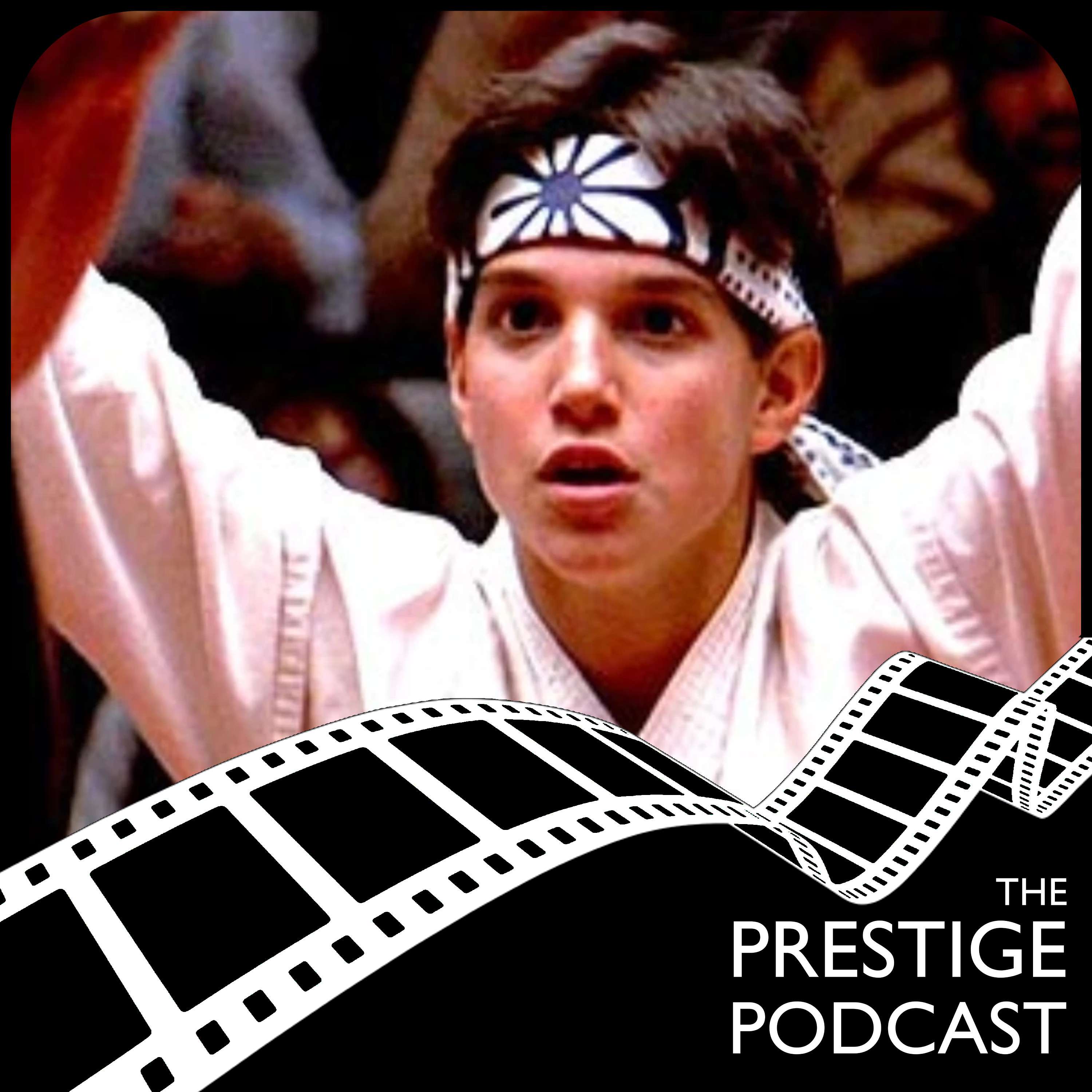
S4 Ep 74.7 - THE KARATE KID (1984) and Belonging
We continue our move into the ‘Western’ arena with another modern (ish!) classic of the Martial Arts genre: THE KARATE KID. After contrasting reviews (and a confession from Sam…) we look at the film in terms of its surprising comment on class tensions in the US, the ‘finding a family’ narrative of the film, and the way in which this episode of the podcast is actually about two entirely different movies. Next Time (yes, it has taken me 7 episodes to work out that this title needed changing…) Our Martial Arts odyssey continues with a film that goes by two names: DRUNKEN MASTER II, or LEGEND OF THE DRUNKEN MASTER. Recent Media (see above comment…) BIRD BOX (2018): Susanne Bier, Josh Malerman, Sandra Bullock CHEF’S TABLE (2015—): David Gelb, Brian McGinn, Clay Jeter Recommendations OCEAN’S 11 (2001): Steven Soderbergh, George Clooney, Brad Pitt THE WAY, WAY BACK (2013): Nat Faxon, Jim Rash, Toni Collette THE MIGHTY DUCKS (1992): Steven Herek, Emilio Estevez, Joss Ackland MYSTERIOUS SKIN (2004): Gregg Araki, Joseph Gordon-Levitt, Brady Corbet Footnotes We start by talking about the existence of this film as something of a pop culture artefact, rather than a conventional film; this article provides an interesting take on the place of film in US pop culture. An unfair comparison, maybe, but Sam would like to make sure everyone’s seen this. Should you too want to spend two and a half minutes finding out about this film (and then hating yourself for doing so), go ahead. Here’s the obligatory link to more on Rob’s favourite dramatist, and his influence in cinema. Finally, here’s a useful video on an idea Rob mentions at the very end of the episode.
S4 Ep 64.6 - ENTER THE DRAGON (1973) and Strength
This week our focus has shifted from the Japanese and Chinese films laying the groundwork for the Martial Arts genre, as we land in the realm of a classic of ‘Western’ cinema: ENTER THE DRAGON. There’s not a lot to say in terms of reviews — it’s ENTER THE DRAGON! — but we soon get onto discussions of breakout films, Western/Eastern editing, and a canny use of multiple cinematic genres. Next Week Next week sees us continue our movement Westwards, with another Martial Arts feature aimed at a Western audience: the 1984 classic (what a great year!) THE KARATE KID. This Week’s Media QUEER EYE S3 (2019): David Collins, Antoni Topolski, Tan France THE LIMITATIONS OF THE MCU (2019): Patrick (H) Willems Recommendations THE MAN FROM U.N.C.L.E. (1964–68): Sam Rolfe, E. Darrell Hallenbeck, Robert Vaughn MISSION: IMPOSSIBLE (1996): Brian de Palma, Tom Cruise, Jon Voight A NIGHTMARE ON ELM STREET (1984): Wes Craven, John Saxon, Ronee Blakley MORTAL KOMBAT (1995): Paul W.S. Anderson, Linden Ashby, Cary-Hiroyuki Tagawa Footnotes First of all, the Patrick (H) Willems YT series on the MCU starts here. Onto this week’s episode...the wikipedia entry on Bruce Lee’s life is well worth reading. (I can’t stop reading, for example, about the various feuds and spats he had with people!) These reflections on Bruce Lee’s role in the film, from those involved in its making, are interesting. For more on the use of ADR in films, as mentioned by Rob this week, see here. (And this is a good article, also on the subject.) Finally, for more on the blaxploitation genre, which explains something of the Jim Kelly narrative in ENTER THE DRAGON, see here.
S4 Ep 54.5 - COME DRINK WITH ME (1966) and War
This week’s movie is the seminal Hong Kong wuxia piece COME DRINK WITH ME (1966). After some initial reviews, we get into discussions of fantasy and reality, wire work, and on-screen violence. Next Week The next film in our Martial Arts season, and possibly the most famous title we’ll be looking at, is the classic ENTER THE DRAGON (1972). This Week’s Media RUSSIAN DOLL (2019): Natasha Lyonne, Greta Lee, Yul Vazquez MASTERCHEF (2019): Franc Roddam, John Torode, Gregg Wallace MARVEL 1602 (2003-04): Neil Gaiman, Andy Kubert, Scott McKowen Recommendations THE 14 AMAZONS (1972): Cheng Gang, Ivy Ling Po, Lisa Lu DOUBLE TEAM (1997): Tsui Hark, Jean-Claude van Damme, Dennis Rodman DIE ANOTHER DAY (2002): Lee Tamahori, Pierce Brosnan, Halle Berry KUNG FU PANDA (2008): Mark Osborne, Jack Black, Ian McShane Footnotes As we discuss International Women’s Day in the context of Cheng Pei-pei’s involvement in the film, here are a few interesting articles: 1, 2, 3. There’s more on wuxua films here:. The rumoured Tarantino remake is mentioned here (although it was green-lit by Harvey Weinstein, so it…probably won’t go ahead). Finally, the rumour about Jackie Chan’s involvement in this film (on which Sam based one of his recommendations!) can be found here.
S4 Ep 44.4 - SAMURAI SAGA (1959) and Drama
This week our tour through Martial Arts movies has reached the 1950s, with SAMURAI SAGA (the Westernised title). After reviews of the film we launch into a discussion that ranges from 8 MILE to Kaiju movies, via US teen high-school drama… Next Week The next film in our Martial Arts season is 1966’s COME DRINK WITH ME, available here. This Week’s Media AVENGERS: INFINITY WAR (2018): Anthony Russo, Stan Lee, Robert Downey Jr. THE AMERICAN MEME (2018): Bert Marcus, Paris Hilton, Josh Ostrovsky ALITA: BATTLE ANGEL (2019): Robert Rodriguez, James Cameron, Rosa Salazar Recommendations SIERRA BURGESS IS A LOSER (2018): Ian Samuels, Shannon Purser, Kristine Froseth THRONE OF BLOOD (1957): Akira Kurosawa, Toshiro Mifune, Minoru Chiaki ROXANNE (1987): Fred Schepisi, Steve Martin, Daryl Hannah GODZILLA (1954): Ishirō Honda, Akira Takarada, Momoko Kōchi Footnotes The basic story of the source material is here. On day-for-night shooting, as discussed by Rob, see here. Here’s that astonishing-yet-wordless Heath Ledger performance. This is the most prominent Kevin Smith Q&A in which he refers to his weight (and his ‘ownership’ of this). Finally, here’s that piece of information about the link between Toshiro Mifune’s other films and the final scene of this one.
S4 Ep 34.3 - SUGATA SANSHIRO (1943) and Perspective
The next in our series of martial arts films — and the first ‘talkie’ — is 1943’s SUGATA SANSHIRO, the debut of our old friend Akira Kurosawa. After differing initial reviews — appropriate, given this week’s theme — we talk about everything from sports films to the MCU. Next Week Our martial arts film from the 1950s, in this decade-by-decade journey through the genre, is 1959’s SAMURAI SAGA. This Week’s Media SAS: WHO DARES WINS (2019): Ant Middleton, Jason Fox, Shaun Dooley THE FINAL GIRLS (2015): Todd Strauss-Schulson, Taissa Farmiga, Malin Åkerman Recommendations THE HIDDEN FORTRESS (1958): Akira Kurosawa, Toshiro Mifune, Misa Uehara FANTASIA (1940): James Algar, Leopold Stokowski, Deems Taylor THE MIGHTY DUCKS (1992): Steven Herek, Emilio Estevez, Joss Ackland THE ASSASSIN (2015): Hsiao-Hsien Hou, Qi Shu, Chen Chang Footnotes Firstly, apologies for the mistakes in Sam’s introduction with respect to judo Dans, the origin of the biographical story, etc.; things are cleared up in these two articles: Sanshiro Sugata and Tomita Tsunejirō. For more on sports films, see here. This book is also good. Finally, on respect in Japanese society, read more here. Twitter - Patreon
S4 Ep 24.2 - JIROKICHI THE RAT (1931) and Editing
Our next film in Season 4 is 1931’s JIROKICHI THE RAT, the second in our chronological journey through a century of martial arts films. Sam’s a little luke-warm to start with, but is won round in the end — via discussions of cinematic archetypes, innovative camera techniques, and what it means to be a samurai. Next Week The next film we take on is the directorial debut of an auteur we featured on the podcast last year, Akira Kurosawa: SANSHIRO SUGATA (1943). Watch it through the BFI Player/Amazon, here: www.amazon.co.uk/Sanshiro-Sugata-Denjiro-Okochi/dp/B07116L3MQ/ref=sr_1_2?ie=UTF8&qid=1548627698&sr=8-2&keywords=sanshiro+sugata This Week’s Media IN A VALLEY OF VIOLENCE (2016): Ti West, Ethan Hawke, Taissa Farmiga LES MISERABLES (2018): Tom Shankland, Adeel Akhtar, David Oyelowo Recommendations RONIN (1998): John Frankenheimer, Robert De Niro, Jean Reno ESCAPE FROM NEW YORK (1981): John Carpenter, Kurt Russell, Lee Van Cleef RASHOMON (1950): Akira Kurosawa, Toshiro Mifune, Machiko Kyō BUTCH CASSIDY AND THE SUNDANCE KID (1969): George Roy Hill, Paul Newman, Robert Redford Footnotes First, we should link to an explanation of so-called ‘tendency’ films, for which the director (Daisuke Itō) was famous at the time: en.wikipedia.org/wiki/Tendency_film. This is a good book on the various changes in Japanese cinema around the time that OROCHI and JIROKICHI THE RAT were made, and the cultural aftermath of these: books.google.co.uk/books/about/A_Hundred_Years_of_Japanese_Film.html?id=s7-_Gon5-a0C&redir_esc=y. On the innovative use of camera movement in films, this is a good article: www.filmcomment.com/article/game-changers-camera-movement. Finally, this is an engaging piece about the idea of ‘the hero’s journey’, which Rob mentions this week (but which, actually, is a trope these films seem to undercut!): venngage.com/blog/heros-journey.
S4 Ep 14.1 - OROCHI and Futility
We kick off season 4 — and our chronological tour through martial arts cinema — with the 1925 film OROCHI. After some glowing reviews of the film, we talk about the number of ways in which it feels like a very modern piece of cinema: from some of the gender politics, to the stunning choreography of some of its fight scenes, and its almost nihilistic overall message. Next Week The next in our series of martial arts films, and the last silent movie for this genre, is the 1931 film whose English title is JIROKICHI THE RAT. This Week’s Media 30 ROCK (2006—13): Tina Fey, Tracy Morgan, Jane Krakowski VENOM (2018): Ruben Fleischer, Tom Hardy, Michelle Williams SUMMER OF 84 (2018): François Simard, Graham Verchere, Judah Lewis Further Watching 47 RONIN (2013): Carl Rinsch, Keanu Reeves, Hiroyuki Sanada ENTER THE DRAGON (1973): Robert Clouse, Bruce Lee, John Saxon HIGH PLAINS DRIFTER (1973): Clint Eastwood, Verna Bloom, Marianna Hill MAD MAX 2: THE ROAD WARRIOR (1981): George Miller, Mel Gibson, Harold Baigent Footnotes For more on the traditions of Japanese cinema with which OROCHI was engaging, see here: https://en.wikipedia.org/wiki/Kabuki. A reminder that we covered DRUNKEN ANGEL, the 1948 Kurosawa film which certainly owes a debt to this one, in September 2017 (way back in the mists of time): http://www.kaiju.fm/prestige/3-05-drunken-angel-and-disease. This video shows some of the absurdly heightened editing that we see in later martial arts/action films; as Rob discusses, the absence of these techniques from OROCHI is really quite refreshing: https://www.youtube.com/watch?v=cRcfHkPDt5I. Finally, it seems appropriate to end an episode on this film, with its especially negative central message, with a note about where Sam thought this narrative was going: https://www.britannica.com/topic/seppuku.
Best Of 2018
bonusSam's List Mary Poppins Returns You Were Never Really Here Black Panther Honorable Mentions Deadpool 2 Ladybird Rob's List Bad Times At The El Royale Blindspotting Revenge Black Panther Ready Player One Annihilation Mandy Sorry To Bother You Game Night Avengers: Infinity War
Prestige Playoff - Round 2
bonusGo Give Rob Some Love! https://twitter.com/conojito excusesandhalftruths.com
Prestige Playoff - Round 1
bonusOur Wonderful Guest: Movie Morgue: The film autopsy podcast. Two nerds (and guests) review and dissect films new and old. The real treasure, however, is the friendships we made along the way. https://moviemorgue.simplecast.fm/ twitter.com/MovieMorgueCast www.facebook.com/MovieMorguePodcast/ Vilna Bashi Treitler's "The Ethnic Project": https://www.sup.org/books/title/?id=12123
Prestige Playoff - Introduction
bonusFollow Along Here!
S3 Ep 483.48 - FAMILY PLOT and Reinvention
The final Hitchcock film in our mini-series is his last motion picture, 1976’s FAMILY PLOT. After differing reviews — interesting, given our previous ideas about Hitchcock’s oeuvre — we talk about everything from camp thrillers to how this was nearly an example of slacker cinema, and how this may have been a response to a mid-1970s shift in cinematic output. We also close with something of a retrospective on Hitchcock’s work, and discuss how his previous work allowed him to in some ways reinvent himself in this movie. Next Week Our show next week will be the first of our two play-offs, bringing Season 3 to a close: pitting our favourite 30 films (and 2 audience picks) against each other. This Week’s Media DEATH OF A SALESMAN (1949, 2018): Arthur Miller; Sarah Frankcom, Don Warrington HALLOWEEN 4, 5, 6 (1988, 1989, 1995): Dwight H. Little, Dominique Othenin-Girard, Joe Chapelle Recommendations ADDAMS FAMILY (TV: 1964–66): David Levy, Carolyn Jones, John Astin WEST SIDE STORY (film: 1961): Jerome Robbins, Leonard Bernstein, Natalie Wood SILENT RUNNING (1972): Douglas Trumbull, Bruce Dern, Cliff Potts GROSSE POINT BLANK (1997): George Armitage, John Cusack, Minnie Driver Footnotes We start this week’s episode — in particularly spoilerish fashion — by discussing the end of the film, which means that this article deserves another look: en.wikipedia.org/wiki/Fourth_wall. When talking about the history of 1970s cinema, as Sam does at one point this week, consulting this is a good idea: books.google.co.uk/books?id=DsGTm5DfY1kC&printsec=frontcover&source=gbs_ge_summary_r&cad=0#v=onepage&q&f=false. The reviews for FAMILY PLOT, as Rob says, are pretty good: www.rottentomatoes.com/m/family_plot, www.rogerebert.com/reviews/family-plot-1976, www.imdb.com/title/tt0074512/reviews. And here’s more on the alternative casting choices, as well as other trivia about the film: www.imdb.com/title/tt0074512/trivia?ref_=tt_trv_trv. Finally, as a conclusion to this month’s films, here are 5 hours of interviews with the director, from various points in his career, dealing with many aspects of his cinematic output: www.openculture.com/2016/09/5-hours-of-free-alfred-hitchcock-interviews-discover-his-theories-of-film-editing-creating-suspense-more.html.
S3 Ep 473.47 - VERTIGO and Obsession
Our next Hitchcock film, coming a decade after last week’s offering, is his 1958 hit VERTIGO. After short reviews of the film, we talk about everything from how the movie creates distance in its audience to the creative endeavour evident in the Marvel films (it’s relevant, honest) — and we end with a Rob’sRantTM. Next Week The final Hitchcock film this month — and the last in his career — is 1976’s FAMILY PLOT, available here: www.youtube.com/watch?v=jfLiZcDAIdc This Week’s Media HALLOWEEN 1, 2, 3 (1978, 1981, 1982): John Carpenter, Rick Rosenthal, Tommy Lee Wallace DAWN OF THE DEAD (1978): George A. Romero, David Emge, Ken Foree TASKMASTER (S7): Alex Horne, Greg Davies, Kerry Godliman Recommendations SAUL BASS: TITLE CHAMP (2008): Gary Leva, Saul Bass, Martin Scorcese MULHOLLAND DRIVE (2001): David Lynch, Naomi Watts, Laura Elena Harring BULLITT (1968): Peter Yates, Steve McQueen, Jacqueline Bisset NORTH BY NORTHWEST (1959): Alfred Hitchcock, Cary Grant, Eva Marie Saint Footnotes For more on the noir genre of film — that we touch on here — this is a good resource: www.bachelorsdegreeonline.com/blog/2013/an-amateur-academics-intro-to-film-noir. On cinematic stock characters, as mentioned by Rob, see here: screencraft.org/2017/07/09/99-archetypes-and-stock-characters-screenwriters-can-mold. More information on the Alfred Hitchcock Presents tv shows, that were running at the time of the movie — and while Hitchcock was at the height of his powers — can be found here: en.wikipedia.org/wiki/Alfred_Hitchcock_Presents. There’s more on the ‘dolly zoom’ technique pioneered in the film (incidentally, I should mention here, because we don’t in the episode, that this was the work of Director of Photography Robert Burks) to represent Scottie’s acrophobia here: nofilmschool.com/2014/01/everything-need-know-dolly-zoom and here: boingboing.net/2015/01/26/watch-23-of-the-best-dolly-zoo.html (here’s the video linked to this article, which is well worth a watch: vimeo.com/84548119). Finally, though I can’t track down the full interview, here’s a series of GIFs celebrating Lucy Liu’s particular sort of creative freedom: imgur.com/gallery/MdA04.
S3 Ep 463.46 - ROPE and Intensity
The next in our Hitchcock mini-series is his 1948 masterpiece (can you guess whether or not our reviews were positive?) ROPE. We talk about the importance of the script, the marrying of form and function, and what happens when reality meets philosophical thought experiments. Next Week Our Hitchcock season reaches its zenith with the 1958 classic VERTIGO, available here: www.youtube.com/watch?v=nxpEj8i2y7Y. This Week’s Media THE GRIP OF FILM (2017): Richard Ayoade RESIDENT EVIL: RETRIBUTION (2012): Paul S.W. Anderson, Milla Jovavich, Michelle Rodriguez Recommendations THE SECRET HISTORY (1992): Donna Tartt ARSENIC AND OLD LACE (1944): Frank Capra, Cary Grant, Priscilla Lane HARVEY (1950): Henry Koster, James Stewart, Wallace Ford IT’S A WONDERFUL LIFE (1946): Frank Capra, James Stewart, Donna Reed STRANGE DAYS (1995): Kathryn Bigelow, Ralph Fiennes, Angela Bassett Footnotes For details on the length of a shot, as outlined by Rob (1000m of film on a reel = approximately 11 minutes), see here: en.wikipedia.org/wiki/Reel. Here are a couple of articles on the film as a ‘triumphant experiment in innovative recording techniques’: lwlies.com/articles/rope-alfred-hitchcock-masterpiece and www.nytimes.com/1984/06/03/movies/hitchcock-s-rope-a-stunt-to-behold.html. On function as a necessary part of form in cinema, this is an interesting piece: nomapneeded.wordpress.com/2013/01/23/5-principles-of-film-form — and this, msufilmandarchitecture.wordpress.com/2015/11/03/function-versus-form, although it talks about a film made nearly 20 years later, is also a good read. Finally, this is an introduction to some of the philosophical theories that get perverted by Brandon and Phillip in the film: https://study.com/academy/lesson/nietzsches-bermensch-concept-theory.html.
S3 Ep 453.45 - THE PLEASURE GARDEN and Transgression
The first in our final directorial mini-season of Season 3 is Alfred Hitchcock’s debut feature, the 1926 silent film THE PLEASURE GARDEN. After a couple of short reviews, we talk about why this film’s importance outweighs the extent to which it’s ‘a good watch’, representing transgression on-screen, and the way in which the film uses tropes of suspense and mystery without necessarily being a thriller. Next Week Our Hitchcock season continues with the 1948 classic ROPE, available on YouTube here: www.youtube.com/watch?v=93Gpm6kLZLk. This Month's Media THE NUN (2018): Corin Hardy, Demián Bichir, Taissa Farmiga JESSICA JONES S2 (2018): Melissa Rosenberg, Kristen Ritter, Rachael Taylor SUGAR RUSH (2018): Ariel Boles, Hunter March, Candace Nelson INGLORIOUS BASTERDS (2009): Quentin Tarantino, Brad Pitt, Christoph Waltz THE HITMAN’S BODYGUARD (2017): Patrick Hughes, Ryan Reynolds, Samuel L. Jackson THIS IS GOING TO HURT (2017): Adam Kay Recommendations 42ND STREET (1933): Lloyd Bacon, Warner Baxter, Bebe Daniels METROPOLIS (1927): Fritz Lang, Alfred Abel, Brigitte Helm Footnotes (Firstly, we should just say that, in discussing transgression in cinema, we don’t mean to refer to the term coined by avant-garde film-maker Nick Zedd in the 1980s to refer to an underground New York film scene. If you’re desperately interested in this, knock yourself out: en.wikipedia.org/wiki/Cinema_of_Transgression. If not, ignore this.) On the matter of politically progressive cinema, this paper is good: raley.english.ucsb.edu/wp-content/Engl800/MHansen.pdf. For more on the Motion Picture Production Code (more popularly known, given that the president of the MP Association at the time was Will H. Hays, as ‘The Hays Code’), see here: en.wikipedia.org/wiki/Motion_Picture_Production_Code. The detective story to which Sam refers, in which the solving of the mystery turns on the barking (or not) of a dog, is the Sherlock Holmes tale ‘The Adventure of Silver Blaze’ (1892): en.wikipedia.org/wiki/The_Adventure_of_Silver_Blaze. Finally this week, the director and choreographer to whom Rob refers in the context of backstage musicals is the inimitable Busby Berkeley: https://en.wikipedia.org/wiki/Busby_Berkeley. Remember to vote for your favourite film to join our end-of-season bracket! http://www.kaiju.fm/bracket/
S3 Ep 433.43 - THE GRAND BUDAPEST HOTEL and Nesting
Rob & Chris delve deeper into Wes Anderson with his 2014 film, THE GRAND BUDAPEST HOTEL.
S3 Ep 423.42 - THE LIFE AQUATIC OF STEVE ZISSOU and Fatherhood
Rob & Chris continue their wade into the whimsical world of Wes Anderson, looking at his 2004 film, The Aquatic Life Of Steve Zissou

S3 Ep 413.41 - BOTTLE ROCKET and Innocence
With Sam off being bigger and better things for a month, we're roped in Chris from The Space Jam Continuum to fill in his shoes, as we discuss Wes Anderson's debut hit, Bottle Rocket.This WeekOver The Garden Wall (2014)Goliath (2016)Queer Eye (2018)RecommendationsPalookaville (1995)Fargo (1996)Whip It (2009)
S3 Ep 403.40 - FREE FIRE and Space
We conclude our Ben Wheatley season with his most recent offering, 2016’s FREE FIRE. After our initial responses to the film, we go on to talk about claustrophobia, empathising with the IRA (!), and whether or not Wheatley has made the ‘step up’ to Hollywood (CA) direction. Next Week Our next director is one on which Sam will sadly (good luck, Rob!) be missing out: Wes Anderson. The first film recommended by Sam’s very able replacement, Chris MacLennan, is his debut, 1995’s BOTTLE ROCKET. Get hold of it here: https://www.amazon.co.uk/Bottle-Rocket-Luke-Wilson/dp/B00ET02BX6 This Week’s Media THE HANDMAID’S TALE (2017–): Margaret Atwood, Bruce Miller, Elizabeth Moss STATH LETS FLATS (2018): Tom Kingsley, Jamie Demetriou, Robert Popper MORTIMER AND WHITEHOUSE: GONE FISHING (2018): Bob Mortimer, Paul Whitehouse Recommendations KONG: SKULL ISLAND (2017): Jordan Vogt-Roberts, Tom Hiddleston, Samuel L. Jackson 28 WEEKS LATER (2007): Juan Carlos Fresnadillo, Robert Carlyle, Rose Byrne DISTRICT 9 (2009): Neill Blomkamp, Sharlto Copley, David James BABY DRIVER (2017): Edgar Wright, Ansel Elgort, Jon Bernthal Footnotes For an introduction to Cecil B de Mille and some of his spectacular early Hollywood blockbusters, see this book: https://books.google.co.uk/books?id=YLPTleQHkrUC&printsec=frontcover&redir_esc=y#v=onepage&q&f=false On the use of space in cinema, this article is good: https://filmanalysis.coursepress.yale.edu/mise-en-scene Should you want to brush up on your knowledge of some of the paramilitary organisations who may or may not be represented in the film, knock yourself out: https://www.thoughtco.com/guide-to-the-irish-republican-army-3209135 , https://en.wikipedia.org/wiki/Afrikaner_Weerstandsbeweging , https://www.history.com/topics/black-panthers And finally, here’s more on the ‘180 Degree Rule’ that Rob talks about: https://www.youtube.com/watch?v=y4wX_dmh8_g
S3 Ep 393.39 - A FIELD IN ENGLAND and Psychedelia
Back after a hiatus, we delve further into Ben Wheatley’s oeuvre, with his 2013 historical horror A FIELD IN ENGLAND. Our reviews are mixed, but then we do get into some very interesting discussions about genre collisions, social structure, and whether or not Ben Wheatley will be a success as a blockbuster Hollywood director with his…interesting use of generic and visual ideas! <u>Next Week</u> Our final Ben Wheatley film is his latest offering, FREE FIRE (2017), available here: https://www.amazon.co.<wbr />uk/Free-Fire-Sharlto-Copley/<wbr />dp/B06XXNTJ4V. <u>This Week’s Media</u> THE HORNE SECTION TV PROGRAMME (2018): Alex Horne, Joe Auckland, Ben Reynolds PRIVATE SCHOOL (1983): Noel Black, Phoebe Cates, Betsy Russell <u>Recommendations</u> NANNY MCPHEE (2005): Kirk Jones, Emma Thompson, Colin Firth AMBASSADORS (2013): Jeremy Webb, David Mitchell, Robert Webb GHOST IN THE SHELL (2017): Rupert Sanders, Scarlett Johansson, Michael Carmen Pitt NAKED LUNCH (1991): William S. Burroughs, David Cronenberg, Peter Weller <u>Footnotes</u> For more on the history of the English Civil War, this is a good place to start: https://books.google.<wbr />co.uk/books?id=M6rMqOtMNasC&<wbr />printsec=frontcover&source=<wbr />gbs_ge_summary_r&cad=0#v=<wbr />onepage&q&f=false. While we’re recommending books, this is a good introduction to one of the many genres with which Wheatley engages in this film: https://books.google.co.<wbr />uk/books?id=1VGsrJEdnfEC&<wbr />printsec=frontcover&dq=giallo+<wbr />horror&hl=en&sa=X&ved=<wbr />0ahUKEwj0rLSXk_<wbr />jbAhUJa8AKHWLED-kQ6AEILzAB#v=<wbr />onepage&q=giallo%20horror&f=<wbr />false. This is a good article on the presentation of psychedelia on film: http://realitysandwich.<wbr />com/318989/psychedelia-in-the-<wbr />movies. Sam mentions Rabelais and ‘the world turned upside down’; Bakhtin’s take on Rabelais is quite old, but still very good: https://books.google.co.<wbr />uk/books?id=SkswFyhqRIMC&pg=<wbr />PA370&lpg=PA370&dq=rabelais+<wbr />the+world+turned+upside+down&<wbr />source=bl&ots=wgwpACfQeE&sig=<wbr />kjdL0t4B9x3Cw86XlgKCwgmf-xM&<wbr />hl=en&sa=X&ved=0ahUKEwjz4J_Zk_<wbr />jbAhUiDsAKHWNACAYQ6AEIJzAA#v=<wbr />onepage&q=rabelais%20the%<wbr />20world%20turned%20upside%<wbr />20down&f=false. Looking for more on the concept, though, I found information about a ballad called ‘The World Turned Upside Down’ that was a direct political response to Parliament’s restrictive policies about freedom of expression and celebration — so this is probably what O’Neil is talking about: https://en.wikipedia.<wbr />org/wiki/The_World_Turned_<wbr />Upside_Down. Finally, to end on a cheery note, this is an introduction to a book on death, purgatory, and other upbeat topics: http://www.<wbr />oxfordbibliographies.com/view/<wbr />document/obo-9780195399301/<wbr />obo-9780195399301-0083.xml.
S3 Ep 383.38 - KILL LIST (2011) and Ritual Punishment
This week’s film is the incredibly disturbing — don’t watch it if your constitution is in any way delicate; it will stay with you — Ben Wheatley film KILL LIST. We talk about how this film takes a while to get going, but when it does — oh boy! Also on the agenda today: social realism, Lovecraftian horror, and religious symbolism.<u>Next Week</u> Our next Ben Wheatley film is A FIELD IN ENGLAND, available here: <u>This Week’s Media</u> WHO FRAMED ROGER RABBIT (1988): Robert Zemeckis, Bob Hoskins, Christopher LloydJURASSIC WORLD: FALLEN KINGDOM (2018): J.A. Bayona, Chris Pratt, Bryce Dallas HowardTROLLPLAY (2018): Alice Fraser, Cal Wilson, Sami Shah<u>Recommendations</u>UTOPIA (2013—14): Marc Munden, Adeel Akhtar, Paul HigginsSTRIKE (2017–): J.K. Rowling, Tom Burke, Holliday GraingerDOOMSDAY (2008): Neil Marshall, Rhona Mitra, Bob HoskinsTHE WICKER MAN (1973): Robin Hardy, Edward Woodward, Christopher Lee<u>Footnotes</u>Firstly, there’s more on social realism in cinema here: http://www.screenonline.<wbr />org.uk/film/id/1037898/index.<wbr />html. These articles are good on folk horror and the like: http://www.bfi.org.uk/<wbr />news-opinion/news-bfi/<wbr />features/where-begin-folk-<wbr />horror, http://www.bfi.org.uk/<wbr />news/10-great-british-rural-<wbr />horror-films. We talk about the mundanity — or banality — of evil, and there’s much more on that idea here: https://www.<wbr />brainpickings.org/2017/02/07/<wbr />hannah-arendt-the-banality-of-<wbr />evil. If you’re not familiar with Lovecraft’s Cthulhu, as mentioned by Rob, there’s much more here: https://en.m.wikipedia.<wbr />org/wiki/Cthulhu. Finally, this is the Mark Gatiss series to which Rob refers (sadly no longer available on the iPlayer): https://en.m.<wbr />wikipedia.org/wiki/A_History_<wbr />of_Horror.
S3 Ep 373.37 - DOWN TERRACE (2009) and Family
The first film in our Ben Wheatley season is his cinematic debut, DOWN TERRACE. We offer contrasting reviews in perhaps surprising directions (given our PP form), and then spend time talking about different attitudes to masculinity, what it means to be part of a family unit, and how this film — for all its apparent parochialism — could in fact be a comment on the political situation in 2008.<u>Next Week</u>Our next film is the *incredibly* brutal KILL LIST (2011). If you’re prepared to give it a go (and please do skip it if you’re at all averse to...hard-hitting movies), then watch it here: https://www.amazon.co.<wbr />uk/Kill-List-Neil-Maskell/dp/<wbr />B00FFIN2TS. <u>This Week’s Media</u>MILLION-POUND MENU (2018): Fred Sirieix, Atul Kochhar, Scott Collins THE CHURCH (1989): Michele Soavi, Hugh Quarshie, Tomas Arana<u>Recommendations</u> W1A (2014–): John Morton, Hugh Bonneville, Monica Dolan FRIDAY NIGHT DINNER (2011–): Martin Dennis, Tamsin Greig, Simon BirdTHE JOB LOT (2013–): Luke Snellin, Sarah Hadland, Russell ToveyEDGE OF TOMORROW (2014): Doug Liman, Tom Cruise, Emily BluntSATURDAY NIGHT AND SUNDAY MORNING (1960): Karel Reisz, Albert Finney, Shirley Anne Field<u>Footnotes</u>First of all, here are links to Ben Wheatley’s bios: https://en.m.wikipedia.<wbr />org/wiki/Ben_Wheatley and http<wbr />s://m.imdb.com/name/nm1296554. Rob mentions the Oedipus complex; while there’s lots available on that online, this book is a good — and short — introduction: https://books.<wbr />google.co.uk/books?id=<wbr />F7REVY8I_fQC&printsec=<wbr />frontcover&source=gbs_ge_<wbr />summary_r&cad=0#v=onepage&q&f=<wbr />false. ‘Saving the cat’ gets a good treatment from TV Tropes, where it’s also known as ‘petting the dog’: http://tvtropes.org/<wbr />pmwiki/pmwiki.php/Main/<wbr />PetTheDog. Finally, for more on the idea of British social realism (including ‘kitchen-sink dramas’) on TV or film, see this book: https://books.google.co.<wbr />uk/books?id=QdN0mhkEmK4C&<wbr />printsec=frontcover&source=<wbr />gbs_ge_summary_r&cad=0#v=<wbr />onepage&q&f=false.
S3 Ep 363.36 - THE GREAT GATSBY (2013) and Decadence
This week we conclude our Baz Luhrmann season with his most recent film, 2013’s THE GREAT GATSBY. We have disparate opinions on this — and differing levels of familiarity with the story — but then we move onto a discussion of the movie’s presentation of different ideas about wealth, concepts of class and race on-screen in various countries, and the extent to which the film works as a presentation of the very social dislocation that is its subject. Next Week Next week we begin our Ben Wheatley season with his 2009 film DOWN TERRACE — find it here: https://www.amazon.co. uk/Down-Terrace-Julia-Deakin/ dp/B00FYO0A0W. This Week’s Media R.I.P.D. (2013): Robert Schwentke, Jeff Bridges, Ryan Reynolds DEADPOOL 2 (2018): David Leitch, Ryan Reynolds, Josh Broli Recommendations GANGS OF NEW YORK (2002): Martin Scorsese, Leonardo DiCaprio, Daniel Day-Lewis VALERIAN AND THE CITY OF A THOUSAND PLANETS (2017): Luc Besson, Dane DeHaan, Cara Delivigne THE DEPARTED (2006): Martin Scorsese, Leonardo DiCaprio, Matt Damon THE ICE STORM (1997): Ang Lee, Kevin Kline, Joan Allen Footnotes For more on the original 1925 novel, see here: https://en.m.wikipedia. org/wiki/The_Great_Gatsby. As a reminder of the Brechtian separation we were talking about with ROMEO + JULIET the other week, there’s this: https://en.m.wikipedia. org/wiki/Separation_of_the_ elements. Here are articles on ideas of dramatic archetypes and dramatic dislocation: http:// dramaticapedia.com/2012/08/17/ the-8-archetypal-characters-2 and http://tvtropes.org/ pmwiki/pmwiki.php/Main/ DramaticDislocation. This book is good on twentieth-century history, including The Great Depression and The American Dream: https://books.google. co.uk/books/about/America_in_ the_Twentieth_Century.html?id= sJ2KPwAACAAJ&redir_esc=y. And this is good on outsiders in US history: https://books.google. co.uk/books/about/Deportation_ Nation.html?id=irgpGACppy0C& redir_esc=y. Finally, Sam mentions THE BIRTH OF A NATION; if you really want to depress yourself, check out the 1915 original (https://en.m.wikipedia.org/ wiki/The_Birth_of_a_Nation) or the 2016 remake (https://en.m.wikipedia.org/ wiki/The_Birth_of_a_Nation_( 2016_film)).
S3 Ep 353.35 - AUSTRALIA (2008) and Epic
This week our focus shifts to Luhrmann’s sweeping Antipodean magnum opus, AUSTRALIA. We sort of already know what there is to be said about this film, so we spend a lot of time talking about the movie’s politics, its visuals, and how it tries to do many different things, but doesn’t always succeed — and how this isn’t necessarily a bad thing. Next Week Our final Baz Luhrmann film is his latest: the 2013 adaptation of F. Scott Fitzgerald’s THE GREAT GATSBY, available here: https://www.amazon.co.uk/Great-Gatsby-Leonardo-Dicaprio/dp/B00IHS048U This Week’s Media JESSICA JONES S2 (2018): Melissa Rosenberg, Kristen Ritter, Rachael Taylor THE MACHINE GIRL (2008): Noboru Iguchi, Minase Yashiro, Asami Recommendations THE MATRIX: REVOLUTIONS (2003): the Wachowskis, Keanu Reeves, Laurence Fishburne THE SEARCHERS (1956): John Ford, John Wayne, Jeffrey Hunter PADDINGTON (2014): Paul King, Hugh Bonneville, Sally Hawkins RABBIT-PROOF FENCE (2002): Paul Noyce, Everlyn Sampi, Kenneth Branagh Footnotes Firstly, this book is particularly good on the postcolonial ethics behind some of the debates in this film: https://books.google.co.uk/books?hl=en&lr=&id=difIAAAAQBAJ&oi=fnd&pg=PP1&dq=info:pOGIhm_SRvAJ:scholar.google.com/&ots=vjWkvAM_7a&sig=X6s8WO9L1LED6xQgI-Q3xO_HzXI#v=onepage&q=Stolen%20generations&f=false (Chapter 4 is especially good on the Stolen Generations). There’s more here: https://books.google.co.uk/books?hl=en&lr=&id=5zHAGNPTkqIC&oi=fnd&pg=PR9&dq=info:zNarV2dx7-MJ:scholar.google.com/&ots=PRKYmalN5f&sig=_hpxr3pmZr49SzWeVbAjMyA6uTM#v=onepage&q&f=false. We don’t have space to focus on MOULIN ROUGE this month, but it’s the only Luhrmann film we don’t deal with, and is an...interesting watch! https://www.amazon.co.uk/dp/B00ET1OQ2E For some alternative viewing — and some other touchstones we mention this week — have a look at CROCODILE DUNDEE (https://www.amazon.co.uk/gp/aw/d/B00FYO5KIE/ref=mp_s_a_1_4?ie=UTF8&qid=1527329695&sr=8-4&pi=PI_PJPrime-Sash-Extra-Large-2017,TopLeft,0,0_AC_SX118_SY170&keywords=crocodile+dundee+video&dpPl=1&dpID=61y8Q6LV0-L&ref=plSrch) or BUTCH CASSIDY (https://www.amazon.co.uk/gp/aw/d/B00YI9PSY2/ref=mp_s_a_1_1?ie=UTF8&qid=1527329750&sr=8-1&pi=AC_SX236_SY340_QL65&keywords=butch+cassidy+video&dpPl=1&dpID=51v0SQEjnVL&ref=plSrch). Here’s the apology to the Stolen Generations issued by then Prime Minister Kevin Rudd in 2008: https://www.australia.gov.au/about-australia/our-country/our-people/apology-to-australias-indigenous-peoples. Finally, this is a good treatment of the epic film genre: https://books.google.co.uk/books?id=pxCRAgAAQBAJ&printsec=frontcover&source=gbs_ge_summary_r&cad=0#v=onepage&q&f=false.
S3 Ep 343.34 - ROMEO + JULIET and Playfulness
Our next foray into Luhrmann territory is his version of the 16th-century play: WILLIAM SHAKESPEARE’S ROMEO + JULIET (1996). Sam goes off on one about one of his pet topics, and we take things further by discussing the playful and inventive qualities of the play brought out by Luhrmann — along with his innovative use of pop culture and the art of the soundtrack.<u>Next Week</u>The next Baz Luhrmann film sees us jumping into the next decade, with AUSTRALIA (2008), available here: https://www.amazon.com/<wbr />Australia-Shea-Adams/dp/<wbr />B001UG56ES.<u>This Week’s Media</u>Q — THE WINGED SERPENT (1982): Larry Cohen, Michael Moriarty, Candy ClarkBROEN IIII (2018): Hans Rosenfeldt, Sofia Helin, Kim Bodnia<u></u><u>Recommendations</u> THE USUAL SUSPECTS (1995): Bryan Singer, Kevin Spacey, Gabriel Byrne DANGEROUS MINDS (1995): John N. Smith, Michelle Pfeiffer, George DzundzaBROKEN ARROW (1996): John Woo, John Travolta, Christian SlaterACROSS THE UNIVERSE (2007): Julie Taymor, Evan Rachel Wood, <u>Footnotes</u>You can get a general overview of the storyline here: https://en.wikipedia.<wbr />org/wiki/Romeo_and_Juliet (and compare the film version here: [https://en.wikipedia.org/<wbr />wiki/Romeo_%2B_Juliet]). <wbr />Shakespeare’s primary sources were a 1562 Arthur Brooke poem (https://en.wikipedia.org/<wbr />wiki/The_Tragical_History_of_<wbr />Romeus_and_Juliet) and a prose work, published later in the 1560s by William Painter (https://en.wikipedia.org/<wbr />wiki/William_Painter_(author))<wbr />. Rob mentions Bertolt Brecht (https://en.wikipedia.org/<wbr />wiki/Bertolt_Brecht) as a touchstone for the opening presentation of the drama; for more on Brechtian stage mechanics, see here: https://www.nottingham.<wbr />ac.uk/english/documents/<wbr />innervate/09-10/<wbr />0910jonesebrecht.pdf. Rob refers to ‘smash cuts’ a couple of times — if, like Sam, you felt you needed to look this up, then this may help: http://tvtropes.org/<wbr />pmwiki/pmwiki.php/Main/<wbr />SmashCut. We discuss long takes towards the end, in relation to the Mantua scenes of Romeo’s boredom; here are a few good comparators: http://www.<wbr />indiewire.com/2014/03/ranking-<wbr />the-20-greatest-most-<wbr />celebrated-long-takes-87699. Finally this Q&A has some good ideas on the ‘soundtrack v score’ idea that we start to mention at the end of today’s episode: https://movies.<wbr />stackexchange.com/questions/<wbr />26376/what-is-the-difference-<wbr />between-a-movies-soundtrack-<wbr />and-its-score.
S3 Ep 333.33 - STRICTLY BALLROOM and Convention
This week we embark on our next directorial mini-season with the work of Baz Luhrmann. We start with his cinema debut, 1992’s STRICTLY BALLROOM. After opening reviews, we talk about mockumentaries, cinema aesthetic, and artistic frustration — both in the film and in Luhrmann’s direction itself.Next WeekOur Luhrmann mini-season continues with the next movie in his ‘Red Curtain Trilogy’: 1996’s ROMEO + JULIET. Watch it here: https://www.amazon.co.uk/William-Shakespeares-Romeo-Juliet-Sorvino/dp/B00FZA99RAThis Week’s MediaTASKMASTER (2015–): Alex Horne, Andy Devonshire, Greg DaviesAVENGERS: INFINITY WAR (2018): Anthony Russo, Joe Russo, Robert Downey Jr.RecommendationsBASKEKETBALL (1998): David Zucker, Trey Parker, Matt StoneTHE ADVENTURES OF PRISCILLA, QUEEN OF THE DESERT (1994): Stephen Elliott, Terence Stamp, Hugo WeavingCONFETTI (2006): Debbie Isitt, Martin Freeman, Olivia ColemanAUSTIN POWERS: THE SPY WHO SHAGGED ME (1999): Jay Roach, Mike Myers, Heather GrahamFootnotesFirstly, this is an interesting article on the mockumentary form in which the film starts: https://www.theguardian.com/tv-and-radio/2017/apr/05/mockumentary-british-comedy-tom-kingsleyHere’s a reminder of the theatrical convention of the fourth wall, to which Sam refers: https://en.wikipedia.org/wiki/Fourth_wall(And, while we’re at it, here’s a short piece on a few more theatrical conventions to which Luhrmann the theatrical director and Luhrmann the film auteur may have been reacting: https://en.wikipedia.org/wiki/Dramatic_convention )Here’s the IMDB page for last year’s THOR RAGNAROK, which Rob mentions as a comparator this week: https://www.imdb.com/title/tt3501632 And finally, for more camerawork titbits (this time not from Rob!), head here: https://indiefilmhustle.com/types-of-lenses-camera-lenes
S3 Ep 323.32 - THE BEGUILED (2017) and Gendered Values
The final Coppola film in our mini-series is her latest, the 2017 re-make of THE BEGUILED. After our reviews, we talk about horror, tension, and the revision of traditional gendered values. This leads us on to a final discussion of Sofia Coppola’s oeuvre, when we take a look back at some new perspectives we’ve seen over the past month.<u>Next Week</u>Next week we embark on our next director, Baz Luhrmann, and his first film, 1992’s STRICTLY BALLROOM: https://www.amazon.<wbr />com/Strictly-Ballroom-Gia-<wbr />Carides/dp/B00622BF40.<u>This Week’s Media</u>JUSTIFIED (2010–15): Graham Yost, Timothy Oliphant, Nick SearcyTHE SPACE JAM CONTINUUM (2017—): Cal Noble, Chris MacLennan<u>Recommendations</u>Á LA CONQUÊTE DU POLE (1912): George Méliès, Charles Pathé WONDER WOMAN (2017): Patty Jenkins, Gal Gadot, Chris Pine PHONE BOOTH (2002): Joel Schumacher, Colin Farrell, Kiefer SutherlandTIGERLAND (2000): Joel Schumacher, Colin Farrell, Matthew DavisTHE OTHERS (2001): Alejandro Amenábar, Nicole Kidman, Fionnula Flanagan<u>Footnotes</u>Here’s the link to Á LA CONQUÊTE DU POLE, available for free: https://www.youtube.com/<wbr />watch?v=mOGuRCwVCD0. It’s not as short as Sam suggested, but it’ll still only take half an hour of your time. Have a read about the 1971 version of the film, based on Thomas P. Cullinan’s novel: https://en.wikipedia.<wbr />org/wiki/The_Beguiled_(1971_<wbr />film). This has more information about shooting with a long lens, as explored by Rob this week — interestingly enough, as a part of wildlife film-making (which maybe says something about the film that we should have discussed more this week): http://www.<wbr />untamedscience.com/filmmaking/<wbr />advanced-filmmaking/shooting-<wbr />long-lens. There’s more on Lord of the Flies here: https://en.<wbr />wikipedia.org/wiki/Lord_of_<wbr />the_Flies. And finally, here’s an simple introduction to the elements of preordained dramatic tragedy, that we were moving towards at the end of the episode: http://www.cameron.<wbr />edu/~johnh/shakespeare/<wbr />critical/tragedy.htm.
S3 Ep 313.31 - MARIE ANTOINETTE (2006) and Anarchy
(The audio from Rob gets better about 7 min in...) Our next Sofia Coppola film is her 2006 historical biopic MARIE ANTOINETTE. We talk about decadence, loneliness, and why this film tries to several very interesting things — but doesn’t quite succeed in pulling them off. <u>Next Week</u> We conclude our Coppola mini-season with her most recent film, 2017’s THE BEGUILED. Will it be LOST IN TRANSLATION, mark 2, or another MARIE ANTOINETTE? Find out here: https://www.amazon.co.<wbr />uk/dp/B074P9VGN4. <u>This Week’s Media</u> ELLA MINNOW PEA (2001): Mark Dunn WESTWORLD (2016–): Jonathan Nolan, Evan Rachel Wood, Thandi Newton <u>Recommendations</u> THE DREAMERS (2003): Bernardo Bertolucci, Michael Pitt, Eva Green THE HEART IS DECEITFUL ABOVE ALL THINGS (2004): Asia Argento, Jimmy Bennett, Dylan Sprouse CLUELESS (1995): Amy Heckerling, Alicia Silverstone, Stacey Dash SPY (2015): Paul Feig, Melissa McCarthy, Rose Byrne <u>Footnotes</u> Firstly, here are the Wikipedia pages we mentioned that you could before (or during!) this movie: https://en.wikipedia.<wbr />org/wiki/Marie_Antoinette, htt<wbr />ps://en.wikipedia.org/wiki/<wbr />List_of_French_consorts, https<wbr />://en.wikipedia.org/wiki/List_<wbr />of_French_monarchs, and (if you’re Sam) https://en.wikipedia.org/<wbr />wiki/Window. This is a good book on the representation of anarchy in culture: https://books.google.<wbr />co.uk/books?hl=en&lr=&id=<wbr />fRR8eWzRhbYC&oi=fnd&pg=PR9&dq=<wbr />anarchy+politics&ots=9Qg-<wbr />eG03Ia&sig=QNjqdX-<wbr />8VuFeHx2SOEaQ9QYpcWU#v=<wbr />onepage&q=anarchy%20politics&<wbr />f=false, and these are both good on the relationship between anarchy and punk (self-consciously alluded to by the opening titles, as we discussed): https://books.<wbr />google.co.uk/books?id=<wbr />sXeFAgAAQBAJ&dq=anarchy+punk&<wbr />lr=&source=gbs_navlinks_s and <wbr />https://books.google.co.uk/<wbr />books?id=vRtLRAmcNF0C&dq=<wbr />anarchy+punk&lr=&source=gbs_<wbr />navlinks_s. Finally, here’s a list of alternatives to this week’s film, if you’re interested in the period: http://www.bfi.org.uk/<wbr />news-opinion/news-bfi/lists/<wbr />10-great-films-set-18th-<wbr />century.
S3 Ep 303.30 - LOST IN TRANSLATION and Benign Isolation
Next in our Sofia Coppola season is another of Rob’s all-time-favourite films: 2003’s LOST IN TRANSLATION. Reviews are more or less predictable, but we quickly get into talking about what it means to be privileged yet isolated, balance in cinematography, and whether or not this film ends in the right way.<u>Next Week</u>Our Coppola series continues with her big-screen follow-up to LOST IN TRANSLATION, on a very different theme: 2006’s MARIE ANTOINETTE (https://www.amazon.co.uk/gp/<wbr />video/detail/B00FZM35H8).<u>This Week’s Media</u>JUMANJI: WELCOME TO THE JUNGLE (2017): Jake Kasdan, Dwayne Johnson, Jack BlackORDEAL BY INNOCENCE (2018): Sandra Goldbacher, Morven Christie, Anthony Boyle<u>Recommendations</u>THE JUNGLE BOOK (2016): Jon Favreau, Neel Sethi, Bill MurrayBROKEBACK MOUNTAIN (2005): Ang Lee, Jake Gyllenhaal, Heath LedgerJUST FRIENDS (2005): Roger Kumble, Ryan Reynolds, Amy SmartGOD’S POCKET (2014): John Slattery, Philip Seymour Hoffman, Richard Jenkins<u>Footnotes</u>We begin this week with an interesting article about Coppola: https://www.vogue.<wbr />com/article/sofia-coppola-5-<wbr />things-you-didnt-know. Rob mentions how the director’s personal experience of the city informed the film, and there’s more on this here: http://www.indiewire.<wbr />com/2004/02/sofia-coppola-<wbr />talks-about-lost-in-<wbr />translation-her-love-story-<wbr />thats-not-nerdy-79158. This book has more on the isolating experiences of mis-translation: https://books.google.co.uk/<wbr />books?hl=en&lr=&id=<wbr />gTdIAAAAQBAJ&oi=fnd&pg=PR1&dq=<wbr />translation+in+film+and+<wbr />literature&ots=wgLepJ9Ein&sig=<wbr />sh5JW_QbbRu7TnktWTkssbljZT0#v=<wbr />onepage&q=translation%20in%<wbr />20film%20and%20literature&f=<wbr />false. And there’s more on the framing of characters on film, as explored by Rob on this week’s episode, here: https://pdfs.<wbr />semanticscholar.org/b0b1/<wbr />8dfd6f94c0603cd1ff22f008a8e9e1<wbr />11c3dd.pdf. Support Us!
S3 Ep 293.29 - THE VIRGIN SUICIDES and Teenage Memory
This week, as Sam returns from intensive Dadding, we start on our next director: Sofia Coppola. Our first focus is on her debut, her adaptation of Jeffrey Eugenides’s novel THE VIRGIN SUICIDES. After we’re both really taken by surprise by this film, we talk about nostalgic film-making, ethereal screen presences, and what it is to remember (and mis-remember) things as a teenager. <u>Next Week</u> Our next film, and the next in Coppola’s oeuvre, is LOST IN TRANSLATION, available here: https://www.amazon.co.<wbr />uk/Lost-Translation-Bill-<wbr />Murray/dp/B00ESQGHTA. <u>This Week’s Media</u> PADDINGTON 2 (2017): Paul King, Hugh Bonneville, Sally Hawkins GHOSTBUSTERS (2016): Paul Feig, Melissa McCarthy, Kristen Wiig <u>Recommendations</u> STAND BY ME (1986): Rob Reiner, Wil Wheaton, River Phoenix THE FACULTY (1998): Robert Rodriguez, Elijah Wood, Jordana Brewster INTERVIEW WITH THE VAMPIRE (1994): Neil Jordan, Tom Cruise, Brad Pitt LUCKY NUMBER SLEVIN (2006): Paul McGuigan, Josh Hartnett, Morgan Freeman <u>Footnotes</u> Firstly this week, have a look at the Wikipedia pages for the original book (https://en.wikipedia.org/<wbr />wiki/The_Virgin_Suicides) and Coppola’s version (https://en.wikipedia.org/<wbr />wiki/The_Virgin_Suicides_(<wbr />film)). (There’s also an article on the film’s score, which Sam discusses briefly at the start of today’s episode as contributing to the sense of other-worldliness about the movie: https://en.wikipedia.<wbr />org/wiki/The_Virgin_Suicides_(<wbr />score).) Here’s the film that Rob talks about working on: http://www.imdb.com/title/<wbr />tt1137436. And here is more on the era that he (and Coppola, here) was creating: http://www.filmsite.<wbr />org/70sintro.html. We didn’t talk much about home movies, but this is more on (the recreation of) those: http://www.thebattles.<wbr />net/video/8mm_restoration.html<wbr />. Finally, this is a good book on the representation of female adolescence on screen: https://books.google.<wbr />co.uk/books?hl=en&lr=&id=<wbr />ywsajx7jqAMC&oi=fnd&pg=PA125&<wbr />dq=cinema+gender+teenaged&ots=<wbr />wOetdOfKQ3&sig=<wbr />P6UQQKm6MiyawI86Yf9P9ORoav4#v=<wbr />onepage&q=cinema%20gender%<wbr />20teenaged&f=false.
S3 Ep 283.28 - THE SLIPPER AND THE ROSE (1976) and Class
You know how it goes, Sam's not here so no notes...
Films Of Our Lives
bonusDue to massive over-consumption of Easter Eggs, we're taking a break from our scheduled progamming to bring you a previously Patreon-only episode, The Films Of Our Lives
S3 Ep 273.27 - THE NEON DEMON and Beauty/Consumption
We conclude our NWR season with an episode focusing on his most recent film, the 2016 horror/psychological thriller/social commentary THE NEON DEMON. After similar reviews of the film, we look at the film’s exploration of beauty, the creepiness of both female and male gazes in this film, and what Refn has to say about a particularly...cut-throat industry. We also end with a retrospective on NWR’s work, and how it’s developed from the early days of PUSHER.<u>Next Week</u>Our next director mini-season looks at the work of Sofia Coppola. We begin with her breakout film, 1999’s THE VIRGIN SUICIDES. Watch it here: https://www.amazon.co.<wbr />uk/Virgin-Suicides-Kirsten-<wbr />Dunst/dp/B06W57135C.<u>This Week’s Media</u>GODZILLA (2014): Gareth Edwards, Aaron Taylor-Johnson, Ken WatanabeREJUVENATRIX (1988): Brian Thomas Jones, Vivian Lanko, John MacKayDERRY GIRLS (2017–): Lisa McGee, Saoirse-Monica Jackson, Nicola Coughlan<u>Recommendations</u>THE HUNGER GAMES (2012): Gary Ross, Suzanne Collins, Jennifer LawrenceJOHN WICK (2014): Chad Stahelski, Keanu Reeves, Michael NyqvistGREEN ROOM (2015): Jeremy Saulnier, Anton Yelchin, Imogen Poots MAD MAX: FURY ROAD (2015): George Miller, Tom Hardy, Charlize Theron <u>Footnotes</u>Rob mentions quite a few names by way of comparison at the start of this episode: Giallo horror (https://en.wikipedia.org/<wbr />wiki/Giallo), Dario Argento (https://en.wikipedia.org/<wbr />wiki/Dario_Argento), Grand Guignol (https://en.wikipedia.org/<wbr />wiki/Grand_Guignol), and David Cronenberg (https://en.wikipedia.org/<wbr />wiki/David_Cronenberg). (And Sam adds one of his favourite films of last year, GET OUT: https://en.wikipedia.org/<wbr />wiki/Get_Out.) Here’s more on the myth of Narcissus, which is behind some of what we talk about: https://www.britannica.<wbr />com/topic/Narcissus-Greek-<wbr />mythology. Rob talks about the triptych visual form of one of the episodes involving the models: http://www.tate.org.<wbr />uk/art/art-terms/t/triptych. Finally, for those of you unfamiliar with the story behind one of Keanu Reeves’s moments of peak creepiness, have a read about Lolita: https://en.wikipedia.<wbr />org/wiki/Lolita.
S3 Ep 263.26 - DRIVE and Tension
The next in our NWR mini-season is his 2011 film DRIVE. One of us has radically changed his stance on the film (spoiler alert: Rob won’t be tearing down his poster)—after a few minutes of reviews, we get stuck into psychopathy on screen, subverting type, and just why this film is s tense. <u>Next Week</u> Our NWR mini-season concludes with his most recent feature, 2016’s THE NEON DEMON (available here: https://www.amazon.co.<wbr />uk/Neon-Demon-Elle-Fanning/dp/<wbr />B01MAV25IZ). <u>This Week’s Media</u> LADY BIRD (2018): Greta Gerwig, Saoirse Ronan, Laurie Metcalf ANNIHILATION (2018): Alex Garland, Natalie Portman, Jennifer Jason Leigh <u>Recommendations</u> RONIN (1998): John Frankenheimer, Robert De Niro, Jean Reno CRAZY, STUPID, LOVE. (2011): Glenn Ficarra, Steve Carell, Ryan Gosling AN EDUCATION (2009): Lone Scherfig, Lynn Barber, Carey Mulligan INSIDE LLEWYN DAVIS (2013): Ethan Coen, Joel Coen, Oscar Isaacs <u>Footnotes</u> (Almost 50% female representation in our ‘This Week’ and ‘Recommendation’ sections, this time. Shortly after International Women’s Day, and we’re getting there…) Firstly, here are the IMDB pages for some of the playing-against-type actors that we mentioned this week: http://www.imdb.com/<wbr />name/nm0331516 (Ryan Gosling), http://www.imdb.com/<wbr />name/nm0186505 (Bryan Cranston), http://www.imdb.<wbr />com/name/nm0000579 (Ron Perlman). This is an interesting article on the incredibly dangerous stunt performers’ industry, and tragic related fatalities: https://www.<wbr />theguardian.com/film/2017/aug/<wbr />18/film-stunt-performers-<wbr />injuries-deaths-hollywood. After Rob mentioned horror films, and why they work, it got me thinking about this piece: http://uk.<wbr />businessinsider.com/why-<wbr />horror-films-scary-fear-<wbr />neuroscience-psychology-2016-<wbr />10. Finally, this isn’t a single-location film, but as we didn’t really have time to discuss, LA plays a big role in the background of this film, both literally and metaphorically; here’s a list of other good location-focused pieces: http://www.vulture.<wbr />com/2017/04/the-best-one-<wbr />location-movies-from-green-<wbr />room-to-buried.html.
S3 Ep 253.25 - VALHALLA RISING and Answers
(Quick apology for some of the audio this week, between missing microphones and babies, it has some issues, bear with us, it will get better...)This week’s film — and the next in our Nicolas Winding Refn mini-season — is one close to Rob’s heart: VALHALLA RISING (2009). We get the inside scoop on some of the decisions made by the director, as well as considering some of the mythical/religious ideas behind the film — and if this is a film about giving or withholding answers. <u>Next Week</u>Our next NWR film is 2011’s DRIVE. Watch it online, ready for next week’s episode, here: https://www.amazon.co.<wbr />uk/Drive-Ryan-Gosling/dp/<wbr />B00NSLMWF4. <u>This Week’s Media</u>SHE’S THE MAN (2006): Andy Fickman, Amanda Bynes, Laura RamseyLOVE, NINA (2016): S.J. Clarkson, Nina Stibbe, Faye Marsay <u>Recommendations</u>FLORENCE FOSTER JENKINS (2016): Stephen Frears, Meryl Streep, Hugh GrantPSYCHO (1960): Alfred Hitchcock, Anthony Perkins, Janet LeighAMERICAN GODS (2017-): Chris Byrne, Ricky Whittle, Emily Browning GANGS OF NEW YORK (2002): Martin Scorsese, Leonardo DiCaprio, Cameron Diaz<u>Footnotes</u>The footnotes are a little sparse this week, owing to the intervention of a third presenter during the time Sam is usually writing them (4 months old, and already podcasting!). This is a good starting-point for some of the mythology which may or may not be behind this story: https://en.m.wikipedia.<wbr />org/wiki/Norse_mythology. This is also a good primer: https://en.m.<wbr />wikipedia.org/wiki/Early_<wbr />Christianity. Finally, for more on what Rob was doing to get such brilliant (in all senses of the word) visuals, see here: https://nofilmschool.<wbr />com/2014/09/colorist-really-<wbr />films-video-takes-look. And here: https://ideas.ted.com/<wbr />how-color-helps-a-movie-tell-<wbr />its-story/amp. And here: https://digitalsynopsis.<wbr />com/design/film-movies-color-<wbr />psychology.
S3 Ep 243.24 - PUSHER and Consumerism
The next director at whose oeuvre we take a look is Nicolas Winding Refn, and we start with his 1996 feature-film debut PUSHER. After similar reviews of the film, we talk about what Refn might have been trying to do with this film, the division between narrative and aesthetics, and the ways in which this shines a light on consumerist attitudes of the time.<u>Next Week</u>Our Nicolas Winding Refn mini-season continues with his 2010 film VALHALLA RISING: https://www.amazon.co.<wbr />uk/Valhalla-Rising-DVD-Mads-<wbr />Mikkelsen/dp/B00355CGV8/ref=<wbr />sr_1_1?ie=UTF8&qid=1520159868&<wbr />sr=8-1&keywords=valhalla+<wbr />rising.<u>This Week’s Media</u>CASE (2015): Baldvin Zophoníasson, Steinunn Ólína Þorsteinsdóttir, Magnús Jónsson UGLY DELICIOUS (2018): Morgan Neville, Eddie Schmidt, David Chang <u>Recommendations</u> TRAINSPOTTING (1996): Danny Boyle, Irvine Welsh, Ewan McGregor KILL LIST (2011): Ben Wheatley, Neil Maskell, MyAnna Buring FORBRYDELSEN (2007–12): Søren Sveistrup, Sofie Gråbøl, Søren Malling BROEN (2011–): Hans Rosenfeldt, Sofia Helin, Kim Bodnia <u>Footnotes</u> We should start this week with a biography of Nicolas Winding Refn, taking note of his film-editing genealogy: http://www.imdb.<wbr />com/name/nm0716347. This slideshow is a good introduction to concepts of lighting in film: https://www.slideshare.<wbr />net/shanovitz/lighting-in-film<wbr />. We discussed the idea that this film was Refn’s response to an increasingly consumerist society, and the showiness of such lifestyles as that of the gangster rap artist; this book, published in the year PUSHER came out, is interesting on a similar subject: https://books.google.<wbr />co.uk/books?hl=en&lr=&id=zGC_<wbr />ZNOrKDwC&oi=fnd&pg=PP9&dq=<wbr />cultural+commodity+gangsta+<wbr />rap&ots=eTqDyX6yMu&sig=<wbr />2V4qV0JrG50YSy_amuNtuCb6vfc#v=<wbr />onepage&q=cultural%<wbr />20commodity%20gangsta%20rap&f=<wbr />false. (This book, more than a decade later, has further things to say about armed gang violence, a topic on which we didn’t really touch: https://books.google.<wbr />co.uk/books?hl=en&lr=&id=<wbr />LcMaQQ0wfL0C&oi=fnd&pg=PR9&dq=<wbr />cultural+commodity+gangsta+<wbr />rap&ots=fUc7xm9BDN&sig=<wbr />CSAJTJk48UUm6v9qHvXTC6wIw5o#v=<wbr />onepage&q&f=false.) Finally, here’s a list of more-or-less-interesting facts about a film Sam mentions as a comparator, this week, PULP FICTION: https://www.<wbr />shortlist.com/entertainment/<wbr />films/50-things-you-probably-<wbr />didnt-know-about-pulp-fiction/<wbr />86434.
S3 Ep 233.23 - CHI-RAQ and Violence
Our final Spike Lee joint is 2015’s CHI-RAQ: based on an Ancient Greek play, and set in modern-day gangland Chicago, this is both very different from and yet — at least in terms of its racial politics — remarkably similar to last week’s film. We have contrasting reviews of the film, but go on to talk about the contemporary resonances of the movie, what it tries but fails to do with some of its characters, and how watching Spike Lee’s genius over this past month has been eye-opening for both of us!<u></u><u>Next Week</u>Next we embark on a new director: Nicolas Winding Refn. Our first Winding Refn picture is 1996’s PUSHER, available here (remember we’re only looking at the first film): https://www.amazon.co.uk/<wbr />Pusher-Trilogy-DVD-Jesper-<wbr />Salomonsen/dp/B000FH8TZ6.<u>This Week’s Media</u>XXIII OLYMPIC WINTER GAMES (2018)MUM (2018): Stefan Golaszewski, Lesley Manville, Peter Mullan<u>Recommendations</u>MR AND MRS SMITH (2005): Doug Liman, Brad Pitt, Angelina JolieROMEO + JULIET (1996): Baz Luhrmann, Leonardo DiCaprio, Claire DanesGROSSE POINTE BLANK (1997): George Armitage, John Cusack, Minnie Driver BLADE (1998): Stephen Norrington, Wesley Snipes, Stephen Dorff <u>Footnotes</u>Firstly, soberingly, Rob mentions the Parkland, FL shooting as a recent touchstone for the film: https://edition.cnn.com/<wbr />2018/02/15/us/florida-<wbr />shooting-victims-school/index.<wbr />html. Then, the play on which the narrative is based is the Aristophanes comedy LYSISTRATA: https://en.<wbr />wikipedia.org/wiki/Lysistrata. In our discussion of John Cusack’s role in the film, we talk about the ‘white saviour’ complex: https://en.wikipedia.<wbr />org/wiki/White_savior_<wbr />narrative_in_film. Bagger Vance and Adonis Johnson are two movie characters that we mention, at opposite ends of the ‘people of colour on film’ narrative spectrum: http://www.imdb.com/<wbr />title/tt0146984, http://www.<wbr />imdb.com/title/tt3076658. Finally, here’s that line from Joseph Heller (don’t ask why, but I could only find this on Ricky Gervais’s Twitter…): https://twitter.<wbr />com/rickygervais/status/<wbr />152820326600945664?lang=en.
S3 Ep 223.22 - BAMBOOZLED (2000) & Satire
After a significant disclaimer this week, we launch — somewhat trepidatiously — into our next Spike Lee joint: BAMBOOZLED (2000). We talk about how this film didn’t get the critical love it deserved, the camera shots that make it, and the sad deficiencies of contemporary African-American on-screen representation. Next Week We conclude our Spike Lee month with his most recent film, 2015’s CHI-RAQ This Week’s Media FANTASTIC FOUR: RISE OF THE SILVER SURFER (2007): Tim Story, Ioan Gruffudd, Jessica Alba BLACK PANTHER (2018): Ryan Coogler, Chadwick Boseman, Michael B. Jordan Recommendations DEEP BLUE SEA (1999): Renny Harlin, Saffron Burrows, Thomas Jane SCREAM 2 (1997): Wes Craven, David Arquette, Neve Campbell LAST ACTION HERO (1993): John McTiernan, Arnold Schwarzenegger, F. Murray Abraham THE MATRIX RELOADED (2003) and THE MATRIX: REVOLUTIONS (2003): The Wachowskis, Keanu Reeves, Laurence Fishburne Footnotes Firstly, the Spike Lee film on which we didn’t have time to focus this month, but from which this film takes its name, is the Denzel Washington vehicle MALCOLM X, available here. This book is a good introduction to the history of blackface in American popular culture, and this has interesting things to say about race, class, and minstrelsy. Here are a couple of interesting reviews of the film. This is similar to the infamous picture at which Pierre Delacroix looks, and which Sam mentions. This is the former NAACP leader to whom Rob refers. And finally, here’s a really enjoyable review of the film with which Rob started (and we finished).
S3 Ep 213.21 - DO THE RIGHT THING (1989) & Morality
Spike Lee Month continues with his 1989 classic DO THE RIGHT THING. We’re both (spoiler alert) very positive about the film, before getting into discussions of right and wrong, racial tension, and police brutality (keeping it light!), as well as EMPIRE RECORDS, DIE HARD 3, and the very sad continued relevance of Lee’s film. Next Week Next in the Spike Lee mini-series is 2000’s BAMBOOZLED, available on DVD here This Week’s Media BUNKS (2013): Jennifer Pertsch, Dylan Schmid, Atticus Mitchell SAS: WHO DARES WINS (S2): Shaun Dooley, Ant Middleton, Colin Barr Recommendations LEON (1994): Luc Besson, Jean Reno, Gary Oldman OKJA (2017): Bong Joon-ho, Tilda Swinton, Paul Dano I AM NOT YOUR NEGRO (2016): Raoul Peck, James Baldwin, Rémi Grellety GLENGARRY GLEN ROSS (1992): James Foley, Al Pacino, Jack Lemmon Footnotes As Sam said, we could easily spend much longer on this film; we do have to move on, though, so here are a few notes on this week’s episode. First up, here’s a link to Immanuel Kant’s philosophy (Rob started with the big hitters, this week). Next, here is a primer on the (perceived) MLKJr/Malcolm X dichotomy. This is a good article on the making of the film. And this has some interesting things to say about the scary timelessness of the movie.
S3 Ep 203.20 - SHE’S GOTTA HAVE IT (1986) & Choice
Our next director is a Goliath of American film: Spike Lee. We start with his 1986 ‘joint’ SHE’S GOTTA HAVE IT: reviews, tentative thoughts on African-American cinema, and why this film was ahead of its time. Next Week Our next Spike Lee joint is possibly his most famous movie, DO THE RIGHT THING (1989), which is available on YouTube This Week’s Media ALL TOGETHER NOW (2018): Rob Beckett, Geri Horner, James Fox NOW YOU SEE ME (2013): Louis Leterrier, Jesse Eisenberg, Mark Ruffalo Recommendations TERMINATOR 2: JUDGEMENT DAY (1991): James Cameron, Arnold Schwarzenegger, Linda Hamilton STRAIGHT OUT OF BROOKLYN (1991): Matty Rich, George T. Odom, Ann D. Sanders CLERKS (1994): Kevin Smith, Brian O’Halloran, Jeff Anderson COFFEE AND CIGARETTES (2003): Jim Jarmusch, Bill Murray, Tom Waits Footnotes It’s a book-heavy week this week (unsurprising, given the political and racial concerns of our directorial subject). This is a good introduction to black American cinema. We don’t talk much about Lee’s musical segment in this film, but this is enlightening. After Rob’s thoughts on independent cinema, this is a good article on some of the films which came in the decade after SHE’S GOTTA HAVE IT. Finally, thanks to @sean_batten again for his help with the Prestige audio.