The Preamble
513 episodes — Page 7 of 11

S3 Ep 4Andrew Jackson and the Cheese That Pleased a Nation
Today on Here's Where It Gets Interesting, we're going to dive in and take a look at some of the actions and eccentricities of the Andrew Jackson presidency. You may think we’ve talked about all of Andrew Jackson’s quirks by now, but NO! We haven’t even scratched the surface. So join us today, and we’ll talk about cheese, the National Debt, and the time Jackson had to climb out a back window of the White House. Hosted on Acast. See acast.com/privacy for more information. To learn more about listener data and our privacy practices visit: https://www.audacyinc.com/privacy-policy Learn more about your ad choices. Visit https://podcastchoices.com/adchoices

S3 Ep 3The Catastrophic Marriage Scandal of Rachel Jackson
On this episode of Here’s Where It Gets Interesting, we’re going to talk about a First Lady who never got the opportunity to step foot inside the White House. However, her life had an undeniably major impact on her husband’s two-term presidency. I know we love to hate him, but during this episode, we’re going to discuss the lifelong–and at times scandalous–love and devotion between President Andrew Jackson and his wife, Rachel. Hosted on Acast. See acast.com/privacy for more information. To learn more about listener data and our privacy practices visit: https://www.audacyinc.com/privacy-policy Learn more about your ad choices. Visit https://podcastchoices.com/adchoices

S3 Ep 2The Thanksgiving Episode: From Early Advent to Cranberry Crisis
Happy Thanksgiving, friends! On today’s episode of Here’s Where It Gets Interesting, we take a look at some of the more unusual November holiday White House happenings–from Coolidge’s Thanksgiving Raccoon to Mamie Eisenhower’s hand in the Great Cranberry Crisis of 1959. And if you’re sitting down to share a meal with family and friends this week, don’t forget to give a nod to the woman who made it all possible: Sarah Josepha Hale. Hosted on Acast. See acast.com/privacy for more information. To learn more about listener data and our privacy practices visit: https://www.audacyinc.com/privacy-policy Learn more about your ad choices. Visit https://podcastchoices.com/adchoices

S3 Ep 1The Networking Strategy of Louisa Adams
On this episode of Here’s Where It Gets Interesting, we return to the White House to talk about one of a much-requested topic: our nation’s First Ladies. By the time today’s First Lady entered the White House, the era of the Founding Fathers had come to an end and the country’s economy was prospering. But politics was another story and becoming more divisive by the day. Join us as we talk about the first non-American born First Lady who accompanied her husband to the White House after a hard-won election. Hosted on Acast. See acast.com/privacy for more information. To learn more about listener data and our privacy practices visit: https://www.audacyinc.com/privacy-policy Learn more about your ad choices. Visit https://podcastchoices.com/adchoices
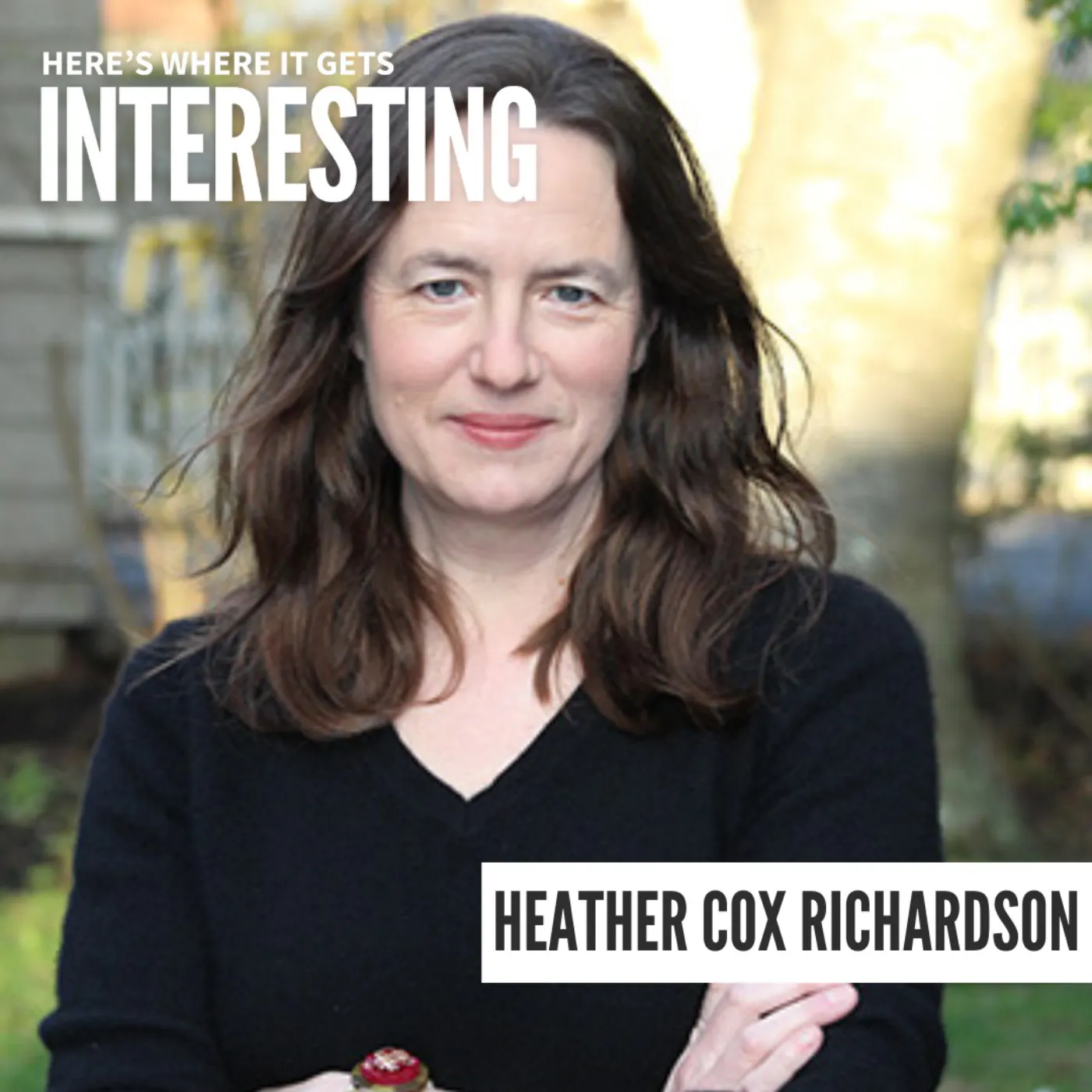
S2 Ep 9How the Future Shapes Our National History with Heather Cox Richardson
On today’s episode of Here’s Where It Gets Interesting, Sharon interviews one of our most-requested guests. Listeners regularly write in and ask to hear a conversation between Sharon and political history expert Heather Cox Richardson. That day is today! Heather Cox Richardson shares how she believes the way we use language shapes how we see our political views, allies, and enemies. Together, Sharon and Heather also touch on the ways that our future may change our past. Tune in to understand what they mean. Hosted on Acast. See acast.com/privacy for more information. To learn more about listener data and our privacy practices visit: https://www.audacyinc.com/privacy-policy Learn more about your ad choices. Visit https://podcastchoices.com/adchoices

S2 Ep 8Live Life in Crescendo with Cynthia Covey Haller
On this episode of Here’s Where It Gets Interesting, Sharon speaks with author Cynthia Covey Haller. Cynthia shares the mantra that her late father, Steven R. Covey, the author of The 7 Habits of Highly Effective People, aspired to during the last decade of his life, and that was to live life in crescendo. Cynthia expands on this concept, defining it as living life with the goal to keep learning, expanding, and growing with the knowledge that your most important work is always ahead of you. Hosted on Acast. See acast.com/privacy for more information. To learn more about listener data and our privacy practices visit: https://www.audacyinc.com/privacy-policy Learn more about your ad choices. Visit https://podcastchoices.com/adchoices

S2 Ep 7Conservation in a Panda Costume with Ami Vitale
Today on Here’s Where It Gets Interesting, National Geographic wildlife photographer Ami Vitale sits down with Sharon to talk about her adventures around the world. Ami is dedicated to spending time with people, places, and animals and sharing their authentic and intimate stories through her camera lens. She speaks about her passion for creativity and environmental conservation efforts, and the idea that an individual may not have the power to change the world, but a great many people taking patient, determined steps together can turn the tide and make a difference. Hosted on Acast. See acast.com/privacy for more information. To learn more about listener data and our privacy practices visit: https://www.audacyinc.com/privacy-policy Learn more about your ad choices. Visit https://podcastchoices.com/adchoices

S2 Ep 6Brush Up on Your Boundaries with Melissa Urban
On this episode of Here’s Where It Gets Interesting, Sharon speaks with Whole30 CEO Melissa Urban. But Melissa isn’t here to talk only about food. Instead, the duo tackles the important topic of boundaries and our tendency to struggle with saying one very important word: no. Melissa’s green, yellow, and red light framework for boundaries provides an easy guide to both sharing our boundaries with others and easing our anxiety and dread during difficult conversations. This episode is a must-listen before the holiday season! Hosted on Acast. See acast.com/privacy for more information. To learn more about listener data and our privacy practices visit: https://www.audacyinc.com/privacy-policy Learn more about your ad choices. Visit https://podcastchoices.com/adchoices

S2 Ep 5Persuaders as Meaning Makers with Anand Giridharadas
Joining Sharon on Here’s Where It Gets Interesting today is author Anand Giridharadas. Anand’s new book, The Persuaders, documents how people persuade others to change their minds and take action. Learn from Anand about how to move from a defeatist attitude of writing one another off. Changing our perspective about “lost causes” may be the exact thing we need to find true connection and repair our fractured relationships and communities. Hosted on Acast. See acast.com/privacy for more information. To learn more about listener data and our privacy practices visit: https://www.audacyinc.com/privacy-policy Learn more about your ad choices. Visit https://podcastchoices.com/adchoices

BONUS Episode! Re:Thinking with Adam Grant: If Teachers Took Over the Government with Sharon McMahon
bonusListen to Adam Grant's Re:Thinking Podcast interview with Sharon about how we can rethink the qualifications for elected office, who decides to run, and what information voters should weigh. They also address ways to sharpen critical thinking and ponder how to improve Congress with a few thought experiments–including a total takeover of the House and Senate by none other than America’s government teachers. Hear more episodes of Re:Thinking on the TED Network. Hosted on Acast. See acast.com/privacy for more information. To learn more about listener data and our privacy practices visit: https://www.audacyinc.com/privacy-policy Learn more about your ad choices. Visit https://podcastchoices.com/adchoices

S2 Ep 4The History of Our Fears and Obsessions with Kate Summerscale
Joining Sharon on Here’s Where It Gets Interesting today is author Kate Summerscale. She recently wrote The Book of Phobias & Manias, which highlights the history of our fears and obsessions. How come so many of us find dolls and clowns unnerving? Why do we react with a shriek when we see a mouse skitter across the kitchen floor? And what super famous American entrepreneur suffered from koumpounophobia... the fear of buttons? Hosted on Acast. See acast.com/privacy for more information. To learn more about listener data and our privacy practices visit: https://www.audacyinc.com/privacy-policy Learn more about your ad choices. Visit https://podcastchoices.com/adchoices

S2 Ep 3A Man of Iron with Troy Senik
On this episode of Here’s Where It Gets Interesting, Sharon shares a conversation with former presidential speechwriter Troy Senik. Troy is now the cofounder of Kite & Key Media and author of the new book, A Man Of Iron, which is a sweeping biography of a nonconsecutive two-term President whose time in public service often flies under the radar. Can you guess who Troy will be talking about today? Hosted on Acast. See acast.com/privacy for more information. To learn more about listener data and our privacy practices visit: https://www.audacyinc.com/privacy-policy Learn more about your ad choices. Visit https://podcastchoices.com/adchoices
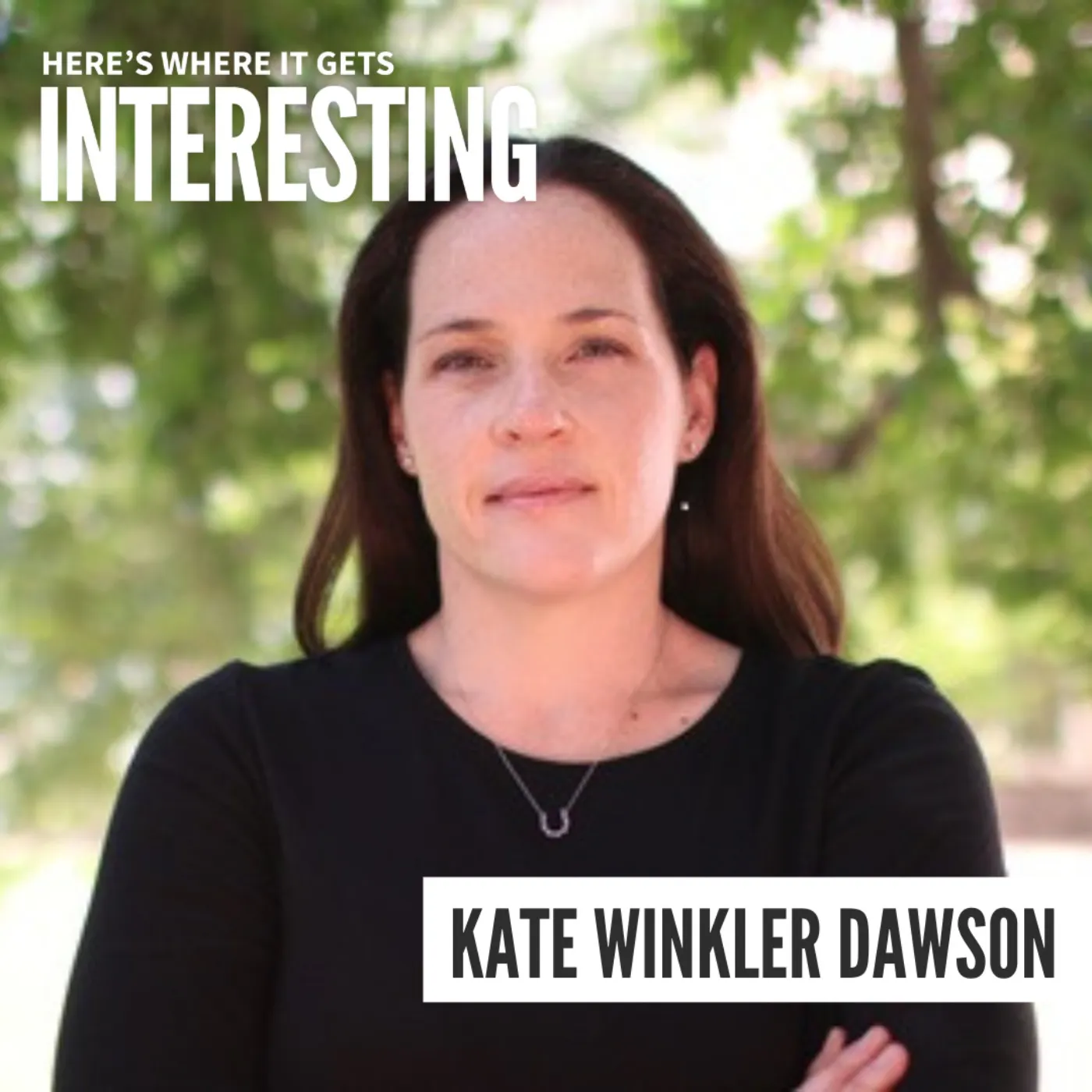
S2 Ep 2All That Is Wicked with Kate Dawson
On today’s episode of Here’s Where It Gets Interesting, author and podcast host Kate Dawson returns! Kate’s new book, All That Is Wicked transports readers to the Gilded Age–a time when money and prestige made it easy to get away with murder. Or almost, in the sensational case of Edward Rulloff. Kate and Sharon talk about the process of researching and telling true stories and how they shaped history. Rulloff’s case forever changed the way we research the criminal mind. Hosted on Acast. See acast.com/privacy for more information. To learn more about listener data and our privacy practices visit: https://www.audacyinc.com/privacy-policy Learn more about your ad choices. Visit https://podcastchoices.com/adchoices

S2 Ep 1An Independent Influencer in a Two-Party System with Evan McMullin
On today’s episode of Here’s Where It Gets Interesting, Sharon speaks with US Senate candidate Evan McMullin from Utah, who is running as an independent without special interest group donations. Together they discuss the two-party system, campaign reform, and the danger of partisan extremism. They also talk candidly about Evan’s background as a CIA officer and how it prepared him for a career change into public office. Evan is running with the goal to build a cross-party coalition of Democrats, Republicans, and Independents like no other in the country. Hosted on Acast. See acast.com/privacy for more information. To learn more about listener data and our privacy practices visit: https://www.audacyinc.com/privacy-policy Learn more about your ad choices. Visit https://podcastchoices.com/adchoices

S1 Ep 15Resilience: Your Questions Answered
We asked you to write or call in with your lingering questions about Japanese incarceration, so today, on Resilience, Sharon answers your questions. Join us to hear more about what happened to Japanese Americans in Hawaii after the bombing of Pearl Harbor, what happened to the assets of the incarcerated, and where you can find more resources, like oral histories, photos, and video compilations. Hosted on Acast. See acast.com/privacy for more information. To learn more about listener data and our privacy practices visit: https://www.audacyinc.com/privacy-policy Learn more about your ad choices. Visit https://podcastchoices.com/adchoices

S1 Ep 14Resilience: An Interview with George Takei Pt. 2
Today on Here's Where It Gets Interesting, Sharon continues her conversation with actor George Takei about his childhood experiences with forced removal and incarcerated camp life. Hosted on Acast. See acast.com/privacy for more information. To learn more about listener data and our privacy practices visit: https://www.audacyinc.com/privacy-policy Learn more about your ad choices. Visit https://podcastchoices.com/adchoices

S1 Ep 13Resilience: An Interview with George Takei Pt. 1
On today's episode of Here's Where It Gets Interesting, Sharon speaks with actor George Takei about his childhood experiences with forced removal and incarcerated camp life. Hosted on Acast. See acast.com/privacy for more information. To learn more about listener data and our privacy practices visit: https://www.audacyinc.com/privacy-policy Learn more about your ad choices. Visit https://podcastchoices.com/adchoices

S1 Ep 12Resilience: Redress and Reparation
Today's episode marks the conclusion of our series, Resilience: The Wartime Incarceration of Japanese Americans. During the postwar era, a new generation was born to the Nisei as they returned to their lives outside of incarceration camps. This third generation, the Sansei, were raised by parents who endured years of discrimination and incarceration, but they themselves came of age during the 1960s and 70s–a time in America’s history that saw the of both civil unrest… and transformation. Hosted on Acast. See acast.com/privacy for more information. To learn more about listener data and our privacy practices visit: https://www.audacyinc.com/privacy-policy Learn more about your ad choices. Visit https://podcastchoices.com/adchoices

S1 Ep 11Resilience: The Fear of What Comes Next
Today, on Resilience, we explore what happened when Japanese Americans were told they were free citizens once again. Given only a train ticket and twenty-five dollars, the incarcerated did not know what awaited them once they left. Would they be able to return to their West Coast homes and communities? Or perhaps it would be easier to make a fresh start in a new city. But who would give them jobs? Were there people willing to help an entire population of people who had been, for so long, vilified by their neighbors, the media, and the government? Kimi Cunningham Grant joins us again to read from Silver Like Dust. Hosted on Acast. See acast.com/privacy for more information. To learn more about listener data and our privacy practices visit: https://www.audacyinc.com/privacy-policy Learn more about your ad choices. Visit https://podcastchoices.com/adchoices

S1 Ep 10Resilience: All the Way to the Supreme Court
On today’s episode of Resilience, we will hear more from Professor Lorraine Bannai about Executive Order 9066, Japanese American resistance, and how they were both important to key Supreme Court Cases. Hosted on Acast. See acast.com/privacy for more information. To learn more about listener data and our privacy practices visit: https://www.audacyinc.com/privacy-policy Learn more about your ad choices. Visit https://podcastchoices.com/adchoices

S1 Ep 9Resilience: The Spirit of Resistance
On this episode of Resilience: The Wartime Incarceration of Japanese Americans, we are continuing our exploration of camp life. Through it all, many incarcerated found ways to add beauty and joy into their long days and nights. They cultivated the dusty land around them, practiced their crafts, and created a sense of community and belonging. Though they never should have had to, incarcerated Japanese Americans showed strength and resilience from behind fences made of barbed wire. We will hear again from Professor Lorraine Bannai as well as from the book Silver Like Dust by author Kimi Cunningham Grant. Hosted on Acast. See acast.com/privacy for more information. To learn more about listener data and our privacy practices visit: https://www.audacyinc.com/privacy-policy Learn more about your ad choices. Visit https://podcastchoices.com/adchoices

S1 Ep 8Resilience: The Long Days of Camp Life
Today on Resilience, we continue our exploration of the wartime incarceration of Japanese Americans. By the fall of 1942, the military had moved most of the imprisoned Japanese Americans from temporary camps into long-term incarceration barracks; camps in isolated locations where they would spend the next few years behind barbed wire fences and stripped of the lives and homes they worked so hard to create for themselves before the war. Joining us today is author Kimi Cunningham Grant who reads from Silver Like Dust. Hosted on Acast. See acast.com/privacy for more information. To learn more about listener data and our privacy practices visit: https://www.audacyinc.com/privacy-policy Learn more about your ad choices. Visit https://podcastchoices.com/adchoices

S1 Ep 7Resilience: Only What You Can Carry
On today’s episode of Resilience: The Wartime Incarceration of Japanese Americans, Sharon talks about the military’s limitations on “enemy aliens” both before and after President Roosevelt’s Executive Order 9066. Japanese Americans were forced to scramble. They didn’t know the specifics of what was coming next, but they knew that everything was changing rapidly. Military police flooded into West Coast cities, curfews were enacted and enforced, businesses were forced to close indefinitely, and families were told to start packing up only what they could carry with them. Joining us today is Professor Lorraine Bannai and author Kimi Cunningham Grant who reads from Silver Like Dust. Hosted on Acast. See acast.com/privacy for more information. To learn more about listener data and our privacy practices visit: https://www.audacyinc.com/privacy-policy Learn more about your ad choices. Visit https://podcastchoices.com/adchoices

S1 Ep 6Resilience: The Forced Removal of 120 Thousand Japanese Americans
After President Roosevelt signed Executive Order 9066, General John DeWitt issued over a hundred exclusion orders in quick succession, and demanded that all Japanese Americans–even those with as little as one-sixteenth ancestry–prepare themselves to be sent to incarceration camps. They had under two weeks to pack up–to give up everything they owned, everything they treasured–and prepare for the unknown. Joining us today is Professor Lorraine Bannai. Hosted on Acast. See acast.com/privacy for more information. To learn more about listener data and our privacy practices visit: https://www.audacyinc.com/privacy-policy Learn more about your ad choices. Visit https://podcastchoices.com/adchoices

S1 Ep 5Resilience: A Country at War
On today’s episode in our series, Resilience, we talk about what happened immediately following the attack on Pearl Harbor and the death of over 2,400 American servicemen. How did the US government respond and how quickly did they mobilize? What, exactly, became the plan, and how did they carry it out? Joining us for part of the episode is Professor Lorraine Bannai. Hosted on Acast. See acast.com/privacy for more information. To learn more about listener data and our privacy practices visit: https://www.audacyinc.com/privacy-policy Learn more about your ad choices. Visit https://podcastchoices.com/adchoices
S1 Ep 4Resilience: Japan Attacks Pearl Harbor
Today on our series, Resilience, we are going to hear more from author Craig Nelson, who shares insights on what exactly happened during the bombing of Pearl Harbor on December 7th, 1941. Hosted on Acast. See acast.com/privacy for more information. To learn more about listener data and our privacy practices visit: https://www.audacyinc.com/privacy-policy Learn more about your ad choices. Visit https://podcastchoices.com/adchoices

S1 Ep 3Resilience: The Movement of Japan in the East
On today’s episode in our series, Resilience: The Wartime Incarceration of Japanese Americans, we’re going to take a step back from the American West Coast and talk about some of the events that were happening globally. Events that shaped the relationship between the U.S. and two Asian countries: China and Japan. What led Japan to attack Pearl Harbor on December 7th, 1941? Joining us is author and historian Craig Nelson. Hosted on Acast. See acast.com/privacy for more information. To learn more about listener data and our privacy practices visit: https://www.audacyinc.com/privacy-policy Learn more about your ad choices. Visit https://podcastchoices.com/adchoices

S1 Ep 2Resilience: The Patriotic Lives of the Issei and Nisei
Today we continue our exploration of the incarceration of Japanese Americans during World War II. Let’s learn about what life was like for the Japanese immigrants who settled along the West Coast–how they assimilated into American culture, raised their families, and flourished, despite the barriers of restrictive laws and policies and the open hostility from Japanese exclusionists. Passages read by Kimi Cunningham Grant from her memoir, Silver Like Dust. Hosted on Acast. See acast.com/privacy for more information. To learn more about listener data and our privacy practices visit: https://www.audacyinc.com/privacy-policy Learn more about your ad choices. Visit https://podcastchoices.com/adchoices

S1 Ep 1Resilience: Asian Immigration and the American West Coast
Welcome to the first episode in our new series, Resilience. For the next few weeks, we are going to explore a part of American history that we tend to learn very little about: the incarceration of Japanese Americans during World War II. So let’s dive into the details–the hows and the whys–and learn more about the resilience shown by the 120 thousand Japanese Americans who were forcibly removed from their homes, their neighborhoods, their jobs, and their schools, and who endured government-enforced wartime imprisonment right here in America. Joining Sharon today is Dr. Ellen Wu, who researches, teaches, and writes about race and immigration in United States history. Hosted on Acast. See acast.com/privacy for more information. To learn more about listener data and our privacy practices visit: https://www.audacyinc.com/privacy-policy Learn more about your ad choices. Visit https://podcastchoices.com/adchoices
How to Learn Science from a 15-Ton Jello Pool with Mark Rober
Welcome to Here’s Where It Gets Interesting! To kick off our new show name, Sharon sits down with one of the most interesting people she knows: Mark Rober, a former NASA engineer who has since amassed over 22 million viewers on his YouTube channel. If there was ever an episode of Sharon Says So that will make your kids think you’re cool for listening, it’s this one. Learn about what motivates Mark to create, and how he hopes his platform will motivate others to both have fun while learning new concepts and care a little bit more about the world’s natural resources. (Pssst…Mark also dishes up some insider info on his good friend and Late Night host, Jimmy Kimmel!) Hosted on Acast. See acast.com/privacy for more information. To learn more about listener data and our privacy practices visit: https://www.audacyinc.com/privacy-policy Learn more about your ad choices. Visit https://podcastchoices.com/adchoices
Find Relief in the Regular Stuff with Nora McInerny
On this episode of Here's Where It Gets Interesting, author Nora McInerny joins Sharon to talk about vibes: good vibes, bad vibes, and the fact that most vibes are mixed, at best. When we recognize that life is full of regular stuff, it can take the pressure off. It’s okay to have a regular-looking kitchen with a regular, fingerprint-coated toaster! It’s okay to be sad at a funeral instead of feeling compelled to reassure everyone that you’re fine! Feel the stress to perform fade away as you listen to Nora and Sharon laugh together, just don’t slam the cabin door on your way out. Hosted on Acast. See acast.com/privacy for more information. To learn more about listener data and our privacy practices visit: https://www.audacyinc.com/privacy-policy Learn more about your ad choices. Visit https://podcastchoices.com/adchoices

What Makes a Great Leader Stand Out with Stephen M. R. Covey
On today’s episode of Here's Where It Gets Interesting, Sharon has a conversation with bestselling author Stephen M. R. Covey about effective leadership and high trust culture. The most underrated attribute in great leaders is humility which means that effective and trustworthy leaders are those who seek to understand first and be understood second. The working world has evolved since the start of the Covid pandemic and its leadership needs to reflect new practices built on the principles of “trust and inspire”. But what does good leadership in our communities and in our country look like? How can we apply the same principles about working leadership to leadership within our interpersonal relationships, and as we seek to lead change in our communities? Hosted on Acast. See acast.com/privacy for more information. To learn more about listener data and our privacy practices visit: https://www.audacyinc.com/privacy-policy Learn more about your ad choices. Visit https://podcastchoices.com/adchoices
The U.S. and the Holocaust with Ken Burns and Sarah Botstein
On today’s episode of Here's Where It Gets Interesting, we are thrilled to sit down with documentary filmmakers Ken Burns and Sarah Botstein. Their new docuseries, The U.S. and the Holocaust, airs on PBS on Friday, September 18th, 2022 and highlights the nuances of America’s response to the Holucaust. Ken and Sarah talk about their work, and about how it can often be the little known, everyday people–citizens and desk-sitting bureaucrats–who can make a lasting impact on history. Heroism does not mean absolute perfection, and many historical leaders struggled with making decisions, sometimes wrongly or too late. But as Americans, we are often at our best when we commit to considering and acting on behalf of our fellow human neighbors. Hosted on Acast. See acast.com/privacy for more information. To learn more about listener data and our privacy practices visit: https://www.audacyinc.com/privacy-policy Learn more about your ad choices. Visit https://podcastchoices.com/adchoices

How History Can Give Us Hope with Dr. Jemar Tisby
During this episode of Here's Where It Gets Interesting, historian Dr. Jemar Tisby speaks with Sharon about racism and what we can do about it. We may not be guilty for the actions of the past, but we are responsible for the ramifications of racism that are felt today. It takes courage to make change because fear can be a stumbling block. We fear entering conversations that seem complicated or difficult or fear the push back or judgment we may get from our safe communities, but history shows us that choosing to do the right thing can bring us hope and peace. Hosted on Acast. See acast.com/privacy for more information. To learn more about listener data and our privacy practices visit: https://www.audacyinc.com/privacy-policy Learn more about your ad choices. Visit https://podcastchoices.com/adchoices

The Formidable Change-Makers of Women’s Suffrage with Dr. Elisabeth Griffith
On today’s episode of Here's Where It Gets Interesting, Sharon talks with Dr. Elisabeth Griffith, who has written a new book called Formidable: American Women and the Fight for Equality: 1920-2020. Many times we think that the passing of the 19th amendment that gave women the right to vote was the finish line of women’s suffrage, but the struggle for equality has been a long road, and has not often been an equal journey for all women. Join the conversation today as Dr. Griffith shares some of the nuances of the history around the Women’s Rights Movement–the courage, the flaws, the race relations, the connections to temperance, Civil Rights, and more. Hosted on Acast. See acast.com/privacy for more information. To learn more about listener data and our privacy practices visit: https://www.audacyinc.com/privacy-policy Learn more about your ad choices. Visit https://podcastchoices.com/adchoices

Independent State Legislature Theory Explained with Akhil Reed Amar, Part 2
On this episode of Here's Where It Gets Interesting, Sharon continues her conversation with constitutional law professor Akhil Reed Amar. They shift gears a little from the U.S. Constitution to a discussion about the controversy around Independent State Legislature Theory. You may have heard it talked about in connection with the upcoming supreme court case, Moore vs. Harper, but the nuances can be tricky to understand. Amar explains the obscurities of the theory and why state legislatures should not be considered independent from the state constitutions that gave them birth. Hosted on Acast. See acast.com/privacy for more information. To learn more about listener data and our privacy practices visit: https://www.audacyinc.com/privacy-policy Learn more about your ad choices. Visit https://podcastchoices.com/adchoices
The Enduring Value of the U.S. Constitution with Akhil Reed Amar, Part 1
On this episode of Here's Where It Gets Interesting, Sharon sits down with constitutional law professor Akhil Reed Amar to talk about the importance of treasuring the U.S. Constitution. What we have in common as Americans–Americans who live in different geographical locations, are raised with different experiences and cultures, and even often speak different languages–is our Constitution and the historical events and documents that shaped the nation. Amar shares his journey as a first generation American, from the gift of citizenship at birth, to the evolution of his opinion on the importance of the nation’s constitutional history. Hosted on Acast. See acast.com/privacy for more information. To learn more about listener data and our privacy practices visit: https://www.audacyinc.com/privacy-policy Learn more about your ad choices. Visit https://podcastchoices.com/adchoices

Life Lessons from The Little Mermaid with Jodi Benson
On today’s episode, Sharon sits down with the voice of a generation: Jodi Benson, the performer who voiced Disney’s Ariel in The Little Mermaid. Jodi was new to show business when she was cast as the voice of Ariel, and it wasn’t considered a “career maker” job; animated films in the 1980s weren’t wildly popular blockbusters like they are now. The Little Mermaid ushered in a new era of success for Disney, and for Jodi. Join us to hear about her journey, and learn which song was almost cut from the film! Hosted on Acast. See acast.com/privacy for more information. To learn more about listener data and our privacy practices visit: https://www.audacyinc.com/privacy-policy Learn more about your ad choices. Visit https://podcastchoices.com/adchoices

175. Daniel Boone: Finding Facts in the Folklore
So far, we’ve been concentrating on a fairly small geographical area of the United States, and even though much of the political action was happening in the East, Americans were beginning to spread out. They began to move Westward. So let’s talk about one of these early pioneers; a man whose exploration of Kentucky paved the way for new European settlements: His name was Daniel Boone. He just may be one of the most misremembered figures in American history, so together, let’s sort out the tall tales from the true details. Hosted on Acast. See acast.com/privacy for more information. To learn more about listener data and our privacy practices visit: https://www.audacyinc.com/privacy-policy Learn more about your ad choices. Visit https://podcastchoices.com/adchoices

Elizabeth Monroe’s Journey from Parisian Prison to White House
Join us on Here's Where It Gets Interesting today as we dive into the First Ladyship of Elizabeth Monroe. As the reserved wife of 5th President, James Monroe, Elizabeth added a more formal feel to entertaining in the White House. She was raven-haired and regal, and kept the public at arms length, which wasn’t always a popular decision. She modeled her social engagements after Parisian customs, a city she loved deeply. Stay tuned to learn about her heroic act that once saved the life of a well-known French aristocrat. Hosted on Acast. See acast.com/privacy for more information. To learn more about listener data and our privacy practices visit: https://www.audacyinc.com/privacy-policy Learn more about your ad choices. Visit https://podcastchoices.com/adchoices
The Violence Project with Dr. Jillian Peterson
On this episode of Here's Where It Gets Interesting, Sharon is joined by Dr. Jillian Peterson, a leading expert in the research of violence, mental illness, and crime. Today’s conversation may not be suitable to listen to with children in the room, but it is an episode you will want to hear. Sharon and Dr. Peterson discuss the myths and media around violence and mass shootings, and how they compare to the research. They also touch on reframing the idea of the “monster with a gun” and what actions and resources can help diminish gun violence across the country. Hosted on Acast. See acast.com/privacy for more information. To learn more about listener data and our privacy practices visit: https://www.audacyinc.com/privacy-policy Learn more about your ad choices. Visit https://podcastchoices.com/adchoices

Scandal Sells: The Rise of the American Exposé
Today on Here's Where It Gets Interesting we are going to switch gears a bit. We’ve been talking about first ladies and the many people who were closely acquainted with the founding fathers. But what did the rest of the country know about the events and actions happening in the capital city? Where did they get their news? It should come as no surprise to you that political bias and tabloid sensationalism in American media grew right alongside the new nation. Let’s see how journalists affected the political atmosphere of the new nation. Hosted on Acast. See acast.com/privacy for more information. To learn more about listener data and our privacy practices visit: https://www.audacyinc.com/privacy-policy Learn more about your ad choices. Visit https://podcastchoices.com/adchoices
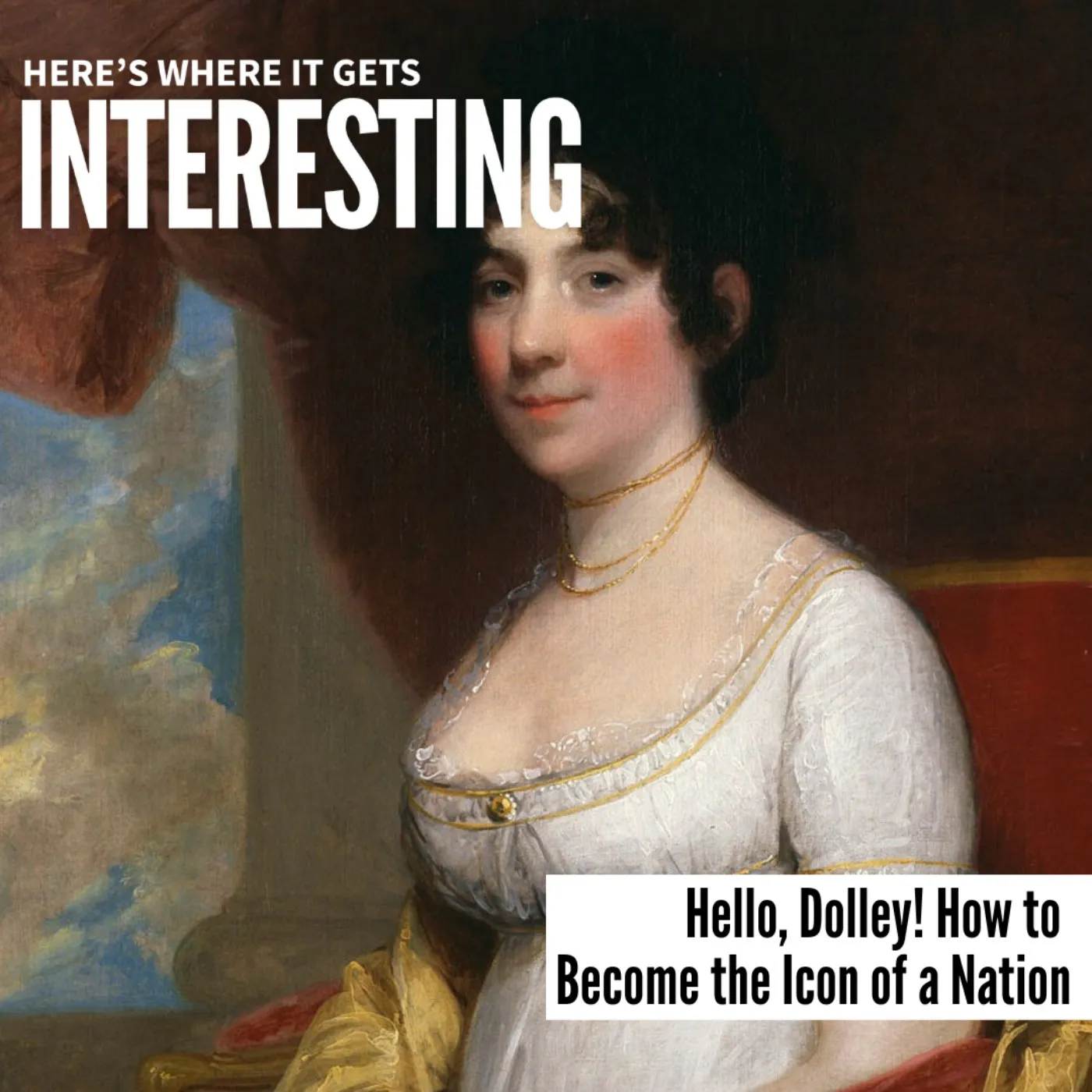
Hello, Dolley!: How to Become the Icon of a Nation
On this episode of Here's Where It Gets Interesting we are going to meet the woman who set the gold standard for the role of First Lady. Dolley Madison’s natural effervescence came in handy as she executed countless social events for the well-connected and wealthy inhabitants of Washington DC. She relied on the art of entertaining to successfully play the game of politics, which furthered her husband’s influence and career. But that’s just the beginning. Tune in to find out how Dolley went from First Lady to national hero. Hosted on Acast. See acast.com/privacy for more information. To learn more about listener data and our privacy practices visit: https://www.audacyinc.com/privacy-policy Learn more about your ad choices. Visit https://podcastchoices.com/adchoices
How to Move Forward: Changing the Two Party System with Andrew Yang
On this episode of Here's Where It Gets Interesting, Sharon has a conversation with former presidential candidate Andrew Yang. After coming off the campaign trail in 2020, Yang began searching for a solution that could change the two-party system in US politics. He recently founded the Forward Party with the hopes to give the American people more viable options for leaders who aim to represent their constituency over party expectations and financiers. Join us as we talk about both the goals and the trials associated with changing the infrastructure of political campaigning. Hosted on Acast. See acast.com/privacy for more information. To learn more about listener data and our privacy practices visit: https://www.audacyinc.com/privacy-policy Learn more about your ad choices. Visit https://podcastchoices.com/adchoices

Freedom and the Art of Cookery
Today, on Here's Where It Gets Interesting, we returned to Monticello and the lives that were intertwined with third President Thomas Jefferson. The young Hemings family, enslaved by birth, grew up in Jefferson’s plantation estate, Monticello. But James Hemings traveled extensively with Jefferson, spending five years in Paris where he learned to cook from Parisian masters. James was well-educated and skilled, but he wanted more. He wanted his freedom. Hosted on Acast. See acast.com/privacy for more information. To learn more about listener data and our privacy practices visit: https://www.audacyinc.com/privacy-policy Learn more about your ad choices. Visit https://podcastchoices.com/adchoices

The Widower Jefferson and the Women He Loved
On today’s episode of Here's Where It Gets Interesting, we hear about the wife of Thomas Jefferson, Martha, who is listed as an official First Lady, but who passed away nearly twenty years before Jefferson’s presidency. Thomas Jefferson never remarried, but he did rely on two very important women to support him through the years as a widower. Learn about who they were and how their lives were destined to be connected, even before they were born. Hosted on Acast. See acast.com/privacy for more information. To learn more about listener data and our privacy practices visit: https://www.audacyinc.com/privacy-policy Learn more about your ad choices. Visit https://podcastchoices.com/adchoices
The Economic Cost of Racism with Heather McGhee
In this episode, Sharon is joined by economic policy expert and author Heather McGhee. McGhee began her career as an economist but when she took a trip across the country and back, she began to ask herself, “Why can’t we have nice things?” We’re not talking about robot maids, but rather, the social stability of programs like affordable healthcare and well-funded public schools. While puzzling out the answer to this question, McGhee realized that racism was a major driver of stagnant economics for ALL Americans, not just for Brown and Black Americans. Listen in to find out why, and how we must rethink our zero sum mindset–my progress over yours–to gain the most amount of prosperity. Hosted on Acast. See acast.com/privacy for more information. To learn more about listener data and our privacy practices visit: https://www.audacyinc.com/privacy-policy Learn more about your ad choices. Visit https://podcastchoices.com/adchoices

Ben Franklin: Beyond the Squeaky Clean Reputation
Today, on Here's Where It Gets Interesting, Sharon talks about one of the most famous American historical figures: Benjamin Franklin. The history books are not wrong about the incredible accomplishments Benjamin Franklin made during his lifetime. He was a man with an unparalleled mind and an electric personality. He was a champion of charitable causes and really good at making strategic political connections. But he was also a man who undervalued his family and made some questionable personal life choices. Listen in to find out more. Hosted on Acast. See acast.com/privacy for more information. To learn more about listener data and our privacy practices visit: https://www.audacyinc.com/privacy-policy Learn more about your ad choices. Visit https://podcastchoices.com/adchoices

From Paris With Love: Abigail Adams Travels Abroad
Today, on Here's Where It Gets Interesting, we revisit a favorite first lady, Abigail Adams. Follow along as Abigail travels across the Atlantic, adventuring in Paris and France with her husband, John Adams. The power couple ultimately lands back in Boston only to move again into new roles, as President and First Lady of the United States. Hosted on Acast. See acast.com/privacy for more information. To learn more about listener data and our privacy practices visit: https://www.audacyinc.com/privacy-policy Learn more about your ad choices. Visit https://podcastchoices.com/adchoices

A Tale of Two Theodosias and a Well-Kept Secret
On today’s episode of Here's Where It Gets Interesting, Sharon takes us deep into the lives of the women who greatly influenced the same man: Aaron Burr. Theirs are stories of great minds, insatiable appetites for knowledge, grief in motherhood, and untimely tragedy. Listen in as Sharon turns over the stones of their lives and hear about a disappearance at sea, a mysteriously scavenged portrait, and a family secret. Hosted on Acast. See acast.com/privacy for more information. To learn more about listener data and our privacy practices visit: https://www.audacyinc.com/privacy-policy Learn more about your ad choices. Visit https://podcastchoices.com/adchoices