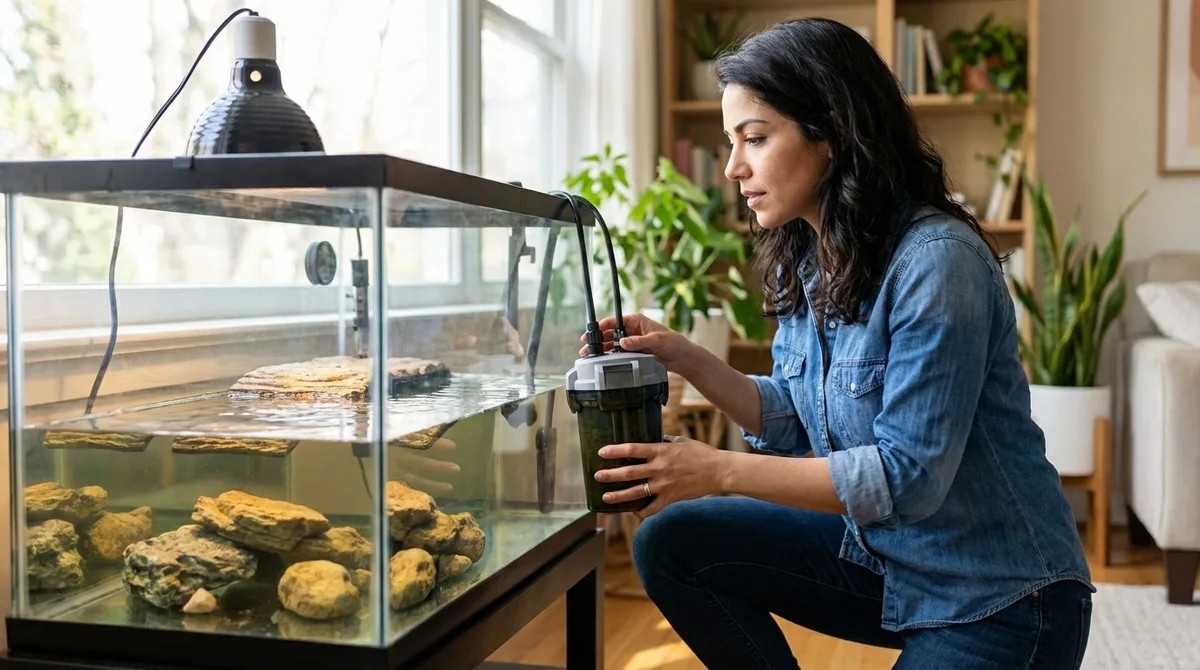
Turtle Tank Setup Checklist: Basking Platforms, UVB Lighting, Filtration, and Water Depth Requirements
The Pet Parent Podcast · Total Pet Parent
Audio is streamed directly from the publisher (content.rss.com) as published in their RSS feed. Play Podcasts does not host this file. Rights-holders can request removal through the copyright & takedown page.
Show Notes
Setting up a turtle tank is far more complex than most new owners expect—forget the cute little bowl with a plastic palm tree. This episode walks through every essential component of a proper turtle habitat, from tank sizing and water depth requirements to basking platforms, UVB lighting systems, and filtration that actually keeps up with these messy reptiles. Whether you're preparing for a red-eared slider hatchling or adopting an adult painted turtle, host Mariana Vasquez delivers the comprehensive checklist you need to avoid costly mistakes and keep your shelled friend healthy from day one.
- Tank length and width matter more than depth—turtles are horizontal swimmers who need floor space to move, not tall water columns, so always choose longer, wider tanks over taller ones.
- Water depth requirements vary dramatically by species: strong swimmers like red-eared sliders thrive in water 1.5 to 2 times their shell length, while musk and mud turtles prefer shallower setups equal to their shell length since they tire easily.
- Basking platforms must allow turtles to get completely dry—partial submersion defeats the purpose and leads to shell rot and fungal infections, so ensure the surface is textured, stable, and sized for your turtle's full body plus 30 percent extra room.
- UVB lighting rated at 10.0 or 12 percent is non-negotiable for calcium metabolism; without proper UVB exposure, turtles develop metabolic bone disease within months.
- Use the ten-gallon rule for adult tank sizing: ten gallons of water per inch of shell length, meaning a six-inch red-eared slider needs at least 60 gallons.
- For turtles exceeding ten inches, stock tanks or custom indoor ponds (100–300 gallons) often make more practical and financial sense than massive glass aquariums.
Read the full article: https://totalpetparent.com/turtle-tank-setup-checklist