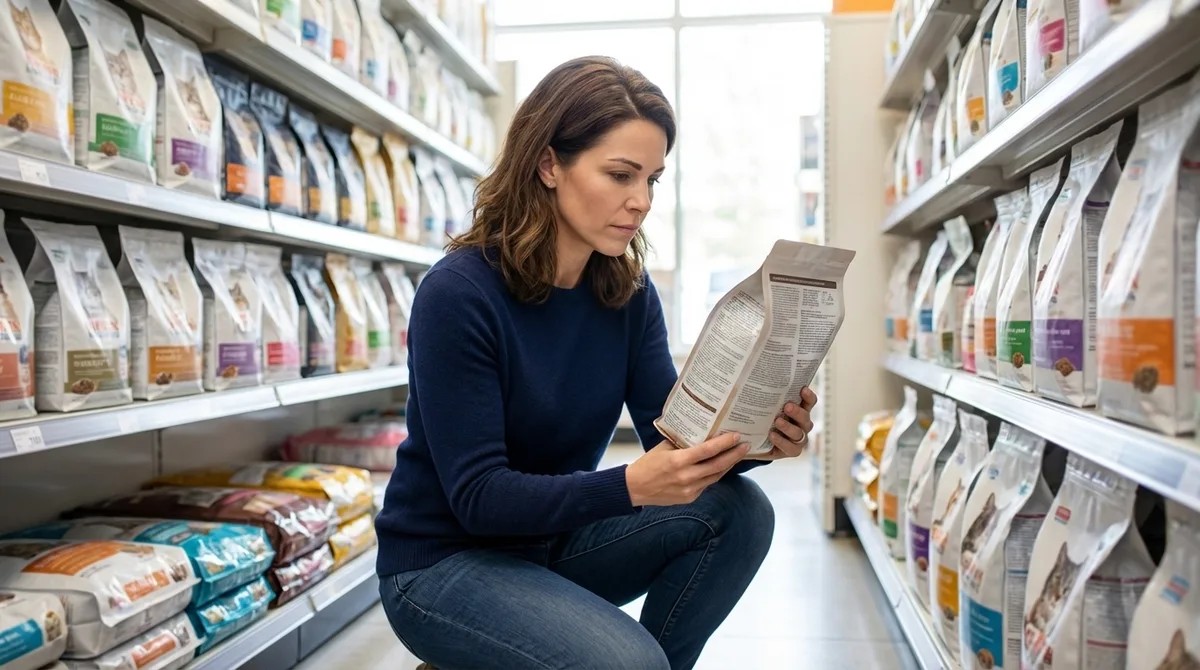
How to Read Cat Food Labels: Understanding Ingredients and Nutritional Information
The Pet Parent Podcast · Total Pet Parent
Audio is streamed directly from the publisher (content.rss.com) as published in their RSS feed. Play Podcasts does not host this file. Rights-holders can request removal through the copyright & takedown page.
Show Notes
Think you're making informed choices about your cat's food? The marketing on the front of the bag—"premium," "natural," "grain-free"—often tells a completely different story than what's actually inside. In this episode, Jasmine Caldwell breaks down exactly how to decode cat food labels, from finding the one statement that determines whether a food is even nutritionally complete to understanding why the ingredient list might be misleading you. Whether you're a new cat owner or you've been feeding felines for years, this twenty-minute label literacy crash course will transform how you shop.
- The AAFCO nutritional adequacy statement is your first and most important quality filter—if a cat food doesn't have one, it shouldn't be your cat's primary diet, regardless of what the front of the bag claims.
- Ingredients are listed by weight before processing, which means fresh chicken (with its water content) will rank higher than chicken meal even though chicken meal contains roughly 300% more protein by weight after cooking.
- Watch for "ingredient splitting," where manufacturers list corn gluten meal, ground corn, and corn bran separately to disguise that corn is actually the primary ingredient in the food.
- Vague terms like "meat by-products" or "poultry meal" without a named species are red flags—quality protein sources should always specify the animal (chicken, turkey, salmon, beef).
- For adult cats, aim for at least 26% crude protein in dry food, though 35-40% is better for obligate carnivores who are biologically designed to derive nutrients from animal tissue.
- Life stage designations matter more than you might think—feeding kitten food to a senior cat risks weight gain and nutrient imbalances because the caloric density and nutrient ratios are calibrated differently.
Read the full article: https://totalpetparent.com/how-to-read-cat-food-labels