
The Partially Examined Life Philosophy Podcast
838 episodes — Page 3 of 17
Ep. 377: Emil Cioran's Pessimism (Part Two)
Continuing on "Directions for Decomposition" from A Short History of Decay (1949). What is it that humans are inevitably trying to avoid that seems so bad to us? It's our existential separation from others, our essential, incommunicable solitude. Plus, ennui, sloth, and being a "traitor to existence." Get more at partiallyexaminedlife.com. Visit partiallyexaminedlife.com/support to get ad-free episodes and tons of bonus discussion. Sponsor: Visit functionhealth.com/PEL to get the data you need to take action for your health.
Ep. 377: Emil Cioran's Pessimism (Part One)
On A Short History of Decay (1949), a pessimist/existentialist somewhat text from the most famous Romanian philosopher. Cioran's short essays touch on art, humor, God, salvation, time, nostalgia, mourning, death, disease, suicide, revolt, freedom, Buddhism, Daoism, and the role of the philosopher. Get more at partiallyexaminedlife.com. Visit partiallyexaminedlife.com/support to get ad-free episodes and tons of bonus discussion. Sponsor: Visit functionhealth.com/PEL to get the data you need to take action for your health.
Ep. 376: Plato's "Laws" (Part Two)
Continuing on selections from this late Platonic dialogue. Starting in Book 4, Plato's characters are discussing how to create a new state ("Magnesia") from scratch. What sorts of laws should it have? We talk about marriage laws, the nocturnal council, how the law is argued for that everyone has to believe in gods, and more. Get more at partiallyexaminedlife.com. Visit partiallyexaminedlife.com/support to get ad-free episodes and tons of bonus discussion. Sponsor: Visit functionhealth.com/PEL to get the data you need to take action for your health.
Ep. 376: Plato's "Laws" (Part One)
On this later dialogue presenting Plato's ideas about the character of laws in a just state. They should all be aimed at making people virtuous, and so should include education to this end. Each law should be equipped with a prelude presenting a rational argument for why people should obey it. Get more at partiallyexaminedlife.com. Visit partiallyexaminedlife.com/support to get ad-free episodes and tons of bonus discussion. Sponsor: Visit functionhealth.com/PEL to get the data you need to take action for your health.

PREMIUM-PEL Back-to-School Nightcap 2025
Mark, Seth, and Dylan add some more detail and thought to our recent episodes, including more about Steven Pinker and re-litigation of the utility of Irigaray's second-wave feminism in light of the distinction between philosophical and political speech.
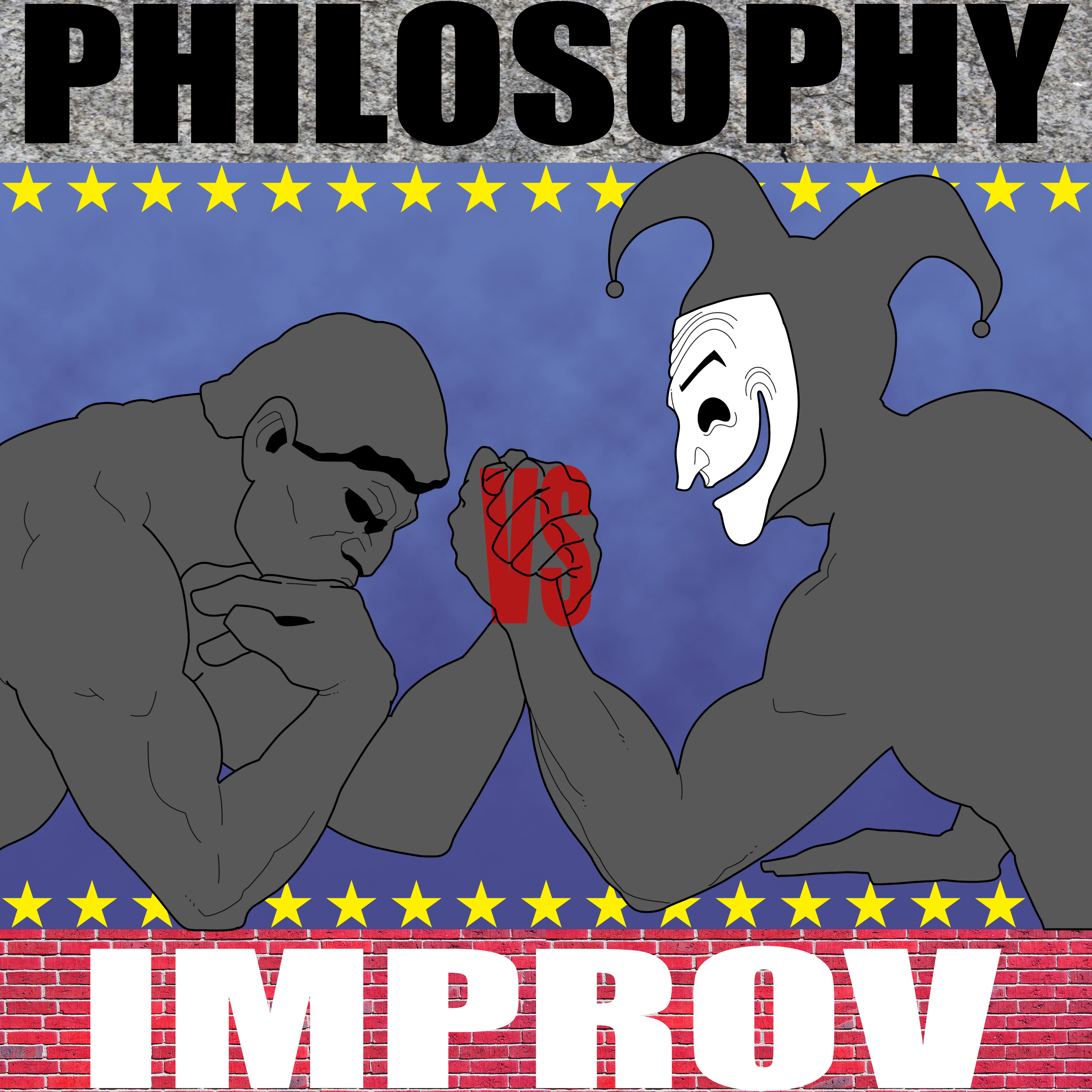
PEL Presents PvI#101: Co-Hostery: Season Five Premiere with Mark and Mary
It is a new era! Merry Mary Hynes is now Mark's co-host, and we do some improv related to that and feel our the degree to which Mary has not studied philosophy. Could it be that we ALL do philosophy whether we know it or not? Also: The Feminist Café, Luce Irigaray, Mark's voice training, an aging child pop star, non-binary preliminaries, gratis post-game chatter, and more. Hear more at philosophyimprov.com. Support the podcast and listen ad-free at philosophyimprov.com/support. Sponsor: Get 15% off at MasterClass.com/IMPROV.
Ep. 375: Luce Irigaray's Feminism (Part Two)
Continuing on "Women on the Market" from The Sex Which Is Not One (1977) and other selections. Irigaray gives a Marxist analysis of the commodification of women, addresses psychotherapists about their neglect of women's viewpoints, recommends wonder over objectification, and interprets Hegel's comments about Antigone. Get more at partiallyexaminedlife.com. Visit partiallyexaminedlife.com/support to get ad-free episodes and tons of bonus discussion. Sponsors: Visit functionhealth.com/PEL to get the data you need to take action for your health. Get a $1/month e-commerce trial at shopify.com/pel.

Ep. 375: Luce Irigaray's Feminism (Part One)
On The Sex Which Is Not One (1977) and other Irigaray selections from the French Feminism Reader (2000), featuring guest Jenny Hansen (who wrote the introduction to the book chapter). What role should sexual difference play in philosophy and society? Irigaray qua second-wave feminist claims that unleashing the feminine can and should transform philosophy, public policy, and relationships. Check out the America Dissected podcast. Get more at partiallyexaminedlife.com. Visit partiallyexaminedlife.com/support to get ad-free episodes and tons of bonus discussion.
Ep. 374: Discussing Liberalism (Lincoln, et al) with Walter Sterling (Part Two)
Continuing our discussion of the dangers to and weak points of liberal democracy, including consideration of Patrick Deneen's Why Liberalism Failed (2018) Francis Fukuyama's "Liberalism and Its Discontents" (his 2020 essay), and Steven Pinker's Enlightenment Now (2018). Get more at partiallyexaminedlife.com. Visit partiallyexaminedlife.com/support to get ad-free episodes and tons of bonus discussion.

Ep. 374: Discussing Liberalism (Lincoln, et al) with Walter Sterling (Part One)
What's the crisis of liberal democracy? Dylan, Wes and Seth are joined by St. John's College President J. Walter Sterling to discuss Abraham Lincoln's "On the Perpetuation of Our Political Institutions" (1838) plus the beginnings of Steven Pinker's Enlightenment Now (2018), Patrick Deneen's Why Liberalism Failed (2018), and Francis Fukuyama's "Liberalism and Its Discontents" (the 2020 essay). Get more at partiallyexaminedlife.com. Visit partiallyexaminedlife.com/support to get ad-free episodes and tons of bonus discussion. Sponsor: Visit functionhealth.com/PEL to get the data you need to take action for your health. Enrollment is now open for Mark's online political philosophy course. See partiallyexaminedlife.com/class.

PEL Presents Closereads: Peter Railton's "Moral Realism" (Wrap Up)
We are concluding our treatment of Peter Railton's "Moral Realism" (1984), and given that you likely haven't listened to the seven preceding parts, this discussion can serve as a standalone summary of not only Railton's view, but of the best efforts of Mark and Wes to actually figure out what a plausible naturalistic, empirical account of ethics could amount to. You can consider this a conclusion to our recent PEL episode series on meta-ethics. Read along with us, starting on PDF p. 42. Sign up to support Closereads at patreon.com/closereadsphilosophy to get all parts of this discussion plus lots more content. Get all public Closereads episodes (including part one of this series) at closereadsphilosophy.com or on YouTube.
Ep. 373: Michael Walzer on Just Wars (Part Two)
Continuing on on Just and Unjust Wars (1977), ch. 5-6. When might it be morally permissible to strike first? When is it permissible (or obligatory?) to intervene in another country's internal affairs militarily? We discuss Walzer's historical examples and apply his theories to current wars. Get more at partiallyexaminedlife.com. Visit partiallyexaminedlife.com/support to get ad-free episodes and tons of bonus discussion. Sponsors: Visit functionhealth.com/PEL to get the data you need to take action for your health. Get a $1/month e-commerce trial at shopify.com/pel. Enrollment is now open for Mark's online political philosophy course. See partiallyexaminedlife.com/class.
Ep. 373: Michael Walzer on Just Wars (Part One)
On Just and Unjust Wars: A Moral Argument With Illustrations (1977), ch. 4-6 on "jus ad bellum," which refers to moral justifications for going to war. Self-defense is permissible while aggression is not, but this leaves many questions unanswered, and Walzer gives us many historical examples to consider. Get more at partiallyexaminedlife.com. Visit partiallyexaminedlife.com/support to get ad-free episodes and tons of bonus discussion. Sponsors: Visit functionhealth.com/PEL to get the data you need to take action for your health. Check out Richard Dawkins' The Poetry Of Reality Podcast at thepoetryofreality.com. Enrollment is now open for Mark's online political philosophy course. See partiallyexaminedlife.com/class.
Ep. 372: Kant's Ethics Lectures (Part Two)
Continuing on the 1785 course lecture notes by Georg Ludwig Collins. We cover duties to oneself, which are actually the most important ones. There are some interesting subtleties even though Kant is clearly a creature of his time and place, e.g. in his views of sexuality. Get more at partiallyexaminedlife.com. Visit partiallyexaminedlife.com/support to get ad-free episodes and tons of bonus discussion. Sponsors: Visit functionhealth.com/PEL to get the data you need to take action for your health. Visit IDOU.com/PEL for 15% off online courses on using AI in creative, human-centered ways. Learn about Mark's online political philosophy class at partiallyexaminedlife.com/class.
Ep. 372: Kant's Ethics Lectures (Part One)
We discuss lecture notes from Kant's 1785 ethics course, which provide more examples and an emphasis on the practical than his more famous works. For instance, we get more information on ethical motivation: How can the rational recognition of ethical principles lead to moral feelings? Get more at partiallyexaminedlife.com. Visit partiallyexaminedlife.com/support to get ad-free episodes and tons of bonus discussion. Sponsor: Visit functionhealth.com/PEL to get the data you need to take action for your health. Learn about Mark's online political philosophy class at partiallyexaminedlife.com/class.
PEL Presents PvI#97: Peep Dome Pets w/ Merry Mary Hynes
LA Second City improv instructor Mary joins us to act out a pet sitting job interview, talk about sharing our public spaces with animals, and finally return to Empty Street to see if we can get some animal action going in the mart. In the post-game, we talk about Bill's new academic studies and Mark's upcoming Gen Con trip. Hear more at philosophyimprov.com. Support the podcast and listen ad-free at philosophyimprov.com/support. Sponsors: Don't wait until the next bite -- protect your home with Bzigo. Go to bzigo.com/discountBUZZ10 to save 10% off. Go to surfshark.com/improv or use code IMPROV at checkout to get 4 extra months of Surfshark VPN!
Ep. 371: Christine Korsgaard on Normativity (Part Two)
Concluding our treatment of The Sources of Normativity. We give Korsgaard's tweaks to Kant, including her distinction between the categorical imperative and the moral law. We then explain her reference to Wittgenstein's private language argument in her argument that reason-giving, and hence morality, can't be merely self-referential. Get more at partiallyexaminedlife.com. Visit partiallyexaminedlife.com/support to get ad-free episodes and tons of bonus discussion, including a supporter-exclusive Nightcap comparing Korsgaard to Foot. Sponsors: Visit functionhealth.com/PEL to get the data you need to take action for your health. Get a $1/month e-commerce trial at shopify.com/pel. Learn about Mark's online political philosophy class at partiallyexaminedlife.com/class.
Ep. 371: Christine Korsgaard on Normativity (Part One)
On lectures 3 and 4 of The Sources of Normativity (1996), where we get Korsgaard's positive view on how morality becomes obligatory for an individual, which has to do with identity, reason-giving, and our fundamentally social nature. And yet, her view is an interpretation of Kant! Get more at partiallyexaminedlife.com. Visit partiallyexaminedlife.com/support to get ad-free episodes and tons of bonus discussion. Sponsors: Don't wait until the next bite—protect your home with Bzigo. Go to bzigo.com/discount/BUZZ10 to save 10%. Visit functionhealth.com/PEL to get the data you need to take action for your health. Learn about Mark's online political philosophy class at partiallyexaminedlife.com/class.
Ep. 370: Christine Korsgaard on the History of Ethics (Part Two)
We dive further into the text of lectures 1 and 2 of The Sources of Normativity (1996). We give Korsgaard's account of the idea of reflective endorsement through Hume and Bernard Williams to get to her own view. When you come to know the origins of your moral sentiments, do you still stand behind them? Get more at partiallyexaminedlife.com. Visit partiallyexaminedlife.com/support to get ad-free episodes and tons of bonus discussion. Learn more about Mark's fall online political philosophy class at partiallyexaminedlife.com/class. Sponsor: Visit functionhealth.com/PEL to get the data you need to take action for your health.
Ep. 370: Christine Korsgaard on the History of Ethics (Part One)
On The Sources of Normativity (1996), lectures 1 and 2. How are facts related to obligations? We don't want to merely explain our moral impulses, but justify them. Korsgaard walks us through the views of Hobbes, Hume, Bernard Williams and others to arrive at her own breed of Kantianism, which we'll lay out in ep. 371. Get more at partiallyexaminedlife.com. Visit partiallyexaminedlife.com/support to get ad-free episodes and tons of bonus discussion. Sponsor: Don't wait until the next bite—protect your home with Bzigo. Go to bzigo.com/discount/BUZZ10 to save 10%.
Ep. 369: Philippa Foot's Naturalistic Ethics (Part Two)
Continuing on Natural Goodness, getting more into concrete cases of moral reasoning. How and why do we decide to keep promises, even in cases where violating them would produce more utility? How do we take into account different kinds of grounds in moral reasoning? Get more at partiallyexaminedlife.com. Visit partiallyexaminedlife.com/support to get ad-free episodes and tons of bonus discussion, including a supporter-exclusive part three to this discussion. Sponsor: Visit IDOU.com/PEL for 15% off online courses on using AI in creative, human-centered ways.

Ep. 369: Philippa Foot's Naturalistic Ethics (Part One)
On Natural Goodness (2001). Can we base ethics on the model of biology? Foot argues that just as we understand what a healthy specimen of a plant or animal is, so there is a natural way for humans to work properly, which will include the ability to will according to reflective reasoning. Get more at partiallyexaminedlife.com. Visit partiallyexaminedlife.com/support to get ad-free episodes and tons of bonus discussion. Sponsor: Get a $1/month e-commerce trial at shopify.com/pel.
Ep. 368: Hume on Reason in Ethics (Part Two)
We conclude our discussion of A Treatise of Human Nature (1739): Book III, "Of Morals," plus a bit more discussion of An Enquiry Concerning the Principles of Morals (1751). How do moral sentiments fit into Hume's overall philosophy of mind? Is Hume a relativist? We talk about sociopaths, animals, incest, consent, ethics vs. beauty, moral luck, and more. Get more at partiallyexaminedlife.com. Visit partiallyexaminedlife.com/support to get ad-free episodes and tons of bonus discussion.
Ep. 368: Hume on Reason in Ethics (Part One)
We talk a bit more about David Hume's An Enquiry Concerning the Principles of Morals (1751), and add some parts of A Treatise of Human Nature (1739): sec. 3 "Of the Influencing Motives of the Will" within the third part of Book II, "Of the Passions," and the first two sections of Book III, "Of Morals." Can reason by itself motivate moral action? Hume says no: All ethical reasons must point ultimately to sentiments, which we can generalize about, but which are epistemically basic. Get more at partiallyexaminedlife.com. Visit partiallyexaminedlife.com/support to get ad-free episodes and tons of bonus discussion.
Ep. 367: Hume on the Foundations of Ethics (Part Two)
Continuing on An Enquiry Concerning the Principles of Morals (1751), talking about justice (i.e. property laws), why utility is pleasing and what all it includes, sympathy, utility vs. beauty, and more. Get more at partiallyexaminedlife.com. Visit partiallyexaminedlife.com/support to get ad-free episodes and tons of bonus discussion.
Ep. 367: Hume on the Foundations of Ethics (Part One)
On David Hume's An Enquiry Concerning the Principles of Morals (1751). What is morality, and how can we know it? Hume claims that we simply find ourselves with sentiments morally approving and disapproving of various things. Characterizing these post hoc, we can say that in general we approve of what brings utility, and this explains the existence of most laws and mores. These may vary by culture because conditions change the utility calculation in different environments. Get more at partiallyexaminedlife.com. Visit partiallyexaminedlife.com/support to get ad-free episodes and tons of bonus discussion. Sponsor: Get a $1/month e-commerce trial at shopify.com/pel.

Ep. 366: Edith Stein on Empathy (Part Two)
Continuing on The Problem of Empathy. What does it mean to say that we know other people's mental states "non-primordially"? We talk about Stein's project of explaining how empathy is possible, what it gets us, and how her answers differ from Scheler's. Get more at partiallyexaminedlife.com. Visit partiallyexaminedlife.com/support to get ad-free episodes and tons of bonus discussion. Sponsor: Get a $1/month e-commerce trial at shopify.com/pel.

PREMIUM-PEL Sentimentalism Nightcap 2025
We put our recent episodes on moral phenomenology into perspective, anticipating our upcoming Hume discussion and going through some other options to enrich this study of sentiment vs. rational intuition. Plus, more potential author-guests and recent philosophy book coverage. If you're not hearing the full version of this discussion, sign up via one of the options described at partiallyexaminedlife.com/support.

Ep. 366: Edith Stein on Empathy (Part One)
On The Problem of Empathy (1917). What is empathy, and what is its significance? Stein pictures empathy as a dynamic process that involves what Scheler called sympathy but goes beyond this. Your don't just take the other person's feeling as our object of contemplation, but in doing so, your enter into it (while still not confusing it with YOUR feeling), this relating to it "non-primordially." So how does this work, exactly? Get more at partiallyexaminedlife.com. Visit partiallyexaminedlife.com/support to get ad-free episodes and tons of bonus discussion.

Ep. 365: Scheler on Love (Part Two)
We conclude our treatment of Max Scheler's The Nature of Sympathy (1922), getting further into the Part II of the book about love and hatred and grappling with the puzzles about what exactly it is we love about someone (the "personality"). Get more at partiallyexaminedlife.com. Visit partiallyexaminedlife.com/support to get ad-free episodes and tons of bonus discussion. If you enjoy our podcast, check out Working Class History at workingclasshistory.com.

Ep. 365: Scheler on Love (Part One)
On The Nature of Sympathy (1922), Part II: "Love and Hatred." What is love, and how does it relate to ethics and to sympathy? For Scheler, love is a primitive, spontaneous movement from lower to higher values: We see the best in the love one and thereby help enable them to attain that excellence. So is love foundational for value, or is value foundational for love? The two seem to arise together. Get more at partiallyexaminedlife.com. Visit partiallyexaminedlife.com/support to get ad-free episodes and tons of bonus discussion. Sponsor: Get a $1/month e-commerce trial at shopify.com/pel.

Ep. 364: Max Scheler on Sympathy (Part Three)
Mark, Wes, and Dylan reconvened for one more hour on Part I, "Fellow Feeling" (ch. 3-4) in The Nature of Sympathy (1913/1922). We continue to try to figure out the razor's edge of "fellow feeling proper" that does not rely on the sympathizer identifying in any way and look into psychological and metaphysical ways that people can identify with others. Get more at partiallyexaminedlife.com. Visit partiallyexaminedlife.com/support to get ad-free episodes and tons of bonus discussion, including more part 3 discussions like this one, which aren't normally made available on this public feed. Sponsor: Get a $1/month e-commerce trial at shopify.com/pel.

Ep. 364: Max Scheler on Sympathy (Part Two)
Continuing on The Nature of Sympathy (1913/1922), Part I: "Fellow Feeling," Ch. 1-4. We look more closely at the text, getting further into how fellow feeling relates to ethics, and why the moral sentimentalists (like Hume) were wrong about this. Get more at partiallyexaminedlife.com. Visit partiallyexaminedlife.com/support to get ad-free episodes and tons of bonus discussion.

Ep. 364: Max Scheler on Sympathy (Part One)
On The Nature of Sympathy (1913, expanded 1922), Part I: "Fellow Feeling," Ch. 1-4. What is it to feel sympathy (aka "fellow feeling") for another person? It is NOT to "identify" with that person; ethics requires that the person be irreducibly Other, not part of my (extended) ego. Get more at partiallyexaminedlife.com. Visit partiallyexaminedlife.com/support to get ad-free episodes and tons of bonus discussion. Sponsor: Check out the History of the Germans podcast at historyofthegermans.com.

PEL Presents Closereads: Husserl on Perceiving Minds
On Edmund Husserl's Ideas, Vol. 2 (1928), Section 3, "The Constitution of the Spiritual World," Ch. 1, "Opposition Between the Naturalistic and Personalistic Worlds." Given Husserl's method of "reduction" whereby he sets aside the metaphysical status of objects in the natural world (are they mind-independent or merely ideas?), we wanted to see how he accounts for our ability to directly perceive other people's minds. We don't just perceive their bodies and our own bodies and deduce that others must be like us mentally, but we perceive both our minds and those of others as strata (aspects) of physical bodies. Read along with us, starting on p. 183 (PDF p. 101). Sign up to support Closereads at patreon.com/closereadsphilosophy to get future parts of this discussion plus lots more content. Get all public Closereads episodes at closereadsphilosophy.com or on YouTube.

Ep. 363: Franz Brentano's Moral Epistemology (Part Two)
Continuing on "The Origin of the Knowledge of Right and Wrong" (1889), getting into how we measure the comparative value of things. While Brentano does observe actual practices in these areas, his phenomenology detects moral facts that can be used to cast judgments of people's actual practices, saving him from relativism. Get more at partiallyexaminedlife.com. Visit partiallyexaminedlife.com/support to get ad-free episodes and tons of bonus discussion. Sponsor: Learn about St. John's College at sjc.edu/pel.

Ep. 363: Franz Brentano's Moral Epistemology (Part One)
On "The Origin of the Knowledge of Right and Wrong" (1889). What justifies basic moral facts? Brentano claims that right there in our experience, we can rationally sense with complete certainty that certain kinds of preferences are good ones, and others are not. This take on intuitionism is a response to Kant that (like Kant) cuts between the traditional epistemic categories of rationalism and empiricism, and Brentano's descriptive psychology kicked off the whole project of phenomenology. Get more at partiallyexaminedlife.com. Visit partiallyexaminedlife.com/support to get ad-free episodes and tons of bonus discussion. Sponsors: Get a $1/month e-commerce trial at shopify.com/pel. Learn about African history at historyofafricapodcast.podbean.com.

Ep. 362: Ecclesiastes: Biblical Existentialism? (Part Two)
Continuing on Ecclesiastes with guest Jesse Peterson, getting into some more close reading of particular sections. We make some connection from the author's observations to ancient Greek Skepticism, Epicureanism, and Stoicism. How is the world "absurd" according to this book? Get more at partiallyexaminedlife.com. Visit partiallyexaminedlife.com/support to get ad-free episodes and tons of bonus discussion. Sponsors: Learn about St. John's College at sjc.edu/pel. Get a $1/month e-commerce trial at shopify.com/pel.

Ep. 362: Ecclesiastes: Biblical Existentialism? (Part One)
Ecclesiastes is often cited as one of the most philosophical books of the Bible, so we approached it in that spirit with the help of Jesse M. Peterson, whose soon-to-be-published book is called Qoheleth and the Philosophy of Value. Get more at partiallyexaminedlife.com. Visit partiallyexaminedlife.com/support to get ad-free episodes and tons of bonus discussion. Sponsor: Check out the History of the Germans podcast at historyofthegermans.com.

Ep. 361: Marx on Machines (Part Two)
On "Fragment on Machines" (1858). Shouldn't automating work free workers? Not according to Marx, until capitalism is overthrown. Until then, automation actually just makes labor conditions worse and certainly doesn't give people more free time, since the capitalist keeps all the surplus gained by greater productivity. Get more at partiallyexaminedlife.com. Visit partiallyexaminedlife.com/support to get ad-free episodes and tons of bonus discussion. Sponsor: Learn about St. John's College at sjc.edu/pel.

Ep. 361: Marx on Machines (Part One)
We finish our treatment of Capital, Ch. 1, covering the little bit that Marx says about actual communism (he was wary of utopianism, contra his reputation), and think through a number of related practical problems. We introduce "Fragment on Machines" (1858). Get more at partiallyexaminedlife.com. Visit partiallyexaminedlife.com/support to get ad-free episodes and tons of bonus discussion. Sponsor: Get a $1/month e-commerce trial at shopify.com/pel.

Ep. 360: Karl Marx on Economic Value (Part Two)
Continuing on Capital, Ch. 1 on commodities. We go into detail on his account of how money gets derived from the continued comparison of various commodities, how use value comes back into play when we compare the economic value of one commodity as compared to another, and finally, the details of commodity fetishism. Get more at partiallyexaminedlife.com. Visit partiallyexaminedlife.com/support to get ad-free episodes and tons of bonus discussion. Sponsors: Get a $1/month e-commerce trial at shopify.com/pel. Learn about St. John's College at sjc.edu/pel.

Ep. 360: Karl Marx on Economic Value (Part One)
On Capital (1867), Ch. 1, "The Commodity." What makes something we buy or sell valuable? Marx says it's ultimately the labor that goes into it, though there are some wrinkles in formulating this accurately, and the commodities and surrounding marketplace activity blind us to labor's role and its ethical import. Get more at partiallyexaminedlife.com. Visit partiallyexaminedlife.com/support to get ad-free episodes and tons of bonus discussion. Sponsor: You may also the Fallacious Trump podcast at fallacioustrump.com.

PEL Presents Closereads: Marx on Stirner (Part One)
Mark and Wes read through and discuss Karl Marx's The German Ideology (1846), delving deep into the middle of his critique of Max Stirner's The Ego and Its Own. Marx articulates and criticizes Stirner's attempt to distinguish the mere common egoism of an unthinking person from the enlightened egoism that Stirner is recommending. Read along with us, starting on p. 259 (PDF p. 255). Sign up to support Closereads at patreon.com/closereadsphilosophy to get future parts of this discussion plus lots more content. Get all public Closereads episodes at closereadsphilosophy.com or on YouTube.

Ep. 359: Karl Marx's Project (Part Two)
We continue on the introduction to Marx's Grundrisse, going through his criticisms of prior economists who were too ahistorical and didn't understand how production, consumption, distribution and exchange hang together as a single system. Get more at partiallyexaminedlife.com. Visit partiallyexaminedlife.com/support to get ad-free episodes and tons of bonus discussion. Sponsor: Learn about St. John's College at sjc.edu/pel.

Ep. 359: Karl Marx's Project (Part One)
On the intro to Marx's Grundrisse (1857) and "Theses on Feuerbach" (1845). Why economics, and why do it the way Marx does? We see Marx argues that Feuerbach's materialism was not materialistic enough, start looking at production, consumption, distribution, and exchange as moments within a single process, and talk about why anyone would want to read a historical economic text. Get more at partiallyexaminedlife.com. Visit partiallyexaminedlife.com/support to get ad-free episodes and tons of bonus discussion. Sponsor: Get a $1/month e-commerce trial at shopify.com/pel.

Ep. 358: Max Stirner's Egoism (Part Two)
Continuing on The Ego and Its Own, focusing now on the sections "The Owner" and "My Power." Stirner lets us know that his egoism ("ownness") is not compatible with liberal egalitarianism, which he sees as just a continuation of the Christian project of perfecting humanity. Get more at partiallyexaminedlife.com. Visit partiallyexaminedlife.com/support to get ad-free episodes and tons of bonus discussion. Sponsor: Learn about St. John's College at sjc.edu/pel.

Ep. 358: Max Stirner's Egoism (Part One)
On The Ego and its Own (1844), another big influence on Karl Marx and a precursor of Nietzsche, or perhaps an early Ayn Rand. Get more at partiallyexaminedlife.com. Visit partiallyexaminedlife.com/support to get ad-free episodes and tons of bonus discussion. Sponsor: Have up to a $100 donation to effective charities matched at GiveWell.org.

PEL '24-'25 Transition Nightcap
Mark, Wes, Seth, and Dylan reflect on our past year of PEL recording, catch you up on our habits and interests, and talk about what might come next. Get more at partiallyexaminedlife.com. Visit partiallyexaminedlife.com/support to this and every recording ad-free, plus numerous Nightcaps and many hours of other bonus content. Learn about Mark's spring Core Texts in philosophy class at partiallyexaminedlife.com/class.

Ep. 357: Feuerbach on the Evolution of Philosophy (Part Two)
We finally discuss Feuerbach's proposed post-Hegelian, materialist approach to philosophy in his "Principles of the Philosophy of the Future" (1843). How can a materialist framework support phenomena central to F's account like our immediate, indubitable recognition of our selves, each other, and love itself? Get more at partiallyexaminedlife.com. Visit partiallyexaminedlife.com/support to get ad-free episodes and tons of bonus discussion, including a supporter-exclusive part three to this discussion.