Special Episode – A History of the Roman Empire in 21 Women with Dr Emma Southon
We sit down with Dr Emma Southon to discuss her brand new book. We delve into the real and very fascinating lives of Rome's women.
The Partial Historians · The Partial Historians
Audio is streamed directly from the publisher (sphinx.acast.com) as published in their RSS feed. Play Podcasts does not host this file. Rights-holders can request removal through the copyright & takedown page.
Show Notes
In this special episode we sit down with Dr Emma Southon to discuss her brand new book A History of the Roman Empire in 21 Women.
This is the Roman antidote to all those fabulous reimagining of Greek myth by delving into the very real and very fascinating lives of some of the women who lived under the Romans.
Special Episode – A History of the Roman Empire in 21 Women with Dr Emma Southon
We discuss the choices Emma made about who to include and who to leave out as well as consider some of the women who stood out for us when reading the book.
If you have a history-minded people to consider at certain upcoming celebrations that may or may not resemble the Saturnalia, this book is worthy of your consideration. Not only is Emma erudite, but she has a great understanding of just how quirky the Romans were.
Things to tune in for
- The challenges of ancient evidence (a perennial topic on our podcast!)
- The amazing life of Turia
- ‘Manus’ marriage – an ancient form of Roman marriage which saw a wife come under the direct power of her husband (or his paterfamilias)
- The enterprises of Julia Felix
- *The conquests and political power plays of Zenobia
- The very particular approach to Christianity of Melania the Elder
We firmly recommend checking out Dr Southon’s work, which can be found on her website: https://www.emmasouthon.com/
If you’re interested in her latest book, here are links to where to buy online:
- Australia – Booktopia
- UK – Bookshop.org
- US – Please note the US title is A Rome of One’s Own: The Forgotten Women of the Roman Empire – Bookshop.org
Emma is the co-host of the History is Sexy podcast and can also be found on Instagram. Emma is a great friend of the show and you're most welcome to check out our other conversations on Agrippina the Younger and murder in ancient Rome.
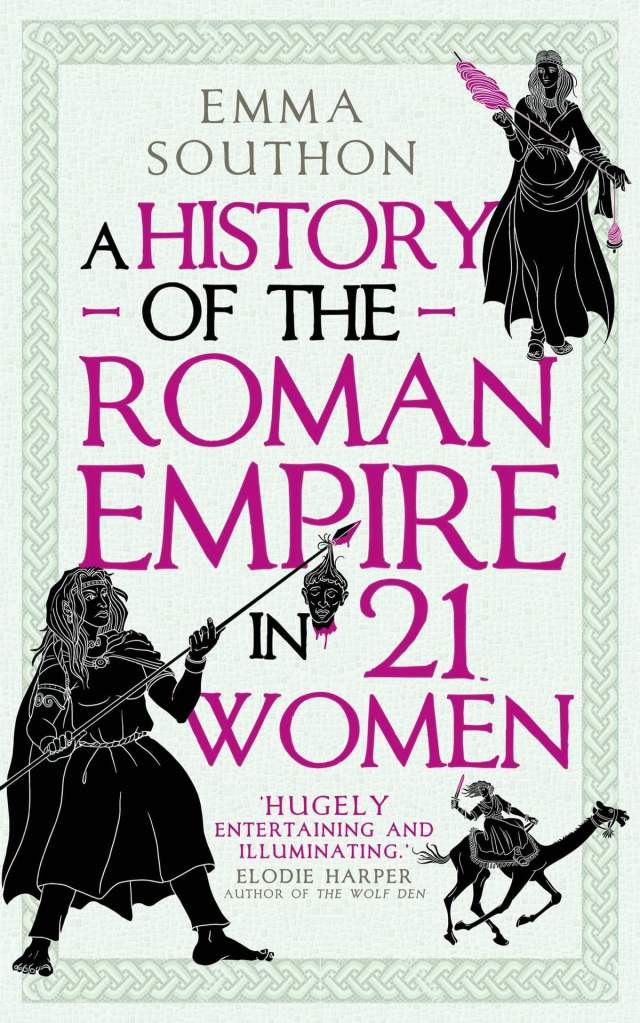
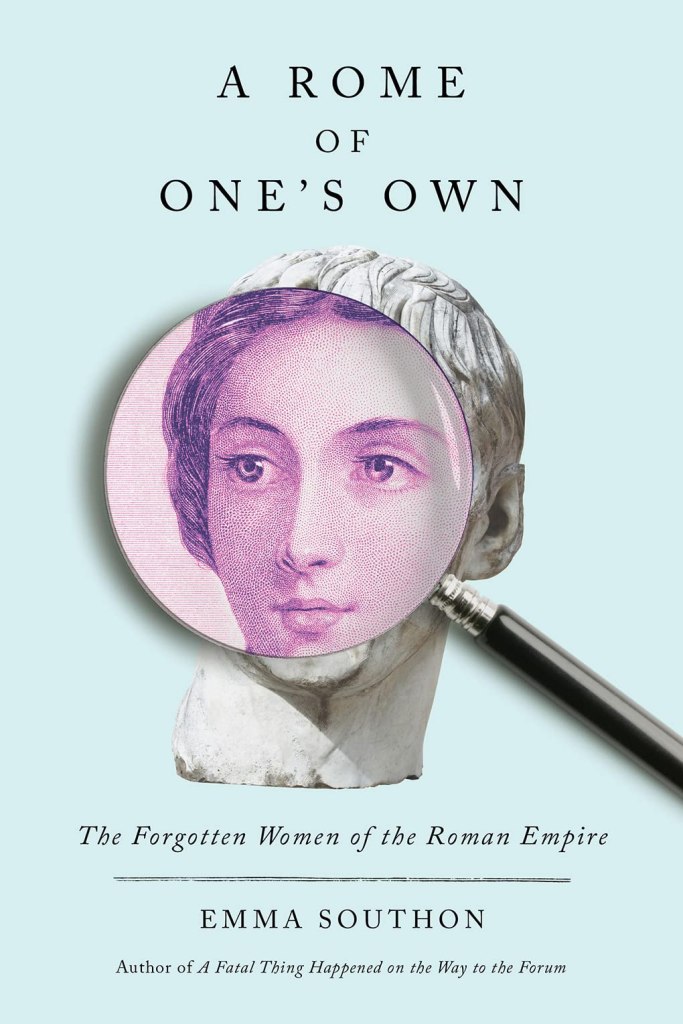
Just look at those glorious book covers! Despite the title difference, these are the SAME book. The US release is known as A Rome of One's Own while the UK version is entitled A History of the Roman Empire in 21 Women.
Sound Credits
Our music was composed by Bettina Joy de Guzman.
Automated Transcript
Lightly edited for clarity!
Dr Rad 0:12
Welcome to The Partial Historians. We explore all the details of ancient Rome. Everything from political scandals to love affairs, the battles waged and when citizens turn against each other. I'm Dr. Read.
Dr G 0:30
And I'm Dr. G. We consider Rome as the Romans saw it by reading different ancient authors and comparing their accounts.
Dr Rad 0:41
Join us as we trace the journey of Rome from the founding of the city. Welcome to a special episode of The Partial Historians, I am one of your hosts, Dr. Rad.
Dr G 1:08
And I am Dr. G.
Dr Rad 1:10
And this is a special episode because we are talking to someone extremely exciting. Dr. G. Dare I say? scintillating?
Dr G 1:19
I think you should say scintillating. Yeah, we are thrilled to welcome Dr. Emma Southon back to the show. Thank you so much for joining us.
Dr Emma Southon 1:28
Thank you so much for having me back. I just feel extra special when I get invited back like I didn't do something monstrous last time.
Dr Rad 1:35
Exactly, exactly. So, Dr Emma Southon, for those of you who haven't caused our previous episodes is one of our favorite guests for three reasons. Number one, she likes RuPaul's Drag Race and therefore will understand my random references to it unlike Dr. G. Number two, she likes women in history. And number three, she shares our outlook on the ancient Romans, which is that they are unintentionally hilarious and weird. Now to be a bit more specific, Dr. Southon is renowned a smarty pants and here's why. Aside from the obvious title before her name, she is the co host of the history comedy podcast ‘History is Sexy', along with our Kiwi cousin, Janina Mathewson. She's also the author of some of our favorite history books, including ‘Agrippina, Empress, Exile, Hustler Whore', autobuy autobiography, a biography of the most extraordinary woman in the Roman world, and ‘A Fatal Thing Happened on the Way to the Forum'. However, we have already had the pleasure of talking to her about these books. And today, we get to talk to her about another exciting volume that has just been released ‘A History of the Roman Empire in 21 Women: How Women Transformed the Empire'.
Dr G 2:53
Yay!
Dr Emma Southon 2:56
Impressive.
Dr Rad 2:58
Well, I will say this, you don't like a short title. I don't like a short title.
Dr Emma Southon 3:03
And you think I'd learn but that people struggle to remember short titles, but But yeah, I don't know. They end up being really long. In America, this book is called ‘A Rome of One's Own', which is snappier.
Dr Rad 3:18
Ahhh, nice.
Dr G 3:18
I do like that. I saw that on Amazon. And I was like, Oh, that is sweet. I enjoyed the pun.
Dr Emma Southon 3:25
It's yeah, I have friends who have much better puns than I am. And they come up with these great puns. And I'm like, right, well, that's my title. Thank you.
Dr Rad 3:34
Now you cover a staggering array of women in this book. And I have to say up front, we're not going to talk about the Regal period at all, because quite frankly, we can't talk about it any more. We've talked about it so much. The only thing I will say is, I think in a second edition, you're going to have to amend your chapter on Tanaquil, where you say that there are no popular histories that mentioned Tanaquil.
Dr Emma Southon 4:03
Yes, that's true, because you have now finally written one.
Dr Rad 4:07
Yeah, we both have we both had.
Dr Emma Southon 4:09
Yeah. But it is. I don't know. It was just so like, I went through as many as I could find, like all of them for like books of like a history of the Roman Empire. And like that I have kind of lying around in my house and reflect through the ones I could see. And they just skip right over her. They skip over the regnal period, like a lot like the whole, the kings are just kind of coughed over fairly often. But still, I was like, this is such a good story.
I know. I know.
Why would you not want to like go out of your way to include this. So yeah, so second edition paperback edition will have a specific reference to The Partial Historians.
Dr Rad 4:48
Yeah, thank you very much. So we feel okay now, we can calm down and talk about your book.
Dr G 4:53
Okay, the interview can happen now.
Dr Emma Southon 4:55
When I finally – because your book came out just before my end like a couple of months ago, where mine had already gone off like, and I wasn't allowed to change it anymore. And I was like, no, I could I could have done this with this so much. And I have thoroughly enjoyed it. So everybody should buy it.
Dr G 5:13
Oh, thank you
Dr Rad 5:13
Ahh thank you. Well, we definitely felt that way about your book. And so we'd love to ask you some general questions to start off with about the style of your book. So your last book was about murder in ancient Rome. Why did you decide to, you know, change tack and go for a history of Rome, using the lives of women as your next project?
Dr Emma Southon 5:35
It's partly spite. So my other thing that I do during my days is I work in a book shop, and you will have noticed, it's impossible not to have noticed and moment that there is a been in the past two years ish, like a really big spike in interest in Greek goddesses, like retelling Greek myth, specifically, like retellings of female stories and Greek myth, which is great for, you know, ancient history in general, kind of, but also, you, as you will know, when you're a Roman historian, you think that Romans are the best. Yeah. And it's constant, like, oh, yeah, I mean, I guess the Greeks are fine. But Romans are better because they're funnier. It's so I kind of out of spite, when it'd be like, Yeah, but Roman women exist, too, and that they're better because they're real. And they don't like turn into spiders, or like, they're not goddesses, they're bad. So that makes them better. And so, a 50%, out of spite that I wanted people to also be reading about Romans. And to know that Romans are better than Greeks, and 50%, because I just feel like so much of like, popular Roman history is talking about men and like the, the standard narrative of Roman history of the store of the story of Roman history is so much just war and politics, basically, which is the sphere of men, which women are explicitly excluded from, and I thought it would be fun to kind of disrupt that a little bit and be like, one, there is a history of the Roman Empire that doesn't have any politics in it really, or has a limited amount of politics. And there is a, there is a history, which is more than just politics, it can also be what it is like to live in the Roman Empire at various times as various people. And it's more interesting to tell that story through women than it is through men and to show that women are always kind of around about and I realized quite early on into writing it that as kind of a historian of my age, I am really only the second generation of historians writing about women in the ancient world, like my supervisor, for my PhD, who is still working was like one of the first generation of people to do her PhD on women. And like, people like Amy Richlin and Suzanne Dixon, who are still around and wrote those first books about women in the Roman Empire are like, they're still teaching. They're still they're still at conferences like this. They're you know, they're older. But as we all know, historians never retire. So they're still around, they're still alive. Like they. This isn't like an old discipline women in Rome, or women in the ancient world at all. It's very, very new. And so, yeah, so it's time to bring it to their, the popular imagination out of the academy and start talking about it.
Dr G 8:45
I think you're doing a great service, particularly to readers who have become hooked on ancient Greek myths, because there is so much more to the ancient world than just, you know, having your tongue taken out or turning into a monster or
Dr Emma Southon 9:02
And like it not to be like everybody loves the Greek myths, and they love them for a reason. But a lot of them are victimized women, and there are but there are stories which from a kind of feminist perspective, I have minor issues with like stories of perpetually victimized women and womanhood as being perpetually victimized. So it's nice to tell stories about ancient women that were not like being turned into spiders or having their tongue taken out or being held into the sea or like or have to be literal goddesses in order to be able to do anything.
Dr Rad 9:36
Yeah, and as as we can definitely testify, we realized once we started focusing on the early republic, that he'd have literally been years of episodes sometimes before we mentioned a woman, we suddenly realized when a woman would come up as you say in your book, like a Vestal Virgin or were like God, it's been like five years since about women at all.
Dr Emma Southon 9:58
Yeah, yeah. And it's so easy to fall into that and to be like, oh, all of the important stories are the ones that the Romans thought were important. But the Romans can't be trusted, because they have bad opinions about a lot of stuff.
Dr G 10:12
So true. So true. And I think this leads nicely into thinking about like, how did you come to the decision about which women to focus on because it seems like you've hinted already, in some sense, it's about availability of evidence. But there must be other criteria as well.
Dr Emma Southon 10:28
So in that early period, a lot of it is availability of evidence up until the later of because the archaeology is so limited, and you are kind of trapped with texts, particularly for like the Regal period, and then the early and middle Republic before their epigraphic habit kicked in. It was about who can I find, basically, and finding stuff for the very earliest period when they basically mythical was easier than I thought it would be like those early bits of Livy and Dionysius of Halicarnassus. So so you've got Hersilia and you've got Tullia, like, there were more women than I thought. And so I just included all of them, because why not?
Dr Rad 11:15
Yeah, that's what we were surprised by as well. We started writing about the kings were like, actually, we get it like it's a it's a dynastic situation. It's not a dynastic situation, it's a family situation. So women have more of an opportunity to get sort of, you know, get a bit of soft power.
Dr Emma Southon 11:34
Yeah, exactly. As soon as you have a situation where one person is in charge, you have wives, and you have children. And when you've got children, you've got daughters in law, grandchildren, and then you have women who can do things like murder, their husbands marry their brother in law, who's also their cousin, murder their father running over,
Dr Rad 11:54
as you do as you do,
Dr Emma Southon 11:56
as you do, and can, they can do all of this really fun stuff. So that was fun. The Republican period is harder. And that was tough work, like finding women that you can include. Because they only appear at points of crisis. And very often, they only get a couple of lines to illustrate how terrible crisis is. But once you get into the Empire, like once things really start to kick off evidence wise, so late Republic, going into the Empire, and then coming like the later empire, there's so many women that it became a part of like, what story do I want to tell, and what women kind of will tell that story. So always wanted it to be not the women who are already included in books. So for women already had a biography about her, I kind of was like, No, and that kind of easily cut out all the emphasis. And I didn't want it to be a book about politics, and to tell the story that we already know. So I didn't want it to have you know, Livia and Agrippina. All of the kind of big women that we already know about, I wanted it to be women that you've probably not really heard of, or that tell a story that is more about what it is like to live in the empire than to rule the Empire. There are some exceptions, just because I like the stories like Julia Maesa and Julia Mamaea. I include because I just think that Julia Maesa is so cool.
Dr Rad 13:24
Look most people wouldn't have heard of them?
Dr Emma Southon 13:26
I don't think yeah, no, yeah, they're not women that you have heard of very often. And I wanted people from around the Empire. So I wanted to leave Rome at the point when the Empire becomes Imperial, and talk about women from around so that anytime that it was a choice between a woman that was in Rome, or a woman that was outside, I picked somebody who was somewhere else, basically just to because I wanted that empire to feel expansive. And I basically kind of had the time line almost and wanted it to be so we've got someone from every century, we've got someone pits people from various different parts of the empire, we've got different types of evidence. So we've got epigraphic evidence, you have archaeological evidence, we have text, different types of texts. And so if I have people that overlapped, I would cut them out. So I had at one point, there's a woman in Nero's like court, who is the keeper of his wardrobe. And then when Nero is overthrown, she goes to Egypt and blockades Alexandria, in an attempt to basically force Rome to put Nero back on the throne before he kills himself, which is a cool story, but also one, it's just the story of Rome. And two, it's a bit of political story, and it's would be so I chose instead for that period to tell the story of women living or on the frontier in England, and having birthday parties and writing letters to each other, which is a story that people don't know, everybody already knows that Nero was overthrown. So basically, when it came down to a choice of like, who in this period, this kind of like, middle of the first entry period is the lesser known, more interesting, more expansive story to tell? So that was like the criteria that I had.
Dr G 15:27
Fantastic. And I think this, I think you've also hit upon some of the potential challenges that come up with writing a history like this using women, because you, obviously that selection criteria allows you to sort of embody the expansiveness of Rome in a way that wouldn't be possible, as you say, if you follow through that sort of imperial line, and imperial women. Are there additional challenges that come along with those sorts of choices, though?
Dr Emma Southon 15:56
Yes. Many, I mean, the writing about women is always a challenge, because you're so rarely writing about the wear them as they present themselves, like women are so very rarely given this low their text don't survive, basically. And when you do have texts that they wrote, like, like the like birthday party letters from the, from Vindolanda, which are delightful, but is like, four sentence. It's, and you're like that, I mean, that's I'm so delighted to have these four sentences, but you're not a lot to work from. And so, or Julia Balbilla, who's like one of my favorites, who is in the court of Hadrian, and wrote four poems, which survive because she very, very cleverly had engraved on the bottom of an ancient Egyptian statue.
Dr G 16:53
Very clever, very clever.
Dr Emma Southon 16:55
And even better, because she was clearly very smart included her name in every single one of them.
Dr G 17:02
She knew somehow
Dr Emma Southon 17:04
She knew, and I feel like there must have been something where by like, life as a female poet, or like a woman who writes poetry must have already been that annoying thing where people were like, do you know you get that thing? Oh, well, she didn't really write it, like maybe Propertius wrote it and just pretended to be a woman like, yeah, obviously. That's it thing that men do. So she yeah, she included like, but you get so little. And so much of it has to be extrapolation. And, like, trying to add context from external things, which is tough work. And it's why people don't do it as much. But I think makes for more interesting stories in the end, because as it turns out, like when you start digging into archaeology matches, I find it hilarious to make fun of archaeologists out of like, minor jealousy. You know, there's so much in archaeology and ethnography that you can illuminate the world that they lived in that is just not available in the in the text like Tacitus can only give you so much. And then when you start to Look at the archaeology, like the archaeology of forts for example, when you start to Look at it, you're like, oh, wow, like life here was completely different to the way it is presented in the text like it was vibrant and semi luxurious for some people. And like learning that forts were rebuilt every time a different legion turned up to be so that it was specifically fit that legion, like, that's amazing.
Dr G 18:40
I just need to redecorate this place it's not speaking to me.
Dr Emma Southon 18:43
Yeah, basically they'd be like, Right Well, the last Legion that was here like had like, you know, eight units of cavalry, but we've got 12. So we're just going to like build on an extra section for that. We're not going to like feel like a lot like now you'd be like, well, we would just cram them in, like stick them in. But that no, we're gonna knock down the whole thing and rebuild it. And you can see that in the archaeological record and then you can tell how big the legion was that was there is delightful.
All the mosaics must go.
Yeah, exactly. Like I hate this. This does not speak to me. I need a Medusa.
Dr Rad 19:15
Yeah, exactly. A merman? Who are they kidding?
Dr Emma Southon 19:18
Yeah. Also delightful from the Vindolanda, just like if you sit down and read, they're just how much bureaucracy was going on in the Roman Empire. This is also delightful. Like, goddamn they love a list. They are just listing everything.
Dr Rad 19:32
Funnily enough, we were just talking about early quaestors and how the Romans wanted them for paperwork.
Dr G 19:40
Somebody needs to do the paperwork and it can't be me because I'm too big and important.
Dr Emma Southon 19:44
Yeah, exactly. The two things that Romans loved one is beating up other people than the other one is just making lists about it like just paperwork. And it is devastating but we don't have it.
Dr Rad 19:56
Hilarious. Now segwaying away from just this book, but thinking about your work as a whole, you're obviously an academic, but you have recently been choosing to write for more of a popular audience. And in order to do that, effectively, you've adopted quite a distinctive style as a historian, which is obviously really resonating with readers, I know that I absolutely adore your books. I read them faster than anything else. Can you talk a little bit about your journey as a historian and how you got here?
Dr Emma Southon 20:29
Yeah, well, I realized this is this year has been 10 years since I like left academia. Because I left pretty much straight after my PhD, I did a bit of teaching afterwards. But because my department, I did my PhD and got closed down. And it was also the year that I turned 30. And I thought, at the time, academia in the UK looked really terrible. And it's worse now. And I thought, do I want to do to eight to 10 years of short term contracts, and working at lots of universities. And my advisor for my PhD, he was Ray Lawrence, who's now over there with you in Australia. And he once told me that he worked at five universities simultaneously when he graduated his PhD, and like, was teaching and just traveling around the country. I thought, do I want to do that? Or am I 30, and I don't. And, like and it is, you know, is nine month contracts, it's not having any job security for longer than that nine months, it's not having to have three part time jobs on top of it. And honestly, I was not willing to do that as
Dr Rad 21:48
You make it sound so tempting, I don't understand!
Dr Emma Southon 21:50
I know and also, then you have to be writing constantly, they brought in the REF. That was the year that they brought in the REF as well. We're here the Research Excellence Framework, where you have to be writing constantly and trying to get points based, like literally trying to get points for your research, which is wild. And so I was like, do – do I want to be writing for points in a culture that is mean? Or do I just want to be not doing that. So I was actually teaching academic writing, is what I went into, and I was teaching mostly people doing vocational things like nurses and engineers, and allied health care professionals like working with them on their writing, which really made me a better writer, because working on people who don't have any background in writing, or a lot of people coming to writing as late career changes and things like that, who will find writing to be terrifying, and then being like, No, it's not, it's fine. It's okay, we can do this. Made writing more fun for me because it like, broke it down. And then I honestly accidentally became a writer for popular audiences, because I pitched Agrippina the book to a friend of a friend because he had an open pitching session. And he thought it sounded fun. And then I wrote the book that I would want to read. Because by that time, I had been out of academia for like, five years, and I had a job a full time job and a life and do not sit down and read like big chunky history books that are 600 pages long that feel like I have been told like intoned or lectured at, I also wrote a book that I would want to be in bed, or on the train commuting to my job, like, what's the book that I want to read, I want to read the book that tells me the story in the most entertaining way. And it helps that I find the Romans to be hilariously pompous and deluded about themselves. And to the disconnect between how the Romans see themselves and how they actually are is inherently very funny to me. And so yeah, so basically, my thing is, I love history, and I left because academic history sucks, not because I was fed up with like, the process of academia and I, the thing that I love about history is being what my friend calls a time detective, like you have the evidence, and then you're like a little poro, like trying to put that evidence together into make it make sense in some way. And you come up with a little hypothesis, and then somebody else goes, Oh, that's interesting. What if the hypothesis was this and then you kind of have a bit of a chat about it. And so I've just been a time detective in a fun way now.
Dr G 24:55
Look, that sounds great. And I feel like that's a pretty good description of what Dr. Rad and I I do as well. And it's like, we hold up our little magnifying glasses and we gaze very closely at things. We're like, you know, what, wouldn't it be exciting if this was what was based on what we've seen here?
Dr Emma Southon 25:10
Yeah.
Dr Rad 25:11
When people ask me, how did you get started in history? I always say Nancy Drew.
Dr Emma Southon 25:15
Yeah. I mean that. Yeah, it's basically. And I, you know, I don't think that it's a coincidence that I also love mystery novels.
Dr Rad 25:24
Absolutely
Dr G 25:24
Like, are you saying there's a Venn diagram that could be a circle?
Dr Emma Southon 25:30
I think so. Yeah, I think you would find, like, especially people who love like the historiography part of like, the bit where you're like, oh, cool, like the story of Lucretia. There's like five different versions, and they're told at different times. And when you put them all together, you realize that they're actually like, emphasizing different parts of it. And they're telling a story that speaks to themselves. And actually, this is just a fairy story that tells us more about the writer than it does about their actual events. And
Dr Rad 26:00
A creepy creepy fairy story.
Dr Emma Southon 26:04
As all fairy stories are like, if you read Grimm stories
Dr Rad 26:07
That's true. That's true. Yeah.
Dr Emma Southon 26:09
But yeah, I think that people who like that side and people who like Poirot books, there's a significant overlap.
Dr Rad 26:17
Absolutely.
Dr G 26:19
All right, well, let us think about the content of the book for a moment, we want to whet the reader's appetite, because everybody is obviously going to listen to this podcast and then immediately go out and purchase your book. Because of course, we've both read it and we love it. We're giving it five stars. But I'm interested in first of all, like, before we get into like some of the women that we really enjoyed, which of the women that you've looked at, were you less familiar with when you started writing? And if it's not too big enough, do you have a favorite?
Dr Emma Southon 26:54
I am quite a few of them kind of middle ones. So Turia I had only kind of vaguely like I knew of the ‘laudatio Turiae', but never really read it. So she is the late Republican Woman who is the subject of the biggest, private inscription that we have from the Roman Empire, which is very cool. And Julia Felix, who was also my favorite, I think, I came across, it was Sophie Hay, Dr. Sophie. Hey, who works at Pompeii, who told me about her and she also told Elodie Harper, who wrote ‘The Wolf Den' trilogy about her so she's in that trilogy as well. And Sophie Hay is doing God's work telling the world about Julia Felix, is based in Pompeii, like her complex that she runs. So those were probably the ones like anybody who came from archaeology, because my background is text was somebody that I had a really good time delving into and learning about completely, and being like, Oh, wow, you can Look at all these women all over the place, living their lives, being brilliant.
Dr G 28:04
Look at them go.
Dr Emma Southon 28:05
Yeah.
Dr Rad 28:06
Well, I have to agree that I had heard of, obviously, quite a few of the women that you've mentioned before. But like you, Dr. G, and I are very much text based people. We don't often don't an Indiana Jones outfit and go out into the wild. So
Dr G 28:22
Although maybe we should
Dr Rad 28:23
Probably but Turia was definitely one of the ones that piqued my interest the most especially coming from a time period that's actually probably one of the better documented ones in terms of what we've got. But yet I had really not heard very much about Turia. So can you tell us a little bit more about her?
Dr Emma Southon 28:41
Yeah, so she is she's a clearly of like, she is a woman of senatorial rank, definitely of consular rank, her husband is a consul. And she is so we know about her from this huge inscription that was found in five parts. When, during the, like 18th 19th century, Europeans went all over, like, putting together their big corpus of Latin inscriptions, and God bless them for doing but they found the four sections they put together, we don't actually know that her name was Turia because there's two bits that are missing. And both of them are the bits with the names. Which feels
Dr G 29:26
Roman history, jesus!
Dr Emma Southon 29:28
Doesn't it feel like like just emblematic of history? We just, we just lost her name. But this inscription was found and it tells it's written by her husband because she died before him. And it tells the story of her life, starting from when they get engaged, basically, or at least the bit that we have starts from when she gets engaged. It starts with her family being murdered during the war between Caesar and Pompey and her entire family is murdered on that in the villa. Bye Somebody, and he praises her for single handedly in the middle of a war, identifying and prosecuting the murderers.
Dr Rad 30:08
So she is Miss Marple.
Speaker 3 30:10
She is Miss Marple, and she successfully prosecutes them which is, you know, impressive. And then she is subject to a what is quite fascinating like little insight, somebody tries to claim her as part of their gens so that they can take guardianship of her, because she's not yet married. And her father is now dead so that they can take control of the state that she has inherited from her murdered family. And she has to go to court and prove basically that she is not part of this gens that she is part of a different and therefore these people have no claim over her, which is fascinating, like thing that must have happened all the time. But it's not in any text, because obviously that's not interesting. But basically, her husband says like she just made it so much trouble for them. And she just kept fighting it so much that they gave up and went off to find an easier job. And he is not there to protect her during this time. And they're not yet married because he has sided with Pompey and it's off fighting with Pompey. And then when Pompey dies, and the war is over, she both sends him money and sends him resources and sends him enslaved people to help him out lest he ever suffer a moment of discomfort, and also personally talks to Caesar to get him pardoned, basically, so that he can come back to Rome. So she manages to rescue him from his bad decision of picking Pompey. He comes back to Rome and immediately joins the wrong side again, and is on the side of the killers of Julius Caesar, Julius Caesar. And
Dr G 32:01
I don't know if she's picked a winner.
Dr Rad 32:02
It's really her patience that's the amazing thing.
Dr Emma Southon 32:04
Yeah. So he says she immediately throws in his luck with Brutus and Cassius. And then during the wars between Octavian and Cassius and Brutus, he is fighting with them, and he goes off again, he is then put on the prescriptions list. So when the troit Second Triumvirate comes in, and they are putting together the prescriptions list to kill off lots of people who are considered to be enemies, because Octavian and Antony are significantly less lenient than Caesar ever was a he's put on that list, which makes him basically prey it means that there is anybody can kill him, and there is a bounty on his head, you get money if you kill him, which opens up a whole way that you can talk about what the proscriptions were like and what that period was like in Rome, where people were literally just being murdered in the street constantly and lots of terrify stories. This is why we think that she may or may not have been called Turia, because there is a story and Appian who has a litany of these stories about a woman who hides her husband in an attic, which is also what the woman in the inscription does. He says she hit me in an attic, her and her sister hit me in an attic and then personally went to Octavian and then went to Lepidus and begged and begged and begged until they got him off the prescriptions list. So she protects him. She keeps him get manages to get him off of the list, manages to save him, manages to make it so that he can continue living his life. During that period, she also they're living in Milo's ex-house, the demagogic gang leader. He was exiled and so when Milo's was exiled for doing a murder, he, his house was sold and they bought it beer so they were very, very rich and moved into it and then Milo's supporters tried to take it back. So they literally invade her house while her husband is way and so she fights them off with her mother in law, she's extremely great during all of this period, she saves him multiple times as she protects him from his series of bad decisions and she's also obviously very you know, they have up to meet sympathies like in every situation they are against the popularity so and she's and they also talk a lot about mixing their property as a romantic act which is really fascinating because the the story of marriage and women's rights always says that oh elite women stopped doing ‘manus' marriage and stopped mixing property and that is how they got more power. But so they talk a lot about how she they mix their property and she handed it all over to him and she didn't run it herself as like this really romantic act. So they're obviously like quite conservative couple. And then when things settled down, he continues to tell her story. So you also get the story not only of this woman who is like very politically engaged and politically active, but they can't have children, it turns out that they try for years and years. And this is a bit where you're like, oh, wow, you're really telling the world everything about your wife.
Dr Rad 35:22
Airing it for everyone to read.
Dr Emma Southon 35:23
Yeah, yeah, just putting it on a like two meter high things. say she's like, she tries everything to have children. And she's like, but she can't. And so she comes to him and says, obviously, the point of marriage is to have children and I can't give them to you. And so what I'm going to do, my plan is I propose that we will get divorced. And I'll find you a fertile wife. So that you can have as you can have children and continue your family name. And I'll stick around and we'll keep our property mixed. So we'll still be like, kind of married in a way. But you will be able to have children and then I'll be like, the third person in your relationship, and I'll raise them like a sister in law, basically.
Dr G 36:06
Is this woman even real? Goodness!
Dr Rad 36:11
‘Stand by Your Man' was clearly written about her.
Dr Emma Southon 36:15
They do and they are super sweet because they do really seem to love each other. Like the way he writes about her at the end of like, you know, she, like, you know, I can't I don't know how I'm going to live without her. Like, shoot, my life is never going to know happiness again, that I'm like, so heartbroken. Everything is I should have died first. This isn't fair. Like she was so good. And I am so rubbish.
Dr Rad 36:35
He's right about that, he should have died a number of times!
Dr Emma Southon 36:39
I mean, if it hadn't been for her, he would have died several times. But he, yeah, but he says, basically, he's like, Absolutely not like I would never dishonour you that way. I would never make you like a kind of concubine to me like you're my wife. I married you. I love you. This is no way marriage is more than just having kids, which is, again as a way that you don't see marriage, Roman marriage, especially elite Roman marriage written about that much like it's so rarely described as a meeting of hearts or something that is romantic. And so they, yeah, so they stay married for 50 years. They don't have children. They are aunts and uncles to her. She has a sister who has children and so and then she dies when she's in her 60s and he is bereft and writes this funeral oration and then inscribes it on two meter high monoliths and puts them on the Via Appia. And there they stay were presumably to his mind forever, so that everybody walking along Via Appia will know how much he loved his wife and how good she was and how she had all of these amazing qualities. And it's so delightful because it's such a it's so emotional, in the way that they love each other, and also in the way that they like they talk about, or he talks about her in this such a beautiful way. But she or doesn't come across in the way their love women do in a picker feed. Like when you're reading women's stories when men are writing about them after they've died very often. It's like she was the most chaste woman and all she did was spend her time weaving wool, and she breastfed her children and she that's how perfect she was like, okay, so she just had no personality at all she like she just wove wool for you and was chaste. But she has such a personality and this that it's captivating.
Dr Rad 38:39
It is. So I'm actually exhausted just after I listen to that story. I can't even imagine what it'd be like to live her life. But I kind of wish that she'd you know, being prepared for his clearly inevitable death. That we had her side of things where she's like, Oh, my God, you'll never guess who I married. And what he made me put up with.
Dr Emma Southon 38:59
But the thing is, she really seems to love him.
Dr Rad 39:01
I know. That's the story that he tells though, right?
Dr Emma Southon 39:04
Yeah. But she does do all this stuff for him.
Dr Rad 39:07
She does.
Dr Emma Southon 39:09
And so I feel like, you know, everybody,
Dr Rad 39:12
She must have she must have.
Dr Emma Southon 39:13
There's like a point I feel like it's a bit like, you know, Marge and Homer.
Dr Rad 39:18
It must be because otherwise, it wouldn't have been that difficult to walk away.
Dr Emma Southon 39:22
She's like, is he a bit useless? Yes. Do I adore him with all my being? Yes.
Dr G 39:30
Oh, oh, Look, she's a great character. And it's just so impressive that we have, like the epigraphy is the is the thing that gives us insight into this – into her life at all. And this is where thinking about different types of evidence becomes really important because obviously like when we're thinking about written sources, it's very much that elite male perspective. And the prioritization of subject matter, it really shows. And so this more expansive Look at what Rome could be like and what life was like is becomes really important. And you mentioned Julia Felix before, and she's one of the figures that I really enjoyed reading about. And obviously Pompeii stands out in people's imaginations as well as this sort of landmark site and the eruption sort of put to a whole sort of like, how can I say without making it sound terrible?
Dr Rad 40:27
Time capsule?
Dr G 40:29
It kind of creates a time capsule? Yeah.
Dr Emma Southon 40:34
Yeah, it's a it's a terrible tragedy, but after 2000 years, suddenly becomes a historians blessing. Their way like, I'm sorry, I'm really sorry, that happened, but also, at least something good came out of it.
Dr Rad 40:45
Yeah, the silver lining. It's the silver lining.
Dr Emma Southon 40:47
Yeah. Yeah. After two millennia you, you're like, Okay, everybody's dead now. I guess. So we can,
Dr Rad 40:54
we can move on.
Dr Emma Southon 40:55
Yeah. Yeah. So I mean, Pompeii is amazing by Julia Felix's complex is one of the most amazing things. I think the things that people think of when they think of Pompeii, are the theater and then also the like the big houses the villas, which are the story of Rome, that we kind of know like the big impressive houses. And for a while, that's what people thought Julia Felix's complex was when they excavated thought was just a kind of a big, weird villa. But outside of it, there is a inscription which was attached to the wall, which said what it actually was, and it says “Julia Felix, daughter Spurius, offers for rent her leisure complex, which contains shops, baths fitted out for the well to do apartments and gardens for a period of five years, Inquire within.” and all of a sudden, archeologists could look at it and go, Oh, it's a it's a space where people can go to hang out, it's not like a private location, because what it is is to was to two houses that have been knocked together. And she moved a road like you can see where a road was redirected, so that she could knock through walls through to expand it, which is amazing. And so it's got a hot food bar. And in the book, I take you on a we like tour of it so you can see up it's got a hot food bar outside, which appears to up added on because five years ish prior to the eruption, there was an earthquake in Pompeii, like little warning sign, and that knocked out most of the original leisure district and meant that people coming from the amphitheater, when after games had to go down different roads, and one of them was the road that Julie Felix's thing was on and so she popped in a hot food bar in order to take advantage of foot traffic, which is brilliant. So it's got a hot food bar, and it's got baths, which are very fancy, but very like boutique. So they're like a little like you can only fit about eight in the toilets, you can fit eight people which is small for a Roman public toilet. And then it has this at the entrance way has a really unusual, almost unique painting – fresco – of not of mythological characters, not of like garden scenes, or of scenes of religious character. But of an every day scene from Pompeii is forum on market day. And has ordinary people doing ordinary things which is so unusual and it's got like people buying cloth and a person making shoes and horses with inexplicably enormous penises and and like children in school and a person giving a penny to a beggar. And like all of these just like normal activities of like basically the kind of middle classes of Rome. And then inside it has these gardens with little fish ponds and little bridges and a little dining room like a tiny little trick scenario where you can recline and dine. So you have the three couches, and you can do upper class elite dining where you recline on your arm and then people bring you tiny little things of food and it's got a water feature in the room. And it's basically a fancy restaurant, for people to go and have a fancy meal out for a fancy occasion and then have a walk around a private garden where there will not be a million other people like in the forum.
Dr G 44:51
I kind of love this where it's like, I can't afford my own villa, but what I can afford is I can afford to rent this fancy dining room and we'll have the lead experience without having to
Dr Rad 45:01
Like a spa day with a lovely meal at the end.
Dr Emma Southon 45:04
Exactly. You know, and it's like I always imagined it as a kind of th