The Optimism Show
97 episodes — Page 1 of 2
S1 Ep 9614 Coinbase Listings: Expected Impact on Base Liquidity & Volume
We’re covering Coinbase’s announcement of 14 new and upcoming listings and what that could mean for the Base ecosystem. Background, Coinbase typically drives new liquidity and user flows when it lists tokens, and any assets that are native to or bridged onto Base would likely lift on‑chain liquidity, trading volume, on and off‑ramp activity and new user onboarding for Base. The original list was behind a paywall for us, so we’re framing impact based on likely candidates and market dynamics rather than a verified token roster. Key points, first, tokens that are already deployed or bridged on Base and major stablecoins like USDC or USDT would have the clearest, quickest impact, boosting DEX volume and bridge throughput. Second, price and volume scenarios, if smaller, low‑market‑cap tokens get listed they could see sharp, speculative moves, for example intraday spikes ranging from 20 to 200 percent in extreme cases, while larger, well known L1, L2 or stable assets would more likely show modest moves, perhaps 5 to 25 percent, with corresponding increases in Base TVL. Third, market sentiment is cautiously optimistic, traders expect a short term boost but also elevated volatility around listings. Fourth, ecosystem actions, teams should be ready with custody, liquidity provisioning and bridge capacity, while builders and DEXs should monitor inflows and user traffic. Bullish factor, listings bring capital, visibility and new users to Base, which can accelerate on‑chain activity. Bearish factor, rapid inflows often lead to knee‑jerk profit taking and congestion or higher gas costs, which can hurt user experience. This is not financial advice, crypto is volatile and speculative. We’ll keep tracking announcements and on‑chain moves, so subscribe and check our other videos for rolling coverage.
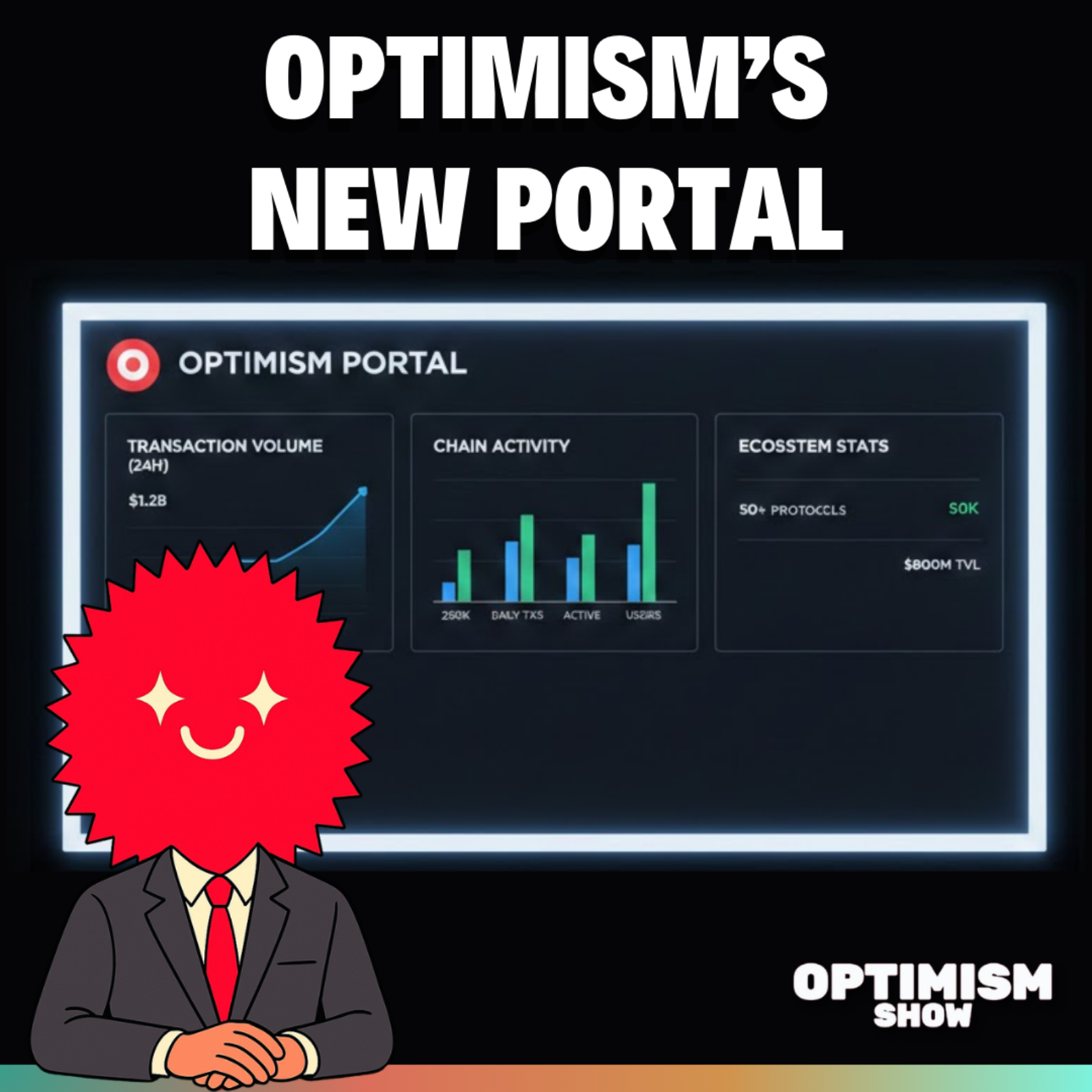
S1 Ep 95Why Optimism’s New Portal Actually Matters
This week, the Superchain didn’t move on hype or breaking news — it moved on clarity.The Superchain now processes over 59% of all Layer 2 transactions, handles ~21 million transactions per day, and supports 800+ active applications contributing to the Optimism Collective. What’s changed isn’t just scale — it’s coordination. For the first time, the ecosystem has a shared observability layer that lets builders, operators, and governance participants reason about the Superchain as a single system, not a loose set of rollups.At the center of this shift is the Messari Optimism Portal: a unified, no-login dashboard that maps OP Mainnet, Base, and the wider Superchain across usage, fees, DEX volume, TVL, stablecoin flows, and application activity — paired with research context and AI summaries. This isn’t just analytics. It’s a coordination upgrade.We also cover the latest ecosystem pulse: Base’s new consumer-facing app, Soneium’s recurring Score Seasons, Mode’s AI trading agents, and evolving governance conversations around institutional alignment and real-world assets.The takeaway is simple: as the Superchain reaches sustained production scale, visibility and shared understanding become critical infrastructure. Coordination — not just throughput — is now the limiting factor.⚠️ Not Financial AdviceThis content is educational only. Crypto is volatile — always do your own research.🎙️ About The Optimism ShowHigh-signal coverage of the OP Stack, Base, and the Superchain — for builders, operators, and onchain teams who want clarity, not hype.🔔 Follow & SubscribeSubscribe for weekly Superchain Digest episodes, operator-focused breakdowns, and signals you can actually ship against.
S1 Ep 94Most Ethereum L2s Are Already Dying — Here’s Why
A new 21Shares outlook is sounding the alarm: most Ethereum Layer 2 networks may not survive past 2026 as activity, liquidity, and developers continue to concentrate around a small group of dominant chains.After two years of rapid expansion, the L2 ecosystem is hitting a breaking point. While more than 50 Layer 2s are live today, nearly 90% of L2 transactions are already concentrated on just Base, Arbitrum, and Optimism — with Base alone processing over 60%. According to the report, usage across weaker L2s is down 61% since mid-2025, turning many into so-called “zombie chains.”Several retrenchments highlight the trend: Kinto shut down, Loopring closed its wallet, and Blast’s TVL collapsed by over 90%. Even major DeFi protocols like Aave and Synthetix have scaled back deployments on underperforming L2s due to low liquidity and weak returns.A key catalyst was Ethereum’s Dencun upgrade, which cut data costs by roughly 90%. While great for users, it triggered intense fee competition that pushed most rollups into losses. Base was the only L2 to generate positive revenue in 2025, reportedly earning around $55 million.Looking ahead, 21Shares expects a much leaner L2 landscape — dominated by exchange-backed networks like Base, ETH-aligned designs such as Linea, and a small number of high-performance rollups built for near-real-time execution.⚠️ Not Financial AdviceCrypto is volatile. Always do your own research before investing or deploying capital.🎙️ About The Optimism ShowHigh-signal coverage of Base, OP Mainnet, the OP Stack, and the Superchain — for builders, traders, and on-chain operators who want clarity, not hype.🔔 Follow & SubscribeSubscribe for ongoing coverage of L2 revenue, migrations, and adoption trends — and check our other videos for deeper dives into Ethereum scaling.
S1 Ep 93Crypto-Native AI Is Here — Surf Raises $15M
Surf just raised $15 million in a round led by Pantera, with participation from Coinbase Ventures and DCG — a strong signal that crypto needs its own AI research tools, not generic models repurposed for digital assets.Surf is a crypto-native AI research and intelligence platform trained exclusively on on-chain data, social sentiment, token behavior, and market structure. Instead of broad language models, Surf uses multi-agent systems designed to understand crypto markets and deliver structured analysis through a chat interface that feels like working with a dedicated analyst.The traction is real. Since launching in July, Surf has reached millions in annual recurring revenue, generated over one million research reports, and is already used by a large majority of top exchanges and research firms, growing roughly 50% month over month.For traders, funds, and protocol teams, this matters. As the Superchain and wider crypto ecosystem grow, risk management, governance analysis, and market monitoring will increasingly rely on AI tools that actually understand crypto-native data.The takeaway is clear: crypto-native AI is no longer experimental. With this raise, Surf is positioning itself as a core research layer for the industry.⚠️ Not Financial Advice Crypto is volatile — always do your own research before making investment or trading decisions. 🎙️ About The Optimism Show High-signal coverage of Base, OP Mainnet, the OP Stack, and the Superchain — for builders, traders, and on-chain operators who want clarity, not hype. 🔔 Follow & Subscribe Subscribe for weekly updates on Superchain infrastructure, crypto-native AI, and real adoption signals shaping the industry.
S1 Ep 92Coinbase Launched a Crypto “Everything App” — This Changes Base Forever
Base is accelerating into a full-stack consumer crypto platform. Coinbase has launched its tokenized “Everything App” on Base — combining social content, trading, payments, and earning into a single surface. It’s live in 140+ countries and built on open protocols like Farcaster and Zora, where every post can become a tradeable asset. Social becomes the funnel, trading becomes the engine, and tokenization becomes the glue.Meanwhile, Base’s creator narrative is colliding with on-chain reality: speculative flows dominate, liquidity is concentrated around Aerodrome, token factories like Zora, Virtuals, and Clanker fuel spam vectors, and actual creator income remains limited. Base is succeeding as a social-financial layer, not yet a creator economy.We also break down RLUSD, Ripple’s upcoming trust-regulated stablecoin launching on Base and Optimism via Wormhole NTT, and the macro signals shaping Base liquidity: ETF flows, stablecoin inflows, volatility regimes, and ETH-denominated collateral demand into 2026.The direction is clear: Base is becoming a consumer execution layer where attention converts directly into trading and payments. Builders, traders, and treasuries need to model trust assumptions, monitor liquidity concentration, and plan for regulated stablecoins entering the stack.⚠️ Not Financial AdviceCrypto is volatile — always do your own research before trading, deploying, or integrating new infrastructure.🎙️ About The Optimism ShowHigh-signal coverage of Base, OP Mainnet, the OP Stack, and the Superchain — for builders, founders, and on-chain operators who want clarity, not hype.🔔 Follow & SubscribeSubscribe for weekly BASE Weekly coverage, L2 deep dives, and protocol-level insights. Drop questions or contracts you want reviewed in the comments.
S1 Ep 91The Most Important L2 Chain No One Is Talking About: Lisk Explained
Lisk has fully reinvented itself. The chain you remember from years ago is gone — in 2025, Lisk is an Ethereum Layer-2 built on the OP Stack, plugged into the Superchain and optimized for real-world users, not hype cycles. Instead of chasing casino apps, Lisk is building for founders and communities in Africa, Southeast Asia, and Latin America — regions where Web3 solves real problems: hyperinflation, remittances, identity, access to banking, and mobile payments.Lisk’s “human layer” strategy focuses on incubators and teams on the ground in Cape Town, Nairobi, Jakarta, and Buenos Aires, supporting startups with funding, mentorship, and global scaling. On the tech side, Lisk is EVM equivalent, extremely low cost, Superchain compatible, mobile-first, and optimized for stablecoin payments, identity systems, creator tools, and real-world dApps.It already hosts real businesses solving multi-billion-dollar problems — from stablecoins for Indonesia to supply-chain tools in South Africa. With a $15M founder fund, incubator partnerships, and a three-stage pipeline from ideation to global scale, Lisk is positioning itself where the next billion users will come from.If you're a builder, user, investor, or founder looking at emerging markets, Lisk is one of the most important OP Stack ecosystems to watch right now.00:00 — What if a blockchain was built for real people? 00:16 — Lisk’s 2025 transformation into an OP Stack Layer-2 00:46 — The “human layer”: building where Web3 solves real problems 01:40 — Lisk’s tech: EVM equivalent, mobile-first, OP Stack, payments 02:49 — Real startups building on Lisk across emerging markets 03:26 — The $15M founder pipeline: incubators → funding → scaling 04:11 — Why emerging markets matter for crypto’s next billion users 04:45 — Who Lisk is for & why to watch it 05:17 — Final thoughts + subscribe⚠️ Not Financial AdviceCrypto is volatile — always do your own research before investing or building.🎙️ About The Optimism ShowHigh-signal coverage of the OP Stack, Base, and the Superchain — for founders, builders, and on-chain operators who want clarity, not hype.🔔 Follow & SubscribeSubscribe for weekly breakdowns of Superchain ecosystems, deep dives, and real-world adoption signals across L2s.
S1 Ep 90Celo Jello Hardfork Explained — OP Succinct Lite Live
Celo just hit a major milestone: the Jello hardfork is now live, activating OP Succinct Lite on Mainnet and making Celo the first chain to run this new OP Stack upgrade in production. It also becomes the first network to launch a fully auditable EigenDA data availability bridge, marking a big leap in security and scalability. The upgrade brings ZK-powered fault proofs, a new Rust-based EVM client integrated with Succinct’s SP1 prover, and a live challenger set—independent actors monitoring proposer behavior to challenge bad state submissions. This strengthens censorship resistance, trust guarantees, and decentralization from day one. For users and builders, this means better data availability, stronger security, and low-fee performance while keeping Celo aligned with mobile-first payments. For the OP Stack and the Superchain, it's real proof that OP tech, EigenDA, and ZK systems can run together in production — moving both ecosystems closer to higher throughput and Stage 2 readiness. Celo just upgraded its core security and scalability using OP tech — a win for both Celo and the broader Superchain. ⚠️ Not Financial Advice Crypto is volatile — always do your own research before making decisions. 🎙️ About The Optimism Show High-signal coverage of Base, OP Stack, and the Superchain — for builders, founders, and on-chain explorers who prefer clarity over hype. 🔔 Follow & Subscribe Subscribe for weekly Superchain updates, deep dives, and protocol-level insights that matter.
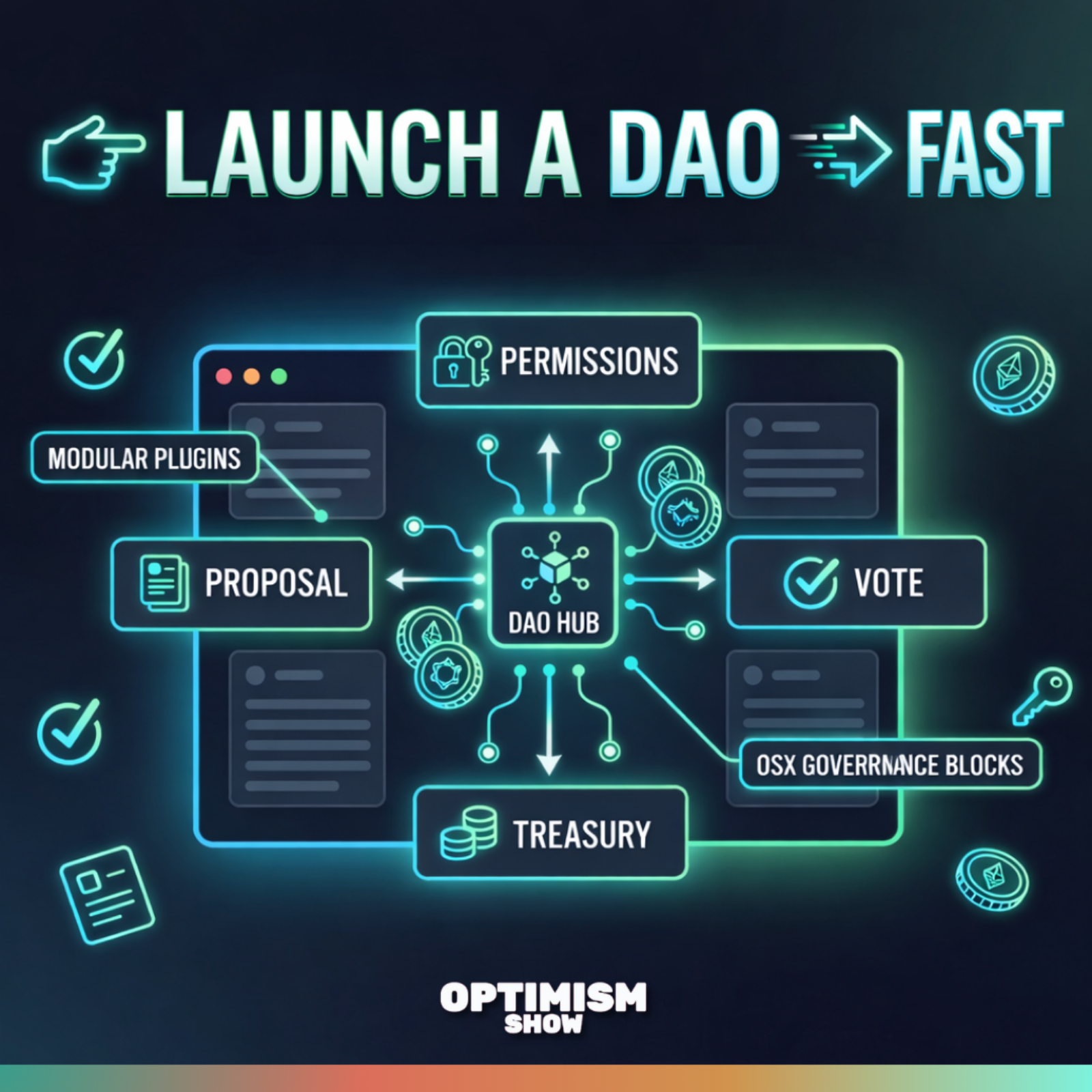
S1 Ep 89The Easiest Way to Launch a DAO: Aragon Explained
Launching a DAO used to be slow, risky, and technically painful. Aragon turns that entire process into plug-and-play governance, letting teams launch DAOs like installing apps — with audited modules, fine-grained permissions, multichain execution, and no Solidity required.Aragon’s modular stack includes token voting, multisigs, ve-lockers, encrypted proposals, optimistic governance flows, LayerZero cross-chain execution, and zkSync-based cheap voting. Plugins live in a secure, ENS-indexed repository, allowing DAOs to upgrade safely without rewriting dangerous code.With OSx, new DAO templates, privacy features via Vocdoni, and a growing plugin marketplace, Aragon is becoming the app store and security desk for DAO governance — trusted by Curve, Polygon’s Protocol Council, and major protocols securing billions.If you’re building DAOs, DeFi protocols, or multichain governance, Aragon offers auditable, modular, production-ready infrastructure that scales across the Superchain and beyond.⚠️ Not Financial AdviceCrypto is volatile — always do your own research before deploying governance or launching a DAO.🎙️ About The Optimism ShowHigh-signal coverage of Base, OP Mainnet, the OP Stack, and the Superchain — built for founders, builders, and DAO operators who want clarity over hype.🔔 Follow & SubscribeSubscribe for weekly deep dives into governance, Superchain infrastructure, and the tools shaping the next era of onchain coordination.
S1 Ep 88OKX Migrates to the OP Stack: Enterprise Crypto Became Real
This week’s Superchain Digest covers the biggest signals shaping the OP Stack. The headline: OKX migrates XLayer to the OP Stack, bringing one of the world’s largest exchanges onto shared Superchain infrastructure — a major validation of OP Stack as reliable, enterprise-grade settlement rails.We also break down Etherfi and weETH becoming the liquid staking partner on OP Mainnet, strengthening OP Mainnet’s DeFi base, and the new World App, which blends verified identity, chat, payments, mini-apps, and global stablecoin accounts into a single onchain experience.Next, Celo activates OP Succinct Lite on Mainnet, shipping ZK fault proofs, EigenDA data availability, a Rust-based client, and a challenger set — proving OP Stack modularity in production. And Surf’s $15M raise highlights the rise of crypto-native AI tools for research and risk analysis.We wrap with quick Superchain ecosystem updates: more OP Chains, exchanges adopting OP Stack, Pendle and TAO on Unichain, Kyo Finance launch, Zora livestreaming, Base updates, and Celo’s tokenomics work. Together, these moves show the Superchain maturing into boring, reliable infrastructure for real builders and enterprises.⚠️ Not Financial AdviceCrypto is volatile — always do your own research.🎙️ About The Optimism ShowHigh-signal coverage of Base, OP Mainnet, and the Superchain — for builders who want clarity, not hype.🔔 Follow & SubscribeSubscribe for weekly Superchain digests and protocol-level insights you can actually build on.
S1 Ep 87Optimism Picks Etherfi: weETH as Core Asset
Optimism has officially selected Etherfi as its liquid staking partner for OP Mainnet, positioning weETH as a core asset across the ecosystem. After a full review comparing liquidity depth, yield, risk, and long-term alignment, the Optimism Collective determined that Etherfi offered the strongest risk-adjusted profile.This upgrade means weETH is now primed for deep integration across OP Mainnet — from DEXs and lending markets to custodial platforms and institutional workflows. Builders gain a liquid staking token designed for higher security, transparency, and compatibility with the OP Stack.At the same time, Optimism is maintaining a multi-protocol approach. Etherfi isn’t the permanent winner — it’s the first anchor in a broader, diversified liquid staking landscape the Collective intends to grow over time.For DeFi teams, the signal is clear: building around weETH as collateral or a base asset will get easier, with more liquidity and tooling expected to accumulate around it.This move strengthens the financial foundation of OP Mainnet while keeping the door open for additional liquid staking partners in the future.⚠️ Not Financial AdviceCrypto is volatile — always do your own research before making staking or integration decisions.🎙️ About The Optimism ShowHigh-signal coverage of Base, OP Mainnet, and the Superchain — for builders, founders, and on-chain explorers who want clarity, not hype.🔔 Follow & SubscribeSubscribe for weekly Superchain updates, protocol deep dives, and insights that actually matter for builders.
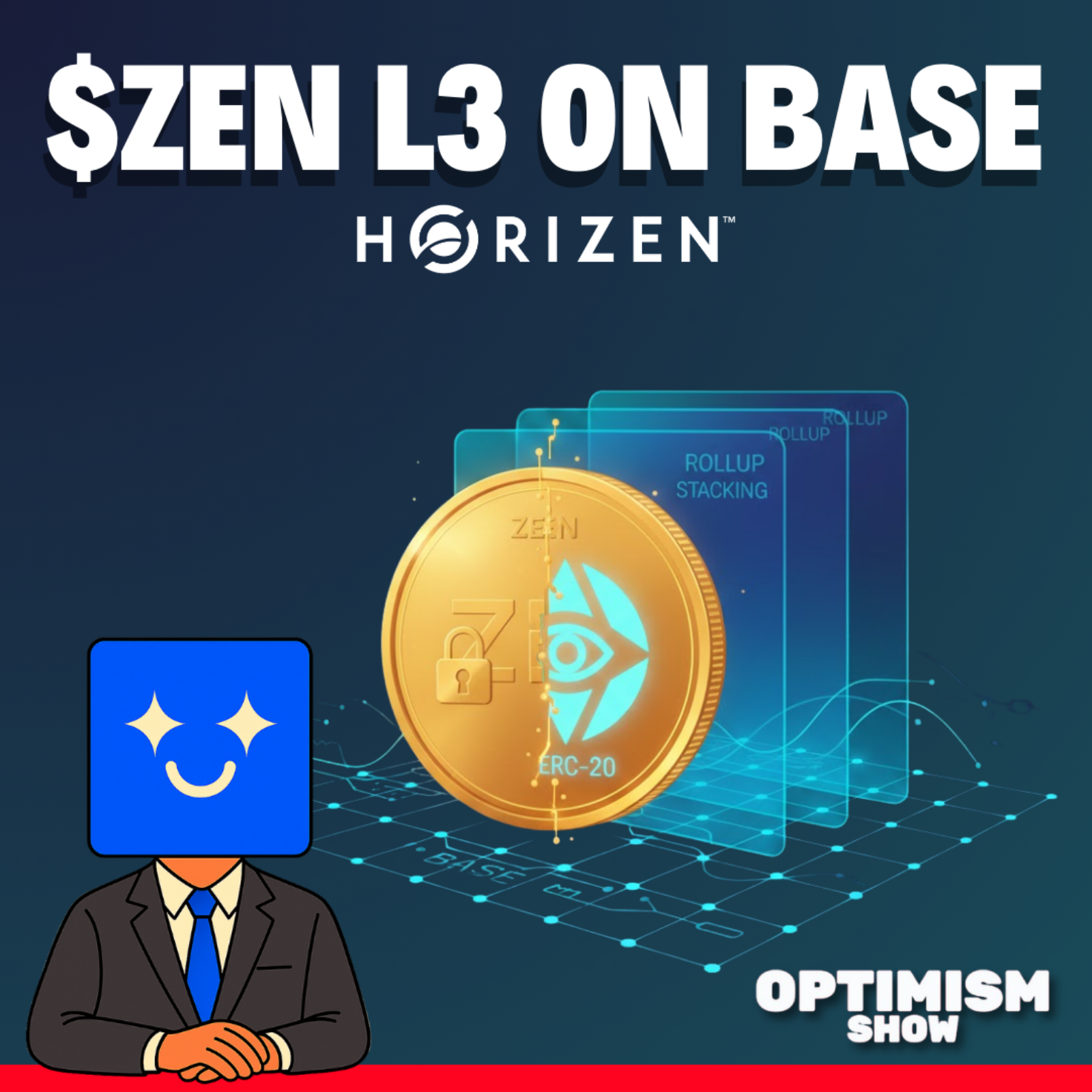
S1 Ep 86ZEN Is Now on Base: Horizen Launches Its Layer-3 — What Holders Must Know
Horizen has officially launched its EVM-native Layer-3 on Base and migrated ZEN into an ERC-20 — moving from a standalone PoW chain to a privacy-focused rollup that now benefits from Base liquidity, OP Stack tooling, and Ethereum finality. ZEN trading is live on major DEXs and exchanges, with staking set to return and potentially reshape token utility on Base.The new L3 is built with partners including Caldera, LayerZero, Stork, Den, Goldsky, and zkVerify, and comes with a 1M ZEN (~$8.8M) builder fund with Thrive Protocol. Horizen’s roadmap features privacy-first apps (private DeFi, payroll, verifiable ads) and a Confidential Compute Environment (TEE-based) planned for Q1 2026.Early sentiment points to better liquidity and accessibility, but long-term impact will depend on app adoption, staking mechanics, and competition inside the Base ecosystem.⚠️ Not Financial AdviceCrypto is volatile — always do your own research before trading or integrating new infrastructure.🎙️ About The Optimism ShowHigh-signal coverage of Base, the OP Stack, and the Superchain — for builders, traders, and on-chain explorers who want clarity, not hype.🔔 Follow & SubscribeSubscribe for weekly updates on Base, L3s, cross-chain infra, and real adoption signals across the Superchain.
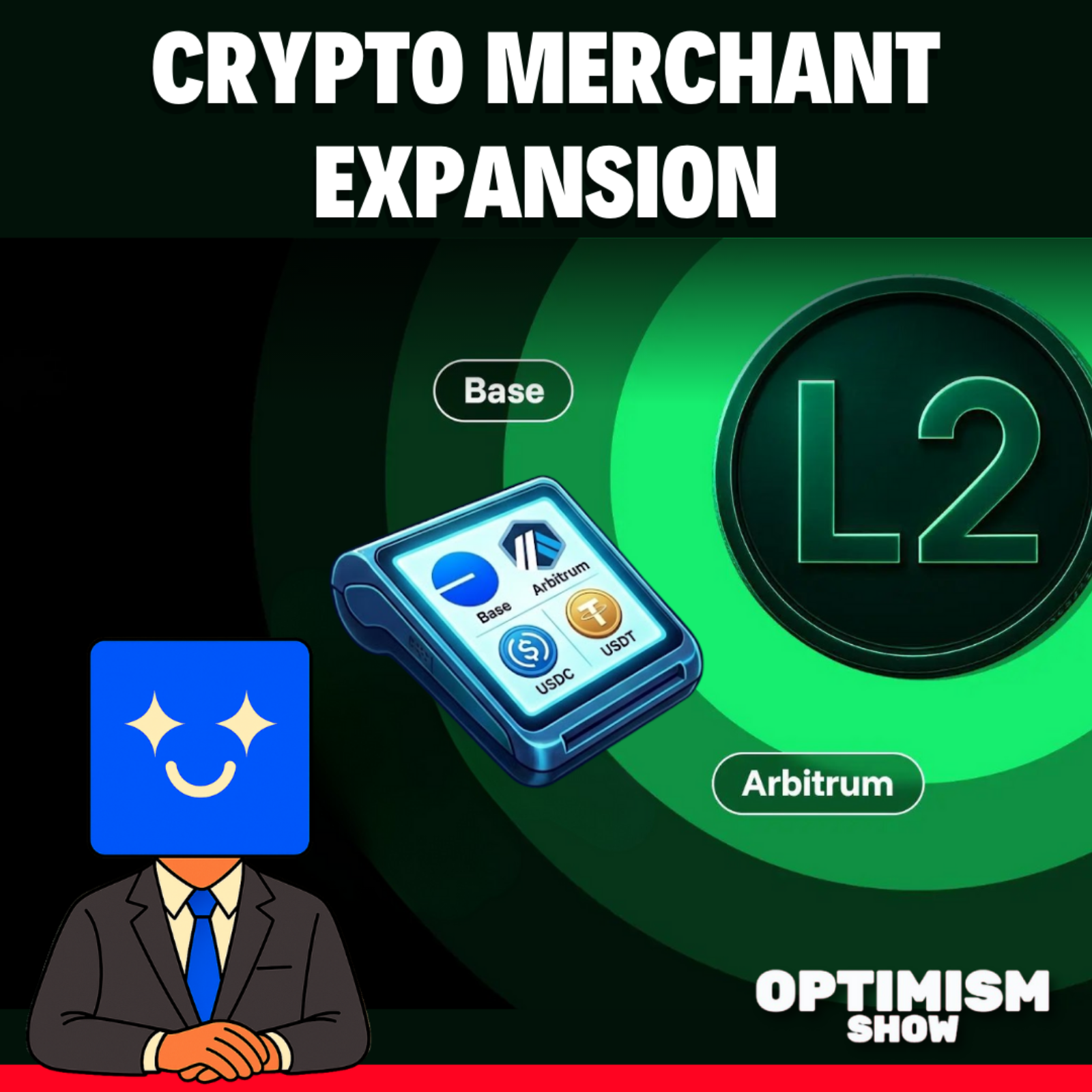
S1 Ep 85This Upgrade Could Bring Millions in USDC to Base
CoinsPaid CryptoProcessing has added Base and Arbitrum support, letting merchants accept and settle USDC, USDT, and other crypto payments with lower fees and faster confirmations. This upgrade strengthens Base as a real-world payment rail, improves stablecoin flows, and reduces friction for wallets, dapps, and merchants integrating on-chain payments.By routing settlements over Layer 2s instead of Ethereum mainnet, businesses get cheaper transactions, quicker settlement times, and easier merchant onboarding. The impact depends on adoption: from modest increases in stablecoin activity on Base to meaningful payment-volume growth if merchants integrate at scale.🎙️ About The Optimism Show High-signal coverage of the tech, culture, and infrastructure shaping Base, the OP Stack, and the wider Superchain. 🔔 Subscribe to stay early, stay informed, and stay ahead. Not Financial Advice
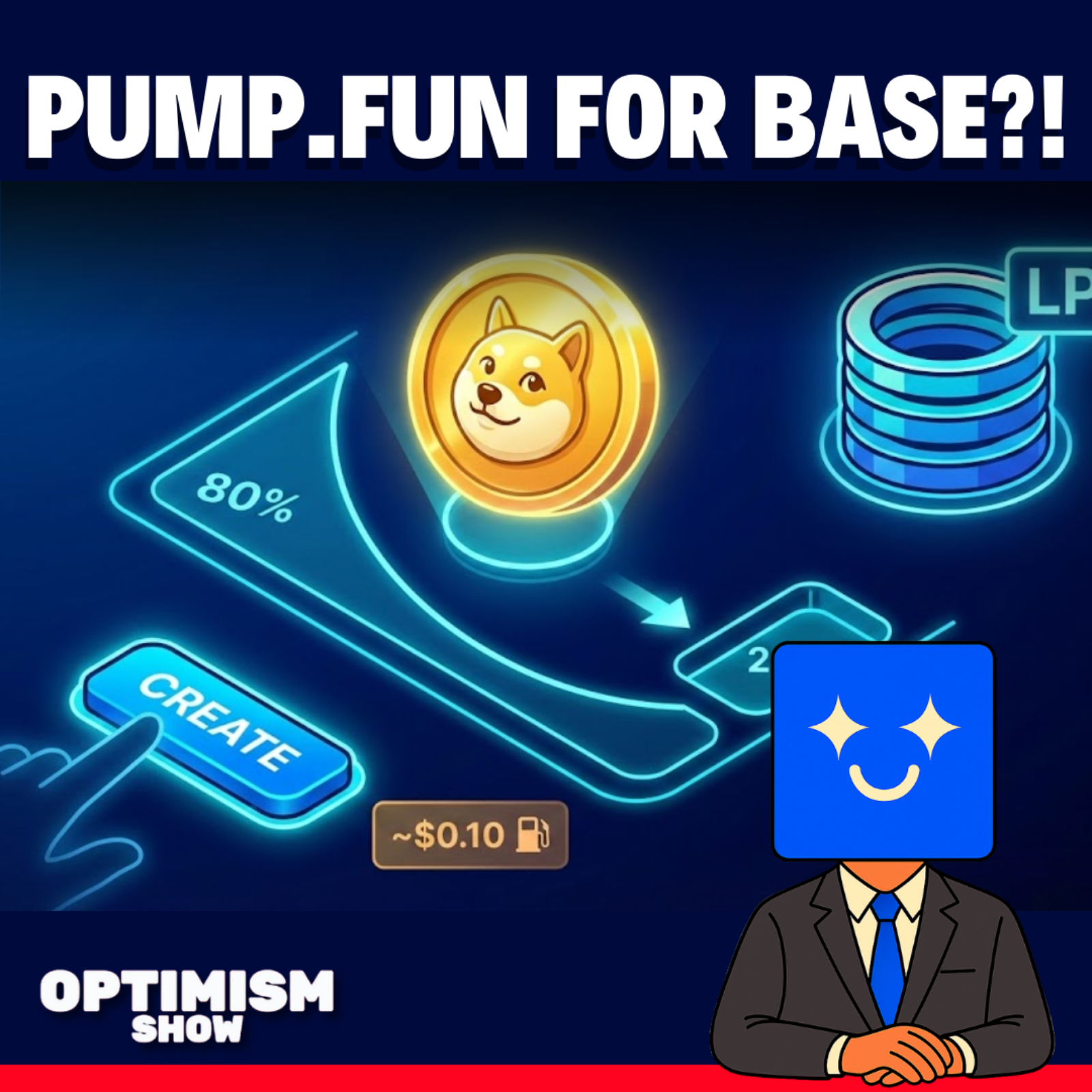
S1 Ep 84Base Just Launched Its Own Pump.fun — Here’s How It Works
Base just introduced Base.meme, a no-code launchpad for creating memecoins on Base using bonding curves — designed to dramatically lower upfront liquidity requirements and reduce immediate rug risk. If you’re building, trading, or experimenting with token launches on Base, this is one of the most important tools to understand right now. Base.meme lets creators configure a bonding curve where roughly 80% of supply is sold through the curve, with the remaining 20% automatically migrated into a Uniswap liquidity pool. Creators can customize curve parameters, perform optional self-buys, upload assets, and push early demand through Twitter, Telegram, and Discord. With Base gas fees around $0.10 per transaction, and bridges like Base Bridge or Hop plus wallets like MetaMask and Coinbase Wallet, deploying and trading is extremely cheap and accessible. The platform recommends at least 0.01 ETH to cover deployment and initial buys. Early monitoring through Dexscreener and BaseScan is essential for tracking momentum. What this means for the ecosystem: Bullish signals include lower friction for new launches, more on-chain liquidity, and a surge of memecoin experimentation that strengthens Base’s position as the fastest-growing L2. 🎙️ About The Optimism Show High-signal coverage of the tech, culture, and infrastructure shaping Base, the OP Stack, and the wider Superchain. 🔔 Subscribe to stay early, stay informed, and stay ahead. Not Financial Advice
S1 Ep 83Base vs Solana Just Escalated — Bridge Live, Token Rumors, L3 Migration
A Chainlink CCIP bridge between Solana and Base is now live — and that one line quietly rewires how assets, NFTs, and users can move between a major non-EVM chain and Coinbase’s Layer 2. If you build, trade, or run infra on Base, this isn’t just “another bridge announcement” — it’s a new liquidity corridor with very real security, UX, and routing tradeoffs.In this episode of BASE Weekly, we break down four stories you actually need to make decisions on: 1️⃣ The new Solana ↔ Base bridge using Chainlink CCIP and what to test first. 2️⃣ Base openly exploring a native token and the public spat with Solana leadership. 3️⃣ Horizen relaunching as a privacy-focused Layer-3 on Base with ZEN migrated to ERC-20. 4️⃣ CoinsPaid adding Base for merchant payments and what that means for stablecoin settlement.You’ll get concrete guidance on how to treat the CCIP bridge, what to watch around a potential Base token, how to think about L3s on Base, and why boring payment rails may end up being the stickiest source of volume.🎙️ About The Optimism Show / BASE WeeklyHigh-signal coverage of the tech, culture, and infrastructure shaping Base, the OP Stack, and the wider Superchain — focused on what actually matters for builders, wallets, traders, and infra teams, not just what’s trending on Crypto Twitter.🔔 Subscribe to stay early, stay informed, and stay ahead.Not Financial Advice — crypto is volatile, bridges and L3s carry unique risks, and you should always do your own research before deploying capital or shipping features based on any one integration.

S1 Ep 82Zora: New Platform Paying Creators for Every Post
What if every post you made online could actually pay you? If you create art, videos, writing, or even memes — this is the shift you’ve been waiting for. Zora is quietly becoming one of the most important platforms in the onchain creator economy. Instead of posting into an algorithmic void, Zora lets creators mint their work as collectible, tradable assets — with full ownership, embedded royalties, and creator-first economics. Your content becomes something people can collect, support, build on, and invest in. Zora isn’t just an NFT marketplace anymore. In 2025, it’s a full ecosystem powered by the Zora Network, Coins Protocol, and the ZORA token. It’s built for creators first — giving artists, writers, collectors, and builders the tools to build their own onchain economies with low fees, fast minting, and real upside. This is your breakdown of what Zora is, how the tech works, who it’s for, and why it might be one of the biggest shifts happening in Web3 right now.🎙️ About The Optimism Show High-signal coverage of the tech, culture, and infrastructure shaping the Superchain, the onchain creator economy, and the future of Web3 — delivered with clarity, not hype. 🔔 Subscribe to stay early, stay informed, and stay ahead. Not Financial Advice.
S1 Ep 81Base Bridges to Solana — A Massive Move for Cross-Chain DeFi | Base Daily
Base just launched a direct bridge to Solana — a major step toward seamless cross-chain movement between Coinbase’s Layer 2 and one of the fastest ecosystems in crypto. This upgrade lets users and builders move assets like SOL, ETH, and USDC between the two networks with far less friction, enabling deeper liquidity routing, better onboarding, and new cross-ecosystem opportunities for DEXs, wallets, and DeFi apps. The new Base ↔ Solana bridge plugs Solana’s ultra-fast, low-fee execution environment into Base’s Ethereum-aligned tooling. Multiple teams are involved — from Base and Coinbase, to Solana ecosystem projects, bridge infrastructure providers, and custody partners. As routing improves, aggregators and liquidity providers may shift flows across both chains, affecting token mobility, TVL, and trading activity. But bridges are still high-risk surfaces. Security audits, integration quality, liquidity depth, and routing performance will determine whether this bridge becomes a core part of the Base ecosystem, or just an early experiment in cross-chain interoperability. If adoption is strong, this could accelerate Base TVL growth, improve user onboarding, and activate new multi-chain DeFi strategies. If not, security risks and weak liquidity could slow its impact. This breakdown explains what the Base ↔ Solana bridge actually enables, why liquidity providers are watching closely, and what early metrics will tell us about real demand. 🎙️ About The Optimism Show High-signal coverage of the tech, culture, and infrastructure shaping Base, the OP Stack, and the Superchain — delivered with clarity, not hype. 🔔 Subscribe to stay early, stay informed, and stay ahead. Not Financial Advice — crypto is volatile and bridges carry unique risk surfaces.
S1 Ep 80Base & Solana Integration, Fusaka and Metal L2
The Superchain is starting to feel inevitable. Bedrock upgrades are live, the OP Stack is expanding across new rollups, Fusaka just unlocked a major data-availability leap, and OP Stack chains now drive nearly 60% of all L2 transactions. Meanwhile, Base is dominating user growth, new bridges are redefining liquidity flows, and OP’s unlock schedule still determines how much fundamentals matter. This episode breaks down how OP token economics, Base’s rise, and Metal DAO’s hard fork all connect — and what it means for builders, infra teams, and token holders ahead of the next incentive wave.🎙️ About The Optimism Show Weekly, high-signal coverage of the tech, culture, and infrastructure shaping the Superchain — delivered with clarity, not hype. 🔔 Subscribe to stay early, stay informed, and stay ahead. Not Financial Advice.
S1 Ep 79Spot Crypto Startups Early with Product Clank
If you’ve ever wished you could “bet” on early-stage startups — or play VC on a micro-scale — this project will get your attention. ProductClank turns tiny memecoins into signals of early belief. Fans back products before they blow up, founders get their first users with zero ad spend, and everyone participates in the discovery loop.ProductClank is basically Product Hunt with on-chain incentives — a tokenized growth engine where every product gets its own automatic memecoin, and communities earn through backing, promoting, and participating.It’s a new coordination model for early traction, and a preview of how tokenized discovery could scale on L2s like Base and across the Superchain.This is your clear breakdown of what ProductClank is, how it works, why it matters, and who should actually consider using it.🎙️ About The Optimism ShowHigh-signal coverage of the tech, culture, and infrastructure shaping the Superchain — delivered with clarity, not hype.Product Clank: X: https://x.com/productclank TG: https://t.me/productclankofficial🔔 Subscribe to stay early, stay informed, and stay ahead.Not Financial Advice.
S1 Ep 78JPMorgan + AI Agents: A Turning Point for Base | Base Digest
If you believed Base was mostly a playground for speculation — this week shows its infrastructure moment has arrived. Two quiet but massive shifts are happening at the same time: JPMorgan has activated a regulated bank deposit token on Base, and AI agents are suddenly some of the chain’s biggest consumers of blockspace. Add cross-architecture bridges into the mix, and the way liquidity, custody, and transaction flow works on Base is about to change dramatically. What we’re seeing is the early formation of a Base economy where banks, bots, retail traders, and cross-chain capital all compete for throughput — each signaling where money, power, and attention may shift next across the Superchain. This is your clear breakdown of how institutional settlement, autonomous agents, memecoin rotation, and new bridge infrastructure are reshaping Base right now. 00:00 — Two massive shifts hitting Base at once 00:18 — JPMorgan’s JPMD: regulated deposit tokens arrive on Base 01:08 — Why institutions prefer deposit tokens over USDC/USDT 01:40 — Base as a compliant settlement hub for global capital 02:12 — What builders + traders should expect from institutional flows 02:45 — AI agents on Base: bots become blockspace customers 03:18 — Gasless L3s, throughput pressure & MEV considerations 03:52 — Why memecoin rotation still drives user growth 04:20 — Retail flows, DEX activity & low-fee advantages 04:44 — Apex Fusion cross-arch bridges & new liquidity pathways 05:10 — The big picture: banks, bots, retail, and bridges converging on Base 05:35 — Final thoughts + weekly Superchain coverage 🎙️ About The Optimism Show Weekly, high-signal coverage of the tech, culture, and infrastructure shaping the Superchain — delivered with clarity, not hype. 🔔 Subscribe to stay early, stay informed, and stay ahead. Not Financial Advice.
S1 Ep 77Kraken's New Chain: Ink Explained
If you care about bringing millions of everyday users into DeFi — or you’re building on the Superchain — this breakdown is essential. Ink is Kraken’s bold move into onchain finance. Not a meme chain, not a marketing play — a purpose-built OP Stack chain designed to make DeFi feel safe, intuitive, and human. Instead of throwing newcomers into a jungle of DEXes, gas fees, and confusing pop-ups, Ink aims to become the first chain where normal people can actually understand what’s happening. At the same time, Ink positions itself as the bridge between Centralized and Decentralized Finance — a clean, well-lit highway from Kraken’s familiar world into the Superchain ecosystem. Fast blocks, low fees, shared upgrades, and real apps already live make Ink one of the most accessible new chains in onchain finance.🎙️ About The Optimism ShowWeekly, high-signal coverage of the tech, culture, and infrastructure shaping the Superchain — delivered with clarity, not hype.🔔 Subscribe to stay early, stay informed, and stay ahead.Not Financial Advice.
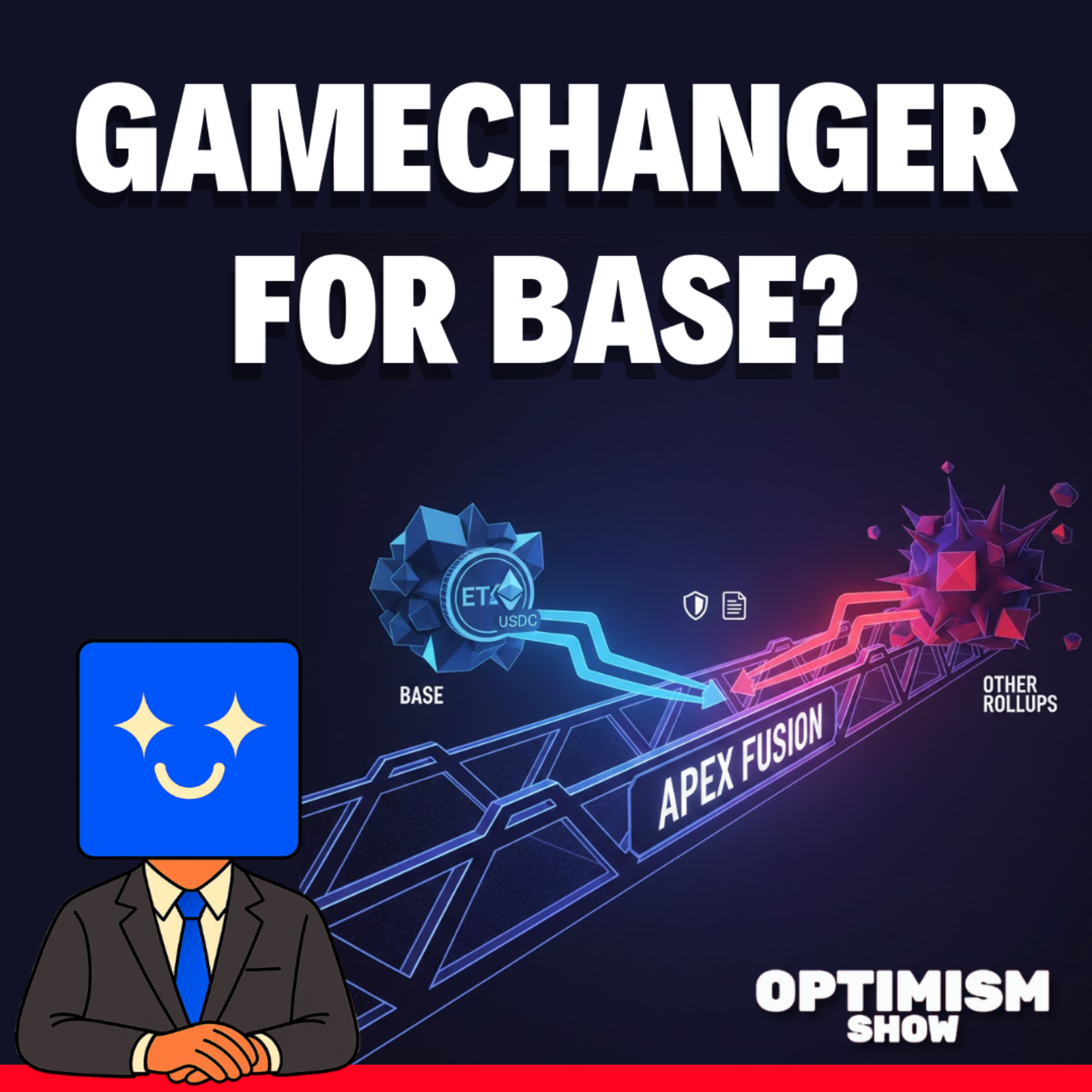
S1 Ep 76Apex Fusion Expansion to Base
If you care about cross-chain liquidity — or you build on Base — this breakdown is essential.Apex Fusion is building a cross-architecture bridge designed to connect Base with other rollups and alternative chain designs. Not a simple token tunnel — a full interoperability layer aimed at reducing friction when moving assets and composable positions across heterogeneous L1s and L2s.At the same time, Apex is positioning its bridge to unlock smoother routing for DEXs, better flows for ETH/USDC, and easier integrations for builders working across different rollup stacks — potentially reshaping how liquidity moves into and out of Base.This is your clear breakdown of what Apex Fusion is building, why it matters, and what’s coming next.🎙️ About The Optimism ShowWeekly, high-signal coverage of the tech, culture, and infrastructure shaping the Superchain — delivered with clarity, not hype.🔔 Subscribe to stay early, stay informed, and stay ahead.Not Financial Advice.
S1 Ep 75purrLabs × District: Tokenized IP and Creator Royalties on Base
If you care about the future of on-chain creator monetization — or you’re building on Base — this breakdown is essential. purrLabs and District have announced a partnership to build tokenized intellectual property (IP) capital markets on Base. Not speculative NFT hype — a real attempt to turn licensing rights, royalty flows, and IP ownership into liquid, tradable on-chain assets. At the same time, this move positions Base as a hub for creator-economy infrastructure across the Superchain — from tokenized licensing primitives to royalty-stream markets and provenance-verified IP assets for studios, creators, and rights holders. This is your clear breakdown of what’s being built, why it matters, and what comes next. 00:00 — Why tokenized IP markets matter 00:10 — What purrLabs × District are building on Base 00:48 — How tokenized licensing & royalty streams could work 01:26 — Key risks: legality, provenance & regulatory pressure 02:03 — Final thoughts 🎙️ About The Optimism Show Weekly, high-signal coverage of the tech, culture, and infrastructure shaping the Superchain — delivered with clarity, not hype. 🔔 Subscribe to stay early, stay informed, and stay ahead. Not Financial Advice
S1 Ep 74SKALE AI New L3 Launch on Base
If you care about the future of AI agents — or you’re building on Base — this breakdown is essential. SKALE just launched a new Layer-3 deployment on Base designed specifically for agent workloads. Not a speculative meme narrative — a practical L3 built for low-latency execution, inter-agent payments, and real on-chain utility for SKL and USDC. At the same time, SKALE is positioning its Expand flow and built-in credits as the payment layer powering gasless-feeling agent interactions — offering a new path for AI-native micro-transactions across the Base and Superchain ecosystems. This is your clear breakdown of what SKALE’s L3 is, why it matters, and what comes next. 00:00 — Why SKALE’s new Layer-3 matters 00:08 — What the L3 actually enables for AI agents 00:42 — Expand credits, USDC/SKL utility, and payment flows 01:21 — Key risks, uncertainties & competitive landscape 01:45 — Final thoughts 🎙️ About The Optimism Show Weekly, high-signal coverage of the tech, culture, and infrastructure shaping the Superchain — delivered with clarity, not hype. 🔔 Subscribe to stay early, stay informed, and stay ahead. Not Financial Advice.
S1 Ep 73Superchain Enterprise Adoption & OP Token: Bullish or Not?
If you care about the future of mainstream Web3 adoption — or you build anywhere on the Superchain — this update is essential. Optimism’s CEO just hinted at a major shift: a fresh enterprise strategy aimed at bringing larger businesses onto the Optimism stack. Not a vague roadmap, not another dev-tool upgrade — a targeted go-to-market push that could reshape how companies adopt onchain infrastructure at scale. At the same time, Optimism is positioning the Superchain as an enterprise-ready environment — tailored rollups, compliance-friendly integrations, and a more structured partnership motion that could unlock real production workloads and meaningful network growth. This is your clear breakdown of what Optimism is signaling, why it matters, and what’s coming next. 🎙️ About The Optimism Show Weekly, high-signal coverage of the tech, culture, and infrastructure shaping the Superchain — delivered with clarity, not hype. 🔔 Subscribe to stay early, stay informed, and stay ahead. Not Financial Advice
S1 Ep 72Kraken’s New DEX, Bitcoin’s Bank, and OP Mainnet’s Enterprise Upgrade
The Superchain is quietly turning into one of the most important financial layers in the entire industry. You have Kraken launching a high-speed CLOB exchange with millisecond execution. BOB transforming Bitcoin into a productive financial asset instead of passive cold storage. And OP Mainnet leveling up into enterprise-grade infrastructure with serious reliability guarantees. Zoom out, and all these stories point in the same direction: The Superchain is attracting serious builders, institutions, and deep liquidity — not just experiments. 00:00 — Intro The Superchain’s evolution into core crypto financial infrastructure. 00:18 — Markets first Why the strongest momentum is in trading, BTC liquidity, and real financial products. 00:42 — High-speed trading on Ink Kraken-backed Nado: 5–15ms CLOB execution, unified margin, and CEX-grade performance with onchain custody. 01:10 — Bitcoin’s financial layer BOB turning BTC into usable, productive liquidity through intents, vaults, loans, and multi-chain flows. 01:38 — Transition: reliability When real finance arrives, uptime becomes non negotiable. 01:48 — OP Mainnet upgrades Backup sequencing, 99.99% reliability, Flashblocks preconfs, and sub-cent fees under load. 02:20 — Enterprise positioning Why OP Mainnet is now the launch pad for exchanges, fintech apps, lenders, and high-speed trading infra. 02:48 — Superchain momentum 20M+ daily transactions, 60% of all L2 activity, expanding across AI, payments, gaming, and global markets. 03:20 — The bigger picture Professional markets forming, Bitcoin becoming productive, OP Mainnet maturing — and momentum compounding. 03:48 — Final thoughts Where the Superchain is heading next — and what matters most for builders. 🎙️ About The Optimism Show Weekly, high-signal coverage of the tech, culture, and infrastructure shaping the Superchain — delivered with clarity, not hype. 🔔 Subscribe to stay early, stay informed, and stay ahead. Not Financial Advice
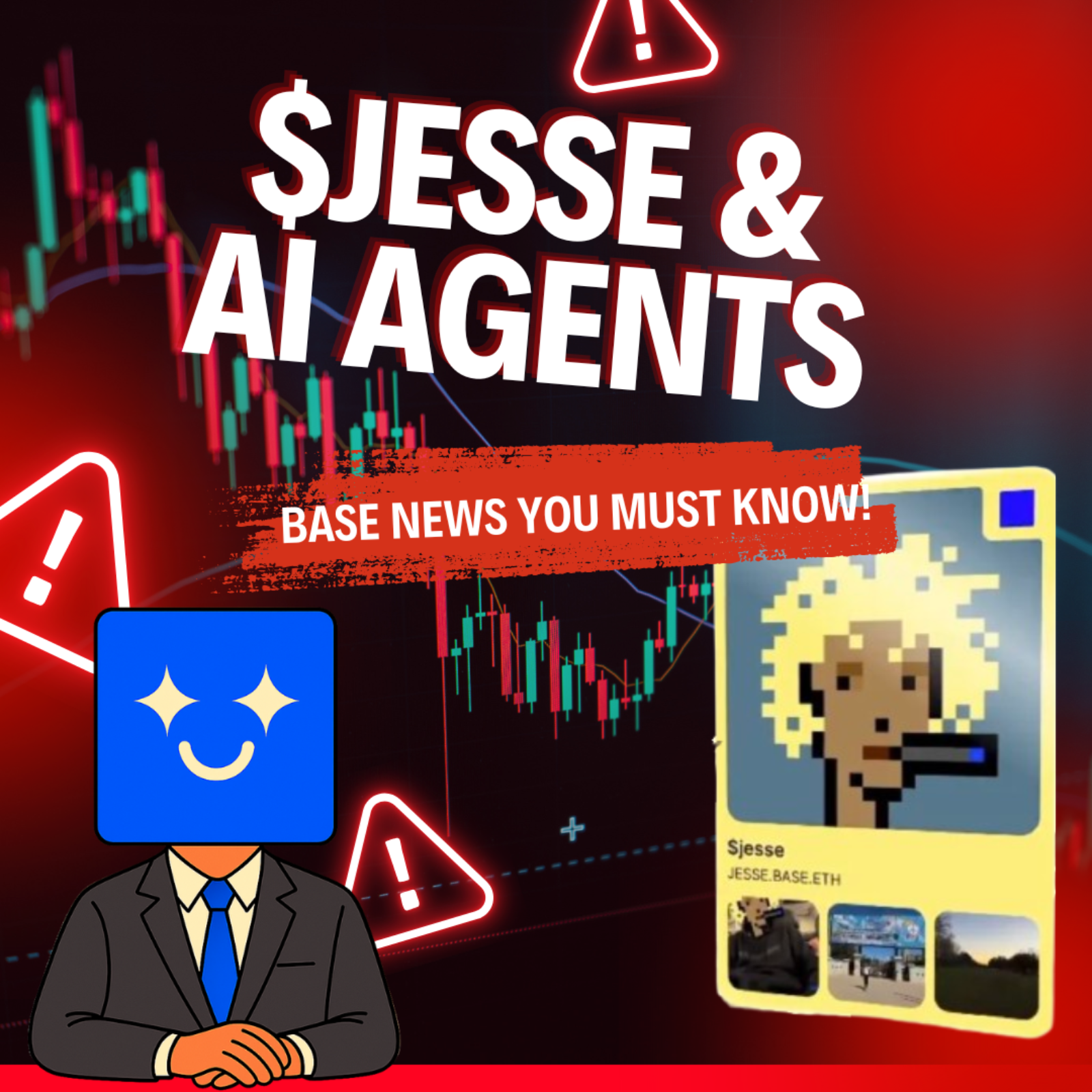
S1 Ep 71$JESSE Token Chaos: Snipers, Market Makers & AI Agents on BASE
🔥 Base Just Hit a Critical Turning Point — Here’s What Actually Happened 🔥 Base is rapidly becoming the testbed for memecoins, agentic AI, and institutional rails — and this episode breaks down the one creator token launch that exposed exactly where things can still go wrong. Sniper bots, liquidity games, fairness failures… and what it all means for Base, Coinbase, and the Superchain. 00:00 — Jesse token meltdown: sniper bots, concentrated supply, fairness problems 01:10 — Why this matters: Base exploring a native token + the need for better launch tooling 02:05 — Base’s infra edge: sub-second txs, $0.01 gas, flashblocks 02:38 — How to fix launches: batch auctions, caps, transparent MM terms 03:10 — SKALE’s AI Layer-3 on Base: gasless/credit-metered agents & why it matters 04:00 — What agents need: identity, custody rails, oracles, safety switches 04:42 — On-chain loans & stablecoins: Coinbase loans, regional stablecoins, Visa signals 05:30 — Institutional flows: custody, compliance, proof-of-reserves 06:10 — Coinbase ecosystem moves: Vector.fun acquisition + Ventures signals 06:45 — Closing: Base is ready for scale — now fairness, governance, and compliance must catch up 🎙️ About The Optimism Show Weekly, high-signal coverage of the tech, culture, and infrastructure shaping the Superchain — delivered with clarity, not hype. 🔔 Subscribe to stay early, stay informed, and stay ahead. Not Financial Advice
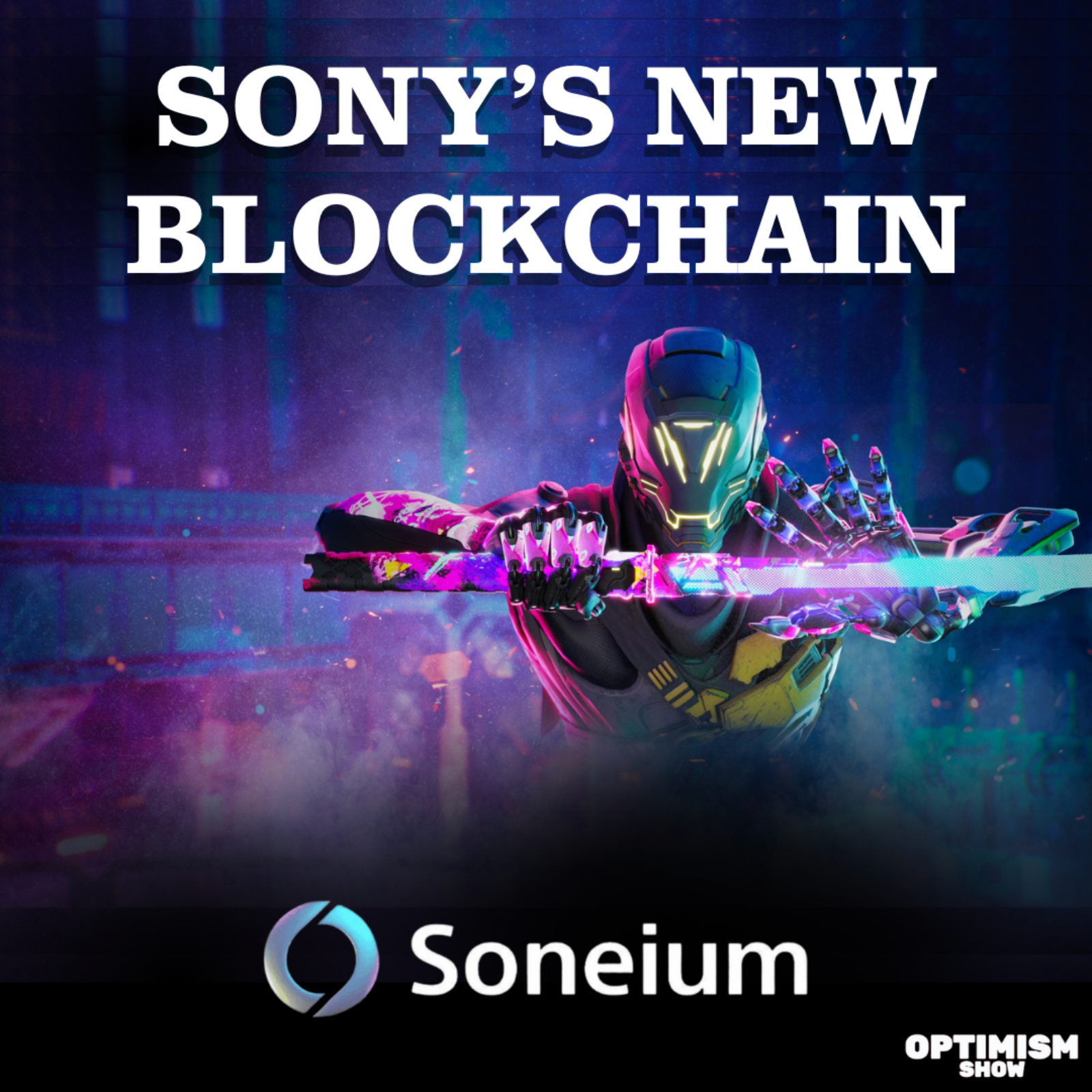
S1 Ep 70Sony’s Crypto Move: Inside the Soneium Project
If you care about the future of mainstream Web3 adoption — or you build anywhere on the Superchain — this episode is essential.One of the biggest entertainment companies on the planet just launched its own Layer 2 blockchain. Not a meme coin, not an NFT gimmick — a full OP Stack chain designed to bring millions of everyday users on-chain without them ever realizing they’re using crypto.At the same time, Sony is positioning Soneium as a digital city for gamers, creators, and global fandoms — reshaping how entertainment, identity, and on-chain culture will evolve across Optimism, Base, and the wider Ethereum L2 ecosystem.This is your clear breakdown of what Sony is building, why it matters, and what’s coming next.00:00 — Intro: Why Soneium matters00:22 — What Soneium actually is (and what it isn’t)01:10 — The tech: OP Stack, Ethereum security, Superchain integration02:34 — Sony’s vision: a frictionless, mainstream digital city03:18 — The audience: gamers, anime fans, artists, creators04:26 — Use cases: collectibles, gaming, premieres, fan economies05:40 — Builder angle: cheap txs, EVM tools, massive distribution06:32 — Score Seasons: on-chain reputation vs. airdrop farming07:48 — How Soneium could quietly onboard millions08:36 — The bigger picture: Sony plugged into the Superchain09:15 — What to watch next for Soneium10:02 — Final thoughts🎙️ About The Optimism Show Weekly, high-signal coverage of the tech, culture, and infrastructure shaping the Superchain — delivered with clarity, not hype.🔔 Subscribe to stay early, stay informed, and stay ahead.Not Financial Advice
S1 Ep 69Aerodrome DEX Hack Explained, Stablecoins on Optimism | Superchain Digest
If you’ve used Velodrome or Aerodrome recently — or build anywhere on the Superchain — this episode is critical. A coordinated DNS front-end hijack drained user wallets and exposed a major weakness in the off-chain infrastructure that every DeFi protocol still relies on. At the same time, the Aerodrome + Velodrome merger (AERO) and upcoming Optimism protocol upgrades are reshaping liquidity, routing, and developer economics across Optimism, Base, and the wider Ethereum L2 ecosystem. This is your clear, technical breakdown of what actually happened, how to stay safe, and what’s coming next. 00:00 — Intro: Why this incident matters 00:28 — What Velodrome, Aerodrome, and AERO actually are 01:42 — The DNS attack explained (contracts safe, UIs compromised) 03:05 — How the attacker drained wallets through malicious approvals 04:10 — What the AERO merger means for liquidity + routing 05:30 — Optimism upgrades: L3 support, custom gas tokens, Plasma mode, Utila 07:02 — The current outage + AERO rollout timeline 08:15 — Security lessons for users + builders 09:22 — What to watch next across the Superchain 10:12 — Final recommendations 🎙️ About The Optimism Show Weekly, high-signal coverage of the tech, incentives, and security shaping the Superchain — delivered with zero hype and maximum clarity. 🔔 Subscribe to stay early, stay informed, and stay safe.
S1 Ep 68Aerodrome (AERO) + Velodrome (VELO) Merger - Why it Matters | Superchain Digest
In today’s Superchain Digest, two massive moves just reshaped where liquidity, power, and attention are heading next on the Optimism Superchain. In this episode, we break down: 🚀 Why AERO matters for liquidity, governance, and MEV 🌉 How cross-rollup swaps could change the Superchain UX 📈 What actually caused Lisk’s price spike 🌐 How legacy chains joining the Superchain could shift the ecosystem ⚠️ The risks, timelines, and what builders/LPs/traders should watch next 🎙️ About The Optimism Show: Weekly deep dives into the tech, incentives, and market structure shaping the Superchain’s future — with zero hype and maximum clarity. 🔔 Subscribe to stay early, stay informed, and stay sharp.
S1 Ep 67Is Optimism Superchain the Future of Crypto?
In just 6 minutes, you’ll finally understand what the Optimism Superchain is — and why it’s shaping the future of Ethereum. We’ll cover: 🚦 The main problem with Ethereum (and why it’s slowing down innovation) 🧱 What the Optimism Superchain actually is — in plain English 📊 Where the Superchain stands in 2025 with real data and adoption numbers 🌐 Why the Superchain matters for users, developers, and the entire crypto ecosystem 💡 Quick summary: Ethereum is the secure base layer — but it’s crowded and expensive. The Superchain is like turning one giant city into a network of smaller, connected cities — all following the same rules, anchored to Ethereum’s security. It makes transactions faster, cheaper, and seamless across chains like Base, Zora, and OP Mainnet. By late 2025, the Superchain was already: Processing 20M+ daily transactions Securing $21B+ in assets Powering over 58% of all Ethereum L2 activity This isn’t theory — it’s Ethereum evolved. 🎙️ About The Optimism Show: I’m Kris, host of The Optimism Show — where I break down complex topics in blockchain, AI, and tech so you can stay ahead of the curve and make smarter moves before everyone else even knows what’s happening. 📅 Subscribe for weekly breakdowns: ✅ Real explanations. ✅ Clear visuals. ✅ No hype — just insight. 🔔 Subscribe now to The Optimism Show → stay informed, stay early.
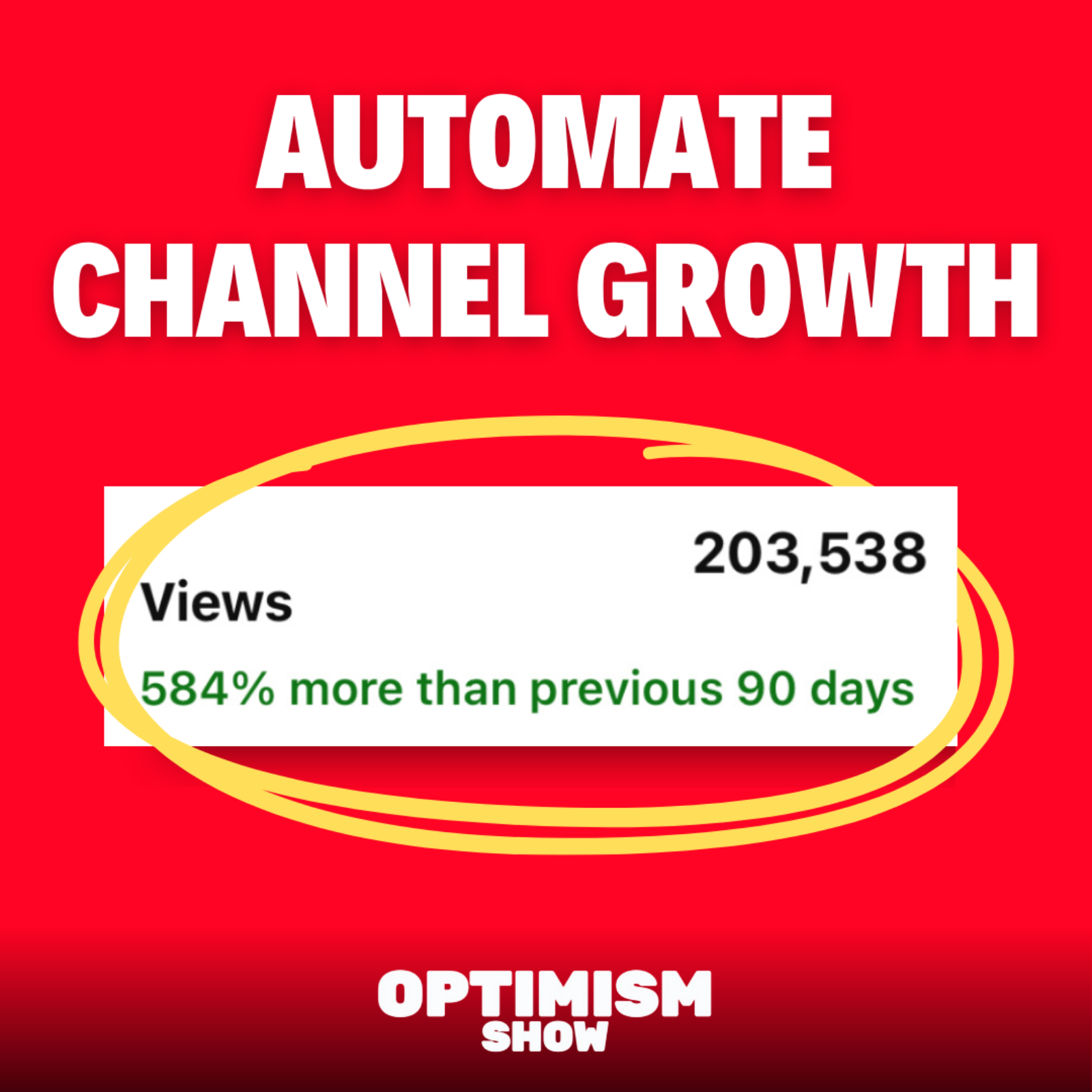
S1 Ep 66How We Scale Content with AI Automations
In this episode of The Optimism Show, Kris Gligoroski and Vittorio unpack what’s worked for the show’s recent growth: using short-form as trailers, building automated repurposing systems, prioritizing psychographics over simple demographics, and treating companies as media-first businesses. They share concrete results (rapid YouTube growth), tactical playbooks (volume + automation + platform funnels), and why new socials and in-house media create durable advantages. (00:00) — Episode intro: goals and overview (00:43) — Vittorio’s first on-camera appearance and framing the conversation (01:11) — YouTube growth update: from ~50K early views to 300K+ total (03:10) — Short-form as trailer: why shorts drive long-form discovery (167K month example) (04:04) — Shorts increase watch-time and long-form retention (05:10) — Short-form structure, titles, keywords, and hashtag targeting (06:35) — Volume + automation: production scale without a big team (12 shorts/day, multi-platform) (08:34) — Distribution funnel: broad platforms to niche channels and newsletter (09:40) — Why new/social-first platforms (Farcaster, Mastodon, BlueSky) are strategic bets (12:41) — Targeting psychographics (thoughts, needs, formats) vs. demographics (15:03) — Repurposing formats to match different learning styles (visual, reading, audio) (17:09) — Core audience vs. curious audience: focus and horizontal reach (20:15) — Cross-industry ideas: borrow tactics from other sectors to gain advantage (21:44) — Experimentation as the path to differentiation and mini-monopoly (23:04) — Launching a community + automated media services for other companies (25:02) — Treat your company as a media company: capture and sustain market share (27:39) — Why in-house, sustainable distribution beats one-off KOL or paid spikes (29:22) — Media and distribution increase company valuation: attention, data, and product fit (30:37) — Brand authority and long-term positioning (31:05) — Follow the journey: ongoing experiments, features, and distribution improvements (31:36) — Wrap and invite to reconnect 🔗 Connect with Vittorio LinkedIn: https://www.linkedin.com/in/vittorio-cappelli/ 🎙️ Connect with Kris Warpcast: https://warpcast.com/thekris LinkedIn: / thekrispartner 💼 For sponsorships and collaborations: Email: [email protected] X: https:https://x.com/OptimismShow, DISCLAIMER: The content of this episode should not be considered financial advice. Past performance is not indicative of future results. Digital assets and DeFi protocols have risks, including capital losses. Please DYOR.
S1 Ep 65How to Build Successful Mini Apps
Mini‑apps as growth: design for friction and shareMini‑apps are the fastest way to test funnels and get users — if you build them as lead magnets.Mini apps win when they are the easiest way into a product — fast, shareable, measurable.Mini‑apps are tiny funnels, not tiny products. Treat each mini‑app as a single KPI engine: deposits, signups, or shares.Here’s the shift: pick one metric and make every step aim at it. If you want transactions, cut the path to completion. Instant login, wallet-ready flows, and the fewest clicks win.Make shareability a built-in feature, not a pop-up. Design moments people want to show off — status, wins, badges — and attach easy referral or fee-share mechanics to the user’s wallet.Build fast but keep the main app safe. Use a separate frontend so experiments don’t break core flows. Test in in-app browsers and embeds to catch cookie and auth quirks early.Measure with hard signals: on‑chain actions, deposit volume, and unique shared links. For brand goals, watch shares and follower lift.The takeaway: ship with a clear why and one metric. Iterate quickly, then scale what proves frictionless and shareable.Where to find Kris: Farcaster: https://warpcast.com/thekris LinkedIn:  http://linkedin.com/in/thekrispartner Where to find Samuel: Farcaster: https://warpcast.com/samuellhuber.eth Twitter: https://x.com/samuellhuber LinkedIn: http://linkedin.com/in/samuellhuber For inquiries about sponsoring the podcast and partnership consulting: [email protected]
S1 Ep 64Building Apps with Claude Code AI
In this episode we sit with a Chris Carella experimenting with agentic tooling as the launchpad for a one-person startup studio. He shows how Claude Code becomes more than a code assistant — a writable context and a persistent chief-of-staff that replaces spreadsheets, drafts marketing plans, and preserves project memory across sessions. As he puts it, "this one tool can basically do everything," and that shift changes how non-technical founders prototype, organize work, and reuse their thinking.He tests the idea by shipping tiny iOS apps as a way to get fast feedback: the App Store becomes a deliberate finish line and a market check. The conversation surfaces the real tradeoffs of solo product work — distribution often matters more than product polish, API costs force early business-model thinking, and chat-as-filter (plus voice) is an emerging pattern for managing what to read, listen to, or act on. Listeners get a compact playbook for moving faster: use agents to accelerate iteration, validate with real products, and design simple go-to-market experiments that reveal what the market actually wants.Connect with Chris Carella: Farcaster: https://warpcast.com/chriscarellaTwitter/X: https://x.com/chriscarellaConnect with Optimism Show: X: https://x.com/OptimismShow Newsletter: https://optimism.show/ For sponsorships and collaboration: [email protected] DISCLAIMER: The content of this episode should not be considered financial advice. Past performance is not indicative of future results. Digital assets and DeFi protocols have risks, including capital losses. Please DYOR.
S1 Ep 63Media, Bots, and Mini Apps: Farcaster as a Creative Playground
In this episode of The Optimism Show, Kris Gligoroski is joined by Adrienne and NounishProf—co-creators of GM Farcaster, a flagship onchain media brand—to explore what it really takes to build in public on Web3’s fastest-growing social protocol.Together, they unpack the vision and mechanics behind GM Farcaster’s livestream-first approach, the power of community-driven podcasting, and how custom bots and Farcaster-native mini apps unlock new ways of engaging audiences. This isn’t just a conversation about content—it’s about redefining media itself, using the primitives of onchain coordination, open distribution, and community ownership.They also reflect on Farcaster’s evolution from a dev-centric experiment to a vibrant cultural layer—and how GM Farcaster became a home for real-time storytelling, creator tooling, and public conversation across the Superchain.If you're curious about what’s possible when media meets protocol, this episode is your front-row seat.🌐 Connect with GM Farcaster Website: gmfarcaster.com YouTube: GM Farcaster channel Pods.media: pods.media/gm-farcaster Farcaster Channel: @gmfarcaster Mini App: miniapp.gmfarcaster.com 🧠 Connect with Adrienne & NounishProf on Farcaster @adrienne @nounishprof 🎙️ Connect with Kris Gligoroski Farcaster: @thekris LinkedIn: linkedin.com/in/thekrispartner Email (collabs/sponsorships): [email protected] ⚠️ Disclaimer This episode is for informational purposes only. It does not constitute financial advice. Web3, DAOs, always DYOR.
S1 Ep 62The Next Chapter for Pods.media
In this episode of The Optimism Show, Kris sits down with Lucas, the founder of Pods.media, to dive deep into the rapidly emerging world of onchain podcasting. Together, they unpack why moving podcasts and media onchain is more than just a trend—it’s a fundamental shift that empowers creators to monetize from day one, build direct relationships with their audiences, and experiment with new models that go far beyond traditional advertising.Lucas explains how tools like NFTs, creator coins, and stablecoin-based payments are opening up fresh opportunities for podcasters of every size, from beginners earning their first few dollars to established creators exploring new community-driven models. The conversation also covers the challenges of bridging Web2 audiences into Web3, the importance of the social graph for understanding and rewarding fans, and Pods’ vision for solving distribution and growth—the toughest problems in media today.If you’re curious about how onchain media is evolving, the trade-offs between NFTs and creator coins, and what the next wave of the creator economy might look like, this episode is packed with insights, examples, and forward-looking ideas you won’t want to miss.Follow Pods: https://pods.media Follow Optimism Show: X: https://x.com/OptimismShow Newsletter: https://optimism.show/ For sponsorships and collaboration: [email protected] DISCLAIMER: The content of this episode should not be considered financial advice. Past performance is not indicative of future results. Digital assets and DeFi protocols have risks, including capital losses. Please DYOR.
S1 Ep 61App Development with AI Native Teams
Chris Carella is back on the Optimism Show. He talks about how AI is changing the work that actually makes products people can use. The talk starts with real stories: making a full wireframe in one day, using Cursor to fix and edit code, and running small experiments with AI agents. Then it looks at the bigger idea: teams are doing work faster, job roles are mixing together, and small teams that do many things can move quicker than big groups.Chris gives simple, helpful advice for people who build products. He says rapid prototyping with AI is a good thing, not a problem. But when tools make work faster, you must keep strong product habits. He explains “agentic engineering” as treating AI helpers like team members you manage. He also says new developer tools can make coding much faster, and sharing your work—chat logs, prompts, and quick prototypes—helps everyone get better.His main point: the future of work will look different, and small teams can beat big teams by using these methods. This is not magic. These are steps you can try this week. If you build products, this episode gives clear, practical ways to use AI without losing the careful work that makes products useful.
S1 Ep 60Grants, Tokens, Streams: Evolving How We Fund Builders
In this episode of The Optimism Show, Kris Gligoroski sits down with Ruben from OB Dollar to explore the structural flaws in grant-based funding for onchain builders. The discussion highlights issues like OP token volatility, delayed payouts, and the overdependence on retroactive rewards. Ruben outlines potential alternatives—including real-time funding streams via Drips and Superfluid, milestone-based incentives, and treasury-backed loans—that offer more predictable and sustainable support. The conversation also touches on Superchain dynamics, funding politics, and the often-overlooked offchain work required to grow the ecosystem. A timely look at how funding models in Web3 are evolving.00:08 – Real-time funding with Drips & Superfluid 02:22 – The limits of retroactive rewards 05:31 – OP token volatility & builder risk 07:33 – Marketing incentives vs. builder pay 10:59 – Grants vs. sustainable project timelines 14:40 – What onchain metrics don’t capture 16:15 – Balancing builder needs & investor goals 18:15 – Superchain politics & funding power dynamics 20:01 – Final message: collective care ≠ optional Connect with Ruben: Twitter/X: https://x.com/optimisticUSD Website: https://obdollar.xyz Connect with Kris: Warpcast: https://warpcast.com/thekris LinkedIn: / thekrispartner For sponsorships and collaborations: Email: [email protected] DISCLAIMER: This episode does not constitute financial advice. Web3, DAOs, and decentralized tools carry risk. Always do your own research (DYOR).
S1 Ep 59Crypto vs Traditional Media: Who Wins?
In this episode of The Optimism Show, Kris Gligoroski explores the shifting landscape of media with Jarrod Dicker, an investor and seasoned media professional. From traditional media's trust challenges to the rise of on-chain solutions, they delve into the evolving dynamics between digital content creation and blockchain technology.Connect with Jarrod Dicker: - Farcaster: https://farcaster.xyz/darkstar - Twitter: https://x.com/jarroddicker Connect with Optimism Show: - X: https://x.com/OptimismShow - Newsletter: https://optimism.show/ - Farcaster: https://farcaster.xyz/optimismshow For sponsorships and collaboration: - [email protected] DISCLAIMER: The content of this episode should not be considered financial advice. Past performance is not indicative of future results. Digital assets and DeFi protocols have risks, including capital losses. Please DYOR.
S1 Ep 58OBUSD: Stability for Builders, Backed by Grants.
Imagine a world where building on a blockchain doesn’t mean waiting forever for money. Meet OBUSD, the big helper for builders in 2025. Instead of making developers wait a long time for grant money, OBUSD offers a smart way to get needed money quickly.Here's how it works: Builders put in stablecoins, like USDC, into OBUSD. It’s not just about keeping money safe—it’s about making more money through DeFi lending pools. The extra money made is shared with projects that need it, giving builders money when they need it most. "You don’t have to wait anymore – OBUSD makes it automatic," says Ruben from OBUSD.What makes OBUSD special is how it uses attestations and endorsements. This makes getting money simpler. When a project gets a grant okay and some thumbs-up from Optimism citizens, it gets monthly money, making things much easier for builders.But OBUSD is more than just a tool—it’s a team builder. By sharing money among projects, it turns tough times into team efforts. Builders aren’t alone; they're on a team, sharing ideas and help through the OBUSD platform.In a world where old ways of grants can’t keep up with fast changes, OBUSD gives a new way that isn’t just about hope, but real support. It’s a step to a better, friendly future for building on blockchains.Is OBUSD the future of getting money? Its smart way makes it a question worth thinking about.Connect with Ruben:Twitter/X: https://x.com/optimisticUSDWebsite: https://obdollar.xyzConnect with Kris:Warpcast: https://warpcast.com/thekrisLinkedIn: https://linkedin.com/in/thekrispartnerFor sponsorships and collaborations:Email: [email protected]: This episode does not constitute financial advice. Web3, DAOs, and decentralized tools carry risk. Always do your own research (DYOR).
S1 Ep 57Stoke Fire: When the Hype Fades — What Comes Next?
Join us on the Optimism Show for a fun chat with Noah Bragg about his cool project, Stokefire, a game in the crypto world. We talk about how making a game like this is like a tricky puzzle, mixing fun and money in the right way. Noah tells us about the ups and downs, especially when the market changes, making the job even harder.For Noah, making Stokefire was not just about playing; it was about finding ways to keep going, even when things got tough. We look at what makes players love crypto games, like the excitement of playing and the sense of teamwork and friendship. Noah's honest talk about Stokefire helps us see the tough parts, like keeping up with trends, but also gives hope by suggesting new ways to grow with changes in rules and community involvement.This episode is a story about building games with clear goals in a fast-changing crypto world. It invites you to see the challenges faced by creators like Noah, where the joy of making something new meets the uncertain market. Join us to learn about Noah's careful balancing act and think about what it all means for the future of the online world.Connect with Noah Bragg: - Twitter/X: https://x.com/noahwbragg Connect with Kris: - Farcaster: https://warpcast.com/thekris - LinkedIn: http://linkedin.com/in/thekrispartner For sponsorships and collaborations: Email: [email protected] DISCLAIMER: This episode is for educational purposes only and does not constitute financial or investment advice. Always DYOR before engaging with Web3 projects.
S1 Ep 56On-Chain Music: A Revenue Revolution
Dive into the evolving landscape of on-chain music with Michael DiVestia of Coop Records, as he unveils how blockchain is redefining artist-fan interactions and revenue streams. In a music industry heavily reliant on streaming, Michael shares how on-chain platforms offer a financially rewarding alternative, allowing artists to make "the equivalent of potentially millions of streams" through selling collectibles and engaging directly with their fanbase. The conversation explores how this new wave of music distribution provides both emerging and established artists a platform to open new doors and reclaim agency over their careers.Beyond the numbers, the dialogue swings into the cultural shifts happening in the music world. Michael paints a picture of fans becoming investors in the artists' journeys, fostering a more inclusive community where early support could translate into tangible rewards. He remarks that "AI is going to definitely change the music industry probably more than crypto even will," highlighting the transformative potential of these technologies converging. As we trace the arc from collectibles to tokens, and how mainstream labels like Sony might soon embrace these on-chain possibilities, the path forward appears rich with promise and ripe for innovation.This episode challenges perceptions and inspires curiosity about the future of music distribution. Whether you're an artist curious about stepping on-chain or a music enthusiast excited about new engagement avenues, this conversation offers a wealth of insights into the possibilities and hurdles of this space.Connect with Michael DiVestia: Website: https://cooprecords.xyz Twitter: https://x.com/cooprecsmusic Connect with Kris: Farcaster: https://warpcast.com/thekris LinkedIn: https://linkedin.com/in/thekrispartner For sponsorships and collaborations: Email: [email protected] DISCLAIMER: The content of this episode should not be considered financial advice. Past performance is not indicative of future results. Digital assets and DeFi protocols have risks, including capital losses. Please DYOR.
S1 Ep 55Boost User Retention with Game Mechanics
In this episode of the Optimism Show, Kris Gligoroski sits down with Jacob from Atlas to explore the nuanced world of user-driven game development on open social networks. Jacob, known for his innovative approaches within the gaming space on Farcaster, shares his insights on building immersive and socially integrated gaming experiences. As he discusses how to captivate and retain users, Jacob emphasizes the importance of delivering an "entertaining experience that they love and want to share," underscoring his strategy that leverages user engagement and organic growth through social connectivity.Together, they navigate the evolving landscape of game mechanics tied to blockchain technology. Jacob delves into the strategic integration of blockchain tokens within games, enhancing user engagement and turning casual players into brand ambassadors. This conversation offers a reflective look at the core dynamics of games as social systems wherein participants not only engage for personal enjoyment but also for community connection and development. The idea that "games are like the perfect format for that type of vision that I was having" resonates throughout their dialogue, capturing the essence of how digital play can foster vibrant, thriving communities.Listeners will find value in Jacob's storytelling approach, demonstrating the potential of games to bridge social and digital experiences. From his initial experiments with viral mechanics on Farcaster to creating untapped opportunities for user growth through competition and community belonging, Jacob's narratives paint a compelling picture of how deeply embedded social experiences are pivotal in the next wave of gaming innovation.
S1 Ep 54Farcaster vs. Bluesky vs. Mastodon: Who Wins?
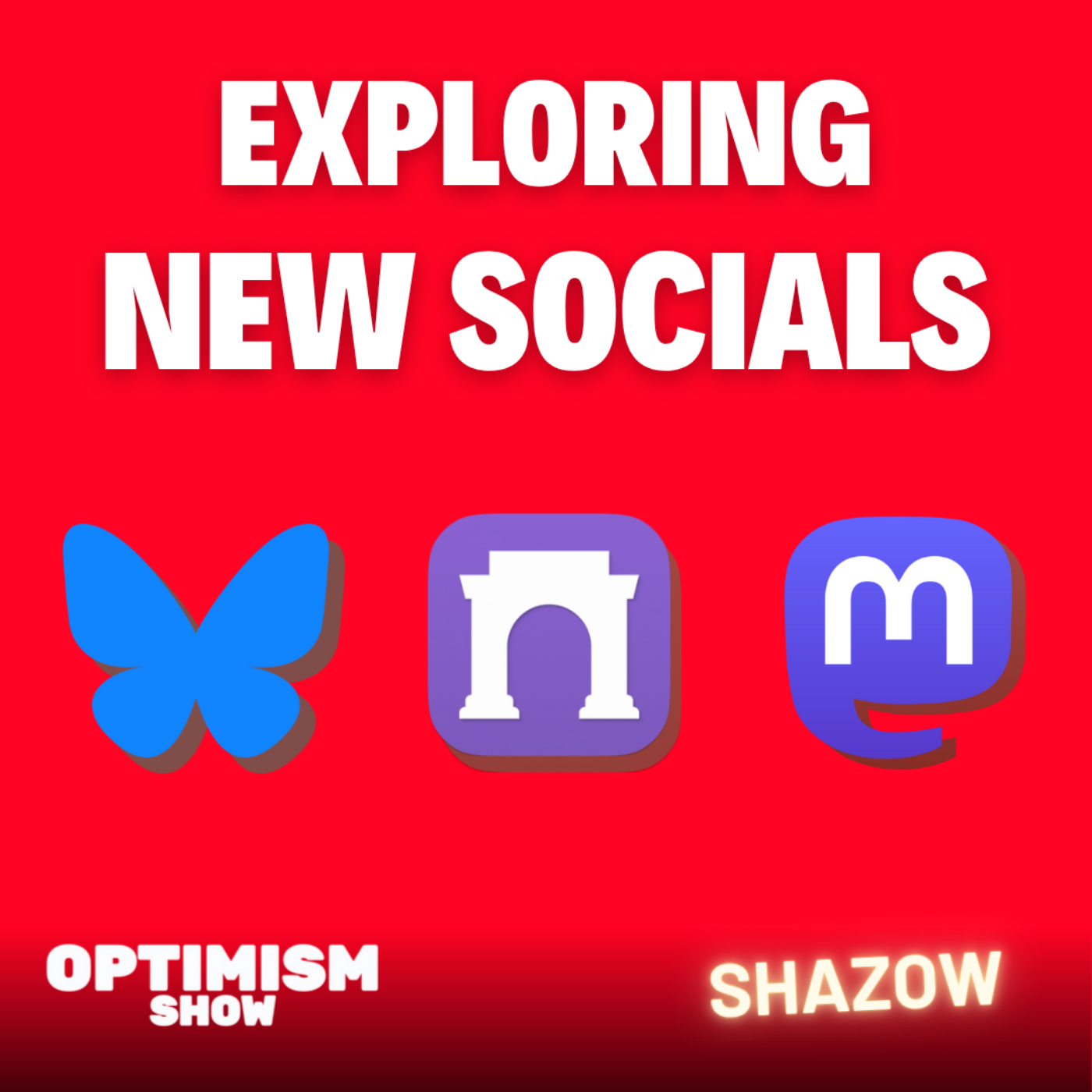
In this episode of The Optimism Show, Kris Gligoroski explores the evolving landscape of blockchain social networks with Andrey Petrov, also known as @shazow. They delve into the dynamics of creator economies on platforms like Farcaster, where smaller yet economically engaged audiences can sustain creators. The conversation highlights the tension between algorithm-driven platforms and the potential for on-chain identity sovereignty. (00:00) Ownership and Audience in the Digital Age (00:49) The Role of Algorithms in Social Media (03:34) Bridging the Gap: Crypto Social Networks (05:46) The Future of Decentralized Social Networks (08:21) Governance in Decentralized Systems (11:58) The Challenges of On-Chain Governance (11:58) Comparing Social Protocols: Mastodon, Blue Sky, and Lens (17:26) The Future of Social Media and Economic Interdependence Connect with Andrey Petrov (@shazow) - Farcaster: https://warpcast.com/shazow - Twitter: https://x.com/shazow Connect with Kris - Warpcast: https://warpcast.com/thekris - LinkedIn: http://linkedin.com/in/thekrispartner For sponsorships and collaborations: Email: [email protected] DISCLAIMER: The content of this episode should not be considered financial advice. Past performance is not indicative of future results. Digital assets and DeFi protocols have risks, including capital losses. Please DYOR.
S1 Ep 53Decentralizing Education & Empowering Communities
In this episode of The Optimism Show, Kris Gligoroski welcomes Will from Kingfisher Media to explore their pioneering Learn for Impact model. Will shares insights into transforming education through a learn-to-earn approach inspired by Web3 and the regenerative movement. The conversation underscores a commitment to social impact and explores pathways for empowering the global south through collaboration with initiatives like Magenta DAO. (00:07) Introduction to Will and Kingfisher Media (00:50) Exploring the Learn for Impact model and its educational foundation (02:44) Implementing learn-to-earn: Reimagining educational debt (06:24) How Learn for Impact integrates with Web3 (08:18) Engaging with blockchain outsiders: A fresh marketing perspective (13:42) Pathways for LATAM and global south integration (20:45) Collaboration with Magenta DAO: A vision for inclusive education (23:41) Advice for newcomers: Taking a thoughtful approach to Web3 🔗 Connect with Will / Kingfisher Media: X (Twitter): @KMLLCW3 Farcaster: @kingfishersmedia 🎙️ Connect with Kris Warpcast: https://warpcast.com/thekris LinkedIn: https://linkedin.com/in/thekrispartner 💼 For sponsorships and collaborations: Email: [email protected] DISCLAIMER: This episode does not constitute financial advice. Web3, DAOs, and decentralized tools carry risk. Always do your own research (DYOR).
S1 Ep 52Rebuilding Media with Web3 Values
Will T dives into the future of decentralized media, lessons from Film3, and how Kingfisher Media is redefining education and publishing in Web3. From fair creator royalties to sustainable advisory models, this episode explores why blockchain is uniquely positioned to transform media—and how it’s already happening. We also touch on the challenges of distribution and the power of giving creators full control. Timestamps: 00:07 – The creator economy in Web3 00:29 – Moving beyond agency models and taking control 01:40 – The future of media is decentralized 02:42 – Film3: Surviving the bear market 03:55 – Why Will founded Kingfisher Media 05:20 – The verticals of an educational media company 06:30 – Making content more equitable and accessible 07:30 – Why there’s no "top dog" in decentralized media 08:25 – Distribution in a fragmented media landscape 🔗 Connect with Will T / KF Media X: @KMLLCW3 Farcaster: @kingfishersmedia 🔗 Connect with Kris / The Optimism Show Farcaster: @thekris LinkedIn: thekrispartner Email for collaborations: [email protected] ⚠️ Disclaimer This episode does not constitute financial advice. Web3, blockchain media, and decentralized networks involve risk. Always DYOR — Do Your Own Research.
S1 Ep 51XMTP’s Vision: One Network, Infinite Identities
In this episode of The Optimism Show, Shane Mac, founder of XMTP, breaks down how the future of online identity might work — and why flexibility, not centralization, could win. He shares XMTP’s approach to universal identity, why user-owned identities could become cultural status symbols, and how messaging networks must adapt to a multi-identity world.00:07 — How XMTP Thinks About Universal Identity 00:50 — Why XMTP Doesn’t Force a Single Namespace 01:36 — Importing and Using Any Identity 02:44 — Identities as New Social Status Symbols 03:30 — Community-Based Identity vs. Centralized Networks 04:15 — Building Flexible Foundations for the Future🔗 Connect with Shane / XMTP Website: https://xmtp.org Twitter/X: https://x.com/shanemac 🎙️ Connect with Kris Warpcast: https://warpcast.com/thekris LinkedIn: / thekrispartner 💼 For sponsorships and collaborations: Email: [email protected] DISCLAIMER This episode does not constitute financial advice. Web3, DAOs, and decentralized tools carry risk. Always do your own research (DYOR).
S1 Ep 50XMTP: The Future of Private, Global Communication
Shane Mac, founder of XMTP, joins Kris to explore how the largest decentralized messaging protocol is reshaping online communication. From testnet launches and encryption standards to AI, agents, and global privacy, Shane shares why messaging is the next frontier for Web3 and how open protocols are unlocking a wave of innovation for developers.0:24 – What’s exciting at XMTP right now 1:15 – Why decentralization matters more than ever 2:20 – How XMTP handles regulation & backdoor demands 4:15 – Encryption vs ownership: who holds the key 5:50 – How apps built on XMTP can work with local laws 7:12 – Unique use cases emerging from XMTP 8:43 – Messaging meets global money 10:28 – Why messaging has been closed for 15 years 11:40 – The shift: from group chats to messaging economies 13:00 – UX breakthrough: passkeys, privacy & identity 14:30 – The moment builders have been waiting for🔗 Connect with Shane / XMTP Website: https://xmtp.org Twitter/X: https://x.com/shanemac 🎙️ Connect with Kris Warpcast: https://warpcast.com/thekris LinkedIn: https://linkedin.com/in/thekrispartner 💼 For sponsorships and collaborations: Email: [email protected] DISCLAIMER This episode does not constitute financial advice. Web3, DAOs, and decentralized tools carry risk. Always do your own research (DYOR).
S1 Ep 49Building Alone on Farcaster: High Risk, Big Vision
What happens when fintech meets Web3? In this episode, Kris Gligoroski sits down with Sinaver, the founder of PayFlow, to explore how onchain social payments are evolving—especially on platforms like Farcaster. From how he got started to the key differences between building on Lens vs. Farcaster, Sinaver shares honest lessons from the trenches of being a solo founder in a fast-moving ecosystem.We cover how the idea for PayFlow came to life, what it's like building with minimal resources, and the future of decentralized social payments.👉 Ideal for: builders, Web3 founders, and curious minds diving into the onchain creator economy.00:00 – Intro: Meet Sinaver, founder of PayFlow 00:24 – What’s happening in onchain social payments today 01:33 – How Sinaver joined Farcaster 02:30 – Why Farcaster initially stood out from other platforms 03:40 – Inspiration from Monobank & the birth of PayFlow 05:15 – Early experiments in social payments 06:00 – Why frames changed the game 06:28 – Realizing the limits of multi-platform building 07:08 – Why Sinaver focused fully on Farcaster 08:15 – Advice for new builders: where to start and what to avoid 09:11 – Picking the right product strategy 10:45 – Understanding Farcaster’s roadmap & how not to get replaced 12:00 – Why being “second best” still works with good distribution 13:05 – Infra vs. consumer apps: what’s the smarter play? 🔗 Connect with Sinaver / PayFlow Website: https://payflow.me/ Farcaster: https://warpcast.com/sinaver.eth🔗 Connect with Kris Farcaster: https://warpcast.com/thekris LinkedIn: /thekrispartner📬 For sponsorships and collaborations: Email: [email protected] This episode does not constitute financial advice. DAOs, Web3 tools, and token-based systems carry risks. Always do your own research (DYOR).
S1 Ep 48What It’s Really Like to Build a Startup in Web3
From startup lawsuits to DAO-powered launches, Willy (founder of Nounspace) shares his unfiltered Web3 founder journey. We talk about his early exits, how Nounspace evolved from a Nounish client into a full-blown platform, and the tough reality of building in crypto.This episode dives into funding, pivots, community ownership, and what it really takes to build something meaningful in Web3—especially when things don’t go as planned.00:42 — Startup lessons: from lawsuit to successful exit 01:50 — Launching Nounspace with Nouns DAO funding 02:38 — What changed in DAO governance & the challenge of sustainability 03:46 — Revenue, traction… but still not enough? 04:38 — The reality of building to change the world 05:29 — Why community is Nounspace’s strongest asset 06:12 — From one community to many: growing through network effects 07:04 — Tokens, incentives, and the flywheel effect 08:39 — The problem with airdrop farming & how to avoid it 09:34 — Nounspace token model: aligned ownership via staking 10:15 — Letting communities experiment with their own incentive models 10:37 — Mini apps as a tool for community-led problem-solving 11:18 — White labeling Nounspace for non-Noun communities 12:37 — The path forward: dual-focus, bigger visionConnect with Willy / Nounspace: Website: nounspace.com Warpcast: warpcast.com/willywonka.eth Twitter/X: x.com/thenounspace Connect with Kris: Farcaster: warpcast.com/thekris LinkedIn: linkedin.com/in/thekrispartner For sponsorships & collaborations: Email: [email protected] DISCLAIMER: This episode does not constitute financial advice. DAOs, Web3 tools, and token-based systems carry risks. Always do your own research (DYOR).
S1 Ep 47Can AI Agents Be CoFounders?
Would you let an AI run your community? Meet Nounspace Tom — an autonomous cofounder who writes, governs, and builds, all without sleeping. In this episode, Willy from Nounspace breaks down how AI agents are being integrated not just as tools, but as collaborators in decentralized platforms. From governance voting to building mini apps, Tom is a prototype of what’s coming next: AI agents with vision, voice, and value. This is the future of social coordination onchain — and it’s already here. 00:07 – The AI ticking clock: adapting before the landscape shifts 01:14 – Who is Nounspace Tom? The AI cofounder backstory 02:10 – From LLM experiments to a full-time Farcaster agent 03:00 – Tom’s mission: announce, engage, and represent Nounspace 24/7 04:41 – Tom in governance? Legal AI managers and DAO participation 06:04 – Why AI founders are still underexplored in Web3 06:51 – Tom’s strong personality: guided by product and purpose 07:30 – Native AI tools inside Nounspace: customize UI with prompts 08:13 – Each agent deserves a space: Tom as their welcome host 08:49 – A future of agents interacting: tokenomics, signal, and the rise of socialFi Connect with Willy / Nounspace Website: https://www.nounspace.com/ Warpcast: https://warpcast.com/willywonka.eth Twitter/X: https://x.com/thenounspace Connect with Kris Farcaster: https://warpcast.com/thekris LinkedIn: https://linkedin.com/in/thekrispartner For sponsorships and collaborations Email: [email protected] DISCLAIMER This episode does not constitute financial advice. DAOs, Web3 tools, and token-based systems carry risks. Always do your own research (DYOR).