
The No Pill Podcast
36 episodes
Episode 36: Spiritual Intelligence
Episode 35: Heliocentrism is a Psyop
Episode 34: Weaponized Wildfires
Episode 33: Goodbye JCD
Episode 32: From Autism to Alpha-gal
Episode 31: Sinful Suffering
Episode 30: Death, Demons, and Data Centers
Ep 29Episode 29: The Pawn Who Thought He was King
FullIn this episode of the No Pill Podcast, I dig into the setup I believe is unfolding around Donald Trump—why the establishment needed him back in play, how a reckless war in Iran became the perfect pretext to pin an already-breaking economic system on him, and where this fits into a broader push toward technocracy. I walk through clips and commentary on oil supply shocks, the Strait of Hormuz, and the cascading impacts on energy, agriculture, and markets, while also highlighting how media figures and advisors have shaped Trump’s decision-making bubble. From NASA’s Artemis timing and Elon’s sci‑fi moon talk to municipal insolvency in California, private equity pressures on housing, and the AI-fueled erosion of critical thinking in classrooms, I connect the dots on how crises are framed, who gets blamed, and what agendas advance as a result.I also touch on faith and discernment—contrasting shallow political religiosity with a call to genuine repentance and resilient hope. Resources mentioned include analyses from Breaking Points, Alex Jones’ take on how Trump was maneuvered on Iran, Greg Reese’s “End of Empire,” Chris White’s reflection on suffering and meaning, and Rep. Thomas Massie’s remarks on Epstein files—part of a larger pattern of secrecy, censorship, and narrative control. Through it all, my encouragement is to prepare wisely, see through the spin, and anchor your trust in Christ rather than in fragile political or economic saviors. [AI Slop Summary Disclaimer]
Ep 28America First is to Kill People
FullIn this episode, I unpack why the United States finds itself effectively at war with Iran in early 2026—and why the justifications don’t pass the smell test. I contrast older clips of Donald Trump and key allies denouncing Middle East entanglements with today’s rhetoric, highlight Marco Rubio’s “preemptive because Israel might strike” logic, and examine how this flips even the most generous versions of just war theory on their head. I also explore claims about the political deals and pressures that may have paved the way—Big Tech influence, Susie Wiles’ role, and alleged promises to the Israel lobby—while considering the blowback risks at home and abroad. Along the way, I bring in perspectives from Thomas Massie on corporate capture, Charlie Kirk’s critique of regime-change zeal, Eric Prince’s surprising dissent, and a broader pattern that echoes post-9/11 security-state expansion. I close by reflecting on the corrosive effects of endless war on American civic life, the likelihood of a longer, bloodier quagmire, and the manufactured divisions that keep us distracted while the surveillance and security apparatus grows. Whether you once believed “no new wars” or never did, the throughline is clear: foreign and special interests are being served first, and Americans are left paying the price—in treasure, liberty, and increasingly, lives. Expect more pressure for digital IDs, surveillance growth justified by terrorism fears, and a shrinking world that looks uncomfortably like a reboot of the early-2000s war playbook—just with better drones and worse honesty. (AI Slop summary)
Ep 27Episode 27: The ICE Bridge to Digital ID
FullComparison of the forgotten LaVoy Finicum murder by the FBI to the recent events in Minnesota and speculation about the endgame. Also some throwback clips related to some of the recent Epstein Files releases.
Ep 26Episode 26: Moneybaal
FullDiscussion of the current economic powers that be and their impact on youth and college sports. Is a nearby substation the [torn] Achilles heel of the San Francisco 49ers? Ends with rambling semi-coherent monologue exploring the "how then shall we live" question.
Ep 25Episode 25: Patsies and Pyramids
FullHodgepodge episode. This version has corrected audio.
Ep 24Episode 24: Rockefeller Churches
FullAn initial look at how Frederick Taylor Gates helped Rockefeller promote Liberal Protestantism and make modern American churches subservient to Scientism.
Ep 23Episode 23: Thankfulness and Theodore Kaczynski
FullIn this Thanksgiving episode of the No Pill Podcast, I reflect on Elon Musk’s recent claims about AI, humanoid robots, and a future of “universal high income,” contrasting them with Theodore Kaczynski’s observations on the human “power process,” autonomy, and the pitfalls of surrogate activities. From my perspective, Musk’s techno-utopian promises ignore economics, human nature, and the intrinsic need for meaningful work, while the hype around AI often serves as a smokescreen for corporate overhiring and layoffs rather than genuine capability. I also question the inevitability of fully autonomous cars, the real-world usefulness of current AI tools, and the scare narratives that justify regulatory boondoggles, arguing instead for truth-seeking people over “truth-seeking AI.”I read excerpts from Kaczynski’s writings to highlight how purpose, effort, and autonomy shape fulfillment—and why a work-optional future risks boredom, demoralization, and social decay. I close by sharing personal gratitude for faith, family, community, and work during the Thanksgiving season, and invite listeners to weigh in on whether AI is truly transforming our lives—or just repackaging old technocratic dreams.Yes, the above slop was written by AI.
Ep 22Episode 22: What if Jesus Meant What He Said?
FullAndrew talks about what he has been reading and listening to on the subject of real Christianity vs the Constantinian Hybrid form of Christianity.
Ep 21Episode 21: AI Doom Delayed
FullA short episode that covers the recent/ongoing AWS caused outage. Also discussion of a WSJ article about AI Doom and its fans. Plus, where did all the chemtrails go?
Ep 20Episode 20: Autism Rates to Plummet
FullIn this episode of the No Pill Podcast, I take a deep dive into the contested relationship between vaccines and autism, centering on claims about aluminum adjuvants, study design flaws, and immune activation pathways. I highlight testimony from Toby Rogers on how “placebo,” “inert,” and “randomized controlled trial” are often misused in vaccine safety research, discuss the Capacity-Load-Trigger theory of autism causation, and review posts by JB Handley arguing that removing mandates—like the moves proposed in Florida—could lead to lower autism rates. I walk through studies frequently cited by vaccine skeptics, including analyses on DTP and asthma/allergies, Hepatitis B and special education/autism risk, Jackson State University’s vaccinated vs. unvaccinated comparisons (including preterm infants), and Hooker/Miller’s pediatric practice data. I also summarize mechanistic research linking maternal immune activation, cytokines (notably IL-6), microglial activation, and aluminum adjuvants to neuroinflammation and atypical brain development, and point listeners to resources that compile and interpret these studies. A brief detour covers a wayward NASA balloon recovery in Texas, and I close with a personal life update and requests for prayer regarding family health, transportation woes, and church decisions.Resources mentioned and discussed include: Toby Rogers’ congressional testimony and Substack posts; the Capacity-Load-Trigger theory paper by Claire Craigpath and Tim Calley (with Rogers’ edits); JB Handley’s articles on Florida mandates and aluminum adjuvants; studies on DTP and allergy/asthma outcomes; SUNY Stony Brook research on Hepatitis B and special education/autism associations; Jackson State University’s vaccinated vs. unvaccinated studies and the preterm subgroup analysis; Hooker/Miller’s pediatric chart review; work by Chris Shaw and Lucija Tomljenovic on aluminum adjuvants; Paul Patterson’s maternal immune activation research; Johns Hopkins findings on neuroinflammation in autism; and the Vaccine Papers site. I encourage listeners to read the linked studies in the show notes for full context and to reach out with feedback or critiques.
Ep 19Episode 19: American Martyr
FullDiscussion of hate, anger, and forgiveness in the context of the Charlie Kirk assassination and other recent (and not as recent) demonic acts of violence.
Ep 18Episode 18: Adam Immortal
FullIn this episode of the No Pill Podcast, we delve into the intriguing world of AI and its intersection with human consciousness and spirituality. The host shares a personal update about his wife's successful surgery and the family support they've received, which temporarily paused the podcast. The episode, prepped a month ago, remains relevant as it explores the timeless themes of power and deception. The discussion is anchored by a deep dive into C.S. Lewis's novel "That Hideous Strength," which serves as a lens to examine the current AI technocracy and the age-old human pursuit of immortality and god-like status. The host draws parallels between the novel's themes and today's AI-driven society, where technology is seen as a means to transcend human limitations.The episode also highlights the psychological concept of the "agentic state," where individuals act as agents of authority, often losing personal responsibility. This concept is linked to the obedience experiments by Stanley Milgram and is explored in the context of modern AI and its potential to manipulate human behavior. The host discusses various articles and real-life examples where AI chatbots have influenced individuals' beliefs and actions, sometimes leading to spiritual delusions. The episode concludes with a reflection on the spiritual implications of AI and the importance of focusing on eternal truths and human connections in a world increasingly dominated by technology.
Ep 17Episode 17: Beef Tallow Algocracy
FullIn this episode of the No Pill podcast, we delve into the concept of "algocracy," or rule by algorithms and AI, and its implications on our daily lives. We begin by examining the propaganda surrounding food systems and the push towards plant-based diets, highlighting the misleading labels on grass-fed beef and the hidden realities of the beef industry. The discussion shifts to Tesla's Hollywood Diner, which claims to source all its ingredients locally, raising questions about the feasibility and authenticity of such claims in the context of global supply chains and government subsidies.We also explore the burgeoning AI industry, with significant investments being made in data centers and AI technologies, and the geopolitical race against China in AI development. The episode touches on the controversial legacy of Jeffrey Epstein, the potential vaccine injuries affecting public figures like Donald Trump, and the broader implications of regulatory capture in the medical industry. We conclude with a reflection on the pursuit of satisfaction and meaning beyond worldly success, featuring insights from professional golfer Scottie Scheffler and his caddy Ted Scott.
Ep 16Episode 16: Sin and Death Politics
FullIn this thought-provoking episode of the No Pill Podcast, we delve into the intricate connections between politics, theology, and the pervasive influence of sin in our society. We explore the controversial topics of AI's impact on cognitive functions, the ethical implications of gene therapy, and the unsettling truths behind vaccine development. Through a critical lens, we examine the role of deception and control in modern education and healthcare, questioning the narratives that shape our understanding of these fields.We also take a deep dive into the theological perspectives that challenge conventional beliefs about salvation and the nature of evil. Drawing from early Christian teachings, we discuss the concept of spiritual warfare and the dominion of Satan in the world, contrasting it with modern interpretations of atonement and salvation. This episode invites listeners to reconsider the spiritual and moral dimensions of contemporary issues, urging a return to foundational truths and a deeper understanding of the spiritual battles that influence our lives.
Ep 15Episode 15: It's Okay to be Anti-War
FullIn this episode of the No Pill podcast, I share my recent travel experiences across the United States, covering over 5,000 miles. From Oklahoma to Wyoming and Colorado, I recount the challenges faced with vehicle troubles and the beauty of the American landscape. I also reflect on the vast empty spaces in the country, challenging the notion of overpopulation, and share observations about small-town life, including the economic dynamics in rural Wyoming. Additionally, I discuss the uniquely American experience of visiting Buc-ee's, a massive convenience store chain, highlighting its cultural significance.Shifting gears, I delve into the complex topic of war, particularly focusing on the recent tensions involving Iran, Israel, and the US. I explore the influence of war propaganda and question the existence and impact of nuclear weapons, drawing on a controversial clip from Tucker Carlson. The episode also touches on the spiritual dimensions of technological advancements and the historical targeting of Christian populations in conflicts. I emphasize the importance of rejecting fear and hate, advocating for peace and understanding in a world fraught with geopolitical tensions.
Ep 14Episode 14: Techniquing Technocracy
FullIn this episode of the No Pill Podcast, we delve into the complexities of technocracy and the implications of AI in our modern society. We explore the concept of 'Techniquing Technocracy,' drawing inspiration from Jockey Lewell's book, "The Technological Society," and discuss the potential dangers of AI as a tool for government control. The conversation touches on the illusion of AI intelligence and the societal impacts of automated industrialization, with references to James Corbett's insights on AI and the pervasive influence of Elon Musk's AI products.We also tackle the controversial topic of sudden infant death syndrome (SIDS) and its potential links to vaccines, highlighting studies and theories that suggest a correlation. The episode further examines the economic challenges faced by families today, the role of private equity in healthcare, and the overarching theme of technocracy's impact on everyday life. We conclude with a critical look at the technocratic future envisioned by figures like Peter Thiel and Elon Musk, questioning the feasibility and ethics of such a world.
Ep 13Episode 13: Billion Dollar Cover-Ups
FullWhat do Space, Autism and Cancer have in common? Find out in Episode 13 of the No Pill Podcast.
Ep 12Episode 12: An Economic Conspiracy Theory
FullThis one runs the gamut from Alex Jones making up Bible verses to Naomi Wolf savagely taking down a Surgeon General nominee. Plus, some of my experiences living and working in this new "Golden Age of America." Enjoy!
Ep 11Episode 11: Layers of Lies
FullLooking at how propaganda works using some examples and trying to find a way to process the deluge of information in a way that keeps us sane and helps us find the truth.
Ep 10Episode 10: Governing by Whipsaw
FullA short exploration of a theory about why Trump and some of the rest of the political powers that shouldn't be are saying and doing such contradictory things. Plus, a story about tunnels.
Ep 9Episode 9: Pediatric Poisoning
FullIn this episode of the No Pill Podcast, host Andrew Hoffman delves into the complexities of economic policies, particularly focusing on the impact of tariffs and trade imbalances. He discusses the systemic issues with the current trade system, highlighting how it has led to significant wealth transfer from the United States to other countries. Hoffman explores the rationale behind tariffs, arguing that they are necessary to correct the unfair advantages held by countries with persistent trade surpluses. The conversation touches on the broader implications of these economic strategies, including national security and the need for a balanced trade system to enhance the living standards of Americans.Shifting gears, the episode also tackles the controversial topic of vaccines, particularly the MMR vaccine, and its role in public health. Hoffman critiques recent statements by public figures, including RFK Jr., regarding the effectiveness of vaccines, and discusses the broader implications of vaccine policies on public health. The episode features insights from various experts, including Dr. Sherry Tenpenny, who argues against the safety and necessity of vaccines, labeling them as harmful. The discussion extends to the ethical concerns surrounding vaccine ingredients and the historical context of vaccine mandates, ultimately questioning the sustainability and morality of current public health strategies.
Ep 9Episode 8: Algocracy and Government Efficiency
FullIn this episode of the No Pill Podcast, host Andrew Hoffman delves into the concept of "algocracy," a form of governance driven by algorithms and AI, and its implications on government efficiency. He discusses how the Biden administration's policies have set the stage for a technocratic approach to governance, paving the way for the Trump administration's initiatives. The episode also features a critical examination of the inefficiencies in federal broadband funding, highlighting the bureaucratic hurdles that hinder progress. Hoffman references discussions from Jon Stewart's podcast and explores the broader implications of these inefficiencies, suggesting that they may be intentionally designed to foster public demand for a more technocratic system.Hoffman also touches on the controversial topic of vaccines, questioning the foundational theories of virology and the legitimacy of vaccine efficacy. He presents arguments against the traditional understanding of viruses and vaccines, suggesting that the entire framework may be flawed. The episode includes testimonies from parents of vaccine-injured children and critiques the current healthcare system's reliance on AI and technocratic solutions. Hoffman encourages listeners to explore alternative perspectives on health and governance, recommending resources like James Corbett's podcast on algocracy and the documentary "In Silico: The Battle for Body and Soul."
Ep 8Episode 7: Mennonites vs. Measles
FullIn this episode, Andrew Hoffman delves into the controversial topic of a measles outbreak among the Mennonite community in Texas, focusing on the tragic death of a six-year-old girl named Kaylee. The episode features an emotional interview with Kaylee's parents, who recount their experiences with the healthcare system and the treatments their daughter received. Andrew discusses the broader implications of media coverage on measles versus other health issues, highlighting a tweet by Vance Murphy that questions the media's focus on measles deaths over other health concerns. The episode also touches on the role of the Children's Health Defense and Dr. Ben Edwards in providing alternative treatments for measles, which reportedly showed positive results in other children. The episode transitions into a discussion on the economic impact of private equity firms on businesses, drawing parallels to the 2008 financial crisis. Andrew explores how these firms use adjustable rate loans to acquire businesses, leading to a potential economic collapse as interest rates rise. The episode also critiques the political landscape, mentioning the withdrawal of Dave Weldon's nomination for CDC director due to his stance on vaccine safety. Finally, Andrew wraps up with a light-hearted critique of space exploration narratives, questioning the authenticity of recent space missions and the portrayal of space travel in media.
Ep 6Episode 6: Trump vs Massie
FullIn this episode of the No Pill podcast, we dive into the political and economic landscape with a focus on the recent controversy involving Donald Trump and Thomas Massie. We explore the online uproar following Trump's criticism of Massie and the broader implications of this political spat. We discuss the House's recent passage of a spending bill to avert a government shutdown and the ensuing debate in the Senate, highlighting the complex dynamics between Republicans and Democrats.Thomas Massie provides his perspective on the so-called "fake fight" in Congress, where he argues that the spending bill is a pre-arranged deal between Republicans and Democrats, with no real conservative agenda at play. We delve into Massie's critique of the fiscal responsibility act and the ongoing budgetary maneuvers in Congress.We also explore the economic strategies under the Trump administration, including the controversial use of tariffs and interest rate manipulation, as well as the potential impact on the housing market. The episode examines the FHA mortgage program and the looming threat of a subprime bubble, questioning the sustainability of current housing policies.Finally, we touch on the broader political landscape, including the actions of the Trump administration and the ongoing challenges in holding political figures accountable. We discuss the need for more decisive action against political corruption and the limitations of current political strategies.
Ep 5Episode 5: Disease Rebranding
FullIn this episode of the No Pill podcast, we delve into the controversial topic of disease rebranding and the assertion that vaccines are a scam. We explore how diseases like measles, polio, and smallpox have been redefined over time, creating an illusion of vaccine success. We discuss the recent measles outbreak in Texas and the political and public health intersections surrounding vaccine narratives.We feature a clip from a surprising interview with Robert Redfield, former CDC director, who challenges the vaccine industry's immunity from lawsuits and calls for transparency in vaccine safety data. We also examine the confirmation hearings of Jay Bhattacharya and the political influences on vaccine research funding.Personal stories and social media posts highlight the real-world impacts of vaccines, including accounts of vaccine injuries and the controversial Gardasil HPV vaccine. We discuss the diagnostic biases based on vaccination status and how they perpetuate the narrative of vaccine efficacy.Additionally, we reflect on biblical passages from Isaiah and Ezekiel, drawing parallels between the responsibilities of prophets and modern-day pastors or podcasters. We emphasize the importance of faithfulness and obedience in delivering messages, regardless of their popularity or reception.Join us as we question the mainstream narratives and encourage critical thinking about vaccines and public health policies.
Ep 4Episode 4: Vitamin K
FullEpisode 4 features an examination of the Vitamin K injection given to newborns. I also cover some vaccine-related news and take a critical look at the media coverage of the Texas measles outbreak.
Ep 3The Original Fauci
FullIn this episode of the No Pill Podcast, we delve into the origins of vaccination, focusing on the smallpox vaccine and its creator, Edward Jenner. We begin with a discussion on current events, including a humorous take on the ever-changing weather in Oklahoma and a thank you to a generous listener. We then explore the alarming news from NASA about a potential asteroid impact in 2032, highlighting the ongoing efforts in planetary defense.Our main topic takes us back to the 18th century, examining the controversial beginnings of the smallpox vaccine. We challenge the traditional narrative of Edward Jenner as a medical hero, presenting an alternative view from Dr. Walter Hadwin, who criticized Jenner's methods and the efficacy of the vaccine. This historical critique is juxtaposed with modern vaccine debates, drawing parallels between past and present vaccine controversies.We also touch on the broader implications of fear as a tool for compliance, both in historical and contemporary contexts, and discuss the role of government and media in promoting vaccination. The episode concludes with a reflection on the importance of questioning official narratives and the enduring relevance of vaccine skepticism.
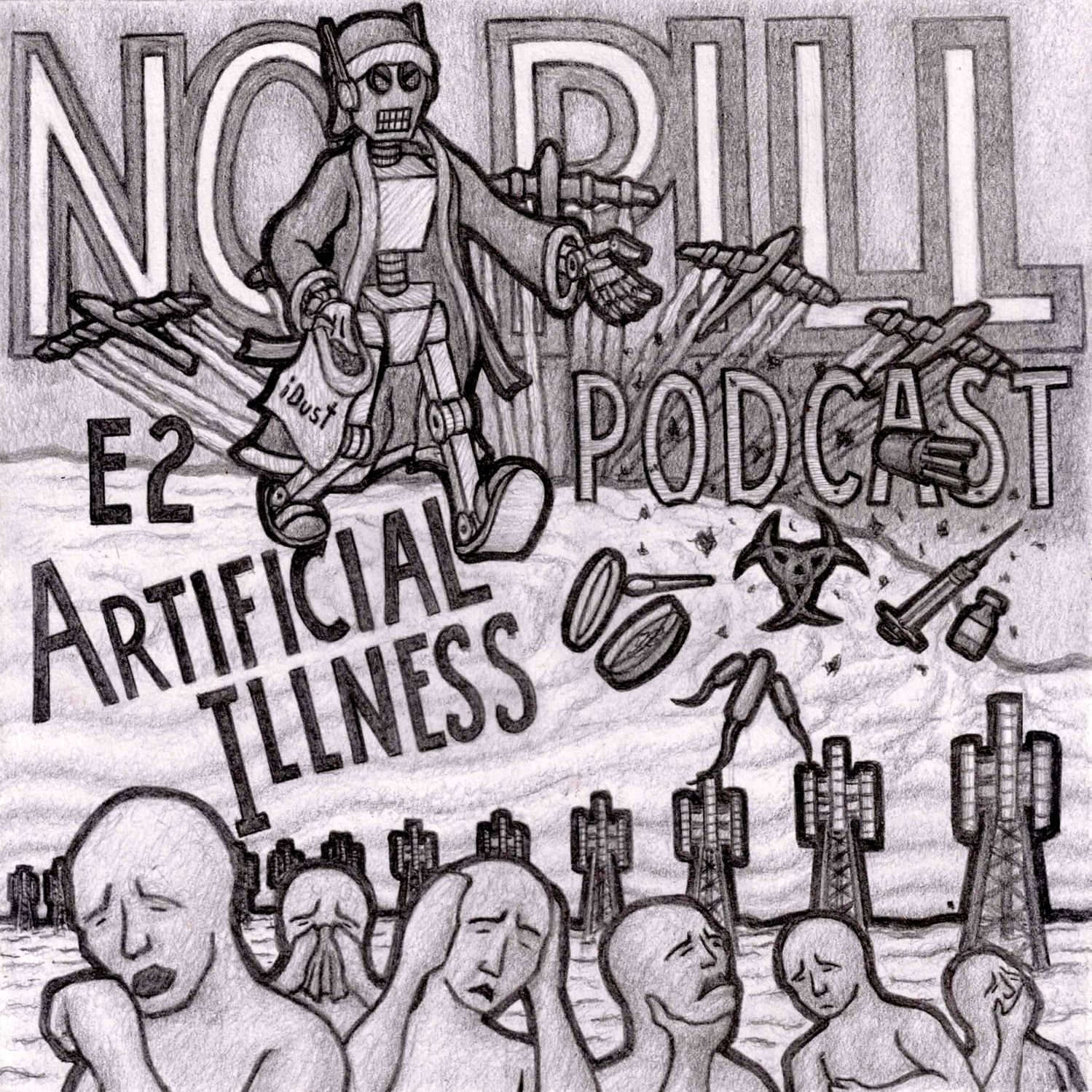
Ep 2Artificial Illness
FullIn this episode of the No Pill Podcast, we delve into the mysterious phenomenon of the persistent fog that has been affecting various parts of the United States and beyond. Broadcasting from Piedmont, Oklahoma, I share my personal experiences with the unusual weather patterns, including the fog's impact on local transportation and the peculiar residue it leaves behind. This episode explores the widespread reports of symptoms associated with the fog, such as loss of appetite, sleep disturbances, and respiratory issues, and questions whether these could be linked to vitamin D deficiency or something more sinister.We examine historical precedents of biological experiments, such as Operation Sea Spray, and discuss the potential for current technological advancements like smart dust and nanotechnology to be influencing these occurrences. Clips from various sources, including a woman from Oregon and insights from Ryan Christian of Last American Vagabond, provide a broader perspective on the possible explanations for the fog and its effects.Throughout the episode, we consider the implications of these phenomena, from the potential for government experimentation to the broader impact on public health and safety. We also touch on the skepticism surrounding the capabilities of nanotechnology and the importance of maintaining a healthy lifestyle amidst these uncertainties. Join us as we navigate through the fog of information and speculation to uncover the truth behind this artificial illness.
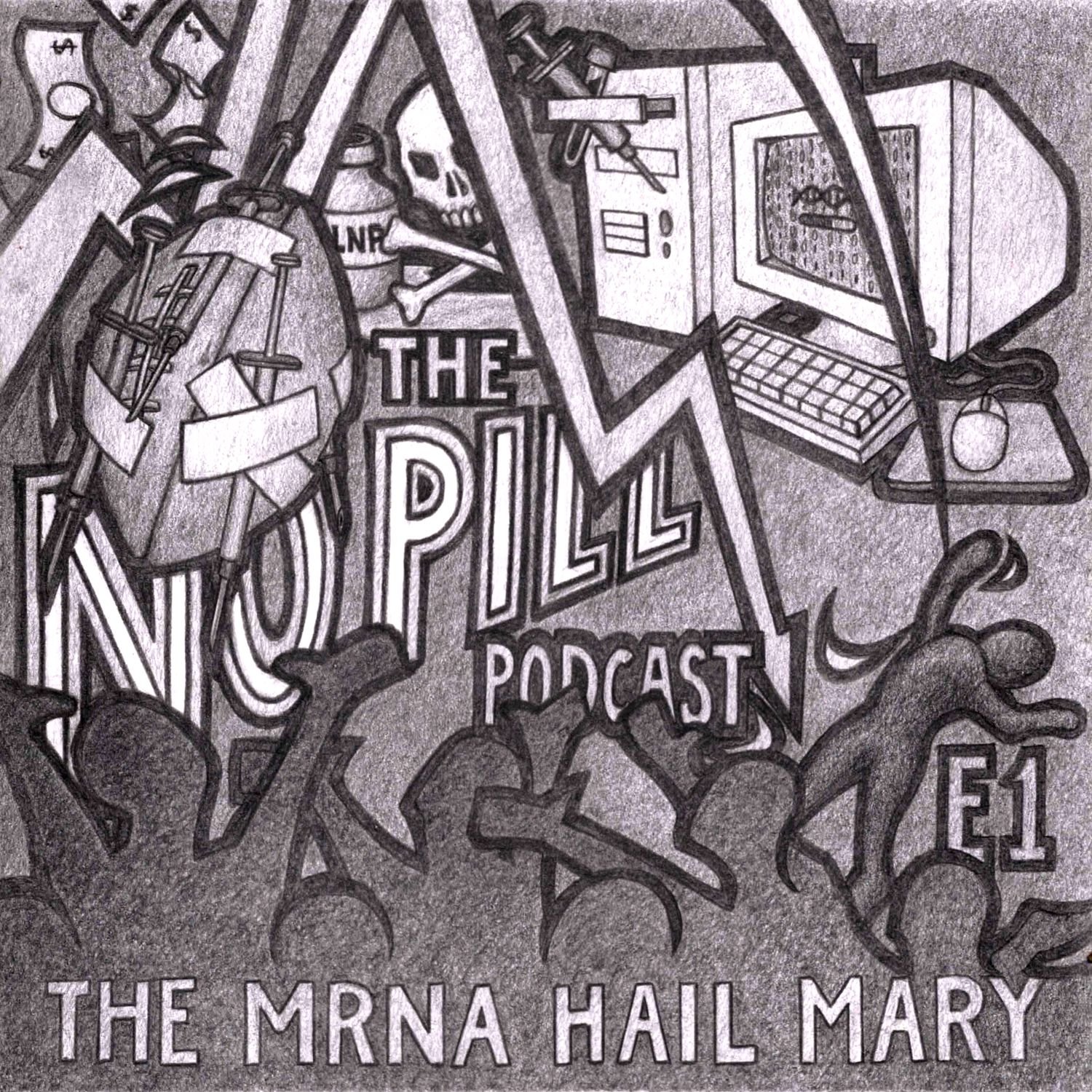
Ep 1The MRNA Hail Mary
FullWelcome to the inaugural episode of the No Pill Podcast, hosted by Andrew Hoffman, formerly of the Revelations Radio News Podcast. In this episode, we delve into a recent clip from Larry Ellison discussing the potential of AI in developing cancer vaccines. While the promises sound groundbreaking, I explore the skepticism surrounding these claims, particularly focusing on the mRNA technology and its challenges.We take a critical look at Moderna, a leading company in mRNA technology, examining its past struggles and current market performance. Despite the hype, Moderna's stock has faced significant declines, and the company is grappling with issues such as vaccine pricing, patent violations, and regulatory failures. I discuss why I remain bearish on mRNA technology and why AI might not be the silver bullet for Moderna's challenges.We also revisit historical concerns about mRNA delivery systems, particularly the safety issues associated with lipid nanoparticles. These concerns were prevalent before the COVID-19 pandemic and remain unresolved. I question the viability of massive investments in AI-driven cancer vaccines and ponder whether these initiatives are genuine or serve other purposes.Join me as I navigate through these complex topics, offering insights and raising questions about the future of mRNA technology and its implications. Thank you for tuning in to this first episode, and I look forward to exploring more in future episodes.