
The New School at Commonweal
515 episodes — Page 11 of 11

2007.06.14: Geoff Lawton - Permaculture Design
Geoff Lawton Permaculture Design Join permaculture teacher, designer, and speaker Penny Livingston-Stark as she hosts this New School conversation with Geoff Lawton, Australian permaculture teacher and advocate. Geoff Lawton Since 1985, Geoff has undertaken thousands of positions consulting, designing, teaching and implementing in seventeen different countries around the world. Clients have included private individuals, groups, communities, governments, aid organizations, non-government organisations and multi-national companies. In October 1997, Bill Mollison, upon his retirement, asked Geoff to establish and direct a new Permaculture Research Institute on the 147 acre Tagari Farm previously developed by Bill. Geoff Lawton developed the site over three years and established The Permaculture Research Institute as a registered charity and global networking centre for permaculture projects. Geoff Lawton is the managing director of The Permaculture Research Institute. Find out more about Geoff on his website. Find out more about The New School at tns.commonweal.org.

2007.06.07: Jacob Needleman - Why Can't We Be Good? Overcoming Obstacles to Our Higher Ideals
Jacob Needleman Why Can't We Be Good? Overcoming Obstacles to Our Higher Ideals Join this conversation between author and philosophy professor Jacob Needleman and Steve Heilig, the director of Public Health and Education for The San Francisco Medical Society and a research associate for The Collaborative on Health and the Environment (CHE) at Commonweal. Jacob Needleman Jacob is a professor of philosophy at San Francisco State University and the author of many books, including The American Soul, The Wisdom of Love, Time and the Soul, The Heart of Philosophy, Lost Christianity, and Money and The Meaning of Life. In addition to his teaching and writing, he serves as a consultant in the fields of psychology, education, medical ethics, philanthropy, and business, and has been featured on Bill Moyers’s acclaimed PBS series A World of Ideas. Find out more about Jacob on his website. Find out more about The New School at tns.commonweal.org.

2007.06.04: Parker Palmer, PhD with Michael Lerner - The Politics of the Brokenhearted
Parker Palmer, PhD The Politics of the Brokenhearted Join Michael Lerner in conversation with Dr. Parker Palmer—an author, educator, and activist who focuses on issues in education, community, leadership, spirituality, and social change. From our podcast: I think what our times require of us is a profound understanding of how we’re all called to stand in the tragic gap between what is and what could and should be, without falling out into one side or the other of that gap…both corrosive cynicism and irrelevant idealism take us out of the action, as it were. —Parker Palmer Parker Palmer, PhD Parker served for fifteen years as senior associate of the American Association of Higher Education. He now serves as senior advisor to the Fetzer Institute. He founded the Center for Courage and Renewal, which oversees the “Courage to Teach” program for K-12 educators across the country and parallel programs for people in other professions, including medicine, law, ministry, and philanthropy. Find out more about Parker on his website. Find out more about The New School at tns.commonweal.org.

2007.05.14: Sandra Steingraber, PhD - Healing Inside Out:A Poet's Quest, A Mother's Journey
Sandra Steingraber, PhD Healing Inside Out: A Poet's Quest, A Mother's Journey Join Michael Lerner in conversation with Sandra Steingraber, a mother, an American biologist, cancer survivor, poet, and author in the tradition of Rachel Carson. From our podcast: There are a million things that suddenly you have to learn about, that you never thought about before, when you become a new parent. But for me that responsibility includes the evidence linking air pollution to premature birth, or mercury contamination in fish to learning disabilities. And I don’t really feel any sense of conflict between the joy of parenting and the responsibility of taking care of the environment. They both spring from the love one feels for one’s child. —Sandra Steingraber Sandra Steingraber Sandra received her doctorate in biology from the University of Michigan and master’s degree in English from Illinois State University. She is the author of Post-Diagnosis, a volume of poetry, and coauthor of a book on ecology and human rights in Africa, The Spoils of Famine. She has taught biology at Columbia College, Chicago; held visiting fellowships at the University of Illinois, Radcliffe/Harvard, and Northeastern University; and served on President Clinton’s National Action Plan on Breast Cancer. Find out more about Sandra on her website. Find out more about The New School at tns.commonweal.org.

2007.05.07: Pete Myers, PhD - Environmental Health Science: Human and Ecosystem Health
Pete Myers, PhD Environmental Health Science: Human and Ecosystem Health Join Michael Lerner in conversation with environmental scientist and author Pete Myers. From our podcast: All this time we’ve been talking about problems. We’ve got to start showing there are practical, realistic solutions… I think one of the most important things we can do right now is to figure out how to get more resources into the field of green chemistry so that when we identify something that is dangerous, not only can we offer an alternative to the consumer, but we can argue in front of people making public health decisions that that molecule isn’t necessary because there’s a replacement. —Pete Myers Pete Myers, PhD Pete is founder, CEO, and chief scientist of Environmental Health Sciences in Charlottesville, Virginia. He is also coauthor of Our Stolen Future (1996), which explores the threats posed by man-made chemical contaminants to fetal development and human health, and he is senior advisor to the United Nations Foundation (Washington, DC). From 1990-2002 Myers was director of the W. Alton Jones Foundation, a private foundation supporting efforts to protect the global environment and to prevent nuclear war. He received his doctorate in zoology from the University of California, Berkeley, and lives in Virginia. Find out more about The New School at tns.commonweal.org.

2007.04.14: Rick Ingrasci, MD, MPH - Joy, Social Intelligence, and the Ethical Imagination
Rick Ingrasci, MD, MPH Joy, Social Intelligence, and the Ethical Imagination Join Michael Lerner in conversation with healer and activist Rick Ingrasci, MD, about joy, social intelligence, and the ethical imagination. From our podcast: I really feel that our generation, the sixties generation, had made a breakthrough that was almost like a recidivist, that we went back and rediscovered what indigenous cultures have known for many, many years, which is that carnival and festivity and ritual and ways to experience communitas, which is really spontaneous love in community, is probably a part of how we’re going to find our way out of the jam we’re in, as a planet let’s say. —Rick Ingrasci Rick Ingrasci, MD, MPH Rick is a healer and activist who has been involved in consciousness exploration and social transformation since the mid 1960s. Ingrasci has a strong background in psychiatry, holistic medicine, and community development. He co-founded Physicians for Social Responsibility, the American Holistic Medical Association, Interface, and Hollyhock, a retreat center in British Columbia. He is the co-author of Chop Wood, Carry Water: A Guide to Finding Spiritual Fulfillment in Daily Life Find out more about The New School at tns.commonweal.org.
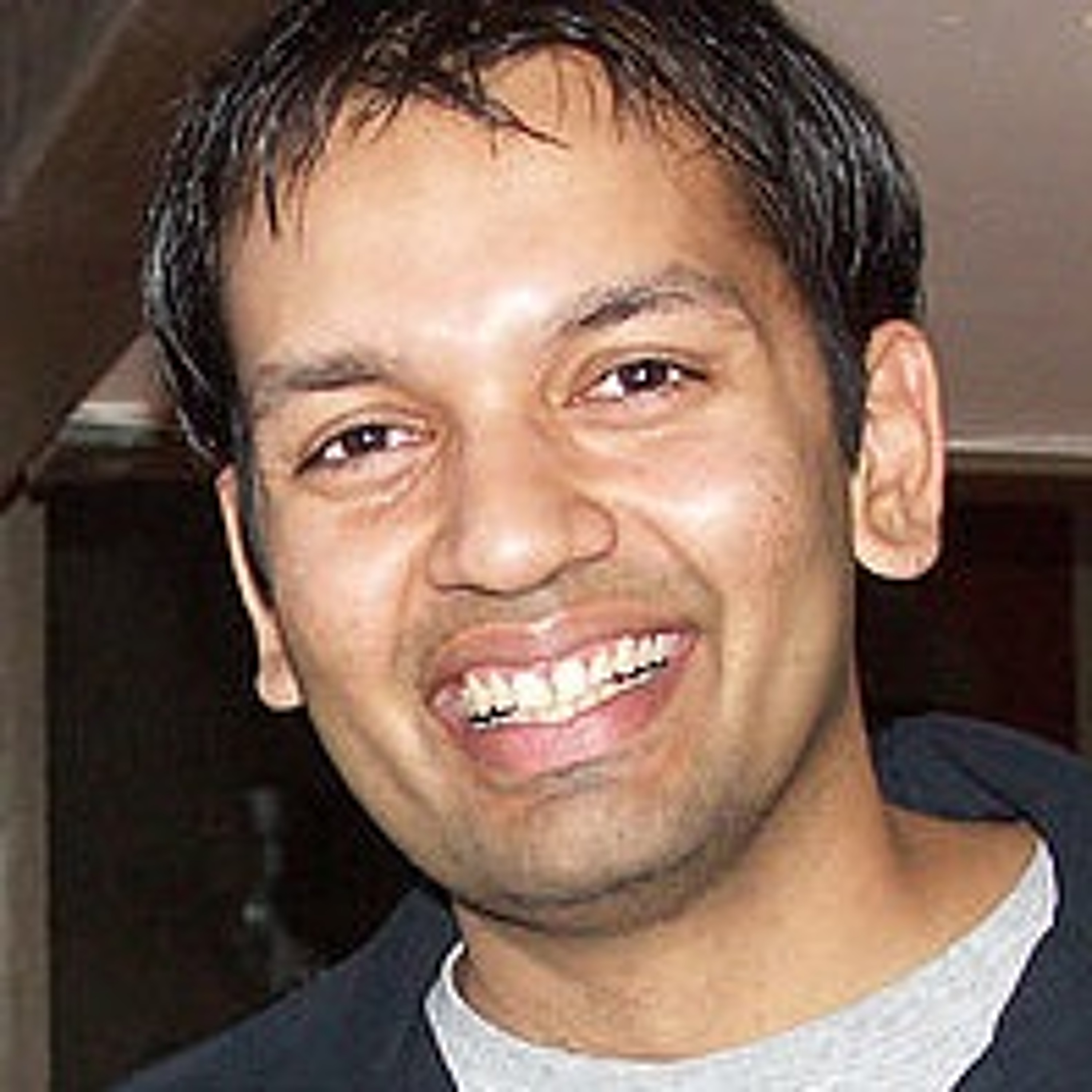
2007.04.17: Nipun Mehta with Michael Lerner - The Invisible Revolution of the Inner-net
Nipun Mehta The Invisible Revolution of the Inner-net Join Michael Lerner in conversation with Nipun Mehta—ex-dot-com whiz kid and founder of ServiceSpace.org—in conversation about impermanence, service, and co-creating a better world. From our podcast: I think that so many times younger people are talked down to; they’re talked at rather than talked with. And I think that is sort of the biggest strategic mistake…I really have the view and I found that it works really well—to see them as equals, to see them as co-creators of a shared life that we are doing. And that is true at a deep spiritual level. We are all co-creating. Nipun Mehta Nipun Mehta is the founder of ServiceSpace.org, a fully volunteer-run organization that has delivered millions of dollars of web-related services to the nonprofit world for free. The recipient of the Jefferson Award for Public Service, the President’s Volunteer Service Award and an honor from the world’s most famous clown, his work creatively leverages web technologies for collaborative and transformational giving. He serves on the advisory boards of the Seva Foundation, Dalai Lama Foundation, and Airline Ambassadors. Nipun has a computer science and philosophy degree from UC Berkeley. He started his software career at Sun Microsystems, but, dissatisfied by the dot-com greed of the late 90s, Nipun changed direction and created a website and an organization named CharityFocus, now ServiceSpace. Find out more about The New School at tns.commonweal.org.

2007.04.03: Idelisse Malave and Gihan Perera - Race, Justice, and the American Dream
Idelisse Malave and Gihan Perera Race, Justice, and the American Dream Join Michael Lerner in conversation with Tides Foundation‘s Idelisse Malave and union organizer and activist Gihan Perera. Idelisse Malave Responsible for the overall management of the Tides Foundation since 1996, Idelisse works with Tides staff to deliver excellent service and create opportunities for donors to increase the impact of their grantmaking. Over a twenty-five-year career dedicated to social justice, Idelisse litigated civil rights cases with the Puerto Rican Legal Defense and Education Fund, represented women in family law matters, and co-authored a bestseller, Mother Daughter Revolution. She was a founding board member of the New York Women’s Foundation and served as Vice President of the Ms. Foundation for Women for six years before coming to Tides. Gihan Perera Gihan co-founded the Miami Workers Center together with Tony Romano in 1999. Gihan is a native of Sri Lanka and grew up in South Los Angeles. He is a strategist, published writer, and public speaker. Prior to founding the Center, Gihan was a union organizer, leading union recognition and contract agreement campaigns in Miami, South, and North Carolina. He began his activism at an early age and became a trainer and recruitment director for the AFL-CIO’s Organizing Institute before completing college work. Gihan serves on the board of the local ACLU, PRE (Philanthropy for Racial Equality), and the Miami Light Project. He holds a bachelor’s degree in International Development Studies from the University of California, Berkeley. Find out more about The New School at tns.commonweal.org.

2007.03.22: Sushmita Ghosh joins Michael Lerner - "Social Entrepreneurs"
Sushmita Ghosh Social Entrepreneurs Join Michael Lerner in conversation with Ashoka social entrepreneur Sushmita Ghosh. Ashoka’s Changemakers program is pioneering a transparent online community that “open sources” innovative solutions to social problems worldwide. With its focus on thematic, collaborative competitions, it has sourced over 500 high-impact action blueprints for solving social problems. From our podcast: The stories began reporting not just about this social entrepreneurial who was a hero, but how a bunch of people took initiative in their own way and connected. So the whole dynamic becomes not just about one person being great, but strategies for connecting with greatness. Sushmita Ghosh Born in India, Sushmita was a journalist who rose through the ranks to become President of Ashoka, the global network of social entrepreneurs. In this conversation she describes Ashoka and her new work with Changemakers, an Ashoka program that extends social entrepreneurship to a wider global community. Find out more about Sushmita on Ashoka’s website. Find out more about The New School at tns.commonweal.org.

2007.03.19: Chet Tchozewsi with Michael Lerner - Intuition and Grantmaking
Chet Tchozewsi Intuition and Grantmaking In this conversation with Michael Lerner, Chet describes the critical role intuition plays if you want to distribute small grants to thousands of grassroots organizations in over one hundred countries. Chet Tchozewski Chet is the founder and executive director of the Global Greengrants Fund, an international environmental foundation that makes small grants to grassroots environmental groups in developing nations around the globe. Since 1993, Greengrants has made in excess of 3,000 grants, in more than 100 countries, totaling about $10 million. He was awarded the prestigious Robert W. Scrivner Award for Creative Philanthropy by the Council on Foundation, an award that honors grantmakers who “possess a combination of vision, principle and personal commitment to making a difference in a creative way through grant making.” Find out more about The New School at tns.commonweal.org.
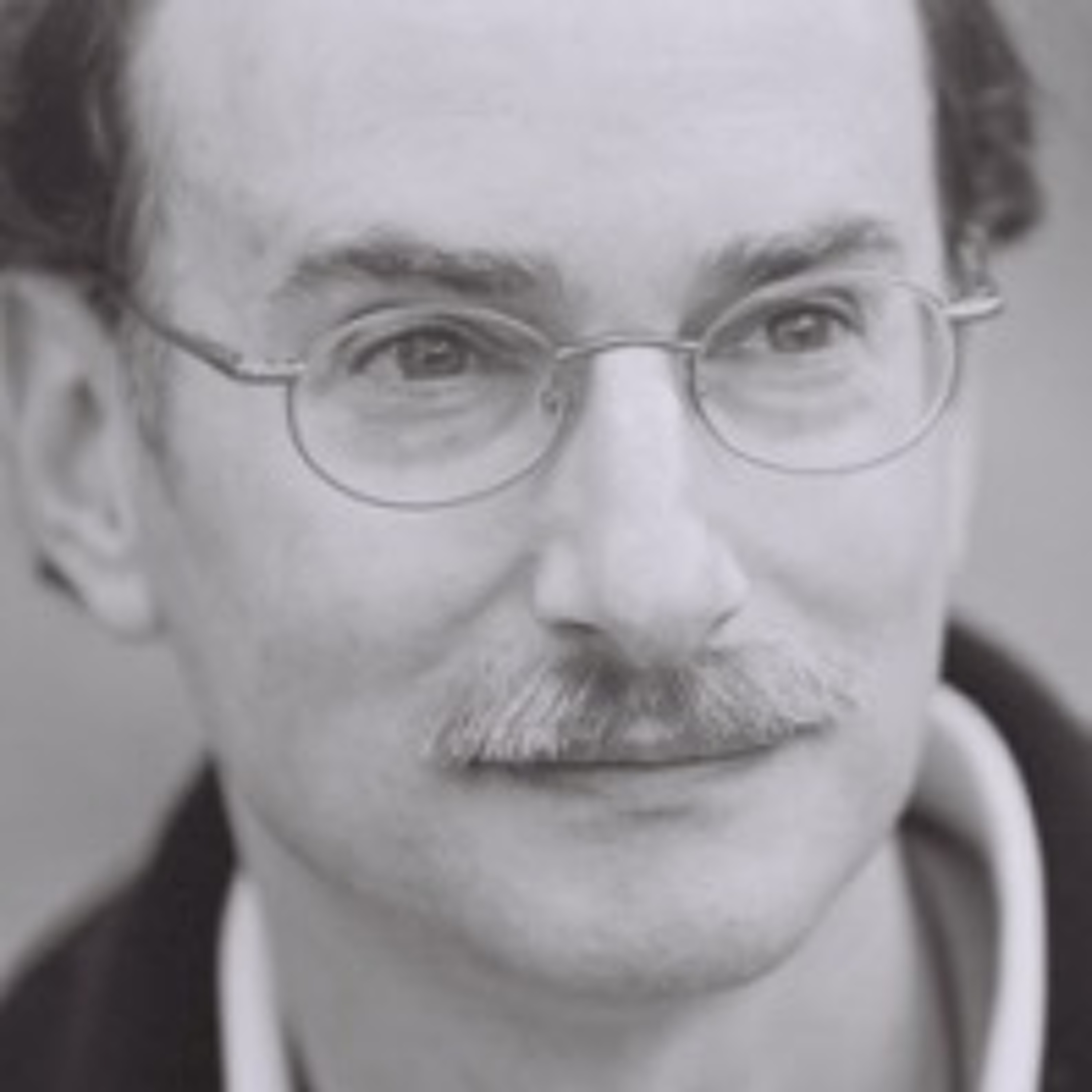
2007.03.05: Dean Radin, PhD - Entangled Minds: Are We Linked Together More Deeply than We Imagine?
Dean Radin, PhD Entangled Minds: Are We Linked Together More Deeply than We Imagine? One of the most surprising discoveries of modern physics is that objects aren’t as separate as they may seem. When you drill down into the core of even the most solid-looking material, separateness dissolves. All that remains, like the smile of the Cheshire Cat from Alice in Wonderland, are relationships extending curiously throughout space and time. These connections were predicted by quantum theory and were called “spooky action at a distance” by Albert Einstein. One of the founders of quantum theory, Erwin Schrödinger, dubbed this peculiarity entanglement, saying “I would not call that onebut rather the characteristic trait of quantum mechanics.” In this conversation with host Michael Lerner, Radin describes the surprising reach of the substantial scientific literature on psi phenomena, and wonders whether psi phenomena are not ultimately an example of the universe talking to itself. Dean Radin, PhD Dean is chief scientist at the Institute of Noetic Sciences (IONS) and Adjunct Faculty in the Department of Psychology at Sonoma State University. Before joining the research staff at IONS in 2001, he held appointments at AT&T Bell Labs, Princeton University, University of Edinburgh, and SRI International, where he worked on a classified program investigating psychic phenomena for the US government. He is author or coauthor of more than 200 technical and popular articles, a dozen book chapters, and three books including the award-winning The Conscious Universe (HarperOne, 1997), Entangled Minds (Simon & Schuster, 2006), and most recently, Supernormal (Random House, 2013). Find out more about Dean on his website. Find out more about The New School at tns.commonweal.org.

2007.02.22: Peter Warshall joins Michael Lerner - The Spiritual Labor of Earth Healing
Peter Warshall The Spiritual Labor of Earth Healing Join Michael Lerner in conversation with ecologist, activist, and essayist Peter Warshall, editor of Whole Earth Review, and teacher at the Jack Kerouac School of Disembodied Poetics at Naropa Institute. Peter Warshall Peter was an ecologist, activist, and essayist whose work centered on conservation and conservation-based development. After receiving his A.B. in Biology from Harvard in 1964, he went on to study cultural anthropology at l’École Pratique des Hautes Études in Paris with Claude Lévi-Strauss, as a Fulbright Scholar. He then returned to Harvard where he earned his Ph.D. in Biological Anthropology. Warshall’s research interests included natural history, natural resource management, and conservation biology. He worked as a consultant for the United Nations High Commission for Refugees in Ethiopia; for USAID and other organizations in ten other African nations; and he worked with the Tohono O’odham and Apache people of Arizona. Warshall was an editor of one of the later editions of the Whole Earth Catalog series, and served as an editor of its spin-off magazine, Whole Earth Review. He taught at the Jack Kerouac School of Disembodied Poetics at Naropa Institute. Warshall died in 2013. Find out more about The New School at tns.commonweal.org.
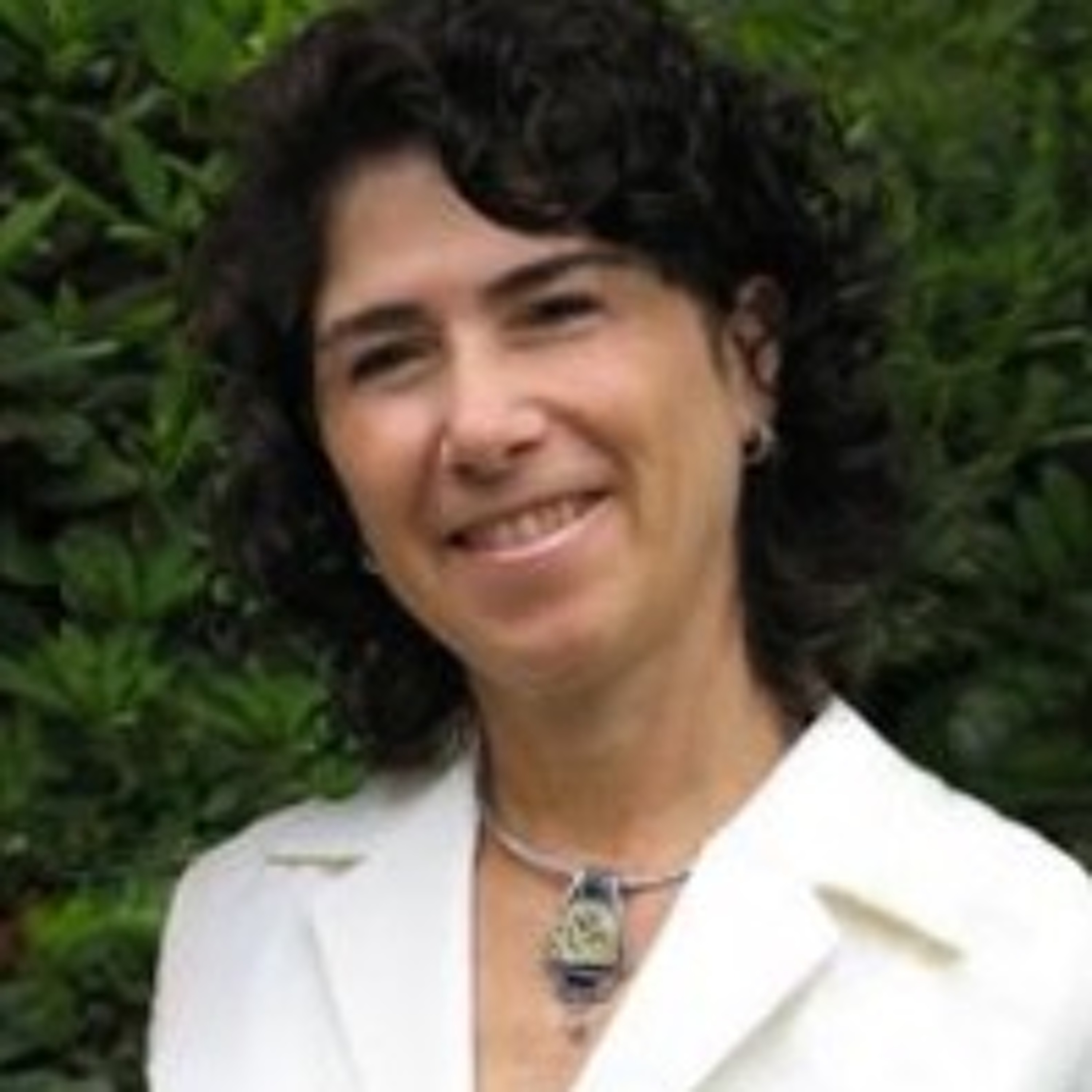
2007.02.22: Fredi Kronenberg, PhD - Herbal Therapies and Integrative Approaches to Women's Health
Fredi Kronenberg, PhD Herbal Therapies and Integrative Approaches to Women's Health Join host Michael Lerner in conversation with Dr. Fredi Kronenberg, founding director of the The Richard and Hinda Rosenthal Center for Complementary and Alternative Medicine at Columbia University. Dr. Kronenberg has done research on herbal treatment of menopause and other women’s health issues using ethnobotany, Chinese medicine, nutrition, and integrative medicine approaches. Dr. Fredi Kronenberg Dr. Fredi Kronenberg is professor of Clinical Physiology and director of the The Richard and Hinda Rosenthal Center for Complementary and Alternative Medicine at Columbia University, College of Physicians and Surgeons. She received her BS from Cornell University in neurobiology and behavior and her Ph.D. from Stanford University in physiology, where she researched thermoregulatory and reproductive physiology. Her postdoctoral research at Columbia University initiated her work in women’s health and menopause. She is a leading expert in the endocrinology and thermoregulatory physiology of menopausal hot flashes, and alternative therapies to treat them. Find out more about The New School at tns.commonweal.org.

2007.02.06: Ram Dass and Rachel Naomi Remen, MD - Healing, Aging, and Dying
Ram Dass and Rachel Naomi Remen, MD Healing, Aging, and Dying Now living on Maui, Ram Dass talked with Rachel Naomi Remen and host Michael Lerner about what his 1997 stroke taught him, and how he now works with others around issues of healing, aging, and dying. From our podcast: Compassion is when you’re one with the person… then their suffering becomes our suffering and my suffering becomes our suffering… and then we are both souls dealing with the consciousness of the incarnation. The heart is where the oneness is. Ram Dass Ram Dass (born Richard Alpert) is an American contemporary spiritual teacher and the author of the seminal 1971 book Be Here Now. He is known for his personal and professional associations with Timothy Leary at Harvard University in the early 1960s, for his travels to India and his relationship with the Hindu guru Neem Karoli Baba, and for founding the charitable organizations Seva Foundation and Hanuman Foundation. He continues to teach via his website. Find out more about The New School at tns.commonweal.org.

2007.02.05: Ted Schettler, MD with Michael Lerner - Implications of Ecological Health
Ted Schettler, MD Implications of Ecological Health This conversation with host Michael Lerner and Ted Schettler explores how Ted’s exploration of the effects of chemical contaminants on environmental health have led him into a comprehensive perspective on the interaction of genes, gene expression, nutrition, stress, income disparities, chemicals, and many other factors in human health. From our podcast: But I do think if we’re able, in the far distant future, to look back on this period of time we will see that the period of time in which we’ve been living was characterized by an extraordinary and unjustified faith in the development of technologies that were not at all invented in the wisdom of the world. What I think, at least for me, has characterized the indigenous ways of knowing, thinking and behaving, is that it was born out of a real wisdom of how to be in the world. You know if we look at certain species that have been around for sixty-five million years, there’s a certain wisdom that’s imbedded in these organisms and similarly certain social ways of organizing that are based on a wiser understanding of the world, and so I think that it’s truly essential that we try to rediscover that as part of this effort toward restoration and building resilience. Ted Schettler, MD Ted is science director of the Science and Environmental Health Network. He has a medical degree from Case Western Reserve University and a masters in public health from Harvard University. He is co-author of Generations at Risk: Reproductive Health and the Environment, which examines reproductive and developmental health effects of exposure to a variety of environmental toxicants. He is also co-author of In Harm’s Way: Toxic Threats to Child Development, which discusses the impact of environmental exposures on neurological development in children. He has published a number of articles on related topics in peer-reviewed journals and has served on advisory committees of the U.S. EPA and National Academy of Sciences. Find out more about The New School at tns.commonweal.org.