The Neurodivergent Connection / The Curious Storyteller
353 episodes — Page 2 of 8
Build self trust the ADHD friendly way one promise at a time
What happened when karate class put AAC on the wall
From labels to layers how fiction helped me see my brain
Teach the brain not the behavior simple moves that help today
S18 Ep 18Finding creative steadiness after 60 with an AuDHD lens
Late-Diagnosed at 65: Creativity, Compassion, and Coming Home to Yourself with Caroline CareyI sit down with Caroline Carey, a creative, author, and grandmother who was diagnosed with AuDHD in her mid-60s—and everything started to make sense.In this conversation, I open up about my own assessment experience while Caroline shares how a “you’re not depressed, you’re overwhelmed” moment changed her path. You’ll discover how she re-framed decades of school struggle, why dance became her nervous system’s anchor, and the unexpected support that finally let her ask for help in her business.I reveal the questions I ask late-identified adults to spot patterns, while Caroline explains how she now sees rejection sensitivity, travel anxiety, and masking through a new lens. We also tease the spiritual thread that runs through her work—and the book she wrote once she realized what she’d been writing about all along.By the end, you’ll be thinking about overwhelm vs. depression, what real support can look like, and how to tell when you’re “being you” versus blending in. And you might walk away asking: What if the world is finally coming to meet you?About the GuestCaroline Carey is a UK-based creative, author of “The Neurodivergent Soul,” soul cartographer, and longtime movement facilitator. She supports artists, writers, and difference-makers to express their stories with compassion and clarity.Key Timestamps0:02 – Welcome and late diagnosis at 655:08 – “Not depressed—overwhelmed” and the assessment that followed9:21 – Who Caroline was 30 years ago and the dance that kept her steady19:23 – What life felt like on the inside: love, exhaustion, overwhelm23:26 – Masking, people-pleasing, and choosing authenticity27:28 – The moment autism “clicked” and polarity made sense30:32 – Writing “The Neurodivergent Soul” and naming the real story40:12 – Travel anxiety, planning, and why “just relax” doesn’t help53:22 – The UK grant that changed her business support58:57 – Where to find Caroline’s workIf this episode helps you feel seen, share it with a parent, educator, or friend who needs it. Subscribe for more conversations that support our neurodiverse community.Explore Caroline’s work: middleearthmedicine.com#Neurodiversity #Autism #ADHD #AuDHD #LateDiagnosisHosted by Reid Miles.Conversations unfold naturally — no scripts, no rush.🎧 Subscribe wherever you listen to podcasts🌐 More about the show and past episodes: https://podcast.ausha.co/neurodivergantconnection-thecuriousstroyteller📩 Guest inquiries & media: [email protected] on Ausha. See ausha.co/privacy-policy for more information.
S18 Ep 17From Diagnosis to Advocacy: How One Mom Built a Supportive World for Her Nonverbal Autistic Child
Dana’s journey into the world of parenting a nonverbal autistic child began with a heavy sense of uncertainty, realizing in a little gym class that her daughter wasn’t meeting the same milestones as the other kids. At first, she tried to brush off her worries, chalking it up to first-time parent nerves and hoping her daughter was just a late bloomer. But those feelings of doubt grew stronger as she watched other children play and interact, while her own daughter struggled to sit up or show interest in toys. The weight of not knowing what the future held was overwhelming, but Dana’s love for her daughter pushed her to embrace the unknown. She dove into therapies, from aquatic to horseback riding, and learned to see the world through a new lens—one where every small victory was hard-won and deeply meaningful. Through her daughter’s silence, Dana discovered a voice of determination within herself, vowing to advocate, connect with other families, and transform her own challenges into hope for others.,When Dana first noticed her daughter’s delays, the realization hit her during a simple gym class surrounded by other parents and babies. While everyone else seemed to be moving forward, she felt stuck in a swirl of worry and self-doubt, unsure if she was overreacting or missing something important. The fear of not knowing how to help her child, or what her daughter’s future might look like, weighed on her every day. Yet, instead of shutting down, Dana became fiercely observant and resourceful, trying every therapy she could find and learning to pick up on even the smallest cues from her nonverbal daughter. This experience didn’t just change her parenting—it changed her entire perspective, making her more compassionate, resilient, and determined to build supportive spaces for families like hers. Dana’s story is about finding meaning in the unknown, and letting her daughter’s unique journey inspire her to help others navigate this path with empathy and hope.Dana Garrett offers a unique blend of insight and empathy as both a devoted autism mom and an outspoken advocate for neurodivergent children. Living in South Louisiana, Dana’s journey has been shaped by her experiences raising a nonverbal daughter, which led her to dive deep into therapies like aquatic and sensory integration. She’s not just a parent—she’s also a children’s book author who uses storytelling to foster understanding and acceptance for kids with special needs. Dana’s approachable style and willingness to talk about the hard moments make her relatable to parents feeling overwhelmed or alone. Through her support groups and creative projects, she’s created a real sense of community for families navigating similar challenges, always emphasizing the value of listening, learning, and letting every child shine in their own way.Dana's Resources:Connect with Dana Garrett on Facebook.Connect with Dana Garrett on Instagram.Look for Dana Garrett’s books on IngramSpark for wider store availability.Attend Dana Garrett’s local book signings and sensory night events.Danagarrett.comRarebloomsfoundation.orgHosted by Reid Miles.Conversations unfold naturally — no scripts, no rush.🎧 Subscribe wherever you listen to podcasts🌐 More about the show and past episodes: https://podcast.ausha.co/neurodivergantconnection-thecuriousstroyteller📩 Guest inquiries & media: [email protected] on Ausha. See ausha.co/privacy-policy for more information.
S18 Ep 16The Advocate’s Journey: How One Mom Turned IEP Confusion into 15 Years of Special Ed Impact
Support the show via my Patreon https://www.patreon.com/AspergersStudioVicki’s journey into special education advocacy started not from a classroom or office, but right at her own kitchen table as a mom trying to figure out how to help her son, Luke, who was born with an incredibly rare chromosome disorder. Facing a room full of educators and specialists at Luke’s first IEP meeting, she nodded along while feeling completely lost, overwhelmed, and just hoping she was making the right choices. That moment of confusion and worry stuck with her, fueling a deep need to understand the maze of IEPs and special education. Rather than letting fear take over, Vicki educated herself, took courses, and eventually became a lifeline for other parents facing similar situations. Her story is filled with those raw, real moments—like feeling nervous sitting in child-sized chairs surrounded by professionals, or doubting if she was truly advocating enough for her son. It’s this mix of vulnerability and determination that makes her journey so relatable, reminding every parent that it’s okay to feel uncertain, but it’s even more important to keep pushing for your child’s needs.,Vicki’s path to becoming a special education advocate didn’t begin with any grand plan—it started with her simply trying to do right by her sons. When her oldest, Luke, was just three, she faced the intimidating world of IEP meetings for the first time, feeling out of her depth and unsure of what questions to ask or what she was agreeing to. That feeling of being overwhelmed and wanting more for her child sparked something in her. Instead of getting stuck in confusion, she dove headfirst into learning everything she could, enrolling in advocacy courses and later helping other families navigate the same challenges. What makes Vicki’s story stand out is how she turned those early struggles and emotional moments—like crying during meetings or worrying she’d missed something important—into fuel for helping others. Her experience proves that you don’t have to start as an expert; you just need the courage to keep learning, keep asking, and never stop fighting for your child’s right to a fair education.Vicki Christensen brings a wealth of real-life experience to the world of special education advocacy, shaped by her journey as a mom to two neurodivergent sons. After her oldest, Luke, received a rare chromosome disorder diagnosis, she quickly realized that understanding the IEP process was essential—not just for her family, but for others as well. This led her to study special education advocacy at the University of San Diego, work with local nonprofits, and eventually launch Blue Glasses Advocacy to support families all over Southern California. Vicki’s down-to-earth attitude and firsthand knowledge make her relatable, and she’s known for breaking down complicated IEP jargon into language parents can actually use. Her book, “Uniquely Fully Enough: The Neurodivergent Parenting Journey,” weaves together her personal story with practical insights, showing her dedication to empowering parents and helping them feel less alone on the IEP journey.Vicki's Resources:Visit blueglassesadvocacy.com to find out more about Vicki C and contact her directly.Follow Blue Glasses Advocacy on Instagram for updates and resources.Request a copy of the draft IEP three days before your meeting.Write down all your questions and concerns before attending your IEP meeting.Ask for work samples and the data used to measure your child’s progress during IEP meetings.Hosted on Ausha. See ausha.co/privacy-policy for more information.
S18 Ep 15The Truth About Neurodivergent Women: Why Acceptance Beats Outgrowing Your Difference
In this episode, you’ll get to hear Laura Zane share her journey as a neurodivergent woman, opening up about what it was like to discover her ADHD later in life and how that shaped her approach to therapy. As someone who’s walked this path herself, Laura really understands the unique challenges you might face with late diagnosis, sensory overload, and anxiety. She talks about how embracing her neurodiversity led her to develop practical, affirming strategies in her work, making her insights super relatable whether you’re seeking support, new ways to handle overwhelm, or just some validation for your experiences. The conversation dives into real-life stories and tips that can help you feel seen, especially if you’ve ever felt like a deep thinker or struggled to find therapy that actually “gets” you. If you’re looking for thoughtful advice and want to hear from someone who truly gets what it’s like to be in your shoes, this episode is definitely worth a listen.,In this episode, Laura Zane shares her personal experience as a neurodivergent woman, discussing her late ADHD diagnosis and how it transformed both her life and her work as a therapist. She dives into the specific challenges neurodivergent women face, touching on topics like sensory overload, anxiety, and the search for support that truly understands their needs. Laura’s story highlights how embracing neurodiversity has shaped her therapeutic approach, leading her to develop practical, affirming strategies that resonate with deep thinkers and those feeling overwhelmed. Through relatable stories and actionable advice, she offers listeners validation and hope, making this conversation a valuable resource for anyone seeking authentic support and a better understanding of themselves. Laura’s expertise and lived experience make her insights especially relevant for those navigating similar journeys.Laura Zane is a licensed mental health counselor based in Florida who brings both professional expertise and lived experience to her work with neurodivergent women. As someone with ADHD, dyscalculia, and a trauma history, Laura gets what it’s like to feel different and misunderstood, especially as a woman navigating a late diagnosis. She’s passionate about supporting clients who are empaths, homeschoolers, or deep thinkers, and she takes a neurodiversity-affirming approach in her practice. Laura’s down-to-earth style comes from years of therapy herself, plus her own journey through school struggles, masking, and finding a sense of belonging. She understands firsthand how tricky it can be to manage anxiety, sensory overload, and the pressure to fit in, which makes her especially relatable to women looking for real empathy and practical strategies.Laura's Resources:Visit Laura Zane’s website at laurazain.com to learn more about her services.Visit sagesynergy.net for information about holistic therapy and Laura’s practice, Sage Synergy.Visit coachingforempaths.com to work with Laura in a coaching capacity, specifically for empaths in business.Contact Laura Zane directly by phone at 941-650-3112 for inquiries or to schedule a session in Florida.Listen to future episodes of the Neurodivergent Connection podcast to stay curious, stay fearless, and remember you’re never alone.Hosted by Reid Miles.Conversations unfold naturally — no scripts, no rush.🎧 Subscribe wherever you listen to podcasts🌐 More about the show and past episodes: https://podcast.ausha.co/neurodivergantconnection-thecuriousstroyteller📩 Guest inquiries & media: [email protected] on Ausha. See ausha.co/privacy-policy for more information.
S18 Ep 14From Fog to Focus: 7 Ways AI Empowers Neurodivergent Adults on Bad Brain Days
Karyn Whitaker has turned her own journey with ADHD, autism, and dyslexia into a mission to make life easier for others navigating similar paths. As the founder of Try Harder is BS, she’s all about ditching the old advice that just leads to frustration and burnout. Karyn’s style is refreshingly honest and relatable—she’s been through the messy moments and knows that real solutions come from lived experience, not just textbooks. Drawing on years of personal trial and error, she now helps neurodivergent people and their loved ones find straightforward, practical ways to manage daily overwhelm, build confidence, and use tools like AI to make tough days a little easier.Resources:Visit Karyn Whitaker’s website at tryharderisbs.com to learn more about her work and resources.Access Karyn Whitaker’s “Five Prompts to Restart All the HD Brains” via the link provided in the podcast blurb.Use AI tools like ChatGPT, Gemini, or Copilot for support with writing, organization, and executive function tasks.Explore agentic AI solutions to create custom AI agents with specific guardrails for tasks such as sales inquiries or writing assistance.Utilize AI for step-by-step guidance in daily tasks, such as cooking or prioritizing to-dos, by prompting it for micro-steps or logical sorting.Hosted by Reid Miles.Conversations unfold naturally — no scripts, no rush.🎧 Subscribe wherever you listen to podcasts🌐 More about the show and past episodes: https://podcast.ausha.co/neurodivergantconnection-thecuriousstroyteller📩 Guest inquiries & media: [email protected] on Ausha. See ausha.co/privacy-policy for more information.
S18 Ep 13When guidance replaces guesswork a mother and son change the way kids go online
Raising Neurodivergent Kids in a Digital World: What I Wish Every Parent KnewOnline rules are invisible—and for neurodivergent kids, that can be costly. This conversation shows a safer way.I sit down with Dr. Clark and her son, Chris, to talk about the moment a simple post turned into threats, what that did to their family, and how guidance changed everything. We get real about bullying, anxiety, and the hidden risks most parents don’t see—plus the guardrails that would’ve spared years of pain.You’ll hear how they now teach kids to read social cues online, spot grooming tactics, and protect their digital footprint—without shutting them out of the internet entirely. We also talk about the one shift that stops kids from chasing the “top dog” for attention, and the parent habits that make a real difference at home.If you’re a parent, educator, or caregiver, you’ll walk away knowing what to watch for, what to ask, and where to get support. And yes, we talk about the program they built so kids can practice social media safely—with real moderation and teachable moments baked in.What changes when kids learn digital wellness early? How do you teach skills instead of rules? And what’s the first conversation to start tonight? That’s all inside.About the GuestsDr. Clark is an educator, parent advocate, and author who leads a monthly support group for parents of neurodivergent kids. She co-created a monitored social platform and curriculum that prepares kids for real-world social media.Chris is her son, now an adult, who shares his lived experience with online bullying, depression, and how guidance reshaped his posting, mindset, and confidence.Key Timestamps0:28 – Chris’s hardest online moment and the fallout1:22 – A parent’s first response and what changed at home4:10 – “What I wish school taught me” and where the idea started4:53 – Why unspoken social rules online overwhelm neurodivergent kids10:03 – A safe space to practice social media (and how it’s moderated)14:26 – From managing crises to building a solution for families19:24 – When guidance replaced confusion for Chris20:11 – How early digital wellness shapes future adults22:18 – The parent side: tools, monitoring, and what most miss30:07 – Why skills beat rules (and reduce secrecy)34:58 – What parents need to hear right now40:25 – Books, free ebook, and the parent support groupKeywords: neurodivergent, Autism, ADHD, digital wellness, online safety, social media literacy, bullying, digital footprint, parenting, educators, teensCall to Action: Listen now, then share this with one parent or teacher who needs it. Grab Dr. Clark’s free ebook at mothersofexceptionalkids.com and check the monthly MOAC parent group.#Neurodiversity #DigitalWellness #OnlineSafety #Autism #ADHDHosted on Ausha. See ausha.co/privacy-policy for more information.
S18 Ep 12I learned I was AUDHD at 61 and my life finally made sense
AUDHD Is Its Own Thing: Stephanie Lewis on RSD, Sensory Life, and a Therapy That Doesn’t Rely on TalkingStruggling with therapy that asks you to “talk it out” when words won’t come? This one’s for you.In this episode, I sit down with Stephanie Lewis—retired special education teacher, school psychologist, and coach—who discovered her own autism and ADHD in her 60s. We unpack why AUDHD isn’t just “autism + ADHD,” how that shows up day to day, and why so many of us feel unseen in traditional therapy.Stephanie reveals a structured, non-language-based process she created that helps with things like rejection sensitive dysphoria (RSD), shutdowns, and overwhelm—without forcing you to label every feeling. You’ll hear how it works with the nervous system, why confidence is a habit you can build, and the subtle shifts clients notice first.By the end, you’ll see new possibilities for relief and self-trust—and you’ll have a simple first step you can try today. But how does this approach reduce RSD episodes? What makes it flexible for different AUDHD profiles? And why do many clients feel “seen” long before they say much at all?About the GuestStephanie Lewis is a retired special education teacher and school psychologist turned coach. After decades supporting neurodivergent folks, she learned she’s autistic with ADHD and now focuses on accessible methods that don’t depend on heavy talk therapy. She also offers free intro sessions to her process on Facebook and Zoom.Key Timestamps0:11 – Meet Stephanie Lewis and her late-in-life diagnosis1:59 – What AUDHD really means (and why it’s not in the DSM…yet)11:49 – The problem Stephanie set out to solve with a non-talking method16:52 – When traditional therapy missed the mark18:27 – “You function”: a simple way to describe the AUDHD experience27:29 – How this structure differs from typical approaches31:52 – Working with the nervous system, not against it33:43 – Handling burnout, shutdowns, and overwhelm in real time42:54 – For the AUDHD listener exhausted by bad therapy44:18 – A quick, calming drawing practice for overwhelmIf this resonated, subscribe and share with someone who needs it. Find Stephanie’s links in the show notes, join our community newsletter, and keep the conversation going with me on socials.Keywords: AUDHD, autism, ADHD, neurodivergent, RSD, rejection sensitive dysphoria, shutdowns, burnout, sensory sensitivity, DSM-5, nonverbal therapy, drawing-based therapy, habit buildingCall to Action: Subscribe for more supportive conversations, grab the links to Stephanie’s free sessions, and send this to a parent, educator, or friend who could use practical, compassionate tools.#AUDHD #Neurodivergent #Autism #ADHD #RSDHosted by Reid Miles.Conversations unfold naturally — no scripts, no rush.🎧 Subscribe wherever you listen to podcasts🌐 More about the show and past episodes: https://podcast.ausha.co/neurodivergantconnection-thecuriousstroyteller📩 Guest inquiries & media: [email protected] on Ausha. See ausha.co/privacy-policy for more information.
S18 Ep 11From bullied kid to Aspie clinician and comic finding his voice
Comedy, Genetics, and Autism: A Real-World Guide with Dr. Sam ShayCan stand-up comedy help autistic adults feel seen—and can genetics make life simpler?In this episode, I sit down with Dr. Sam Shay, an autistic functional medicine practitioner and stand-up comic. We talk about sound sensitivity that feels like a “kidney stone in the skull,” why testing beats guessing when you’re exhausted, and how humor can build shared reality when life has felt isolating.You’ll discover how Dr. Shay uses functional genetics to help autistic adults increase resilience and capacity, what burnout can look like when you still have to “perform,” and the simple way he explains functional medicine to someone already overwhelmed. We also get into masking, blunt honesty, and why learning social “software” from sitcoms actually works.I reveal the questions I ask to spot early overload, and you’ll hear the unexpected reason comedy helped Dr. Shay stop looping on trauma. Plus, there’s a moment about the word “Aspie” you won’t see coming.About the GuestDr. Sam Shay is a functional medicine and genetics educator, clinician, and stand-up comic. He created the YouTube special Neurospicy: Love, Life & Comedy on the Spectrum to bridge understanding between autistic and non-autistic folks.Timestamps0:02 – Welcome and Dr. Shay’s late diagnosis and comedy mission16:08 – How being autistic shaped his clinical lens23:31 – Superpowers, kryptonites, and the “Neuroharmony” model25:57 – Functional medicine in one clear sentence29:37 – Testing vs. guessing: saving time, money, and energy31:49 – Resilience vs. capacity for autistic adults32:45 – Burnout when you still have to show up36:31 – Early signs your system is overloaded56:43 – When humor became a bridge—not a barrier64:09 – What he wants exhausted autistic adults to know71:09 – Where to watch “Neurospicy” and what he hopes you feelWatch the full conversation, then share this with a parent, teacher, or clinician who needs a clearer picture of autistic life. Subscribe for more real talk on autism, ADHD, and building supportive communities. And check the show notes for Dr. Shay’s Neurospicy special on YouTube.#Neurodiversity #Autism #FunctionalMedicine #Genetics #StandUpComedyHosted by Reid Miles.Conversations unfold naturally — no scripts, no rush.🎧 Subscribe wherever you listen to podcasts🌐 More about the show and past episodes: https://podcast.ausha.co/neurodivergantconnection-thecuriousstroyteller📩 Guest inquiries & media: [email protected] on Ausha. See ausha.co/privacy-policy for more information.
S18 Ep 10It wasn’t laziness it was ADHD and a new way to work
Late-Diagnosed ADHD, Masking at Work, and Real Self-Advocacy with Samantha KellyIf you’ve ever asked “Is it me or my brain?” this one’s for you. I sit down with Samantha Kelly to make sense of late diagnosis, masking, and what true accessibility at work can feel like.In this episode, you’ll hear how Samantha went from a panic attack at the office to becoming a sought-after neurodivergent speaker and coach. We talk about the quiet cost of masking, the myths we carry without knowing, and a simple way to ask for what you need at work without feeling “difficult.” You’ll discover what actually helps (and what accidentally harms) when managers try to be supportive, plus the one change that could reduce burnout more than most policies on paper.I also ask the questions many of us hesitate to say out loud: How do I balance safety with being honest? What if my workplace won’t get it? And how do I practice self-advocacy when I’m already tired?By the end, you’ll see a clearer path to feeling seen—and a few small moves that can create big wins.About the GuestSamantha Kelly is an ADHD entrepreneur, coach, and trainer who helps organizations build neuroinclusive workplaces. She speaks widely on accessibility, accommodations, and practical support for neurodivergent employees. Learn more at beyondnd.com or connect on LinkedIn.Key Timestamps0:16 – Why Samantha speaks up about neurodiversity and who gets missed2:29 – The “human version” of late diagnosis (and what people don’t see)8:34 – When the identity of “neurodivergent coach” clicked10:34 – A moment in a talk that changed everything13:59 – Therapy, stigma, and the comment that led to answers19:03 – The workplace panic attack that became a turning point30:41 – The biggest misunderstanding about neurodivergent employees38:57 – One change that could make accommodations feel humane44:57 – A low-pressure way to start self-advocacy52:58 – Asking for reduced hours: scary ask, real payoff69:08 – What employers miss—and what actually helps72:20 – How embracing difference changed Samantha’s self-viewCall to action: If this episode helped you feel seen, share it with a manager or a friend who needs it. Subscribe for more supportive, practical conversations on ADHD, autism, and accessibility in real life.Keywords: ADHD, autism, neurodivergent, late diagnosis, masking, workplace accessibility, accommodations, therapy, burnout, self-advocacy, inclusive leadership#Neurodiversity #ADHD #AutismAcceptance #InclusiveWorkplaces #SelfAdvocacyHosted by Reid Miles.Conversations unfold naturally — no scripts, no rush.🎧 Subscribe wherever you listen to podcasts🌐 More about the show and past episodes: https://podcast.ausha.co/neurodivergantconnection-thecuriousstroyteller📩 Guest inquiries & media: [email protected] on Ausha. See ausha.co/privacy-policy for more information.
S18 Ep 9College felt out of reach until self advocacy changed the map
From “Not College Material” to Advocate: Katie Shelby on Voice, Belonging, and Real InclusionTold she wasn’t “college material,” Katie Shelby went anyway—and what she learned can change how we support students.In this episode of The Neurodiversion Connection, I sit down with Katie Shelby, a paraprofessional from St. Louis living with a language impairment and learning disabilities. She went from being nonverbal in preschool to earning her degree and supporting students with Autism, Down syndrome, cerebral palsy, and other disabilities. You’ll hear how one conversation in high school shifted everything, why expectations matter more than we think, and the quiet practices that help students build independence and confidence.I reveal the questions I wish more educators and parents asked, Katie shares what she uses today that she never had growing up (and why it matters), and together we push back on systems that still underestimate people. You’ll discover what real inclusion looks like day to day, how to approach self-advocacy without burning out, and a simple way to know you belong in spaces that weren’t built with you in mind.By the end, you’ll be thinking about IEP meetings, AAC, and “college material” in a very different way. What shifted for Katie junior year? How did she turn no into a degree? And what does independence actually look like beyond test scores?About the GuestKatie Shelby is a paraprofessional supporting students across disabilities in St. Louis, MO. She’s written for The Mighty, is working on a book for people with learning disabilities and language impairments, and is known to many as Barney and Fred’s human (two very photogenic dachshunds).Key Timestamps0:00 – Welcome and Katie’s story beyond labels1:58 – “Don’t go to college”: the moment that lit a fire10:18 – The turning point: learning to self-advocate12:51 – Failing forward in math and the worksheet bonfire18:06 – “I belong here”: finding the right program and supports19:51 – From student to para: communication, visuals, and AAC24:00 – What real inclusion looks like in class24:48 – Writing for The Mighty and sharing openly28:08 – The book: who it’s for and why it’s needed29:43 – Where to connect with Katie onlineKeywords: neurodiversity, self-advocacy, special education, inclusion, learning disabilities, language impairment, AAC, Autism, college accessibility, paraprofessionalIf this conversation helped you, share it with a parent, educator, or student who needs to hear it. Subscribe for more real, relatable stories and practical support.Follow Katie on Instagram • Connect on Facebook#Neurodiversity #SelfAdvocacy #SpecialEducation #LearningDisabilities #InclusionHosted by Reid Miles.Conversations unfold naturally — no scripts, no rush.🎧 Subscribe wherever you listen to podcasts🌐 More about the show and past episodes: https://podcast.ausha.co/neurodivergantconnection-thecuriousstroyteller📩 Guest inquiries & media: [email protected] on Ausha. See ausha.co/privacy-policy for more information.
It Was Never About the Questions
trailerSomething has changed.What started as conversations…has become something deeper.Both shows have shifted from asking questions…to exploring the stories behind them.Because the most powerful moments aren’t scripted.They’re lived.These are stories about:who we arehow we thinkwhat we struggle withand what we’re still trying to understandFrom neurodivergent experiences to curiosity-driven conversations about life, science, and everything in between…This isn’t about having all the answers.It’s about slowing down…listening…and discovering what connects us.Because when you really listen to someone’s story,you start to see yourself in it.Hosted on Ausha. See ausha.co/privacy-policy for more information.
S18 Ep 8What happened when a child spoke without speaking
Intuitive Communication with Nonverbal Individuals: A 30-Year ExplorationCan intuitive communication help us better support nonverbal people? I sit down with a guest who’s spent 30+ years exploring it.In this episode, I share the moment that set her work in motion: a horseback therapy session where she says she heard a child who didn’t use spoken language communicate with her. From there, we open up a thoughtful, respectful conversation about what this kind of communication might look like, how she approaches consent and ethics, and where it can sit alongside tools like AAC.You’ll hear how she navigates skepticism, the boundaries she keeps to avoid overstepping, and the patterns she’s seen with families, educators, and care teams. I also ask questions you might be wondering: What signals does she pay attention to? How does she know she isn’t projecting? And what practical steps can supporters take without making assumptions?Whether you’re a parent, educator, caregiver, or neurodivergent yourself, this conversation invites curiosity and care—without making big promises or skipping nuance.About the GuestMy guest is an author and educator who has devoted more than three decades to intuitive communication with nonverbal individuals. Her work began in an equine-assisted setting and led to a book and ongoing support for families and professionals.If this episode sparks a thought or question, I’d love to hear it. Subscribe, share with a friend who needs it, and join our community for resources and support.#Neurodiversity #NonverbalCommunication #AutismAcceptance #CaregiverSupport #EquineTherapyHosted by Reid Miles.Conversations unfold naturally — no scripts, no rush.🎧 Subscribe wherever you listen to podcasts🌐 More about the show and past episodes: https://podcast.ausha.co/neurodivergantconnection-thecuriousstroyteller📩 Guest inquiries & media: [email protected] on Ausha. See ausha.co/privacy-policy for more information.
S18 Ep 7From Chaos to Creativity: How the Anti-Planner Empowers ADHD Adults to Thrive with Dani Donovan
ADHD Paralysis, The Anti-Planner, and Getting Unstuck with Dani DonovanFeeling stuck but can’t explain why? In this episode, I sit with ADHD creator Dani Donovan to unpack what “stuck” really feels like—and how we can move again.I ask Dani to paint that frozen moment we all know: the mess is obvious, the guilt is loud, and your body still won’t start. From there, we explore the real reasons ADHD brains stall, why it’s not laziness, and how to choose the right tool for what you’re actually feeling—stuck, overwhelmed, unmotivated, disorganized, or discouraged.You’ll discover the simple shifts Dani uses to spark action, the low-pressure systems that help when motivation is flat, and the one thing to do first when your mind has “20 tabs open.” I also get Dani to share how she rebuilds self-trust when the inner critic won’t let up—and why a regular planner can set us up to quit.Want to know the mantra that gets her moving, the playful kitchen routine that cleans itself, and the accountability pact that finally kept dishes out of the sink? I reveal all that and more—without turning your day into another rigid system.Check the show notes for links to Dani’s work and The Anti-Planner.About the GuestDani Donovan is an ADHD educator, illustrator, and the creator of the viral ADHD comics and bestselling book The Anti-Planner: How to Get Sh*t Done When You Don’t Feel Like It. Her work makes executive function struggles feel seen—and solvable.Timestamps0:02 – Welcome back + why “stuck” isn’t laziness0:22 – Dani’s ADHD paralysis comic: what it looks like vs. how it feels3:02 – Procrastination from the outside vs. what’s really going on3:22 – Anti-Planner “stuck” tools and a speed-run approach7:10 – Music-as-timer: making progress in one album9:12 – The quiet mantra Dani uses to start anyway12:05 – Why having “100 systems” can work better than one14:15 – Task breakdowns that don’t create more overwhelm21:18 – “20 tabs open” brain: what to do first25:13 – Unmotivated ≠ lazy: the real blockers30:14 – Chess while cleaning: a playful momentum builder41:47 – One simple system you can start today46:07 – Discouraged: shame, expectations, and feeling like a failure49:10 – Rebuilding self-trust with small wins51:06 – Forgive yourself, then make a plan you’ll keep62:00 – Why traditional planners fail neurodivergent brainsIf this episode helped, share it with a parent, educator, or friend who needs a little proof they’re not alone. Subscribe for more accessible conversations on ADHD and neurodiversity.Dani's linksadhdd.comAnti-Planner.com@DaniDonovan - Instagram#ADHD #Neurodiversity #ExecutiveFunction #ParentingADHD #MentalHealthHosted by Reid Miles.Conversations unfold naturally — no scripts, no rush.🎧 Subscribe wherever you listen to podcasts🌐 More about the show and past episodes: https://podcast.ausha.co/neurodivergantconnection-thecuriousstroyteller📩 Guest inquiries & media: [email protected] on Ausha. See ausha.co/privacy-policy for more information.
S18 Ep 6From timid teen to life changer through martial arts and patience
Patience, Progress, and Real-World Teaching with Joseph GallowayA 16-year-old lesson in patience reshaped how I see ability, progress, and what real teaching asks of us.In this episode, I sit down with martial arts instructor and community advocate Joseph Galloway to talk about how one early teaching moment with a student with Down syndrome reframed success for him—and for me. We get real about labels, expectations, and why small wins matter more than most systems admit. Joseph shares how he holds the same standards for everyone while adapting with patience, and why confidence—not combat—is at the heart of martial arts.You’ll hear how he reads different learning styles without stereotyping, why celebrating tiny steps can change a whole day, and how his nonprofit vision supports families who can’t afford classes. We also push on a hard question: What could schools look like if progress, not perfection, led the way?By the end, you’ll see growth through a more generous lens—and you may rethink what “ability” really means. Which two class rules does Joseph use to build respect and effort? What shifted when he left teaching—and what brought him back? And how does he measure progress when it isn’t obvious?About the GuestJoseph Galloway is a lifelong martial arts instructor and advocate focused on discipline, confidence, and accessible training for all learners. He’s building the Iron Spirit Fellowship Foundation to fund scholarships so kids and adults can train regardless of income.Key Timestamps0:21 – Who Joseph is beyond titles1:36 – The first teaching moment that changed everything5:50 – Martial arts: confidence and growth vs. violence6:49 – “Always earned, never bought” and why standards matter13:08 – Teaching without labels—and keeping expectations high19:47 – The power of small wins li>24:54 – Seeing progress through connection and values32:04 – Service, community, and why “Santa” is real35:13 – Why a nonprofit opens doors for families41:26 – Where to find Joseph and Iron Spirit Fellowship FoundationCall to action: If this conversation helped you see progress differently, share it with a parent, educator, or caregiver who needs support right now. Subscribe for more accessible conversations on Autism, ADHD, and beyond. Connect with Joseph and the Iron Spirit Fellowship Foundation on Facebook and Instagram, and look for their GoFundMe to support scholarships.#Neurodiversity #Autism #ADHD #Inclusion #MartialArtsHosted by Reid Miles.Conversations unfold naturally — no scripts, no rush.🎧 Subscribe wherever you listen to podcasts🌐 More about the show and past episodes: https://podcast.ausha.co/neurodivergantconnection-thecuriousstroyteller📩 Guest inquiries & media: [email protected] on Ausha. See ausha.co/privacy-policy for more information.
S18 Ep 5From sleepless nights to calmer bedtimes with autistic kids
Autistic Kids and Sleep: What Parents Often Miss (and What Actually Helps)Exhausted at 2 a.m.? You’re not alone. In this episode, I sit down with Kelly Ann Riley Smith to talk real-world fixes for autistic sleep struggles.Kelly’s a neurodivergent former teacher, a mom of four neurodivergent kids, and an autism-and-anxiety sleep specialist. We get honest about what “my child doesn’t sleep” really means, why bedtime isn’t the true starting point, and how anxiety, sensory needs, and the nervous system all tangle together at night.About the GuestKelly Ann Riley Smith is an autism and anxiety sleep specialist supporting parents of autistic children. She’s a former teacher and neurodivergent mom of four, including a son with high support needs. Find Kelly on Instagram, Facebook, her parent group Sleep Success for Autistic Children, or email [email protected] Timestamps0:02 – Meet Kelly Ann Riley Smith and why sleep matters so much2:11 – Lived experience vs. professional training8:43 – What “my autistic child doesn’t sleep” looks like in real life10:10 – Falling asleep, staying asleep… or both?12:06 – The bedtime routine myth many parents follow13:15 – The most misunderstood part: sleep starts long before bedtime14:37 – Autism and anxiety: how closely they connect at night20:16 – What bedtime anxiety can look like21:23 – The nervous system on high alert and why sleep won’t come24:34 – Light, sound, temperature: what matters more than you think33:21 – Room color and visual “noise” that keep brains alert35:08 – Weighted blankets: helpful or harmful?37:31 – White noise vs. silence (and real-life sleep setups)39:04 – Is perfect sleep hygiene realistic for neurodivergent families?40:12 – The toll on parents: from burnout to PTSD-like symptoms41:27 – If you feel like you’re failing, hear this51:35 – A message for the 2 a.m. listener52:29 – Where to find Kelly and get supportIf this helped, share it with a parent, educator, or caregiver who needs support. Subscribe for more neurodiversity conversations, practical strategies, and community resources.#Neurodiversity #AutismParenting #SleepSupport #Anxiety #SensoryProcessingHosted by Reid Miles.Conversations unfold naturally — no scripts, no rush.🎧 Subscribe wherever you listen to podcasts🌐 More about the show and past episodes: https://podcast.ausha.co/neurodivergantconnection-thecuriousstroyteller📩 Guest inquiries & media: [email protected] on Ausha. See ausha.co/privacy-policy for more information.
S18 Ep 4From burnout to book builder how Kristy found quiet power
Writing as a Lifeline: AuDHD, Burnout, and Building Soul Scribe with Kristy Lee RackhamWhat if the story you’re scared to share is the one that helps someone heal?In this candid conversation, I sit down with Kristy Lee Rackham AuDHD mom, former nurse, boutique publisher, and creator of the Wisdom Keepers series. You’ll hear how she went from full burnout to building Soul Scribe Publishing, why writing became a practical path to wellness, and the quiet moment that changed everything. We get into fear of visibility, why highly sensitive people hesitate to be seen, and how multi-author books create ripple effects inside hospitals, families, and communities.I reveal the simple shift Kristy uses to help writers move past imposter syndrome, you’ll discover how she blends science and spirituality without losing the plot, and we touch on her Mee Map an accessible way to come back to who you’ve always been. Want to know the unexpected first win most new authors feel? You’ll have to listen.About the GuestKristy Lee Rackham is an AuDHD publisher, holistic counselor, and former nurse who founded http://www.soulscribegroup.com/. She mentors highly sensitive and neurodivergent writers and curates the multi-author Wisdom Keepers series.Key Timestamps0:20 – Kristy’s AuDHD story and raising autistic teens4:04 – The moment writing shifted from hobby to healing12:52 – Blending science, spirituality, and storytelling16:49 – Burnout, stillness, and a clarinet at night27:37 – Visibility, worth, and the fear beneath publishing40:06 – A nonverbal writer steps into leadership45:22 – The Mee Map explained in plain language47:58 – Energy awareness you can use todayExplore Kristy’s work at solscribegroup.com.or to learn more about you can go to her link tree: www.linktr.ee/kristyleerackham Subscribe for more practical conversations on autism, ADHD, and real-world support. Share this with someone who’s sitting on a story. #Neurodiversity #AuDHD #WritingForHealing #ParentingAutismHosted on Ausha. See ausha.co/privacy-policy for more information.
S18 Ep 3Dani Donovan on ADHD, Executive Dysfunction & The Anti-Planner: Working With Your Brain Instead of Against it
Dani Donovan is an ADHD advocate, educator, and creator of The Anti-Planner, a revolutionary tool designed to help neurodivergent minds work with their brains instead of against them. Through her art, resources, and lived experience, Dani helps adults better understand executive dysfunction, self-compassion, and how to build systems that actually fit the way they’re wired.Growing up, Dani always felt out of place—curious, quick to finish tasks, and constantly getting in trouble for asking too many questions or working ahead of the lesson. Instead of praise, she got more work or was told to sit down and be quiet, which left her feeling isolated and misunderstood. It wasn’t until college, when life became overwhelming and adult responsibilities piled up, that she finally heard the word “ADHD” attached to her struggles. Suddenly, the confusing mess of missed laundry, forgotten deadlines, and emotional meltdowns had a name, and that changed everything. Dani realized she wasn’t lazy or broken—she just hadn’t been given the right tools or language to understand herself. Finding that label, and later discovering others like “anticipatory anxiety” and “rejection sensitivity,” felt like a lifeline. It meant she could finally talk about her challenges without shame and start searching for real solutions, not just blame.,Dani’s journey with ADHD started long before she even knew what it was. As a kid, she was always outpacing her classmates, asking questions, and getting in trouble for not fitting the mold. Teachers didn’t know what to do with her, and instead of support, she got more work or was told to stop disrupting. This left Dani feeling like she was always the problem, never quite understanding why everyday things felt so hard. It wasn’t until college, when life threw her into the deep end of “adulting,” that she finally got her ADHD diagnosis. That moment was a revelation—suddenly, all the things that made her feel different started to make sense. For the first time, she could let go of some of the self-blame and see her challenges as part of a bigger picture, not a personal failing. Discovering the right words and connecting with others who shared her experiences helped her turn confusion into clarity and isolation into community.Visit Dani Donovan's website with her ADHD comics at adhdd.com (ADHD with DD, her initials, after it).Visit AntiPlanner.com to see the Anti Planner book and access digital PDF bundles that are currently on sale.Follow Dani Donovan on social media platforms at @DaniDonovan (D A N I D O N O V A N) for more content.Watch Jessica McCabe’s YouTube channel, especially her video about why showering is hard, for ADHD-related insights.Try the Kanban board method using Post-it notes on your computer monitor as described by Dani Donovan for task management.Contact Me:https://www.facebook.com/TheNeurodivergentConnectionhttps://aspergersstudio.com/https://www.linkedin.com/in/reidmiles/https://www.youtube.com/@AspergersStudiohttps://www.twitter.com/AspergersStudioHosted on Ausha. See ausha.co/privacy-policy for more information.
S18 Ep 2When schools miss the signs and what parents can do next
When Schools Don’t Fit: How to Advocate for Neurodivergent Kids with Janet KrebsI sit down with Janet Krebs to talk about raising neurodivergent kids in unkind education systems—and what actually helps.In this episode I ask the tough questions parents avoid: why schools still treat difference like a problem, how to push back when meetings feel hostile, and what parenting leadership actually looks like when the stakes are your child’s future. Janet shares real stories from decades in classrooms and with families, and I reveal the mindset shifts and practical frameworks that help parents move from fear to focused action.You’ll discover why consistency often fails, when “resets” actually make things worse, and one powerful way to reframe labels so children get support without being boxed in. We tease specific strategies and systems I use with clients so you can advocate more confidently—but I save the step-by-step for the episode. Who should be in the room? When is accountability necessary? How do you keep your cool so solutions can happen? Listen to find out.About the GuestJanet Krebs – Educator, consultant, and strategic partner to families. With over 30 years in classrooms and working alongside parents of neurodivergent kids, Janet focuses on practical advocacy, vision-driven planning, and helping families build confidence to raise capable adults.Key Timestamps0:21 - Janet’s background: why she centers teaching and learning1:10 - How education can be unkind to kids who don’t fit the mold6:49 - Visual learning and why some kids need different ways to process15:52 - When school discipline misses the mark: the “reset” example31:45 - How to show up and advocate in IEP and school meetings48:46 - Leadership for parents: L.E.A.D. framework62:07 - How parents find support and stay grounded during slow progress65:46 - Where to find Janet online: janetkrebs.comWant more episodes like this? Subscribe and share with a parent, teacher, or caregiver who needs a better way into these rooms. Visit janetkrebs.com to connect with Janet.#Neurodiversity #Parenting #InclusiveEducation #ADHDHosted on Ausha. See ausha.co/privacy-policy for more information.
S18 Ep 1How I Came Back From the Edge and Reclaimed Myself
I Threw My Mask Away: Living AuDHD Out Loud with Nick PaganoMasking nearly cost my guest his life — and his honesty about it changed everything. In this episode I talk with Nick Pagano about what happens when you stop pretending and start living as AuDHD.I’ll share why this conversation matters: you’ll hear how chronic masking, suicidal thoughts, and unmasking intersect with work, relationships, and identity. Nick reveals the personal rules and small practices that helped him move from constant masking to steady growth — and I ask the hard questions that most people avoid.You’ll discover one surprising habit that helped Nick survive the worst moments, one place masking shows up most in daily life, and how reclaiming authenticity affected his job and relationships. I tease the frameworks and strategies we discuss, but I leave the “how” for the episode — because you need to hear Nick’s voice to feel it.About the GuestNick Pagano (Real Conversations with Neurodivergent Nick) is a creator and host who speaks openly about living AuDHD, masking, and mental health. He uses candid storytelling and practical rules to help others recognize and grow from their neurodivergent traits.Timestamps0:02 – Welcome and intro to Nick0:55 – Nick’s turning point: depression and unmasking3:39 – Realization at a basketball game: how his mind works7:01 – Music, masking, and emotional expression12:48 – Masking at work and being fired for honesty21:02 – Self-diagnosis and responding to pushback35:29 – Growth rule: “grow every day” and neuroplasticity47:06 – Nick reads the poem that changed everything52:50 – What Nick refuses to apologize for: existing53:09 – Where to find Nick’s podcast and channelsListen to the full episode to hear Nick’s poem, the strategies he used to ask for help, and how he balances masking with being true to himself. If this resonated, subscribe and share — someone in your life might need to hear it.Find Nick: YouTube & Spotify — Real Conversations with Neurodivergent Nick (@therealconvoswithNDNick)Hosted on Ausha. See ausha.co/privacy-policy for more information.
S17 Ep 14Part 2: From chaos to craft How one design built neurodivergent work tools
Training for a World That Doesn’t Slow Down: Neurodivergent Tools, Food Rescue, and Real Vocational PathwaysWhat if the world didn’t have to slow down for us — we just needed better tools to meet it on our terms?In this episode I talk with Shannon Dobbs about three decades of navigating disability, designing assistive tech, and building practical community systems that actually work. You’ll hear why Shannon built an AI-driven “just-in-time” training scaffold (think wearable or tablet-based guidance tuned for ADHD and autism), how a hotel chain used blast chillers to rescue millions of meals, and why community-scale grocery and vocational models matter more than traditional degrees right now.I reveal parts of Shannon’s blueprint for vocational pathways that pay while teaching real skills, and we tease the systems, certifications, and community networks that make this possible. You’ll discover the outcomes — more dignified work, anti-fragile neighborhoods, and meaningful roles for neurodivergent people — and you’ll be left asking: What would a local blast-chiller node look like in my city? How could “living resumes” change hiring? Which tools could help me or my student show capability, not just compliance?About the GuestShannon Dobbs — retired military veteran, entrepreneur, and nonprofit founder focused on regenerative food systems and assistive tech. Shannon combines satellite/signal experience with decades in small business and community organizing to build vocational pathways and scalable food-rescue solutions. Contact: [email protected] | ria.earthTimestamps0:03 - Intro: why this conversation matters for neurodivergent communities2:12 - The AI "goggles" concept: just-in-time, personalized skill scaffolding12:53 - The spark: building community grocery solutions after confronting local barriers24:00 - MGM’s blast-chiller model: rescuing meals and why nonprofits resisted40:10 - Vocational pathways: earning while learning, HACCP, cold-chain skills, and living resumes52:46 - Resilience reframed: community wisdom over lone toughness61:27 - How to get involved: donate, volunteer, or help with tech at ria.earthKeywords: neurodivergent, ADHD, autism, vocational training, food rescue, regenerative, assistive tech, augmented reality, community resilience.I’d love for you to keep the conversation going — subscribe, share this episode with someone who cares about inclusive workforce design, or visit ria.earth to get involved.#Neurodiversity #FoodRescue #VocationalTraining #AssistiveTechHosted on Ausha. See ausha.co/privacy-policy for more information.
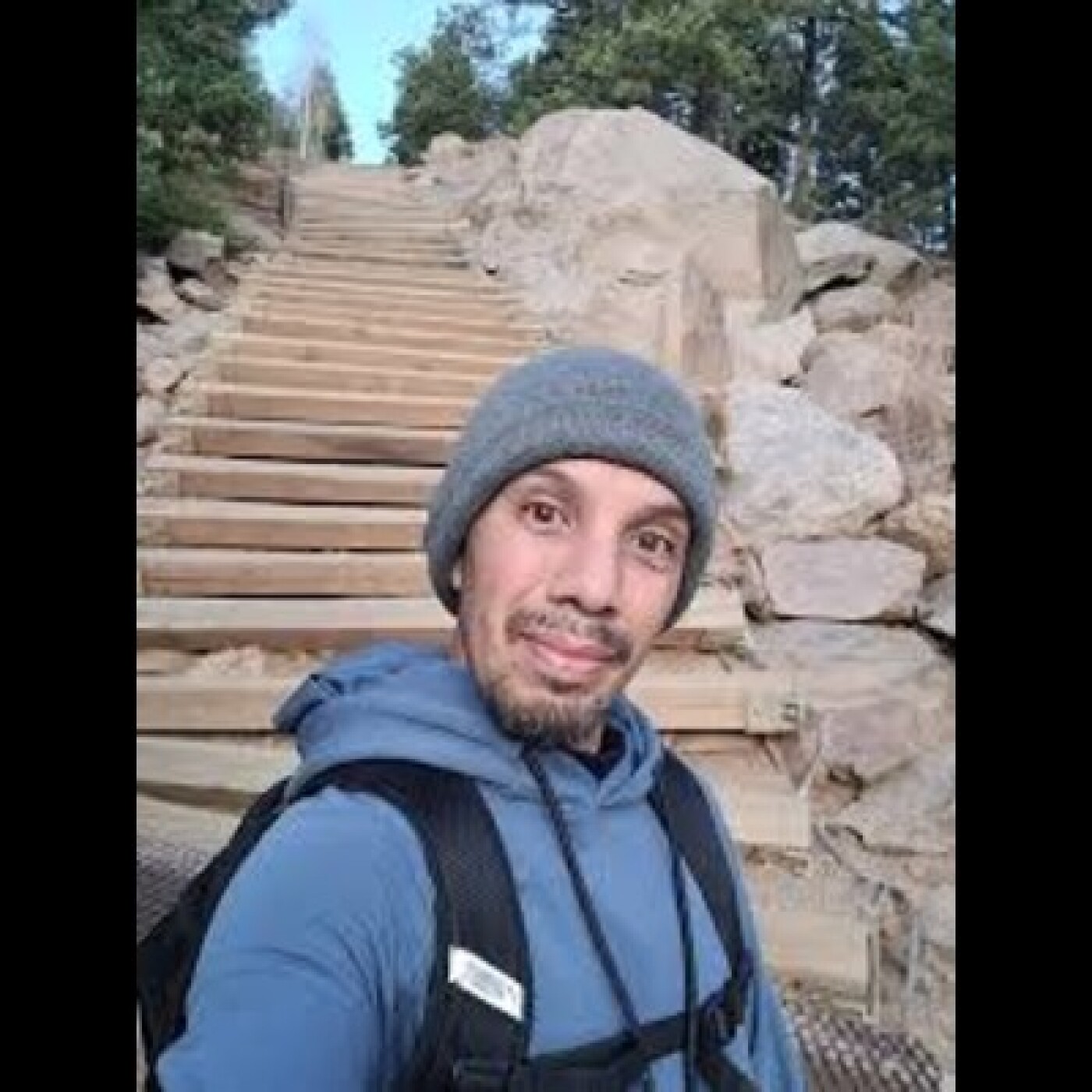
S17 Ep 13Small autism school needs help so I hiked a mountain
About the GuestGary Martinez Jr. — autism parent, Manitou Incline devotee, and fundraiser for Kishami Academy. He averages multiple laps per day, uses the trail to raise awareness, and shares practical sensory strategies learned parenting his daughter.Timestamps0:04 - Episode open and intro to Gary's climb1:19 - Gary explains the one-year Manitou Incline challenge3:53 - Elevation, lap counts, and sponsor match7:02 - Gary on discovering his own neurodivergent traits18:52 - Daily sensory supports that help his daughter succeed23:13 - Surprises from months of climbing27:04 - How sponsors and community stepped up36:40 - How listeners can help the school37:53 - Where to find Gary and donateWant to help? Visit Gary's profiles (Gary Martinez Jr. on Facebook, Instagram, TikTok) for the GoFundMe link and more. Please listen to the episode to hear the full story and consider donating or volunteering — every step counts.#AutismSupport #Neurodiversity #CommunityFundraising #ManitouIncline #ParentingTipsHosted on Ausha. See ausha.co/privacy-policy for more information.
S17 Ep 12From mystery to clarity a mom remeets her son after diagnosis
When a Diagnosis Opens the Door: A Mother’s Story of Autism, School Battles, and Small WinsI sit down with Anita G., a retired teacher and podcast host, to hear how one diagnosis changed everything for her family—and why that could matter to you.In this episode I talk with Anita about recognizing subtle signs of autism, the relief and confusion that followed her son Tyler’s diagnosis at 10, and the ways schools and doctors sometimes miss children who don’t fit a stereotyped image. You’ll hear why she started a podcast called G Family Chronicles, how being a former educator shaped her advocacy, and the quiet strategies that helped Tyler move toward college and independence.We also cover the emotional toll of fighting for accommodations, when to bring in an advocate or attorney, and the simple supports—like pets and captioned TV—that changed daily life. I reveal a few of the systems and paperwork she relied on, but I save the step-by-step for the episode because the details matter.Key Timestamps0:02 – Episode intro1:30 – Who Tyler is and early signs4:06 – Receiving the diagnosis: relief and next steps6:46 – Hopes and fears before the word “autism”11:27 – How Anita’s view of autism changed24:53 – What led to reevaluation in school34:17 – The impact of “invisible” autism on treatment68:12 – Avoiding burnout: advocates, attorneys, and supports93:19 – Where to find Anita’s podcast and resourcesAbout the GuestAnita G. is a retired teacher, mother of Tyler (diagnosed with autism at 10), and host of the podcast G Family Chronicles. She shares candid stories from the classroom and home, focusing on practical advocacy for neurodivergent kids and their families.Want practical examples and real paperwork stories? Listen to the full episode to find out which strategies Anita used, when she brought in legal help, and what she wishes parents knew in year one after a diagnosis.Listen, subscribe, and join the conversation—links in the show notes. #Neurodiversity #AutismParenting #IEPAdvocacyHosted on Ausha. See ausha.co/privacy-policy for more information.
S17 Ep 11Part 1: From nightclub owner to food equity advocate
From Nightclubs to Food Justice: Shannon Dobbs on Neurodivergence, Disability, and Building Better Systems (Part 1)What happens when a former nightclub owner rethinks food access, work, and learning through a neurodivergent lens?In this conversation, I sit down with Shannon Dobbs—an Army vet turned nonprofit advocate—who shares how health scares, a late ADHD diagnosis, and hard-won lessons from the VA pushed him to redesign how communities get fed and how people learn. You’ll hear how he went from running a smoke-filled bar to installing a commercial kitchen that kept downtown Reno fed during COVID—and why that experience sparked a bigger mission.We get into the real reasons food deserts persist, why some organizations resist root-cause solutions, and the unexpected tech that can turn “waste” into meals. Shannon also teases a new path for sensory-friendly, on-the-job learning using assistive hardware and small language models—built for those of us who learn best hands-on.You’ll discover: - How Shannon reframed food insecurity with practical tools most people overlook - The pattern-seeing skill that helps him cut through red tape - A simple kitchen swap that changes meal prep for ADHD brains - Why vocational, self-directed learning could be a better fit than traditional classroomsWhat would shift if grocery models fit the community—not the other way around? And how close are we to offline AI that coaches you through a task in real time?About the GuestShannon Dobbs is a retired nightclub owner, Army veteran, and nonprofit founder focused on food systems, vocational pathways, and sensory-friendly tech. He works at the intersection of neurodivergence, disability, and community-led solutions.Timestamps0:03 – Meet Shannon: from nightclubs to nonprofit advocacy1:48 – The wake-up call that changed his health—and his work5:58 – The part of his story most people miss7:25 – Late ADHD diagnosis, head injury, and what actually changed10:27 – Building a bar community that won “Best Dance Club”12:56 – The HEPA hack that made a smoking bar breathable13:34 – Military life, creativity, and a sudden detour20:46 – Real-life kitchen challenges with ADHD22:17 – The one-pot tool that makes cooking simpler35:09 – Why grocery stores don’t reach food deserts—and a different model43:11 – “We rescued 5M meals”: what Vegas taught him about waste55:24 – Sensory overwhelm and a new assistive hardware concept63:30 – How on-device AI could guide real work, step by step70:14 – Wrap-up: Part 2 coming soonCall to action: If you’re neurodivergent, a parent, educator, or caregiver, this one’s for you. Listen now, share with someone who needs it, and subscribe so you don’t miss Part 2.#Neurodiversity #FoodInsecurity #ADHD #Disability #VeteransHosted on Ausha. See ausha.co/privacy-policy for more information.

S17 Ep 10Stories: Men feel stuck after trauma here’s what actually helps
From Near-Fatal TBI to Helping Men Heal: Daniel’s Story of Grit, Care, and PossibilityA teenage car crash changed everything. In this episode, I sit with Daniel, an LCSW who turned his traumatic brain injury into a calling to support men facing trauma, PTSD, and TBI.You’ll hear how he went from ICU and tinnitus-filled nights to guiding others through the fog—without losing himself in the process. I reveal the words that fueled his recovery, the quiet struggles most people never see, and why he chose to focus on men’s mental health. You’ll discover the core misunderstandings about men and trauma, what real nervous system regulation can look like, and the approaches Daniel uses that move healing from “talking about it” to actually feeling better in your body.We also get personal: the sounds that soothe, routines that keep the darkness from following you home, and the one message he’d give his 18-year-old self. If you’re a parent, educator, caregiver, or a man carrying a heavy load, this conversation opens a path forward—one you might not expect.Want to know the modalities Daniel recommends, where he sends men to start, and why this accident may have put him exactly where he’s needed most? Press play.Key Timestamps0:02 – The crash that changed his life4:06 – Hyper-sensitivity, tinnitus, and the early aftermath6:56 – A doctor’s prediction—and the moment that lit a fire8:30 – The hardest part of recovery no one talks about9:41 – What he lost—and what he gained14:33 – Why the helping professions called to him16:23 – Why he works with men: one word that says it all21:08 – What people get wrong about men and trauma30:32 – How he doesn’t carry clients’ pain home45:07 – Where men should start: the modalities that help46:59 – How to connect with DanielAbout the GuestDaniel is a licensed clinical social worker specializing in men’s trauma, PTSD, and traumatic brain injury. Through his private practice, he supports clients with approaches that include body-based and trauma-focused care.Resources: Learn more at RevitalizeMentalHealth.comIf this episode helped, subscribe, rate, and share it with someone who needs to hear it. Your support helps our neurodivergent community feel seen, informed, and connected.#Neurodiversity #MensMentalHealth #TraumaHealing #TBI #PTSDHosted on Ausha. See ausha.co/privacy-policy for more information.
S17 Ep 9Late ADHD diagnosis at 37 now school and work finally make sense
ADHD, Fear, and Finding Recovery: A Real Conversation with Chase ThayerIf school felt like quicksand and calm never lasted, this episode will feel like a breath you didn’t know you needed.I sit down with Chase Thayer to talk about ADHD, fear, grief, and recovery—without sugarcoating. You’ll hear how early shame shaped his choices, why baseball became a lifeline, and the moment he realized substances weren’t the core issue. We get into trauma, inner child work, and what actually helps in the first year of sobriety. I also ask him why healing the whole family matters and what most parents miss when they push for college before stability.In this episode, I reveal the questions I wish more educators and parents asked kids who struggle to “care,” and you’ll discover the simple shift that can make school and work more humane for ADHD brains. Chase shares the framework he uses with families today—and the misconception that keeps so many stuck.By the end, you’ll see recovery with clearer eyes, and you might rethink what support looks like at home, in the classroom, and in the workplace.About the GuestChase Thayer is a healthcare professional with nearly 20 years in substance use and mental health. He’s in long-term recovery, has ADHD, and founded Austin Integration Coaching to guide individuals and families through treatment planning, transition, and sustained change. He lives in Austin, Texas, with his partner and three kids.Key Timestamps0:02 – Why this conversation matters now3:06 – Growing up in fear and the cost of “keeping the peace”6:40 – ADHD and school: when effort looks like apathy11:31 – The “dumb jock” shield: what it hid and what it stole15:30 – Baseball as identity and confidence18:33 – Alcohol as “freedom” and a false self19:39 – Painkillers and the slide no one saw coming21:05 – Losing his brother and the grief that fueled risk26:31 – Realizing substances weren’t the main problem29:54 – Addiction, trauma, and inner child work31:44 – The first year: what most people get wrong33:21 – Why family healing can’t be optional37:48 – Austin Integration Coaching: filling the gap39:58 – The biggest rehab misconception41:40 – A message for anyone feeling stuck44:03 – Reclaiming life in everyday moments44:44 – Where to find ChaseIf this helped you, share it with someone who needs a steady voice today. Subscribe for more real, accessible conversations on neurodiversity, mental health, and community. Connect with Chase at austinintegrationcoaching.com.#ADHD #TraumaInformed #Recovery #Neurodiversity #FamilySystemsHosted on Ausha. See ausha.co/privacy-policy for more information.
S17 Ep 8Raising Digital Creators, Not Addicts: The New Blueprint for Safe and Inspiring Kids’ Technology
Robert’s story starts with a simple question that changed everything: why can’t people talk to someone right at the point of purchase online? Back in the late ‘90s, he was building websites and saw firsthand how disconnected people felt behind their screens. That spark led him to invent web chat, a tool now woven into the fabric of daily life, and eventually build a multibillion-dollar company centered around making human connections through technology. But after years of leading in the world of AI and customer service, his perspective shifted dramatically when he watched his own kids interact with technology. Instead of seeing creativity and community, he saw harm and addiction. Those personal, raw moments as a parent fueled a new mission—one focused on building tech experiences that empower kids to create and connect safely. Robert’s journey isn’t just about inventing cool tech; it’s about finding ways for technology to actually serve families, spark imagination, and build healthier communities.,Robert’s journey with technology began out of curiosity and a desire to solve problems he saw in everyday life. He invented web chat because he believed people deserved real, meaningful conversations—even online. As his company grew and shaped the future of AI, his focus gradually shifted from business success to something more personal. Becoming a dad opened his eyes to how technology affects kids, especially when he saw his own children drawn into unhealthy patterns with screens and apps. Those real-life experiences hit hard and inspired him to rethink everything he knew about tech. Now, Robert is passionate about creating tools that give kids a safe space to express themselves and explore their creativity. His story is a reminder that sometimes, it takes seeing the impact up close to realize what really matters and to use innovation for good.Robert Locasico has seen the digital world from just about every angle, starting as the inventor of web chat in 1997 and then leading LivePerson to the top of the conversational AI industry. But what really sets Robert apart is his drive to rethink how kids interact with technology, a passion sparked by watching his own three children navigate today’s digital landscape. He’s not just an industry veteran—he’s a parent who understands the challenges families face with screens, apps, and AI. Now, Robert is channeling his decades of experience into building tech that’s not only safe, but also genuinely sparks creativity and connection for all kids, including those who are neurodivergent. His down-to-earth style and focus on ethical AI make him a thoughtful voice in the often overwhelming world of kids’ technology.Visit Kidco.AI to learn more about the Kid device and company.Purchase the Kid device directly from Kidco.AI (available for sale now).Join the Kidco.AI Facebook group for parents to share experiences and support each other.Connect directly with the Kidco.AI team after joining to provide feedback and engage with the community.Explore COPPA certification standards for digital properties to understand the safety measures implemented for children.Contact Me:https://www.youtube.com/@AspergersStudiohttps://aspergersstudio.com/https://www.linkedin.com/in/reidmiles/https://www.facebook.com/InsideTheAspergersStudiohttps://www.twitter.com/AspergersStudioSupport the show via my Patreon https://www.patreon.com/AspergersStudioHosted on Ausha. See ausha.co/privacy-policy for more information.
S17 Ep 7From awkward talks to real closeness in neurodiverse relationships
Neurodiverse Intimacy: Rethinking Sex, Consent, and Connection with CheriIntimacy isn’t “broken” when you’re neurodivergent—it just plays by different rules. In this episode, I sit down with Cheri, a couple sex therapist and relationship coach, to reframe sex, consent, and communication for neurodiverse couples.You’ll hear how sensory sensitivities, masking, burnout, and mixed communication styles can shape closeness—and why that doesn’t mean you’re a mismatch. Cheri shares how her new workbook helps partners feel safe, seen, and equipped to build connection that fits their brains and bodies. We talk about practical ways to communicate (that aren’t awkward), how to handle mismatched desire without blame, and what repair looks like when things go sideways.I reveal where I’ve struggled to find the right support, and you’ll discover why a small shift in language can change the whole experience in the bedroom. Curious how texting can be a strength? Why kissing can be a bigger sensory hurdle than handholding? And what to offer instead of a flat “no”? It’s all here—without shame, and without guesswork.Timestamps0:02 – Welcome and why finding the right support matters0:53 – Why Cheri created a sex workbook for neurodiverse couples3:19 – How intimacy shows up differently (and what “different” really means)5:29 – Sensory realities: kissing vs. handholding6:10 – Building a workbook that feels safe, not clinical7:07 – Communication that works: beyond talking it out11:16 – Reframing “something’s wrong with us”12:52 – Desire, arousal, and capacity: what changes and why15:23 – Talking about sex without shutdowns or defensiveness20:06 – Moving from unspoken rules to clear consent21:36 – Consent in long-term relationships when energy fluctuates22:55 – What makes this a workbook (and how to use it together)24:16 – The exercise that surprised Cheri most30:21 – Balancing structure with flexibility31:13 – Shame, trauma, and gentle repair32:50 – Handling mismatched desire without judgment33:56 – In-the-moment repair when things go sideways36:53 – The “we’re not broken” shift39:22 – Beyond sex: building a lasting sense of connection40:07 – Where to start if you’re nervousAbout the GuestCheri is a couple sex therapist and relationship coach with 20+ years of experience. Her dissertation focused on neurodiverse couples, and she specializes in practical tools that honor difference without shame. Learn more at couplescounselingcenter.online.If this episode helps, share it with someone who needs to hear they’re not alone. Subscribe for more accessible conversations on Autism, ADHD, relationships, and real-world support.#Neurodiversity #Autism #ADHD #Relationships #SexEducationHosted on Ausha. See ausha.co/privacy-policy for more information.
S17 Ep 6Why Every Voice Matters: Breaking Stigma and Building Connection with Complex Mental Health
In this episode, you’ll hear Aisha open up about her journey with multiple mental health diagnoses and how she’s found ways to cope and thrive, even when things felt overwhelming. She shares real stories about what it’s like to juggle conditions like autism, anxiety, and depression, and how she learned to ask for help, set boundaries, and tune into her own needs instead of just powering through. Aisha’s experiences show you’re not alone in facing these kinds of challenges, and she offers tips you can actually use—whether that’s finding the right support system, practicing self-compassion, or just making space for the tough days. If you want honest advice and a reminder that progress doesn’t have to be perfect, this episode will give you the encouragement and practical ideas you need to feel a little more in control.,In this episode, Aisha shares her experiences living with multiple mental health diagnoses, including autism, anxiety, and depression, and discusses the ups and downs of managing them all at once. She talks about how she discovered effective coping strategies, from reaching out for support to learning the importance of boundaries and self-care. By opening up about her challenges and victories, Aisha reminds listeners that they’re not alone and that it’s okay to have hard days. The conversation is filled with practical tips and honest advice, making it a valuable listen for anyone looking to better understand how to navigate complex mental health journeys and find real-world ways to feel more balanced and supported.Discover how to navigate the complexities of multiple mental health diagnoses to regain control and balance in daily life.Celebrate real achievements that shine through despite facing ongoing mental health challenges.Embrace the power of self-acceptance and learn why owning your uniqueness transforms your emotional well-being.Master practical strategies tailored to managing ADHD as an adult and boost your focus and productivity.Unlock the benefits of building strong external support systems that can lift your mental health journey to new heights.Contact Me:https://www.twitter.com/AspergersStudiohttps://aspergersstudio.com/https://www.youtube.com/@AspergersStudiohttps://www.facebook.com/TheNeurodivergantConnectionhttps://www.linkedin.com/in/reidmiles/Support the show via my Patreon https://www.patreon.com/AspergersStudioHosted on Ausha. See ausha.co/privacy-policy for more information.
S17 Ep 5Labels aren’t cages they open doors to real support
From Plaster Masks to True Voice: Neurodivergence, Burnout, and Finding Your Worth with Nikki (Dominique) FavreauI thought helping others heal meant I was healed—until this conversation showed me what it costs to keep a mask on.In this episode of the Neurodivergent Connection, I sit down with Nikki (Dominique) Favreau—former psychiatry and addiction nurse turned entrepreneur—who shares how a single moment in art therapy cracked a plaster mask and gave her voice back. We talk about the quiet ways burnout sneaks in, the difference between performing survival and living truth, and how worthiness ties to dignity, not productivity.You’ll hear how Nikki shifted from caregiving to building a software company with a remote team in the Philippines, why she calls herself a “perfectionist in remission,” and the surprising way she spots emotional intelligence when hiring. We also unpack ADHD through a family lens, the relief (and fear) of being seen, and the first gentle question she invites you to ask if you feel stuck behind your own mask.What did that mask protect—and what did it cost? How did one professor become both a catalyst and a mirror? And what simple, everyday practices help you return to your core essence? I reveal what changed for me too.About the GuestNikki (Dominique) Favreau is a former mental health and rehab nurse with a master’s in mental health who now co-runs a software company. She supports entrepreneurs with hiring, training, and delegation, grounded in compassion, emotional intelligence, and lived neurodivergent experience.Key Timestamps0:02 – Welcome and why this story matters now1:10 – From psych nurse to entrepreneur: the unexpected pivot5:18 – Self-compassion in addiction work (and what came back to teach her)11:49 – ADHD, validation, and seeing patterns differently19:02 – Hyperfocus, structure, and burnout’s slow creep21:40 – Delegation, identity, and the “perfectionist in remission”23:40 – The plaster mask: what it hid and why it hurt to remove39:40 – Error management: why she asks her team to “make mistakes”64:21 – Burnout vs. soul loss: what she couldn’t see from the inside67:10 – The first gentle question if you feel stuck behind a maskIf this episode resonates, share it with a parent, educator, or anyone exploring Autism, ADHD, or burnout. Subscribe for more conversations that center neurodivergent voices and real-life strategies. #Neurodivergent #ADHD #ArtTherapy #Perfectionism #BurnoutHosted on Ausha. See ausha.co/privacy-policy for more information.
S17 Ep 4From scared aunt to steady advocate raising Isaiah
When Words Aren’t the Only Language: Parenting, AAC, and Advocacy with Jennifer McGeeWhat happens when a teen with profound autism joins your family—and words aren’t available? This conversation gets real.In this episode, I sit down with artist and adoptive parent Jennifer McGee to talk about raising her nephew Isaiah, who is non-speaking, and how their family learned to listen beyond words. You’ll hear how she built trust, safety, and connection at home, the moment a “speech pad” changed everything at a restaurant, and why a routine medical visit led to a setback they’re still navigating.We also get into big-picture questions: how to advocate in IEP meetings without burning out, what true accessibility can look like in public spaces, and why art can reach hearts when explanations fall short. Plus, Jennifer shares the story behind her children’s book series, starting with “Izzy Can’t Talk,” and the surprising audience it’s reaching.If you’ve wondered how to support non-speaking kids, build a real support circle, and show up in your community with empathy, this episode will help you rethink what communication and inclusion can be.Key Timestamps0:26 – Jennifer’s story and adopting Isaiah3:05 – Building safety at home during meltdowns4:00 – From signs and pictures to a speech device6:48 – The orange drink moment that changed everything8:18 – The future: caregiving, housing, and real fears10:38 – Why “building a village” is harder than it sounds14:49 – ABA today: what helped Isaiah engage and travel17:15 – Inside the Izzy book series and what’s next24:58 – The IEP wake-up call that sparked advocacy31:44 – What accessibility could look like in everyday places37:31 – Don’t give up: Jennifer’s message to families38:31 – Where to find Jennifer’s workAbout the GuestJennifer McGee is an artist, caregiver, and author of the children’s series beginning with “Izzy Can’t Talk.” She runs Inclusive Art House, creating art and resources that honor dignity, communication, and inclusion for disabled individuals.If this helped you, subscribe and share it with someone who needs a little encouragement today.Keywords: non-speaking autism, AAC, speech device, IEP advocacy, inclusive classrooms, profound autism, caregiver support, sensory-friendly#Neurodiversity #AutismAcceptance #AAC #CaregiverSupport #InclusiveEducationHosted on Ausha. See ausha.co/privacy-policy for more information.
S17 Ep 3When a dad stops going it alone and finds his people
Real Talk for Special Needs Dads: Community, Communication, and Caring for YourselfIn this episode, I sat down with advocate and educator John Fella to talk candidly about fatherhood, support, and raising an autistic, nonverbal teen. This one’s practical, honest, and full of encouragement.Key Topics CoveredWhy dads often feel isolated—and how to build intentional community that actually helpsSupporting nonverbal communication: AAC, letter boards, and why there’s no one-size-fits-allABA today: what’s changed, what still depends on the therapist, and how to set boundariesHow to create better IEP relationships and reduce friction with school teamsSimple ways dads can bond with their kids when “traditional” activities don’t fitMain TakeawaysDon’t do this alone: Community isn’t optional—it’s protective. Start with one person who “gets it.” If groups feel like too much, go one-on-one first.Vulnerability is strength: You can’t get the right help if you won’t say you need it. Share as much as you’re ready for—then let people show up.Communication is multi-path: AAC (like TouchChat), signs, body language, and typing can work in combination. Follow your child, not the hype. Progress requires patience—and fit.ABA is about the person delivering it: A great therapist adapts and respects your child. If it’s rigid, repetitive, or stressful, speak up and adjust.Build IEP relationships early: Humanize your child with classroom talks, share what they love, and connect outside high-stress meetings. Collaboration beats confrontation.Redefine connection: If playing on a team isn’t realistic, watch games together, shoot hoops your way, or take short walks. Consistent moments matter.Find structured support: Organizations like the Special Fathers Network offer groups and one-on-one mentoring—local and virtual.“One person is a start. If you don’t have that person yet, reach out—today.”John’s resources and writing are at johnfella.com. He also has a memoir coming soon and a contribution to a book with Temple Grandin for educators and therapists.Listen to the full conversation for practical examples, how John mentors dads, and what’s worked with his son—so you can apply it in your own life today.Hosted on Ausha. See ausha.co/privacy-policy for more information.
S17 Ep 2From fear and masking to steady self who I am now
Shadow Work, Ego Death, and Finding Bliss: Facing the Dark to Find Your Light with AnnieWhat if the parts of you you’ve avoided are the ones holding your wisdom? In this episode, I sit down with Annie to explore the real work beneath “love and light” — and why the dark isn’t something to fear.You’ll hear how Annie created her approach, Awakening the Seeds, after more than 10,000 sessions, and why she calls herself an “ego death doula.” We talk about grief, liminal spaces, and how nervous system regulation and shadow work support creativity, leadership, and everyday life — especially for those of us who are neurodivergent or living in survival mode.I reveal the moments that stopped me in my tracks, and you’ll discover how Annie helps people move from masking and reactivity to calm, clear choice. Curious how to know if you’re bypassing? What integration actually looks like? Or why ideas often meet us in the dark? We get into all of it — without shying away from the hard parts.About the GuestAnnie is a healer and creator of Awakening the Seeds. She’s led over 10,000 sessions, trained across multiple modalities, and co-founded Seeds of Bliss, a space focused on bridging light and shadow, life and death, mind and emotion.Key Timestamps0:22 – Annie’s early intuition and the moment everything changed2:14 – Why therapy wasn’t her door and what opened instead5:07 – Hitting walls with clients and creating a new modality8:33 – Living in the liminal: life, death, grief, and growth10:39 – The shadow side of healing (and why light alone falls short)14:35 – Bypassing vs healing: simple signals to watch15:51 – Ego death: letting go of identities that keep you small19:01 – Seeds of Bliss: bridging opposites and cyclical living39:58 – Neurodivergence, intensity, and tools that actually help47:30 – Integration in real life: how you’ll know it’s workingIf this resonates, share the episode with someone who needs to hear it. Subscribe for more conversations that support neurodivergent folks, parents, educators, and caregivers. Check the show notes for Annie’s links and resources.#Neurodiversity #ShadowWork #EgoDeath #TraumaHealing #NervousSystemHosted on Ausha. See ausha.co/privacy-policy for more information.
S16 Ep 14Small steps that make bipolar and ADHD days feel lighter
ADHD, Bipolar, and the 24-Hour Rule: Lessons From a Mental Hospital with Laura Greenberg SchilerShe went in scared and left with 10 life lessons—and a book. We unpack ADHD, bipolar, and the 24-hour rule.In this episode, I sit down with Laura Greenberg Schiller, a former attorney, mom of three, and now author of Finding Flawless. Laura was diagnosed with bipolar at 39 and later with inattentive ADHD. Her time in a mental hospital didn’t break her—it gave her clarity, steadiness, and a simple rule that changed her relationships.You’ll hear how Laura went from high-achieving lawyer to retired by choice, why inattentive ADHD shaped far more of her daily life than she realized, and the one boundary she uses to keep mood swings from running the show. We also talk about writing a deeply personal book without losing yourself in the process, and what people get wrong about psychiatric hospitals.If you or someone you love is juggling ADHD, bipolar, or both, this conversation offers relief, perspective, and a few practical anchors you can start using today.About the GuestLaura Greenberg Schiller is a New Jersey-based former attorney turned author. Living with bipolar disorder and inattentive ADHD, she distills hard-won insights from her hospitalization into accessible lessons in her upcoming book, Finding Flawless.Key Timestamps0:02 – Why Laura’s “worst moment” became a turning point2:20 – Bipolar at 39: the manic episode no one saw coming6:11 – Six hours a day of therapy—and the career truth it revealed10:41 – ADHD strengths: hyperfocus and writing a book in weeks13:59 – The writing plan that actually worked24:43 – Inattentive ADHD: the diagnosis that finally made sense28:15 – ADHD + bipolar meds: risks, limits, and what helped35:24 – The rule that saved her marriage (and daily peace)39:56 – Mental hospital myths vs. reality52:02 – Where to follow Laura and her bookCall to Action: If this episode helped you, share it with a parent, educator, or friend who needs a safe, honest conversation about neurodiversity. Subscribe for more real stories, practical strategies, and community.Find Laura: Instagram Finding Flawless • Facebook: Laura Greenberg Schiller. Book: Finding Flawless (coming to Amazon).Keywords: ADHD, bipolar disorder, inattentive ADHD, mental health, neurodiversity, coping strategies, writing process, psychiatric hospital, medication, parenting#ADHD #BipolarDisorder #Neurodiversity #MentalHealth #InsideTheAspergersStudiosHosted on Ausha. See ausha.co/privacy-policy for more information.

S16 Ep 13From grief to grit how Win Charles turned loss into advocacy
Win Charles on Grit, Grief, and Raising Disability AwarenessEducation changes everything—and Win Charles shows how it powers resilience, storytelling, and advocacy.In this conversation, I sit down with Win Charles—author, podcaster, and disability rights educator—who was born with cerebral palsy and has built a life that challenges assumptions at every turn. You’ll hear how she turned grief into purpose, why she said yes to a Kona triathlon in seconds, and what training taught her about doing hard things when the world isn’t built with access in mind.We also get into her two podcasts—one focused on disability awareness and another giving women (especially women with disabilities) space to talk about mental health. Win shares the message she wants every audience to take home, the stereotype she refuses to let slide, and the surprising theme songs that keep her moving.If you’re a parent, educator, caregiver, or someone newly diagnosed, this episode will leave you with questions worth exploring: What shifts when we center access? How do we hold both ambition and advocacy? And what does “not giving up on your dreams” look like in real life?About the GuestMy guest, Win Charles, is a podcaster, author of “I, Win,” and a disability rights educator. She’s competed in an Ironman event, speaks nationwide, and hosts shows on disability awareness and women’s mental health. Learn more at winningheart.weebly.com.Hosted on Ausha. See ausha.co/privacy-policy for more information.

S16 Ep 12When autistic voices lead teams change follows at school and home Part 1
Autism Support That Actually Works Together: Multidisciplinary Care, Student Voice, and Real-World CoordinationWhat does true collaboration for autistic kids look like—and how do we keep their voices at the center?In this conversation, I sit down with Leila Farshidi to unpack what happens when schools, clinics, and families stop working in silos. We talk about the real gap between theory and day-to-day care, why feeding and sensory needs get missed, and how value-based care could change the “minutes on a paper” mindset in IEPs.You’ll discover why learner preferences should be assessed as carefully as skills, what weekly coordination can do that yearly meetings can’t, and how automation may finally reduce the load on families. We also ask the hard questions: When do we invite autistic students into decisions about their own support? And what happens to access when training quality varies so widely?I reveal the simple shift I wish schools made right now—and Leila shares the system she’s building to make it easier. There’s more in part two, including disparities across communities and what parents still need after diagnosis.About the GuestLeila Farshchian is a disabilities care provider with 30 years’ experience focused on Autism Spectrum Disorder. She leads a 70-provider practice in Northern New Jersey, founded ABA Toolbox (becoming Circathera: Circle of Care), and serves as Chair of Education and UN representative for the International Health Awareness Network—Global Schoolhouse, working to close the digital divide in care and education.If this episode helps, share it with a parent, educator, or clinician. Subscribe so you don’t miss part two. I’d love your questions for our next conversation—send them my way.Keywords: Autism Spectrum, IEP, ABA, occupational therapy, speech therapy, feeding challenges, sensory needs, value-based care, multidisciplinary team, ARFID, caregiver support#Autism #Neurodiversity #IEP #SpecialEducation #CaregiversContact Me:https://www.linkedin.com/in/reidmiles/https://www.twitter.com/AspergersStudiohttps://www.youtube.com/@AspergersStudiohttps://www.instagram.com/TheNeurodivergantConnectionhttps://www.facebook.com/TheNeurodivergantConnectionFor a limited time, schools, clinics, and universities can receive 25% OFF when signing up for an ABA Toolbox account by 12/31/25.Claim your 25% off by signing up for a demo today! https://meetings.hubspot.com/aba-toolbox/aba-toolbox-comprehensive-demosOr contacting [email protected] for more information.Hosted on Ausha. See ausha.co/privacy-policy for more information.
S16 Ep 11Late diagnosis changed her work and finally made life make sense
Masking, Late Diagnosis, and Finding Yourself with Coach Tara TrievelLate ADHD diagnosis, self-identified autism, and 25 years coaching—Tara and I get real about masking and identity.In this episode, I sit down with parent mentor and social communication coach Tara Trievel to talk about what happens when you realize the people you’ve been helping are a lot like you. We get into what masking really looks like day to day, why it isn’t always a bad thing, and how to use it with intention instead of exhaustion.You’ll hear how Tara reframed ADHD and autism through lived experience, the surprising shift that made social situations less draining, and why focusing on strengths changes everything at home and in the classroom. We also tackle sticky moments—like job interviews, soft skills, and when to disclose—plus the nervous system piece most support plans miss.If you’re a parent, educator, or newly diagnosed adult wondering “Is this me?”—this conversation will help you make sense of your past and feel clearer about your next step.About the GuestTara Trievel is a parent mentor and social communication coach for ASD families with 25 years of experience. She was late diagnosed with ADHD and self-identifies as autistic. Tara hosts the Unapologetically Mom podcast and supports families and professionals at https://www.2besocial.org/ and at theUnapologetically Mom podcastKeywords: autism, ADHD, late diagnosis, masking, nervous system, parents, educators, soft skills, interviews, neurodivergent supportCall to action: If this resonated, subscribe and share with someone who needs it. Comment with your questions on masking or late diagnosis, and check out Tara’s site and podcast for more support.#Autism #ADHD #Neurodiversity #LateDiagnosis #MaskContact Me:https://www.linkedin.com/in/reidmiles/https://www.twitter.com/AspergersStudiohttps://www.youtube.com/@AspergersStudiohttps://www.instagram.com/TheNeurodivergantConnectionhttps://www.facebook.com/TheNeurodivergantConnectionHosted on Ausha. See ausha.co/privacy-policy for more information.
S16 Ep 10From labels to living fully with autism addiction and hope
Autism, Addiction, and Real Recovery: My Conversation with Dr. Robb KellyAutism and addiction aren’t separate battles. In this episode, I ask Dr. Robb Kelly how brain change meets real-life recovery.I sit down with Dr. Robb Kelly to explore why masking can hide addiction, how trauma shows up differently for autistic people, and what actually moves the needle in recovery. We get into mindset vs. medication, the power of routine without rigidity, and a wild classroom experiment that re-shaped how I think about labels.You’ll hear how Dr. Robb approaches addiction when autism is in the mix, why family systems can raise success rates, and the simple morning shifts that can re-pattern a tough day. I also ask him the question many avoid: can addiction be cured—and what changes first when it is?If you’ve wondered how to support a loved one (or yourself) with both autism and addiction, this episode opens up a practical, hopeful path—without sugarcoating.About the GuestDr. Robb Kelly is a PhD psychologist and behavioral scientist with 30+ years of experience treating addiction, anxiety, depression, PTSD, and dementia. His team reports a high success rate across 11,500+ patients, using neuroscience-informed tools and structured coaching. He’s based in San Antonio with offices in the US and Europe.Call to action: If this helped, share it with someone who needs real support. Subscribe for more accessible conversations on autism, ADHD, and practical tools that build community and capacity. Learn more about Dr. Rob at robbkelly.com.Keywords: autism, Asperger’s, ADHD, addiction recovery, trauma, masking, routines, family systems, neurodivergent mental health, Dr. Rob Kelly#Neurodiversity #AutismAcceptance #AddictionRecovery #TraumaInformed #FamilySystemsContact Me:https://www.linkedin.com/in/reidmiles/https://www.twitter.com/AspergersStudiohttps://www.youtube.com/@AspergersStudiohttps://www.instagram.com/TheNeurodivergantConnectionhttps://www.facebook.com/TheNeurodivergantConnectionHosted on Ausha. See ausha.co/privacy-policy for more information.
S16 Ep 9From Occupational Therapist to Psychologist: A Holistic Approach to Neurodivergent Care and Healing
In this episode of Inside the Asperger’s Studio, we sit down with a clinician whose career spans more than two decades of hands-on, heart-centered work. Before becoming a psychologist, she spent over 20 years as an Occupational Therapist, specializing in supporting severely physically and developmentally disabled children and adults. Her experience also extends into geriatric care, private practice, and orthopedic settings—giving her a rare, comprehensive understanding of both mind and body.Today, she brings that unique background into her work as a psychologist, offering in-depth psychological assessments and a deeply informed therapeutic approach. With advanced training in child-centered play therapy and filial therapy, she blends evidence-based modalities such as DBT, CBT, IFS, psychodynamic therapy, and Acceptance Commitment Therapy. Her practice is grounded in compassion, curiosity, and a commitment to lifelong learning.Currently training to become a certified Yoga instructor, she is excited to integrate mindful movement and somatic practices into her therapy work—further expanding her holistic, client-centered approach.Join us for a conversation filled with insight, expertise, and the powerful story of how one clinician’s journey across disciplines now empowers neurodivergent individuals and families to heal, grow, and thrive.Tamara's Resources:https://www.therapyden.com/therapist/tamar-shtrambrandContact Me:https://www.linkedin.com/in/reidmiles/https://www.twitter.com/AspergersStudiohttps://www.youtube.com/@AspergersStudiohttps://www.instagram.com/TheNeurodivergantConnectionhttps://www.facebook.com/TheNeurodivergantConnectionHosted on Ausha. See ausha.co/privacy-policy for more information.
S16 Ep 8From Burnout to Breakthrough: How an ADHD Diagnosis Transformed My Nursing Career
For as long as I can remember, healthcare has been part of my identity. I started volunteering in hospice as a toddler and earned my nursing degree in 2009. Over the last 15 years, I’ve worked across clinics, triage teams, and school health programs—always driven by a passion for supporting families and creating compassionate care experiences.But everything changed when I received an adult diagnosis of ADHD, inattentive type. After years of being treated for anxiety and depression, this diagnosis reframed my entire life. Suddenly the overwhelm, the mental exhaustion, and the pressure to “keep up” in a neurotypical system finally made sense.Understanding my neurodivergence transformed not only how I see myself, but also how I show up as a nurse. I now recognize the hidden strengths neurodivergent healthcare workers bring—and the unique challenges they face. From masking and burnout to self-doubt and sensory overload, I’ve lived it all.Today, my mission is to help fellow neurodivergent nurses and healthcare professionals step out of shame, claim their strengths, and build careers that support their brains—not fight against them. With clarity, confidence, and compassion, I’m here to show that your neurodivergence isn’t a barrier—it’s a blueprint.Catherine's Resourrces:https://www.mdclifeandhealth.com/Contact Me:https://www.linkedin.com/in/reidmiles/https://www.twitter.com/AspergersStudiohttps://www.youtube.com/@AspergersStudiohttps://www.instagram.com/TheNeurodivergantConnectionhttps://www.facebook.com/TheNeurodivergantConnection#NeurodivergentNurse #ADHDNurse #ADHDInHealthcare #NeurodiversityAtWork #HealthcareBurnout #ADHDDiagnosis #NeurodivergentProfessionals #NurseLife #MentalHealthInMedicine #InattentiveADHD #MaskingFatigue #CompassionFatigue #NurseSupport #ADHDAwarenessHosted on Ausha. See ausha.co/privacy-policy for more information.
S16 Ep 7From meltdown mayhem to calm at home with music and science
From Overwhelm to Agency: Real Support for Neurodivergent Families with FawnFeeling lost after a diagnosis? In this episode, I sit down with Fawn to show what calm, clear support can look like in real life.Fawn is a single mom of three with a master’s in applied behavior analysis, a background in music, and years in trauma-informed coaching. Together, we talk about what actually helps at home and at school—without pushing kids to mask or parents to burn out. You’ll hear how she blends behavior science, nervous system regulation, and creativity to help families breathe again.You’ll discover how to make communication feel safer (even during meltdowns), what schools often miss in IEPs, and the small shifts that turn “annoyed” into “I’m ready.” Fawn also shares the calm-first approach she uses with parents and why one graduation changed how she advocates for student voice.If you want structure that supports rather than restricts—and a way to include your child’s interests (yes, Minecraft counts)—this conversation will give you a new path forward. What would change if your home didn’t chase perfection, and your child had a real say?About the GuestFawn is a mother of three, a behavior-trained, trauma-informed coach, and a music educator who supports neurodivergent kids, teens, and their families. Through Avari Performance, she partners with homes and schools to build practical systems that honor autonomy, reduce overwhelm, and center real communication.If this helped you, share it with a parent, educator, or teen who needs it. Subscribe for more conversations that make neurodiversity feel human, practical, and hopeful.Fawn's Resources:https://avariperformance.com/Contact Me:https://www.linkedin.com/in/reidmiles/https://www.twitter.com/AspergersStudiohttps://www.youtube.com/@AspergersStudiohttps://www.instagram.com/TheNeurodivergantConnectionhttps://www.facebook.com/TheNeurodivergantConnectionKeywords: autism, ADHD, IEP, executive function, co-regulation, meltdowns, masking, ABA alternatives, college disability services, parent coachingSubscribe for more and join our community. #Neurodiversity #AutismSupport #ADHD #Parenting #IEPHosted on Ausha. See ausha.co/privacy-policy for more information.
S16 Ep 6From Burnout to Heart-Led Autism Support with Guy Shahar
When chronic illness forced Guy Shahar to stop and reevaluate his life, it led to an unexpected awakening that changed everything. Once housebound from total health burnout, Guy began writing his first book, Transforming Autism—a heartfelt account of his family’s journey raising an autistic son and discovering new ways to nurture his well-being. That story became the catalyst for his TED Talk, “The Beautiful Reality of Autism,” which has inspired more than a third of a million viewers worldwide.After learning that he, too, is autistic, Guy embraced his difference as a strength and went on to found The Transforming Autism Project, a UK-based charity helping parents of autistic children access guidance and support. Through Heartful Healing, his practice rooted in The Emotion Code, The Body Code, and The Belief Code, he now helps others achieve balance, clarity, and emotional freedom.In this inspiring conversation, Guy shares how burnout became a breakthrough, why self-understanding is the foundation of transformation, and how heart-based healing can help anyone rediscover their purpose.Resources Mentioned:Transforming Autism – Book by Guy ShaharLeaving Town – Book by Guy ShaharUpcoming book (2026): Autism: A Condition of the HeartTED Talk: The Beautiful Reality of AutismTransforming Autism Project – transformingautism.orgContact Me:https://www.linkedin.com/in/reidmiles/https://www.twitter.com/AspergersStudiohttps://www.youtube.com/@AspergersStudiohttps://www.instagram.com/TheNeurodivergantConnectionhttps://aspergersstudio.com/https://www.facebook.com/TheNeurodivergantConnectionHosted on Ausha. See ausha.co/privacy-policy for more information.
S16 Ep 5From Hydrocephalus to High Performance: Turned Lifelong Challenges into a Career of Resilience and Empowerment
Growing up with Hydrocephalus, Dr. Kate Lund faced a childhood defined by surgeries, hospital stays, and constant recovery — but also by an unshakable will to overcome. What began as a journey through medical adversity became a lifelong lesson in resilience, shaping her purpose and passion to help others do the same.Now a licensed clinical psychologist, peak performance coach, best-selling author, and TEDx speaker, Dr. Kate Lund has spent over 15 years empowering individuals to rise above challenges and unlock their full potential. Her unique expertise in medical and performance psychology is backed by training from world-renowned institutions including Shriners Hospital for Children, Massachusetts General Hospital, and Beth Israel Deaconess Medical Center, all affiliated with Harvard Medical School.Through a strengths-based approach, Dr. Kate Lund helps clients—from students to athletes—build confidence, resilience, and success in every aspect of life.When she’s not helping others achieve peak performance, she enjoys time with her husband and twin boys exploring the Pacific Northwest or relaxing on the golf course.This is a story of turning obstacles into opportunities — and discovering the extraordinary power of resilience that lives within us all.Hosted on Ausha. See ausha.co/privacy-policy for more information.
S16 Ep 4From Kitchen to Keyboard: How Dante Terese Blends Art, Science, and Suspense in Her Books
Dante Terese is an author whose storytelling blends intellect, heart, and moral depth. A lifelong baker, gardener, and observer of human nature, she crafts fiction that explores the timeless battle between good and evil — not in grand gestures, but in the quiet choices that shape who we become. Her stories span vastly different worlds and characters, yet each carries her signature thread of moral complexity and emotional truth.Her latest novel, The Base, pulls readers into the high-stakes world of military research science — a place where innovation can change the world, but secrecy can destroy it. Within its walls, brilliant minds compete for breakthroughs while spies, thieves, and hidden agendas lurk in the shadows. As loyalties blur and ambition collides with ethics, The Base challenges readers to ask: how far would you go to protect your work — or your soul?Beyond the page, Dante’s creativity flourishes in her kitchen and garden, where patience, precision, and wonder all come to life. Whether kneading dough or nurturing seedlings, she finds the same balance she seeks in her writing: beauty grounded in truth.Learn more about her work and world at danteterese.comHosted on Ausha. See ausha.co/privacy-policy for more information.
Stories Bonus: Crossing Dimensions: Firsthand Stories of Spirit Encounters and Practical Energy Protection
bonusIf you're feeling totally drained from saging your house, asking for protection, or obsessively reading about how to keep negative energies away—but you still feel uneasy, get odd vibes, or even notice more weirdness ramping up around you, then you are not alone! If you keep trying to connect with loved ones on the other side, but end up more confused about whether you're talking to a ghost, a spirit, or just your own imagination, then you are not alone! If you've tried to call in angels for guidance but just get radio silence, or you question if you're even doing it right, then you are not alone! If you wish you could trust your own experiences with the spirit world, but feel frustrated by all the mixed info and misconceptions out there, then you are not alone!My special guest is Daniel JacksonDaniel Jackson is a spirit medium with lifelong experience in communicating with the dead and perceiving entities beyond the physical world. Since early childhood, he has reported seeing, hearing, and interacting with spirits, animals, and beings from other dimensions. His encounters include both everyday and extraordinary phenomena, such as witnessing apparitions and experiencing objects moving without explanation. Daniel works with guides commonly identified as archangels, relying on their input to provide insights and guidance to others about the afterlife and spiritual matters. His work focuses on distinguishing different spiritual entities, helping spirits move on, and advising people on protecting themselves from negative energies. Daniel’s extensive firsthand experiences and practical approach have positioned him as an informed and credible resource for those interested in exploring the realities of the afterlife and spiritual protection.Your purpose isn’t your occupation; your purpose is helping others just for the sake of helping, not because you can, but because you should.Connect with me here:https://www.facebook.com/InsideTheAspergersStudiohttps://www.twitter.com/AspergersStudiohttps://aspergersstudio.com/https://www.linkedin.com/in/reidmiles/https://www.youtube.com/@AspergersStudiohttps://www.youtube.com/@AspergersStudioHosted on Ausha. See ausha.co/privacy-policy for more information.
S15 Ep 13Stories: Ghosts, Spirits, and the Unknown: A Halloween Conversation with a Paranormal Investigator
Just in time for Halloween, we’re diving into the world of the unexplained. In this special episode of Inside the Asperger’s Studio, I sit down with a seasoned paranormal investigator to explore the mysteries of spirits, ghosts, we talk about her being a Master of Arts in Shamanic Intuitional Practices and how that plays in to her investigations as well as how she got into podcasting. From haunted houses to eerie encounters, we talk about what it’s like to search for the supernatural, why people are drawn to the unknown, and whether science and spirituality can meet in the middle. Whether you’re a believer, a skeptic, or somewhere in between, this conversation will spark your curiosity — and maybe send a shiver down your spine.So grab your flashlight, keep an open mind, and join me for a Halloween episode that’s equal parts spooky and thought-provoking.Heidis Resources:https://www.myspiritexperience.com/https://www.linkedin.com/in/heidi-steffens-1952b0a/Contact Me:https://www.facebook.com/TheNeurodivergantConnectionhttps://www.twitter.com/AspergersStudiohttps://www.youtube.com/@AspergersStudiohttps://aspergersstudio.com/https://www.linkedin.com/in/reidmiles/Hosted on Ausha. See ausha.co/privacy-policy for more information.
S16 Ep 3The Peaceful Parenting Journey
Parenting isn’t always peaceful — especially when ADHD, neurodivergence, and big emotions are part of the mix. The Peaceful Parenting Journey is where chaos meets calm. Hosted by an ADHD mum who’s been through it all, this show explores how science, mindfulness, and compassion can transform family life. Each episode is a real, honest conversation about raising kids, managing emotions, and finding your own calm in the middle of it all. Because peace isn’t about perfection — it’s about connection.Hosted on Ausha. See ausha.co/privacy-policy for more information.