The Naked Scientists Podcast
1,285 episodes — Page 21 of 26

Ep 285Coal Gasification and Carbon Capture
This week, we find out how to get useful gas from useless coal, and make money from waste carbon dioxide! Underground coal gasification could allow us to access huge amounts of energy in inaccessible coal seams. We find out how it works as well as exploring a new method for capturing waste carbon and turning it into useful chemicals. In the news, dinosaurs inspire new designs for aircraft, spotting a star being ripped apart by a black hole, and the South African bid for the world's biggest radio telescope. Plus, Diana asks what the point is of "junk" DNA? Like this podcast? Please help us by supporting the Naked Scientists

Ep 284Passengers in a Bacterial Body
The good side of microbes goes under the microscope this week as we explore how the 100 trillion bacteria that thrive on us and in us, and even outnumber our own cells ten times over, work with the body to maintain good health. We also hear from the Nobel prizewinner who's turning the stomach bug Helicobacter pylori into an edible vaccine against the flu and how to build better bioreactors to culture them in! Plus, how trees cause clouds to form, more evidence that the building blocks of life came from outer space, how nicotine keeps smokers thin and built-in cardiac stem cells that can mend a... Like this podcast? Please help us by supporting the Naked Scientists

Ep 283Do My Eyes have Anti-Shake Vision?
What would we see at the edge of the universe? Are there long term health effects of eating spicy food? Why doesn't diesel need a spark to ignite? It's another Naked Scientists science question and answer show, where we take on your questions! Find out how a volcano makes Mars wobbly, why birds' lungs are more efficient than mammalian lungs and how a single speaker can make so many sounds at once. Plus, an outbreak of a new and lethal strain of E.coli and why increasing ocean acidification may be deafening fish. Like this podcast? Please help us by supporting the Naked Scientists

Ep 282Metallurgy - Metals at the Molecular Scale
What happens when a blacksmith meets a metallurgist? This week we explore what's happening at the molecular scale when the smithy works a piece of iron, we meet the superalloys that survive temperatures way above their melting points inside jet engines, and at the Rolls Royce precision casting facility we discover how precision plane engine parts can be cast from a single metal crystal. Also, in the news this week, how the blind brain has a built-in sonar, an attractive new magnetic material turned on by a current, and a new technique to detect troublespots brewing inside arteries. Plus,... Like this podcast? Please help us by supporting the Naked Scientists

Ep 281Scratch 'n Sneeze - Science of Allergies
This week's Naked Scientists is not to be sneezed at - we're looking at the science of allergies! We explore what happens to cause your body to overreact to harmless things, and find out how potentially fatal peanut allergy can be cured. Plus, how a dose of parasites could keep allergies at bay, and how special filters can engineer a breath of extremely fresh air! Like this podcast? Please help us by supporting the Naked Scientists

Ep 280Wet But Not Wild - Farming Fish
We cast our nets wide this week to catch the science of aquaculture or fish farming! We'll find out how farming marine life can reduce reliance on disappearing wild stocks, and explore the effect on the local environment. Also, how recycled fish poo and waste water can help repair damaged wetlands, and in Naked Engineering we find out how robotic fish can keep tabs on pollution in ports. Like this podcast? Please help us by supporting the Naked Scientists

Ep 279Should I Lie Down to Tan?
Is standing or reclining best for the perfect suntan? Can we see atoms? Why add pennies to Big Ben's pendulum? It's a question and answer show so we shoulder your scientific conundra! We'll find out how web companies keep up with growing data demands, what causes white ridges on fingernails, and why a clean glass keeps cola fizzier. Plus, in Kitchen Science, we find out how to balance a broom whilst blindfolded! Like this podcast? Please help us by supporting the Naked Scientists

Ep 278Brains, Batteries and Nuclear Fusion
Computers that can lip-read, a robot that follows your brain waves, prosthetic arms controlled by thinking about fingers that have been amputated, the future of nuclear fusion, Bandaids for batteries, why oral cancer rates are up 200% on 20 years ago and a brain stimulator for obsessive compulsive disorder. While the team take a well-earned Easter break, join Dr Chris for a look at the latest science from the AAAS in Washington DC. Like this podcast? Please help us by supporting the Naked Scientists

Ep 277Diamond Light Source Special
For Easter this week, we explore how synchrotron radiation can be used to probe and find answers to a variety of scientific questions as we bring you a special programme of highlights from the Diamond Light Source podcast. We hear how changes to key proteins can cause hypertension and pre-eclampsia, how green rust could provide a greener future and discover a new type of magnetic material which could make data storage faster, cheaper and more compact. Plus, we explore a new form of solar cell which could make solar energy more affordable in the future. Like this podcast? Please help us by supporting the Naked Scientists

Ep 276DNA-away Disease: Gene Therapy at Work
Two pioneers in the field of gene therapy join us to discuss how they're developing modified viruses to deliver healthy copies of genes to save patients afflicted by lethal genetic diseases. We also hear how energy can be harvested from footsteps and heartbeats to power nanodevices, and how a new SWARM of satellites is about to be deployed to study the Earth's magnetic field from space. Plus, in the news, how "ums" and "ahs" can boost a baby's learning power, how mankind talked his way out of Africa and how scientists are recreating schizophrenia in a Petri dish... Like this podcast? Please help us by supporting the Naked Scientists

Ep 275Are Dogs Ticklish?
Do dogs get ticklish? What wakes up mosquitoes at meal times? Do animals use weapons? In this fast-paced Question and Answer show we also focus on the nuclear threat from Fukushima and hear how gut bugs raise the risk of heart disease, why flaps for wind turbines have got engineers in a spin, and why tidiness stops stereotyping. Plus, how to make a balloon fireproof and what causes dark circles under the eyes when we get tired... Like this podcast? Please help us by supporting the Naked Scientists

Ep 274Keeping the Conversation Flowing
This week, we go wireless to explore the science of mobile phones. We hear how new error-correction techniques are promising to put an end to poor quality communications, we meet a new system that lets you borrow the antennae of other nearby phones to boost your data download rates, and a major study that's examining the potential health impacts associated with mobile phone use. Plus, in the news, the now not-so-anomalous Pioneer probe anomaly, the chemical cure that can flatten phobias and how a biased worm could overturn an election victory... Like this podcast? Please help us by supporting the Naked Scientists

Ep 273Life Where the Sun Don't Shine...
Life in inaccessible places - including in caves sealed off from the Sun and around deep-sea vents - is the subject of this week's Naked Scientists. In these intriguing environments, bacteria replace plants as the primary producers, extracting energy from the minerals around them to sustain a whole ecosystem. We also hear about the bone-eating worms that make a meal of whale carcasses that fall to the seafloor, an engineering trick for separating mined-metals from mud and, in the news, why the world's waves are getting bigger, how sperm can be grown in a dish and a gene that drives melanoma.... Like this podcast? Please help us by supporting the Naked Scientists

Ep 272Beyond the Universe - Multiverses and More
This week, we find out what lies beyond the limits of our Universe as we discuss multiverses, higher dimensions, string theory and supersymmetry. We find out how these ideas develop from basic principles and how the LHC can help to confirm, or refute, their existence. In the news, how quartz creates mountain ranges, progesterone excites sperm, and why birds can't help but fly into things. Plus, Meera and Dave find out how to engineer electrons to travel close to the speed of light, and Simon Singh explains how to discover the distance to a far away star. Like this podcast? Please help us by supporting the Naked Scientists

Ep 271Why did a Laser Make My Nuts Glow?
Can you electrocute weeds? Why do teeth go wobbly? And which cells last a lifetime? In this bumper edition of the Naked Scientists, we tackle your pressing science questions and find out how the shuttle manoeuvres in space, what makes wounds itch, whether reverse osmosis can make moonshine and if static can stick a cat to a wall. Plus, how diamonds deal death to tumours, cooperation in the elephant world and an update on the Japanese earthquake situation. We also hear how a hairy leg can help you bend water to your will, and Diana discovers why potato peelers never need sharpening! Like this podcast? Please help us by supporting the Naked Scientists

Ep 270Aspirin's Anniversary
From anti-ague to anti-Alzheimer's agent: over the 112 years since it was first trademarked, Aspirin has evolved from popular painkiller to powerful preventative against heart attacks, strokes and even cancer. In this week's show we trace its history from the extraction of aspirin-like chemicals from willow bark to the creation of the drug itself. Plus, in the news, how the chemistry of life could have come to Earth in a meteorite and why we need to be careful with stem cells: a new study finds they have an above-average mutation rate. Also, a new technique to etch graphene sheets with... Like this podcast? Please help us by supporting the Naked Scientists
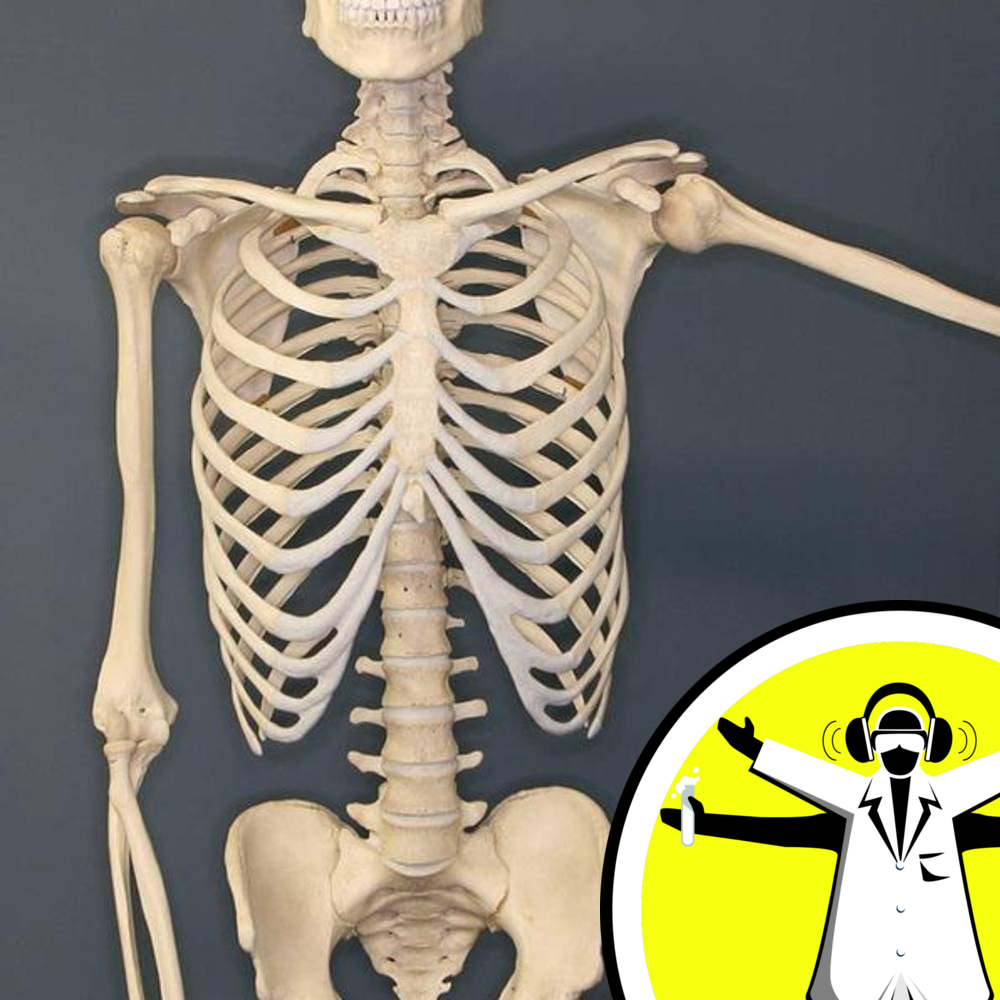
Ep 269Boosting Your Bones
Just the bare bones this week as we find out how exercise strengthens the skeleton and how new scanning techniques can help to pick up osteoporosis earlier and inform its management. We also try out a new gadget for measuring the force muscles can apply and, in the news, discover what a self-healing tumour can tell us about common cancers, evidence that mammalian hearts can repair themselves and a new laser-based tool for diagnosing melanoma. Plus, how the bones of people who died up to a hundred years ago are helping scientists to combat chronic back pain by building a computer model of the... Like this podcast? Please help us by supporting the Naked Scientists

Ep 268Checking the Atmosphere and Changing the Climate
We look to the skies in this week's Naked Scientists show, to uncover ways to monitor and change the chemistry of the atmosphere. We join researchers on board an air-sampling aeroplane to discover how atmospheric chemistry changes once the sun sets, and we discuss options for engineering the climate if things get too hot. In the news, the Ecuadorian population that may hold the genetic key to a disease-free life, and the rocks that move themselves around in Death Valley. Plus, a targeted muscle re-innervation strategy to afford amputees more powerful prosthetic control. Like this podcast? Please help us by supporting the Naked Scientists

Ep 267What Makes Mucus Green?
How do magnets multiply? What keeps an aeroplane in the air? How do wild animals avoid incest? It's open season on science questions in this week's Naked Scientists. We'll find out if oil extraction leaves a cavity, can cranberry juice cut urine infection rates and what happens when two lightning bolts collide? In the news, evidence of bipedalism in an early human ancestor, how oily fish helps avoid common causes of blindness and how smartphones are taking the pain out of cardiac rehabilitation. Plus, in Kitchen Science, the unexpected physics of a flying balloon. Like this podcast? Please help us by supporting the Naked Scientists

Ep 266Low Energy, High-Power Processing
This week we're getting inside the workings of the next generation of chips that are set to pack a bigger computing-punch but at a fraction of the energy-expenditure of todays' models: CTO Mike Muller joins us to explain the revolutionary technology that leading microprocessor-maker ARM is developing. Also, energy-efficient world-wide computing - we find out how distributing data-processing demands around the planet can turn waste energy into useful computations, simultaneously saving CO2 emissions, and in the news this week, a new malarial mosquito threat, rejection-free artificial blood... Like this podcast? Please help us by supporting the Naked Scientists

Ep 265Leprosy: The Low Down
Leprosy goes under the microscope this week as we uncover the origins of one of the oldest known human diseases, recognised this week on World Leprosy Day. A quarter of a million new cases are diagnosed every year, but how is the illness spreading, what damage does it do to the body and can it be stopped? We also hear what archaeologists are unearthing about the history of leprosy and where it came from in the first place. Plus, why it's time to rethink the workings of the circadian clock, brain scans for bilingualism, cow-stomach bacterial genes for biofuels, and the engineering that lies... Like this podcast? Please help us by supporting the Naked Scientists

Ep 264Analysing Antimatter
We're analysing the matter of antimatter this week to find out what is antimatter, how is it made and why's it so rare in the Universe? We talk to researchers at CERN who are capturing anti-hydrogen so scientists can study it properly for the first time, and Dave and Meera call in to the hospital to hear how antimatter holds the key to better body scans. Diana discovers how gravity bends a beam of light and there's also news of a novel way to neutralise HIV, researchers uncover how brains gauge the passage of time, and agriculture on the microscale: scientists have found the world's smallest... Like this podcast? Please help us by supporting the Naked Scientists

Ep 263Do Metal Spinal Implants Lure Lightning?
Does a metal implant turn a person into a living lightning-conductor or radio receiver, is eye-size important, why is frost bad for freezers, where did the first organic molecules come from, what happens to sparkling drinks in space and why does a bump on the head make you see stars? This week, join Chris, Sarah and Dave as they pit their wits against the latest crop of your top questions. Plus, why making new computer chips looks set to become easy PC, how stem cells can get to the heart of Long QT Syndrome, feeding the world in 2050 and a new musical device to keep the drummer in the driving... Like this podcast? Please help us by supporting the Naked Scientists

Ep 262Would you donate your body to science?
We're discussing human dissection in this week's Naked Scientists. Chris visits the dissection room to find out how trainee doctors benefit from dissecting real bodies, and why many medical schools are increasingly turning to alternatives. We're joined by physician and film maker Paul Trotman, who followed the lives, and beyond, of three donors to explore the reasons why people choose to donate their bodies, and the impact the process had on the student's lives. In Naked Engineering, we find out how a design that copies the body's own structure and movements can make better artificial... Like this podcast? Please help us by supporting the Naked Scientists

Ep 261National Pathology Week 2010
In this special podcast we focus on the highlights of this year's National Pathology Week. We'll be going behind closed doors for a tour of the pathology labs at Great Ormond Street Hospital, and we'll explore the role of veterinary pathologists in diagnosing and treating animal disease. Like this podcast? Please help us by supporting the Naked Scientists

Ep 260Back in the Saddle: Getting Paralysed Patients Riding and Rowing
In this special episode of the Naked Scientists podcast, we explore the world of Functional Electrical Stimulation (FES), a technology allowing people paralysed from the waist down to row and cycle by using external electrodes to stimulate leg muscles. Michele Vanoncini investigates how it works, what benefits it can bring and talks to some of the people who have used the technique to go for gold... Like this podcast? Please help us by supporting the Naked Scientists

Ep 259Blowing out Candles Round Corners
In this festive episode, can you get drunk through your feet, the chemistry of cocktails, twelve marine critters of Christmas, the best food and drink combos to eschew indigestion, does a carbon fibre bike go faster, why are snowflakes different shapes and a way to impress your peers at the office party by blowing out candles round corners... Like this podcast? Please help us by supporting the Naked Scientists

Ep 258Why's Graphene Great?
Graphene is the focus of this week's Naked Scientists, including how it holds the key to the super-flexible touch screen displays of tomorrow, super-light composites and the next generation of computer chips. In the news, a breakthrough in understanding Alzheimer's Disease, why glider pilots should be paying more attention to how falcons fly and why a new exoplanet has led astronomers to question current theories of planetary formation. Plus, we celebrate the first chunk of cheese to make it into orbit and ask if there's any evidence of a health benefit from wearing magnetic bracelets... Like this podcast? Please help us by supporting the Naked Scientists

Ep 257Electrifying the Future
Current breakthroughs in electricity generation and distribution go under the spotlight in this week's sizzling edition of the Naked Scientists. We talk to the team with the electrical equivalent of cold-storage that can put power "on ice" until it's needed, and we hear how bright sparks in the UK are leading the charge to roll out "energy kiosks" to empower rural communities in Africa. We also check out a new form of small-scale turbine to extract power from rivers whilst minimising the environmental impact. In the news, why young people are more likely to fall victim to the flu, how a dose... Like this podcast? Please help us by supporting the Naked Scientists

Ep 256Why do Men's Bits Shrink in the Cold?
How heavy is the Earth? How do snakes digest huge meals? Should I fear falling bullets? We take on these questions and more in this Naked Scientists Question and Answer show! We'll discuss the ideal hair for head lice, the mechanics of using a straw and why men's bits shrink in the cold! In the news we explore the link between jetlag and forgetfulness, discover a moon with an oxygen atmosphere, and a new technique to tell someones age by their blood. Plus, in Kitchen Science we find out why a full carton is much harder to shake. Like this podcast? Please help us by supporting the Naked Scientists

Ep 255Smart Pills: Drugs to Boost Brain Power
IQ-elevating agents that can boost brain power are being used by over 10% of university students. But how do these cognitive-equivalents of anabolic steroids for the brain actually work, what are their effects and are they safe? Moreover, is the advantage they confer an ethical one? And if not, should universities be screening students ahead of exams to deter their use? Meanwhile, in the news this week, we find out how lasers can cut complications in cataract surgery, why some people are allergic to wine, we hook up with the highlights from the world's biggest neuroscience meeting including... Like this podcast? Please help us by supporting the Naked Scientists

Ep 254The Science of Sustainable Shipping
We set sail to discover the science of sustainable shipping in this week's Naked Scientists. We visit an enormous wave tank to find out how the sea swell can impact on damaged ships, and look at the problems caused by sulphur-rich shipping fuel. Plus, we hoist the SkySail, an enormous parafoil kite that can be deployed from the deck of a ship to cut fuel consumption by up to 60%. In the news we hear how happiness can be found here and now, why children tire so quickly when walking and how Earth became oxygenated 400,000 years earlier than we thought. Also, we investigate the elegant... Like this podcast? Please help us by supporting the Naked Scientists

Ep 253Cancer - Hallmarks and Hit and Run Viruses
We catch up with cancer research this week including evidence that cancers subvert stem cells to suppress the immune system and how covert "hit and run" viral infections may be triggering a lot more tumours than we first thought. Also, joining us from the National Cancer Research Institute conference in Liverpool, cancer biologist Bob Weinberg explains how he sees cancer becoming a controllable chronic condition within just ten years. Plus, the buzz around a new tumour-spotting ultrasound technique, how a burst of electricity to the brain boosts mathematical ability, a new trick to block the... Like this podcast? Please help us by supporting the Naked Scientists
Ep 252Where does Phlegm come from?
It's National Pathology Week 2010 and to celebrate the launch we're joined by pathologist Dr Suzy Lishman to take on your science questions! We'll find out where phlegm comes from, how petroleum jelly helps healing and the weight of red blood cells synthesised in a human lifetime. Also, can you concentrate lasers with lenses, why does an open carport stop frost, and if carnivorous plants photosynthesise, why do they need to eat insects? Plus, how researchers in Scotland are sniffing out pollution with such sensitivity, they can detect forest fires all the way from Canada! In Kitchen Science,... Like this podcast? Please help us by supporting the Naked Scientists

Ep 251AIDS to conquering HIV
The human immunodeficiency virus (HIV) goes under the microscope this week. We find out how the virus hijacks cells to construct new HIV particles and hear how close scientists are to developing a vaccine to block infection. In the news, we learn how bitter taste receptors in the lungs could lead to new asthma treatments, how our ancestors enjoyed some veg with their meat and how gene therapy could offer a way out of depression. Plus, how Lego is helping university students build a creative career in the world of engineering... Like this podcast? Please help us by supporting the Naked Scientists

Ep 250The Science of Turbulence
It's a bumpy ride on this week's Naked Scientists, as we explore the science of turbulence. We'll find out what turbulence is and why it needs some of the most powerful computers in the world to study it. We'll discover how puffs of water can terminate turbulence in tubes, and how convection keeps the temperature just right in new buildings. In the news this week, we hear about a potential new super-vaccine for TB, the comet that turned into an asteroid and the prospect of new low-cost gold-free leads for your hi fi. Plus, in Question of the Week, we find out why some people prefer not to... Like this podcast? Please help us by supporting the Naked Scientists

Ep 249Neuromarketing - The Brain Basis of Buying Behaviour
How do advertisers get inside your head? This week we explore the field of neuromarketing - how a knowledge of your brain and behaviour can help marketers to manipulate your buying habits. We'll find out how the brain choses what stimuli to pay attention to and the neurological basis of why celebrity sells. In the news, the first Census of Marine Life and how researchers have got wind of the fact that men really are sweatier than women. Plus, we hit the shops to investigate how retailers trick you into overfilling your basket! Like this podcast? Please help us by supporting the Naked Scientists

Ep 248Would an Antimatter Magnet Attract a Normal Matter Magnet?
Why do you see flashes and patterns when you press your eyeballs? Would an antimatter magnet attract normal matter magnets? What is the hardest human bone to break? We take on your science questions this week, as well as explore the bed of Lake Windermere the gravity hills of Barbados and the first discovered habitable exoplanet. Plus, a flapless aircraft takes flight, how the brain decides which hands to use and why Raman spectroscopy offers a rum deal for anti-drug squads. In Kitchen Science, we find out why spit can form strings of beads... Like this podcast? Please help us by supporting the Naked Scientists

Ep 247Neuroimaging
This week we delve deep into the secrets of the brain. We'll find out how MRIs could be used to read your mind, and how they could help unlock what is going on in the brain of a person suffering from delusions or hallucinations. In the news we'll hear that the process of nerve repair could offer clues to cancer spread, and how it was gorillas that originally gave us malaria. Plus in Naked Engineering, Dave and Meera explore the amazing world of superconductors... Like this podcast? Please help us by supporting the Naked Scientists

Ep 246The British Science Festival
We explore the history of Pi, examine rheumatoid arthritis and seek the science of sleep in this roundup of the British Science Festival. In the news, we hear how to read the history of the solar system on the surface of the moon, and discover a development in quantum computing. Plus, we launch Naked Engineering, stripping off the image of dirty overalls to discover how engineers solve real-world problems. Diana asks if olive oil is healthier than butter in our Question of the Week. Like this podcast? Please help us by supporting the Naked Scientists

Ep 245What Happens to a Tankful of Fish in Orbit?
Why are there two high tides a day when there's only one moon? Would a planet made of glass be transparent? Does dreaming about exercise burn more calories? And what would happen to a tankful of fish launched into Earth's orbit? To find out, and to hear how the solar cells of the future can keep themselves clean, how researchers have uncovered a new way to combat cancer and how astronomers have spotted showers of meteors hitting Jupiter, join Drs Chris, Dominic and Dave as they blast off into a new series of the Naked Scientists in pursuit of the ultimate answers to your wildest and wackiest... Like this podcast? Please help us by supporting the Naked Scientists

Ep 244Science Down Under 2010
This week, we go back down under to explore the latest science from the land of kangaroos, bandicoots and the world's largest radio telescope - the square kilometer array. Chris goes on a tour of the universe from the comfort of the SciTech Planetarium, meets Nobel Prize-winning scientist Barry Marshall and the fluffy marsupials under protection at Project Eden. We find out why Australia is the perfect place to look further in to space than ever before, witness the battles between bee sperm and examine how tempting sharks with the scent of food can change their behaviour. Like this podcast? Please help us by supporting the Naked Scientists

Ep 243Diving into Naked Oceans!
To celebrate the launch of the brand new Naked Oceans podcast, we venture beneath the waves to investigate the impacts of oil spills on the marine environment. We hunt down the hidden world of microbes in the Louisiana wetlands, trace the fingerprint of oil in the open oceans, and discuss the likely fallout from the Deepwater Horizon oil spill in the Gulf of Mexico. We'll also be exploring the effects of a changing climate on marine habitats, finding out what warmer water means for life at the poles and meeting some of Antarctica's unique marine wildlife. Plus, Carl Safina, President of... Like this podcast? Please help us by supporting the Naked Scientists

Ep 242Digging in the Dirt and Looking at the Stars
This week, we've got a roundup of recent news and interviews from the Naked Astronomy and Naked Archaeology Podcasts. Digging into Archaeology, Diana O'Carroll will be looking into Bronze Age burial practices, meeting some of our oldest known walking ancestors and finding out how past human migrations are written in our genes. while Looking to the stars, Ben Valsler explores the challenges of building extremely large telescopes, finds out how rubic's cube size satellites can help test new technology and consults a team of experts to answer your questions on dark matter, planets and spacecraft... Like this podcast? Please help us by supporting the Naked Scientists

Ep 241The Tour de France
The Tour de France is the subject of this week's summer special as we look into the science and engineering of professional road bikes, training the human physique to endure thousands of kilometres on the saddle and eating the right food to keep you on the road. We also go out along some of the stages of the tour, meet a professional sprinter, find out why fans travel thousands of miles to see their cycling heroes in action and meet the doctors, mechanics, and organisers that turn the Tour de France into the well oiled machine that it is! Like this podcast? Please help us by supporting the Naked Scientists

Ep 240The Science of Glastonbury
In this Special edition of the Naked Scientists, we explore the science of the Glastonbury Festival. We find out what it takes to turn a farm into a city and back every year, and how to keep clean water flowing in, and waste flowing out, for nearly 200,000 revellers. We examine the scientific issues being discussed at the festival by groups like Greenpeace and Water Aid, and ask Baba Brinkman, Paloma Faith, Josie Long and Robin Ince if scientific discussion can find a home at a festival of performing arts. Like this podcast? Please help us by supporting the Naked Scientists

Ep 239How do Ants Count?
How do we know that ants count their footsteps? We'll find out in this Naked Scientists Question and Answer show, as well as ask if rubber soles really protect you from electric shocks, if hair will clean itself when you don't, and why a layer of shaving foam stops the mirror from steaming up. Also, the spores that fly on smoke rings, new ways to capture carbon, pain free vaccine patches and the vaginal gel that could block HIV transmission. Plus, Meera investigates vintage computers and in Kitchen Science, Dave discovers how popping candy gets it's pop! Like this podcast? Please help us by supporting the Naked Scientists

Ep 238Going Nuclear
We go nuclear this week to investigate the future of atomic energy, the issues surrounding nuclear waste management and how a proposed new breed of hybrid fission-fusion reactors might help to boost nuclear fuel efficiency and minimise radioactive waste. Also, following the 65th anniversary of the first nuclear bomb test, we hear how the accidental wilderness created where "the Gadget" was detonated is now a flourishing example of biodiversity. In Kitchen Science we build a home-made radiation-detector and we get to the bottom of why humans kiss. Plus, news of malaria-proof mosquitoes, turning... Like this podcast? Please help us by supporting the Naked Scientists

Ep 237Lasers in Medicine
The role of lasers in biomedicine goes under the spotlight this week as we explore the workings of photodynamic cancer therapy, find out how laser tweezers can be used to force-feed bugs to white blood cells and hear how a new technique uses laser-powered DNA nanoswitches to spot specific genes. Also, why the proton just got smaller, prompting a reevaluation of some trusted laws of physics, how antidepressants in seawater can make shrimps swim towards danger and a novel mechanism for natural selection - beneficial bacteria! Plus, in Kitchen Science, what the patterns produced by laser light... Like this podcast? Please help us by supporting the Naked Scientists

Ep 236How do you Weigh a Volcano?
We explore the explosive science of volcanoes this week! We find out what you can learn from drilling into a restless volcano, how gravity is used to "weigh" volcanoes and watch them fill with magma, and we explore the theories behind volcano formation. Plus, we hear about the genes that could mean you'll live to be 100, fossil evidence of the earliest multi-cellular organism and the signs that Sabre-toothed tigers packed a mighty punch, as well as a big bite. In Kitchen Science, we get messy with a cola and wallpaper paste eruption! Like this podcast? Please help us by supporting the Naked Scientists