The Moral Imagination
64 episodes — Page 1 of 2
Episode 63: Escaping the Technocratic Paradigm
Episode 62: John Johnson on Artificial Intelligence, Human Intelligence, Theology, and Freedom
"It is Good that You Are" The Human Person in the Age of AI and The Digital Revolution

Episode 61: Magatte Wade on Rethinking Poverty, Prosperity, and What Africa needs to Flourish
In this episode of the Moral Imagination Podcast I speak with Magatte Wade about her book, The Heart of Cheetah, her personal journey, entrepreneurial ventures, and her vision for a free and prosperous Africa. Magatte was key voice and important influence in the film I directed, Poverty, Inc. She is a force for promoting freedom, the dignity of the person, and entrepreneurial solutions to poverty in Africa and throughout the world. I’ve know Magatte for many years and am delighted to have her on the podcast. We discuss the misconceptions surrounding African poverty and the need for economic freedom and institutions of justice – private property, rule of law, and ability to participate in the formal economy - for fostering opportunity and human flourishing for the poor. At the end of our conversation we also talk about poverty in America, the American dream from the perspective of an immigrant, emphasizing the need for a balance between material prosperity and moral values. Magatte emphasizes that Africa will only thrive through entrepreneurship, political and economic freedom, and a commitment to rule of law and human dignity.Biography Magatte Wade is founder of SkinIsSkin, and Senior Fellow at Atlas Network, the leading organization of African free-market think tanks. She was listed as a Forbes “20 Youngest Power Women in Africa,” a Young Global Leader by the World Economic Forum, and a TED Global Africa Fellow. You can learn more about her work at MagatteWade.comChapters 00:00 Introduction to Magat Wade and Her Work12:47 The Path to Prosperity: Entrepreneurs and Free Markets39:52 The Reality of Poverty in Africa45:02 Devotion to Prosperity in Africa50:50 Cultural Identity and Entrepreneurship57:54 The Complexity of Labor Laws01:08:24 The Informal Economy and Its Consequences01:15:12 The Aha Moment: Economic Freedom and Wealth Creation01:25:09 The Correlation Between Property Rights and Prosperity01:30:09 The Anthropological Error of Socialism01:36:30 The Threshold of Flourishing01:45:48 Virtue, Character, and Economic Freedom01:54:12 The Teaching Power of Law02:06:11 Creating Conditions for Prosperity02:11:21 Misdiagnosis of Poverty and Its Consequences02:19:00 The Cheetah vs. Hippo Generations: A Call to Action02:29:08 Flourishing vs. Prosperity: A New ParadigmResources Get full access to The Moral Imagination - Michael Matheson Miller at www.themoralimagination.com/subscribe
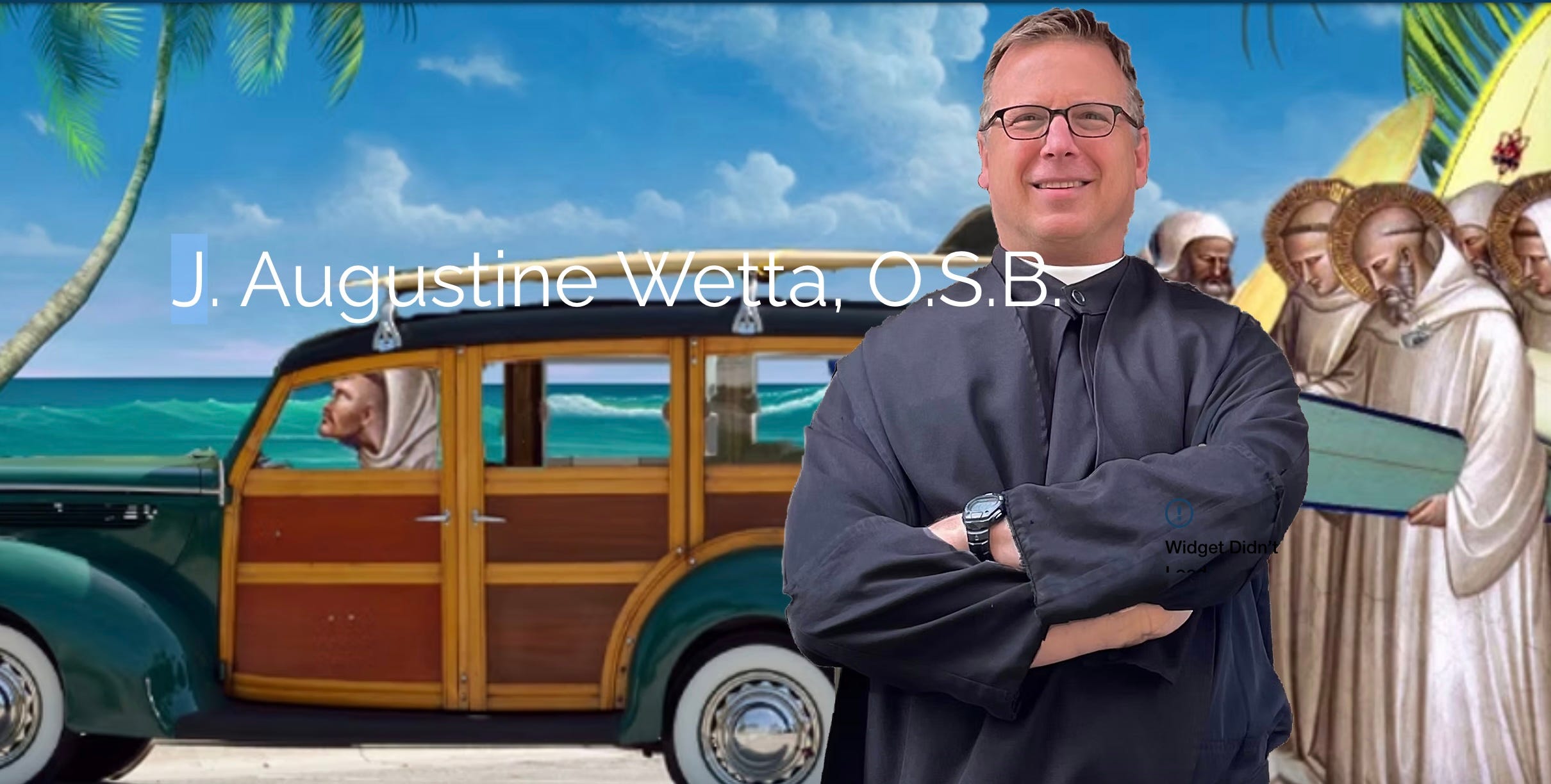
Episode 60: Augustine Wetta, O.S.B. St. Benedict's 12-Step Guide to Genuine Self-Esteem
In this episode of the Moral Imagination Podcast I speak with Fr. J. Augustine Wetta about his book Humility Rules: Saint Benedict's Twelve-Step Guide to Genuine Self-Esteem. The world teaches us to assert ourselves, to follow our passions, to speak up, talk back, “get yours,” don’t let anyone stand in your way. But it doesn’t really work. As Tyler Durden proclaims in Fight Club: “We've all been raised on television to believe that one day we'd all be millionaires, and movie gods, and rock stars. But we won't. And we're slowly learning that fact.”In contrast to the world’s and Fight Club’s response (which we won’t talk about), Fr. Augustine looks at the Rule of St. Benedict and his ladder of humility as a guide for real happiness and true self-esteem, which comes not from self-assertion, but from self-denial, selflessness, serving others, and not being a slave to one’s own will and desires. We discuss Fr. Augustine journey from a lifeguard, surfer, and rugby player to a Benedictine monk, and some of his stories teaching high school students, and throwing himself into a rosebush. In his Rule for monks, St. Benedict explains that any progress toward holiness, happiness, and relationship with God and others must be grounded in humility. He describes humility as a ladder – with one side as the soul and the other as the body. …if we want to reach the highest summit of humility, if we desire to attain speedily that exaltation in heaven to which we climb by the humility of this present life, then by our ascending actions we must set up that ladder on which Jacob in a dream saw angels descending and ascending (Gen 28:12). Without doubt, this descent and ascent can signify only that we descend by exaltation and ascend by humility. Now the ladder erected is our life on earth, and if we humble our hearts the Lord will raise it to heaven. We may call our body and soul the sides of this ladder, into which our divine vocation has fitted the various steps of humility and discipline as we ascend. (St. John’s Abbey) Fr. Augustine goes through each of the steps on the ladder of humility * Fear of God * Self-Denial * Obedience * Perseverance * Repentance * Serenity * Self-Abasement* Prudence * Silence * Dignity * Discration* Reverence The book is excellent. It is morally and spiritually serious and entertaining. I laughed out loud several times.Fr. Augustine offers apparently outlandish advice to to people struggling with anxiety, worry, and broken relationships* Don’t speak up* Be someone’s doormat* Don’t follow your dreams* Put your worst foot forward And gives “homework” to practice each of the steps including:* Make no excuses next time you are reprimanded * Clean a toilet * Say thank you next time someone tells you something you already know * The next time you see something not done your way - leave it be if it worksIn addition to Humility Rules we discuss a number of topics including:· His book on decision making called , Pray, Think, Act: Make Better Decisions with the Desert Father· Joy cannot be grasped, but is the fruit of love and self-denial.· St. John Cassian and his writings on the eight vices – including the vice of self-esteem, and why focusing on ourselves prevents us from building good relationships and finding happiness.· Challenges of modern life, particularly the impact of digital distractions on mental health and spiritual well-being· The difference between contemporary meditation practices with traditional Catholic contemplative prayer.· The importance of cultivating an attitude of reverence and gratitude· The role of obedience in spiritual growth – and why it’s probably not a good idea to throw oneself into a rosebush.· How chastity requires us to see others as persons and subjects, not objects for use· St. Benedict’s rule on Silence, how silence increases mental clarity and attention to others, and the magnificent quote from Dom Paul Delatte OSB Commentary on the Rule of St. Benedict“The fundamental purpose of silence is to free the soul, to give it strength and leisure to adhere to God.It delivers us from the low tendencies of our nature and of fixing us in the good.“Biography Augustine Wetta is a monk of Saint Louis Abbey in Saint Louis Missouri. He has two degrees in Theology from Oxford University, a BA in Ancient Mediterranean Civilizations from Rice University, and an MA in English from Middlebury College. For twenty years, he has taught English, Classics, and Theology at the Priory School, in Saint Louis, Missouri, where he also coached rugby and served as Director of Chaplaincy. In 2019, he was named a Portsmouth Institute Senior Fellow. He writes for Our Sunday Visitor, and hosts a blog entitled "Disagreement" with Islamic social activist Umar Lee, and frequently appears on EWTN and Saint Joseph Radio.In 2014, he was awarded the Judson Jerome Poetry Award and the Bill Baker Award for Fiction at the Antioch Writers Workshop (the first author in the history of the conference to win both). In 2

Episode 59: Catherine Pakaluk, Ph.D - A Life Marathon: On having a large family in a consumerist culture amidst declining marriage and birth rates
In this episode of the Moral Imagination Podcast I speak with Catherine Pakaluk about her book Hannah’s Children: The Women Quietly Defying the Birth DearthOver the last 200 years, we have seen a decline in birth rates in the United States and abroad, especially in Western countries. Most European countries are no longer at replacement rates and face serious population decline. Reuters reported that Japan’s population will decline by a staggering 30% in the next fifty years. In the United States, in the year 1800, the typical woman would have about 7 or 8 children. By 1900 that number was cut in half to 4. By 2000 the number cut in half again to about 2 children, which is just about replacement rate. The Wall Street Journal recently reported on the the record-low birthrate in the US, and how increasing numbers of people plan to have no children. In the midst of declining marriages, childlessness, and low birthrates, Pakaluk studied the increasing minority of women in the Western world who have chosen to have five or more children — the top 5% of childbearing.Her book is a mix of ethnography, sociology, and economics, and includes a critique of the dominant model of social and economic research. One thing that stands out with many of the women she interviews is how at some point a shift took place in their attitude — from seeing children as a choice, like a consumer good among other choices, to a different attitude of receptivity and openness to having another child, and then another. She talks about the many forces that promote small families — the cost of children, overpopulation propaganda, education, feminism, environmentalism, consumerism and more. But Pakaluk emphasizes that encouraging women to have more children cannot be addressed simply by implementing pro-family policies like some countries have tried to do. Good policy is not insignificant — for example in most US states parents who want to send their children to religious schools have to pay twice for school through tax and tuition. But she argues that the real problems go much deeper. They are religious, spiritual, and metaphysical: a vision of life that sees being as good, children as a blessing, and family as essential for a good life. Pakaluk compares having a large family to running a marathon—except longer, harder, and more fulfilling. Government family policy would be like giving everyone a pair of good running shoes for the marathon. That could help, but it won’t get most people to run. There must be a deeper motivation, and this almost always comes from religious belief and the virtues of faith, hope, the goodness of being, and the value of generosity and sacrifice that come from it. Themes and Topics we discuss include: * Demographics and Population Decline * Family policies * Feminism * Education * Career vs Family and Children * Conflicting Desires* Difficulties and Advantages of a Large Family * The Role of Religious Schools* Community * Plausibility Structures* Consumerism * Individualism* Social Pressure * Religious Freedom * Fortitude, Patience * Boys and Girls Sports * Novak Djokovic and Kobe Bryant * Voting Patterns * Climate* Creation and the Goodness of Being * and more Biography Catherine Ruth Pakaluk (Ph.D, 2010) joined the faculty at the Busch School in the summer of 2016, and is the founder of the Social Research academic area, where she is an Associate Professor of Social Research and Economic Thought. Formerly, she was Assistant Professor and Chair of the Economics Department at Ave Maria University. Her primary areas of research include economics of education and religion, family studies and demography, Catholic social thought and political economy. Dr. Pakaluk is the 2015 recipient of the Acton Institute’s Novak Award, a prize given for “significant contributions to the study of the relationship between religion and economic liberty.”Pakaluk did her doctoral work at Harvard University under Caroline Hoxby, David Cutler, and 2016 Nobel-laureate Oliver Hart. Her dissertation, “Essays in Applied Microeconomics”, examined the relationship between religious ‘fit' and educational outcomes, the role of parental effort in observed peer effects and school quality, and theoretical aspects of the contraceptive revolution as regards twentieth century demographic trends. Beyond her formal training in economics, Dr. Pakaluk studied Catholic social thought under the mentorship of F. Russell Hittinger, and various aspects of Thomistic thought with Steven A. Long. She is a widely-admired writer and sought-after speaker on matters of culture, gender, social science, the vocation of women, and the work of Edith Stein. She lives in Maryland with her husband Michael Pakaluk and eight children.Resources Hannah's ChildrenFlight from Woman Neil Postman: Technopoly Joseph Ratzinger: Homilies on Genesis On the Jewish - Christian Idea of the Goodness of Being Get full access to The Moral Imagination - Michael Matheson Miller at www.themoralimag
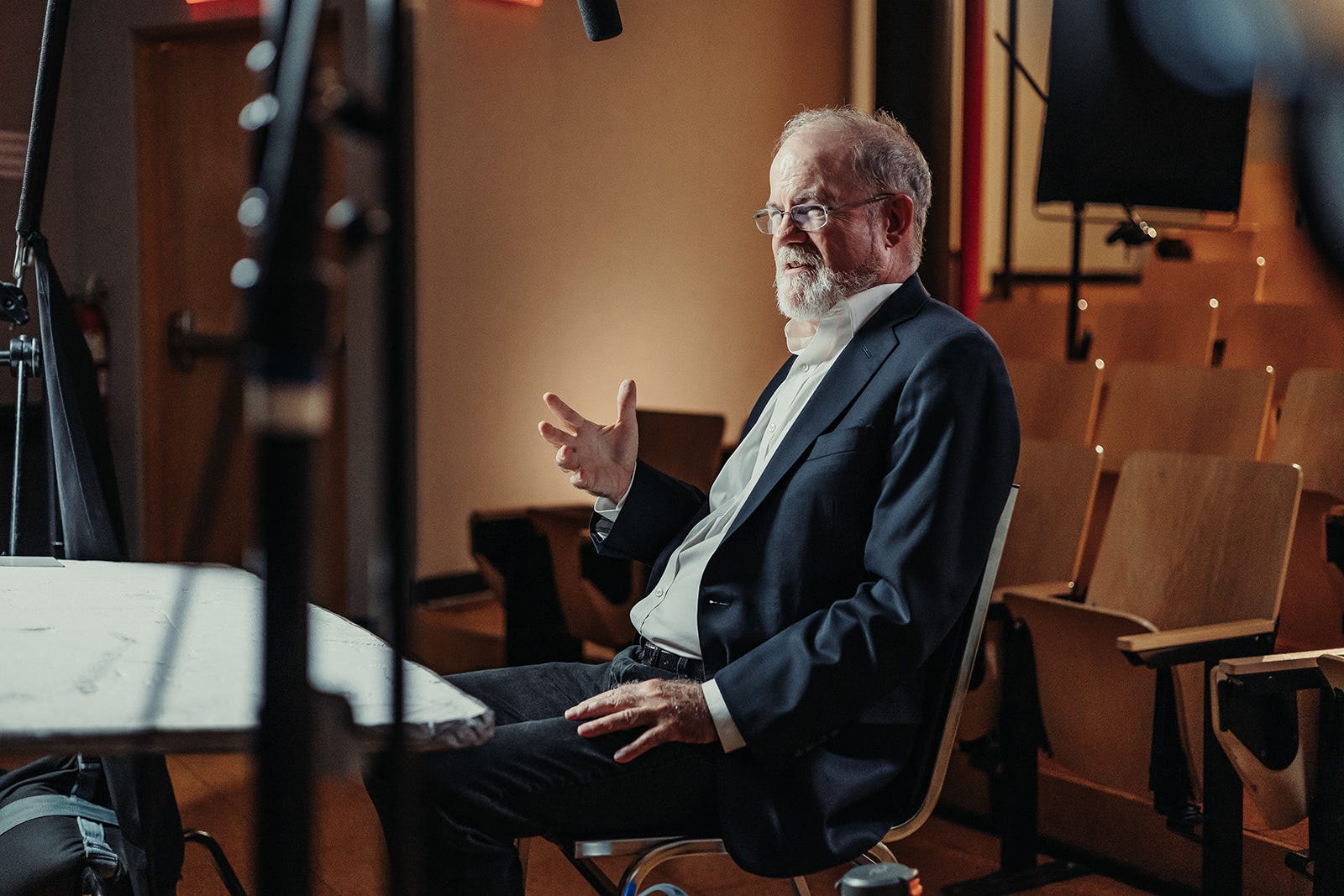
Ep. 58 William Easterly Ph.D. : Poverty, Technocracy, and the Tyranny of Experts
Photo Credit: Tyler Follon - Wingman VisualsIn this episode of the Moral Imagination Podcast, I speak with Professor William Easterly of New York University about his work in development economics, and the problems of technocracy and social engineering of the poor. Easterly worked at the World Bank from 1985-2001 and began to be troubled by a number of things, including how aid is given without much concern about how it is distributed and managed thus subsidizing bad governance and harming the poor. We discuss Peter Bauer’s critique of how foreign aid politicizes development and delayed the development of business in Africa, and Bauer’s paradox of aid: * The countries that need aid — aid will not be effective* The countries where aid will be effective — do not need aid But the key problem with the dominant model of development is not simply a lack of efficiency, but the failure to respect the rights and agency of poor people. Easterly explains that development projects often result in people being deprived of their property, political rights, and participation and consent in the very projects that are supposed to help them. He discussed the tendency to to trivialize problems in the developing world, and the lack of feedback and market tests in development policy. We discuss how the developing world can often become a a lab for experiments for technocrats and social engineers. We also talk about Hayek’s Knowledge Problem, a response to Marianna Mazucatto idea of moonshots, and what I call “embedded'“ economics. We discuss a number of issues including * “The Debate that Never Happened” - Gunnar Myrdal vs. Friedrich Hayek on development economics* Social Engineering * Technocracy and the Hubris of the Technocrat * Spontaneous Order* Edmund Burke and Friedrich Hayek * Soviet 5-year central planning as model for economic development * Limited Horizons of Humanitarianism— a secular, hollowed out version of Christian love the focuses on material at the expense of personal agency. * Lack of Accountability * Material vs. Non-material Needs * Materialist visions of the human person * People have a right to consent to their own progress * Harry Potter novels vs. Mosquito Nets * Marianna Mazucatto’s ideas of Moonshots * vs. accidental discovery* vs opportunity costs * vs failed social engineering projects * and the complexity of economics and markets embedded in deep historical, cultural, norms, institutions, and religious foundations. * How to think about foreign aid and public goods like healthcare, infrastructure, education* Aid for emergencies vs. aid as answer to chronic poverty* Institutions of Justice including clear title to land, access to justice in the courts, ability to participate in the formal economy, and free exchange. * The impact of globalization on manufacturing in the US* Trade-offs and economic volatility * The moral rules that are needed for progress to beneficial * Consent, Self-Determination, Moral Equality * Attempts to develop Native Americans, US intervention in Philippines etc. * Material progress is never enough to justify interventionBiography William Easterly is Professor of Economics at New York University and Co-director of the NYU Development Research Institute, which won the 2009 BBVA Frontiers of Knowledge in Development Cooperation Award. He is the author of three books: The Tyranny of Experts: Economists, Dictators, and the Forgotten Rights of the Poor (March 2014), The White Man’s Burden: Why the West’s Efforts to Aid the Rest Have Done So Much Ill and So Little Good (2006), which won the FA Hayek Award from the Manhattan Institute, and The Elusive Quest for Growth: Economists’ Adventures and Misadventures in the Tropics (2001).He has published more than 60 peer-reviewed academic articles, and has written columns and reviews for the New York Times, Wall Street Journal, Financial Times, New York Review of Books, and Washington Post. He has served as Co-Editor of the Journal of Development Economics and as Director of the blog Aid Watch. He is a Research Associate of NBER, and senior fellow at the Bureau for Research and Economic Analysis of Development (BREAD). Foreign Policy Magazine named him among the Top 100 Global Public Intellectuals in 2008 and 2009, and Thomson Reuters listed him as one of Highly Cited Researchers of 2014. He is also the 11th most famous native of Bowling Green, Ohio.ResourcesEssay: Friedrich Hayek: “The Use of Knowledge in Society”Related: Podcast with Obianuju Ekeocha on Ideological Colonialism and Resisting the Cultural Annexation of Africa Uganda Farmer Story in New York TimesPoverty, Inc. Film Recommended ReadingTyranny of Experts William Easterly The White Man's Burden: Why the West's Efforts to Aid the Rest Have Done So Much Ill and So Little GoodBuy on Amazon, William Easterly The Elusive Quest for Growth: Economists' Adventures and Misadventures in the Tropics, Easterly, William R.Target Africa: Ideological Neocolonialism in the Twenty-First Centur
Ep.57 The Decline of Christianity, the Rise of the “Nones” and Philosophies of the Person that Shape Unbelief
This episode of the Moral Imagination Podcast is a talk I gave at AmPhil’s Center for Civil Society conference in November, 2023 on the “Rise of the Nones.” According to Pew Research, those who declare no religious affiliation - None - are now the largest religious category in the United States. In this talk I address several overarching reasons for the decline of Christianity and address how five dominant visions of the human person including person as a cog or scourge, transhumanism & transgenderism, plastic anthropology, and the person as a commodity — also play a key role not only in despair and anxiety, but contribute both to the decline of Christian belief and the rise of secularism and pantheism/new paganism. This talk is a thematic overview and distillation of two longer lectures I give on five false anthropologies and 10 reasons for unbelief and the decline of Christianity. Some of the topics I address include Breakdown of the Family - specifically decrease in fatherhood participation, and its impact on religious practice Sexual Revolution - disorients the person and relationships between men and women Feminism & Smashing the Patriarchy — “Flight from Woman” Egalitarianism and Pantheism - Tocqueville’s prediction of the rise of pantheism in democratic societies Technology + Technological Society: Practical: use of technology and propaganda Theoretical: Empiricist rationality is incoherent and severs relationship between affectivity and reason Scientism: vision of a technical solution to evil, sin, suffering Humanitarianism and what I call “Almost Christianity” Failures of the Church: scandal, corruption, assimilation, and failure to teach and catechize Loss of non-linguistic catechesis When people are leaving Christianity today, do they know what they are leaving? Confusion about the nature and destiny of the human person and what it means to be an embodied person Plastic Anthropology —malleable based on feelings Transhumanism / Transgenderism - combination of biology and technology Person as Cog Person as Scourge Person as Commodity — Everything becomes an object of trade. Del Noce’s concept of Pure Bourgeois Conclude with several suggestions to address the loss of faith and confusions over anthropology Re-affirm that Being is good and intelligible - Our bodies are good Each person is a subject and not simply an object Defend Reason and Freedom We are embodied and Embedded Persons— our bodies are not accidental Thinkers I address include Augusto Del Noce, Joseph Ratzinger, C.S. Lewis, Henri DeLubac, Carrie Gress, Karl Stern, Christopher Palmer, Jaron Lanier, Max Scheler, Joseph Pieper, John Paul II See www.themoralimagination.com for book links and related podcasts. AmPhil Center For Civil Society - Nonprofit Educational Leader Leading educational provider for nonprofit fundraising learning the Center for Civil Society is the go to for major gifts, campaigns, strategy, and... Time to read 8 minutes Dec 22nd, 2022 AmPhil Rise Of The Nones Nonprofit Conference Nov 7-8 Scottsdale. AZ Leading scholars, philanthropists, and nonprofit leaders will discuss the rise in secularism, decline in church attendance, and other related trends, and... (352 kB) https://amphil.com/event/c4cs-riseofnones/ Pew Research Center's Religion & Public Life Project Religious ‘Nones’ in America: Who They Are and What They Believe 28% of U.S. adults are religiously unaffiliated, describing themselves as atheists, agnostics or “nothing in particular” when asked about their religion. Written by Gregory A. Smith, Patricia Tevington, Justin Nortey, Michael Rotolo, Asta Kallo and Becka A. Alper Get full access to The Moral Imagination - Michael Matheson Miller at www.themoralimagination.com/subscribe
Ep.56 Ambassador Eduard Habsburg: Building a Family Legacy — The Habsburg Way: 7 Tools for Turbulent Times
In this episode of the Moral Imagination Podcast I speak with Hungarian Ambassador to the Holy See and the Sovereign Order of Malta, Ambassador Eduard Habsburg, about his book The Habsburg Way: Seven Rules for Turbulent Times. We discuss a number of themes including some history of the Habsburg Dynasty, the life and death of Blessed Charles of Austria, the last Austro-Hungarian emperor, including the remarkable tradition of the funeral for Habsburg emperors. We also discuss themes of marriage, children, religion, technology, liturgy, and especially the importance of family and tradition to provide rootedness in a time of individualism and “liquid modernity.” Other themes and topics include: Different Visions of Subsidiarity — Catholic Social Teaching vs. European Union Decentralization and localism vs. Devolution of power from a central state Technocratic Politics Alexis de Tocqueville on Individualism and Centralization Robert Nisbet on the Quest for Community Joseph Ratzinger — What it means to be a Christian Liturgy as non-linguistic catechesis The Human Person as Embodied and Embedded and more Biography Ambassador Eduard Habsburg is the Hungarian Ambassador to the Holy See and the Sovereign Order of Malta. He is the author of The Habsburg Way. 7 Rules for Turbulent Times from Sophia Press and Dubbie: The Double-Headed Eagle. Full Quiver Publishing, 2020. You can connect and follow him on Twitter at @EduardHabsburg X (formerly Twitter) Eduard Habsburg (@EduardHabsburg) on X Ambassador of Hungary to the Holy See and the Sovereign Order of Malta. Book: THE HABSBURG WAY https://t.co/vMufBgoJGE Get full access to The Moral Imagination - Michael Matheson Miller at www.themoralimagination.com/subscribe
Ep.55 Seth Kapan on Fragile Neighborhoods — Relationships and Place-Based Solutions to Social and Material Poverty
In this episode of the Moral Imagination Podcast I speak with Seth Kaplan about his book Fragile Neighborhoods: Repairing American Society One Zip Code at a Time. Seth has spent his career working in fragile states around the world — countries that are unstable and prone to violence, war, and political problems. About 10 years ago Seth was increasingly asked if the US was becoming fragile. As he turned his attention to studying the United States, he concluded was that while the US is not fragile as a country, there are many areas and neighborhoods throughout the country that are very fragile — where poverty rates are high, there is crime, and instability, and social capital, family stability, and economic and educational opportunities are low. Seth explains that depending on the neighborhood where you live in the United States it can mean a shorter lifespan of over 20 years. Kaplan speaks about two faces of poverty, material and social, and how they are both a problem of broken relationships. He argues: “I think the real question you have to ask about the United States we have many things going very well in our country but something has gotten worse in the last couple of generations: the politics, the trust, the social breakdown, the deaths of despair, the health crisis the depression, and the rise of suicides. The big question that we have to ask ourselves is what has changed in our relationships that lead us to have so many social and political problems?” Themes and Topics we discuss include: Family Stability Social Capital Bonding vs. Bridging Social Capital Relationships and Community The role of religion and religious practice in communities Associationalism vs. Individualism vs. Collectivism Biography Seth D. Kaplan is a leading expert on fragile states. He is a Professorial Lecturer in the Paul H. Nitze School of Advanced International Studies (SAIS) at Johns Hopkins University, Senior Adviser for the Institute for Integrated Transitions (IFIT), and consultant to multilateral organizations such as the World Bank, U.S. State Department, U.S. Agency for International Development, and OECD as well as developing country governments and NGOs. Resources Chris Arnade Podcast on his book Dignity Communio — Communio is a nonprofit that trains and equips churches to evangelize through the renewal of healthy relationships, marriages, and the family. Get full access to The Moral Imagination - Michael Matheson Miller at www.themoralimagination.com/subscribe
Ep.54 Cajetan Cuddy O.P on The Psychology of St. Thomas Aquinas
In this episode I speak with Fr. Cajetan Cuddy O.P. about Thomistic Psychology: A Philosophic Analysis of the Nature of Man, by Fr. Robert Edward Brennan, O.P., edited and with an introduction by Fr. Cuddy. Aristotle wrote that “to attain any assured knowledge about the soul is one of the most difficult things in the world.” We often read psychology because we want to understand ourselves and our behavior- and the behavior of others. While we don’t normally think of St. Thomas Aquinas as a psychologist, as a serious philosopher, theologian, and student of the human person, St. Thomas gives us deep insight into human psychology — the study of the psyche or soul — our intellect, memory, will, emotions, and our embodied, embedded existence. Fr. Brennan’s book on Thomistic Psychology provides a good accessible introduction to Aquinas’ reflections on psychology. As. Fr. Cuddy notes, some of the science in Thomistic Psychology is a bit out of date, but the key principles and ideas are still applicable and provide an important contribution, especially in a time when so many struggle with anxiety, depression, sadness and other mental health challenges. These have many causes to be sure, but the impact of modern theories of materialism, spiritualism and other reductionist visions of the person makes people even more confused about who they are and how to live well. One of the ideas central to the work of St. Thomas and Fr. Brennan is the idea of truth — conforming the mind to reality — and how taking truth seriously combined with a solid, non-reductionist philosophy of the person can have practical, positive impact on our mental and psychological health. Thomistic Psychology presents an integrated vision of the person that helps us the better to understand ourselves and others, and provides clear models and practical advice on addressing our problems, how to fight bad habits and build good ones, how to address our emotions, disappointments, and successes, and a roadmap on how to live well. St. Thomas’ philosophy and pyschology are also very important because he takes our embodiement seriously. We are not souls in a body or driving around in our body like we drive around in a car. Nor are we simply material beings determined by our neurobiology or genetics. Rather we are embodied persons our physical, moral, spiritual, emotional, and psychological life are intertwined. What we do and happens to us physically impacts our emotional and mental life and vice versa. St. Thomas’ suggested remedy for sadness is a perfect of example of his taking our physical and spiritual nature seriously. We discuss a broad range of topics including: What is a person Divine Persons, Angelic Persons, Embodied persons What it means for human to have a nature. What is a soul? What is a body? Why the body matters Free will The proper use of the powers of man The remedy for saddnes St. Thomas on the Senses — sight, touch, hearing etc. Memory Imagination St. Thomas idea of self-creation Human formation The person as passive and active agent The role of happiness Evil as a privation Why we need to be careful about the music we listen to, the movies we watch, what we think about Spiritual and/or Religious The beginning of love according to John Paul II Faith, Hope, Charity How the Christian life is not to become an angel — but a human being fully integrated. Liturgy Fasting Pray with our Bodies Find show notes and links to books we discuss at www.themoralimagination.com Biography: Fr. Cajetan Cuddy, O.P., is a priest of the Dominican Province of St. Joseph. He serves as the general editor of the Thomist Tradition Series, and he is co-author of Thomas and the Thomists: The Achievement of St. Thomas Aquinas and His Interpreters. Fr. Cuddy has a B.A. from Franciscan University, a M.Div./S.T.B., The Pontifical Faculty of the Immaculate Conception, a S.T.L., The Pontifical Faculty of the Immaculate Conception and his doctorate, a S.T.D. from the University of Fribourg, Switzerland. He writes and lectures extensively on the philosophy and theology of St. Thomas Aquinas and the Thomist Tradition. Some of his selected publications can be found here. Fr. Cuddy also lectures for the Thomistic Institute. For an excellent introduction to the philosophy and theology of St. Thomas Aquinas I recommend the Thomistic Institutenstitute.org/ and their series Aquinas 101 The late Fr. Robert Edward Brennan, O.P. was a Dominican Friar, professor, and the author of numerous books and articles including Thomistic Psychology and The History of Psychology: A Thomistic Reading, both published recently by Cluny Media. Cluny Media Thomist Tradition Series Cluny Media thomisticinstitute.org Thomistic Institute The Thomistic Institute exists to promote Catholic truth in our contemporary world by strengthening the intellectual formation of Christians at universities, in the Church, and in the wider public square. aquinas101.thomisticinstitute.org Aquinas 101 Aquinas 101 is a vid
Vigen Guroian: Fairy Tales, Classical Learning, and The Moral Imagination
In this episode I speak with Professor Vigen Gurioan about the revised and expanded edition of his book Tending the Heart of Virtue: How Classic Stories Awaken a Child’s Imagination. We discuss the power of stories, how they help can us develop self-knowledge, and how fairy tales and classic stories are essential for education and moral formation for children — and for adults. Fairy tales and classic stories can impress upon us profound philosophical and often theological insights about life and death, the good and beautiful, the value of courage and nobility, and importance of self-sacrifice for love. Stories, themes, and thinkers we we discuss include Hans Christian Anderson The Little Mermaid Beauty and the Beast Grimm’s Fairy Tales George McDonald Pinocchio, honor, honesty, and the responsibility of children to their parents The Ugly Duckling, courage, and the desire for beauty The Wind and the Willows, Charlotte’s Web, and friendship of equality and friendship of mentors Good Wishes and Bad Wishes Joseph Pieper and Dietrich von Hildebrand on joy as a the superabundant fruit of love and self-gift Charles Dickens C.S. Lewis Edmund Burke Aristotle on Friendship and more Get full access to The Moral Imagination - Michael Matheson Miller at www.themoralimagination.com/subscribe
Ep. 52 Philip Ovadia MD Metabolic Health, Diet, Cholesterol, Heart Disease, and Modern Medicine
In this episode I speak with heart surgeon, Dr. Philip Ovadia MD, about metabolic health, diet, science, cholesterol, insulin resistance, the US government food pyramid, Ancel Keys and the cholesterol - saturated fat -heart disease hypothesis. We discuss medical education, health insurance, scientism, and some of the obstacles doctors and scientists face with “group think.” Dr Ovadia tells his story of how lost 100 pounds changed everything he learned about fat and food. He explains that while half of the patients who have heart attacks or heart surgery have normal levels of cholesterol, over 90% have insulin resistance. He argues that metabolic health is not only important for heart health, but for mental health, and plays a key role in preventing cancer and Alzheimer’s disease. We discuss a number of themes including Gary Taubes: The Case Sugar and Why We Get Fat Problems of Crony Capitalism and Subsidies How the Government Food Pyramid makes you fat Metabolic Health and Covid The Campbell Effect and how bad science has dominated medicine Weston Price Insulin Resistance Diabetes Saturated Fat Pharmacuetical Industry and Medication Seed Oils Health Insurance and the need for new models The connection between metabolic health and mental health This episode and podcast is for informational purposes and does not provide medical advice. Biography Dr. Philip Ovadia MD is a board certified cardiac surgeon and founder of Ovadia Heart Health. He grew up in New York and graduated from the accelerated Pre-Med/Med progra at the Pennsylvannia State University and Jefferson Medical College. This was followed by residency in General Surgery at the University of Medicine and Dentistry at New Jersey and a fellowship in Cardio-thoracic Surgery at Tufts-New England Medical School. Learn more about Dr. Ovadia at www.ovadiahearthealth.com Resources See books below Campbell’s Law Dave Feldman on Cholesterol Podcast with Jay Richards on Fasting and the Ketogenic Diet Podcast with Diana Rodgers on Food, Meat and Health Podcast with James Madden on Embodied, Embedded Persons Podcast with Joel Salatin on Food and Farming Get full access to The Moral Imagination - Michael Matheson Miller at www.themoralimagination.com/subscribe
Ep. 51 Titus Techera: Dune and Bladerunner Science Fiction, Dystopia and Humanity in American Life
In this episode I speak with Titus Techera about Dune, Bladerunner, science fiction, dystopian film, technocratic view of humanity, and the formative power of science fiction on the imagination. We discuss contemporary technological society, social breakdown, loneliness, men and women and decline in marriage, technology and trans-humanism/ transgenderism, and the predictive power of dystopian film. We talk about what it means to be human and the relationship between digital technology and humanity. Titus argues that much of sport, military, modern manliness and excellence has been reduced to science and creatures of technology. He argues that one of the “catalysts for science fiction stories is disappointment with the world. The dead hand of the past is too powerful. People are always a problem; tradition gets in the way of radical innovation. Science fiction is aware of the problem of our decadence, but technical daring can solve it.” And yet in the science fiction societies like Bladerunner there is a wealthy technical class amidst brutality, societal decline where everyone has lost their humanity. He writes As with all science fiction set in the near future, Blade Runner is an attempt to make us look at ourselves as though we were strangers to ourselves, allowing for the possibility that serious changes can come suddenly and overcome our beliefs or preferences. Could we end up like Deckard, Harrison Ford’s character, a bounty hunter, or “blade runner?” We need not embrace this kind of despair, but only need understand its appeal. The social landscape of Blade Runner seems plausible enough. The film presents American cities overrun by crime and poverty while technological corporations become immensely wealthy… A suitably dramatic expression of something we see around us quite often; indeed, perhaps exaggeration is necessary, since we have an excusable, but unfortunate tendency to ignore the misery of American cities. Themes we discuss include Science and scientism, Atheism and religion, Nihilism and utopianism, Social engineering of people, Medicine Covid pandemic and vaccine mandates Tension between scientific progress in digital technology and scientific and technological stagnation in other areas. Jordan Peterson Contemporary interest in stoicism Utiltarianism and hedonism Sports and Science Spiderman Biography Titus Techera is the executive director of the American Cinema Foundation, host of the ACF podcasts, a film critic for Law & Liberty and the Acton Institute, contributor to Modern Age, columnist for Return and European Conservative, and editor-in-chief of PostModern Conservative. Techera studied liberal arts at Bard College Berlin and political science at the University of Bucharest and the Universite Libre de Bruxelles. Resources Titus Techera essay: The Tale of Two Dunes Titus Techera essay on Bladerunner Follow Titus on Twitter Listen to the ACF Film Podcast Titus Techera Substack Titus Techera on Novak Djokovic, Excellence, and Covid Rules Caveats: These science fiction books and films because they deal with dystopian futures and social decadence have material that is not suitable for children. Get full access to The Moral Imagination - Michael Matheson Miller at www.themoralimagination.com/subscribe
Ep.50 On Benedict XVI -Reason, Freedom, Beauty, and the Intellectual Sources of Secularism and the New Evangelization
Pope Benedict XVI / Joseph Ratzinger passed away on December 31 at the age of 95 years old. His writing and teaching have been a major influence on my thinking. So in honor of his memory and gratitude for his example, this episode is a talk I gave on Pope Benedict XVI on Five Crises of Culture and the Intellectual sources of Secularism and the New Evangelization. I go through five intellectual themes/crises that Benedict identifies in the West “where the roots of Christianity are deep but who have experienced a serious crisis of faith due to secularization." Truth and the Dictatorship of Relativism Reason Progress Freedom Beauty I examine how he describes and explains the challenges of our age; how he addresses each of them on their own terms, and the proposes a Gospel response. One element of the crisis of faith is grounded in intellectual sources. We think, and too often live, like secularists and adopt often without thinking a secular framework. But secularism is not neutral. As Benedict argues, “We must develop and adult faith.” An "adult" faith is not a faith that follows the trends of fashion and the latest novelty; a mature adult faith is deeply rooted in friendship with Christ. It is this friendship that opens us up to all that is good and gives us a criterion by which to distinguish the true from the false, and deceit from truth. We must develop this adult faith; we must guide the flock of Christ to this faith. And it is this faith - only faith - that creates unity and is fulfilled in love.” In this talk I provide a lot of quotes and references. You can find show notes, links, and outline of the talk at www.themoralimagination.com Resources See the outline / handout of the talk below. Also see Amazon links to books I refer to in the talk below. I also provide Amazon link to the encyclicals, but you can get all the encyclicals for free at vatican.va There a lot of books listed and if you are unsure where to start I would suggest you begin with the following: Books: Jesus of Nazareth Vol 1, Milestones, and Last Testament Collection of more complex essays: Values in a Time of Upheaval Encyclicals Spe Salvi and Deus Caritas Est Short Readings: Here are some links Homily before the Conclave — “Dictatorship of Relativsm” Regensberg Address — on the crisis of reason in the west Cardinal Ratzinger on Europe’s Crisis of Culture at Subiaco Benedict XVI Paris Lecture Meeting with Representatives from the World of Culture Additional Links mentioned in talk Roger Scruton: Beauty and Desecration Roger Scruton: Kitsch and the Modern Predicament I Grateful to Authenticum and Sacred Heart of Jesus Parish for the invitation to speak and for recording and providing me with the audio of this lecture. You can learn more about the Authenticum Lecture Series OUTLINE/HANDOUT Benedict XVI—Five Crises of Culture and the Intellectual sources of Secularism and the New Evangelization Michael Matheson Miller The New Evangelization Re-Propose the Gospel "to those regions awaiting the first evangelization AND to those regions where the roots of Christianity are deep but who have experienced a serious crisis of faith due to secularization." Benedict XVI Theme: Think Like Christians Focus on Intellectual roots of secularization and the crisis of faith and the work of Benedict XVI We must not approach the social and political order in a purely secular manner. Benedict is I think a model for new evangelization because he takes the situation of our current time on its own terms and then addresses it in light of reason and the Gospel. Paul VI: Evangelii Nuntiandi "The conditions of the society in which we live oblige all of us therefore to revise methods, to seek by every means to study how we can bring the Christian message to modern man. For it is only in the Christian message that modern man can find the answer to his questions and the energy for his commitment of human solidarity." John Paul II: Redemptoris Missio “I wish to invite the Church to renew her missionary commitment.” “…it is the primary service which the Church can render to every individual and to all humanity in the modern world, a world which has experienced marvelous achievements but which seems to have lost its sense of ultimate realities and of existence itself. "Christ the Redeemer," I wrote in my first encyclical, "fully reveals man to himself.... The person who wishes to understand himself thoroughly...must...draw near to Christ.... [The] Redemption that took place through the cross has definitively restored to man his dignity and given back meaning to his life in the world." Benedict XVI “Throughout the centuries, the Church has never ceased to proclaim the salvific mystery of the death and Resurrection of Jesus Christ, but today that same message needs renewed vigor to convince contemporary man, who is often distracted and insensitive… “For this reason, the new evangelization must try to find ways of making the proclamation of salvation more effective; a proc
Ep. 49 Flagg Taylor, Ph.D: The Parallel Polis
In this episode I speak with Flagg Taylor about the life and writing of Vaclav Benda, and his idea of the parallel polis, decentralization, and creating space in society for culture, the family, charity, education, and human flourishing. Though he was writing under communist regimes, Benda’s writings are very relevant today in light democratic pressures to conformity, de-platforming, and especially as a new ontology of the person is being written into law — and dignity is used as weapon against religious and cultural liberty. Benda’s idea of the parallel polis was not a siege mentality, nor so much a reform existing structures that had ossified or were corrupted, but a call to build new, innovative, and better structures and social institutions that would activate people’s participation in civil, cultural, and commercial life, and give people a sense of purpose and agency. Examples today include decentralized technologies or classical education - which is not running away, but creating better alternatives to mediocre state run schools. We discuss Benda’s ideas in the context of Czech communism and also in contemporary America, especially the overlap with Alexis de Tocqueville’s warnings about individualism, centralization, and soft-despotism. We examine his engagement with various thinkers including Roger Scruton and J.R.R. Tolkien, and talk about contemporary movements towards decentralization including The Network State by Balaji Srinivasan and its relation to the idea of a parallel polis. We discuss the need for social and commercial alternatives built on a rich understanding of the human person and the family including healthcare, mutual aid societies, banking, payment, insurance and more. Benda’s idea of the parallel polis demonstrates that the solution to totalitarianism and centralization is not more centralization or another totalitarianism, but de-centralization and humanization. We discuss a number of Benda essays including: The Parallel Polis, The Meaning Context Legacy of the Parallel Polis, The Family and Totalitarianism, A Critique of the Idea of a Christian State, and his personal reflections that illustrate the constant social pressure of living under communist totalitarianism. Themes and Topics include Albert Hirshman: Exit, Voice, and Loyalty Peter Berger on Plausibility Structures Vaclav Havel: Power of the Powerless Greengrocers of the World Unite! Aristotle’s Moral and Intellectual Virtues Vaclav Havel Living in Truth Benda focus on resisting the lies of totalitarianism by inhabiting a social spaces and plausibility structures that make living in truth possible. MMM Lecture How to Build a Moral Imagination — new and better ways of live are actually plausible Provide space for dissidents and their children who were excluded by the official social spaces Balaji - The Network State - Network Union - Network Archipelago — cloud first, then land Catholic Variation: Land - Cloud -Land New Ontology of the Person Totalitarian redefinition of biology and sociological reality Dignity as a weapon against religious liberty Testing the Limits in Communism vs Testing the Limits in Modern Democracy De-platforming Cancel Culture Underground Seminars led by Roger Scruton Roger Scruton and Jan Hus Foundation Ortega y Gassett: The Spoiled Child of History Second Culture Charter 77 Essay at Foreign Policy Magazine VONS Committee for the Defense of the Unjustly Prosecuted Religious practice in Slovakia vs Czech Republic vs. Poland Church Persecution by Communists in the 40s - 70s Communist infiltration of Church and official Church collaboration with Communists 70s and 80s. Critique of the Christian idea of a state How politicalization of religion can lead to unbelief Benda compared to contemporary Catholic integralists / post liberal thinkers Pappin, Ahmari, Pecknold on Cultural Christianity and Politics MMM commentary to this essay: Political Catholicism, Liberalism and the Myth of Neutrality Secularism is not neutral J.R.R Tolkien —Benda on the Lord of the Rings as as an analysis of totalitarianism The Scouring of the Shire — See Jay Richards and Jonathan Witt The Hobbit Party link in Resources The family is always a thorn to totalitarian states Marriage and family as essential The Family as the source of 3 fundamental gifts that a person can receive Fruitful fellowship of love Freedom Dignity and unique role of the individual Karol Wojtyla (John Paul II) and George Orwell on tenderness as a resistance to totalitarianism Family as a space for freedom, failures, learning How rebellion against parents is modern fashion that the totalitarian or centralizing state desires Authority and Hierarchy Hannah Arendt on Authority and Education (see link in resources) Biography Dr. F. Flagg Taylor IV is an Associate Professor of government at Skidmore College serves on the Academic Council of the Victims of Communism Memorial Foundation. He holds a Ph.D. and an M.A. in political science from Fordham University and a
Ep. 48 Jonathan Bi: Rene Girard - Social Pressure, True and False Desires, Sacrifice, and Belief
In this episode I speak with Jonathan Bi about the ideas of Rene Girard, social pressure, authentic and false desires, victims and scapegoats, persecution, and Girardian theories on imitation and violence. We also discuss how Girard’s work sheds light on woke capitalism, right and left totalitarianism, Max Scheler, Hannah Arendt, Alexis de Tocqueville, and more. We discuss many themes including: Christianity and Girard’s theory and the secularization and falsification of Christian values such as how humanitarianism and pacificism replace charity and peace and justice and more. Evangelical Counsels and The Rule of St. Benedict as a response to metaphysical desire Different views of the problem of evil: Hegel, Rousseau, Ratzinger, Solzhenitsyn, Girard Human Perfectibility and Utopianism Hope and Progress Benedict XVI Spe Salvi On the goodness of being in the Hebrew Bible, New Testament, and St. Augustine. There is no technical solution to the problems of evil, suffering, of death Embedded complexity, the dignity of labor, linear time, and how we live in a Christian civilization Girard’s explanation of how scapegoating others for their behavior reveals that we too would be guilty — and why it is folly to think with confidence that we would not go along with the crowd if we lived under the Nazis or a slaveholding society We begin a discussion on the atonement, Girard’s views and how to think about sacrifice — that we’ll have to finish in more detail We also have a discussion about Christianity and Buddhism and religious belief. I hope you enjoy. Biography Jonathan Bi is an entrepreneur working on a startup in FinTech and a philosopher focusing on Buddhist philosophy, Continental philosophy, and specifically the work of Rene Girard. Among his many projects he and David Perell have created a seven session video course on the ideas of Rene Girard. Originally from China, Jonathan also grew up in Canada, and studied computer science at Columbia. https://johnathanbi.com/ Resources Jonathan Bi and David Perell Lectures on Girard On the Atonement — we just got into this briefly, but didn’t have enough time or preparation to address it sufficiently. I am going to have another episode on the atonement, and also on Girard and the atonement, but here are two links to Catholic resources view of the atonement New Advent Catholic Catechism Get full access to The Moral Imagination - Michael Matheson Miller at www.themoralimagination.com/subscribe
Ep. 47 Rachel Ferguson, Ph.D: Exclusion & Opportunity - Black Liberation Through the Marketplace
In this episode I speak with Rachel Ferguson about her book Black Liberation Through the Marketplace: Hope, Heartbreak, and the Promise of America, co-authored with Marcus Witcher. The book address issues of social justice, exclusion, opportunity, race and discrimination, classical liberalism, and the economic history of African Americans since the civil war. Themes we discuss include Racism and exclusion from justice, property, and rule of law Classical Liberalism Property Rights Freedom of Contract Education History of Injustices post Civil War Convict Leasing Lynching Jim Crow Progressivism Eugenics Sterilization Minimum Wage and its racist and eugenic underpinnings Urban Renewal Highways, transportation and the breakdown of African American and ethnic communities Eminent Domain African American towns and civil society 1619 Project and its errors Family and the Sexual Revolution Contraception Entrepreneurship Civil Society Alexis de Tocqueville Applied economics Criminal Justice reform Black Churches as a central part of community Decentralization, Associational Life, and Welfare before the Welfare State We discuss a number of writers including Fredrick Douglass Zora Neale Hurston Booker T. Washington Malcom X Friedrich Hayek Anthony Bradley Biography Rachel Ferguson, Ph.D. is an economic philosopher and Director of the Free Enterprise Center at Concordia University, Chicago. She has published in Discourse, The Journal of Markets and Morality, and the Library of Economics and Liberty. She has a Ph.D. in philosophy from St. Louis University. She is actively involved in community building and empowering marginalized entrepreneurs through LOVEtheLOU and Gateway to Flourishing https://www.rachelfergusononline.com/ Resources We mention a lot of books during the podcast. See below for links. Other things discussed include: Rachel Ferguson Essay: Let’s do Philanthropy that Actually Works Robert Woodson and the Woodson Center Podcast with Anthony Bradley on Over-criminalization MMM on Eugenics is Back Benefits Cliffs Russell Hittinger on Technology and Contraception Podcast with Mary Eberstadt on the Sexual Revolution Poverty, Inc. Get full access to The Moral Imagination - Michael Matheson Miller at www.themoralimagination.com/subscribe
Ep. 46 Bill Rivers: Last Summer Boys A Novel about Family, Honor, and the Power of Community
peak with Bill Rivers about this novel, Last Summer Boys. The novel is about a rural Pennsylvania family and the adventures of three boys and a cousin and set in the tumultuous summer of 1968 with the Vietnam war, the assignations of Robert Kennedy and Martin Luther King. “Summer 1968. When thirteen-year-old Jack Elliot overhears the barbershop men grousing, he devises a secret plan to keep his oldest brother, Pete, from the draft. If famous boys don’t go to war, he’ll make his brother their small town’s biggest celebrity. Jack gets unexpected help when his book-smart cousin Frankie arrives in their rural Pennsylvania town for the summer. Together, they convince Jack’s brothers to lead an expedition to find a fighter jet that crashed many winters ago―the perfect adventure to make Pete a hero.” We discuss a number of themes including Family Justice Honor Civil Society Principle of Subsidiarity Anger Tensions between economic progress and family and social stability Tensions between rural and urban communities Writing and story development Moral imagination 1968 Cultural and Sexual Revolutions Alexis de Tocqueville Robert Nisbet Louis L’amour Property Crony capitalism, eminent domain and more Resources Bill Rivers on Instagram Bill Rivers on Twitter Kirk Center for Cultural Renewal Related Podcasts Mary Eberstadt: Who are You? Conversation on the sexual revolution, family and her book Primal Screams Carlo Lancelotti on Augusto Del Noce —Shift from Christian Bourgeois to Pure Bourgeois Get full access to The Moral Imagination - Michael Matheson Miller at www.themoralimagination.com/subscribe

Ep. 45 Paul McLaughlin PsyD, Mark R. McMinn PhD: Can Wisdom be Cultivated?
In this episode I speak with two psychologists, Paul McLaughlin PsyD and Mark R. McMinn PhD, about their book A Time for Wisdom. The provide a unique perspective by examining wisdom from a psychological viewpoint. They divide it into 4 categories, both to explain and provide a guide to develop wisdom in our lives. Knowledge Factual Knowledge,Know-How, self-knowledge and what they call “Enriched Knowledge,” the core of wisdom. Detachment Not only from material things, but from ideas and ideology. Detachment enables mental freedom, strengthens our capacity grieve, and is the bridge between knowledge and tranquility Tranquility Not apathy, but shifting our inner equilibrium, and helps us regulate our emotions Tranquility helps us to cultivate awe, gratitude, peace, and what C.S. Lewis calls “reasonable emotions.” Transcendence Ability to go beyond ourselves and avoid the temptation to individualism We discuss a number of themes including: Is wisdom a state or a trait? Can it be developed? Is it domain dependent? The tension between solidity and fluidity, between rigid thinking and relativism. How do we keep our minds open and not fall into what Benedict XVI has called the “dictatorship of relativism.” The positive and negative parts of Jordan Peterson’s idea about exploring our dark side compared to mystical Catholic writers Psychedelics as ersatz religion You are not every thought you have Anxiety Obsessive Compulsive thoughts Forgiveness and the goodness of being Positive psychology Narcisism Mike Tyson’s theory that “everyone has a plan until they get punched in the face.” How to think about increases anxiety and depression My critique of the Individualism / Collectivism dichotomy Tocqueville’s analysis of individualism and centralization Can you measure wisdom? Does wisdom increase over time? Aristotle’s concept of phronesis Gnosticism and Materialism as an obstacles to wisdom Teleology — ends and purposes. Aristotle — the human person has an end and purpose to give you self direction Transcendentals — goodness, truth, beauty How suffering and sitting with people who suffer helps us grow in wisdom The tension between holding onto your deeply held beliefs and yet remaining open to new ideas Confirmation Bias vs. Epistemic Humility Related Podcasts James Madden Podcast, Embodied and Embedded Persons James Poulos: Digital Politics and Spiritual War Carlo Lancellotti: Augusto Del Noce and the shift to pure bourgeois Jaron Lanier on Technology and Behavior Modification Luke Burgis on Mimetic Desire, Rene Girard, and commercial society Get full access to The Moral Imagination - Michael Matheson Miller at www.themoralimagination.com/subscribe
Ep. 44 Deion Kathawa: Technology, Religion, and Humanity in a Post-Human Age
In this episode of The Moral Imagination Podcast I speak with Deion Kathawa about his essays at Public Discourse Technology and Dignity. We discuss a number of topics including digital technology social media biotech genetic engineering CRISPR post and trans-humanism transgenderism technology and power how tech effects the rich and the poor and middle class Kathawa argues that the new digital and biotechnology threaten our human in explicit and implicit ways from distraction to liquidation to degradation and that we need not only better law, but authentic religious practice, liturgy, and human friendship to resist these threats. We discuss the religious and philosophical sources of transhumanism from materialism to gnosticism, and human perfectibility and various thinkers including C.S. Lewis and Robert P. George. We also discuss the difference between transhumanist / transgender philosophy which sees the body as either malleable that needs perfection or the body and sexuality as something to escape from in contrast to the Christian view of the being and the body as good and part of who we are as embodied, embedded persons. Biography Deion Kathawa is a law clerk at the Michigan Supreme court he has a law degree from the University Of Notre Dame and an undergraduate degree from the university of Michigan. He writes for numerous outlets including The American Mind, Public Discourse, and his Substack Sed Kontra Get full access to The Moral Imagination - Michael Matheson Miller at www.themoralimagination.com/subscribe
Ep. 43: Orthodox Judaism, Leo Strauss, and Baruch Spinoza’s Critique of Religion
In this episode I speak with Jeffrey Bloom and Rabbi Jeremy Kagan about the book Spinoza, Strauss, and Sinai: Orthodox Judaism and Modern Questions of Faith published by Kodesh Press . The book is a collection of essays edited by Jeffrey Bloom, Alec Goldstein, and Gil Student. Jeffrey Bloom grew up secular, Jewish family and the idea of actually practicing Orthodox Judaism was outside of the realm of possibility. He studied at University of Chicago where he took a class with Professor Leon Kass on Genesis. (see book link below) This was the first time that he took religion seriously. He notes that as a child of divorce— he wanted stronger family life, and he was attracted to Orthodox Judaism, but still questioned whether it was reasonable. This led him to read Strauss critique of Spinoza’s critique of religious belief. The Enlightenment philosopher, Baruch Spinoza argued that religious belief was irrational. But in his book, Spinoza’s Critique of Religion, Leo Strauss argued that while the enlightenment with Spinoza and his heirs claimed to refuted orthodox belief, they in fact did not. Strauss claimed that as long as orthodoxy is willing to make the concession that they can’t “know” and only “believe” the tenets of Judaism, then it is plausible and no weaker a position that rationalism because that is precisely what Spinoza is doing—when pressed, Enlightenment rationalism, like religion, rests on acts of “faith” in tenets that it cannot prove. Strauss’ argument opened up questions about reason, belief, truth, access to reality and more, and what it did for Bloom was make orthodox Judaism rationally and intellectually plausible. As Rabbi Jeremy Kagan puts it, “carved out a space for the Torah” and religion belief and practice. Yet Bloom had another question—Strauss opened the door to religious belief, but what did Orthodox Jews think about the arguments of both Spinoza critique of religion, and Strauss’ critique of Spinoza? Bloom gathered a group of Orthodox believers, Rabbis, computer scientists, philosophers, to address the question: Is the argument of Strauss any good? Are there better replies to the critique of religion than Strauss provides? This book is relevant for many reasons— There is a sense that the Enlightenment and science and empiricism has proved that orthodox religion, Judaism and Christianity, is intellectually unserious and untenable, and many people hold this to be the case. Secular thinkers and atheists often critiques religion for its faith but they don’t realize they that rely on a host of non-empirical assumptions that uphold their beliefs. For example, why is reason is better than non - reason and how can one prove it in empirical means? We discuss several essays including those by Jeffrey Bloom, Rabbi Kagan, Rabbi Shalom Carmy who argues that Strauss’ arguments are not compelling, and Moshe Koppel’s essay, “Why Revelation and not Orbiting Teapots” which makes the distinction between orthodox belief and superstition and more. This is a complex discussion that addresses some of the big underlying questions about faith and science, reason and belief, different forms of knowledge, the value of religious observance, and some of the main themes of the Moral Imagination Podcast. I hope you enjoy. Get full access to The Moral Imagination - Michael Matheson Miller at www.themoralimagination.com/subscribe
Ep. 42: Jeremy Tate: Whoever Owns the Test Owns the Curriculum: Classic Learning v. Industrial Model
In this episode, I speak with Jeremy Tate, the founder of the Classic Learning Test about school testing, curriculum, and the classical versus industrial models of education. Jeremy argues that the current testing regime of the SAT and ACT have a tremendous influence on the curriculum taught in public and private schools. They promote a utilitarian vision of learning and drive students away from the classical Western tradition and serious reflection on what makes a good life. In response, Jeremy and his team developed the Classic Learning Test not only to be a better, more rigorous test, but to positively influence the curriculum toward more serious reading, and introduce students to the classic texts of the Western Tradition and those which shaped the founding of the United States, By ignoring these texts, the current testing and curricula regimes exclude students from engagement with the tradition. One of Tate’s colleagues noted that she could go from Kindergarten through a Ph.D. without reading Homer, Plato, or Shakespeare. This unfamiliarity with the tradition makes people unaware of history and complexity, unable to make distinctions, and thus more susceptible to propaganda and manipulation. It excludes the poor from opportunity and indoctrinates the elites into utilitarian and progressive ideas that they think are simply facts. As C.S. Lewis described, “10 years hence” we can find ourselves on the side of the philosophical controversy that we didn’t even know was up for debate. We discuss a number of themes including The revival of classical education Whether you should go to college or not? Education and virtue Human Formation C.S. Lewis's The Abolition of Man Eustace Scrubb and the Chronicles of Narnia Elite students focus on test scores rather than on learning Scientists with no sense of history or complexity The problems with critical thinking The false dichotomy of Facts vs. Opinions How moral and value judgments are reduced to opinions and more. Biography Jeremy Tate is the founder and CEO of the Classic Learning Test. Jeremy is also the host of the Anchored Podcast, CLT's top 2% global podcast that features discussions at the intersection of education and culture. Prior to founding CLT, Jeremy served as Director of College Counseling at Mount de Sales Academy in Catonsville, Maryland. He received his Bachelor of Science in Secondary Education from Louisiana State University and a Masters in Religious Studies from Reformed Theological Seminary. Jeremy and his wife Erin reside in Annapolis, Maryland with their six children. You can find Jeremy on Twitter @JeremyTate41. Resources Classic Learning Test For more on C.S. Lewis The Abolition of Man - See my interview with Michael Ward For more on classical education see my interview with Heidi White and the importance of reading good books, my interview with Elizabeth Corey Jeremy Tate: Not Another Test, The Right Test Get full access to The Moral Imagination - Michael Matheson Miller at www.themoralimagination.com/subscribe
Podcast Episode 41: Michael Ward: A Guide to C.S. Lewis’ The Abolition of Man
In this episode, I speak with Michael Ward about his book, After Humanity: A Guide to C.S. Lewis The Abolition of Man. I think The Abolition of Man is of the most important books in the twentieth century. It addresses important issues that are relevant today — from what it means to be human, reason, passion, and the emotions, to how to think about technology, power, and beauty. It’s a short book but can be a bit difficult to understand at times, and Michael Ward does a great service by going through the book line by line and explaining and providing context to make the book easier to follow. We discuss key themes of The Abolition of Man: whether beauty and morality are objective or purely subjective education power and authority honor nobility sacrifice for others, dystopian fiction technology and technocracy contraception and how man’s power over nature ends up being man’s power over other men We also discuss the relationship between the Abolition of Man, Eustace Scrubb, and Lewis’ The Chronicles of Narnia and the space trilogy, Out of the Silent Planet, Perelandra, and That Hideous Strength. Word on Fire Special Offer: After Humanity + Abolition of Man Biography Michael Ward is an English literary critic and theologian. He works at the University of Oxford where he is a member of the Faculty of Theology and Religion. He is the author of the award-winning Planet Narnia: The Seven Heavens in the Imagination of C.S. Lewis (Oxford University Press) and co-editor of The Cambridge Companion to C.S. Lewis (Cambridge University Press). Though based at Oxford in his native England, Dr Ward is also employed as Professor of Apologetics at Houston Baptist University, Texas, teaching one course per semester as part of the online MA program in Christian Apologetics. On the fiftieth anniversary of Lewis’s death (22 November 2013), Professor Ward unveiled a permanent national memorial to him in Poets’ Corner, Westminster Abbey. He is the co-editor of a volume of commemorative essays marking the anniversary, entitled C.S. Lewis at Poets’ Corner. Michael Ward presented the BBC television documentary, The Narnia Code, directed and produced by BAFTA-winning filmmaker, Norman Stone. He authored an accompanying book entitled The Narnia Code: C.S. Lewis and the Secret of the Seven Heavens. Michael was resident Warden of The Kilns, Lewis’s Oxford home, from 1996 to 1999. He studied English at Oxford, Theology at Cambridge, and has a Ph.D. in Divinity from St Andrews. He was Senior Research Fellow at Blackfriars Hall, Oxford (2012-2021). He has been awarded honorary doctorates in Humane Letters (Hillsdale College, Michigan, 2015) and Sacred Theology (Thorneloe University, Ontario, 2021). Visit https://www.themoralimagination.com/episodes/ward for show notes and resources. Get full access to The Moral Imagination - Michael Matheson Miller at www.themoralimagination.com/subscribe
Podcast Ep. 40 Mary Eberstadt: Who are You? Family, Politics, and the Hunger for Identity
In the episode I speak with Mary Eberstadt about her latest book Primal Screams: How the Sexual Revolution Created Identity Politics. She argues that the revolutionary changes to family structure across the western world: fatherlessness, divorce, abortion, single parent homes, the shrinking of the family –have caused deep hurt in people and that many of the social problems we face today are manifestations of a “primal scream” for belonging. Eberstadt explains that the breakdown of the family has resulted in a widespread subtraction: we have a much smaller protective infrastructure around us than our ancestors did. While many people connect family decline to individual things like loneliness or educational achievement, it also has large macro impacts. She argues that primary cause of political rage, identity politics, gender confusion, and more is rooted in the breakdownof the family and people’s struggle to answer the question “Who am I?” Primal Screams is a very important book that combines an empirical examination with a real empathy for people who suffer from the impact of the sexual revolution and the break down of the family. We discuss a number of issues including: Loneliness in the elderly and the young The rise in psychiatric problems among Generation Z and Millennials What we can learn from animal behavior and family structure How the sexual revolution harms women and children and only benefits predatory men. Transgenderism The #MeToo Movement The role of abuse and sexual dysphoria The lack of siblings and the problem of social learning The Myth of the Lone Wolf The Trend of Incels The Great Resignation How Feminism creates problems for both girls and boys Masculinity and Decline of Males Declines in Fertility Contraception Critiques and replies to her argument by Mark Lilla, Peter Thiel, and Rod Dreher Biography Mary Eberstadt holds the Panula Chair at the Catholic Information Center in Washington, DC, and is a Senior Research Fellow at the Faith and Reason Institute. Her latest book is Primal Screams: How the Sexual Revolution Created Identity Politics, with commentaries by Rod Dreher, Mark Lilla, and Peter Thiel. Her other books include It's Dangerous to Believe; How the West Really Lost God; and Adam and Eve after the Pill. Mrs. Eberstadt’s writing has appeared in many magazines and journals. [Her 2010 novel The Loser Letters, about a young woman in rehab struggling with atheism, was adapted for stage and premiered at Catholic University in fall 2017. Seton Hall University awarded her an honorary doctorate in humane letters in 2014. During the Reagan administration, she was a speechwriter to Secretary of State George Shultz and a special assistant to Ambassador Jeane J. Kirkpatrick at the United Nations. Updates about her work can be found on her website, maryeberstadt.com Resources Mary Eberstadt Website: maryeberstadt.com Podcast interview with Carrie Gress on Feminism Podcast Interview with Noelle Mering on Awake Not Woke My lecture on Robert Nisbet and the decline and quest for community Get full access to The Moral Imagination - Michael Matheson Miller at www.themoralimagination.com/subscribe
Ep. 39 Marcel Guarnizo: What is Justice
What is Justice? What do we owe to each other? The theme of justice is core issue of all human societies and pervades myth and philosophy. Plato’s Republic and Gorgias are reflections on justice and the right ordering of the soul and society. So is Aristotle’s Politics. The Hebrew Bible, the Tao Te Ching, the Analects of Confucius, the writings of Buddhism, and the Stoics all contain reflections on justice. C.S. Lewis notes in his appendix to the Abolition of Man that in every land and every culture there is a “Tao,” a way of being in the world that affirms what is good and condemns what is bad. Despite the universal hungering for justice, injustice seems to be the way of man. Against Plato stands Thrasymachus and Callicles, the tyrant and the sophist who want to reduce justice to power. In this episode I speak with Marcel Gaurnizo about the nature of justice. We discuss the definition of justice — giving each what is due. We discuss how justice is not simply a social or political condition but a human virtue that requires a consistent act of the will. Marcel explains how the shift from metaphysical view of justice to political justice opens the door to the dictatorship and tyranny of the majority or injustice through procedural methods. We discuss the Plato’s story of the ring of Gyges which makes the wearer invisible just like Bilbo and Frodo in the Lord of the Rings — and thus free from any punishment. Would we have strength to do the right thing even if we would never get in trouble for doing what is wrong? As Marcel notes, the ring of Gyges is all around us. There are many things that are legal—that we will not be punished for — but which are evil and unjust. Marcel also walks us through different species of justice — commutative (exchange) and distributive. He explains how many of the errors we make about legal, economic, and social justice —both on the right and the left — often come from a misunderstanding of the difference between commutative and distributive justice, e.g. we apply commutative justice to the family. Marcel argues that one of the problems we have today on the right and left is that we are not formed in correct thinking about justice is that In this conversation there are some detailed discussions, but in a time where there the word “justice” is used so frequently and where there is so much confusion, I think it is very worthwhile. Some of the themes and thinkers we discuss include: Justice as a virtue Economic justice of exchange Social Justice Family vs. Market Gary Becker and the error of applying commutative justice to the family John Rawls and the shift to political and procedural justice Socialist view of justice Marxism Philosophical Materialism Aristotle’s Politics Plato’s Republic St. Thomas Aquinas Treatise on Justice Friedrich Nietzsche Monasteries Catholic Social Teaching John Rawls and the transformation of justice into political justice. Relativism Post-Modernism Human Nature — what kind of thing we are Individualism, the market, and the state Poverty and Distribution Biography Marcel Gaurnizo is a philosopher and theologian. He spent many years in Europe and has founded a number of institutions including an academy in Austria to teach philosophy, ethics, and politics, and was president of Aid to the Church in Russia after the fall of the Soviet Union. Resources Whittaker Chambers: Big Sister is Watching You The Second Coming, Poem by William Butler Yeats Get full access to The Moral Imagination - Michael Matheson Miller at www.themoralimagination.com/subscribe
Ep. 38: Dr. Margarita Mooney Nicaraguan Journey: From Technocracy to Solidarity through Small Acts of Love
In the episode, I speak with Professor Margarita Mooney about her time in Nicaragua and how these experiences shaped her scholarly work and teaching at the intersection of sociology and philosophy. Margarita tells a story of her time in Nicaragua and how a weekend trip to a political rally in a small community where she almost was kidnapped challenged her assumptions about elite education in the United States. Margarita explains how her engagement with poor women farmers and micro-entrepreneurs helped her realize the power of small acts of love and solidarity to help alleviate the problems of violence from the bottom up – and how these things are neither taught nor accounted for at elite universities where a technocratic approach reigns. Margarita discusses how sociology does not address the problem of evil but rather sees it as a social or structural problem, but this does not align with ethnographic studies and the real work of talking to people about their experiences of war and violence. Margarita talks about her founding of the Scala Foundation to address questions of meaning, beauty, and wisdom because she was worried that many Ivy League and other universities are creating a culture of resentment and anger for people who are genuinely concerned about justice but don’t have a framework to understand justice, subsidiarity, solidarity, truth, and law outside of power and politics. As she explains in her essay “Why Choose Mystery over Ideology” “The void left by the denigration of beauty and a classical liberal arts education is directing more and more people to “woke” social justice activism or alt-right movements because those movements offer them meaning, purpose, and hope, as well as community and a sense of belonging. Others burn out psychologically or resort to social isolation because trust and intimacy are hard to experience. Yet others resort to drugs, pornography, or another temporary pleasure to fill the void. Still, others pursue ambitious and demanding careers without reflecting on how they should live or why they exist to begin with. The result is skyrocketing rates of anxiety, depression, and suicide. Educational institutions have not succeeded in addressing these problems, leading many people to seek alternatives to feed their minds and souls.” Any conversation with Margarita Mooney is interesting and wide-ranging and we discuss a number of broad themes and thinkers including: Subsidiarity and Solidarity Fascination with Violence Rene Girard Jacques Maritain Participation as a remedy to alienation The Nicaraguan Civil War -- Contras and Sandinista Haiti St. Thomas Aquinas on just war, violence, and pacifism Solidarity as a means to inclusion Solidarity Structures, institutions, property rights, law, exchange, are required to serve families Family as a place of moral formation The proper role of government The Bruderhof Communities and Plough Magazine Edmund Burke’s ideas about society as a “partnership” among the living, dead, and yet to be born Commutative Justice — exchange John Paul II on participation The documentary, Poverty, Inc. Rwandan Genocide and Rwandan reconciliation Integration of the Virtues Moral Formation Sin and Redemption Law and Justice Beauty Ideology and the closed systems that close of access to the transcendent Hopelessness Critique of utilitarianism that reduces the value to the economic value The dangers of cultural imperialism Virtues –Cardinal Virtues, Daughters of Virtues and Vices Augusto Del Noce Luigi Giussani on Education Karl Stern –poetic knowledge in The Flight from Woman Biography Margarita Mooney is an Associate Professor in the Department of Practical Theology at Princeton Theological Seminary. She teaches courses on the philosophy of social science, Christianity and the liberal arts tradition, aesthetics, research methods for congregational leaders, and sociology of religion. Margarita founded Scala Foundation in 2016 and continues to serve as Scala’s Executive Director. Scala’s mission is to infuse meaning and purpose into American education by restoring a classical liberal arts education. At Scala’s conferences, reading groups, seminars, webinars, student trips, intellectual retreats, and intensive summer program, Scala equips students, writers, artists, intellectuals and teachers with the ideas and networks needed to revitalize culture. Margarita’s most recent book with Cluny Media, The Love of Learning: Seven Dialogues on the Liberal Arts (2021), grew out of her decades of experience as a teacher and scholar. Her book Faith Makes Us Live: Surviving and Thriving in the Haitian Diaspora (University of California Press, 2009) demonstrated how religious communities support the successful adaptation of Haitian immigrants in the U.S., Canada and France, and she’s the co-author (with Camille Z. Charles, Mary S. Fischer, and Douglas S. Massey) of Taming the River: Negotiating the Academic, Financial, and Social Currents in Selective Colleges and Universi
Ep. 37: James Poulos: Digital Politics & Spiritual War
In this episode, I speak with James Poulos about his book, Human, Forever: The Digital Politics of Spiritual War. We discuss a wide variety of themes including technology, human memory, what it means to be an embodied person. James argues that instead of worrying about an impending crisis, we need to realize that it has already happened — Digital entities have taken over. We need to recognize this, figure out what has happened, and orient our senses and sensibilities around what technology does, how it changes us, and how we can work with and use technology to affirm our humanity. Part of this includes using technology better which is one of the reasons he argues for the importance of Bitcoin. Poulos argues that we are at Generation Zero— the first generation of the digital age. This brings with it a heightened responsibility for fatherhood, memory, ancestry, knowing who we are and where we come from. Understanding our humanity, our embodiment, the value of suffering, and that human memory is distinct and essential to our human identity can help us become resistant and not succumb to digital devices, but put technology at the service of our humanity. We discuss a number of themes and thinkers including Tele-visual technology and the culture of the imagination and the shift to the digital medium and machine memory Social Credit system in China— and the rising social credit system in the West Human faculty of memory The return of analogy as a mode of thinking through human problems Political Theology in China, Russia, Europe, and the US Continuing Gnostic movements in the West The Medium is the Message Human Consciousness Mind and Brain Post-Humanism - Trans-humanism - Transgenderism Digital Cyborgs Human Identity Artificial Intelligence Embodiment and the Christian Dogma of Resurrection of the Body Marshall MacLuhan Romano Guardini Marianna Mazucatto Karl Stern Visit https://www.themoralimagination.com/episodes/snead for show notes and resources. Get full access to The Moral Imagination - Michael Matheson Miller at www.themoralimagination.com/subscribe
Ep. 36: Carter Snead: Law, Power, and Bioethics: What it Means to Be Human,
In this episode, I speak with Professor Carter Snead about his book, What it Means to be Human: The Case for the Body in Public Bioethics. We discuss how the dominant view of the human person forgets the body and ignores our social nature, and how this plays out in law which further shapes our moral lives and cultural attitudes. Snead argues that contemporary law in bioethics around issues like abortion, euthanasia, and IVF is actually applied philosophy of the person that favors the strong over the vulnerable and dependent. We discuss how the dominant anthropology today — what Alasdair MacIntyre called expressive individualism — represents only a part of what we are as human beings. It fails to address our embedded-ness in families and society and our mutual indebtedness and dependence on others. We talk about how a richer philosophy of the person that is more aligned with the reality of our lived experience is needed to make better law. We also discuss Alasdair MacIntyre's work on the the person and friendship and the ideas of un-calculated giving and receiving. We also discuss some of the virtues and habits that are needed to build a society where this richer view of the person can be lived. Visit https://www.themoralimagination.com/episodes/snead for show notes and resources. Get full access to The Moral Imagination - Michael Matheson Miller at www.themoralimagination.com/subscribe
Ep. 35: Jessica Hooten Wilson, Ph.D.: Literature and Totalitarianism
In this episode, I speak with Professor Jessica Hooten Wilson about her writing and research on literature and totalitarianism. We discuss how both violence and entertainment and distraction are used a tools of state control. We discuss Fahrenheit 451 by Ray Bradbury, some of the writings of Alexander Solzhenitsyn, and Julia Alvarez's novel, In the Time of Butterflies, about life under the Trujillo dictatorship in the Dominican Republic. We also discuss Victor Frankl, Josef Pieper, Michael O'Brien, Tocqueville's idea of "soft despotism", and Neil Postman's argument in In Amusing Ourselves to Death about Huxley's Brave New World and George Orwell's 1984. Wilson notes that these novelists take evil seriously, but are also careful not simply villainize the opposition so as to increase our understanding and self-awareness, and help prevent us from falling into the trap of another ideology. Visit https://www.themoralimagination.com/episodes/jessica-hooten-wilson-phd for show notes and resources. Get full access to The Moral Imagination - Michael Matheson Miller at www.themoralimagination.com/subscribe
Ep. 34: Heidi White: What is Classical Education?
What is education for? In the episode, I speak with Heidi White about classical education and human flourishing. We discuss why classical education is important to pass down a cultural memory and why reading good literature and classic texts matters on multiple levels. We discuss the difference between a modern, contemporary education and a classical vision of education, the relationship between classical education and religious education, and how STEM and classical education can relate together. We talk about literature, poetry, science, and the idea of poetic knowledge. We also discuss some of the critiques, challenges, and weaknesses of classical education, and how classical education can provide an exit from the contemporary, utilitarian, ideological, and propagandist model that is dominant today. Visit https://www.themoralimagination.com/episodes/heidi-white for show notes and resources. Get full access to The Moral Imagination - Michael Matheson Miller at www.themoralimagination.com/subscribe
Ep. 33: Elizabeth Corey, Ph.D.: Life Beyond Politics
In this episode, I speak with Elizabeth Corey about life beyond politics, friendship, learning, and the work of Michael Oakeshott. We discuss a wide range of issues, including rationalism and politics, the value of the reading of classic texts, and Oakeshott's idea of different modes of engaging with the world: the practical, scientific, historical, and poetic. We discuss Eric Voegelin, Russell Kirk, Gertrude Himmelfarb, Rod Dreher, what it means to be a conservative, and some recent developments in the conservative political movement. We talk about the importance of carving out spaces outside the political sphere, including building functional, decentralized civil associations, and practicing the things we defend: reading good books, playing music, conversation, and trying to live a good life. We also discuss whether in 2021 it is really possible today to escape the intrusion of politics into so many spheres of life. Visit https://www.themoralimagination.com/episodes/elizabeth-corey-phd for show notes and resources. Get full access to The Moral Imagination - Michael Matheson Miller at www.themoralimagination.com/subscribe
Ep. 32: James Madden, Ph.D.: The Recovery of the Self: Embodied and Embedded Persons
In this episode, I speak with James Madden about his book, "Mind, Matter, and Nature", about philosophy of mind, and what it means to be an embodied and an embedded person. We discuss how the loss of a sense of ourselves as embodied and embedded leads to a loss of contact with the world and ultimately to nihilism. We discuss competing visions of the person—materialism, dualism and Aristotle's and St. Thomas Aquinas' idea of Hylomorphism—a union of form and matter—and what it means for a person to lead a good life. We talk about a number of issues including trans-humanism, the idea of uploading ourselves, neuroscience, Aristotle's four causes, Bob the Chameleon, Heidegger's critique of Technology, and Aristotle's ethics as a response to Sophocles Oedipus cycle. If you are interested in what it means to be a person, you will enjoy this wide ranging episode with James Madden. Visit https://www.themoralimagination.com/episodes/james-madden-phd for show notes and resources. Get full access to The Moral Imagination - Michael Matheson Miller at www.themoralimagination.com/subscribe
Ep. 31: Titus Techera and Flagg Taylor: Communism and Film: Deceit, Privacy, Art, and the Effects of Tyranny on the Soul
In this episode, I speak with Titus Techera and Flagg Taylor about several films that address communism and the effects of tyranny and deceit on the human soul. We discuss themes of courage, freedom, privacy, shame, the purpose and role of art, and how we can become comprised over time by assenting to falsehood. We discuss how these films portray the challenges for regular people and how the experience of living under communism has lessons for us today. We also discuss the question of art and its relation to beauty, truth, and morality. Films we discuss include Florian Henckel von Donnersmarck's "The Lives of Others", about the spying of East German Stasi, and "Never Look Away", about Nazi and Communist totalitarianism, eugenics, truth, and the role of art. We also discuss the brilliant Polish film by Andrzej Wajda, "Katyn", about the Soviet murder of 12,000 Polish army officers, "Mr. Jones", about the Ukrainian Genocide by the Soviet Union, and more. These films are morally serious and very important for many reasons, not only because they clearly present the evils of communism, but because they powerfully reveal the challenges of living under totalitarianism and make us wrestle with our own weaknesses and corruption. They don't let us off the hook easily or simplify the difficulties. They also challenge us to self-introspection. As a character in "Katyn" says, "What does it matter that you think differently, if you don't act or live differently?" Warning: these films are not for children. They have some disturbing scenes, and I discuss some of my critiques in the podcast. Visit https://themoralimagination.com/episodes/titus-techera-amp-flagg-taylor for show notes and resources. Get full access to The Moral Imagination - Michael Matheson Miller at www.themoralimagination.com/subscribe
Ep. 30: Jay Richards: Fasting, Prayer, and Ketosis: How Modern Science and Ancient Christian Tradition Support a Fasting Lifestyle & Help Us Put Food in its Proper Place
In this episode, I speak with Jay Richards about his book "Eat, Fast, Feast: Heal Your Body While Feeding your Soul". We discuss how modern science and ancient Christian tradition support a fasting lifestyle for healthy living and help us put food in its proper place. We discuss a number of issues including fasting, prayer, the ketogenic diet, and metabolic flexibility. We discuss the benefits of fat, meat, whole foods, and why we need to avoid processed foods, sugar, and how this all relates both our physical and spiritual health. Jay notes that while fasting is a sacrifice that is supposed to be difficult, it should not be torture. The problem is that most of us eat in a way that makes fasting much more difficult than it needs to be. Jay explains how using a ketogenic diet can help prepare our bodies for fasting and for prayer. We also discuss the important role of feasting and how a proper feast is essential to a human and liturgical life and very different from a "cheat" day on a diet. We also talk about liturgical, vocal, and mental prayer and the philosophical issues including hylomorphism and what it means to be an embodied person, and how food and eating connect to the theme of the moral imagination and the problem of hyper-rationalism, and an overly technocratic view of the world. Visit https://www.themoralimagination.com/episodes/jay-richards for show notes and resources. Get full access to The Moral Imagination - Michael Matheson Miller at www.themoralimagination.com/subscribe
Ep. 29: Noelle Mering: Awake Not Woke: A Personalist Alternative to Thinking About Social Justice
In this episode, I speak with Noelle Mering about her new book, Awake Not Woke: A Christian Response to the Cult of Progressive Ideology. Noelle analyzes the concept of "woke" and identifies four characteristics of the contemporary social justice movement and how they influence the way we think about justice and society: 1. Group over Person 2. Will over Reason 3. Power over Authority 4. The Crowd and the Victim We discuss the intellectual history of the social justice movement from Hegel and Marx, Frankfurt School thinkers like Adorno and Marcuse, and contemporary proponents. We discuss how the sexual revolution connects to progressive social justice, which leads to deep incoherence and more injustice against women and children. Noelle has a chapter on victims and contagion and the work of Rene Girard, so we discuss that as well. Mering does not deny that there exist real injustices in the world that need to be addressed, but she argues that the contemporary social justice movement is the wrong way to address the problems of injustice and has often made them worse. She instead offers a personalist approach that stresses the importance of being known and in relationship with others as an alternative of how to think about and address justice and injustice. Visit https://www.themoralimagination.com/episodes/noelle-mering for show notes and resources. Get full access to The Moral Imagination - Michael Matheson Miller at www.themoralimagination.com/subscribe
Ep. 28: George Gilder: Crypto vs Google: Blockchain, Cryptocurrency, Decentralized Computing, and Life After Google and Big Data
In this episode, I talk with George Gilder about "Life After Google: The Fall of Big Data & The Rise of the Blockchain Economy" and his newest book on Gaming AI. We discuss blockchain technologies, cryptocurrency, Bitcoin, and decentralized computing. We also discuss artificial intelligence, information theory, neuroscience, and the problems of materialism and closed systems. Gilder argues that the Google system of the world with its focus on free services, centralized servers, and big data will be replaced by blockchain and decentralized computing that takes security, money, and privacy seriously. We discuss the philosophical underpinnings of the Google System of the world, its materialist presuppositions, and its adherence to the Burning Man principles, and how these ideas influence Google's visions of computing, economics, and artificial intelligence. We also talk about neuroscience and its relationship to computer science and the circular error of envisioning the human mind as a computer and then thinking about computers based on this reductionist vision of the mind. Visit https://www.themoralimagination.com/episodes/george-gilder for show notes and resources. Get full access to The Moral Imagination - Michael Matheson Miller at www.themoralimagination.com/subscribe
Ep. 27: Decentralization, Localism, and Mutual Aid: The Thought of Robert Nisbet
This episode features a lecture of mine from 2011 on the thought of Robert Nisbet. Nisbet is an important figure and his thought is very relevant to our time. I discuss the main themes of his work on community, authority, social change, and more. Visit https://www.themoralimagination.com/episodes/michael-matheson-miller-2-nisbet for show notes and resources. Get full access to The Moral Imagination - Michael Matheson Miller at www.themoralimagination.com/subscribe
Ep. 26: David Deavel Ph.D: What Happiness are We Pursuing? Solzhenitsyn and American Culture
A British journalist asked Alexander Solzhenitsyn: can free people desire to be slaves? He answered Yes. The West is "full of such people". In this episode, I speak with David Deavel about the book he co-edited with Jessica Hooten Wilson, "Solzhensityn and American Culture: The Russian soul in the West". We discuss how some of the key themes of Solzhenitsyn apply to our contemporary life, including a critique of materialism, the attraction to modern stoicism, and how it can become infected with utilitarianism and narcissism. We discuss the affirmation of being and how this relates to suffering and redemption. We discuss Solzhenitsyn's Harvard Address, Templeton Prize Address, and several essays in the book including the role of Russian literature and how the Russian experience relates to contemporary American politics, including the tension between globalism nationalism, consumerism, cultural critiques of capitalism, trade-offs, and costs of globalization. We also discuss the issue of atheism and morality, and the problem Solzhenitsyn identified: that we are often embarrassed to talk about truth or good and evil as somehow archaic concepts, but if we want to take injustice and political and social evil seriously, we have to deal with conscience and good and evil in the human heart. Visit https://www.themoralimagination.com/episodes/david-deavel for show notes and resources. Get full access to The Moral Imagination - Michael Matheson Miller at www.themoralimagination.com/subscribe
Ep. 25: David Clayton: Beauty and the Cosmos
What is beauty? Does it have an objective character, or is it merely subjective and in the eye of the beholder? How do we experience beauty, and how do we communicate it to others. In this episode, I discuss the nature of beauty with David Clayton, a painter, iconographer, and author. We discuss the role of consensus and tradition, classical art, contemporary gallery art, popular and folk art, and sacred liturgy. We discuss key characteristics of beauty including integrity, harmony, proportion, and clarity and the connection to mathematics and the cosmos. David explains musical octaves and ratios and how these relate to architecture and in sacred liturgy. We talk about relationship between art and morality, good and bad art, and how to learn and create art that speaks to our times. Visit https://www.themoralimagination.com/episodes/david-clayton for show notes and resources. Get full access to The Moral Imagination - Michael Matheson Miller at www.themoralimagination.com/subscribe
Ep. 24: Andreas Widmer: Principled Entrepreneurship: Why Business is Always Personal
In the episode, I speak with Andreas Widmer about his work on principled entrepreneurship. Andreas argues that many of the challenges we are seeing in business and commerce today can be addressed by seeing business and entrepreneurship as a moral enterprise focused on the human person. We discuss Widmer's five principles for how businesses should be run, as well as a path to become not just successful, but socially beneficial. Visit https://www.themoralimagination.com/episodes/andreas-widmer for show notes and resources. Get full access to The Moral Imagination - Michael Matheson Miller at www.themoralimagination.com/subscribe
Ep. 23: Flagg Taylor Ph.D: Living in Truth: Vaclav Havel on Existential Dissent & the Re-discovery of Conscience
In this episode, I speak with Flagg Taylor about the writing and life of Vaclav Havel. We discuss his essays, plays, and other works. We also discuss Havel's idea of dissent as living in the truth. Dissent for Havel is not primarily political, but existential dissent from ideology, politicization of life, and consumerism. Visit https://www.themoralimagination.com/episodes/flagg-taylor for show notes and resources. Get full access to The Moral Imagination - Michael Matheson Miller at www.themoralimagination.com/subscribe
Ep. 22: Luke Sheahan: Suppressing Dissent: Why Freedom of Association and Decentralization Matter for Liberty, Community, Innovation, and Human Flourishing
Alexis de Tocqueville wrote that the tyrant doesn't care if you love him, as long as you don't love one another. In this episode, I speak with Luke Sheahan about his book, "Why Associations Matter: The case for First Amendment Pluralism". Free associations are essential for political liberty, human flourishing, and for genuine community; but Sheahan argues that recent judicial decisions are increasingly subsuming freedom of association and assembly into speech rights. Free speech is essential for political liberty, but it's not sufficient -- It works in tandem with the right of association and assembly to strengthen and create venues for free speech. But the right of association goes beyond that. So, Luke and I discuss a number of things including the philosophy of Pluralism, Tocqueville's concern that individualism leads to centralization, Robert Nisbet's work on community, decentralization and the need to revitalize associations, and some of the arguments for free association from Aristotle, Aquinas, Magna Carta, the American founders, and more. We also discuss some of the problems with bad communities, racism, and the limits of association. Visit https://www.themoralimagination.com/episodes/luke-sheahan for show notes and resources. Get full access to The Moral Imagination - Michael Matheson Miller at www.themoralimagination.com/subscribe

Ep. 21: Luke Burgis: The Economy of Desire: Rene Girard on Commerce and our Everyday Life
In this episode, I speak with Luke Burgis about Rene Girard, the mimetic cycle, imitation, desire, and scapegoating, and how these things play out in business, commerce and everyday life. We discuss his forthcoming book, Wanting: The Power of Mimetic Desire in Everyday Life. Themes include how are desires our shaped by others, the leveling of desire through social media, the problem of scapegoating including not only scapegoating of the innocent, but how the the guilty be scapegoated to distract attention from other guilty parties. We also discuss positive and negative mimesis, and a number of writers and entrepreneurs including Max Scheler, Alexis De Tocqueville, Peter Thiel, Nassim Taleb, and why Rene Girard’s insights have much to say about commerce, our contemporary political economy, and our everyday life. We did this interview earlier this year while he was in the midst of writing, but the book is now finished and will be out in Spring of 2021. Visit https://www.themoralimagination.com/episodes/luke-burgis for show notes and resources. Get full access to The Moral Imagination - Michael Matheson Miller at www.themoralimagination.com/subscribe
Ep. 20: What is the Moral Imagination? + 15 Ways to Build it and Recover Our Humanity
What is the moral imagination? Why is it important? In this episode, I discuss the concept of the moral imagination and 15 ways to develop it. I discuss the origin of the term in Edmund Burke's critique of the French Revolution and his worry that the reductionist Enlightenment view of reason would lead to what C.S. Lewis called "the abolition of man." It would diminish our fundamental human experiences--love, joy, hope, friendship, justice, compassion, mercy, grief, and forgiveness--and undermine the dignity of the person. I discuss a number of thinkers, including Gertrude Himmelfarb on tradition, Russell Kirk, Joseph Pieper, Mary Douglas on condensed symbols, Joseph Ratzinger on reason and beauty, Iain Mc Gilchrist on neuroscience, Peter Berger on plausibility structures, and more. Visit https://www.themoralimagination.com/episodes/michael-matheson-miller-1 for show notes and resources. Get full access to The Moral Imagination - Michael Matheson Miller at www.themoralimagination.com/subscribe

Ep. 19: Carrie Gress, Ph.D: Theology of Home: Family, Motherhood and the Alternative to Dominant Feminism
In this episode, I speak with the Carrie Gress about her book "Theology of Home". We discuss themes of the value of homemaking, the hearth, family, motherhood, and some of her critiques of dominant feminism. Carrie is a philosopher, an entrepreneur, a prolific writer, and the mother of five children that she homeschools. She is the online editor of the woman's magazine "Theology of Home". She has appeared on Fox, BBC, and EWTN. She has lived and worked professionally in Washington, DC and Rome, Italy, and her work has been translated into nine languages. Carrie is the author of a number of books, has a PhD in philosophy from the Catholic university of America, and wrote her doctoral dissertation on human rights in the thought of Jacques Martain and Alistair MacIntyre. In addition to her writing and intellectual work, Carrie and her husband started an online store featuring lifestyle products for the home. Visit https://www.themoralimagination.com/episodes/carrie-gress for show notes and resources. Get full access to The Moral Imagination - Michael Matheson Miller at www.themoralimagination.com/subscribe
Ep. 18: Chris Arnade: Dignity, Poverty, Faith, & Seeking Respect in Back Row America
In this episode, I speak with Chris Arnade about his book "Dignity: Seeking Respect in Back Row America". We discuss themes from his book including poverty, addiction, racism, and the value of home and place, the role of faith, and the role of McDonalds as a respite and community center. Visit https://www.themoralimagination.com/episodes/chris-arnade for show notes and resources. Get full access to The Moral Imagination - Michael Matheson Miller at www.themoralimagination.com/subscribe
Ep. 17: Obianuju Ekeocha: Ideological Colonialism and Resisting the Cultural Annexation of Africa
In this episode, I speak with Obianuju Ekeocha about the problem of ideological colonialism in Africa in the 21st Century. We discuss how Western governments, international aid agencies, and NGOs impose western, secularist ideas about life, family, and marriage on Africa. Obianuju argues that what we are seeing is a type of cultural annexation of Africa by Western elites that is a new type of colonialism. She argues that just like with 20th century colonialism Western elites collude with African leaders and go against the will of the population. Obianuju (Uju for short) Ekeocha is the author of "Target Africa", the writer and producer of the documentary film, "Strings Attached", and the founder and president of Culture of Life Africa, an initiative dedicated to the promotion and defense of the African values of the sanctity of life, beauty of marriage, blessings of motherhood and the dignity of family life. Culture of Life Africa answers the assaults on these values with African women's voices. Visit https://www.themoralimagination.com/episodes/obianujo-ekeocha for show notes and resources. Get full access to The Moral Imagination - Michael Matheson Miller at www.themoralimagination.com/subscribe
Ep. 16: Dr. Michael Egnor: Does Neuroscience Refute Free Will?
Does neuroscience prove there is no free will? Is consciousness reducible to a neural network? Are we determined by our brains? In this episode, I speak again with neurosurgeon, Dr. Michael Egnor. We discuss Sam Harris arguments against free will, and examine not only the philosophical problems with Harris' argument, but Dr. Egnor also argues that Harris incorrectly interprets the work of Benjamin Libet on will and the readiness potential, and that Libet himself did not reject free will. We also discuss the complex question of consciousness and the materialist claims that consciousness can be reduced to a physical, neural process. Visit https://www.themoralimagination.com/episodes/michael-egnor-2 for show notes and resources. Get full access to The Moral Imagination - Michael Matheson Miller at www.themoralimagination.com/subscribe
Ep. 15: Gary Saul Morson Ph.D: Thinking Like Lenin
In this episode, I speak with Professor Gary Saul Morson about the thought of Vladamir Lenin and how Lenin's ideas and way of seeing the world influences us today. We discuss his New Criterion essay, "Leninthink" and some of the key aspects of Lenin's thought, including Who-Whom: adherence to all politics and life as a win-lose, zero-sum game, the rejection of truth, Party-ness and ideological commitment over all, affirmation of violence, and philosophical materialism. We discuss moral relativism and the adherence to lying that many Western intellectuals failed to understand. Morson gives examples from Arthur Koestler's Darkness at Noon, Richard Wright's American Hunger, and G.K. Chesterton's Father Brown stories. If "Leninthink" sounds a bit like the situation we are in today, it is because Lenin's ideas are alive and well.Visit https://www.themoralimagination.com for resources and show notes Get full access to The Moral Imagination - Michael Matheson Miller at www.themoralimagination.com/subscribe