The Modern West
136 episodes — Page 2 of 3
S9 Ep 1Courage is a Muscle - Part One of High Altitude Tales
Exactly 100 years to the day after a woman named Eleanor Davis became the first recorded woman to ever climb the Grand Teton – a nearly 14,000 foot-tall mountain that’s the namesake for Grand Teton National Park – an all-female group of climbers is summiting the peak to celebrate her legacy. Hannah Habermann tagged along for the adventure.
High Altitude Tales Trailer
Miss us? We're back for Season 8 of The Modern West - High Altitude Tales. High Altitude Tales drops on April 3rd on all of your favorite streaming platforms.
S8 Ep 5Urban Wildfires: a Burn Scar Bonus
“In Paradise, what the fire didn't take was the sense of community that exists there. Our mission was, ‘look how far we've come, and it’s a vision to the future.”
S8 Ep 5Our Imperfect Human Selves
Ariel makes the trip out to see the new construction of her family home. But it’s nothing like the one that burned down in the Marshall Fire. Her feeling of solastalgia is long gone.
S8 Ep 4A Desirable Neighborhood
Ariel’s family and neighbors are starting to rebuild after the Marshall Fire destroyed their homes. But now new green building codes are making it super expensive. Ariel’s brother is dubious.
S8 Ep 4The Burn Scar: Bonus Episode
Listen to a behind-the-scenes conversation with The Burn Scar’s producer Ariel Lavery and The Modern West host Melodie Edwards. Ariel says the idea for the series came to her in the shower. “I just needed to record this. I just needed to somehow remember the feelings of visiting the site, being there.”
S8 Ep 3Our Safe Place
Ariel’s neighbors all want to know what caused the Marshall Fire. Then a new forensic report comes out, confirming climate change isn’t at the door…it just burned the door down. #OurSafePlace Part III of #TheBurnScar
S8 Ep 2Solastalgia
Ariel returns to see the burn scar that was once her childhood home. She feels strangely…homesick. “Imagining one’s home place meet its end – envisioning just what this neighborhood looked like engulfed in flames – I wonder if this is all part of the feeling of solastalgia.”
S8 Ep 1The Winter Fire
It’s the most expensive fire in Colorado History. Listen now.
S7 Ep 5The Burn Scar Trailer
The Marshall Fire was the most expensive fire in Colorado history. The Burn Scar is a tender yet carefully investigated podcast of one family, one fire and the hard choices people are making in the wake of increasing natural disasters. Hear the trailer now.
S7 Ep 4Bison Stories: A Conversation With Ken Burns - Part 4
Filmmaker Ken Burns just released a new series called American Buffalo and The Modern West sat down to talk to him about it. He says it’s a very new direction for him. “This is a project we’ve been thinking about for more than 30 years – a biography of an animal.”
S7 Ep 3Bison Stories: Bringing Home the Buffalo - Part 3
We’re re-sharing all of our bison episodes in preparation for the release of the new Ken Burns film, The American Buffalo! In Part III, we journey to the Fort Peck Reservation in Montana to learn why tribes there are rescuing wild Yellowstone bison… and we experience a bison release ceremony.
S7 Ep 2Bison Stories: Bringing Home the Buffalo - Part 2
Did you know documentarian Ken Burns is coming out with a film on the American buffalo? I’m going to share my interview with him in a few weeks. Meanwhile, we’re re-releasing all of our bison episodes! In Part II: why American settlers chose to wipe out the bison and replace them with cattle.
S6 Ep 1Bison Stories: Bringing Home the Buffalo - Part 1
Bringing Home the Buffalo…part one of our mini series Bison Stories. Find it under podcasts at wyomingpublicmedia.org.
Bonus: On Land Podcast from Western Landowners Alliance
You might remember this daunting statistic from our season on ranching: the American West is facing its biggest drought in 1200 years. This special episode from the On Land podcast is all about solutions to that water crisis. Geologist Caroline Nash joins for a conversation about building resilience in times of uncertainty, how restoring beavers to our Western landscapes could help with watershed restoration, and the ways landowners across the West are experimenting with innovative land management practices.
S6 Ep 9Bonus Episode 3: A Conversation with Lakota Historian Jeff Means
As you might have noticed from previous episodes, Jeff is a committed skeptic. But still, I decide to start by asking Jeff, does he believe healing this history is even possible?
S6 Ep 8Existence As Protest: Mending the Hoop Part 8
I wanted to be part of contributing to identify healing interventions for our community. And also sharing with people that knowledge, like, it's not all your fault.
S6 Ep 7Land Back: Mending the Hoop Part 7
It’s popular these days to read a land acknowledgement at public events, but Indigenous leaders and thinkers say that should only be the beginning — “a commitment that should be followed by action.” Like, returning the land itself.
S6 Ep 7Bonus Episode 2: A Conversation with Lakota Historian Jeff Means
Jeff and I pick up the conversation today where our last one left off. As the 19th century came to a close, the United States may have stopped direct battle with the Plains nations… but the war was far from over. As Native communities were forced onto reservations, the U.S. now used new techniques to attempt cultural genocide … alienating children from their communities at boarding schools and exterminating the bison. Throughout the conversation, Jeff points out the ways Indigenous communities continue to demonstrate a pride in their identities that the U.S. government tried to erase.

S6 Ep 6#MMIW: Mending the Hoop Part 6
Native American women are the most stalked, raped, murdered and exploited of any other race in this country.
S6 Ep 5Rematriation: Mending the Hoop Part 5
That's the identity for our tribe is our buffalo. So they are our relatives. I always cry when they come. It's always really emotional when they come home. Because I believe that's going to heal our people.
S6 Ep 5Killing The Indian Inside: Mending the Hoop Part 4
This time on the Modern West…to make sure the Plains Indian Wars don’t flare up again, the U.S. army starts taking hostages…the tribes’ children. If they ran away, where would they go? They're 1000s of miles away from home. It was strategic on their part. It really isolated them. Killing the Indian Inside…it’s part four of our series Mending the Hoop.
S6 Ep 4Bonus Episode: A Conversation with Lakota Historian Jeff Means
It seemed important to share some of the behind the scenes conversations for this series. As a white woman reporting on Indian Country, Melodie always knew she would need extra guidance putting this season together. So she’s been regularly sitting down to talk with Oglala Lakota member and Native American historian Jeff Means to discuss best practices.
S6 Ep 3The Broken Hoop: Mending the Hoop Part 3
The Plains Tribes continue their winning streak at the Rosebud and Little Bighorn fights. But it only leads the federal government to crack down harder. Soon, many tribal leaders surrender and, in despair, take their people to live on tiny reservations. Then along comes a new ceremony: the Ghost Dance. And that changes the dynamics of the war drastically.
S6 Ep 2The War Pipe: Mending the Hoop Part 2
After the massacre, the survivors flee into the bitter cold night and eventually are rescued by the Lakota. The tribes form a great alliance and decide war is justified. And so, in the months after Sand Creek, what ensues is a series of battles that shocks and awes the U.S. army. Never before have they witnessed the full might of the greatest mounted horsemen in the world.
S6 Ep 1The Witness Trees: Mending the Hoop Part 1
For the Arapaho and Cheyenne tribes, the Sand Creek Massacre of November 29, 1864 doesn’t feel like distant history at all. That’s the day that the Colorado cavalry tortured and killed over 200 people, mostly women, children, and elderly – one of the worst atrocities in U.S. history. To the tribes, it feels like there’s still a lot of healing to do. And so, these days, they’re working to do just that.
Mending the Hoop Trailer
Recently, you may have noticed a lot of big news coming out of Indigenous America, from protests at Standing Rock to the return of wild bison to efforts to bring home ancestral remains and artifacts. But when you talk to the movers and shakers, the conversation often comes back around to a bitter history – the Plains Indian Wars. This season we hear the story from the point of view of the Plains tribes themselves. We discover how raw that story still is, and yet how communities are coming together to heal it.

Bonus: Those Who Can’t Teach Anymore
A few seasons back, we had a series called Cowboy Up that dug into the juvenile justice system in Wyoming. If you liked thinking about education in the west, you’re going to love this. We are sharing an episode from the podcast Those Who Can’t Teach Anymore, produced by one of our very own, Charles Fournier. This is a narrative podcast series that takes a look at why teachers are leaving education and what can be done to stop the exodus. In this episode, we’ll hear from Charles’ wife, Jennie and two other former teachers about why they left teaching. From struggles with mental health, to low pay, to a lack of autonomy in the classroom - they give insight into why we are losing good teachers across the country. This episode sets the stage for the series, which will take you through the history, pop-culture, and politics of education.
Bonus: Reframing Rural
For all you Modern West fans who love our last season about ranching and the cowboy mythos in the American West, have we got a treat for you. We’re going to share an episode from our good pals at the podcast Reframing Rural. It’s now in the middle of its third season “Groundwork,” and they’ve been sharing stories about host Megan Torgerson’s family farm as well as the widening wealth gap in Montana…think towns like Bozeman and Missoula. This episode we’re going to hear about Jeanie Alderson, a fourth-generation Montana rancher and the co-owner of Omega Beef. In the '70s, Jeanie’s parents were among the rural organizers to form the Northern Plains Resource Council. Today, Jeanie continues the council's work standing up for family ranches by fighting against the "Big Four" meatpacking monopoly that's dictating prices and forcing some ranchers out of business.
Revising the Wilderness Tale
This time on The Modern West, we join an 1896 hunting expedition to America’s first national park. The journey reveals cracks in our concepts of Yellowstone, a place entangled with violence toward the Indigenous people who long took care of the region.
The Great Dying: Revisited
November is Native American Heritage Month…and in recognition, we thought we’d re-release the first episode of our third season “Shall Furnish Medicine.” In it, we connected the dots between the spread of European diseases among Indigenous communities when Europeans first arrived and we examined what that history of genocide meant when the COVID-19 pandemic struck home in Native communities. This episode, “The Great Dying,” recently won a couple of big awards – a regional Edward R. Murrow Award for best news documentary and a national Public Media Journalism Association award for best long documentary. Kudos to reporters Savannah Maher and Taylar Stagner! Hope you enjoy!
The Great Individualist Bonus Episode
It's very important when you introduce a new technology, to make sure early adopters don't fail. And I want virtual fencing to work. It’s a bonus episode! Binge the whole season of the Great Individualist now. Find the Modern West under podcasts at wyomingpublicmedia.org. Sponsored by the Lor Foundation. Listen at themodernwest.org or wherever you get your podcasts.
S5 Ep 9Neighbor Is A Verb: The Great Individualist Part 9
ESome think the cowboy has gone riding off into the sunset, never to return. But in our final episode, we hear stories of resilience and community pride. We return to Antonito, CO to hear how Aaron Abeyta started a school there to teach children that success doesn’t mean fleeing your hometown. It means staying to celebrate the unique heritage of the community.
S5 Ep 8Slow Waters Run Deep: The Great Individualist Part 8
Wyoming helped develop western water law, including the very idea that public waters belong to all of us. But the state’s reluctance to update its laws has left ranchers scrambling to protect their streams and wells, as drought and water hoarding make water scarcer than ever.
Bonus: Out There
bonusIf Out There isn’t already on your radar, it should be. It’s an award-winning show that uses stories about the outdoors to help you make sense of your life and your world. Just like the Modern West, Out There gets up close and personal, but at the same time, each of its episodes invites you to think big, exploring deeper questions that matter to all of us. In this episode, Out There explores something on a lot of our minds this time of year: wildfires. Becky Jensen had given herself the perfect present for her 50th birthday: a two-week solo backpacking trip. But when she emerged from the trail, she learned that a wildfire had started near her home in northern Colorado. Her house might already be gone. Becky takes us from the tranquility of the San Juan mountains to a cramped basement where she waited out her evacuation, and explores the difficult process of finding a sense of peace, when a natural disaster threatens everything you’ve built.
S5 Ep 7A Promise Never To Plow: The Great Individualist Part 7
A few years ago, the May family set off on a trailblazing path to protect their land, and the carbon it stores, by selling carbon credits on the global market. By promising to never plow the land, the Mays store carbon and protect native wildlife. But with diminishing margins and the looming threat of fire, the road hasn’t been easy.
S5 Ep 6Only One Bite: The Great Individualist Part 6
The Rardins are father and son cowboys watching climate change threaten their way of life. They've given up on the old idea of "get big or get out" and joined the regenerative ranching movement. Inspired by how bison improve the land, they raise cattle to protect grasses and reduce emissions. But for many, it's still a financial risk.
S5 Ep 5Big Is Fragile: The Great Individualist Part 5
We follow the cow's journey from the mountain pasture to the feedlot and eventually the slaughterhouse. Along the way, we hear from animal welfare advocate Temple Grandin and cattle handlers who all want a fairer, more humane market – and one not so monopolized by large corporations.
Bonus: Middle of Everywhere
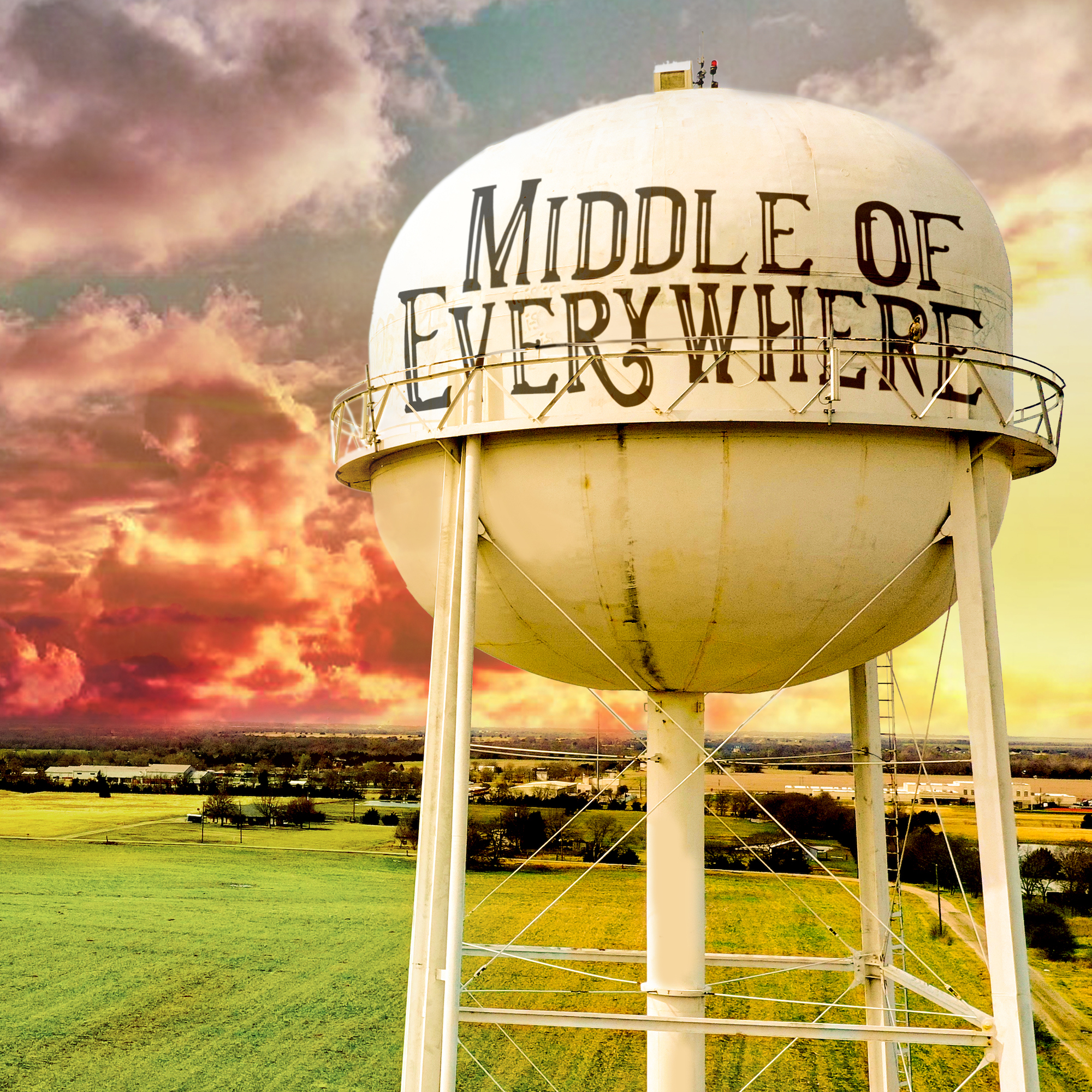
bonusThe Modern West brings you heartfelt stories about poignant issues happening today in the rural west. A lot of these issues are also felt in other rural communities, across the country. Today we take you to the foothills of the lush Appalachian Mountains in East Tennessee. There you’ll meet people who lost their way of life when a federal agency decided to take their land and flood their rich river valley, burying beneath the water much of our country’s early history, including many sacred Cherokee sites, and threatening an endangered species. This was all done in the name of progress. From our good friends at the award-winning podcast Middle of Everywhere, with WKMS in Kentucky, this is The Story of Tanasi, the first of a five-part series following a decades-long battle that took the river’s people all the way to the Supreme Court as they tried to save their way of life in the Little Tennessee River Valley. In this first part, called The Birth of a River, you’ll hear a history of the river valley, and learn about the cultural significance and importance of the river to the Cherokee Nation.
S5 Ep 4Nothing Heals: The Great Individualist Part 4
This time, we head to Wyoming's Red Desert - and hear the history of the 19th-century range wars. They led to laws requiring grazing fees and regular land health check-ups. But over a century later, some say these regulations haven't done enough to protect our wild spaces. Not to mention our climate.
S5 Ep 3Cows = Civilization: The Great Individualist Part 3
EThe history of how we brought the pastoral cow to live on the arid lands of the West is a violent one. Jim Elliot grew up in the shadow of that history and his stories are quintessential cowboy, full of guns, death and hard winters. But even Jim recognized the tragedy of the attempted annihilation of Indigenous culture and bison to make way for cows. But now, there's growing hope among tribes as bison make a comeback.
S5 Ep 2Se Benefician De Ella: The Great Individualist Part 2
The Abeyta family has been driving sheep down from the mountains of southern Colorado for generations. But it hasn't been easy to keep that tradition alive – they've had to fight for it. Through their eyes, we trace back the beginnings of the cowboy to the Mexican vaquero and find out how those adventurous roots are still very much alive in the American southwest.
S5 Ep 1The Rolling Stone: The Great Individualist Part 1
For the Elliot family, there isn't just one kind of cowboy. There are guys like Jake who chase the idea of the rodeo star, never sinking roots, a rolling stone. And then there's Jim, the hardworking and intimidating rancher. In this episode, we bust some myths about what it means to be a "real" cowboy and whether ranching ever measures up to our American ideals.
The Great Individualist Trailer
trailerThe cowboy roaming horseback across the American West is nearly inextricable from what it means to be American. But in reality, most beef is raised out East where there's more grass, and only a tiny fraction of the economy in the West comes from cattle. Now a new generation of ranchers is working to reinvent this iconic way of life to fit a modern world.
S4 Ep 3Heavy To One, Light To Many: Cowboy Up Part 3
Fifteen-year-old Kate just lost her mom. On top of that, her learning disabilities are making it hard to go to school. She's missed so much that the school says she might get sent away to a residential treatment center hundreds of miles away. But her grandparents are fighting hard for their right to keep her home.
S4 Ep 2Caught In The Current: Cowboy Up Part 2
In Rock Springs, Wyoming, we follow the treacherous paths of two young women. Larissa endures one trauma after another and soon finds herself unable to escape a cycle of probation and incarceration. Another kid, Jess, endures racism and bullying and seems headed down the same road. The system fails them both, but Jess's story takes a turn when she lucks out with a new teacher. But Mr. Baker says kids shouldn't have to rely on good luck.
S4 Ep 1Stranger On The Side Of The Road: Cowboy Up Part 1
EIn 1892, Wyoming hosts its first execution and it's a teenage boy named Kansas Charley. His trial causes a big national debate: is Charley a hardened criminal or a neglected child? It's a question we still haven't answered in the American West, where children are incarcerated in greater numbers than anywhere else. We also hear from a modern-day Kansas Charley who's living out his days in Wyoming's prisons who says, growing up, no one ever asked him the simple question: do you need help?
Cowboy Up Trailer
trailerEveryone likes to say that there's no better place to grow up than in the Rocky Mountains. Building snow forts, riding your bike everywhere, learning how to find your way out of the woods when you're lost. But for kids having a hard time, no one's handing them a map and compass. In Wyoming, kids are incarcerated and dying of suicide at higher rates than anywhere else. Longtime education reporter Tennessee Watson started to wonder if all this had to do with the "cowboy up" attitude we take toward child-rearing in the American West. A three-part series coming January 5th.
S3 Ep 3We're Still Here: Shall Furnish Medicine Part 3
When COVID-19 arrives on reservation borders, tribes aren't sure if their newly minted health care programs can hold up against the onslaught. The fear is that this is history happening all over again. But the two tribes on the Wind River Reservation in Wyoming decide early to roll up their sleeves–literally–in a fight for the very survival of their tribal identity.
S3 Ep 2Enough Is Enough: Shall Furnish Medicine Part 2
It's the late 1800s. With no government help in sight, Omaha citizen Dr. Susan LaFlesche is determined to bring health care to her tribe. Decades later, the U.S. still hasn't gotten around to fulfilling its treaty promise to furnish medicine. So, tribes find a way to take over their health care system, and a quiet social movement is born.