PLAY PODCASTS
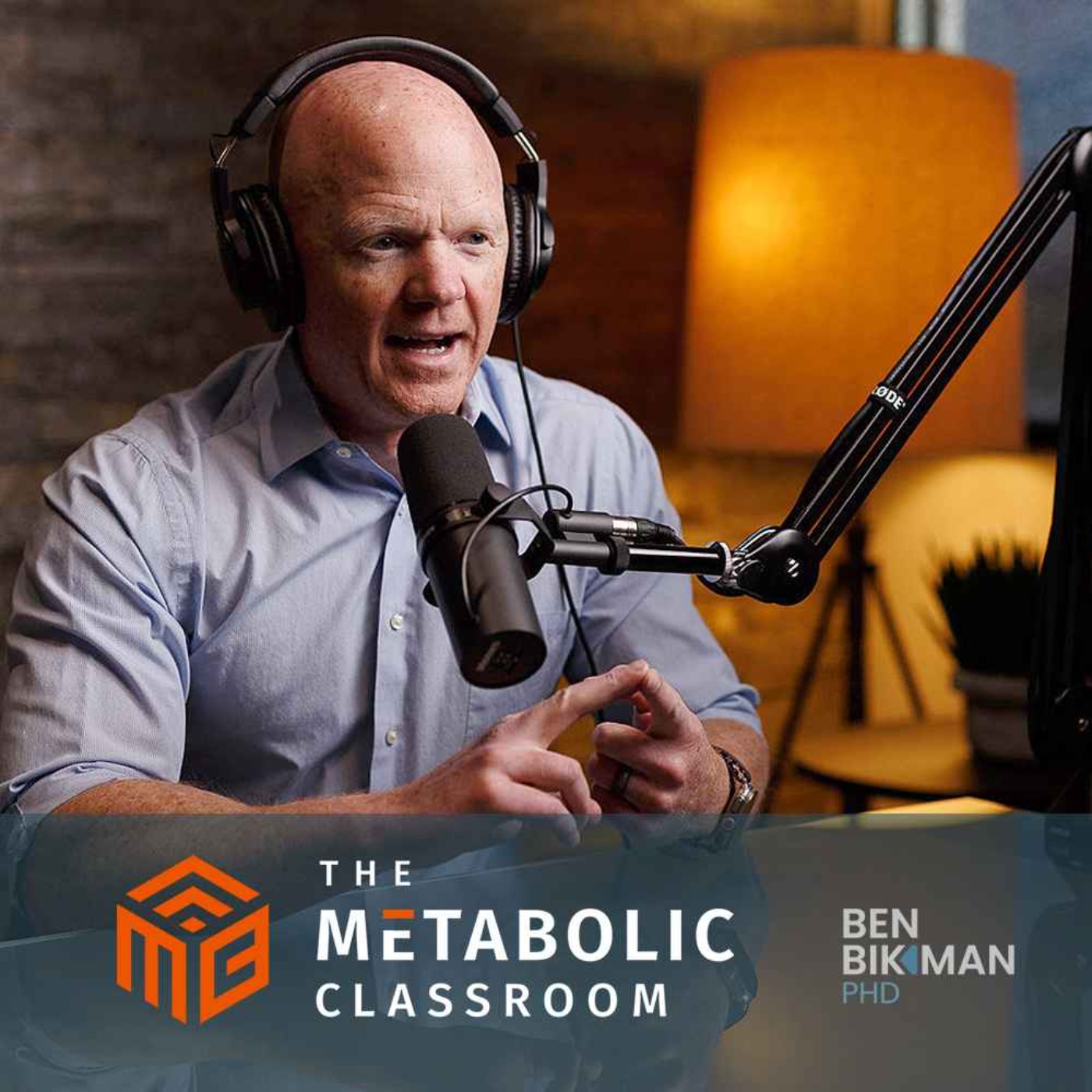
The Metabolic Classroom with Dr. Ben Bikman

The Metabolic Classroom with Dr. Ben Bikman

Raise Your Insulin IQ for Improved Metabolic Health

Insulin IQ · Jack Hadley

160 episodesEN

Show overview

The Metabolic Classroom with Dr. Ben Bikman has been publishing since 2021, and across the 5 years since has built a catalogue of 160 episodes, alongside 1 trailer or bonus episode. That works out to roughly 80 hours of audio in total. Releases follow a fortnightly cadence.

Episodes typically run twenty to thirty-five minutes — most land between 24 min and 34 min — and the run-time is fairly consistent across the catalogue. None of the episodes are flagged explicit by the publisher. It is catalogued as a EN-language Health & Fitness show.

The show is actively publishing — the most recent episode landed 6 days ago, with 29 episodes already out so far this year. The busiest year was 2024, with 48 episodes published. Published by Jack Hadley.

Episodes
160
Running
2021–2026 · 5y
Median length
29 min
Cadence
Fortnightly

From the publisher

Welcome to The Metabolic Classroom, a nutrition and lifestyle podcast focused on metabolism, which is how our bodies use energy, and the truth behind why we get sick and fat. Every week, Dr. Ben Bikman shares valuable insights that you can apply in your own life and share with friends and loved ones. The Metabolic Classroom is brought to you by BenBikman.com and InsulinIQ.com. Hosted on Acast. See acast.com/privacy for more information.

Latest Episodes

View all 160 episodes

The Biggest Myth About Mitochondrial Health

Aug 17, 202638 min

Why Exercise Alone Won’t Help You Lose Weight

Aug 10, 202623 min

Why Some People Stay Thin No Matter What They Eat

Jul 27, 202629 min

Why You're Always Hungry (Even After Eating)

Jul 13, 202624 min

Visceral Fat - The Hidden Fat That Drives Insulin Resistance

Jun 29, 202624 min

Why Your Bones Affect Your Metabolism

Jun 22, 202622 min

Why Some People Burn More Calories Than Others

Jun 15, 202628 min

Why Amylin May Be the Most Important Weight Loss Hormone You've Never Heard Of

Jun 8, 202621 min

Why Your Ketone Readings Don’t Match

Jun 1, 202628 min

Why Retatrutide May Outperform GLP-1 Drugs

May 25, 202626 min

Why Tirzepatide Works Better Than GLP-1 Alone

May 18, 202632 min

The Hidden Signals That Make Fat Cells Grow

May 11, 202629 min

Why Neuropathy Isn’t Just About Blood Sugar

May 4, 202622 min

How Your Brain Talks to Your Pancreas (The Vagus Nerve Explained)

Apr 27, 202627 min

The Muscle Biology Behind Diabetes Risk

Apr 20, 202634 min

How Insulin May Be Silencing Your GLP-1

Apr 13, 202633 min

Why Creatine Is One of the Most Important Brain Nutrients

Apr 6, 202631 min

Ep 143Why Gum Disease Raises Your Blood Sugar

📢 Ask Dr. Bikman’s Digital Mind (multilingual):https://benbikman.com/ben-bikmans-digital-ai-mind📢 Dr. Bikman’s Community & Coaching Site: https://insuliniq.comMost people think of gum disease as a local dental issue, but this lecture reveals a much broader and more consequential reality. Dr. Ben Bikman explains how the mouth serves as a gateway to systemic inflammation, particularly when periodontal disease allows bacteria and their toxic byproducts to enter the bloodstream. Once this happens, oral pathogens—especially P. gingivalis—can drive chronic inflammation, disrupt mitochondrial function, and contribute directly to insulin resistance.At the mechanistic level, Dr. Bikman outlines several pathways linking oral health to metabolic dysfunction. These include cytokine spillover (where inflammatory signals interfere with insulin signaling), direct degradation of insulin receptors by bacterial enzymes, dysregulation of liver glucose metabolism, and disruption of the gut microbiome. Together, these effects create a persistent inflammatory state that impairs glucose control and increases the risk of type 2 diabetes—even in individuals without obesity.The lecture also explores the strong epidemiological evidence supporting this connection, including studies showing that treating periodontal disease can significantly improve blood sugar control. Dr. Bikman further connects oral health to cardiovascular disease, highlighting how oral bacteria and endotoxins contribute to atherosclerosis. The takeaway is clear: oral health is not separate from metabolic health—it is a critical and often overlooked component of it.References:For complete show notes and references, we invite you to become an Insider subscriber. You’ll enjoy real-time, livestream Metabolic Classroom access which includes live Q&A with Ben after the lecture, unlimited access to Dr. Bikman’s Digital Mind, ad-free podcast episodes, show notes and references, and Ben’s Weekly Research Review Podcast. Learn more: https://www.benbikman.comNOTE: The information presented is not intended to be a substitute for professional medical advice, diagnosis, or treatment. Dr. Bikman is not a clinician—and, he is not your doctor. Always seek the advice of your own qualified health providers with questions you may have regarding medical conditions.Ben’s favorite yerba mate and fiber: https://ufeelgreat.com/usa/en/c/1BA884Exogenous ketones: A high-quality option is the NSF-certified goBHB from Clean Form Nutrition, where you can use the code BEN10 for a 10% discount: https://cleanformnutrition.com/products/go-bhbBen’s favorite meal-replacement shake: https://gethlth.com (discount: BEN10) Hosted on Acast. See acast.com/privacy for more information.

Mar 30, 202633 min

Ep 142Ivermectin Explained: The Science Behind the Controversy

📢 Ask Dr. Bikman’s Digital Mind (multilingual):https://benbikman.com/ben-bikmans-digital-ai-mind📢 Dr. Bikman’s Community & Coaching Site: https://insuliniq.comTopic:Ivermectin is a Nobel Prize-winning drug with emerging evidence showing it influences mitochondria, inflammation, and metabolic signaling pathways such as AMPK and FXR. While most data is still preclinical, its consistent mechanisms and strong safety record make it a compelling candidate for further research in cancer and metabolic disease.Summary:Ivermectin has become one of the most controversial drugs in recent years, but beneath the political noise lies a compelling scientific story. In this lecture, Dr. Ben Bikman examines ivermectin strictly through the lens of peer-reviewed research, highlighting its origins as a Nobel Prize-winning antiparasitic drug and exploring its expanding role in metabolism, mitochondrial function, inflammation, and cancer biology.A central theme of the lecture is ivermectin’s impact on mitochondria, particularly its ability to inhibit complex I of the electron transport chain. This disruption creates an energy crisis within cells, activates AMPK, suppresses mTOR signaling, and can ultimately trigger apoptosis in cancer cells. Notably, these effects appear to be selective, with cancer cells showing greater sensitivity than healthy cells. Additional mechanisms—including inhibition of PAK1 and synergy with existing chemotherapy agents—further support ivermectin’s potential as a therapeutic candidate in oncology.Beyond cancer, ivermectin demonstrates meaningful metabolic effects. It reduces inflammation through suppression of NF-kappaB, activates AMPK, and influences glucose metabolism via FXR signaling. Preclinical studies show improvements in insulin sensitivity, glucose control, liver health, and even adipocyte behavior. While human data is still limited, Dr. Bikman emphasizes that the mechanistic consistency across pathways warrants serious clinical investigation rather than dismissal.References:For complete show notes and references, we invite you to become an Insider subscriber. You’ll enjoy real-time, livestream Metabolic Classroom access which includes live Q&A with Ben after the lecture, unlimited access to Dr. Bikman’s Digital Mind, ad-free podcast episodes, show notes and references, and Ben’s Weekly Research Review Podcast. Learn more: https://www.benbikman.comNOTE: The information presented is not intended to be a substitute for professional medical advice, diagnosis, or treatment. Dr. Bikman is not a clinician—and, he is not your doctor. Always seek the advice of your own qualified health providers with questions you may have regarding medical conditions.Ben’s favorite yerba mate and fiber: https://ufeelgreat.com/usa/en/c/1BA884Exogenous ketones: A high-quality option is the NSF-certified goBHB from Clean Form Nutrition, where you can use the code BEN10 for a 10% discount: https://cleanformnutrition.com/products/go-bhbBen’s favorite meal-replacement shake: https://gethlth.com (discount: BEN10) Hosted on Acast. See acast.com/privacy for more information.

Mar 23, 202628 min

Ep 141How Sleep Loss Rewires Your Hunger Hormones

📢 Ask Dr. Bikman’s Digital Mind (multilingual): https://benbikman.com/ben-bikmans-digital-ai-mind📢 Dr. Bikman’s Community & Coaching Site: https://insuliniq.comTopic:Sleep loss alters key hunger hormones—reducing leptin and increasing ghrelin—while simultaneously activating reward pathways that increase cravings for calorie-dense foods. Because sleep and appetite hormones influence each other in both directions, improving sleep quality may be one of the most powerful tools for regulating hunger and metabolic health.Summary:Sleep is often treated as a simple lifestyle choice, but in reality it is one of the most powerful regulators of appetite and metabolic health. In this lecture, Dr. Ben Bikman explains the intricate hormonal relationship between sleep and hunger, highlighting how even short periods of sleep deprivation can dramatically alter the body’s appetite signals. Key hormones such as leptin and ghrelin shift in opposite directions during sleep restriction—satiety signaling declines while hunger signaling increases—creating a biological drive to eat more food.Ben also explores how sleep deprivation affects additional systems involved in appetite regulation, including the endocannabinoid system, cortisol rhythms, and the brain’s orexin neurons. These changes don’t just increase hunger—they specifically increase cravings for energy-dense, rewarding foods like chips, sweets, and other highly palatable options. Together, these hormonal changes create what researchers describe as an “obesogenic environment,” where the body becomes biologically primed to overeat.Importantly, the relationship works both ways. Hormones such as leptin and ghrelin also influence sleep quality, while melatonin plays a coordinating role in regulating the entire circadian system. Dr. Bikman concludes by emphasizing that optimizing sleep—especially protecting early-night deep sleep and minimizing artificial light at night—may be one of the most effective interventions for regulating appetite and improving metabolic health.References:For complete show notes and references, we invite you to become an Insider subscriber. You’ll enjoy real-time, livestream Metabolic Classroom access which includes live Q&A with Ben after the lecture, unlimited access to Dr. Bikman’s Digital Mind, ad-free podcast episodes, show notes and references, and Ben’s Weekly Research Review Podcast. Learn more: https://www.benbikman.comNOTE: The information presented is not intended to be a substitute for professional medical advice, diagnosis, or treatment. Dr. Bikman is not a clinician—and, he is not your doctor. Always seek the advice of your own qualified health providers with questions you may have regarding medical conditions.#SleepAndMetabolism #SleepAndHunger #Ghrelin #Leptin #SleepDeprivation #MetabolicHealth #CircadianRhythm #EndocannabinoidSystem #SleepScience #HormonesAndSleep #InsulinResistance #AppetiteHormones #SleepAndWeightGain #CortisolRhythm #MelatoninScience #SleepQuality #MetabolismMatters #DrBenBikman #MetabolicClassroom #SleepForHealthBen’s favorite yerba mate and fiber: https://ufeelgreat.com/usa/en/c/1BA884Exogenous ketones: A high-quality option is the NSF-certified goBHB from Clean Form Nutrition, where you can use the code BEN10 for a 10% discount: https://cleanformnutrition.com/products/go-bhbBen’s favorite meal-replacement shake: https://gethlth.com (discount: BEN10) Hosted on Acast. See acast.com/privacy for more information.

Mar 16, 202621 min
Copyright © Insulin IQ. All rights reserved.