
The Memo by Howard Marks
Oaktree Capital Management
Show overview
The Memo by Howard Marks has been publishing since 2020, and across the 6 years since has built a catalogue of 78 episodes. That works out to roughly 50 hours of audio in total. Releases follow a monthly cadence.
Episodes typically run thirty-five to sixty minutes — most land between 30 min and 49 min — though episode length varies meaningfully from one episode to the next. None of the episodes are flagged explicit by the publisher. It is catalogued as a EN-language Business show.
The show is actively publishing — the most recent episode landed 3 weeks ago, with 4 episodes already out so far this year. The busiest year was 2022, with 17 episodes published. Published by Oaktree Capital Management.
From the publisher
On October 12, 1990, Oaktree Co-Chairman Howard Marks published his first memo to clients. In the decades since, he has periodically released memos reflecting his viewpoint on the investment landscape, as well as more general business insights. On this podcast we'll hear the latest memos by Howard, released in tandem with or shortly after their publication.
Latest Episodes
View all 78 episodesShall We Repeal the Laws of Economics – Part III
What's Going on in Private Credit?
Ep 77Reflections on Oaktree Conference 2026 with Howard Marks
In this special episode of The Insight: Conversations, Howard Marks shares his reflections on themes from Oaktree’s recent client conference, including the evolution of the credit markets, the nature of mispricings, and the importance of leadership.
Ep 76AI Hurtles Ahead
In his latest memo – occasioned by massive changes he cites in just the 11 weeks since the last one – Howard Marks revisits the subject of AI, providing his observations on its essence and how it differs from previous technological innovations. He highlights AI’s immense power, speed, and autonomy; its limitations; and its potential implications for investing. He expresses conviction that AI is far from a fad, but also that investors must view its transformational potential against an assessment of the appropriateness of the prices of AI assets.You can read the memo here (https://oaktreecapital.com/insights/memo/ai-hurtles-ahead).
Ep 75Is It a Bubble?
In his latest memo, Howard Marks addresses the much-asked question, “Is there a bubble in AI?” He identifies the uncertainty associated with AI investments and the conspicuous parallels to previous bubbles, while also acknowledging why those comparisons could be inappropriate. Given AI’s vast potential but numerous unknowns, no one can say for certain whether investors’ current enthusiasm is merited or irrational. Thus, Howard emphasizes the importance of prudence and selectivity in navigating this transformative yet unpredictable technological revolution.You can read the memo here (https://oaktreecapital.com/insights/memo/is-it-a-bubble).
Ep 74Cockroaches in the Coal Mine
In his latest memo, Howard Marks examines the recent string of well-publicized credit problems. He considers how they serve as a reminder that the yield premium offered by sub-investment grade credit isn’t a freebie, but rather compensation for bearing credit risk. While good times lead to complacency and elevated risk tolerance, bad times expose the results of that carelessness. Howard emphasizes that it’s essential to always balance the desire to put money to work with the need for prudence.You can read the memo here (https://oaktreecapital.com/insights/memo/cockroaches-in-the-coal-mine).
Ep 73A Look Under the Hood
In his latest memo, Howard Marks offers observations based on his meeting with the board, consultant, and senior staff of a state pension fund. Howard explores the key topics covered during the session, including determining an appropriate risk posture, selecting an investment approach, and assessing performance. While these decisions are challenging, the board and its consultant applied the only reasonable method: asking the right questions and pursuing rational conclusions.You can read the memo here (https://oaktreecapital.com/insights/memo/a-look-under-the-hood).
Ep 7235 Years of Memos
To celebrate the 35th anniversary of his memos, Howard Marks recently held a fireside chat for Oaktree employees. Listen to an excerpt from the conversation to hear Howard discuss why he started writing and why he’s kept at it, and learn more about the enduring investment truths encapsulated by his memos.
Ep 71The Calculus of Value
In his latest memo, Howard Marks sets forth the essence of value and price, as well as the critical relationship between the two. He posits that value exerts a ‘‘magnetic’’ influence on price, meaning the relationship of price to value should be expected to strongly influence investment performance in the long run, with high valuations presaging low subsequent returns, and vice versa. In the context of today’s elevated U.S. equity valuations and widespread investor optimism, he advises us to consider going to an ‘‘Investment Readiness Condition’’ in which investors shift their portfolios somewhat in the direction of increased defense.You can read the memo here (https://www.oaktreecapital.com/insights/memo/the-calculus-of-value).
Ep 70More on Repealing the Laws of Economics
In his latest memo, Howard Marks discusses the implications of governmental intervention in economies. Considering examples such as rent control, fire insurance, and tariffs, he emphasizes that while free markets don’t produce perfect solutions, efforts to control them often make things much worse. He argues that when allowed to function, the laws of economics create prosperity through incentivizing innovation and productivity. He also touches on the U.S. fiscal deficit, questioning how much longer the government can continue spending more than it takes in.You can read the memo here (https://www.oaktreecapital.com/insights/memo/more-on-repealing-the-laws-of-economics).
Ep 6930 Years of Oaktree
In celebration of Oaktree’s 30th anniversary on April 10, 2025, cofounders Howard Marks (Co-Chairman), Bruce Karsh (Co-Chairman and Chief Investment Officer), and Sheldon Stone (Principal and Co-Portfolio Manager, High Yield Bonds) held a fireside chat for employees where they shared stories about Oaktree’s origins and the firm’s journey over the last three decades. We’re excited to share an excerpt from their conversation.
Ep 68Nobody Knows (Yet Again)
In his latest memo, Howard discusses how the recent events surrounding tariffs can have a seismic but unpredictable impact on the global economy. Seismic in that they reflect a fundamental undoing of longstanding norms, and unpredictable in that tariffs would bring untold second- and third-order consequences. He emphasizes that there is no foreknowledge here, with forecasts even less likely to be accurate than usual. Howard considers the response of the financial markets, highlighting the key question regards the appropriateness of the market reaction thus far: has it been just right, excessive, or inadequate? You can read the memo here (https://www.oaktreecapital.com/insights/memo/nobody-knows-yet-again).
Ep 67Gimme Credit
In his latest memo, Howard addresses a common question he’s been receiving over the last few months: “What about credit spreads?” He explains that the key question should be whether today’s spread is sufficient to offset the credit losses that’ll occur, rather than whether it’s historically narrow or not. Further, he emphasizes that spread widening is a short-term phenomenon and expresses his belief that the elevated yield offered by credit presents a better deal than equities, even at today’s spreads.You can read the memo here (https://www.oaktreecapital.com/insights/memo/gimme-credit).
Ep 66Behind The Memo: On Bubble Watch
In the latest episode of Behind the Memo, Howard discusses his recent memo, On Bubble Watch, which revisits a subject he first wrote about 25 years ago. He delves into the investor psychology that underpins a market bubble, and assesses the danger of letting excitement and fear of missing out override risk aversion.You can listen to or read the Memo here (https://www.oaktreecapital.com/insights/memo/on-bubble-watch).
Ep 65On Bubble Watch
On January 2, 2000, Howard Marks published his first memo to garner any reader response, bubble.com, calling attention to excesses he detected in the market for tech and internet stocks. His newest memo revisits the subject of bubbles. Howard expresses his view that they’re more a state of mind than a quantitative calculation and describes bubble thinking as irrational, often underlaid by a widespread belief that ‘‘this time is different.’’ Rather than opining on whether we’re in a bubble, Howard lists the signs he sees today and suggests how you might think about them . . . just as he did 25 years ago.You can read the memo here (https://www.oaktreecapital.com/insights/memo/on-bubble-watch).
Ep 64Ruminating on Asset Allocation
In his latest memo, Howard Marks outlines the need to base asset allocation decisions around an established risk target. He describes the fundamental differences between ownership and debt, as well as the importance of finding the combination of the two that gets an investor’s portfolio to the desired position on the risk/return continuum. Finally, he expands on the increased utility of debt investments in today’s portfolios.You can read the memo here (https://www.oaktreecapital.com/docs/default-source/default-document-library/ruminating-on-asset-allocation.pdf?sfvrsn=67775566_2).
Ep 63Shall We Repeal The Laws of Economics?
In his latest memo, Howard Marks discusses the economic facts of life, as he examines the workings of free markets and what happens when they’re tampered with. He considers what “price-gouging” actually means and how rents should be set. He ultimately argues that the laws of economics shouldn’t be overridden — even when it’s politically advantageous to do so – because of the loss to society.You can read the memo here (https://www.oaktreecapital.com/docs/default-source/memos/shall-we-repeal-the-laws-of-economics.pdf?sfvrsn=ab205566_1).
Ep 62Behind The Memo: The Impact of Debt with Howard Marks and Morgan Housel
In this special episode of Behind the Memo, Howard Marks is joined by Morgan Housel, the bestselling author and partner at the Collaborative Fund. They discuss ideas from Howard’s recent memo “The Impact of Debt,” which was inspired by Morgan’s article “How I Think About Debt.” They explore the relationship between leverage and longevity, the nature of risk, and the eternal relevance of Voltaire’s famous saying: “History doesn’t repeat itself. Man always does.”You can listen to or read the Memo here (https://www.oaktreecapital.com/insights/memo-podcast/the-impact-of-debt).
Ep 61Mr. Market Miscalculates
In his latest memo, Howard Marks discusses the reasons for the recent market volatility using one of finance’s classic metaphors: Mr. Market, the figure Benjamin Graham created in 1949 to explain the erratic nature of financial markets. Howard pulls together some of his best writing on investor psychology from the past three decades, adds some of his favorite investing cartoons, and offers a few new observations. He suggests that Mr. Market’s lessons about the behavior of markets are as relevant today as they were 75 years ago.You can read the memo here (https://cnt.oaktreecapital.com/docs/default-source/memos/mr-market-miscalculates.pdf?sfvrsn=ddfe5566_1).
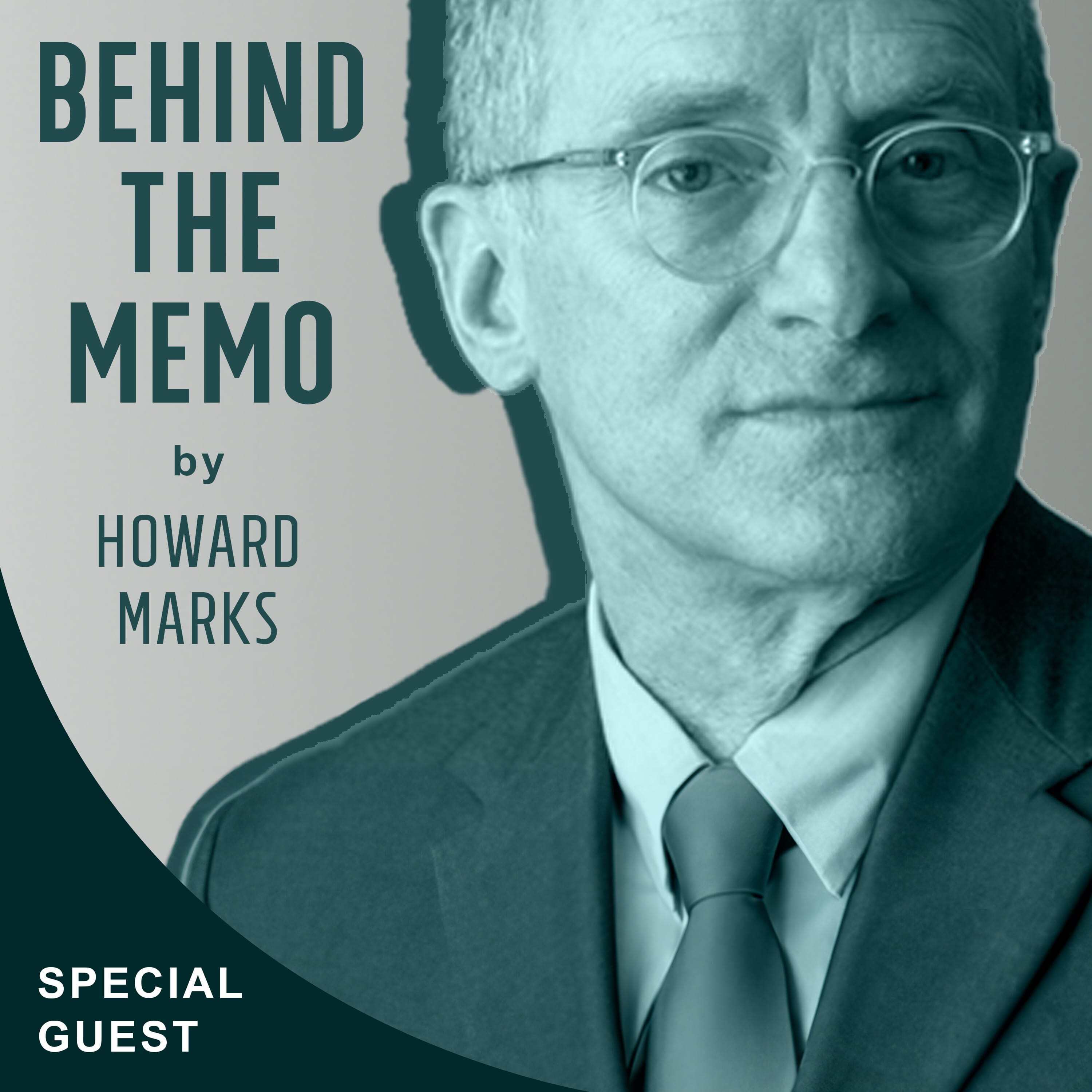
Ep 60Behind the Memo: The Indispensability of Risk with Howard Marks, Bruce Karsh, and Maurice Ashley
In this episode of Behind the Memo, Howard Marks is joined by two special guests: Oaktree cofounder Bruce Karsh and the chess Grandmaster Maurice Ashley. In a wide-ranging conversation, they discuss Howard’s recent memo "The Indispensability of Risk" as well as the inspiration for that memo: Maurice’s Wall Street Journal article, "Chess Teaches the Power of Sacrifice." They consider the many parallels between chess and investing, including the lesson that not taking enough risk may be one of the riskiest strategies of all.You can read the memo here (https://www.oaktreecapital.com/docs/default-source/memos/the-indispensability-of-risk.pdf?sfvrsn=52b45666_3).