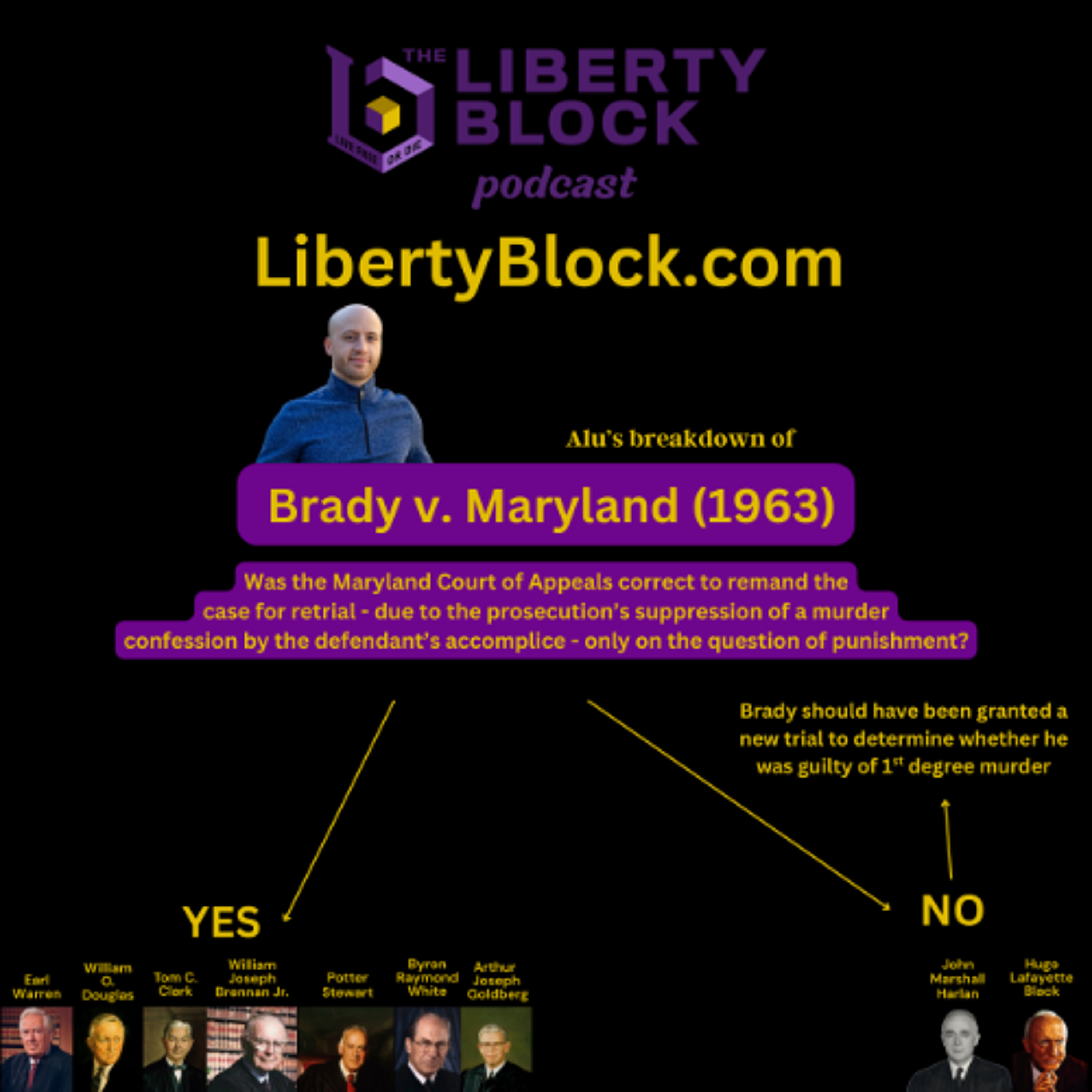
What Happens If Prosecutors Suppress Exculpatory Evidence?
In Brady v. Maryland (1963), the 7-2 SCOTUS held …
July 11, 202523m 44s
Audio is streamed directly from the publisher (feeds.soundcloud.com) as published in their RSS feed. Play Podcasts does not host this file. Rights-holders can request removal through the copyright & takedown page.
Show Notes
In Brady v. Maryland (1963), the 7-2 SCOTUS held that the prosecution's suppression of the accomplice's murder confession was material to the defendant's trial and violated his due process. The Court affirmed the ruling by the Maryland Court of Appeals, holding that Brady deserved a new trial, but only to determine whether he would get the death penalty of life in prison; the 1st degree murder conviction was set in stone.