the Learn-It-All™ podcast
335 episodes — Page 2 of 7
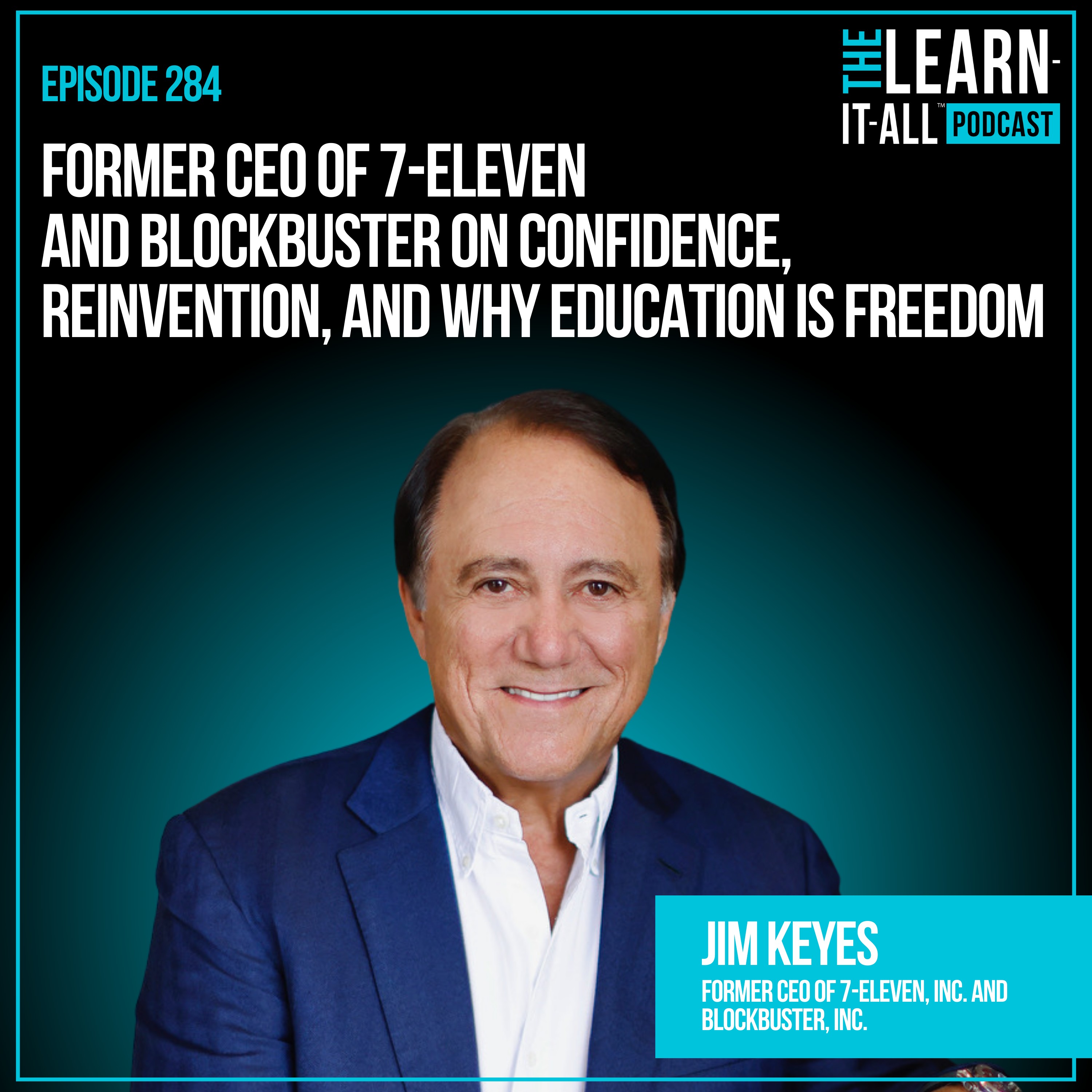
Ep 284284. Former CEO of 7-Eleven and Blockbuster on Confidence, Reinvention, and Why Education Is Freedom | Jim Keyes
What if the biggest thing holding leaders back is not failure, disruption, or AI, but fear?In this episode of The Learn-It-All Podcast, Damon Lembi sits down with Jim Keyes, former CEO of 7-Eleven and Blockbuster, for a conversation on confidence, reinvention, lifelong learning, and the mindset it takes to lead when the stakes are high. Jim reflects on helping lead a major turnaround at 7-Eleven, stepping into Blockbuster during one of its most turbulent chapters, and the hard-won lessons that came from navigating crisis instead of running from it.Jim also shares his story of bumping into Warren Buffett during the Blockbuster years, when he was slipping into a victim mindset, and how Buffett’s challenge became the wake-up call he needed to keep fighting rather than give up. Damon and Jim use that story to unpack a bigger idea: confidence is not something you’re simply born with. It is built on knowledge, faith, preparation, and the willingness to keep learning in the face of adversity.The conversation also explores Jim’s belief that education is freedom, why a degree is a license to learn, and how leaders can turn change into opportunity rather than fear. If you care about leadership development, business reinvention, executive confidence, change management, learning agility, and the future of education in an AI-driven world, this episode delivers both perspective and practical wisdom.In This Episode, You’ll Learn:Why Warren Buffett’s question became the mindset shift Jim needed when he was tempted to fall into a victim mentality at Blockbuster.How a student wearing an “Education Is Freedom” shirt at Columbia stopped Jim in his tracks and helped him realize that education was never just about money, but about freedom, options, and a bigger life.Why Jim believes confidence is not something you’re born with, but a learned skill built through knowledge, preparation, repetition, and the belief that you can learn your way through almost any problem.What most people still miss about the Blockbuster case study, and why the lazy “Netflix beat Blockbuster” version leaves out the hard stuff leaders actually need to understand.How Jim borrowed from Sam Walton’s playbook at 7-Eleven to cut through 12 to 15 layers of management and make sure every store heard the same priorities directly from leadership.Why leaders need change, confidence, and clarity to keep fear from spreading through a company during periods of uncertainty.Timestamps[00:00] Episode preview and introduction[02:00] When learning first became Jim’s path to freedom[03:08] The Columbia T-shirt that led to Education Is Freedom[04:27] “Money’s just a way of keeping score”[06:21] Fear, insecurity, and why confidence is learned[11:50] Knowledge, faith, and the game-changing Warren Buffett story[17:32] Why the Blockbuster story is richer than the easy headline[21:19] “I never lose. I win or I learn.”[22:51] The Sam Walton communication lesson Jim used at 7-Eleven[26:24] Change, confidence, clarity, and the CEO mindset[27:18] Pilot training, neuroplasticity, and replacing fear with knowledge[33:46] Character, personal brand, and what sustainable leadership really looks like[38:41] Why smart leaders stop hearing the truth[44:55] The human skills AI still can’t replace[46:20] Breadth of learning vs narrow specialization[49:38] The why of learning in a fearful, polarized world[53:11] Why Jim is more hopeful about Gen Z than most people[55:21] Jim’s case for reinventing education with technology[01:00:17] Ignorance as the root cause and the JFK-style challenge[01:01:56] The butterfly story and why the future is in your hands[01:04:39] Where to connect with Jim KeyesAbout Jim KeyesJim Keyes is a business leader, author, speaker, and educator best known as the former CEO of 7-Eleven and Blockbuster. He led a major turnaround at 7-Eleven, later took the helm at Blockbuster during one of the most difficult periods in the company’s history, and today shares leadership lessons drawn from those experiences worldwide. Jim is also the author of Education Is Freedom, a book and message centered on lifelong learning, adaptability, and the idea that education creates options, confidence, and opportunity.Resources and MentionsEducation is Freedom book: https://www.amazon.com/Education-Freedom-Future-Your-Hands/dp/1637588003Jim Keyes’ website: https://www.jameswkeyes.com/Jim Keyes’ LinkedIn: https://www.linkedin.com/in/james-keyes-a0947215/Jim Keyes’ Instagram: https://www.instagram.com/jkeyesauthor/Jim Keyes’ TikTok: https://www.tiktok.com/@jkeyesauthorHarvard Business School Case on Blockbuster, Netflix, and Redbox: https://hbsp.harvard.edu/product/KEL616-PDF-ENGThe Learn-It-All™ Podcast: The Ask Approach with Jeff Wetzler: https://www.youtube.com/watch?v=FmuBcUBlvOkPodcast Contact Information:Website: www.learnit.comEmail: [email protected] us on LinkedIn and Instagram for updates.
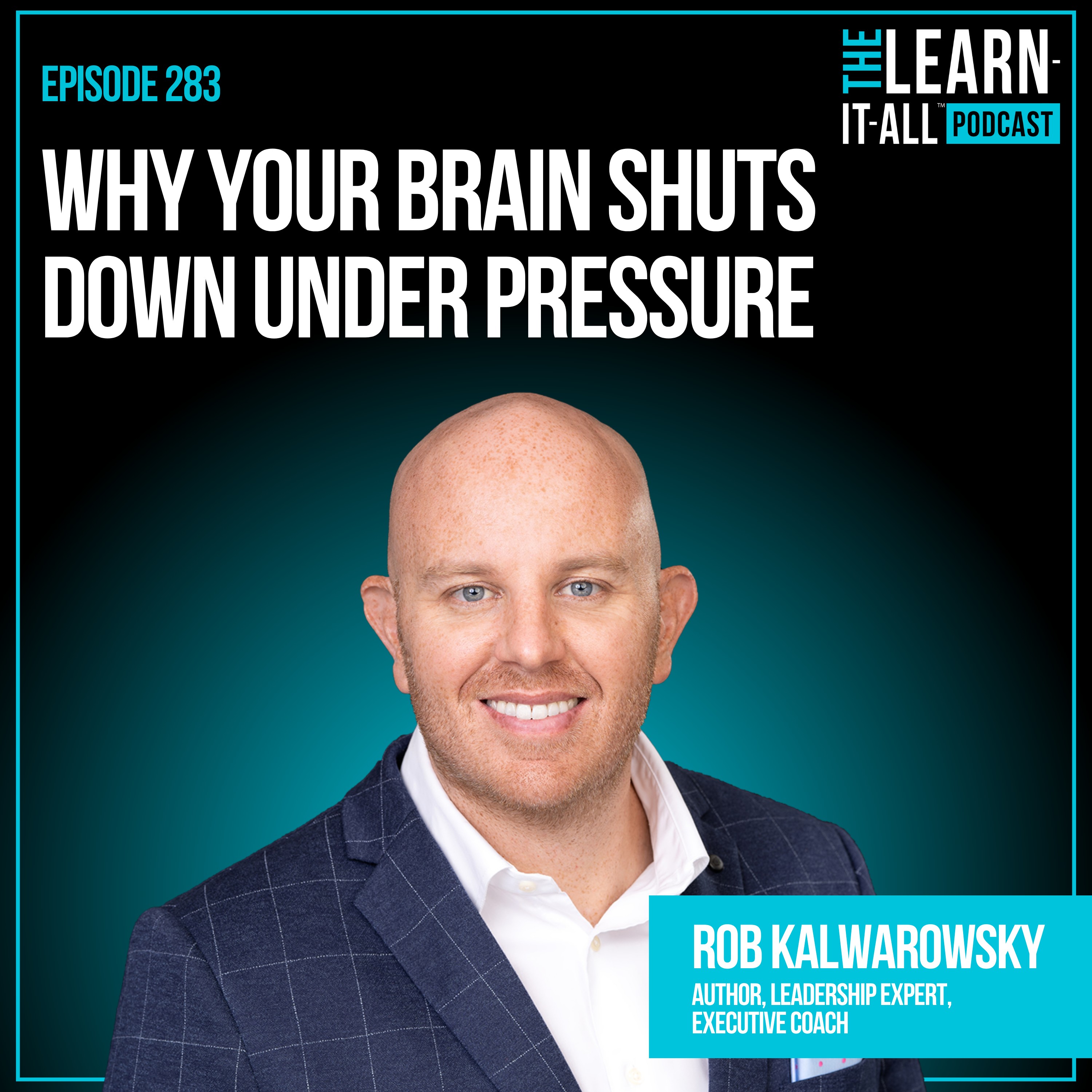
Ep 283283. Why Your Brain Shuts Down Under Pressure | Rob Kalwarowsky
Why do 89% of leaders freeze under pressure while a small few get clearer, calmer, and more decisive?In this episode of The Learn-It-All Podcast, Damon Lembi sits down with executive coach, keynote speaker, and Capitalizing on Chaos author Rob Kalwarowsky to unpack what really happens to leaders during uncertainty, stress, burnout, and high-stakes decision-making.They dig into what Rob calls inner chaos, that feeling of being at war inside your own head, and why the best leaders are not the ones who pretend to be fearless, but the ones who know how to steady themselves in real time. Rob explains why saying “I’m human” can be a powerful leadership tool, how fight, flight, freeze, and fawn show up at work, and why leaders should never engage their teams from a dysregulated state. They also explore the hidden cost of perfectionism, the danger of people-pleasing leadership, the trap of trying to do everything yourself, and the mindset shift that helps emerging leaders stop freezing and start taking action.Rob also shares his personal story from MIT-trained engineer and elite athlete to surviving a mental health crisis, rebuilding from the inside out, and helping leaders find clarity, peace, and better performance in chaotic times. If you want to become a calmer, more effective leader in uncertainty and make better decisions without burning yourself out, this episode is for you.In This Episode, You’ll Learn:Why so many leaders freeze in uncertainty, and how an amygdala hijack shuts down logic, decision-making, and leadership when chaos hits.How the phrase “I’m human” can help leaders regulate faster, create empathy, and build trust with their teams in real time.Why inner peace and clarity make it easier to say yes to the right priorities and no to everything pulling you off your path.Why asking for help is the first courageous move when burnout, overwhelm, or darker thoughts start to spiral.Why Rob believes this chaotic season is a once-in-a-lifetime opportunity for leaders willing to take action while everyone else freezes.Timestamps:00:00 – Episode preview and introduction01:41 – Why chaos feels higher than ever03:42 – What an amygdala hijack does to leaders04:46 – The real-world power of saying “I’m human”07:31 – Why high achievers need grace, not just grind09:46 – Rob’s backstory: MIT, engineering, and a toxic culture13:05 – The first step when burnout turns dangerous15:38 – Why this is the right moment for Capitalizing on Chaos18:16 – Why fight-or-flight kills team engagement21:03 – Fawn, feedback, and the cost of being too nice23:19 – The DIY leader trap26:25 – The fastest way to spot if you’re the bottleneck28:39 – Imposter syndrome in new and emerging leaders35:35 – Two tools to ask for a raise, date, or promotion39:04 – What executives are struggling with right now40:45 – Why 89% of leaders freeze under pressure42:05 – Where to connect with RobAbout Rob KalwarowskyRob Kalwarowsky is an executive coach, keynote speaker, and the author of Capitalizing on Chaos. A Canada-born, MIT-trained mechanical engineer and former national team water polo player, Rob began his career in engineering before a toxic work environment and personal mental health crisis changed the course of his life. Today, he helps leaders navigate inner chaos, burnout, self-leadership, decision-making, and performance under pressure so they can lead with more clarity, calm, and impact.Resources and MentionsCapitalizing on Chaos Book: https://www.amazon.com/Capitalizing-Chaos-Executives-Succeed-Disruption-ebook/dp/B0FMQBYYBWRob Kalwarowsky’s website: https://www.robkalwarowsky.com/Find Your Reason Worksheet: https://www.robkalwarowsky.com/reasonRob Kalwarowsky’s LinkedIn: https://www.linkedin.com/in/rob-kalwarowsky/Podcast Contact Information:Website: www.learnit.comEmail: [email protected] us on LinkedIn and Instagram for updates.
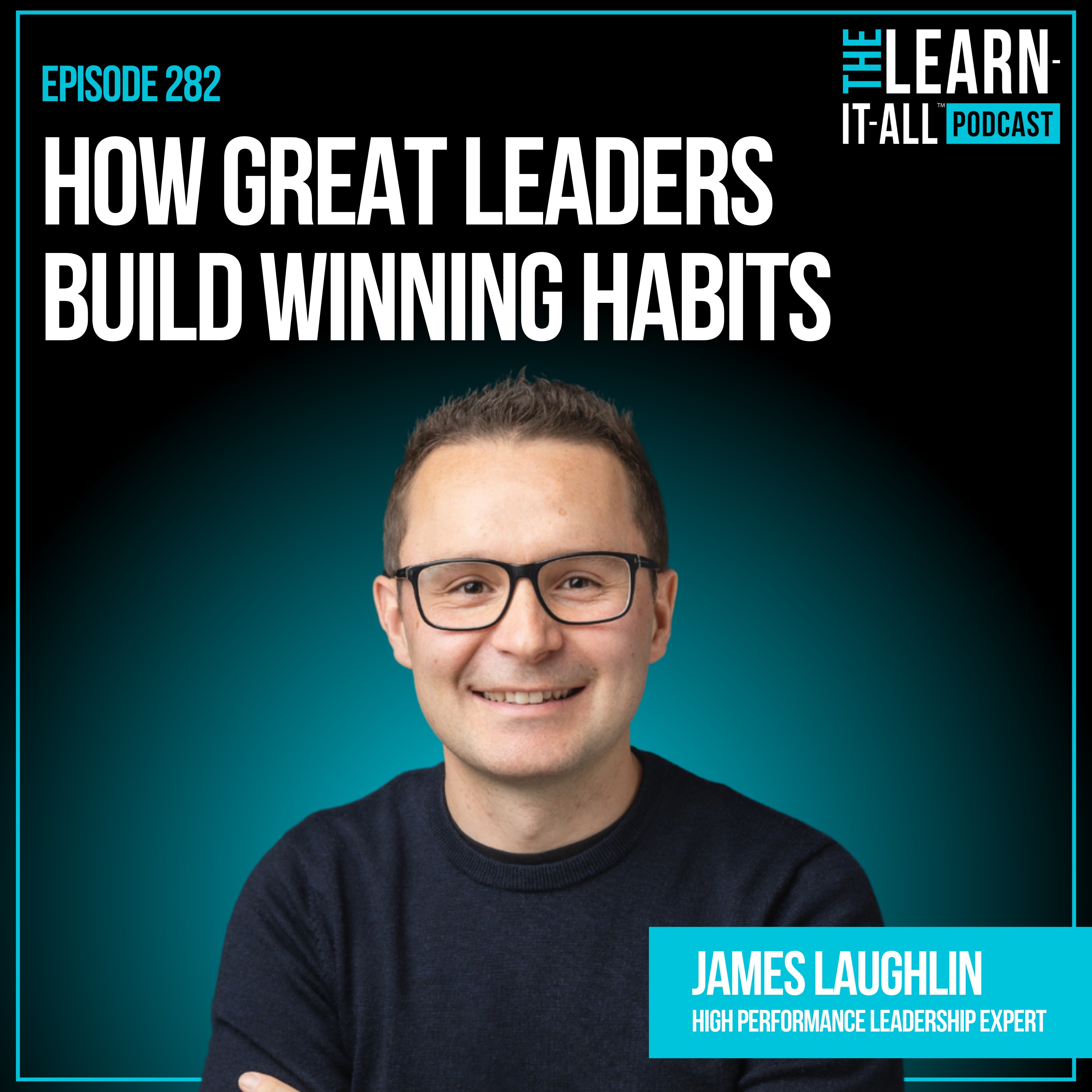
Ep 282282. How Great Leaders Build Winning Habits | James Laughlin
What actually separates the great from the greatest, and why do so many successful leaders still battle self-doubt?In this episode of The Learn-It-All Podcast, Damon Lembi sits down with high-performance coach and former 7-time world champion drummer James Laughlin to break down what truly drives elite leadership performance.James shares the principles behind his book Habits of High Performers, revealing how leaders can consistently exceed norms while maintaining healthy relationships and well-being. From rewiring belief systems and battling imposter syndrome to using visualization to rehearse success under pressure, this conversation goes deep into the psychology and practical frameworks behind sustainable high performance.If you’re serious about leadership development, mindset mastery, habit formation, long-term vision planning, and building sustainable high performance without burning out, this episode delivers frameworks you can apply immediately.In This Episode, You’ll LearnWhy high performance is not a birthright but a habit, and how hustle leads to illness, not sustained successHow to rewire your belief systems around failure, money, success, and happiness so they serve your growthHow visualization works as a mental rehearsal, so you can perform with pressure, instead of under pressureWhy work-life balance is unrealistic, and what “work-life counterbalance” actually looks like in practiceHow great leaders spot strengths in others that people can’t yet see in themselvesTimestamps:00:00 – Episode preview and introduction02:00 – What separates the great from the greatest?03:22 – Why copying Oprah’s habits won’t make you elite06:36 – What “heartset” really means08:01 – Why James wrote Habits of High Performers09:15 – How his book differs from Stephen R. Covey’s 7 Habits15:29 – Why most companies get values wrong17:06 – You’re full of BS: understanding belief systems18:52 – Rewiring your beliefs around failure21:47 – Visualization as mental rehearsal for pressure23:40 – Pivoting, feedback, and learning agility24:35 – Is high performance innate or learned?26:47 – Why work-life balance is nonsense28:12 – The VP Filter decision-making framework31:26 – Choosing family over fame: the school play decision34:17 – If you don’t make time for health, you’ll make time for sickness36:38 – The 3-2-1 evening routine for elite sleep38:48 – The real struggle of high achievers: imposter syndrome40:20 – The Personal Victory Journal framework43:13 – Why great leaders build belief before behavior45:35 – Success planning and reverse engineering your goals47:12 – Where to connect with James LaughlinAbout James LaughlinJames Laughlin is a globally recognized high-performance coach, leadership strategist, and keynote speaker who works with CEOs, elite athletes, world champions, and political leaders.Before coaching executives and national leaders, James was a 7-time world champion drummer, traveling internationally to help teams achieve world-class performance. That experience shaped his deep understanding of mindset, discipline, and sustained excellence under pressure.Today, James advises organizations and top performers across industries on how to build empowering habits, rewire belief systems, and consistently exceed norms while maintaining healthy relationships and well-being. He is also the host of the Habits of High Performers podcast and the author of Habits of High Performers.Resources and MentionsHabits of High Performers Book: https://thehabitbook.com/James Laughlin’s website: https://www.jjlaughlin.com/Personal Leadership Planner: https://www.jjlaughlin.com/plannerJames Laughlin’s Instagram: https://www.instagram.com/jameslaughlinofficial/James Laughlin’s LinkedIn: https://www.linkedin.com/in/jameslaughlincoaching/Habits of High Performers Podcast: https://podcasts.apple.com/ca/podcast/habits-of-high-performers-podcast-with-james-laughlin/id1547874035Damon Lembi on the Habits of High Performers Podcast: https://www.youtube.com/watch?v=FgoaDFycbbIPodcast Contact Information:Website: www.learnit.comEmail: [email protected]
Ep 281281. Bold AI Predictions for Work by 2027 | Damon Lembi
What does the future of work look like when AI becomes not just a tool, but a teammate?In this episode of The Learn-It-All Podcast, Damon Lembi is joined by Mickey Fitch-Collins, host of the Learnit Lounge Podcast, to explore bold AI predictions for the workforce by 2027. From reshaping leadership to redefining human roles, the shift is already underway. Organizations are grappling with how to integrate AI effectively and how to redesign workflows to incorporate this powerful new teammate.Are your skills future-proof? Tune in to uncover what leaders and employees need to thrive in the AI-driven future.In This Episode, You’ll LearnThe biggest macro shift in the future of work: How AI is moving from a tool to a true teammate, collaborating alongside humans.The essential human skills, like empathy, critical thinking, and decision-making, are needed to lead in the AI era.Real-world examples of AI enhancing human productivity by handling tasks, giving leaders and teams more time to focus on high-level strategy and problem-solving.The transition from task-oriented jobs to roles focused on decision-making, problem-solving, and strategic outcomes.How the next generation will thrive with AI: Predictions for AI-native workers and how mentorship and reverse mentoring will shape the future of career development.Timestamps:00:00 - Introduction02:18 - How AI is moving beyond being a tool and becoming a collaborative teammate.04:12 - The hidden dangers and lessons learned from early AI adoption failures.07:32 - Will AI change the way we do our jobs completely?10:14 - The critical human skills that will set successful leaders apart in an AI-driven world.13:27 - The next generation of workers will grow up with AI as a co-worker.17:52 - Why AI fluency isn’t just for the younger generation, and how reverse mentoring can shape the future.20:38 - Damon and Mickey’s bold predictions on how humans and AI will collaborate in the future.About Damon LembiDamon Lembi is a 3x bestselling author, the host of The Learn-It-All™ Podcast, and CEO of Learnit – a live learning platform that has upskilled over 2 million people. Drawing from his prior baseball career, Damon brings an athlete’s perspective to leadership. Through his journey, he has gained invaluable insights into what helps organizations grow, how great leaders learn, and why learn-it-all companies outpace their competitors every time.Resources and Mentions:Connect with Damon: https://www.linkedin.com/in/damonlembi/Download Damon’s book: https://BookHip.com/FTZRCJBPodcast Contact Information:Website: www.learnit.comEmail: [email protected] us on LinkedIn and Instagram for updates.
Ep 280280. Breaking Free from Perfectionism | Todd Patkin
Do you feel trapped in the endless cycle of perfectionism, constantly striving for flawlessness only to burn out? It might feel like the more you achieve, the less fulfilled you become.In this episode, Damon is joined by Todd Patkin, a former business leader turned happiness expert, to unpack how perfectionism can secretly be sabotaging your life and career. Todd shares his personal journey of overcoming anxiety and depression, breaking free from perfectionism, and finding true happiness through simple but powerful habits.You’ll learn how perfectionism isn’t a badge of honor, but a hidden trap, and how the simple act of embracing imperfection can transform your well-being. Todd’s insights, including practical steps to improve mental health, like the power of exercise and self-compassion, are invaluable for anyone looking to escape the toxic mindset of "everything must be perfect."In this episode, you'll learn:Why perfectionism can lead to burnout and even breakdown, even for the most successful leadersHow to replace harmful perfectionist thinking with healthier, more productive habits, starting with a 20-minute morning routineThe importance of exercise as a quick and effective tool to shift your mindset from negativity to positivityWhy we need to stop beating ourselves up for mistakes and focus on the good we do each dayTodd’s powerful 12-week happiness plan, including how to be kinder to yourself and cultivate gratitudeTimestamps:[00:00] - Episode preview and introduction[02:15] - How Todd’s perfect life led to an unexpected breakdown.[04:38] - The childhood struggle that fueled Todd's perfectionism and shaped his future.[07:24] - How chasing perfection in business left Todd at a breaking point.[10:09] - The turning point that helped Todd shift from burnout to breakthrough.[13:11] - Why moving your body might be the key to healing your mind.[15:28] - Start your mornings right and transform your entire mindset.[17:53] - Break free from paralyzing fear and embrace the present moment.[21:19] - How striving for perfection at home and work can destroy your connections.[24:11] - Discover the proven process that helped Todd reclaim his joy.[26:33] - Shift your mindset with one simple, life-changing practice.[29:43] - How to stop measuring your success against others and start living for yourself.[32:04] - Why reaching out to old friends could be the key to unlocking your happiness.[34:29] - Todd’s top advice for leaders who are trapped in perfectionism.[37:22] - How to start your own journey to happiness today.About Todd PatkinTodd Patkin is a successful former business leader, author, and philanthropist. After running his family business for 18 years, he faced a personal crisis that led him to re-evaluate his life. Todd's book, Finding Happiness, details his journey from burnout and depression to discovering how anyone can lead a more fulfilled life. He now dedicates his time to teaching others how to break free from the shackles of perfectionism, build better habits, and find lasting happiness. His 12-week program is designed to help individuals reclaim their joy and transform their lives.Resources and MentionsTodd Patkin’s Website: toddpatkin.comTodd Patkin’s Email: [email protected] Happiness Book: https://toddpatkin.com/about-book/Todd Patkin’s 12-Week Masterclass Program: https://toddpatkin.com/course/Podcast Contact Information:Website: www.learnit.comEmail: [email protected] us on LinkedIn and Instagram for updates.
Ep 279279. How to Stop Getting Ghosted After the First Sales Meeting | Lee Salz
Ever been ghosted after a first sales meeting you thought went well? It’s frustrating when momentum dies before you ever get a second conversation. Lee Salz says it often happens for one simple reason: most sales teams don’t have a prescribed way to run the first meeting, so they default to “discovery.” And discovery, in his words, is an egocentric sales step. Meanwhile, the buyer is thinking, “I have 400 things to do… what do I get out of meeting with you?”In this episode, Damon sits down with bestselling author Lee Salz to break down how to stop getting ghosted by replacing discovery with a value-led consultation. Lee explains why the first meeting sets the foundation for every deal, how to pace the sales process instead of cramming everything into one call, and how to engage emotion so your prospect leaves thinking three powerful words: they get me.If you sell in a competitive B2B environment where buyers already have a provider in place, this conversation will help you run a stronger first meeting, differentiate earlier, and secure the next step before the call ends. Drawing from The First Meeting Differentiator, Lee shares a clear, repeatable framework sales leaders and individual contributors can implement immediately.In this episode, you'll learn:Why the first meeting is the deal foundation, and how weak first meetings create closing problems later in the sales cycleHow to stop getting ghosted after the first sales meeting by replacing discovery with a consultation that delivers meaningful valueThe best first meeting agenda question to earn trust fast: “For this to be a great use of your time, what do you want to make sure we cover today?”How to engage emotion in sales conversations so prospects feel “they get me” and want to keep interacting with youThe two non-negotiables to secure the next meeting before you hang up: a defined next step and a scheduled next interaction on the calendarTimestamps:00:00 - Episode preview and introduction01:22 - Is your first meeting setting you up for failure?04:04 - The secret to turning discovery into a game-changing consultation06:09 - Why your prospect might forget 90% of your meeting09:25 - Why your deal falls apart before it even starts15:25 - The one question you’re probably not asking (And why it matters)19:09 - The hidden power of emotions in sales25:13 - Why stories are your secret weapon in sales and how to tell them right28:52 - Is your ideal client actually the right fit?35:22 - How to keep your prospects coming back for more39:19 - The hidden mistake salespeople make at the end of every meeting41:16 - Why sales leaders are the key to your successAbout Lee SalzLee Salz is a globally recognized sales expert, bestselling author, and founder of Sales Architects. With years of experience in the sales industry, he is known for his innovative approach to sales strategies and leadership. Lee has worked with organizations across various industries, helping them transform their sales processes and close more deals. He is the author of The First Meeting Differentiator, which provides salespeople with actionable advice to ensure that their first meeting sets the stage for a successful partnership.Resources and MentionsSales Architects Website: https://salesarchitects.com/The First Meeting Differentiator: https://firstmeetingbook.com/Lee Salz’s YouTube: https://www.youtube.com/@theleesalz/videosPodcast Contact Information:Website: www.learnit.comEmail: [email protected] us on LinkedIn and Instagram for updates.
Ep 278278. Why CEOs Must Train Like Athletes | Pearce Cucchissi
In this episode of The Learn-It-All™ Podcast, host Damon Lembi welcomes Pearce Cucchissi, a former Army Ranger and elite performance coach who specializes in human optimization for both world-class athletes and top executives. Pearce shares groundbreaking insights into why CEOs must train like athletes to sustain their peak performance and avoid burnout. He discusses the essential human operating system that underpins both elite athletes and executives, highlighting the importance of mental resilience, physical optimization, and strategic habits. Tune in to learn how executives can implement simple yet powerful changes in their routines to extend their careers, improve their health, and thrive under pressure.Whether you're looking to optimize your mental state or enhance your physical well-being, this episode offers actionable strategies to transform your leadership approach.In this episode, you'll learn:Why CEOs and executives should adopt athletic training principles to optimize their mental and physical health.The importance of "meeting-to-meeting resets" and how to prepare your mind and body for back-to-back high-pressure meetings.Why resilience beats mental toughness every time, and how to build a resilient mindset.How executives can avoid burnout by connecting their physical health to their broader career goals.The surprising link between breathwork, energy, and long-term professional success.Timestamps:00:00 - Episode preview and introduction02:08 - Why do CEOs ignore the power of athletic training?03:42 - The secret reset: How to bounce back between meetings05:36 - Is your health sabotaging your career?07:23 - Are you a ticking time bomb? Unpacking burnout in executives09:52 - Resilience vs toughness: What really wins?11:30 - The one simple thing that will change your life14:27 - How military experience translates to executive leadership17:46 - The hidden ingredient for longevity as a leader22:50 - Why are top performers missing the mark?38:43 - How writing can unlock your emotional resilience44:02 - The surprising role of a coach in your executive success55:12 - Ready for a reset? Pearce’s unique executive coaching approachAbout Pearce CucchissiPearce Cucchissi is a former Army Ranger with a distinguished career in special operations. He now works as an elite performance coach for executives and athletes, helping them enhance their mental and physical resilience. With a deep understanding of high-pressure environments, Pearce trains individuals to optimize their human operating systems, improving longevity, performance, and overall well-being. Pearce’s approach blends military precision with modern wellness strategies, ensuring that top performers are not only successful but sustainable in their careers.Resources and MentionsBuilt to Evolve Website: https://www.builttoevolve.com/Pearce Cucchissi’s LinkedIn: https://www.linkedin.com/in/pcucchissi/Pearce Cucchissi’s Instagram: https://www.instagram.com/pearce_c2/Podcast Contact Information:Website: www.learnit.comEmail: [email protected] us on LinkedIn and Instagram for updates.

Ep 277277: Your Leadership Operating System Needs an Update | Townsend Wardlaw
Every leader knows what an iPhone is—but have you ever thought about your own “human operating system”?In this eye-opening episode, Damon welcomes trusted advisor Townsend Wardlaw to the Learn-It-All™ podcast for a deeply practical—and often surprising—conversation about mindset, leadership, and personal transformation. Using vivid analogies and candid stories, Townsend Wardlaw challenges leaders to rethink the “code” they’re running: are you operating on beliefs that hold you back, or fuel your growth? From updating your personal OS to escaping the trap of “trying harder,” this episode delivers powerful frameworks and real-life examples for anyone ready to break through their own limits.Whether you’re a founder stuck at a plateau, a manager coaching high performers, or simply someone seeking more fulfillment, you’ll walk away with tools to shift your perspective, transform your energy, and unlock new outcomes—no performance hacks required.In this episode, you’ll learn:How your “human operating system” shapes every action, relationship, and result—often without you realizing itWhy the most successful founders get stuck by relying on self-reliance—and how to rewire for growthThe critical difference between asking “how do I solve this?” vs. “who needs to show up?” (and the impact for big goals)Why letting go of control, credit, and blame can unlock unprecedented energy and peaceHow to shift limiting operating system beliefs through awareness—in yourself and in othersWhat truly transformational coaching looks like (spoiler: it isn’t about providing answers!)Simple, practical ways anyone can start “updating their code” and designing the life—and leadership—they truly desireTimestamps:00:00 – The iPhone analogy for human operating systems01:40 – How your underlying “code” determines perception and results06:17 – “Who, Not How”—how shifting the question changes everything08:27 – Real founder story: making the impossible, possible10:44 – Why working harder won’t scale—and what to do instead14:33 – The role of ego and self-reliance in leadership (and its dark side)19:11 – “How much is really up to me?”: India trip, humility, and insight22:46 – What founders unlock when their responsibility drops from 90% to 5%26:55 – Are you playing to win, or not to lose? Problem-solving reexamined28:32 – Seeing situations differently: the “glass elevator” metaphor33:34 – Is it really hard… or have you just never practiced?37:39 – Awareness is the key to performance, growth, and leadership41:12 – How to create from commitment, not inventory49:13 – What sets transformational coaching apart51:09 – Actionable advice for new managers and coaches56:13 – Awareness: the most powerful coaching tool you’ve never used59:07 – Where to find Townsend Wardlaw online01:00:24 – The must-ask question: What do you truly desire?About Townsend WardlawTownsend Wardlaw is a sought-after advisor working with select founders and leadership teams, as well as top coaches worldwide. His unique perspective blends deep business experience—including his own founder journey—with cutting-edge mindset and transformational coaching. After a career-defining setback led him to reexamine his own “operating system,” Townsend Wardlaw committed to guiding others through the same journey, helping leaders break through plateaus, unlock new energy, and design success on their own terms.Resources & Mentions:Townsend Wardlaw's WebsiteTownsend Wardlaw's LinkedInWho Not How by Dan Sullivan & Dr. Benjamin HardyTownsend Wardlaw's SubstackPodcast Contact Information:Website: www.learnit.comEmail: [email protected] us on LinkedIn and Instagram for more updates.
Ep 276276: The Psychological Safety Test Leaders Never Try | Aoife O’Brien
Even high-performing teams can be unhappy—and leaders who want to create workplaces where people thrive need a new playbook. In this energizing episode of the Learn-It-All™ podcast, Damon sits down with Aoife O'Brien, award-winning podcast host and author of Thriving Talent, to unpack the essential ingredients for happy, high-performing workplaces. Drawing from her own journey and deep organizational research, Aoife lays out her “house” framework for thriving teams. Discover the building blocks of psychological safety, culture, drivers, and capabilities—plus practical ways leaders at any level can activate them. From feedback to autonomy to tackling imposter syndrome, this episode offers fresh, actionable guidance for leaders navigating today’s rapidly-evolving work landscape. Whether you’re new to leadership or rethinking how you build teams, you’ll come away with memorable stories, research-backed tips, and validation that creating real psychological safety is always the starting line. In this episode, you’ll learn: Why psychological safety is the foundation (and how to build it) How to spot the warning signs and triggers of a toxic culture The “house” framework: 3 pillars of a thriving workplace (+ capstone) The secret to extracting honest feedback—and using it for growth How to balance autonomy and guidance for every team member Practical advice for uncovering and leveraging your team’s strengths Simple ways leaders can create more capacity (not just busywork) Real answers on career paths, imposter syndrome, and the human side of AI Timestamps: 00:00 – Aoife’s “house” model: psychological safety as the foundation 01:38 – How work expectations changed post-pandemic 02:30 – The 3 pillars: workplace culture, drivers, capabilities 04:46 – What piqued Aoife’s interest in toxic work environments 07:29 – Self-reflection & feedback for new leaders 11:44 – Why values alignment drives trust (& how leaders miss it) 15:42 – Triggers that create toxic cultures—microaggressions/bullying 17:46 – Role modeling vulnerability & building psychological safety 19:33 – Understanding employee drivers: autonomy, relatedness, competence 22:55 – How to avoid micromanagement AND under-management 25:31 – Why strengths matter more than fixing weaknesses 28:48 – Practical strategies for uncovering team member strengths 31:22 – Asking for—and receiving—feedback without defensiveness 35:57 – The “aha” moments from Aoife’s book: linking work to impact, creating capacity 40:34 – Lessons learned from guests: mattering, psychological safety tests 44:48 – Aoife’s assessment for leaders & organizations 46:30 – Where Aoife spends her time: keynotes & career development 48:23 – The 5 impostor identities 51:15 – Navigating the impact of AI on careers 52:20 – What leaders will do differently after reading Thriving Talent 54:14 – Final advice: curiosity, asking for feedback, embracing self-awareness About Aoife O’Brien Aoife O’Brien is an award-winning podcast host, author, and organizational behavior expert passionate about creating workplaces where talent can truly thrive. Drawing from her own experiences with toxic culture and career pivots, she developed the “Thriving Talent Framework”—a research-backed model for building happy, high-performing teams. Today, Aoife delivers keynotes, consults globally, and hosts the Happier at Work podcast, where she explores leadership, career growth, and the future of work. Resources & Mentions: Happier at Work Podcast Aoife O’Brien on LinkedIn Thriving Talent Book Jeff Wetzler’s book: Ask Pat Lencioni’s Working Genius Assessment Dan Pink’s book: Drive Zach Mercurio’s work: The Power of Mattering Mamie Kanfer Stewart—episode referenced on meetings Tomas Chamorro-Premuzic’s research on professionalism Podcast Contact Information: Website: www.learnit.com Email: [email protected] Follow us on LinkedIn and Instagram for more updates.
Ep 275275: He Took Over From a Legend After 45 Years—Here’s What Worked | David Brint
Leaders aren’t just born—they’re built, and sometimes it takes stepping into the unknown to truly make a lasting impact.In this heartening episode of the Learn-It-All™ podcast, Damon Lembi sits down with David Brint, innovative real estate entrepreneur and transformative former chairman of the Foundation Fighting Blindness. David shares the inspiring story behind his decades-long mission to cure blinding diseases—a journey that began with his own son’s diagnosis. Together, they dig into everything from scaling one of America’s top affordable housing companies to overhauling a nonprofit for long-term success—plus, the hard (and human) lessons of leadership, succession, and impact.Whether you care about social entrepreneurship, resilient leadership, or the power of personal connection, you’ll walk away with real, actionable wisdom—and hope for a brighter world.In this episode, you’ll learn:How David turned personal adversity—his son’s diagnosis with a rare blinding disease—into a mission-driven leadership journey.What it takes to grow a nationwide real estate company that applies social impact and economic development to affordable housing.The nuts and bolts of taking over from a legendary founder and why nonprofit leadership needs an entrepreneurial mindset.The secrets behind successful succession planning—how to step in, when to step down, and how to set the next leader up for success.How building the right team and fostering a learning organization unlocks breakthrough growth—for businesses and nonprofits alike.Timestamps00:03 – The moment that inspired David’s mission: seeing hope firsthand01:08 – Why David took the chairman role after 20 years with the Foundation Fighting Blindness04:05 – From real estate consultant to affordable housing pioneer06:03 – How the affordable housing industry evolved (and the role of tax credits)10:32 – Neighborhood transformation: education, childcare, and the Purpose Built Communities model13:12 – Designing award-winning housing for the visually impaired14:04 – How vision (and partnership) fuels organizational growth16:35 – Finding your niche and hiring world-class talent19:20 – The #1 challenge scaling a mission-driven business22:23 – How personal adversity led to founding a game-changing nonprofit26:17 – Leading with transparency: balancing business and nonprofit commitment27:13 – The entrepreneurial nonprofit: fundraising, venture funds, and risk30:36 – How to win board buy-in and empower leadership teams32:52 – Building a high-performing, learning-focused nonprofit (the hard choices)35:09 – Making the mission tangible: why “science is our product”38:09 – Raising record-setting funds—by making learning core to the culture42:44 – Leading so people “don’t want to let you down”—and why passion is contagious43:45 – The moment a child could truly “see”47:30 – Succession planning: why knowing when to step down is as important as stepping up50:01 – Letting go: giving your team ownership, in business and philanthropy51:45 – How parenting a child with blindness changed David as a leaderAbout David BrintDavid Brint is a transformative leader whose dual careers interweave purpose and business. As co-founder and principal of Brinshore Development, he’s grown the company into one of the top 50 affordable housing developers in the U.S., responsible for more than 11,000 units nationwide and acclaimed for their innovative, community-focused developments. But David’s journey took on new meaning when his son was diagnosed with a rare blinding disease, steering him to leadership at the Foundation Fighting Blindness, where he helped raise hundreds of millions for vision research and pioneered an entrepreneurial, “learning organization” approach as chairman of the board. Today, David remains an advocate for impact-driven business and nonprofit strategies that empower communities and change lives.Resources & MentionsConnect with David on LinkedInFoundation Fighting BlindnessBrinshore DevelopmentPurpose Built CommunitiesChicago Lighthouse housing Podcast Contact Information:Website: www.learnit.comEmail: [email protected] us on LinkedIn and Instagram for more updates.
Ep 274274: The 6 Levels of Control That Signal Team Failure | Kevin Black
Chaos isn't just survival—it's an opportunity.In this electrifying episode of the Learn-It-All™ podcast, host Damon Lembi welcomes strategic advisor, U.S. Army veteran, and author Kevin Black for a game-changing deep dive on team chaos. Drawing from military history, behavioral science, and his groundbreaking book Strength and Chaos, Kevin reveals why chaos is misunderstood as merely negative—and how leaders can harness it for team growth. The duo unpacks the difference between destructive and constructive chaos, behavioral adaptability, and the “PAR” dynamic that determines whether your team thrives or crumbles under stress. Whether you run a startup or manage a legacy organization, this episode arms you with a practical playbook for navigating—rather than fearing—uncertainty.From real stories of battlefield improvisation to boardroom breakdowns, you'll reclaim chaos as your competitive advantage.In this episode, you’ll learn:Why chaos isn’t always the enemy—and how rethinking it changes everythingThe behavioral building blocks that determine your team’s reaction to chaosKevin’s six-level “control continuum” for diagnosing constructive vs. destructive chaosHow leaders can adapt their style to unlock discretionary effort and resilienceWhat disciplined initiative, mission command, and trust look like in high-performing teamsHands-on exercises and tools to unify diverse personalities and create productive powerWhy critical thinking beats AI shortcuts—even when uncertainty spikesCase studies from military history and business that reveal the consequences of toxic leadership vs. adaptable commandTimestamps:00:00 – Why chaos is personal—and not just a storm to avoid00:32 – Meet Kevin Black: Army vet, advisor, author, and chaos expert01:44 – What makes Strength and Chaos a first-of-its-kind book on chaos02:55 – Defining chaos: eustress vs. distress, crisis vs. disorder05:18 – “Mission” vs. “people” behaviors: key drivers in team settings07:26 – Are CEOs born with ideal behaviors—or is adaptability the real superpower?10:19 – How “behavioral drift” creates lopsided teams (and big business mistakes)11:41 – Decoding the chaos dynamic: PAR (Perceive, Action, Reaction)13:25 – The control continuum: anarchy, initiative, compliance, resistance16:25 – Lessons from military teamwork: why decentralization is so hard19:50 – Comparing battle plans: German blitz vs. U.S. invasion of Iraq21:32 – How toxic leaders trigger malicious compliance and organizational sabotage23:51 – Who should read Strength and Chaos—and how to use its frameworks26:11 – Four levels of constructive chaos: unity, integration, mission command, trust29:56 – Kevin’s “controlled chaos” war-game workshops for execs33:06 – What if you’re naturally resistant to chaos and uncertainty?34:58 – The leader’s real job: turn your team into the rock stars35:52 – “DOING” acronym: measuring true team performance38:51 – AI, critical thinking, and the future of adaptive teams41:40 – The metaphysics of chaos: why it’s inevitable (and how to thrive)44:44 – Kevin’s favorite leader who crushed chaos: Stonewall Jackson46:27 – How to use (not abuse) Kevin’s frameworks with your team47:56 – Connect with Kevin Black and learn moreAbout Kevin BlackKevin Black is a U.S. Army veteran, strategic advisor, and adjunct professor of military history who helps leaders build resilient teams. He’s the author of Strength and Chaos, the first book to scientifically measure chaos at the leadership and team levels. After three years of research and extensive experience in behavioral profiling, Kevin developed actionable tools to turn chaos into a strategic edge. He regularly consults with executives using computer war gaming and behavioral diagnostics, empowering teams to adapt and thrive in the most uncertain environments.Resources & Mentions:Kevin Black’s website: https://kevinblack.co/Kevin Black on LinkedIn: linkedin.com/in/kevinblack/Kevin’s book: Strength and ChaosBook: Small Ball, Big Results by Joel GoldbergBook: Never Lead Alone by Keith FerrazziPodcast Contact Information:Website: www.learnit.comEmail: [email protected] us on LinkedIn and Instagram for more updates.

Ep 273273: Stop Hiring for Experience: The 3 Traits That Predict Top Performers | Ursula Mentjes
There’s always a way—and Ursula Mentjes can show you how.On this episode of the Learn-It-All™ podcast, Damon welcomes Ursula Mentjes: five-time bestselling author, award-winning entrepreneur, and business growth expert. Together, they explore why “accidental salespeople” often outperform the pros, what really drives outsize business growth, and how to dismantle limiting beliefs that hold leaders back. Ursula opens up about her early days in sales, her leap from the corporate world to entrepreneurship, and the mindsets that helped her—and her clients—break through seven-figure ceilings. Plus, she shares actionable tips on hiring, delegation, and leveraging AI as a powerful growth tool.Straight talk, real stories, and a toolbox of strategy-meets-mindset wisdom—this episode is for anyone ready to think bigger, grow faster, and prove there’s always a way.In this episode, you’ll learn:The surprising traits that make “accidental salespeople” outperform even industry veteransWhy limiting beliefs—not just markets or experience—are often the main barriers to growth, and how to break through themThe step-by-step process Ursula uses to help clients 2x (or 10x) their businessWhy hiring for attitude and openness can be more powerful than hiring for a résuméThe essential role of delegation, trust, and empowering your team (plus how to avoid being the organizational bottleneck)How AI can be leveraged for small business growth, and why leaders can’t afford to resist itTimestamps:00:00 – Ursula on “there’s always a way”00:28 – Meet Ursula Mentjes and her journey from corporate to coaching01:20 – Why accidental salespeople often succeed02:15 – Ursula’s early sales lessons and reframing “the numbers game”04:08 – Advice for finding (and hiring) great salespeople07:04 – Top traits of high-performing salespeople08:41 – Rejection and limiting beliefs in sales and leadership09:09 – Ursula’s NLP techniques for overcoming limiting beliefs13:15 – Making the jump from corporate to entrepreneurship21:00 – Lessons in trust and delegation from running a $20M company23:56 – The reality of launching her own business (and facing new comfort zones)26:20 – Leadership style, micromanagement, and empowering others27:39 – Who Ursula coaches and what her revenue model looks like29:55 – Why mindset matters more than strategy, and the “who not how” approach33:02 – Real client story: tripling growth with expanded vision and AI tools35:54 – The most common reasons businesses get stuck37:18 – Upgrading your team and vision to scale38:19 – How to depersonalize growth decisions (“what is your business asking for?”)38:58 – The spectrum of AI readiness—and why it matters41:21 – Getting leaders excited about custom GPTs and real AI adoption43:05 – Critical thinking as the ultimate future skill44:21 – The power of coaching and who you should hire47:07 – Ursula’s book rec: “One Great Goal” for clarity in action48:42 – Ursula’s advice: There is always a way.About Ursula MentjesUrsula Mentjes is a five-time bestselling author, award-winning entrepreneur, and sought-after business growth expert who specializes in helping leaders scale to multiple six and seven figures—while working less. A former top sales leader, Ursula built her coaching practice after a corporate career leading $20M+ companies and now brings her unique blend of mindset, delegation, and strategy to entrepreneurs nationwide. Ursula is known for her laser-sharp focus on dissolving limiting beliefs, building high-trust teams, and integrating AI for next-level performance.Resources & Mentions:Connect with Ursula: www.ursulainc.coUrsula Mentjes on LinkedInBook: The Psychology of Selling by Brian TracyBook: The Power of Intention by Wayne DyerBook: Who Not How and 10x is Easier Than 2x by Dan SullivanDr. Joe Dispenza’s work on mindset and thought patternsPodcast Contact Information:Website: www.learnit.comEmail: [email protected] us on LinkedIn and Instagram for more updates.
Ep 272272: The 5 Cs That Make People Trust You | Damon Lembi
Learn as if you’ll live forever. Lead as if you’re always becoming.In this energizing solo episode of the Learn-It-All™ podcast, host Damon Lembi takes us on a deep dive into his signature “Five C’s” framework—a roadmap for leaders who want to double down on their human advantage in an AI-driven world. Drawing on his own journey and packed with relatable stories, Damon reveals why humility opens the door to greatness and how Character, Curiosity, Courage, Confidence, and Community will set you apart as a truly “Learn-It-All” leader. From practical leadership tips to actionable exercises, this episode is a must-listen for anyone who wants to keep learning, support their team, and future-proof their skills as the workplace evolves.Damon shares how his own struggles (and wins) in public speaking, podcasting, and leadership continue to shape his approach—and why the best leaders are humble, experiment freely, and create spaces where everyone can grow. Whether you’re embracing new AI tools or just trying to build better habits, you’ll come away with inspiring ideas and practical next steps for leading with more humanity in every environment.In this episode, you’ll learn: Why humility is the essential “ticket in” for true personal and professional growthHow strong character builds trust, especially in uncertain timesThe power of curiosity to transform your learning and open unexpected doorsWhy courage matters more than knowledge—and how taking risks creates real progressHow confidence is built through reps, reflection, and celebrating mistakes as learning opportunitiesThe value of giving back and building community to cement your own learning and uplift othersTimestamps:00:00 – The Gandhi quote that grounds today’s leadership lesson00:14 – The “human advantage” in an age of AI00:32 – Introducing the Learn-It-All 5Cs framework01:02 – Why humility is non-negotiable for leaders01:45 – The first C: Character—integrity when no one’s watching02:41 – The second C: Curiosity—how, and why, to never stop learning03:29 – Is AI killing curiosity, or supercharging it? Damon’s take04:01 – Courage: why learning requires stepping outside your comfort zone05:06 – Real-life stories: Damon on podcasting, public speaking, and a teammate’s growth06:10 – Building confidence through courage and regular practice06:35 – The leader’s job: Growing your team’s skills and confidence07:20 – Community: giving back to learn even more08:22 – Recap: the five Cs and the foundation of humility09:37 – How to encourage confident experimentation (especially with new AI tools)10:04 – Staying present, slowing down, and appreciating what makes us human10:35 – Free resources: Book and self-assessment to jumpstart your growth10:47 – Call to action: Subscribe, rate, stay curiousAbout Damon LembiDamon Lembi is a 3x bestselling author, the host of The Learn-It-All™ Podcast, and CEO of Learnit – a live learning platform that has upskilled over 2 million people. Drawing from his prior baseball career, Damon brings an athlete’s perspective to leadership. Through his journey, he has gained invaluable insights into what helps organizations grow, how great leaders learn, and why learn-it-all companies outpace their competitors every time.Resources & Mentions:Website: www.learnit.comConnect with Damon: Damon Lembi on LinkedInDownload Damon’s book: The Learn-It-All LeaderDave Brock’s book: “Is Good Enough Good Enough?”Podcast Contact Information:Website: www.learnit.comEmail: [email protected] us on LinkedIn and Instagram for more updates.
Ep 271271: The $10B Portfolio Standard They Refuse to Compromise | Mark Gleiberman
From Solopreneur to $10 Billion: Mark Gleiberman on Focus, Family, & Resilient Growth What does it take to scale a business from a single 38-unit apartment acquisition to a 33,000-unit, $10B empire? In this eye-opening episode of the Learn-It-All™ podcast, Damon sits down with Mark Gleiberman, Founder & CEO of MG Properties, who walks us through three decades of disciplined growth. Together, they break down the power of saying "no" to distractions, weathering economic storms, and building a culture where people thrive for decades. Mark Gleiberman explains why MG Properties has stuck with one niche—existing multifamily apartments—and how that single-minded focus fueled their resilience through multiple market cycles. You’ll hear the inside story of scaling a team, navigating family dynamics in leadership, and why great organizations are built on values as much as they are on strategy. It’s a masterclass in entrepreneurship, disciplined growth, and the art of building businesses that last. In this episode, you’ll learn: Why staying laser-focused on one niche can be your ultimate strategic advantage Mark Gleiberman shares how MG Properties consistently avoided the “shiny object” trap, resisting pressure to branch into other asset classes and staying disciplined—even as the company exploded in size. The hidden upside of tough markets (and how “safe” doesn’t mean slow) Gain insight into how Mark weathered the S&L crisis, the Great Financial Crisis, and major interest rate hikes—spotlighting the long-term investor mindset and tactical approaches that kept MG thriving. How to scale company culture (and keep talent for decades) Learn how MG Properties cultivates DRIVE—Dedication, Respect, Integrity, Value, Empathy—and why leadership starts with a walk in your employees' shoes. Secrets to effective succession planning and thriving family business dynamics Get actionable advice on bringing the next generation into leadership, building credibility, and ensuring smooth collaboration—at work and at the dinner table. How philanthropy strengthens teams and community impact Discover how MG Properties weaves giving back into their day-to-day, from CASA advocacy to supporting the homeless—and why it fuels retention and company pride. Timestamps: 00:00 – Why disciplined focus beats chasing the next big thing 02:32 – From 38 units to $10B: MG Properties’ founding story 05:05 – Learning every side of the business—by doing it all firsthand 07:04 – Empathy in leadership: lessons from property management 08:12 – Long-term investing and “the best way to get rich slow” 10:03 – The 1031 Exchange: building generational wealth (tax efficiently) 12:00 – What truly differentiates MG Properties 15:50 – Surviving downturns: 2008 and the recent rate hikes 18:47 – Bringing in institutional capital & the evolution of partnerships 21:08 – The power (and tests) of sticking to your strategy 22:36 – When (and how) to say no to new markets—or new asset classes 24:03 – MG’s strategy for geographic expansion and market diligence 29:59 – People challenges: recruiting, retaining, and developing your team 31:53 – Living—and rewarding—your core values: DRIVE 33:12 – Creating clear pathways for career growth 35:38 – The family business: bringing Jeff on board 39:59 – How the next generation scaled investor relations 5x 42:07 – Navigating disagreements and building consensus as a family team 44:13 – Why outside ideas and new talent sharpen your edge 46:36 – MG Properties’ approach to philanthropy and impact 50:44 – What the next 10 years might hold for MG Properties 52:14 – What makes an ideal MG Properties investor 53:30 – How to connect with Mark Gleiberman and MG Properties About Mark Gleiberman Mark Gleiberman is the Founder and Chief Executive Officer of MG Properties, one of the nation’s leading multifamily real estate investment firms. Since launching the company in 1992 with a single small property, Mark Gleiberman has steered MG Properties through multiple market cycles to a portfolio of 33,000 units valued at over $10 billion. His background as a CPA and tax specialist laid the foundation for MG’s disciplined, tax-optimized approach and long-term focus. Renowned for building high-trust teams, an enriching company culture, and fostering a philanthropic spirit, Mark Gleiberman continues to lead MG Properties as a model of resilience and integrity in real estate. Resources & Mentions: MG Properties website – Learn more or connect with investor relations Mark Gleiberman on LinkedIn Internal Revenue Code Section 1031 – Learn more about tax-deferred exchanges CASA Program (Court Appointed Special Advocates) – The philanthropy Mark and MG Properties actively support MG Properties Careers – For those interested in joining the team Podcast Contact Information: Website: www.learnit.com Email: [email protected] Follow us on LinkedIn and Instagram for more updates.
Ep 270270: Why Letting Go of the Outcome Changes Everything | Jim Harshaw Jr.
Failure isn’t the opposite of success—it’s the catalyst that propels you forward. In this high-impact episode of the Learn-It-All™ podcast, host Damon welcomes Jim Harshaw Jr., executive performance coach, TEDx speaker, and former Division I All-American wrestler, for a raw conversation about the real anatomy of achievement. Jim opens up abouthis own journey through sports, business setbacks, and imposter syndrome, revealing the powerful mindset shifts and practical frameworks behind lasting growth. From the wrestling mat to the boardroom, Jim shares how leaning into failure, aligning your life with your true vision, and building an “environment of excellence” helps leaders—and their teams—realize more than they ever thought possible. Whether you’re an executive, founder, or rising leader, this episode is packed with actionable strategies, hard-won wisdom, and a daily practice that can help you turn every setback into rocket fuel. In this episode, you’ll learn: Why failure is information, not identity—and how to use productive pauses to transform setbacks into growth Jim’s four-step framework that aligns vision, goals, environment, and follow-through for peak performance How to overcome imposter syndrome and show up with authentic confidence Ways to avoid the “success trap” in your career and redefine winning for yourself The critical role of relationships and holistic well-being for sustainable leadership (and why most high-achievers sacrifice the wrong things) How elite performers—from athletes to CEOs—create and sustain environments that drive greatness Timestamps: 00:00 – Jim reframes failure: it’s data, not identity 01:38 – Why knowing about failure isn’t the same as living it 04:45 – Learning from sports losses vs. business failures 07:01 – Competing fearlessly: the mindset “trick” behind big wins 11:57 – Mindset beats talent—athletics and business parallels 13:08 – Giving yourself credit for trying (and moving through fear) 14:40 – The double-edged sword of imposter syndrome for leaders 16:58 – Leadership lessons from early coaching mistakes 19:32 – What it means to lead with love (vs. just results) 21:36 – Unlocking greatness in others (stories from the mat and beyond) 24:49 – “Environment of excellence”—why your team matters 29:49 – Jim’s four-part framework for sustained high performance 34:47 – Holistic success: balancing health, wealth, self, and relationships 37:42 – The power of accountability and peer networks 44:56 – The secret to consistency: productive pauses 48:56 – Jim’s must-ask questions for breakthrough clarity 52:58 – Jim’s advice for helping kids reframe failure 56:12 – Where to find Jim, his podcast, and coaching resources About Jim Harshaw Jr. Jim Harshaw Jr. is an executive performance coach, former Division I All-American wrestler, TEDx speaker, and host of the podcast "Success for the Athletic Minded Man." After experiencing both entrepreneurial failures and elite athletic triumphs, Jim developed a signature four-step framework to help leaders align their vision, goals, and environment for sustainable growth. Today, he coaches CEOs, founders, and high-performing individuals—helping them leverage setbacks, sharpen their mindset, and realize their biggest potential. Resources & Mentions: Connect with Jim: LinkedIn Jim Harshaw Jr.’s website Jim’s TEDx Talk: “Why I Teach My Children to Fail” Success for the Athletic Minded Man Podcast Jim’s AI Coach: JimAI.com Productive Pause Questions—Download Doug Conant, former CEO of Campbell Soup “The 7 Habits of Highly Effective People” by Stephen Covey Steven Pressfield (guest referenced) Podcast Contact Information: Website: www.learnit.com Email: [email protected] Follow us on LinkedIn and Instagram for more updates.
Ep 269269: Dan Ariely: Remote Work Didn’t Kill Productivity — It Killed Connection
Some motivations are built-in. Others, you have to spark. In this mind-opening episode of the Learn-It-All™ podcast, Damon welcomes behavioral economist and bestselling author Dan Ariely to decode the real drivers of high-performing teams and modern organizations. Together, they explore the hidden costs of remote work, why extrinsic motivators like pay fall short, and how leaders can reignite connection, resilience, and risk-taking in a post-pandemic world. Packed with stories and science, Dan shares actionable ways to make invisible effort matter, untangle workplace polarization, and transform "paycheck players" into passionate contributors. Whether you lead a team, want to rekindle your own intrinsic motivation, or are struggling to build culture in a hybrid era, this episode delivers practical wisdom you can apply today. In this episode, you’ll learn: Why intrinsic motivation—especially feeling appreciated and connected—consistently outperforms extrinsic rewards How remote work can erode the “human fabric” of organizations, and what leaders must do to rebuild it The power of making invisible work and effort visible (including homefront recognition) How celebrating failure actually bolsters resilience and sparks innovation Why risk-taking is non-negotiable for long-term growth—and how the best leaders foster a culture where mistakes fuel learning Dan’s surprising research on motivation, team dynamics, and what the data reveals about great workplaces Timestamps: 00:00 – Dan explains why intrinsic motivation is the real engine of performance 01:24 – How remote work has stripped away human connection 02:48 – Navigating polarization and identity-based conflict at work 04:07 – Damon asks how to defuse tense workplace conversations 06:51 – The hidden role of casual workplace interactions 12:26 – Can someone new become a great leader working fully remote? 14:08 – Dan’s study: People work harder for teammates than for themselves 15:42 – The hard data: Intrinsic vs. extrinsic motivators 18:51 – When the best employees go “beyond their job description” 20:12 – Moving from “paycheck player” to passionate participant 23:02 – Simple company changes that amplify pride and meaning 27:27 – Why recognition and the big picture matter—even at Target or in manufacturing 29:57 – The 5-year career plan trick every leader should use 32:03 – How fast, direct feedback supercharges growth 34:15 – Defining resilience and risk—and why organizations need more of both 36:11 – The power of failure celebrations and learning from mistakes 41:28 – The secrets (and stumbling blocks) of integrating AI in organizations 44:55 – How to work together—honestly and transparently—in the era of AI 47:29 – Dan’s research on “making the invisible visible” and his current projects About Dan Ariely Dan Ariely is the James B. Duke Professor of Psychology and Behavioral Economics at Duke University, a founding member of the Center for Advanced Hindsight, and a three-time New York Times bestselling author. He is renowned for his research on irrational behavior, motivation, and workplace design, sharing insights through acclaimed books such as Predictably Irrational and his highly-rated behavioral science courses. Dan’s expertise has helped transform how companies and leaders think about human motivation, risk, and culture in and out of the workplace. Resources & Mentions: Learn more at danariely.com Dan Ariely on LinkedIn Predictably Irrational (Book) by Dan Ariely Dan Ariely’s behavioral science course with 42Courses Dan Ariely’s Substack newsletter The Center for Advanced Hindsight Podcast Contact Information: Website: www.learnit.com Email: [email protected] Follow us on LinkedIn and Instagram for more updates.
Ep 268268: Start Strong Mini-Series: Four-Time Olympian on the Two Types of Courage That Change Everything | Ruben Gonzalez
What does it take to become a four-time Olympian—when you don’t even pick your sport until age 21? On this electrifying episode of the Learn-It-All™ podcast, Damon welcomes the unstoppable Ruben Gonzalez: luge athlete, keynote speaker, TEDx phenomenon, and master storyteller. From overcoming repeated failure to redefining visualization as “feelerization,” Ruben Gonzalez shares captivating tales and actionable tools for crushing doubt and charging after big dreams, no matter when—or where—you start. You’ll get an inside look at what fuels resilience in the world’s most competitive arenas, how to become coachable (even when you’re stubborn), and why passion trumps willpower every single time. Packed with stories of grit, setbacks, and surprise victories, this episode will light a fire under anyone ready to level up, lead stronger, and leap further. In this episode, you’ll learn: Why your internal “bulldog” is more important than willpower or natural talent—and how to find yours The incredible true story of how a kid from Argentina went from Olympic superfan to luge competitor in just four years The science of belief and how to cultivate the courage to start, and the persistence to keep going How to reframe temporary pain and setbacks for long-term growth (and why most people quit too soon) The uncoachable athlete’s journey: what it took for Ruben Gonzalez to finally accept feedback and break through to a new level of performance Why hanging around winners—and seeking out mentors—is the real shortcut to success (along with practical tips for finding and learning from your leaders) Timestamps: 00:00 – Ruben Gonzalez on focusing on your dream (not obstacles) 01:11 – Meet Ruben Gonzalez: Olympian, speaker, and unlikely athlete 02:26 – Why belief—not just effort—is the starting line for success 03:13 – Tracing the roots of Ruben Gonzalez's drive and passion 04:05 – “Dream, Struggle, Victory”: Lessons from biographies and childhood adversity 07:44 – The phone call that changed everything—and the power of not quitting 10:00 – Why choosing the hardest path can be the winning strategy 13:08 – Breaking bones and breaking through: surviving the “weeding out” phase 18:23 – How to mentally bounce back from repeated failure (and why most people give up) 20:09 – The secret: Find someone who’s already crossed the minefield 24:41 – How leaders can help teams overcome doubt and believe in themselves 29:41 – Tactics for helping high performers recognize their own greatness 33:58 – Imposter syndrome on the Olympic stage—and how Ruben Gonzalez earned respect 39:10 – Becoming truly coachable: what changed in Ruben Gonzalez's fourth Olympics 44:32 – Don’t waste a failure! Extracting lessons for the next run 47:00 – Visualization vs. “feelerization”—training your brain for peak performance 51:07 – Change as an opportunity: why adaptability trumps resistance 53:25 – Ruben Gonzalez’s favorite biography and lessons from history’s adventurers 58:00 – Harnessing the Rocky mindset: “I ain’t going down again” 59:16 – THE takeaway: Focus on your dream, not the obstacles About Ruben Gonzalez Ruben Gonzalez is a four-time Winter Olympian in the sport of luge, a bestselling author, renowned keynote speaker, and TEDx standout with over one million views. Raised in Argentina, Ruben Gonzalez immigrated to the U.S., fell in love with Olympic stories as a kid, and committed to chasing his own dream at 21—despite never having tried his Olympic sport. Against all odds, he transformed dogged perseverance into global achievement, captivating audiences worldwide with his stories of grit, failure, and the courage to believe. Resources & Mentions: olympicmotivation.com –Ruben Gonzalez’ s home base for keynotes, books, and programs RubenU.com –Ruben Gonzalez's coaching platform Ruben’s LinkedIn Ruben's TEDx Talk (referenced as a must-watch for more inspiration) Book: The Courage to Succeed by Ruben Gonzalez Book: I Could Never Be So Lucky Again by Jimmy Doolittle Book: The Shortcut Jim Harshaw Jr. Podcast (referenced friendship & podcast Podcast Contact Information: Website: www.learnit.com Email: [email protected] Follow us on LinkedIn and Instagram for more updates.
Ep 267267: Start Strong Mini-Series: NFL Quarterback on the Comeback Mindset That Refuses to Lose | Jake Plummer
Winning underdogs aren’t just driven by grit—they’re built on belief, resilience, and relentless curiosity. In this standout episode of the Learn-It-All™ podcast, Damon sits down with Jake “The Snake” Plummer, legendary NFL quarterback, business builder, and champion of continuous learning. Jake opens up about the playbook behind his on-field comebacks, the power of true team belief, and why embracing curiosity has fueled his post-NFL success as an entrepreneur. From locker room speeches to the surprising world of functional mushrooms, Damon and Jake dig into leadership, humility, and trusting your gut through every twist—whether the stakes are the Rose Bowl or launching your next venture.Packed with stories from the huddle and honest lessons from the business frontlines, this episode is a must-listen for anyone striving to build resilient teams, reinvent themselves, or lead with courage in uncertain times.In this episode, you’ll learn:Why belief in yourself and your team is the true difference-maker—on the field and beyondHow Jake overcame imposter syndrome and led Arizona State to an epic underdog victoryThe importance of trusting your instincts when chaos strikes (plus, Jake’s Joe Montana connection)Tactics for building resilient teams and why surrounding yourself with the right people matters mostJake’s journey from NFL star to founder of Umbo (and why curiosity drives his leadership today)How functional mushrooms can boost recovery, focus, and wellness—and why sleep is every leader’s secret advantageTimestamps: 00:00 – Jake on the power of team and collaboration02:25 – Essential lessons football taught Jake about belief04:24 – Comparing Jake to his idol, Joe Montana07:17 – Overcoming limiting beliefs and imposter syndrome10:25 – Inside Arizona State’s legendary underdog win vs. Nebraska13:31 – The team-only meeting that sparked a historic upset14:31 – Transitioning from NFL stardom into entrepreneurship18:06 – Healing, identity, and the impact of leaving football23:31 – On continuous curiosity and learning post-NFL27:49 – Jake’s mission with Umbo and the power of functional mushrooms31:43 – What sports taught Jake about leadership and trusting your gut35:11 – Practical advice for burnt out entrepreneurs and leaders40:35 – Resources to learn more about functional mushrooms42:00 – Can mushrooms help with addiction and brain health?46:23 – Fatherhood, role modeling, and leadership off the field47:32 – Where to connect with Jake and try Umbo’s productsAbout Jake Plummer Jake Plummer is a former NFL quarterback best known for his electric style of play, resilience under pressure, and leadership both on and off the field. From leading Arizona State to a near-national championship run (and orchestrating one of college football’s most memorable upsets against Nebraska) to a successful starting career with the Denver Broncos and Arizona Cardinals, Jake’s journey is filled with lessons in belief, toughness, and adaptability. Since leaving football, he’s reinvented himself as an entrepreneur and co-founder of Umbo, a company pioneering the benefits of functional mushrooms for energy, sleep, and resilience. Passionate about continuous growth and mental wellness, Jake is recognized as an advocate for athlete health, curiosity, and innovative approaches to leadership.Resources & Mentions: Connect with Jake on LinkedInUmbo – Jake’s Functional Mushroom CompanyUse code LIA15 for 15% off Umbo productsJake Plummer on InstagramJake Plummer on X (Twitter)Subscribe to Umbo’s Newsletter & Free E-BookletFantastic Fungi DocumentaryPodcast Contact Information: Website: www.learnit.comEmail: [email protected] us on LinkedIn and Instagram for more updates.
Ep 266266: Start Strong Mini-Series: Three-Time Gold Medalist on Why Action Beats Anxiety Every Time | Leah Amico
Champions aren’t made by raw talent—they’re forged through mindset, action, and relentless adaptation. In this high-impact episode of the Learn-It-All™ podcast, host Damon sits down with three-time Olympic gold medalist Leah Amico to uncover what truly separates elite performers from everyone else. From overcoming imposter syndrome and handling high-pressure moments to transforming bitter setbacks into growth opportunities, Leah Amico shares unfiltered stories and actionable strategies for building confidence, staying coachable, and leading with heart. Whether you’re stepping into a new leadership role, striving for personal excellence, or guiding the next generation, this episode delivers powerful tools and perspectives for anyone ready to thrive—on the field or off.Through candid conversation, practical frameworks like MAP (mindset, action, people/progress), and deeply relatable stories, you’ll discover not only how to reach the top—but how to keep growing once you get there.In this episode, you’ll learn:Why mindset and handling pressure are more critical than raw talent for long-term successHow to overcome imposter syndrome when stepping into new or intimidating rolesThe power of coachability and learning fast—especially after failureHow Leah Amico’s MAP framework can guide growth in any domainNavigating adversity and bounced-back detours—plus lessons for conquering career setbacksHow to stay confident, take action, and build lasting habits—on and off the fieldTimestamps:00:02 – Why experience is the best teacher01:07 – Leah Amico’s story: Work ethic, putting team first, and Olympic success02:54 – Separators of elite champions: Mindset and pressure04:07 – Becoming coachable and learning from setbacks05:00 – Handling self-doubt and finding determination06:28 – Advice for new leaders facing imposter syndrome07:19 – Learning fast: Asking questions and getting reps08:42 – Receiving and applying feedback as an athlete10:48 – Turning focus from problems to solutions11:53 – The MAP framework: Mindset, Action, People15:11 – Overcoming adversity: Switching from pitcher to outfielder19:30 – Advice for people passed over for promotions21:16 – Breaking out of comfort zones and saying yes to opportunity23:25 – How Leah Amico fell into speaking and commentating roles27:35 – Extracting actionable feedback and learning from it29:35 – Why authenticity and sharing struggles connect leaders31:11 – Managing identity after sports—and transferring skills to new careers35:45 – Deciding which opportunities to pursue37:56 – Advice for women leaders: Build confidence, stay clear, take action40:09 – Performing under high pressure: Championship stories43:19 – The lesson of perspective from a superfan45:54 – Building strong daily habits for growth48:42 – Why self-validation and positive self-talk matter51:41 – How coaches/parents can help others see their own greatness54:16 – Advice for sports parents: Keep it fun, offer support, build confidence56:50 – The power of showing up—for teams and for familyAbout Leah AmicoLeah Amico is a three-time Olympic gold medalist, World Champion, and NCAA champion softball player. She’s the author of A Gold Standard, a keynote speaker, sports commentator, and host of the Gold Setter podcast. Known for her relentless work ethic, Olympic leadership, and her MAP framework for growth (mindset, action, people), Leah Amico empowers leaders and teams to thrive under pressure and build winning cultures in any field.Resources & Mentions:Leah Amico’s website: https://leahamico.comLeah Amico on LinkedInLeah Amico on Instagram: @Leah20USALeah’s book: A Gold Standard (details at leahamico.com)Gold Setter Podcast: Gold Setter podcast with Leah AmicoPodcast Contact Information:Website: www.learnit.comEmail: [email protected] us on LinkedIn and Instagram for more updates.
Ep 265265: Start Strong Mini-Series: NCAA National Champion on the “F-Switch” That Unlocks Your Potential | Seth Pepper
Winning isn’t just about talent—it’s about mindset, learning from failure, and embracing the pressure. In this electrifying episode of the Learn-It-All™ podcast, Damon sits down with Seth Pepper, national champion swimmer turned world-class performance coach, to unpack what separates the “learn-it-alls” from the “know-it-alls.” Together, they dive deep into Seth’s inspiring journey from a 14-year-old novice who couldn’t swim a lap to champion, exploring the transformative power of belief, visualization, and reframing adversity. Seth delivers powerful stories and actionable tools to help you unlock mental performance, use setbacks as fuel, and enjoy the process—no matter how high the stakes.From overcoming the limits of circumstance to normalizing bold goals, this episode is a masterclass in adopting a growth mindset and thriving under pressure.In this episode, you’ll learn:Why learning beats winning—and how to turn failure into an advantageHow Seth went from losing every race to national champion using “mental leapfrogging” and vision boardsThe powerful role of constructive self-delusion in achieving big goalsTools for reframing pressure and making it your superpowerThe difference between “human being” and “human doing”—and why your identity shouldn’t be tied to resultsHow to create a supportive environment that nurtures belief and ambitionTimestamps: 00:00 – Believe in belief: The two planets (knowing vs. doing)00:51 – The power of lifelong learning and the kickoff to the athlete series02:02 – Mindset: Limiting vs. unlimited perspectives03:02 – Seth’s late-bloomer story: Starting swimming at age 1404:32 – The Olympic spark and the influence of media role models06:16 – Using setbacks, laughter, and humility as fuel for growth09:31 – Programming your subconscious for success (vision boards & visualization)12:46 – Goal-setting: Micro goals, process focus, and “mental leapfrogging”17:13 – The art of constructive delusion: Normalizing future success19:35 – Why a supportive coach (and environment) accelerates growth22:21 – Seeking out the biggest challenges (and why losing can be a win)24:24 – Redefining failure: Data, feedback, and the “bulletproof” mindset28:10 – Pressure: How elite athletes reframe it into energy31:05 – The “ape on your back”: Letting go of heavy stories and playing free37:47 – Identity, balance, and the human being vs. human doing40:16 – Magical moments: From idolizing Pablo Morales to racing against him42:32 – Using the same principles for leadership, career, and beyond43:05 – The final step: Giving yourself permission to win48:07 – Seth’s parting message: Move from knowing to doing—and enjoy the rideAbout Seth Pepper Seth Pepper is a renowned performance coach, former national college champion swimmer, and one of the most original thinkers in mental mastery, pressure, and human potential. Starting his swimming journey at age 14 with no athletic background, Seth carved his path to the top through relentless learning, creative mindset training, and unwavering self-belief. He now coaches elite athletes, executives, and leaders worldwide, helping them tap into both mental and physical edge. Seth’s signature approach blends powerful stories, actionable tools, and a deep belief in the potential within everyone.Resources & Mentions: Website: sethpepper.comLinkedIn: Seth PepperViktor Frankl’s "Man’s Search for Meaning"Ryan Holiday’s "The Obstacle Is the Way"Carol Dweck’s "Mindset"Podcast Contact Information: Website: www.learnit.comEmail: [email protected] us on LinkedIn and Instagram for more updates.
Ep 264264: Start Strong Mini-Series: Two-Time World Champion on the Difference Between Gold Medalists and Everyone Else | Arjun Dhingra
Disruption isn’t coming—it’s already here. In this powerhouse episode of the Learn-It-All™ podcast, Damon welcomes Arjun Dhingra: two-time Taekwondo world champion, keynote speaker, and one of America’s top mortgage brokers. Arjun shares lessons learned from the mat and the boardroom about resilience, high performance, and adapting when the world shifts beneath your feet. From counterpunching industry changes (hello, AI!) to building an unshakable personal brand, Arjun’s stories will energize you to take action—no matter where you’re starting from.You’ll learn proven frameworks for staying relevant and thriving amid disruption, why audacity and arrogance are career-killers, and the “gas method” behind genuine impact. Damon and Arjun dig deep on what separates gold medalists (in sport and in life) and why kindness and community are the ultimate secret weapons—plus, they riff on everything from Rocky movies to real estate shakeups and the power of mentorship. Whether you’re an entrepreneur, team leader, or simply love excellence, this episode will push you to keep growing.In this episode, you’ll learn:Why disruption is inevitable—and a three-part framework for turning uncertainty into opportunityWhat “AA” (audacity and arrogance) is, and how it silently kills careers, companies, and industriesHow to build a personal brand that outlasts change (and a simple exercise to check yours right now)The critical importance of community, mentorship, and making it about others—not just yourselfThe “gas method” (give a shit): why success flows from service, not transactionsWhat separates gold medalists from the rest—and how belief, mental toughness, and curiosity fuel greatnessTimestamps: 00:00 – Arjun on showing up regardless of circumstance00:24 – Damon sets up the “world-class athlete” series and introduces Arjun02:11 – Why disruption isn’t optional (taxicabs, Uber, and the cost of not adapting)04:09 – Audacity and arrogance: the mindset that kills adaptation06:42 – Step 1 of the “counterpunch framework”: the necessity of visibility and building a personal brand08:03 – What a personal brand really is (simple exercise to check yours)11:23 – How owning his visibility saved Arjun’s career (and how you can too)14:49 – The “selfishness” of not sharing your gifts (and why service matters)17:59 – Step 2 & 3: the power of community and always evolving with the market21:18 – Using the “gas method” to survive and thrive in tough times26:29 – Don’t just take from your network—be a giver, always in service28:14 – Lessons from coaching and competing for Team USA in Taekwondo31:05 – What really separates top winners: belief and mental toughness35:02 – How mentors and a supportive circle fuel belief and success38:53 – The art of people-first coaching: learn your learner45:49 – How Arjun defines success (and why it’s more than results)46:43 – Taekwondo’s mantra: always learning, always teaching50:23 – The origin and story behind the LFG Society community56:54 – The most in-demand keynotes: managing disruption and simplifying business59:51 – What Arjun wants his daughters to remember: “He was kind”01:01:08 – Final thoughts and where to connect with ArjunAbout Arjun Dhingra Arjun Dhingra is a two-time Taekwondo world champion, former co-head coach of Team USA, and one of the top mortgage brokers in the country. An acclaimed keynote speaker, Arjun teaches growth, resilience, and authentic leadership for high performers across industries. He is the founder of LFG Society, a thriving community for entrepreneurs committed to growth, service, and real impact. Arjun’s insights blend elite athletic mindset with real-world business savvy, and his story shows how humility and service beat arrogance and complacency—every time.Resources & Mentions: Website: arjundhingra.comLinkedIn: https://www.linkedin.com/in/arjunmortgage/Instagram: @arjunmortgageLFG Society Community: lfgenergy.comArjun’s LFG Energy Podcast: LFG Energy PodcastAndy Storch’s book: Own Your Career, Own Your LifeGary Vaynerchuk (“GaryVee”) – GaryVee’s Live EventsPodcast Contact Information: Website: www.learnit.comEmail: [email protected] us on LinkedIn and Instagram for more updates.
Ep 263263: The Data Says America’s Best Days Are Ahead (Even If the News Doesn’t) | Larry Aldrich
America’s greatest advantage isn’t just its resources—it’s the optimism, grit, and bold thinking of its leaders. In this episode of the Learn-It-All™ podcast, Damon Lembi sits down with Larry Aldrich—federal prosecutor, newspaper CEO, venture capitalist, and co-author of What’s Right with America—to challenge the narrative that America’s best days are behind us. Larry brings hard data, history, and personal stories to prove the nation’s greatest strengths are alive and well, whetheryou’re building rockets or leading an organization. From private sector innovation to taking real responsibility as a leader, this episode is packed with actionable wisdom for founders, executives, and anyone who wants to lead with purpose.Larry opens up about building a newspaper empire, his early involvement with groundbreaking technology, and the leadership lessons that endure across industries. Learn why optimism is more than an attitude—it’s a strategic discipline for decision-makers—and how America’s core traits can supercharge your company culture, problem-solving, and resilience.In this episode, you’ll learn:Why Larry believes America’s best days are ahead—and what leaders can do to keep it that wayData-backed proof of America’s economic, educational, and cultural strengthThe five key traits that Larry says make America (and its leaders) exceptional: confidence, imagination, grit, generosity, and optimismHow optimism, not fear, helps leaders problem-solve, build teams, and drive innovationThe power of apologizing and owning your mistakes as a strategic leadership secretHow diversity of thought creates business breakthroughs (and why confirmation bias holds teams back)Timestamps: 00:00 – Larry’s call for more humanity and authenticity in leadership00:29 – Damon introduces Larry Aldrich and “What’s Right with America”01:57 – Why Larry’s long-term optimism is rooted in personal experience and SpaceX’s innovation05:23 – America’s GDP compared to Europe—how the data redefines our strengths07:26 – American rule of law as the scaffolding for trust and prosperity08:11 – Why U.S. universities are fueling the next generation of leaders09:18 – The costs of negativity, media bias, and “amygdala hijack” for founders and leaders11:21 – Larry’s career journey: engineer to lawyer to CEO and venture capitalist15:29 – Launching one of America’s earliest newspaper websites (and nearly inventing the iPhone!)18:47 – Leadership advice for navigating technological change and AI adoption21:55 – The five traits that define American success (SIGO: Confidence, Innovation, Grit, Generosity, Optimism)24:00 – How optimism changes leadership and problem-solving27:27 – The value of diversity and devil’s advocacy inside decision-making30:06 – Individual empowerment, collective action, and the American model of leadership33:42 – Favorite stories: The moon landing and Rosa Parks in Phoenix34:42 – How leaders can foster courageous, open conversations at work38:10 – Larry’s biggest mistakes—and how real apologies fuel trust41:57 – Why grit, recovery, and second chances are essential for leaders46:30 – How to build a safe environment where people share the real news48:23 – Larry’s hopes for the book’s long-term impactAbout Larry AldrichLarry Aldrich is a multi-sector leader whose career spans federal antitrust prosecution, CEO roles, newspaper publishing, First Amendment advocacy, and venture capital. With decades of experience in healthcare, media, government, and business, Larry is known for leading with integrity, bold optimism, and strategic vision. He is the co-author of What’s Right with America, a book (written with former Phoenix mayor Paul Johnson) that challenges leaders and citizens to reclaim the country’s founding strengths. Larry’s work continues to inspire leaders to lead with data, humility, and purpose.Resources & MentionsWhat’s Right with America book – on AmazonThe Optimistic American podcast / siteLarry on LinkedInWorld University RankingsPodcast Contact Information: Website: www.learnit.comEmail: [email protected] us on LinkedIn and Instagram for more updates.

Ep 262262: Hard Work Doesn’t Get You Promoted—This Does | Nadine Niba
What do football, AI, and the immigrant journey have in common? More than you think. In this inspiring episode of the Learn-It-All™ podcast, Damon sits down with Nadine Niba—CPA, MBA, best-selling author, and trailblazer who journeyed from Cameroon to Canada—to unpack the mindset and strategies behind standout careers. Nadine shares how her darkest moments unlocked resilience, why cultural intelligence is the ultimate skill in today’s AI-driven world, and how embracing an immigrant’s perspective can supercharge innovation at work. From her memoir-strategy guide “Quarterback: An Immigrant’s Guide to Corporate North America,” Nadine points out the parallels between effective quarterbacks and high-impact professionals, revealing why staying calm under pressure and building your brand are essential in every arena. Her playbook blends personal stories, hard-won lessons, and actionable frameworks for anyone who wants to get noticed and move from execution to influence—without losing humility. In this episode, you’ll learn: How Nadine’s job search breakthrough shaped her mindset for growth—and gratitude Why rejection isn’t failure: reframing “no” and boardroom setbacks as redirections The key lessons from Nadine’s immigrant journey—and the advantage it brings to teams How to articulate your value at work (without sounding arrogant) The difference between simply doing your job and building a career—and how to avoid tying your identity to titles Strategies to develop cultural intelligence and adaptability in diverse, AI-driven workplaces The “quarterback mindset” for calm decision-making and pocket presence under pressure Nadine’s hard-won mistakes and the tactical lessons to accelerate your own career journey Timestamps: 00:00 – Nadine on why cultural intelligence is the “master skill” today 00:48 – Introducing Nadine, her story, and book “Quarterback” 02:04 – Nadine’s near-return home; breakthrough moment in the job hunt 05:34 – The power of persistence and self-belief in the face of setbacks 06:56 – Advice for listeners feeling stuck, laid off, or rejected 08:39 – The sports show that inspired Nadine’s book (and lessons from the field) 13:20 – Why Nadine wrote her book, and how football strategies apply to careers 19:09 – Pocket presence: what it means for calm professionalism at work 20:50 – Nadine’s top career mistakes—and how to communicate your impact 23:58 – Cultural roots, humility, and how to get recognized without arrogance 28:47 – The difference between a job and a career: why it matters 31:55 – Can you build a career without looking like you’re “job searching” on LinkedIn? 34:15 – Tying your self-worth to the job (and how to shift your identity) 37:29 – Behind the scenes: why Nadine’s boss is a great leader 41:40 – The immigrant advantage—grit, cultural intelligence, and resilience 46:43 – How hiring managers can leverage immigrant perspectives 47:00 – Adaptability, learning, and managing disruption in the age of AI 48:57 – What pageantry taught Nadine about confidence and skill transfer 50:20 – Advice for a 12-year-old girl in Africa with Nadine’s book 52:19 – How to connect with Nadine About Nadine Niba Nadine Niba is a CPA, MBA, best-selling author, and one of Canada’s most respected immigrant professional advocates. Her journey from Cameroon to Canada weaves together perseverance, deep cultural intelligence, and a commitment to personal growth, culminating in her acclaimed book “Quarterback: An Immigrant’s Guide to Corporate North America.” Nadine is a seasoned risk advisory leader, corporate speaker, and mentor, known for blending high-level technical expertise with actionable strategies for navigating workplace dynamics, building influence, and leading with authenticity. Resources & Mentions:Nadine Niba’s LinkedIn: https://www.linkedin.com/in/nadineniba/ Book: “Quarterback: An Immigrant’s Guide to Corporate North America” Podcast Contact Information: Website: www.learnit.com Email: [email protected] Follow us on LinkedIn and Instagram for more updates.
Ep 261261: 99% of Hiring Managers Miss This One Critical Interview Step | Scott Arias
Integrity over shortcuts. Humility over ego. Courage when it counts. On this dynamic episode of the Learn-It-All™ podcast, host Damon Lembi welcomes Scott Arias—Navy veteran, founder, and CEO of ACE Group—for a masterclass in values-driven leadership. Scott Arias shares the compelling story of how he built a fast-growing construction company by doing things differently: leading with faith, grit, and an unwavering sense of right and wrong in an often ethically-challenged industry. From recovering after life-altering setbacks to creating a company culture where people tell him the truth and run through walls for each other, this conversation goes deep on what it takes to inspire loyalty, courage, and performance—especially when the chips are down. From practical hiring hacks to transformative lessons on responsibility, psychological safety, and giving back, consider this your field guide to building a team people actually want to belong to. In this episode, you’ll learn: How Scott Arias uses “do the right thing” as a guiding principle at every level of his organization The power of vulnerability and humility for leaders who want honest feedback and a loyal team What it really means to hire for values—and the surprising interview questions that reveal character How to build a high-trust culture with challenge coins, open financials, and “tribe” mentality Strategies for reversing victim mentalities, breaking down generational barriers, and fostering belonging Why fear and anxiety are best met with courage—and how Scott Arias leaned on faith and practical tools in both business and personal adversity Timestamps: 00:00 – The front-page test: Scott Arias’s litmus for integrity 00:43 – Damon introduces Scott Arias and lays out the themes 02:09 – Recovering from a lost leg and addiction: faith, grit, and new perspective 06:39 – Why construction is an “unethical industry” (and how ACE is changing that) 09:30 – Vision, mission, and three core values—why they echo at every meeting 11:23 – Real-world stories of doing the right thing (even if it costs you) 15:00 – How humility and responsibility broke a cycle of mistrust 17:42 – Learning from bad bosses: why command-and-control fails 20:53 – Loyalty, generosity, and giving 10% back to the community 24:58 – Investing in staff who leave—and why the ROI lasts 28:43 – Dealing with loss and focus on gratitude (even when it hurts) 31:07 – Reframing fear and anxiety: practical steps to courage 34:09 – Pivotal moments: double down during the pandemic 38:30 – Scott Arias’s radical approach to interviews and hiring 44:31 – How ACE creates generational synergy and fairness 48:48 – Talent shows, Jeep jumps, and why fun unites the tribe 53:02 – The challenge (and necessity) of letting people go 55:04 – Building legacy through succession, bumps-and-guardrails, and leadership 58:36 – Scott Arias’s final advice for leaders: put people first About Scott Arias Scott Arias is a Navy veteran, entrepreneur, and founder/CEO of ACE Group—one of the country’s most respected construction services organizations. After a military career cut short by injury, Scott Arias redirected his grit into building a company known for integrity, excellence, and putting faith into action. A former university instructor and champion for ethical leadership, Scott Arias is dedicated to “building the Kingdom” through business: giving 10% of profit to help his community, investing relentlessly in his people, and fostering a culture of honesty, loyalty, and courage. Resources & Mentions: Learn more: ACE Group Website Scott Arias on LinkedIn Book: Unoffendable by Brant Hansen Assessment: Myers-Briggs Type Indicator (MBTI) explained Book Reference: The Five Love Languages by Gary Chapman Challenge Coin Tradition: Military challenge coins explained Podcast Contact Information: Website: www.learnit.com Email: [email protected] Follow us on LinkedIn and Instagram for more updates.
Ep 260260: The One Signal That Separates Those Who Succeed from Those Who Quit | Jerrid Sebesta
On this episode of the Learn-It-All™ podcast, host Damon sits down with Jerrid Sebesta—keynote speaker, author of Life Undeferred, and a former award-winning TV meteorologist turned transformation coach—for a raw, inspiring conversation about breaking free from limiting beliefs and stepping boldly into the life you’re meant for. Jerrid shares his powerful personal journey, from early trauma and scarcity to discovering how to rewrite his own story with intention, alignment, and truth. Together, they unpack why our biggest breakthroughs often hide inside our greatest fears, and how anyone can architect a life that feels both bold and deeply authentic. Through real lessons and vivid storytelling, you’ll learn how mindset, self-awareness, and connection to your core values can drive real change. Damon and Jerrid cover the tactical (vision exercises, handling fear, creating alignment), the philosophical (truth vs. stories, life as school), and the emotional (healing old wounds, harnessing loss as fuel for growth). If you’re feeling stuck, scared, or just ready for your “next chapter,” this is your roadmap to becoming your most alive self. In this episode, you’ll learn: How Jerrid rewrote his story—from a life of scarcity and fear to one of purpose, ownership, and constant growth. The role of defining moments and mindset shifts in unleashing your true potential. Simple frameworks for creating a personal vision and architecting the life you want (without self-sabotage). Why fear is a sign you’re on the right path—and how to use it as fuel, not a stop sign. How to respond (not react) to challenges, difficult people, and life’s toughest events. Concrete strategies for letting go of offense, building wholeness, and becoming unoffendable. Timestamps: 00:00 – Waking up in fear—and learning to love the feeling 01:34 – Jerrid’s pivotal New Year’s Day and decision to stop playing defense 03:42 – Rewriting old scripts and mindsets from childhood 06:13 – Parenting the parent: Jerrid’s family history and emotional awareness 07:49 – The power of beliefs, consciousness, and uncovering your real truth 12:55 – Regret, curiosity, and the transformation that follows self-reflection 17:08 – Why success without alignment isn’t success (career pivots and breakthroughs) 20:06 – Alignment, authenticity, and firing yourself to live your dream 22:39 – How to build (and connect to) your personal vision 27:19 – When passion and your superpower should drive your career and income 30:49 – Living “life undeferred”—what that means, and how to face fear 33:30 – Learn to love your fear: the ultimate sign of growth 38:21 – Letting go of the outcome and building belief 45:29 – Life as school: using challenges (and difficult people) as teachers 47:07 – Three steps to handling triggers: pause, say “what a pleasure,” respond from wholeness 49:44 – The #1 thing people say to Jerrid after his talks 52:01 – Turning pain into power, walking your loved ones home, and finding meaning in loss 53:16 – Where to find more from Jerrid Sebesta About Jerrid Sebesta: Jerrid Sebesta is a keynote speaker, author, podcast host, and transformation coach best known for his paradigm-shifting work around mindset, intention, and living boldly. After a decade in TV meteorology, Jerrid pivoted to financial coaching and now helps leaders and teams rewrite their stories through truth, alignment, and action. Drawing on a journey that began in a trailer park, parenting his own parent, and overcoming deep scarcity thinking, Jerrid’s approach is equal parts practical, honest, and motivating. His book, Life Undeferred, and his podcast, The Breakthrough Effect, continue his mission to help others step into the life they were truly meant to live. Resources Referenced: Jerrid’s website Jerrid on LinkedIn Life Undeferred (Jerrid Sebesta's Book) Think and Grow Rich by Napoleon Hill The Breakthrough Effect Podcast Arjun Dhingra (keynote speaker referenced by Damon) Podcast Contact Information: Website: www.learnit.com Email: [email protected] Follow us on LinkedIn and Instagram for more updates.
Ep 259259: The Hidden Framework Behind Every High-Growth Partnership | Phil Hayes-St Clair
97% of business deals aren’t made in isolation—they’re forged through partnerships, trust, and strategic alliances. In this dynamic episode of the Learn-It-All™ podcast, host Damon welcomes executive coach, serial founder, and former soldier Phil Hayes-St Clair for a candid conversation on transforming leadership and unlocking growth. From a pivotal military transition to scaling eight companies, Phil reveals the real secret behind global commerce: high-trust partnerships. Together, they unpack why most leaders struggle with alliances, how to make your people feel they belong, and the IDEAL framework that has guided Phil’s career success. If you’re curious about building high-performing teams or leveraging partnerships to scale—this episode is your playbook for leadership and growth. In this episode, you’ll learn: Why great leaders must first be great followers—and how Phil’s military experience shaped his approach How to make new hires feel at home during their first week (not just day one) Tips for hiring: Why clear communication and “frontline bias” matter more than technical skills The IDEAL partnership framework: Six steps to building alliances that last Why 97% of global commerce depends on partnership (and how you can harness it for your business) How to coach specialists into stronger communicators and why self-awareness is the ultimate leadership unlock Timestamps: 00:00 – 97% of global commerce runs on partnerships 00:31 – Meet Phil Hayes-St Clair: military to executive coach 02:05 – Great leaders are great followers first 03:30 – Phil’s identity shift: brotherhood to banking cubicle 05:08 – What Phil looks for in leaders: perceptiveness + humanity 07:12 – From “feeling new” to feeling like you belong (school metaphor) 08:09 – How to onboard new team members in their first week 10:16 – Interviewing for authenticity & finding your next play 12:11 – How to build employees up for their “next success” 14:17 – Why doubling down on strengths beats chasing passions 15:59 – What Phil hires for: communication and frontline mindset 18:40 – Can specialists become better communicators? 21:00 – Why confused teams are a communication problem (not theirs!) 24:01 – Leaders: are you setting your team up to do their “life’s best work”? 26:28 – Making mistakes as a leader: how vulnerability builds trust 29:18 – New leadership role? Listen first, then lead 32:41 – Partnership as the key growth lever; IDEAL framework 37:06 – IDEAL stands for Intent, Dual benefit, Era, Allies, Landing the first win 42:20 – How 97% of commerce gets done through partnership 45:08 – Why most partnerships fail: no intent, no first win 49:13 – The feeling of a “first win”—and why your partner should look like a hero 51:17 – Coaching leaders and teams to build win-win partnerships About Phil Hayes-St Clair Phil Hayes-St Clair is an executive coach, serial founder, and former soldier whose career spans military service, eight company launches, and pioneering partnership frameworks across global industries. After a formative transition from the armed forces to the corporate world, Phil developed his signature approach: great leaders are great followers first. Today, he coaches CEOs and leadership teams to develop high-impact cultures and leverage ecosystems for scale. Phil is the founder of the Partnership Lab and shares playbooks, solo episodes, and practical frameworks through his site, philhsc.com. Resources & Mentions: Phil Hayes-St Clair’s website and partnership playbooks Phil Hayes-St Clair on LinkedIn The Alliance by Reid Hoffman (link) The Three Alarms by Eric Partaker (link) Learning Leader podcast by Ryan Hawk (link) Phil Hayes-St Clair solo episodes + frameworks Podcast Contact Information: Website: www.learnit.com Email: [email protected] Follow us on LinkedIn and Instagram for more updates.

Ep 258258: The Basketball Miracle No One Saw Coming | Coach Jim Johnson
Winning moments in life and leadership aren’t just about the scoreboard—they’re about resilience, trust, and lifting others up. In this unforgettable episode of the Learn-It-All™ podcast, Damon sits down with legendary high school basketball coach Jim Johnson, the storyteller behind one of sports’ most inspiring viral moments: the “J-Mac Game.” Coach Johnson pulls back the curtain on the night a team manager on the autism spectrum, Jason “J-Mac” McElwain, became a national sensation after an incredible scoring spree—and the lessons about vulnerability, culture, and servant leadership that came from it. In a conversation packed with emotion, honesty, and actionable wisdom, Johnson reveals how leaders can make a lifelong difference by putting people first, clarifying values, and building teams on trust and example. From candid stories about championship heartbreaks to practical tools every new leader can use, this episode will move you to tears and motivate you to grow. In this episode, you’ll learn: How vulnerability and humility became the turning point in Coach Jim Johnson’s coaching journey—and why saying “I don’t have all the answers” inspired his teams. The behind-the-scenes story of the J-Mac miracle moment—and what it taught an entire community about inclusion, recognition, and hope. The 7 keys to effective leadership—including clarifying your mission, building trust with intention, and leading by example. Why aligning words and actions (and having non-negotiables) is essential to earning real credibility as a leader. How to catch people doing the right thing—and why specific, meaningful praise can reshape culture. The daily non-negotiable habits Coach Johnson uses to anchor his own leadership and energy, from meditation to morning routines. Practical strategies for serving others, building “we over me” cultures, and staying curious at every stage. Timestamps: 00:00 – The night J-Mac’s mother brought Coach Johnson to tears 01:32 – Where the J-Mac story begins 03:38 – What made Jason “J-Mac” McElwain different 06:26 – How to lead tough conversations and give dignity 08:44 – Leadership vulnerability: Coaching without all the answers 11:04 – The transformation: From know-it-all to learn-it-all 12:54 – J-Mac’s senior night and the unforgettable game 15:12 – Six three-pointers, 20 points, and a crowd on their feet 18:00 – How the J-Mac video went viral (and you can watch it too!) 19:33 – Coach Johnson’s 7 leadership keys 21:14 – Why leading yourself comes first 23:26 – Building habits and daily non-negotiables 27:11 – Meditation, time blocking, and personal growth 27:47 – Intentional trust plans and aligning words with actions 30:20 – Earning trust with credibility and consistency 33:03 – “We” culture vs. “Me” culture (and when to cut talented players) 38:35 – Communication as kindness: Giving clear, honest feedback 43:08 – Chief Reminder Officer: Living and teaching the mission 45:07 – Current challenges leaders face (and why culture is the new currency) 47:08 – The importance of curiosity, humility, and lifelong learning 50:19 – Legacy, servant leadership, and how to make a difference 52:01 – Relationship-building tip: The personal video message challenge About Jim Johnson Coach Jim Johnson is a celebrated former high school varsity basketball coach from Greece Athena High School in Rochester, NY, best known for leading the team through one of the most memorable nights in sports with the “J-Mac Game.” Over decades, he transformed struggling programs, winning six championshipsand inspiring countless players and leaders along the way. Now a sought-after author, leadership presenter, and keynote speaker, Coach Johnson shares his message on trust, culture, vulnerability, and shining the light on others with audiences nationwide. Resources & Mentions: Website: coachjimjohnson.com LinkedIn: https://www.linkedin.com/in/coachjimjohnson/ https://coachjimjohnson.com/miracle-night/ — Watch the full viral moment highlighted in the podcast Coach Jim’s Book: “A Coach and a Miracle” Tony Robbins — Cited as an influence by Coach Johnson Jim Rohn Zig Ziglar John Wooden Dr. Stephen Covey, “The 7 Habits of Highly Effective People” Marshall Goldsmith Podcast Contact Information: Website: www.learnit.com Email: [email protected] Follow us on LinkedIn and Instagram for more updates.
Ep 257257: Why Punishing Mistakes Quietly Kills Workplace Innovation | Mark Graban
Mistakes aren’t just “Oops” moments—when embraced, they’re the blueprint for growth. On this episode of the Learn-It-All™ podcast, Damon Lembi sits down with Mark Graban—consultant, author of "The Mistakes That Make Us," and host of the My Favorite Mistake podcast—to dive deep into the transformative power of mistakes in business and life. Drawing from decades of experience across healthcare, manufacturing, and tech, Mark shares why organizations that reward honesty (instead of punishing errors) boost innovation, trust, and performance. They discuss how leaders can model vulnerability, the cost of a punitive mistake culture, tools for mistake-proofing your teams, and stories that prove humility isn’t just nice—it’s necessary. Expect practical frameworks, actionable stories, and a fresh take on why “failing smart” builds learn-it-all cultures that win. In this episode, you’ll learn: Why top-performing organizations treat mistakes as learning opportunities—starting from the top Mark’s framework for creating psychological safety so teams speak up before issues metastasize How Toyota’s culture of “learn from mistakes” transformed Mark’s approach to leadership The real costs of punishing error—lower quality, morale, and higher turnover—and how to flip the script Small experiments vs. big risks: The Toyota approach to innovation and safe “failing” Concrete tactics for leaders: how to respond to mistakes, give fair feedback, and put processes in place to prevent error Timestamps: 00:00 – Why successful people make (and learn from) more mistakes 01:25 – How punishing mistakes backfires and breeds secrecy 02:33 – Leaders setting the tone: modeling vulnerability 04:00 – The three essential behaviors that cultivate a learn-it-all culture 05:31 – Mark’s most memorable podcasting slip-up (and what he learned) 06:45 – How to build small, system-based safeguards to prevent repeat mistakes 10:11 – Mark’s roots: what GM, Dell, and Toyota taught him about human error and systems 12:23 – Pivoting from a punitive to a learning-first culture (and lessons from manufacturing) 15:06 – Advice for new leaders: The myth of perfection, authenticity, and humility in action 17:16 – When (and how) to run low-risk “test-and-learn” experiments 19:12 – Case Study: The real business cost of firing people for honest errors 23:17 – Mistake-proofing in healthcare and life-or-death stakes 27:22 – Checklists, error-proofing technology, and the “crocodiles in the water” mindset 29:00 – How to check your assumptions as a leader 32:01 – Debunking the myth that only executives have the best ideas 34:07 – Common patterns from hundreds of “favorite mistake” interviews 39:46 – Mark’s personal evolution: forgiving yourself, growing from mistakes About Mark Graban Mark Graban is a leading expert on organizational learning, psychological safety, and continuous improvement. With an industrial engineering background, Mark brings decades of experience from the auto industry (General Motors), Dell, and consulting for healthcare and tech companies. He is the author of “The Mistakes That Make Us: Cultivating a Culture of Learning and Innovation” and hosts the acclaimed "My Favorite Mistake" podcast, where global leaders open up about how their errors fueled growth. Mark is known for his practical frameworks and engaging storytelling that help companies turn vulnerability and candor into true innovation. Resources & Mentions: Learn more at www.markgraban.com Connect on LinkedIn The Mistakes That Make Us—Mark’s Book My Favorite Mistake Podcast Practicing Lean—Book The Checklist Manifesto by Atul Gawande Mark’s episode featuring Damon: https://www.markgraban.com/mistake320-damon-lembi-business-growth-mistake/ Podcast Contact Information: Website: www.learnit.com Email: [email protected] Follow us on LinkedIn and Instagram for more updates.
Ep 256256: Why Waiting to Feel “Ready” Is Killing Your Potential | Valerie Bowden
What happens when you decide not just to dream of adventure, but actually buy the one-way ticket? On this inspiring episode of the Learn-It-All™ podcast, host Damon sits down with Valerie Bowden—social worker turned multi-startup founder and CEO of Cradle—to unpack a journey that defies the expected. Tired of the 9-to-5 grind, Valerie quit, moved to Ethiopia, and learned (sometimes the very hard way) that resilience, self-trust, and the ability to do hard things daily are the ultimate leadership skills. Together, they cover what travel really teaches us, the raw reality of failed startups, and how reframing failure builds grit—even sharing lessons learned from devastating mistakes with cash flow and investors. From building confidence with daily risk-taking to why creating jobs (not just charities) drives change, this episode is packed with real stories, unfiltered advice, and practical takeaways—whether you’re a first-time founder, a corporate escape artist, or simply need permission to take the leap. In this episode, you’ll learn: What travel teaches you that a classroom can’t: How leaving her comfort zone built Valerie’s confidence, adaptability—and a lifelong ability to handle pressure. Why failing forward is the only way: Valerie shares her hardest startup lessons and how to reframe failure as “winning or learning.” Tips for handling extreme pressure: The mindset shifts and practical boundaries that keep leaders strong under stress. Outsourcing secrets for faster growth: When, why, and how to find (and train) the right offshore talent—and avoid common mistakes. Who should (and shouldn’t) start a company: Valerie’s clear-eyed advice for anyone considering the jump from corporate to startup founder. How to grow leadership as you scale: The processes, mindset, and relationship-building moves that matter most when you go from solo to 120 employees—and beyond. Timestamps 00:00 – Valerie’s take: “Travel is the most responsible thing you can do” 00:57 – Meet Valerie Bowden and her leap from social work to Africa 02:24 – Where’d the courage come from to quit and travel solo? 04:01 – Family and society’s doubts—how Valerie handled no support 05:11 – Hard-won lessons learned backpacking Africa 06:16 – Why jobs, not charity, create lasting change 07:26 – Startup attempts (and failures) in Ethiopia 08:33 – Separating self-worth from startup outcomes 09:29 – Valerie’s advice for finding your identity after failure 11:02 – The nightmare investor story—and lessons learned 12:57 – Masterminds, mentors, and not going it alone 13:59 – Launching Cradle… at 8 months pregnant 15:23 – There’s never a “right time” for a leap 16:00 – Valerie’s practice: doing something hard every day 18:18 – How to stop caring what other people think 20:13 – What the corporate world did teach Valerie after all 21:18 – Who should—and shouldn’t—become a founder 23:26 – How Valerie handles the pressures of leadership 25:17 – The $25k lesson: why good cash flow is non-negotiable 27:03 – What Cradle does and how it’s disrupting outsourcing 29:39 – How and when to outsource (without the usual pitfalls) 34:09 – Scaling from 20 to 120 employees—new leadership, new processes 36:16 – Is AI a threat or an asset for outsourcing teams? 38:49 – Cradle’s vision for 10,000 Africa-based team members 40:10 – What Valerie hopes her daughter learns from her journey 41:44 – Small steps—the only way to big leaps About Valerie Bowden Valerie Bowden is the founder and CEO of Cradle, a U.S.-Africa outsourcing business that helps American companies unlock affordable, skilled talent across the African continent. After burning out in her corporate job, Valerie Bowden bought a one-way ticket to Ethiopia, backpacked solo across Africa, and never looked back—eventually living there for eight years and launching multiple startups. Along the way, she discovered the power of jobs over aid, survived failed ventures, learned tough lessons from investor stumbles, and built Cradle into a thriving, seven-figure business with 120 team members. Valerie is passionately committed to changing the narrative around Africa, job creation, and what it means to be a resilient, purpose-driven leader. Resources & Mentions Crdle.com – Valerie’s company (site includes a lead magnet on outsourcing) Valerie Bowden on LinkedIn Acquisition.com (Alex & Leila Hormozi) – Company Valerie admired and referenced in her outreach example Oprah’s podcasts – Inspired Valerie through a tough period Monday.com – Project management tool discussed for scaling team processes Get Authentic Podcast with Marcus Ogden – Damon
Ep 255255: How Great Leaders Grow People Faster — The 2025 Leadership Playbook | Cameron Herold
Helping people grow, building teams that win, and leading through rapid change—business success doesn’t have to be complicated. In this energizing episode, Damon sits down with legendary operator and leadership coach Cameron Herold to reveal the core skills every leader needs—but most never learn. From skyrocketing 1-800-GOT-JUNK’s growth to founding the COO Alliance, Cameron Herold shares field-tested lessons on interviewing, delegation, building culture, and coaching your team. You’ll learn actionable frameworks for hiring, developing talent, running better meetings, and leveraging AI—plus the mindset shift that turns managers into true leaders. Packed with real stories from hiring 8,000 student painters in six weeks to transforming toxic teams, this episode is your practical playbook for scaling yourself, your team, and your business. In this episode, you’ll learn: Why your #1 job as a leader is to grow your people (and how to start today) The power of situational leadership: how to adapt your style based on each team member’s needs and projects Why delegation unlocks scale—and how to finally get out of the weeds (hint: delegate everything but your genius) How to build a culture that drives results and stays free of toxic talent The mindset and tools needed to future-proof your team in the era of AI Timestamps: 00:00 – Why business is simpler than you think 00:47 – How Cameron grew 1-800-GOT-JUNK from 14 to 3,100+ employees 02:14 – “A leader’s job is to get results through others”—Cameron’s College Pro Painters story 04:01 – Why people struggle with interviewing, meetings, and core management skills 05:11 – The danger of “30 years’ experience” vs. real growth 06:25 – Group interviews and the “threat of reference check” (TORC) method 08:38 – How to spot a victim mentality (and why introspection matters in hiring) 10:24 – The difference between theory and proven experience 13:30 – Why toxic high performers destroy organizations 16:27 – What most leaders get wrong about delegation 19:28 – How to delegate things outside your own expertise (and who to bring in) 21:48 – Helping new managers win by embracing vulnerability, coaching, and connection 24:44 – The essentials of situational leadership (and why it’s every leader’s secret weapon) 28:50 – How to promote and onboard new leaders for success 30:17 – Why curiosity and “learning time off” are now nonnegotiable 35:03 – Leading for the whole company, not just your function 38:10 – Core values in action: Calling out leaders when they break them 41:18 – Disruption and simplicity in the age of AI 45:03 – Skills, confidence, connections: What it really takes to grow as a leader About Cameron Herold Cameron Herold is a globally recognized business growth expert, author, and the founder of the COO Alliance—the top community for second-in-command leaders. Nicknamed the “CEO Whisperer,” Cameron was instrumental in scaling 1-800-GOT-JUNK from just 14 staff to over 3,100 and $100M+ in revenue. He’s a six-time author, award-winning keynote speaker, and creator of the Invest in Your Leaders program. Cameron’s legacy includes coaching high-growth organizations on core leadership skills, situational management, and building companies where people love to work. Resources & Mentions: Cameron’s Website Cameron’s LinkedIn Who Not How by Dan Sullivan & Ben Hardy Ken Blanchard & Paul Hersey – Situational Leadership / The One Minute Manager There’s an AI for That – AI Tool Directory The Five Dysfunctions of a Team by Patrick Lencioni COO Alliance Invest in Your Leaders Program Cameron’s upcoming book: “Grandmother’s Timeless Tales on Business Success” 1-800-GOT-JUNK Podcast Contact Information: Website: www.learnit.com Email: [email protected] Follow us on LinkedIn and Instagram for more updates.
Ep 254254: Early Warning Signs of Employee Burnout Managers Should Act On Now | Joyce Marter
Burnout. Money stress. Vulnerability at work. On this powerful episode of the Learn-It-All™ podcast, host Damon sits down with renowned psychotherapist, keynote speaker, and author Joyce Marter for an unfiltered conversation about modern leadership and mental health. Joyce shares her deeply personal journey—building (and nearly losing) a successful mental health company, facing “cash flow hell,” and ultimately emerging with fresh insight on humility, resilience, and the true intersection of well-being and wealth. Together, Damon and Joyce dive into practical strategies for navigating chronic stress, fostering trust through transparency, and shifting from a scarcity to an abundance mindset, both at work and at home. Packed with relatable stories, actionable self-care and leadership tools, and candid talk about everything from AI anxiety to money myths, this conversation is an essential listen for any leader who wants to thrive (not just survive) in today’s high-stress world. In this episode, you’ll learn: Why self-worth is the real foundation for building net worth—and how to boost it Daily self-care rituals leaders can use to boost resilience and refill their “cup” How to spot burnout and mental health red flags within your team The power of transparency and vulnerability to deepen trust and strengthen culture Specific strategies for shifting from a scarcity to an abundance mindset The crucial link between financial stress, mental health, and professional performance Timestamps: 00:00 – What is burnout? Mental health realities for leaders 01:18 – How do you show up for your team if you’re overwhelmed yourself? 02:41 – A 10-minute self-care routine to reset your day 04:40 – What to do after traumatic news triggers morning anxiety 06:13 – Joyce’s journey: From therapist to company founder (and near-bankruptcy) 08:14 – The reality of “cash flow hell” and leadership humility 11:55 – Why you shouldn’t go through hard times alone 12:28 – Grit, values, and sticking with your mission through crisis 14:07 – Taking baby steps and celebrating small wins 14:40 – Should leaders be transparent about organizational struggles? 16:59 – The signs of burnout and mental health struggles in your team 21:31 – How to have “brave conversations” when you notice something’s wrong 25:10 – Why psychological safety matters for team engagement 26:13 – The hidden impact of financial stress in the workplace 28:32 – How to help team members stuck in a negative money mindset 31:27 – Real-life stories: Moving from scarcity to abundance 36:26 – Self-worth comes before net worth—why it matters 42:15 – Supporting financial literacy and empowerment at work 44:50 – AI anxiety: What leaders can do to ease uncertainty 45:28 – Joyce’s final advice for elevating your own and your team’s mental health 46:28 – Where to find Joyce and her resources About Joyce Marter Joyce Marter is a licensed psychotherapist with over 25 years of experience, a celebrated keynote speaker, and author of The Financial Mindset Fix: A Mental Fitness Program for an Abundant Life. Joyce is passionate about breaking the stigma around mental health and guiding leaders and organizations in strengthening well-being, navigating burnout, and building “mental wealth.” She founded, scaled, and sold a major counseling company across three states and now trains audiences worldwide at the intersection of psychology, money, and leadership. Resources & Mentions: Website: https://www.joyce-marter.com/ LinkedIn: Joyce Marter Joyce’s book: https://www.joyce-marter.com/book/the-financial-mindset-fix/ Forbes Contributor Profile: Joyce Marter Joyce’s Speaker/Training Services: https://www.joyce-marter.com/presentations-topics/ Podcast Contact Information: Website: www.learnit.com Email: [email protected] Follow us on LinkedIn and Instagram for more updates.
Ep 253253: What Great Leaders Unlearn That Average Managers Still Believe | Josh Nanavaty
If you think becoming a manager is the only ticket to success, think again. In this episode of The Learn-It-All™ podcast, host Damon Lembi sits down with Josh Nanavaty, VP of Ticket Sales for the San Jose Sharks, for a candid and practical conversation about the real shift from “me” to “we” in leadership. Josh Nanavaty shares what top performers miss when stepping into management, why some fail (and why that’s OK), and how to create high-performing, psychologically safe teams from day one. This episode delivers a treasure trove of actionable advice for current and aspiring leaders, especially those navigating that pivotal jump from individual contributor to manager. Get ready to rethink promotion, hear powerful mindset shifts, and learn concrete ways to build trust, transparency, and growth in yourself and your team. If you’re leading, want to lead, or simply want to help others uplevel their careers, this is an episode you’ll want to share. In this episode, you’ll learn: The crucial mindset shift from individual contributor to people leader (and what you must unlearn) How to know if leadership is really the next step for you—or if you're happiest as a top performer Tactics for building trust with new teams, especially when promoted from within or joining fresh How to handle mistakes, foster psychological safety, and own failures as a leader The importance of transparent career roadmaps and why “giving everyone a voice” creates loyalty and retention Why Josh Nanavaty believes in “chameleon leadership”—and how to adapt your style for different personalities Timestamps: 00:00 – The “we before me” question every aspiring leader should ask 00:35 – Josh Nanavaty’s career path: from intern to VP 01:02 – The mindset shift of winning through your team 02:04 – What leaders need to unlearn 03:31 – Josh’s early leadership mistakes: the battle with marketing 04:59 – Delegation, empowerment, and letting others learn (even if mistakes happen) 06:33 – Why Josh wanted to get into leadership: not the thrill of the chase, but the thrill of team success 08:57 – Two manager types: product management vs. people management 10:55 – Why you should define success for yourself 11:11 – The hardest career challenge: shifting from peer to boss 12:41 – Building trust and psychologically safe environments 14:13 – Owning mistakes, coaching, and why leaders must wear team failures 19:05 – Overcoming the “intern” image & building credibility with senior leadership 21:24 – Why title and money never trump having a great boss 24:00 – Starting fresh at the Sharks: pros and cons of a clean slate 26:26 – Josh’s “observe, listen, build trust” new leader plan 29:32 – Implementing a transparent 4-year career roadmap 33:56 – Josh’s three pillars of team culture 36:56 – Authenticity, being a fan serving fans, and dealing with tough seasons 39:28 – The top traits Josh hires for: hard work, relationships, competitiveness 41:42 – Chameleon leadership: adapting style to individuals 44:07 – Josh’s #1 practical advice for struggling leaders: Lean on your network 45:08 – Where to find Josh online (and at the SAP Center!) About Josh Nanavaty Josh Nanavaty is the Vice President of Ticket Sales for the San Jose Sharks. Starting his career as an intern with the Vancouver Canucks, Josh Nanavaty rose through the ranks, gaining a reputation for relationship-driven leadership, and eventually made the jump to a senior leadership role with the Sharks. He’s known for building open, transparent workplace cultures, developing innovative career pathways, and championing the shift from top-performer to hero-maker. Resources & Mentions: San Jose Sharks: Learn more and get tickets Josh Nanavaty LinkedIn: Connect directly with Josh SAP Center (mentioned): https://www.sapcenter.com/ Podcast Contact Information: Website: www.learnit.com Email: [email protected] Follow us on LinkedIn and Instagram for more updates.
Ep 252252: What Leaders Don’t Know About Tribal Psychology | Tim Ash
We may look like modern professionals, but our brains are still wired like tribes on the savannah. On this deeply insightful episode of the Learn-It-All™ podcast, host Damon Lembi welcomes Tim Ash—international keynote speaker, bestselling author, and executive advisor—to unpack the science behind primal brain wiring and its impact on leadership, culture, and team dynamics. Tim reveals why our ancient psychology still drives every decision, shares a powerful three-step "Initiated Tribe" framework for building belonging, and explores how leaders can consciously design cultures that foster loyalty, trust, and sustainable high performance. Packed with real-world case studies, practical exercises, and evolutionary wisdom, this episode is a must-listen for any leader seeking to build teams that not only deliver results, but also thrive through genuine connection and shared purpose. Damon and Tim dive into vivid examples, from Navy SEAL training to business brands, showing how universal bonding mechanics—modeling, peer pressure, synchronized activities, and overcoming adversity—can transform any group into an aligned, unstoppable tribe. In this episode, you'll learn: Why "cavemen in modern clothes" is more than a metaphor—and what it means for leadership today How Tim Ash’s "Initiated Tribe" framework unlocks deeper connection and belonging on teams The four primal forces behind every high-trust culture (and how to use them to your advantage) The importance of defining and communicating your personal purpose as a leader How to intentionally initiate new employees and partners into your tribe Why core personal purpose and shadow work are essential—not just for leaders, but for everyone Timestamps: 00:00 – Why we’re still “cavemen in modern clothes”: evolutionary roots of decision-making 01:14 – The four primal forces that turn any group into a tribe 02:31 – How ancient social psychology explains modern work dysfunction 05:12 – Tim’s journey from neuroscience to billion-dollar consulting 06:34 – Why diverse teams outperform “groupthink” cultures 08:04 – Tribal bonding: safety, belonging, and the importance of a tightknit culture 10:17 – Case study: MAGA vs. Democratic Party—cultural clarity and the power of “edges” 13:00 – The personal purpose hierarchy: Disney’s secret decision-making tool 15:45 – Tim’s Initiated Tribe framework: personal purpose, company culture, intentional initiation 18:01 – Defining your “positive and negative” (shadow) purpose as a leader 26:01 – How to consciously initiate new employees, customers, and partners 28:18 – Tim’s four pillars of belonging: modeling, peer pressure, synchronized activities, adversity 31:05 – A real-world exercise: four elements of team bonding 32:25 – Why high performance cultures are built, not accidental 34:45 – Cross-cultural lessons: universal mechanics of bonding vs. local values 38:10 – Getting tactical: how Toyota, Airbnb, and NASA engineer belonging 43:45 – How AI will shift the future of work—but tribal bonding will remain essential 46:55 – Vulnerability, shadow work, and radical transparency in leadership About Tim Ash Tim Ash is an internationally recognized keynote speaker, executive advisor, and bestselling author, specializing in the science of evolutionary psychology and its application to leadership, culture, and marketing. Over the past three decades, Tim has helped organizations such as Google, Expedia, and Match.com create over $1.2 billion in documented value by leveraging neuromarketing and deep behavioral triggers. Now, Tim works directly with senior leaders to define their personal purpose, cultivate powerful tribal cultures, and activate passionate, loyal teams through his “Initiated Tribe” framework. Resources & Mentions: Unleash Your Primal Brain by Tim Ash Primal Dating by Tim Ash & Dr. Lamore Godlieb The Mankind Project: mkpusa.org Viktor Frankl’s Man’s Search for Meaning: https://a.co/d/8Jky69f Tim Ash on LinkedIn Tim’s Keynotes & Executive Advisory: TimAsh.com Podcast Contact Information: Website: www.learnit.com Email: [email protected] Follow us on LinkedIn and Instagram for more updates.
Ep 251251: How Great Leaders Face Fear Head-On: 3 Steps to Build Courage Through Effort | Quinn Magnuson
Great teams and workplaces aren’t defined by perfection, but by the drive to learn, the courage to show up, and the wisdom to value effort over results. On this high-energy episode of the Learn-It-All™ podcast, Damon dives deep with Quinn Magnuson, former Division 1 athlete, pro football player, educator, and founder of Effort Over Results. From humble beginnings in Saskatchewan to the classroom and the corporate world, Quinn Magnuson shows why the best leaders aren’t the ones with all the answers, but the ones who are willing to put in the work, embrace doubt, and create environments where others can thrive. Together, Damon and Quinn Magnuson break down the myths of imposter syndrome, the reality of fear, the urgent need for empathy in management, and why “action beats anxiety” every time. Packed with raw stories, practical frameworks, and actionable questions, this episode is a must-listen for anyone seeking to lead with more confidence, humility, and impact—whether on the field, in the classroom, or at work. In this episode, you’ll learn: Why doubt and imposter syndrome aren’t signs of failure, but essential ingredients for authentic leadership. The step-by-step approach to leading a new team—even if you feel unprepared or overwhelmed. How to reframe fear from threat to opportunity, and the tools to move through anxiety with action. What Quinn Magnuson learned (and wishes he knew sooner) as a teacher—and how it changed his entire philosophy on leadership. How to turn feedback and failures into fuel for growth—in sports, school, and business. The real secret to building high-performing teams: psychological safety, clear roles, and radical empathy. Timestamps: 00:00 – Leadership myths: Showing up > having all the answers 01:33 – Supporting new managers through doubt and imposter syndrome 04:39 – Walking onto the field: True stories of feeling out of place 07:25 – How childhood shapes drive and ambition 08:39 – The truth about fear—and how action beats anxiety 12:11 – Teaching regret: Lessons from the classroom about empathy 16:50 – Why effort is the real win (not the trophy or the grade) 19:00 – The power of great coaches and mentors 23:43 – Leadership in middle management: caught in the crossfire 26:09 – Brick wall leaders: Earning the trust that makes people go “all in” 28:41 – Can you teach drive—or is it innate? 31:39 – Breaking the anxiety-action cycle: Real tools for growth 34:18 – Top traits of successful organizations (from sports to corporate) 38:58 – Should you double down on strengths, or shore up weaknesses? 40:20 – Giving and receiving feedback the right way 44:35 – The magic of asking better questions as a leader 47:38 – Introducing the Effort Over Results book (and what’s inside) 51:32 – The mission: Leave everyone better than you found them 54:01 – Where to find Quinn Magnuson and the EOR movement About Quinn Magnussen Quinn Magnuson is the founder and host of Effort Over Results, a leadership coach, international keynote speaker, and former professional football player. Raised by a single mother in Saskatchewan, Quinn became a two-sport Division 1 athlete and learned early that “effort is the only thing you can control.” After playing football in the CFL and teaching high school, he dedicated himself to coaching leaders—helping them overcome perfectionism, embrace vulnerability, and build cultures where people (and results) flourish. His philosophy and upcoming book empower leaders in the boardroom, classroom, and beyond to focus on growth, compassion, and lasting impact. Resources & Mentions: Website: effortoverresults.com LinkedIn: Quinn Magnuson Excerpt Effort Over Results: The Secret to Grit, Growth and Greatness (Quinn’s forthcoming book): https://www.linkedin.com/pulse/why-praise-effort-over-results-hockey-story-quinn-magnuson-3gtec/ The EOR Podcast on YouTube: https://www.youtube.com/channel/UCN6DdVADu53mwR34TgkT8OQ Damon’s episode with Quinn Magnussen: https://www.youtube.com/watch?v=5G6wlK8geXE Jeff Wetzler’s The Ask Approach: https://www.jeffwetzler.com/ Podcast Contact Information: Website: www.learnit.com Email: [email protected] Follow us on LinkedIn and Instagram for more updates.
Ep 250250: How Pros Beat Resistance Every Day | Steven Pressfield
The Learn-It-All™ Podcast – Celebrating 250 Episodes! Steven Pressfield on Beating Resistance, Turning Pro, and Doing the Work That Matters What separates amateurs from true professionals isn’t talent; it’s the daily battle with resistance, fear, and self-doubt. And for our 250th episode, we’re celebrating with a legendary guest who has defined that battle for millions. On this milestone edition of The Learn-It-All™ Podcast, Damon sits down with iconic author Steven Pressfield, whose books The War of Art, Turning Pro, and The Legend of Bagger Vance have become essential reading for leaders, creators, and high performers, to break down the invisible force that keeps us from doing our most important work: Resistance. From nearly 28 years of rejection before publishing his first book to the disciplines and mindsets that separate pros from amateurs, Steven shares a masterclass in overcoming self-sabotage, trusting your inner calling, and showing up no matter what. Packed with lived wisdom, practical tools, and brutally honest insights, this episode is for anyone ready to stop holding themselves back and step fully into the work and the life they’re meant to lead. In this episode, you’ll learn: The real difference between amateurs and pros, and why pros show up no matter what How resistance disguises itself as procrastination, perfectionism, fear, and distraction Why self-doubt is often a sign you’re on the right path What a “shadow career” is and how to break free from one How to build discipline, consistency, and the ability to work even when you don’t feel like it Why self-validation matters and how professionals learn to coach themselves The tools Steven Pressfield uses to push through resistance and finish meaningful work Timestamps: 00:00 – Damon’s intro and why Steven Pressfield tops his “bucket list” of guests 00:46 – Steven’s journey: 30 years to overnight success 02:00 – Amateur vs. pro: how habits make or break you 03:12 – Why pros show up every day, no matter what 04:16 – Handling failure: “winning or learning” 05:36 – The concept of resistance: procrastination, perfectionism, and self-sabotage 06:25 – What it feels like when resistance strikes 08:43 – That critical voice isn’t yours—it’s resistance 09:26 – Why the “blank page” isn’t neutral 10:09 – How (and why) self-doubt means you’re on the right track 11:31 – Actors, uncomfortable roles, and stepping outside your comfort zone 12:19 – Self-doubt: dismiss it and get back to work 12:29 – What is a “shadow career”—and how to escape it 14:18 – Self-validation and why you need to be your own coach 16:22 – The Wizard of Oz effect: facing down fear 16:28 – Book recommendations and final takeaways 16:47 – Closing thoughts: letting go, scaling, and growth for founders About Steven Pressfield Steven Pressfield is a celebrated author and creativity thought leader, whose books have empowered millions to defeat “resistance” and unlock their own professional potential. After an odyssey of blue-collar jobs (from fruit picking to the Marine Corps), Pressfield spent nearly 30 years fighting to publish his first novel—before finally breaking through with The Legend of Bagger Vance, later adapted into a Hollywood film. He’s since penned modern classics like The War of Art and Turning Pro, establishing himself as the “author’s favorite author” and a go-to voice for writers, creators, entrepreneurs, and anyone learning to lead themselves. Resources & Mentions: Visit Steven’s website:https://stevenpressfield.com/ Connect with Steven on LinkedIn: https://www.linkedin.com/in/steven-pressfield-0ab1449/ The War of Art by Steven Pressfield: https://stevenpressfield.com/books/the-war-of-art/ Turning Pro by Steven Pressfield: https://stevenpressfield.com/books/turning-pro/ The Legend of Bagger Vance by Steven Pressfield: https://stevenpressfield.com/books/the-legend-of-bagger-vance/ Damon Lembi on LinkedIn: https://www.linkedin.com/in/damonlembi/ Podcast Contact Information: Website: www.learnit.com Email: [email protected] Follow us on LinkedIn and Instagram for more updates.
Ep 249249: What Elite Sports Teams Know About Building Culture That You Don’t | Ken Crenshaw
Teams that win don’t just master the playbook—they master trust, connection, and shared purpose. On this episode of the Learn-It-All™ podcast, Damon sits down with Ken Crenshaw, longtime Director of Sports Medicine and Performance for the Arizona Diamondbacks, to uncover how lasting cultures are built—on and off the field. Ken shares his journey from a New Mexico cattle ranch to MLB dugouts, revealing powerful lessons from decades shaping elite teams in Atlanta, Tampa Bay, and Arizona. From the hidden cost of trying to be the smartest person in the room, to the power of servant leadership and collective decision-making, Ken walks us through the real playbook for coaching greatness out of every team member. Loaded with stories, practical tools, and wisdom from the pros, this is an episode for anyone ready to lead with more authenticity, trust, and results. In this episode, you’ll learn: Why vulnerability is a leader’s superpower—and how it builds buy-in and trust The hidden pitfalls of “smartest in the room” thinking, and what true influence looks like How to source collective wisdom across your organization (so you never miss in hiring again) What inclusion, feedback, and responsibility look like in a real culture of learning Ken’s favorite interview questions—and how he grooms future leaders by letting them run the show How team values move off the wall and into daily action (with real steps you can use) Timestamps: 00:00 — Leading with vulnerability: why trust starts with you 01:34 — Why “There’s more power in the team than in you” 03:14 — The myth of having all the answers as a leader 08:04 — Ken’s small-town roots and the butterfly effect of great coaches 11:39 — Coach Becker’s formula for unlocking greatness in others 14:12 — How Ken developed his true purpose and a servant leadership mindset 17:17 — Early career: from carrying gear to building teams in MLB 21:28 — Biggest leadership lessons from making mistakes in hiring 24:28 — The interview playbook: screening for character, work ethic, and fit 27:59 — Delegating real responsibility to build next-gen leaders 31:11 — Shaping team culture: the “uncommon,” 108-stitch Diamondbacks ethos 36:35 — From words to action: how values get lived, not laminated 39:04 — The power of feedback (and why most leaders avoid it) 44:32 — Psychological safety, responsibility, and showing up for your team 46:32 — Shared leadership: giving everyone a voice in key decisions 50:08 — Why the lowest person in the org matters most 52:13 — “Leadership factories”: how Ken’s system creates leaders everywhere 55:59 — Life-changing moments from Ken’s team building events About Ken Crenshaw: Ken Crenshaw is the Director of Sports Medicine and Performance for the Arizona Diamondbacks, where he’s spent decades building winning cultures and developing world-class teams. Beginning his journey on a cattle ranch in New Mexico, Ken’s leadership DNA was shaped by transformative coaches and a belief in the power of collective knowledge. After key stints with the Atlanta Braves and Tampa Bay Rays—where he pioneered shared decision-making and leadership development—Ken has become renowned across Major League Baseball as a culture-builder, mentor, and “Santa365” to his staff. His mission: help people achieve more than they thought possible by leading with love and service. Resources & Mentions: Arizona Diamondbacks Stephen M.R. Covey on Trust & Inspire Leadership Game Changer by Devin Bandison (Leadership development course referenced) John Maxwell’s teaching on “The Law of the Lid” (John Maxwell on Leadership) Bob Chapman’s philosophy (“Everybody is somebody’s son or daughter”)—More on Barry-Wehmiller Coach Pat Murphy Podcast Contact Information: Website: www.learnit.com Email: [email protected] Follow us on LinkedIn and Instagram for more updates.
Ep 248248: The HR Skills That Separate Strategic Leaders From the Rest | Nahed Khairallah
Founders, teams, and rocket fuel for growth — this episode is for anyone scaling from the scrappy startup stage to an eight-figure powerhouse. On the Learn-It-All™ podcast, Damon sits down with Nahed Khairallah, global HR strategist, entrepreneur, and founder of Organized Chaos. Together, they pull back the curtain on why so many founders stall—not because of their product, but because of people problems. Nahed shares playbooks for getting out of your own way as a leader, common traps in delegation, and how HR can go from back-office bureaucracy to driving exponential business results. From hiring wisely to leveraging the real business impact of training, this episode is packed with actionable tools for building structure, scaling smoothly, and making HR your biggest strategic advantage. If you've ever wondered why investing in people is rocket fuel (not overhead), or how AI is poised to reshape the future of HR and hiring, you won’t want to miss this candid, insight-rich conversation. In this episode, you’ll learn: Why founders are often their own biggest growth roadblock—and how to get out of the weeds The critical difference between working in your business vs. on your business How to avoid the most expensive mistake in scaling: hiring without structure The real ROI on training and coaching—and why it shouldn’t be the first thing cut How to transition top performers to managers (and spot who actually wants the job) What it means to make your organization “AI-ready”—and why transparency is everything How HR leaders can earn their seat at the table by driving business, not just compliance Timestamps: 00:00 – Why founders bottleneck their company’s growth 00:43 – From back office to rocket fuel: the new role of HR 01:34 – The #1 roadblock for startups cracking seven figures 04:07 – Advice for self-aware founders ready to scale 09:37 – What actually goes wrong with hiring and workforce management 13:45 – Nahed’s framework: goal-setting, gap analysis, and action planning 17:12 – When and why founders finally prioritize HR 19:30 – Debunking the myth: HR isn’t your bottleneck 22:47 – Saas case study: business-driven org design 26:24 – Cut $1M+ in recruiter fees: Nahed’s playbook 32:41 – The strategic impact of training (and how to budget for it) 38:38 – Common pitfalls: promoting great ICs to manager 42:37 – How to assess (and coach) new managers 46:16 – HR as infrastructure: how to make people your competitive advantage 47:08 – Getting AI-ready from the ground up 53:46 – Nahed’s #1 tip for founders: build people infrastructure early About Nahed Khairallah Nahed Khairallah is a global HR strategist, entrepreneur, and founder of Organized Chaos. With over a decade of experience helping startups and scaleups grow from seven to nine figures, Nahed is an expert in transforming HR departments from back-office support into growth engines. He specializes in workforce management, strategic hiring, and aligning people operations with business outcomes. Resources & Mentions: Nahed Khairallah’s website: organizedchaos.fyi Connect with Nahed on LinkedIn Korn Ferry: Business Acumen Study The quote from David Katz, CEO of Plastic Bank: "Learning without doing is treason" Podcast Contact Information: Website: www.learnit.com Email: [email protected] Follow us on LinkedIn and Instagram for more updates.
Ep 247247: 22 Championships in a Row | The Character Over Talent Formula | Rusty Komori
Success isn’t just about the trophies—it’s about mastering mindset, building character, and leading with empathy. On this episode of the Learn-It-All™ podcast, Damon Lembi sits down with legendary tennis coach Rusty Komori, architect of 22 consecutive state championships and bestselling author, to unpack what it means to lead with true greatness. Rusty Komori shares the playbook he used to transform athletes into champions of character—and reveals why adversity, choice, and trust are at the heart of sustained success. From embracing challenge to building “superior achievers,” Rusty Komori delivers proven strategies for any leader seeking to uplevel their team’s culture, mental fitness, and performance. This episode is loaded with practical insights, powerful stories, and takeaways for coaches, executives, and anyone striving to move from good to truly great. In this episode, you’ll learn: Why character and empathy are the foundation of championship teams—and championship companies How leaders can proactively prepare teams for adversity, and why poise under pressure matters The difference between a victim mindset and a victor mindset (and how to help your team make the right choice) Rusty Komori’s Six Keys for Peak Performance—and how to rate yourself (or your team) for lasting momentum The Three “C’s” of leadership: Choice, Communication, and Culture How to reframe “mental health” as “mental fitness”—and why vulnerability is essential, especially for top leaders A powerful story of how mindset can save lives, featuring Sergeant Chris Kim and the impact of Beyond the Lines Timestamps: 00:00 – Shaping mindset and welcoming adversity 01:58 – Character over talent: building true champions 04:48 – Rusty Komori’s journey from law school to tennis legend 06:25 – How to avoid favoritism and build team trust 07:11 – Coaching: adapt to your people, press the right buttons 08:26 – Focusing on strengths, from first to twelfth player 13:57 – Managing pressure and adversity: leader’s role 17:00 – Authentic leadership: balancing strength with vulnerability 18:02 – Victim vs. Victor mindset: you always have a choice 20:17 – How to help teams shift out of a victim mindset 23:23 – The power of choice: why greatness starts with a decision 25:50 – Overcoming fear, taking risks, avoiding regret 27:02 – Great leader vs. great person—and asking for help 29:20 – How to build a “superior” culture beyond excellence 31:13 – Three things every leader must control: thoughts, words, actions 33:41 – Achieving mastery: don’t practice until you get it right—practice until you can’t get it wrong 35:30 – Sustaining peak performance: the Six Keys explained 39:29 – Rusty Komori’s leadership assessment and quarterly growth 45:15 – Reframing mental health as mental fitness: why stories save lives 46:27 – Sergeant Chris Kim’s life-changing story of resilience 53:17 – Vulnerability in leadership: showing your challenges can help others 57:16 – Where to connect with Rusty Komori About Rusty Komori Rusty Komori is a legendary tennis coach, author, speaker, and leadership consultant based in Hawaii. As coach of Punahou School’s boys varsity tennis team from 1994 to 2015, he led his squads to an unprecedented 22 straight state championships—the longest streak in U.S. high school sports history. A former Creighton University Hall of Fame athlete, Rusty Komori now helps leaders in sports, business, and education master their mindset, cultivate empathy, and build cultures of excellence. Resources & Mentions: Rusty Komori’s website: rustykomori.com Rusty Komori on LinkedIn Beyond the Lines (book by Rusty Komori) Superior (book by Rusty Komori) “The Score Will Take Care of Itself” by Bill Walsh (book link) “Collective Edge” by Colin Fisher (book link) Rusty Komori on Instagram: @rustykomori Podcast Contact Information: Website: www.learnit.com Email: [email protected] Follow us on LinkedIn and Instagram for more updates.
Ep 246246: What Elite Sales Reps Do That AI Can Never Replace | John Barrows
AI has forever changed the rules of sales—but curiosity, empathy, and grit are still the ultimate game-changers. In this energizing episode of the Learn-It-All™ podcast, Damon sits down with John Barrows, globally renowned B2B sales thought leader, CEO of JB Sales, and host of Make It Happen Mondays. With 25+ years spent at the forefront of sales innovation, John Barrows shares candid, practical advice for sales reps aiming to succeed in a world where AI can automate every average move. Packed with real stories, actionable frameworks, and future-proof strategies, this episode will challenge everything you think you know about sales—from prospecting and personal branding to why empathy and business acumen matter more than ever. Whether you're leading a team or growing your own book, this is your roadmap for staying relevant, authentic, and indispensable. In this episode, you’ll learn: What AI will automate in sales—and why the top 20% will always stand out How sales teams must evolve: from siloed roles to full-cycle mastery The critical “human skills” that separate great reps from the robots (think curiosity, passion, and empathy) Why building a personal brand isn’t optional for modern sales professionals How to level up business acumen fast (even if you’re new)—including John’s favorite AI-powered research tools The secret to proactive, high-value sales conversations and hypothesis-driven discovery A simple team hack for more collaboration, retention, and real-time learning Timestamps: 00:00 – Why “average” sales reps won’t survive the AI shift 00:42 – The golden age of sales (2010–2022) is over—now what? 02:54 – Why full-cycle sales is the new must-have skill 04:29 – John’s vision of the future: sales as “Minority Report” meets real relationships 05:54 – How to develop business acumen, curiosity, and hustle in your daily grind 07:43 – Redefining sales fundamentals in an AI-driven era 11:26 – Authenticity vs. scripts: what real customers want 13:23 – The zero-tolerance zone: real talk about time-to-value for buyers 17:04 – Why “point of view” prospecting beats open-ended questions 20:03 – The shocking stats: how few reps do real research 21:08 – The empathy gap—and why sales culture must change 29:45 – How to turn AI into your sales superpower (instead of a replacement) 36:36 – In-person selling, networking, and the magic of the bullpen 41:05 – How to build your own partner ecosystem for better leads 45:55 – Giving vs. taking: why “problem-solving” reps win big 50:32 – Building a personal brand: John’s step-by-step playbook 57:12 – Leveling up your team: how to run a “sales hackathon” About John Barrows John Barrows is one of the world’s top B2B sales experts, with over 25 years spent at the cutting edge of sales training, thought leadership, and enterprise growth. As the CEO of JB Sales, he trains thousands of sales leaders across industries—from Salesforce to Google and LinkedIn. He’s also the host of the Make It Happen Mondays podcast, creator of innovative AI-powered sales tools, and has over 400,000 followers on LinkedIn. John is passionate about sharing real, actionable advice for sales professionals who want to stay ahead in a rapidly changing landscape. Resources & Mentions: JB Sales Website John on LinkedIn Feedly: RSS Content Aggregator (John’s recommendation for curating industry insights) Make It Happen Mondays podcast Givers Gain – BNI Networking Philosophy Forrester Research John Barrows YouTube Channel Podcast Contact Information: Website: www.learnit.com Email: [email protected] Follow us on LinkedIn and Instagram for more updates.

Ep 245245: The Workplace Gratitude Practice Most Leaders Are Missing | Joel Zuckerman
More than half of American workers are Millennials or Gen Z—and their top workplace concern isn’t salary or vacation, but feeling seen and appreciated. In this heart-opening episode of the Learn-It-All™ podcast, host Damon sits down with Joel Zuckerman, bestselling author of Gratitude Tiger, to explore why gratitude is a powerful leadership tool—far beyond a feel-good buzzword. Joel shares how a simple experiment—writing one heartfelt letter—transformed his life and career, and why gratitude is actually a competitive edge for leaders and organizations alike. From practical strategies for showing authentic appreciation to why “silent gratitude is useless,” this episode is a playbook for boosting morale, deepening trust, and making every member of your team feel like they matter. Whether you’re a manager with a mile-long to-do list or an employee eager to stand out, Joel’s approach will help you lead—and live—with more generosity and intention. In this episode, you’ll learn: Why gratitude is leaders’ secret weapon for retention and morale (and why Gen Z craves it most) The power of handwritten notes: why Joel’s written over 280 gratitude letters (and how it changed everything) Joel’s “Seven Pillars of Expressive Gratitude”—and how businesses can apply them in minutes, not hours How to share authentic appreciation (even when feedback is tough) Simple, actionable ways to express gratitude—whether you have 7 paragraphs, 7 sentences, or just 7 words How showing gratitude helps you become a more likable, promotable team member Why “getting specific” turns gratitude into real trust and connection Timestamps: 00:00 – Gen Z & Millennial workers’ #1 workplace concern: being seen and valued 00:41 – Meet Joel Zuckerman: author, speaker, accidental gratitude advocate 01:35 – Why “silent gratitude” is useless 02:52 – Joel’s first handwritten gratitude letter (and what happened next) 06:17 – How writing letters rewired Joel’s relationships—and himself 08:11 – The 7 Pillars of Expressive Gratitude 13:24 – How busy leaders can show gratitude in 7 words 14:01 – The ROI of appreciation for business: loyalty, retention, morale 17:07 – 7-word gratitude for employee feedback 20:44 – Keeping gratitude authentic (and grounded in truth) 28:49 – Flip the script: use gratitude to get promoted and build likability 32:41 – Finding gratitude, even when life gets hard 39:14 – Why everyone (not just Olympians!) can inspire with gratitude 43:03 – Joel’s favorite “gratitude received” stories 45:08 – The one action Joel wants you to take today About Joel Zuckerman Joel Zuckerman is a bestselling author, international speaker, and renowned gratitude advocate. Known for his years writing about golf and travel, Joel’s life took an unexpected turn when he challenged himself to write a single letter of heartfelt appreciation. Nearly 300 gratitude letters and countless speaking engagements later, he’s the author of Gratitude Tiger and a sought-after keynote speaker who helps business leaders and individuals use gratitude as a tool for connection and organizational impact. Resources & Mentions: Website: gratitudetiger.com LinkedIn: Joel Zuckerman on LinkedIn Joel’s book: Gratitude Tiger “Don’t Sweat the Small Stuff” by Richard Carlson William Arthur Ward’s quote: “Feeling gratitude and not expressing it is like wrapping a present and not giving it.” Doug Conant, former Campbell Soup CEO, and his 30,000 handwritten notes (Doug Conant on LinkedIn) Emily Post’s advice on thank-you notes (emilypost.com) “Live Like Sam” Foundation (livelikesam.org) Harvard Business School’s “competent jerk vs. lovable fool” study Mike Robbins: Mike Robbins on LinkedIn Podcast Contact Information: Website: www.learnit.com Email: [email protected] Follow us on LinkedIn and Instagram for more updates.
Ep 244244: The Mindset Shift That Turned One Man's Accident Into a Gift | Matt Drinkhahn
Radical ownership isn’t just a buzzword—it’s the foundation that separates authentic leaders from accidental ones. On this inspiring episode of the Learn-It-All™ podcast, Damon sits down with Matt Drinkhahn—entrepreneur, bestselling author, business coach, and host of the Eternal Optimist podcast—to explore the power of radical ownership and resilience. Drawing from his life-altering accident and career in coaching high performers, Matt Drinkhahn unpacks the mindset shifts it takes to turn adversity into opportunity. From recovering after an identity-shattering injury to navigating layoffs and rebuilding careers, this episode is a masterclass in grit, gratitude, and leadership by example. Packed with raw stories, actionable tools, and hard-earned wisdom, you’ll find out why slowing down, letting go, and practicing everyday gratitude might be every leader’s ultimate advantage. If you’re ready to reframe your setbacks and become a learn-it-all, this one’s for you! In this episode, you’ll learn: How Matt Drinkhahn’s zipline accident transformed his identity and approach to leadership Why radical ownership is the cornerstone of sustainable success—and how you can apply it to any setback The mindset, habits, and rituals that kept Matt Drinkhahn moving forward after devastating loss (from daily gratitude to finding magic in the mundane) Practical steps for navigating identity loss and layoff—including how to create a comeback story and leverage your hidden skills How high performers and business owners can avoid the trap of control, ego, and burnout Why investing in your development (through coaching, learning, and reflection) is the best ROI—plus, how to turn feedback into growth Timestamps: 00:00 – Matt Drinkhahn on owning your journey and coaching leaders 01:19 – Surviving a life-changing accident: gratitude, resilience, and comeback 02:17 – Zipline fall, injury, and the physical/mental toll 06:08 – The first thought after disaster: radical ownership 08:30 – Rebuilding after loss, pain, and identity crisis 11:38 – Navigating layoffs, shame, and starting over 14:27 – Why leaders get stuck and how to reset 17:52 – Success journals, transferable skills, and network tips 20:21 – How to pitch your value after setbacks 22:25 – The power of outreach and reframing fear 25:00 – Why nobody is thinking about you (and why that frees you to lead boldly) 27:54 – Empowering leaders: from control to coaching and empowerment 34:16 – Breaking down ego in family businesses 41:46 – How to design development plans that actually work 45:31 – Life lessons in practice: Miracle Morning, skill-sharpening, and daily habits 47:16 – The story of Matt Drinkhahn’s dad, resilience, and winning each day About Matt Drinkhahn: Matt Drinkhahn is an author, entrepreneur, business coach, and host of the Eternal Optimist podcast. With over $130 million in career sales and two decades helping high performers transform ambition into lasting leadership, he’s known for his radical approach to ownership, resilience, and gratitude. His personal journey—from shattering his back in a zipline accident to running marathons and coaching top executives—now fuels his mission to help others unlock their own comebacks and lead with authenticity. Resources & Mentions: Eternal Optimist Podcast Matt Drinkhahn on LinkedIn The Miracle Morning by Hal Elrod Front Row Dads ProAdvisor Coach Sandler Sales Training Dan Sullivan, Strategic Coach Damon’s episode on the Eternal Optimist podcast Podcast Contact Information: Website: www.learnit.com Email: [email protected] Follow us on LinkedIn and Instagram for more updates.
Ep 243243: Can Small Brave Moves Really Change Your Life? | Nicole Bianchi
The best cultures aren’t built on fearlessness—they’re built on everyday bravery, honest conversations, and the courage to take one small step at a time. On this episode of the Learn-It-All™ podcast, Damon welcomes Chief Bravery Officer Nicole Bianchi, bestselling author and keynote speaker, for an unflinching look at why bravery isn’t a superpower you’re born with—but a daily practice anyone can build. Nicole Bianchi shares what science tells us about the brain’s hardwired response to risk, the role of “small brave moves” in rewiring our mindset, and how leaders at every level can use bravery as their competitive advantage. From the five tough talks every leader needs to master, to the power of “not now” and practical tips for courageous conversations about AI, this episode is a toolkit for anyone ready to grow, lead, or even reinvent themselves. Whether you’re a seasoned executive or a new manager, you’ll find real-life stories, actionable frameworks, and liberating reminders that bravery is built—not born. In this episode, you’ll learn: Why bravery is an acquired behavior—and how to start practicing it through small, intentional moves The neuroscience behind fear and the tools to rewire your brain for growth instead of avoidance The nine mindsets and habits that drive everyday courage in leadership, with a focus on hope, intention, and embracing uncertainty Nicole Bianchi's framework for the five “tough talks” every leader must have (with conversation starters for each) How to set boundaries, get comfortable saying “not now,” and avoid burnout in a leadership role The real way to drive organizational culture change, foster brave conversations about AI, and model bravery from the C-suite on down Timestamps: 00:00 – Why our brains default to fear—and how brave moves build growth 01:40 – Nicole Bianchi’s first small brave move and entrepreneurial leap 03:02 – The questions that shrank Nicole Bianchi fear (and can shrink yours) 04:39 – The value of permission to experiment & self-compassion for failure 05:45 – Nicole Bianchi’s passion: making bravery accessible for leaders 06:54 – Where fear comes from, and how to rewire for courageous action 08:50 – Flipping bravery: it’s not just for superheroes 10:01 – Why sharing your brave moves publicly ramps up success 11:14 – The top three mindsets for leading with courage 14:10 – Intentionality: choosing who (and what) you invest in 15:53 – The practical side of setting boundaries and saying “not now” 18:51 – How bravery gets easier the more you practice it 21:23 – Examples of everyday brave moves 23:39 – The five tough conversations every leader must master 27:06 – Conversation starters for tough “moving on” talks 31:10 – Feedback at the C-suite: why leaders stop getting it (and the risk if they do) 33:03 – The “continue and consider” framework for peer feedback 34:27 – Brave leadership at the organizational level: starting with ‘how we work’ 35:54 – Why self-mastery comes before leading others 39:28 – When to walk away from a client (and why it’s brave) 41:02 – Learning without doing is treason: behavior beats theory 43:39 – Gallup’s research: One meaningful conversation a week outperforms any other leadership activity 44:57 – Preparation and accountability: the basics of tough talks 46:36 – Small brave moves and courageous conversations about AI 49:34 – Bravery as your leadership advantage—a final takeaway About Nicole Bianchi Nicole Bianchi is a bestselling author, keynote speaker, and the original “Chief Bravery Officer.” With a track record advising Fortune 500 leaders, she’s on a mission to make bravery accessible and actionable for everyone—not just superheroes or first responders. A former Chief Human Resources Officer, Nicole Bianchi walked away from a high-reward executive career to build her own practice helping teams and organizations fuel performance through conversation, alignment, and courageous leadership. She’s known for blending science, story, and practical tools to help organizations and individuals create real change—even in the face of chaos or risk. Resources & Mentions: Nicole Bianchi's website: nicolembianchi.com LinkedIn: Nicole Bianchi on LinkedIn Nicole Bianchi on YouTube: Nicole Bianchi YouTube Channel Daniel Pink (endorsed Nicole’s books): Daniel Pink Gallup poll on meaningful conversations (Feb 2024): Gallup Workplace Research Nicole Bianchi’s books: https://www.nicolembianchi.com/books Podcast Contact Information: Website: www.learnit.com Email: podca
Ep 242242: Mastering The Business of Storytelling: Make Your Message Stick | Eva Daniel
Stories stick—and shape how we lead, connect, and drive results. In this energizing episode of the Learn-It-All™ podcast, Damon sits down with Eva Daniel, world-class speech coach and founder of The Speak Shop, to unpack why storytelling is the ultimate superpower for modern leaders. Eva reveals the hidden science behind story-driven communication, shares practical frameworks for leveling up your speeches, and explains how to make even “boring” boardroom content memorable and motivating. The conversation covers everything from practicing with intention (and the magic of reps), to unlocking your own story bank, and even why potato chips are a secret weapon for the stage. If you want to become a more influential, confident, and engaging leader—this episode is your guide. In this episode, you’ll learn: Why stories are the most powerful (and underused) tool in your leadership toolkit The difference between good speakers and phenomenal speakers—and how to cross the chasm The basic principles of great storytelling, from starting in the action to using sensory and emotion cues Strategies for making data and numbers compelling (yes, even in finance meetings!) How to get better at public speaking—through clarity, smart feedback, and intentional practice The “Homework for Life” method to capture everyday stories and build your keynote library Why every leader should have a ready-to-go keynote How potato chips can calm nerves and boost vocal quality (seriously) The role of authentic, actionable feedback in continuous growth Timestamps: 00:00 – The science of stories: why they stick 01:36 – What sets phenomenal speakers apart 02:34 – Why every leader needs a ready keynote 03:12 – Storytelling: research, emotion, memory 04:08 – Storycraft: scenes, feelings, sensory details 05:50 – Turning numbers/data into stories 07:35 – Cutting content to the essentials 09:40 – Managing nerves & how to practice 10:08 – Practicing “real” vs mirror reps 13:30 – Damon’s 4C framework and conversational practice 14:06 – How great speakers really get great: massive reps 15:13 – Is charisma born—or made? 17:18 – Actionable speaking tips: eye contact, filler word management 19:10 – Writing’s role in speaking & leadership 21:15 – Capturing and organizing your story bank (“Homework for Life”) 24:26 – The importance of knowing your audience 26:10 – Tailoring keynote structure for different crowds 28:29 – Nailing the first 90 seconds 30:01 – Who Eva coaches and what she does for clients 33:03 – “Hot takes” to clarify thought leadership 34:51 – Potato chips: the surprising vocal performance hack 35:19 – The value of hard, actionable feedback 37:31 – Should you book keynotes before or after writing a book? 39:28 – Best first steps for emerging leaders 42:59 – Leverage everyday meetings as practice grounds About Eva Daniel: Eva Daniel is an acclaimed speech coach and founder of The Speak Shop. With a passion for helping leaders tell stories that ignite action, Eva has worked with some of today’s top voices—including Dave Ramsey—and regularly coaches CEOs, entrepreneurs, and professional speakers to develop magnetic, memorable content. Known for her actionable frameworks, expertise in narrative, and practical approach to skill building, Eva is also a prolific creator on LinkedIn, where she shares tips for leaders seeking to become better communicators. Resources & Mentions: The Speak Shop – Eva’s website Eva Daniel on LinkedIn Storyworthy by Matthew Dicks Stories That Stick by Kindra Hall Feelings Wheel (search) PodMatch – platform for podcast guesting Damon’s book: The Learn-It-All Leader Damon’s children’s book: The Learn-It-All Leader for Kids Homework For Life method Podcast Contact Information: Website: www.learnit.com Email: [email protected] Follow us on LinkedIn and Instagram for more updates.
Ep 241241: Mastering The Business of Storytelling: Connect, Don’t Convince | J.J. Peterson
Thriving businesses and strong teams have one thing in common: they rally around a powerful story. In this animated and insightful episode of the Learn-It-All™ podcast, Damon welcomes Dr. J.J. Peterson—founder of Conscious Brand Agency and former Head of StoryBrand—for a masterclass in the science and strategy of storytelling for leaders. Dr. J.J. breaks down why story is the most effective way to move people to action, the leadership mistakes that kill motivation, and how to flip the script so your employees become the heroes of your organization’s journey. He also unpacks the principles of narrative transportation, memorable messaging, and the “guide, not hero” mindset that sets truly influential leaders apart. Whether you're pitching a big vision or simply asking your team to complete a form, Dr. J.J. shares actionable frameworks (and plenty of movie references!) to help you spark buy-in, build trust, and lead with empathy and authority. In this episode, you’ll learn: The science of “narrative transportation”—and how it unlocks influence and action Why most leaders fail at communicating goals (and how to make your team the hero) The pitfalls of overwhelming your team with complexity, ambiguity, or the wrong story How to use empathy and authority to guide your team—without losing credibility The power of the “rule of threes” for simple, unforgettable communication StoryBrand’s seven-part framework for messaging (and how to use it as a leader) The difference between being a “hero” and being the “guide”—and why it matters for driving results Timestamps: 00:00 – Dr. J.J. Peterson’s introduction: Story as a tool for action 03:26 – Why story moves people (and the goal of communication) 04:12 – Narrative transportation: the science of seeing yourself in the story 07:07 – Leadership mistakes: making yourself (or the company) the hero 11:30 – Applying story to real-world projects (AI, buy-in, and motivation) 13:57 – Game of Thrones & narrative fidelity (“the Starbucks cup” principle) 15:46 – Clarity beats quantity: what people really remember from your message 18:21 – Why starting with the PROBLEM hooks attention (with examples) 20:46 – The four story characters: hero, victim, villain, guide 24:01 – Authority, empathy, and the psychology of trusted guides 29:03 – Vulnerability in leadership—when does it help and when does it hurt? 30:41 – Creating clear plans (“the Mission Impossible method” & rule of threes) 36:44 – Is it always about solving a problem? Success and future state 40:30 – Advice for new leaders: Authentic authority and staying in your team’s story 45:07 – Dr. J.J.'s current work and who he loves to partner with 47:00 – Success story: How Tempur Sealy changed their whole sales approach 50:50 – Final advice: Always start with the audience’s problem About Dr. J.J. Peterson Dr. J.J. Peterson is a renowned expert in narrative theory, leadership communication, and brand marketing. With an undergrad in communications, a master’s in theology and the arts, and a PhD in marketing/communication focused on storytelling, Dr. J.J. has spent his career helping leaders and organizations turn complex ideas into clear, actionable, and memorable stories. He served as the Head of StoryBrand, working with thousands of businesses, and now leads the Conscious Brand Agency, where he helps ambitious, heart-driven leaders craft their signature frameworks and messages. Dr. J.J. is also the host of the Badass Softy podcast. Resources & References: Website: drjjpeterson.com LinkedIn: Dr. J.J. Peterson on LinkedIn Badass Softy Podcast – Dr. J.J. Peterson’s leadership podcast StoryBrand – StoryBrand methodology and tools Podcast Contact Information: Website: www.learnit.com Email: [email protected] Follow us on LinkedIn and Instagram for more updates.
Ep 240240: Mastering The Business of Storytelling: The 3-Word Framework That Makes Every Story Work | Park Howell
This episode is part of Mastering the Business of Storytelling, a Learn-It-All™ Mini-Series exploring how great leaders move people to action through story.Why do most leaders struggle to inspire action? The answer isn’t a better slide deck—it’s better storytelling. In this dynamic episode of The Learn-It-All™ podcast, Damon sits down with Park Howell—Emmy-winning storyteller, brand expert, and creator of the ABT storytelling framework. Drawing on nearly 40 years leading organizational transformations, Park Howell breaks down why stories (not stats) move hearts, minds, and teams. Discover how leaders can build credibility, unlock trust, and spark change by putting their audience at the center of every narrative. Plus, learn how AI and the new StoryCycleGenie tool revolutionize branding and leadership communication—even if you’re not a “natural” storyteller. Packed with real-world examples, role-playing, and hands-on exercises, this episode delivers the tools, frameworks, and inspiration every leader needs to connect and drive action—especially in today’s crowded, high-stakes environment. In this episode, you’ll learn: Why storytelling is the most powerful tool in leadership and sales The critical mistakes leaders make—and how to fix them with the ABT (And, But, Therefore) framework How to craft a story that puts your audience at its center Why sharing your authentic mistakes builds more credibility than sharing successes How introverts and technical minds can master storytelling with simple “algorithms” The science behind emotional selling and the “because” effect on behavior change How AI can amplify (not replace) human storytelling—and why StoryCycleGenie is a game-changer for brands Timestamps: 00:00 – Why storytelling outperforms features and functions in leadership 01:54 – The essence of a story: conflict, resolution, and Kurt Vonnegut’s “man in a hole” 02:43 – The “and, and, and” trap—and how South Park’s replacement rule changes everything 05:12 – How the brain responds to stories vs. information overload 07:52 – How leaders build trust and credibility with story (even if you’re “not in sales”) 09:53 – Telling personal stories: it’s not just about you—it’s about relatable outcomes 11:26 – Using humility and mistakes to create impactful learning moments 13:50 – How introverts and engineers can break through limiting beliefs and leverage the ABT 17:46 – The Harvard “because” study and why it transforms persuasion 20:29 – Selling as “find the hurt, amplify the pain, heal the wound” 22:43 – Leading AI change: Applying ABT to overcome fear and resistance 24:27 – The power of empathy and elevating the audience 25:48 – Practical ABT role play: helping middle managers overcome overwhelm 34:24 – Why your call to action matters (and how to make it stick) 36:30 – Nursery rhymes, Lincoln, and the ABT “chassis” of timeless storytelling 39:22 – Cutting through content overload: narrative as a leadership hack 40:10 – How AI (and StoryCycleGenie) transforms branding and saves time 44:51 – Uncovering blind spots and real user feedback on StoryCycleGenie 53:47 – Park’s Emmy-winning Goodwill story—and what makes a campaign work 58:47 – Free tools: ABT worksheet, brand story assessment, and more 60:15 – Where to find Park’s podcast and additional resources About Park Howell Park Howell is an Emmy-award-winning storyteller, author, and host of the Business of Story podcast. Over the last 35 years, he’s guided leaders and organizations—including tech, healthcare, and nonprofit teams—through mastering the science (and art) of branding narrative. Park developed the ABT storytelling framework and the StoryCycleGenie AI tool, which drastically reduces time and effort spent crafting compelling brand stories. He’s helped over 2 million people upskill their communications and continues to mentor clients worldwide. Resources & Mentions: Park’s website Park on LinkedIn Business of Story Podcast StoryCycleGenie AI (includes free brand story assessment) The Narrative Gym for Business (book) Fanatical Prospecting by Jeb Blount The Kurt Vonnegut “Shape of Stories” video Podcast Contact Information: Website: www.learnit.com Email: [email protected] Follow us on LinkedIn and Instagram for more updates.
Ep 239239: Mastering The Business of Storytelling: Stop Being Boring. Start Being Remembered. | Matthew Dicks
This episode is part of Mastering the Business of Storytelling, a Learn-It-All™ Mini-Series exploring how great leaders move people to action through story.Level up your storytelling—and your leadership—in this must-listen episode of the Learn-It-All™ podcast. Host Damon Lembi welcomes Matthew Dicks, acclaimed storyteller, author, teacher, and nine-time Moth Grand Slam champion, to unpack the “why” and “how” behind memorable stories that win hearts, minds, and deals. From actionable strategies for business leaders to the surprising lessons bad storytellers offer, this episode busts myths about what makes a story “work.” Plus: the secrets to a killer opening, why vulnerability trumps data, and Matthew’s acclaimed “Homework for Life” tool to help you capture story-worthy moments in everyday life. If you want to boost your impact as a business leader, sales pro, or communicator, this conversation is packed with practical wisdom and real-world examples. In this episode, you’ll learn: The 3 essential elements every great story needs (and why they matter in business) Strategic ways to open a talk and instantly hook your audience How sharing failures and vulnerability make you memorable—and trustworthy The biggest mistakes boring storytellers make (and how to learn from them) Why personal connection outsells products, and how to “story sell” in every meeting How “Homework for Life” helps capture meaning from everyday moments Smart tips for creating suspense, surprise, and credibility in any setting Why leaders need to stop relying on bios—and start with stories Timestamps: 00:00 – The power of leveling up your storytelling skills quickly 02:06 – Matthew’s aha moment on why leaders need stories 03:24 – 3 main building blocks of memorable stories 06:38 – The value of competition, Moth victories, and peer recognition 09:00 – Learning from bad storytellers: watching, flipping, and avoiding mistakes 11:35 – Why your opening matters more than your ending 13:36 – How to instantly “trigger” story mode in your audience’s brain 17:26 – Why most storytellers start too soon (and how to find the right beginning) 19:24 – Getting technical people and scientists out of the “how” trap 22:04 – Why people buy humans, not products: Trevor Devine’s windows story 26:53 – How to demonstrate empathy and listen deeper than content matching 27:23 – Matthew’s 100% close rate as a wedding DJ (and the storytelling secret) 33:25 – Vulnerability in sales: sharing your mistakes builds trust 35:32 – Domino’s Pizza turnaround—a masterclass in crisis storytelling 40:17 – The “pickle story”: specificity and context in storytelling 44:30 – Creating surprise and suspense in everyday presentations 46:59 – Tips for using information exclusion to hook audiences (the suspense formula) 50:31 – Storyworthy’s “Homework for Life”: capturing stories from your everyday 56:23 – The single biggest lesson Matthew learned from decades as a teacher About Matthew Dicks Matthew Dicks is an award-winning storyteller, novelist, elementary school teacher, and renowned coach to leaders across Fortune 500 companies. He’s the bestselling author of Storyworthy and Story Sell and has won the Moth Grand Slam nine times, making him a legend in the world of competitive storytelling. Matthew teaches storytelling workshops and gives keynotes for clients including Google, Microsoft, and Slack, helping people turn ordinary moments into extraordinary connections and results. Learn more at MatthewDicks.com and connect on LinkedIn. Resources Referenced: Matthew Dicks on LinkedIn Storyworthy (Matthew’s book on personal storytelling) Story Sell (Matthew’s book on business storytelling) Homework for Life App TEDx Talk: Homework for Life MatthewDicks.com “Jolt Effect” by Matt Dixon (book link) Podcast Contact Information: Website: www.learnit.com Email: [email protected] Follow us on LinkedIn and Instagram for more updates.
Ep 238238: The Hidden Cost of Leading Without Laughter | Greg Kettner
Get ready for a powerful, laughter-filled deep dive into workplace happiness and mental health. In this episode of the Learn-It-All™ podcast, host Damon Lembi sits down with keynote speaker, sales expert, and Work Happy founder Greg Kettner, who shares how his experiences as a comedian (including a transformative encounter with Robin Williams) shaped his mission to make mental health an everyday leadership conversation. They unpack why burnout and loneliness quietly hurt even at the top, how humor unlocks trust and retention, and why leaders must prioritize empathy without losing their edge. Greg shows that creating a workplace where people really want to show up isn’t just about perks or pay—it’s about connection, authenticity, and small acts of kindness. You’ll walk away with actionable tools to spark more joy at work, lead with vulnerability, and help your team not just chase happiness, but create it. Whether you’re a CEO, manager, or individual contributor, this episode offers hard-hitting advice and inspiring stories for anyone ready to build more engaging, human-first organizations. In this episode, you’ll learn: Why empathy and vulnerability are leadership superpowers in today’s culture How humor—with or without a joke-telling skill—creates trust and retention The difference between chasing happiness vs. making space for “happier” Concrete ways leaders can destigmatize mental health and foster psychological safety Surprising ROI of prioritizing employee wellbeing (including retention and performance!) The quickest way to turn around a bad day—and why serving others works The untold dangers of loneliness for CEOs and founders—and how to build your support system How to use time-blocking and positive rituals for daily mental health boosts Why small moments of kindness change teams—and change lives Timestamps: 00:00 – The CEO’s role in creating a fun, engaging culture 00:23 – Meet Gregg Kettner: comedian turned workplace happiness expert 01:32 – Robin Williams’ advice—make people laugh, it's magical 02:09 – Greg’s transformative story with Robin Williams 07:52 – What would work look like if we were happier? 10:20 – When the grass isn’t greener: reflecting before leaving a job 12:28 – Why the goal is “happier,” not happiness—and how to get there 13:53 – “Put your mask on first”: Why leaders need their own support 16:50 – Serving others: the fastest way to boost your own mood 18:05 – How to create psychological safety for mental health at work 22:07 – Empathy, boundaries, and HR: how leaders walk the line 25:42 – Greg’s top happiness-building tools (and why to stop chasing “happy”) 27:52 – Meditation for leaders: starting small, practicing daily 29:52 – Time-blocking—and how to engineer “happy breaks” at work 31:18 – Stress is rising: how leaders can help teams cope 32:57 – Workshops, keynotes, and fun training for happier culture 35:58 – Ask your staff—what perks actually help make work joyful? 40:55 – Greg’s most rewarding mental health impact story 44:14 – Comedy and compassion: making a difference in tough moments 45:41 – Kindness, connection, and what leaders must do now 47:17 – 40,000+ strong: The Humor Lab community About Greg Kettner Greg Kettner is an acclaimed keynote speaker, workplace happiness advocate, podcast host, and the founder of Work Happy, an organization dedicated to helping leaders build mentally healthy and engaging workplaces. Leveraging his career as a professional comedian (opening for the likes of Robin Williams and Norm Macdonald), Greg now blends humor, stories, and research-backed tools to tackle loneliness, burnout, and disengagement—especially among leaders and their teams. His mission: making mental health a non-negotiable part of every workplace conversation. Resources & Mentions: Greg Kettner’s website (Work Happy) Greg on LinkedIn The Humor Lab Facebook Group SmartLess Podcast Headspace meditation app Podcast Contact Information: Website: www.learnit.com Email: [email protected] Follow us on LinkedIn and Instagram for more updates.
Ep 237237: The Green Beret Who Learned to Lead with Empathy | Clarence Dingman
Whether in the military or business, the strongest teams are built on continuous learning, open communication, and a shared sense of purpose. In this action-packed episode, Damon sits down with Clarence Dingman, President of Defense Markets at PingWind, to uncover the leadership principles that drive high-performing organizations. Drawing from his Special Forces career and experience leading a dual-culture company through rapid growth and a major merger, Clarence provides a playbook for leaders at every level—whether you’re stepping up to a big new role or uniting teams after an acquisition. His stories highlight the power of active listening, building trust, and leaning into discomfort as a growth opportunity. If you want tactical strategies on culture, onboarding, and empowering your teams—even in tough times—this episode delivers. From military lessons to boardroom breakthroughs, get ready to learn what the best leaders keep doing—even after they reach the top. In this episode, you’ll learn: The importance of anchoring company culture around lifelong learning (and how Clarence uses Michelangelo’s “And yet, I am still learning” to drive growth) How to transition from being a doer to a resource-driven leader—and why empowerment beats micromanagement Clarence’s firsthand playbook for merging two companies and uniting different cultures after a major acquisition Why empathy and active listening are crucial for problem-solving and retention at scale What to do when top performers clash with company values—and the hidden costs of tolerating toxic talent Actionable tips on onboarding, employee engagement, and making feedback a two-way street—even as your team grows into the hundreds Timestamps: 00:00 – Why environment matters more than the perfect job offer 01:36 – The business case for “always learning” as a cultural value 05:12 – Clarence’s military journey: from infantry to Special Forces 08:36 – Accelerated learning: transferring military lessons to business 11:00 – How empathy and active listening create win-win outcomes 12:18 – Taking the leap: stepping into a challenging new leadership role 14:56 – Advice for stepping outside your comfort zone 16:49 – Navigating a merger: uniting two established cultures 17:46 – Clarence’s approach to building trust and communication post-acquisition 19:41 – Biggest pain points in scaling: change management and uncertainty 21:09 – Learning to let go: moving from doer to resource agent 24:03 – How to become a hero-maker (not just a hero) as a leader 25:05 – Penguin’s employee-centric culture and retention strategies 27:29 – Building core values with bottom-up input (not just top-down) 30:54 – What to do when you need culture buy-in—or a culture do-over 34:13 – How to handle high-performing but toxic team members 37:51 – Penguin’s people-first onboarding process 41:58 – Breaking down leadership barriers to get authentic feedback 43:54 – Clarence’s leadership philosophy and final advice for listeners About Clarence Dingman Clarence Dingman is President of Defense Markets for PingWind, a leading DC-based provider of IT and mission support services to federal and defense agencies. Clarence’s career began as an Army infantry officer before he moved into Special Forces, serving 11 years and bringing direct expertise in leadership, unconventional missions, and culture-building under pressure. After partnering with PingWind’s founder and fellow veteran, Aaron Moak, Clarence now leads organizational growth, cultural integration post-merger, and large-scale talent development. He is passionate about creating learning organizations founded on empathy, openness, and mission-focused results. Resources & Mentions: PingWindWebsite: https://www.pingwind.com/about Clarence on LinkedIn: https://www.linkedin.com/in/clarence-dingman-48028730/ Book: How to Win Friends & Influence People by Dale Carnegie Michelangelo’s quote “And yet, I am still learning” (featured as a core value) PingWind’s LinkedIn page Podcast Contact Information: Website: www.learnit.com Email: [email protected] Follow us on LinkedIn and Instagram for more updates.
Ep 236236: The Ask Approach: How to Lead with Curiosity (Not Control) | Jeff Wetzler
Tap into hidden wisdom and unlock breakthrough learning—no matter your title. In this dynamic episode, Damon Lembi sits down with Jeff Wetzler, co-founder of Transcend, former Chief Learning Officer at Teach for America, and author of Ask: Tap Into The Hidden Wisdom of People Around You For Unexpected Breakthroughs in Leadership and Life. Jeff unpacks why even the smartest leaders miss crucial insights, how defensiveness blocks learning, and why the answers to your toughest problems are closer than you think. With stories from his own career, actionable tools, and research-backed advice, Jeff shares his Five Step ASK Approach—an adaptable playbook for building trust, surfacing blind spots, sparking genuine dialogue, and designing action plans that actually work. From elite leadership traps to the art of high-quality questions, this episode is overflowing with practical wisdom for anyone who wants to lead, listen, and learn at the next level. In this episode, you’ll learn: Why top leaders often fail at learning—and how to avoid the “know-it-all” trap The biggest barriers that keep people from honestly sharing what leaders need to hear Jeff’s real-world examples (including his own missteps) and how the ASK Approach could have changed outcomes The Five Steps of the ASK Approach, including: choosing curiosity, making it safe, posing quality questions, listening to learn, and reflecting/reconnecting What quality questions sound like—and how they unlock hidden ideas and energy in your team Actionable prompts and strategies to cultivate trust, safety, and psychological resilience—so people tell you the real story How closing the feedback loop cements learning and strengthens your culture Timestamps: 00:00 – Why high achievers can struggle more with deep learning 03:15 – The Know-It-All vs. Learn-It-All leader mindset 04:52 – Jeff’s personal story: missing key signals as a leader 07:32 – Core barriers that prevent honest feedback (fear, time pressure, lack of psychological safety) 10:12 – Recent missteps & lessons as a leader 14:03 – How to signal that you value people’s input 16:28 – The power of the “What’s your reaction?” question 19:31 – Why great insights rarely come unprompted—leaders must ask 20:16 – The ASK Approach: Five steps for breakthrough conversations 22:31 – Step 1: Choose curiosity—why it’s the gatekeeper to learning 24:31 – Practical ways to reclaim your curiosity as an adult 28:27 – Using AI to challenge your own assumptions 29:29 – Step 2: Make it safe—how leaders build psychological safety 33:12 – Steps investors and CEOs can take to cultivate candor 34:36 – Radiating resilience: Showing you can “handle the truth” 36:38 – Step 3: Pose quality questions (with examples to use) 39:18 – The trap of “Does that make sense?”—better alternatives 41:38 – Asking for headlines, digging deeper, and hearing real stories 42:45 – Step 4: Listen to learn (not just to respond) 45:12 – Pulling the thread: How therapists and leaders get to the real issue 45:57 – Paraphrase and test: The magic strategy for clarity and trust 47:01 – Step 5: Reflect and reconnect—why closing the loop matters 49:04 – The impact of follow-up and closing feedback surprises 50:07 – Where to connect with Jeff and get free resources 50:31 – Damon’s challenge: Go into every conversation ready to learn About Jeff Wetzler Jeff Wetzler is a seasoned organizational learning expert, co-founder of Transcend, and author of Ask. With over 25 years of experience, including as Chief Learning Officer at Teach For America, Jeff has helped leaders and teams unlock blind spots, build trust, and discover hidden insights that drive performance and breakthrough change. His work blends academic research, real-world consulting, and lived leadership lessons. Learn more on Jeff’s website and connect with him on LinkedIn. Resources & Mentions: Jeff’s website: askapproach.com Jeff’s book: Ask: Tap Into The Hidden Wisdom of People Around You Jeff on LinkedIn: linkedin.com/in/jeffwetzler Craig Dowden (mentioned): LinkedIn Tools referenced: Ladder of Understanding, AI tools: ChatGPT, Claude, question storming methods by Hal Gregersen & Marilee Adams Podcast Contact Information: Website: www.learnit.com Email: [email protected] Follow us on LinkedIn and Instagram for more updates.
Ep 235235: What Founders Learn When They Never Work for Anyone Else | Juliana Sommer
In this dynamic episode of The Learn-It-All Podcast, Damon Lembi sits down with Juliana Sommer, founder and CEO of Priority Architectural Graphics, to talk about how bootstrapping, self-awareness, and vulnerability fuel long-term leadership success. Juliana shares her journey from making small electrical labels to building one of California’s leading architectural signage companies—all without changing jobs for three decades, right in the heart of San Francisco’s ever-evolving business culture. The conversation explores assertive leadership, overcoming imposter syndrome, using behavioral assessments for team effectiveness, lessons learned from recessions, and adapting to the rise of AI in traditional industries. Whether you’re a founder, a new manager, or craving more meaning in your career, this episode is filled with wisdom, actionable frameworks, and candid stories about what it really takes to lead well through thick and thin. In this episode, you’ll learn: What “assertive leadership” really means—and why most people drift toward aggression or passivity How vulnerability can be a superpower for leaders (and the difference it made in Juliana’s early years) The power and pitfalls of “shape-shifting” in leadership—and how to avoid burning out your team How behavioral assessments like DISC, Predictive Index, and Myers-Briggs boosted team self-awareness and performance Practical strategies for surviving downturns—from COVID and the dot-com crash to the Great Recession Why gratitude and self-reflection are essential antidotes to the “comparison trap” and imposter syndrome How being AI-ready can make a traditional business future-proof (and what that looks like in signage and construction) Timestamps: 00:00 – Three tracks of leadership: aggressive, passive, assertive 02:15 – 30 years bootstrapped: starting in 1995 and staying in one company 04:46 – Juliana’s family roots in construction and how Priority Architectural Graphics was born 08:25 – First experiences with Learnit and how upskilling changed Juliana’s trajectory 09:41 – Landing the first big state contract and overcoming imposter syndrome 12:42 – Leaning on family for support, vulnerability, and grounding 15:11 – Assertiveness as the “magic middle” of leadership (and how boundaries matter) 17:34 – Why passive leadership fails and how assertiveness sets direction 19:43 – Juliana’s evolution as a leader: moving from passive to assertive, and learning through experience 21:31 – Fast-tracking self-awareness: behavioral assessments for team and leadership 25:26 – The exhausting trap of “shape-shifting,” strengths, and the DISC framework 29:02 – Surviving downturns: lessons from COVID, dot-com, and the Great Recession 31:16 – Merging companies and finding opportunity in crisis 34:11 – Leading through stress: balancing internal panic and outward stability 37:04 – The critical role of trusted mentors and vulnerability in hard times 37:56 – Staying motivated: love for the work, team, and entrepreneurship after three decades 39:30 – Advice for finding work you love—patience, team dynamics, and impact 42:22 – “Don’t just point out the hole”: A framework for bringing problems and solutions to your boss 45:13 – How ambitious employees stand out: ownership, suggestions, and filling the gap 46:01 – The “what if” of Bay Area careers and lessons from staying the course 48:26 – Overcoming the comparison trap: gratitude as the anchor 50:15 – Preparing for AI: staying open, adapting, and bridging the digital divide 51:55 – What AI will change in project delivery, transparency, and client service 54:37 – Legacy: advancing women in AEC and evolving industry culture for the next generation About Juliana Sommer Juliana Sommer is the founder and CEO of Priority Architectural Graphics, a top architectural signage firm based in San Francisco. Raised in a family of entrepreneurs, Juliana bootstrapped her company—from engraving labels in a tiny room to leading large-scale projects at local landmarks like SFO Airport and multifamily housing developments. For 30 years, she’s steered her business through turbulent markets, tech disruptions, and industry transformation, all while advocating for greater inclusion of women in architecture, engineering, and construction. Resources & Mentions: Priority Architectural Graphics: prioritygraphics.com Juliana Sommer’s LinkedIn: Juliana Choi Sommer DISC Assessment Predictive Index Myers-Briggs Type Indicator Learnit Pat Lencioni’s Working Genius (recommended leadership tool) Podcast Contact Information: Website: www.learnit.com Email: [email protected] Follow us on LinkedIn and Instagram for more updates.