The Interview
1,975 episodes — Page 28 of 40
Majak D’Agoôt - Former Deputy Defence Minister, South Sudan
HARDtalk’s Shaun Ley speaks to Majak D’Agoôt, former deputy Defence Minister of South Sudan. It took half a century of civil war to give South Sudan its independence. Just five years later, leading figures from the independence struggle are calling for the UN to take charge. Majak D’Agoôt fought in the war of independence, became deputy minister of defence, but was sacked by the President and is now in exile. Have South Sudan's politicians failed their starving, displaced people or was the South never viable as a separate country in the first place?
David Nott - Conflict Zone Surgeon
Stephen Sackur talks to the British surgeon David Nott who has spent decades working in conflict zones, including Syria. Amid the appalling toll of civilian death in Syria the loss of hundreds of doctors and medical staff stands out as an especially grievous loss. Many have been bombed in their clinics and hospitals. Now he is focused on training doctors to work in conflict conditions; but does Syria tell us medical personnel can no longer expect any protection in war?(Photo: British surgeon David Nott in the Hardtalk studio)
Dame Diana Rigg: Connecting with characters
In the public mind, Dame Diana Rigg will forever be linked with performances which were almost a sideshow in her long career. Her roles as Mrs Peel in The Avengers and as Bond girl Tracy di Vicenzo in On Her Majesty’s Secret Service attracted huge attention, but it’s in the theatre that she's won critical acclaim and a host of awards. Now she has an iconic role in the hit series Game of Thrones - what's the secret to a great acting performance?Picture: Diana Rigg, Credit: Tim P. Whitby/Getty Images
Economist - Steve Keen
Stephen Sackur talks to the influential contrarian economist, Steve Keen. It's a good time to be an economist who swims against the tide of conventional wisdom. After all the last decade has seen classical economics take a beating: the great financial crash wasn't supposed to happen, nor was the prolonged eurozone stagnation. Now the liberal economic consensus tells us that Brexit will be a disaster, but should we believe it? Amid all the argument do any economists deserve our trust?Picture: a pile of coins, Credit: Thinkstock
Civil rights activist - Rev. Al Sharpton
HARDtalk’s Stephen Sackur talks to Al Sharpton, the veteran, often controversial, civil rights campaigner. One of the bleaker themes of Barack Obama's presidency has been the crisis in relations between black America and the criminal justice system. We've seen unarmed black men shot dead by the police and officers gunned down in what appear to be acts of vengeance. A new movement Black Lives Matter has given voice to anger on the streets. Who speaks most effectively for black America today ?
HARDtalk: Nicholas Burns
HARDtalk’s Stephen Sackur talks to veteran US diplomat and now foreign policy adviser to the Clinton campaign, Nicholas Burns. To put it mildly the Washington foreign policy making establishment doesn't like Donald Trump. But are there reasons to worry about Hillary Clinton's foreign policy vision ? Is she an unreconstructed military interventionist ? Is the Clinton world view out of step with America's mood ?
Filmmaker - Paul Refsdal
French newspapers will no longer publish pictures of the perpetrators of jihadist atrocities - in an effort to ensure they're neither glorified, nor humanised. HARDtalk's Stephen Sackur speaks to a journalist who sees his mission differently. Norwegian Paul Refsdal has spent thirty years filming up close and personal from inside militant groups around the world, often at great personal risk - he was held hostage after filming with the Taliban in 2009. Last year he spent weeks with a small group of would be suicide bombers in Syria. Do we really need to see the Wests enemies this close up?
Afghanistan’s Ambassador to Pakistan - Omar Zakhilwal
Stephen Sackur speaks to Afghanistan’s Ambassador to Pakistan, Omar Zakhilwal. When Ashraf Ghani became president of Afghanistan two years ago he talked of new diplomatic cooperation with Pakistan, aimed at ending the war with the Taliban. As so often before hopes have been dashed. The war goes on, relations between Kabul and Islamabad have soured and the Afghan people still live with a dysfunctional government and broken economy. Is Afghanistan beyond salvation?(Photo: Omar Zakhilwal, 2013 Credit: Aamir Qureshi)
Hardtalk - Babatunde Fashola
Stephen Sackur talks to Babatunde Fashola, Nigeria's Minister for Power, Works and Housing. Will his country ever realise its full potential?
Former CIA agent - Sabrina de Sousa
Zeinab Badawi speaks to Sabrina de Sousa, an ex-CIA spy who faces extradition from Portugal to Italy to serve a prison sentence for her alleged role in a CIA extraordinary rendition case when an Egyptian terror suspect was seized in Milan 13 years ago. She denies involvement. Last year she visited Portugal against official advice and was detained by the authorities there. She is awaiting extradition to Italy where she faces a prison sentence. Has she been abandoned by the CIA or is she the agent of her own misfortune?(Photo: Sabrina de Sousa)
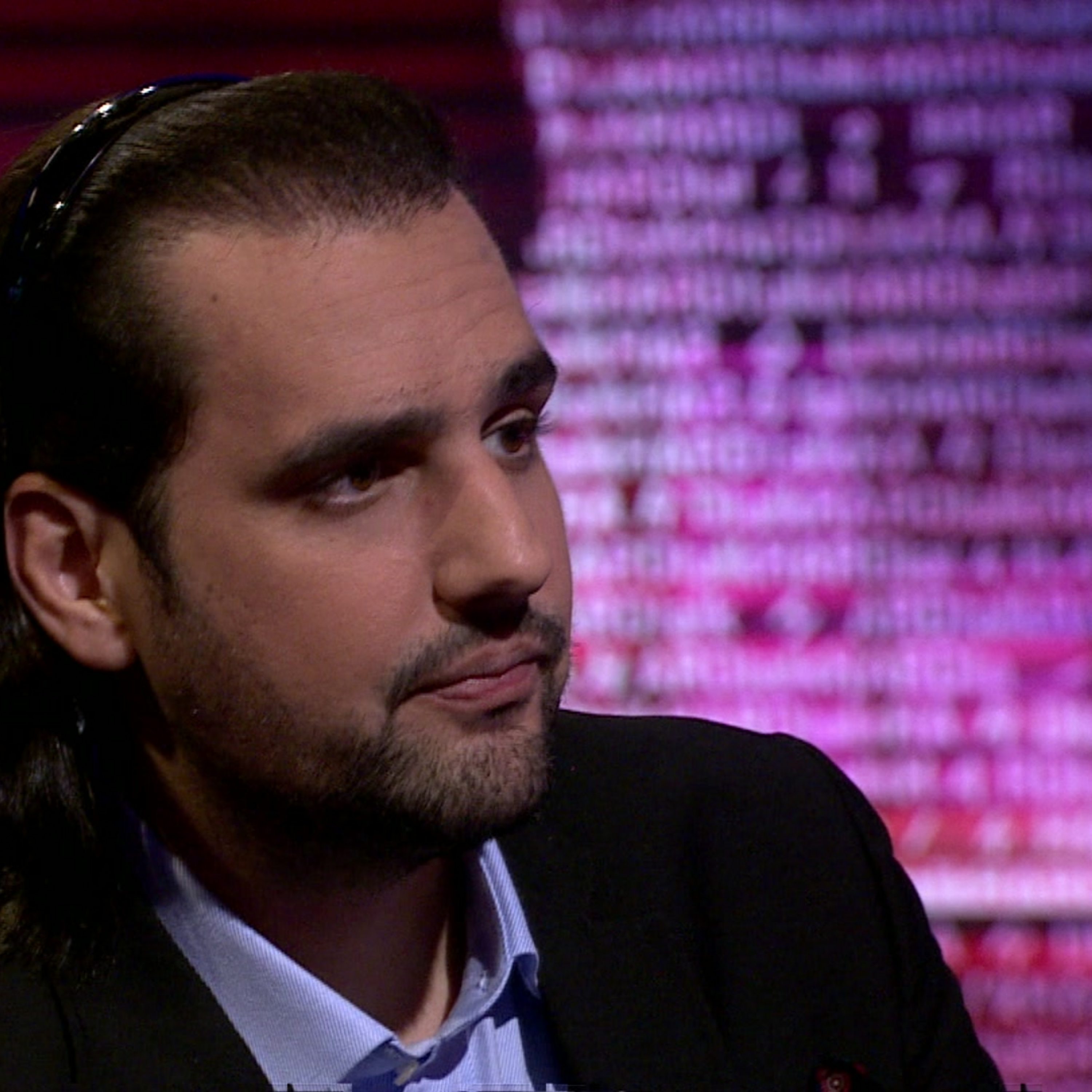
Shahbaz Taseer - Former Hostage, 2011-2016
Zeinab Badawi speaks to Shahbaz Taseer, Pakistani businessman, recently released by the Taliban after nearly five years of captivity, during which he endured constant torture. He is the son of the former governor of Punjab who was assassinated in 2011 for his opposition to tough blasphemy laws. Has the vision of a tolerant, secular Pakistan been lost?(Photo: Shahbaz Taseer in the Hardtalk studio)
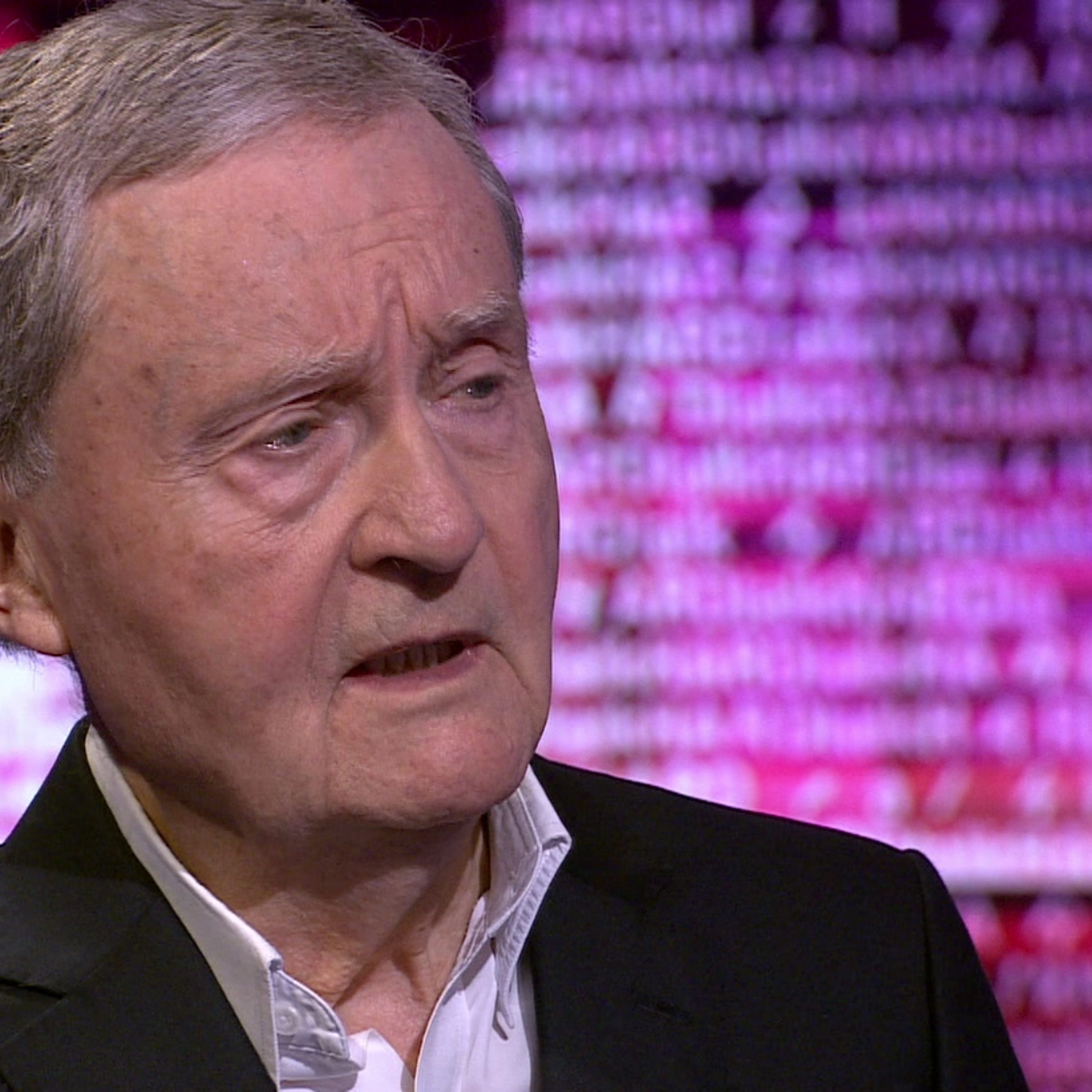
TV and Film Producer - Tony Garnett
Stephen Sackur talks to the film and TV producer Tony Garnett . Watching TV is something pretty much all of us do for news, sport and entertainment, but how much of what we stare at on the box do we actually remember? His subjects of homelessness, illegal abortion, police corruption point to his radicalism - he uncovered dark corners of British life. How much of his motivation came from the dark corners in his own life?(Photo: Tony Garnett in the Hardtalk studio)
Turkish Deputy Prime Minister - Mehmet Simsek
Zeinab Badawi speaks to Mehmet Simsek, Turkey’s Deputy Prime Minister. The attempted coup in Turkey may have been crushed but has it exposed weaknesses in the hold in power of President Erdogan? Around 15,000 personnel from the military, police, judiciary and civil service have either been arrested or relieved from duty. Is President Erdogan, the target of the coup, too polarising a figure for Turkey and becoming a liability for the ruling party?(Photo: Mehmet Simsek speaking about his country's budget, 2014. Credit: Altan/AFP/Getty Images)
Venezuelan opposition leader - Maria Corina Machado
Venezuela's economy is in meltdown. It's shrinking faster than any other country in the world. Inflation is at nearly 500% and most people say they can no longer afford to buy enough food. Maria Corina Machado has led street protests and is calling on all Venezuelans - including the military - to force President Maduro to resign. He is accusing her of plotting a coup.
Prime Minister Binali Yildirim
HARDtalk’s Zeinab Badawi speaks to Turkey’s Prime Minister, Binali Yildirim, in his first extensive international broadcast interview since being sworn into office in May.
UK Ambassador to the UN (1998-2003) - Sir Jeremy Greenstock
Zeinab Badawi speaks to Sir Jeremy Greenstock, former UK Ambassador to the UN, who was deeply involved in the decision-making process leading up to the Iraq War. He served as the UK's permanent representative in Iraq in the immediate aftermath of the invasion and gave evidence to the Chilcot inquiry which looked at the invasion and its consequences. With the benefit of hindsight would he have done anything differently?
Paolo Gentiloni, Minister of Foreign Affairs, Italy
HARDtalk’s Zeinab Badawi presents a special edition of the programme from Rome. Migration, the Euro, and of course Brexit are testing the European Union as never before. In Italy there’s talk of another possible blow for the EU. If voters use a forthcoming referendum on constitutional change as a chance to register a protest vote against the country’s centre left government, anti-Euro populist parties may be able to capitalise. HARDtalk speaks to Italy’s Foreign Minister Paolo Gentiloni. Are Italians becoming disillusioned with the EU project?
Actor Gwyneth Paltrow
Stephen Sackur talks to Gwyneth Paltrow, Oscar winning actor in Cannes, in the South of France. A Hollywood A-lister who in recent years has focused much of her attention on building her lifestyle and consumer business, Goop. Her likes and dislikes are followed by millions, prompting aspiration in some, mockery in others. Why does Gwyneth Paltrow rouse such strong reaction?(Photo: Actress Gwyneth Paltrow signs copies of her book It's All Easy. Credit: Cindy Ord/Getty Images)
Hollywood Composer - Hans Zimmer
From his Oscar-winning score for The Lion King, through 12 Years A Slave to a series of superhero blockbusters including Batman v Superman, Hans Zimmer is, as one director put it, 'quite simply the contemporary composer to work with'. German born and British educated, he never received formal musical training and is a champion of technology. Shaun Ley asks Hans Zimmer whether the technology he so loves is killing the music makers.Image: Hans Zimmer, Credit: Justin Tallis/AFP/Getty Images
Film and TV producer - Tony Garnett
HARDtalks’s Stephen Sackur talks to Tony Garnett, Film and TV producer about his work. Watching TV is something pretty much all of us do for news, sport and entertainment, but how much of what we stare at on the box do we actually remember ? His subjects of homelessness, illegal abortion, police corruption point to his radicalism - he uncovered dark corners of British life. How much of his motivation came from the dark corners in his own life ?
Zimbabwean Minister of Finance - Patrick Chinamasa
Zeinab Badawi talks to Patrick Chinamasa, Zimbabwean Finance Minister, long-time cabinet minister and ally of President Robert Mugabe. Zimbabwe’s economy is once again staring down at the abyss. Hospitals are running out of basic supplies, more than half the population is hungry and criticisms of the veteran President Mugabe are gathering pace. How will he sort out this mess that he himself must stand accused of helping create?(Photo: Patrick Chinamasa in the Hardtalk studio)
Former Speechwriter for US President George W. Bush - David Frum
After the worst mass shooting in US history at a nightclub in Orlando, presidential hopefuls Hillary Clinton and Donald Trump are clashing over the causes. Conservatives used to be united by their shared attitude to god, guns and gays; confident warriors in an ideological battle with liberals. Orlando is another test for those beliefs. Former speechwriter for US president George W. Bush, and lifelong conservative David Frum, thinks the triumph of Trump proves that the power of conservatism is crumbling. Should Republicans embrace change? And should they even consider embracing Hillary Clinton?
Former Deputy Prime Minister, UK - Lord Heseltine
Stephen Sackur talks to the former deputy prime minister and passionate Remain advocate Lord Heseltine. Britain's referendum campaign on whether to stay in or leave the European Union is not going quite as Prime Minister, David Cameron, would have wished. He wants a convincing win for the Remain camp on 23 June but the polls suggest it will be very close. Are the Remainers beginning to worry?(Photo: Former Conservative Cabinet Minister Michael Heseltine attends the funeral for Tony Benn, 2014. Credit: Oli Scarff/Getty Images)
Leader of the House of Commons, UK - Chris Grayling
Stephen Sackur talks to Chris Grayling, the Leader of the House of Commons in the UK and a senior figure in the campaign to leave the European Union. Any hopes that Britain's decision on whether to stay in or leave the EU would be calm, dispassionate and respectful have been well and truly dashed. In the run up to the referendum on 23 June, the the two camps are kicking lumps out of each other - and the fight is at its bloodiest inside the governing conservative party. Will this political war ultimately weaken Britain and Europe?(Photo: Leader of the House of Commons, Chris Grayling, speaks during a Vote Leave press conference on 31 May 2016. Credit: Carl Court/Getty Images)
England T20 Cricketer - Michael Yardy
Stephen Sackur talks to Michael Yardy, former top England one day cricketer and world cup winner in 2010, whose international career ended as a result of mental illness. Elite professional sport is a well-rewarded but unforgiving business. Top performers need a particular kind of mental strength. What happens when they lose it - when self-doubt and depression kick in? Why have so many cricketers suffered from mental torment?(Photo: Michael Yardy of Sussex celebrates his century during the LV County Championship match between Lancashire and Sussex at Old Trafford, 2014. Credit: Jan Kruger/Getty Images)
UK Ambassador to Lebanon (2011-2015) - Tom Fletcher
Stephen Sackur speaks to Tom Fletcher who was appointed British Ambassador to Lebanon at the tender age of 36. Five years on he has just written an operational review of the UK’s Foreign Office. What is the point of the modern day diplomat? Theirs is a world of fortified embassies, chauffeured limousines, and elaborate protocol, but in this globalised internet age, what kind of value do they add? Is diplomacy as we know it dead?
Former world champion boxer Chris Eubank
In March British boxer Nick Blackwell almost died after a bout with Chris Eubank junior. HARDtalk's Stephen Sackur speaks to Chris Eubank senior who now manages his son.
President of Costa Rica, Luis Guillermo Solis
HARDtalk’s Stephen Sackur talks to the President of Costa Rica, Luis Guillermo Solis. They used to call Costa Rica the Switzerland of Latin America; it seemed so much more stable, peaceful and prosperous than its neighbours. But now that image is fading as the country faces a budget crisis, endemic poverty, organised crime and corruption. President Solis came to power promising change, so what’s gone wrong?
Executive Director, IEA - Dr Fatih Birol
Stephen Sackur speaks to Dr Fatih Birol, executive director of the International Energy Agency and one of the world's most influential observers of the global energy market. The price of oil has more than halved over the past two years. That's great news if you're an oil consumer but it's alarming if your priority is to wean the world’s economy off carbon emitting fossil fuels. Does cheap oil make decarbonising the world economy even more difficult?(Photo: Dr Fatih Birol in the Hardtalk studio)
Deputy Prime Minister Libya, 2011-2012 - Dr Mustafa Abushagur
Stephen Sackur talks to Libyan politician Mustafa Abushagur, briefly prime minister in 2012 and a backer of the unity government. Over the last five years the Libyan state has been shattered into fragments - now it has a UN backed government committed to restoring unity. But the political scene remains confused and jihadists from Islamic state pose a continued threat. Is Libya beyond salvation?(Photo: Dr Mustafa Abushagur in the Hardtalk studio)
British Labour Peer and Kindertransport Refugee - Lord Alf Dubs
Hardtalk presents a special programme recorded in front of an audience in the BBC’s Radio Theatre in Central London and a guest whose all consuming passion for this subject was forged in his childhood. Alfred Dubs, now Lord Dubs, arrived in Britain as a six-year-old fleeing Nazi persecution. He wants Britain to take more child refugees. What is Europe's responsibility to people fleeing conflict?(Photo: Lord Dubs in the BBC's Radio Theatre)
Artist and Musician - Brian Eno
Stephen Sackur talks to Brian Eno, the hugely influential contemporary music maker once styled the ‘brainiest guy in pop’ – except the word ‘pop’ does not really fit. Briefly a member of Roxy Music in the early '70s, he then went his own way, creating ambient music, developing audio-visual installations and collaborating with a host of big names including Bowie, U2 and Coldplay. His output has been prolific and varied, but what is he? A musician, a composer, or an artist impossible to label?(Photo: British musician and activist Brian Eno speaks at the the Democracy in Europe Movement 2025 (DiEM25), 2016, Berlin. Credit: Sean Gallup/Getty Images)
Shadow Foreign Secretary, UK - Hilary Benn
After the British Labour Party suffered a crushing election defeat a year ago, the shell-shocked party took a dramatic turn to the left. New leader Jeremy Corbyn presented himself as the anti-austerity, anti-war antithesis of Tony Blair's new Labour. So, how is the Corbyn formula working? HARDtalk's Stephen Sackur speaks to Labour stalwart, shadow Foreign Secretary Hilary Benn and asks, does Labour present a credible alternative to the Cameron government?
Chairman, Foreign Affairs Committee, Germany - Norbert Röttgen
Germany is indisputably the most powerful nation in Europe, but does it have the will and the means to prevent the EU being undermined by division and fragmentation? The migration crisis and the Greek debt disaster have posed challenges that Angela Merkel has struggled to overcome. Stephen Sackur speaks to Norbert Röttgen, senior figure in the Christian Democratic party and chairman of the foreign affairs committee in the German parliament. Can German leadership rescue the European project?
Leader of the Russian Democratic Choice movement - Vladimir Milov
Stephen Sackur talks to Vladimir Milov, founder and leader of the Democratic Choice movement. There are few more thankless tasks in world politics than being an opposition leader in Russia. Vladimir Putin's approval ratings continue to defy gravity, even in the teeth of a prolonged economic recession. Kremlin opponents are starved of media airtime, routinely harrassed and often locked up, or worse. Maybe democracy isn't a Russian priority?
South African Trade Minister - Rob Davies
South Africa's president Jacob Zuma is on the ropes. In recent months he's been dealt blow after blow - by the courts, by political opponents, even by erstwhile friends. Only the knee-jerk loyalty of the ANC has saved him from impeachment and disgrace. HARDtalk's Stephen Sackur speaks to South Africa's trade and industry minister Rob Davies and asks: if the president won’t jump, does he need to be pushed, for the good of the country?Image: Rob Davies Minister of Trade and Industry, Credit: Michelly Rall/Getty Images
Human Rights Activist - Raheel Raza
In recent years there has been plenty of often heated debate about the relationship between Islam and extremism. Much of the fiercest commentary has come from outside the faith, but increasingly there are calls for change from within the Muslim community. Hardtalk’s Stephen Sackur speaks to one of the most controversial voices in that internal debate. Raheel Raza is a Pakistani born Canadian human rights activist who co-founded the Muslim Reform Movement. How many Muslims are ready to talk her language?
Pakistan's former Foreign Minister - Hina Rabbani Khar
Yet again Pakistan stands accused of playing a double game on terrorism; confronting it at home, while using it as a foreign policy tool in neighbouring Afghanistan and India. After a deadly Taliban attack in Kabul just days ago the Afghan president demanded that Islamabad stop talking of peace negotiations and instead focus on eliminating Taliban havens inside Pakistan. HARDtalk's Stephen Sackur speaks to former Pakistani foreign minister Hina Rabbani Khar and asks, is Pakistan addicted to the double game?
Professor Robert Reich – United States Secretary of Labor, 1993-97
It is now all but certain that Hillary Clinton will be the Democratic Party candidate in November’s US presidential election. After the latest batch of primaries, her lead over Bernie Sanders is insurmountable. But even now the Sanders campaign - radical, anti-establishment and crowdfunded - refuses to admit defeat. Hardtalk talks to Robert Reich, formerly Secretary of Labor in Bill Clinton’s administration, now a prominent supporter of Senator Sanders. Has the centre of gravity in the Democratic Party shifted?(Photo: Professor Robert Reich, speaking from Berkeley, California via video link)
Civil Rights Activist - Rachel Dolezal
As part of the BBC's identity season, Stephen Sackur talks to Rachel Dolezal, the ostensibly black American human rights activist whose life unravelled last year when it turned out that she was the daughter of white parents. So what gives us our sense of who we are? Our upbringing and our communities both have a huge impact, but what about the most basic pillars of identity that we tend to regard as immutable? Is our racial identity something we can define for ourselves?(Photo: Rachel Dolezal in the Hardtalk studio)
Former president, World Anti-Doping Agency - Dick Pound
Stephen Sackur speaks to Dick Pound, president of the World Anti-Doping Agency from 1999 to 2007 and veteran anti-doping campaigner. The world of international sport is in freefall following a long series of doping allegations. Has there been a failure in the national and international agencies that are supposed to prevent athletes using drugs? What can now be done about it and should all sporting success be treated with suspicion?
Chairman and founder of JD Wetherspoon - Tim Martin
The battle for Britain's future -- in or out of the European Union -- will be settled In just two months’ time. Advocates of a vote to remain, led by the prime minister David Cameron, see economic arguments as their most potent weapon; Brexit, they claim, will come at a crippling cost in terms of jobs, investment and growth. Many business leaders seem to agree but by no means all. Stephen Sackur talks to Tim Martin, founder and chairman of the pub chain JD Wetherspoon. Could Brexit make economic sense?(Photo: Tim Martin in the Hardtalk studio)
IMF Managing Director - Christine Lagarde
In front of an audience in Washington DC, Stephen Sackur talks to Christine Lagarde, head of the IMF. Could 2016 produce economic shocks big enough to plunge the world economy back into crisis?(Photo: International Monetary Fund managing director Christine Lagarde. Credit: Stephen Jaffe/IMF/Getty Images)
US Congresswoman - Donna Edwards (Democrat)
The rules of US politics are being rewritten in this electoral season. The Republican Party has been shaken to its core by the rise of Donald Trump while the Democratic contest for the presidential nomination is really a struggle for the soul of the party. The contest between Hillary Clinton and Bernie Sanders is a choice between the centrist establishment favourite and the self-styled socialist progressive insugent. Congreswoman Donna Edwards from Maryland is a powerful voice on the left of the Party. She's running for a seat in the Senate. But is America ready for genuinely left-wing politics?
Fahd al Rasheed, CEO King Abdullah Economic City
HARDtalk speaks to Fahd al Rasheed, CEO of King Abdullah Economic City in Saudi Arabia. King Abdullah Economic City is a vast construction project on the Red Sea. It is supposed to become one of the world’s biggest ports with a population of 2 million – a new global city for Saudi Arabia. But could the kingdom’s economic problems see this dream turn to dust?
Musician - John Cale
HARDtalk's Stephen Sackur speaks to John Cale, a founding member of the Velvet underground, and a solo artist and producer. In the checkered history of rock and roll, there have been relatively few artists who have managed to create a genuinely new, even revolutionary, sound. The Velvet Underground achieved just that in mid-sixties New York - combining youthful anger, musical creativity, with an avant-garde art sensibility. Today John Cale continues to experiment with new sounds. To many, his music is challenging, even bleak, but is that a reflection of the man himself?
Composer - Hans Zimmer
From his Oscar winning score for The Lion King, through 12 Years A Slave to a series of superhero blockbusters, including the latest - Batman v Superman - Hans Zimmer is, as one director put it, "quite simply the contemporary composer to work with". German born, British educated, he never received formal musical training and he's a champion of technology. Hardtalk’s Shaun Ley asks Hans Zimmer whether the technology he so loves is killing the music makers?
Vladimir Chizhov - Russian Ambassador to the EU
The United States is beefing up its military presence in Europe. Hardtalk asks Russia's Ambassador to the EU if the Kremlin can sustain a long-term confrontation with the West?
Chairman, Intelligence and Security Committee, UK - Dominic Grieve MP
The suicide bomb attacks in Brussels are unlikely to be the final operation mounted by the so-called Islamic State on European soil. France's President Hollande says Europe is now at war, so what are the most effective weapons at Europe's disposal? Dominic Grieve was the Attorney General in David Cameron's first term as British prime minister. He is now Chairman of the UK parliament’s Intelligence and security committee. Can Europe be both secure and free?(Photo: Dominic Grieve, MP)
Architect - David Adjaye
Can architecture inspire people to think and behave differently? Hardtalk speaks to David Adjaye, one of the most sought after architects in the world today. Among his many buildings are the Nobel Peace Centre in Oslo, a business school in Moscow, shopping centres in Beirut and Lagos, a children's hospital in Rwanda, a housing project in New York's Harlem, and about to open - his biggest project yet - the National Museum of African American History and Culture sitting right on the National Mall in Washington. Has he got it right? What is the test of a good building?(Photo: David Adjaye attends Design Dialogues No. 25 in Miami Beach, Florida. Credit: Nicholas Hunt/Getty Images)