The Interview
1,975 episodes — Page 13 of 40
Francis Fukuyama: The end of the end of history?
Sarah Montague speaks to the renowned US political scientist Francis Fukuyama. Thirty years ago, the Soviet Union collapsed and communist governments fell across Eastern Europe. Liberal democracy appeared to have won the Cold War and triumphed in the battle of ideas. Dr Fukuyama posed a question – if humanity had arrived at the most effective form of government, were we at the end of history? In the years since, liberal democracy has often seemed in retreat. But when Russia invaded Ukraine the world changed again. Francis Fukuyama is convinced that President Putin has miscalculated and is heading for defeat. What does that mean for the course of history and the progress of liberal democracy?
Tobias Ellwood: How should the West stand up to Putin?
Russia has launched its most deadly attack on western Ukraine so far, striking a military base just 15 kilometres from the Polish border. This is being seen as a warning to Nato that, in supplying weapons to Ukraine through Poland, it risks an escalation of the war. Zeinab Badawi speaks to the senior British Conservative MP Tobias Ellwood, the chair of the House of Commons Defence Select Committee and a former soldier. He believes that Nato and the West need to change radically their stance on the Ukraine war. Does he have a clear strategy to stand up to Putin and save lives?
Jonas Gahr Støre: Easing Europe off Russian energy
Europe's dependence on Russian energy sits uneasily with Putin’s war in Ukraine. Moscow is financing its invasion through revenues from such exports. One EU leader has said Russian oil and gas is being bought with the blood of the Ukrainian people. Zeinab Badawi speaks to Norway’s Prime Minister, Jonas Gahr Støre. Norway is one of the world’s biggest oil and gas exporters. What can it do to help ease Europe off its addiction to Russian energy supplies, and can this be done quickly enough to starve the Kremlin war machine of funds and save the lives of innocent Ukrainians?
Jonas Gahr Støre: Easing Europe off Russian energy
Europe's dependence on Russian energy sits uneasily with Putin’s war in Ukraine. Moscow is financing its invasion through revenues from such exports. One EU leader has said Russian oil and gas is being bought with the blood of the Ukrainian people. Zeinab Badawi speaks to Norway’s Prime Minister Jonas Gahr Støre. Norway is one of the world’s biggest oil and gas exporters. What can it do to help ease Europe off its addiction to Russian energy supplies and can this be done quickly enough to starve the Kremlin war machine of funds and save the lives of innocent Ukrainians?
Svetlana Tikhanovskaya: Is the fate of Belarus tied to the fate of Ukraine?
With the world focused on Russia’s invasion of Ukraine, it’s easy to overlook one other key element of Vladimir Putin’s Greater Russia strategy: Moscow’s ever tighter grip on Ukraine’s northern neighbour Belarus, now used as a launchpad for the Ukraine assault. Belarus’s authoritarian President Lukashenko seems to be in Putin’s pocket, whether he likes it or not. Stephen Sackur speaks to the exiled leader of the anti-Lukashenko movement, Svetlana Tikhanovskaya. Is the fate of Belarus now tied to the fate of Ukraine?
Michael Carpenter: Is this a new age of conflict?
Vladimir Putin’s invasion of Ukraine represents the biggest seismic shock to European security since the collapse of the Soviet Union. The US, NATO allies and the EU are now arming the Ukrainian government. Stephen Sackur speaks to Michael Carpenter, US Ambassador to the Organisation for Security and Cooperation in Europe. Are we in a new age of conflict, and will Russia's invasion of Ukraine lead to a new, long-term cold war?
Arseniy Yatsenyuk: Former Ukrainian PM
Stephen Sackur speaks to former Ukrainian Prime Minister Arseniy Yatsenyuk. Russia’s invasion hasn’t delivered Moscow a quick decisive victory, but it is taking a terrible toll on Ukraine. How realistic is Kyiv’s insistence that this is a war they’ll ultimately win?
Andrey Kurkov: Putin's attack on Ukraine's identity
Stephen Sackur speaks to Ukrainian novelist Andrey Kurkov. He was born in Russia, writes in Russian and now fears for his life at the hands of Russian troops. What does his personal story tell us about Moscow’s attempt to undermine Ukraine’s independence and identity?
David Miliband: President of the International Rescue Committee
Stephen Sackur speaks to David Miliband, president of the International Rescue Committee and former British foreign secretary. Hour by hour Vladimir Putin intensifies the scale and violence of the Russian military assault on Ukraine. Civilian buildings hit by rocket fire, towns and cities encircled, and the capital Kyiv now facing a vast build-up of Russian firepower. Is the West doing enough in response to Putin’s invasion of Ukraine?
Iván Fischer: The power and joy of music
Stephen Sackur speaks to the renowned Hungarian conductor and composer Iván Fischer. Much of the world is transitioning from locking down to living with Covid-19. And that means cultural life is returning to cities like London. Performers can return to the stage, audiences can gather again. After the pandemic, how easy is it to find the magic in music-making?(Photo: Iván Fischer)
Leonid Volkov: How strong is Putin's grip on Russia?
Stephen Sackur speaks to Leonid Volkov, a prominent figure in Russia’s anti-Putin opposition. Russia’s military invasion of Ukraine represents a gamble by the Kremlin - projecting regional supremacy will come at a high price. Just how strong is the president’s grip on Russia?
Ingrid Betancourt: Can Colombia defeat corruption?
Colombians will elect a new President this year, and amid a crowded field, one candidate has reason to view the coming campaign with mixed emotion. Ingrid Betancourt was running for president 20 years ago when she was captured by Farc guerrillas and held captive in the jungle for more than six years. Colombia’s guerrilla war is over, and now she’s running again, promising a war on corruption. She says she’ll finish what she started - is that possible?
Jamie Raskin, Democrat Congressman, House Committe to Investigative January 6th Attack
Early last year American democracy came under attack from within. Supporters of defeated President Donald Trump stormed the US Capitol and provoked deadly violence. Stephen Sackur speaks to the Democrat Congressman Jamie Raskin, a key player in the subsequent impeachment of Trump and the Congressional investigation into the 6 January assault. All this, as Congressman Raskin has faced up to personal tragedy - what happens when the pillars of personal and political life come crashing down all at once.
Yuri Vitrenko: Russia, Ukraine and Europe's energy
Russia and Ukraine have powerful ties of geography, history and energy. And when it comes to the geopolitics of the current crisis energy is a key factor. Ukraine has long profited from being the middle-man for Russian gas exports into Europe. Moscow is in the business of changing that reality. Stephen Sackur speaks to Yuri Vitrenko, CEO of Naftogaz, Ukraine's biggest energy company. As Kiev and Moscow face off, where does the economic leverage lie?
Kiril Petkov: Is Bulgaria ready to stand up to Russia?
Vladimir Putin knows how to probe for weakness in the West. With his troops building up on the Ukrainian border, Russia’s president is testing the unity of NATO. In particular, he is putting pressure on Europe’s eastern flank. How will nations once in the Soviet orbit respond? Stephen Sackur speaks to Kiril Petkov, Prime Minister of Bulgaria, which Moscow says must not host a NATO military presence. This is a big test for a new prime minister in the EU’s poorest country. Is Bulgaria ready to stand up to Russia?
Michael McCaul: Is Biden up to facing off with Putin?
Republican Congressman Michael McCaul accuses President Biden of failing to stand up to the challenge of Vladimir Putin in Ukraine. After four years of Donald Trump, are Republicans credible when they condemn Biden for foreign policy failure?(Photo: Congressman Michael McCaul appears on Hardtalk via videolink)
George Takei, Actor
Stephen Sackur talks to George Takei, forever famous as Lieutenant Sulu in Star Trek. Interned as a child in the United States for being of Japanese origin, he now campaigns for gay and immigrant rights. Do the values of Star Trek still resonate?
Marine Le Pen: France's future president?
Stephen Sackur speaks to the longtime leader of France's far right, Marine Le Pen. She's hoping to win the French presidency for her party, National Rally, in elections this spring. But the far right is now divided, and rivals accuse her of going soft in the defence of French civilisation. Have her efforts to detoxify her party’s image backfired?
Gabrielius Landsbergis: Tension in Eastern Europe
Russian forces continue to gather close to Ukraine’s eastern and northern borders, and still the world waits to see what Vladimir Putin’s end game is. If the goal is to wring security concessions out of the US and its Nato partners, does he have any chance of success? Stephen Sackur speaks to Gabrielius Landsbergis, who is foreign minister of Lithuania and on the frontline of tensions between Russia and Nato.
Bassem Youssef: Do we expect too much from satire?
Stephen Sackur speaks to comedian and writer Bassem Youssef. He made his name and won an audience of tens of millions with a satirical comedy show during Egypt’s popular uprising more than a decade ago. But the revolution quickly morphed into authoritarianism and Youssef fled to the US, taking his gift for comedy with him. Did he, and do we still, expect too much from political satire?
Isabel Allende: What does South America's future hold?
The decisive victory by Gabriel Boric, the left-wing candidate, in Chile’s recent elections has reset the button on the country’s political path. He defeated the right-wing presidential contender in a result which observers believe may be replicated when other Latin American countries go to the polls this year. Zeinab Badawi speaks to Isabel Allende, the acclaimed Chilean writer whose uncle was Salvador Allende, the left-wing Chilean leader removed in a coup in 1973. Isabel Allende has lived in four Latin American countries and knows the continent well. How does she view current trends in South America?
Mariana Mazzucato: The space race and our economic futures
What is the galvanising force behind transformational economic change? Capitalism encourages us to look to the raw power of markets as the driver of innovation. But is that really true? Stephen Sackur speaks to the economist Mariana Mazzucato. Her faith in the transformational power of the proactive state has made her the go-to adviser to a host of governments. Does her "moonshot" economics ignore some earthly realities?
Dominic Lee: China's Hong Kong takeover
Stephen Sackur speaks to Hong Kong Legislative Councillor Dominic Lee Tsz-king, a high profile defender of Beijing’s increasingly tight grip on the territory. With China’s increasing crackdown in the city and pro-democracy activists arrested, exiled or cowed into silence, has "one country, two systems" become "one country, one system"?
Mohammad Marandi: Iran's nuclear negotiations
HARDtalk’s Stephen Sackur speaks to the adviser to Iran’s negotiators in Vienna, Mohammad Marandi. Time is running out for negotiators trying to break the impasse between the United States and Iran and revive the deal curbing Tehran’s nuclear ambitions. Iran is still enriching uranium; the Biden administration is talking of giving up on the current diplomatic track. If a nuclear deal can’t be done, how real is the danger of a catastrophic war in the Middle East?
Damian Collins: Can Boris Johnson be trusted?
Stephen Sackur interviews British Conservative MP Damian Collins, who has been working on online regulation. After the stream of revelations about lockdown socialising in Downing Street, he and his party colleagues must decide whether they want Boris Johnson to continue as party leader. Is the Prime Minister damaged beyond repair?
Oleksii Reznikov: An invasion of Ukraine?
Stephen Sackur speaks to Ukraine’s Defence Minister Oleksii Reznikov. With more than 100,000 Russian troops massed on Ukraine’s border, a Russian military offensive may be imminent. If war comes, what will it mean for Ukraine and the security of Europe?
Kathleen Stock: The debate about sex, gender and equality
Stephen Sackur speaks to philosopher and author Kathleen Stock whose views on the immutability of biological sex and the limitations of gender self-identity have made her a hate figure for some transgender activists and supporters. Why has debate about sex, gender and identity become a culture war battleground?(Photo: Kathleen Stock in the Hardtalk studio)
Baroness Helena Kennedy QC: Fighting for equality in British law
Women are still fighting for equality all over the world. Even in long established democracies like the UK plenty of evidence suggests that from the workplace to the law courts there is a long way to go. Stephen Sackur speaks to Baroness Helena Kennedy who has been trying to loosen the grip of the patriarchy in the British legal system for five decades.
Sathnam Sanghera: Confronting Britain's history
Stephen Sackur speaks to author and journalist Sathnam Sanghera, whose bestselling book Empireland takes a critical look at Britain’s imperial past. Confronting truth means challenging cultural norms. Can it be done without opening another front in the culture wars?
Bryan Stevenson: Will equality ever be more than a dream in the US?
Black and white Americans have always had vastly different experiences within their country’s justice system. You see it in so many different data sets, from police violence to incarceration and sentencing. It's impossible to understand without reference to America’s history of institutionalised racism. But understanding is one thing; the real challenge is how to change it. Stephen Sackur speaks to Bryan Stevenson, civil rights lawyer and founder of the Equal Justice Initiative. Will equality ever be more than a dream?
Nureldin Satti: Sudan's coup
HARDtalk’s Stephen Sackur speaks to Sudanese diplomat Nureldin Satti. It’s surely hard for the people of Sudan to be optimistic about their country’s prospects in 2022. The new year began with the nominal head of the transitional government quitting his post, leaving Sudan, once again, in the grip of the military. Street protests in recent months have left more than fifty people dead. Nureldin Satti was fired from his post as Ambassador in the US after last October's military coup. Will Sudan’s generals ever give up political power?
Laurence Tribe: Is the US system of government in peril?
Stephen Sackur speaks to Laurence Tribe, Professor of Constitutional Law at Harvard University. It’s a year since pro-Trump protesters stormed the US Capitol and unleashed a spasm of violence which left five people dead. While hundreds of people have since been charged, none have been key associates of Donald Trump, and the former president seems to be contemplating another run for the White House while insisting, without evidence, that the 2020 election was stolen. Is partisanship on both sides eroding faith in American democracy?
Neil deGrasse Tyson: Trust in science
Stephen Sackur speaks to Neil deGrasse Tyson, astrophysicist and director of the Hayden Planetarium at the American Museum of National History in New York. He is one of America’s most popular scientists and shares his fascination with space with millions of Americans. But here on Earth, science is under pressure, from Covid to climate change. Is trust in science dwindling?
Ernesto Araújo: Has Brazil failed to protect its people?
Stephen Sackur speaks to Brazil’s former Foreign Minister Ernesto Araújo who was an arch critic of global efforts to contain Covid, calling them communistic. Brazil’s government now stands accused of failing to protect its people. Is that fair?(Photo: Ernesto Araújo appears via video-link on Hardtalk)

Maria Ressa and Dmitry Muratov: Fighting for a free press
Stephen Sackur is in Oslo to interview the joint winners of this year’s Nobel Peace Prize. Both are independent journalists who have defied threats and repression to continue their work. Maria Ressa, founder of the Rappler news website in the Philippines and Dmitry Muratov, long time editor in chief of Novaya Gazeta in Moscow. Theirs is a fight for freedom of expression. But is it a fight they are losing?(Photo: Maria Ressa and Dmitry Muratov during the Nobel Peace Prize award ceremony. Credit: Stian Lysberg Solum/NTB/Reuters)
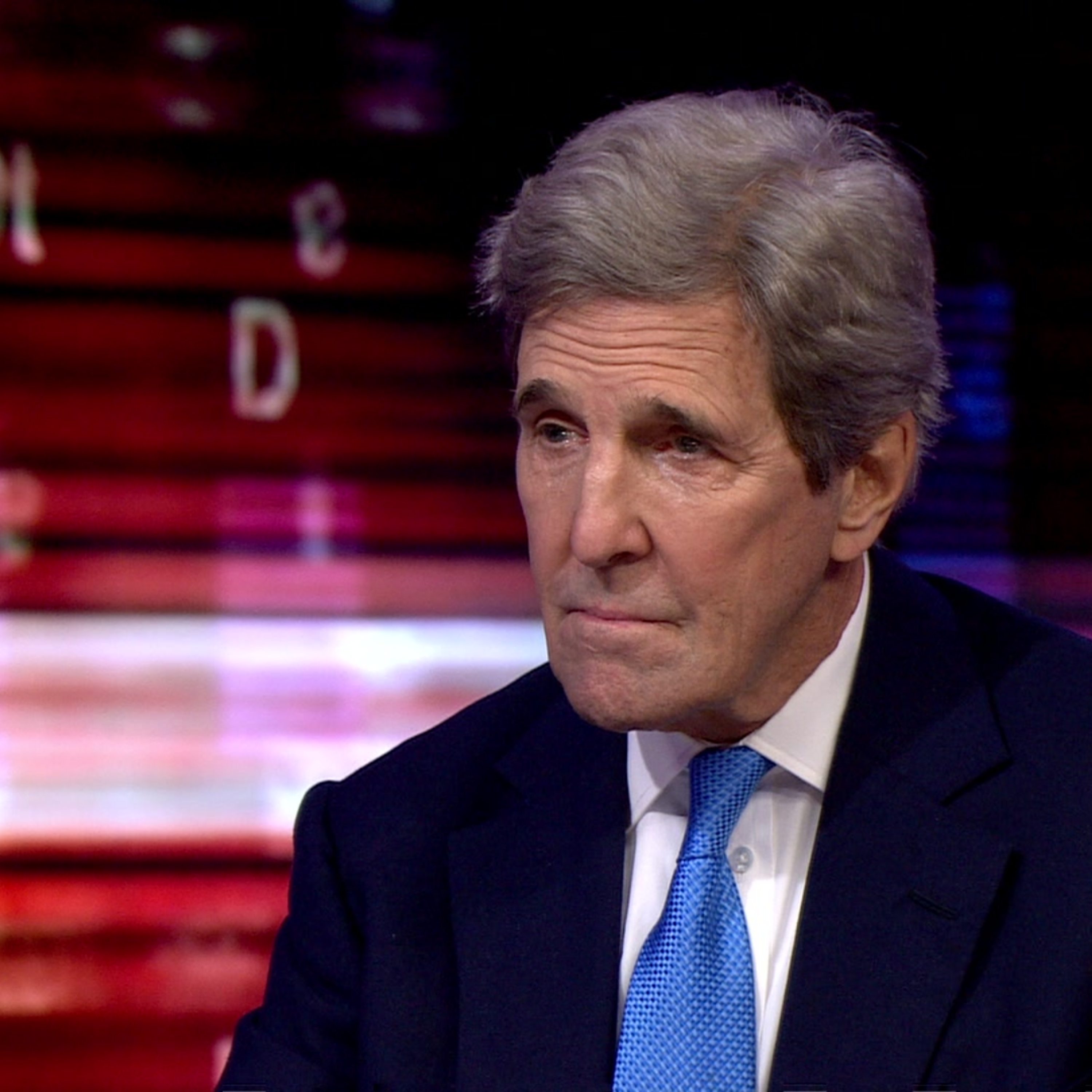
John Kerry: US Special Envoy for Climate
Can America lead an effective global response to the climate change emergency? At last month’s COP26 summit in Glasgow the chorus of concern from world leaders was deafening, but the really tough decisions on deeper emissions cuts to reduce global warming were put off until next year. Stephen Sackur speaks to the US Special Envoy for Climate John Kerry. His mission is to restore American leadership on the biggest existential challenge facing our planet. But is that mission impossible?(Photo: John Kerry in the Hardtalk studio)
Moeed Yusuf: What will a Taliban-controlled Afghanistan mean for Pakistan?
Stephen Sackur speaks with Moeed Yusuf, National Security Adviser of Pakistan. The Taliban is back in power in neighbouring Afghanistan. US and Nato forces are gone. Pakistan sees opportunities in this new reality but are there grave dangers too?(Photo: Moeed Yusuf appears via videolink on Hardtalk)
Ken Buck: Big tech and Republican politics
We speak to Republican congressman Ken Buck, a libertarian on issues of gun control and Covid, but a supporter of breaking up America’s big tech giants. Do America’s conservatives have a coherent worldview, and is Donald Trump still at the heart of it?
Nicolai Tangen: Can Norway move on from fossil fuels?
Stephen Sackur speaks to Nicolai Tangen, head of Norway's $1.4 trillion sovereign wealth fund, the biggest in the world. Fossil fuels have given Norwegians vast wealth. Are they now ready to wean themselves off oil and gas?
Rana Ayyub: Abuse, intimidation and legal threats
Stephen Sackur speaks to the Indian investigative journalist Rana Ayyub whose determination to dig deep into the past and present of India’s Prime Minister Narendra Modi has prompted abuse, intimidation and legal action. What does her case say about the health of India’s democracy?(Photo: Rana Ayyub appears via videolink on Hardtalk)
Péter Márki-Zay: Can Viktor Orban be beaten at the ballot box?
Next Spring, Hungarian Prime Minister Viktor Orban, the EU's most controversial leader, will seek a new mandate. His grip on power in Budapest is tight, covering the parliament, the media and the economy. His opponents at home and in Brussels call him an autocrat, but can he beaten at the ballot box? Stephen Sackur speaks to Péter Márki-Zay, who will lead a united opposition front into the election. He’s a small town mayor with big ambition, but is being the candidate who is not Orban enough?
Ryan Girdusky: Race and education in America
Scratch beneath the surface of everyday American life and you find an increasingly polarised culture. Donald Trump is no longer in the White House, but the culture wars he inflamed are still raging. In a special edition of HARDtalk from New York, Stephen Sackur speaks to an influential conservative activist in the thick of the fight. Ryan Girdusky, the founder of the 1776 Project Political Action Committee, says America’s schoolchildren are being brainwashed about race and he’s out to stop it. What does it say about America that the classroom is now a political battleground?
George Takei: Growing up in an internment camp
Stephen Sackur talks to George Takei, forever famous as Lieutenant Sulu in Star Trek. Interned as a child in the United States for being of Japanese origin, he now campaigns for gay and immigrant rights. Do the values of Star Trek still resonate?
Ritchie Torres: Is America ready to embrace progressive politics?
Stephen Sackur is in the south Bronx, New York, to speak to Ritchie Torres, a rising star of the Democratic Party. He is the first gay black man elected to Congress, and a vocal champion for the poorest district in the country. Is America as a whole ready to embrace progressive politics?
Pawel Jablonski: Could Poland exit the EU?
Poland is the biggest rebel in the European family, and matters are coming to a head over its latest disputes with the EU. Brussels accuses the centre-right government in Warsaw of a blatant disregard for EU law, in particular over changes it wants to make to the judicial system. Zeinab Badawi speaks to Pawel Jablonski, the country's deputy foreign minister. Could Poland follow Britain’s lead and exit the EU?(Photo: Pavel Jablonski appears on Hardtalk via video link)
Patrice Evra: The flaws in football
Football's global appeal can’t disguise the problems facing the game. Some fans say the sport is being ruined by financial greed, and racism is still to be rooted out. Stephen Sackur speaks to the former Manchester United and France star, Patrice Evra. He’s just done something most footballers never do, by revealing his deep emotional scars. What made him do it?
Mike Leigh: Art and the cinema
Stephen Sackur speaks to Mike Leigh, the acclaimed writer and director of films such as Secrets and Lies, Vera Drake, Happy-Go-Lucky and Mr Turner. For five decades, he has told stories about believable characters facing very human dilemmas. They’re painstakingly put together and not always easy to watch. But is the demand for his kind of artistic vision dwindling?
Prime Minister Albin Kurti: Is he a source of instability in the Balkans?
Kosovo has enjoyed independent statehood for 13 years but almost half the world does not recognise it. Stephen Sackur speaks to Prime Minister Albin Kurti who has had a turbulent career. He has been a political prisoner, he launched five tear gas attacks on his own parliament and he has a vision of Kosovo unifying with Albania. Is he a source of instability in the Balkans?(Photo: Prime Minister Albin Kurti appears on Hardtalk via videolink)
Fiona Hill: What did Trump mean for America and the world?
The Trump Presidency challenged many public officials to make a choice: obey directives from the White House against their better judgment, or take a stand and face the wrath of the pro-Trump movement. Fiona Hill, a former Russia adviser at the White House, took a stand. She was a key witness in Donald Trump’s first impeachment trial, and has since had time to reflect on what his presidency meant for America and its geopolitical standing.(Photo: Fiona Hill, the National Security Council’s former senior director for Europe and Russia. Credit: Chip Somodevilla/Getty Images)
Fatih Birol: Can greenhouse gas emissions be eliminated?
Stephen Sackur speaks to Fatih Birol, executive director of the International Energy Agency. He believes greenhouse gas emissions can effectively be eliminated within a generation. But is he ignoring the political realities he’ll encounter at the COP26 summit in Glasgow?