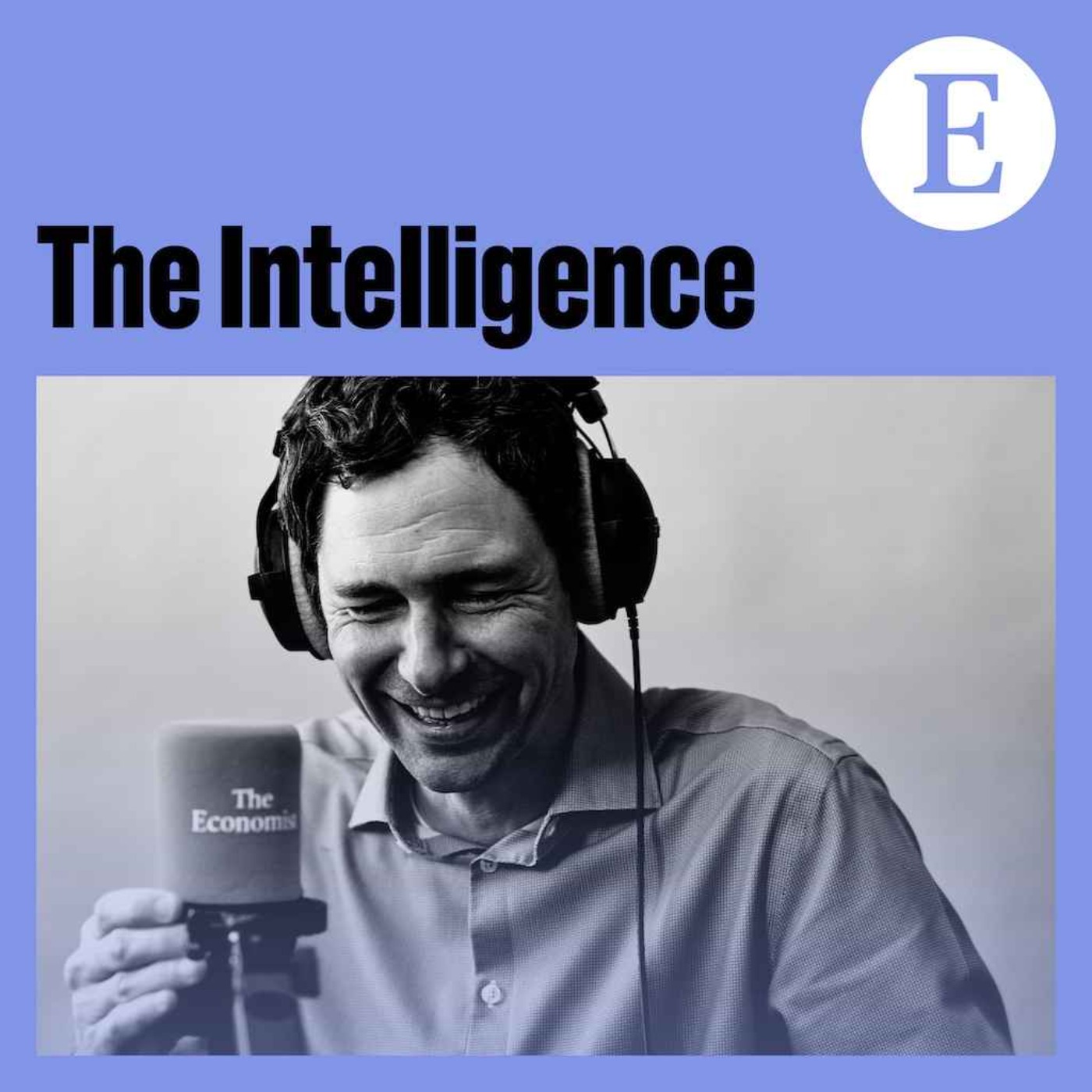
The Intelligence from The Economist
2,007 episodes — Page 33 of 41
Team-building exercise: America’s Middle East diplomacy
American officials hope more Arab states <a href="https://www.economist.com/leaders/2020/08/22/the-israel-uae-deal-is-good-news-for-a-troubled-region?utm_campaign=the-intelligence&utm_medium=podcast&utm_source=third-party-host&utm_content=show-notes" rel="noopener noreferrer" target="_blank">will follow</a> the United Arab Emirates in normalising relations with Israel; the groundwork for that has been quietly laid for years. Not every expectant mother wants all those doctors and nurses fussing over them; we take a look at the increasing <a href="https://www.economist.com/1843/2020/08/03/the-battle-over-birth?utm_campaign=the-intelligence&utm_medium=podcast&utm_source=third-party-host&utm_content=show-notes" rel="noopener noreferrer" target="_blank">politicisation of childbirth</a>. And a step change for <a href="https://www.economist.com/science-and-technology/2020/08/25/robots-that-can-walk-are-now-striding-to-market?utm_campaign=the-intelligence&utm_medium=podcast&utm_source=third-party-host&utm_content=show-notes" rel="noopener noreferrer" target="_blank">robots that can walk</a>.&nbsp;For full access to print, digital and audio editions of <em>The Economist</em>, subscribe here <a href="http://www.economist.com/intelligenceoffer" rel="noopener noreferrer" target="_blank">www.economist.com/intelligenceoffer</a> <hr><p style='color:grey; font-size:0.75em;'> Hosted on Acast. See <a style='color:grey;' target='_blank' rel='noopener noreferrer' href='https://acast.com/privacy'>acast.com/privacy</a> for more information.</p>
The grande scheme of things: corruption in Mexico
The former head of the state-owned oil firm has presented <a href="http://espresso.economist.com/595afbd7f5a99efd71556d99b39c268e?utm_campaign=the-intelligence&utm_medium=podcast&utm_source=third-party-host&utm_content=show-notes" rel="noopener noreferrer" target="_blank">stunning claims</a> of high-level graft. Are they credible, and will the president pursue them? Museum curators usually try to add to their collections, but a new generation steeped in the restitution debate is doing <a href="https://www.economist.com/books-and-arts/2020/08/08/activist-curators-are-sharpening-the-debate-on-restitution?utm_campaign=the-intelligence&utm_medium=podcast&utm_source=third-party-host&utm_content=show-notes" rel="noopener noreferrer" target="_blank">just the opposite</a>. And a data-led <a href="https://www.economist.com/graphic-detail/2020/08/01/twitters-algorithm-does-not-seem-to-silence-conservatives?utm_campaign=the-intelligence&utm_medium=podcast&utm_source=third-party-host&utm_content=show-notes" rel="noopener noreferrer" target="_blank">analysis</a> of the suggestion that Twitter suppresses conservative views. For full access to print, digital and audio editions of <em>The Economist</em>, subscribe here <a href="http://www.economist.com/intelligenceoffer" rel="noopener noreferrer" target="_blank">www.economist.com/intelligenceoffer</a> <hr><p style='color:grey; font-size:0.75em;'> Hosted on Acast. See <a style='color:grey;' target='_blank' rel='noopener noreferrer' href='https://acast.com/privacy'>acast.com/privacy</a> for more information.</p>
Insecurity services? Alexei Navalny’s poisoning
Doctors believe Russia’s opposition leader was poisoned, and suspicion naturally falls on the Kremlin. Why might the country’s leadership have taken such a risk? For LGBT people coming out is, in many places, far easier and more commonplace than it once was—<a href="https://www.economist.com/international/2020/08/08/how-the-internet-is-changing-the-experience-of-coming-out?utm_campaign=the-intelligence&utm_medium=podcast&utm_source=third-party-host&utm_content=show-notes" rel="noopener noreferrer" target="_blank">thanks in part</a> to the internet. And why a younger generation is shunning Laos’s traditional <a href="https://www.economist.com/asia/2020/08/15/urban-laotians-pay-handsomely-for-ant-egg-soup?utm_campaign=the-intelligence&utm_medium=podcast&utm_source=third-party-host&utm_content=show-notes" rel="noopener noreferrer" target="_blank">ant-egg soup</a>. For full access to print, digital and audio editions of <em>The Economist</em>, subscribe here <a href="http://www.economist.com/intelligenceoffer" rel="noopener noreferrer" target="_blank">www.economist.com/intelligenceoffer</a> <hr><p style='color:grey; font-size:0.75em;'> Hosted on Acast. See <a style='color:grey;' target='_blank' rel='noopener noreferrer' href='https://acast.com/privacy'>acast.com/privacy</a> for more information.</p>
Isle take it: Turkey’s adventures in the Med
The considerable oil and gas reserves beneath the eastern Mediterranean have sparked Turkey’s interest—as well as <a href="https://www.economist.com/leaders/2020/08/22/dealing-with-a-dangerous-dispute-in-the-eastern-med?utm_campaign=the-intelligence&utm_medium=podcast&utm_source=third-party-host&utm_content=show-notes" rel="noopener noreferrer" target="_blank">a number of disputes</a> in the region and beyond. China’s leaders like to say their country has history’s longest-surviving civilisation; now <a href="https://www.economist.com/china/2020/07/30/digging-up-chinas-past-is-always-political?utm_campaign=the-intelligence&utm_medium=podcast&utm_source=third-party-host&utm_content=show-notes" rel="noopener noreferrer" target="_blank">a new archaeological site</a> allegedly offers some proof. And <a href="https://www.economist.com/graphic-detail/2020/08/19/the-world-is-losing-its-big-old-trees?utm_campaign=the-intelligence&utm_medium=podcast&utm_source=third-party-host&utm_content=show-notes" rel="noopener noreferrer" target="_blank">the grave risk</a> to the world’s tallest trees. For full access to print, digital and audio editions of <em>The Economist</em>, subscribe here <a href="http://www.economist.com/intelligenceoffer" rel="noopener noreferrer" target="_blank">www.economist.com/intelligenceoffer</a> <hr><p style='color:grey; font-size:0.75em;'> Hosted on Acast. See <a style='color:grey;' target='_blank' rel='noopener noreferrer' href='https://acast.com/privacy'>acast.com/privacy</a> for more information.</p>
In over its head of state: Mali’s coup
The military has again ousted the president, after months of protests and years of ethnic violence. Fresh elections or no, whoever comes out on top <a href="https://www.economist.com/leaders/2020/08/22/a-coup-in-mali-is-unlikely-to-make-matters-better?utm_campaign=the-intelligence&utm_medium=podcast&utm_source=third-party-host&utm_content=show-notes" rel="noopener noreferrer" target="_blank">faces a tough job</a>. We survey the pandemic-era dining-out landscape, finding that restaurants are about <a href="https://www.economist.com/1843/2020/07/14/why-do-people-go-to-restaurants-its-not-about-the-food?utm_campaign=the-intelligence&utm_medium=podcast&utm_source=third-party-host&utm_content=show-notes" rel="noopener noreferrer" target="_blank">so much more</a> than the food. And the Chinese trawlers that are <a href="https://www.economist.com/the-americas/2020/07/30/the-galapagos-islands-face-an-invasion-of-trawlers?utm_campaign=the-intelligence&utm_medium=podcast&utm_source=third-party-host&utm_content=show-notes" rel="noopener noreferrer" target="_blank">stripping</a> the rich waters of the Galapagos. For full access to print, digital and audio editions of <em>The Economist</em>, subscribe here <a href="http://www.economist.com/intelligenceoffer" rel="noopener noreferrer" target="_blank">www.economist.com/intelligenceoffer</a> <hr><p style='color:grey; font-size:0.75em;'> Hosted on Acast. See <a style='color:grey;' target='_blank' rel='noopener noreferrer' href='https://acast.com/privacy'>acast.com/privacy</a> for more information.</p>
Not free, not fair, not finished: Belarus’s election
Huge protests following <a href="https://www.economist.com/leaders/2020/08/15/belaruss-election-was-a-sham-the-wests-response-has-been-feeble?utm_campaign=the-intelligence&utm_medium=podcast&utm_source=third-party-host&utm_content=show-notes" rel="noopener noreferrer" target="_blank">a rigged election</a> reveal that the people have had enough of “Europe’s last dictator”, Alexander Lukashenko. How long can he hang on? Indonesia’s leaders <a href="https://www.economist.com/asia/2020/08/15/indonesia-risks-repeating-an-environmental-disaster?utm_campaign=the-intelligence&utm_medium=podcast&utm_source=third-party-host&utm_content=show-notes" rel="noopener noreferrer" target="_blank">risk repeating</a> an environmental disaster on Borneo, allegedly in the name of food security. And checking the <a href="https://www.economist.com/science-and-technology/2020/08/08/a-new-ai-language-model-generates-poetry-and-prose?utm_campaign=the-intelligence&utm_medium=podcast&utm_source=third-party-host&utm_content=show-notes" rel="noopener noreferrer" target="_blank">writing chops</a> of the world’s best-read artificial intelligence. For full access to print, digital and audio editions of <em>The Economist</em>, subscribe here <a href="http://www.economist.com/intelligenceoffer" rel="noopener noreferrer" target="_blank">www.economist.com/intelligenceoffer</a> <hr><p style='color:grey; font-size:0.75em;'> Hosted on Acast. See <a style='color:grey;' target='_blank' rel='noopener noreferrer' href='https://acast.com/privacy'>acast.com/privacy</a> for more information.</p>
Blast from the past: a long-awaited verdict in Lebanon
<p>For 15 years, the truck-bomb killing of a former prime minister went unpunished. But an even more devastating recent blast overshadowed <a href="http://espresso.economist.com/1427e10d92d23fb0476c58351417849e?utm_campaign=the-intelligence&utm_medium=podcast&utm_source=third-party-host&utm_content=show-notes" rel="noopener noreferrer" target="_blank">a court’s ruling</a> on the culprits. Chinese students hoping to study in America have been caught in the middle of the countries’ rising animus—<a href="https://www.economist.com/china/2020/07/09/a-sino-american-bond-forged-by-chinese-students-is-in-peril?utm_campaign=the-intelligence&utm_medium=podcast&utm_source=third-party-host&utm_content=show-notes" rel="noopener noreferrer" target="_blank">not for the first time</a>. And the origins of <a href="https://www.economist.com/middle-east-and-africa/2020/08/15/nigerias-demand-for-fancy-wigs-fuels-a-global-trade?utm_campaign=the-intelligence&utm_medium=podcast&utm_source=third-party-host&utm_content=show-notes" rel="noopener noreferrer" target="_blank">all the hair</a> in Nigeria’s wildly popular wigs.</p><p>For full access to print, digital and audio editions of <em>The Economist</em>, subscribe here <a href="http://www.economist.com/intelligenceoffer" rel="noopener noreferrer" target="_blank">www.economist.com/intelligenceoffer</a></p> <hr><p style='color:grey; font-size:0.75em;'> Hosted on Acast. See <a style='color:grey;' target='_blank' rel='noopener noreferrer' href='https://acast.com/privacy'>acast.com/privacy</a> for more information.</p>
From Chapo to Mencho: Mexico’s cartels
Mexico’s new top cartel, led by a kingpin called <a href="https://www.economist.com/the-americas/2020/08/15/how-will-mexicos-president-handle-el-mencho-a-kingpin-on-the-rise" rel="noopener noreferrer" target="_blank">El Mencho</a>, has taken the country’s shocking violence to a terrifyingly brazen new level. In <a href="https://www.economist.com/middle-east-and-africa/2020/08/13/in-tunisia-cradle-of-the-arab-spring-protesters-want-jobs" rel="noopener noreferrer" target="_blank">Tunisia</a>, ten years after a self-immolation sparked the Arab Spring, voters are disillusioned with democracy and even nostalgic for the old days. And reflecting on <a href="https://www.economist.com/obituary/2020/08/15/leon-fleisher-died-on-august-2nd" rel="noopener noreferrer" target="_blank">the pianist</a> who lost the use of his right hand, and reinvented his playing around his left. For full access to print, digital and audio editions of <em>The Economist</em>, subscribe here <a href="http://www.economist.com/intelligenceoffer" rel="noopener noreferrer" target="_blank">www.economist.com/intelligenceoffer</a> <hr><p style='color:grey; font-size:0.75em;'> Hosted on Acast. See <a style='color:grey;' target='_blank' rel='noopener noreferrer' href='https://acast.com/privacy'>acast.com/privacy</a> for more information.</p>
Insufficient postage: the fight over America’s mail service
The <a href="https://www.economist.com/united-states/2020/08/16/before-the-election-donald-trump-squeezes-the-postal-service" rel="noopener noreferrer" target="_blank">US Postal Service</a> is one of America’s most popular and necessary public institutions. Now it is at the centre of a battle over November’s election. The growth of <a href="https://www.economist.com/asia/2020/08/15/cambodians-are-bingeing-on-microfinance-loans" rel="noopener noreferrer" target="_blank">microfinance in Cambodia</a> has been for the most part positive, but the pandemic is posing challenges to its sustainability. And if you want to buy a used <a href="https://www.economist.com/business/2020/08/15/whats-an-a380-worth" rel="noopener noreferrer" target="_blank">Airbus A380</a>, it’s a buyer’s market. For full access to print, digital and audio editions of <em>The Economist</em>, subscribe here <a href="http://www.economist.com/intelligenceoffer" rel="noopener noreferrer" target="_blank">www.economist.com/intelligenceoffer</a> <hr><p style='color:grey; font-size:0.75em;'> Hosted on Acast. See <a style='color:grey;' target='_blank' rel='noopener noreferrer' href='https://acast.com/privacy'>acast.com/privacy</a> for more information.</p>
To a concerning degree: dire climate assessments
Recent reports paint <a href="https://espresso.economist.com/2a2d16a741cf3a7738ce320021a5e661?utm_campaign=the-intelligence&utm_medium=podcast&utm_source=third-party-host&utm_content=show-notes" rel="noopener noreferrer" target="_blank">a dark picture</a>, from heatwaves to hurricanes to high-water marks. But some promising trends—and pandemic-era economics—provide reasons for hope. We examine the night-time economy of the very swankiest parties, discovering a kind of <a href="https://www.economist.com/1843/2020/07/03/the-secret-economics-of-a-vip-party?utm_campaign=the-intelligence&utm_medium=podcast&utm_source=third-party-host&utm_content=show-notes" rel="noopener noreferrer" target="_blank">beauty brokerage</a> at work behind the scenes. And what baseball season <a href="https://www.economist.com/united-states/2020/08/08/baseballs-faltering-restart?utm_campaign=the-intelligence&utm_medium=podcast&utm_source=third-party-host&utm_content=show-notes" rel="noopener noreferrer" target="_blank">reveals</a> for other sports that yearn for a return.&nbsp;For full access to print, digital and audio editions of <em>The Economist</em>, subscribe here <a href="http://www.economist.com/intelligenceoffer" rel="noopener noreferrer" target="_blank">www.economist.com/intelligenceoffer</a> <hr><p style='color:grey; font-size:0.75em;'> Hosted on Acast. See <a style='color:grey;' target='_blank' rel='noopener noreferrer' href='https://acast.com/privacy'>acast.com/privacy</a> for more information.</p>
Youngish, gifted and black: Kamala Harris
Joe Biden’s choice of running mate is simultaneously groundbreaking and conventional, and <a href="https://www.economist.com/united-states/2020/08/11/joe-biden-picks-kamala-harris-as-his-running-mate?utm_campaign=the-intelligence&utm_medium=podcast&utm_source=third-party-host&utm_content=show-notes" rel="noopener noreferrer" target="_blank">reveals much</a> about the state of the Democratic party. In China, a surprise court ruling draws attention to the plight of <a href="https://www.economist.com/china/2020/08/01/a-chinese-trans-woman-wins-a-surprising-legal-victory?utm_campaign=the-intelligence&utm_medium=podcast&utm_source=third-party-host&utm_content=show-notes" rel="noopener noreferrer" target="_blank">oft-overlooked LGBT people</a> in the workplace. And Japan’s broad push for <a href="https://www.economist.com/asia/2020/07/23/as-crews-grow-old-japanese-shipping-firms-try-to-do-without-them?utm_campaign=the-intelligence&utm_medium=podcast&utm_source=third-party-host&utm_content=show-notes" rel="noopener noreferrer" target="_blank">self-driving ships</a>. For full access to print, digital and audio editions of <em>The Economist</em>, subscribe here <a href="http://www.economist.com/intelligenceoffer" rel="noopener noreferrer" target="_blank">www.economist.com/intelligenceoffer</a> <hr><p style='color:grey; font-size:0.75em;'> Hosted on Acast. See <a style='color:grey;' target='_blank' rel='noopener noreferrer' href='https://acast.com/privacy'>acast.com/privacy</a> for more information.</p>
Therein Lai’s a tale: Hong Kong’s revealing arrests
<p>The <a href="https://www.economist.com/china/2020/08/10/jimmy-lais-arrest-in-hong-kong-is-the-latest-blow-to-free-speech?utm_campaign=the-intelligence&utm_medium=podcast&utm_source=third-party-host&utm_content=show-notes" rel="noopener noreferrer" target="_blank">dramatic arrest</a> of Jimmy Lai, a pro-democracy newspaper owner, reveals just how enthusiastically Beijing’s new security law will be deployed to quash any dissent. A reservoir is filling behind an enormous new dam in Ethiopia—and that has <a href="https://www.economist.com/leaders/2020/07/02/egypt-ethiopia-and-sudan-must-learn-how-to-share-the-nile-river?utm_campaign=the-intelligence&utm_medium=podcast&utm_source=third-party-host&utm_content=show-notes" rel="noopener noreferrer" target="_blank">soured relations</a> with Egypt downriver. And why Britain’s “<a href="https://www.economist.com/britain/2020/07/30/britains-urban-explorers-worry-their-playgrounds-will-be-demolished?utm_campaign=the-intelligence&utm_medium=podcast&utm_source=third-party-host&utm_content=show-notes" rel="noopener noreferrer" target="_blank">urban explorers</a>” may soon have far fewer derelict buildings to conquer.</p><p>For full access to print, digital and audio editions of <em>The Economist</em>, subscribe here <a href="http://www.economist.com/intelligenceoffer" rel="noopener noreferrer" target="_blank">www.economist.com/intelligenceoffer</a></p> <hr><p style='color:grey; font-size:0.75em;'> Hosted on Acast. See <a style='color:grey;' target='_blank' rel='noopener noreferrer' href='https://acast.com/privacy'>acast.com/privacy</a> for more information.</p>
Buy now, save later: financing vaccine candidates
<p>As clinical trials progress, policymakers <a href="https://www.economist.com/leaders/2020/08/08/the-world-is-spending-nowhere-near-enough-on-a-coronavirus-vaccine?utm_campaign=the-intelligence&utm_medium=podcast&utm_source=third-party-host&utm_content=show-notes" rel="noopener noreferrer" target="_blank">must determine</a> how heavily to fund the pre-emptive manufacture of candidate vaccines, and how to distribute the successful ones. Given Britain’s bungled pandemic response, the separatist mood in Scotland <a href="https://www.economist.com/britain/2020/08/08/how-the-scottish-national-party-risks-turning-caledonia-into-catalonia?utm_campaign=the-intelligence&utm_medium=podcast&utm_source=third-party-host&utm_content=show-notes" rel="noopener noreferrer" target="_blank">has surged</a> to record levels. And travel tips from <a href="https://www.economist.com/middle-east-and-africa/2020/07/23/vloggers-show-how-to-migrate-illegally-on-a-jet-ski?utm_campaign=the-intelligence&utm_medium=podcast&utm_source=third-party-host&utm_content=show-notes" rel="noopener noreferrer" target="_blank">the vloggers of illegal migration</a>.</p><p>For full access to print, digital and audio editions of <em>The Economist</em>, subscribe here <a href="http://www.economist.com/intelligenceoffer" rel="noopener noreferrer" target="_blank">www.economist.com/intelligenceoffer</a></p> <hr><p style='color:grey; font-size:0.75em;'> Hosted on Acast. See <a style='color:grey;' target='_blank' rel='noopener noreferrer' href='https://acast.com/privacy'>acast.com/privacy</a> for more information.</p>
Bytes and pieces: America’s Chinese-tech attack
<p>First it was Bytedance’s app TikTok, now it’s Tencent’s WeChat: the Trump administration’s fervour to ban or dismantle wildly popular Chinese apps <a href="https://www.economist.com/leaders/2020/08/05/forced-sales-are-the-wrong-way-to-deal-with-chinese-tech?utm_campaign=the-intelligence&utm_medium=podcast&utm_source=third-party-host&utm_content=show-notes" rel="noopener noreferrer" target="_blank">is increasing</a>. In these straitened times, employees naturally worry that robots and software are coming for jobs—but the pandemic <a href="https://www.economist.com/finance-and-economics/2020/07/30/the-fear-of-robots-displacing-workers-has-returned?utm_campaign=the-intelligence&utm_medium=podcast&utm_source=third-party-host&utm_content=show-notes" rel="noopener noreferrer" target="_blank">may actually slow</a> that transition. And Britain’s government suggests <a href="https://www.economist.com/britain/2020/07/30/boris-johnsons-plans-for-a-fitter-nation?utm_campaign=the-intelligence&utm_medium=podcast&utm_source=third-party-host&utm_content=show-notes" rel="noopener noreferrer" target="_blank">slimming down</a> even as it subsidises meals out.</p><p>For full access to print, digital and audio editions of <em>The Economist</em>, subscribe here <a href="http://www.economist.com/intelligenceoffer" rel="noopener noreferrer" target="_blank">www.economist.com/intelligenceoffer</a></p> <hr><p style='color:grey; font-size:0.75em;'> Hosted on Acast. See <a style='color:grey;' target='_blank' rel='noopener noreferrer' href='https://acast.com/privacy'>acast.com/privacy</a> for more information.</p>
That history should not repeat: Hiroshima’s storytellers
<p>Survivors of the Hiroshima and Nagasaki bombings are now in their eighties. <a href="https://www.economist.com/asia/2020/08/01/atomic-bomb-survivors-seek-new-ways-to-keep-their-memories-alive?utm_campaign=the-intelligence&utm_medium=podcast&utm_source=third-party-host&utm_content=show-notes" rel="noopener noreferrer" target="_blank">A new generation</a> is learning to tell their tales, in hopes of preventing more atomic tragedies. Belarus’s president of 26 years will probably win in Sunday’s election, but an invigorated—<a href="https://www.economist.com/leaders/2020/07/30/the-right-way-to-get-rid-of-president-alexander-lukashenko?utm_campaign=the-intelligence&utm_medium=podcast&utm_source=third-party-host&utm_content=show-notes" rel="noopener noreferrer" target="_blank">and unexpected</a>—opposition has him on the back foot. And the <a href="https://www.economist.com/prospero/2020/07/30/how-host-was-made-on-zoom-in-lockdown?utm_campaign=the-intelligence&utm_medium=podcast&utm_source=third-party-host&utm_content=show-notes" rel="noopener noreferrer" target="_blank">horror movie</a> that will make you nervous to use Zoom.&nbsp;</p><p><em>Additional archive courtesy of Soka Gakkai Women’s Peace Committee. Additional sounds by InspectorJ at Freesound.org.&nbsp;</em></p><p>For full access to print, digital and audio editions of <em>The Economist</em>, subscribe here <a href="http://www.economist.com/intelligenceoffer" rel="noopener noreferrer" target="_blank">www.economist.com/intelligenceoffer</a></p> <hr><p style='color:grey; font-size:0.75em;'> Hosted on Acast. See <a style='color:grey;' target='_blank' rel='noopener noreferrer' href='https://acast.com/privacy'>acast.com/privacy</a> for more information.</p>
A broken system, a broken city: Beirut
Some 300,000 people are homeless after an explosion of unthinkable size. The culprit appears to be sheer negligence, brought on by a <a href="https://www.economist.com/middle-east-and-africa/2020/08/05/beirut-after-the-blast-the-crunch-of-glass-acrid-smoke-and-stairs-slick-with-blood?utm_campaign=the-intelligence&utm_medium=podcast&utm_source=third-party-host&utm_content=show-notes" rel="noopener noreferrer" target="_blank">broken system of governance</a>. <em>The Economist</em>’s data team has updated its excess-death tracker, giving ever-better insight into <a href="https://www.economist.com/graphic-detail/2020/07/15/tracking-covid-19-excess-deaths-across-countries?utm_campaign=the-intelligence&utm_medium=podcast&utm_source=third-party-host&utm_content=show-notes" rel="noopener noreferrer" target="_blank">just how deadly</a> covid-19 is. And the <a href="https://www.economist.com/business/2020/08/01/employees-and-employers-both-face-trade-offs-as-offices-reopen?utm_campaign=the-intelligence&utm_medium=podcast&utm_source=third-party-host&utm_content=show-notes" rel="noopener noreferrer" target="_blank">tricky trade-offs</a> for both bosses and workers as they return to the office.&nbsp;For full access to print, digital and audio editions of <em>The Economist</em>, subscribe here <a href="http://www.economist.com/intelligenceoffer" rel="noopener noreferrer" target="_blank">www.economist.com/intelligenceoffer</a> <hr><p style='color:grey; font-size:0.75em;'> Hosted on Acast. See <a style='color:grey;' target='_blank' rel='noopener noreferrer' href='https://acast.com/privacy'>acast.com/privacy</a> for more information.</p>
One nation, under gods? India’s divisive temple
Consecration at Ayodhya, the country’s most contested holy site, is another tick box in Prime Minister Narendra Modi’s Hindu-nationalist agenda. Is India’s foundational secularism <a href="https://www.economist.com/asia/2020/08/04/narendra-modi-cements-a-victory-for-hindu-nationalism-at-ayodhya?utm_campaign=the-intelligence&utm_medium=podcast&utm_source=third-party-host&utm_content=show-notes" rel="noopener noreferrer" target="_blank">at risk</a>? The pandemic has been particularly cruel for those with dementia and Alzheimer’s; we examine <a href="https://www.economist.com/international/2020/08/03/for-those-affected-by-dementia-the-pandemic-has-been-especially-grim?utm_campaign=the-intelligence&utm_medium=podcast&utm_source=third-party-host&utm_content=show-notes" rel="noopener noreferrer" target="_blank">new research</a> that gives them a ray of hope. And the massive, <a href="https://www.economist.com/business/2020/08/01/the-pandemic-is-giving-e-bikes-a-boost?utm_campaign=the-intelligence&utm_medium=podcast&utm_source=third-party-host&utm_content=show-notes" rel="noopener noreferrer" target="_blank">wheel-terms growth</a> in e-bike sales. For full access to print, digital and audio editions of <em>The Economist</em>, subscribe here <a href="http://www.economist.com/intelligenceoffer" rel="noopener noreferrer" target="_blank">www.economist.com/intelligenceoffer</a> <hr><p style='color:grey; font-size:0.75em;'> Hosted on Acast. See <a style='color:grey;' target='_blank' rel='noopener noreferrer' href='https://acast.com/privacy'>acast.com/privacy</a> for more information.</p>
Going old Turkey: a regional power spreads
Since the Arab spring the country has vastly expanded its military and diplomatic efforts—filling an evident power vacuum and <a href="https://www.economist.com/middle-east-and-africa/2020/08/01/turkey-is-wielding-influence-all-over-the-arab-world?utm_campaign=the-intelligence&utm_medium=podcast&utm_source=third-party-host&utm_content=show-notes" rel="noopener noreferrer" target="_blank">harking back</a> to the days of the Ottoman Empire. Tanzania’s economy was recently upgraded to “middle-income” status, but <a href="https://www.economist.com/middle-east-and-africa/2020/07/23/why-tanzanias-statistics-look-fishy?utm_campaign=the-intelligence&utm_medium=podcast&utm_source=third-party-host&utm_content=show-notes" rel="noopener noreferrer" target="_blank">our analysis</a> suggests something is fishy in its data. And why an Athens hotel will have two floors <a href="https://www.economist.com/europe/2020/07/25/a-hotel-developer-in-athens-obstructs-the-acropolis?utm_campaign=the-intelligence&utm_medium=podcast&utm_source=third-party-host&utm_content=show-notes" rel="noopener noreferrer" target="_blank">lopped off</a> its top. For full access to print, digital and audio editions of <em>The Economist</em>, subscribe here <a href="http://www.economist.com/intelligenceoffer" rel="noopener noreferrer" target="_blank">www.economist.com/intelligenceoffer</a> <hr><p style='color:grey; font-size:0.75em;'> Hosted on Acast. See <a style='color:grey;' target='_blank' rel='noopener noreferrer' href='https://acast.com/privacy'>acast.com/privacy</a> for more information.</p>
Ballot blocks: the squeeze on Hong Kong
The territory’s elections have been postponed, its activists barred from running—police are even targeting them abroad. <a href="https://www.economist.com/china/2020/08/01/many-hong-kongers-are-considering-emigration?utm_campaign=the-intelligence&utm_medium=podcast&utm_source=third-party-host&utm_content=show-notes" rel="noopener noreferrer" target="_blank">What next</a> for the democracy movement? We ask whether the global protests about race will affect <a href="https://www.economist.com/middle-east-and-africa/2020/07/23/bigotry-against-black-people-poisons-the-arab-world-too?utm_campaign=the-intelligence&utm_medium=podcast&utm_source=third-party-host&utm_content=show-notes" rel="noopener noreferrer" target="_blank">rampant discrimination</a> in Arab countries, most of which host a minority black population. And the solution to a <a href="https://www.economist.com/science-and-technology/2020/07/02/a-pests-genome-reveals-its-past?utm_campaign=the-intelligence&utm_medium=podcast&utm_source=third-party-host&utm_content=show-notes" rel="noopener noreferrer" target="_blank">viniferous mystery</a> that dates back a century and a half.&nbsp;For full access to print, digital and audio editions of <em>The Economist</em>, subscribe here <a href="http://www.economist.com/intelligenceoffer" rel="noopener noreferrer" target="_blank">www.economist.com/intelligenceoffer</a> <hr><p style='color:grey; font-size:0.75em;'> Hosted on Acast. See <a style='color:grey;' target='_blank' rel='noopener noreferrer' href='https://acast.com/privacy'>acast.com/privacy</a> for more information.</p>
Living larger: Google’s challenges
Enormous growth over 22 years has brought challenges, both from within and from outside; we examine <a href="https://www.economist.com/leaders/2020/07/30/google-has-outgrown-its-corporate-culture?utm_campaign=the-intelligence&utm_medium=podcast&utm_source=third-party-host&utm_content=show-notes" rel="noopener noreferrer" target="_blank">the tech behemoth’s prospects</a>. Wealth has always exploded wherever humans interacted more—and so have epidemics. We look back on <a href="https://www.economist.com/books-and-arts/2020/08/01/how-hand-washing-explains-economic-expansion?utm_campaign=the-intelligence&utm_medium=podcast&utm_source=third-party-host&utm_content=show-notes" rel="noopener noreferrer" target="_blank">the historical links</a> between economic success and hygiene. And Dubai <a href="https://www.economist.com/middle-east-and-africa/2020/08/01/what-its-like-to-go-on-holiday-in-dubai-during-a-pandemic?utm_campaign=the-intelligence&utm_medium=podcast&utm_source=third-party-host&utm_content=show-notes" rel="noopener noreferrer" target="_blank">tries to lure tourists</a> for its sweltering summer season. For full access to print, digital and audio editions of <em>The Economist</em>, subscribe here <a href="http://www.economist.com/intelligenceoffer" rel="noopener noreferrer" target="_blank">www.economist.com/intelligenceoffer</a> <hr><p style='color:grey; font-size:0.75em;'> Hosted on Acast. See <a style='color:grey;' target='_blank' rel='noopener noreferrer' href='https://acast.com/privacy'>acast.com/privacy</a> for more information.</p>
Barriers to entry: covid-19 and migration
<p>The crisis has disproportionately squeezed migrants and has given many leaders an excuse to tighten borders. Will the restrictions outlast the pandemic? Balkan countries were notorious for organised crime in the 1990s—but <a href="http://espresso.economist.com/fb8e951171a961a823a8f4081a5d8c08?utm_campaign=the-intelligence&utm_medium=podcast&utm_source=third-party-host&utm_content=show-notes" rel="noopener noreferrer" target="_blank">a new report</a> suggests the next generation of tech-savvy gangsters is even more formidable. And a look at this summer’s clutch of <a href="https://www.economist.com/science-and-technology/2020/07/21/is-there-life-on-mars?utm_campaign=the-intelligence&utm_medium=podcast&utm_source=third-party-host&utm_content=show-notes" rel="noopener noreferrer" target="_blank">Mars missions</a>.</p><p>For full access to print, digital and audio editions of <em>The Economist</em>, subscribe here <a href="http://www.economist.com/intelligenceoffer" rel="noopener noreferrer" target="_blank">www.economist.com/intelligenceoffer</a></p> <hr><p style='color:grey; font-size:0.75em;'> Hosted on Acast. See <a style='color:grey;' target='_blank' rel='noopener noreferrer' href='https://acast.com/privacy'>acast.com/privacy</a> for more information.</p>
One mightily damaging backstory: 1MDB
Five years ago a $4.5bn hole in a development fund scrambled Malaysia’s politics. Now the <a href="https://www.economist.com/asia/2020/07/28/najib-razak-is-convicted-on-seven-charges-in-the-1mdb-scandal?utm_campaign=the-intelligence&utm_medium=podcast&utm_source=third-party-host&utm_content=show-notes" rel="noopener noreferrer" target="_blank">inquiry has claimed</a> its first scalp: that of Najib Razak, a former prime minister. We examine the grand shift of business to “<a href="https://www.economist.com/finance-and-economics/2020/07/25/banks-lose-out-to-capital-markets-when-it-comes-to-credit-provision?utm_campaign=the-intelligence&utm_medium=podcast&utm_source=third-party-host&utm_content=show-notes" rel="noopener noreferrer" target="_blank">shadow banks</a>”—a more innovative, if less regulated, end of the industry. And we join a <a href="https://www.economist.com/china/2020/07/23/in-south-western-chinas-yunnan-province-mushrooms-mean-money?utm_campaign=the-intelligence&utm_medium=podcast&utm_source=third-party-host&utm_content=show-notes" rel="noopener noreferrer" target="_blank">mushroom-picking</a> expedition in China’s Yunnan province. For full access to print, digital and audio editions of <em>The Economist</em>, subscribe here <a href="http://www.economist.com/intelligenceoffer" rel="noopener noreferrer" target="_blank">www.economist.com/intelligenceoffer</a> <hr><p style='color:grey; font-size:0.75em;'> Hosted on Acast. See <a style='color:grey;' target='_blank' rel='noopener noreferrer' href='https://acast.com/privacy'>acast.com/privacy</a> for more information.</p>
Feds up: Trump orders troops on America’s streets
Camouflaged personnel with no insignia, protesters bundled into unmarked vans: the <a href="https://www.economist.com/united-states/2020/07/23/donald-trumps-divisive-method-culminates-in-portland?utm_campaign=the-intelligence&utm_medium=podcast&utm_source=third-party-host&utm_content=show-notes" rel="noopener noreferrer" target="_blank">President Donald Trump's plan</a> to put federal officers into American cities is a worrying political ploy. Our annual <a href="https://www.economist.com/news/2020/07/15/the-big-mac-index?utm_campaign=the-intelligence&utm_medium=podcast&utm_source=third-party-host&utm_content=show-notes" rel="noopener noreferrer" target="_blank">Big Mac index</a> examines which currencies are over- and undervalued; we take a meaty look at what burgernomics reveals. And Indian scientists <a href="https://www.economist.com/science-and-technology/2020/07/18/stopping-pollution-with-pine-needles?utm_campaign=the-intelligence&utm_medium=podcast&utm_source=third-party-host&utm_content=show-notes" rel="noopener noreferrer" target="_blank">simultaneously solve</a> a water problem while taming a fire problem.&nbsp;For full access to print, digital and audio editions of <em>The Economist</em>, subscribe here <a href="http://www.economist.com/intelligenceoffer" rel="noopener noreferrer" target="_blank">www.economist.com/intelligenceoffer</a> <hr><p style='color:grey; font-size:0.75em;'> Hosted on Acast. See <a style='color:grey;' target='_blank' rel='noopener noreferrer' href='https://acast.com/privacy'>acast.com/privacy</a> for more information.</p>
Bat out of elsewhere? Tracing SARS-CoV-2’s origins
Scientists are looking to South-East Asia to find how the virus got its start in humans. Knowing that could head off future pandemics. It is often hard to blame climate change unequivocally for weather events, but there is no other explanation for this year’s searing Arctic temperatures. And why well-to-do Africans are shopping around for more permissive passports. For full access to print, digital and audio editions of <em>The Economist</em>, subscribe here <a href="http://www.economist.com/intelligenceoffer" rel="noopener noreferrer" target="_blank">www.economist.com/intelligenceoffer</a> <hr><p style='color:grey; font-size:0.75em;'> Hosted on Acast. See <a style='color:grey;' target='_blank' rel='noopener noreferrer' href='https://acast.com/privacy'>acast.com/privacy</a> for more information.</p>
For old timers’ sake: covid-19 and care homes
The pandemic has taken its greatest toll in the world’s nursing homes—but the systemic problems surrounding elderly care long predate covid-19. Economists’ usual barometers have gone topsy-turvy during the crisis, so statisticians are turning to “real-time” data; we ask if these novel measures measure up. And reflecting on the life of America’s civil-rights icon John Lewis.For full access to print, digital and audio editions of <em>The Economist</em>, subscribe here <a href="http://www.economist.com/intelligenceoffer" rel="noopener noreferrer" target="_blank">www.economist.com/intelligenceoffer</a> <hr><p style='color:grey; font-size:0.75em;'> Hosted on Acast. See <a style='color:grey;' target='_blank' rel='noopener noreferrer' href='https://acast.com/privacy'>acast.com/privacy</a> for more information.</p>
Without a trace: Israel’s covid-19 spike
<p>Prime Minister Binyamin Netanyahu has gone from boasting about progress to battling protests as the country’s contact-tracing programme has been overwhelmed. Early and extreme seasonal floods in China have already displaced nearly 2m people, raising questions about the country’s grand river-management promises. And the boom in bedtime stories...for adults.</p><p>For full access to print, digital and audio editions of <em>The Economist</em>, subscribe here <a href="http://www.economist.com/intelligenceoffer" rel="noopener noreferrer" target="_blank">www.economist.com/intelligenceoffer</a></p> <hr><p style='color:grey; font-size:0.75em;'> Hosted on Acast. See <a style='color:grey;' target='_blank' rel='noopener noreferrer' href='https://acast.com/privacy'>acast.com/privacy</a> for more information.</p>
Full-meddle racket: Britain’s “Russia Report”
<p>It remains unclear whether influence and misinformation campaigns have had significant effects on Britain’s institutions, or its elections—but only because successive administrations chose not to look. For decades, Myanmar was a heroin supplier to the world; now a methamphetamine-production boom has created a domestic mess, too. And spotting the brightest comet in decades.</p><p>For full access to print, digital and audio editions of <em>The Economist</em>, subscribe here <a href="http://www.economist.com/intelligenceoffer" rel="noopener noreferrer" target="_blank">www.economist.com/intelligenceoffer</a></p> <hr><p style='color:grey; font-size:0.75em;'> Hosted on Acast. See <a style='color:grey;' target='_blank' rel='noopener noreferrer' href='https://acast.com/privacy'>acast.com/privacy</a> for more information.</p>
Grant them strength, or loan it: Europe’s historic deal
<p>After days of gruelling debate, European leaders have agreed a recovery plan. It includes, for the first time, taking on collective debt—to the tune of hundreds of billions of euros. Jihadism has been growing in Africa’s Sahel region; now it’s spilling into neighbouring states. In one of them, Burkina Faso, a charity is helping prisoners break out...into the music business.</p><p>For full access to print, digital and audio editions of <em>The Economist</em>, subscribe here <a href="http://www.economist.com/intelligenceoffer" rel="noopener noreferrer" target="_blank">www.economist.com/intelligenceoffer</a></p> <hr><p style='color:grey; font-size:0.75em;'> Hosted on Acast. See <a style='color:grey;' target='_blank' rel='noopener noreferrer' href='https://acast.com/privacy'>acast.com/privacy</a> for more information.</p>
Cheques imbalances: America’s partisan stimulus battle
<p>As Congress reconvenes and covid-19 rages largely unabated, the biggest question is how much to prop up the economy—and how to get past partisan rancour about it. With slumping oil prices and a pile of long-term worries, the oil-and-gas industry is looking to offload its dirtiest, most difficult assets. And international polling data suggest that money really can buy happiness.&nbsp;&nbsp;</p><p>For full access to print, digital and audio editions of <em>The Economist</em>, subscribe here <a href="http://www.economist.com/intelligenceoffer" rel="noopener noreferrer" target="_blank">www.economist.com/intelligenceoffer</a></p> <hr><p style='color:grey; font-size:0.75em;'> Hosted on Acast. See <a style='color:grey;' target='_blank' rel='noopener noreferrer' href='https://acast.com/privacy'>acast.com/privacy</a> for more information.</p>
Laughing all the way: banks’ pandemic windfall
<p>Pandemic panic has subsided, and economic pain deferred—so far. But never mind investment banks’ recent triumphs; uncertainty still abounds. Brazil once had a robust “no contact” policy for its isolated indigenous tribes, but missionaries and miners are closing in. And a notorious Sardinian mobster is on the run once again.</p><p>For full access to print, digital and audio editions of <em>The Economist</em>, subscribe here <a href="http://www.economist.com/intelligenceoffer" rel="noopener noreferrer" target="_blank">www.economist.com/intelligenceoffer</a></p> <hr><p style='color:grey; font-size:0.75em;'> Hosted on Acast. See <a style='color:grey;' target='_blank' rel='noopener noreferrer' href='https://acast.com/privacy'>acast.com/privacy</a> for more information.</p>
No school, hard knocks: developing-world students hit hard
<p>For many of the 1.5bn pupils affected by school closures, fewer lessons just means more labour—or worse. That spells a lifetime of lost earnings, and lost childhoods. Executive pay has long been in the spotlight, but the pandemic may at last spur some pay cuts. And why Cartagena, the “pearl of the Caribbean”, doesn’t want its old tourism industry back.&nbsp;</p><p>For full access to print, digital and audio editions of <em>The Economist</em>, subscribe here <a href="http://www.economist.com/intelligenceoffer" rel="noopener noreferrer" target="_blank">www.economist.com/intelligenceoffer</a></p> <hr><p style='color:grey; font-size:0.75em;'> Hosted on Acast. See <a style='color:grey;' target='_blank' rel='noopener noreferrer' href='https://acast.com/privacy'>acast.com/privacy</a> for more information.</p>
Eastern exposure: Russia’s telling protests
The arrest of a popular governor in the country’s far east has sparked unrest that reveals President Vladimir Putin’s waning legitimacy—and hints at repression to come. Turkey’s president has turned the stunning Hagia Sophia museum back into a mosque; the distraction tactic is unlikely to work. And why today marks the end of the road for the Segway. For full access to print, digital and audio editions of <em>The Economist</em>, subscribe here <a href="http://www.economist.com/intelligenceoffer" rel="noopener noreferrer" target="_blank">www.economist.com/intelligenceoffer</a> <hr><p style='color:grey; font-size:0.75em;'> Hosted on Acast. See <a style='color:grey;' target='_blank' rel='noopener noreferrer' href='https://acast.com/privacy'>acast.com/privacy</a> for more information.</p>
Crude awakening: the Arab world after oil
Historic price fluctuations are hastening a post-oil transition that many Arab countries were already contemplating. That could foment plenty of unrest, but also some much-needed reforms. Not many Americans had, until recently, relied on midwifery. Now business is booming—and that has big public-health benefits. And a much-needed update to the old saw that work expands to fill the time available. For full access to print, digital and audio editions of <em>The Economist</em>, subscribe here <a href="http://www.economist.com/intelligenceoffer" rel="noopener noreferrer" target="_blank">www.economist.com/intelligenceoffer</a> <hr><p style='color:grey; font-size:0.75em;'> Hosted on Acast. See <a style='color:grey;' target='_blank' rel='noopener noreferrer' href='https://acast.com/privacy'>acast.com/privacy</a> for more information.</p>
Binary choice: a tech cold war looms
<p>Tensions between China and America are hastening a global technology-industry split. That is not just inefficient; it will have far-reaching geopolitical implications. Today’s scheduled federal execution in America runs counter to the public’s growing discomfort with the death penalty. And a look back at the composer Ennio Morricone and his most profound working relationship.</p><p>For full access to print, digital and audio editions of <em>The Economist</em>, subscribe here <a href="http://www.economist.com/intelligenceoffer" rel="noopener noreferrer" target="_blank">www.economist.com/intelligenceoffer</a></p> <hr><p style='color:grey; font-size:0.75em;'> Hosted on Acast. See <a style='color:grey;' target='_blank' rel='noopener noreferrer' href='https://acast.com/privacy'>acast.com/privacy</a> for more information.</p>
Return to centre? Poland’s presidential run-off
Integration or isolation? Conservative family values or liberal ones? The knife-edge election will decide Poland’s direction for years, and will send a signal to populist leaders throughout Europe. We examine the long battle against HIV/AIDS and what lessons it holds for dealing with covid-19. And why some penguins like ice less than you might think. For full access to print, digital and audio editions of <em>The Economist</em>, subscribe here <a href="http://www.economist.com/intelligenceoffer" rel="noopener noreferrer" target="_blank">www.economist.com/intelligenceoffer</a> <hr><p style='color:grey; font-size:0.75em;'> Hosted on Acast. See <a style='color:grey;' target='_blank' rel='noopener noreferrer' href='https://acast.com/privacy'>acast.com/privacy</a> for more information.</p>
Centrifugal force: attacks on Iran
<p>Another strike, evidently on a nuclear-fuel centrifuge facility, is being blamed on Israel—and, by extension, America. It is just the kind of tactic that the abandoned nuclear deal would have obviated. Eastern Europe’s treatment of its drug users runs counter to the “harm-reduction” policies that Europe pioneered decades ago. And faith-based streaming services get a big slice of the pious.</p><p>For full access to print, digital and audio editions of <em>The Economist</em>, subscribe here <a href="http://www.economist.com/intelligenceoffer" rel="noopener noreferrer" target="_blank">www.economist.com/intelligenceoffer</a></p> <hr><p style='color:grey; font-size:0.75em;'> Hosted on Acast. See <a style='color:grey;' target='_blank' rel='noopener noreferrer' href='https://acast.com/privacy'>acast.com/privacy</a> for more information.</p>
In front, and centred: Joe Biden
The former vice-president has shifted leftward with his party, but it is his centrist tendencies that make him electable—and could permit him to effect radical change. Emmanuel Macron, France’s president, is reshuffling the government; why has he chosen a largely unknown mayor as the new prime minister? And the rhymes and reasons behind rap music’s surge in the Arab world. For full access to print, digital and audio editions of <em>The Economist</em>, subscribe here <a href="http://www.economist.com/intelligenceoffer" rel="noopener noreferrer" target="_blank">www.economist.com/intelligenceoffer</a> <hr><p style='color:grey; font-size:0.75em;'> Hosted on Acast. See <a style='color:grey;' target='_blank' rel='noopener noreferrer' href='https://acast.com/privacy'>acast.com/privacy</a> for more information.</p>
Off like a shot: the race for a covid-19 vaccine
<p>A British team is leading the race for the one innovation that could, in time, halt the coronavirus crisis. But once a vaccine is approved, who would get it, where, and how fast? An Ethiopian musician’s murder has inflamed the ethnic tensions that threaten the country’s transition to democracy. And a rollicking tale of sloppy spycraft in Fiji.</p><p>For full access to print, digital and audio editions of <em>The Economist</em>, subscribe here <a href="http://www.economist.com/intelligenceoffer" rel="noopener noreferrer" target="_blank">www.economist.com/intelligenceoffer</a></p> <hr><p style='color:grey; font-size:0.75em;'> Hosted on Acast. See <a style='color:grey;' target='_blank' rel='noopener noreferrer' href='https://acast.com/privacy'>acast.com/privacy</a> for more information.</p>
Attention deficit: China’s campaign against Uighurs
<p>Unparalleled surveillance, forced labour, even allegations of ethnic cleansing: atrocities in Xinjiang province carry on. Why are governments and businesses so loth to protest? The field of economics is, at last, facing up to its long-standing race problem. And how covid-19 is scrambling Scandinavians’ stereotypes about one another.</p><p>For full access to print, digital and audio editions of <em>The Economist</em>, subscribe here <a href="http://www.economist.com/intelligenceoffer" rel="noopener noreferrer" target="_blank">www.economist.com/intelligenceoffer</a></p> <hr><p style='color:grey; font-size:0.75em;'> Hosted on Acast. See <a style='color:grey;' target='_blank' rel='noopener noreferrer' href='https://acast.com/privacy'>acast.com/privacy</a> for more information.</p>
Into left field? America's chief justice
<p>Recent Supreme Court rulings might seem like a leftward shift. But Chief Justice John Roberts is leaving loopholes for future conservative challenges. China’s video-sharing social network TikTok was wildly popular in India, until the government pulled the plug this week. And why high-end Bordeaux wines are so (relatively) cheap.</p><p>For full access to print, digital and audio editions of <em>The Economist</em>, subscribe here <a href="http://www.economist.com/intelligenceoffer" rel="noopener noreferrer" target="_blank">www.economist.com/intelligenceoffer</a></p> <hr><p style='color:grey; font-size:0.75em;'> Hosted on Acast. See <a style='color:grey;' target='_blank' rel='noopener noreferrer' href='https://acast.com/privacy'>acast.com/privacy</a> for more information.</p>
Unsettled question: Israel’s annexation threat
<p>A once-fringe position on annexing the West Bank is now a real prospect. But both international support and opposition are lukewarm; not even Israelis think it a priority. For years, war-crimes allegations hung over Kosovo’s president. Now a court has weighed in—undercutting long-running territorial talks with Serbia. And why flashy homes in Sierra Leone’s capital are taxed the same as tin-roofed shacks.</p><p>For full access to print, digital and audio editions of <em>The Economist</em>, subscribe here <a href="http://www.economist.com/intelligenceoffer" rel="noopener noreferrer" target="_blank">www.economist.com/intelligenceoffer</a></p> <hr><p style='color:grey; font-size:0.75em;'> Hosted on Acast. See <a style='color:grey;' target='_blank' rel='noopener noreferrer' href='https://acast.com/privacy'>acast.com/privacy</a> for more information.</p>
Two systems go: a new law grips Hong Kong
<p>A sweeping new national-security law deeply undermines Beijing’s “one country, two systems” approach in the territory; under it, arrests have already been made. What next for Hong Kong’s activists and its businesses? Malawi’s overturned election is a ray of hope that democracy can survive both incumbents’ strongman tactics and covid-19. And the varied successes of pro- and anti-Trump tell-all books.&nbsp;</p><p>For full access to print, digital and audio editions of <em>The Economist</em>, subscribe here <a href="http://www.economist.com/intelligenceoffer" rel="noopener noreferrer" target="_blank">www.economist.com/intelligenceoffer</a></p> <hr><p style='color:grey; font-size:0.75em;'> Hosted on Acast. See <a style='color:grey;' target='_blank' rel='noopener noreferrer' href='https://acast.com/privacy'>acast.com/privacy</a> for more information.</p>
The next threat: confronting global risks
<p>Six months on from the first reports of the coronavirus, this special episode examines the catastrophic and even existential risks to civilisation. Work is already under way to head off future pandemics, but how to prepare—and who can take on preparing—for the gravest threats with the longest odds?</p><p>For full access to print, digital and audio editions of <em>The Economist</em>, subscribe here <a href="http://www.economist.com/intelligenceoffer" rel="noopener noreferrer" target="_blank">www.economist.com/intelligenceoffer</a></p> <hr><p style='color:grey; font-size:0.75em;'> Hosted on Acast. See <a style='color:grey;' target='_blank' rel='noopener noreferrer' href='https://acast.com/privacy'>acast.com/privacy</a> for more information.</p>
States of alarm: America’s covid-19 surge
An entirely predictable pattern is playing out: the states quickest to exit lockdowns are being hit hardest. Can the country get the virus reliably under control? The pandemic has led to staggering amounts of excess plastic waste, now washing up on shores near you. And the growing risks to South Korea’s tradition of bullfighting. For full access to print, digital and audio editions of <em>The Economist</em>, subscribe here <a href="http://www.economist.com/intelligenceoffer" rel="noopener noreferrer" target="_blank">www.economist.com/intelligenceoffer</a> <hr><p style='color:grey; font-size:0.75em;'> Hosted on Acast. See <a style='color:grey;' target='_blank' rel='noopener noreferrer' href='https://acast.com/privacy'>acast.com/privacy</a> for more information.</p>
Council insecurity: the UN at 75
<p>The founders of the United Nations expected it would move with the times. It hasn’t. Can reforms keep all those nations united? The global focus on policing following George Floyd’s death has sparked a reckoning for television shows that distort Americans’ views of cops. And with this weekend’s Glastonbury festival long since postponed, we ask how live music will survive the pandemic.&nbsp;</p><p>For full access to print, digital and audio editions of <em>The Economist</em>, subscribe here <a href="http://www.economist.com/intelligenceoffer" rel="noopener noreferrer" target="_blank">www.economist.com/intelligenceoffer</a></p> <hr><p style='color:grey; font-size:0.75em;'> Hosted on Acast. See <a style='color:grey;' target='_blank' rel='noopener noreferrer' href='https://acast.com/privacy'>acast.com/privacy</a> for more information.</p>
Rush to a conclusion: Latin America’s lockdowns
<p>After scattershot enforcement of lockdowns, the region has become the pandemic’s new focal point. But many countries are opening up anyway. America’s latest choke on immigration is aligned with the president’s politics—but not with the tech industry’s needs. And southern France faces a tourist season sans tourists.</p><p>For full access to print, digital and audio editions of <em>The Economist</em>, subscribe here <a href="http://www.economist.com/intelligenceoffer" rel="noopener noreferrer" target="_blank">www.economist.com/intelligenceoffer</a></p> <hr><p style='color:grey; font-size:0.75em;'> Hosted on Acast. See <a style='color:grey;' target='_blank' rel='noopener noreferrer' href='https://acast.com/privacy'>acast.com/privacy</a> for more information.</p>
Leave in peace: Afghan-Taliban negotiations
<p>A withdrawal agreement struck with America has been damnably hard to implement, but the two sides may at last start talks to crimp nearly two decades of conflict. Wirecard, once the darling of Germany’s financial-technology scene, is now at the centre of a massive scandal—and plenty saw it coming. And big wins by national football teams in Africa help ease internecine violence.</p><p>For full access to print, digital and audio editions of <em>The Economist</em>, subscribe here <a href="http://www.economist.com/intelligenceoffer" rel="noopener noreferrer" target="_blank">www.economist.com/intelligenceoffer</a></p> <hr><p style='color:grey; font-size:0.75em;'> Hosted on Acast. See <a style='color:grey;' target='_blank' rel='noopener noreferrer' href='https://acast.com/privacy'>acast.com/privacy</a> for more information.</p>
Past its Prime? Amazon comes of age
<p>The pandemic has been great for sales; for profits, not so much. We examine the e-commerce giant’s prospects as it adapts to a changing world. Throughout history pandemics have helped to shape human conflicts, and covid-19 is no different. And reflecting on the life of an Amazonian storyteller, medicine man and unlikely film star.</p><p>For full access to print, digital and audio editions of <em>The Economist</em>, subscribe here <a href="http://www.economist.com/intelligenceoffer" rel="noopener noreferrer" target="_blank">www.economist.com/intelligenceoffer</a></p> <hr><p style='color:grey; font-size:0.75em;'> Hosted on Acast. See <a style='color:grey;' target='_blank' rel='noopener noreferrer' href='https://acast.com/privacy'>acast.com/privacy</a> for more information.</p>
Isle be damned: Britain ravaged by covid-19
<p>Cosmopolitan, overweight, multi-ethnic: the country’s makeup has made the pandemic more deadly. But the government has repeatedly played a bad hand badly. Native American communities are being hit hard, too, putting tribal customs and even languages at risk. And why China’s company seals hold such power—and potential for abuse.</p><p>For full access to print, digital and audio editions of <em>The Economist</em>, subscribe here <a href="http://www.economist.com/intelligenceoffer" rel="noopener noreferrer" target="_blank">www.economist.com/intelligenceoffer</a></p> <hr><p style='color:grey; font-size:0.75em;'> Hosted on Acast. See <a style='color:grey;' target='_blank' rel='noopener noreferrer' href='https://acast.com/privacy'>acast.com/privacy</a> for more information.</p>
Syria’s condition: Bashar al-Assad
The country’s dictator has spent nearly half his time in power waging war on his own people. His patchwork support network is fading, but he will not go easily. America’s racial unrest has put reparations back in the national conversation—but how best to pay slaves’ descendants, and how much? And the antiquated etiquette lessons required of South Asia’s civil servants. For full access to print, digital and audio editions of <em>The Economist</em>, subscribe here <a href="http://www.economist.com/intelligenceoffer" rel="noopener noreferrer" target="_blank">www.economist.com/intelligenceoffer</a> <hr><p style='color:grey; font-size:0.75em;'> Hosted on Acast. See <a style='color:grey;' target='_blank' rel='noopener noreferrer' href='https://acast.com/privacy'>acast.com/privacy</a> for more information.</p>