The Inquiry
612 episodes — Page 3 of 13
How can Canada fight its wildfires?
This year wildfires in Canada have caused devastation to the country’s treasured town of Jasper. The wildfires have ravaged the landscape, destroyed communities and displaced hundreds of thousands of people.The causes are many, and fires are a natural occurrence. But humans, and the climate, are making them worse. As the number and intensity of fires increase, the methods used to both prevent and fight them may need to change.How can Canada fight its wildfires?Presenter: Tanya Beckett Producer: Louise Clarke Researcher: Anoushka Mutanda-Dougherty Editor: Tara McDermott Technical producer: Cameron WardContributors: Mike Flannagan, Professor of wildland fire at Thompson Rivers University in Kamloops, British Columbia Liz Goldman, World Resources Institute John Keeley, senior research scientist with the U.S. Geological Survey and an adjunct professor at the University of California in Los Angeles Cordy Tymstra, former wildfire science coordinator for the Alberta Wildfire Management Branch(Image: Getty/ Anadolu)
How might the next US President affect the war in Ukraine?
Ukraine’s President Zelensky recently presented his ‘Victory Plan’ to end the war in Ukraine to both Kamala Harris and Donald Trump, the two candidates competing to be the next President of the United States of America. President Zelensky’s view is that if his plan is supported by Ukraine’s allies, then the war could be ended by next year. But both US Presidential candidates, whilst in agreement that the war has to stop, have expressed a very different approach to how they would work towards that. And there are concerns from Ukraine that there will be a significant decrease in getting support in the future, regardless of who will be sitting in the White House. The United States is the top donor to Ukraine in terms of military, financial and humanitarian aid, but if their support did wane, it would mean Ukraine would have to become much more reliant on European backing. Whilst Europe has pledged much in terms of military support, it has yet to deliver everything it has promised. And there is the issue of Europe’s political will and financial backing to fulfil its pledge. In light of this President Zelensky is hoping Europe too will be convinced by his ‘Victory Plan’ and perhaps act as an insurance plan to keep the US focus on this war. So, on this week’s Inquiry, we’re asking ‘How might the next US President affect the war in Ukraine?’ Contributors: Mariia Zolkina, Head of Regional Security and Conflict Studies, Ilko Kucheriv Democratic Initiatives Foundation, Kyiv, Ukraine Mary Anne Marsh, Democratic Strategist and Political Analyst, Boston, USA Matthew Kroenig, Vice President and Senior Director, Atlantic Council’s Scowcroft Center for Strategy and Security, Washington DC, USA Matthew Savill, Director of Military Sciences, Royal United Services Institute, London, UK Presenter: Charmaine Cozier Producer: Jill Collins Researcher: Matt Toulson Editor: Tara McDermott Technical Producer: Ben Houghton Broadcast Co-ordinator: Jacqui Johnson(Image: BBC file photo)
What’s the succession plan for Murdoch’s empire?
A court room in the US State of Nevada provided the setting for the recent hearing between media mogul Rupert Murdoch and his children, over who will inherit his empire on the 93 year old’s death. The succession battle, worthy of the TV drama Succession, which was partly inspired by the Murdoch dynasty, was played out behind closed doors and it’s unlikely that the decision, when it comes, will be made available to the public. Murdoch’s News Corp owns hundreds of newspapers and media outlets around the world. It includes the right-leaning Fox News in the US, which gave Donald Trump a major platform in the run-up to the 2016 Presidential election, as well as widely read newspapers like the Sun in the UK. Speculation over who is most likely to take control of the multi-billion dollar business currently centres around the eldest son Lachlan Murdoch, the sibling most closely aligned to his father in terms of their vision for the future. But at this point the outcome all depends on whether legally such a takeover can happen. So, on this week’s Inquiry, we’re asking ‘What’s the succession plan for Murdoch’s empire?’ Contributors: Walter Marsh, Journalist and Author of Young Rupert: The Making of the Murdoch Empire, South Australia David Folkenflik, Media Correspondent NPR News, Author of Murdoch’s World: The Last of the Old Media Empires, USA Reid Weisbord, Distinguished Professor of Law, Rutgers Law School, Visiting Professor, Columbia University, USA Alice Enders, Chief Economist, Enders Analysis, UK Presenter: Tanya Beckett Producers: Louise Clarke and Jill Collins Researcher: Matt Toulson Editor: Tara McDermott Technical Producer: Nicky Edwards Broadcast Co-ordinator: Jacqui Johnson (Image: Reuters/Mike Segar)
Can anyone broker peace in the Middle East?
With Lebanon, Gaza, and Israel all under fire and a death count running into tens of thousands, the Middle East has never been in a more dangerous position.The United States has been a big diplomatic influence on attempts at peace negotiations in the Middle East. The last major attempt at peace negotiations was in the spring of 2024 when the US Secretary of State Anthony Blinken visited the region to try and broker a ceasefire. But despite the efforts of not just the US, but Egypt, Qatar and Europe, there has been no agreement to cease hostilities.What would bring all the different parties to the negotiating table? And is there any country or organisation credible enough that will be listened to by all parties?This episode of The Inquiry asks: Can anyone broker peace in the Middle East? Contributors: Hugh Lovatt, Senior Policy Fellow at the European Council on Foreign Relations Bilal Y Saab, Head of the US-Middle East Practice and an Advisor in the Scientific and Academic Council of TRENDS Research and Advisory Professor Christopher Phillips, Professor of International Relations at Queen Mary University of London Dr Burcu Ozcelik, Senior Research Fellow in Middle East security at The Royal United Services InstitutePresenter: Victoria Uwonkunda Producer: Louise Clarke Researcher: Matt Toulson Editor: Tara McDermott Technical producer: James Bradshaw Production support: Jacqui Johnson(Image: Getty/FADEL ITANI)
Can Greece fix its overtourism problem?
In September Greek Tourism Minister Olga Kefalogianni announced the introduction of special fees for passengers disembarking from cruise ships at Mykonos, Santorini and some other ports. The fees are part of a broader strategy to manage the resurgence of mass tourism post-covid, reducing some of the negative impacts such as pressure on water supplies, waste management and overcrowding, while spreading the economic benefits more fairly across society. Greece is not alone in considering how to alleviate the tensions arising when exceptional numbers of tourists arrive during peak holiday times. Venice has limited the size of tour groups, charging visitors a daily entry fee and the mayor of Barcelona has pledged to eliminate short-term tourist lets in the city within five years, to ease housing pressures. With revenues from international tourism reaching USD 1.8 trillion last year according to the United Nations World Tourism Organisation, many governments and experts are thinking carefully about how to strike a balance between the economic boost, the tourist experience and the welfare of local communities. Can tourists be enticed away from those Instagram hot spots and what potential solutions could Greece employ to deal with overtourism? Contributors Katerina Kikilia, Head of Tourism Management, University of West Attica, Athens Sandra Carvão, Director of Market Intelligence, Policies, and Competitiveness, UN World Travel Organisation Kumi Kato, Professor in Tourism Studies, Wakayama University, Japan Cevat Tosun, Eisenhower chair and professor of Tourism Studies and management at George Washington University School of BusinessPresenter: Charmaine Cozier Production: Diane Richardson and Matt Toulson Broadcast Co-ordinator: Jacqui Johnson Editor: Tara McDermott Technical Producer: Toby James (Image: Oia, Thira, Greece / Getty Images: Fernando Vazquez Miras)
How are the Taliban governing Afghanistan?
Just over three years ago the Taliban seized Kabul and stormed to power in Afghanistan. They soon declared a new government which is still not recognised by any other country. The Taliban claim they have made improvements to the country. War is over and, they say, there is more peace and security than before they came to power.But millions of people are struggling to survive in the country, there is a restrictive rule of law that is imposed by a very hierarchical government structure and half the population need aid. This week on The Inquiry we’re asking ‘How are the Taliban governing Afghanistan?’Presenter: Emily Wither Producers: Louise Clarke and Matt Toulson Editor: Tara McDermott Technical Producers: Nicky Edwards and Cameron WardContributors: Dr Weeda Mehran, co-director for Advanced Internationalist studies at Exeter University Graeme Smith, senior analyst for the International Crisis Group Dr Orzala Nemet, research associate at ODI Overseas Development Institute Javid Ahmad, non-resident scholar at the Middle East Institute in Washington DC(Photo by WAKIL KOHSAR/AFP via Getty Images)
Can Germany’s far right win the country?
At the beginning of September, the far-right party Alternative for Germany or AfD, won an election in the eastern state of Thuringia. The result marked the far right’s first win, in a state parliament election, since World War Two. In the more populous neighbouring state of Saxony the party came in a close second. Whilst in both states the party has been officially classed as ‘right-wing extremist’, the results nonetheless, signify a sharp rebuke from the voting public towards Germany’s established political forces, including the ruling coalition. The Afd was founded in 2013 as an anti-euro party to challenge the government. It entered the German parliament for the first time in 2017 and now it’s focus has shifted to immigration and Islam. As the country faces federal elections next year, Germany’s Chancellor Olaf Scholz has urged mainstream parties to block the AfD from governing in Thuringia by maintaining a so-called firewall against it. But in terms of the voting public, the polls currently suggest the party could also take the most votes in Brandenburg state’s election coming up. So, on this week’s Inquiry we’re asking, Can Germany’s far right win the country?Contributors: Thomas König, Professor Dr. of Political Science, European Politics, University of Mannheim, Germany Dr. Michelle Lynn Kahn, Associate Professor, Modern European History, University of Richmond, VA, USA Christina Zuber, Professor Dr. of German Politics, Department of Politics and Public Administration, University of Konstanz, Germany Jörn Fleck, Senior Director of the Europe Centre, The Atlantic Council, Washington DC, USA Presenter: Tanya Beckett Producer: Jill Collins Researcher: Matt Toulson Editor: Tara McDermott Technical Producer: Nicky Edwards Broadcast Co-ordinator: Jacqui JohnsonImage Credit: CLEMENS BILAN/EPA-EFE/REX/Shutterstock
Can we trust Google?
In August this year, a US court in Washington DC ruled that Google acted illegally to crush its competition and maintain a monopoly on online search and related advertising. This is just one of a number of lawsuits that have been filed against the big tech companies, as US antitrust authorities attempt to strengthen competition in the industry. Now Google is facing another legal case in Virginia, USA, over its advertising technology. Whilst in Europe it has been fined billions in monopoly cases. Google themselves dispute they are a ‘monopolist’ and presented evidence in the US court case in August to show that they face ‘fierce competition from a broad range of competitors’. The court did find Google’s search to be ‘superior’ to its competitors. And Google’s executives say consumers stick with them because they find Google ‘helpful’. Google is everywhere in our online lives and it handles billions of search queries every day, so on this week’s Inquiry, we’re asking ‘Can we trust Google?’Contributors: David Vise, Pulitzer Prize winning Journalist and Author of ‘The Google Story’, New York, USA Professor Douglas Melamed, Visiting Fellow, Stanford Law School, Washington, DC. USA Jonathan Stray, Senior Scientist, UC Berkeley Center for Human-Compatible AI, California, USA Cristina Caffarra, Independent Expert Economist, Honorary Professor, UCL, London, UK Presenter: David Baker Producer: Jill Collins Researcher: Matt Toulson Editor: Tara McDermott Technical Producer: Nicky Edwards Broadcast Co-ordinator: Jacqui JohnsonImage Credit: Reuters/Steve Marcus
What does Hezbollah want?
Hezbollah has both political and military wings both of which are designated by several countries as terror organisations. It emerged several decades ago in Lebanon.Since Israel launched its war in Gaza in the wake of the Hamas attacks of October 7th, it has intensified its military activities along the border between Israel and Lebanon.The persistent question has been what is it trying to achieve? Are the attacks intended as a show of support for the Palestinians in Gaza or an attempt to take advantage of Israel’s diverted military focus? And could this dangerous front lead to an all-out war in the Middle East?This week on the Inquiry we are asking: What does Hezbollah want?Contributors: Aurélie Daher, Associate Professor in political science at the University Paris-Dauphine Lina Khatib, Associate Fellow with the Middle East and North Africa program at Chatham House Dr Bashir Saade, Lecturer of Politics and Religion at the University of Stirling in Scotland Mehran Kamrava, Professor of government at Georgetown University in QatarPresenter: Tanya Beckett Producer: Louise Clarke Researcher: Matt Toulson Editor: Tara McDermott Technical Producer: Gareth Jones Broadcast Co-ordinator: Jacqui JohnsonImage: Hezbollah Fighters and Mourners Attend Funeral of Top Commander Fuad Shukr in Beirut / NurPhoto / Contributor via Getty Images
Is Pope Francis ‘betraying’ China’s Catholics?
In 2018 an historic document known as the ‘Provisional Agreement’ was signed between the Catholic Church and the People’s Republic of China. So far this agreement has been renewed every two years and the expectation is that it will be renewed again this year. The only detail that has been made public is that the Agreement allows the Pope final approval on Bishops appointed by the Chinese authorities, other than that it is cloaked in secrecy. But there have been occasions since its signing where the Communist Party have reneged on this Agreement, approving its own choice of Bishops.There are an estimated 13 million Catholics in China, split between the official Chinese state recognised church and the underground church. And one of the Catholic Church’s most senior members, Cardinal Joseph Zen, the former Bishop of Hong Kong, has in the past, referred to this Provisional Agreement as betrayal of those in the underground church. For the Pope, the Agreement is a pragmatic attempt to unify the church in China and make peace with the state, but the underground church see this Agreement as a sell-out by their spiritual father. So on The Inquiry, we’re asking ‘Is Pope Francis ‘betraying’ China’s Catholics?’ Contributors: Martin Palmer, Theologian and Sinologist, UK Fr. Jeroom Heyndrickx, CICM (Scheut) Missionary, Belgium Samuel Chu, President, Campaign for Hong Kong, USA John Allen, Editor of Crux, Italy Presenter: William Crawley Producer: Jill Collins Researcher: Matt Toulson Editor: Tara McDermott Technical Producer: Craig Boardman Broadcast Co-ordinator: Jacqui Johnson Image Credit: A worshipper waves the flag of China, as Pope Francis leaves the weekly general audience at St Peter’s Square in the Vatican. Photo by Filippo MONTEFORTE/AFP via Getty Images.
How might Project 2025 shape the future of the US?
Project 2025 is a blueprint for the next conservative president of the US. The think tank behind it, The Heritage Foundation, has published a book, ‘Mandate for Leadership’. It’s an anthology of ideas that suggest sweeping changes to federal government, presidential power and US involvement in global affairs. Mandate for Leadership is a collection of policy ideas, written for any president to use once in office. Previous Republican administrations have implemented many of its action points.Project 2025 is divisive. Many see it as a way to strengthen the US constitution, but others fear it will dismantle it and invest irreversible power in the president. How might Project 2025 shape the US?Presented by Charmaine Cozier Produced by Louise Clarke Researched by Matt Toulson Editor Tara McDermott Technical producer Nicky EdwardsContributors: Don Moynihan, Professor at the McCourt School of Public Policy at Georgetown University in Washington DCJeff Anderson, the President of the American Main Street InitiativeBeau Breslin, Professor of Political Science at Skidmore College in upstate New YorkHeather Hurlburt, Associate Fellow at Chatham House(Image credit: AP)
Can Canada overcome its drug overdose crisis?
Last year the Canadian province of British Columbia, launched a landmark three-year pilot programme on drug decriminalisation. For a number of years now communities across Canada have been facing their own opioid crisis, as drugs like fentanyl become more easily available. Vancouver in British Columbia, has always been at the forefront of drug policy change, yet it has seen an explosion in overdose deaths due to toxic drugs in recent years. So the city readily adopted the decriminalisation programme as a measure to try and help reduce the death rates. But now just over a year since its implementation, that pilot programme has been scaled back, and it now means that people found with drugs on their person in public places can be arrested again. Can Canada overcome its drug overdose crisis?’ Contributors: Dr. Alexander Caudarella, CEO Canadian Centre on Substance Use and Addiction, Ottawa, Canada Kennedy Stewart, associate professor, Simon Fraser University, Vancouver, Canada Aljona Kurbatova, head of Centre for Health Promotion, National Institute for Health Development, Tallinn, Estonia Gillian Kolla, assistant professor, Memorial University, Newfoundland and Labrador, Canada Presenter: Charmaine Cozier Producer: Jill Collins Researcher: Matt Toulson Editor: Tara McDermott Technical producer: Richard Hannaford (Photo: Supervised consumption sites in the DTES. Credit: Gary Coronado/Getty Images)
Can the statues of Easter Island survive climate change?
Hundreds of monumental human shaped statues are motionless, and exposed to the elements, on Rapa Nui - also known as Easter Island. A name that dates back to 1722, when a Dutch explorer first saw it on Easter Sunday.The statues, or Moai, were there centuries before that and are sacred to the Rapa Nui people. They have also become a world famous tourist attraction and can be found in multiple outdoor locations across the small island. They are heavy and huge - sizes range from 1 to 20 metres tall. Some are upright on platforms, others are toppled over and broken. Over the years, global weather has become more extreme and is having a devastating effect. Can the statues of Easter Island survive climate change?Contributors: Sonia Haoa Cardinali, Archaeologist with the Mata Ki Te Rangi Foundation and coordinator of Easter Island's national monuments, Rapa Nui Roberto Rondanelli, Meteorologist and Climate Scientist at the Department of Geophysics, University of Chile Jo Anne Van Tilburg, Archaeologist and the Director of the Easter Island Statue Project Pilar Vicuña, culture programme officer, Unesco (Santiago de Chile),Presenter: Charmaine Cozier Producers: Lorna Reader and Jill Collins Production co-ordinators: Liam Morrey and Tim Fernley Editor: Tara McDermott
What can a rusting warship tell us about tensions in the South China Sea?
The South China Sea is a major world shipping route bordered by a number of countries including China, the Philippines, Taiwan, Malaysia, all of whom have staked claims to various zones in this vast expanse of water. But tensions have grown in recent years between China who claim the majority of the South China Sea for themselves and the Philippines. Lately these tensions have escalated into a series of dangerous encounters as the two countries seek to enforce their right to disputed reefs and outcrops in these contested waters. At the heart of this particular dispute lies a rusting warship, which belongs to the Philippine navy. It has been berthed on a submerged reef, the Second Thomas Shoal, since 1999, an outpost that the Philippine government claim belongs to them. The Sierra Madre is manned by a small Filipino crew who need a continual supply of provisions from the mainland, but the supply ships are encountering increasingly dangerous stand-offs with the Chinese coast guard in the South China Sea. The Chinese claim these encounters are just aimed at blocking an ‘illegal transportation’ of supplies. But there are concerns that this regional dispute could spark a wider conflict between China and the US, who are treaty-bound to come to the defence of the Philippines, should it come under attack. So, on this week’s Inquiry, ‘What can a rusting warship tell us about tensions in the South China Sea?’ Contributors: Dr Hasim Turker, independent researcher, Istanbul, Turkey Professor Steve Tsang, director SOAS China Institute, London Professor Jay Batongbacal, director, Institute for Maritime Affairs and Law of the Sea, U.P. Law Centre, Philippines Gregory Poling, director South East Asia Programme and the Asia Maritime Transparency Initiative, Centre for Strategic and International Studies, USA Presenter: Tanya Beckett Producer: Jill Collins Researcher: Katie Morgan Technical producer: Richard Hannaford Production co-ordinator: Tim Fernley Editor: Tara McDermott (Photo: The Philippine ship BRP Sierra Madre in the disputed Second Thomas Shoal in the South China Sea. Credit: Lisa Marie David/Getty Images)
How worried should humans be about bird flu?
The H5N1 bird flu virus has spread from birds to dairy cattle in the United States where a number of agricultural workers have also been infected by it. This is thought to be the first time humans have caught the virus from another mammal and the first time the virus has been detected in cattle. This unusual development is being tracked by virologists who have followed Bird Flu since it first emerged in Hong Kong in the 1990s. Since then, across the world millions of wild birds and poultry have died from the virus and over 400 human deaths worldwide have been linked to it. So it is a concern that the US outbreak has emerged in dairy cattle herds and that there has been some human infection - although there has been no person-to-person infection. This Inquiry examines how the virus infects birds and mammals and what the potential is for further transmission to humans. Contributors: Dr Erin Sorrell is a senior scholar and associate professor at Johns Hopkins University in the US. Professor Wendy Barclay studies viruses at Imperial College London in the UK Dr Ed Hutchinson is a virologist at the MRC University of Glasgow Centre for Virus Research in Scotland Dr Marc-Alain Widdowson leads the high threat pathogens group at the World Health Organisation in Europe.Presenter: Charmaine Cozier Producer: Phil Reevell Researcher: Katie Morgan Editor: Tara McDermott Sound: Nicky Edwards Production co-ordinator: Tim Fernley(Photo Cows queuing for their midway milking at United Dreams Dairy, in North Freedom, Wisconsin. Credit: The Washington Post/Getty Images
Can the Democrats replace Biden?
Since the CNN Presidential Debate in June 2024 headlines in the US calling for Joe Biden to pull out of the race have been relentless. There have been questions about his age, performance, and ability to run for a second term in the White House. Biden’s ratings have slipped, and donors and party members have publicly said that Biden should step aside. Joe Biden maintains he will not go and that he is the best person to beat would-be president Donald Trump.He does still have staunch supporters and he was democratically elected as presumptive nominee by the electorate.But with weeks to go before the Democratic National Committee meets to make Biden the official candidate, how easy would it be to find a replacement?This week on The Inquiry we’re asking, can the Democrats replace Biden?Presented by Tanya Beckett Produced by Louise Clarke Researched by Matt Toulson Production Coordinators: Ellie Dover & Tim Fernley Technical Producer: Nicky Edwards Editor: Tara McDermottContributors:Martha McDevitt Pugh, International Chair of Democrats AbroadElaine Kamarck, senior fellow in Governance Studies and the director of the Center for Effective Public Management at The Brookings InstitutionEd Kilgore, political columnist for New York MagazineHans Noel, associate Professor of Government at Georgetown UniversityImage Credit: Bloomberg\Getty
What will a Hungarian presidency mean for the EU?
The European Union is made up of 27 sovereign member states and has several governing institutions. On 1 July 2024, Viktor Orbán’s government will hold the presidency of the Council of the European Union for six months. This diplomatic role may present its challenges because Hungary takes a divergent view from centrist colleagues in a few areas, two of them being climate policy and support for Ukraine. And in the past Hungary has used its veto to stall votes on policies that support Ukraine.After recent European elections hard-right parties now have a greater presence in the European Parliament and they have different priorities from their more centrist counterparts. The question is how the far-right, together with Hungary’s presidency of the Council of the EU, can alter the direction of European politics.Presenter: Tanya Beckett Producer: Louise Clarke Researchet: Matt Toulson Sound engineer: Richard Hannaford Production co-ordinator: Tim Fernley Editor: Tara McDermottContributors: Pawel Zerka, senior policy fellow at the European Council on Foreign Relations in ParisThu Nguyen, deputy director of the EU policy think tank the Jacques Delors Centre in BerlinDimitar Bechev, from the School of Global and Area Studies at the University of Oxford and Senior fellow at Carnegie EuropeMarta Mucznik, senior EU analyst for International Crisis Group(Photo:Hungarian Prime Minister Viktor Mihaly Orban. Credit: Thierry Monasse/Getty Images)
Do we have enough energy to power AI?
Artificial Intelligence is something that’s all around us in our daily lives. And even if we do use it, whether that’s to search for a recipe online, make a funny photo, or ask it to help with our homework, every task that AI does uses power. That power is electricity. Around the world there are thousands of data centres hosting computers that process all our requests. And as those tasks get more sophisticated, and AI becomes Super Intelligent, they will need even more electricity.But as Super AI develops, could it become so intelligent that it is able to solve the very problems it creates?Contributors: Dr Mark Van Rijmenam, a strategic futurist Kate Crawford, research professor at the University of Southern California in Los Angeles and senior principal researcher at Microsoft Research in New York Sam Young, AI Manager at Energy Systems Catapult Rose Mutiso, research director of the Energy for Growth HubPresented by David Baker Produced by Louise Clarke Researched by Katie Morgan Edited by Tara McDermott Technically Produced by Craig Boardman
Why is Kenya getting involved in Haiti?
The Caribbean country of Haiti has been blighted for years by groups of armed gangs, who have proved more than a match for the national police force, who have struggled to confront them.Now as the country descends further into lawlessness, a response to Haiti’s plea for international assistance may finally be at hand, in the form of a United Nations backed multi-national security force led by Kenya and supported financially by the United States. This East African country has volunteered to lead the mission with their own elite police unit, to help Haiti’s transitional authorities restore order. But the Kenyan government’s decision to involve itself in another country’s problems has raised some questions back home about the deployment. So, on this week’s Inquiry, we’re asking ‘Why is Kenya getting involved in Haiti?’Contributors: Robert Fatton Jr, Emeritus Professor of Politics, University of Virginia, USA. Dismas Mokua, Political Risk Analyst, Tricarta Advisory Limited, Nairobi, Kenya Professor Karuti Kanyinga, University of Nairobi Institute for Development Studies, Kenya Michelle Gavin, Ralph Bunche Senior Fellow, Council on Foreign Relations, New York, USA Presenter: Charmaine Cozier Producer: Jill Collins Researcher: Matt Toulson Technical Producer: Nicky Edwards Production Coordinator:Tim Fernley Editor: Tara McDermottImage/Credit: Haiti awaits the arrival of Kenyan led international security support mission, Port Au Prince/ORLANDO BARRIA/EPA-EFE/REX Shutterstock via BBC Images
What does a designer handbag say about South Korean politics?
In September 2022 a Christian pastor had a meeting with Kim Keon Hee, the first lady of South Korea, in her private residence. That meeting was recorded with a hidden camera and the film was released a year later. What happens in the footage is not entirely clear … except that it appears to show two people - a man and a woman meeting, and one offering an expensive bagged gift to the other. This obscure video triggered a political storm so large that some say it even affected the outcome of the country’s parliamentary elections. So what does a designer handbag say about South Korean politics?Contributors: Raphael Rashid, freelance Journalist based in Seoul Sarah Son, Director of the Centre for South Korean Studies at the University of Sheffield Jong Eun Lee, Assistant Professor of Political Science at North Greenville University in South Carolina Andrew Yeo, Senior Fellow and South Korea Foundation Chair at the Brookings InstitutionPresented by Tanya Beckett Produced by Louise Clarke Researched by Matt Toulson Production Coordinator: Tim Fernley Editor: Tara McDermottImage Credit: Philip Fong\Getty
Is Georgia turning its back on Europe?
On the 28th of May, in a small country on the easternmost reaches of Europe, a new law came into effect.For the vast majority of people around the world, this new ruling, in a nation of fewer than 4 million inhabitants, went largely unnoticed.However, for many of the citizens of Georgia it marked a setback, throwing off course the country’s prospects of joining the European Union and aligning it more closely with Moscow.This week on The Inquiry we’re asking, ‘Is Georgia turning its back on Europe?’Contributors:Megi Kartsivadze, DPhil student, Oxford School of Global and Area Studies, University of Oxford, and an invited lecturer at the University of Tbilisi, GeorgiaProfessor Stephen Jones, Director of the Program on Georgian Studies at the Davis Center at Harvard University, Cambridge, MADr. Lia Tsuladze, Executive Director of the Center for Social Sciences and an Associate Professor of Sociology at Tbilisi State University, GeorgiaMaia Nikoladze, Assistant Director in the GeoEconomics Center, Atlantic Council, Washington DCProduction team: Presenter: Tanya Beckett Producer: Lorna Reader Technical Producer: Craig Boardman Researcher: Matt Toulson Production Coordinators: Ellie Dover & Tim Fernley Editor: Tara McDermottImage Credit: David Mdzinarishvili/Epa-Efe/Rex/Shutterstock
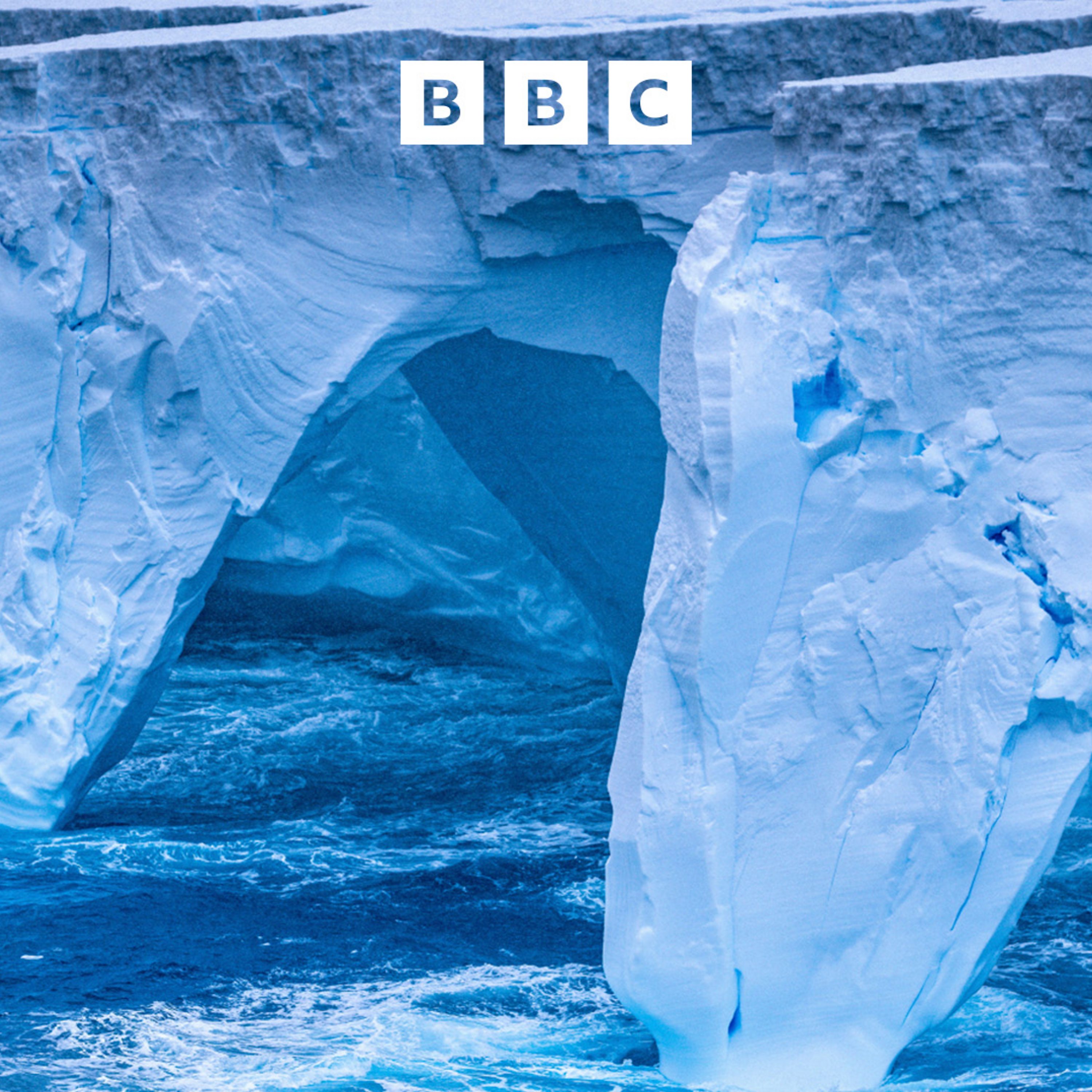
What can the world’s biggest iceberg tell us?
The current record holder for the world’s biggest iceberg is the A23a. Back in 1986 this colossus broke away from an Antarctic ice sheet. This process of breaking off or ‘calving’ as it is known is a natural part of the life cycle of an ice sheet. But A23a then became lodged in the Weddell Sea for more than thirty years, until four years ago a gradual melting allowed the berg to refloat. Since then it’s been steadily on the move, heading in the same direction as Antarctic icebergs before it, towards the warm waters of the Southern Ocean, where it will eventually shrink from melting. As it travels, the iceberg has been playing an important role on the ecological environment around it, both in positive and negative ways. So, on this week on The Inquiry, we’re asking ‘What can the world’s biggest iceberg tell us?’Contributors: Dr. Catherine Walker, Glaciologist, Woods Hole Oceanographic Institution, Massachusetts, USA Dr. Oliver Marsh, Glaciologist, British Antarctic Survey, Cambridge, UK Jemma Wadham, Professor of Glaciology, UiT The Arctic University of Norway Christopher Shuman, Research Associate Professor, NASA Goddard Space Flight Centre, Maryland, USA Presenter: William Crawley Producer: Jill Collins Researcher: Katie Morgan Editor: Tara McDermott Production Co-ordinator: Ellie DoverImage Credit: A23a in Antarctica, Jan 2024. Rob Suisted/Reuters/via BBC Images
Is Myanmar on the brink of collapse?
In February 2024, Myanmar reactivated an old law which had been on hold for 14 years, stating adult men aged up to 35, and women up to 27 years old, must serve at least two years in the country’s armed forces. The plan is to add sixty thousand new recruits annually – and anyone caught avoiding conscription faces prison and a fine.It’s part of the military-led government’s bid to fight back in a brutal civil war, which broke out in 2021 after its coup seized power from the democratically elected party. A violent crackdown on the peaceful public protests that followed triggered widespread armed resistance and has energised other groups who are determined to end military leadership. Myanmar is no stranger to internal unrest, but this latest conflict is pushing it closer to the edge. This week we’re asking - Is Myanmar on the brink of collapse?Contributors: Tin Htar Swe, Former Editor of BBC Burmese Service & freelance Myanmar consultant Professor Michael W. Charney, Professor of Asian and Military History, SOAS, University of London Dr David Brenner, Senior Lecturer in International Relations, University of Sussex Dr Min Zaw Oo, Executive Director, Myanmar Institute for Peace and SecurityProduction team: Presenter: Charmaine Cozier Producer: Lorna Reader Researcher: Matt Toulson Editor: Tara McDermottImage: A protester holds a placard with a three-finger salute in front of a military tank parked aside the street in front of the Central Bank building in Yangon, Myanmar, on 15 February 2021 (Credit: Aung Kyaw Htet/SOPA Images/LightRocket via Getty Images)
Is Turkey getting more dangerous for women?
Historically, Turkey has always had a strong women’s rights movement, stemming from the days of the Ottoman Empire through to the emergence of the Republic of Turkey into the present day. At the top of the movement’s agenda now is the fight to protect women against violence from men. It’s three years since Turkey pulled out of the Istanbul Convention, the Europe wide treaty on combatting violence against women and girls. The Turkish Government has its own version of domestic violence law, but there are concerns that this doesn’t offer the same protection as the Convention. Campaigners say that femicide and violence against women continues to plague society and that there is an increasingly anti-gender rhetoric within mainstream politics. So, this week on The Inquiry, we’re asking ‘Is Turkey getting more dangerous for women?’Contributors: Dr. Sevgi Adak, Institute for the Study of Muslim Civilisations, The Aga Khan University. Professor Seda Demiralp, Işık University, Turkey. Dr. Ezel Buse Sönmezocak, International Human Rights Lawyer, Turkey Dr. Hürcan Aslı Aksoy, German Institute for International and Security Affairs, Berlin.Presenter: Emily Wither Producer: Jill Collins Researcher: Katie Morgan Production Co-ordinator: Liam Morrey Image credit: Cagla Gurdogan via REUTERS from BBC Images
Has US military aid come in time for President Zelensky?
The war in Ukraine has reached a pivotal moment. After months of an apparent stalling on the frontlines, Russia has recently made a series of critical breakthroughs.Now the race is on for Kyiv to get newly approved military aid to the front line before Russian forces attack Ukraine’s second largest city, Kharkiv.The 60 billion dollar bill passed in America’s congress at the end of April allows for Ukraine to push back against Russian forces and prepare to mount an offensive next year.But a gap in the supply of missiles has left Kyiv dangerously exposed and huge questions remain about how Ukraine’s President will act next. So, on this week’s Inquiry, we’re asking ‘Has US military aid come in time for President Zelensky?’Contributors:Gustav Gressel, senior policy fellow with the Wider Europe Programme at the European Council on Foreign Relations’ Berlin office. Max Bergmann, Director, Europe, Russia, and Eurasia Program and Stuart Center, at the Center for Strategic and International Studies (CSIS), in the US. Dr Marina Miron, post-doctoral researcher in the War Studies Department and an honorary researcher at the Centre for Military Ethics and the Department of Defence Studies, Kings College, London. Professor Olga Onuch, Professor (Chair) in Comparative and Ukrainian Politics at the University of Manchester, UK.Presenter: Tanya Beckett Producer: Lorna Reader Researcher: Matt Toulson Production Co-ordinator: Liam MorreyImage credit: Ukrainian Presidential Press Service via Reuters via BBC Images
Can Texas go it alone on border control?
Last year the US state of Texas introduced a controversial law designed to control the huge number of undocumented migrants crossing its southern border with Mexico. The law known as Senate Bill 4 or SB4, allows local and state police the power to arrest and charge people with a newly created state crime - ‘illegal entry’. Immigration law has historically been handled by the federal government. Crossing the border is a federal crime and addressed by immigration courts that fall under the justice department.Now Texas is embroiled in a legal battle and SB4 has been paused. But it’s just the latest measure that Texas has taken to stop hundreds of thousands of migrants entering the US on its border. Back in 2021 the state’s Governor, Greg Abbott launched a multi-billion dollar border security programme known as Operation Lone Star. Along with his Republican lawmakers, the Governor’s argument is that Texas has a legal right to defend itself and they allege that Democrat President Joe Biden has failed to secure the US southern border in violation of the law. But with a Presidential election this November, it remains to be seen if Texas will have a more sympathetic ally in the White House in the future. So, on this week’s Inquiry, we’re asking ‘Can Texas go it alone on border control?’ Contributors: Dr. Ernesto Castañeda, Director of the Centre for Latin American and Latino Studies and its Immigration Lab, American University, Washington DC, USA Dr James Henson, Director, Texas Politics Project, Department of Government, The University of Texas at Austin, USA.Denise Gilman, Clinical Professor, Co-Director Immigration Clinic, The University of Texas at Austin, School of Law, USA Julia Gelatt, Associate Director, US Immigration Policy Programme, Migration Policy Institute, Washington DC, USA Presenter: Charmaine Cozier Producer: Jill Collins Researcher: Matt Toulson Editor: Tara McDermott Technical Producer: Craig Boardman Production Co-ordinator: Liam Morrey(Photo credit: Adam Davis via BBC Images
Who is country?
Beyonce has released an album that has gone straight to the top of the country music charts. The 27 tracks include the work of many collaborators from the world of country music, including Black country artist Linda Martell and Dolly Parton’s 1974 song Jolene.It has been so well received it has become the fastest selling album of the year. Beyonce is usually known for her pop and RnB. Her success in the country music genre has opened up a wider debate about where country music originates from, who it belongs to and its political associations. This week on the Inquiry we are asking, who is country ?Contributors: William Nash, Professor of American Studies and English at Middleburgh College Francesca Inglese, assistant professor in the Department of Music at Northeastern University Taylor Crumpton, music critic and culture writer from Dallas, Texas Charles Hughes, associate professor at Rhodes College in Memphis, Tennessee and co-founder of the No Fences ReviewPresenter: Tanya Beckett Producers: Louise Clarke and Lorna Reader Editor: Tara McDermott Technical Producer: Cameron Ward Production Co-ordinator: Liam MorreyImage credit: Reuters
Are synthetic opioids a global problem?
An increasing number of people are dying from misuse of synthetic opioids. In 2022, the US recorded over 70,000 overdose deaths involving synthetic opioids. The government is spending billions to combat the effects of these super strength drugs. Synthetic opioids, such as Fentanyl, are made in laboratories by using materials derived from the opium poppy. China is a major hub for the production of synthetic opioids, where it then makes its way to North America through Mexican drug cartels. The lab-made drugs can be more deadly than the natural materials, but they are more easily accessible, and prevalence is rising across the world.In West Africa and the Middle East, tramadol is one of the most consumed synthetic drugs. The rise of synthetic opioids in the European market, which are being used as a substitute for a heroin shortage, is fuelling concern that these substances could lead to a rise in drug-related deaths. This week on The Inquiry, we’re asking are synthetic opioids a global problem?Contributors Ric Treble, Forensic chemist and advisor to the Government’s Advisory Council on the Misuse of Drugs Dr Angela Me, Chief of the Research and Trend Analysis Branch from the United Nations Office on Drugs and Crime Ben Westhoff, author of Fentanyl, Inc and investigative journalist Dr Vanda Felbab-Brown is a senior fellow in the Strobe Talbott Center for Security, Strategy, and Technology in the Foreign Policy program at Brookings InstitutionProduction team Presenter: Charmaine Cozier Producers: Vicky Carter and Matt Toulson Researcher: Ajai Singh Editor: Tara McDermott Technical Producer: Cameron Ward Production Co-ordinator: Liam MorreyImage credit: mikroman6 via Getty Images
How secure is Benjamin Netanyahu’s leadership?
Six months into Israel’s war in Gaza and with no sign of a ceasefire or breakthrough in securing the release of the 130 hostages, as yet unaccounted for, pressure is mounting on Israel’s Prime Minister Benjamin Netanyahu. There have been widespread protests in Tel Aviv and across Israel. There have been calls both from home and abroad for an early election to be called. And Israel’s greatest ally, the United States has sharpened its rhetoric in the past few weeks over Israel’s conduct of the war, with President Biden now saying that he believes Benjamin Netanyahu is making ‘a mistake’ in his handling of it. For his part, the Israeli Prime Minister looks set to continue with his military offensive and has shown no indication so far that he is willing to step down or call an early election. So, on this week’s Inquiry, we’re asking ‘How secure is Benjamin Netanyahu’s leadership?’Contributors: Professor David Tal, the Yossi Harel Chair in Modern Israel Studies, University of Sussex, UK Natan Sachs, Director of the Centre for Middle East Policy, The Brookings Institution, Washington DC, USA Aaron David Miller, Senior Fellow, Carnegie Endowment for International Peace, Washington DC, USA Professor Tamar Hermann, Senior Research Fellow, The Israel Democracy Institute, JerusalemPresenter: Tanya Beckett Producer: Jill Collins Editor: Tara McDermott Technical Producer: Cameron Ward Production Co-ordinator: Liam MorreyImage credit: Reuters via BBC Images
Are we close to a breakthrough for Multiple Sclerosis?
Multiple Sclerosis (MS) is a neurological disease which can lead to loss of mobility and vision. Almost 3 million people worldwide are affected by it. There is no cure, but attempts are being made to accelerate the healing process with treatments to restore what the disease has damaged.At the same time, scientists have recently discovered a link between MS and a common virus that the majority of us carry in our bodies. It had been known for years that there was a link between Multiple Sclerosis and Epstein-Barr virus (EBV). But then, a study finally proved the link.Now, trials are underway on potential vaccines against EBV and scientists are hopeful that this could be a gateway to preventing MS. This week on the Inquiry we are asking: Are we close to a breakthrough for Multiple Sclerosis?Contributors:Tim Coetzee, Chief Advocacy, Services & Science Officer for the National MS Society, US Tjalf Ziemssen, Professor of Clinical Neuroscience and Head of the Multiple Sclerosis Center and Neuroimmunological Laboratory, University Clinic Carl-Gustav Carus, Germany Jeffrey Huang, Associate Professor of Biology, Georgetown University, US Claire Shannon-Lowe, Associate Professor in Virology, Institute of Immunology and Immunotherapy at the University of Birmingham, UKProduction team: Presenter: Tanya Beckett Producer: Matt Toulson Researcher: Ajai Singh Editor: Tara McDermott Studio Manager: Hal Haines Production Co-ordinator: Liam MorreyImage Credit: Shidlovski\Getty
Is climate change impacting chocolate production?
For centuries chocolate has had a global appeal, the key ingredient of this confectionery is derived from the dried and fully fermented seed of the Theobroma cacao, whose origins began in northern Amazonia. From this tree, both cocoa solids and cocoa butter can be extracted to form the basis of chocolate. Today, it’s the West African countries of Côte d’Ivoire and Ghana that produce the bulk of the world’s supply of cocoa beans. But in recent years hotter temperatures and shifts in rainfall patterns have impacted cocoa harvests particularly in this region. And now the global price of this key ingredient has roughly doubled since the start of last year, fuelling concern that demand could outweigh supply. Cocoa farming itself is mainly small scale and these farmers are at the bottom end of the value chain when it comes to profits. But whilst many of the major chocolate manufacturers do invest in the industry, with support for improved planting and harvesting techniques, farming sustainably is just one of a number of challenges that these small farmers face. So on this week’s Inquiry, we’re asking ‘Is climate change impacting chocolate production?’ Contributors: Dr Katie Sampeck, British Academy Global Professor of Historical Archaeology, University of Reading, England Philip Antwi-Agyei, Associate Professor, Department of Environmental Science, Kwame Nkrumah University of Science and Technology, Ghana Steffany Bermúdez, Policy Advisor, International Institute for Sustainable Development (IISD), Canada Yunusa Abubakar, Project Manager, International Cocoa Organisation (ICCO), Côte d’IvoirePresenter: Charmaine Cozier Producer: Jill Collins Researcher: Matt Toulson Editor: Tara McDermott Technical Producer: Hal Haines Production Co-ordinator: Liam MorreyImage by grafvision via Getty Images
Will neighbouring countries follow El Salvador's lead on crime?
In February this year, El Salvador's president Nayib Bukele won re-election with nearly 85% of the vote. His flagship policy after he came to power in 2019 has been the mass arrest of thousands of alleged gang members, mainly young men.It is estimated that over 100,000 people are now behind bars as part of his crime crackdown. The round-ups have been hugely popular with El Salvador's people as it has improved security and neighbouring countries are taking note.But critics say following Bukele's approach could threaten democracy, not just in El Salvador but across the continent. So on this week’s Inquiry, we’re asking: Will neighbouring countries follow El Salvador's lead on crime?Contributors: Carlos Dada, director of El Faro, an online newspaper based in El Salvador Katherine Saunders-Hastings, a lecturer in Latin American Studies at the University of London's Institute of the Americas. Will Freeman, Fellow for Latin American Studies at the Council on Foreign Relations, New York. Monica Pachon , a political scientist and professor at the University of the Andes in Bogotá, Colombia.Presenter: David Baker Producer: Farhana Haider Journalism Researcher: Matt Toulson Editor: Tara McDermott Technical Producer: Nicky Edwards Production Co-ordinator: Tim Fernley and Liam MorreyImage Credit: Alex Peña / Stringer via Getty Images
Is our future underground?
More than half of the world’s population currently lives in cities, and by 2050, the UN estimates that figure will rise to nearly 7 in 10 people. The world is also getting hotter, with heatwaves and wildfires becoming increasingly common. So how can we deal with the dual challenges of increasing urbanisation and extreme weather caused by climate change? Perhaps we should look downwards. For millennia, humans have taken refuge underground from the elements, predators and from war. Even today, bomb shelters exist under major cities like Beijing and Seoul. Many cities across the world have subway systems for easy transportation – and some are integrated seamlessly with below-ground business and shopping centres. But what are the future challenges for urban planners and architects in this subterranean space, and how can we overcome the social stigma against those who live underground? This week on the Inquiry, we ask: is our future underground? Contributors: Martin Dixon, trustee of Subterranea Britannica, a society devoted to the study and investigation of man-made and man-used underground places. Jacques Besner, architect and urban planner; co-founder and general manager of Associated Research Centres for Urban Underground Spaces. Antonia Cornaro co-chair of ITACUS, the International Tunnelling and Underground Space Association's Committee on Underground Space. Professor Clara Irazábal, Director of the Urban Studies and Planning Program at the University of Maryland, USA.Presenter: Tanya Beckett Producer: Ravi Naik Editor: Tara McDermott Researcher: Matt Toulson Production Coordinators : Janet Staples & Liam MorreyPhoto by BEHROUZ MEHRI via Getty Images
Can Mexico win its battle with US gun companies?
The Mexican government has won its appeal to bring a civil lawsuit against a number of American gun companies. Mexico, which has extremely restrictive gun laws, claims that the ‘deliberate’ business practices of these US firms results in the illegal flow of firearms into Mexico, contributing to the gun crime violence in the country. They are now seeking as much as ten billion dollars in compensation. The gun companies, which include some of America’s oldest established names in the firearms business, deny any wrongdoing. Since 2005, these companies have being granted immunity from prosecution under the ‘Protection of Lawful Commerce in Arms Act’. This law protects the firearms manufacturers and dealers from being held liable when crimes have been committed with their products. But Mexico’s argument is that PLCAA, as it’s also known, only applies within the United States and therefore doesn’t protect the companies from liability.It’s a case which is also resonating with other Latin American countries who have been impacted by illegal gun trafficking from the United States. Some of these countries have supported Mexico’s claims in the courts. And they will be watching closely to see if Mexico’s lawsuit, the first by a sovereign state, can set a precedent.So on this week’s Inquiry, we’re asking ‘Can Mexico win its battle with US gun companies?’Contributors: Ioan Grillo, journalist and author focusing on Organised Crime, Mexico Adam Winkler, Cornell Professor of Law, UCLA School of Law, California, USA Robert Spitzer, Distinguished Service Professor Emeritus of Political Science, SUNY Cortland; Adjunct Faculty Member, College of William and Mary School of Law, USA Dr. León Castellanos-Jankiewicz, Senior Researcher, Asser Institute for International and European Law; Academic Supervisor, International Law Clinic on Access to Justice for Gun Violence, University of Amsterdam, The Netherlands. Presenter: Charmaine Cozier Producer: Jill Collins Journalism Researcher: Matt Toulson Editor: Tara McDermott Technical Producer: Cameron Ward Production Co-ordinator: Liam Morrey Image: Reuters via BBC Images
What’s going on with the pyramids?
One of the most famous of Egypt’s pyramids, Menkaure’s pyramid on the Giza plateau, is the subject of controversy after the Egyptian authorities announced plans to restore it in what the country’s Head of Antiquities has called “the project of the century” and Egypt’s “gift to the world”. But not everyone believes such a restoration is in keeping with the demands of proper archaeological preservation. The plans met with opposition from archaeologists and Egyptologists both inside and outside the country. The project has now been paused after recommendations from a scientific committee commissioned by the Egyptian authorities.So what’s going on with the pyramids?Presenter: Gary O’Donoghue Producer: Louise Clarke Researcher: Matt Toulson Editor: Tara McDermott Technical producer: Nicky Edwards Production co-ordinator: Liam MorreyContributors: Aidan Dodson, honorary Professor of Egyptology at Bristol university in the UK Dr Jennifer Hellum, senior lecturer in classics and ancient history at the University of Auckland in New Zealand Heba Saleh, Cairo correspondent for the Financial Times Salima Ikram, professor of Egyptology at the American University in CairoPhoto by KHALED ELFIQI/EPA-EFE/REX/Shutterstock via BBC Images
Can Europe reverse its falling fertility rates?
Across the world fertility rates are falling and for the first time Europe is experiencing a sustained population decline. The average fertility rate for the European Union is 1.53 live births per woman. In Italy the fertility rate has remained low for the last thirty years, with an average 1.3 births per woman.Some governments, who are concerned that not enough people are being born to keep their economies functioning in the long term are spending billions on incentives and policies to try and reverse the trend. But even in the Nordic countries, which are noted for some of the best family focused policies, these are proving ineffective against a markedly high drop in fertility rates over the last decade. Society’s attitudes on when or whether to start a family are shifting, so does this mean that we need to change the way we approach the issue or even adapt to a future with fewer people? On this week’s Inquiry, we’re asking ‘Can Europe reverse its falling fertility rates?’Contributors: Anna Rotkirch, Research Director, Population Research Institute, The Family Federation of Finland, Helsinki Michael Herrmann, Senior Advisor on Economics and Demography, United Nations Population Fund (UNFPA), Turkey Arnstein Aassve, Professor of Demography, Political Science Centre, Bocconi University, Milan, Italy Tomas Sobotka, Deputy Director, Vienna Institute of Demography, Austrian Academy of Sciences Presenter: Charmaine Cozier Producer: Jill Collins Journalism Researcher: Matt Toulson Editor: Tara McDermott Technical Producers: Nicky Edwards and Toby James Production Co-ordinator: Liam Morrey Image Credit: PA via BBC Images
Who will be next to walk on the moon?
In the next two or three years America’s National Aeronautics and Space Administration - NASA - plans to send a mission into space that will land people on the moon for the first time in over a half a century.The mission has already been pushed back and is widely expected to be delayed again.But America is not alone. Both China and India also have ambitions to land people on the lunar surface.Who is next to walk on the moon is driven by geopolitics and a desire to harness the moon’s resources. Different countries, and even the private companies involved, all have different agendas. Who gets there first may even determine the political ideology of any future permanent human settlement. Contributors: Oliver Morton, Senior Editor at The Economist and author of The Moon, A History for the Future Eric Berger, Senior Space Editor at Ars Technica Christopher Newman, Professor of space law and policy at Northumbria University Namrata Goswami, Professor at the Thunderbird School of Global Management at Arizona State UniversityPresenter: Tanya Beckett Producer: Louise Clarke Journalism Researcher: Matt Toulson Editor: Tara McDermott Technical Producer: Richard Hannaford Production Coordinator: Liam MorreyImage: U.S. Flag On The Moon by Encyclopaedia Britannica via Getty Images Credit: NASA Youtube Channel
Are Ethiopians losing faith in their Orthodox Church?
The Ethiopian Orthodox Tewahedo Church - once a powerful marker of nationhood - is deeply split as result of the recent civil war in Tigray which exacerbated historical tensions in the church. The Church, which traces its history to the fourth century, was once the biggest denomination in Ethiopia with nearly 44 percent of the population calling themselves Orthodox Christians, but now its centrality in Ethiopian spiritual and political life - once unquestioned - appears to hang in the balance, with a steady increase in the number of people joining other denominations and the number of people calling themselves Orthodox Christians diminishing. Ethiopia is a modern state, with the second largest population in Africa, led by Prime Minister Abiy Ahmed, who won the Nobel Peace Prize for 2019. But months after he took power, Ethiopia was ripped apart by a civil war which broke out in November 2020 and left tens of thousands of civilians dead. In May 2021, four archbishops in Tigray announced that they were forming an independent structure. They accused the church of not opposing the war - and of being too close to Abiy Ahmed's government. Although a ceasefire was agreed in 2022, the recent splits highlight historic ethnic and religious tensions in Ethiopia. Contributors:Ralph Lee: Oxford Centre for Mission Studies in the UK. Mebratu Kelecha: London School of Economics. His research focuses on conflict, peace building and democracy. Yohannes Woldemariam: US-based academic specialising in the Horn of Africa and the Middle East. Jorge Haustein: Associate Professor of World Christianity at the University of Cambridge.CREDITS Presenter: Audrey Brown Producer: Philip Reevell. Researcher: Matt Toulson Technical Producer: Nicky Edwards. Production Coordinator: Tim Fernley Editor: Tara McDermottMain Image: Ethiopian Orthodox priests walk around the church during the Saint Michael's anniversary celebration at St. Michael church in Mekele, the capital of Tigray region, EthiopiaImage Credit: Yasuyoshi Chiba\AFP via Getty
Can the Vatican stop Nicaragua’s Catholic crackdown?
After serving nearly a year of his 26 year sentence for treason in a Nicaraguan jail, Bishop Rolando Álvarez of Matagalpa was flown to Rome in January. The high profile bishop known as an outspoken critic of President Ortega’s Sandinista government has been under house arrest since August 2022. He was allowed to leave the country alongside his supporter Bishop Isidoro Mora and a group of priests and seminarians, after a request from the Vatican. It’s the latest development in a relationship between Nicaragua and the Holy See that has grown increasingly tense. President Ortega has had a complicated relationship with Nicaragua’s Catholic clergy ever since he first came to power in the 1979 revolution. It was with the help of the Church that Daniel Ortega returned to power in 2006, but as his rule became increasingly more authoritarian he steadily repressed any sort of opposition, including critical voices from within the clergy. Mass peaceful protests over social security reforms in 2018 ramped up the repression from the Ortega government in the following years. Opposition leaders, journalists, and prominent leaders from within the R.C.Church were amongst those expelled or advised to leave the country and some like Bishop Álvarez were even imprisoned. The situation has left the Catholic Church in a difficult position. There are no diplomatic ties now between Nicaragua and the Holy See and since the end of the Cold War it appears that the international community has found more pressing concerns. Nicaragua’s Catholic neighbours may have the country on their radars, but how willing they are in supporting the Pope over his concerns for Nicaragua’s Catholic population remains to be seen. So, this week on The Inquiry we’re asking ‘Can the Vatican stop Nicaragua’s Catholic crackdown?Contributors: Brandon Van Dyck, Associate Director of the Princeton Initiative in Catholic Thought, The Aquinas Institute, New Jersey, USA Bianca Jagger, President of the Bianca Jagger Human Rights Foundation, Executive Directors Leadership Council of Amnesty International, London Andrea Gagliarducci, Vatican Analyst, EWTN /ACI Group, Rome, Italy Ryan Berg, Director, Americas Programme, Centre for Strategic and International Studies, Washington DC, USAPresenter: Tanya Beckett Producer: Jill Collins Researcher: Matt Toulson Editor: Tara McDermott Technical Producer: Cameron Ward Broadcast Co-ordinator: Tim Fernley Image Credit: Mireya Acierto\Getty
What does Iran want?
After months of tension and hostility in the Middle East over the Gaza-Israel conflict, Iran has publicly stated its desire to avoid a regional conflict. It has however displayed its military force on several fronts.There have been missile strikes. Iran targeted militant bases in western Pakistan leading to a retaliatory back-and-forth with Pakistan. With attacks on Iraq and Syria, Tehran said it was targeting Islamic State and Israel's Mossad spy agency - both of whom it claimed were behind the deadliest domestic attack on Iranian soil since the Islamic revolution – an attack in early January that killed almost a hundred people in the southern city of Kerman.Iran has been using proxy groups too - the so-called “Axis of Resistance” – to carry out attacks on Israel and its allies to show solidarity with the Palestinians. The axis is a grouping of Iran-backed militant groups including Houthi militants in Yemen who have been responsible for disrupting shipping in the Red Sea and have been targeted by US and UK air strikes aimed at deterring them. Other members of the axis include Hezbollah in Lebanon and various groups in Syria and Iraq. Tehran insists that the groups act independently but that the coalition shares its goals. Iran’s stated aim is to roll back US influence in the Middle East and it stands ideologically opposed to Israel. Iran’s grown closer to China and Russia too, the latter more so since the start of the Ukraine war in 2022. What does Iran hope to gain from these relationships?We also ask how Iran wants the current Israel-Gaza conflict to end.So this week on The Inquiry we’re asking ‘What does Iran want?’Experts: Negar Mortazavi, Iranian journalist and Senior Fellow at the Center for International Policy. Kirsten Fontenrose is a non-resident fellow at the Scowcroft Middle East Security Initiative in the Atlantic Council’s Middle East Programs. Professor Maryam Alemzadeh, Associate Professor in History and Politics of Iran at the Oxford School of Global and Area Studies (OSGA) and a Middle East Centre Fellow. Suzanne Maloney is the vice president and director of the Foreign Policy program at the Brookings Institution, where her research focuses on Iran and Persian Gulf energy. CREDITS: Presenter: Charmaine Cozier Producer: Philip Reevell Researcher: Matt Toulson Production Coordinator: Tim Fernley Editor: Tara McDermott Technical Producer: Nicky EdwardsImage: Iran's Supreme Leader Ayatollah Ali KhamaneiImage Credit: Anadolu/Getty
Can Indonesia pull off relocating its capital?
Indonesia’s ambitious plan to move the administrative headquarters of its capital city from Jakarta to a new location on the island of Borneo, in the East Kalimantan province, is nearing the completion of its first phase. Known as Nusantara, the new city’s inauguration is scheduled to coincide with Indonesia’s Independence Day on 17th August, the date of the final term of office for the current President Joko Widodo. The project has been deemed necessary as Jakarta is considered no longer fit for purpose. Located on the island of Java, it ranks as one of the most densely populated cities in the world and it is reported to be sinking by around 17 centimetres a year in some areas, due to a combination of environmental pollution and climate change. With four more phases to go, around two million people are expected to inhabit Nusantara by the planned completion date of 2045, but that remains dependent on a number of factors and the schedule has already hit some challenges. Future development is reliant on billions of dollars from foreign investors and currently the Government is struggling to secure much commitment. Furthermore, with Presidential elections due next month, there are concerns about whether a new leader will be inclined to continue with the vision announced by the outgoing President Joko Widodo. So this week on The Inquiry, we’re asking ‘Can Indonesia pull off relocating its capital?’ Contributors: Dr Athiqah Nur Alami, Head of Research Centre for Politics, National Research and Innovation Agency, Indonesia. Dimas Wisnu Adrianto, Assistant Professor, Department of Urban and Regional Planning, Brawijaya University, Indonesia Sulfikar Amir, Associate Professor of Science, Technology and Society, School of Social Sciences, Nanyang University, Singapore Julia Lau, Senior Fellow and Co Coordinator, Indonesia Studies Programme, ISEAS-Yusof Ishak Institute, Singapore Presenter: Charmaine Cozier Producers: Matt Toulson and Jill Collins Editor: Tara McDermott Technical Producer: Nicky Edwards and Toby James Production Co-ordinator: Tim FernleyImage credit: Dimas Ardian/Bloomberg/Getty.
Why is the US Army struggling to recruit new soldiers?
In 1973 America ended a draft that had been in effect since before it entered the second World War, and for the last fifty years the US Army, Navy, Air Force and Marines have been an all-volunteer military.But, recently, of the four major branches which make up the US armed services, only the Marines have achieved their target for new recruits. And the biggest force, the Army, has been struggling most of all. In the past two years its missed its recruiting target by several thousand. In this edition of the Inquiry, Sandra Kanthal looks at the myriad reasons the American Army is failing to enlist enough new soldiers, and why this may affect what impact it can have on global security.Guests: Nora Bensahel – Professor of the Practice at the School of Advanced International Studies, Johns Hopkins University Mark Cancian - Senior Advisor at the Center for Strategic and International Studies Peter Feaver – Professor of Political Science and Public Policy, Duke University and author of Thanks For Your Service: The Causes and Consequences of Public Confidence in the US Military Beth Asch – Senior Economist, The Rand CorporationProduction Team: Presenter: Sandra Kanthal Producer: Sandra Kanthal Editor: Tara McDermott Technical Producer: James Beard Production Co-ordinator: Tim FernleyImage Credit: Bo Zaunders\Getty
Are orcas OK?
Something strange started happening in early 2023 in the waters off south-western Europe, where the Mediterranean sea meets the Atlantic ocean. Orcas began slamming into the sides of fishing and sailing vessels. The killer whales then dived underneath to locate and destroy the rudders used to steer the boats. Once finished, the orcas departed, leaving shocked crews and thousands of dollars of damage behind. Some of the attacks were over in a matter of minutes, but others lasted hours. It’s very unusual behaviour for this particular mammal, but orcas are under a lot of threat from man-made hazards. Factors like underwater noise pollution, overfishing, toxic waste and climate change to name a few are making orca life extremely difficult. Could all of this have caused this change in behaviour? Contributors: Billy Heaney, zoologist, wildlife tour guide and presenter Dr Jeremy Kiszka, professor of biology at Florida International University in Miami Hannah Strager, marine biologist and director of exhibitions at the Whale Museum in Norway Nicola Hodgins, researcher with the global charity Whale and Dolphin ConservationPresenter: Charmaine Cozier Producers: Anoushka Mutanda-Dougherty, Jill Collins, Matt Toulson Editors: Tara McDermott and Tom Bigwood Researcher: Matt Toulson Sound designer: Nicky Edwards Production co-ordinator: Jordan KingImage: An orca showing its teeth (Credit: Marcos del Mazo/LightRocket via Getty Images)
What’s going on with sargassum seaweed?
Sargassum seaweed was recorded as far back as the 15th century when Christopher Columbus wrote in his expedition diaries about miles and miles and miles of dense seaweed as he crossed the Atlantic Ocean. In 2011, a great mass of this seaweed emerged, stretching from West Africa to the Gulf of Mexico, a phenomenon known as the Great Atlantic Sargassum Belt. Since then it’s been washing up on coastlines in massive amounts, causing a big impact on communities whose economy relies heavily on the tourism industry. As the seaweed decays it releases hydrogen sulphide which has a strong odour of rotten eggs.Various research projects are looking into ways of containing this seaweed, as no one has found a viable solution on an industrial scale. But whilst it is causing problems onshore, offshore in the deep ocean of the Sargasso Sea, the sargassum provides a unique ecosystem for a variety of marine life including turtles and swordfish.So, this week on The Inquiry we’re asking, ‘What’s going on with sargassum seaweed?’Contributors:Dr. Chuanmin Hu, Professor of Oceanography, University of South Florida College of Marine Science, USADr. David Freestone, Executive Secretary, The Sargasso Sea Commission, Washington DC, USADr. Marie-Louise Felix, Marine Biologist and Lecturer, Sir Arthur Lewis Community College, Consultant to the Department of Fisheries, St LuciaAjit Subramaniam, Biological Oceanographer, Lamont Research Professor, Lamont-Doherty Earth Observatory of Columbia University, New York, USAPresenter: Charmaine Cozier Producer: Jill Collins Researcher: George Crafer Editor: Tara McDermott Technical Producer: Nicky Edwards Production Co-ordinator: Jordan King Image: Miami Beach, Florida, North Beach Atlantic Ocean shoreline, large quantity of arriving seaweed sargassum macroalgae, tourist trying to swim. (Photo by: Jeffrey Greenberg/Universal Images Group via Getty Images)
Has Toyota solved the electric car battery problem?
Toyota has unveiled a revolutionary electric car battery, able to travel 1,200 kilometres in one go and can be charged in just ten minutes.Toyota’s CEO Koji Sato said that “commercialisation of solid state batteries is a thing of the future... now within reach, changing the future of cars". The company also claims to be on the brink of being able to manufacture them.So is this, as some are claiming, a ‘watershed moment’ in car making? Can these new batteries now be produced at scale? What impact will this have on the popularity of electric cars and their uptake?Has Toyota solved the electric car battery problem?Contributors:Paul Shearing, chair in sustainable energy engineering and director of the Zero Institute at the University of Oxford. Shirley Meng, Professor of Molecular Engineering at the University of Chicago. Jeff Liker, Professor of Industrial Engineering at the University of Michigan for 35 years. Dr Evi Petavratzi, a mineral commodity specialist from the British Geological Survey. Presenter: Tanya Beckett Producer: Bob Howard Editor: Tara McDermott Sound Designer: Gareth Jones Production Coordinator: Jordan KingImage: Olga Rolenko via Getty Images - 1403000871
Is Venezuela about to invade its neighbour?
Tensions between South American neighbours Venezuela and Guyana have ratcheted up a notch in recent weeks over the disputed oil rich region of Essequibo. The territory, which is roughly the size of Florida, currently makes up around two thirds of Guyana and vast oil reserves were discovered here in 2015 which have helped make Guyana’s economy one of the fastest growing in the world. Essequibo has come under the authority of Guyana and before it British Guiana for more than a century, but Venezuela has always disputed that decision made by an international tribunal back in 1899. The issue is currently with the International Court of Justice in the Hague, who are expected to make a decision next year. But Venezuela does not recognise their jurisdiction. And now President Maduro has used the results of a recent referendum claiming rights over Essequibo, as evidence to support his threat to move forward with plans to annexe the region. So this week on The Inquiry, we’re asking ‘Is Venezuela about to invade its neighbour?’Contributors: Phil Gunson, Senior Analyst, Andes, Caracas, Venezuela for International Crisis Group Alejandro Velasco, Associate Professor of Latin American History, New York University, author of ‘Barrio Rising: Urban Popular Politics and the Making of Modern Venezuela Dr Christopher Sabatini, Senior Fellow for Latin America at Chatham House, London Dr Annette Idler, Associate Professor in Global Security, Blavatnik School of Government, University of Oxford. Presenter: David Baker Producer: Jill Collins Researcher: George Crafer Editor: Tara McDermott Technical Producer: Mitch Goodall Broadcast Co-ordinator: Jordan KingImage credit: Anadolu\Getty
Is Paris ready for the 2024 Olympics?
In less than a year, France will play host to the Olympic and Paralympic Games. The opening ceremony will be played out along the River Seine in the nation’s capital city Paris. The Seine is also set to be the scene of the open-water swimming events and work is now being done to make sure the polluted waterway will be clean and safe enough for the Olympic participants. To accommodate the expected influx of visitors to the Games, new transport links are been built. Whilst its already been acknowledged that some of the network is planned to link up a number of Olympic sites, it won’t be ready in time for the Games. There are plans to provide extra river boats and cycle lanes.In addition to all this is the question of whether the French themselves are in the mood to celebrate the Games. This summer saw waves of social and political unrest in the country, but traditional sporting events like the Rugby World Cup have played a role in bringing the country together.This week on The Inquiry, we’re asking ‘Is Paris Ready for the 2024 Olympics?’ Contributors: Jean-Marie Mouchel, Professor of Hydrology, Sorbonne University, Paris, France Florence Villeminot, Journalist and Presenter, France 24, Paris, France Bill Hanway, Global Sports Leader, AECOM, Dallas, Texas, USA Rainbow Murray, Professor of Politics, Queen Mary University of LondonPresenter: Tanya Beckett Producer: Jill Collins Researcher: Matt Toulson Technical Producer: Kelly Young Production Co-ordinator: Jordan King Editor Tara McDermottPhoto: Olympic Rings to celebrate the IOC official announcement that Paris won the 2024 Olympic bid are seen in front of the Eiffel Tower at the Trocadero square in Paris, France, September 16, 2017. Credit: Reuters
Have we reached a turning point with migraine medication?
Around 1 billion people around the world suffer from a mysterious neurological condition called migraine. Far more than just a headache, migraine is abnormal processing of the world around us that can have symptoms like loss of sight and speech, dizziness, nausea and extreme fatigue.There are drugs which can help those struggling with the condition like anti-depressants and anti-convulsants. However, they weren’t developed specifically for migraine and can come with quite a lot of side effects or simply not work.For a long time migraine medication has been a process of trial and error. But a new class of drugs called anti-CGRPs are being hailed as a breakthrough migraine medication. Anti-CGRPs have a small side effect profile and were designed specifically to target migraine. They work by blocking CGRP (Calcitonin Gene-Related Peptide) from building up in the body and triggering a receptor in the brain which turns on a head pain pathway causing the migraine attack.Earlier this year the National Institute of Health and Care Excellence - or NICE – in England cleared the use of an anti-CGRP called Rimegepant to use as both a preventive and acute treatment. Clinicians are hoping this will massively improve the lives of those living with the condition.So this week on The Inquiry were asking ‘Have we reached a turning point with migraine medication?’Contributors: Dr. Amaal Starling, neurologist and headache specialist at Mayo Clinic in Scottsdale, in the US state of Arizona. Dr Faraidoon, researcher at the Georgian Institute for Global Health at the University of New South Wales, Sydney, Australia. Peter Goadsby , Director of the NIHR King's Clinical Research Facility and a professor of neurology at King's College London, England. Dr Lise Rystad Oie, researcher at the government funded Norwegian Centre for Headache Research - also known as NorHead.Presenter: Charmaine Cozier Producer: Anoushka Mutanda-Dougherty Editor: Tara McDermott Researcher: Matt Toulson Technical Producer: Craig Boardman Broadcast Co-ordinator: Jordan KingImage: eternalcreative - Getty Images: 1372323487
Why is Bangladesh in turmoil?
Bangladesh is set to hold parliamentary elections next January. But only time will tell whether there will be real change at the top or whether the current Prime Minister Sheikh Hasina and her Awami League will remain in power.In recent months there has been an increase in political protests calling for a neutral interim government ahead of the polls opening. But these protests have only resulted in increasing numbers of senior leaders of the opposition Bangladesh Nationalist Party being rounded up and put in jail.Historically, the country has had a fractured relationship with democracy since its birth in 1971, but the government for their part has denied accusations of democratic backsliding.So this week on the Inquiry we’re asking ‘Why is Bangladesh in turmoil?’Contributors: Sabir Mustafa, a former Editor of the BBC Bengali Service, now based in Washington DC, USADr. Avinash Paliwal, Reader in International Relations, Department of Politics and International Relations, SOAS University of LondonAli Riaz, Distinguished Professor in the Department of Politics and Government, Illinois State University, USA and non-resident Senior Fellow of the Atlantic CouncilDr. Geoffrey MacDonald, Visiting Expert in the South Asia Programme, United States Institute of Peace, Washington DC, USAPresenter: Tanya Beckett Producer: Jill Collins Researcher: Matt Toulson Editor: Tara McDermott Technical Producer: Richard Hannaford Broadcast Co-ordinator: Jordan KingPhoto: Bangladesh Nationalist Party protest for Sheikh Hasina’s resignation, Dhaka -28th Oct 2023. Credit: Photo by MONIRUL ALAM/EPA-EFE/REX/Shutterstock(14171078p)
Is the war in Ukraine at a stalemate?
The head of Ukraine’s armed forces, General Zaluzhny, has a frank take on his country’s conflict with Russia: "Just like in the First World War, we have reached the level of technology that puts us into a stalemate." He explains that using drones and remote surveillance equipment in battlezones means each side knows what the other is doing. That slows down troops advancing, and creates a standoff. In a separate essay offering solutions, the general states that fresh tech innovation is the key to cracking it.President Zelensky disagreed, and his office accuses the general of making “the aggressor’s job easier.” The Kremlin also denies there’s a deadlock. But with the world’s attention also focused on the Middle East, has attention drifted away from the Ukraine conflict – and if it has, what does that mean for Ukraine’s campaign?Charmaine Cozier explores the current state of fighting which continues on the eastern frontline, and whether Ukraine’s recent attacks on Crimea demonstrate the country’s capacity to fight back against Russia’s forces. Meanwhile, Moscow has been building up an ‘axis of the sanctioned’ – countries including Iran and North Korea, which are providing armaments and sharing technology to support Russia’s military in Ukraine in a war of attrition. And as the war heads towards its second year, is international support for Ukraine holding up? In the United States, some Republican lawmakers have delayed the latest package of military aid to Ukraine as they raise questions about the cost of the war for Americans. One year out from the next Presidential election, support for Ukraine may become an election issue. In Europe, support for Ukraine has been signalled by the European Union as it recommends formal talks should begin. Contributors: Tymofiy Mylovanov is president of Kyiv School of Economics. He’s also a former member of the Ukrainian government. Before leaving it in 2020, his roles included minister of economy, international trade and agriculture.Dr. Hanna Notte is director of the Eurasian programme at the James Martin Center for Nonproliferation Studies. It focuses on research and training around preventing the spread of nuclear weapons and technologies. She’s also senior associate with the Europe, Russia and Eurasia programme at the Center for Strategic and International Studies in Washington.Natasha Lindstaedt is a professor of government at the University of Essex in EnglandMark Katz is a professor of government and politics at the George Mason University Schar School of Policy and Government in Virginia in the US.Presenter: Charmaine Cozier Producer: Philip Reevell. Researcher: Matt Toulson Editor: Tara McDermott Technical producer: Richard Hannaford.Image credit Getty Images