The Innovation Show
1,271 episodes — Page 9 of 26
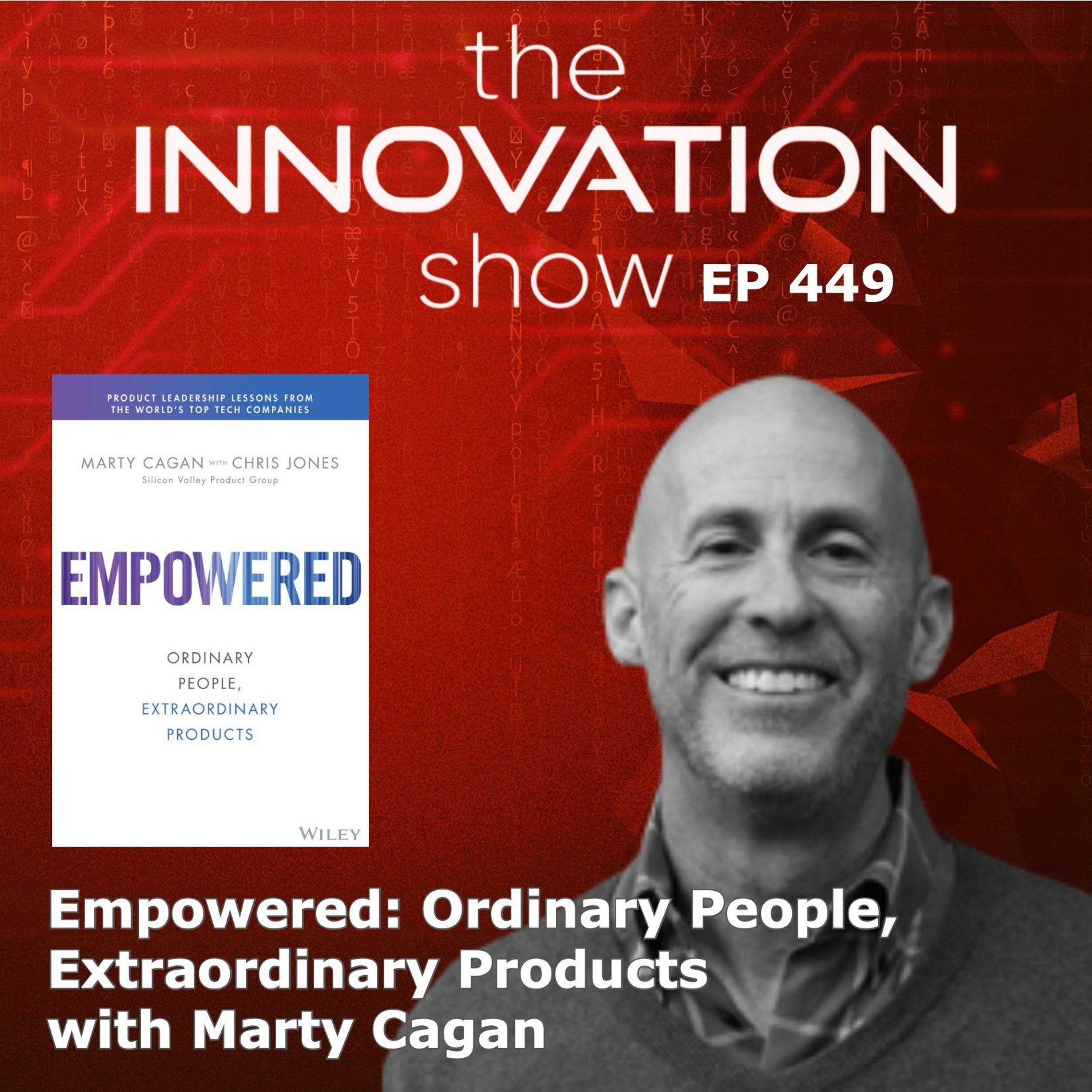
Marty Cagan - Empowered: Ordinary People, Extraordinary Products
What is it about the top tech product companies such as Amazon, Apple, Google, Netflix and Tesla that enable their record of consistent innovation? Most people think it’s because these companies can find and attract a level of talent that makes this innovation possible. But the real advantage these companies have is not so much who they hire but rather how they enable their people to work together to solve hard problems and create extraordinary products. Today’s guest has long worked to reveal the best practices of the most consistently innovative companies in the world. A natural companion to his bestselling book INSPIRED, today’s book tackles head-on the reason why most companies fail to truly leverage the potential of their people to innovate: product leadership It is a great pleasure to welcome the author of EMPOWERED: Ordinary People, Extraordinary Products, Marty Cagan
Marty Cagan - Empowered: Ordinary People, Extraordinary Products
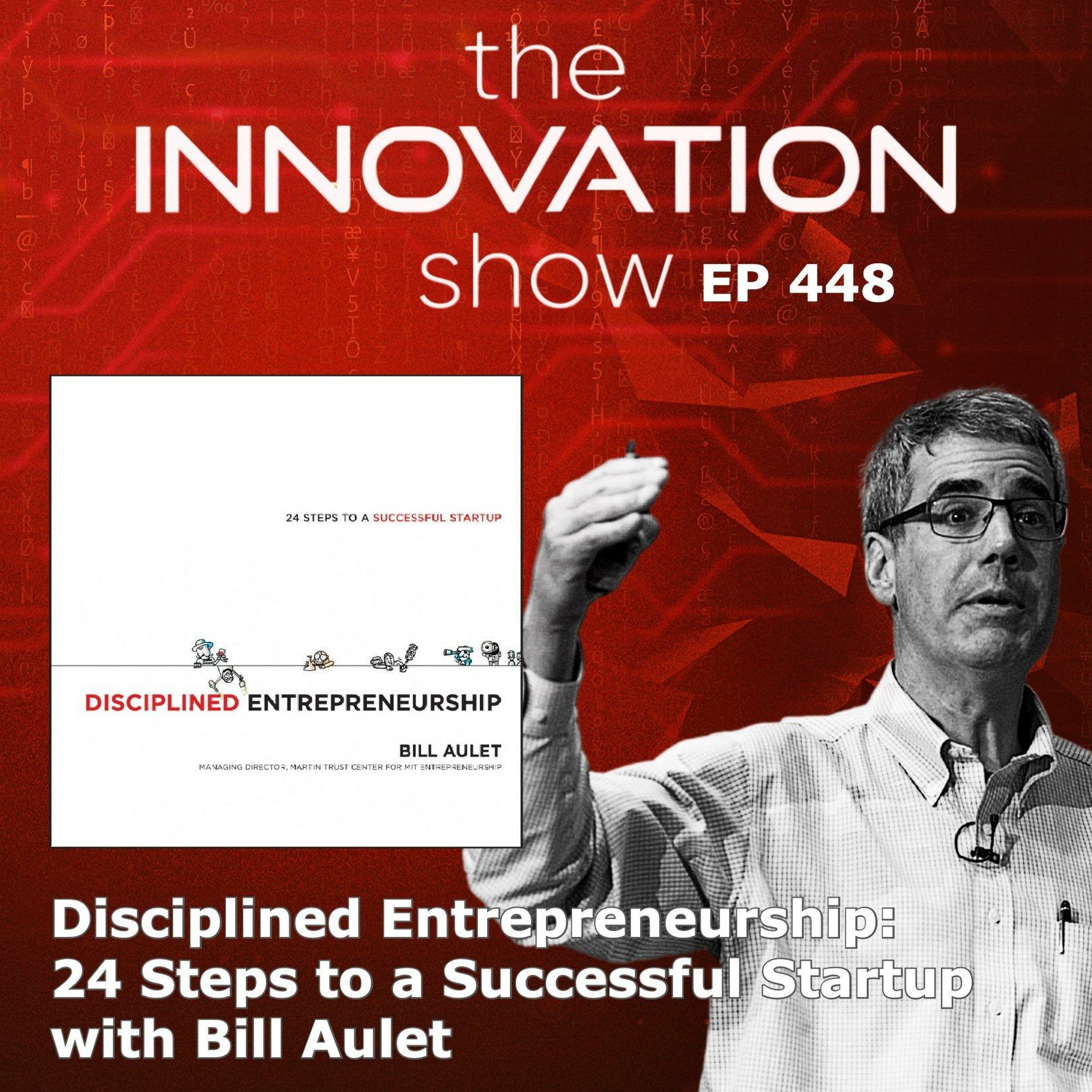
Bill Aulet - Disciplined Entrepreneurship
Disciplined Entrepreneurship will change the way you think about starting a company. Many believe that entrepreneurship cannot be taught, but great entrepreneurs aren’t born with something special – they simply make great products. This book will show you how to create a successful startup through developing an innovative product. It breaks down the necessary processes into an integrated, comprehensive, and proven 24-step framework that any industrious person can learn and apply. You will learn: * Why the “F” word – focus – is crucial to a startup’s success * Common obstacles that entrepreneurs face – and how to overcome them * How to use innovation to stand out in the crowd – it’s not just about technology Whether you’re a first-time or repeat entrepreneur, Disciplined Entrepreneurship gives you the tools you need to improve your odds of making a product people want. Author Bill Aulet is the managing director of the Martin Trust Center for MIT Entrepreneurship as well as a senior lecturer at the MIT Sloan School of Management. Links mentioned in the show: Entrepreneurship 101: Who is your customer? https://www.edx.org/course/entrepreneurship-101-who-is-your-customer? https://www.d-eship.com
Bill Aulet - Disciplined Entrepreneurship
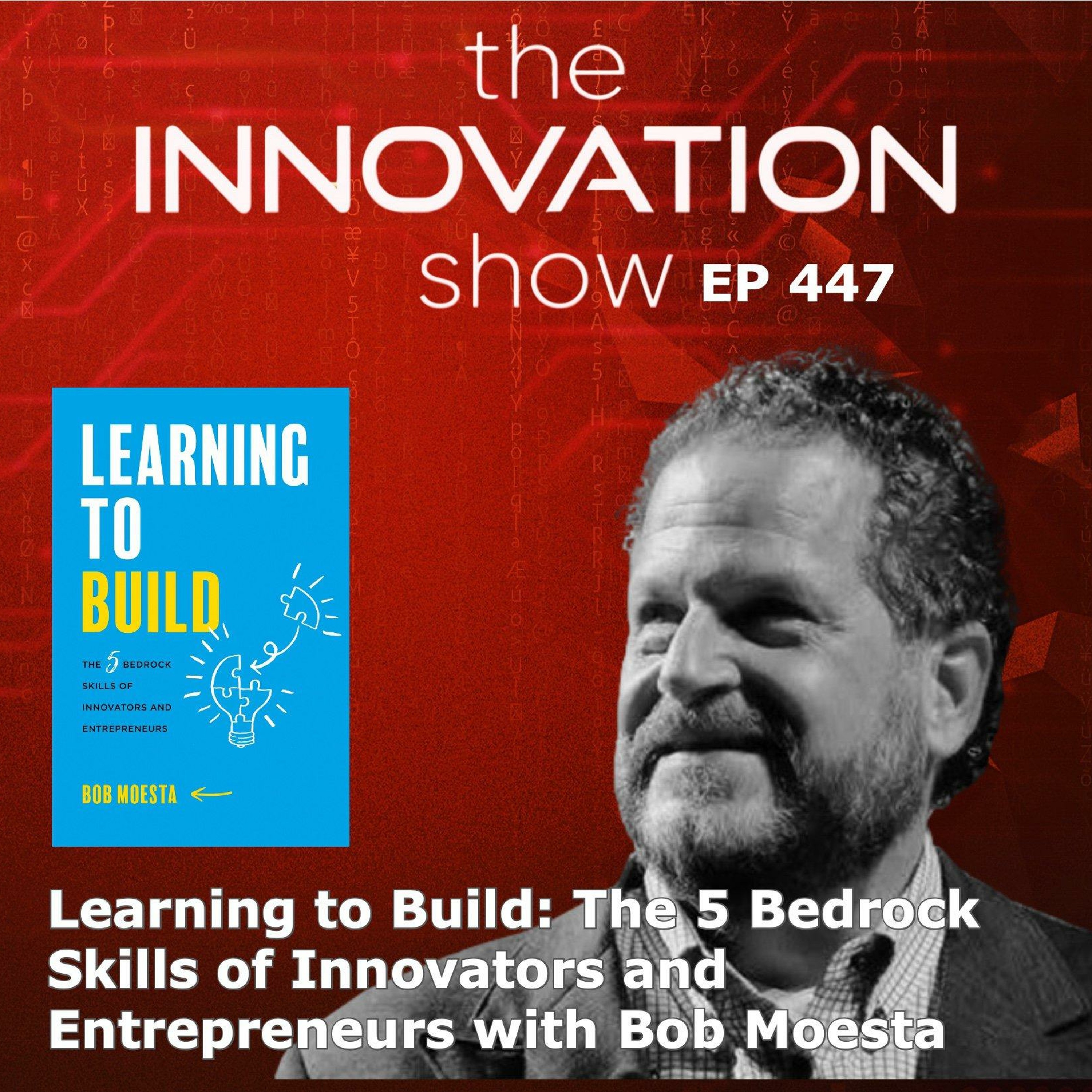
Bob Moesta - Learning to Build
Does this sound familiar? * Are you always one prototype away from a solution but never seem to get there? * Do you spend most of your time fixing problems that you did not anticipate? * Does it seem like everything is going well right up until launch, when it all falls apart? * Are you getting very little return on the resources you deploy? * Does the performance of your product in the market rarely meet the predicted targets? Intrigued? So was I. If you answered yes, then you are like a young version of our guest. Today, he will teach you both the science and art to innovation. It is a pleasure to welcome a friend of the show to share insights from his latest book, "Learning to Build: The 5 Bedrock Skills of Innovators and Entrepreneurs", Bob Moesta.
Bob Moesta - Learning to Build
Derek van Bever - Stall Points
Very few large companies manage to avoid stalls in revenue growth. These stalls are not attributable to the natural business cycle. Our guest's careful analysis reveals that most such stalls directly result from strategic choices made by corporate leaders. In short, stoppages in growth are almost always avoidable. This extensively researched book analyses the growth experiences of more than 600 Fortune 100 companies over the past fifty years to identify why growth stalls and to discover how to rectify a stall in progress or, even better, avoid one. Board members and executives in companies of all sizes will find this book a practical and essential resource.  Our guest investigated the incidence and consequences of growth stalls in major corporations and then probed the root causes. Examining hundreds of stall points, the authors conclude that the greatest threat to a company's growth is obsolete strategic assumptions that undermine market position and innovation and talent management breakdowns. It is a pleasure to welcome back our recent guest in the Clayton Christensen tribute series, the author of “Stall Points: Most Companies Stop Growing - Yours Doesn't Have To - Derek van Bever
Derek van Bever - Stall Points

Karen Dillon - The Microstress Effect
C.S. Lewis once said, “Good and evil increase at compound interest. That’s why the little decisions we make every day are of infinite importance. the smallest good act today is the capture of a strategic point from which, a few months later, you may go on to victories you never dreamed of” This quote came to mind as I pondered today's book. Just as the good things we do compound over time, so too do the not-so-good things, it was jinn Dryden who wrote first we make our habits then our habits make us. This is the case for the daily stresses we tolerate, our guest calls these microstresses. “Microstress: tiny moments of stress triggered by people in our personal and professional lives; stresses so routine that we barely register them but whose cumulative toll is debilitating.” In its annual State of the Workplace survey, Gallup concluded that only 33 per cent of those surveyed were“thriving” in their well-being, with 44 per cent of employees reporting experiencing “a lot” of stress in a typical workday—a record high.1 But little recognised or adequately studied is the toll of this new form of stress. The toll is so subtle that we barely register it, but the cumulative effect can derail even high performers, both personally and professionally. We welcome the author of "The Microstress Effect" Karen Dillon
Karen Dillon - The Microstress Effect
Aidan McCullen - Here Be Dragons on (The Disruptive Voice)
This is my guest appearance on The Disruptive Voice Podcast. Exploring the theories of disruptive innovation across a broad set of industries and circumstances with academics, researchers, and practitioners who have been inspired and taught by Professor Clayton M. Christensen. In his book, Undisruptable: A Mindset of Permanent Reinvention for Individuals, Organizations, and Life, Aidan McCullen writes about how, centuries ago, sailors would set out to sea with maps labelled with the Latin words hic sun dracones - here be dragons - which meant that they didn't know much - if anything - about the uncharted waters and unexplored lands that awaited them. In today's volatile and uncertain world, there are parallels to be drawn between the odysseys of past and present. There are also strategies that can be employed, both by corporations and by individuals, to thrive amidst challenging circumstances, and they center on the intentional development of a mindset of permanent reinvention. Aidan himself exemplifies this mindset, having built capabilities as a professional rugby player, a digital media specialist, an innovation and change consultant, a professor at Trinity College Dublin, and host of The Innovation Show podcast, where he's in the midst of a three month series dedicated to the life, work, and theories of Clayton Christensen. In this Disruptive Voice episode, he joins Katie Zandbergen to discuss the experience of putting the series together, including not only re-reading all of Clay's books but also having in-depth conversations with his co-authors; the necessity of building capabilities before we need them; lessons we can learn from immortal jellyfish; insights gleaned from making the time to read eclectically; finding assets in ashes; and, above all, the importance of facing the dragons in our lives and of always becoming - the concept of permanent reinvention.
Aidan McCullen - Here Be Dragons on (The Disruptive Voice)
Sarah Stein Greenberg - Creative Acts For Curious People
Today’s guest painstakingly curated this collection from some of the world's most inventive minds, including d.school and IDEO founder David Kelley amongst others. She is with us today to share some of those assignments to spark our creativity because a common characteristic of our audience is - without a doubt - curiosity. It is a pleasure to welcome the Executive Director of the Stanford d.school and the author of Creative Acts for Curious People: How to Think, Create, and Lead in Unconventional Ways, Sarah Stein Greenberg. Find Sarah here: http://www.sarahsteingreenberg.com Find d School here: https://dschool.stanford.edu/books
Sarah Stein Greenberg - Creative Acts For Curious People
Ambidextrous Leadership - TJ Rodgers and Charles O'Reilly III
In Chapter 5 of Tushman and O’Reilly’s "Lead and Disrupt", the authors share how Cypress Semiconductor used a similar venture funding model, complete with a one-page business plan, for initial funding to grow $40 million in businesses. With their approach called a “Federation of Entrepreneurs”, Cypress is a great case study in ambidextrous leadership. In June 2019, Infineon Technologies announced it would acquire Cypress for $9.4 billion. The deal closed in April 2020, making Infineon one of the world's top 10 semiconductor manufacturers; We are joined today by that ambidextrous leader, the former CEO of Cypress TJ Rodgers and the author of Lead and Disrupt, Charles O’Reilly III.
Ambidextrous Leadership - TJ Rodgers and Charles O'Reilly III
The Corporate Explorer in The Field - Balaji Bondili and Andrew Binns
In Chapter 5 of the Corporate Explorer, Binns, Tushman, and O’Reilly share how a Corporate Explorer created a new business inside the consulting and accounting firm Deloitte. His new unit, Deloitte Pixel, uses the “wisdom of crowds” to solve complex management problems. His first experience of the power of crowds came when he was part of a self-organised community that came together to provide relief for victims of the 2004 Indian Ocean tsunami. This taught him that communities of people could self-organise and do work that traditional organisation structures might struggle to perform. He then started to apply similar principles of crowds to management consulting.  It is a pleasure to welcome that very Corporate Explorer, joined by his friend Andrew Binns.
The Corporate Explorer in The Field - Balaji Bondili and Andrew Binns
Andrew Binns - The Corporate Explorer
There is no formula for immunity to disruption. Invincibility is an illusion. However, one factor explains why some succeed at corporate venture building. Our experience working with midsize and large legacy firms has shown us that innovation is as much about leadership as it is about the method, strategy, organization, and culture. Leaders who ignite and sustain an exploration spirit are more likely to succeed than those who rely on past strengths or success formulas to carry them through. Corporate Explorers are at the centre of every story of corporate innovations whose intense curiosity makes them dare to go where others do not. These are leaders capable of closing the gap between knowing what needs to be done to grow new businesses and doing so. Today’s book is 20 years in the making. It started when our guest attended an IBM Strategic Leadership Forum at Harvard Business School led by our previous guests in this series, Michael Tushman and Charles O'Reilly III. Our guest had just joined IBM from McKinsey and was assigned as an internal consultant supporting these budding businesses. We are about to hear that story and so much more. It is a pleasure to welcome the author of “The Corporate Explorer: How Corporations Beat Startups at the Innovation Game”, Andrew Binns.
Andrew Binns - The Corporate Explorer
Charles O'Reilly III and Michael L. Tushman - Lead and Disrupt
Why do successful firms find it so difficult to adapt in the face of change – to innovate? In the past ten years, the importance of this question has increased as more industries and firms confront disruptive change. The pandemic has accelerated this crisis, collapsing the structures of industries from airlines and medicine to online retail and commercial real estate. Today, business leaders are obligated to investors, their employees, and communities. At the core of this challenge is helping their organizations to survive in the face of change. The original edition summarized the lessons the authors had learned as researchers and consultants over the previous two decades. Since then, they have continued to work with leaders of organizations worldwide confronting disruptive change. With updates to every chapter, including new examples and analysis, this fully revised edition incorporates the lessons and insights the authors have gained in the past five years. Two new chapters critically examine the role of organizational culture in promoting or hindering ambidexterity and its underlying fundamental disciplines. Using examples from firms such as Microsoft, General Motors, and Amazon, O'Reilly and Tushman illustrate how leaders can align their organization's cultures to fit the needed strategy and how ideation, incubation, and scaling approaches, when used all together, can successfully develop new growth businesses.
Charles O'Reilly III and Michael L. Tushman - Lead and Disrupt
Charles O'Reilly III - Winning Through Innovation Part 2
In part 2 of our Tushman and O'Reilly series, Charles O'Reilly III explores the importance of cultural alignment in encouraging change. We focus on the cases of DaVita, Microsoft and AGC. 00:01:17 Origin Story 00:05:20 Ideate, Incubate, Scale 00:07:37 Culture 00:10:50 The Tyranny of Success: Gunfire At Sea 00:24:20 The L.E.A.S.H. Model 00:21:45 Organisational Culture Change: How Microsoft Transformed Its Culture 00:26:58 DaVita: A Community First, A Company Second 00:31:51 The Importance of Language For Culture Change 00:36:12 AGC INC. IN 2019: “Your Dreams, Our Challenge.” 00:42:48 Waiting Until It Is Too Late to Change
Charles O'Reilly III - Winning Through Innovation Part 2
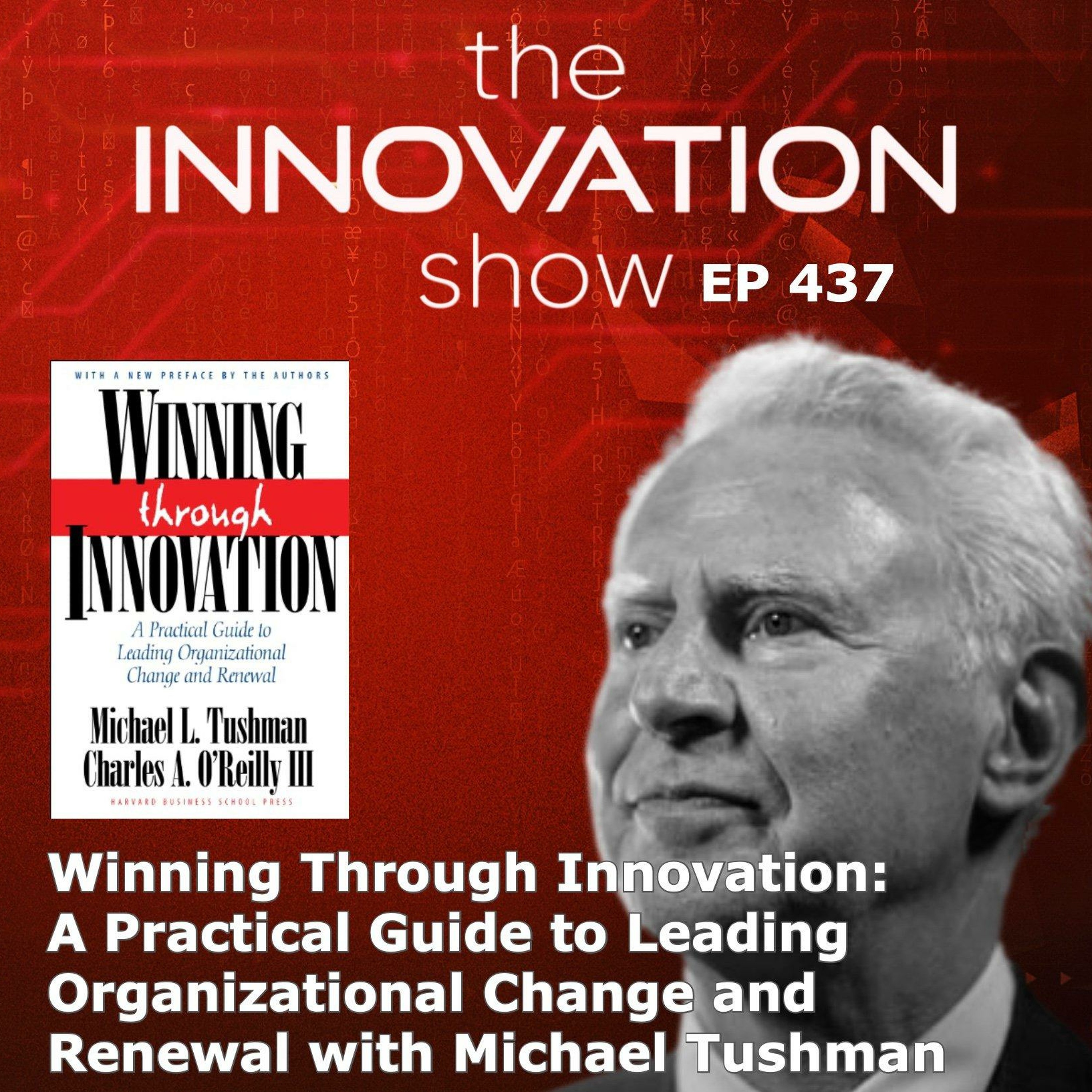
Winning Through Part 1 Innovation with Michael Tushman
In part 1 of our Tushman and O'Reilly series, Michael Tushman examines how leadership, culture, and organizational architectures can be both critical facilitators of innovation and, not uncommonly, formidable obstacles. They demonstrate how to clarify today's critical managerial problems, use culture and commitment to promote innovation and implement strategy, and deal with changing innovation requirements as organizations evolve.
Winning Through Part 1 Innovation with Michael Tushman
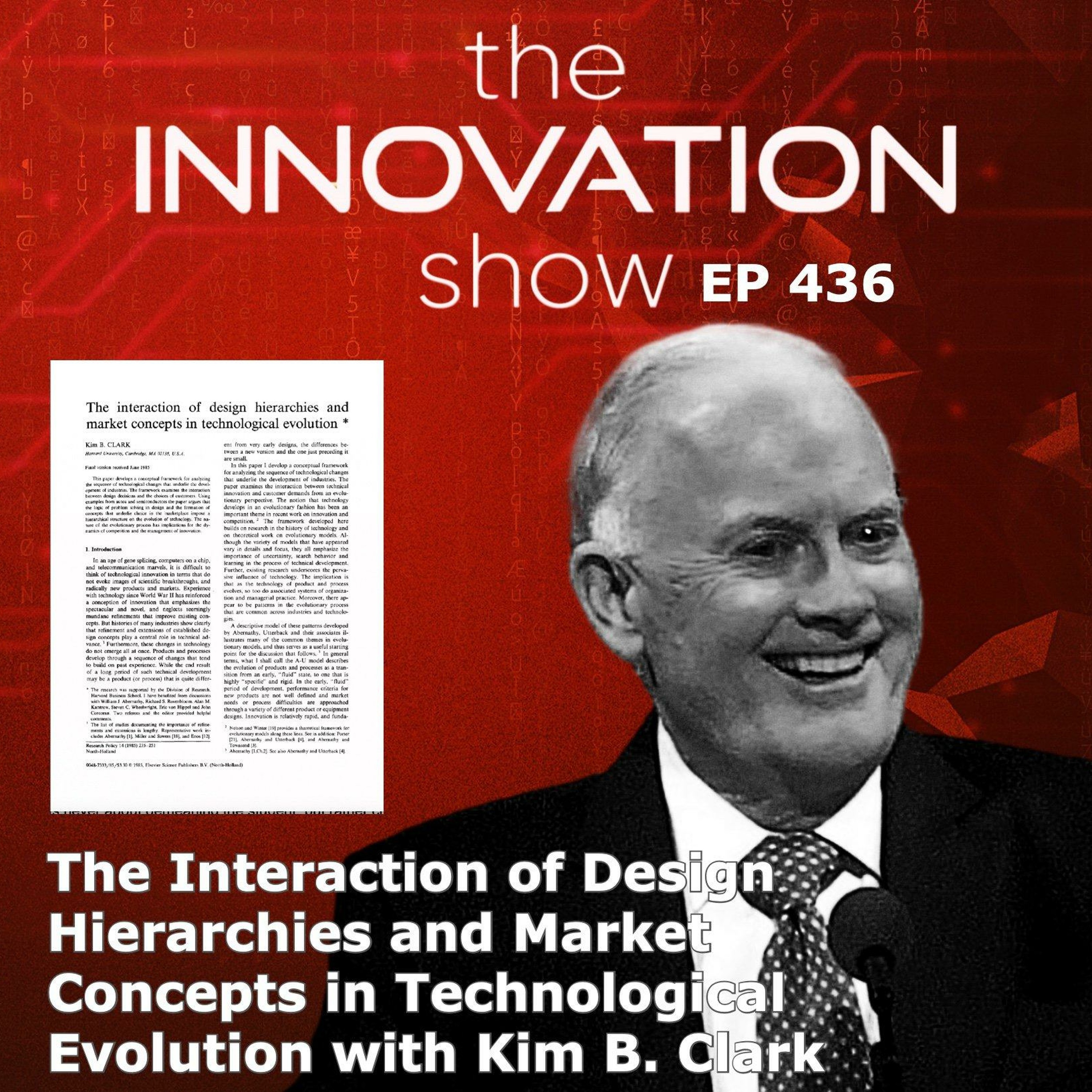
Kim B. Clark - The Interaction of Design Hierarchies and Market Concepts in Technological Evolution
Our guest is an American scholar, educator, and religious leader who has been a general authority of the Church of Jesus Christ of Latter-day Saints since April 2015 and was the church's seventeenth Commissioner of Church Education from 2015 to 2019. He served previously as the 15th president of Brigham Young University–Idaho from 2005 to 2015 and as the Harvard Business School (HBS) dean from 1995 to 2005. He was also the George F. Baker Professor of Business Administration. He published an important series of studies on technological innovation with various co-authors. The organisational linkages, or integration, required to accomplish innovation is a thread that runs through these studies. These insights culminated in his book with Carliss Baldwin, “Design Rules: The Power of Modularity,” which explores the rules for integrating components that shaped innovation in the computer industry and many others. He studied economics with Clay Christensen in the Fall of 1970 and became his dissertation advisor years later alongside Joe Bower. Kim Bryce Clark is with us to celebrate the life and theories of his friend Clayton Christensen and, indeed, share some of his theories.
Kim B. Clark - The Interaction of Design Hierarchies and Market Concepts in Technological Evolution

Efosa Ojomo - The Prosperity Paradox
Global poverty is one of the world’s most vexing problems. For decades, we’ve assumed smart, well-intentioned people will eventually be able to change the economic trajectory of poor countries. From education to healthcare, and infrastructure to eradicating corruption, too many solutions rely on trial and error. Today’s guest reveals a paradox at the heart of our approach to solving poverty. While noble, our current solutions are not producing consistent results and in some cases, have exacerbated the problem. At least twenty countries that have received billions of dollars worth of aid are poorer now. The right kind of innovation not only builds companies—but also builds countries. The Prosperity Paradox identifies the limits of common economic development models, which tend to be top-down efforts. It offers a new framework for economic growth based on entrepreneurship and market-creating innovation. It’s a pleasure to welcome the co-author of The Prosperity Paradox: How Innovation Can Lift Nations Out of Poverty, Efosa Ojomo. Find Efosa here: http://efosaojomo.com
Efosa Ojomo - The Prosperity Paradox
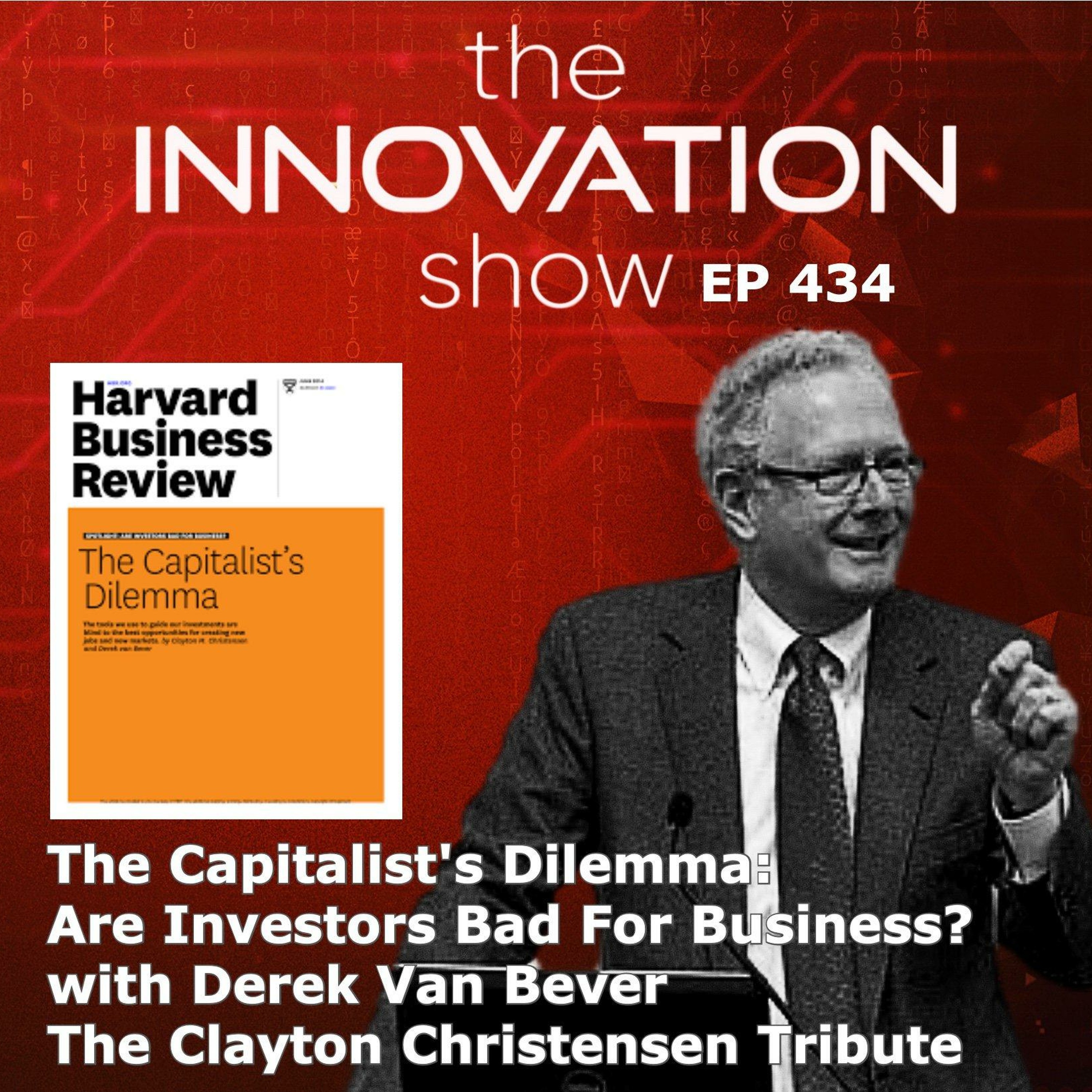
Derek Van Bever - The Capitalist’s Dilemma
Like an old machine emitting a new and troubling sound that even the best mechanics can’t diagnose, the world economy continues its halting recovery from the 2008 recession. Look at what’s happening in the United States: Even today, 60 months after the scorekeepers declared the recession over, its economy is still grinding along, producing low growth and disappointing job numbers.  One phenomenon we’ve observed is that, despite historically low-interest rates, corporations are sitting on massive amounts of cash and failing to invest in innovations that might foster growth. That got us thinking: What is causing that behaviour? Are great opportunities in short supply, or are executives failing to recognise them? And how is this behaviour pattern linked to overall economic sluggishness? What is holding growth back?  Most growth theories are developed at the macroeconomic level—at 30,000 feet. That perspective is good for spotting correlations between innovation and growth. To understand what causes growth, however, you have to crawl inside companies and the minds of the people who invest in and manage them. This article (which builds on a New York Times piece Clay wrote in late 2012) attempts to form a theory from the ground up by looking at company experience. They are the words of the authors of a beautiful paper; one is Clay Christensen and the other is his collaborator, and someone you know would have co-authored at least one book with Clay. Indeed, I feel this article was headed towards becoming a book. It is a pleasure to welcome a great friend of Clay Christensen, yet another soul deeply touched by the man, the author of “Stall points” behind me on the shelf and author of the 2014 paper, The Capitalist’s Dilemma, Derek Van Bever.
Derek van Bever - The Capitalist's Dilemma
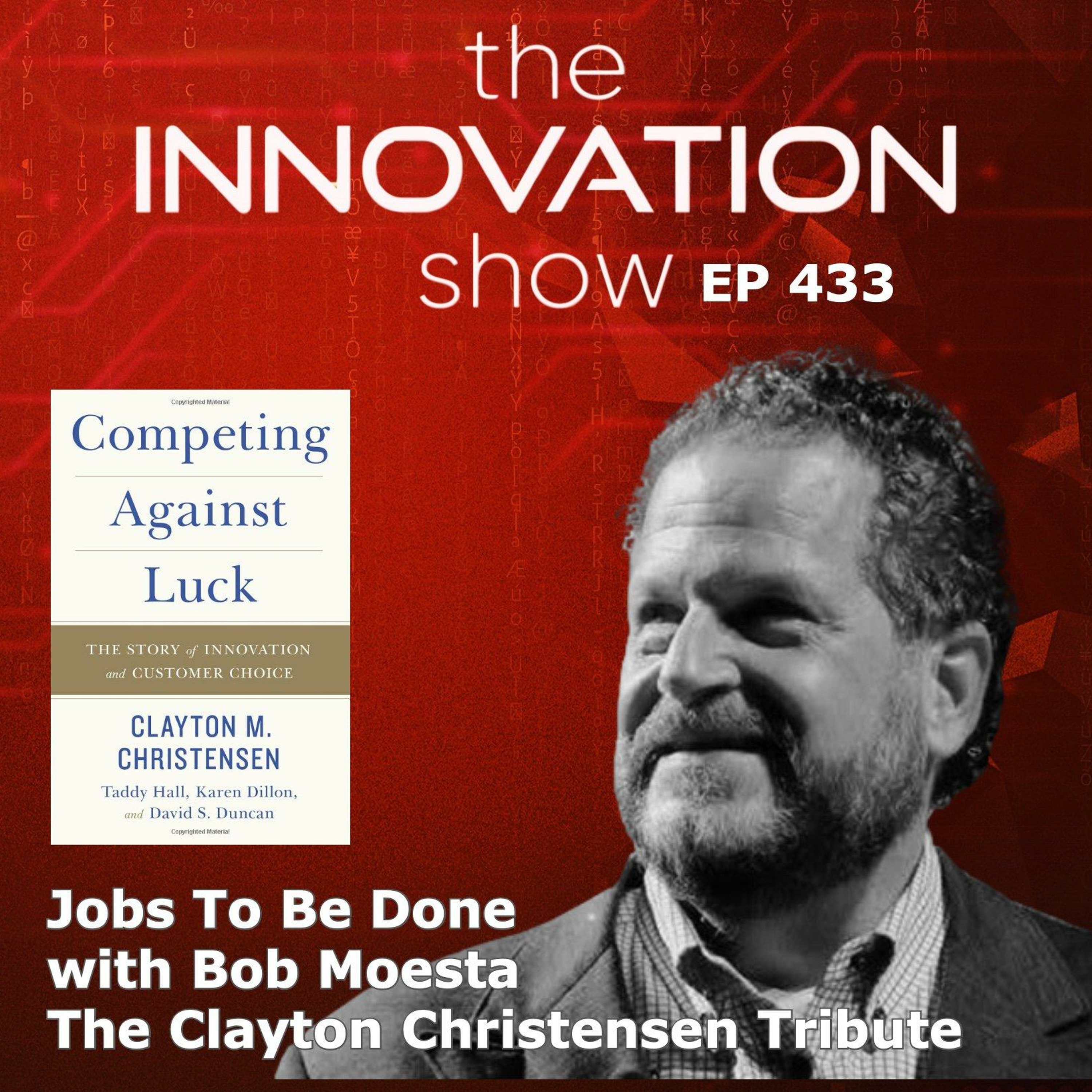
Bob Moesta - Jobs To Be Done
As legendary Harvard Business School professor Theodore Levitt said, "People don't want to buy a quarter-inch drill. They want a quarter-inch hole!" Many organisations focus on creating products for narrow demographic segments rather than satisfying needs when customers want to "hire" a product to do a job. We are joined by Bob Moesta, Master Innovator, Maker and Entrepreneur; Expert Investigator of Consumers’ Motivations and Decision-Making Processes; Co-Creator of the “Jobs-To-Be-Done” Theory; President of The ReWired Group.  Clayton Christensen mentored Bob Moesta, and they became fast friends. Bob was one of the principal architects of the Jobs To Be Done theory. He expands on the theory and shares his respect for his friend Clay. Find Bob here: https://therewiredgroup.com
Bob Moesta - Jobs To Be Done
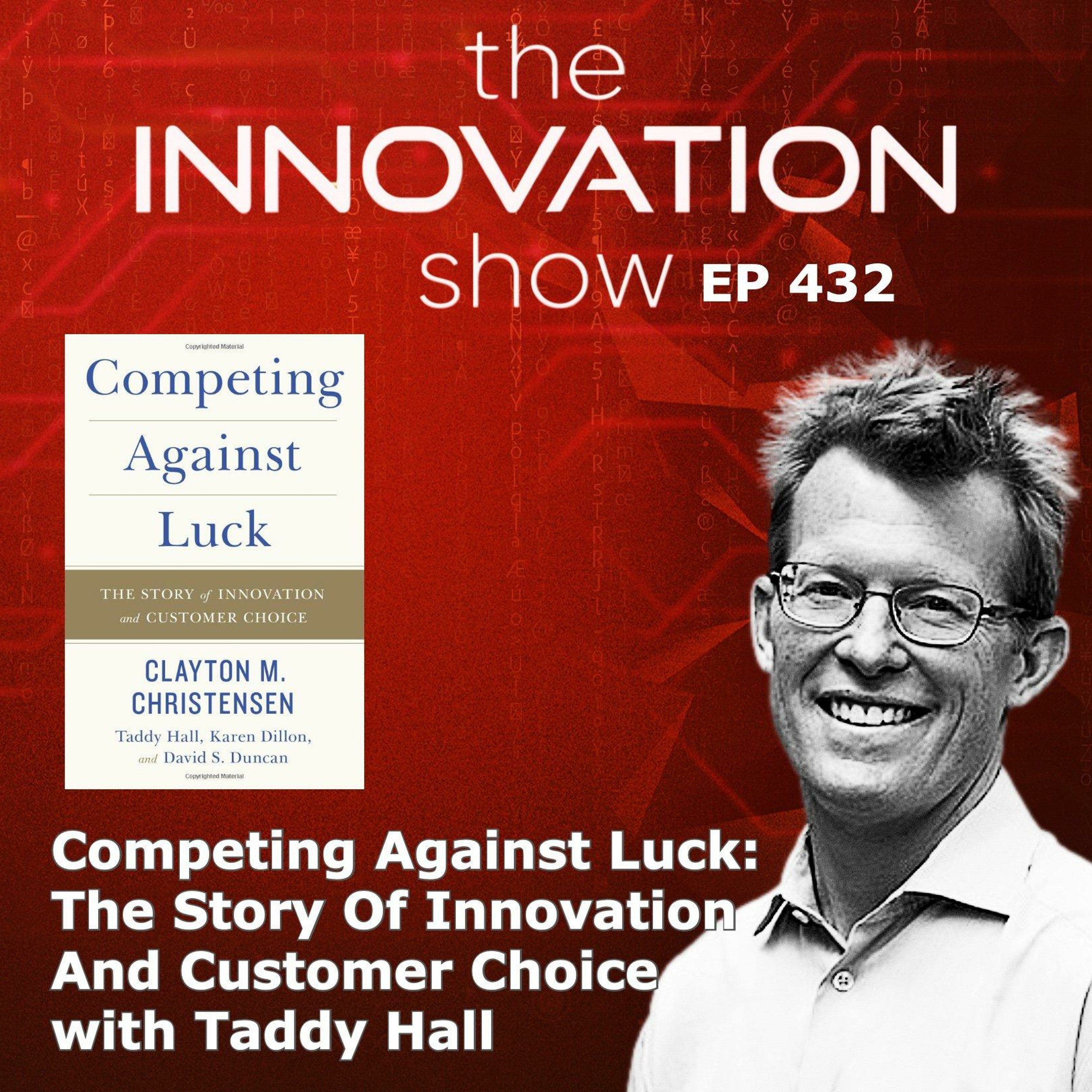
Taddy Hall- Competing Against Luck
Today’s book is a book about progress. Yes, it’s a book about innovation—and how to get better at it. But at its core, this book is about the struggles we all face to make progress in our lives. If you’re like many entrepreneurs and managers, the word “progress” might not spring to mind when you’re trying to innovate. Instead, you obsess about creating the perfect product with just the right features and benefits to appeal to customers. Or you try to fine-tune your existing products continually so they’re more profitable or differentiated from your competitors. You think you know what your customers would like, but it can feel hit or miss. Place enough bets, and—with a bit of luck—something will work out. But that doesn’t have to be the case, not when you truly understand what causes consumers to choose. Innovation can be far more predictable and profitable, but only if you think differently. If you want to compete—and win—against luck, this is the book for you.  Welcome to another episode in our very special series to celebrate the work of Clayton Christensen. Today we are joined by the co-author of Competing Against Luck, Taddy Hall.
Taddy Hall- Competing Against Luck
Karen Dillon - Part 2: How Will You Measure Your Life?
Our guest was the Harvard Business Review editor until 2011, when today's book changed her life. She graduated from Cornell University and Northwestern University’s Medill School of Journalism. In 2011 she was named by Ashoka as one of the world’s most influential and inspiring women. She is also an incredible author and has co-authored with the late Clayton Christensen. She is here today to discuss the concepts of one of my favourite books, which also changed my life's direction.    We welcome back for part 2, the co-author of How Will You Measure Your Life? Karen Dillon.  Find Karen here: https://www.karendillon.net
Karen Dillon - Part 2: How Will You Measure Your Life?
Karen Dillon - How Will You Measure Your Life?
Our guest was the Harvard Business Review editor until 2011, when today's book changed her life. She graduated from Cornell University and Northwestern University’s Medill School of Journalism. In 2011 she was named by Ashoka as one of the world’s most influential and inspiring women. She is also an incredible author and has co-authored with the late Clayton Christensen. She is here to discuss the concepts of one of my favourite books, which also changed my life's direction. We welcome the co-author of How Will You Measure Your Life? Karen Dillon. Find Karen here: https://www.karendillon.net
Karen Dillon - How Will You Measure Your Life?
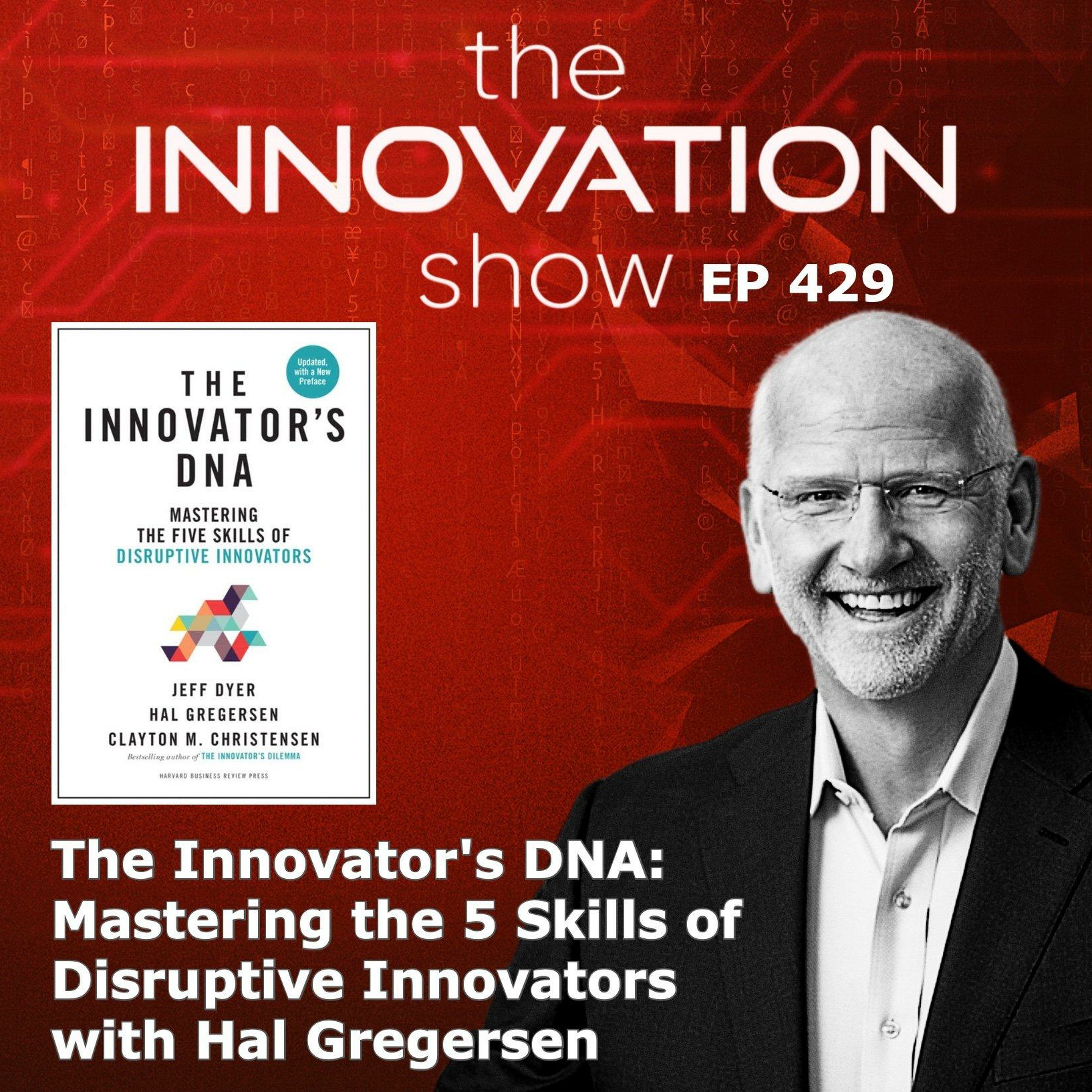
Hal Gregersen - The Innovator's DNA
The genesis of today’s book centred on a question posed years ago to “disruptive technologies” coauthor Clayton Christensen: where do disruptive business models come from? Christensen’s best-selling books, The Innovator’s Dilemma and The Innovator’s Solution, conveyed important insight into the characteristics of disruptive technologies, business models, and companies. Today’s book emerged from an eight-year collaborative study in which our guest sought a richer understanding of disruptive innovators —who they are and the innovative companies they create. The project’s primary purpose was to uncover the origins of innovative—and often disruptive— business ideas. Most of us think creativity is an entirely cognitive skill; it all happens in the brain. A critical insight from our research is that one’s ability to generate innovative ideas is not merely a function of the mind but also a function of behaviours. This is good news for us all because it means we can improve our creative impact if we change our behaviours We welcome Hal Gregersen, co-author of The Innovator's DNA. Find Hal here: https://halgregersen.com
Hal Gregersen - The Innovator's DNA
Mark W. Johnson - Reinventing Your Business Model
Mark W. Johnson - Reinventing Your Business Model
More than a decade ago, Mark Johnson, SAP’s Henning Kagermann, and Clayton Christensen hashed out the principles of business model reinvention in the pages of the Harvard Business Review. Essentially, a business model can be broken down into four distinct elements: A value proposition 2. Resources  3. Processes, 4. A profit formula  This means in practice that the new and different must be separated and even protected from the tried and true. As Mark says, “To play a new game on a new field requires a new game plan.” —Clayton M. Christensen It is a pleasure to welcome the author of multiple titles, a great friend of the show, and the co-author of that 2008 paper Clay mentioned, a Top 50 HBR article of all time, Reinventing Your Business Model; Mark W. Johnson.
Michael B. Horn - Disrupting Class
Clayton M. Christensen and Michael B. Horn’s “Disrupting Class” is an unsettling title for a book about the schooling process. The title conveys multiple meanings. The principal message is that disruption can usefully frame why schools have struggled to improve and how to solve these problems. We welcome back the author of “Disrupting Class, How Disruptive Innovation Will Change the Way the World Learns: Michael B Horn Find Michael here: https://michaelbhorn.com 00:00:00 Intro 00:03:02 Clayton Christensen Relationship 00:05:53 The Why of Disrupting Class 00:08:14 What Does The Theory Have to Say? 00:10:37 Intrinsic v Extrinsic Motivation and Jobs Theory 00:14:47 Interdependence and Modularity 00:22:15 Organisational Design and Authority 00:28:40 Train people how to think not what to think 00:29:37 Model of Disruptive Innovation 00:32:42 Non-Consumption Contexts 00:37:42 Resistance from the Status Quo 00:41:02 Cramming 00:46:06 RCA, Vacuum Tubes, Sony and Transistors 00:49:09 Incubation Outside the Core 00:53:43 Value Network and Ecosystem 00:56:28 The Role of Regulation 01:02:13 Jobs To Be Done Theory 01:06:12 Democratising the theories 01:10:10 Final Thoughts on Disrupting Education 01:10:10 Final Thoughts on Clayton Christensen
Michael B Horn. - Disrupting Class
Scott D. Anthony - Seeing What's Next
Some essential lessons in "Seeing What’s Next" relate to disruptive innovations. Four critical lessons are: 1. Disruption is a process, not an event. 2. Disruption is a relative phenomenon. What is disruptive to one company may be sustaining to another company. 3. Different or radical technology does not equal disruptive. 4. Disruptive innovations are not limited to high-tech markets. Disruption can occur in any product or service market and can even help explain competition among national economies. Today’s book shows how to use the theories of innovation developed in The Innovator’s Dilemma and The Innovator’s Solution—and introduces some new ones as well. The book argues that it is possible to predict which companies will win and which will lose in a given situation--and provides a practical framework for doing so. We are joined by a long-time collaborator, friend and student of both Clayton Christensen, and he is a long-time friend of this show, Scott D. Anthony The HBR article Scott mentioned: https://hbr.org/2022/01/persuade-your-company-to-change-before-its-too-late
Scott D. Anthony - Seeing What's Next
Michael E. Raynor - The Innovator’s Solution
The Innovator’s Dilemma summarised a theory that explains how, under certain circumstances, the mechanism of profit-maximising resource allocation causes well-run companies to get killed. The Innovator’s Solution, in contrast, summarises a set of theories that can guide managers who need to grow new businesses with predictable success—to become the disruptors rather than the disruptees—and ultimately kill the well-run, established competitors. To succeed predictably, disruptors must be good theorists. As they shape their growth business to be disruptive, they must align every critical process and decision to fit the disruptive circumstance. Skate to Where the Money Will Be by Clayton M. Christensen, Michael E. Raynor, and Matthew Verlinden https://hbr.org/2001/11/skate-to-where-the-money-will-be Of waves and ripples: Disruption theory’s newest critic tries to make a splash by Michael E. Raynor, https://www2.deloitte.com/us/en/insights/topics/innovation/disruptive-innovation-theory-lepore-response.html