The Innovation Show
500 episodes — Page 2 of 10
Build Before You Die: The Critical Need for Proactive Capability Building
Build Before You Die: The Critical Need for Proactive Capability Building   In this week's Thursday Thought, we delve into why building capabilities proactively is essential for companies to navigate disruptive change. Through quotes from Clayton Christensen, Stan Deetz, and the Spartan Warrior Mantra, we explore the concept of 'sweating in times of peace' to avoid future crises. Using the analogy of Conan the Barbarian, we examine how companies can strengthen their core competencies to stay competitive. We'll discuss how digital-first companies like Toyota have successfully prepared for technological shifts through early capability building, offering lessons that underscore the peril of waiting until it's too late. Join us to learn how to build for tomorrow, today, and avoid becoming a corporate cautionary tale.   00:00 Introduction: Build Before You Die 00:01 The Importance of Proactive Capability Building 00:04 Quotes to Ponder 00:47 Lessons from Conan and Spartans 01:20 Digital Natives vs. Traditional Businesses 01:55 The Cost of Waiting 02:37 Strategies for Building Competencies 03:03 The Role of Leadership in Capability Development 03:52 The Predictable Pattern of Disruption 05:19 Case Study: Toyota's Long-Term Vision 08:21 The Essence of Organizational Capability 09:07 Conclusion: Continuous Journey of Reinvention 09:20 Join Us at The Reinvention Summit  
Stan Deetz - Leading Organizations through Transition: Communication and Cultural Change
Stan Deetz - Transforming Organizational Culture: Insights and Strategies for Modern Success In this comprehensive episode, we explore pivotal topics in organizational culture and change management with experts like Stanley Deetz. From understanding the role of communication in periods of transition and mergers to building resilience and effective leadership, our discussions cover a wide range of issues critical to the modern workplace. We delve into the historical shifts in corporate culture, the influence of Japanese practices on American companies, and the evolving mindsets driven by generational changes and Artificial Intelligence. Learn about the power of systems thinking and organic metaphors in fostering innovation and teamwork. Discover essential strategies for managing change, overcoming fear, and leveraging diversity for organizational success. Join us to gain profound insights and practical tools for navigating and transforming organizational culture. 00:00 Introduction to Organizational Culture and Change 01:07 Origins and Development of the Book 02:24 Understanding Organizational Culture 02:50 Seton Hall and Online Education 04:59 Navigating Organizational Change 05:48 Managing Hearts, Minds, and Souls 10:47 The Role of Conflict in Innovation 18:10 Historical Shifts in Corporate Culture 26:15 Internal Models vs. External Realities 26:51 Generational Shifts in Organizational Metaphors 29:06 Cultural Fragmentation and Countercultures 31:00 Mechanistic vs. Organic Metaphors 32:33 Psychologizing Organizational Change 39:38 Systemic Thinking in Organizations 44:05 Challenges in Team Dynamics 46:43 Understanding Assumptions in Change Management 51:21 Conclusion and Contact Information Find the episode we mentioned with George Lakoffat 32.25 with here: Stan Deetz, Stanley Deetz, Organizational culture, communication, Aidan McCullen, cultural change, leadership, organizational transitions, mergers, technological innovations, globalization, Seton Hall University, ethical issues, member involvement, executive master's program, organizational development,  change processes, corporate culture, workplace dynamics
Kristin von Donop - Corporate Innovation Support
Navigating Corporate Innovation: Building Leadership Movements with Kristin Von Donop. In this episode of 'The Corporate Explorer,' Aiden interviews Kristin Von Donop, co-author of 'The Corporate Explorer Field Book,' discussing the intricacies of fostering innovation within large corporations like IBM. Delving into the challenges corporate explorers face, the conversation highlights how resistance to change is natural but not insurmountable. By enrolling others, engaging communities, and strategically addressing resistance, new ventures can thrive. Key insights include leveraging allies, advocates, ambassadors, and angels for sustainable leadership movements, as well as understanding the human dynamics in organizational change. Sponsored by Wazoku, provider of software solutions for innovation ecosystems. 00:00 Introduction and Sponsor Acknowledgment  00:37 Overview of the Chapter and Guest Introduction 02:21 Challenges of Implementing Change 03:31 Building a Leadership Movement 07:47 Case Studies and Real-World Examples  14:23 Engaging the Community and Overcoming Resistance 29:39 Final Thoughts and Conclusion
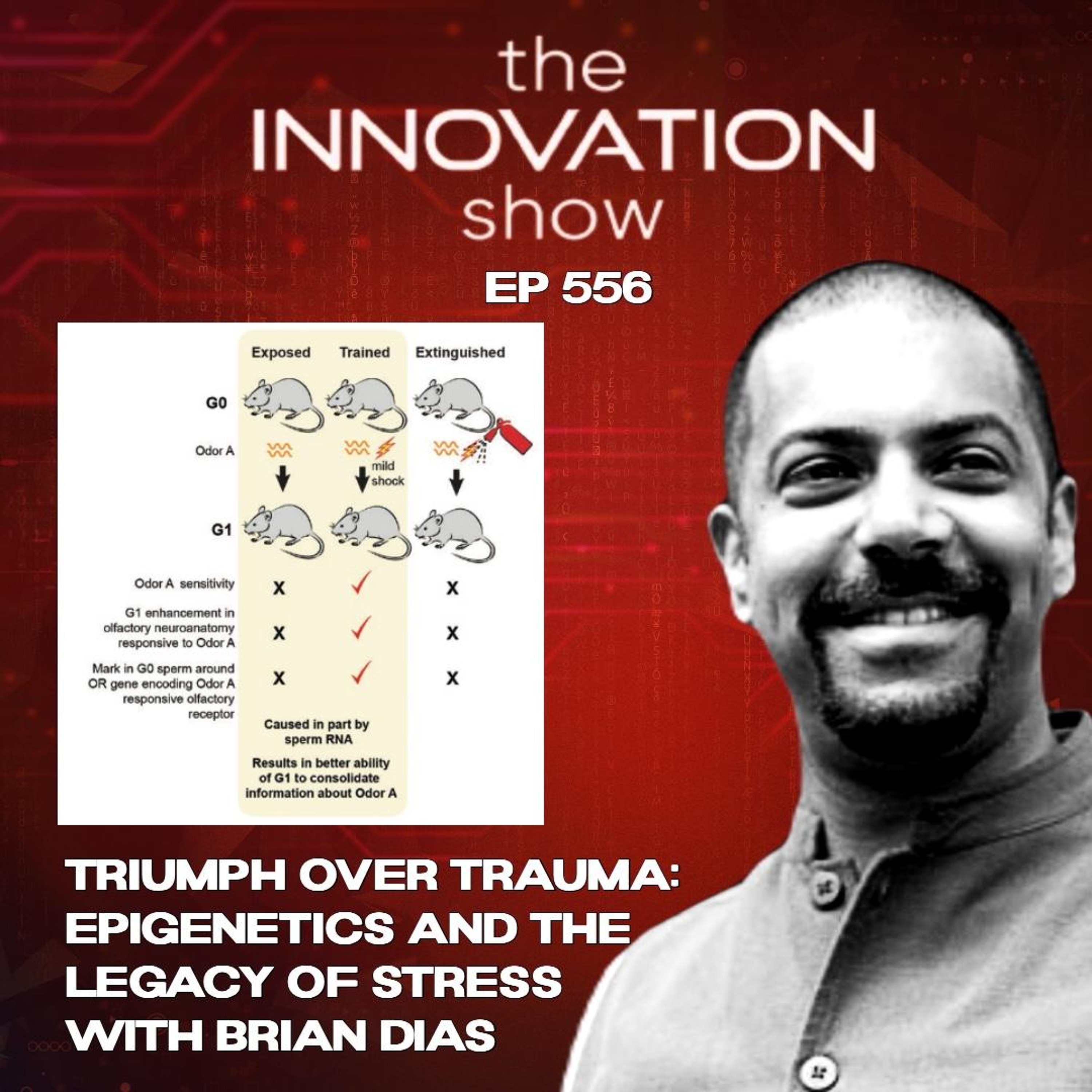
Brian Dias - Triumph over Trauma
We explore the transformative research of Brian Dias on how environmental stressors and trauma can influence behavior and physiology across generations. Brian shares his personal motivation behind his scientific journey, discussing his impactful studies on chemosensation, the inheritance of behavioral sensitivities, and the potential for positive future legacies. We dive into the fascinating evidence from animal studies and explore the implications for human wellbeing and organizational behavior. This episode reveals both the challenges and opportunities in understanding and altering the epigenetic legacy of stress, offering insights into the biology of adaptation and resilience.   00:00 Introduction and Opening Mantra 00:48 Welcoming the Guest: Brian Dias 02:09 Exploring Environmental Stressors 03:17 Brian's Personal Journey and Scientific Mission 05:29 Chemosensation and Generational Impact 06:46 Cherry Blossom Study and Behavioral Sensitivity 09:02 Organizational Culture and Behavioral Transmission 13:35 Mechanisms of Stress Legacy Transmission 32:19 Epigenetics and Environmental Influences 49:20 Engineering Legacies of Flourishing 53:59 Concluding Thoughts and Future Directions     Trauma, Legacy, Epigenetics, Neuroscience, Stress, Gene Expression, Biological Response, Generational Trauma, Environmental Impact, Stress Response, Psychology, Human Behavior, Holocaust, 9/11, Scientific Research, Chemo Sensation, PTSD, Childhood Abuse, Brian Dias, Aidan McCullen   Towards understanding and halting legacies of trauma   Legacies of salient environmental experiences—insights from chemosensation   Fostering Respectful and Productive Conversations: Lessons Learned From Debating Courtyards in Tibetan Buddhist Monasteries   Dias Lab:
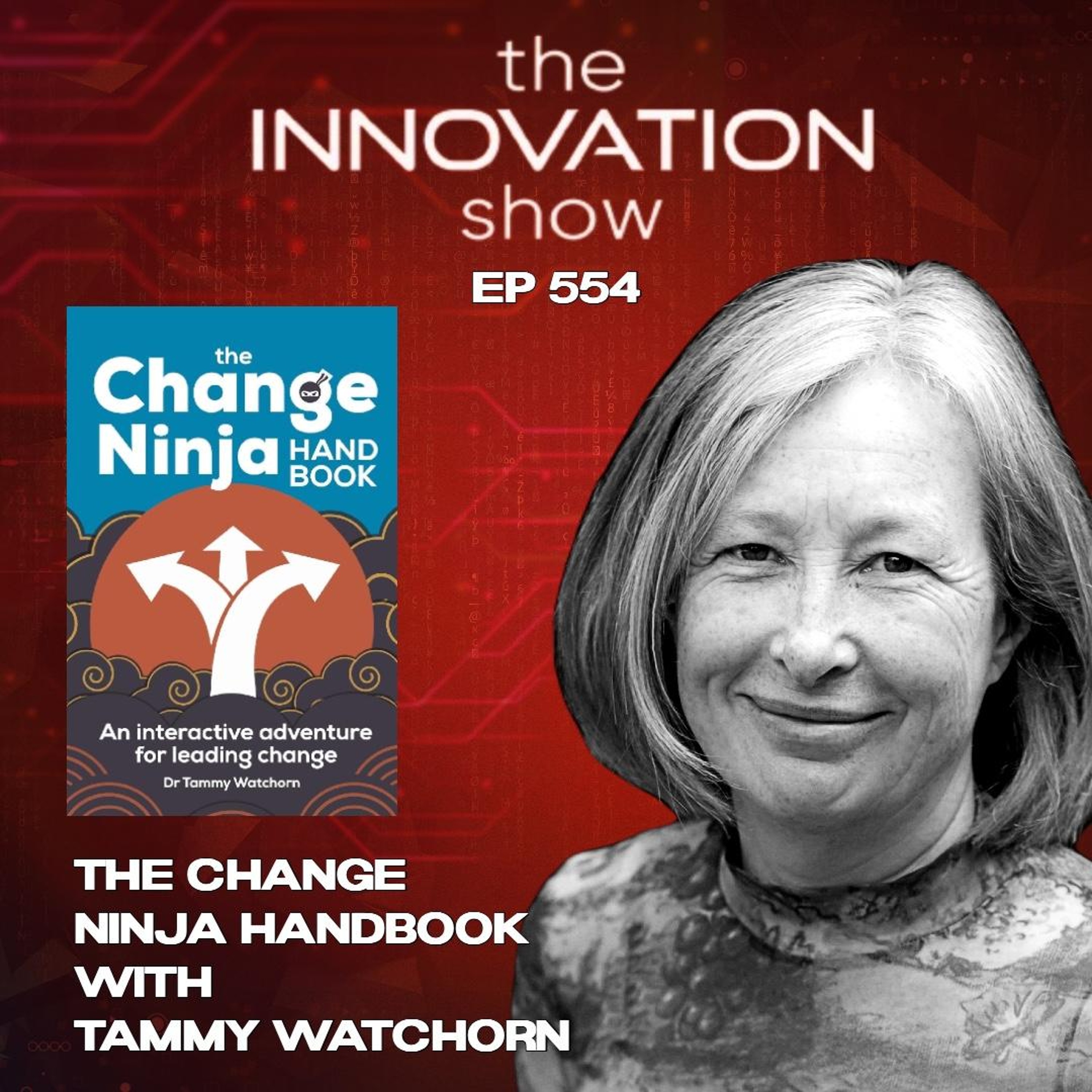
Tammy Watchorn - The Change Ninja Handbook
Tammy Watchorn - The Change Ninja Handbook   Join us in this episode as we welcome Dr. Tammy Watchorn, the author of 'The Change Ninja Handbook.'  Dive into an interactive exploration of change-making, based on real-life case studies.  Discover the most common challenges faced by change leaders, the importance of understanding organizational dynamics, and the human element in leading change. Learn about the critical tools and techniques to transform your approach and make a meaningful impact in your organization. This episode is a must-listen for anyone navigating the complexities of organizational change.   00:00 Introduction to the Change Ninja Handbook 00:15 Welcoming the Author: Tammy Watchorn 01:03 Challenges in Public Sector Change Leadership 02:13 Understanding People in Change Management 03:16 Navigating Organizational Systems and Processes 06:08 The Importance of Individual Stakeholders 08:02 Interactive Game and Recognizable Characters 12:25 The Reality of Driving Change 15:49 Personal Experiences and Lessons Learned 30:15 Creating Innovative Spaces 36:24 Navigating Workplace Challenges 37:29 The Importance of Stealth in Change Management 38:22 Building Resilience and Thick Skin 38:54 The Power of a Support Network 39:46 Defining Innovation and Change 40:20 Introducing Eddie Obeng and Qube 41:22 Innovating the Health Service 42:30 Scaling Innovation from the Ground Up 43:37 Handling Unexpected Projects 44:52 Earning and Using Brownie Points 46:23 Understanding Types of Change 47:09 The Four Types of Change 49:05 The Fog of Transformation 52:43 Aligning Teams with the Five P's 01:00:45 Celebrating Small Wins 01:03:52 Final Thoughts and Future Plans   Link to Aidan McCullen for Keynotes, workshops and event MC.   The Reinvention Summit    Find us on Substack for Shownotes and competitions:   Find Tammy Watchorn:    Innovation Leadership, Change Management, Organizational Transformation, Adaptive Mindset, Cultural Change, Ninja Thinking, People-Centric Innovation, Stakeholder Engagement, Workplace Collaboration, Systemic Challenges, Creative Problem Solving, Psychological Safety, Human-Centered Design, Incremental vs. Radical Change, Resilience in Innovation
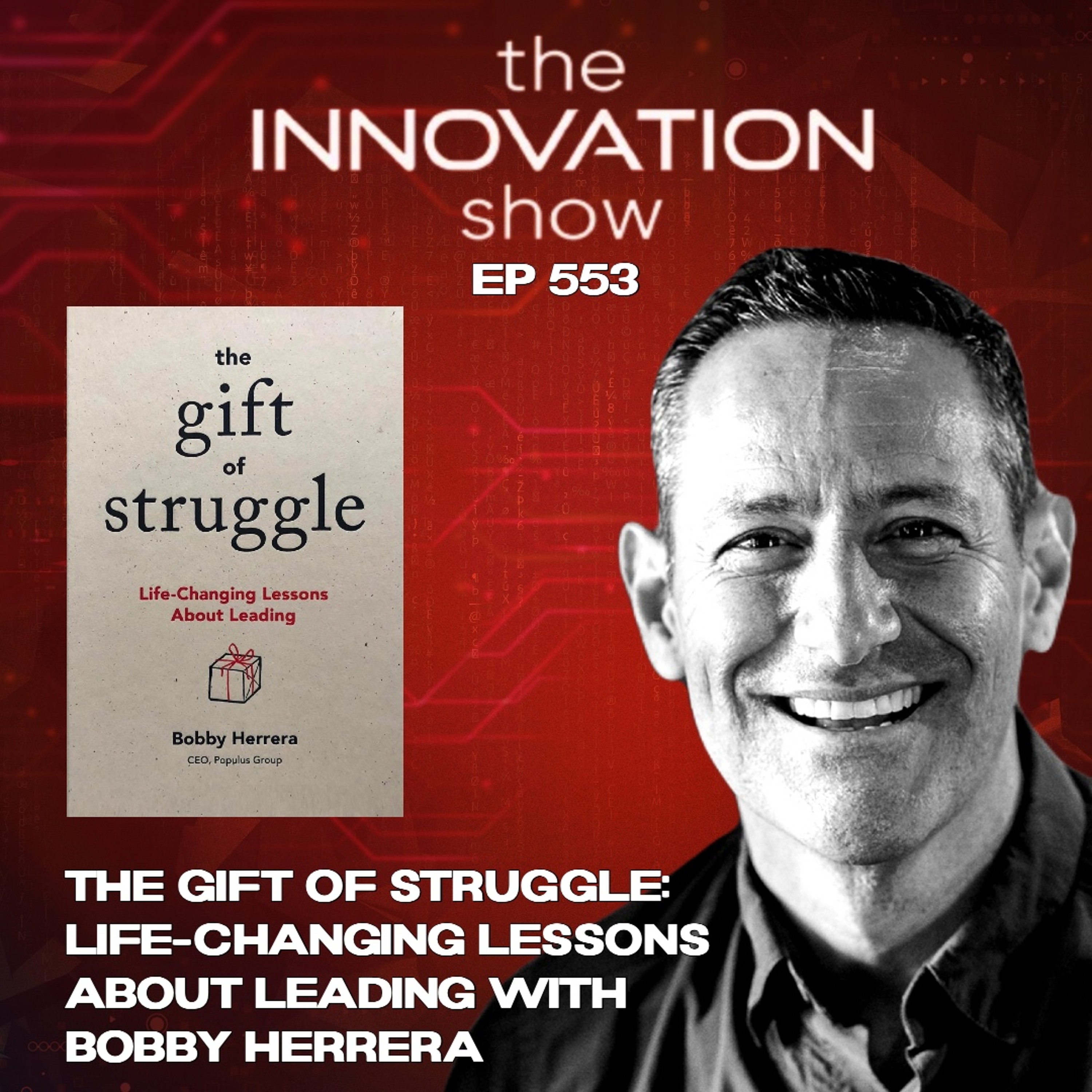
Bobby Herrera: The Gift of Struggle
Bobby Herrera: The Gift of Struggle In this episode, we dive into the inspiring leadership journey of Bobby Herrera, co-founder and CEO of Populus Group, who has transformed his life's challenges into invaluable lessons. Bobby shares how his experiences, including his transformative 'bus story,' have shaped his leadership approach. He emphasizes the power of vulnerability, radical transparency, and empathy in leadership. Bobby also discusses the importance of storytelling in building trust and community within his organization. Join us as we explore Bobby's book 'The Gift of Struggle' and the stories that have not only defined his leadership but also offer actionable insights for any leader looking to grow. Special shout-outs to Gray Miller, Scott Miller, and Drew Young for their roles in connecting the host and Bobby.   00:00 Introduction to Leadership Challenges 01:27 Guest Introduction: Bobby Herrera 02:59 The Bus Story: A Lesson in Kindness 06:02 The Power of Vulnerability in Leadership 14:49 The Bracero Story: A Father's Legacy 26:29 The Importance of Keeping Your Word 27:41 A Hero's Lesson in Integrity 29:04 The Importance of Trust Signals 29:41 Taking Action on Feedback 32:03 The Power of Application 33:31 Mentorship and Humility 35:48 Transformative Leadership 39:53 Parenting and Leadership Lessons 45:56 Encouraging Innovation and Deviance 54:28 Final Reflections and Farewell   Find Bobby: Find Aidan McCullen for Innovation and Reinvention Keynotes, workshops and event MC. Find us on Substack for Shownotes and competitions: Book Aidan and Bobby:   Bobby Herrera, The Gift of Struggle, Aidan McCullen, Scott Miller, Drew Young leadership, storytelling, vulnerability, empathy, resilience, mentorship, personal growth, business success, innovation, trust building, company culture, gratitude, overcoming challenges, positive impact, parenting, personal development, inspirational stories, perseverance, community building, kindness
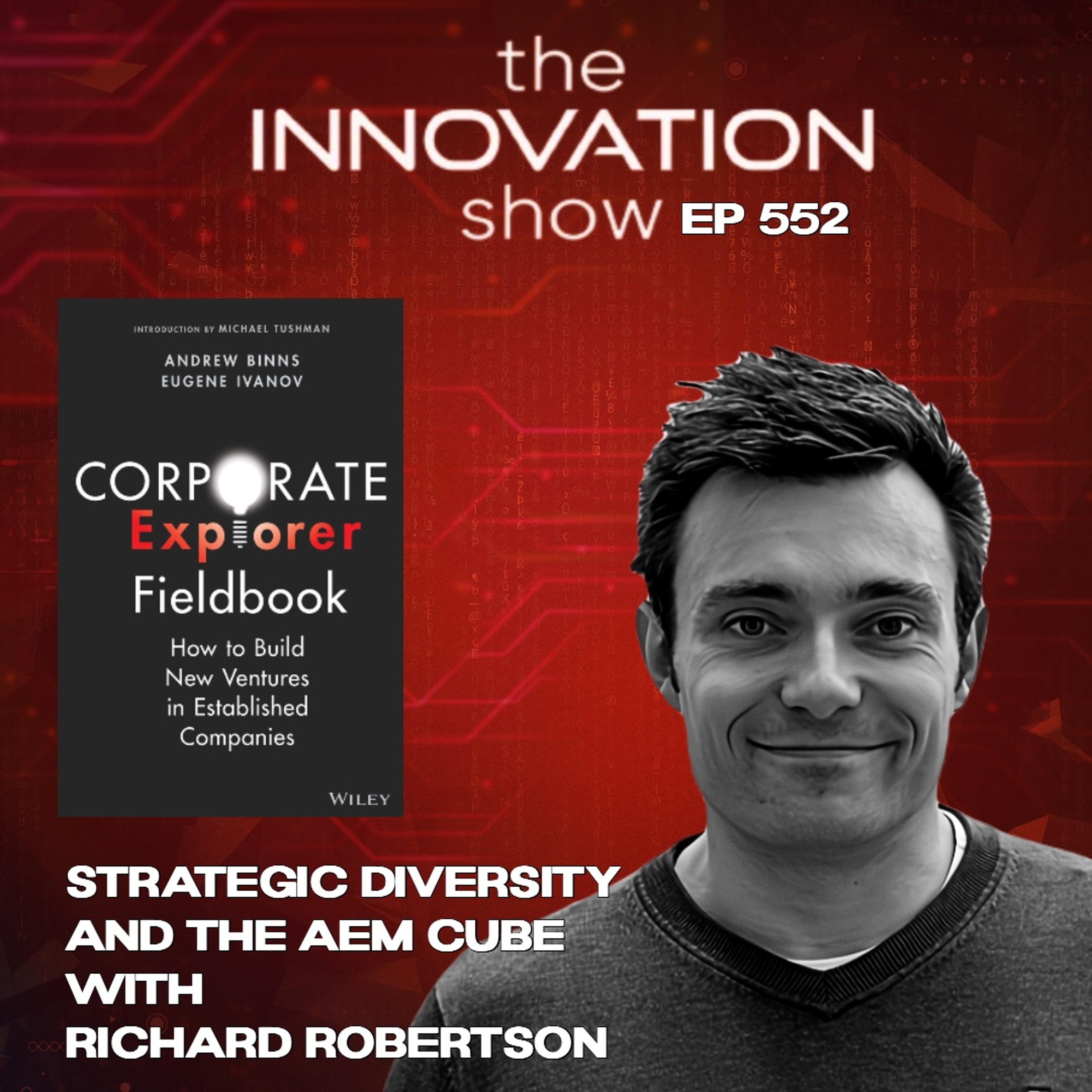
Strategic Diversity in Corporate Innovation with Richard Robertson
Strategic Diversity in Corporate Innovation with Richard Robertson | The Corporate Explorer Series In this episode of The Corporate Explorer, host Aiden is joined by Richard Robertson, co-author of The Corporate Explorer Field Book, to discuss the critical concept of strategic diversity in building high-performing teams within corporate environments. Robertson delves into the various phases of strategic innovation and growth, from ideation to maturation and transformation. He emphasizes the importance of blending formal and informal processes to harness innovation and highlights how different skill sets and mindsets are needed at various stages of corporate development. The episode also features insights on managing complexity and human behavior, optimizing team performance, and the application of the AEM Cube tool. Sponsored by Wazoku, the episode provides valuable strategies for ensuring sustainable innovation and maximizing team potential.   00:00 Introduction and Sponsor Acknowledgment 00:40 Understanding Corporate Explorers 01:44 The Importance of Strategic Diversity 01:52 Guest Introduction: Richard Robertson 03:48 Strategic Diversity in Teams 08:08 The S Curve and Team Dynamics 16:01 Exploring the AEM Cube 20:42 Conclusion and Contact Information   Find Richard:   Link to Aidan McCullen for Keynotes, workshops and event MC.   The Reinvention Summit    Find us on Substack for Shownotes and competitions:
Peter Compo Finale - Strategy In Practice
The Last Episode with Peter Compo: Engaging in Emergent Strategy   In this final episode, the host reflects on an engaging series with Peter Compo, author of 'The Emergent Approach to Strategy.' Peter answers a viewer question about strategic leadership and emergent strategy, emphasizing the importance of internalizing the strategy design and involving everyone in the process. They discuss managing strategies through turbulence, the significance of scenarios in strategy planning, and ensuring robust execution despite challenges. Finally, the episode explores identifying bottlenecks in organizations and the intricacies of systemic issues. This episode is a must-watch for business strategists and leaders looking to deepen their understanding of emergent thinking and effective execution.   00:00 Introduction and Guest Welcome 00:24 Viewer Questions and Strategic Leadership 01:38 Engaging Teams in Emergent Strategy 05:04 Consultant Work and Strategy Design 07:01 Execution and Crisis Management 16:19 Scenario Planning and Strategy Alternatives 36:05 Understanding Bottlenecks in Frameworks 36:45 Designing Strategy: A Puzzle Approach 39:03 The Role of Bottlenecks in Strategy 40:57 Techniques for Identifying Bottlenecks 44:17 Addressing People and Emotional Bottlenecks 46:08 Case Study: Courier Incorporated 50:41 Real-World Application: The Reinvention Summit 58:20 Systemically Broken Organizations 01:02:36 Conclusion and Final Thoughts   Link to Peter’s website:   Link to Peter’s Music:   Link to Aidan McCullen for Keynotes, workshops and event MC.   The Reinvention Summit    Find us on Substack for Shownotes and competitions:   Peter Compo, emergent strategy, Aidan McCullen, leadership, strategic leadership, business strategy, crisis management, execution, organizational change, scenario planning, strategy alternatives, bottlenecks, innovation, systemic issues, strategic consulting, management theory, goal setting, thought leadership, executive decision-making, strategy frameworks
The Strategy Alternative Matrix (SAM) with Peter Compo
In this episode, we delve into the emergent approach to strategy with Peter Compo, discussing how truth and perception impact strategy, the importance of flexibility in decision-making, and the necessity of internalizing models and frameworks. We explore the role of consensus, the SAM (Strategy Alternative Matrix), and the balance between creativity and structured strategy. Peter also emphasizes the need for gradual and thoughtful change in organizations, comparing it to the natural bend of a river and the disciplined approach in sports. The conversation underscores the value of slow, deliberate work in achieving sustainable innovation and effective change management.   00:00 Introduction and Welcome 00:24 The Nature of Truth and Strategy 04:15 Mindfulness and Decision Making 06:32 Lego and Strategy: A Creative Analogy 10:21 Adaptive Strategy and Innovation 19:31 The Strategy Alternative Matrix (SAM) 27:36 The Role of AI in Strategy Development 36:40 The Pain of Real Change 55:39 Conclusion and Final Thoughts   38:14 Next Episode Preview   Link to Peter’s website:   Link to Peter’s Music:   Link to Aidan McCullen for Keynotes, workshops and event MC.   Find us on Substack for Shownotes and competitions:   strategy podcast,  Strategy Alternative Matrix (SAM), strategy, innovation, emergent approach, Peter Compo, Aidan McCullen, leadership, change management, creativity, mindfulness, decision making, AI in strategy, teamwork, lego analogy, business models, fitness criteria, adaptability, music composition strategy, Michael Raynor, Michael Beer  
Execution in Strategy with Peter Compo
In this episode of 'The Emergent Approach to Strategy,' guest Peter Compo joins to discuss the complexities of executing strategy effectively, focusing on Chapter 9 from his book. Compo addresses common misconceptions about execution and its distinction from strategy, emphasizing the importance of adherence to strategy frameworks. He explores real-world examples from businesses and sports, highlighting how excellent execution requires discipline and adaptability in dynamic situations. The conversation also delves into the integration of innovation within disciplined execution, using analogies from music and sports to illustrate key points.   00:00 Introduction and Overview 00:37 Understanding Execution in Strategy 02:55 The Misconceptions of Execution 06:23 Execution vs. Strategy: A Deeper Dive 08:57 Execution in Practice: Sports and Music Analogies 11:57 Challenges and Realities of Execution 20:52 Execution in Business and Innovation 23:26 Demming’s Red Bead Experiment and Its Lessons 39:15 Final Thoughts and Conclusion   Link to Peter’s website:   Link to Peter’s Music:   Link to Aidan McCullen for Keynotes, workshops and event MC.   Find us on Substack for Shownotes and competitions:   Link to Frank Barrett’s episode “Yes to the Mess” part 1 and 2:   strategy, innovation, execution, Peter Compo, Aidan McCullen, emergent approach, business strategy, military strategy, sports strategy, discipline, improvisation, music, jazz, leadership, organizational behavior, cognitive capacity, change management, tactical planning, operational excellence, resilience
Peter Compo - The Five Disqualifiers of Strategy
Understanding the Five Disqualifiers of Strategy with Peter Compo   Welcome back to another episode featuring Peter Compo, the renowned author of 'The Emergent Approach to Strategy.' In today's discussion, Peter delves deep into the 'Five Disqualifiers of Strategy,' offering insights into common pitfalls in strategic design. The episode is packed with practical examples and explanations of why traditional strategy tests often fall short. Peter illustrates the importance of real-time guidance, unified decisions, and free choices in strategic frameworks. Learn about five critical tests to evaluate your strategy: 'Is the opposite absurd?', 'Does it have numbers?', 'Does it exclude anything?', 'Does it duplicate the higher-level organization?', and 'Is it a list?'. This episode is essential for anyone involved in business strategy, innovation, and better thinking.   00:00 Introduction and Welcome 01:01 The Importance of Strategy Testing 01:40 Traditional vs. Modern Strategy Tests 02:17 Introduction to the Five Disqualifiers 05:24 Detailed Explanation of the Five Disqualifiers 06:33 Practical Examples and Applications 08:37 Common Pitfalls in Strategy 18:55 The Role of Clear Language in Strategy 21:43 Summary and Conclusion 38:14 Next Episode Preview   Link to Peter’s website:   Link to Peter’s Music:   Link to Aidan McCullen for Keynotes, workshops and event MC.   Find us on Substack for Shownotes and competitions:   strategy, disqualifiers, Peter Compo, Aidan McCullen, emergent approach, strategy design, business strategy, adaptive tools, Michael Porter, McKinsey, corporate strategy, innovation, Henry Ford, Warren Buffett, R&D, market dynamics, organizational strategy, DVD business, Netflix, Adobe  
Annie Duke - Thinking in Bets
Annie Duke - Thinking in Bets by Aidan McCullen
Peter Compo Part 4: The Limitations of Aspirations, Plans Metrics
In this episode, Peter Compo delves into the emergent approach to strategy and discusses the limitations of traditional frameworks using aspirations, plans, and metrics alone. He further discusses the concept of 'killer problems' in innovation and emphasises the importance of a central rule that provides real-time guidance, unifies decisions, and allows for free choice. Complex examples from business and military strategy illustrate how granularization and over-specification can lead to failure, whereas centralized, low-level constraints help create coherence and foster creativity. Peter also explores nested systems and the necessity of having individual strategies for different segments within an organization.   00:00 Introduction and Overview 00:25 Limitations of Aspirations, Plans, and Metrics 01:12 The Killer Problems of Change and Innovation 03:04 Framework Components and Their Shortcomings 05:25 The Power of Central Rules 06:45 Challenges in Digital Transformation 10:27 Local vs Global Strategy 13:54 Granularization Problem in Strategy 18:31 The Fallacy of Shrinking Time 22:38 The Hidden Blockers of Transformation 26:11 Introduction to Chapter Five: How Strategy Functions 30:20 Granularization and Cascading Problems 31:13 Identifying and Overcoming Bottlenecks 33:29 Elon Musk's Engineering Approach 35:40 The Importance of Low-Level Rules 41:21 Strategy and Tactics in Warfare 48:46 Nested Systems and Organizational Strategy 54:58 The Role of Leadership in Strategy Implementation 56:23 Conclusion and Further Resources   Link to Peter’s website: Link to Peter’s Music: Link to Aidan McCullen for Keynotes, workshops and event MC. Find us on Substack for Shownotes and competitions:   Peter Compo, strategy, emergent approach, aspirations, plans, metrics, innovation, complex adaptive systems, real time guidance, central rule, rule adherence, deviations from diagnosis, decision making, organizational change, digital transformation, investment in new products, granularization, cascading goals, bottleneck constraints, nested systems, military tactics
Solving Innovation's Killer Problems with Peter Compo Part 3
Solving Innovation's Killer Problems with Peter Compo: The Emergent Approach to Strategy Part 3   In this episode of 'The Innovation Show,' we continue our exploration of the emergent approach to strategy with expert Peter Compo. Delving into the critical challenges of change and innovation, the discussion centers on how high-level aspirations are influenced by disciplined actions at low levels. Peter outlines 'killer problems' in innovation such as the volume of choices, time delays between actions and outcomes, and external influences. Through the use of influence diagrams and practical examples, such as running a successful bike shop, Peter demonstrates how organizations can navigate these problems. The episode also touches on strategies to provide real-time guidance, unify efforts, and ensure actions align with overarching goals, highlighting the importance of integrating these strategies in multifaceted organizations.   00:00 Introduction and Welcome Back 00:39 Understanding High-Level Aspirations 02:37 The Killer Problems of Innovation 04:05 Influence Diagrams and Strategy Frameworks 05:58 Real-World Examples and Practical Applications 07:44 Exploring the Influence Diagram 13:07 The Four Killer Problems 28:15 Solutions to the Killer Problems 41:36 Conclusion and Further Resources   Link to Peter’s website: Link to Peter’s Music: Link to Aidan McCullen for Keynotes, workshops and event MC. Find us on Substack for Shownotes and competitions: Peter Compo, Aidan McCullen, emergent approach, strategy, innovation, adaptation, killer problems, change, influence diagram, bike shop example, creativity, discipline, coherence, real-time guidance, free choice, unification, leadership, strategic frameworks, decision-making, business strategies
Peter Compo Part 2: A Primer on Adaptation and Emergence
The Emergent Approach to Strategy: Adaptation, Innovation, and Historical Insights In this episode, the focus is on Peter Compo's discussion of 'The Emergent Approach to Strategy,' specifically its application to adaptation and emergence in strategy development. The conversation explores the parallel between biological evolution and human innovation, highlighting the importance of adaptive systems in creativity and strategy. Historical examples, such as the early automotive industry led by Henry Ford and modern electric cars pioneered by Elon Musk, are used to illustrate how low-level disciplines and rules can lead to high-level strategic outcomes and industry transformations. The episode delves into the principles of complex adaptive systems, emphasizing the balance between discipline and free-thinking, and how effective strategies emerge from rigorous local actions. Peter Compo also addresses the concept of levels within organizations, stressing the significance of being attuned to low-level operations to drive innovation while avoiding becoming prisoners of past successes. 00:00 Introduction and Welcome 00:08 The Concept of Adaptation and Emergence 03:43 Historical Examples of Adaptive Systems 07:13 Ford's Strategy and Its Evolution 10:39 The Theory of Levels in Creativity and Innovation 18:54 Connecting Levels to Strategy 27:41 Ants and Social Insects: A Case Study 31:48 Intel's Transition to CPUs 35:20 Conclusion and Final Thoughts Link to Peter’s website: Link to Peter’s Music: Link to Scale with Geoffrey West Part 1 of 3: Link to Aidan McCullen for Keynotes, workshops and event MC. Find us on Substack for Shownotes and competitions:   Peter Compo, Aidan McCullen, emergent strategy, Peter Compo, adaptive systems, innovation, complex adaptive systems, business strategy, evolutionary mechanisms, creativity, Henry Ford, Tesla, Elon Musk, execution, Intel CPUs, corporate discipline, low level rules, high level outcomes, market forces, leadership insights
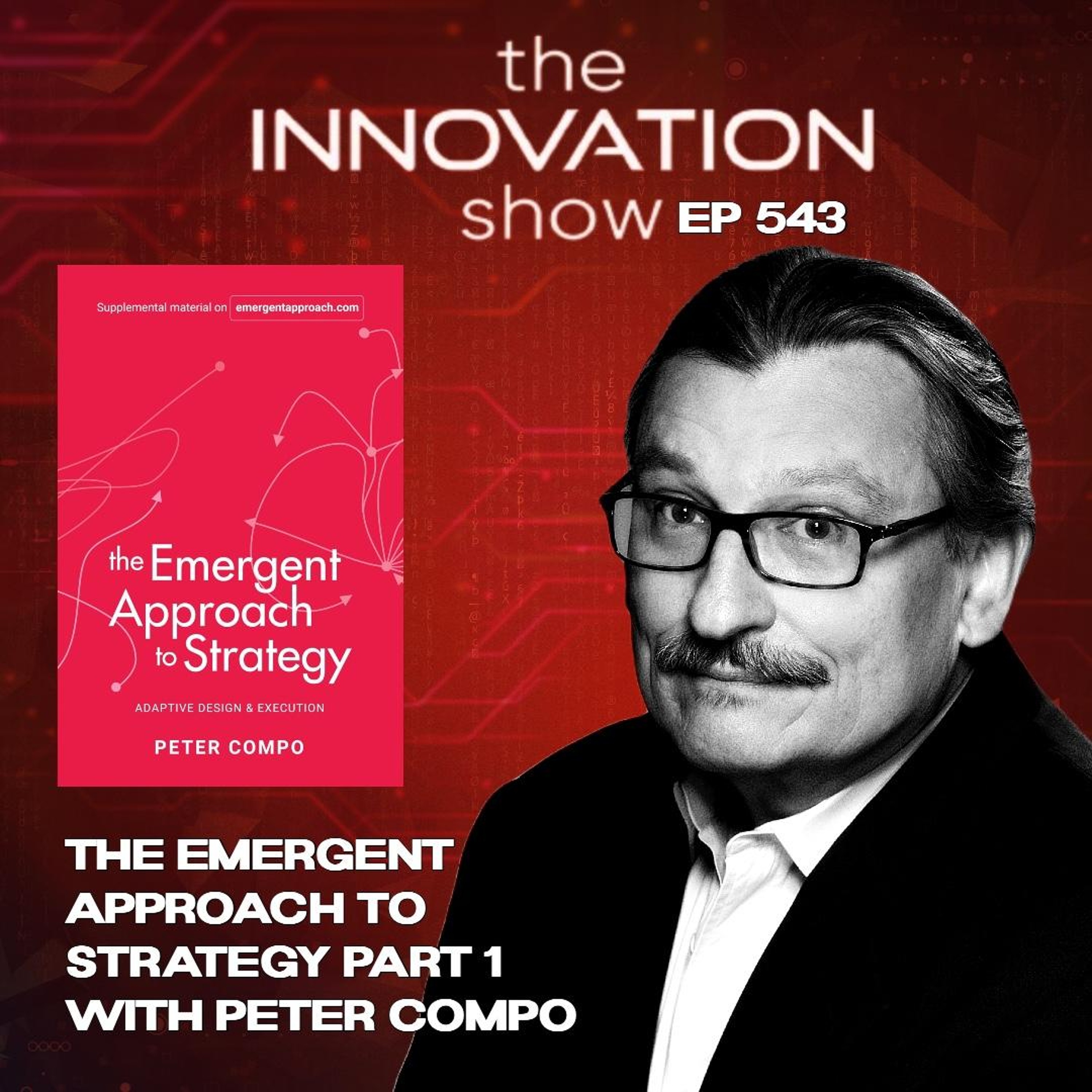
Peter Compo Part 1 - The Emergent Approach to Strategy:
The Emergent Approach to Strategy with Peter Compo: A Deep Dive into Adaptive Systems In this episode, we welcome Peter Compo, author of 'The Emergent Approach to Strategy,' to discuss the chronic failures in strategic planning and how his new book aims to redefine strategy through the lens of complex adaptive systems. Peter explains the importance of moving away from traditional planning methods and embracing an agile, emergent approach that focuses on adaptability and real-time guidance. Drawing from 25 years of experience in corporate America, including his tenure at DuPont, Peter provides practical insights into how organizations can raise their probability of success by understanding and addressing the real bottlenecks to achieving aspirations. We explore key concepts from his book, such as the triad of aspirations, bottlenecks, and strategy, and the role of rules and constraints in fostering innovation. With a mix of theory and practical application, this episode is a must-listen for corporate leaders, business strategists, and anyone interested in innovation and strategic planning. 00:00 Introduction to Strategy Failures 01:32 Guest Introduction: Peter Compo 02:06 Elevator Pitch: New Theory of Strategy 07:29 The Role of Discipline in Innovation 07:47 Music and Corporate Strategy 12:46 Challenges in Strategy Execution 14:00 The Misunderstanding of Strategy 17:43 Planning Under Uncertainty 21:30 The Importance of Adaptive Strategy 35:57 Emergent Strategy and Mintzberg's Teachings 36:44 Deliberate vs. Emergent Strategy 37:55 Understanding Strategic Constraints 39:24 Exploring Different Strategic Approaches 41:33 Overview of Strategy Concepts 43:12 Defining Strategy Across Fields 47:18 The Role of Rules in Strategy 52:22 The Triad of Aspiration, Bottleneck, Strategy 01:02:45 Consulting and Real-World Applications 01:07:22 Conclusion and Resources   Link to Frank Barrett’s episode “Yes to the Mess” part 1 and 2:    Link to Peter’s website:   Link to Peter’s Music:   Link to Aidan McCullen for Keynotes, workshops and event MC:   Find us on Substack for Shownotes and competitions: strategy, innovation, complex adaptive systems, Peter Compo, Aidan McCullen, DuPont, emergent approach, strategy definition, corporate strategy, business strategy, adaptive systems, strategy framework, Roger Martin, Michael Porter, Mintzberg, Charlie Parker, jazz improvisation, creativity in strategy, bottleneck, aspirations, goals, execution, discipline in strategy, innovation challenges, long-term planning, organizational change, innovation process, strategic planning, decision making, business leadership, corporate America
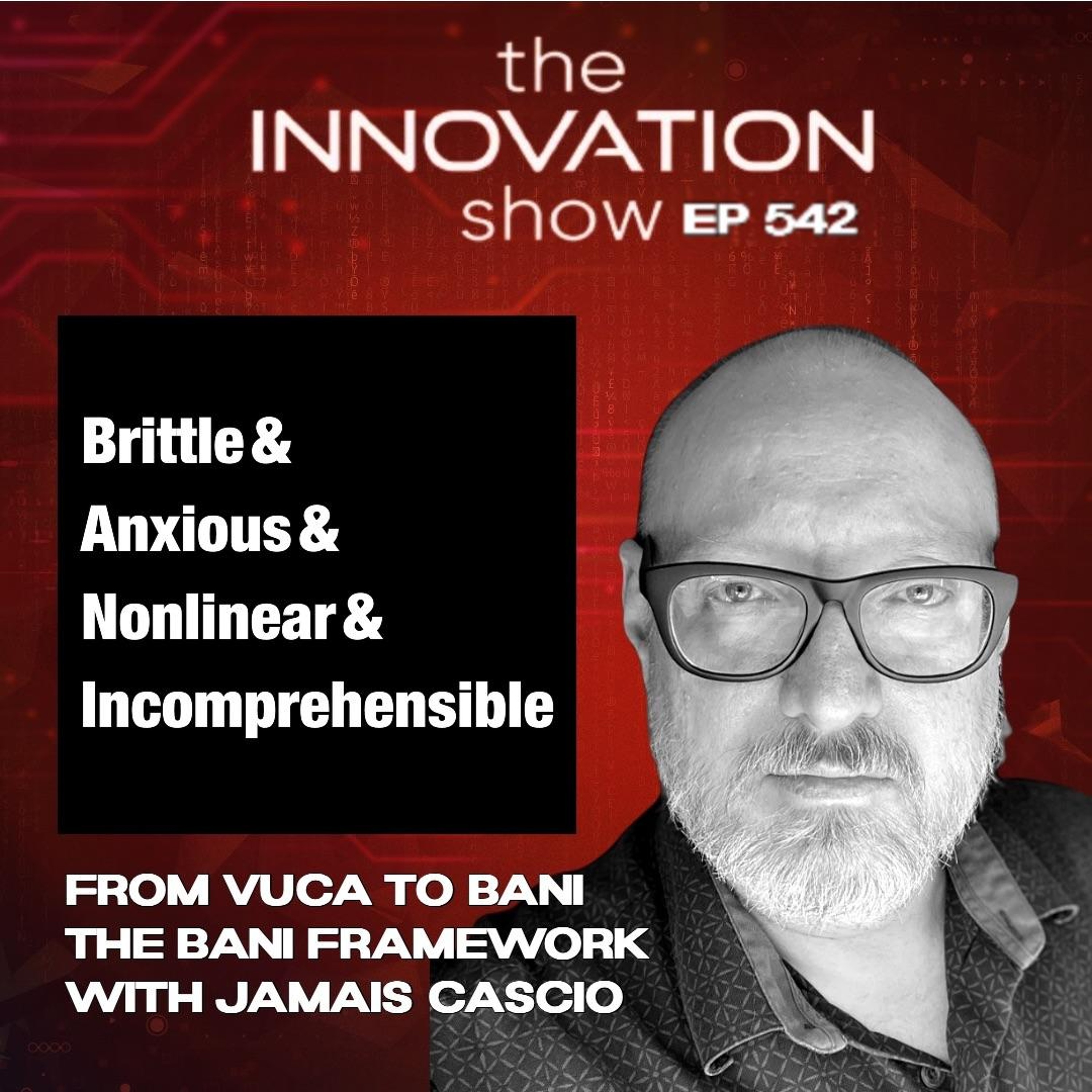
From VUCA to BANI, The BANI Framework - Jamais Cascio
In this episode, we delve into the fascinating BANI framework with its creator, Jamais Cascio. BANI (Brittle, Anxious, Nonlinear, and Incomprehensible) offers a new lens to understand modern disruptions, evolving from the older VUCA model. Jamais Cascio shares insights from his extensive background in futures and foresight work, including his tenure at the Institute for the Future. We explore the shortcomings of VUCA in today's world, the essence of BANI, and strategies to build resilience, empathy, improvisation, and inclusivity to navigate the complexities of the upcoming decades. This episode is a must-watch for anyone interested in innovation, business strategy, and better thinking to cope with an uncertain future.   00:00 Introduction to VUCA and BANI 01:18 Meet Jamais Cascio: Creator of the BANI Framework 04:52 Exploring VUCA: Volatility, Uncertainty, Complexity, Ambiguity 11:48 The Rise of BANI: Brittleness, Anxiety, Nonlinearity, Incomprehensibility 24:26 Positive BANI: Resilience, Empathy, Improvisation, Inclusiveness 30:34 Conclusion and Future Directions   Find Jamais here and BANI here:    
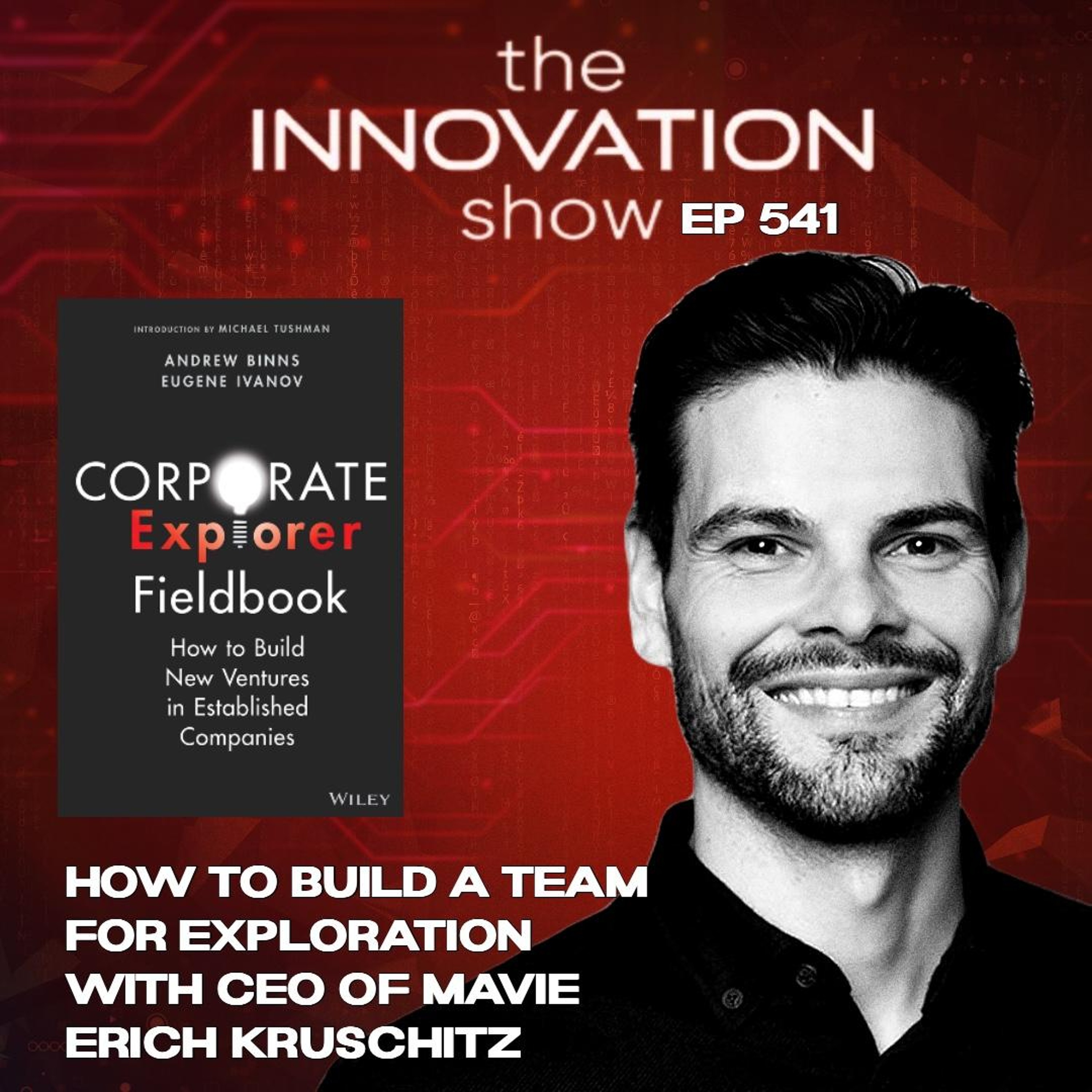
Erich Kruschitz - Navigating Corporate Exploration
In this episode of the Corporate Explorer series, we dive deep into managing innovation within large corporations with Erich Kruschitz, CEO of Mavie Next.    Erich shares detailed insights from his journey transforming UNIQA’s exploratory unit into a successful growth engine.    We explore the challenges of building and managing a team for innovation, the importance of clearly defined goals and organisational support, and the nuances of handling acquisitions and integrating diverse company cultures.    Key topics include the concept of ambidexterity, the characteristics necessary for a corporate explorer, and the importance of rituals in celebrating and learning from failures. This episode is packed with valuable lessons for anyone involved in corporate strategy and innovation.     00:00 Introduction to Corporate Exploration 00:34 Sponsor Acknowledgment: Wazoku 01:12 Guest Introduction: Erich Kruschitz 01:58 Erich's Journey and Background 02:28 Building a Team for Exploration 04:22 UNIQA's Strategic Shift to Healthcare 11:08 Defining the Purpose and Scope 19:00 Challenges in Team Building 30:32 Acquisitions and Their Impact 37:51 Celebrating Failures and Learning 41:34 Conclusion and Contact Information   Find Erich here:    Erich Kruschitz, Aidan McCullen, UNIQA, Mavie Next, SanusX, Wazoku, Corporate Explorer, innovation, ambidexterity, healthcare, insurance, leadership, startups, entrepreneurs, asset management, risk management, finance, telemedicine, employee health, elderly care
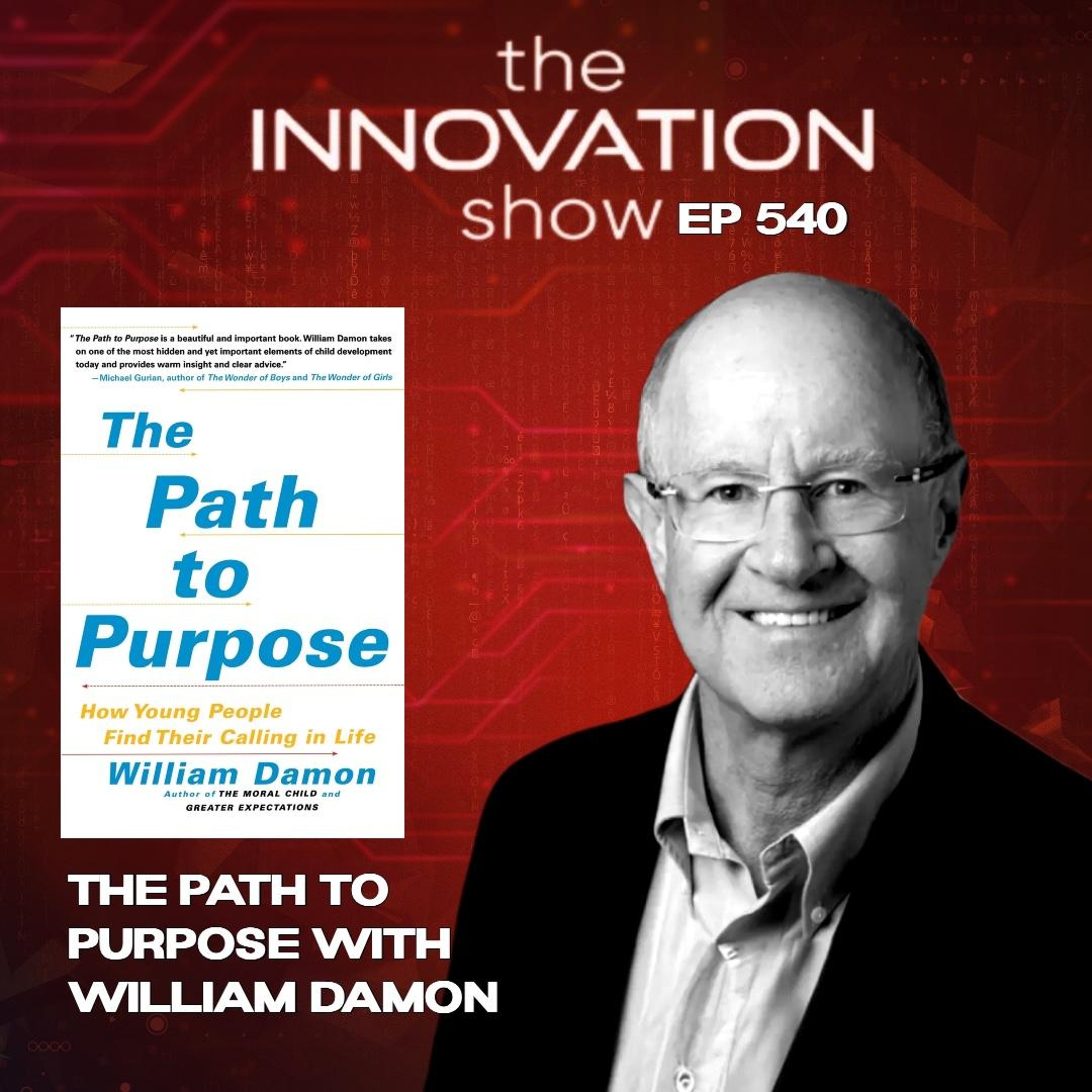
William 'Bill' Damon - Crafting Purpose and Resilience
William 'Bill' Damon - Crafting Purpose and Resilience In this episode, we dive deep with William 'Bill' Damon, America's leading expert on adolescence and author of 'The Path to Purpose'. Bill discusses techniques for instilling purpose and fulfilment in today's youth.  We explore his extensive research, including collaborative studies with Howard Gardner and Mihaly Csikszentmihalyi on ethical and successful work.  Bill reveals how his focus on purpose spans across various fields, such as family life, education, and business, highlighting the importance of personal responsibility in different contexts. He also shares his personal journey, reflecting on his relationship with his father and how it has influenced his life's purpose.  This episode is packed with insights for parents, mentors, educators, and anyone interested in understanding and cultivating purpose in life and work. 00:00 Introduction to William Damon and His Work 01:18 The Concept of Purpose in Professional Life 04:32 Exploring Purpose in Everyday Life 07:42 Purpose in Family Businesses 13:00 Personal Journey: Discovering My Father's Legacy 21:27 The Importance of Purpose and Overcoming Challenges 27:09 Evolution of Thoughts on Child Development 35:20 Exploring the Concept of Purpose 36:21 The Role of Sports in Developing Purpose 37:30 Purpose Beyond Sports: Education and Life Lessons 40:33 The Power of Purpose in Everyday Jobs 47:35 Finding Purpose in Various Life Domains 53:04 Categories of Purposeful Individuals 57:12 Challenges and Missteps in Finding Purpose 01:05:39 Conclusion and Final Thoughts The Path to Purpose, William Damon, Aidan McCullen, adolescence, sense of purpose, family businesses, youth fulfilment, moral development, greater expectations, good work, purpose in life, Mihaly Csikszentmihalyi, Howard Gardner, The Path to Purpose, A Round of Golf With My Father, Good Work, The Moral Child, Greater Expectations, The Purpose Driven Life, adolescent psychology, life review process, resilience, family enterprises, purpose and commitment, civic purpose, purposeful living  
Kim, Erin and Jonathan Clark - Leading Through
Kim, Erin and Jonathan Clark - Leading Through: The New Paradigm of Leadership: Soul, Heart, and Mind   In this episode, we delve into a profound moment of opportunity in human history, examining how organisations can harness leadership to help people and communities thrive. The discussion centres on the new book, 'Leading Through: Activating the Soul, Heart, and Mind of Leadership,' authored by Kim, Jonathan, and Erin Clark. The Clarks share their experiences from diverse fields to propose a shift from the outdated power-over paradigm to a more human-centric, flexible, and adaptive way of leading. Topics covered include the challenges and potential of the new paradigm, real-life examples from the authors' professional journeys, and the enduring need for empathetic leadership even in the face of daunting organisational inertia.   00:00 Introduction to a New Leadership Paradigm 00:54 Meet the Authors: Kim, Jonathan, and Erin Clark 02:12 Erin's Journey: From Accidental Consultant to Leadership Expert 04:52 John's Insights: Organisational Performance and Leadership 08:01 Kim's Experience: The Power Over Paradigm in Action 15:23 The Pathway Program: Transforming Higher Education 18:34 John's Challenge: Changing Department Dynamics 22:55 The Power Over Paradigm: Real-World Examples 29:32 Erin's Client Experience: Unity and Freedom in Leadership 32:09 The Power of Collaboration and Humanity 33:43 Breaking Free from Organisational Dynamics 35:06 The Courage to Embrace a New Paradigm 38:16 Generative AI and the Value of Humanity 46:21 The Amazon Case Study: A Cautionary Tale 50:31 Modularity: Balancing Freedom and Unity 56:14 Empathetic Leadership and Difficult Decisions 01:01:22 The Vision of Leading Through 01:03:36 Conclusion and Final Thoughts   Book Website and how to get a preview:   Book links:   Find Aidan here for Keynotes, Event MC and Custom L&D Programmes.     Leadership, Organizational Transformation, Kim Clark, Jonathan Clark, Erin Clark, Leading Through, Power Over Paradigm, Business Strategy, New Paradigm, Employee Empowerment, Workplace Culture, Organizational Change, Management Consulting, Innovation, Bureaucracy, Harvard Business School, Modularity, Employee Engagement, Human Potential, Professional Development
Innovating Corporate KPIs - Ellie Amirnasr and Charles Vaillant
Ellie Charles Mann Hummel   Innovating Corporate KPIs - Ellie Amirnasr and Charles Vaillant    Driving Progress with Mann+Hummel's Hunter Strategy   In this episode of the Corporate Explorer series, we dive into innovative business practices with Mann+Hummel's CTO/CDO Charles Vaillant and Digital Ventures Manager Ellie Amirnasr. The guests discuss the pitfalls of applying traditional KPIs too early in new business ventures and advocate for non-financial progress metrics. They introduce the 'Hunter Strategy' for pursuing business validation and scaling within exploration-type projects. The conversation covers how to manage resource allocation efficiently, the evolution of their innovation framework, and essential advice for corporate explorers. This episode is sponsored by Wazoku, a leader in creating sustainable innovation ecosystems.   00:00 Introduction to Business Innovation 01:10 Sponsor Acknowledgment 01:49 Meet the Guests: Ellie Amirnasr and Charles Vaillant 02:54 Understanding Mann and Hummel 04:56 Challenges with Traditional Metrics 10:54 Hunter Strategy Explained 17:21 Implementing Effective Metrics 23:59 Resource Allocation in R&D 30:18 Advice for Corporate Explorers 34:47 Conclusion and Final Thoughts   Business Innovation, KPIs, Venture Management, Non-Financial KPIs, Innovation Ecosystems, Corporate Exploration, Growth Validation, Hunter Strategy, Mann and Hummel, Wazoku, Aidan McCullen, Ellie Amirnasr, Charles Vaillaint, Corporate R&D, Digital Ventures, Strategic Metrics, Innovative Processes, Resource Allocation, R&D Investments, Corporate Transformation   Find Charles: Find Ellie: Find Aidan:
Carol Tavris - Mistakes Were Made But Not By Me
Carol Tavris - Mistakes Were Made But Not By Me   The Psychology of Self-Justification with Carol Tavris   In this episode, Aidan McCullen interviews Carol Tavris, co-author of 'Mistakes Were Made (But Not by Me),' to explore the intricacies of cognitive dissonance, self-justification, and memory. They investigate why humans find it difficult to admit mistakes, even in the presence of irrefutable evidence. Through numerous case studies and real-world examples, they discuss the implications of these psychological mechanisms in areas as varied as personal life, law enforcement, and political decision-making. The conversation tackles how these insights can apply to everyone from parents and judges to business leaders and law enforcement, emphasizing the significance of humility, critical thinking, and the human tendency to rewrite personal histories to fit current beliefs. 00:00 Introduction to Self-Justification 01:14 Welcoming the Author: Carol Tavris 02:17 The Premise of the Book 03:06 Understanding Cognitive Dissonance 08:44 Memory and Self-Justification 14:43 Confabulations and False Memories 23:02 The Pyramid of Choice 32:42 Law Enforcement and Wrongful Convictions 37:58 The Importance of Correcting Interrogation Methods 38:33 The Impact of Miscarriages of Justice 38:55 Examples of Recognizing Mistakes 39:52 The 1980s and 90s Hysteria Over Child Abuse 40:21 The McMartin Daycare Scandal 41:06 Flawed Child Interrogation Techniques 42:58 A Case of Misunderstanding: Daddy's Pee Pee 44:53 The Emotional Toll of False Convictions 47:39 The Pyramid of Entrapment and Justification 48:48 The Influence of Bias in Decision Making 50:32 The Role of Pharmaceutical Companies in Medicine 52:06 Moral Choices and Life Decisions 54:55 Understanding and Living with Cognitive Dissonance 01:03:17 The Power of Admitting Mistakes 01:06:58 The Allure of Victim Narratives 01:08:40 Alien Abductions and Hypnagogic States 01:14:17 The Importance of Understanding Human Frailties   Find Carol here:    That Sarah Silverman interview:    Carol’s books:    psychology, cognitive dissonance, self-justification, memory, mistakes, humility, ethics, law enforcement, interrogation, wrongful convictions, trauma, alien abductions, confirmation bias, leadership, decision making, self-concept, Carol Tavris (author), Aidan McCullen (host), Elliot Aronson (co-author), Leon Festinger (researcher on cognitive dissonance), James Thurber (author of The Wonderful O), Richard Feynman (scientist and quote source), Mary Carr (memoirist), Joseph Allen (wrongfully convicted), Ronald Reagan (Bitburg cemetery incident), Shimon Peres (comment on Reagan's mistake), Sarah Silverman (Louis C.K. controversy), Louis C.K. (comedian involved in controversy), Jeffrey Cohen (research on political bias), Lee Ross (naive realism), John Mack (psychiatrist on alien abductions), Susan Clancy (researcher on alien abductions), Rich McNally (memory scientist), Antonin Scalia (Supreme Court Justice), Clarence Thomas (Supreme Court Justice), Auburn Blooming (oncologist and co-author)
David Rogers - The Digital Transformation Roadmap Part 2
David Rogers - The Digital Transformation Roadmap Part 2   Mastering Digital Transformation: Insights from David Rogers   In this engaging episode, Aidan sits down with David Rogers, the author of 'The Digital Transformation Roadmap'. They delve into the significant challenges and strategies for digital transformation within organisations. Key topics include overcoming psychological and organisational debt, technical capabilities required for transformation, the importance of suitable technology, retaining key talent, and evolving organisational culture. David also shares insights on governance and iterative funding, emphasising the need for smart shutdowns and resource allocation. The episode is packed with practical examples, including successful digital transformations at Walmart and Netflix. David's profound experience and practical tools make this essential listening for business leaders and innovators.   00:00 Introduction and Welcome 00:13 Understanding Organisational and Technical Debt 02:18 The Importance of Tech Capabilities 03:29 Talent and Culture in Digital Transformation 05:19 Governance in Digital Transformation 08:27 The Role of Teams and Boards 20:00 Smart Shutdowns and Innovation Governance 26:07 The Corporate Innovation Stack 29:34 The Broken Model of Innovation 30:02 Governance Model for Innovation 30:42 Path Three Innovations: Challenges and Management 32:15 Innovation Structures and Strategies 34:12 Skipping Vision and Priorities 35:07 Walmart's Strategic Innovation in Online Grocery 41:24 Four Stages of Validation 49:21 Case Studies: Netflix and Diapers.com 54:37 Conclusion and Final Thoughts   Find David here:   Find Aidan McCullen for Keynotes and Corporate Workshops here:   David Rogers, Aidan McCullen, Digital Transformation, Innovation Governance, Iterative Funding, Corporate Innovation, Organizational Change, Innovation Strategy, Technical Debt, Psychological Debt, Innovation Boards, Startup Culture, Agile Methodology, Product Validation, Strategic Priorities, Business Validation, Smart Shutdowns, Innovation Stack, Customer Validation, Executive Insights  
David L. Rogers - The Digital Transformation Roadmap Part 1
Unlocking Successful Digital Transformation: Insights from David L. Rogers In this episode, David L. Rogers, author of 'The Digital Transformation Roadmap' and 'The Digital Transformation Playbook,' joins Aidan to discuss the critical steps and challenges businesses face in their journey towards digital transformation. Rogers emphasises the importance of transforming not just products and business models but the organisation itself.  He outlines five major barriers to success: vision, priorities, experimentation, governance, and capabilities.    Through insightful case studies such as the New York Times and CNN+, Rogers illustrates the pitfalls and successful strategies for driving meaningful innovation.    Additionally, he highlights the need for iterative funding and continuous adaptation in the face of uncertainty. This episode is packed with practical advice and lessons drawn from two decades of research and real-world examples, aimed at helping leaders navigate and thrive in the digital age.   00:00 Introduction to Digital Transformation 00:57 Meet the Author: David L. Rogers 01:47 The Evolution of Digital Transformation 02:36 Challenges and Misconceptions 07:48 Defining Digital Transformation 09:56 Barriers to Success 22:26 Case Study: The New York Times 31:33 Setting Realistic Expectations for Change 32:21 Defining a Clear Vision for Change 34:03 Empathy and Resistance to Change 34:53 Challenges of Corporate Innovation 36:15 Addressing Uncertainty in Innovation 39:27 Paths to Innovation and Growth 41:41 Case Study: The Failure of CNN Plus 49:55 Iterative Funding and the Facebook Example 54:44 Conclusion and Final Thoughts   Find David here:  Substack: Website:   The Missing Link Between Strategy and Innovation article David mentioned:   The episode we mentioned with Steve Blank: The Startup Owner's Manual: The Step-By-Step Guide for Building a Great Company   Aidan McCullen, David Rogers, digital transformation roadmap, digital transformation playbook, corporate governance, iterative experimentation, Facebook, CNN Plus, startup funding, media industry, New York Times, Steve Blank, Bob Dorf, Rita McGrath, Stefan Tompkin, Peter Thiel, Jason Keillar, Jeff Zucker        
Business Experiments with Sarah Spoto and Vincent Ducret
In the latest episode of the Corporate Explorer series, brought to you by Wazoku, we discuss the importance of balancing personal instincts with data and evidence in business decisions. Guests, Product Marketing Manager for Electric Vehicles & Customer Experience with Cadillac, Sarah Spoto and Vincent Ducret from ChangeLogic share their experiences of implementing experimental frameworks in China for General Motors. They emphasize the critical steps of assumption analysis, prioritizing hypotheses, and iterative experimentation, while also addressing challenges in corporate environments, such as maintaining cultural buy-in and celebrating failures as learning opportunities. Sponsored by Wazoku, the episode offers deep dives into innovation management, strategic risk-taking, and the use of connected collective intelligence to drive business success. 00:00 Introduction: The Pitfalls of Instinct-Driven Decisions 00:40 The Role of Data in Corporate Exploration 01:07 Sponsor Message: Wazoku's Innovation Ecosystem 01:56 Incubation and De-risking New Business Ideas 02:19 Meet the Corporate Explorers: Sarah Spoto and Vincent Ducraix 02:50 Sarah Spoto's Journey in Corporate Innovation 04:40 Vincent Ducraix's Background and Experience 06:55 The Business Learning Life Cycle Framework 08:10 The Importance of De-risking in Corporate Ventures 13:04 Challenges and Strategies in Corporate Experimentation 14:33 The Role of Leadership and Team Buy-in 21:08 Case Study: Experimentation in China 30:28 Final Thoughts and Contact Information Find Sarah here: Find Vincent here:     Key Takeaways This conversation explores business experimentation using a framework outlined in the Corporate Explorer book. Here are the key takeaways: Challenges of Corporate Innovation: Reliance on past experience can lead to failure in new ventures due to high uncertainties. Traditional methods like surveys might not capture the right data for untested ideas. The Business Experiments Framework: Identify Key Assumptions: List all critical assumptions about your new venture (customer value proposition,problem addressed, etc.). Prioritize Assumptions: Focus on the riskiest assumptions that could derail the project. Design Experiments: Create creative experiments to test these assumptions with real customer data (not just surveys). Collect Learnings: Analyze experiment results to validate or disprove assumptions. Iterate: Use learnings to refine your approach and potentially conduct new experiments on remaining assumptions. Benefits of Business Experiments: Reduces risk by validating assumptions before significant resource investment. Provides data-driven decision making for building the right product for the right customer. Challenges of Implementing Business Experiments: Balancing Speed and De-risking: There's a tension between demonstrating progress and taking the time to properly de-risk the project. Cultural Shift: Organizations need to embrace experimentation and see failures as learning opportunities. Team Buy-in: Both leadership and working-level teams need to understand the value of experimentation. Success Factors: Strong Leadership Support: Having advocates who understand and champion the approach is crucial. Cultural Investment: Educate teams on the process and celebrate failures as learning opportunities. Focus on Learning: Value the insights gained from experiments, even if they disprove assumptions. Example Implementation: Sarah Spoto's experience in China highlights the importance of setting the right incentives and building a cross-functional team for experimentation. Assumptions analysis is a valuable starting point, even if full experimentation isn't implemented. Overall, business experimentation offers a structured approach for de-risking new ventures and making data-driven decisions in the face of uncertainty.
Sally Susman - Breaking Through
The Power of Communication: Insights from Sally Susman, Author of 'Breaking Through'   In this episode, Aiden welcomes Sally Susman, author of 'Breaking Through: Communicating to Open Minds, Move Hearts, and Change the World' to discuss the vital role of communication in professional and personal settings. Sally shares insights from her extensive career, including her experiences working with top leaders at Pfizer, Estee Lauder, and American Express. The discussion explores the misconception of communication as a soft skill, the importance of authentic outreach, the power of gratitude, and Susman's innovative approaches during the COVID-19 pandemic. Sally also emphasises curiosity, creativity, and intentionality as key components for effective communication. Throughout the episode, real-life anecdotes and practical advice offer listeners valuable lessons on leadership and connection.   00:00 Introduction and Guest Welcome 00:39 The Importance of Communication 03:24 Lessons from Estee Lauder 06:09 Personal Background and Family Influence 08:51 The Power of Gratitude 13:15 Perfecting Your Pitch 23:02 Humour in the Workplace 29:36 Challenges at Pfizer 32:03 Facing the Biopharma Reputation Challenge 33:37 The Pandemic's Impact and New Leadership 35:02 Albert Bourla's Bold Vision 36:30 Revolutionising Vaccine Development 37:25 The Media's Role in the Journey 38:55 Pfizer's Transformation and Recognition 40:46 Innovative Leadership and Personal Growth 49:30 Curiosity and Creativity in Action 56:47 The Power of Intentionality 58:46 Concluding Thoughts and Inspirations
Rob C. Wolcott and Kaihan Krippendorff - The Proximity Revolution
    The Proximity Revolution: Transforming Industries and Daily Life   In this episode, we delve into the proximity revolution with authors Rob C. Wolcott and Kaihan Krippendorff. The discussion centers on how digital technologies are expediting the production and delivery of customized products, services, and experiences, vastly transforming industries from agriculture to healthcare. The concept of 'proximity' shows promise in improving sustainability, optimizing supply chains, and enhancing customer personalization through innovations like vertical farming and on-demand 3D printing.    The conversation also explores the strategic implications of this shift for businesses, highlighting the importance of visionary thinking and practical applications. Tune in to discover how proximity is poised to reshape our world and what leaders can do to navigate these changes effectively.   00:00 Introduction to the Proximity Revolution 01:02 Meet the Authors: Rob C. Wolcott and Kaihan Krippendorff 02:25 Defining Proximity: Anything, Anywhere, Anytime 03:28 Real-World Examples: Coca Cola Freestyle and Vertical Farms 06:09 Proximity in Agriculture: From Dubai to Your Dinner Table 09:52 The Role of Technology in Proximity 11:15 Proximity in Food Supply Chains: Efficiency and Sustainability 12:50 Innovative Solutions: Haier's Peking Duck Challenge 16:34 Moment of Use and Controlled Environment Agriculture 22:54 Case Study: Interstellar Lab and Growing Food on Mars 26:38 Why Proximity? The Drivers Behind the Trend 27:00 The Shift in Global Conditions and Technology 28:04 The Rise of Small Footprint Production 28:42 Digital Proximity and Generative AI 29:28 Geopolitical and Climate Drivers 30:16 The Digital Customer and Predictive Analytics 30:53 Domino's Pizza: A Case Study in Proximity 33:26 Healthcare Revolution: Medicines on Demand 34:52 On Demand Pharmaceuticals: A Game Changer 37:37 Future of Healthcare: Predictive Monitoring 42:53 Proximity Strategies for Businesses 49:01 Investing in Proximity Innovations 51:09 Conclusion and Where to Find More 52:09 Bonus Episode on Proximity in Action with Dr Ian McCabe  
EP531 Wendy Smith - Both/And Thinking Part 3
Understanding Emotional Dynamics for Creative Problem Solving with Wendy Smith   In this episode, Aidan is joined by Wendy Smith, co-author of 'Both/And Thinking,' to discuss the crucial role of emotions in addressing creative tensions and solving tough problems. Wendy emphasises moving beyond cognitive approaches to engage the heart, recognising and honouring emotions as vital to navigating uncertainty and innovation. The episode dives deep into actionable tools such as pausing to reflect, broadening perspectives, and dynamically adapting to changing environments. The episode concludes with practical insights from Unilever's approach to managing tensions under Paul Polman's leadership and tips for leaders to embrace paradoxical thinking in their organisations.   00:00 Introduction to Embracing Tensions 02:07 The Importance of Emotions in Innovation 03:45 Tools for Comfort with Discomfort 06:27 The Power of Pausing and Breathing 15:08 Broadening Perspectives for Creative Solutions 18:08 Navigating Organisational Change and Conflict 19:46 The Role of Dynamism in Innovation 22:56 Case Study: Honda's Emergent Strategy 26:09 Case Study: Paul Polman and Unilever 36:59 Leadership and Paradox Management 48:17 Conclusion and Resources     Find Wendy here: And Substack here:   Contact Aidan McCullen for Keynote Speaking, Corporate Workshops and Education Tourism to Dublin and California:   Find the Innovation Show on Substack and Website: 
EP530 Building an Ecosystem Playbook with Christine Griffin
Developing an Ecosystem Playbook for Corporate Innovation with Best Buy Case Study   In this episode, we delve into the strategies corporate explorers need to develop successful partnerships and co-innovate to deliver value propositions to their consumers. Our guest, Christine Griffin, shares a six-step process for creating an ecosystem playbook, using Best Buy's expansion into the home health market as a compelling case study. We examine how Best Buy transitioned from a retail giant to an orchestrator of home health services through strategic acquisitions and partnerships. Additionally, we explore the importance of understanding value creation, identifying market breakpoints, mapping ecosystem players, and assessing financial flows. This episode also highlights the critical roles of scaling path, capabilities, capacities, and customer access in achieving business success.    Special thanks to our sponsor, Wazoku, for supporting corporate innovation.   00:00 Introduction to Corporate Innovation 00:39 Sponsor Acknowledgment and Guest Introduction 01:52 Overview of Best Buy's Home Health Strategy 03:16 Best Buy's Acquisitions and Initial Footprint 03:55 Building Partnerships in the Healthcare Ecosystem 05:12 Mapping the Ecosystem and Identifying Break Points 10:04 Understanding the Players and Their Roles 12:35 Evaluating Incentives and Profit Pools 15:12 Developing a Scaling Path 18:03 The Importance of Stakeholder Involvement 19:46 Conclusion and Further Resources   Corporate Explorers, Innovation Strategy, Innovation Ecosystems, Best Buy Case Study, Christine Griffin, Scaling Startups, Corporate Innovation, Business Ecosystems, Strategic Partnerships, Innovation Show, Wazoku, Sustainable Innovation, Hubert Joly, Ecosystem Playbook, Technology Adoption, Corporate Explorer Series, Corporate Strategy, Innovation Tools, Best Buy Health, Business Development, Innovation Leadership, Change Logic, Healthcare Innovation, Digital Health, Startup Scaling, Entrepreneurship, Business Growth, Market Strategy, Innovation Mapping, Corporate Transformation   Find Christine here: Find Wazoku here:
Wendy Smith - Both/And Thinking Part 2
In this episode, we are joined again by Wendy Smith,  co-author of 'Both/And Thinking: Embrace Creative Tensions to Solve Your Toughest Problems.'      Wendy elaborates on the nuances between dilemmas, paradoxes, and tensions, emphasising that these terms are not interchangeable and revealing the psychological and practical implications of recognising and navigating paradoxes. Drawing from her personal experiences and research, Wendy illustrates how both/and thinking can be applied to career decisions, organisational challenges, and broader societal issues. She discusses the limitations of either/or thinking and the harmful patterns it can create, such as intensification, overcorrection, and polarisation.    Using examples from companies like Lego and Gore, Wendy shows how balancing tradition and innovation, centralisation and decentralisation, and other competing demands can lead to more sustainable success. The conversation also delves into the four types of paradoxes: learning, performing, organising, and belonging, and explores strategies to manage these tensions effectively.    This episode is essential for anyone facing complex decisions in their personal or professional life.   00:00 Introduction to Both/And Thinking 00:12 Understanding Tensions and Dilemmas 03:08 Defining Paradox and Its Importance 05:23 Embracing Paradoxes in Real Life 08:00 Conditions That Highlight Paradoxes 16:51 Exploring the Four Types of Paradoxes 23:28 Navigating Organisational Paradoxes 31:23 The Paradox System Framework 36:57 Lego's Journey Through Paradox 45:40 Conclusion and Further Resources   Find Wendy here: And on Substack here:   Wendy Smith, Both and Thinking, Aidan McCullen, innovation, paradox, decision making, leadership, career challenges, tension management, creativity, organisational behaviour, success, problem solving, conflict resolution
Wendy Smith - Both/And Thinking Part1
In this episode, we are joined by Wendy Smith, co-author of 'Both/And Thinking: Embrace Creative Tensions to Solve Your Toughest Problems.' Wendy elaborates on the nuances between dilemmas, paradoxes, and tensions, emphasising that these terms are not interchangeable and revealing the psychological and practical implications of recognising and navigating paradoxes. Drawing from her personal experiences and research, Wendy illustrates how both/and thinking can be applied to career decisions, organisational challenges, and broader societal issues. She discusses the limitations of either/or thinking and the harmful patterns it can create, such as intensification, overcorrection, and polarisation. Using examples from companies like Lego and Gore, Wendy shows how balancing tradition and innovation, centralisation and decentralisation, and other competing demands can lead to more sustainable success. The conversation also delves into the four types of paradoxes: learning, performing, organising, and belonging, and explores strategies to manage these tensions effectively. This episode is essential for anyone facing complex decisions in their personal or professional life. 00:00 Introduction to Both/And Thinking 00:12 Understanding Tensions and Dilemmas 03:08 Defining Paradox and Its Importance 05:23 Embracing Paradoxes in Real Life 08:00 Conditions That Highlight Paradoxes 16:51 Exploring the Four Types of Paradoxes 23:28 Navigating Organisational Paradoxes 31:23 The Paradox System Framework 36:57 Lego's Journey Through Paradox 45:40 Conclusion and Further Resources
Getting the Senior Team Onboard with Alexander Pett
Mastering High-Stakes Conversations for Corporate Innovation In this episode, we dive into the essential techniques for leading high-stakes conversations to secure senior-level commitment to corporate innovation. Our guest, Alexander Pett, an expert in executive team dynamics, discusses the crucial concept of 'productive tension' and how recognizing and addressing disagreement can lead to authentic agreement and commitment. Pett outlines practical strategies for effectively framing issues, maintaining engagement, and navigating political dynamics in boardroom settings. Tune in to learn how to prepare and communicate strategically, ensuring your innovative ideas gain the buy-in they need to succeed. 00:00 Introduction to High-Stakes Conversations 01:31 The Importance of Productive Tension 05:23 Pre-Work and Stakeholder Engagement 07:12 Creating and Maintaining Productive Tension 08:44 Communication Skills and Self-Awareness 18:30 Frameworks for Effective Dialogue 20:55 Final Thoughts and Advice Corporate Innovation, Senior Team Engagement, Productive Tension, Executive Leadership, Alexander Pett, Aidan McCullen, Corporate Explorer, High Stakes Conversations, Leadership Strategies, Boardroom Dynamics, Effective Communication, Innovation Leadership, Pre-Meeting Preparation, Organizational Change, Executive Buy-In, David Kantor, Group Dynamics, Empathy in Leadership, Political Savvy, Agreement and Advocacy
Alison Taylor - Higher Ground
Ethical Business Leadership in a Turbulent World | Alison Taylor's Insights   Join Alison Taylor, NYU Stern ethics professor and author of 'Higher Ground: How Business Can Do the Right Thing in a Turbulent World.' Alison shares her guidance on how companies can navigate ethical challenges in today's volatile landscape. She emphasizes the importance of going back to first principles and treating human beings with dignity and respect. Discover the significant shifts in business ethics, stakeholder capitalism, and the role of transparency and social media. Learn about the critical role of corporate culture, leadership, and the importance of addressing systemic issues within organizations. Whether you're a CEO, board member, or business leader, this discussion is packed with indispensable insights on creating a responsible and sustainable business.   00:00 Introduction to Ethical Business Practices 01:16 Understanding the Modern Business Landscape 02:36 The Rise of Transparency and Stakeholder Capitalism 04:36 Navigating Ethical Challenges in Business 08:41 The Complexity of ESG and Innovation 11:54 The Role of Leadership and Culture in Ethics 30:17 Addressing Corruption and Corporate Responsibility 34:39 Human Rights and Business Ethics 37:21 Tools for Building Ethical and Effective Cultures 49:09 Final Thoughts and Call to Action Find Alison here: That article was mentioned during the episode here.  
Gathering Customer Discovery Data with Vanessa Ceia
Get Out of the Building: How to Gathering Customer Discovery Data with Vanessa Ceia   In this episode, we explore the critical shift needed for corporate explorers to succeed—moving from an inside-out to an outside-in mindset. Highlighting Corporate Explorer Field Book chapters, we discuss how customer discovery interviews can overcome inherent corporate biases. Sponsored by Wazoku, our guest Vanessa Ceia, an innovation expert, explains the importance of different interview stages—ideation, incubation, and scaling—and how qualitative research like focus groups and interviews are essential throughout the innovation process. Gain insights into preparing, conducting, and analysing interviews to gather customer-driven data and foster effective, sustainable innovation ecosystems.   00:00 Overcoming Corporate Mindset Obstacles 01:01 Introducing the Corporate Explorer Series Sponsor 01:37 Meet the Expert: Vanessa Ceia 02:05 Deep Dive into Customer-Driven Innovation 03:22 Exploring the Innovation Funnel: Ideation to Scaling 11:40 Incorporating Stakeholder Feedback for Success 14:35 Mastering the Interview Process for Innovation 19:53 Concluding Thoughts and Sponsor Acknowledgment   Aidan McCullen, Vanessa Ceia, customer discovery, corporate explorer, bias, assumptions, customer interviews, innovation, sustainability, value growth, qualitative research, innovation maturity, ideation, incubation, scaling, problem validation, MVP, customer segmentation
Teresa Amabile - The Progress Principle
Teresa Amabile - The Progress Principle The Progress Principle: How Small Wins Boost Motivation and Happiness at Work In the latest episode, Aidan McCullen welcomes Teresa Amabile, author of 'The Progress Principle,' to delve into her extensive research on motivation and emotions in the workplace.  Amabile's study of nearly 12,000 diary entries from workers in seven companies reveals that making even small progress in meaningful work is crucial for positive emotions and high motivation.  The conversation touches on key concepts like the role of clear goals, autonomy, sufficient resources, and the importance of supportive interpersonal events in fostering a productive work environment. The script also previews Amabile's upcoming book, 'Retiring: Creating a Life That Works for You,' which explores the challenges and experiences of transitioning into retirement. 00:00 Unlocking Motivation: The Power of Progress 01:34 Welcome Teresa Amabile: Exploring The Progress Principle 02:52 From Work Progress to Retirement: A New Research Journey 09:43 The Progress Principle: Small Wins, Big Impact 10:56 Managers, Take Note: The Surprising Truth About Motivation 17:27 Catalysts and Nourishers: The Keys to Sustained Progress 29:25 Real-World Impact: Stories from the Research 41:30 The Inner Work-Life Effect: A Deep Dive into Research Findings 50:50 A Call to Action for Leaders and Individuals 51:24 Closing Thoughts and Future Works Find Teresa here: The Progress Principle here: Tags: Aidan McCullen, Teresa Amabile, The Progress Principle, Inner Work Life, Creativity at Work, Employee Motivation, Small Wins, Positive Emotions, Innovation Management, Employee Engagement, Job Satisfaction, Workplace Psychology, Career Development, Retirement Planning, Work-Life Balance, Leadership Skills, Management Strategies, Team Building, Productivity, , Organizational Behavior
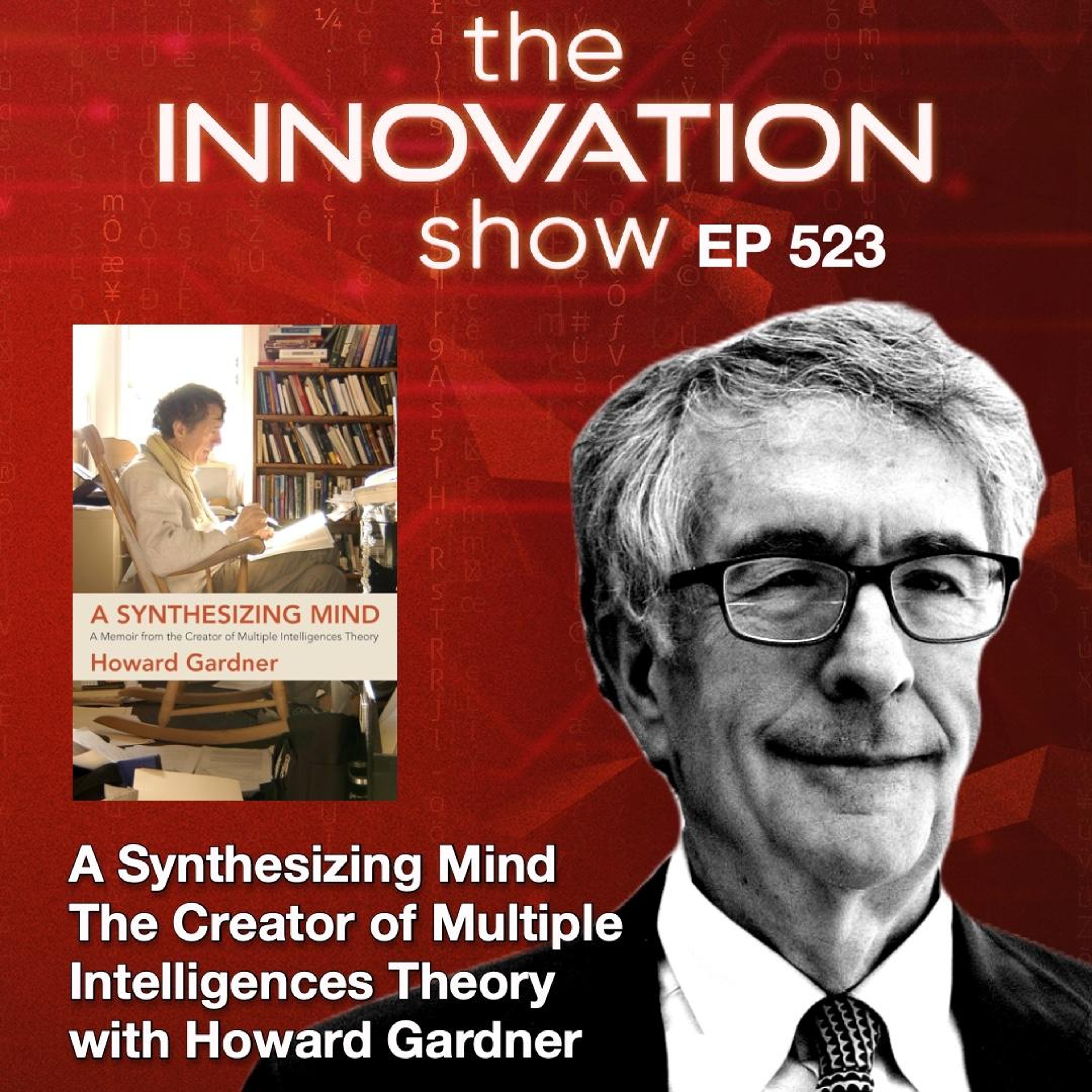
Howard Gardner: The Synthesizing Mind
Howard Gardner: The Synthesizing Mind   Sign up to our Substack to be first to know about latest events, episodes and more.    In this episode of the Innovation Show, Howard Gardner, renowned for his theory of multiple intelligences, discusses his memoir 'A Synthesizing Mind,' recounting his life's intellectual journey.    Gardner talks about his career, his passion for understanding intelligence, his work on 'good work,' and how modern innovations like large language models impact his theories.    He shares personal anecdotes, the importance of synthesizing information, and his thoughts on education and ethics in the 21st century. Join us for a truly memorable episode as we delve deep into Gardner's mind and explore the essence of a synthesizer.   We talk innovation, creativity, ethics, goodness, education and life itself.   00:00 Unveiling the Synthesizing Mind of Howard Gardner 01:56 Exploring the Essence of the Synthesizing Mind 06:20 The Role of Synthesizers in Innovation and Entrepreneurship 14:36 Good Work: The Triple Helix of Excellence, Engagement, and Ethics 17:55 Navigating the Complexities of Good Work and Ethical Dilemmas 20:47 The Impact of Multiple Intelligences on Innovation 33:22 Exploring Musical Intelligence and Personal Reflections 33:46 The Impact and Legacy of 'Frames of Mind' 34:38 The Journey of Synthesizing Knowledge 35:56 Upcoming Publications: The Essential Howard Gardner 36:47 Reflections on Life, Learning, and Legacy 38:31 Navigating the Digital Age: Challenges and Strategies 44:17 The Misuse of Multiple Intelligences Theory 46:08 Ethical Considerations in Public Speaking and Publishing 47:22 The Importance of Good Work and Ethical Values 48:29 Revisiting Truth, Beauty, and Goodness in the Modern Era 01:01:29 Personal Experiences Shaping Educational Perspectives 01:05:24 The Essence of Continuous Learning and Good Work   Find Howard here:   The Good Project:   Project Zero:     In 2024, Teachers College Press is issuing two volumes:  (spring);  (fall). Covering work from several decades, each volume contains over two dozen articles, along with my autobiographical notes and up-to-date comments on the background, motivation, and impact of these publications. For those interested in path-breaking work in education, psychology, and related fields, these books are indeed  Essential Reading. Blurbs for Education volume:  "A fascinating look at educational issues by one of our nation's finest and most creative academics. This is vintage Howard!" ―David C. Berliner, Regents Professor Emeritus, Mary Lou Fulton Teachers College, Arizona State University "For more than 40 years, Dr. Howard Gardner has been one of―if not the―most influential scholar on the American educational system. It is thrilling to see a single volume that brings together Gardner's research and writings on educational institutions ranging from pre-K through the university. Readers who know Gardner best for his work on multiple intelligences theory will benefit tremendously from this exposure to his thinking on topics such as what it means to do good work, the purpose of a liberal arts education, and the role of social media in contemporary young people's development." ―Scott Seider, associate professor of applied developmental and educational psychology, Lynch School of Education and Human Development, Boston College "The Essential Howard Gardner on Education offers a crisp distillation of Gardner's lasting contributions to our understanding of teaching and learning in a complex, ever-changing world. Whether you're a longtime fan or new to Gardner's work, this masterfully crafted narrative provides an accessible overview of Gardner's wide-ranging contributions to the field of education, including his educational philosophy; the provenance, uptake, and legacy of multiple intelligences theory; what it means to educate for...
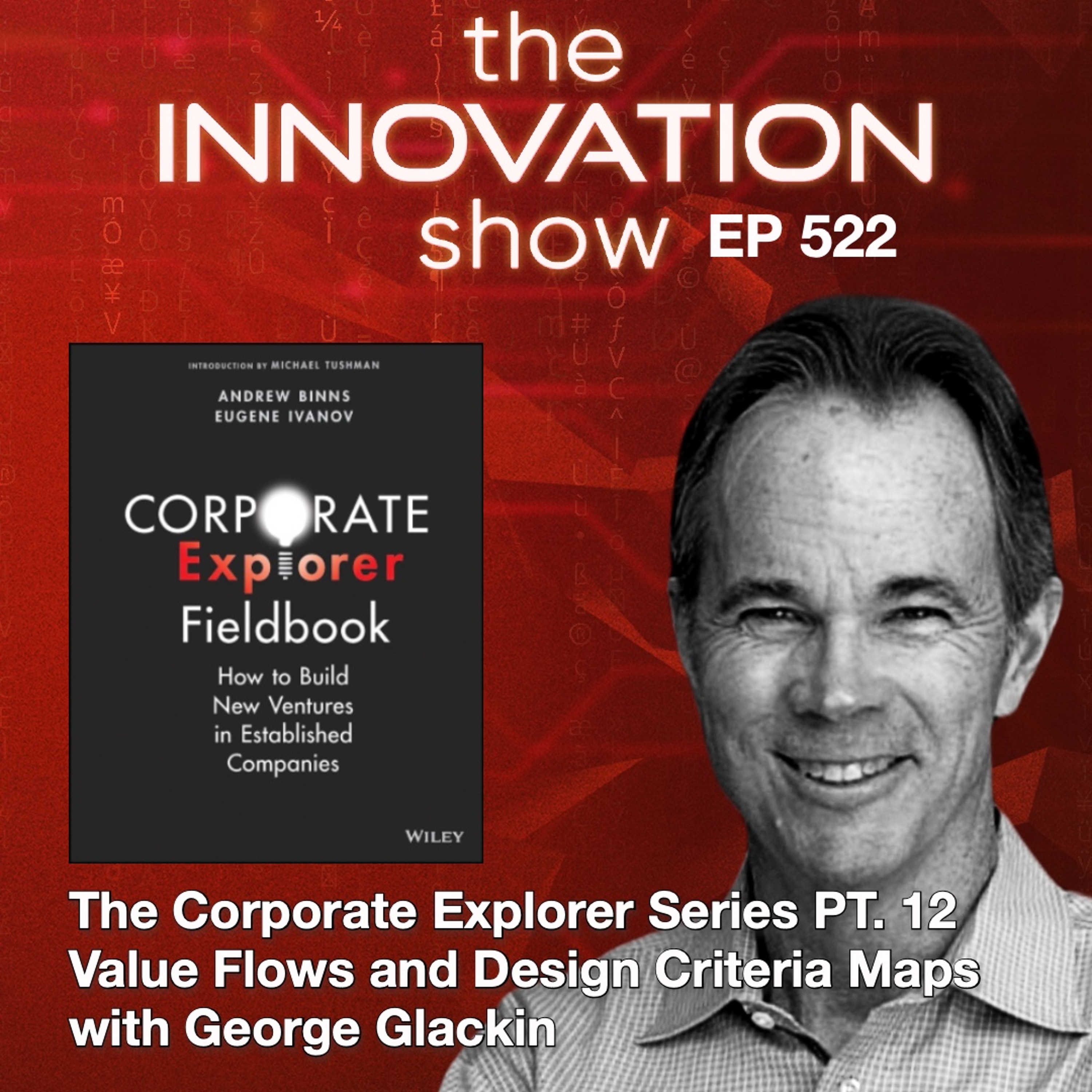
George Glackin - Value Flows and Design Criteria Maps
This episode delves into the challenges corporate explorers face when introducing new business opportunities, emphasising the importance of crafting compelling value propositions. Featuring guest George Glackin, co-author of a chapter on value flows and design criteria maps, the discussion highlights these tools as essential for developing products or services that truly delight customers. Through the Swiffer Wet Jet case study, the effectiveness of these methodologies in real-world application is explored. Additionally, the episode covers the importance of overcoming the 'curse of expertise' and fostering diverse team collaboration to achieve innovation success. Sponsored by Wazoku, the episode advocates for connected collective intelligence in driving sustainable innovation ecosystems. 00:00 Introduction to Corporate Explorers and Value Propositions 00:43 Sponsor Spotlight: Wazoku's Role in Innovation 01:29 Guest Introduction: George Glackin on Value Flows and Design Criteria Maps 01:41 The Genesis of Value Flows and Design Criteria Maps 03:26 The Curse of Expertise and Its Impact 05:05 Exploring the Value Flow with a Practical Example 05:57 Deep Dive into Design Criteria Maps 09:07 Applying the Framework: The Swiffer Wet Jet Case Study 13:17 Breaking Down Silos for Successful Product Development 15:34 The Importance of Validation and Scaling in Innovation 17:07 Closing Remarks and Contact Information Go to the book website – and complete the contact form requesting the corrected version of chapter 5 and chapter 10. Also see here for chapter 5:  
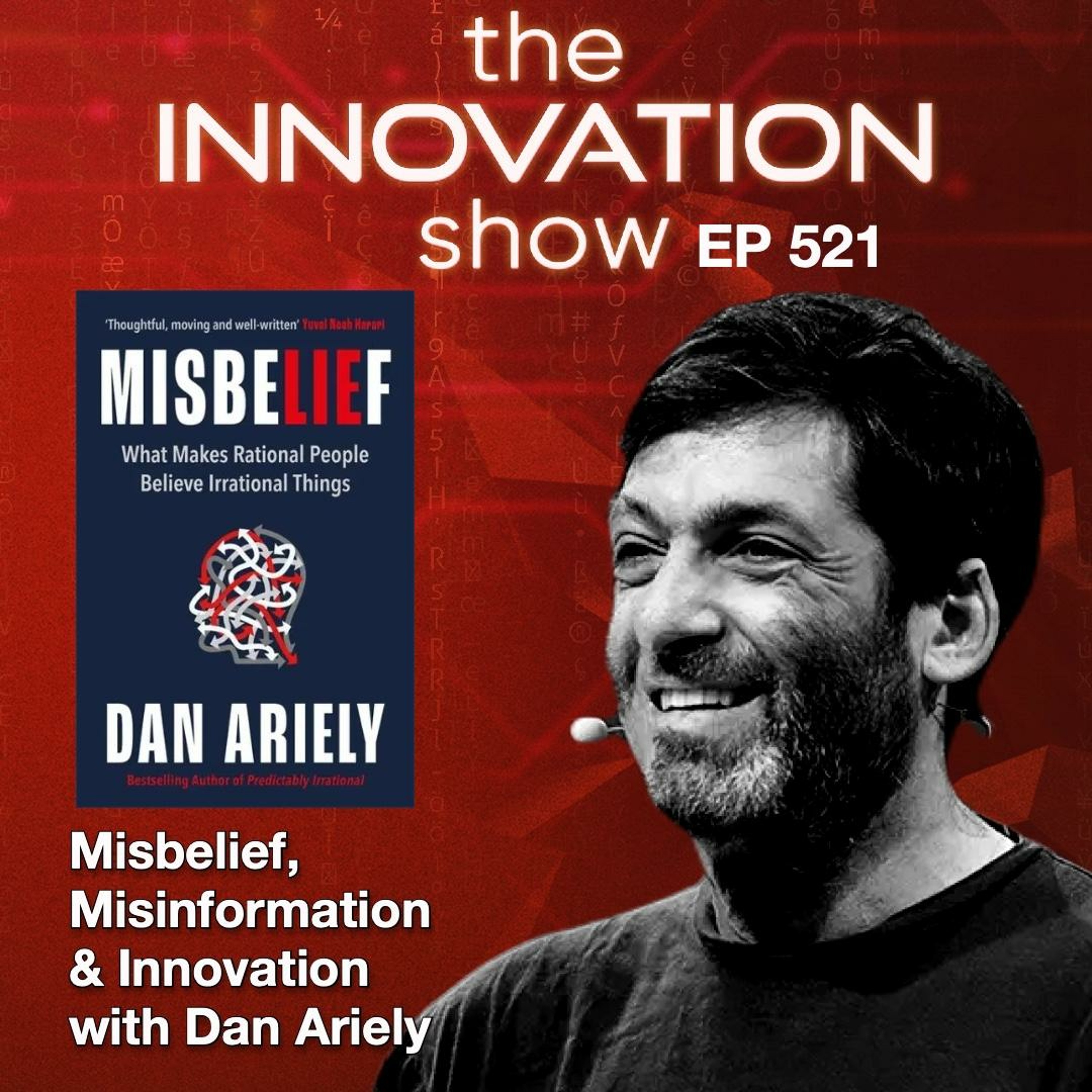
Navigating Misinformation with Empathy: Misbelief with Dan Ariely
Dan Ariely    Navigating Misinformation with Empathy: Misbelief with Dan Ariely   This episode features Dan Ariely, author of 'Misbelief, what makes rational people believe irrational things', focusing on the psychology behind misinformation and belief in conspiracy theories.    Ariely discusses how stress, personality traits, and social dynamics contribute to the spread of false beliefs, emphasising the importance of resilience and trust in combating misinformation.    He shares personal experiences, including being targeted by disinformation, and highlights his role in the NBC show 'The Irrational' that combines social science with solving crimes. The conversation touches on various psychological concepts, the impact of cognitive biases, and the role of social context in shaping beliefs.    Ariely proposes empathy and understanding over conflict in addressing belief in misinformation and discusses the broader implications of trust erosion in society.   00:00 Unraveling the Web of Misinformation 01:12 Welcome Dan Ariely: Exploring Misbelief 02:15 The Making of 'The Irrational': A TV Show Inspired by Real Science 06:13 Embracing Imperfections: The Philosophy of Kintsugi 12:22 The Personal Impact of Misinformation on Dan Ariely 18:39 The Psychological Journey into Misbelief 22:08 Navigating the Flood of Misinformation in the Digital Age 26:42 The Role of Stress in Cultivating Misbeliefs 33:49 Challenging Cognitive Biases and Misbeliefs 40:01 Navigating Societal Divides: The Abortion Debate 40:59 The Power of Uncertainty in Dialogue 41:25 Innovation and the 'Us vs. Them' Mentality 42:33 Exploring the Dunning-Kruger Effect 47:15 The Role of Memory in Shaping Beliefs 49:02 Personality Traits and Susceptibility to Misbelief 52:07 Social Dynamics: Ostracism and Its Effects 01:01:38 Understanding Cognitive Dissonance 01:07:13 The Importance of Resilience and Trust 01:15:52 Concluding Thoughts on Misbelief and Social Change   Dan Ariely, Behavioral Economics, Misbelief, Misinformation, Social Media, Conspiracy Theories, Political Affiliation, Psychology, Fake News, Empathy, Cognitive Bias, Trust in Society, Resilience, Stress and Misbelief, Cognitive Dissonance, Shibboleth, Secure Attachment, Dunning-Kruger Effect, Innovation, Identity and Belief, AI and Misinformation   Find Dan at www.DanAriely.com
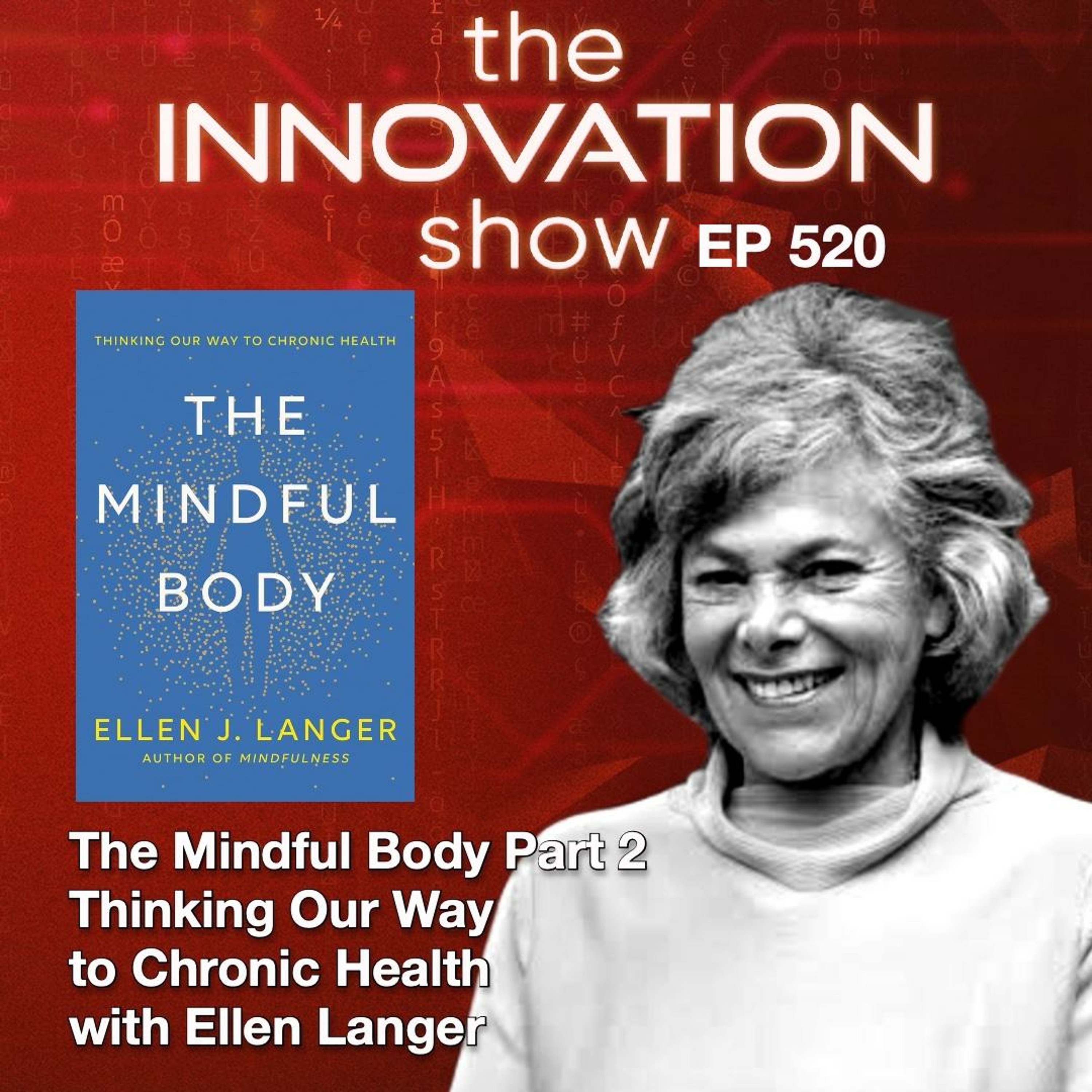
Unpacking Mindfulness and Positive Psychology with Ellen Langer
Unpacking Mindfulness and Positive Psychology with Ellen Langer   This podcast episode features Ellen Langer, known as the mother of mindfulness and positive psychology, discussing her latest book 'The Mindful Body' and its comprehensive insights into achieving chronic health through mindfulness. Langer covers a variety of topics, from the pitfalls of social comparison to the power of positive framing and the immense control people have over their health and happiness through mindful practices. Through anecdotes and empirical studies, she illustrates how changing perceptions and embracing variability can alleviate chronic illnesses, transform education, and enhance daily living. The discussion also touches on the psychological effects of labels, the importance of mindfulness in caregiving, and the transformative potential of mindful learning in both personal and professional contexts. Langer emphasizes the choice available in interpretations of our experiences and encourages a mindful approach to life's challenges to add more life to our years.   00:00 Welcome to the Mindful Body: An Introduction 00:44 The Pitfalls of Social Comparison 03:54 Embracing Imperfection and Mindfulness 05:22 Rethinking Regrets and Embracing Life's Uncertainties 07:29 The Power of Perspective: Learning from Loss 13:12 Understanding Emotions and Behavior 16:46 Mindful Learning and the Value of Mistakes 23:30 Challenging Conventional Wisdom on Health and Vision 27:20 Exploring the Power of Mindfulness in Managing Chronic Illness 28:03 The Transformative Effects of Mindfulness on Health 29:56 The Pygmalion Effect: Expectations Shaping Reality 30:59 Harnessing Placebo Effects and Mindful Healing 36:39 Mindful Contagion: Enhancing Well-being in Social Interactions 41:42 Mindfulness and Memory: Challenging Age-Related Stereotypes 48:17 Mindfulness in Practice: From Healthcare to Everyday Life 51:41 Embracing Mindfulness for Personal and Organizational Change Find Ellen and her books. https://www.ellenlanger.me
Venture Building from Idea to Scale with Michael Nichols
In this episode of the Corporate Explorer series by Wazoku, we delve into the concept of customer-first practices and their impact on bridging the maturity gap in corporate innovation. Michael Nichols, coauthor of the Corporate Explorer Field Book and Director of Corporate Ventures for MANN + HUMMEL, shares insights on the challenges of inside-out innovation within corporations, emphasizing the importance of validating business models beyond core business practices. He discusses the common pitfalls of corporates mistaking invention for innovation, the crucial role of customer problem identification, and the necessity of developing a repeatable business model. Nichols also outlines the steps towards achieving business model maturity, highlighting the importance of problem-solving, scalability, and customer need. This episode sheds light on the systemic issues facing corporate innovation and offers guidelines for successfully navigating and leveraging customer-first methodologies to ensure sustainable growth and innovation within large organizations.   00:00 Unpacking the Essence of Customer-First in Corporate Innovation 01:11 Introducing Michael Nichols: A Deep Dive into Corporate Ventures 02:04 The Intricacies of Inside-Out Innovation Explained 03:59 The Challenges of Corporate Innovation and the Funding Dilemma 07:11 Navigating the Innovation Cycle: From Ideation to Market Validation 11:36 Addressing the Corporate Innovation Gap: Strategies and Solutions 25:56 Exploring Business Model Maturity: Key Indicators for Success 35:55 Final Thoughts and Where to Connect    Find Michael here: https://www.linkedin.com/in/michael-guy-nichols/
Ellen Langer - The Mindful Body Part 1
An Interview with Ellen Langer: The Power of Mindfulness in Health and Life   The script features an interview with Ellen Langer, the first woman to be tenured in psychology at Harvard. Known worldwide as the mother of mindfulness and the mother of Positive Psychology, she shares insights from her esteemed career and her latest book, 'The Mindful Body Thinking, our Way to Lasting Health'. Langer discusses her role in pioneering research in Mind Body Unity and emphasizes the importance of mindfulness as a way of enhancing health. She explains how attitudes and personal perspectives can often influence our physical and mental well-being, including how we perceive and treat stress, illnesses like cancer, chronic diseases and even factors like age and physical appearance. She emphasizes the power of perception, contextual considerations, and the important role that language plays in mediating our experiences.   00:00 Introduction to the Guest and Her Work 00:48 Understanding Mindfulness and Its Impact 01:34 Exploring the Concept of Mindfulness 02:25 The Power of Being Mindful 03:27 The Prevalence of Mindlessness 04:10 The Benefits of Noticing Change 05:24 The Journey to Mindfulness 05:47 The Impact of Personal Experiences on Research 06:40 Exploring the Mind-Body Unity Concept 08:25 The Power of Mindset in Physical Health 10:54 The Influence of Perception on Healing 11:32 The Role of Mind-Body Unity in Chronic Illness 19:05 The Power of Attention to Symptom Variability 23:40 Understanding and Addressing Addictions 28:50 The Impact of Perception on Sleep 28:57 The Power of Perception in Sleep and Attitude 29:37 The Impact of Clothing on Perception and Age 30:33 The Influence of Uniforms and Balding on Age Perception 31:41 The Mind-Body Connection and Personal Experiences 33:57 The Power of Placebos and the Challenge of Social Conditioning 39:27 The Role of Stress in Health and Disease 43:23 Challenging the Rules and Embracing Innovation 46:30 The Power of Language in Shaping Our Reality 52:16 The Illusion of Control and the Role of Risk in Decision Making   Ellen Langer, Social Psychology, Stress Management, Health Awareness, Thinking habits, Motivational Interview, Personal Development, Positive Psychology, Mind-Behaviour Connection, Chronic Health, Lifestyle, Habitual Behaviour, Carrying out tasks, Confidence Building, Empowerment   Find Ellen here: 
Rita McGrath: Designing Organisations for Innovation and Growth
In this final of a 4-part episode, Rita McGrath discusses her upcoming book focused on how organisations can design structures that empower decision-making at all levels, embracing a 'permissionless' approach to innovation. She elaborates on the importance of engaging disengaged workforces and optimising for transient competitive advantages. Rita provides insightful tactics for assessing competitive landscapes, using various strategies like onslaughts, guerrilla campaigns, feints, and gambits. She also touches on leadership practices for fostering innovation, including managing personal agendas, devoting time to new ventures, and employing a range of leadership practices to navigate uncertainty and encourage a culture of opportunity-seeking within organisations. Rita advocates for 'intelligent failure' and explores how technology can redefine management to promote human flourishing at work. The episode concludes with an insight into her new book's core thesis, aiming for a release in 2024 or 2025.   00:00 Welcome & Introduction to Rita McGrath's Insights 00:16 Sneak Peek: Rita McGrath's Upcoming Book on Organisational Design 00:57 Decoding Competitive Strategies and Responses 03:53 Exploring Competitive Moves: Onslaughts to Guerrilla Campaigns 09:35 The Art of Feints and Gambits in Business Strategy 14:32 Entrepreneurial Leadership: Driving Innovation from the Top 22:05 Orchestrating Practices for Entrepreneurial Success 28:04 Path Clearing and Handling Failure in Entrepreneurial Ventures 40:40 Anticipating Rita McGrath's New Book & Final Thoughts   Find Rita: Find Valize: www.Valize.com   Find Aidan McCullen for Keynote talks on Innovation, Transformation and Change:   More on the Innovation Show:
The Power of Collective Intelligence with Simon Hill
The Power of Collective Intelligence with Simon Hill Harnessing Global Creativity for Innovation: A Wazoku Story   This episode examines the power of collective intelligence and open innovation, focusing on Wazoku, a company that facilitates innovation through technology. The discussion highlights a story where an individual from India solved a carbonated drink company's bubble manipulation challenge, exemplifying global problem-solving capabilities. Simon Hill, Wazoku's CEO, elaborates on the importance of embracing external ideas, utilising software for innovation efficiency, and fostering a culture that supports innovation. Emphasising the potential of AI and crowdsourcing, the narrative showcases examples where unexpected solutions emerged from non-obvious sources, including a violinist providing a solution for a potato chip company. The episode underscores the significance of asking the right questions, timing for ideas, and structuring organisations to tap into external creativity effectively.   00:00 The Spark of Innovation: A Global Call for Ideas 00:56 The Power of Crowdsourcing in Innovation 01:30 Introducing Simon Hill: Innovator and Corporate Explorer 02:09 Exploring the Nuts and Bolts of Challenge-Driven Innovation 02:56 The Role of AI and Technology in Shaping Innovation 08:19 The Human Element: Culture, Mindset, and Organisational Change 12:57 Harnessing External Ideas: The Case of Manish and Beyond 16:19 The Future of Work and Innovation: A Circular Ecosystem 23:56 Real-World Success Stories: From Violinists to Potato Chips 26:45 Wazoku: Envisioning a World of Collective Intelligence   Find Wazoku at
The Entrepreneurial Mindset Part 3 with Rita McGrath
In this extensive session with Rita McGrath, Aiden explores the timeless insights of McGrath's book on embodying an entrepreneurial mindset in businesses. McGrath emphasises the importance of continuous innovation, exploiting new opportunities, and building new competencies to stay competitive. The conversation covers key concepts like the significance of key ratios, creating new competence, understanding consumption chains, and the necessity of political savvy within corporate innovation. McGrath also introduces practical tools and frameworks for evaluating opportunities, managing resources, and adapting execution strategies. The dialogue includes examples like Amazon's innovation in delivery systems and Procter & Gamble's ventures, illustrating the application of these concepts in real-world scenarios. McGrath provides advice on overcoming common challenges in innovation, such as attracting the first few customers and navigating corporate politics effectively.   00:00 Welcome & Introduction to Timeless Business Frameworks 00:36 Exploring the Entrepreneurial Mindset and Innovation 02:03 Key Ratios: The Secret to Competitive Advantage 06:15 Stratification Mapping: Unveiling Business Asymmetries 08:39 The Art of Championing Innovation Within Corporations 15:16 Navigating Corporate Politics for Innovation Success 23:13 Asset Parsimony: Thriving with Limited Resources 25:40 Real Options Reasoning vs. Net Present Value 31:24 Exploring the Ecosystem of Options 31:56 The Future of Remote Work Technologies 32:31 Investing in Positioning Options 33:51 Scouting and Stepping Stones: Navigating Uncertainty 35:09 Leveraging RFID Technology: A Case Study 38:05 Resource Allocation and Organisational Structures 42:17 Competitive Insulation and the Direct-to-Consumer Boom 46:22 Adaptive Execution and Discovery Driven Growth 54:22 Understanding Customer Consumption Chains 58:20 Concluding Remarks and Additional Resources   Find Rita:
The Entrepreneurial Mindset Part 2 with Rita McGrath
In part 2 of The Entrepreneurial Mindset, Rita McGrath, discusses the concept of the entrepreneurial mindset and the power of consumption chain analysis for businesses seeking to differentiate and innovate.    Rita illustrates how understanding each step of a customer's journey, from need identification to product disposal, can unveil numerous opportunities for innovation and competitive advantage.    She shares insightful examples ranging from grocery shopping to the historical battle between Betamax and VHS, highlighting the importance of aligning each step of the consumption chain to customer needs and preferences.    She also touches on the significance of resegmenting markets and reconfiguring industries to capture new opportunities, using examples from automobile insurance and manufacturing.    The episode offers a deep dive into how companies can apply these concepts to drive growth, challenge assumptions, and transform their competitive landscapes.   00:00 Welcome & Recap of Part One 00:30 Diving Deeper into Consumption Chain Analysis 01:12 Exploring Customer Choices and Consumption Chains 02:30 The Importance of Understanding the Customer Journey 05:41 Learning from Failure and the Power of Networks 08:53 Innovative Case Studies: Progressive Insurance and Beyond 13:18 Resegmenting Markets for Competitive Advantage 19:05 Reconfiguring Markets: Evolutionary to Revolutionary Changes 23:52 The Five Whys Technique and Citibank's Strategic Move 30:10 Closing Thoughts and Where to Find More   Find Rita: Find Valize: www.   Find Aidan McCullen for Keynote talks on Innovation, Transformation and Change:   More on the Innovation Show:      
The Entrepreneurial Mindset Part 1 with Rita McGrath
Harnessing the Entrepreneurial Mindset for Innovation and Growth This script delves into a conversation with Rita McGrath, author of 'The Entrepreneurial Mindset,' exploring principles for thriving in rapidly changing environments. McGrath shares her personal journey from industry to academia, emphasizing the importance of understanding practical business applications. The script covers themes such as the importance of an entrepreneurial mindset in recognizing and acting on business opportunities, detailed methodologies for product differentiation, and strategies for business model innovation. McGrath discusses her work on attribute mapping and quizzing as tools for identifying customer needs and creating blockbuster products. The narrative extends to strategic management under uncertainty, leveraging insights from evolutionary economics, and the challenge of disruptive innovation. The script concludes with McGrath highlighting software solutions, like Sparc Hub, designed to facilitate the operationalization of these concepts within organizations. 00:00 Unlocking the Entrepreneurial Mindset: A Guide to Innovation 01:15 From Political Campaigns to Digital Transformation: Rita McGrath's Journey 08:10 The Evolution of Strategic Management and the Birth of Disruptive Innovation 14:42 Embracing the Entrepreneurial Mindset for Future Success 18:22 Crafting the Entrepreneurial Frame: Setting the Stage for Innovation 31:57 Exploring Autonomous Technology in Military Operations 32:40 The Future of Autonomy: Removing Humans from the Equation 33:21 Redefining Transportation and Ownership in an Autonomous World 33:38 Opportunity Inventory: Identifying What's Ready for Innovation 33:58 The Human Factor in Innovation and Transformation Efforts 34:25 Designing Blockbuster Products and Services 34:50 Attribute Mapping: Aligning Offerings with Customer Needs 35:38 Understanding Customer Behavior Beyond Demographics 37:08 The Power of Non-Negotiables, Discriminators, and Exciters in Product Design 38:29 The Evolution of Product Features: From Exciters to Non-Negotiables 45:41 Staying Ahead of High-Impact Trends and Competitive Changes 50:54 Quizzing Methodology: Uncovering New Opportunities for Differentiation 54:33 Closing Remarks and Where to Find More Information Find Rita: https://www.ritamcgrath.com Find Valize: https://www.valize.com
Transforming Ideas into Action with Stuart Laws
Innovating Within the Military: Challenge-Driven Innovation and Connected Intelligence This episode of the Corporate Explorer, recorded in London during the launch of the Corporate Explorer field book and powered by Wazoku, features Stuart Laws from the UK's Defense Innovation Unit. The discussion explores how challenge-driven innovation has transformed problem-solving within the military, moving away from a traditional idea-generation model to one that actively involves business units in framing their issues for more scoped and implementable solutions. Laws highlights the shift towards a more inclusive innovation approach, engaging employees, suppliers, startups, universities, and leveraging Wazoku's connected collective intelligence of over 700,000 global problem solvers. The episode also delves into the human aspects of innovation, including the creation of stakeholder personas to better understand and influence decision-makers, and the serendipitous discovery of solutions through cross-sector collaboration and challenge-driven initiatives. Laws shares insights on the necessity of a collaborative mindset in innovation, bringing public and private sectors together for impactful outcomes. The successes of this approach are exemplified in real-world applications, such as providing 5G coverage in hard-to-reach areas through a partnership between Defence, BT, and academic contributions. 00:00 Welcome to the Corporate Explorer: Innovating with Wazoku 00:43 Introducing Stuart Laws: Innovating in the Military 01:41 The Power of Challenge-Driven Innovation 04:12 Cross-Sector Innovation: Bridging Industries for Better Solutions 09:14 Marketing Personas: A Game-Changer for Innovation 12:55 Finding Solutions in Unexpected Places: The BT Story 15:13 Wrapping Up: The Future of Innovation with Wazoku Find Stuart here:
From Postage to Paradigm Shift with Michael J. Critelli
Navigating Change and Reinvention: A Conversation with Michael J. Critelli In this in-depth conversation, former CEO and Chairman of Pitney Bowes, Michael J. Critelli, shares insights on leading a company through periods of significant change and market disruption. Starting with a historical overview of Pitney Bowes’ evolution from a mail processing business to embracing global markets and adjacent market opportunities, Critelli discusses strategic thinking, the importance of innovation, and the necessity of constantly adapting business strategies. He highlights the challenges of competing with government and quasi-government entities, the importance of exiting markets strategically, and the need to centralize operations to stay competitive. The conversation also touches on the value of salespeople as 'human sensors' in identifying opportunities, the importance of R&D investment, understanding customer-driven value, and the role of leadership in navigating change. Critelli’s journey offers valuable lessons on staying relevant in evolving markets and the continuous rebalancing of organizational focus and resources. 00:00 Opening Remarks and Introduction to Today's Episode 01:55 The Evolution of Pitney Bowes: Adapting to Change 03:43 Insights and Strategies from Michael J. Critelli 07:40 Reframing Competition and Embracing New Opportunities 12:45 Navigating the Complexities of Global Postal Services 20:35 The Art of Entering and Exiting Markets Strategically 36:43 Cultural Transformation and Organizational Change 45:25 Final Thoughts and Where to Find More Find Mike here:  
Trails Less Travelled: Innovation Lessons from former CEO and Chairman of Pitney Bowes, Michael Critelli Part 1
In this episode of 'The Innovation Show,' host Aidan McCullen sits down with the former chairman and CEO of Pitney Bowes, Michael Critelli. Through a deep dive into Critelli’s career, we explore his penchant for the road less traveled, his transformative leadership at Pitney Bowes, and his insights on innovation, strategy, and foresight. From humble beginnings to leading a staple communications company through times of intense change, including the internet era, 9/11, and the recession, Critelli shares lessons on valuing potential over qualifications, listening to dissent, and the importance of constant adaptation in business and life. 00:00 Early Career and Joining Pitney Bowes 01:40 Climbing the Ladder: From Legal to Leadership 04:28 Reinventing Pitney Bowes: A Tale of Transformative Change 07:09 Embracing Agile Strategy: Lessons from the Front Lines 13:51 The Power of Listening and Adapting in Leadership 42:39 The Importance of Vision and Courage in Decision-Making  44:47 Fostering a Culture of Continuous Learning and Innovation
Challenge-Driven Innovation with Bea Schofield
This episode of the Corporate Explorer series features a discussion with Bea Schofield, a specialist in Challenge-Driven Innovation (CDI), and various co-authors of the 'Corporate Explorer Field Book'. The podcast, supported by Wazoku, delves into how large organisations can foster innovation through a sustainable ecosystem using 'Connected Collective Intelligence'. The conversation focuses on the principles of CDI, detailing a framework dubbed 'LASSO' for crafting effective challenges that stimulate creative solutions. It underscores the importance of setting clear boundaries to fuel creativity, ensuring challenges are actionable and specific, and aligning them with strategic goals to facilitate ownership and support within the organisation. The episode also covers strategic challenge framing, stakeholder engagement, solution evaluation, and prioritisation, offering insights into blending creativity with systematic processes for corporate innovation. Bea Schofield shares her perspective on the role of corporate innovators and the necessity of balancing ideation with execution to drive meaningful organisational change.  00:00 Welcome to the Corporate Explorer Series: Launching the Field Book 00:15 Introducing Wazoku: Powering Sustainable Innovation 01:07 Diving Into the World of CDI with Bea Schofield 03:59 Exploring the LASSO Framework for Effective Challenges 07:44 The Importance of Support and Ownership in Innovation 17:19 Navigating Corporate Innovation: Strategies and Tools 20:41 Selecting the Right Channels for Innovation Challenges 21:58 Wrapping Up and Where to Find Bea Schofield Corporate Explorer Series, Innovation Ecosystems, CDI (Challenge Driven Innovation), Connected Collective Intelligence, Ideation Process, Challenge Design, LASSO Framework, Problem Solving,  Collaboration,  Corporate Innovation