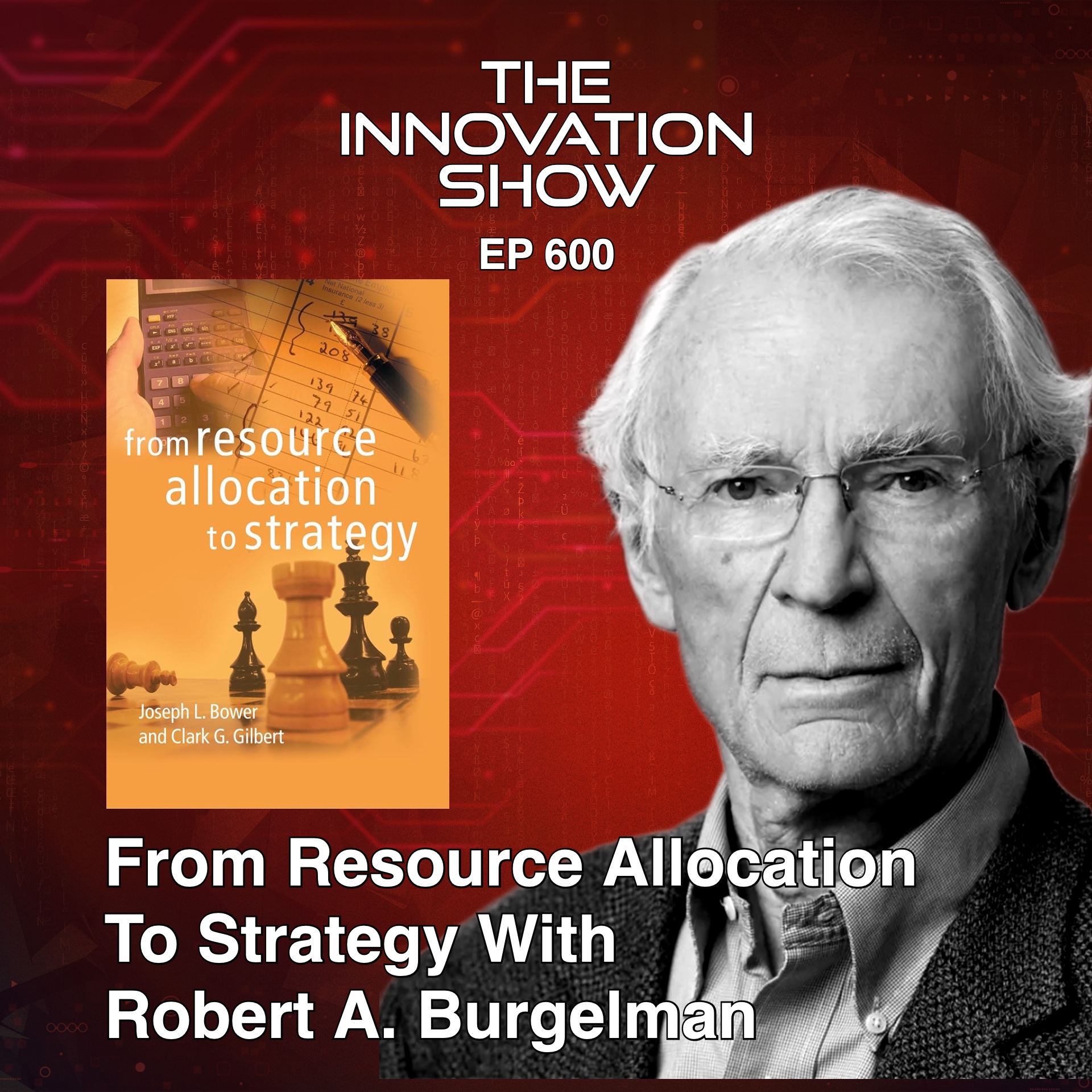
Robert Burgelman on Strategy Making Intel and Resource Allocation
The Innovation Show · The Innovation Show
Audio is streamed directly from the publisher (traffic.libsyn.com) as published in their RSS feed. Play Podcasts does not host this file. Rights-holders can request removal through the copyright & takedown page.
Show Notes
In this episode of the 'Hours of Bower' series, sponsored by Kyndryl, we delve into Chapter 3 of 'From Resource Allocation to Strategy' with Professor Robert Burgelman.
The discussion centers around a revolutionary view of corporate strategy using Intel Corporation's transformation over several decades. Professor Burgelman reframes strategy as an emergent and evolving organizational capability, influenced by Intel's shift from focusing on DRAMs to microprocessors. Key topics include the intricate relationship between top-down planning and emergent strategies, the role of internal and external selection environments, and the concept of strategic dissonance explained through examples from Intel's history. Join host Aidan and Professor Burgelman as they explore how strategic leadership and innovation can coalesce to drive corporate success in a competitive business landscape.
00:00 Introduction and Sponsor Message
00:30 Overview of Today's Episode
01:50 Guest Introduction: Professor Robert Burgelman
02:21 Early Career and Influences
04:07 Collaboration with Joe Bower
07:11 Intel's Strategic Shift
09:27 Andy Grove and Strategic Dissonance
19:35 Framework for Strategic Leadership
33:32 The Importance of Aligning Actions with Strategy
34:25 Intel's Strategic Shifts and Missed Opportunities
35:35 The Dangers of Dominance in an Industry
37:47 Disruptive Innovation and Strategic Inertia
51:04 Balancing Induced and Autonomous Strategy Processes
52:51 Organizational Ecology and Internal Selection
59:22 HP's Strategic Evolution and Corporate Splits
01:04:12 Conclusion and Final Thoughts