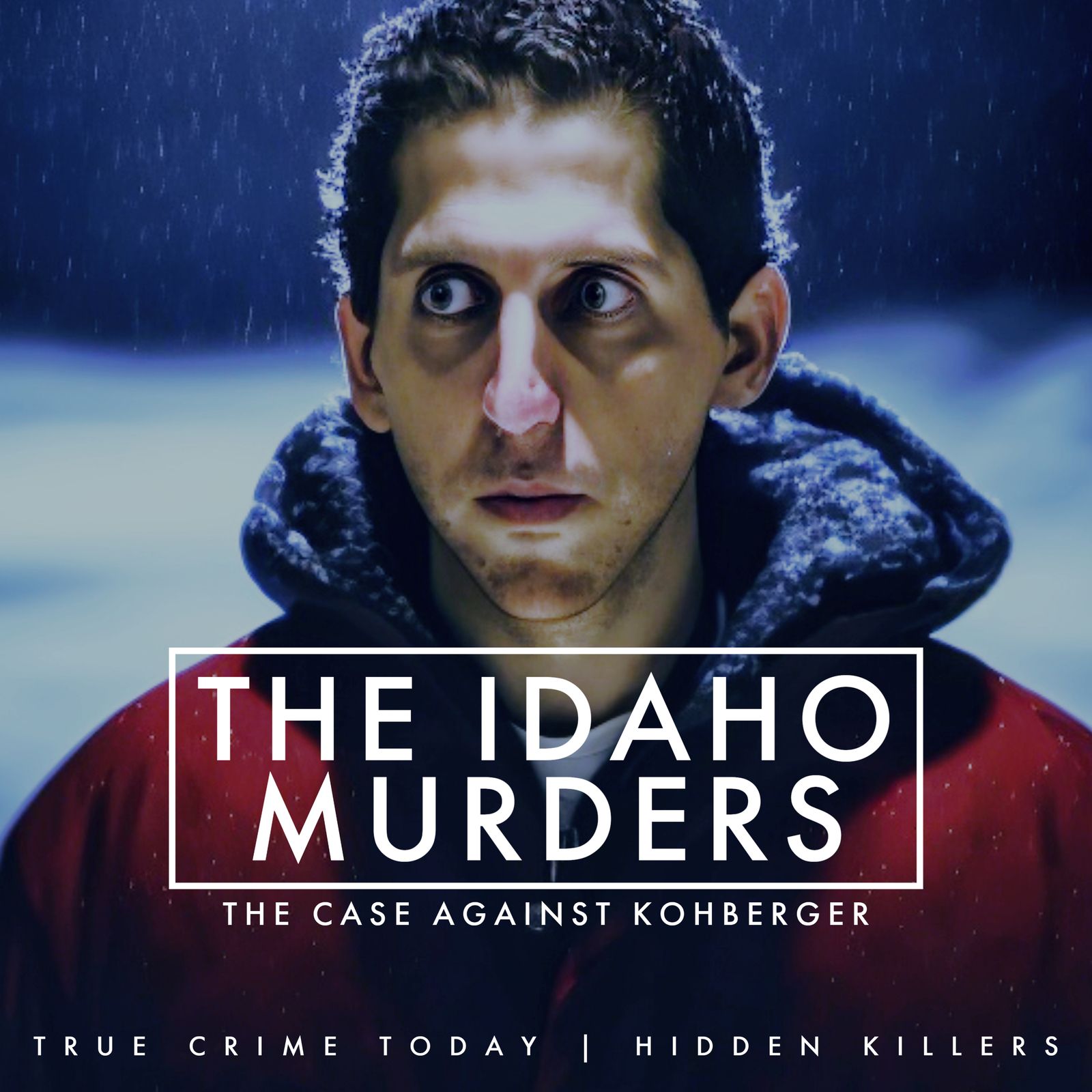
The Idaho Murders | The Case Against Bryan Kohberger
541 episodes — Page 3 of 11

Why Institutions Freeze — Ret FBI Robin Dreeke on Bryan Kohberger's WSU Red Flags-WEEK IN REVIEW
Tonight on Hidden Killers Live, we’re taking on the uncomfortable truth institutions hate facing: sometimes the danger is right in front of them, but the structure, culture, and psychology of the environment keep anyone from calling it what it is. Retired FBI Special Agent Robin Dreeke joins us to break down how those blind spots cost Washington State University crucial opportunities to intervene. This episode digs into the behavioral complaints that circulated inside WSU long before any crime occurred: the staring, the hovering, the boundary-breaking, the fear expressed by women in the department. These weren’t isolated incidents. They were a pattern. And patterns matter. Robin explains why institutions tend to frame patterned discomfort as a paperwork problem instead of a risk-behavior problem — and why that distinction is everything. Graduate programs rely heavily on autonomy, hierarchy, and informal power dynamics. When the person generating concern holds influence over students, especially women, the risk isn’t hypothetical. It’s structural. We examine why institutions minimize threat signals: fear of liability, fear of mislabeling someone, fear of overreacting, fear of confronting what they don’t want to acknowledge. Stacy joins with psychological insight into why women's instincts responded before anyone had the “official language” to describe what was wrong. Then we explore what was missing at WSU — not actions, but training. Why were faculty unprepared to identify patterned risk? Why did warnings get siloed instead of escalated? Why did a mandatory meeting produce no meaningful change? And what could have been done differently from the moment the first complaints surfaced? This isn’t about hindsight. It’s about understanding systemic blind spots so they aren’t repeated. For anyone trying to understand the line between unusual behavior and genuine threat, this conversation is a must-watch. #HiddenKillers #WSU #RobinDreeke #ThreatAssessment #CampusWarnings #BehavioralPatterns #TrueCrimeLivestream #TonyBrueski #RedFlags #InstitutionalFailure Want to comment and watch this podcast as a video? Check out our YouTube Channel. https://www.youtube.com/@hiddenkillerspod Instagram https://www.instagram.com/hiddenkillerspod/ Facebook https://www.facebook.com/hiddenkillerspod/ Tik-Tok https://www.tiktok.com/@hiddenkillerspod X Twitter https://x.com/tonybpod Listen Ad-Free On Apple Podcasts Here: https://podcasts.apple.com/us/podcast/true-crime-today-premium-plus-ad-free-advance-episode/id1705422872

New Kohberger Lawsuit Blows Open New Questions - Did WSU IGNORE RED FLAGS?-WEEK IN REVIEW
Tonight on Hidden Killers, we’re diving into the lawsuit that could finally crack open the one part of the Bryan Kohberger story that’s been sealed tight: what Washington State University actually knew about his behavior before the Idaho killings — and what they did or didn’t do with it.The Goncalves family has officially taken the first major step toward suing WSU, and the claims are explosive. They’re arguing that the university wasn’t just a backdrop in Kohberger’s life — it was an institution with warnings stacking up in its hallways, complaints piling on desks, and a growing chorus of women saying the same thing: this man made them feel unsafe.We now know multiple WSU faculty and graduate students reported Kohberger for intimidating conduct, blocking doorways, staring silently at women, hovering over desks, following people to their cars, and violating boundaries over and over. Some were so scared they asked for escorts at the end of the day. Others filed formal discrimination and harassment complaints. One professor even told colleagues she feared he’d go on to harm students someday.And still — he remained in the program. Still teaching. Still representing the university. Still in university housing. Still collecting a paycheck.The lawsuit argues that WSU had enough information to intervene long before Kohberger ever crossed into Idaho. Not because anyone predicted the crime — but because institutions have a duty to respond to patterns of harassment, intimidation, and escalating hostility. The families want answers, and they want every internal document: every HR complaint, every faculty meeting, every email where someone said, “Something is wrong with this guy.”This case could reshape how universities handle red-flag students and employees. It could expose just how close institutions sometimes get to danger without ever stepping in. And it could finally tell these families whether the system that surrounded Kohberger ever tried to stop what so many people felt happening right in front of them.Join me as we break down what this lawsuit means, what the families are fighting for, and why the truth matters now more than ever.#HiddenKillers #BryanKohberger #WSU #KohbergerCase #TrueCrime #IdahoCase #KayleeGoncalves #MoscowMurders #JusticeForTheVictims #TrueCrimeCommunityWant to comment and watch this podcast as a video?Check out our YouTube Channel. https://www.youtube.com/@hiddenkillerspodInstagram https://www.instagram.com/hiddenkillerspod/Facebook https://www.facebook.com/hiddenkillerspod/Tik-Tok https://www.tiktok.com/@hiddenkillerspodX Twitter https://x.com/tonybpodListen Ad-Free On Apple Podcasts Here: https://podcasts.apple.com/us/podcast/true-crime-today-premium-plus-ad-free-advance-episode/id1705422872
Two Cases Just Shifted — Brian Walshe’s Plea Flip & WSU Under Kohberger Fallout Fire
Two major true-crime cases just took sharp, unexpected turns — one in the courtroom, one in the civil arena.First, Brian Walshe blindsided the court by pleading guilty to disposing of Ana Walshe’s remains and misleading investigators — but still maintaining he didn’t kill her. It’s a move that redefines the entire murder trial and forces huge strategic shifts for both sides.Then, across the country, Washington State University is facing legal heat. The Goncalves family has filed a civil claim arguing WSU ignored repeated warnings about Brian Kohberger before the Moscow murders. More than a dozen complaints. A professor calling him a future predator. Students saying they felt trapped and unsafe. The question now is simple: Does the law say the university should have done more?On today’s episode of Hidden Killers, Tony Brueski sits down with legal analyst Eric Faddis to break down both cases:• Why did Walshe plead guilty to these charges but not murder?• Does this strengthen the prosecution’s theory — or hand the defense a new angle?• What does the jury hear now, and how will it shape perception?• And in the WSU civil case — what duty does a university owe?• What evidence matters most?• Does foreseeability apply when the crime occurred off-campus at another school?• And is the real goal here discovery — forcing WSU’s internal files out into the light?Two cases. Two seismic shifts. One conversation that lays out the stakes, the law, and the fallout.#HiddenKillers #TrueCrime #BrianWalshe #BryanKohberger #WSUWant to comment and watch this podcast as a video?Check out our YouTube Channel. https://www.youtube.com/@hiddenkillerspodInstagram https://www.instagram.com/hiddenkillerspod/Facebook https://www.facebook.com/hiddenkillerspod/Tik-Tok https://www.tiktok.com/@hiddenkillerspodX Twitter https://x.com/tonybpodListen Ad-Free On Apple Podcasts Here: https://podcasts.apple.com/us/podcast/true-crime-today-premium-plus-ad-free-advance-episode/id1705422872
WSU in the Hot Seat — Did They Ignore the Warnings About Kohberger?
The Goncalves family has taken the next step — not criminal, but civil. They’ve filed claims against Washington State University, arguing the school ignored repeated red flags about Brian Kohberger before the murders in Moscow. And now the question becomes: Does the law agree? In this deep-dive episode of Hidden Killers, Tony Brueski sits down with former prosecutor and defense attorney Eric Faddis to unpack the legal claims, the duty-of-care standards, the foreseeability argument, and the staggering list of complaints that WSU allegedly received long before the killings. Tony and Eric break down the core issues: • What duty does a university have when a graduate student — and teaching assistant — has multiple formal complaints? • Do warnings like “He’s a predator in the making” create legal exposure? • Do stalking-adjacent behaviors — blocking doorways, following students — meet the threshold for negligent supervision? • Does the fact that the murders occurred off-campus, in another state, change the legal calculus? • Could WSU actually be found liable for failing to remove or restrict him? • Or will the university argue: “We couldn’t have seen this coming”? • And is this lawsuit partly about discovery — forcing WSU to release internal emails, HR files, and Title IX records? Eric walks us through what plaintiffs need to prove, what defenses WSU will likely mount, and why this case could have massive implications for universities nationwide if a court allows it to move forward. This is one of the most legally significant developments to emerge from the Moscow murders — and it could reshape university policies around reporting, supervision, and risk. #HiddenKillers #BryanKohberger #WSU #TrueCrime Want to comment and watch this podcast as a video? Check out our YouTube Channel. https://www.youtube.com/@hiddenkillerspod Instagram https://www.instagram.com/hiddenkillerspod/ Facebook https://www.facebook.com/hiddenkillerspod/ Tik-Tok https://www.tiktok.com/@hiddenkillerspod X Twitter https://x.com/tonybpod Listen Ad-Free On Apple Podcasts Here: https://podcasts.apple.com/us/podcast/true-crime-today-premium-plus-ad-free-advance-episode/id1705422872
Two Cases Just Shifted — Brian Walshe’s Plea Flip & WSU Under Kohberger Fallout Fire
Two major true-crime cases just took sharp, unexpected turns — one in the courtroom, one in the civil arena.First, Brian Walshe blindsided the court by pleading guilty to disposing of Ana Walshe’s remains and misleading investigators — but still maintaining he didn’t kill her. It’s a move that redefines the entire murder trial and forces huge strategic shifts for both sides.Then, across the country, Washington State University is facing legal heat. The Goncalves family has filed a civil claim arguing WSU ignored repeated warnings about Brian Kohberger before the Moscow murders. More than a dozen complaints. A professor calling him a future predator. Students saying they felt trapped and unsafe. The question now is simple: Does the law say the university should have done more?On today’s episode of Hidden Killers, Tony Brueski sits down with legal analyst Eric Faddis to break down both cases:• Why did Walshe plead guilty to these charges but not murder?• Does this strengthen the prosecution’s theory — or hand the defense a new angle?• What does the jury hear now, and how will it shape perception?• And in the WSU civil case — what duty does a university owe?• What evidence matters most?• Does foreseeability apply when the crime occurred off-campus at another school?• And is the real goal here discovery — forcing WSU’s internal files out into the light?Two cases. Two seismic shifts. One conversation that lays out the stakes, the law, and the fallout.#HiddenKillers #TrueCrime #BrianWalshe #BryanKohberger #WSUWant to comment and watch this podcast as a video?Check out our YouTube Channel. https://www.youtube.com/@hiddenkillerspodInstagram https://www.instagram.com/hiddenkillerspod/Facebook https://www.facebook.com/hiddenkillerspod/Tik-Tok https://www.tiktok.com/@hiddenkillerspodX Twitter https://x.com/tonybpodListen Ad-Free On Apple Podcasts Here: https://podcasts.apple.com/us/podcast/true-crime-today-premium-plus-ad-free-advance-episode/id1705422872
New Kohberger Lawsuit Blows Open New Questions - Did WSU IGNORE RED FLAGS?
Tonight on Hidden Killers, we’re diving into the lawsuit that could finally crack open the one part of the Bryan Kohberger story that’s been sealed tight: what Washington State University actually knew about his behavior before the Idaho killings — and what they did or didn’t do with it.The Goncalves family has officially taken the first major step toward suing WSU, and the claims are explosive. They’re arguing that the university wasn’t just a backdrop in Kohberger’s life — it was an institution with warnings stacking up in its hallways, complaints piling on desks, and a growing chorus of women saying the same thing: this man made them feel unsafe.We now know multiple WSU faculty and graduate students reported Kohberger for intimidating conduct, blocking doorways, staring silently at women, hovering over desks, following people to their cars, and violating boundaries over and over. Some were so scared they asked for escorts at the end of the day. Others filed formal discrimination and harassment complaints. One professor even told colleagues she feared he’d go on to harm students someday.And still — he remained in the program. Still teaching. Still representing the university. Still in university housing. Still collecting a paycheck.The lawsuit argues that WSU had enough information to intervene long before Kohberger ever crossed into Idaho. Not because anyone predicted the crime — but because institutions have a duty to respond to patterns of harassment, intimidation, and escalating hostility. The families want answers, and they want every internal document: every HR complaint, every faculty meeting, every email where someone said, “Something is wrong with this guy.”This case could reshape how universities handle red-flag students and employees. It could expose just how close institutions sometimes get to danger without ever stepping in. And it could finally tell these families whether the system that surrounded Kohberger ever tried to stop what so many people felt happening right in front of them.Join me as we break down what this lawsuit means, what the families are fighting for, and why the truth matters now more than ever.#HiddenKillers #BryanKohberger #WSU #KohbergerCase #TrueCrime #IdahoCase #KayleeGoncalves #MoscowMurders #JusticeForTheVictims #TrueCrimeCommunityWant to comment and watch this podcast as a video?Check out our YouTube Channel. https://www.youtube.com/@hiddenkillerspodInstagram https://www.instagram.com/hiddenkillerspod/Facebook https://www.facebook.com/hiddenkillerspod/Tik-Tok https://www.tiktok.com/@hiddenkillerspodX Twitter https://x.com/tonybpodListen Ad-Free On Apple Podcasts Here: https://podcasts.apple.com/us/podcast/true-crime-today-premium-plus-ad-free-advance-episode/id1705422872
Kohberger Ordered to Pay Families With The Blood Money He’s Lied About Making
Bryan Kohberger has just been ordered to pay for another part of the aftermath he created — this time, roughly $3,000 for two victims’ urns, on top of the more than $30,000 restitution outlined in his agreement. On the surface, it feels like a moment of overdue accountability in a case where nothing has moved fast enough, clean enough, or confidently enough. But as always in the Kohberger saga… the fine print tells a very different story. In this episode of Hidden Killers, Tony Brueski dives into the judge’s ruling — not just what it means for restitution, but what it quietly unlocks. Because the judge didn’t just say “pay up.” He said Kohberger can get a job in prison or ask for donations to raise the money. Let that sink in. When the court says “donations,” that opens the door to an entire ecosystem of online supporters, fringe communities, contrarians, and high-profile-case obsessives who will absolutely try to send him money. And legally? They can. As long as it goes toward restitution. But here’s the real problem: What happens once the restitution is paid off? That’s where things get uncomfortable. Because any money that comes in after his debt is satisfied becomes fair game under prison regulations. Commissary. Comfort. Influence. Power. Even long-term financial positioning. And then there’s the big, ugly question most people don’t want to touch: Can he someday legally profit from his story? “Son of Sam” laws were gutted years ago. The restrictions people assume exist… often don’t. Third-party deals, “creative packaging,” and legally gray revenue channels have helped other high-profile offenders monetize their notoriety. And with this ruling, Kohberger now has the first ingredient he needs — a pathway for money to flow toward him legally. Tony breaks down what’s fair, what’s dangerous, and what the system just opened the door to. Accountability is one thing. What comes after it? That’s the part nobody’s ready for. #HiddenKillers #BryanKohberger #IdahoCase #TrueCrimeNews #JusticeSystem #CrimeAnalysis #LegalBreakdown #TonyBrueski #CrimeUpdates #CourtRulings Want to comment and watch this podcast as a video? Check out our YouTube Channel. https://www.youtube.com/@hiddenkillerspod Instagram https://www.instagram.com/hiddenkillerspod/ Facebook https://www.facebook.com/hiddenkillerspod/ Tik-Tok https://www.tiktok.com/@hiddenkillerspod X Twitter https://x.com/tonybpod Listen Ad-Free On Apple Podcasts Here: https://podcasts.apple.com/us/podcast/true-crime-today-premium-plus-ad-free-advance-episode/id1705422872
Bryan Kohberger’s Reading: How “Feel the Fear and Do It Anyway” Became His Mindset-WEEK IN REVIEW
When police arrested Bryan Kohberger — the criminology Ph.D. student accused of murdering four University of Idaho students — they found a single book with underlining on page 118.Months later, reporting from the Idaho Statesman revealed that book was Feel the Fear and Do It Anyway by Susan Jeffers — a self-help classic about conquering fear through action.In this episode of Hidden Killers with Tony Brueski, we dig into what that detail really means. Was Kohberger simply reading a popular motivational book? Or was he absorbing a philosophy that, in his hands, took on something much darker?Tony breaks down how Jeffers’ message — “The only way to get rid of the fear of doing something is to go out and do it” — could have resonated with Kohberger’s obsessive need for control and dominance. Through psychological analysis and factual reporting, this episode explores how self-help principles can be warped by pathological minds — transforming courage into justification, empowerment into entitlement, and action into violence.We examine the context of the discovery, Kohberger’s academic writings about “emotions and criminal decision-making,” and his disturbing fascination with overcoming hesitation. The result is a chilling portrait of a man who may have misread a book about personal growth as a guide to fearlessness at any cost.It’s not about blame. It’s about understanding how ordinary ideas can become extraordinary distortions inside extraordinary minds.🎧 New episodes daily. 📺 Watch full coverage and interviews with top experts — retired FBI agents, prosecutors, and psychotherapists — only on Hidden Killers with Tony Brueski.#BryanKohberger #FeelTheFearAndDoItAnyway #IdahoMurders #HiddenKillers #TrueCrime #TonyBrueski #PsychologyOfMurder #Criminology #SusanJeffers #FearAndControl #IdahoCase #TrueCrimeAnalysis #HiddenKillersPodcastWant to comment and watch this podcast as a video?Check out our YouTube Channel. https://www.youtube.com/@hiddenkillerspodInstagram https://www.instagram.com/hiddenkillerspod/Facebook https://www.facebook.com/hiddenkillerspod/Tik-Tok https://www.tiktok.com/@hiddenkillerspodX Twitter https://x.com/tonybpodListen Ad-Free On Apple Podcasts Here: https://podcasts.apple.com/us/podcast/true-crime-today-premium-plus-ad-free-advance-episode/id1705422872
Bryan Kohberger’s Reading: How “Feel the Fear and Do It Anyway” Became His Mindset
When police arrested Bryan Kohberger — the criminology Ph.D. student accused of murdering four University of Idaho students — they found a single book with underlining on page 118.Months later, reporting from the Idaho Statesman revealed that book was Feel the Fear and Do It Anyway by Susan Jeffers — a self-help classic about conquering fear through action.In this episode of Hidden Killers with Tony Brueski, we dig into what that detail really means. Was Kohberger simply reading a popular motivational book? Or was he absorbing a philosophy that, in his hands, took on something much darker?Tony breaks down how Jeffers’ message — “The only way to get rid of the fear of doing something is to go out and do it” — could have resonated with Kohberger’s obsessive need for control and dominance. Through psychological analysis and factual reporting, this episode explores how self-help principles can be warped by pathological minds — transforming courage into justification, empowerment into entitlement, and action into violence.We examine the context of the discovery, Kohberger’s academic writings about “emotions and criminal decision-making,” and his disturbing fascination with overcoming hesitation. The result is a chilling portrait of a man who may have misread a book about personal growth as a guide to fearlessness at any cost.It’s not about blame. It’s about understanding how ordinary ideas can become extraordinary distortions inside extraordinary minds.🎧 New episodes daily. 📺 Watch full coverage and interviews with top experts — retired FBI agents, prosecutors, and psychotherapists — only on Hidden Killers with Tony Brueski.#BryanKohberger #FeelTheFearAndDoItAnyway #IdahoMurders #HiddenKillers #TrueCrime #TonyBrueski #PsychologyOfMurder #Criminology #SusanJeffers #FearAndControl #IdahoCase #TrueCrimeAnalysis #HiddenKillersPodcastWant to comment and watch this podcast as a video?Check out our YouTube Channel. https://www.youtube.com/@hiddenkillerspodInstagram https://www.instagram.com/hiddenkillerspod/Facebook https://www.facebook.com/hiddenkillerspod/Tik-Tok https://www.tiktok.com/@hiddenkillerspodX Twitter https://x.com/tonybpodListen Ad-Free On Apple Podcasts Here: https://podcasts.apple.com/us/podcast/true-crime-today-premium-plus-ad-free-advance-episode/id1705422872
He Can’t Pay — But He’s Getting Paid? Bryan Kohberger’s Sick Prison Cash Flow
Justice doesn’t end at sentencing — and in the Bryan Kohberger case, it just got even darker. In this episode of Hidden Killers with Tony Brueski, we break down the latest courtroom development in the Idaho student-murder case. More than three years after the 2022 killings and just months after Kohberger’s guilty plea and life sentences, the court was back in session — this time to fight over restitution. The state wants additional money for victims’ families — about $3,100 in remaining funeral expenses, specifically urns and related costs. Kohberger’s defense team argues he’s indigent and has no ability to pay while serving four consecutive life sentences. But prosecutors countered with a disturbing revelation: Kohberger’s prison account has already received tens of thousands of dollars from online supporters and so-called “true-crime fans.” Judge Steven Hippler, who presided over sentencing, heard arguments on whether those funds should be redirected to reimburse the families. No ruling yet — but the hearing underscored how strange and hollow post-conviction “justice” can feel when grieving parents must return to court to debate urn prices while the killer profits from notoriety. Tony Brueski exposes how this case reveals a deeper cultural sickness: society’s obsession with murderers, the fan networks that feed them, and a legal system that keeps re-traumatizing the very people it’s supposed to protect. #BryanKohberger #HiddenKillersPodcast #TrueCrime #TonyBrueski #IdahoMurders #JusticeForTheVictims #CrimeNews #KohbergerTrial #PrisonFunds #TrueCrimeCommunity Want to comment and watch this podcast as a video? Check out our YouTube Channel. https://www.youtube.com/@hiddenkillerspod Instagram https://www.instagram.com/hiddenkillerspod/ Facebook https://www.facebook.com/hiddenkillerspod/ Tik-Tok https://www.tiktok.com/@hiddenkillerspod X Twitter https://x.com/tonybpod Listen Ad-Free On Apple Podcasts Here: https://podcasts.apple.com/us/podcast/true-crime-today-premium-plus-ad-free-advance-episode/id1705422872
When Justice Fails | Bryan Kohberger’s Profits & The Abby Zwerner Trial-WEEK IN REVIEW
Two stories. One broken system.In Idaho, Bryan Kohberger could legally make money off his own murders. In Virginia, a first-grade teacher named Abby Zwerner was shot after four separate warnings were ignored. Both stories show how America’s justice system has traded accountability for excuses — and how law, morality, and bureaucracy keep collapsing under their own contradictions.Tony Brueski and former prosecutor Eric Faddis connect these cases in one of their most morally charged episodes yet. The first half, When Infamy Becomes an Industry, explores how constitutional loopholes turned the First Amendment into a profit shield for convicted killers. The Supreme Court’s Simon & Schuster decision gutted Son of Sam laws nationwide — and states like Idaho never replaced them. Tony and Eric unpack how “free speech” became a business plan for murderers and why politicians are too afraid to fix a law that lets killers cash checks while victims’ families get nothing.The second half, The Price of Ignorance, turns the spotlight on institutional cowardice. In Newport News, Virginia, teacher Abby Zwerner was nearly killed after school officials ignored every warning about an armed six-year-old. Tony and Eric examine how fear of optics, legal liability, and self-preservation led to tragedy — and what that means for every teacher still walking into a classroom unprotected.Together, these stories reveal a single truth: justice in America doesn’t end at the verdict — it just changes platforms. Whether it’s a killer monetizing murder or a school hiding behind procedure, the result is the same. Profit over pain. Policy over people.#BryanKohberger #AbbyZwerner #TrueCrime #JusticeSystem #SonOfSam #SchoolShooting #TonyBrueski #EricFaddis #VictimsRights #CrimePodcast #LegalAnalysis #WhenJusticeFails #FreeSpeech #AccountabilityWant to comment and watch this podcast as a video?Check out our YouTube Channel. https://www.youtube.com/@hiddenkillerspodInstagram https://www.instagram.com/hiddenkillerspod/Facebook https://www.facebook.com/hiddenkillerspod/Tik-Tok https://www.tiktok.com/@hiddenkillerspodX Twitter https://x.com/tonybpodListen Ad-Free On Apple Podcasts Here: https://podcasts.apple.com/us/podcast/true-crime-today-premium-plus-ad-free-advance-episode/id1705422872
Bryan Kohberger’s Secret Trial Plan: The Survivors He Planned to Call for His Defense-WEEK IN REVIEW
Before Bryan Kohberger pleaded guilty to the brutal murders of four University of Idaho students, his defense team was quietly preparing a courtroom strategy that would have shocked the nation. According to newly unsealed court filings, Kohberger planned to call friends of the victims — and even the survivors themselves — as defense witnesses. Among them: Dylan Mortensen and Bethany Funke, the two young women who lived through that horrific night in November 2022. Also on the list were Emily Alandt, Hunter Johnson, and Kaylee Goncalves’ ex-boyfriend, Jack DeCoeur. Imagine it — the two surviving roommates, who lost four of their closest friends, being forced to testify for the man accused of killing them. That was the reality Kohberger’s defense was preparing for before he struck a plea deal in July 2025 to avoid the death penalty. In this episode, Tony Brueski breaks down what that trial might have looked like — and how Kohberger’s strategy reveals far more about his psychology than any confession ever could. Why would a killer want his survivors on the stand? What kinds of questions would they have faced? And what kind of manipulation drives someone to keep controlling people even after their arrest? This deep-dive dissects the legal and psychological layers of the case: from the 138 witnesses Kohberger planned to call, to the devastating emotional toll that trial would have inflicted on every surviving friend and family member. Because for Kohberger, control wasn’t just about life and death — it was about owning the story. And this time, he lost it. 🎧 Watch the full analysis now on Hidden Killers with Tony Brueski. Subscribe for daily deep-dives into real crime, courtroom psychology, and the hidden human stories behind the headlines. #BryanKohberger #IdahoMurders #DylanMortensen #BethanyFunke #HiddenKillersPodcast #TrueCrime #TonyBrueski #UniversityOfIdaho #JusticeForTheFour #CrimeAnalysis Want to comment and watch this podcast as a video? Check out our YouTube Channel. https://www.youtube.com/@hiddenkillerspod Instagram https://www.instagram.com/hiddenkillerspod/ Facebook https://www.facebook.com/hiddenkillerspod/ Tik-Tok https://www.tiktok.com/@hiddenkillerspod X Twitter https://x.com/tonybpod Listen Ad-Free On Apple Podcasts Here: https://podcasts.apple.com/us/podcast/true-crime-today-premium-plus-ad-free-advance-episode/id1705422872
How Bryan Kohberger Can Cash In On His Killings! (Unless You Stop Him)
It sounds impossible — but in Idaho, it’s not. Bryan Kohberger, the convicted killer of four University of Idaho students, could one day profit from his crimes. Why? Because Idaho has no “Son of Sam” law — no statute that blocks criminals from turning their infamy into income.In this episode, Tony Brueski exposes the gaping legal loophole that could let a murderer make money off murder. While most states have laws that stop convicted felons from profiting off books, interviews, or documentaries about their crimes, Idaho never passed one. That means that even behind bars, Kohberger could legally sell his “story,” write a memoir, or partner with a producer on a so-called “tell-all” — and keep the profits.This isn’t theory. It’s a constitutional gap that’s been exploited before, thanks to a Supreme Court ruling that struck down New York’s original Son of Sam law on First Amendment grounds. Since then, states have tried to rewrite the rules — but Idaho simply never wrote them. The result? Victims’ families would have to fight in civil court just to stop a killer from cashing checks tied to their loved one’s deaths.Tony breaks down how this could actually play out, how media companies skirt the rules by routing money through shell deals and “consulting” fees, and what lawmakers must do now to close the door before Kohberger or anyone like him turns infamy into profit.Justice isn’t just about a sentence — it’s about who owns the story afterward. And right now, in Idaho, that story could pay.#BryanKohberger #HiddenKillers #UniversityOfIdahoMurders #TrueCrime #Idaho #SonOfSamLaw #JusticeForVictims #CrimeProfits #BryanKohbergerCase #TonyBrueski #TrueCrimePodcast #LegalLoopholes #VictimsRights #KohbergerWant to comment and watch this podcast as a video?Check out our YouTube Channel. https://www.youtube.com/@hiddenkillerspodInstagram https://www.instagram.com/hiddenkillerspod/Facebook https://www.facebook.com/hiddenkillerspod/Tik-Tok https://www.tiktok.com/@hiddenkillerspodX Twitter https://x.com/tonybpodListen Ad-Free On Apple Podcasts Here: https://podcasts.apple.com/us/podcast/true-crime-today-premium-plus-ad-free-advance-episode/id1705422872
Bryan Kohberger: Profiting Off Murder | When Infamy Becomes an Industry
Bryan Kohberger can’t leave his cell — but his story can. In the state of Idaho, there’s no Son of Sam law, meaning that a convicted murderer can legally make money from the story of his crimes. Books. Documentaries. Interviews. Royalties. In this episode, Tony Brueski and former prosecutor Eric Faddis expose how one of the most horrifying modern murder cases has collided with one of America’s oldest constitutional blind spots: the First Amendment’s protection of speech — even when that speech turns into profit from murder.Tony opens with the question every viewer needs to hear: How can a convicted killer make money from killing? The answer lies in a 1991 Supreme Court ruling, Simon & Schuster v. Crime Victims Board, which struck down New York’s original Son of Sam law after the “Son of Sam” killer, David Berkowitz, tried to sell his story. The Court ruled that laws restricting “crime-based storytelling” discriminated against speech by content. States rewrote their laws to pass constitutional review — some succeeded, others failed — but Idaho never passed anything. The result: a legal vacuum where infamy becomes an industry.This episode breaks down the moral, legal, and economic consequences of that loophole. What does it mean for victims’ families when killers can cash checks? Could Kohberger assign rights to a third party to hide profits? And why are lawmakers too afraid to fix it? Tony and Eric dissect how “freedom” became a shield for greed, how fear of being called unconstitutional paralyzed reform, and why the justice system now doubles as a business model.Justice shouldn’t have a payout plan. This episode asks why America keeps writing one.#BryanKohberger #SonOfSam #TrueCrime #JusticeSystem #CrimePodcast #VictimsRights #TonyBrueski #EricFaddis #KohbergerTrial #FreeSpeech #MurderProfit #TrueCrimeAnalysisWant to comment and watch this podcast as a video?Check out our YouTube Channel. https://www.youtube.com/@hiddenkillerspodInstagram https://www.instagram.com/hiddenkillerspod/Facebook https://www.facebook.com/hiddenkillerspod/Tik-Tok https://www.tiktok.com/@hiddenkillerspodX Twitter https://x.com/tonybpodListen Ad-Free On Apple Podcasts Here: https://podcasts.apple.com/us/podcast/true-crime-today-premium-plus-ad-free-advance-episode/id1705422872
When Justice Fails | Bryan Kohberger’s Profits & The Abby Zwerner Trial
Two stories. One broken system. In Idaho, Bryan Kohberger could legally make money off his own murders. In Virginia, a first-grade teacher named Abby Zwerner was shot after four separate warnings were ignored. Both stories show how America’s justice system has traded accountability for excuses — and how law, morality, and bureaucracy keep collapsing under their own contradictions. Tony Brueski and former prosecutor Eric Faddis connect these cases in one of their most morally charged episodes yet. The first half, When Infamy Becomes an Industry, explores how constitutional loopholes turned the First Amendment into a profit shield for convicted killers. The Supreme Court’s Simon & Schuster decision gutted Son of Sam laws nationwide — and states like Idaho never replaced them. Tony and Eric unpack how “free speech” became a business plan for murderers and why politicians are too afraid to fix a law that lets killers cash checks while victims’ families get nothing. The second half, The Price of Ignorance, turns the spotlight on institutional cowardice. In Newport News, Virginia, teacher Abby Zwerner was nearly killed after school officials ignored every warning about an armed six-year-old. Tony and Eric examine how fear of optics, legal liability, and self-preservation led to tragedy — and what that means for every teacher still walking into a classroom unprotected. Together, these stories reveal a single truth: justice in America doesn’t end at the verdict — it just changes platforms. Whether it’s a killer monetizing murder or a school hiding behind procedure, the result is the same. Profit over pain. Policy over people. #BryanKohberger #AbbyZwerner #TrueCrime #JusticeSystem #SonOfSam #SchoolShooting #TonyBrueski #EricFaddis #VictimsRights #CrimePodcast #LegalAnalysis #WhenJusticeFails #FreeSpeech #Accountability Want to comment and watch this podcast as a video? Check out our YouTube Channel. https://www.youtube.com/@hiddenkillerspod Instagram https://www.instagram.com/hiddenkillerspod/ Facebook https://www.facebook.com/hiddenkillerspod/ Tik-Tok https://www.tiktok.com/@hiddenkillerspod X Twitter https://x.com/tonybpod Listen Ad-Free On Apple Podcasts Here: https://podcasts.apple.com/us/podcast/true-crime-today-premium-plus-ad-free-advance-episode/id1705422872
The Psychological Breakdown of Bryan Kohberger Behind Bars
In this Hidden Killers deep dive, Tony Brueski examines what really happens to a mind like Bryan Kohberger’s when the walls close in and the audience disappears.After being sentenced to life in prison for the murders of four University of Idaho students, Kohberger now faces the one force he can’t manipulate: time. For nearly three years he’s lived under lockdown—no stage, no admirers, no power. What does that do to a brain built on control, superiority, and a complete lack of empathy?Using insights from decades of psychological research on psychopathy, narcissistic collapse, and long-term solitary confinement, this episode unpacks the internal decay of high-control offenders once their delusions of dominance meet the reality of prison life. From the first days of agitation and rage to the later stages of emotional flatlining and obsessive routine, Tony explores how predators like Kohberger adapt—or fail to adapt—when stripped of power.What happens when a narcissist can no longer perform for an audience? When his intellect stops being an asset and starts becoming his tormentor? This episode digs deep into the science and the psychology of isolation, boredom, and self-destruction—where every day becomes a mirror, and the only reflection staring back is guilt he’ll never acknowledge.There are no redemption arcs here. No grand awakenings. Just a slow-motion unraveling inside a concrete box—a living case study in how control-obsessed minds corrode under the weight of silence.Tony Brueski pulls no punches in this brutally honest look at the narcissistic decay of Bryan Kohberger, the illusion of control that built his ego, and the quiet, endless punishment that awaits him behind bars.👉 Subscribe for more true crime analysis, forensic psychology breakdowns, and exclusive expert interviews on Hidden Killers with Tony Brueski.#BryanKohberger #HiddenKillers #TrueCrimePodcast #Psychopathy #Narcissism #IdahoMurders #BryanKohbergerTrial #PrisonPsychology #BryanKohbergerPrison #ForensicPsychology #TrueCrimeAnalysisWant to comment and watch this podcast as a video? Check out our YouTube Channel. https://www.youtube.com/@hiddenkillerspodInstagram https://www.instagram.com/hiddenkillerspod/Facebook https://www.facebook.com/hiddenkillerspod/Tik-Tok https://www.tiktok.com/@hiddenkillerspodX Twitter https://x.com/tonybpodListen Ad-Free On Apple Podcasts Here: https://podcasts.apple.com/us/podcast/true-crime-today-premium-plus-ad-free-advance-episode/id1705422872
Bryan Kohberger’s Secret Trial Plan: The Survivors He Planned to Call for His Defense
Before Bryan Kohberger pleaded guilty to the brutal murders of four University of Idaho students, his defense team was quietly preparing a courtroom strategy that would have shocked the nation.According to newly unsealed court filings, Kohberger planned to call friends of the victims — and even the survivors themselves — as defense witnesses. Among them: Dylan Mortensen and Bethany Funke, the two young women who lived through that horrific night in November 2022. Also on the list were Emily Alandt, Hunter Johnson, and Kaylee Goncalves’ ex-boyfriend, Jack DeCoeur.Imagine it — the two surviving roommates, who lost four of their closest friends, being forced to testify for the man accused of killing them.That was the reality Kohberger’s defense was preparing for before he struck a plea deal in July 2025 to avoid the death penalty.In this episode, Tony Brueski breaks down what that trial might have looked like — and how Kohberger’s strategy reveals far more about his psychology than any confession ever could. Why would a killer want his survivors on the stand? What kinds of questions would they have faced? And what kind of manipulation drives someone to keep controlling people even after their arrest?This deep-dive dissects the legal and psychological layers of the case: from the 138 witnesses Kohberger planned to call, to the devastating emotional toll that trial would have inflicted on every surviving friend and family member.Because for Kohberger, control wasn’t just about life and death — it was about owning the story.And this time, he lost it.🎧 Watch the full analysis now on Hidden Killers with Tony Brueski.Subscribe for daily deep-dives into real crime, courtroom psychology, and the hidden human stories behind the headlines.#BryanKohberger #IdahoMurders #DylanMortensen #BethanyFunke #HiddenKillersPodcast #TrueCrime #TonyBrueski #UniversityOfIdaho #JusticeForTheFour #CrimeAnalysisWant to comment and watch this podcast as a video?Check out our YouTube Channel. https://www.youtube.com/@hiddenkillerspodInstagram https://www.instagram.com/hiddenkillerspod/Facebook https://www.facebook.com/hiddenkillerspod/Tik-Tok https://www.tiktok.com/@hiddenkillerspodX Twitter https://x.com/tonybpodListen Ad-Free On Apple Podcasts Here: https://podcasts.apple.com/us/podcast/true-crime-today-premium-plus-ad-free-advance-episode/id1705422872
Bryan Kohberger: The Evidence We’ll Never See — What A Jury Never Got to Hear-WEEK IN REVIEW
When Bryan Kohberger suddenly took a plea deal, the courtroom went silent — and with it, hundreds of pieces of evidence, witness testimony, and forensic detail that were set to define one of the most watched murder trials in America. Now, newly unsealed documents are giving us a chilling glimpse at what the jury would have seen: the DNA on the knife sheath, the phone data that tracked Kohberger’s movements, and the professors at Washington State University who were ready to testify about his behavior and his disturbing fascination with Ted Bundy. In this episode, we dive deep into the evidence that never reached the courtroom. From autopsy findings showing skull fractures and defensive wounds — to the Bundy-inspired patterns prosecutors were prepared to lay out — this is the inside story of the case that ended before it began. We’ll also look at what’s happening inside Idaho’s maximum-security prison right now. Records show Kohberger filing grievances, clashing with staff, and trying to control his world through paperwork — the same obsessive behavior that defined him long before his arrest. What did the public lose when this case never went to trial? What truths are still buried in sealed exhibits and redacted reports? And what does the newly unsealed evidence tell us about the mind of the man behind the Idaho student murders? Join Tony Brueski as Hidden Killers pulls back the curtain on the evidence the world was never meant to see — and the haunting parallels between Bryan Kohberger and the killers he studied. Subscribe for more in-depth true-crime analysis, expert interviews, and psychological deep dives into the nation’s most disturbing cases. #BryanKohberger #IdahoMurders #TrueCrime #HiddenKillers #CrimeAnalysis #TedBundy #CourtDocuments #UnsealedEvidence #BryanKohbergerTrial #TonyBrueski Want to comment and watch this podcast as a video? Check out our YouTube Channel. https://www.youtube.com/@hiddenkillerspod Instagram https://www.instagram.com/hiddenkillerspod/ Facebook https://www.facebook.com/hiddenkillerspod/ Tik-Tok https://www.tiktok.com/@hiddenkillerspod X Twitter https://x.com/tonybpod Listen Ad-Free On Apple Podcasts Here: https://podcasts.apple.com/us/podcast/true-crime-today-premium-plus-ad-free-advance-episode/id1705422872
Inside Kohberger’s Last Power Play: Why He Won’t Pay the Families He Destroyed-WEEK IN REVIEW
There’s a kind of cruelty that doesn’t end with a conviction. It’s quieter — colder — and it shows up in the fine print of legal filings long after the headlines fade.Convicted killer Bryan Kohberger, now serving four consecutive life sentences for the murders of Kaylee Goncalves, Madison Mogen, Xana Kernodle, and Ethan Chapin, has found a new way to wound the families of his victims — by refusing to pay them the restitution the court ordered.In a stunning October filing, Kohberger’s defense argued he shouldn’t have to pay because the victims’ families received donations through GoFundMe. That’s right — he’s trying to use the kindness of strangers as a legal loophole to get out of paying what he owes. His lawyers claim the families “did not suffer an economic loss” because they were “extensively funded” through public generosity.It’s a move that feels less like a legal argument and more like one final act of control from a man who’s spent every step of this process refusing to take accountability. The same man who broke into 1122 King Road that November night and took four young lives is now arguing over dollars and decimals from his prison cell.But here’s the deeper truth: this isn’t about money — it’s about power. About the narcissistic offender’s need to stay relevant, to twist the knife one last time, even when the world’s stopped listening. The Goncalves and Mogen families, who’ve already endured the unthinkable, are being forced to re-engage with a man who should’ve faded into the background of justice months ago.This episode of Hidden Killers breaks down the legal, psychological, and moral layers of Kohberger’s final insult — how it exposes the pathology of control, entitlement, and complete emotional detachment that’s defined him from the start.Because for Bryan Kohberger, the violence never really stopped. It just changed form.#BryanKohberger #IdahoMurders #HiddenKillers #TrueCrimePodcast #KayleeGoncalves #MadisonMogen #XanaKernodle #EthanChapin #CrimePsychology #JusticeForIdaho4Want to comment and watch this podcast as a video?Check out our YouTube Channel. https://www.youtube.com/@hiddenkillerspodInstagram https://www.instagram.com/hiddenkillerspod/Facebook https://www.facebook.com/hiddenkillerspod/Tik-Tok https://www.tiktok.com/@hiddenkillerspodX Twitter https://x.com/tonybpodListen Ad-Free On Apple Podcasts Here: https://podcasts.apple.com/us/podcast/true-crime-today-premium-plus-ad-free-advance-episode/id1705422872
Growing Up Kohberger: The Family Behind the Killer-WEEK IN REVIEW
Before the flashing lights and the headlines, the Kohbergers were just a quiet Pennsylvania family. Then one December night, the world changed — and so did their last name. In this Hidden Killers special, Tony Brueski explores the human cost of infamy through the story “Growing Up Kohberger.” What happens when your sibling becomes the nation’s most hated man? What happens when your last name turns radioactive overnight? Through documented accounts, psychological research, and parallel stories from other families of killers, Tony examines what experts call courtesy stigma — the inherited guilt of proximity. He explores the moral injury of love and revulsion colliding, and the silent trauma of “ambiguous loss,” where the person you love is alive but gone forever. This isn’t about the crime — it’s about the quiet aftermath. A mother trembling in court. Sisters deciding whether to change their names. A family learning to breathe again in a world that won’t forget. Because the hardest sentence isn’t always served by the guilty. Sometimes it’s carried by the ones who have to keep living under the same name. #BryanKohberger #IdahoMurders #HiddenKillers #TrueCrime #TonyBrueski #KohbergerFamily #Psychology #CourtesyStigma #CriminalPsychology #MoscowIdaho Want to comment and watch this podcast as a video? Check out our YouTube Channel. https://www.youtube.com/@hiddenkillerspod Instagram https://www.instagram.com/hiddenkillerspod/ Facebook https://www.facebook.com/hiddenkillerspod/ Tik-Tok https://www.tiktok.com/@hiddenkillerspod X Twitter https://x.com/tonybpod Listen Ad-Free On Apple Podcasts Here: https://podcasts.apple.com/us/podcast/true-crime-today-premium-plus-ad-free-advance-episode/id1705422872
Kohberger’s Final Power Play: Hijacking His Own Lawyers to Stay Relevant
There’s something broken in the system — and Bryan Kohberger knows exactly how to exploit it. You’d think that after pleading guilty and being sentenced to four consecutive life terms for the murders of Kaylee Goncalves, Madison Mogen, Xana Kernodle, and Ethan Chapin, this case would finally be over. But it’s not. Kohberger is still managing to pull the strings from inside his cell — not through violence this time, but through bureaucracy. In October, his defense team filed a motion arguing that he shouldn’t have to pay restitution to the victims’ families because they received money from GoFundMe. The move outraged the public — but here’s the hidden truth: his attorneys probably had no choice. Under Idaho law, court-appointed attorneys like Anne Taylor and her team can’t simply walk away once a case is “over.” They’re bound by the rules of criminal procedure to continue representing their client until the court formally releases them. And the court almost never does — especially in a case this complex and public. That means every time Kohberger wants to file another motion — no matter how manipulative or hollow it may seem — his attorneys have to sign it. They can advise him not to, but if he insists, and it’s not illegal or frivolous, they’re obligated to comply. So what we’re seeing isn’t greed. It’s a broken system that traps everyone: lawyers forced to act as mouthpieces for a killer, taxpayers forced to keep footing the bill, and families forced to relive the case every time his name shows up on a docket. This episode of Hidden Killers exposes how a justice system built to guarantee fairness ends up being hijacked by the very people it’s supposed to contain — and how Bryan Kohberger, even behind bars, is still finding ways to exert control. Because sometimes, evil doesn’t end when the sentence is handed down. It just changes form. #BryanKohberger #IdahoMurders #HiddenKillers #TrueCrimePodcast #KayleeGoncalves #MadisonMogen #XanaKernodle #EthanChapin #JusticeSystem #CrimeAnalysis Want to comment and watch this podcast as a video? Check out our YouTube Channel. https://www.youtube.com/@hiddenkillerspod Instagram https://www.instagram.com/hiddenkillerspod/ Facebook https://www.facebook.com/hiddenkillerspod/ Tik-Tok https://www.tiktok.com/@hiddenkillerspod X Twitter https://x.com/tonybpod Listen Ad-Free On Apple Podcasts Here: https://podcasts.apple.com/us/podcast/true-crime-today-premium-plus-ad-free-advance-episode/id1705422872
Bryan Kohberger: The Evidence We’ll Never See — What A Jury Never Got to Hear
When Bryan Kohberger suddenly took a plea deal, the courtroom went silent — and with it, hundreds of pieces of evidence, witness testimony, and forensic detail that were set to define one of the most watched murder trials in America. Now, newly unsealed documents are giving us a chilling glimpse at what the jury would have seen: the DNA on the knife sheath, the phone data that tracked Kohberger’s movements, and the professors at Washington State University who were ready to testify about his behavior and his disturbing fascination with Ted Bundy. In this episode, we dive deep into the evidence that never reached the courtroom. From autopsy findings showing skull fractures and defensive wounds — to the Bundy-inspired patterns prosecutors were prepared to lay out — this is the inside story of the case that ended before it began. We’ll also look at what’s happening inside Idaho’s maximum-security prison right now. Records show Kohberger filing grievances, clashing with staff, and trying to control his world through paperwork — the same obsessive behavior that defined him long before his arrest. What did the public lose when this case never went to trial? What truths are still buried in sealed exhibits and redacted reports? And what does the newly unsealed evidence tell us about the mind of the man behind the Idaho student murders? Join Tony Brueski as Hidden Killers pulls back the curtain on the evidence the world was never meant to see — and the haunting parallels between Bryan Kohberger and the killers he studied. Subscribe for more in-depth true-crime analysis, expert interviews, and psychological deep dives into the nation’s most disturbing cases. #BryanKohberger #IdahoMurders #TrueCrime #HiddenKillers #CrimeAnalysis #TedBundy #CourtDocuments #UnsealedEvidence #BryanKohbergerTrial #TonyBrueski Want to comment and watch this podcast as a video? Check out our YouTube Channel. https://www.youtube.com/@hiddenkillerspod Instagram https://www.instagram.com/hiddenkillerspod/ Facebook https://www.facebook.com/hiddenkillerspod/ Tik-Tok https://www.tiktok.com/@hiddenkillerspod X Twitter https://x.com/tonybpod Listen Ad-Free On Apple Podcasts Here: https://podcasts.apple.com/us/podcast/true-crime-today-premium-plus-ad-free-advance-episode/id1705422872
Alivia Goncalves Breaks Her Silence: What She Saw, Heard, and Learned About Bryan Kohberger
In a powerful new conversation, Alivia Goncalves — sister of Kaylee Goncalves, one of the victims in the University of Idaho murders — is breaking her silence about her private meeting with prosecutors and investigators in Lewiston, Idaho in an interview with Brian Entin. We discuss what she revealed to him. For the first time, Alivia shares what really happened behind closed doors on October 6th, when she sat alone across from members of the prosecution team, Idaho State Police, and Moscow PD — determined to learn everything she could about her sister’s murder and the evidence against Bryan Kohberger. In this emotional, revealing discussion, Alivia describes the meeting as “traumatizing but necessary.” She opens up about what it was like to see key evidence firsthand — including the full surveillance timeline tracking Kohberger’s movements from 3:00 to 4:20 a.m., the cell tower CAST data showing 23 visits to the victims’ home, and even one carefully redacted crime scene photo. She also talks about the moment prosecutor Bill Thompson admitted he couldn’t guarantee that sensitive images would never leak — a moment that pushed her to face the unthinkable rather than risk being blindsided online later. Alivia reveals new context about Kohberger’s Amazon knife purchase, the witness list including one of his sisters, and her reaction to recently unsealed Washington State University reports detailing multiple complaints from women who said Kohberger made them feel unsafe. But the heart of this story isn’t just the evidence — it’s Alivia’s ongoing mission. She’s building a digital archive to preserve the full truth of what happened to Kaylee, Maddie, Xana, and Ethan — to protect their legacy from conspiracy theories and online distortion. This is a story about strength, truth, and the fight to keep reality intact. #BryanKohberger #KayleeGoncalves #IdahoMurders #MoscowIdaho #AliviaGoncalves #HiddenKillers #TrueCrimePodcast #UniversityOfIdaho #JusticeForKaylee #TonyBrueski Want to comment and watch this podcast as a video? Check out our YouTube Channel. https://www.youtube.com/@hiddenkillerspod Instagram https://www.instagram.com/hiddenkillerspod/ Facebook https://www.facebook.com/hiddenkillerspod/ Tik-Tok https://www.tiktok.com/@hiddenkillerspod X Twitter https://x.com/tonybpod Listen Ad-Free On Apple Podcasts Here: https://podcasts.apple.com/us/podcast/true-crime-today-premium-plus-ad-free-advance-episode/id1705422872
Inside Kohberger’s Last Power Play: Why He Won’t Pay the Families He Destroyed
There’s a kind of cruelty that doesn’t end with a conviction. It’s quieter — colder — and it shows up in the fine print of legal filings long after the headlines fade. Convicted killer Bryan Kohberger, now serving four consecutive life sentences for the murders of Kaylee Goncalves, Madison Mogen, Xana Kernodle, and Ethan Chapin, has found a new way to wound the families of his victims — by refusing to pay them the restitution the court ordered. In a stunning October filing, Kohberger’s defense argued he shouldn’t have to pay because the victims’ families received donations through GoFundMe. That’s right — he’s trying to use the kindness of strangers as a legal loophole to get out of paying what he owes. His lawyers claim the families “did not suffer an economic loss” because they were “extensively funded” through public generosity. It’s a move that feels less like a legal argument and more like one final act of control from a man who’s spent every step of this process refusing to take accountability. The same man who broke into 1122 King Road that November night and took four young lives is now arguing over dollars and decimals from his prison cell. But here’s the deeper truth: this isn’t about money — it’s about power. About the narcissistic offender’s need to stay relevant, to twist the knife one last time, even when the world’s stopped listening. The Goncalves and Mogen families, who’ve already endured the unthinkable, are being forced to re-engage with a man who should’ve faded into the background of justice months ago. This episode of Hidden Killers breaks down the legal, psychological, and moral layers of Kohberger’s final insult — how it exposes the pathology of control, entitlement, and complete emotional detachment that’s defined him from the start. Because for Bryan Kohberger, the violence never really stopped. It just changed form. #BryanKohberger #IdahoMurders #HiddenKillers #TrueCrimePodcast #KayleeGoncalves #MadisonMogen #XanaKernodle #EthanChapin #CrimePsychology #JusticeForIdaho4 Want to comment and watch this podcast as a video? Check out our YouTube Channel. https://www.youtube.com/@hiddenkillerspod Instagram https://www.instagram.com/hiddenkillerspod/ Facebook https://www.facebook.com/hiddenkillerspod/ Tik-Tok https://www.tiktok.com/@hiddenkillerspod X Twitter https://x.com/tonybpod Listen Ad-Free On Apple Podcasts Here: https://podcasts.apple.com/us/podcast/true-crime-today-premium-plus-ad-free-advance-episode/id1705422872
Growing Up Kohberger: The Family Behind the Killer
Before the flashing lights and the headlines, the Kohbergers were just a quiet Pennsylvania family.Then one December night, the world changed — and so did their last name.In this Hidden Killers special, Tony Brueski explores the human cost of infamy through the story “Growing Up Kohberger.” What happens when your sibling becomes the nation’s most hated man? What happens when your last name turns radioactive overnight?Through documented accounts, psychological research, and parallel stories from other families of killers, Tony examines what experts call courtesy stigma — the inherited guilt of proximity. He explores the moral injury of love and revulsion colliding, and the silent trauma of “ambiguous loss,” where the person you love is alive but gone forever.This isn’t about the crime — it’s about the quiet aftermath. A mother trembling in court. Sisters deciding whether to change their names. A family learning to breathe again in a world that won’t forget.Because the hardest sentence isn’t always served by the guilty. Sometimes it’s carried by the ones who have to keep living under the same name.#BryanKohberger #IdahoMurders #HiddenKillers #TrueCrime #TonyBrueski #KohbergerFamily #Psychology #CourtesyStigma #CriminalPsychology #MoscowIdahoWant to comment and watch this podcast as a video?Check out our YouTube Channel. https://www.youtube.com/@hiddenkillerspodInstagram https://www.instagram.com/hiddenkillerspod/Facebook https://www.facebook.com/hiddenkillerspod/Tik-Tok https://www.tiktok.com/@hiddenkillerspodX Twitter https://x.com/tonybpodListen Ad-Free On Apple Podcasts Here: https://podcasts.apple.com/us/podcast/true-crime-today-premium-plus-ad-free-advance-episode/id1705422872
Bryan Kohberger: No Trial, No Testimony—So Where’s Lifetime Getting Their Script?-WEEK IN REVIEW
Before the families could speak, Hollywood did. In a stunning October 2025 announcement, Lifetime confirmed that actor Miles Merry will play Bryan Kohberger in an upcoming dramatization of the Idaho student murders. The film, part of the network’s long-running “Ripped From the Headlines” series, is already deep in pre-production — casting finalized, production crew set, and a release date likely locked. But the families of the victims? They were never asked. Never consulted. Never warned.This is Lifetime’s formula: turn tragedy into prime-time content. They did it with Amanda Knox, Gabby Petito, and Chris Watts — all criticized for exploiting real people’s pain. But the Kohberger case stands apart. There was no trial, no testimony, no motive revealed under oath. Kohberger pled guilty in July 2025, receiving four consecutive life sentences without parole. The record is silent — and into that silence, Lifetime will now write fiction.That’s what makes this story so unsettling. Without verified facts, screenwriters must invent them: imagined conflicts, fictional flashbacks, emotional arcs, and even dialogue for the killer himself. None of it comes from evidence or sworn testimony — yet millions will watch and remember those scenes as if they were true.Alivea Goncalves, sister of victim Kaylee Goncalves, called it “really angering.” The families weren’t informed. They learned from the headlines. To them, the victims are not characters, and their grief is not a plotline.This isn’t about one network being evil — it’s about the moral cost of entertainment that blurs the line between truth and storytelling. Because when a true crime story gets rewritten for television, it doesn’t just distort memory — it replaces it.#BryanKohberger #IdahoMurders #LifetimeMovie #TrueCrimeNews #KayleeGoncalves #XanaKernodle #MadisonMogen #EthanChapin #TrueCrimeCommunity #JusticeForTheVictimsWant to comment and watch this podcast as a video?Check out our YouTube Channel. https://www.youtube.com/@hiddenkillerspodInstagram https://www.instagram.com/hiddenkillerspod/Facebook https://www.facebook.com/hiddenkillerspod/Tik-Tok https://www.tiktok.com/@hiddenkillerspodX Twitter https://x.com/tonybpodListen Ad-Free On Apple Podcasts Here: https://podcasts.apple.com/us/podcast/true-crime-today-premium-plus-ad-free-advance-episode/id1705422872
Why Did Bryan Kohberger Really Plead Guilty? The Family Factor? -WEEK IN REVIEW
Why did Bryan Kohberger suddenly plead guilty after nearly two years of pretrial warfare? The answer might be more personal—and more psychological—than legal. In this breakdown, we explore how the revelation that Kohberger’s sister, Amanda, was on the prosecution’s witness list may have triggered a collapse in his carefully controlled defense. For a man driven by dominance, image, and manipulation, the prospect of family testifying against him may have cut deeper than any courtroom battle. We unpack: • The timeline between Amanda being listed and Kohberger's plea • What his control-obsessed behavior says about the psychology of his decision • How avoiding a trial may have spared his family—and preserved his own narcissistic narrative • The legal pressures: failed suppression motions, damning DNA rulings, and an inevitable death penalty trial • The psychology of narcissistic collapse and what it looks like when the mask slips Was it guilt, fear, or one last act of ego-driven control disguised as mercy? This is the deeper story behind Kohberger’s plea—and what it says about him. #BryanKohberger #IdahoMurders #KohbergerGuilty #CriminalPsychology #TrueCrimeBreakdown #KohbergerFamily #ControlAndCollapse #TrueCrimePodcast #PsychologicalProfile #HiddenKillers Want to comment and watch this podcast as a video? Check out our YouTube Channel. https://www.youtube.com/@hiddenkillerspod Instagram https://www.instagram.com/hiddenkillerspod/ Facebook https://www.facebook.com/hiddenkillerspod/ Tik-Tok https://www.tiktok.com/@hiddenkillerspod X Twitter https://x.com/tonybpod Listen Ad-Free On Apple Podcasts Here: https://podcasts.apple.com/us/podcast/true-crime-today-premium-plus-ad-free-advance-episode/id1705422872
Bryan Kohberger’s Costco Video & The Psychology of Calm After Killing-WEEK IN REVIEW
They kill.Then they smile for cameras, clock in for work, or go grocery shopping.In this chilling Hidden Killers investigation, we explore “The Performance of Normal” — the haunting calm that follows murder. Starting with Bryan Kohberger, who prosecutors say was seen casually shopping hours after the brutal Idaho student murders, we dive deep into the psychology behind that eerie stillness.Why do some killers seem completely composed after committing horrific crimes?From John List, who ate lunch next to his wife’s body before vanishing for 18 years…To Dennis Rader (BTK), who left a Boy Scout camp to murder and came back by morning to flip pancakes for the troop.To Chris Watts, who went to work just hours after killing his pregnant wife and daughters.To Stephen McDaniel, who gave a TV interview about his “missing” neighbor — the same woman he had just murdered.To Colonel Russell Williams, a respected Canadian military commander smiling for charity photos days after taking a life.To Tyler Hadley, the Florida teen who killed his parents, then threw a party with their bodies hidden in the next room.To Susan Smith, the mother who tearfully begged for her children’s return after drowning them herself.And Ian Huntley, the school caretaker who joined the search for two girls he had already murdered.This episode examines the psychology of composure — how killers weaponize calmness, and why society so often mistakes it for innocence.It’s not just what they do. It’s what they don’t.Because sometimes, evil doesn’t look like rage.It looks like control.It looks like “normal.”🔔 Subscribe for more true crime breakdowns with Tony Brueski — the cases that stay with you long after the headlines fade.#HiddenKillers #BryanKohberger #TrueCrime #ChrisWatts #BTK #JohnList #StephenMcDaniel #RussellWilliams #SusanSmith #TylerHadley #IanHuntley #PsychologyOfMurder #TrueCrimePodcast #MurderCases #BryanKohbergerCostco #Evil #CalmAfterMurder #DatelineStyle #HiddenKillersPodcast #TonyBrueskiWant to comment and watch this podcast as a video?Check out our YouTube Channel. https://www.youtube.com/@hiddenkillerspodInstagram https://www.instagram.com/hiddenkillerspod/Facebook https://www.facebook.com/hiddenkillerspod/Tik-Tok https://www.tiktok.com/@hiddenkillerspodX Twitter https://x.com/tonybpodListen Ad-Free On Apple Podcasts Here: https://podcasts.apple.com/us/podcast/true-crime-today-premium-plus-ad-free-advance-episode/id1705422872
Bryan Kohberger: No Trial, No Testimony—So Where’s Lifetime Getting Their Script?
Before the families could speak, Hollywood did. In a stunning October 2025 announcement, Lifetime confirmed that actor Miles Merry will play Bryan Kohberger in an upcoming dramatization of the Idaho student murders. The film, part of the network’s long-running “Ripped From the Headlines” series, is already deep in pre-production — casting finalized, production crew set, and a release date likely locked. But the families of the victims? They were never asked. Never consulted. Never warned. This is Lifetime’s formula: turn tragedy into prime-time content. They did it with Amanda Knox, Gabby Petito, and Chris Watts — all criticized for exploiting real people’s pain. But the Kohberger case stands apart. There was no trial, no testimony, no motive revealed under oath. Kohberger pled guilty in July 2025, receiving four consecutive life sentences without parole. The record is silent — and into that silence, Lifetime will now write fiction. That’s what makes this story so unsettling. Without verified facts, screenwriters must invent them: imagined conflicts, fictional flashbacks, emotional arcs, and even dialogue for the killer himself. None of it comes from evidence or sworn testimony — yet millions will watch and remember those scenes as if they were true. Alivea Goncalves, sister of victim Kaylee Goncalves, called it “really angering.” The families weren’t informed. They learned from the headlines. To them, the victims are not characters, and their grief is not a plotline. This isn’t about one network being evil — it’s about the moral cost of entertainment that blurs the line between truth and storytelling. Because when a true crime story gets rewritten for television, it doesn’t just distort memory — it replaces it. #BryanKohberger #IdahoMurders #LifetimeMovie #TrueCrimeNews #KayleeGoncalves #XanaKernodle #MadisonMogen #EthanChapin #TrueCrimeCommunity #JusticeForTheVictims
Why Did Bryan Kohberger Really Plead Guilty? The Family Factor?
Why did Bryan Kohberger suddenly plead guilty after nearly two years of pretrial warfare? The answer might be more personal—and more psychological—than legal.In this breakdown, we explore how the revelation that Kohberger’s sister, Amanda, was on the prosecution’s witness list may have triggered a collapse in his carefully controlled defense. For a man driven by dominance, image, and manipulation, the prospect of family testifying against him may have cut deeper than any courtroom battle.We unpack: • The timeline between Amanda being listed and Kohberger's plea • What his control-obsessed behavior says about the psychology of his decision • How avoiding a trial may have spared his family—and preserved his own narcissistic narrative • The legal pressures: failed suppression motions, damning DNA rulings, and an inevitable death penalty trial • The psychology of narcissistic collapse and what it looks like when the mask slipsWas it guilt, fear, or one last act of ego-driven control disguised as mercy? This is the deeper story behind Kohberger’s plea—and what it says about him. #BryanKohberger #IdahoMurders #KohbergerGuilty #CriminalPsychology #TrueCrimeBreakdown #KohbergerFamily #ControlAndCollapse #TrueCrimePodcast #PsychologicalProfile #HiddenKillersWant to comment and watch this podcast as a video?Check out our YouTube Channel. https://www.youtube.com/@hiddenkillerspodInstagram https://www.instagram.com/hiddenkillerspod/Facebook https://www.facebook.com/hiddenkillerspod/Tik-Tok https://www.tiktok.com/@hiddenkillerspodX Twitter https://x.com/tonybpodListen Ad-Free On Apple Podcasts Here: https://podcasts.apple.com/us/podcast/true-crime-today-premium-plus-ad-free-advance-episode/id1705422872
Bryan Kohberger’s Costco Video & The Psychology of Calm After Killing
They kill. Then they smile for cameras, clock in for work, or go grocery shopping. In this chilling Hidden Killers investigation, we explore “The Performance of Normal” — the haunting calm that follows murder. Starting with Bryan Kohberger, who prosecutors say was seen casually shopping hours after the brutal Idaho student murders, we dive deep into the psychology behind that eerie stillness. Why do some killers seem completely composed after committing horrific crimes? From John List, who ate lunch next to his wife’s body before vanishing for 18 years… To Dennis Rader (BTK), who left a Boy Scout camp to murder and came back by morning to flip pancakes for the troop. To Chris Watts, who went to work just hours after killing his pregnant wife and daughters. To Stephen McDaniel, who gave a TV interview about his “missing” neighbor — the same woman he had just murdered. To Colonel Russell Williams, a respected Canadian military commander smiling for charity photos days after taking a life. To Tyler Hadley, the Florida teen who killed his parents, then threw a party with their bodies hidden in the next room. To Susan Smith, the mother who tearfully begged for her children’s return after drowning them herself. And Ian Huntley, the school caretaker who joined the search for two girls he had already murdered. This episode examines the psychology of composure — how killers weaponize calmness, and why society so often mistakes it for innocence. It’s not just what they do. It’s what they don’t. Because sometimes, evil doesn’t look like rage. It looks like control. It looks like “normal.” 🔔 Subscribe for more true crime breakdowns with Tony Brueski — the cases that stay with you long after the headlines fade. #HiddenKillers #BryanKohberger #TrueCrime #ChrisWatts #BTK #JohnList #StephenMcDaniel #RussellWilliams #SusanSmith #TylerHadley #IanHuntley #PsychologyOfMurder #TrueCrimePodcast #MurderCases #BryanKohbergerCostco #Evil #CalmAfterMurder #DatelineStyle #HiddenKillersPodcast #TonyBrueski Want to comment and watch this podcast as a video? Check out our YouTube Channel. https://www.youtube.com/@hiddenkillerspod Instagram https://www.instagram.com/hiddenkillerspod/ Facebook https://www.facebook.com/hiddenkillerspod/ Tik-Tok https://www.tiktok.com/@hiddenkillerspod X Twitter https://x.com/tonybpod Listen Ad-Free On Apple Podcasts Here: https://podcasts.apple.com/us/podcast/true-crime-today-premium-plus-ad-free-advance-episode/id1705422872
Was Bryan Kohberger a Psychopath or a Narcissist? A Deep Psychological Profile-WEEK IN REVIEW
In this gripping psychological breakdown, we go beyond the headlines and into the behavioral blueprint of Bryan Kohberger—the man convicted of murdering four University of Idaho students. Was he a psychopath? A narcissist? Or something more complicated?Join Tony Brueski on Hidden Killers as we pull apart the clinical language behind the internet’s most overused labels. “Psychopath” and “narcissist” aren’t just insults—they’re technical profiles, rooted in years of forensic and psychological study. And in Kohberger’s case, the question isn’t just what he did… but why.What does his academic obsession with criminology reveal? What do prosecutors say about his movements before and after the crime? And what does his eerie silence in court actually mean—remorselessness or just legal strategy?We examine documented facts from court filings, affidavits, and verified reporting: • The infamous knife sheath with DNA • Cell phone records showing surveillance and signal gaps • Prosecutors’ theory of forensic planning • Kohberger’s alleged superiority complex and behavioral coldnessThrough the lens of expert frameworks—including the Hare Psychopathy Checklist and diagnostic criteria for Narcissistic Personality Disorder—we’ll explore the traits the public finds chilling, and what they really mean.This isn’t a character assassination. It’s a forensic dissection of behavior, motive, and risk—delivered in Tony’s signature style: fact-driven, emotionally grounded, and built for audiences who want more than just true crime drama. No speculation. No sensationalism. Just what the public record shows—and what psychology helps us understand.🔔 Subscribe for more deep dives into the darkest minds and most disturbing cases on Hidden Killers with Tony Brueski.#BryanKohberger #PsychopathOrNarcissist #HiddenKillers #TrueCrimePsychology #KohbergerProfile #IdahoMurders #ForensicPsychology #CriminologyBreakdown #TrueCrimePodcast #TonyBrueskiWant to comment and watch this podcast as a video?Check out our YouTube Channel. https://www.youtube.com/@hiddenkillerspodInstagram https://www.instagram.com/hiddenkillerspod/Facebook https://www.facebook.com/hiddenkillerspod/Tik-Tok https://www.tiktok.com/@hiddenkillerspodX Twitter https://x.com/tonybpodListen Ad-Free On Apple Podcasts Here: https://podcasts.apple.com/us/podcast/true-crime-today-premium-plus-ad-free-advance-episode/id1705422872
Forgetting Bryan Kohberger: A Mother’s Powerful Choice-WEEK IN REVIEW
In the face of unthinkable tragedy, Stacy Chapin, the mother of slain University of Idaho student Ethan Chapin, chose a path of grace over vengeance. This deeply moving commentary from Hidden Killers explores her powerful decision to not let Bryan Kohberger—the accused killer—define her or her family's story. Instead of focusing on the crime, Stacy and her family have channeled their grief into a powerful legacy, establishing scholarships and writing a book to honor Ethan's life. This episode is a tribute to the strength of the human spirit. It's about what happens after the crime—the difficult journey of healing, the importance of reclaiming a victim’s memory, and the radical act of choosing peace in a world that demands outrage. We'll examine this unique approach to grieving and the profound impact it can have on survivors. This is a story of resilience, love, and the enduring power of a family's legacy. Hashtags: #EthanChapin #StacyChapin #IdahoMurders #TrueCrime #BryanKohberger #GriefAndHealing #HiddenKillers #JusticeForEthan #LegacyOfLove #TrueCrimeStories #SurvivorsVoice #InspirationalStories #CrimeCommentary #JusticeSystem Want to comment and watch this podcast as a video? Check out our YouTube Channel. https://www.youtube.com/@hiddenkillerspod Instagram https://www.instagram.com/hiddenkillerspod/ Facebook https://www.facebook.com/hiddenkillerspod/ Tik-Tok https://www.tiktok.com/@hiddenkillerspod X Twitter https://x.com/tonybpod Listen Ad-Free On Apple Podcasts Here: https://podcasts.apple.com/us/podcast/true-crime-today-premium-plus-ad-free-advance-episode/id1705422872
Buried in a Box: Bryan Kohberger’s Miserable Life Behind Bars-WEEK IN REVIEW
What does life look like for Bryan Kohberger now that he’s off the front page and locked inside one of Idaho’s most restrictive prisons?In this episode of Hidden Killers with Tony Brueski, we go inside the Idaho Maximum Security Institution—home to death row, long-term restrictive housing, and now, Bryan Kohberger. This is not general population. This is J Block. And the reality of Kohberger’s existence there is bleak.We break down every confirmed detail of his day-to-day life:• 23 hours a day in a single cell• One hour of solo outdoor rec• Showers every other day• Movement only in full restraints• Commissary as his only “task” of the week• Surveillance on all calls, messages, and mail• Visitation through glass, if allowed at allUsing official records from the Idaho Department of Correction and verified reporting, this is a deeply researched, fact-driven look at the institutional monotony, isolation, and psychological erosion that defines Kohberger’s life today.This isn’t a story of redemption, revenge, or rehabilitation. It’s the slow, bureaucratic erasure of a man from public view—no longer a suspect, no longer a student, no longer in control.Tony Brueski guides you through this haunting portrait with the signature Hidden Killers voice: sharp, emotionally grounded, and relentlessly focused on truth over spectacle.Subscribe now for more deep dives into America’s most disturbing criminal cases and what justice looks like after the trial ends.#BryanKohberger #IdahoMurders #TrueCrime #HiddenKillers #JBlock #PrisonLife #LifeWithoutParole #Criminology #JusticeSystem #TonyBrueskiWant to comment and watch this podcast as a video?Check out our YouTube Channel. https://www.youtube.com/@hiddenkillerspodInstagram https://www.instagram.com/hiddenkillerspod/Facebook https://www.facebook.com/hiddenkillerspod/Tik-Tok https://www.tiktok.com/@hiddenkillerspodX Twitter https://x.com/tonybpodListen Ad-Free On Apple Podcasts Here: https://podcasts.apple.com/us/podcast/true-crime-today-premium-plus-ad-free-advance-episode/id1705422872
Was Bryan Kohberger a Psychopath or a Narcissist? A Deep Psychological Profile
In this gripping psychological breakdown, we go beyond the headlines and into the behavioral blueprint of Bryan Kohberger—the man convicted of murdering four University of Idaho students. Was he a psychopath? A narcissist? Or something more complicated? Join Tony Brueski on Hidden Killers as we pull apart the clinical language behind the internet’s most overused labels. “Psychopath” and “narcissist” aren’t just insults—they’re technical profiles, rooted in years of forensic and psychological study. And in Kohberger’s case, the question isn’t just what he did… but why. What does his academic obsession with criminology reveal? What do prosecutors say about his movements before and after the crime? And what does his eerie silence in court actually mean—remorselessness or just legal strategy? We examine documented facts from court filings, affidavits, and verified reporting: • The infamous knife sheath with DNA • Cell phone records showing surveillance and signal gaps • Prosecutors’ theory of forensic planning • Kohberger’s alleged superiority complex and behavioral coldness Through the lens of expert frameworks—including the Hare Psychopathy Checklist and diagnostic criteria for Narcissistic Personality Disorder—we’ll explore the traits the public finds chilling, and what they really mean. This isn’t a character assassination. It’s a forensic dissection of behavior, motive, and risk—delivered in Tony’s signature style: fact-driven, emotionally grounded, and built for audiences who want more than just true crime drama. No speculation. No sensationalism. Just what the public record shows—and what psychology helps us understand. 🔔 Subscribe for more deep dives into the darkest minds and most disturbing cases on Hidden Killers with Tony Brueski. #BryanKohberger #PsychopathOrNarcissist #HiddenKillers #TrueCrimePsychology #KohbergerProfile #IdahoMurders #ForensicPsychology #CriminologyBreakdown #TrueCrimePodcast #TonyBrueski Want to comment and watch this podcast as a video? Check out our YouTube Channel. https://www.youtube.com/@hiddenkillerspod Instagram https://www.instagram.com/hiddenkillerspod/ Facebook https://www.facebook.com/hiddenkillerspod/ Tik-Tok https://www.tiktok.com/@hiddenkillerspod X Twitter https://x.com/tonybpod Listen Ad-Free On Apple Podcasts Here: https://podcasts.apple.com/us/podcast/true-crime-today-premium-plus-ad-free-advance-episode/id1705422872
The Kohberger Prison Leak: Why Letting It Slide Puts Everyone at Risk
In this episode, Tony Brueski breaks down the latest twist in the Bryan Kohberger saga — one that has nothing to do with guilt, innocence, or trial evidence, but everything to do with the system that’s supposed to hold everyone accountable.The Idaho Department of Correction has confirmed that the leaked prison video showing Kohberger inside his cell was authentic. The person responsible has been identified and is no longer employed. But the headline that’s sparking national debate: Idaho State Police say no criminal charges will be filed.“Insufficient evidence,” they called it. But what does that really mean?In this deep-dive editorial, Tony exposes how this decision isn’t just about one rogue employee — it’s about the cracks forming in the walls of justice itself. Because when people inside the system start deciding which rules apply and which don’t, the system stops being about law and order. It becomes about personal judgment. About vengeance dressed as justice.We’ll unpack: Why the act technically didn’t qualify as a criminal offense under Idaho law How this legal “gray zone” turns into a dangerous precedent for every inmate — and every citizen Why integrity behind prison walls matters just as much as the integrity of the courtroom The real meaning of “If they can do it to him, they can do it to anyone.” This isn’t a defense of Bryan Kohberger. It’s a defense of the rule of law. Because when power stops being restrained by principle, it stops being justice.Watch the full breakdown now, and decide for yourself — is this just a technicality, or a warning sign that the system is slipping?#BryanKohberger #IdahoMurders #HiddenKillers #TonyBrueski #TrueCrimePodcast #KohbergerVideo #JusticeSystem #PrisonLeak #IdahoDOC #RuleOfLawWant to comment and watch this podcast as a video?Check out our YouTube Channel. https://www.youtube.com/@hiddenkillerspodInstagram https://www.instagram.com/hiddenkillerspod/Facebook https://www.facebook.com/hiddenkillerspod/Tik-Tok https://www.tiktok.com/@hiddenkillerspodX Twitter https://x.com/tonybpodListen Ad-Free On Apple Podcasts Here: https://podcasts.apple.com/us/podcast/true-crime-today-premium-plus-ad-free-advance-episode/id1705422872
The Idaho Murders: The First 72 Hours Of Kohberger’s Chaos
In this episode of Hidden Killers with Tony Brueski, we pull back the curtain on the most misleading—and most dangerous—phase of any major crime story: the first 72 hours. Using the Bryan Kohberger case as a case study, Tony dissects how the earliest reporting on the University of Idaho murders quickly spiraled into misinformation, emotional panic, and public certainty based on little more than vague police statements and internet rumor. From “no threat to the community” to “unconscious person” to the infamous white Hyundai ask—almost everything the public believed in the first three days either changed or was clarified later. But by then, the narrative had hardened. In this longform breakdown, we expose how the fog of breaking news forms, why the media often isn’t lying (even when the facts change), and how psychologically we cling to early stories even in the face of hard evidence. We explore the myths that formed—victims tied and gagged, the skinned dog rumor, the DoorDash driver, stalker theories—and show exactly what was reported when and why the facts didn’t stick. This is not a hit piece on the press. It’s a sharp, fact-driven guide to how public perception gets hijacked during active investigations, and why it matters—especially in a case as emotionally loaded and legally complex as the Kohberger trial. If you followed this case from the beginning, you need to hear this. Because chances are, some of what you still believe was never true to begin with. 🎧 Listen now for a reality check that’s long overdue—and a reminder that sometimes, certainty is the most dangerous lie of all. #Kohberger #IdahoMurders #TrueCrime #HiddenKillers #MediaMisinformation #BryanKohberger #BreakingNews #PsychologyOfCrime #CriminalJustice #TrueCrimePodcast Want to comment and watch this podcast as a video? Check out our YouTube Channel. https://www.youtube.com/@hiddenkillerspod Instagram https://www.instagram.com/hiddenkillerspod/ Facebook https://www.facebook.com/hiddenkillerspod/ Tik-Tok https://www.tiktok.com/@hiddenkillerspod X Twitter https://x.com/tonybpod Listen Ad-Free On Apple Podcasts Here: https://podcasts.apple.com/us/podcast/true-crime-today-premium-plus-ad-free-advance-episode/id1705422872
Forgetting Bryan Kohberger: A Mother’s Powerful Choice
In the face of unthinkable tragedy, Stacy Chapin, the mother of slain University of Idaho student Ethan Chapin, chose a path of grace over vengeance. This deeply moving commentary from Hidden Killers explores her powerful decision to not let Bryan Kohberger—the accused killer—define her or her family's story. Instead of focusing on the crime, Stacy and her family have channeled their grief into a powerful legacy, establishing scholarships and writing a book to honor Ethan's life. This episode is a tribute to the strength of the human spirit. It's about what happens after the crime—the difficult journey of healing, the importance of reclaiming a victim’s memory, and the radical act of choosing peace in a world that demands outrage. We'll examine this unique approach to grieving and the profound impact it can have on survivors. This is a story of resilience, love, and the enduring power of a family's legacy.Hashtags: #EthanChapin #StacyChapin #IdahoMurders #TrueCrime #BryanKohberger #GriefAndHealing #HiddenKillers #JusticeForEthan #LegacyOfLove #TrueCrimeStories #SurvivorsVoice #InspirationalStories #CrimeCommentary #JusticeSystemWant to comment and watch this podcast as a video?Check out our YouTube Channel. https://www.youtube.com/@hiddenkillerspodInstagram https://www.instagram.com/hiddenkillerspod/Facebook https://www.facebook.com/hiddenkillerspod/Tik-Tok https://www.tiktok.com/@hiddenkillerspodX Twitter https://x.com/tonybpodListen Ad-Free On Apple Podcasts Here: https://podcasts.apple.com/us/podcast/true-crime-today-premium-plus-ad-free-advance-episode/id1705422872
Buried in a Box: Bryan Kohberger’s Miserable Life Behind Bars
What does life look like for Bryan Kohberger now that he’s off the front page and locked inside one of Idaho’s most restrictive prisons? In this episode of Hidden Killers with Tony Brueski, we go inside the Idaho Maximum Security Institution—home to death row, long-term restrictive housing, and now, Bryan Kohberger. This is not general population. This is J Block. And the reality of Kohberger’s existence there is bleak. We break down every confirmed detail of his day-to-day life: • 23 hours a day in a single cell • One hour of solo outdoor rec • Showers every other day • Movement only in full restraints • Commissary as his only “task” of the week • Surveillance on all calls, messages, and mail • Visitation through glass, if allowed at all Using official records from the Idaho Department of Correction and verified reporting, this is a deeply researched, fact-driven look at the institutional monotony, isolation, and psychological erosion that defines Kohberger’s life today. This isn’t a story of redemption, revenge, or rehabilitation. It’s the slow, bureaucratic erasure of a man from public view—no longer a suspect, no longer a student, no longer in control. Tony Brueski guides you through this haunting portrait with the signature Hidden Killers voice: sharp, emotionally grounded, and relentlessly focused on truth over spectacle. Subscribe now for more deep dives into America’s most disturbing criminal cases and what justice looks like after the trial ends. #BryanKohberger #IdahoMurders #TrueCrime #HiddenKillers #JBlock #PrisonLife #LifeWithoutParole #Criminology #JusticeSystem #TonyBrueski Want to comment and watch this podcast as a video? Check out our YouTube Channel. https://www.youtube.com/@hiddenkillerspod Instagram https://www.instagram.com/hiddenkillerspod/ Facebook https://www.facebook.com/hiddenkillerspod/ Tik-Tok https://www.tiktok.com/@hiddenkillerspod X Twitter https://x.com/tonybpod Listen Ad-Free On Apple Podcasts Here: https://podcasts.apple.com/us/podcast/true-crime-today-premium-plus-ad-free-advance-episode/id1705422872
"Too Disturbing to See”: Judge Blocks Graphic Kohberger Crime Scene Photos-WEEK IN REVIEW
"Too Disturbing to See”: Judge Blocks Graphic Kohberger Crime Scene Photos-WEEK IN REVIEWShould the worst moments of someone’s life be public forever?In this gripping episode of Hidden Killers with Tony Brueski, we unpack a powerful new court ruling in the Bryan Kohberger case—one that challenges how far the public’s right to know really goes. Idaho Judge Megan Marshall has officially barred the release of graphic crime scene photos depicting the slain bodies of four University of Idaho students: Kaylee Goncalves, Madison Mogen, Xana Kernodle, and Ethan Chapin.Why does this matter? Because we’re living in an age where “transparency” often doubles as clickbait. The photos in question, described by the judge as “incredibly disturbing,” were requested under Idaho’s Public Records Act. But citing emotional trauma to the families and legal precedent around survivor privacy, the court drew a clear line: some truths don’t need to be seen to be known.We break down the legal framework behind the ruling, including the landmark National Archives v. Favish decision and the Ninth Circuit’s recognition of post-mortem privacy. We also explore the tension between legitimate public interest and pure morbid curiosity—especially in the digital age where true crime content gets instantly repurposed, decontextualized, and weaponized online.What gets lost when we treat victim imagery as “just another post”? And what do we actually gain when the system chooses dignity over spectacle?This is not just a legal story—it’s a cultural reckoning. One that asks: Is it justice if the families suffer more after the verdict is in?Watch now as we separate justice from voyeurism—and explain why this ruling may reshape the future of transparency in high-profile true crime cases.Hashtags#BryanKohberger #IdahoMurders #TrueCrimeNews #HiddenKillers #CrimeScenePrivacy #UniversityOfIdaho #KayleeGoncalves #XanaKernodle #EthanChapin #MadisonMogenWant to comment and watch this podcast as a video?Check out our YouTube Channel. https://www.youtube.com/@hiddenkillerspodInstagram https://www.instagram.com/hiddenkillerspod/Facebook https://www.facebook.com/hiddenkillerspod/Tik-Tok https://www.tiktok.com/@hiddenkillerspodX Twitter https://x.com/tonybpodListen Ad-Free On Apple Podcasts Here: https://podcasts.apple.com/us/podcast/true-crime-today-premium-plus-ad-free-advance-episode/id1705422872
"Too Disturbing to See”: Judge Blocks Graphic Kohberger Crime Scene Photos
"Too Disturbing to See”: Judge Blocks Graphic Kohberger Crime Scene PhotosShould the worst moments of someone’s life be public forever?In this gripping episode of Hidden Killers with Tony Brueski, we unpack a powerful new court ruling in the Bryan Kohberger case—one that challenges how far the public’s right to know really goes. Idaho Judge Megan Marshall has officially barred the release of graphic crime scene photos depicting the slain bodies of four University of Idaho students: Kaylee Goncalves, Madison Mogen, Xana Kernodle, and Ethan Chapin.Why does this matter? Because we’re living in an age where “transparency” often doubles as clickbait. The photos in question, described by the judge as “incredibly disturbing,” were requested under Idaho’s Public Records Act. But citing emotional trauma to the families and legal precedent around survivor privacy, the court drew a clear line: some truths don’t need to be seen to be known.We break down the legal framework behind the ruling, including the landmark National Archives v. Favish decision and the Ninth Circuit’s recognition of post-mortem privacy. We also explore the tension between legitimate public interest and pure morbid curiosity—especially in the digital age where true crime content gets instantly repurposed, decontextualized, and weaponized online.What gets lost when we treat victim imagery as “just another post”? And what do we actually gain when the system chooses dignity over spectacle?This is not just a legal story—it’s a cultural reckoning. One that asks: Is it justice if the families suffer more after the verdict is in?Watch now as we separate justice from voyeurism—and explain why this ruling may reshape the future of transparency in high-profile true crime cases.Hashtags #BryanKohberger #IdahoMurders #TrueCrimeNews #HiddenKillers #CrimeScenePrivacy #UniversityOfIdaho #KayleeGoncalves #XanaKernodle #EthanChapin #MadisonMogenWant to comment and watch this podcast as a video?Check out our YouTube Channel. https://www.youtube.com/@hiddenkillerspodInstagram https://www.instagram.com/hiddenkillerspod/Facebook https://www.facebook.com/hiddenkillerspod/Tik-Tok https://www.tiktok.com/@hiddenkillerspodX Twitter https://x.com/tonybpodListen Ad-Free On Apple Podcasts Here: https://podcasts.apple.com/us/podcast/true-crime-today-premium-plus-ad-free-advance-episode/id1705422872
Inside Bryan Kohberger’s Murder-Morning Shopping Trip & What the Survivors Endured
Inside Bryan Kohberger’s Murder-Morning Shopping Trip & What the Survivors Endured Two threads. One killer. And a behavioral trail that doesn’t lie. In this combined breakdown, I’m joined by Robin Dreeke to walk through two critical pieces of the Kohberger case: The post-murder shopping footage, where Kohberger casually walks the aisles at Costco and the grocery store—mere hours after the murders. The survivor interviews, where Dylan Mortensen and Bethany Funke describe confusion, fear, and sensory chaos inside the house that night. This isn’t about internet drama. It’s about how behavior—on both ends—tells the story. We look at how Kohberger re-entered public space like nothing had happened. Robin explains what the FBI looks for in footage like this: timing, movement, risk exposure, behavioral regulation. Then we shift to the interviews—two young women surviving something unspeakable. We walk through what they said, why they said it the way they did, and why the people attacking them online are dead wrong. This segment is about evidence, not ego. About listening, not twisting. About understanding what trauma sounds like—and what performance looks like. Bryan Kohberger is guilty. He’s in prison. But the story doesn’t end at conviction. These details matter. Because they show us the full anatomy of this case—from the killer’s fake calm to the survivors’ real fear. 🔖 HASHTAGS #HiddenKillers #BryanKohberger #RobinDreeke #CostcoVideo #DylanMortensen #BethanyFunke #PostCrimeBehavior #TraumaInformed #Idaho4 #TrueCrimeBreakdown Want to comment and watch this podcast as a video? Check out our YouTube Channel. https://www.youtube.com/@hiddenkillerspod Instagram https://www.instagram.com/hiddenkillerspod/ Facebook https://www.facebook.com/hiddenkillerspod/ Tik-Tok https://www.tiktok.com/@hiddenkillerspod X Twitter https://x.com/tonybpod Listen Ad-Free On Apple Podcasts Here: https://podcasts.apple.com/us/podcast/true-crime-today-premium-plus-ad-free-advance-episode/id1705422872
Stop Blaming the Kohberger Survivors: Inside The Victim Interviews
Stop Blaming the Kohberger Survivors: Inside The Victim InterviewsThere’s a special kind of sickness in the way people have twisted the trauma of Dylan Mortensen and Bethany Funke into online conspiracy bait. Two young women lived through the unimaginable—and the internet turned them into suspects in their own survival.In this segment, I sit down with Robin Dreeke, retired FBI Special Agent, to walk through the actual police interviews of the surviving roommates in the Kohberger case. Not to dissect their words—but to understand them.Dylan heard noises. A dog barking. Someone say “someone’s here.” Bethany noticed light. Movement. A shift in the air. And none of it made sense until it was too late. That’s trauma. That’s shock. That’s the brain locking up to keep you alive.Robin helps us unpack how trained investigators read this kind of narrative: – Why fragmented memory doesn’t equal fabrication – How time distortion, confusion, and delay are common under threat – And why influencers trying to score clout off survivor pain are the real rot in the systemWe walk through the timeline without judgment. We connect their words to forensic markers. And we push back hard on the cruel, idiotic noise that keeps trying to turn their trauma into “evidence.”Bryan Kohberger is guilty. He’s in prison. These women lived through hell. Let’s treat them like it.🔖 HASHTAGS#HiddenKillers #BryanKohberger #DylanMortensen #BethanyFunke #RobinDreeke #TraumaInformed #RoommateInterview #VictimShaming #Idaho4 #TrueCrimeCommunityWant to comment and watch this podcast as a video?Check out our YouTube Channel. https://www.youtube.com/@hiddenkillerspodInstagram https://www.instagram.com/hiddenkillerspod/Facebook https://www.facebook.com/hiddenkillerspod/Tik-Tok https://www.tiktok.com/@hiddenkillerspodX Twitter https://x.com/tonybpodListen Ad-Free On Apple Podcasts Here: https://podcasts.apple.com/us/podcast/true-crime-today-premium-plus-ad-free-advance-episode/id1705422872
Costco, Coffee, and Cold Blood: Kohberger’s Post-Crime Behavior Decoded By FBI
Costco, Coffee, and Cold Blood: Kohberger’s Post-Crime Behavior Decoded By FBI Let’s talk about what Bryan Kohberger did just hours after slaughtering four students in their sleep: He went shopping. Calm. Casual. Coffee aisle. Grocery store. Like it was any other day. In this segment, I’m joined by retired FBI Special Agent Robin Dreeke to break down the now-infamous Costco/grocery store footage showing Kohberger moving through aisles post-massacre. We’re not here for shock—we’re here for behavior. Because what he does in that video isn’t about caffeine. It’s about control. It's about how a killer works to look normal while dragging the weight of four bodies behind him. Robin takes us through how investigators read this kind of post-crime public behavior: – Was he trying to cool off… or cover up? – What does risk tolerance look like under cameras? – Why does “acting normal” matter when it’s anything but? – And what does this reveal about how Kohberger planned—or didn’t? We also unpack how seemingly meaningless choices—like self-checkout, cart behavior, aisle time, or eye contact—can become behavioral data points when layered with phone records, receipts, and surveillance clocks. Bryan Kohberger pleaded guilty. He’s in prison for life. But what he did in that store—how he carried himself—still tells us who he really is. 🔖 HASHTAGS #BryanKohberger #HiddenKillers #RobinDreeke #KohbergerVideo #CostcoSurveillance #TrueCrime #PostCrimeBehavior #CriminalProfiling #CoffeeRun #BehaviorLeavesATrail Want to comment and watch this podcast as a video? Check out our YouTube Channel. https://www.youtube.com/@hiddenkillerspod Instagram https://www.instagram.com/hiddenkillerspod/ Facebook https://www.facebook.com/hiddenkillerspod/ Tik-Tok https://www.tiktok.com/@hiddenkillerspod X Twitter https://x.com/tonybpod Listen Ad-Free On Apple Podcasts Here: https://podcasts.apple.com/us/podcast/true-crime-today-premium-plus-ad-free-advance-episode/id1705422872
Fresh Breaks in the D4vd : Celeste Rivas Case & What We Hear in the Kohberger Tapes
Fresh Breaks in the D4vd : Celeste Rivas Case & What We Hear in the Kohberger Tapes 15-year-old Celeste Rivas Hernandez was missing for 17 months. Then her body was found wrapped in plastic inside a Tesla registered to music artist D4vd, abandoned in the Hollywood Hills. Bryan Kohberger stabbed four students to death—then calmly walked into Costco hours later, shopping like nothing happened. These are two of the most disturbing cases in recent memory. And in this full episode of Hidden Killers, I sit down with retired FBI Special Agent Robin Dreeke to analyze the behavior that reveals what’s really going on beneath the surface. We cover: 🔪 The full Celeste Rivas timeline: from missing person to body in a trunk 🔪 Grooming signs: matching tattoos, shared messages, and behavioral control 🔪 Why no one has been charged in Celeste’s case—and what that means 🔪 Kohberger’s post-murder shopping trip: what investigators read in "normal" behavior 🔪 Survivor interviews: how trauma sounds vs. how the internet twists it 🔪 Community silence: why people didn’t speak up—until it was too late 🔪 What predators count on: your discomfort, your delay, your disbelief Celeste was visible in Discord chats, Twitch streams, and shared screenshots. Kohberger’s every move was caught on surveillance. Yet in both cases, the public missed what mattered most: the behavior. Robin Dreeke brings the FBI’s playbook to the table—no fluff, no conspiracy nonsense, just how trained profilers decode grooming, concealment, and control. 👉 Bryan Kohberger has pleaded guilty and is serving life in prison. 👉 Celeste Rivas is dead. Her cause of death is still pending. No charges have been filed. But the signs were there. And we walk you through every one of them. If you're here for real analysis—not internet guesswork—this is the episode. 🏷️ HASHTAGS #CelesteRivas #D4vd #BryanKohberger #KohbergerVideo #RobinDreeke #HiddenKillers #TrueCrime #FBIProfiler #TrunkDiscovery #PostCrimeBehavior Want to comment and watch this podcast as a video? Check out our YouTube Channel. https://www.youtube.com/@hiddenkillerspod Instagram https://www.instagram.com/hiddenkillerspod/ Facebook https://www.facebook.com/hiddenkillerspod/ Tik-Tok https://www.tiktok.com/@hiddenkillerspod X Twitter https://x.com/tonybpod Listen Ad-Free On Apple Podcasts Here: https://podcasts.apple.com/us/podcast/true-crime-today-premium-plus-ad-free-advance-episode/id1705422872
BIG BREAKDOWN - Bryan Kohberger's Pathetic INSECURITIES Exposed
BIG BREAKDOWN - Bryan Kohberger's Pathetic INSECURITIES Exposed New revelations are pulling back the curtain on Bryan Kohberger’s life immediately after the Idaho student murders, and they raise disturbing questions about how this case may be understood. The night after the killings, Kohberger’s mother sent him a news article detailing the horrific injuries of victim Zana Kernodle — including bruises that showed she fought back. Was it a mother simply sharing a local crime story with her son? Or, knowing what we know now, was there something darker in the tone of those conversations? Investigators and analysts are asking whether Kohberger and his mother spoke in coded ways about the crimes, with his obsession shifting between gruesome details and a “sweet girl at the coffee shop” — eerily similar to the barista he allegedly made uncomfortable by stalking her. But that’s not all. Newly released images from Kohberger’s apartment offer a rare look inside his private world. Far from the clutter of a normal graduate student, his space was stripped down to bare walls, minimal belongings, and an almost sterile environment. Retired FBI Special Agent Jennifer Coffindaffer joins us to break down what that could mean: Was it evidence of a personality detached from normal human connection, or a deliberate “scrubbing” to hide traces of blood and evidence — just like how investigators said he dismantled his car after the murders? Perhaps most startling: investigators discovered a prescription in his apartment for levothyroxine, a thyroid medication. While commonly used and safe for millions, in the context of Kohberger’s other self-reported conditions — autism spectrum, OCD, ADHD, ARFID — it raises questions about whether he was properly medicated, mismedicated, or even taking it at all. Could untreated or poorly managed health conditions have fed into his volatile state of mind? From his mother’s unsettling messages to the sterile emptiness of his apartment, each new detail deepens the puzzle of Bryan Kohberger. Was this careful planning, psychological unraveling, or both? Subscribe to Hidden Killers for the latest unfiltered true crime analysis and let us know your take in the comments. Hashtags #BryanKohberger #Idaho4 #HiddenKillers #TrueCrime #KohbergerTrial #MoscowMurders #JenniferCoffindaffer #TrueCrimeCommunity #KohbergerEvidence #TrueCrimePodcast Want to comment and watch this podcast as a video? Check out our YouTube Channel. https://www.youtube.com/@hiddenkillerspod Instagram https://www.instagram.com/hiddenkillerspod/ Facebook https://www.facebook.com/hiddenkillerspod/ Tik-Tok https://www.tiktok.com/@hiddenkillerspod X Twitter https://x.com/tonybpod Listen Ad-Free On Apple Podcasts Here: https://podcasts.apple.com/us/podcast/true-crime-today-premium-plus-ad-free-advance-episode/id1705422872
Big Breakdown - How Many People Was Bryan Kohberger Stalking?
Big Breakdown - How Many People Was Bryan Kohberger Stalking?This episode of Hidden Killers Live with Tony Brueski, Stacy Cole, and Todd Michaels dives deep into one of the most unsettling new drops in the Brian Kohberger case — hundreds of images pulled from his phone, including bizarre selfies that paint a disturbing picture of the accused Idaho student killer’s state of mind.From mirror shots in his bathroom to unsettling poses with strange “codes” written on scraps of paper, the photos raise serious questions. Was Kohberger documenting himself for vanity, or leaving cryptic clues tied to the murders of four University of Idaho students? Viewers will see images that range from awkward, almost staged modeling attempts to chillingly deliberate shots that seem to hint at hidden meaning.But it doesn’t stop there. Newly obtained reports detail how Kohberger allegedly stalked women at Washington State University long before the murders — knocking on windows, watching them through doors, even following them to their homes. His behavior pushed boundaries of fear and control, blurring the line between creepy intrusions and escalating predatory patterns.Tony, Stacy, and Todd dissect the evidence in real time: Was this narcissism? A ritual? Or another way Kohberger fed his obsession with power and control? The team also asks the bigger question — why do red flags like this so often get ignored? From the lack of follow-up on stalking reports to the way predators slip through cracks in schools and workplaces, the conversation turns toward the systemic failures that allow these warning signs to fester until it’s too late.This is not just about photos. It’s about the psychology behind them, the danger of dismissing “creepy” behavior, and what society can do when the next Brian Kohberger starts showing the signs.Want more unfiltered analysis and raw breakdowns of today’s most disturbing true crime cases? Subscribe now and join the discussion in the comments.Want to comment and watch this podcast as a video?Check out our YouTube Channel. https://www.youtube.com/@hiddenkillerspodInstagram https://www.instagram.com/hiddenkillerspod/Facebook https://www.facebook.com/hiddenkillerspod/Tik-Tok https://www.tiktok.com/@hiddenkillerspodX Twitter https://x.com/tonybpodListen Ad-Free On Apple Podcasts Here: https://podcasts.apple.com/us/podcast/true-crime-today-premium-plus-ad-free-advance-episode/id1705422872
BIG BREAKDOWN - Why Did Bryan Kohberger Do It?
BIG BREAKDOWN - Why Did Bryan Kohberger Do It?In one of the most haunting true crime cases of our time, the question still hangs heavy: Why did Bryan Kohberger do it? In this Big Breakdown, Tony Brueski and the Hidden Killers team explore the possible motives, psychological profiles, and investigative revelations surrounding the Idaho student murders.Drawing from court filings, expert commentary, and newly surfaced details, we examine the theories about Kohberger’s state of mind. Was it obsession? A need for control? A violent compulsion? Or some combination of all of the above? While the evidence against him points to planning and methodical behavior, the bigger question is why — what inner drive could push someone from thought to action in such a brutal way?This breakdown doesn’t speculate wildly — it digs into what’s documented and what experts say about criminal psychology, Kohberger’s academic writings, and his online behavior. By connecting the dots between his past struggles, his studies in criminology, and his alleged actions, we ask the question that matters most: what led Bryan Kohberger from theory to practice, from fascination to murder?Hashtags:#BryanKohberger #Idaho4 #IdahoMurders #HiddenKillers #TrueCrimePodcast #BigBreakdown #TonyBrueski #KohbergerMotive #TrueCrimeAnalysis #JusticeForIdaho4Want to comment and watch this podcast as a video?Check out our YouTube Channel. https://www.youtube.com/@hiddenkillerspodInstagram https://www.instagram.com/hiddenkillerspod/Facebook https://www.facebook.com/hiddenkillerspod/Tik-Tok https://www.tiktok.com/@hiddenkillerspodX Twitter https://x.com/tonybpodListen Ad-Free On Apple Podcasts Here: https://podcasts.apple.com/us/podcast/true-crime-today-premium-plus-ad-free-advance-episode/id1705422872
Big Breakdown - A New Look At Kohberger's Selfies & Home
Big Breakdown - A New Look At Kohberger's Selfies & Home In this Big Breakdown, Tony Brueski takes you inside the chilling details of the newly released photos from Bryan Kohberger’s personal life — the selfies, the snapshots, and the eerie images from inside his home and office. These visuals, pulled from official sources, are more than just random pictures: they provide a disturbing window into the private world of the man accused of murdering four University of Idaho students. We explore how investigators catalogued and analyzed these images, what they reveal about Kohberger’s personality and obsessions, and how they fit into the larger case against him. From his carefully curated online presence to the stark, unsettling emptiness of his living spaces, each photo adds another layer to understanding who Bryan Kohberger was before the night of the killings. Are these pictures simply benign glimpses of everyday life, or do they expose something deeper, more sinister about his psychology? In this episode, we break down what the selfies and surroundings suggest — and why prosecutors may use them to strengthen their narrative at trial. Hashtags: #BryanKohberger #IdahoMurders #HiddenKillers #TrueCrimePodcast #BigBreakdown #TonyBrueski #KohbergerEvidence #TrueCrimeCommunity #JusticeForIdaho4 #KohbergerCase Want to comment and watch this podcast as a video? Check out our YouTube Channel. https://www.youtube.com/@hiddenkillerspod Instagram https://www.instagram.com/hiddenkillerspod/ Facebook https://www.facebook.com/hiddenkillerspod/ Tik-Tok https://www.tiktok.com/@hiddenkillerspod X Twitter https://x.com/tonybpod Listen Ad-Free On Apple Podcasts Here: https://podcasts.apple.com/us/podcast/true-crime-today-premium-plus-ad-free-advance-episode/id1705422872
Bryan Kohberger Case: FBI Veteran Reacts to Bethany Funke’s Trauma
Bryan Kohberger Case: FBI Veteran Reacts to Bethany Funke’s Trauma Breaking updates in the Bryan Kohberger case continue to surface nearly three years after the horrific Idaho Four murders. Newly released footage of surviving roommate Bethany Funke’s FBI interview offers an emotional and revealing look inside one of the case’s most critical witness statements. Retired FBI Special Agent Jennifer Coffindaffer, host of Break the Case, gives a powerful analysis of the interview style, Bethany’s demeanor, and what this testimony means for the larger investigation. Bethany Funke, who lived at 1122 King Road on the night her roommates were brutally murdered, is seen crying throughout the interview—her voice trembling, her body language withdrawn, her trauma unmistakable. Coffindaffer notes how essential first impressions are in an interview: Bethany appeared terrified yet truthful, showing the hallmarks of someone recounting trauma, not deception. She emphasizes that while Bethany has faced online shaming and baseless blame, the reality is that it is a miracle she survived that night at all. Coffindaffer critiques the FBI process, pointing out the absence of a female agent in the room, the lack of a second interviewer, and the failure to obtain written consent before reviewing Bethany’s phone. Yet she praises the interviewer’s calm, empathetic approach, describing him as organized, compassionate, and effective in drawing out crucial details without intimidation. The interview’s focus on Bethany’s phone, social media, and timeline was intentional: investigators needed her cooperation and her sequence of events to determine who could be cleared. Bethany’s account ultimately provided her with a strong alibi and solidified investigators’ belief that she was not involved in the crime. This newly surfaced material is a stark reminder of the human toll left behind in the wake of Bryan Kohberger’s alleged crimes. It also underscores the importance of careful, trauma-informed interviewing in high-profile true crime cases. Hashtags: #IdahoFour #BryanKohberger #BethanyFunke #TrueCrime #IdahoMurders #BreakTheCase #JenniferCoffindaffer #MoscowIdaho #JusticeForTheVictims #TrueCrimeCommunity Want to comment and watch this podcast as a video? Check out our YouTube Channel. https://www.youtube.com/@hiddenkillerspod Instagram https://www.instagram.com/hiddenkillerspod/ Facebook https://www.facebook.com/hiddenkillerspod/ Tik-Tok https://www.tiktok.com/@hiddenkillerspod X Twitter https://x.com/tonybpod Listen Ad-Free On Apple Podcasts Here: https://podcasts.apple.com/us/podcast/true-crime-today-premium-plus-ad-free-advance-episode/id1705422872