The Humans vs Retirement Podcast
112 episodes — Page 2 of 3

S4 Ep 61How To Create Your 'Encore Career' with Dr Michelle Prince
Summary In today's episode I'm thrilled to get to have conversation with the author of the brilliant book Creating Your Encore Career, Dr Michelle Prince Michelle is a global leadership coach, HR technology advisor, human capital consultant and author. A certified leadership coach since 2006 with a doctorate in management and organizational leadership, she helps professionals and organizations achieve transformational growth. Michelle has over 30 years of corporate HR experience and now runs her consulting firm, MPrince Consulting LLC. An advocate for sustainability and empowering people to thrive, she wrote the book Creating Your Encore Career in 2024 to inspire others to craft their own fulfilling Encore Careers. Join us as Michelle and I discuss the concept of an encore career, which is a meaningful and purposeful career in the third act of life. Michelle shares her personal journey of transitioning from a corporate HR role to becoming a global leadership coach and senior career coach and explains that many people approaching retirement age feel uncertain about what they want to do next and may not know how to navigate job searching in today's technology-driven world. She wrote her book, 'Creating Your Encore Career,' as a step-by-step guide to help individuals in this stage of life explore their options, find fulfilment and transition into purpose driven work in their later years. We explore the importance of a self-reflection process to identifying passions, values and interests which means that people should redefine their retirement to align with increased lifespans and evolving aspirations. We also talk about the value of building a professional network and creating a personal brand to showcase expertise and attract new opportunities as well as exploring options like the gig economy, volunteering, entrepreneurship, or continued education Our conversation also highlights the benefits of growth, curiosity, and exploration in an encore career, as well as the importance of financial planning and managing healthcare and insurance costs. Takeaways An encore career is a meaningful and purposeful career in the third act of life, providing individuals with an opportunity to continue contributing and finding fulfillment. Many people approaching retirement age feel uncertain about what they want to do next and may not know how to navigate job searching in today's technology-driven world. Financial security is an important consideration when transitioning to an encore career, but it is not the primary driver. The focus is on finding work that aligns with personal values and provides flexibility and fulfillment. People in their 50s and beyond have accumulated knowledge, wisdom, and experience that make them valuable contributors in the workforce. It is never too late or too early to start planning for an encore career. Self-reflection is key to identifying passions, values, strengths, and desired work environments. Having open conversations with family members about expectations and boundaries can also help in designing an encore career. Self-reflection and identifying passions and interests are crucial in transitioning into an encore career. Expanding knowledge and skills through education and certifications can help overcome imposter syndrome and enhance credibility. Building a professional network and creating a personal brand are essential for attracting opportunities and showcasing expertise. Growth, curiosity, and exploration are key elements of an encore career, promoting wellbeing and preventing cognitive decline. Financial planning and managing healthcare and insurance costs are important considerations in an encore career. Sound Bites "An encore career is a meaningful and purposeful career in the third act of life." "Many people who are approaching retirement age feel uncertain about what they want to do next." "Financial security is important, but it is not the primary driver of an encore career." "You can create and design your own scenario" "It's important that you communicate" "Reflecting on your passions...what truly excites you" Chapters 00:00 Introduction and Personal Journey 05:16 Redefining Retirement and the Encore Career Movement 09:24 Challenges of Traditional Retirement Options 13:24 Increased Lifespans and Evolving Aspirations 18:38 Retirement Insecurity and Financial Considerations 24:13 The Value of Wisdom and Knowledge in the Third Act 26:21 Identifying Passions, Values, and Strengths 28:11 Transitioning into an Encore Career: Reflection and Passion 30:08 Building a Professional Network and Personal Brand for an Encore Career 36:07 Embracing Growth, Curiosity, and Exploration in an Encore Career 52:47 Financial Planning and Healthcare Considerations in an Encore Career Links Michelle's book Creating Your Encore Career

S4 Ep 60The Three Domains of Freedom with George Kinder
Summary Today's conversation is a first for my podcast in that I welcome back a previous guest! And I couldn't think of having my first repeat guest as anyone better that the brilliant George Kinder! George was previously on the show in episode 20 where we discussed Life planning and how to light the retirement torch. For those that don't know, George is widely regarded as the father of Financial Life planning and a global leading voice in this field. Today's conversation centres around Goerges new book The Three Domains of Freedom which explores the different aspects of freedom and how the relate to a fulfilling life. The three domains we discuss are: The freedom of each moment, The freedom to pursue one's life and the freedom within civilisation. During our conversation George emphasises the importance of mindfulness and being preset in each moment to experience true freedom. He also discusses the significance of having a passionate purpose and taking control of your life. George and I also discuss the the concept of freedom and its various dimensions. We talk about freedom of thought, freedom of time and the importance of celebrating achievements, no matter how small! We also touch on the state of society and the need for unity and trust and at the end George shares his proposal for a legislative solution to create a more trustworthy and humane civilisation. Takeaways Mindfulness and being present in each moment is key to experiencing true freedom. Having a passionate purpose and taking control of one's life leads to a sense of fulfillment. Shortening timeframes and taking action can create a sense of energy and accomplishment. Working with a skilled life planner can help uncover hidden desires and goals. Freedom encompasses more than just physical freedom; it includes freedom of thought and freedom of time. Celebrating achievements, no matter how small, is important for a fulfilling life. Society is currently fragmented and polarized, but there is a solution: unity and trust. George Kinder proposes a legislative solution that requires institutions to have a fiduciary obligation to truth, democracy, the planet, and humanity. Creating a trustworthy civilization starts with individuals and businesses adopting a fiduciary standard. Sound Bites "There were three domains.""Mindfulness is really about the mastery of the present moment." "Feeling that I have a passionate purpose that I am moving toward or living in." "It doesn't mean that it's freedom just to go and sit on the couch or lay on the..." "When I talk to a lot of people that I've worked with, they actually talk about freedom of thought a lot." "Celebrating achievements, you know, no matter how small they are, I think is really critical to a fulfilling life." Chapters 00:00 Introduction and Overview 02:55 The Three Domains of Freedom 05:52 The Freedom of Each Moment 11:52 Finding Your Passionate Purpose 17:59 Shortening Timeframes for Action and Energy 26:21 Exploring the Dimensions of Freedom 28:30 Unity and Trust in a Fragmented Society 44:03 A Legislative Solution for a Trustworthy Civilization Links George's new book The Three Domains of Freedom My YouTube Channel

S4 Ep 59A License To Spend Money In Retirement with Michael Finke
Summary Today's conversation is with retirement investing, income planning and life satisfaction expert, Michael Finke Michael is a professor of wealth management and Frank M. Engle Distinguished Chair in Economic Security at The American College of Financial Services. He received a doctorate in consumer economics from the Ohio State University in 1998 and in finance from the University of Missouri in 2011. He leads the O. Alfred Granum Center for Financial Security at the American College and is a research fellow at the Retirement Income Institute, and a member of the Defined Contribution Institutional Investment Association Academic Advisory Council. He is an internationally known researcher in the areas of retirement income planning, retirement spending, life satisfaction, and cognitive aging. He is a frequent speaker at financial planning conferences and was named one of the 25 most influential people in the field of investment advising in 2020 and 2021 by Investment Advisor Magazine. In this conversation, Michael and I discuss the importance of mindset and positivity in retirement planning. We explore the correlation between health and financial behaviours among retirees and the role of positivity in driving savings and spending behaviour. We also discuss the benefits of annuities as a way to ensure a guaranteed income in retirement and how the psychological impact of spending from income versus spending from assets is often a licence to spend for many retirees. The conversation emphasizes the need to align money with values and goals to maximize happiness in retirement. Takeaways There is a strong connection between health behaviors and money behaviors, as both involve making decisions to defer gratification and invest in a better future. Retirement income planning should involve considering both spending and legacy goals, and giving oneself the agency to choose how much of their savings to spend and how much to pass on to others. It is important to recognize and accept our own mortality when planning for retirement, and to design a plan that allows us to spend the money we've saved for the purpose of enjoying a better lifestyle. Retirement should be viewed as an opportunity to bring forward the ability to give money to loved ones and causes we care about, rather than waiting until the end of life. Spending money in retirement can bring more happiness and satisfaction than simply accumulating wealth, and it is important to prioritize experiences and social interactions that provide joy. Designing a retirement plan should involve envisioning the future and creating a financial structure that supports the desired lifestyle, rather than solely focusing on numbers and spreadsheets. Mindset and positivity play a crucial role in retirement planning. Health and financial behaviors are correlated among retirees, and positivity drives savings behavior. Annuities provide a license to spend and allow retirees to spend more from income than from assets. Aligning money with values and goals can lead to greater happiness in retirement. Sound Bites "What is wealth? Wealth is a store of future spending. It is a store of future happiness." "The goal is lifestyle. That's why you save the money in the first place. Let's design a structure so that you can have the lifestyle that you want to live." "Recognize that you had a choice and your choice was: Do I want to spend the money that I've saved that I've sacrificed to be able to build or am I going to be happier passing it on to someone else?" "How we view retirement and how positive we are about our years going forward is going to shape the way we want to spend our money." "People who think that life is going to be more pleasurable in their 80s are more motivated to ensure that they still have income in their 80s." "Annuities give you the ability to spend more every year and never feel bad about it." Chapters 00:00 Introduction and Background 03:23 The Connection Between Retirement, Health, and Wealth 07:58 Balancing Spending and Legacy Goals in Retirement Income Planning 11:25 Recognizing Mortality and Designing a Plan for a Better Lifestyle 15:37 Bringing Forward the Ability to Give in Retirement 24:15 Envisioning the Future and Designing a Retirement Plan 26:45 The Role of Mindset and Positivity in Retirement Planning 28:12 The Correlation Between Health and Financial Behaviors in Retirement 35:10 The Benefits of Annuities as a License to Spend 42:20 Aligning Money with Values and Goals for Greater Happiness in Retirement Links License to spend whitepaper Michael Finke Website

S4 Ep 58How to experience TRUE WEALTH in retirement with Ken Honda
Summary Money and happiness expert Ken Honda is a bestselling self-development author in Japan, with book sales surpassing eight million copies since 2001. His first English language book, "Happy Money: The Japanese Art of Making Peace With Your Money" (June 2019, Simon & Schuster), is an international bestseller. His new novel is "True Wealth – 9 Lessons From a Grandfather on Happiness and Abundance" (May 14, 2024, Hay House). Learn more at KenHonda.com. In this episode Ken Honda discusses the concept of true wealth, which goes beyond material abundance and includes intangible assets such as trust, bonding, love, and friendship. He emphasizes the importance of creating precious memories and highlights the need to redefine wealth as we approach retirement. Ken also explores the power of intuition in decision-making and shares three steps to tap into our intuition. He discusses coping with anxieties and fears around money and retirement, suggesting that facing fear head-on can lead to personal growth and new opportunities. Ken encourages listeners to find their Ikigai, their life purpose, and to make choices that align with their passions and values. He also emphasizes the importance of cultivating a positive relationship with money and using it as a tool to bring joy and happiness in retirement. Takeaways True wealth goes beyond material abundance and includes intangible assets such as trust, bonding, love, and friendship. Creating precious memories is more important than accumulating material wealth. Facing fears and taking risks can lead to personal growth and new opportunities in retirement. Finding your Ikigai, your life purpose, and making choices that align with your passions and values is crucial in retirement. Cultivating a positive relationship with money and using it as a tool to bring joy and happiness in retirement is essential. Sound Bites "True wealth is something that you cannot see. It's invisible assets like trust, bonding, love, and friendship." "There's always some kind of guiding force to just take us to something very important." "If you can face your fear, you will be less afraid of taking more steps, taking more risks." Chapters 00:00 Introduction and the Concept of True Wealth 06:03 The Power of Intuition in Decision-Making 09:25 Coping with Anxieties and Fears in Retirement 15:30 Finding Your Ikigai in Retirement

S4 Ep 57Repurposing Your Life in Retirement with Suzanne Campi
Summary Suzi is a certified co-active coach and has made it her mission to understand the process of personal and professional transitions and the challenges that come with them. She is passionate about working with clients to help see them through and make a pathway for the life the want to experience In our conversation Suzi encourages people planning for or already living in retirement to step back and reflect on who they are and what they truly enjoy, as well as the significance of having a positive attitude and choosing to thrive in retirement. We discuss the differences between men and women in retirement, particularly in terms of social connections and expectations, whilst also exploring why communication and setting expectations are crucial for couples transitioning into retirement. In Suzi's opinion retirement is a multifaceted life transition that requires deep introspection and consideration of various aspects of life. Her retirement wheel is a tool that helps individuals visualize and address different areas of their life, including spiritual well-being, family and friends, partnership and love, health and fitness, and fun play and travel (a free download of this is available in the show notes). And finally, Suzi talks about why she believes it is important to approach retirement with curiosity and a sense of wonder, remaining open to new experiences and learning opportunities and how Retirement should not be seen as the finish line, but rather as a new beginning that requires ongoing adaptation and planning. Takeaways Retirement is an opportunity to repurpose one's life and find new meaning and purpose. Taking the time to reflect on who you are and what you enjoy is essential during the retirement transition. Having a positive attitude and choosing to thrive in retirement can lead to a more fulfilling experience. Men and women often have different challenges and expectations in retirement, particularly in terms of social connections. Communication and setting expectations are crucial for couples transitioning into retirement. Retirement is a time for deep introspection and consideration of various aspects of life. The retirement wheel is a helpful tool for visualizing and addressing different areas of life in retirement. Approach retirement with curiosity and a sense of wonder, remaining open to new experiences and learning opportunities. Retirement should be seen as a new beginning that requires ongoing adaptation and planning. Sound Bites "I love helping people to repurpose." "Retirement is an outdated concept." "Retirement is a chance to repurpose what life means." "It's a retirement wheel that can help people visualize all the pieces, because it's not just a financial piece as we have so declared here." "How are you in your spiritual peace and will you give yourself time for that peace?" "Retirement will evolve greatly. You can't pretend it's not going to." Chapters 00:00 Introduction and Background 03:27 The Changing Landscape of Retirement 06:01 Repurposing Your Life in Retirement 07:49 Choosing a Positive Attitude in Retirement 09:33 Preparing for Retirement: Mindset and Expectations 12:28 Thriving in Retirement: Shifting from Surviving to Thriving 15:16 Gender Differences in Retirement 24:17 The Retirement Wheel: Visualizing and Addressing Different Areas of Life 33:25 Retirement: A New Beginning Requiring Adaptation and Planning 36:42 Retirement as a Complex Problem Requiring Consistent Adaptation 39:20 Mourning the Ending and Having Gratitude for Your Career

S4 Ep 56The Overlooked Risk of Regret in Retirement with David Blanchett
Summary David is Managing Director, Portfolio Manager, and Head of Retirement Research for PGIM DC Solutions. In this role, he develops solutions to help improve retirement outcomes for investors with a specific focus on defined contribution plans. Prior to joining PGIM he was the Head of Retirement Research for Morningstar Investment Management LLC and before that the Director of Consulting and Investment Research for the Retirement Plan Consulting Group at Unified Trust Company. In this episode David and I discuss retirement planning and income generation. He emphasizes the importance of understanding the cost of retirement and the need to start planning early. Retirement is a complex and individualized process, and the traditional concept of retirement is evolving, David suggests using the term 'financial independence' instead. He also challenges the 4% rule for retirement withdrawals, suggesting that a personalized approach is necessary because flexibility in retirement income planning is crucial, as it allows for adjustments in spending based on changing circumstances. He also talks about why holding cash can provide both economic and behavioural benefits in retirement portfolios. Other highlights of our conversation are where we discuss the need for advisors and coaches in retirement planning, the importance of understanding and addressing regret risk, the value of spending money on experiences and giving during retirement, the impact of longevity risk on retirement confidence, the benefits of guaranteed lifetime income in retirement planning and Davids famous Retirement smile concept. Takeaways Understanding the cost of retirement and starting planning early are crucial for financial security in retirement. The traditional concept of retirement is changing, and 'financial independence' may be a more appropriate term. The 4% rule for retirement withdrawals may lead to underspending and regret, and a personalized approach is necessary. Flexibility in retirement income planning allows for adjustments in spending based on changing circumstances. Holding cash in retirement portfolios can provide both economic and behavioral benefits. Advisors and coaches play a crucial role in retirement planning by providing accountability and helping individuals understand their blind spots. Regret risk, or the regret of not doing more during retirement, is an often overlooked risk that can impact the fulfillment of the second half of life. The fear of spending money in retirement and the transition from a savings mindset to a spending mindset can hinder individuals from enjoying their retirement and lead to inefficient spending. Longevity risk, or the risk of outliving one's savings, is a significant concern in retirement planning, and there is a need for greater longevity literacy. Guaranteed lifetime income can help address longevity risk and provide individuals with the confidence to spend money on experiences and give during retirement. The retirement smile, where real-time spending falls during the early years of retirement and may increase slightly in later life, challenges the assumption that spending increases with inflation every year. Sound Bites "Retirement is the most expensive purchase most people will ever make." "Retirement is radically changing for everyone, what it means to retire, what it means to keep working, how long you're gonna live, what your activity level is gonna be." "The 4% rule will lead people into a retirement of underspending and regret." "We are not the person that's receiving the advice or coaching, right?" "If we create one of those [retirement plans] that's got a hundred percent success rate, i.e. we're telling you that you're never going to run out of money. That to me is a hundred percent failure on living a fulfilled second half of life." "It's just really, really hard to spend down this pool of assets when you don't know how long you're gonna live, you know what the markets are gonna do and you don't wanna go back to work." Chapters 00:00 Introduction and Background of David Blanchett 03:02 Understanding the Cost of Retirement 08:12 The Changing Nature of Retirement 12:33 Challenging the 4% Rule for Retirement Withdrawals 19:49 The Benefits of Holding Cash in Retirement Portfolios 26:56 The Role of Advisors and Coaches 28:19 The Overlooked Risk of Regret 30:06 Overcoming the Fear of Spending 35:28 Understanding and Addressing Longevity Risk 39:39 The Benefits of Guaranteed Lifetime Income 47:01 The Retirement Smile: Challenging Assumptions

S4 Ep 55How to find happiness and flourish in your retirement with Dr Andy Cope
Summary Today's conversation is with the Dr of Happiness, Dr Andy Cope. Andy is a wellbeing expert, best-selling author and in his words a recovering academic. He specialises in positive psychology and the science of human flourishing. The reward for grinding out his Loughborough PhD is that he gets to call himself a Dr of Happiness. If you put the cheesy title to one side, Andy believes there has never been a more important time to focus on mental health and wellbeing. He has been described as a 'wellbeing revolutionary' and his mission is to change the narrative and re-focus psychology away from what's wrong with people to what's right. His messages act as a gentle nudge towards people taking charge of their own mental health. Andy's books are frequently on the best-sellers list. 'The Art of Being Brilliant', 'Shine', and 'Zest' have all topped the personal development charts. 'The Little Book of Emotional Intelligence' and Leadership: Multiplier Effect' are riding high in the business charts and 'Happiness Route Map' was nominated as The Independent's best self-help book of the year. Andy also moonlights as a children's author. His 'Spy Dog' series has sold in excess of a million copies worldwide. In this conversation Andy and I discusses the importance of focusing on wellbeing and happiness, especially during retirement. He explains that traditional psychology has primarily focused on fixing mental health issues rather than promoting wellness. Andy emphasises the need to shift the focus to happiness and flourishing, and shares insights from positive psychology. He highlights the significance of living in the present moment and finding contentment in simple experiences and positive relationships. Andy also challenges the notion of retirement as a destination for happiness and encourages individuals to prioritize their wellbeing throughout their lives. Andy emphasises the need to focus on mental wealth and living one's best life. Andy shares his journey of accidentally stumbling upon the science of living a happier life and the intentional strategies that happy people employ. They also discuss the power of reframing internal and learned beliefs and the challenge of unlearning bad habits. He highlights the importance of saying yes to growth and new experiences, as well as saying no to things that don't bring joy. They also touch on the significance of quality relationships, being present, and the negative impact of social media on happiness. Takeaways Traditional psychology has primarily focused on fixing mental health issues rather than promoting wellness. Positive psychology emphasizes the importance of happiness and flourishing. Finding contentment in simple experiences and positive relationships is key to living a fulfilling life. Retirement should not be seen as the sole destination for happiness; it is important to prioritize wellbeing throughout life. Wellbeing and happiness should be prioritized in retirement, as they contribute to a fulfilling life. Positive psychology can help reframe internal and learned beliefs, leading to a happier mindset. Unlearning bad habits and letting go of negative thoughts and behaviors is essential for personal growth and happiness. Saying yes to growth and new experiences, and saying no to things that don't bring joy, can enhance happiness in retirement. Quality relationships and being present in the moment are key determinants of happiness. The negative impact of social media on happiness should be recognized, and time spent on it should be reduced. Sound Bites "There are people out there with a smile on their face and a spring in their step." "Positive psychology is about equipping people with the knowledge and skills to take care of their own mental health and wellbeing." "The happiest moments in life are often simple experiences with loved ones." "They don't talk about wellbeing in a way that they should absolutely talk about wellbeing." "Living your best life and being your best self wasn't a thing." "The biggest barrier to me feeling amazing was actually me." Chapters 00:00 Introduction and Andy's Journey to Becoming the Doctor of Happiness 09:03 The Importance of Wellbeing and Happiness 16:02 Shifting the Focus to Happiness and Flourishing 23:06 Retirement: A Journey of Wellbeing and Happiness 24:25 Prioritizing Wellbeing and Happiness in Retirement 28:12 The Power of Reframing Beliefs and Unlearning 32:08 Saying Yes to Growth and No to Unwanted Obligations 36:48 The Importance of Quality Relationships and Being Present 40:54 The Negative Impact of Social Media on Happiness Links The Art of Brilliance Humans Vs Retirement Let's talk about your retirement!

S4 Ep 54Empowering Women To Take Control of Their Retirement with Stephanie McCullough
About Stephanie Stephanie founded Sofia Financial in 2011 after 14 years as a financial advisor, with the goal to empower women to make wise financial decisions and reduce their money stress. In her early years she encountered too many women who found finances and investing so intimidating that they either outsourced money decisions to a man in their lives (sometimes with disastrous consequences), or relied on "professionals" who too often focused more on their own paycheck than providing true education and guidance. Financial planning plays into Stephanie's love of hearing people's stories, and understanding and explaining complex topics clearly. She is passionate about helping more women find and succeed on this career path. Summary Stephanie McCullough, founder of Sophia Financial and host of the Take Back Retirement podcast, discusses the challenges women face when planning for retirement. She shares her journey of entering the financial industry and focusing on helping women with their retirement planning. Stephanie emphasizes the importance of empowering women to take control of their finances and make informed decisions. She highlights the unique challenges women face in retirement, such as the dominance of the male spouse in financial decisions and the need for women to take the reins after divorce or the death of a spouse. Stephanie encourages open conversations and non-judgmental support to help women navigate these challenges and create a fulfilling retirement. In this conversation, Stephanie and I discuss the challenges women face in the financial planning industry and how they can take control of their retirement. We explore the dominance of men in financial meetings, the importance of meaningful money conversations, and the need for both spouses to be involved in financial planning. They also discuss the impact of social connections on retirement happiness and how women can build and maintain strong social networks. The conversation concludes with advice for women to pay attention to their feelings around money and find a money buddy to share and learn together. Takeaways Women often face unique challenges when planning for retirement, such as the dominance of the male spouse in financial decisions. Divorce and the death of a spouse can significantly impact a woman's retirement plans and financial decisions. Open conversations and non-judgmental support are crucial in helping women navigate these challenges and make informed decisions. Empowering women to take control of their finances and plan for retirement can lead to a more fulfilling and secure future. Women often face challenges in the financial planning industry, with men dominating meetings and focusing on investments rather than meaningful money conversations. Both spouses should be involved in financial planning to ensure transparency and avoid financial abuse. Social connections and networks are crucial for retirement happiness, and women are often better at building and maintaining these connections. Women should pay attention to their feelings around money and find a money buddy to share and learn together. Women can take control of their retirement by being intentional, exploring different opportunities, and finding their own identity and purpose. Sound Bites "There's got to be a way to have a more meaningful conversation with women." "Retirement is the opportunity to figure out exactly what you want to do with your time and go do it." "Open up conversations about retirement between couples to ensure both partners' needs and desires are considered." "There's often a dominance about... the man has done this and they often kind of... dragged them along to the meeting and... they open up the meeting and they're dominant in it." "How can we have a different money conversation? How can we have something that's actually meaningful and relatable? How can we make this money actually interesting?" "A lot of women have that impression because that's the experience they've had in the financial advisor offices." Chapters 00:00 Introduction and Stephanie's Journey 06:20 Why Focus on Women Planning for Retirement? 10:25 Challenges Women Face in Retirement 16:26 Navigating Retirement After Divorce 28:27 The Impact of Grief on Retirement Plans 30:52 The Importance of Meaningful Money Conversations 35:12 Building and Maintaining Social Connections 44:08 Paying Attention to Feelings Around Money 51:48 Taking Control of Retirement Links Take Back Retirement Podcast Sofia Financial
S4 Ep 53Rewiring The Way We Think About Retirement with Jamie Hopkins
Summary Jamie was a professor at The American College and Director of the New York Life Center for Retirement Income. He is a well-recognized writer, speaker and thought leader in the area of retirement income planning. His most recent book, "Rewirement: Rewiring The Way You Think About Retirement," details the behavioral finance issues that hold people back from a more financially secure retirement. Jamie's impact on retirement planning has been well recognized as he has been named as both a top 40 financial services professional under the age of 40 by InvestmentNews and a top 40 young attorney under the age of 40 by The American Bar Association. In this episode Jamie and I discuss the need to rewire the way we think about retirement and challenge the assumptions underlying retirement planning. He emphasizes the importance of adapting spending habits in retirement and the need to minimize regret risk. Jamie also highlights the concept of self-insuring in retirement and the tendency to hold onto money due to fear of unknown future events. He suggests adopting a guardrails approach to spending and focusing on adaptive spending rather than a binary view of success or failure in retirement. They highlight the need for a more realistic approach to retirement income planning that takes into account the trajectory of spending and the magnitude of failure. They also emphasize the importance of financial literacy and education in retirement planning, as well as the potential benefits of equity release strategies. Takeaways Retirement planning requires rewiring the way we think about retirement and challenging assumptions about saving and spending. Adapting spending habits in retirement is crucial for a fulfilling and successful retirement. Self-insuring in retirement can lead to holding onto money and not being able to spend it, limiting the enjoyment and fulfillment of retirement. Adopting a guardrails approach to spending and focusing on adaptive spending can help minimize regret risk and create a more flexible retirement plan. Retirement planning models often overlook the trajectory of spending and the magnitude of failure, leading to unrealistic expectations. Financial literacy and education are crucial in retirement planning, as individuals need to make informed decisions based on their knowledge and experiences. Equity release strategies, such as downsizing or reverse mortgages, can be valuable tools in retirement income planning and should be considered as part of a comprehensive financial plan. Individuals should start their retirement planning by identifying their aspirations and using them as a guide for their financial plan, ensuring that their retirement is fulfilling and aligned with their goals. Sound Bites "People need to rewire the way they think about retirement." "The biggest challenge is that everybody thinks retirement is the same phase in life, and we treat it the same." "Self-insuring is holding onto money for unknown future events, which limits spending in retirement." "That's a 50% chance that you're going to underspend crucially." "Why do we talk about anything as success and failure? Because it's actually only partial failure anyway." "There is a framework of flexibility in retirement spending." Chapters 00:00 Introduction and Warm Welcome 06:38 Jamie Hopkins' Journey to Retirement Planning 09:00 Rewiring the Way We Think About Retirement 27:07 The Benefits of a Guardrails Approach to Spending 32:53 The Flaws in Retirement Planning Models 37:40 The Importance of Flexibility in Retirement Spending 42:47 The Role of Financial Literacy and Education in Retirement Planning 53:54 The Benefits of Equity Release Strategies 01:00:14 Starting Retirement Planning with Aspirations Links Jamie's Book - Rewirement: Rewiring The Way You Think About Retirement!
S4 Ep 52Creatively Designing a Life that Aligns with Personal Values with Derek Hagen
Summary Derek Hagen is the founder of Money Health Solutions®️, a financial therapy and life planning firm. Money Health Solutions helps clients live intentionally and mindfully, using money as a tool to support their ideal life. He facilitates financial health by helping clients understand their own money psychology, lowering financial stress, and increasing confidence in financial decisions. Derek also started Meaningful Money Memo, a newsletter about the psychology of money and living a meaningful life, using personal stories and simple drawings to help demystify money for readers. He shares his journey from being a Chartered Financial Analyst and a focus on numbers to then having the big realisation that money is a tool not a goal which lead to focusing on the interior side of money and helping people find purpose and significance. In this conversation, we discuss the importance of mindset and intention when it comes to retirement planning. Derek emphasizes the need to have a purpose and a value statement to guide financial decisions and prioritize experiences over accumulating wealth. We also discuss the significance of time and the finite nature of life, encouraging people to be present and intentional in their retirement years. Importantly Derek highlights the importance of creativity and designing a life that aligns with personal values and priorities. Takeaways Money is a tool, not a goal, and should be used to create a meaningful retirement. Diversification of meaning in retirement is crucial to avoid relying on a single source of purpose and significance. Planning for life beyond retirement is essential and often overlooked. Retirement is not a finish line, but a new phase of life that requires structure and purpose. Having a purpose and value statement is crucial for guiding financial decisions in retirement. Being present and intentional with time is important, as life is finite and experiences have a limited number of opportunities. Retirement planning should focus on designing a life that aligns with personal values and priorities. Creativity and a designer mindset are essential for planning and living a fulfilling retirement. Systems, rather than goals, allow for flexibility and adaptability in navigating life transitions and unexpected events. Sound Bites "Money is a tool, not a goal." "Diversification of meaning in retirement is crucial." "Retirement is not a finish line." "You know, that reality check in and, ⁓ and I think unless you can work with someone that can bring this out of you, or you can naturally bring this out of you, you end up reverting back to the mean, don't you?" "Yeah, absolutely. And that's the thing with habits. If we get into our ⁓ habits, we get into what we're familiar with. And this is a pretty big, retirement's a pretty big life transition." "The retirement that I think the 50 to 60 year olds have witnessed in their parents and their grandparents is and was materially different to the retirement that they're entering into." Chapters 00:00 Introduction and Background 09:21 Money as a Tool, Not a Goal 15:57 Money's Role in Retirement 26:11 The Importance of Planning for Life Beyond Retirement 29:19 Retirement: Not a Finish Line, but a New Phase of Life 31:20 The Importance of Purpose and Value in Retirement Planning 32:03 Being Present and Intentional with Time in Retirement 33:42 Designing a Life that Aligns with Personal Values 38:45 The Role of Creativity in Retirement Planning 52:32 Systems vs Goals: Focusing on Inputs and Intentions Links Meaningful Money

Ep 51Ep 10 of 10 - How To Live A Rapturous Retirement

Ep 50Ep 9 of 10 - The 4 Key Factors To Happiness In Retirement

Ep 49Ep 8 of 10 - Yes & No Are The 2 Most Powerful Words In Retirement

Ep 48Ep 7 of 10 - Give Money With A Warm Heart Not A Cold Hand!

Ep 47Ep 6 of 10 - How Are You Going To Spend Your Time In Retirement?

Ep 46Ep 5 of 10 - Going From A Savings Habit To A Spending Mindset

Ep 45Ep 4 of 10 - How The Japanese Concept of Kanreki Can Teach Us Valuable Retirement Lessons

Ep 44Ep 3 of 10 - The Human Quirk of Relative & Absolute Outcomes

Ep 2 of 10 - Looking at The Harvard 85 Year Study To Determine What makes A Happy Retirement

Ep 42Ep 1 of 10 - Embracing Uncertainty

Ep 41Welcome to my daily 10 episode retirement mini series!

S3 Ep 40Humans Vs Retirement is 1 Year Old - Thank You!

S3 Ep 39Don't Retire... Graduate! with Eric Brotman
Summary Eric is the founder and CEO of BFG Financial Advisors a large financial planning business in Baltimore, USA that specialises in retirement planning. As well a writing his book Eric hosts a podcast by the same name and id a regular contributor to forbes.com and Sunday morning TV in Baltimore In this conversation Eric and I discuss the concept of retirement as a graduation and the need to redefine retirement as an opportunity for growth and exploration. Eric highlights the significance of having an abundance mindset and being open to reinventing oneself in retirement. Eric shares the three secrets to the happiest retirees: being debt-free, taking care of your health, and having a sense of purpose. Takeaways Retirement should be seen as a graduation and an opportunity for growth and exploration. Financial independence is key to a fulfilling retirement, and it is important to plan for it early in life. Having an abundance mindset and being open to reinvention can lead to a more fulfilling retirement. Financial literacy is crucial in achieving financial independence and making informed decisions. The fear of running out of money in retirement can be alleviated by working with a financial advisor and having a well-thought-out plan. The three secrets of the happiest retirees include embracing a second childhood, cultivating wisdom and mindset, and finding purpose and identity in retirement. Being debt-free or adverse debt-free is important in retirement to reduce anxiety and ensure a peaceful retirement. Taking care of your health is crucial, as it is easier to stay healthy than to get healthy. Having a sense of purpose gives retirees a reason to get out of bed every morning and brings fulfilment to their lives. Retirees should plan and have intention in their retirement to ensure a smooth transition and make the most of their time. Chapters 00:00 Introduction and Background 06:03 Redefining Retirement as a Graduation 09:25 Embracing a Second Childhood 14:10 Compounding Mindset and Wisdom 19:25 Finding Purpose and Identity in Retirement 23:21 The Emotional and Psychological Challenges of Retirement 28:20 The Importance of Financial Literacy 35:25 The Fear of Running Out of Money in Retirement 37:47 Achieving Financial Independence without Being Good with Money 42:56 The Three Secrets of the Happiest Retirees 43:05 The Three Secrets to the Happiest Retirees 44:05 Taking Care of Your Health 45:01 Having a Sense of Purpose 46:44 Debt and Financial Freedom 48:29 The Importance of Good Health 49:26 The Value of Purpose in Retirement 50:23 The Inflation Rate for Retirees 52:13 Planning and Intention in Retirement 53:10 Finding a Sense of Purpose in Retirement 54:08 What Financial Freedom Looks Like Episode Links & Resource Buy Eric's book Don't Retire… Graduate! Listen to Eric's Podcast Connect with Eric on LinkedIn WealthGPS – Lifestyle Financial Planning by TFP Download My FREE Retirement Toolkit Subscribe to my Super Sunday Retirement Roundup Newsletter

S3 Ep 38Navigating Money and Relationships in Retirement with Ed Coambs
Summary In this episode, Ed Coambs, a financial planner, and therapist, discusses the challenges couples face in managing money and planning for retirement. He shares his personal journey from being a firefighter to becoming a financial planner and therapist. Ed emphasizes the importance of understanding one's own relationship with money and how it impacts relationships. He introduces the concept of financial intimacy and explains how it can help couples navigate the complexities of retirement planning. Ed also highlights the role of attachment theory in understanding couples' dynamics around money. In this conversation, Ed and I discuss the challenges couples face when transitioning from work to retirement and how financial therapy can help. He emphasises the importance of creating a safe space for vulnerability and open communication. He also explores the influence of childhood experiences on money management and the challenge of spending money in retirement. Our conversation highlights the need for balance in money management and the role of financial therapy in helping couples live a happy and fulfilling retirement. Takeaways Understanding one's own relationship with money is crucial for successful financial planning and healthy relationships. Couples often have different expectations and visions for retirement, which can lead to conflicts and challenges. Financial intimacy, where both partners are actively involved in financial decision-making and have open and honest conversations about money, is essential for a harmonious retirement. Attachment theory can provide insights into individuals' behaviours and attitudes towards money and relationships. Couples often struggle to transition from work to retirement and may find it difficult to let go and enjoy the fruits of their labour. Creating a safe space for vulnerability and open communication is crucial for couples to navigate retirement successfully. Childhood experiences play a significant role in shaping individuals' attitudes and behaviours towards money. Spending money in retirement can be a psychological challenge, and finding a balance between spending and saving is essential. Financial therapy can help couples address their money-related issues and create a healthy and fulfilling retirement. Chapters 00:00 Introduction and Background 06:15 The Journey to Financial Therapy 10:35 The Healthy Love and Money Way 23:34 The Importance of Financial Intimacy 28:00 The Struggle to Transition from Work to Retirement 32:38 Creating a Safe Space for Vulnerability 35:12 The Influence of Childhood Experiences on Money 38:18 The Challenge of Spending Money in Retirement 44:07 The Importance of Balance in Money Management 51:08 The Role of Financial Therapy in Retirement Episode Links & Resources Go see Ed's Website Buy Ed's book The Healthy Love and Money Way Listen to Ed's Healthy Love and Money Podcast Check out Ed's Online Courses for Couples Connect with Ed on LinkedIn Connect with Ed on X WealthGPS – Lifestyle Financial Planning by TFP Download My FREE Retirement Toolkit Subscribe to my Super Sunday Retirement Roundup Newsletter

S3 Ep 37The Money Sandwich: Balancing Adult Children, Aging Parents, and Retirement with Marc Bineham
Summary Have you ever herd of 'the sandwich generation'? Are you part of it? And if so, what challenges does it bring to your retirement? Well. In this episode I get to have a conversation with a guy that has literally wrote the book on the subject! Mark Bineham is one of Australia's top keynote speakers on retirement and the award-winning author of 'The Money Sandwich". Mark's goal has always been to help people live their very best life through positive mindset, promoting well-being and simply achieving financial freedom that much sooner, because in his words "we all deserve that, don't we?. In 2019, a turning point occurred in his life when he underwent open-heart surgery. Prompting a re-evaluation of his 30-year career as a financial advisor, including four years as the national president of the Association of Financial Advisers. While he always loved helping his own clients reach their goals and aspirations, he realised most people just couldn't afford help or advice, and that had to change. That's when he decided to pour all the knowledge he gained over his career into a book, which he proudly titled The Money Sandwich and subsequently setting up a family business with his Daughter Katherine by the same name which enables him to take this message out to the wider world through presentations, workshops and courses. In this thought-provoking conversation Mark and I discuss the challenges faced by the sandwich generation, who are responsible for supporting both their adult children and aging parents. Mark emphasizes the importance of having conversations about retirement and estate planning with your elderly parents and adult children. He also introduces the concept of the 'third act' as a more positive and fulfilling way to approach retirement and highlights the need for mindset shifts and an understanding of the emotional aspects of money in order to achieve happiness in retirement. Our conversation explores changing attitudes towards work and retirement, the negative connotations of money, the impact of financial stress on productivity and health, the importance of talking about money, the value that financial planning professionals add at this stage of life, and what financial freedom looks and feels like. Takeaways The sandwich generation faces the challenge of supporting both adult children and aging parents. Having conversations about retirement and estate planning with elderly parents is crucial to avoid future conflicts. The 'third act' is a more positive and fulfilling way to approach retirement. Understanding the emotional aspects of money is essential for achieving happiness in retirement. Younger generations are redefining work-life balance and are more focused on enjoying life. Financial stress is a major cause of anxiety, arguments, and relationship breakdowns. Financial stress negatively affects productivity in the workplace. Talking about money and seeking professional help can alleviate financial stress. Financial planning professionals can provide guidance and support in managing money and achieving financial freedom. Chapters 00:00 Introduction and Background 05:25 Unleashing Your Third Act 08:34 The Money Sandwich and the Sandwich Generation 14:30 Challenges of Supporting Adult Children 22:35 Challenges of Supporting Aging Parents 29:24 Reframing Retirement as the Third Act 38:44 Money Shifts for Happiness 45:31 Changing Attitudes Towards Work and Retirement 47:00 The Negative Connotations of Money 48:31 Financial Stress and its Impact on Productivity and Health 49:30 The Importance of Talking About Money 50:52 The Need for Financial Planning Professionals 53:51 What Financial Freedom Looks Like Episode Links & Resources Get Marc's brilliant book The Money Sandwich Listen to The Money Sandwich Podcast Visit The Money Sandwich website Connect with Marc on LinkedIn Connect with Marc on X WealthGPS – Lifestyle Financial Planning by TFP Download My FREE Retirement Toolkit Subscribe to my Super Sunday Retirement Roundup Newsletter

S3 Ep 36How to Live a Regret Free Retirement with Christine Benz
Summary Christine is director of personal finance and retirement planning for Morningstar, Inc. In that role, she focuses on retirement and portfolio planning for individual investors. She also co-hosts a podcast for Morningstar, The Long View, which features in-depth interviews with thought leaders in investing and personal finance. and I was honoured to be asked to be a guest on last year (link in the show notes). She is a prolific writer and her published Morningstar articles are must reads for anyone interested in retirement planning. In this episode, Christine and I cover a lot of ground! We discuss various aspects of retirement planning, including blind spots, sequence risk, inflation, the bucketing approach to income management, the importance of continuing to work, and lessons for a happy and successful retirement. Christine emphasizes the need to consider both financial and non-financial aspects of retirement and to make choices that align with personal happiness and purpose and also highlights the value of working with a financial planner to navigate the complexities of retirement planning. Takeaways Retirement planning should consider both financial and non-financial aspects, such as happiness, purpose, and social connections. Blind spots in retirement planning include sequence risk, inflation, and unexpected spending shocks. A bucketing approach to retirement income can help manage sequence risk and ensure liquidity for short-term needs. Continuing to work in retirement can provide financial security, social connections, and a sense of purpose. Spending in line with personal happiness and avoiding regrets are key considerations in retirement planning. Working with a financial planner can help navigate the complexities of retirement planning and ensure a successful retirement. Retirement planning is crucial for financial security in later years. Common mistakes in retirement planning include underestimating expenses and not starting early enough. Financial advisors can provide valuable guidance and expertise in retirement planning. Behavioural biases can negatively impact retirement planning decisions. Seeking outside help, such as financial advisors or experts, can help identify blind spots and provide a fresh perspective. Chapters 00:00 Introduction and Background 07:15 The Blind Spots of Retirement 13:38 Mitigating Sequence Risk and Inflation 17:47 Bucketing Approach to Retirement Income 25:26 The Importance of Continuing to Work in Retirement 35:37 Lessons for a Happy, Successful, and Wealthy Retirement 38:20 Spending to Optimize Happiness 40:26 Living Life with No Regrets 48:15 The Value of Working with a Financial Planner 10:32 Common Retirement Planning Mistakes 23:45 The Role of Financial Advisors in Retirement Planning 34:56 The Impact of Behavioral Biases on Retirement Planning 43:21 The Value of Seeking Outside Help 51:09 Blind Spots and the Importance of Outside Perspective Episode Links & Resources Pre-order Christine's book How to Retire: 20 Lessons For A Happy, Successful & Wealthy Retirement Read all of Christine's brilliant stuff on retirement and investing Subscribe to her podcast The Long View Listen to my appearance on The Long View Podcast Connect with Christine on LinkedIn Connect with Christine on X WealthGPS – Lifestyle Financial Planning by TFP Download My FREE Retirement Toolkit Subscribe to my Super Sunday Retirement Roundup Newsletter

S3 Ep 35How Much Money Do You Need For The Rest Of Your Life with Paul Armson
Summary Paul is the founder of Inspiring Advisers, a lifestyle financial planning training programme and Life Centred Planners, a fast-growing global community of advisers from around the world who believe that it is time to put the client and not their money at the centre of their plans. Paul is also the author of the brilliant book Enough?: How much money do you need for the rest of your life. A book that we give out to for free and has had such an impact on many of our clients. Paul began life as a financial planner back in 1982 and in 1990 he was one of the very first to see the light and start the movement of what is now known as lifestyle financial planning, focusing on the human and not their money. As well as helping and inspiring many financial advisers across the globe, Pauls overarching mission is to educate and change the lives of people by showing them the REAL benefits of how lifestyle financial planning can help them live their best life. In this episode, Paul and I talk about his wake-up call, when his mother passed away suddenly, leading him to realize that life is not a rehearsal. He shifted his focus to lifestyle financial planning, putting life at the centre of financial plans. Paul emphasizes the importance of understanding how much is enough and helping clients live a great life now. He also discusses the three types of people when it comes to retirement planning: not enough, got too much, and just right. Paul discusses the importance of redefining retirement as financial independence and freedom ant that true financial independence means having the choice to work or start a business because you want to, not because you have to. Paul encourages everyone to pursue new opportunities and passions during this retirement with the idea of leaving behind memories and experiences, rather than just money. Takeaways Life is not a rehearsal, and it's important to live a great life now. Financial planning should revolve around a client's life and desired lifestyle, not just financial products. Understanding how much is enough is crucial for financial planning. Many people worry about money when they will be financially okay. The financial services industry often focuses on fear and insecurity, but real financial planning should provide peace of mind and freedom. Financial independence means having the freedom to choose whether to work or not. Redefine work and find purpose in retirement by pursuing new opportunities and passions. Focus on leaving memories and experiences, not just accumulating wealth. Craft a lifestyle financial planning message that emphasizes the connection between life and money. Chapters 00:00 Introduction and Impact of the Book 01:27 Paul's Journey and Frustration with the Financial Services Industry 04:22 The Wake-Up Call: Paul's Mom's Death 06:45 Realizing Life is Not a Rehearsal 09:05 The Concept of Time and Aging 11:27 The Shift to Lifestyle Financial Planning 13:48 The Book 'Enough' and Putting Life at the Center of Financial Plans 19:33 Retirement and Understanding the Concept of Time 21:51 The Three Types of People: Not Enough, Got Too Much, Just Right 47:28 Financial Independence and Freedom 48:23 Redefining Work and Purpose 49:13 Exploring New Opportunities in Retirement 50:08 Leaving Memories and Experiences, Not Just Money 51:30 Crafting a Lifestyle Financial Planning Message 53:02 Understanding What You Want and Don't Want 54:29 Maintaining Your Current Lifestyle 55:00 Planning for Your Future 55:30 Spreading the Message of Financial Planning Episode Links & Resources Download for FREE a copy of Paul's book Enough? Connect with Paul on LinkedIn Connect with Paul on X WealthGPS – Lifestyle Financial Planning by TFP Download My FREE Retirement Toolkit Subscribe to my Super Sunday Retirement Roundup Newsletter

S3 Ep 34Embracing a "Second Childhood" in Retirement with Jonathan Clements
Summary Jonathan Clements is the founder and editor of Humble Dollar and brilliant free blog site that is dedicated to providing articles, guides and resources from some of the greatest thinkers in the world of finance. The goal of Humble Dollar is to tell you everything you need to know about money – all in one place without the hype and hollow promises that characterises so much financial writing. Jonathan was born and educated in England before moving to the states and prior to semi-retiring and launching humble dollar in 2014, Jonathan spent almost 20 years as The Wall Street Journal's personal finance columnist and six years at Citi group where he was director of financial education for the banks US wealth management arm. He is also the author of 9 personal finance books. In this episode, Jonathan and I discusses the challenges and risks in retirement, both from a financial and human standpoint. He focuses on the need to have sense of purpose and identity in retirement, which he believes can be overcome by continuing to work in some fashion. Jonathan also explores the concept of embracing a second childhood, allowing for childlike curiosity and exploration. He emphasises the importance of experimenting in early retirement to discover what truly makes one happy. Jonathan also discusses his work with Humble Dollar and the ventures that provide him with a sense of purpose. Takeaways Longevity risk is a significant financial challenge in retirement, and individuals should consider guaranteed income options such as annuities. Investing in the stock market can help retirees combat inflation and grow their wealth over time. Working in retirement provides not only financial benefits but also a sense of purpose, identity, and social interaction. Retirees should focus on their own financial goals and avoid comparing themselves to others. Retirement can be a time of exploration and curiosity, allowing individuals to embrace a second childhood and pursue new interests and passions. Transitioning to retirement can be a unique experience depending on one's life circumstances. Early retirement is a period of experimentation to find activities that bring fulfilment. Financial stability and a sense of purpose are key factors in enjoying retirement. Chapters 00:00 Introduction and Background 04:05 Financial Challenges and Risks in Retirement 11:02 Investing in Retirement 21:28 The Importance of Working in Retirement 28:36 Generating Income in Retirement 38:02 The Importance of Identity and Purpose in Retirement 45:45 Avoiding Comparisons in Retirement 48:12 Embracing a Second Childhood in Retirement 48:30 Transitioning to Retirement 49:23 Experimenting in Early Retirement 50:35 Finding Fulfilment in Retirement 52:03 Humble Dollar and Jonathan's Work 53:16 Closing Remarks Episode Links & Resources Humble Dollar Jonathan's book My Money Journey: How 30 people found financial freedom – and you can too Jonathan's book From Here to Financial Happiness: Enrich Your Life In Just 77 Days Connect with Jonathan on LinkedIn Connect with Jonathan on X WealthGPS – Lifestyle Financial Planning by TFP Download My FREE Retirement Toolkit Subscribe to my Super Sunday Retirement Roundup Newsletter
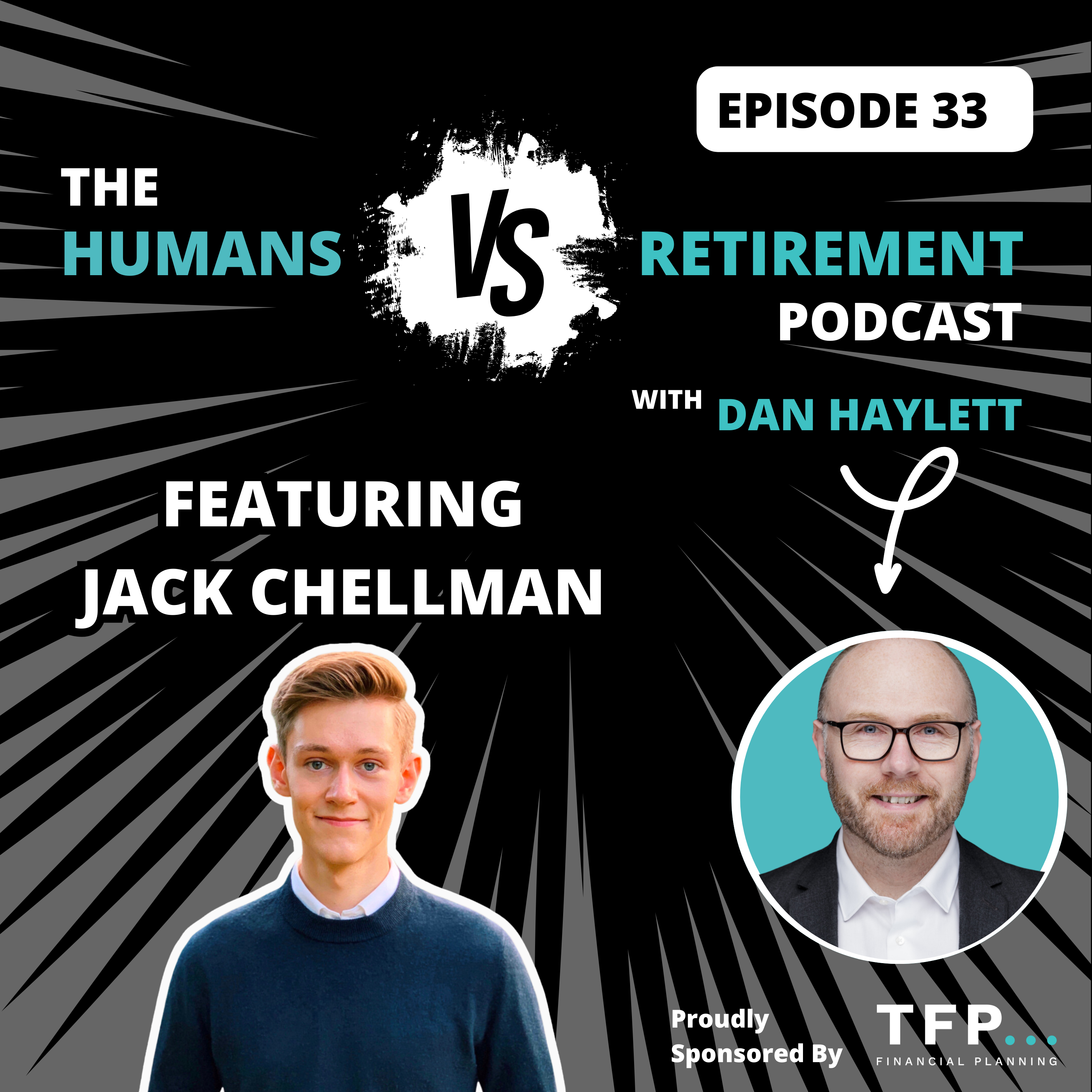
S3 Ep 33The Power of Giving: How Retirees Can Help Combat Climate Change with Jack Chellman
Summary In this episode of The Humans vs Retirement Podcast, I sit down with Jack Chellman, Chief Project Officer of the Global Returns Project a UK charity that is on a mission to create systemic change to fund the highest impact climate charities and make giving toward climate change as easy and accessible as possible. Jack and I discuss how charitable giving could and maybe should form part of every retirement plan. Jack also dispels many myths about giving and explains how the Global Returns Project makes charitable giving easy and transparent by selecting high-impact climate charities and providing rigorous monitoring and reporting. The portfolio of charities includes organizations that protect rainforests, enforce environmental law, conserve marine life, and restore forests. Jack emphasizes the need for increased philanthropy towards climate mitigation efforts and highlights the role of the Global Returns Project in making sustainable giving mainstream. He also discusses the integration of the project into financial planning and the options for donating. We explore the impact of climate change, individual actions to combat it, and the role of governments and corporations in addressing the issue. Our conversation highlights the importance of taking meaningful action to combat climate change and emphasizes the potential for positive change if everyone contributes. Takeaways Charitable giving can be an important part of a retirement plan, allowing individuals to make a positive impact on causes that matter to them. The Global Returns Project makes charitable giving easy and transparent by selecting high-impact climate charities and providing rigorous monitoring and reporting. The portfolio of charities recommended by the Global Returns Project includes organizations that protect rainforests, enforce environmental law, conserve marine life, and restore forests. Donating to climate charities is a way to address the urgent issue of climate change and its impact on other important causes. The Global Returns Project can be integrated into financial planning, allowing individuals to allocate a portion of their assets to charitable giving. Climate change is a pressing issue that requires immediate action. Individual actions, such as reducing carbon emissions and adopting sustainable practices, can make a significant impact. Investing in sustainable solutions is crucial for addressing climate change. Governments and corporations play a vital role in implementing policies and initiatives to combat climate change. Taking meaningful action collectively can lead to positive change and make a difference. Chapters 00:00 Introduction to the Global Returns Project 03:21 Charitable Giving as Part of a Retirement Plan 09:36 Dispelling Myths about Charitable Giving 12:59 Making Charitable Giving Part of Asset Allocation 18:49 The Importance of Transparency and Impact Reporting 23:20 The Limitations of Sustainable Investing 26:45 The Portfolio of Charities and Their Impact 32:34 The Mechanics and Methodology of the Global Returns Project 40:02 Integrating the Global Returns Project into Financial Planning 49:05 How to Donate and Get Involved 05:00 Understanding Climate Change 15:00 The Impact of Climate Change 25:00 Individual Actions to Combat Climate Change 35:00 Investing in Sustainable Solutions 45:00 The Role of Governments and Corporations 51:12 Taking Meaningful Action Episode Links & Resources The Global Returns Project WealthGPS – Lifestyle Financial Planning by TFP Download My FREE Retirement Toolkit Subscribe to my Super Sunday Retirement Roundup Newsletter

S3 Ep 32How To Have An Epic Retirement with Bec Wilson
Summary In this episode, I get to have a great conversation with Bec Wilson, author of 'How to Have an Epic Retirement,' to discuss the key themes and pillars of retirement planning. Bec shares her journey into the retirement space and the inspiration behind her book. We discuss the importance of understanding lifespan and healthspan, as well as the financial confidence needed for retirement. Bec emphasizes the need for proactive health management and the role of exercise and diet in healthy aging. The conversation highlights the interconnectedness of time, money, and health in creating an epic retirement. We have a great discussion about the 5 pillars of retirement: time, money, health, happiness, and your home as you age. We delve into the importance of happiness and fulfilment in retirement, emphasising the need for social interaction and meaningful activities. Finally, Bec introduces the five big stages of retirement: pre-euphoria, adjustment, euphoria, post-euphoria, and frailty. Takeaways Social interaction and building relationships are crucial for happiness and fulfillment in retirement. Making informed decisions about housing can help minimize financial risks and maximize retirement enjoyment. The five big stages of retirement are pre-euphoria, adjustment, euphoria, post-euphoria, and frailty. Planning for retirement should include considerations for physical and mental health to maintain independence and minimize time spent in frailty. Chapters 00:00 Introduction and Background 03:00 The Six Pillars of Retirement 24:36 Time: Understanding Lifespan and Healthspan 32:48 Money: Financial Confidence and Planning 39:04 Health: Taking Care of Your Body and Mind 43:32 Pillar 4: Happiness and Fulfillment 47:41 Pillar 5: Your Home as You Age 57:15 The Five Big Stages of Retirement Episode Links & Resources Bec's book How to have an Epic Retirement Bec's Website https://epicretirement.com.au/ Bec's Newsletter https://www.epicretirement.net/ Bec's Podcast https://www.primetimers.net/ WealthGPS – Lifestyle Financial Planning by TFP Download My FREE Retirement Toolkit Subscribe to my Super Sunday Retirement Roundup Newsletter

S3 Ep 31An Evidence-Based and Academic Approach to Retirement Planning with David Jones
Summary In this episode, I get to sit down with David Jones from Dimensional about evidence-based investing and retirement planning. We discuss the challenges of the retirement transition, the importance of social connections, and the role of financial planning in retirement. We also explore the fear of spending money in retirement and the benefits of intergenerational wealth. Our conversation concludes with a discussion on the Japanese concepts of Kanreki and Ikigai in retirement and the secret of evidence-based investing. Takeaways Retirement transition can be challenging, and it is important to have a clear financial plan and structure in place. Social connections are crucial in retirement for mental and physical health. Investing in retirement should be based on evidence and academic research to mitigate risks and achieve long-term goals. Overcoming the fear of spending money in retirement requires open communication, financial planning, and understanding the purpose of wealth. Intergenerational wealth and gifting can be beneficial for both the giver and the receiver, and open conversations about money within families are important. Chapters 00:00 Introduction and Background 04:35 Dimensional's Evidence-Based Approach 07:43 The Lack of Academic Research in Investing 10:03 The Challenges of Retirement Transition 13:18 The Challenges of Retirement 16:21 The Importance of Social Connections in Retirement 18:01 The Role of Financial Planning in Retirement 19:37 Investing in Retirement with Evidence and Academic Research 28:55 Understanding Risk in Retirement 36:44 Overcoming the Fear of Spending in Retirement 43:28 The Importance of Financial Planning in Retirement 46:17 The Challenges of Spending Money in Retirement 48:30 Using Monopoly to Understand Intergenerational Wealth 55:16 Japanese Concepts of Kanreki and Ikigai in Retirement 01:06:37 The Secret of Evidence-Based Investing Episode Links & Resources My blog about the Japanese concept of Kanreki David's Monopoly Money article WealthGPS – Lifestyle Financial Planning by TFP Download My FREE Retirement Toolkit Subscribe to my Super Sunday Retirement Roundup Newsletter

S3 Ep 30Age Well and Feel Great: Optimise Your Age and Live Strong in Your Second Half with Al Lyman
Summary Al Lyman discusses the importance of health and quality of life in retirement. He emphasizes the difference between lifespan and healthspan, highlighting the need to focus on the quality of years rather than just the number of years lived. Al shares personal anecdotes about his mother's health struggles and the impact it had on her and her family. He provides practical steps for boosting energy and health in retirement, including focusing on real food, reducing sugar intake, and incorporating exercise. Al also addresses the importance of strength training, maintaining muscle mass, and the enjoyment and achievement that come with taking control of one's health in retirement. The conversation explores the importance of health in retirement and the second half of life. Al emphasises the need to prioritize health over material possessions and accumulate wealth for the purpose of enjoying time and experiences. Al also shares his personal experiences and aspirations for his own second half, highlighting the importance of living a healthy lifestyle and creating meaningful memories with loved ones. Takeaways Material possessions lose their importance in the face of ill health. It is crucial to prioritize health in the 30-45 age group to prevent future difficulties. Accumulating wealth should be for the purpose of enjoying time and experience Living stronger in the second half of life involves taking control of one's health and creating meaningful memories. Chapters 00:00 Introduction and Excitement for the Conversation 01:12 The Importance of Health in Retirement 03:03 The Difference Between Lifespan and Healthspan 07:42 The Quality of Years and Avoiding Chronic Disease 14:12 Practical Steps to Boost Energy and Health in Retirement 22:46 Being Intentional and Overcoming Fear in Retirement 36:30 The Importance of Strength Training and Muscle Mass 45:19 Enjoyment, Consistency, and the Truth in Aging 49:25 Material Possessions and Ill Health 51:10 The Importance of Health in the 30-45 Age Group 52:11 The Point of Accumulating Wealth 52:54 The Value of Health 53:35 Al Lyman's Second Half 57:16 Living Stronger in the Second Half 58:41 The Importance of Health in Retirement Episode Links & Resources Age Well & Feel Great by Al Lyman Al's Website The Age Optimizer Newsletter Pursuit Athletic Performance WealthGPS – Lifestyle Financial Planning by TFP Download My FREE Retirement Toolkit Subscribe to my Super Sunday Retirement Roundup Newsletter

S3 Ep 29The Importance of Addressing Your "Money Scripts" in Retirement with Sonya Lutter
Summary In this episode, Sonya Lutter discusses the intersection of financial wellbeing and mental health in retirement. She emphasises the importance of addressing money scripts and financial behaviours, as well as aligning spending with values in retirement. Sonia also explores the challenges that arise in marriage and relationships during retirement and highlights the significance of purpose in leading a happy and fulfilling retirement. Additionally, she discusses the value of working with a financial advisor in achieving financial satisfaction and relationship satisfaction in retirement. In this episode, Dan and Sonia discuss the key to happiness in retirement and the impact of financial planning on people's lives. They also explore Sonia's work and resources for individuals and couples preparing for retirement. The conversation concludes with a reflection on the importance of love in retirement planning. Takeaways Financial planning can lead to greater happiness and freedom in retirement. Sonia offers online courses, books, and research papers to help individuals and couples prepare for retirement Love should be prioritized over money when planning for retirement. Chapters 00:00 Introduction and Background 03:00 The Intersection of Financial Wellbeing and Mental Health 08:21 The Emotive Nature of Money 11:02 Money Scripts and Financial Behaviours 14:55 The Importance of Addressing Money Scripts in Retirement 19:06 The Challenge of Spending Money in Retirement 21:35 Aligning Spending and Values in Retirement 27:04 Navigating Changes in Marriage and Relationships in Retirement 30:47 Mental Health Challenges in Retirement 34:47 The Importance of Purpose in Retirement 38:55 The Value of Working with a Financial Advisor 47:01 The Key to Happiness 48:03 Sonia's Work and Resources 49:21 Love Comes First Episode Links & Resources Love & Money by Sonya Lutter www.sonyalutter.com www.enlite.world The Analog Advisor Podcast WealthGPS – Lifestyle Financial Planning by TFP Download My FREE Retirement Toolkit Subscribe to my Super Sunday Retirement Roundup Newsletter

S3 Ep 28The Power of Building Social Networks in Retirement with Lee Robertson
Summary Lee Robertson, a former financial planner and co-founder of Octo Members, shares insights on the challenges and changes in retirement over the years. He emphasises the importance of planning for retirement, not just financially but also in terms of filling one's day and pursuing passions. Lee discusses the shift from traditional final salary (DB) pensions to defined contribution plans and the need for individuals to navigate retirement on their own. He encourages people to focus on creating memory dividends and living a fulfilled retirement. Lee also shares his personal journey of stepping away from a successful financial planning business to pursue his passion in setting up Octo Members. In this conversation, Lee discusses the importance of sleep and mental wellbeing in retirement. He shares his personal struggles with sleep and how it affected his transition from owning a financial planning business to starting a new start-up. Lee also recommends resources, such as Daniel Huberman's series and the Humans vs Retirement podcast, for people heading into retirement. Takeaways Retirement is a life transition that requires planning and preparation, both financially and in terms of filling one's day with meaningful activities. The challenges in retirement include concerns about financial security, finding purpose and identity, and adapting to a new lifestyle. Retirement has changed over the years, with the shift from traditional pensions to defined contribution plans and the need for individuals to take more responsibility for their retirement savings. Creating memory dividends and pursuing passions are important aspects of a fulfilling retirement. Following passion and purpose can lead to a more satisfying retirement, even if it means stepping away from a successful career or business. Chapters 00:00 Introduction and Background 03:11 Challenges in Transitioning to Retirement 07:05 The Changing Landscape of Retirement 13:11 Retirement Challenges Over the Years 19:23 The Importance of Planning and Creating Memory Dividends 23:49 The Modern-Day Retirement 29:24 Stepping Away from a Successful Business 37:32 Following Passion and Purpose 45:30 Doing More of What You Love in Retirement 45:55 Recommended Resources 46:24 Sleep and Mental Wellbeing 47:22 Resources for Retirement 48:23 Closing Remarks Episode Links & Resources Huberman Lab Podcast WealthGPS – Lifestyle Financial Planning by TFP Download My FREE Retirement Toolkit www.humansvsretirement.com

S2 Ep 27Reflecting On Season 2: What it Means To Be a Retirement Rebel with Me Dan Haylett
This is the 27th and final episode of season 2 of the Humans vs Retirement podcast As I reflect on the past four months I just want to say a massive thank you to everyone of you that continuies to tune in to the show week after week. The growth of the listnership has been mindblowing and the feedback I'm getting shows the impact that these conversations are having and that is truly humbling! In this solo episdoe I share five personal takeaways from the season's conversations, including the importance of embracing change and growth, social connections and mental well-being, actively shaping retirement life, and embracing transitions for a vibrant retirement. I also share what I think is the step change that is happening in retirment right now, that is the rise of the retirement rebels... What is a retirement rebel? Why is there a retirement rebellion happening? and what are the challenges of being one? I also share what I believe to be the biggest misconception that people embarking on retirement have and what they get wrong the most, you wont want to miss what I have to say! Here are the links to the free resources that I mention in the episode... The Retirement Toolkit My Blog My Sketches A Free PDF of The Book Enough? Here is to a very Merry Christmas and a Happy New Year... see you in 2024!

S2 Ep 266 weeks into his retirement! An inspirational real retirement story with Neil Jones
Summary In this episode of the Humans vs Retirement podcast, I'm so fortunate to be able to have a conversation with my wonderful and newly retired client, Neil Jones. Neil graciously shares his first-hand experiences and challenges in planning his retirement as well as his career story and how he began to think seriously about what life after work would look like. We discuss how important planning and preparation was for Neil, as well as the emotional and psychological adjustments that he has had to make and continues to work through. This episode provides a first-hand perspective on the realities of life after work and offers valuable insights for anyone approaching retirement. Useful Links Subscribe to the Humans vs Retirement podcast on Apple Podcasts, and Spotify Download for free my 7 Step Retirement Toolkit Subscribe to my newsletter Stay The Course Connect With Me TFP Financial Planning LinkedIn X / Twitter Book in a chat if you want a second opinion about your retirement planning. Email at [email protected]

S2 Ep 25Bold Not Old: Embrace Your Entrepreneur Spirit in Retirement with Wallis Pattisonn
Summary Wallis is an authority on how to be an ageing entrepreneur. She is a speaker, and author and is intent on disrupting the accepted norm around what is possible as we age. Wallis is different to most people her age, she is straightforward, quirky and has an attitude of let's give it a try. She is the founder of Bold Not Old, a platform for education and self-awareness for 'The Silver Economy' and CEO and editor-in-chief of Empowering Boldness a bi-monthly magazine. Her passion is to challenge those who are 55+ to get out of their comfort zone rethink retirement and have a go at being an entrepreneur. She encourages creativity, daring to be different, thinking fabulous and proving that pursuing a passion can add years to our lives. As Wallis herself says "there is no Utopia, but life can be joyous, even the challenges can be small bumps on the journey to what is next" In this episode Wallis and I discuss challenging the traditional beliefs about aging, explore the power of entrepreneurship in retirement and the ability for today's 'retirees' to disrupt societal norms. Useful Links Check out Bold Not Old Visit Wallis's website Subscribe to Wallis's brilliant YouTube channel Subscribe to the Humans vs Retirement podcast on Apple Podcasts, and Spotify Download for free my 7 Step Retirement Toolkit Subscribe to my newsletter Stay The Course Connect With Wallis LinkedIn Twitter/X Connect With Me TFP Financial Planning LinkedIn X / Twitter Book in a chat if you want a second opinion about your retirement planning. Email at [email protected]

S2 Ep 24Health & Wealth Are Two Sides of The Same Coin with Dr Phil Pearlman
Summary Dr Phil Pearlman is the founder of The Pearl Institute, a teacher by nature and expert in the areas of personal health and effective processes of change. Phil set out on his own health journey after spending years neglecting his wellbeing and happiness and emerged thriving and eager to help others. From that he created The Pearl Institute and has dedicated his life to helping people optimize their wellbeing. That's his calling! He is the author of The Primecuts Newsletter, which focuses on cultivating a healthy lifestyle and mindset through the powers of creativity, reinvention, and grit and has been an advisor to and investor in social/digital media companies. He has served as CBO and CMO at Osprey Funds, EVP at Bank OZK, Executive Editor at Stocktwits, and Interactive Editor at Yahoo Finance. Phil earned a Doctor of Psychology degree from Argosy University and lives with his wife and two boys in Montebello, New York. In this episode Dr Phil and I discuss the importance of health in retirement and how it impacts our ability to enjoy and make the most of our financial resources we've accumulated and more importantly the newfound time and freedom we have. Phil shares his knowledge and wisdom on growing healthier, performing better, leading stronger lives, and making wiser decisions, all of which can be applied to retirement. Useful Links Subscribe to Phil's brilliant newsletter Prime Cuts Check out The Pearl Institute website and discover how Phil can help you! Subscribe to the Humans vs Retirement podcast on Apple Podcasts, and Spotify Download for free my 7 Step Retirement Toolkit Subscribe to my newsletter Stay The Course Connect With Dr Phil LinkedIn Twitter/X Connect With Me TFP Financial Planning LinkedIn X / Twitter Book in a chat if you want a second opinion about your retirement planning. www.humansvsretirement.com

S2 Ep 23Be a Retirement Rebel and Live Your Victory Lap Retirement with Mike Drak
Summary Mike Drak is a retirement lifestyle expert and renowned author. He is the author of three books: "Longevity Lifestyle by Design," "Victory Lap Retirement," and "Retirement, Heaven and Hell." With his expertise in retirement lifestyle design, Mike has become a go-to expert for high-profile blogs and organizations. He is also a contributor to the digital media hub called Booming Encore. Mike emphasises the non-financial aspects of retirement and the importance of finding purpose and meaningful activities in retirement. His personal story of struggling with retirement shock adds to his credibility and understanding of the challenges faced by retirees. Overall, Mike's achievements and credentials establish him as a trusted authority in the field of retirement lifestyle design. In this episode I dig into Mike's extensive experience and expertise in retirement planning, combined with his passion for helping people live their best retirement lives and it made for an incredibly insightful conversation. We discussed the non-financial elements of retirement, how to design a fulfilling retirement lifestyle, and the importance of mindset in achieving a happy, healthy, and wealthy retirement. Useful Links Buy Mike's brilliant books Longevity Lifestyle by Design, Victory Lap Retirement and Retirement, Heaven, and Hell Booming Encore Humble Dollar Subscribe to the Humans vs Retirement podcast on Apple Podcasts, and Spotify Download for free my 7 Step Retirement Toolkit Subscribe to my newsletter Stay The Course Connect With Mike LinkedIn Connect With Me TFP Financial Planning LinkedIn X / Twitter Book in a chat if you want a second opinion about your retirement planning. Email at [email protected]

S2 Ep 22The Yin and Yang of Retirement: Balancing Financial Security with Personal Fulfilment with Lyle Sussman and David Dubofsky
Summary Dr Lyle Sussman is the former Chairman and Professor of Management and Entrepreneurship, University of Louisville, and Professor Emeritus. Aside from 65 scholarly articles, he is a bestselling business author with more than 1,000,000 copies of his books in print in 15 languages. Excerpts of his books have appeared in Harvard Business Review Updates, Savvy, Bottom Line Reports, Working Woman, Inc., Success, Executive Book Summaries, Investor's Daily, CNN, American Banker, US Air In Flight Audio, and hundreds of management blogs. He has spoken to more than 100,000 people and consulted around the world for both the private and public sector, with significant impact in the banking industry. He received his PhD from Purdue University, and his BS and MS degrees from University of Wisconsin-Milwaukee. He was selected for Who's Who in Business Higher Education Dr Dubofsky has published over 40 articles in journals including Journal of Finance, Journal of Financial and Quantitative Analysis and Journal of Money, Credit and Banking. He is the author of Derivatives: Valuation and Risk Management (co-authored with Tom Miller), and Options and Financial Futures: Valuation and Uses. Prior to retiring in 2020, Dr Dubofsky held faculty and administrative positions at TCU Neeley School of Business, the University of Louisville, Texas A&M University, Virginia Commonwealth University and Seattle University. Previously, he was a visiting academic scholar for the Office of Economic Analysis at the U.S. Securities and Exchange Commission and worked for Nalco Chemical Company and Standard Oil of Indiana. He earned his PhD in Finance from the University of Washington, MBA from the University of Houston, and BE in Chemical Engineering from City College of New York. He is a CFA® charterholder. In this episode Lyle, David and I delve into their specialist area of the intersection of money, emotions and behaviours. We discuss their brilliant book Your Total Wealth as well as covering of the very important topic of information vs wisdom and how in an always on, information rich world, the application of true wisdom can make a big impact on your retirement journey. Useful Links Visit Lyle & David's website Your Total Wealth Buy their wonderful book Your Total Wealth: The Heart & Soul of Financial Literacy Subscribe to the Humans vs Retirement podcast on Apple Podcasts, and Spotify Download for free my 7 Step Retirement Toolkit Subscribe to my fortnightly newsletter Stay The Course Connect With David LinkedIn Connect With Lyle LinkedIn Connect With Me TFP Financial Planning LinkedIn X / Twitter Book in a chat if you want a second opinion about your retirement planning. Email at [email protected] Find out more at www.humansvsretirement.com

S2 Ep 21Sleeping Your Way to a Vibrant Retirement: The Science & Strategies for Optimal Sleep with Frances Taylor
Summary Frances Taylor is known as "The Sleep Fixer" and is a wellbeing expert supporting business leaders, managers and teams to build personal and organisational resilience. Frances says that "sleep is the Cinderella of Good Health. People knew about diet and exercise but take sleep for granted – until that is, they wake up to the fact that they aren't getting enough". She has distilled all her experience and learning to create powerful science-backed programmes that show people how to sleep well, work well and live well. Frances is a Trustee and Fellow of the International Stress Management Association (UK) with specific responsibility for establishing new professional standards. I also established a regional network for businesses and individuals working in the field. Frances is trained in CBTi, (Cognitive Behavioural Therapy for Insomnia) which is now the clinically researched front line treatment for both the UK and US. In this episode Frances and I explore the often-overlooked subject of sleep and its impact on retirement and later life well-being. Frances shares valuable insights on the importance of good quality sleep as well as practical tips and strategies on improving your sleep quality and how to spot the signs that will affect your sleep. Useful Links France's website France's free sleep diagnostic test Subscribe to the Humans vs Retirement podcast on Apple Podcasts, and Spotify Download for free my 7 Step Retirement Toolkit Subscribe to my fortnightly newsletter Stay The Course Connect With Frances LinkedIn Connect With Me TFP Financial Planning LinkedIn X / Twitter Book in a chat if you want a second opinion about your retirement planning. Email at [email protected]

S2 Ep 20How to Light Your Retirement Torch with The Father of Life Planning, George Kinder
Summary Author, international thought leader, and life-planning pioneer George Kinder has been at the forefront of the financial services industry for more than 35 years, spearheading a movement to put the lives that clients desire to live at the centre of their financial plans. Through books, workshops, and speaking engagements, George has trained thousands of professionals globally in the field of financial life planning. After 30 years as a practicing financial planner and tax adviser, he founded the Kinder Institute of Life Planning in 2003. His three books on money, The Seven Stages of Money Maturity (1999), Lighting the Torch (2006), and Life Planning for You (2014), are considered foundational and essential works in the field of financial life planning, for both professionals and consumers. George's many accomplishments include: Financial Planning Association's first Heart of Financial Planning Award in 2006, recognizing "individuals who demonstrate commitment and passion in doing extraordinary work to contribute or give back to the financial planning community and/or the public." The Transparency Task Force's Transparency Trophy (2017), recognizing his role in "helping to navigate the industry towards a more transparent, competitive and enlightened state." "One of 20 People Who Shaped the Financial Planning Industry" ("50th Anniversary of Financial Planning" Special Edition, InvestmentNews, 2019). George has appeared on many radio and television programs, and his expertise has been featured in FP Today, The Financial Times, Forbes, InvestmentNews, The Journal of Financial Planning, New Model Adviser, The New York Times, Time Magazine, and The Wall Street Journal. In this episode George and I discuss the true impact of Life Planning on retirement. He shares the 3 questions that when answered change everything as well as his famous EVOKE process for building a Life Plan. Some of the other amazing topics covered are Life planning empowers financial freedom. Retirement is a new beginning. Retirement should be redefined. Importance of building a vision. Understand clients before financial planning. Reflect on your life's purpose. Embrace the present moment fully. Freedom is personal and unique. Retirement is an incredible opportunity. Useful Links Buy George's brilliant books The Seven Stages of Money Maturity, Lighting the Torch, Life Planning for You and A Golden Civilisation Visit George's website Subscribe to the Humans vs Retirement podcast on Apple Podcasts, and Spotify Download for free my 7 Step Retirement Toolkit Subscribe to my fortnightly newsletter Stay The Course Connect With George LinkedIn X / Twitter Connect With Me TFP Financial Planning LinkedIn X / Twitter Book in a chat if you want a second opinion about your retirement planning. Email at [email protected] www.humansvsretirement.com

S2 Ep 19Shifting the Retirement Mindset to "Think, Feel, Do" with Ross Marino
Summary Ross Marino is the founder of Transitus Wealth Partners and the founder & CEO of Advisor 2X which organises and hosts global leading human first financial conferences such as SHIFT. He is a passionate advocate for Human-First Financial Guidance and author of the brilliant book Shaping Change: How To Respond When Life Disrupts Your Retirement Plan. He is a Certified Financial Transitionist and a key member of the Sudden Money Institute. In this episode Ross and I discuss the importance of flexibility, adaptability, and resilience in retirement and reveal how these qualities are crucial because our decisions are shaped by our experiences and learning, making them rational to us. We talk through why Ross believes that being open to change and adapting to new circumstances is key to navigating retirement successfully. Furthermore, Ross and I discuss the freedom and agency that retirement brings, emphasising that after decades of constraints on resources like time, energy, and money, retirement allows individuals to make their own choices. Whether it's continuing to work, pursuing hobbies, or spending time with family, retirees have the ability to determine how they want to spend their time and resources. This newfound freedom is seen as exciting and empowering. Useful Links Ross's book Shaping Change: How To Respond When Life Disrupts Your Retirement Plan Subscribe to the Humans vs Retirement podcast on Apple Podcasts, and Spotify Download for free my 7 Step Retirement Toolkit Subscribe to my fortnightly newsletter Stay The Course Connect With Ross LinkedIn X / Twitter Connect With Me TFP Financial Planning LinkedIn X / Twitter Book in a chat if you want a second opinion about your retirement planning. Email at [email protected] www.humansvsretirement.com

S2 Ep 18Exploring the Power of 'Your Future Self' in Retirement with Hal Hershfield
Summary Hal Hershfield is a Professor of Marketing, Behavioural Decision Making, and Psychology at UCLA's Anderson School of Management and holds the UCLA Anderson Board of Advisors Term Chair in Management. He is also the author of the recently released best-selling book Your Future Self: How to Make Tomorrow Better Today His research, which sits at the intersection of psychology and economics, examines the ways we can improve our long-term decisions. He earned his PhD in psychology from Stanford University. Hershfield publishes in top academic journals and contributes op-eds to the New York Times, Harvard Business Review, the Wall Street Journal, and other outlets. He consults with the Consumer Financial Protection Bureau, many financial services firms such as Fidelity, First Republic, Prudential, Morgan Stanley, Merrill Lynch, and Avantis. The recipient of numerous teaching awards, Hershfield was named one of "The 40 Most Outstanding B-School Profs Under 40 In the World" by business education website Poets & Quants. In this episode Hal and I discuss the challenges that individuals face when it comes to retirement and how our present selves often anchor us and distort our decisions about the future. We also delve into the importance of seeing our future selves and how it can impact our happiness and well-being and our conversation touches on the dangers of procrastination and the need to prioritize experiences and make intentional choices in retirement. Useful Links Buy Hal's brilliant book Your Future Self: How to Make Tomorrow Better Today Visit Hal's website Subscribe to the Humans vs Retirement podcast on Apple Podcasts, and Spotify Download for free my 7 Step Retirement Toolkit Subscribe to my fortnightly newsletter Stay The Course Connect With Hal LinkedIn X / Twitter Connect With Me TFP Financial Planning LinkedIn X / Twitter Book in a chat if you want a second opinion about your retirement planning. Email at [email protected] Find out more at www.humansvsretirement.com

S2 Ep 17Preventing Cognitive Decline: Practical Tips for a Sharp and Healthy Brain in Retirement with Dr Moira Somers
Summary Dr Moira Somers is the founder of Money, Mind and Meaning, a renowned psychologist, neuroscientist, and family wealth consultant that specialises in the psychology of money. She is a faculty member at the Ultra High Net Worth Institute and at the Sudden Money Institute and leads the Financial Psychology Special Interest Group for the American Psychological Association. In this episode Moria and I discuss a number of key challenges when it comes navigating the complexities of life after work and in particular i tap into Moira's neuroscience background to talk about cognitive decline and how we can think about keeping our brain sharp and healthy throughout retirement Useful Links Money, Mind & Meaning Moira's brilliant book Advice That Sticks Subscribe to the Humans vs Retirement podcast on Apple Podcasts, and Spotify Download for free my 7 Step Retirement Toolkit Subscribe to my fortnightly newsletter Stay The Course Connect With Moira LinkedIn X / Twitter Connect With Me TFP Financial Planning LinkedIn X / Twitter Book in a chat if you want a second opinion about your retirement planning. Email at [email protected] Find out more by visiting www.humansvsretirement.com

S2 Ep 16Embracing Triumph, Transition, and Transformation For a Vibrant Retirement with Dr. Preston Cherry
Summary & About Guest Dr. Preston Cherry is the Founder & President of Concurrent Financial Planning, Head of the Financial Planning Program, and Director of the Charles Schwab Centre for Personal Financial Planning at the UW – Green Bay. Preston specializes in empowering individuals to share stories that inform their financial resources and life's design to achieve financial wellness and freedom that cultivates life wholeness. Preston has been cited by the New York Times, Forbes, the Wall Street Journal, CNBC, and Yahoo Finance. He is an Investopedia 100 Top Financial Advisor, 2022 ThinkAdvisor LUMINARY Finalist, WealthManagement.com Ten to Watch in 2023, President of the Financial Therapy Association and practitioner editor of the award-winning Journal of Financial Planning. In this episode Dr. Cherry and I discuss the importance of understanding the meaning of retirement and creating a vision for the future. He introduces the concept of the four T's: trial, triumph, transition, and transformation, and explains how these stages can impact one's retirement journey. We also discuss the emotional aspect of money and the need to give oneself permission to enjoy retirement. Dr. Cherry shares personal stories and insights to inspire you to embrace your financial freedom and live a fulfilling retirement. Useful Links Dr Cherry's Website Subscribe to the Humans vs Retirement podcast on Apple Podcasts, and Spotify Download for free my 7 Step Retirement Toolkit Subscribe to my fortnightly newsletter Stay The Course Connect With Preston LinkedIn X / Twitter Connect With Me TFP Financial Planning LinkedIn X / Twitter Book in a chat if you want a second opinion about your retirement planning. Email at [email protected] Find out more at www.humansvsretirement.com

S2 Ep 15Exploring Retirement Income Styles and Strategies with Wade Pfau
Summary Wade Pfau is the founder of Retirement Researcher and Professor of Retirement Income at the American College of Financial Services. He is one of the world's leading experts on retirement income strategies and actively researches and publishes his findings in prestigious journals and media outlets in the United States. He is also a published researcher and author. With his extensive knowledge and expertise in retirement income, Wade has established himself as a trusted authority in the field. His work and contributions have greatly influenced the understanding and implementation of retirement income strategies, making him a highly respected figure in the financial services industry. In this episode Wade and I focus on retirement income styles and the different strategies individuals can use to generate income and manage their finances in retirement. Wade emphasises the importance of finding an approach that aligns with a person's individual preferences and comfort levels. Our conversation also touches on topics such as spending patterns and optimal withdrawal rates for retirement income. Useful Links Retirement Researcher Website Wade's books Retirement Planning Guidebook, Safety-First Retirement Planning & How Much Can I Spend in Retirement Subscribe to the Humans vs Retirement podcast on Apple Podcasts, and Spotify Download for free my 7 Step Retirement Toolkit Subscribe to my fortnightly newsletter Stay The Course Connect With Wade LinkedIn X / Twitter Connect With Me TFP Financial Planning LinkedIn X / Twitter Book in a chat if you want a second opinion about your retirement planning Email at [email protected] www.humansvsretirement.com

S2 Ep 14The Power of Social Connections and Flow in Retirement with Dr. Jordan Hutchinson
Summary & About Guest Dr. Jordan Hutchison is VP of Technology for RFG Advisory in the USA and an expert in flow theory. adjunct instructor in Behavioral Finance for Kaplan's College for Financial Planning. Jordan holds multiple industry certifications, a master's in financial planning, and a doctorate in business administration, specifically in behavioral science and positive psychology. In this episode we discuss the importance of social connections and relationships in the retirement transition, as well as the concept of flow and its connection to identity shifts. Jordan shares insights from his research and study of flow theory, career in the wealth management industry and personal insights from his time as a standout college basketball player and his parent's life transitions. Useful Links Charles Schwab: The most overlooked factor in aging well (aboutschwab.com) What is flow theory? – An article explaining what it is and how it may help and impact us Flow: The Psychology of Happiness By Mihaly Csikszentmihalyi Subscribe to the Humans vs Retirement podcast on Apple Podcasts, and Spotify Download for free my 7 Step Retirement Toolkit Subscribe to my fortnightly newsletter Stay The Course Connect With Jordan LinkedIn Twitter Connect With Me TFP Financial Planning LinkedIn Twitter Book in a chat if you want a second opinion about your retirement planning Email at [email protected] www.humansvsretirement.com

S2 Ep 13How To Rock Retirement with Roger Whitney
Summary Roger is a renowned retirement podcaster, blogger, educator, and planner. With over 8 million downloads and 475 episodes of The Retirement Answer Man show under his belt, and his brilliant community-based Rock Retirement Club he has truly made a mark in the retirement space. We delved into the emotional and behavioural challenges of retirement, discussing how we, as humans, are simply not wired to take on this new phase of life without some battle scars. One of the key topics we explored was the "paycheck anxiety" that many individuals face when transitioning into retirement. The loss of that safety blanket, the feeling of security that comes with a regular paycheck, can be daunting. Roger shared some valuable insights and observations on how to navigate this challenge and find peace of mind in your retirement journey. Useful Links Thinking in Bets by Annie Duke The Power of Agency by Paul Napper & Anthony Rao Winning The Losers Game by Charles Ellis The Top 5 Regrets of The Dying by Bronnie Ware Subscribe to the Humans vs Retirement podcast on Apple Podcasts, and Spotify Download for free my 7 Step Retirement Toolkit Subscribe to my newsletter Stay The Course Connect With Roger Twitter LinkedIn The Retirement Answer Man Podcast Agile Retirement Management Connect With Me TFP Financial Planning LinkedIn Twitter Book in a chat if you want a second opinion about your retirement planning Email at [email protected]

S1 Ep 12Reflecting on season 1: key insights for a happy, healthy, and wealthy retirement with host Dan Haylett
Summary In the final episode of season one, I'm flying solo to try and distil, summarise, and cover the key points from the previous 11 amazing episodes of the Humans vs Retirement podcast. I can't express my gratitude to you the listeners enough and I'm so excited for season two, which will launch after a four-to-five-week break. Join me as I reflect on the amazing conversations and insights gained from exploring the behavioural, emotional, and financial challenges of life after work. What You'll Learn The listener will learn about Finding new purpose and creating joy. Spending money on experiences rather than material things in retirement. The importance of not being too conservative with spending money. The four sources of contentment in retirement. The four anchors of retirement well-being. Effective communication in retirement. The importance of resilience. The being human problem Useful Resources Subscribe to the Humans vs Retirement podcast on Apple Podcasts, and Spotify Download for free my 7 Step RetirementGPS Toolkit Subscribe to my fortnightly newsletter Stay The Course Connect With Me TFP Financial Planning LinkedIn Twitter Book in a chat if you want a conversation about your retirement. Email at [email protected]