
PLAY PODCASTS
The House

The House

326 episodes — Page 5 of 7

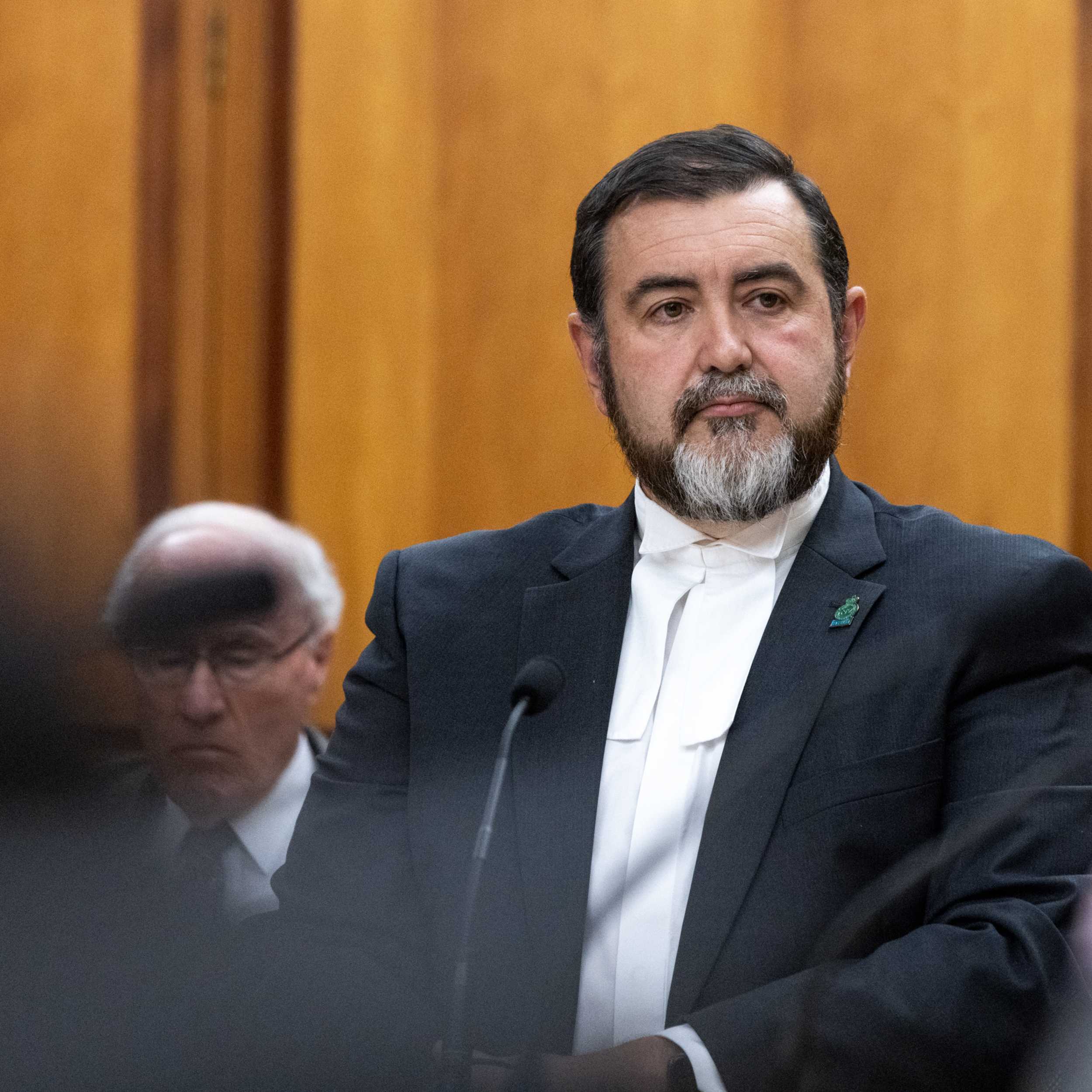
Ep 602"To love is to move towards freedom" - Parliament's newest member makes their maiden statement

The Green's Benjamin Doyle has joined the 54th Parliament about a third of the way into its term. Their maiden statement wrapped up a huge week for Parliament. Go to this episode on rnz.co.nz for more details
Nov 22, 20247 min

Ep 601Meanwhile, passing law in the House

The political week has been packed with worthy distractions, but in the background all week Parliament has focused on passing new laws. Here are the highlights.Go to this episode on rnz.co.nz for more details

Nov 21, 20245 min

Ep 600The little Members Bill that could: Restoring Citizenship Bill passes third reading

The House speaks to two members of the Samoan Community that came to Parliament to see the Restoring Citizenship Bill pass its final reading. Go to this episode on rnz.co.nz for more details

Nov 20, 20245 min

Ep 599Noise and passion: Mostly outside the chamber

At Parliament the vast majority of noise and passion was from the hikoi outside the chamber. The crowd so large that vast number likely never managed to get inside the grounds. Despite that, everyone was incredibly patient, friendly and polite. Inside, the debating chamber was never going to quite match the energy - or possibly the politeness. Go to this episode on rnz.co.nz for more details

Nov 20, 20245 min

Ep 598Press Gallery 101: The House chats with Jason Walls

After a tsunami of coverage out of Parliament last week, The House spoke to Press Gallery Chair Jason Walls about how the Press Gallery works. Go to this episode on rnz.co.nz for more details

Nov 17, 202414 min

Ep 597Snubbing ACT, shaming National: a week of the Treaty bill

The Treaty principles bill dominated Parliament's week, despite being the final bill debated. How was it talked about in the House when it was not the topic of a debate; who focussed on it, who ignored it, who was ignored?Go to this episode on rnz.co.nz for more details

Nov 14, 20246 min

Ep 596The House: It’s all politics

In Parliament anything and everything can be political, or can be bent to politics. In recent memory, things as apparently innocuous as playground equipment, clothing, colours, or eating takeaways. Go to this episode on rnz.co.nz for more details

Nov 13, 20245 min

Ep 595Responding to Abuse in Care Bill: Major parties put politics aside, minor parties not so much

Following the Crown Apology for Abuse in State Care, Parliament passed the first reading of the Response to Abuse in Care Bill. Labour and National spoke of casting politics aside for a moment. Greens and Te Pāti Māori weren't so keen on that idea. Go to this episode on rnz.co.nz for more details

Nov 12, 20245 min

Ep 594The teen and the veteran: Parliament Bill Committee hears from the public

This week, the Parliament Bill committee heard from a 16 year old high school student, and a former prime minister, 65 years his senior. Go to this episode on rnz.co.nz for more details

Nov 9, 202414 min

Ep 593Fighting the Wind to Fly the Flag

Atop the Beehive a lone national flag is tortured daily by Wellington’s gales. We join its handlers up on the roof to chat, watching as its fraying edges whip the sky.Go to this episode on rnz.co.nz for more details

Nov 7, 20245 min

Ep 592Harmony and discord: Parliament’s inconstant chamber

Parliament is a mercurial place. Debate can flick from amity to antagony with each shift in topic, especially if that topic is climate change or agriculture, or both.Go to this episode on rnz.co.nz for more details

Nov 7, 20245 min

Ep 590Early jabs in a new bout: The first Question Time in a new sitting block

Today, Parliament begun a new, three-week-long sitting block. If Question Time was the first round warm-up for a new bout - when the boxers are still a little tentative and trying out new things, - it's unlikely to be a quiet lead-up to Christmas.Go to this episode on rnz.co.nz for more details

Nov 5, 20246 min

Ep 591Parliament Library became haunted house for Halloween

In politics, they say you shouldn't have any skeletons in your closet. But what about in your Parliament?Go to this episode on rnz.co.nz for more details

Nov 2, 20248 min

Ep 589Returning Samoan citizenship & a request to add to Te Tiriti

In the Sunday edition of The House, a story from Thursday and a new story: Returning some stolen citizenships gets likelier, and a petitioner to Parliament wants to include an oral undertaking to The Treaty of Waitangi – a guarantee of freedom of religion. Go to this episode on rnz.co.nz for more details

Oct 26, 202412 min

Ep 588"It's good to be on the right side of history": Restoring Citizenship Bill passes second reading

After a robust select committee process, all parties now support a Members bill that would restore New Zealand citizenship to a select group of Samoans who lost it 4 decades ago.Go to this episode on rnz.co.nz for more details

Oct 24, 20245 min

Ep 586Government passes RMA reform bill on freshwater

Among all the government's resource management changes, the Fast-track Bill has received the bulk of attention. This week, a less traversed but equally significant bill from that suite became law.Go to this episode on rnz.co.nz for more details

Oct 24, 20245 min

Ep 587Gazetted: Banning petards and being hoist on them

Parliament has featured in New Zealand’s official Gazette thrice in three days. Once over a possible referendum to ban fireworks, twice over the removal of an MP who caused fireworks. Go to this episode on rnz.co.nz for more details

Oct 23, 20245 min

Ep 585Petard hoisting, petard banning

New Zealand's official newspaper, The Gazette, has mentioned Parliament twice this week. Once to announce an MP was getting the rocket, and once to outline a hope to ban rockets entirely.Go to this episode on rnz.co.nz for more details

Oct 22, 20244 min

Ep 584Political messaging: top down, bottom up

In the Sunday edition of The House Louis Collins talks Ministerial Statements with Chris Penk, and Phil Smith considers messages coming from public to government.Go to this episode on rnz.co.nz for more details

Oct 19, 202415 min

Ep 583"A decent conversation": the art of the Ministerial statement

On Tuesday, the Government made a Ministerial statement about the sinking of the HMNZS Manawanui. RNZ's The House sat down with the Minister who made it. Go to this episode on rnz.co.nz for more details

Oct 17, 20245 min

Ep 582The submitters, and you.

Watching people make submissions to select committees about laws can give you an idea of what types of expertise and experience are most useful; and that one of the most crucial might just be... people like you.Go to this episode on rnz.co.nz for more details

Oct 16, 20245 min

Ep 581Sinking of the HMNZS Manawanui: Parliament reacts

Rather than wait for the Opposition to apply for an urgent debate, the Government decided to get in first and on Tuesday, gave a Ministerial Statement on the sinking of HMNZS Manawanui. Go to this episode on rnz.co.nz for more details

Oct 15, 20245 min

Ep 580Speaker’s little helpers: Parliament’s other presiding officers

In sports, you don’t argue with the ref. It’s a similar situation at Parliament with the Speaker. The Speaker isn’t just Gerry Brownlee though. There are four other presiding officers he can rely on to help carry the load. Go to this episode on rnz.co.nz for more details

Oct 12, 202414 min

Ep 579Vetting Parliament's Questions

Attend the session where MPs’ oral questions to the Government are vetted and authenticated by Parliament’s Office of the Clerk. The matching article for this story, with photos from a vetting session, can be found at The House's news page here. Go to this episode on rnz.co.nz for more details

Oct 5, 202414 min

Ep 578Parliament considers a bill about... itself

On the Sunday edition of The House, Louis and Phil consider a new Bill that reworks much of the legislation that underpins the running of Parliament, including its funding. (This episode combines two weekday episodes on aspects of The Parliament Bill and adds extra content.)Go to this episode on rnz.co.nz for more details

Sep 28, 202414 min

Ep 577Parliament gets urgent on sentencing, mining, and charter schools

With all the talk about the Parliament Bill, The House sheds some light on some of the other items of business at Parliament this week. Go to this episode on rnz.co.nz for more details

Sep 26, 20244 min

Ep 576Taking the funding of Parliament off governments

The Parliament Bill intends to prevent governments from wielding the power of the purse over the bodies that run Parliament. Phil Smith chats with Adrian Rurawhe (Labour) and Ricardo Menendez March (Green).Go to this episode on rnz.co.nz for more details

Sep 25, 20245 min

Ep 575"Arcane but really important": Parliament Bill gets special committee

After years of suggestions for constitutional reform, the Parliament Bill has been introduced. In a rare occurrence at Parliament, a special committee has been set up to examine the bill. Go to this episode on rnz.co.nz for more details

Sep 24, 20245 min

Ep 574Opposition forcing long debates on short committees

Opposition MPs have rediscovered an old filibustering tactic and are using it to protest the Government's scanty use of Parliament's select committees. Go to this episode on rnz.co.nz for more details

Sep 21, 202412 min

Ep 573Wā Pātai: Māori language week at Parliament

Parliament was buzzing with te reo this week. With many members using it in Question Time, the translation team certainly would have been busy.Go to this episode on rnz.co.nz for more details

Sep 19, 20245 min

Ep 572MPs rediscover a filibustering tactic

Opposition MPs appear to have rediscovered an old filibustering tactic and are using it to protest the Government's liking for sending bills to select committees for very short periods. Go to this episode on rnz.co.nz for more details

Sep 18, 20246 min

Ep 571Budget 2024: Light at the end of the tunnel

The Government's first budget is finally reaching the end of its long approval process, and it's going to be just in time. You might have thought it was all done and dusted months ago, but Parliament is pretty careful with giving away pocket money.Go to this episode on rnz.co.nz for more details

Sep 17, 20244 min

Ep 570Leading in opposition & building an alternative government

Chris Hipkins discusses his formal parliamentary title: Leader of the Opposition, and the very different job of leading in opposition.Go to this episode on rnz.co.nz for more details

Sep 14, 202414 min

Ep 569Parsing Question Time answers

Question Time is the political equivalent of managers being grilled in front of the board, even when the Prime Minister is being quizzed by the opposition. Imagining it as literally that gives a different slant to teasing out the answers, the deflections and obfuscations. Go to this episode on rnz.co.nz for more details

Sep 11, 20244 min

Ep 568Parliament honours Kiingi Tuheitia

Parliament adjourned early today in respect for Kiingi Tuheitia, the late leader of the Māori Kingitanga. Before they adjourned there were speeches.When Parliament began its September sitting block on Tuesday, MPs met only to acknowledge a death and agree to return the following day.The shortened day was to show respect after the unexpected death last week of the Māori King, Tūheitia Pōtatau Te Wherowhero.Such an early adjournment is unusual, but not unprecedented. Typically this sort of thing is reserved for the death of a former Prime Minister, and is a significant honour.Go to this episode on rnz.co.nz for more details

Sep 11, 20246 min

Ep 567CYP 12 - 60 MPs, 60 accents, 100 opinions

This week New Zealand’s Parliament hosted the Commonwealth Youth Parliament, bringing youth leaders together from Fiji to the Falklands.Go to this episode on rnz.co.nz for more details

Sep 7, 202414 min

Ep 566Rising costs and rising seas: Parliament’s climate adaptation inquiry

The Climate Change Commission told members this week that climate adaptation is the "most difficult challenge this country faces over the next century."When New Zealand's colonial founders built our cities and towns, they clearly lacked flooding and coastal erosion modelling in their town planning.It is true that coastal and river-based settlements are inherently desirable in the way of accessibility for trade, fertile soil, and mahinga kai. Moreover, there probably wasn't a large pool of climate scientists and environmental engineers to consult at the time. But still, our early settlers' addiction to building on flood plains and swamps has made our country's effort to adapt to a changing climate a monumental one. Listen to Sunday's episode of The House, including the radio version of this story.Climate change is a pretty ubiquitous topic in Parliament. It's the subject of so many debates and conversations in the House, which tend to get pretty heated at the best of times.Two decades or so ago, those debates may have contained arguments like "climate change exists and we need to stop it." That's definitely still the underlying utterance or default position for so many of our MPs, but for a while now, there's been a noticeable shift in dialogue from how we can stop the climate from changing, to how on earth we can adapt to it changing. Recent extreme weather events like Cyclone Gabrielle, and the Auckland Anniversary floods are jarring reminders that inaction would be chaotic, and adaptation is critical. Invariably, this is an issue that transcends generations, and indeed governments. Hence the need for bi-partisan collaboration and consensus on lawmaking in this area. Parliament's Finance and Expenditure Select Committee (FEC) is currently leading the charge on this, with an inquiry into climate adaptation. This picks up on the Environment Committee's inquiry on the same subject last Parliament (the term finished before the committee had the chance to report back), and is intended to be a key consideration in the development of adaptation legislation. Accordingly, submissions are being sought from far and wide. Among them are insurance companies, regional councils, advisory bodies, and individual New Zealanders who are experiencing adaptation as an immediate issue rather than a future one. …Go to this episode on rnz.co.nz for more details

Aug 31, 202414 min

Ep 565Petitioner reveals NZ First's original fast track bill, with hidden projects

Petitions often touch on very human stories, or on tricky philosophical issues. This week, one threw explosive new information into an already contentious debate.This week at Parliament, a petitioner revealed to the Petitions Committee the existence of a draft fast track bill, which predates government formation. The petition was calling for the government to reveal which projects were to be included in the government's fast track legislation. The evidence of a pre-coalition bill, that it originated with Shane Jones, and that it already contained projects threatened to overshadow the petition's focus on the actual bill. The petitioner, Richard Capie representing Forest and Bird, gained the evidence via an Official Information Act response from National MP Chris Bishop. Bishop's OIA response included a draft fast track bill that he had received from New Zealand First's Shane Jones during the coalition negotiations at the end of last year. In section 14 of the draft bill given to Bishop, titled the 'Nationally and Regionally Significant Projects and Other Matters Bill', there is reference to an 'expert consenting panel' which 'considers listed projects'. These listed projects, section 14 says, are described in Schedule 1 of the bill. After flicking over the pages of the draft bill to the bit with Schedule 1 on it, you're met with a large grey box, covering up half the page. In other words, in the copy that Capie received, the list of projects in Schedule 1 had been redacted. The redaction was explained by the legal privilege held by the Parliamentary Counsel Office (which presumably did not draft the Shane Jones bill). The OIA revelation suggests a number of things. That a list of possible fast track projects has existed since late last year. That the list was created by New Zealand First before they were part of the government, and possibly prior to the election. Consequently, it's possible that the inclusion of potential projects could have been part of New Zealand First's coalition negotiations with National and ACT. Reporting from The Newsroom suggests that this list includes two gold mines and two coal mines. Comparing the redacted project list from Shane Jones's bill to the list that Chris Bishop has declined to add to the Fast Track Approval Bill would be interesting (if those lists were public). Capie suggested to the Petitions Committee that Parliament should be investigating this. "I think the New Zealand Parliament should see that list of projects, should be able to see the list of projects that were put forward in this draft bill, and see what overlap there is; and ask good questions about probity involving that."…Go to this episode on rnz.co.nz for more details

Aug 30, 20245 min

Ep 564Stop the questions: a coach steps in to end the fight

Parliament's Question Time is a slow-moving boxing match with many rounds. This week one boxer's second stepped into the ring to help. They didn't throw in the towel, but they did try to stop the bout. Shane Jones intervenes with a point of order during questions to Casey Costello (seen behind him).Parliament's Question Time is a lot like a boxing ring that sits at the centre of our system of responsible government. Every sitting day in the debating chamber, pugilists from a variety of weight classes face up against one another. In the blue corner is a government minister, in the red corner is an opposition MP seeking to bring them down, or at least keep them chastened.The metaphor might sound brutal, but that's Parliamentary democracy; keeping governments honest and in hand. Not letting them step outside the ring of influence that Parliament, as their master, has allowed them.It's never an easy fight and in many ways Parliament's rules and precedents favour government ministers. There are so many rules about what can be asked and how; so many ways to slip away, to fend, or to counterpunch. These bouts might be daily, but there are many rounds, lasting months. But as each match develops, opposition MPs who can find the right jabbing questions, can sometimes release a slow trickle of information that forces a minister against the ropes.And when that happens sometimes a boxer's second gets involved. They might help set up a few counterpunches from their own corner, or start complaining to the referee that the match is unfair.On Tuesday, that was Shane Jones, who is a boxer from a heavier weight class. He is Deputy Leader of New Zealand First and a long time MP and political brawler,His intervention was the Parliamentary equivalent of complaining about the other guy's gloves, the size of the ring, the lights and the presence of camera flashes. The intervention was evident prior to Question Time, when the Speaker rose to give a ruling."Members, I've had a question raised to me today about the admissibility of question No. 10, which I want to take the opportunity to clarify. Speaker's ruling 230/4 by Speakers Wall and Smith: once a member has made a complaint to the Speaker about a matter of privilege, it is not appropriate to raise that complaint in the House by way of notice of motion, nor should the member seek to litigate the veracity through House proceedings. It is not inappropriate to ask questions in the House on the general subject of the complaint, to prohibit that would unreasonably constrain Parliament's privilege of free speech. The question is in order."…Go to this episode on rnz.co.nz for more details

Aug 28, 20244 min

Ep 563From Beehive to Bluegrass: Kiwi MPs head stateside

The House hears from two MPs, usually foes, who have spent a week together stateside, like a political odd couple. You might think that travelling around the United States with another MP from a rival party would be a bit like going on holiday with your in-laws. In reality though, it's not like that at all. Earlier this month, National MP for Southland Joseph Mooney, and Labour list MP Glen Bennett travelled to the United States together under the auspices of Inter-Parliamentary Relations. Far from a jaunt Parliamentary diplomacy, which is distinct from government-led foreign affairs, is something that New Zealand's Parliament values highly. Connecting with counterparts both in the context of both inward and outward engagements gives members a uniquely parliamentary platform to foster bilateral and multilateral relationships and exchange knowledge. Such knowledge exchange often comes in the form of attendance at a number of multilateral conferences and meetings. Your mind probably goes to New York, Geneva, Brussels, and the like. For Mooney and Bennett though, this time it was Louisville, Kentucky. The two MPs, after a series of meetings in Washington D.C., headed across the Appalachians and into the 'Bluegrass State' for the National Conference of State Legislators (NCSL). This is, as the name suggests, an annual event that gathers state and local legislators from across the US for seminars, networking, and discussions on a variety of topics. You'll notice I said state legislators, not global or national legislators, so what were Mooney and Bennett doing there? Bennett described it in a nutshell as "observing." "There was, I think it was about 5,000 people, and even that was a small conference. So they do actually have an international contingency that always goes. And Joseph and I were the first New Zealand MPs to actually attend. For me, I guess an observation was that we were actually sort of hanging out with 50 different countries, almost because each legislator, each state had their representation. And it makes you realise how small we are as a country, and how slimline and simple our politics is." Mooney noted that other international delegates said their countries often work on trade relationships with individual American states rather than the US as a whole. The negotiation is less complex and the economies are similar. It apparently works well. "The Irish had a contingent there, and one of the senators was making the point that they do a lot of work building relationships with states rather than federally, because they get more value out of that."…Go to this episode on rnz.co.nz for more details

Aug 25, 20248 min

Ep 562How not to answer a question, and other lessons from Parliament

A dispute during Question Time this week was packed with lessons on asking questions in Parliament, and especially how not to answer them. National MP Tama Potaka answering media questions on 'the tiles'.During Question Time on Wednesday, MPs in the House argued at length about something usually hidden from view. The to-and-fro was pretty fascinating for political geeks, but it was also full of lessons. It illustrated aspects of how Question Time is prepared, how it works, the political considerations that can feed into that - and showed how not to answer a question.How not to answer a questionA question began all of this. It was not in the House. It was from Stuff reporter Glenn McConnell on Parliament's Tiles on Tuesday. He was asking National's Tama Potaka (Associate Minister Housing - Social Housing) about homelessness. Specifically, about data suggesting no one knew the housing status of one in five children previously in emergency housing. The crucial section was this:McConnell - "Are you worried that some are now homeless?"Potaka - "No, no, I'm not worried that some are now homeless... ."Potaka's answer was much longer but he had already lost control of the narrative, which was now 'minister not worried that children are homeless'.This is one reason politicians seldom answer the question they are asked, but instead ignore its premise and offer their own. It stops them accidentally creating a horrible soundbyte. It wasn't surprising that, on Wednesday, opposition parties were keen to ask questions on the topic. Both Labour and Green parties had questions scheduled.Unwrecking a train For the Greens, Tamatha Paul addressed Potaka's poor choice of words."Does he stand by his statement relating to the drop in children living in emergency accommodation, "I'm not worried that some are now homeless", and, if so, is that why funding for community housing providers has reduced to only 750 new places a year, under his Government?"This time the Minister was ready. He began by trying to clear the previous day's trainwreck from the tracks, before having a better crack at replacing it with his own narrative. "In the context in which the question was asked, and in relation to Priority One, I am absolutely confident that those 1,110 children have been placed out of emergency housing and into a warm, safe, dry home between April and July. I am confident and very aware that they are no longer homeless ... ."He repeated the words 'warm, dry, and safe' multiple times across his answers - working to reinforce his own chosen message. Negotiating Question Time…Go to this episode on rnz.co.nz for more details

Aug 23, 20246 min

Ep 561Water, coastlines, and corrections: Parliament’s committee stage this week

It's not uncommon for a Committee of the Whole House to need several sittings to consider a bill. With three government bills under consideration by the Committee this week, most of Parliament's sitting time will be devoted to this process.The Committee of the Whole House (CWH) provides members with the opportunity to delve into the finer details of a proposed bill. Members can examine the nitty gritty details, ask questions of the minister in charge, and suggest further amendments. This committee is different to the Select Committees that also look at the details of bills. Those committees are specialist topic subcommittees, while the CWH can include every MP and takes place in the debating chamber. While CWH speeches are limited in time, there is no overall limit for the duration of the committee stage. It can take minutes or days. As long as fresh ideas and arguments are being offered, the committee can continue. This relative flexibility can lend well to opposition tactics of delaying a bill's passing. If you follow American politics, you may have heard variations on this strategy referred to as filibustering. The presiding officer in the chamber, who (during this stage) is always a Deputy or Assistant Speaker, will be looking out for this. They even have special forms to help them keep track of the progress of questions and topics.Bills going through committee this weekFirst up, the Local Government (Water Services Preliminary Arrangements) Bill. This is part two of the three pronged legislative water reforms dubbed "Local Water Done Well" - which is the Government's replacement for the previous government's three waters approach to easing local infrastructure costs. The second bill is the Resource Management (Extended Duration of Coastal Permits for Marine Farms) Amendment Bill, which has particularly rustled feathers among ecologists and māori. As the name suggests, aquaculture projects (like mussel and oyster farms), will receive extensions on their permits to operate, up to the year 2050. And finally, the Corrections Amendment Bill, which was first introduced by the previous Labour Government. In a nutshell, it gives corrections staff more power to keep themselves and prisoners safe. You couldn't be blamed for assuming that given the cross-party collaboration on this bill, the committee session would be pretty straightforward. Alas, the government chose to exclude Section 6A, which related to the Treaty of Waitangi. This became a focus of opposition attack during Wednesday's committee sitting. To hear more about the bills going through committee this week, and what was said in the House, listen to the audio above…Go to this episode on rnz.co.nz for more details

Aug 22, 20244 min

Ep 560Kumbayah, now take that!

The House began a new sitting block sharing a little love over the Paris Olympics results, but the sudden outbreak of amity didn't last.On Tuesday, after a week off, and after a number of politically contentious and combative weeks, Parliament began with something that presumably everyone could agree on; a motion to congratulate New Zealand's Olympic athletes. This kind of motion, where every party gives a speech brimming with heartfelt superlatives, is not rare in Parliament, but not enormously common either. They are (and this will probably not surprise you), almost always about a sporting outcome. I say almost, but I can't actually remember a motion of this kind for anything other than sport in the seven years I have been here. A little research revealed an equivalent round of speeches when The Lord of the Rings won a clutch of Academy Awards twenty years ago. Listen to the radio version of this story with audio from Parliament.There were some genuinely accolade-worthy outcomes though. Dame Lisa Carrington alone was worthy of the speeches - now being just one gold back from the most medalled female Olympian ever, from anywhere - out-medalling American gymnast Simone Biles. The way these things go, the person initiating the motion - almost always a government MP - gets an initial speech, and then the other parties chip in as well. Often it would be the Minister for Sport kicking it off (and Chris Bishop visited Paris in that capacity), but he was gazumped by his boss. Politically, it's hard to pass up an opportunity to connect yourself with the happy buzz of success.There was a speaker brimming with praise from every party except, for some reason, New Zealand First. These kinds of speeches always threaten to become a list of names and medals and can end up sounding like everyone cribbed from the same Wikipedia article. To avoid that, the follow-up speakers usually look for some unique angle to add to accolades. Labour's Peeni Henare looked forward to the next event - the Paralympics, Green MP Scott Willis noted that women were particularly successful and credited Grant Robertson's "strategy to address the inequities women and girls experience in sport and recreation -the Women and Girls in Sport initiative" for that. …Go to this episode on rnz.co.nz for more details

Aug 20, 20245 min

Ep 559Being Māori at Parliament

New Zealand's Parliament House is a strikingly colonial edifice. So how does it feel to be Māori in that space? On Parliament's black and white tiles sits one of the building's many pieces of art. The bust of Āpirana Ngata, commissioned in 1942, watches over the day-to-day frenzy of bridge runs and general parliamentary busyness.The bust, like so many pieces in Parliament's collection, pays tribute to the work of a highly eulogised individual who once walked the halls of power. What makes it especially unique though, is that it's one of the few visual signs of te ao Māori at Parliament - albeit a more diverse and representative parliament than existed in the days of Ngata. Yet the edifice is still strikingly colonial.This week on The House, we kōrero with three first-term Māori MPs who share their personal experiences of navigating Parliament and being Māori. To listen, click the link below. "A shrine to colonialism": Te Pāti Māori's Tākuta FerrisAs we stood outside the marble Edwardian baroque facade of Parliament House, MP for Te Tai Tonga, Tākuta Ferris forthrightly described the building as, "a shrine to colonialism." Ferris is unflinching in the furtherance of Te ao Māori, something Te Pāti Māori have become well known for this term in Parliament. The MP attributes the unprecedented engagement levels that Te Pāti Māori have received to the hard work of previous generations of Te iwi Māori, and a deep understanding of history. "We arrive here fully equipped with all of that. The constitutional foundation that sets this whole parliament up, allows this parliament to be here, is a two-party agreement. It's a two-party relationship." Ferris envisions Parliament one day being a lot more representative of this relationship, both structurally, and aesthetically. The former, he says, "can be in the model that Whatarangi Winiata and many others of Te iwi Māori proposed through the through the 70s, 80s, 90s, and 2000s, which is the two House model; where, in effect, you have a House that represents the Crown (and the government is just the executive administrator of the crown)."The latter he says, somewhat flippantly, "would look a lot flasher." David Macleod was elected in 2023. The Politics of Māori Identity: David MacleodTe Pati Māori (and opposition Māori MPs more generally), have been vocal in their opposition to the coalition government's policies. This has manifested as hostility in the House, protests outside it, and a steady stream of news headlines.The House was curious to hear from a Māori governing-party MP about what it's like being on the other side of the House during all this…Go to this episode on rnz.co.nz for more details

Aug 17, 202414 min

Ep 557Taking their word for it: Lying and MPs

Few people think MPs never lie, so why are they seldom punished? We investigate Parliament's rules on mistakes, fibs, and perfidious calumny.Few people would believe that politicians never lie. But it is incredibly rare for an MP to be disciplined in the House for lying, or made to explain themselves before the Privileges Committee. Why? What exactly are Parliament's rules around lying?MPs refer to lying as deliberately misleading Parliament. They also have a related no-no referred to as misrepresenting, which is lying about what another MP has said or done. These are topics that come up in Parliament frequently. Just this week an MP accused another of misrepresenting, more than one corrected a mistake that might come to be seen as a lie, and another was censured for responding badly to another MP's claim. Listen to the radio version of this story from The House. David Wilson, Clerk of the House of Representatives, giving evidence to a select committee.To assist in traversing Parliament's quirks I spoke with two experts: David Wilson and Duncan Webb. David Wilson is the Clerk of House of Representatives. Parliament's rules are his metier, and among his many roles, the Clerk advises Parliament's Speakers on its rules. Labour MP Duncan Webb is deputy chair of the Privileges Committee, which investigates MP misbehaviour.Free speech and honourable behaviourLet's start with an important fundamental about Parliament from Webb. "It's the freest place in terms of speech and expression in the country." He's talking about the fact that MPs are privileged - just not in the way you think."The absolute privilege that Members of Parliament have to say anything. And that's part of the kind of values system, that means we don't intervene lightly. We let people say stuff, because that's the right they the English Civil War for."Under absolute privilege, parliamentary speech comes with no legal repercussions. Balancing that kind of power is a tricky thing. Webb says that this freedom is balanced by a social compact in which everyone agrees to abide by a set standard of behaviour. For historical reasons that standard is based on the conduct expected of a mid-sixteenth century Italian courtier. Anyone who thinks that Renaissance Italians were an ideal of good behaviour never met Lucrecia Borgia, or most renaissance popes. Honourable = honest…Go to this episode on rnz.co.nz for more details

Aug 10, 202414 min

Ep 556Water cooler chat: Parliament’s General Debate

From birthday messages, to lamenting New Zealand cultural icons, the General Debate enables MPs to climb onto the soapbox and yarn about whatever's on their mind.Every sitting Wednesday after Question Time, Parliament holds the General Debate. The terminology Parliament uses for the debate's subject, is 'miscellaneous business'. This roughly translates to... whatever is on a member's mind - within reason. Obviously it's inferred that kōrero should be relevant to the role of being an MP, though on occasion this inference is questionable. The core purpose of the General Debate is to allow members to discuss issues that fall outside the more defined parameters of legislative debate. This could take the form of a reflection on a recent event in the news, expressing condolences, celebrating successes, replies to earlier questions, discussion of committee reports, and sometimes just waffling on about any old thing. This week's General Debate had a typically diverse medley of themes across each of the twelve speeches. You can read the full Hansard transcript here.Labour's Phil Twyford used his time to suggest the Government take a firmer stance on issues relating to the Israel-Palestine conflict. Foreign policy was also the topic of NZ First MP Jenny Marcroft's kōrero, in which the House was given a 'show and tell'; she even had props. Her "helper" (Mark Patterson seated next to her), provided her with a map of the Pacific, which she then used to demonstrate where in the region Shane Jones and Winston Peters had gone or given money to. For an electorate MP, the General Debate is a useful platform to raise issues from your constituency. MPs often take this opportunity to boast about their electorate too. There was a lot of this on Wednesday. It's also an effective way of conveying the impact of recent government policy on the communities the MP represents. If you're an opposition MP, you might offer your observations from somewhere back-home where government policy is generally unpopular. Meanwhile, a government MP may share an anecdote from Joe Bloggs who says life has gotten easier under the current administration. Having a bit more wriggle room to talk about anything, means the General Debate tends to invoke some of parliament's more peculiar nuggets of oratory too. And bring out the human in the politician. This week, that took the forms of a birthday message, and a touching tribute to New Zealand Music Legend, Martin Phillips. Listen to the audio above for more.RNZ's The House - journalism focussed on parliamentary legislation, issues and insights - is made with funding from Parliament's Office of the Clerk. Go to this episode on rnz.co.nz for more details

Aug 9, 20243 min

Ep 555Let your vocal chords do the walking

The censure of an MP this week came with a message about how to handle provocation - keep it vocal. One of the first things that MPs did in Parliament this week was something unusual - censure an MP. There is always a lot of build-up to this kind of event, with public hearings of the Privileges Committee and corresponding media coverage, but its finale in the House came without much ceremony or politics (at least on this occasion). Privileges Committee Chair Judith Collins outlined the case and the finding. Julie Anne Genter had infringed and should apologise. Committee Deputy Duncan Webb made a few comments, the Speaker did the formalities and it was over. The apology had happened earlier. The backdropIn our Sunday story we will be looking at some tricksy aspects of Parliament's rules that, while being pretty unavoidable, might form a back-drop to this censure. In brief, while it is considered a breach of privilege to tell porkies in the chamber it isn't always very easy to do anything about it, or to differentiate between a lie and an opinion. Even when the infringement is obvious, the bar for action is high. This can lead to frustration if either your performance or your record of achievement is the subject of incorrect claims. Julie Anne Genter's infringement was that she had walked across the chamber after an interjection got her goat. She stood at National MP Matt Doocey's desk (he was seated), waved some evidence in his face and loudly demanded he read it.In a fractious debate on transport, he had shouted (referring to a period when she was Associate Minister of Transport), "because you cancelled all the roads for six years". It was a pretty bizarre claim and easily disproved. Rather than taking a call in the debate (as it was a committee stage this was an option), Genter let her legs get involved in the argument. Let your vocal chords do the walkingThe Speaker, Gerry Brownlee, had summed up the problem when he ruled on it back when it occurred (May 1st), and outlined the boundary."...the privilege of the House, which is to speak freely and to speak in an environment where you're unintimidated by anybody else and in an environment where your views are challenged only from the speaking position of the person who might like to challenge them-that is debate. Beyond that, it becomes, potentially, something else."This week, when outlining the report of the Privileges Committee, Labour MP Duncan Webb spoke similarly, but from a different angle…Go to this episode on rnz.co.nz for more details

Aug 8, 20245 min

Ep 554What on earth is that noise: Parliament's bell keepers.

Behind many MP interviews is an incessant ringing. It's like parliament itself has tinnitus, or is trying to drown out its inhabitants. What is that noise?If you watch television news, you've probably seen a fair share of interviews with MPs from 'the tiles' of Parliament. You know the drill - members scurry, parade, or swagger over the bridge into Parliament, and are met by a melee of cameras and microphones, belonging to a jamboree of interrogative journos. A MP submerged under a media scrum on parliament's 'tiles'. The "explain what you meant by / do you stand by what you said..." questions are recited and the answers end up as soundbytes on the news.In the background of all of those soundbytes, you will have noticed a constant ringing sound - it's pretty hard to ignore. Like so many things at Parliament, there is method in the madness - which in this case manifests as the routine ringing of a bell that sounds a bit like an ailing fire alarm. The bells, officially known as the division bells, ring out across the precinct shortly before 2pm on sitting days. Traditionally, they were used to summon MPs to the chamber to conduct a vote - or division. They still ring for that purpose on conscience issues, but these days, they operate more generally to tell MPs "hey, get down to the chamber, the sitting is commencing." They don't just ring out in members offices though, oh no. The division bells are played electronically in every corner of the parliamentary precinct. That includes the Beehive, Parliament House, the Library, the Parliamentary Service offices 500 metres down the road, and yes, even in the toilets around parliament. Maintenance of the bells is one of the many responsibilities of parliament's audio visual services team. Every so often, the team audits the roughly 400 bells around the buildings to ensure they're all still loud enough. You'd hope an MP would know when they need to be in the chamber, but the bells are a sort of insurance in case they forget. Interestingly, the bells failing to ring in any part of the precinct is not an excuse for invalidating a vote. A few weeks ago, on a chilly Sunday morning at 6am, The House tagged along with Cameron and Sam from AV services as they embarked on a bell-quest, seeking out bells from the rafters to sub-basements across the precinct. You can listen to audio from that at the top of this page.RNZ's The House - journalism focussed on parliamentary legislation, issues and insights - is made with funding from Parliament's Office of the Clerk. Go to this episode on rnz.co.nz for more details

Aug 6, 20245 min

Ep 553National tries for message discipline, ACT not so much

This week in Parliament the Government's coalition partner antics upended National's plans and illustrated how not to create message discipline.They say that learning is easier when watching the mistakes of others. If that is true, Parliament provided plenty of learning opportunities this week. Something that failed repeatedly was something called 'message discipline', and that failure was often caused by ACT's repeated distractions. National's leader Christopher Luxon and his partners at the signing of their coalition deal. Message discipline was not in the fine print. Listen to the Radio version of this story with excerpts from Parliament.Message discipline and setting the agendaMessage discipline is a tool of political communication. It happens all the time but if it is done well you may not notice. It is a technique for managing the news agenda by trying to ensure that your chosen message is either the strongest, or only one available to the media. By making your message the only thing you talk about you limit choice. It is reinforced with strong soundbytes, appealing visuals, emotional angles, and stirring rhetoric. The media picking up your message may also force your opposition to respond to your topic, rather than focus on their own. This is often referred to as 'setting the agenda'.Crucially, every member of the party or government must stick to the agreed 'talking points' and not get distracted. This is one reason why, when MPs or journalists ask a question on topic A, they get answers on topic B - the chosen talking point. The planned messageThe message the government was most focused on this week was the promised adjustment in tax brackets. Some MPs described this as 'tax cuts' but it appears the preferred descriptor was 'tax relief'. Politically speaking, tax relief is a well-chosen phrase. Political word choices are often heavily freighted. They are chosen to carry secondary meanings, emotional weight or negate their opposition. For example, National MPs say 'restore law and order' (rather than 'reduce crime'). The word 'restore' presupposes a country out of police control and also prompts a nostalgic desire to return to an imagined idyllic past. Such phrases are harder to argue against than cold language. A politician can hardly say 'we are against tax relief'.Suffice it to say, the National party had obviously put some thought and work into the message and they devoted time and effort to it in parliament's debating chamber. There were patsy questions in Question Time, and then afterwards; when National had five slots in the General Debate, every National MP gave speeches on tax relief…Go to this episode on rnz.co.nz for more details

Aug 3, 202411 min

Ep 552Like a student flat, parliament runs on rosters

Like an uncooperative student flat Parliament relies on rosters to organise who gets to speak when. Lots of rosters. And like that flat it probably stops squabbles.As the nation's ultimate debaters, parliamentarians unsurprisingly, are focused on contest, one-upmanship, and often just getting a word in. Given the often quarrelsome environment, parliament operates very carefully, and its rules have to be especially even-handed.You can see how crucial they are to maintaining order every day during Question Time, as they are pushed to their limits. To prevent more unnecessary squabbling than there already is, Question Time relies on rosters to organise who gets to speak when - so do debates. A bit like a student flat's cleaning roster, though this one tends to actually work most of the time. During Question Time on Wednesday, instead of being the guiding schedule for interrogation, the roster suddenly became the subject of it. During a series of questions to the Prime Minister from Te Pāti Māori co-leader Rawiri Waititi, an MP popped up with a supplementary question. It came from the very back corner of the chamber - from a corner sometimes referred to as 'the naughty seat.' Specifically, it came from the very recently independent MP Darlene Tana.Following Tana's seemingly routine exchange, Winston Peters popped up, as he tends to do, with a point of order. Peters queried Tana's question entitlement. "If somebody's been away from this House for 110 days, how did they get back into the cycle of being entitled to a question that passed, in the way that Darleen Tana just did?", to which the Speaker quipped back, "Well, that is the way in which Parliament operates. There's nothing unusual here. There is a process and there is a roster."Brownlee suggested Peters ask his party whip to explain it to him. It seemed Peters wasn't alone in his confusion. Leader of the House and National MP Chris Bishop got up to give his two cents. "It is a bit odd that very soon after expulsion she's entitled to two supplementary questions almost immediately. I think it does strike many of us as slightly strange."Gerry Brownlee was not gentle."I'll tell you what strikes me as strange: it strikes me as particularly peculiar and very odd that the Leader of the House, who is a major player in the Business Committee, does not remember that the Business Committee approved the roster that gives these questions.Parliament's traffic controllers…Go to this episode on rnz.co.nz for more details

Aug 3, 20244 min