
The History Hour
518 episodes — Page 7 of 11
Disability History special
We look back at the fight for disability rights in the UK and India in the 1990s, plus the remarkable life of Helen Keller as told by her great niece, how a Rwandan Paralympic volleyball team made history, and the invention of the iconic disability vehicle, the Invacar. And we speak to Colin Barnes, Emeritus Professor of Disability Studies at Leeds University, about the historic struggle for disabled rights and recognition. Photo: A disabled woman on her mobility scooter is carried away by four policemen after obstructing the traffic outside the Houses of Parliament. Credit: PA Archive/PA Images
The world's first woman premier
Sirimavo Bandaranaike was elected prime minster of Sri Lanka, or Ceylon as it was known then, in 1960 following the assassination of her husband, Solomon Bandaranaike and became the first female prime minister in the world. We hear from Dr Asanga Welikala about her legacy. Plus the first Arab leader to visit Israel, the former hostage taken captive by Somali pirates in 2008 who came to sympathise with their plight and the Jewish refugees given sanctuary by America during WW2. Also the revolutionary and graphic book for women published in 1973 which helped us understand women's bodies and is now published in 33 different languages. Photo: Sirimavo Bandaranaike the Prime Minister of Ceylon (later Sri Lanka), 1960. Credit Keystone/Hulton Archive/Getty Images
The Guerrilla Girls
In 1985 a group of anonymous female artists in New York began dressing up with gorilla masks on their heads and putting up fly-posters around the city's museums and galleries. We hear from two of the original Guerrilla Girls, who launched a campaign to demand greater representation for women and minorities in the art world. Also on the programme, the rarely heard voices of Africans who were forced to take sides in WW1; how Pluto lost its status as a planet, the invention of a revolutionary sign language, Makaton, in the 1970s, and changing 20th century theories of child rearing. PHOTO: Some of the Guerrilla Girls in 1990 (Getty Images)
The assassination of Yitzhak Rabin
In 1995, the Israeli prime minister, Yitzhak Rabin, was murdered at a peace rally in Tel Aviv. We hear how his death scuppered hopes of peace in the Middle East. Plus, the racism endured by children born to black American soldiers and German mothers after World War Two, the rebuilding of Dresden's most famous church, and nude theatre in London and New York.PHOTO: Yitzhak Rabin in 1993 (Getty Images)
US presidential history special
Eyewitness accounts of moments in US presidential history: Inside JFK's election victory, remembering Shirley Chisholm - the first African American from a major party to make a presidential run, plus a senator's account of the Watergate hearings, the rise of the religious right and the story of President Bush's 9/11.Photo: US President John F. Kennedy giving his first State of the Union address to Congress in January 1961. (Credit: NASA/SSPL/Getty Images)
Why Portugal decriminalised all drugs
In the grips of a drug crisis, why Portugal took a radical approach in 2001 and became the first country in the world to decriminalise all drugs. Also searching for those who disappeared during apartheid rule in South Africa, how mistakes with the initial production of the polio vaccine made thousands of children ill in 1995, plus the black women who helped propel NASA's space programme and Joan Littlewood a giant in 20th century British theatre.(Image: Staffers interview a new patient in Lisbon, Portugal (Credit: Horacio Villalobos - Corbis/Corbis via Getty Images)
CNN and the 24-hour news revolution
In June 1980, US media mogul Ted Turner launched the first TV station dedicated to 24 hour news, Cable News Network or CNN. We get a first-hand account of the early days of a channel that transformed news and politics. Plus, the end of Lebanon's civil war, the long fight for full voting rights for African-Americans and Iraqi dictator Saddam Hussein's plan to become a film mogul.(PHOTO: Ted Turner attends official CNN Launch event at CNN Techwood Drive World Headquarters in Atlanta Georgia, June 01, 1980 (Photo by Rick Diamond/Getty Images)
British black history special
We present five eyewitness accounts of moments in British black history. Including the late Sam King remembering the voyage of the Empire Windrush, plus Britain's first black headteacher Yvonne Conolly, Dr William Lez Henry on confronting the Far Right in the battle of Lewisham, Reggae star David Hinds on fighting the nightclub colour bar in 1970s Birmingham and Trix Worrell on the creation of the pioneering and hugely popular TV comedy Desmond's. Max Pearson is joined by Colin Grant, the writer, broadcaster and author of Homecoming: Voices of the Windrush Generation.Photo: Newly arrived Jamaican immigrants on board the 'Empire Windrush' at Tilbury, 22nd June 1948: (Douglas Miller/Keystone/Getty Images)
The Mafia and Italian politics
The trial which linked a senior Italian politician to the Mafia, the death of the charismatic Egyptian President - Gamal Abdel Nasser, a whale rescue which brought together cold war enemies, the German house which witnessed a century of change and the birth of Google.Photo: Giulio Andreotti in 1983. Credit: Mondadori Portfolio/Getty Images
Blackwater killed my son
An Iraqi father remembers the day in September 2007 when US private security guards opened fire on civilians in central Baghdad killing 17 people, including his 9-year-old son. Plus, former president Ellen Johnson Sirleaf on negotiating the cancellation of Liberia's massive debt; the chaos of Florida's 'hanging chads' in the 2000 US elections; when Nelson Mandela visited Detroit; and the end of the Galileo space project.Photo: An Iraqi looks at a burnt car on the site where Blackwater guards opened fire on civilians in Baghdad on 16 September 2007 (Credit ALI YUSSEF/AFP via Getty Images)
Stories of resistance and protest from around the world
Max Pearson brings you a roundup of this week’s Witness History stories of resistance from the last 70 years. From the early days of opposition to President Alexander Lukashenko in Belarus, through the Mau Mau uprising in Kenya, a photographer's memories of the 1989 demonstrations in China, an iconic civil rights story from the USA, to Argentina and the women who are still demonstrating in the hope of discovering what became of their children under military rule.Photo: a lone protestor, who became known as Tank Man, in Tiananmen Square in China in June 1989. Credit: Stuart Franklin/Magnum.
Prohibition in India
How Indian women in the 1990s campaigned to stop the sale of alcohol in the state of Andhra Pradesh to protect women from domestic violence and safeguard family finances. The history of America's healthcare system, how the UN was eventually persuaded to apologise for the 2010 cholera outbreak in Haiti and the horror of being caught up in one of the most notorious hi-jackings of the 1970s, plus the birth of Reddit, one the world's most successful websites.Photo A shop selling alcohol in India. Credit Getty.
Inventing James Bond
How author and former intelligence officer Ian Fleming created the British super-spy, James Bond plus, how the British government shifted social care for the disabled away from large institutions and into the community and the Cape Town bombings in 1990s South Africa. Also how a British Airways jumbo jet flew through a volcanic ash cloud and survived and the birth of the Sony Walkman, a device that changed listening habits forever.Photo: Ian Lancaster Fleming, British author and creator of the James Bond character, in 1958. (Getty Images)
Margaret Ekpo - Nigeria's feminist pioneer
Margaret Ekpo helped establish Nigerian independence and became one of the country's first female MPs. We hear from her grandson and speak to a Nigerian feminist about why Nigeria has so few women in government today. Plus the US Supreme Court decision that threatens the voting rights of Black Americans, the policeman turned protestor who was part of the Occupy Wall Street protest, America's first woman combat pilot and the bittersweet memories of the Gaelic-speaking community who left the remote islands of St Kilda in 1930.PHOTO: Margaret Ekpo in London in August 1953 (ANL/Shutterstock)
The siege at Ruby Ridge
Randy Weaver was a white separatist in Idaho in the north-west United States who was wanted by the government on firearms charges. When government agents approached his remote cabin on Ruby Ridge in August 1992, it was the start of an eleven day siege involving hundreds of police officers – which ended with the deaths of Weaver’s wife and teenage son, along with a US marshal. The incident would become a touchstone for the American far right.Plus, growing up with Saddam Hussein, the invention of the asthma inhaler and digging up King Richard III of England.PHOTO: Randy Weaver (C) shows a model of his Ruby Ridge, Idaho cabin to US Senator Arlen Specter, R-PA, during Senate hearings investigating the events surrounding the 1992 standoff with federal agents (PAMELA PRICE/AFP via Getty Images).
Beirut's hotel war
At the start of the Lebanese civil war in 1975, Beirut’s luxury hotel district was turned into a battlefield, with rival groups of gunmen holed up in some of the most expensive accommodation in the Middle East. We hear from two former employees of the Holiday Inn about what came to be known as the Battle of the Hotels. Also in today's programme, the first radar, the invention of the ventilator, and how women in Turkey overhauled decades-old laws on rape and sexual assault.Photo: The ruins of the Holiday Inn. (Credit: Getty Images)
The Second World War in Japan
It’s 75 years this week since the dropping of atomic bombs in Hiroshima and Nagasaki, which led to Japan’s surrender to Allied forces and the end of the Second World War. We hear first-hand accounts of military turning points in the Pacific including the attack on Pearl Harbour and the Battle of Midway, and historian Ian Buruma explains the context for Japan’s attack on the US. We also hear about the impact of the atomic bomb in Nagasaki on civilians, about Japanese-American citizens imprisoned in internment camps in the US, and about the writing of Japan’s post-war constitution.Picture: Mushroom cloud over Nagasaki after bombing by atomic bomb on 9th August 1945 ( US Air Force photo/PA)
Adrift for 76 Days
Surviving the Atlantic alone in a liferaft, Spain's historic 1960s tourism boom, the death of the infamous Nazi Heinrich Himmler, plus fighting Australia's bushfires and we remember a groundbreaking Latino writer. Photo: Photo: Steve Callahan shows how he hunted fish from his life raft. © Steve Callahan
The Million Man March
On 16th October 1995 hundreds of thousands of black American men marched on Washington D.C. in an attempt to put black issues back on the government agenda. We hear from one woman who went on the march. Plus the first women's refuge opens in Afghanistan, the son of the man behind the failed plot to kill Hitler in 1944, campaigning to protect the Borneo rain forest, and the world's fastest vaccine maker.(Photo:The Million Man March, Credit:TIM SLOAN/AFP/Getty Images)
South Korea's 1980s prison camps
The horrors of South Korea's so-called Social Purification project, the vanished Chinese sailors who left their mark on Liverpool after the Second World War and the return of a huge ancient monument to Ethiopia from Italy. Also fighting for the rights of Jewish women at the Western Wall in Jerusalem plus the origins of the holiday camp, Club Med.Photo: Seung-woo Choi talking to reporters. Credit BBC.
Quarantined in a TB sanatorium
Extreme lockdown half a century ago: the TB children forced to endure years of isolation in a sanatorium; the unveiling of looted Nazi art works, the Rolling Stones in the dock, calls for democracy in 1990s Nepal, and the campaign to ban dangerous skin-lightening products in South Africa.Picture: boys sleep on the balcony of the Craig-y-nos TB sanatorium in Wales (Credit: private collection of the family of Mari Friend, a former patient at Craig-y-nos)
Dealing with economic crisis
As the world begins to consider how to emerge from the Coronavirus pandemic, we look back at economic crises of the past and how countries have responded to them. Max Pearson hears about America's "New Deal" in the 1930s, South Korea's transformation in the 1950s and Chile's "miracle economy" of the 1970s. Plus, Tanzania and its African form of socialism, and economic shock therapy in Russia in the 1990s.PHOTO: President Franklin D Roosevelt in 1935 (Getty Images).
Sex trafficking and peacekeepers
How whistle-blowers implicated UN peacekeepers and international police in the forced prostitution and trafficking of Eastern European women into Bosnia in the late 1990s.Plus, how Swiss psychiatrist Elisabeth Kübler-Ross changed the way we think about death and dying when she developed her Five Stages of Grief; Beethoven's role in China's Cultural Revolution; the "friendship train" between India and Bangladesh; and the controversial teaching exercise which segregated children by whether they had blue or brown eyes.Picture: the United Nations Peacekeeping Force patrols the Bosnian capital Sarajevo in March 1996 (Credit: Roger Lemoyne/Liaison/Getty Images)
Black American History Special
Eyewitness accounts of important moments in recent African American history. We hear from the daughter of the man named in the court case which became a turning point in the battle for civil rights, plus the sister of a teenage girl killed in a racist bomb attack. We hear how the winning performance of an all-black basketball team helped change America's attitude to segregation in sport. Plus Rodney King whose attack by police in 1991 was caught on camera and seen by millions - the later acquittal of the officers sparked days of rioting. Finally we hear from Bilal Chatman who was sentenced to 150 years in prison under the 1994 'three strikes law' which disproportionately affected black Americans. Putting it all into context, presenter Max Pearson talks to Professor Gloria Browne-Marshall of John Jay College of Criminal Justice.
The Zanzibar revolution
How a bloody 1960s revolution changed East Africa. We hear an eyewitness account and talk to Professor Emma Hunter of Edinburgh University. Plus the birth of ecotourism in Costa Rica, the post-war origin of the World Health Organisation, the man who created the world's first portable defibrillator, and remembering the artist Christo.PHOTO: Ugandan revolutionary and self-styled Field Marshal John Okello (1937 - 1971), leader of the Afro-Shirazi anti-Arab coup in Zanzibar, circa 1964. (Photo by Pix/Michael Ochs Archives/Getty Images)
The Gwangju massacre
Forty years on from the Gwangju uprising in South Korea, the book that changed the way we eat, plus the dangers of being a Congolese conservationist. Also, revealing accounts of British wartime leader Winston Churchill from his doctor, and the pioneering African-American dress designer who designed Jackie Kennedy's wedding dress.Photo: soldiers beating men in Gwangju in May 1980. Credit: 5.18 Memorial Foundation/AFP via Getty Images
Britain's World War Two crime wave
During times of crisis in the UK, World War Two is often remembered as a period when the country rallied together to fight a common enemy. But as Simon Watts finds out from the BBC archives, there was a crime wave during the war years, with a massive increase in looting and black marketeering. Also in the programme, the first 3D printers, plus a black policeman recalls the 1980 Miami riots, Hong Kong's city within a city and explaining autism.PHOTO: A government poster from World War Two (Getty Images)
Fighting for the pill in Japan
Why Japanese women had to wait until 1999 to be allowed to take the pill, the Dutch 'Prince of scandal', plus the flatulent fish that prompted a Cold War scare, the first helpline for children and the joy of being liberated from Nazi occupation on The Channel Islands. (Photo: A collection of contraceptive pills. Getty Images)
VE Day Special
Eyewitness accounts of the fall of Nazi Germany and the end of the Second World War in Europe. Using unique interviews from the BBC's archives we bring you men and women who fought in the battle for Berlin, and some of those who were with Hitler in his final days. We present the story of a German woman who survived the start of Soviet occupation, and we meet the historian whose 1995 exhibition challenged Germans' view of the war. Plus the sounds of VE Day in London, 8th May 1945, as reported by the BBC at the time. Putting it all into context, presenter Max Pearson talks to Dr Mary Fulbrook, Professor of German History at University College London and author of the award winning book "Reckonings" about the aftermath of the war and the quest for justice.(Photo by ullstein bild via Getty Images)
The 1957 flu pandemic
A new strain of flu emerged in East Asia in 1957 and spread all over the world. Known at the time as “Asian flu”, it killed more than a million people. We hear from a woman who survived the virus and speak to Mark Honigsbaum, author of The Pandemic Century: One Hundred Years of Panic, Hysteria and Hubris. Plus, Indonesia’s transgender rights movement, the assassination of the UN’s first Middle East mediator, conflict in the Galapagos Islands, and the trees that survived the atomic bomb in Hiroshima.Photo: Americans worried about "Asian flu" wait their turns at Central Harlem District Health clinic in October 1957. Credit: Getty Images
The last survivor of the transatlantic slave trade
The grandson of the last surviving African-born US slave, plus the story behind the portable hospital breathing ventilator that was a precursor to those helping save coronavirus lives; also on the programme the Pakistani welfare hero, the deadly explosion which sent 130 million gallons of oil into the Gulf of Mexico, and candid insights from one of America's greatest playwrights.
Apollo 13: The drama that gripped the world
50 years since the Apollo 13 mission, how millions of TV viewers followed the famous rescue of the three NASA astronauts. Also, the women who led the way in America’s space programme by spending two weeks under water and what happened when Skylab crashed to Earth in 1979. Plus, a collision on board the Mir space station in 1997 and the last men on the Moon. PHOTO: The crew of Apollo 13 after their rescue (Getty Images)
How technology revolutionised our lives
In a special edition of the History Hour, Max Pearson looks back at some of the major technological milestones of recent years. We hear about the Californian computer club where the founders of Apple cut their teeth, about the inventors of the webcam and about the unlikely pioneers of home shopping. Plus, the launch of the iPhone and one of the very first social networks.PHOTO: Len Shustek, former member of the Homebrew Computer Club.
Women in the law
Trailblazing British lawyer Rose Heilbron was the first female judge at London's famous Old Bailey criminal court. Her daughter Hillary Heilbron QC remembers how hard she had to fight to be accepted. Dana Denis-Smith, founder of the First 100 Years Project about the history of women in law, discusses women's participation in legal professions around the world.Plus, being a Muslim in China, the Swedish warship restored after 300 years, the assassination that aimed to revenge the Amritsar massacre, and Pando, the biggest living organism in the world by mass.Photo: English KC (King's Counsel) Rose Heilbron (1914 - 2005) arrives at the House of Lords in London, for the traditional champagne breakfast hosted by the Lord Chancellor at the start of the Michaelmas Term for the law courts, 2nd October 1950. (Credit William Vanderson/Fox Photos/Hulton Archive/Getty Images)
The AIDS memorial quilt - a patchwork of loss
How an LGBTQ+ activist decided to commemorate friends who had died of AIDS with a quilt, plus sequencing the 1918 flu virus, five years of war in Yemen, the story of a child abandoned in Hong Kong, and an attack on South Korea.(Photo: A section of the AIDS Memorial Quilt. Getty Images)
The launch of the Hubble Space Telescope
In 1990, NASA launched the historic mission which put into orbit the Hubble Space Telescope. The orbiting observatory has revolutionized astronomy and allowed us to peer deeper than ever before into the Universe. We hear from astronaut, Kathryn Sullivan. Plus, China's cure for malaria, the "Red Scare" in Hollywood in the 1940s and 50s, and a pioneering sexual harassment case at the US Supreme Court.PHOTO: The Hubble Space Telescope (NASA)
The 1918 'Spanish' flu pandemic
A special edition looking at how the world has battled deadly viruses over the past 100 years, We have eyewitness accounts of the 1918 flu, and the recent struggle against SARS, we hear how a vaccine saved millions from Polio, and the moment the world discovered the killer viruses known as Marburg Fever and Ebola in the 1960s and 70s.(Photo: An American policeman wearing a mask to protect himself from the outbreak of Spanish flu. Credit:Topical Press Agency/Getty Images)
The history of the Volkswagen Beetle
How the British army helped rebuild the German car industry after WW2, plus the fight to ban leaded petrol, psychiatry as punishment in the USSR, striking South Asian women in 1970s Britain and 'Womenomics' in Japan.Picture: Major Ivan Hirst (right) driving the 1000th Beetle off the production line at Wolfsburg in March 1946 (Credit: Volkswagen AG)
Freeing American prisoners from Iran
How a former prisoner in Iran fought to free her friends, a 200-year-old Antarctic mystery, eradicating small pox, the first mobile phone and rebel nuns in the US.PHOTO: Sarah Shourd in 2010 (Getty Images)
Saving Antarctica
In October 1991, an international protocol to protect the world’s last wilderness, Antarctica, from commercial exploitation was agreed at a summit in Madrid. Louise Hidalgo talks to one of the environmentalists who led a successful campaign to protect the ice continent. Also, how meditation changes the brain, the Iraqi "supergun affair", and political art in Nigeria.Picture: Blue icebergs in Antarctica (Credit: Getty Images)
The publication of Harry Potter
A look back at some of the most influential books of modern times, including an interview with the publisher who first spotted Harry Potter's potential. Plus, Chairman Mao's Little Red Book, Erica Jong's Fear of Flying, Brazilian bestseller Diary of a Favela, and dating handbook The Rules.Picture: JK Rowling signs copies of the final Harry Potter book "Harry Potter And The Deathly Hallows" at the Natural History Museum in London, 2007. (Justin Goff\UK Press via Getty Images)
London's first black policeman
The prejudice faced by London's first black policeman, how a new sign language emerged in 1980s Nicaragua, the Native American casino boom, plus the release of Nelson Mandela and China's much maligned 19th-century dowager empress.Photo: London's first black policeman PC Norwell Roberts beginning his training with colleagues at Hendon Police College, London, 5th April 1967. (Hulton Archive/Getty Images)
The early days of the European Union
The hurried signing of the Treaty of Rome in 1957 which led to greater European unity, plus 1992 - when the British royal family started to reform its role after a year of scandal and disaster. Also on the programme, the horrific gang rape which prompted India to rethink its laws, the storm that helped British tree experts make an important scientific discovery and the woman born to slaves who became the first self-made female millionaire.Photo: European leaders at the Palazzo dei Conservatori in Rome. Credit: Keystone/Getty Images
The mystery of the disappearing frogs
This week we're looking at extinction. The deadly fungus that's killing amphibians, the story of the Dodo, plus why discovering that whales 'sing' helped to save them. Also, the book that changed attitudes to the environment and the 'Frozen Zoo' that aims to preserve endangered DNA for future generations.(Photo: dead frog infected with Chytrid Fungus. Credit: Forrest Brem)
Storming the Stasi HQ
The fall of East Germany's secret police; racism, injustice and a child execution in the US, plus the killing of Osama Bin Laden; the woman who negotiated peace in the Philippines, and the man who saved British aristocrats' country houses.Photo Photo:East Germans streaming into the secret police headquarters in Berlin on the night of January 15th 1990. Credit: Zöllner/ullstein bild/Getty Images.
The Computers for Schools revolution
In 2009, Uruguay became the first country in the world to give a laptop computer to every child in state primary schools. We hear from the man whose initiative is credited with transforming the lives of students and teachers. Plus, a US soldier's account of the battle for the Iraqi city of Fallujah in 2004, and memories of the Brazilian rubber-tapper and environmentalist Chico Mendes.PHOTO: Two Uruguayan children enjoying their laptops (Courtesy Plan Ceibal)
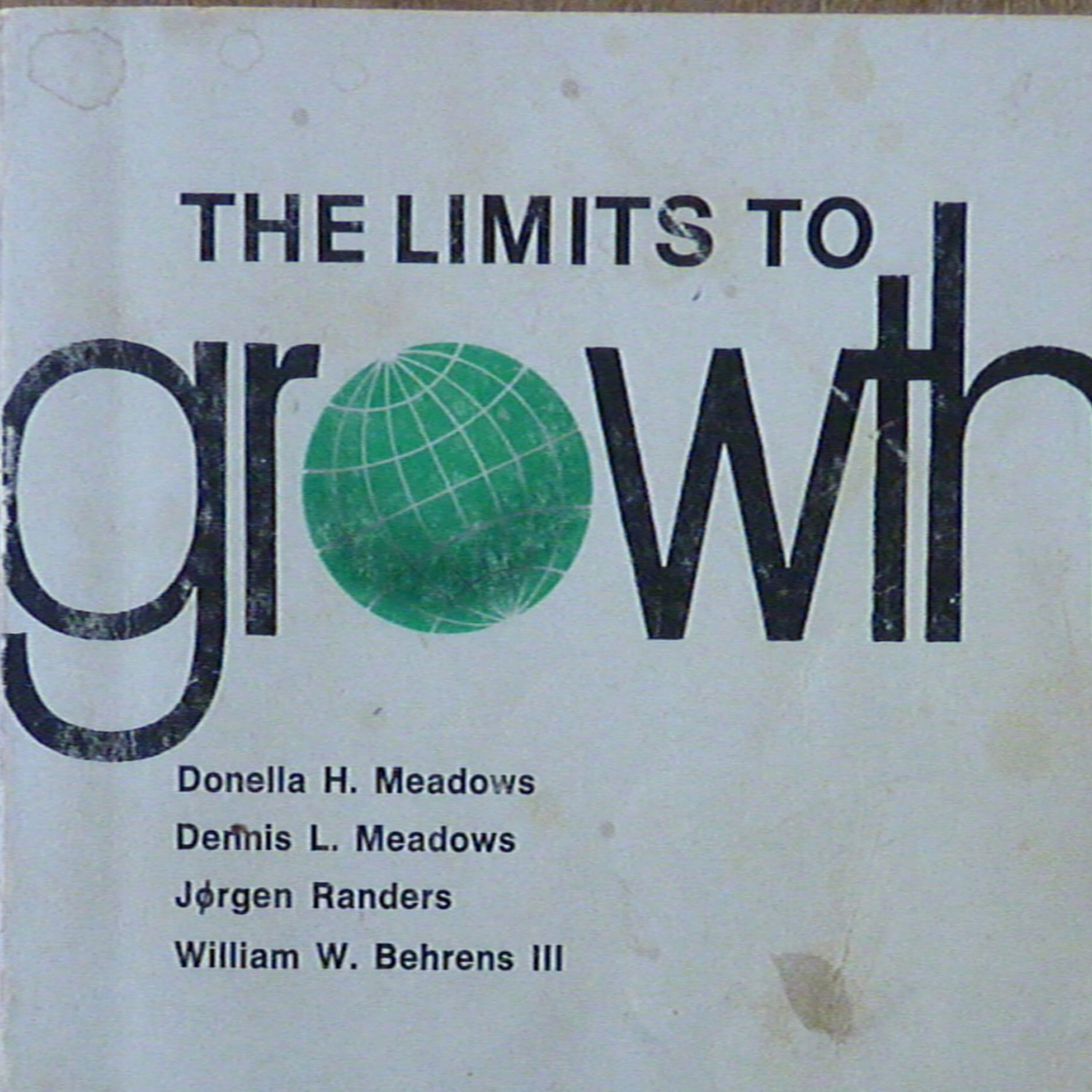
The book that warned of an end to civilisation
In 1972 a book which outlined the possible future of the world became a best-seller. 'The Limits to Growth' was based on computer modelling which suggested that if economic growth remained unfettered, there'd be a 'traumatic' decline in civilisation from 2020. It also suggested global policy changes which could prevent a downward trend. Find out which path the world took and why...Plus, why East German punks were targeted by the secret police in the 1980s, a top UN negotiator remembers how peace was won in El Salvador in 1991, the first black sitcom in Britain and the launch of the Chippendales - the first male strip show for women - in 1979.Photo: Front cover of 'The Limits to Growth' published in 1972.
The Soviet invasion of Afghanistan
On 24th December 1979 Soviet troops poured into Afghanistan in support of an anti-government coup. The Soviet occupation would last for nine years. Plus, the hidden history of the board game Monopoly, the invention of chemotherapy, the heaviest aerial bombardment of the Vietnam war at Christmas 1972, and the street-performer origins of the global circus phenomenon Cirque du Soleil.Picture: Russian tanks take up positions in front of the Darulaman (Abode of Peace) Palace in Kabul, January 1980. (Henri Bureau/Corbis/VCG via Getty Images)
The Romanian revolution
In this edition the fall of the Ceaușescus in Romania in December 1989, a global panic over bees in the early 2000s and WW2 black GIs finally recognised decades after the war. Plus the building of Abuja as Nigeria's capital and a woman's right to pray in some Hindu temples in India.(Photo: The army join the revolutionaries in Romania 1989. Credit: Getty Images)
The Cuban writer who defied Castro
On 7 December 1990 the dissident Cuban novelist and poet Reinaldo Arenas killed himself in New York after years of suffering from AIDS. Before fleeing Cuba, Arenas had been jailed for his homosexuality, sent to re-education camps and prevented from writing. We hear from his friend and fellow writer, Jaime Manrique. Plus the memories of the daughter of the renowned British sculptor, Henry Moore; how the DEA helped track down Pablo Escobar; the ill-fated voyage of Shackleton's ship The Endurance; and inside one of the most notorious prison camps in post Soviet Central Asia.(Photo: Reinaldo Arenas. Credit: Sophie Bassouls/Sygma/Sygma/Getty Images)