
The History Hour
518 episodes — Page 3 of 11
The ‘Battle of the Surfaces’ and becoming a republic
We hear about the half-clay, half-grass exhibition match between Rafael Nadal and Roger Federer. Argentinean creative entrepreneur and tennis fan Pablo del Campo tells Uma Doraiswamy how he made the iconic court possible in May 2000. Fiona Skille, professor of Sports History at Glasgow Caledonian University, explains the history of sport exhibition matches.In 1974, Greece held a referendum to decide the future of the country’s monarchy, and whether Constantine II would remain their king. In December 1974 4.5million million people went to the polls to cast their vote. The result was two to one in favour of a republic. Jane Wilkinson looks through the BBC archives to find out more.Next, a mountain massacre in base camp of the Nanga Parbat mountain in the Gilgit-Baltistan region of Pakistan killed 19 people. . Polish climber Aleksandra Dzik, aged 30, was on the mountain that night, at camp two, and speaks to Megan Jones.Plus, India’s coal-mine rescue. On 16 November 1989, mining engineer Jaswant Singh Gill saved 65 miners from the Mahabir Coal Mine, in India. The miners, who had been trapped for three days after a flood, were winched out one by one using a tiny, steel capsule. Rachel Naylor speaks to Jaswant's son, Sarpreet Singh Gill.In 2013, a six-year-old from Argentina became one of the youngest people in the world to legally have their gender changed on official documents through self-declaration. Gabriela Mansilla reveals, the fight for recognition was not easy for her daughter Luana.(Photo: 'The Battle of the Surfaces' at The Palma Arena on May 2, 2007 in Mallorca. Credit: Clive Brunskill/Getty Images)
Female heroes of WW2 and the Iranian Revolution
We hear about Polish war hero Irena Sendler who saved thousands of Jewish children during the World War Two.Expert Kathryn Atwood explains why women’s stories of bravery from that time are not as prominent as men’s.Plus, the invention of ‘Baby’ – one of the first programmable computers. It was developed in England at the University of Manchester. Gill Kearsley has been looking through the archives to find out more about the 'BabyIn the second half of the programme, we tell stories from Iran. Journalist Sally Quinn looks back at the excess of the Shah of Iran’s three-day party, held in 1971.Two very different women – the former Empress of Iran, Farah Pahlavi, and social scientist Rouhi Shafi – describe how it feels to be exiled from their country.Finally, Barry Rosen shares the dramatic story of when he was held hostage in the US embassy in the Tehran for 444 days.Presenter: Max Pearson (Photo: Children rescued from the Warsaw Ghetto by Irena Sendler. Credit: Getty Images)
Magic, illusion and tigers
Max Pearson presents a collection of the week's Witness History episodes.For nearly 40 years, Siegfried and Roy wowed audiences in Las Vegas with death-defying tricks involving white lions and tigers. But in 2003, their magic show came to a dramatic end when a tiger attacked Roy live on stage.We find out what went wrong, and speak to magician and author Margaret Steele about the - sometimes dangerous - history of illusion and magic.Plus, we learn more about the so-called ‘Ken Burns effect’; the technique of making still photographs that appear to be moving. In 2002, the method came to the attention of one of the biggest names in the field of technology, Steve Jobs.Also, the New Zealand woman who was nicknamed ‘the Queen of the Skies’ for her record breaking flights of the 1930s. Jean Batten flew planes made of wood and canvas during the golden age of aviation.And we go back to 1996 for Brazil's early adoption of electronic voting, and discover more about the experiments behind the creation of Greenwich Mean Time.Contributors: Ken Burns - film maker Chris Lawrence - animal trainer Margaret Steele - magic historian, magician and author Carlos Velozo - lawyer Jean Batten – aviator Emily Akkermans - Curator of Time, Royal Museums Greenwich Keith Moore - the Royal Society of London(Photo: Siegfried and Roy with a white lion cub, Las Vegas, 1997. Credit: Barry King/WireImage)
Dungeons & Dragons and dinosaur remains
First, on its 50th anniversary of Dungeons & Dragons, we hear from Luke Gygax, whose father created the fantasy role-play game. We also hear from Dr Melissa Rogerson, senior lecturer and board games researcher at the University of Melbourne in Australia.Then, the first dinosaur remains discovered in Antarctica in 1986, by Argentinian geologist Eduardo Olivero.Next, Ethiopia’s internal relief efforts during the famine in 1984, led by Dawit Giorgis. Plus, the fight to stop skin lightening in India with Kavitha Emmanuel who launched a campaign in 2013. Finally, Angolan singer and former athlete Jose Adelino Barceló de Carvalho, known as Bonga Kwenda, speaks about his music being banned in 1972 and going into exile.Presenter: Max Pearson(Photo: Vintage game modules from the role-playing game Dungeons & Dragons on display. Credit: E.Jason Wambsgans/Chicago Tribune/Getty Images)
Flower revolutions
We hear about the Sunflower Movement in Taiwan in 2014. Brian Hioe, an activist who occupied Parliament in Taipei, recalls the events.We hear from Nino Zuriashvili, one of the protesters at the Rose Revolution in Georgia in 2003. And Prof Kasia Boddy, author of Blooming Flowers: A Seasonal History of Plants and People explains how flowers have been used as symbols in political history.Plus, the Afghan refugee who fled as a 15 year old. Waheed Arian, a doctor and former Afghan refugee describes his perilous journey.We look at the Yellow Fleet of ships, which were stranded in the Suez Canal for eight years. Phil Saul, who looked after the engineers and officers on board the MS Melampus and MS Agapenor in the Suez Canal, recounts his experiences.Finally, the story of the British afro hair care institution Dyke and Dryden. We hear from Rudi Page, the former marketing manager for Dyke and Dryden's afro hair products.Presenter: Max Pearson(Photo: An activist taking part in the Sunflower Movement in Taipei on 21 March 2014. Credit: Mandy Cheng/AFP)
Technology and artificial intelligence
We start with the world's first general purpose electronic computer, the ENIAC, built in 1946 by a team of female mathematicians including Kathleen Kay McNulty. We speak to Gini Mauchly Calcerano, daughter of Kathleen Kay McNulty, who developed ENIAC.Then we hear about the man who invented the original chatbot, called Eliza, but did not believe computers could achieve intelligence. We speak to Miriam Weizenbaum, daughter of Joseph Weizenbaum, who built Eliza chatbot.Following that, Dr Hiromichi Fujisawa describes how his team at Waseda University in Japan developed the first humanoid robot in 1973, called WABOT-1.Staying in Japan, the engineer Masahiro Hara explains how he was inspired to design the first QR code by his favourite board game.Finally, Thérèse Izay Kirongozi recounts how the death of her brother drove her to build robots that manage traffic in the Democratic Republic of Congo.Max Pearson presents a collection of the week's Witness History episodes. Our guest is Zoe Kleinman, the BBC's technology editor.(Photo: Robots manage traffic in Kinshasa, Democratic Republic of Congo. Credit: Federico Scoppa/AFP)
Latin America's longest plane hijacking and Kristallnacht
We start our programme in 1973, when two men claiming to be Colombian guerrillas hijacked a plane making it fly across Latin American for 60 hours. Edilma Perez was a former fight attendant for SAM airline.Our expert guest is Brendan Koerner author of The Skies Belong To Us: Love and Terror in the Golden Age of Hijacking.Then we take a look at the 2009 UN-backed war crime tribunals in Cambodia that aimed to hold the genocidal Khmer Rouge commanders to account. Rob Hamill, brother of Toul Sleng prisoner Kerry Hamill.Following that we hear about the striking speech that inspired the Law of the Sea. We speak Christina Pardo Menez, Arvid Pardo's daughter and David Attard, Arvid Pardo's friend.Then we go back to 1989 and hear how South Africa became the first country to make and then dismantle nuclear weapons. André Buys, was plant manager and systems engineer at Kentron Circle.And finally we hear a first hand account of the 1938 Kristallnacht from Kurt Salomon Maier.Presenter: Max Pearson (Photo: SAM airlines 1973 Latin American flight. Credit: Jamie Escobar)
South Africa’s Immorality Act and India's Mars Orbiter Mission
We start with the story of a couple who were arrested under South Africa's Immorality Act, which banned sexual relationships between white people and non-white people. Dr Zureena Desai was arrested under the Immorality Act in South Africa.Another law banned Inter-racial marriage in South Africa. In 1985, this was lifted. Suzanne La Clerc and Protas Madlala, the first inter-racial couple to get married under new rules in South Africa share their memories.Our guest is Dr Susanne Klausen, The Brill professor of Women's, Gender and Sexuality Studies at The Pennsylvania State University in the USA. She talks about love, marriage and sex in apartheid South Africa and the two laws that were both repealed on the same day in 1985. We hear from Urban Lambertson, survivor of the Estonia ferry disaster in 1994, one of the deadliest shipping disasters since the Titanic. Film-maker Allen Hughes tells of the time when rap sensation, Tupac Shakur was fired from the crime movie Menace II Society.Finally, the ‘moon man of India’ Dr Mylswamy Annadurai, a scientist working on India’s Mars Orbiter Mission tells of the country’s momentous mission to Mars. (Photo: Dr Zureena Desai. Credit: Abrie Jantjies)
New Zealand’s first dinosaur and India’s plague outbreak
Max Pearson presents a collection of the week’s Witness History episodes.We start our programme looking at the discovery of New Zealand’s first dinosaur by Joan Wiffen.Our expert guest is Professor Eugenia Gold, a paleontologist at Suffolk University, in Boston, United States, and the author of children’s book She Found Fossils.Then, we hear how the CT scanner was invented.Following that, we go to India in 1994 and an outbreak of the pneumonic plague.Plus, the story of how a small group of mountaineers risked their lives to camouflage landmarks in Leningrad during World War Two.Finally, we hear from designer Ruth Kedar about how she came to create one of the most famous logos in history.Contributors:Chris Wiffen – son of late fossil-hunter Joan Wiffen.Professor Eugenia Gold – paleontologist at Suffolk University, Boston, United States.Robert Cormack – son of late CT scanner inventor, Allan Cormack.Doctor Vibha Marfatia – who escaped the pneumonic plague.Mikhail Bobrov – late mountaineer who helped save Leningrad’s landmarks.Ruth Kedar - designer of the Google logo.(Photo: Theropod dinosaur. Credit: Science Photo Library)
Ethiopian history
Max Pearson presents a collection of the week’s Witness History episodes. We’re looking at key moments in Ethiopian history, as it’s 50 years since Emperor Haile Selassie was overthrown in a military coup. We start our programme looking at the moment a military junta called the Derg who ousted the monarchy in September 1974. Then, we hear how, before this, the Emperor lived in exile in Bath, in the west of England.Our expert guest is Hewan Semon Marye, who is junior professor at the University of Hamburg in Germany. Then, Abebech Gobena who founded an orphanage and was known as Africa’s Mother Teresa. Following that, the oldest skeleton of a human ancestor, discovered in 1994. Finally, the Axum Obelisk, returned to Ethiopia in 2005, after being looted by Italy’s fascist dictator. Contributors: Lij Mulugeta Asseratte Kassa – relative of Haile Selassie. Professor Shawn-Naphtali Sobers – University of the West of England, Bristol. Professor Hewan Semon Marye – Ethiopian Studies and Contemporary North-East African Studies at the University of Hamburg, Germany. Hannah Merkana – raised in Abebech Gobena’s orphanage.Professor Yohannes Haile Selassie – Paleoanthropologist.Michele Daniele – Architect.(Photo: Haile Selassie in his study. Credit: Universal History Archive/Getty Images)
Marriage bars and a Moon mission
Myra Anubi presents a collection of the week's Witness History episodes. We hear about the Irish law that banned married women from working in state jobs until 1973 and Apollo 13's attempted trip to the Moon in 1970.Plus the Umbrella protest in Hong Kong, the ancient Egyptian mummy who flew to France for a makeover and the Argentine basketball player and wrestler nicknamed the Giant.Contributors: Bernie Flynn - one of the first married women to keep her job after the marriage bar was abolished in Ireland. Irene Mosca - economics lecturer at Maynooth University, in Ireland. Fred Haise - NASA astronaut who was on board Apollo 13. Nathan Law - leader of the Umbrella protest in Hong Kong. Anne-Marie Gouden - receptionist at the Musée de l'Homme in Paris. Julio Lamas - Jorge Gonzalez's basketball coach. Bill Alfonso - wrestling referee and Jorge Gonzalez's personal assistant.(Photo: A couple on their wedding day. Credit: Getty Images)
Space travel and Mary Poppins
Max Pearson presents a collection of the week's Witness History episodes. Our guest is European Space Agency astronaut Samantha Cristoforetti, who completed the longest uninterrupted space flight of any European.First, we go to Australia in the 1990s when amateur radio enthusiast Maggie Iaquinto befriended Soviet cosmonauts on the Mir space station. She updated them on global news as the USSR crumbled back on Earth.Then, the inspiring story of Waris Dirie, who walked barefoot across the Somalian desert to escape child marriage and became an international supermodel.We hear a harrowing account of Guatemala's civil war that ended in 1996.Then, why the author of Mary Poppins, PL Travers, hated the Disney film. Finally, the Canadian town that welcomed aliens in 1967.Contributors: Samantha Cristoforetti - European Space Agency astronaut. Ben Iaquinto - son of Maggie Iaquinto who befriended Soviet cosmonauts. Waris Dirie - model from Somalia. Jeremias Tecu - survivor of Guatemala's civil war. Brian Sibley and Kitty Travers - friend and daughter of PL Travers. Paul Boisvert - worked on Canada's alien landing pad.(Photo: Mir Space Station in 1995. Credit: Space Frontiers/Hulton Archive/Getty Images)
Nazis in Egypt and Spain's La Tomatina
A warning, this programme includes an account of antisemitic views and descriptions of violence.Egypt recruited thousands of Nazis after World War Two to bolster its security. We hear from Frank Gelli, who in 1964 met Hitler's former propagandist, Johann von Leers, in Cairo. Author, Vyvyan Kinross is our guest and talks about Nazis in Egypt. Also, the celebrity murder case that divided France and how in 2001, Argentina went through five leaders in two weeks. Shatbhi Basu, talks about how became known as India's first female bartender and finally the origins of La Tomatina, one of Spain’s most popular international festivals, as well as the largest tomato fight in the world.Contributors:Eduardo Duhalde – former Argentine President. Vyvyan Kinross – author. Michelle Fines- journalist. Shatbhi Basu - beverage consultant, mixologist and writer. Frank Gelli -met Nazi propagandists in Cairo. Goltran Zanon – involved in the first La Tomatina. Maria Jose Zanon - daughter of Goltran Zanon. Enric Cuenca Yxeres - Valencian history teacher.(Photo: Johannes von Leers. Credit: ullstein bild via Getty Images)
Indonesian’s independence and the last Olympic art competition
We hear about the founding father of Indonesian independence. Then, we look at how 'spray on skin' was used after the 2002 Bali bombings.Next, we hear about the last ever Olympic art competition.Plus, the most decorated Paralympian in history.And, the Brazilian singer who earned the title Queen of Samba. Max Pearson presents a collection of this week's Witness History and Sporting Witness interviews. Our guest is Professor of Indonesian history, Kirsten Shulze from the London School of Economics and Political Science.Contributors: Kartika Soekarno – Sukarno’s youngest daughter.Professor Kirsten Shulze - London School of Economics and Political Science.Professor Fiona Wood – Burns specialist. Daniel Weinzweig – John Weinzweig’s son. Trischa Zorn-Hudson – Paralympian. Adelzon Alves – Broadcaster and samba record producer. (Photo: Sukarno. Credit: Christian Hirous/Gamma-Rapho via Getty Images).
American presidents
Max Pearson presents a collection of the week's Witness History episodes.It's 50 years since Richard Nixon became the first US president in history to resign, following the Watergate scandal.To mark this anniversary, we're featuring first hand accounts from major moments in US presidential history.We start with the first ever presidential television debate. In 1956, the Democratic and Republican candidates sent female representatives. They were Eleanor Roosevelt and Margaret Chase Smith.Our expert guest, Dr Kathryn Brownell, from Purdue University in Indiana in the US, discovers other key television debate moments in presidential history. Then, we hear about the rise of the religious right in America, exploring the emergence of the Moral Majority in the late 1970s. Following that, we look at one of the closest and most contested elections in history, as Al Gore went head-to-head with George W Bush in the battle for the White House in 2000. Finally, we hear from the photographer inside the Situation Room as the US closed in on terrorist Osama Bin Laden in 2011.Contributors: Tom DeFrank - Journalist. Dr Kathryn Brownell - Associate professor of history at Purdue University. Kate Scott and Janann Sherman - Historians. Richard Viguerie - One of the founders of the Moral Majority. Callie Shell - The official photographer for Al Gore's presidential campaign. Pete Souza - Chief Official White House Photographer during Barack Obama's presidency.(Photo: Richard Nixon waves after becoming the first US president to resign. Credit: Bettmann / Getty Images)
Ice Bucket Challenge and Bulgaria's dancing bears
A warning for Aboriginal and Torres Strait Islander listeners - this programme contains the names and voices of people who have died.Max Pearson presents a collection of the week's Witness History episodes.We take a look at the Ice Bucket Challenge, the viral fundraising sensation that took over the internet in 2014. Our guest Professor Sander van der Linden breaks down the psychology behind virality and outlines the challenges facing those who conquered the algorithm. Plus, how one man smuggled punk rock over the Berlin Wall. Also, we meet the man who found a retirement home for Bulgaria's dancing bears.We hear the remarkable story of Australia's Freedom Riders who campaigned against indigenous discrimination.Finally, we relive the mountain top escape of the Yazidi's who were fleeing Islamic State Militants.Contributors: Nancy Frates – Pete Frates mother. Sander van der Linden - Professor of Social Psychology at Cambridge University. Mark Reeder - smuggled punk rock over the Berlin Wall. Dr Amir Khalil – founded the sanctuary for dancing bears. Darce Cassidy and Gary Williams – involved in the Freedom Rides. Mirza Dinnayi - helped evacuate the Yazidi's.(Photo: Ice Bucket Challenge. Credit:Getty Images)
Moscow Metro and the Olympics
Max Pearson presents a collection of the week's Witness History episodes.We go underground for a tour of the Moscow Metro, the subterranean transport network built by thousands of Russian workers in the 1930s.Our guest Mark Ovenden, author of Underground Cities, reveals how the Moscow system influenced many other countries around the world. Plus, more about a revolutionary new method for transporting medicines that was launched in Ghana in 1974. The cold chain system helped refrigerate vaccines aimed at tackling potentially deadly diseases.Also, as Paris lifts the curtain on the 2024 Olympics, we go back to the last time the French city hosted the Games - one hundred years ago.We hear the remarkable story of Somali 400m sprinter Zamzam Farah, and how she became a crowd favourite in the London 2012 Olympics after finishing last in her heat by 27 seconds.Finally, we meet Shuss - a French cartoon skier and the first Olympic mascot, designed for the 1968 Winter Games.Contributors: Tatiana Fedorova – a worker on the Moscow Metro. Mark Ovenden - author of Underground Cities. Patience Azuma – vaccinated as a child in Ghana. Dr Kofi Ahmed – chief medical officer. Harold Abrahams – Olympic medallist. Kitty Godfree – Olympic medallist. Zamzam Farah – Somali sprinter. André Thiennot - manufacturer of Shuss merchandise.(Photo: Underground train station ceiling in Moscow. Credit: Lorenzo Di Cola/NurPhoto via Getty Images)
Cyprus: Coups and clubbing
We hear Turkish Cypriot and Greek Cypriot perspectives on the island's 1974 coup and subsequent invasion. Bekir Azgun, a Turkish-Cypriot writer, remembers the events. On the 20 July 1974 Captain Adamos Marneros landed the final flight at Nicosia Airport.Nicoletta Demetriou talks about returning to her family home in 2003.Then, a Cypriot Olympic sailing hero Pavlos Kontides takes us back to the London 2012 Games. And finally the 'Godfather of Ayia Napa', DJ Nick Power, tells us how the island became a party destination.Max Pearson presents this week's Witness History interviews on the history of Cyprus. Our guest is Dr Antigone Heraclidou, senior research associate at CYENS Centre of Excellence in Cyprus.(Photo: Greek Cypriot soldier killed in the 1974 conflict. Credit: Sean Gallup/Getty Images)
Brazil's ban on women in football and the first air fryer
We hear about the law in Brazil which made it illegal for women and girls to play football for 40 years. Dilma Mendes shares her incredible experience of being arrested numerous times as a child, just for kicking a ball. Our guest, Alexandra Allred, herself a pioneering sportswomen, discusses the discrimination women have faced to break into competitive sport.Plus, the moment when the 'Queen of Salsa', banned from Cuba by Fidel Castro, was allowed to return to Cuban territory for one performance.We learn about the brutal crushing of a student movement in 1968 in Mexico City 10 days before the Olympic Games, which ended in dozens being killed.Also, the start of an environmental movement in Italy in 1988, and the invention of the air fryer. The prototype was nearly as big as a dog kennel and made of wood and aluminium.Contributors: Dilma Mendes - defied Brazil's ban on women playing football. Alexandra Allred - author of When Women Stood: The Untold History of Females Who Changed Sports and the World. Omer Pardillo Cid - manager and close friend of Celia Cruz. David Huerta - witness to the Mexico City massacre in 1968. Rosa Porcu - a protester against the 'poison ships' docked in Italy in 1988. Suus van der Weij - daughter of Fred van der Weij, inventor of the air fryer.
Subway Art and terror in Georgia
Max Pearson presents a collection of the week's Witness History episodes.We hear about the era-defining book Subway Art and how Fight the Power became a protest anthem. Artist curator Marianne Vosloo explains how both street art and hip-hop are linked.Plus, two stories from Georgia. Firstly, how Stalin carried out his most severe purge in Georgia in 1937, killing thousands of people, and then how after the breakup of the Soviet Union in 1991, the newly independent state was thrown into a political and economic crisis.Finally, we hear from a former Canadian prime minister, on how her party was left with just two seats after the election in 1993.Contributors: Martha Cooper and Henry Chalfant – authors of Subway Art. Marianne Vosloo - artist curator who works within the field of street art and urban art intervention. Chuck D – Public Enemy frontman. Levan Pesvianidze – Georgian whose grandfather and uncle were both executed. Lamara Vashakidze - a survivor of Georgia’s crisis in 1991. Kim Campbell – former Canadian prime minister. Preston Manning – founder and former leader of Reform.(Photo: People queing to buy Subway Art. Credit: Jemal Countess/Getty Images)
The Sagrada Família and Hello Kitty
Max Pearson presents a collection of the week's Witness History episodes.We hear the story of the largest unfinished Catholic church in the world and the creation of one of the most recognisable characters on the planet.Plus, an amazing first hand account of the expulsion of German-speakers from Czechoslovakia at the end of the Second World War, the man behind Dignitas, the assisted dying organisation in Switzerland, and the son of a Guatemalan president who was overthrown in an American-backed coup in the 1950s.Contributors: Mark Burry - architect, who was part of a team trying to piece together Gaudí's vision for the Sagrada Família. Madeleine Kessler - architect from Madeleine Kessler Architecture. Yuko Shimizu - the artist who designed Hello Kitty. Helmut Scholz - a Sudeten German, who was expelled from Czechoslovakia after the Second World War. Ludwig Minelli - the lawyer behind Dignitas, the assisted dying organisation. Juan Jacobo - the son of the former Guatemalan president Jacobo Árbenz.(Photo: The Sagrada Família, in Barcelona. Credit: Getty Images)
Bungee jumping and the Benidorm boom
Max Pearson presents a collection of this week’s Witness History episodes from the BBC World Service on the history of travel. Our guest is Dr. Susan Houge Mackenzie, Associate Professor in the Department of Tourism at the University of Otago in New Zealand. First, we'll hear from the man responsible for the first commercial bungee jump. Then, the pioneers of low-cost transatlantic flights and luxury cruises describe how they revolutionised travel. Finally, we hear the remarkable stories of how Cancún and Benidorm transformed into holiday hotspots, involving General Franco, bikinis and excommunication.Contributors: Dr. Susan Houge Mackenzie - Associate Professor in the Department of Tourism at the University of Otago in New Zealand. AJ Hackett - pioneer of the world's first commercial bungee jump. Edda Helgason - daughter of Sigurdur Helgason who launched Loftleioir Icelandic, the first budget transatlantic airline. Hans Indridason - ran Loftleioir Icelandic's sales and marketing department. Tor Stangeland - Captain of Sovereign of the Seas cruise ship. Juan Enríquez - son of Antonio Enríquez Savignac, who turned Cancún into a world-beating tourist destination. Pedro Zaragoza - former Mayor of Benidorm.(Photo: Bungee jumping. Credit: Getty Images)
Boko Haram massacre in Nigeria and the Irish shopworkers strike
Max Pearson presents a collection of this week’s Witness History episodes from the BBC World Service.First, we hear about Boko Haram militants driving into Gwoza in north-east Nigeria in 2014, to begin an assault which left hundreds dead. Next, the Irish shopworkers who went on strike after refusing to handle South African goods.Then, it’s 25 years since Nato bombed the Serbian state TV station in Belgrade. Plus, Norway’s biggest industrial disaster.And, Brazil’s iconic egg-shaped telephone booth. Contributors: Ruoyah who lived through the Boko Haram massacre.Makena Micheni - Associate Lecturer at St Andrews University.Irish shopworker Mary Manning.TV technician Dragan Šuković.Harry Vike and his wife Greta. Chu Ming Silveira’s son Alan Chu. (Photo: A woman from Gwoza displaced by the violence. Credit: Reuters/Stringer)
The weather report that delayed D-Day and panda-mania in Taiwan
Max Pearson presents a collection of this week’s Witness History episodes from the BBC World Service.First, we hear how a young Irishwoman called Maureen Flavin Sweeney drew up a weather report that delayed the date of D-Day. Then, 99-year-old former field medic, Charles Norman Shay, shares his remarkable account of landing on the Normandy beach in France codenamed Omaha on D-Day. Next, we also talk to Iraqi journalist Muntadhar al-Zaidi who hurled his shoes at the President of the United States. Plus, we hear about China gifting Taiwan two giant pandas, in a practice known as ‘panda diplomacy’.Finally, it’s the 40th anniversary of the popular computer game Tetris being invented. Contributors: Edward Sweeney – Maureen Flavin Sweeney’s son. Charles Norman Shay – former field medic in the United States Army. Muntadhar al-Zaidi – Iraqi journalist. Eve Chen – curator of the Giant Panda House at Taipei Zoo. Alexey Pajitnov – Russian engineer. Henk Rogers – American businessman.(Photo: U.S Troops rushing to the Normandy beaches. Credit: Photo12/Universal Images Group via Getty Images)
South American revolutionaries and the first Aboriginal MP
A warning for Aboriginal and Torres Strait Islander listeners - this programme contains the names and voices of people who have died.Max Pearson presents a collection of this week’s Witness History episodes from the BBC World Service.First, the story of Brazil's most wanted, Carlos Lamarca. He was a captain who deserted the army in the 1960s and joined in the armed struggle against the military regime in the country.Then, Bill Booth - historian of twentieth century Latin America at University College London - joins Max to talk about other revolutionary figures from South America. Next, the story of Australia's first Aboriginal MP and how he fought for indigenous rights.Plus, the 90th anniversary of the first ever quintuplets, the 1984 Apple commercial that changed advertising and the 2014 Flint, Michigan water contamination crisis.Contributors: João Salgado Lopes - friend of Carlos Lamarca. Bill Booth - historian of twentieth century Latin America at University College London. Joanna Lindgren - great niece of Neville Bonner. Jeneyah McDonald - Flint, Michigan resident. Dr Mona Hanna-Attisha – a paediatrician and professor of public health, Michigan. Mike Murray - former Apple marketing manager.(Photo: Subcomandante Marcos pictured in 2001. Credit: Getty Images)
The first Air Jordan and Imelda Marcos's 3,000 pairs of shoes
Max Pearson presents a collection of this week’s Witness History episodes from the BBC World Service.This week’s programmes are all about the history of footwear.First we take a trip back to the 1960’s when Brazilians were introduced to a new type of footwear, which went on to become one of the country’s biggest exports. Plus the story of how a then rookie basketball player called Michael Jordan signed a deal with Nike that revolutionised sports marketing.We also hear about the thousands of shoes owned by the former first lady of the Philippines, Imelda Marcos.Then we learn how one family feud led to the creation of two massive sportswear companies, Adidas and Puma.Finally, we hear how a Czech company revolutionised shoe production and brought affordable footwear to the world.Contributors: Sergio Sanchez - Author and former employee of Havainas. Sonny Vaccaro - Former Nike executive. Dr Alex Sherlock – Lecturer in the school of Fashion and Textiles at RMIT University in Melbourne, Australia and founder of the Footwear Research Network. Sigi Dassler – Daughter of Adi Dassler the founder of Adidas. Mick Pinion – Former Bata engineer.(Photo: Air Jordan Original. Credit: Getty Images)
Independence in French Polynesia and the 'Queen of Cuba'
Max Pearson presents a collection of this week’s Witness History episodes from the BBC World Service.This week, we hear how nuclear testing changed politics in French Polynesia.Plus, the story of how the FBI caught Ana Montes, the spy known as the ‘Queen of Cuba’.We also talk to Jewish and Palestinian people about the moment the state of Israel was proclaimed in 1948.Finally, we tell the unlikely story of how a heavy metal rock band emerged during the violent years of Saddam Hussein's regime in Iraq.Contributors: Antony Géros - President of the Assembly of French Polynesia KDee Aimiti Ma'ia'i – doctoral candidate at University of Oxford Pete Lapp – former FBI agent Hasan Hammami Arieh Handler Zipporah Porath Firas Al-Lateef – bass player(Photo: Antony Géros. Credit: Getty Images)
India’s ambitious ID scheme and the iconic Princess Diana photo
This week, how more than one billion people living in India were given a unique digital ID during the world's largest biometric project. The Aadhaar scheme was launched in 2009 but it wasn't without controversy. Our guest, digital identity expert Dr Edgar Whitley, tells us about the history of ID schemes around the world.Plus, the Spanish doctor whose pioneering surgery helped millions of people to get rid of their glasses and see more clearly. And why East Germany's thirst for caffeine in the 1980s led to an unusual collaboration with Vietnam. Also, the story behind one of the most famous royal photographs ever taken – Princess Diana sitting alone on a bench in front of the Taj Mahal in 1992. The man who took the image tells us more.And finally, how a Ghanaian athlete, Alice Annum, earned the nickname ‘Baby Jet’ after her medal-winning success in the 1970 Commonwealth Games.Contributors: Nandan Nilekani - former chairman of the Unique Identification Authority of India Dr Edgar Whitley - digital identity expert at the London School of Economics Dr Carmen Barraquer Coll – daughter of ophthalmologist Jose Ignacio Barraquer Moner Siegfried Kaulfuß – East German official in charge of coffee production in Vietnam Anwar Hussein – royal photographer Alice Annum – retired Ghanaian athlete(Photo: Scanning fingerprints for Aadhaar registration. Credit: David Talukdar/NurPhoto via Getty Images)
Paraguay’s ‘disappeared’ and the history of the Channel Tunnel
Max Pearson presents a collection of this week’s Witness History episodes from the BBC World Service. This week we hear the story of Rogelio Goiburu, who has dedicated his life to finding the victims of Alfredo Stroessner's dictatorship in Paraguay, including the remains of his own father. Our expert Dr Francesca Lessa talks about other enforced disappearances in South America.Plus, we hear about how, in February 2014, ordinary people got to see inside Mezhyhirya, the extraordinarily extravagant home of Ukraine's former president.Also, a shocking psychological experiment from the 1960s. Just to warn you, this includes original recordings of the experiments which listeners may find disturbing.The programme also includes the breakthrough moment when the Channel Tunnel was finally completed linking England and France beneath the sea and, finally, the story behind one of the world's most popular self-help books.Contributors: Rogelio Goiburu - dedicated to finding the victims of Stroessner's Paraguay Dr Francesca Lessa - Associate Professor in International Relations of the Americas at University College London (UCL) Denys Tarakhkotelyk - from the Mezhyhirya estate Graham Fagg - the Englishman who broke through the Channel Tunnel Donna Dale Carnegie - daughter of Dale Carnegie, author of How to Win Friends and Influence People (Photo: Alfredo Stroessner. Credit: STR/AFP via Getty Images)
Thirty years since the first free elections in South Africa
It’s been thirty years since the first fully democratic elections in South Africa, which saw the African National Congress take power in 1994.But two years before that historic moment, white South Africans had to vote in a referendum that would decide whether or not to usher in a multi-racial government. We hear from President FW de Klerk’s then communications officer about how they helped “close the book on apartheid.”Then we journey back to 1976 and hear about the Soweto Uprising, a student led protest against the enforced study of Afrikaans. Bongi Mkhabela who helped organise the peaceful march, tells us how it came to a bloody and tragic end.Plus we take a look at the pivotal role played by women and girls in the lead up to the 1994 elections. Journalist and researcher Shanthini Naidoo tells us why women’s work and activism in the ANC is so often overlooked.We hear from Oliver Tambo’s son about his father’s return to South Africa after 30 years in exile.We also hear about the long overdue return of Sarah Baartman’s remains to South Africa, after over 190 years being kept in Europe, where she suffered horrific abuse while she was alive. This programme contains discriminatory language. And finally, we learn about one of South Africa’s biggest popstars Brenda Fassie, from her friend, rival and admirer Yvonne Chaka Chaka.Contributors: David Stewards – President FW de Klerk’s former communications advisor Bongi Mkhabela- Student organiser of the Soweto uprising Shanthini Naidoo- Journalist and researcher on women during apartheid Dali Tambo- Son of Oliver Tambo Diana Ferrus – Poet who helped bring Sarah Baartman home Yvonne Chaka Chaka- South African popstar(Photo: Nelson Mandela after winning the election in 1994. Credit: Getty Images)
Ebola outbreak and the Friendship Train returns
Max Pearson presents a collection of this week’s Witness History episodes from the BBC World Service.It’s 10 years since the world’s deadliest outbreak of Ebola started in West Africa. We hear from a survivor and discuss the legacy of the epidemic with the BBC's global health reporter Tulip Mazumdar. Plus, the first World War Two battalion to be led by an African-American woman. Major Charity Adams’ son tells her story. We hear about the group of men arrested in Egypt in 2001 at a gay nightclub who became known as the Cairo 52.We also hear about the avalanche on Mount Everest which killed 16 sherpas carrying supplies 10 years ago. Finally, the train service between India and Bangladesh that lay dormant for 43 years which rumbled back into life in 2008.Contributors: Yusuf Kabba – an Ebola survivor from Sierra Leone Tulip Mazumdar - the BBC's Global Heath reporter. Stanley Earley – son of Major Charity Adams Omer (a pseudonym) - arrested and imprisoned at a gay club in Cairo Lakpa Rita Sherpa - helped recover bodies after the avalanche on Mount Everest in 2014 Dr Azad Chowdhury – on the inaugural Friendship Express(Photo: Liberian Health Minister Burnice Dahn washes her hands at a holding centre for Ebola patients in 2014. Credit: Getty Images)
The history of art heists
Max Pearson presents a collection of this week’s Witness History episodes from the BBC World Service.It's 30 years since Edvard Munch’s painting, The Scream, was stolen from the national gallery in Oslo, Norway. We hear from the man who helped to recover it.Our expert guest is historian and author, Susan Ronald, who explores the history of art heists in the 20th century.Plus, a first hand account from Kampala terror attacks in 2010 and the mystery of St Teresa of Avila's severed hand.Finally, we hear about the last World War II soldier to surrender. Hiroo Onoda was an Imperial Japanese Army intelligence officer who spent nearly 30 years in the Philippine jungle, believing World War Two was still going on.Contributors: Kuddzu Isaac - DJ and Kampala terror attack survivor Charley Hill - Scotland Yard art detective and private investigator Susan Ronald - historian and author Sister Jenifer - the Mother Superior of the Church of Our Lady of Mercy, Ronda Hiroo Onoda - Japanese WWII soldier Christos and Ioanna Kotsikas - residents of Thessaly, Greece(Photo: The Scream. Credit: Getty Images)
Swedish History
Max Pearson presents a collection of this week’s Witness History episodes from the BBC World Service.It has been 50 years since Abba won the 1974 Eurovision Song Contest, so we're exploring Swedish history. Also in 1974, Sweden became the first country in the world to offer paid parental leave that was gender neutral. One father who took the leave tells us about this pioneering policy. We hear from one of the inventors of Bluetooth. The technology was named after Harald Bluetooth, a Viking king. Our expert guest is Eva Krutmeijer, Swedish science writer and co-author of the book ' Innovation, the Swedish Way’. Plus, the invention of the three-point safety belt for cars, that is estimated to have saved more than one million lives around the world, and the story behind Sweden’s Cinnamon Bun Day. Finally, 1974 was just the beginning for the Swedish quartet, Abba, who shared their name with a herring company. By the end of the decade, they were one of most recognisable music acts of the 20th century. Contributors: Per Edlund - one of the first fathers in his town to take split paid parental leave Sven Mattison - one of the inventors of Bluetooth Eva Krutmeijer - Swedish science writer and co-author of the book 'Innovation, the Swedish Way' Gunnar Ornmark - stepson of Nils Bohlin who invented the three-point safety belt for cars Kaeth Gardestedt - who came up with the idea of Sweden's Cinnamon Bun Day Görel Hanser - manager of Abba (Photo: Abba in 1974. Credit: Anwar Hussein/Getty Images)
Seventy-five years of Nato and the Heimlich Manoeuvre
It's 75 years since the founding of Nato. In 1949, a group of 12 countries formed the North Atlantic Treaty Organization to block the expansion of the Soviet Union.Professor Sten Rynning, the author of Nato: From Cold War to Ukraine, talks about some of the most significant moments in Nato's history.It's 30 years since the beginning of the Rwandan genocide. We hear from one of the survivors, Antoinette Mutabazi. This programme contains disturbing content.Plus, Riyaz Begum reflects on Britain's Mirpuri migration, Janet Heimlich, daughter of Dr Henry Heimlich talks about the origins of the Heimlich Manoeuvre and Adam Trimingham, Brighton based journalist and nudist David Johnson recall the arrival of Britain's first nudist beach.(Photo: British Foreign Secretary Ernest Bevin signs the North Atlantic Treaty. Credit: Keystone/Hulton Archive/Getty Images)
Chinese history
Max Pearson presents a collection of this week’s Witness History episodes from the BBC World Service.To mark 50 years since the discovery of the Terracotta Army, we're exploring modern Chinese history.We hear from the man who helped to modernise the Chinese language by creating a new writing system. It's called Pinyin and it used the Roman alphabet to help simplify Chinese characters into words.Our expert guest is the writer, Mark O'Neill, whose book 'The Man Who Made China a Literate Nation' forms the basis of a great discussion about historical language changes throughout history.Plus, a first hand experience of life in labour camps during Mao Zedong’s cultural revolution and the women forced into sexual slavery by the Japanese Imperial army during the 1930s. This programme contains disturbing content.Contributors: Mark O'Neill - writer Zhou Youguang - linguist Jingyu Li - victim of Mao Zedong's labour camps Peng Zhuying - survivor of sexual slavery Yuan Zhongyi - archaeologist Dr Li Xiuzhen - archaeologist Simon Napier-Bell - manager of Wham(Photo: Terracotta Army. Credit: Getty Images)
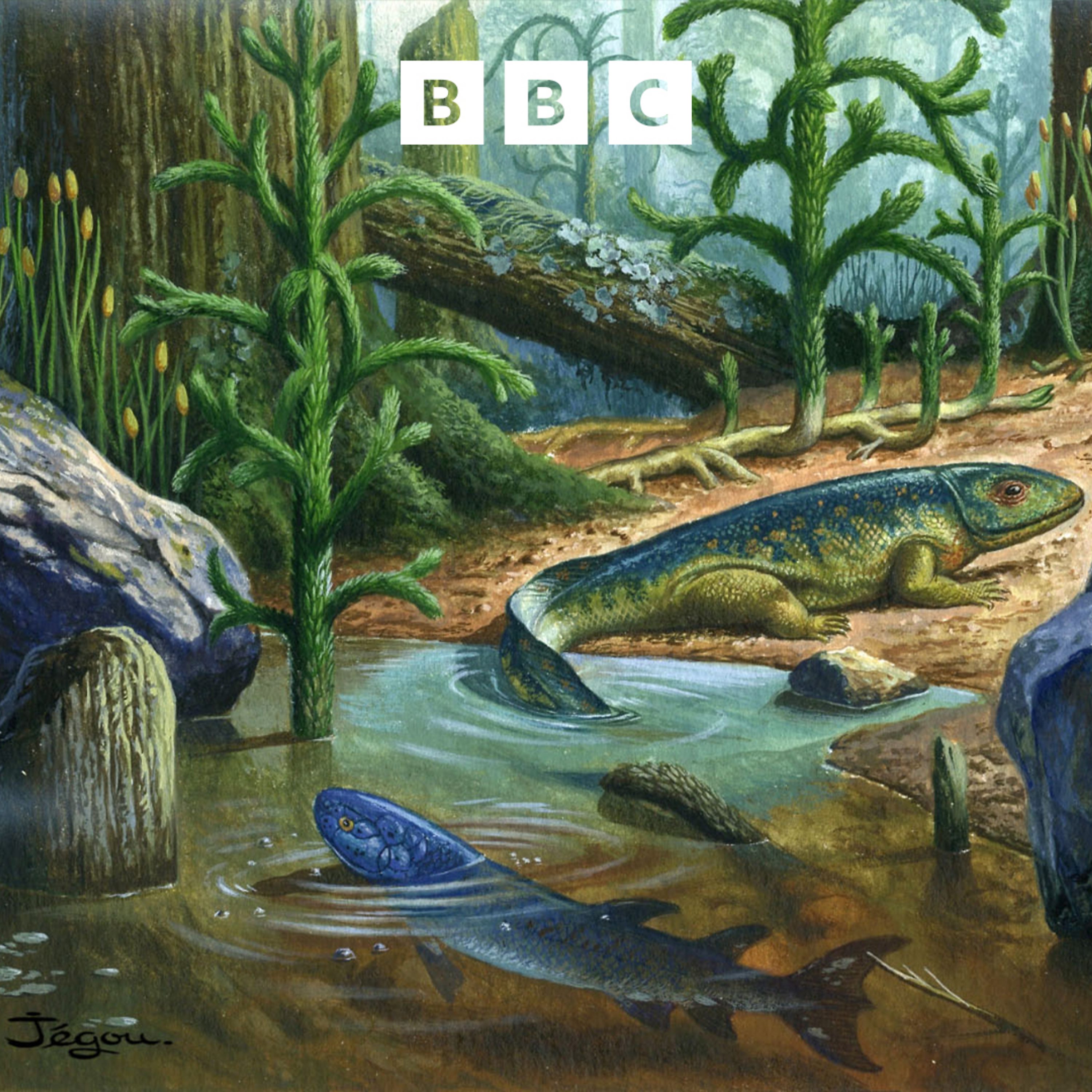
Finding early vertebrate’s footprints and the Deaflympic badminton champion
First, we go back to 1992, when off the coast of Ireland, a Swiss geology student accidentally discovered the longest set of footprints made by the first four-legged animals to walk on earth.They pointed to a new date for the key milestone in evolution, when the first amphibians left the water 385 million years ago.Dr Frankie Dunn, who is a senior researcher in palaeobiology at the Oxford University Museum of Natural History in the UK, then dives into landmark discoveries in geological history. Plus, the story of Winifred Atwell, a classically-trained pianist from Trinidad who was admired by Queen Elizabeth II and Sir Elton John. She became one of the best-selling artists of the 1950s in the UK. Then, how the Guarani, an indigenous language of South America, was designated an official language in Paraguay’s new constitution, alongside Spanish.Also, the lesser known last eruption of Mount Vesuvius in 1944.Finally, Indian badminton player Rajeev Bagga who has won 14 gold medals at the Deaflympics. In 2001, he was given the ‘Deaflympian of the Century’ award.Contributors: Iwan Stössel - Swiss Geologist. Dr Frankie Dunn - Senior Researcher in Palaeobiology at the Oxford University Museum of Natural History in the UK. David Olivera - Paraguayan Linguist and Anthropologist. Angelina Formisano - Evacuated from the village of San Sebastiano during the 1944 eruption of Mount Vesuvius. Rajeev Bagga - Indian Badminton Player.(Picture: Illustration of a tetrapod from the Late Devonian period. Credit: Christian Jegou/Science Photo Library)
Uruguay's smoking ban and the Carnation Revolution
Max Pearson presents a collection of this week’s Witness History episodes from the BBC World Service. We first hear about Uruguay’s tale of David v Goliath - when a tobacco giant took South America's second-smallest country to court over its anti-smoking laws.Uruguay’s former public health minister María Julia Muñoz describes the significance of the ban and its fallout.And we shed some light on the wider history of the use of tobacco, its long and controversial history, with Dr Sarah Inskip, a bio-archaeologist at the University of Leicester in the UK.Plus, the largest search operation in aviation history - ten years on, little is known of the fate of MH370 and the 239 people on board.Also, Sister Rosemary Nyirumbe on how her sewing school in northern Uganda served as a place of rehabilitation for child soldiers escaping Joseph Kony’s Lord's Resistance Army. Then, the Carnation Revolution - how Europe’s longest-surviving authoritarian regime was toppled in a day, with barely a drop of blood spilled.Finally, in August and September 1939, tens of thousands of children began to be evacuated from Paris. Colette Martel, who was nine at the time, describes how a pair of clogs made her feel welcome. Contributors: María Julia Muñoz - Uruguay’s former public health minister. Dr Sarah Inskip - A bio-archaeologist at the University of Leicester in the UK. Ghyslain Wattrelos - Whose wife and two children were on flight MH370. Adelino Gomes - Witness of the 1974 Carnation Revolution. Colette Martel - Child evacuee in World War Two.(Photo: An anti-tobacco installation in Montevideo. Credit: Reuters/ Pablo La Rosa)
Whisky wars and the Lord of Sipan
Max Pearson presents a collection of this week’s Witness History episodes from the BBC World Service. We first hear about a bloodless war between Denmark and Canada, that involved whisky. In 1984, the two nations were disputing the ownership of the tiny Hans Island, just off the coast of Greenland. It might be the friendliest territorial dispute ever. We hear from Tom Hoyem and Alan Kessel, politicians on either side. And we have historian Ditte Melitha Kristensen, from the National Museum and Archives of Greenland, to shed some light on the history of the country. Plus, how Peruvian archaeologist Walter Alva discovered the richest tomb ever found in the America’s: the final resting place of the ancient ruler, the Lord of Sipan. Also, we go back to the 1960s when 1,500 Torah scrolls appeared at a synagogue in London. And a Crimea double-bill. We go back to 2014 when Russia annexed the Ukranian peninsula, and then back to the 1980s, when it was used as a holiday camp for children across the Soviet Union. Contributors: Tom Hoyem— Minister for Greenland in Denmark. Alan Kessel— Assistant Deputy Minister for Legal Affairs in Canada. Ditte Melitha Kristensen — Greenland historian. Walter Alva— Archaeologist. Phillippa Bernard — Founder member of Westminster Synagogue. Maria Kim Espeland — One of the thousands of children who visited the Artek holiday camp. (Photo: Greenland. Credit: Thomas Traasdashi/Ritzau Scanpix/AFP via Getty Images)
Skiing and two-headed dogs
Max Pearson presents a collection of this week’s Witness History episodes from the BBC World Service. We hear about the famous ski resort, Whistler Blackcomb. In 2003, the venue won its bid to host the Winter Olympic Games for the first time. Hugh Smythe, known as one of the ‘founding fathers’ of Whistler, has been sharing his memories of the mountain. We also have former Winter Olympian and BBC presenter, Chemmy Alcott, to walk us through the long history of skiing. Plus, how the tiny island nation of American Samoa suffered the worst defeat ever in international football. Also, the shocking creation of a two-headed dog by a Soviet scientist. The murder of transgender woman in Honduras during a military coup in 2009. And, a long-running dispute over the final resting place of Christopher Columbus’ ashes. Contributors: Hugh Smythe — One of the ‘founding fathers’ of Whistler. Chemmy Alcott — Former Winter Olympian and TV presenter. Nicky Salapu—American Samoa goalkeeper. Igor Konstantinov — Consultant cardiothoracic surgeon. Claudia Spelman — LGBT activist. Angelita Baeyens — Human rights lawyer. Samuel Bisono — Tour guide and historian. (Photo: Whistler Blackcomb ski resort. Credit: James MacDonald/Bloomberg via Getty Images)
Letters to Juliet and Saint Valentine’s traditions
Max Pearson presents a collection of this week’s Witness History episodes from the BBC World Service.We hear about the Juliet Club in Verona, Italy. The club has been replying to mail addressed to Shakespeare’s tragic heroine, Juliet since the early 1990s.Professor Lisa Bitel talks about the traditions of Valentine’s Day. Plus, how the small Irish town of Gort became known as ‘Little Brazil’ because it's home to so many Brazilians. The World War Two escape line that fooled the Nazis and the stadium disaster that shocked Egypt. And the story of the food supplement used by soldiers during the Nigerian civil war that became a drink enjoyed in more than 70 countries around the world.Contributors: Giovanna Tamassia - daughter of Giulio Tamassia, one of the founders of the Juliet Club. Professor Lisa Bitel - Professor of History & Religion at the University of Southern California, USA. Lucimeire Trindade – resident of Gort, Ireland. Keith Janes – son of captured a British soldier. Christine Lepers – daughter of a French resistance fighter. Mahmoud Al-Khawaga – former footballer with Zamalek. Peter Rasmussen – creator of the drink Supermalt.(Photo: Giovanna Tamassia from the Juliet Club. Credit: Leonello Bertolucci/Getty Images)
Inspirational black women
Max Pearson presents a collection of this week’s Witness History episodes from the BBC World Service telling stories about inspirational black women. In 1973, the Battle of Versailles pit up-and-coming American designers using black models against the more traditional French. We hear from Bethann Hardison, one of those black models, about how the capital of couture, Paris, became the stage for this defining moment in the history of fashion. Professor Adrienne Jones, a fashion expert at the Pratt Insitute in New York, explains the cultural significance of the event, and what changed in the world of fashion afterwards. Plus, the story of the UK’s first luxury Afro-Caribbean hair salon, Splinters, which opened as recently as the 1980s. Charlotte Mensah, known as the ‘Queen of the ‘fro’, recalls what it was like to work there. Part of her story includes an account racial bullying. Also, archive interviews tell the story of how Rosa Parks defied racist segregation laws in the United States. It contains outdated and offensive language. We hear how a Nigerian lawyer took on the country’s Sharia courts to overturn a death sentence. And the tragic story of Lucha Reyes, one of Peru’s most beloved singers.Contributors: Bethann Hardison- a model who competed in the Battle of Versailles. Prof Adrienne Jones- from the Pratt Institute in New York. Hauwa Ibrahim- one of the first female lawyers from northern Nigeria. Polo Bances- saxophonist who played alongside Lucha Reyes. (Photo: Bethann Hardison and Armina Warsuma arriving in France. Credit: Photo by Michel Maurou/Reginald Gray/WWD/Penske Media via Getty Images)
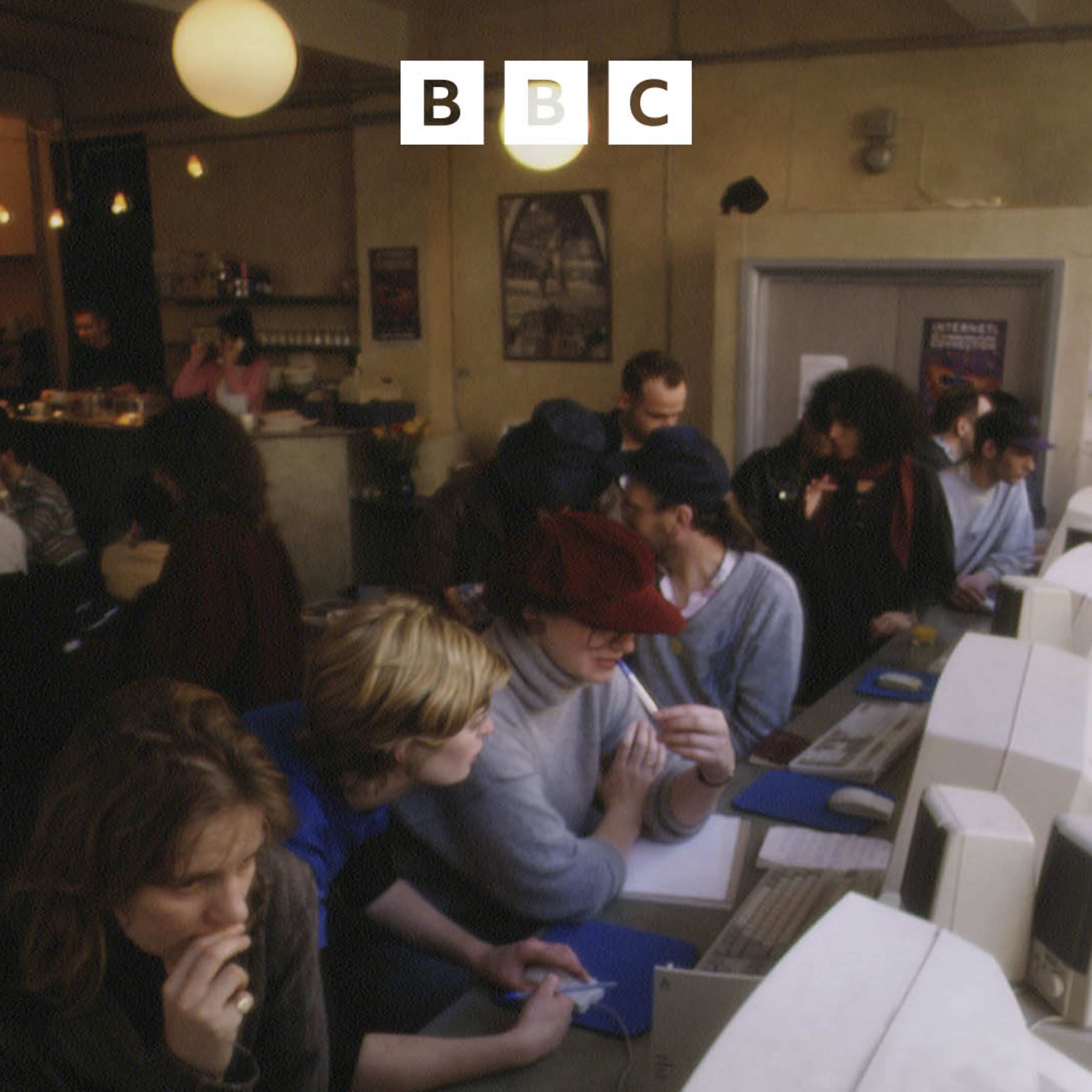
Internet cafes and Doomsday seeds
Max Pearson presents a collection of this week’s Witness History episodes from the BBC World Service.We hear about Cyberia - the first commercial internet café which opened in London in 1994. Director of the Oxford Internet Institute at the University of Oxford, Professor Vicki Nash, talks us through other notable landmarks in the internet’s history. Plus how the Covid N95 mask was invented by a scientist from Taiwan in 1992.Also how Brazilian theologian Leonardo Boff was punished for his writing on liberation theology. Staying with Brazil, we hear how poor rural workers occupied land owned by the rich, resulting in violent clashes in 1980.And the world's first global seed vault, buried deep inside a mountain on an Arctic island.Contributors: Eva Pascoe – a founder of Cyberia internet café Prof Vicki Nash – Director of the Oxford Internet Institute at the University of Oxford Peter Tsai – inventor of N95 mask Leonardo Boff – Brazilian theologian Maria Salete Campigotto – Landless Workers Movement protestor Dr Cary Fowler – founder of Doomsday seed vault(Photo: People using Cyberia in 1994. Credit: Mathieu Polak/Sygma/Sygma via Getty Images)
Traitors and treachery
Max Pearson presents a collection of this week's Witness History episodes from the BBC World Service all about figures branded as traitors.In 1939 Wang Jingwei, once a national hero in China, signed an agreement with Japanese invaders which made his name synonymous with the word ‘Hanjian’, a traitor to China. But Pan Chia-sheng’s memories of living under Wang Jingwei’s government in Nanjing tell a very different story. Our guest Ian Crofton, author of Traitors and Turncoats, explains the nuances involved in our historic understanding of traitors.Also, the fascist Norwegian politician Vidkun Quisling blamed for convincing the German dictator Adolf Hitler to invade Norway in 1940. Norwegian journalist Trude Lorentzen explains the story with an account she recorded from Quisling’s Jewish neighbour, Leif Grusd.And, the story of the former Broadway showgirl, known as Axis Sally, who broadcast antisemitic Nazi propaganda on German State Radio during World War Two, told through the archives.Plus, the Polish colonel, Ryszard Kuklinski, code-named 'Jack Strong', who passed Soviet military secrets to the CIA that changed the tide of the Cold War.And, the Hungarian Sándor Szűcs, famous for playing in the country’s star football team, who was executed in 1951 for trying to defect from the communist regime.Contributors: Pan Chia-sheng - on Wang Jingwei. Ian Crofton - author of Traitors and Turncoats. Trude Lorentzen - Norwegian journalist on Vidkun Quisling. Aris Papas - one of the agents who received intelligence from Ryszard Kuklinski.Erzsi Kovács’ story is told using an archive interview he gave in 2011 to Hungarian journalist Endre Kadarkai on the Arckép programme, on Zuglo TV.(Photo: Mildred Gillars, known as 'Axis Sally', on trial for treason in 1949. Credit: Corbis via Getty Images)
Lady Tarzan and Ibadan Zoo
Max Pearson presents a collection of this week’s Witness History episodes from the BBC World Service.We’re going wild for animals this week. We find out how the Ibadan Zoo became one of Nigeria’s biggest tourist attractions during the 1970s. Our guest Harriet Ritvo, professor of history at MIT, looks back across the centuries to reveal the fascination that humans have always had for animals. And more on the environmental campaigner who became known as Lady Tarzan for her fight against illegal logging in the forests of India.Plus, we hear from a journalist tortured in Iran's notorious Evin Prison in the wake of the 2009 protests against the Islamic regime. Also, why hundreds of thousands of Moroccans were ordered into the Spanish Sahara by their king. And finally, more on the Bolivian president who went on hunger strike to try to save his country.Contributors: Peaches Golding - wife of zoologist Bob Golding Professor Harriet Ritvo – professor of history at MIT Marcela Siles - daughter of former Bolivian president Hernán Siles Zuazo Seddik Maaninou - TV cameraman Francis Gillies – North Africa expert Maziar Bahari - journalist Jamuna Tudu – environmentalist nicknamed ‘Lady Tarzan’(Photo: Imade the gorilla at Ibadan Zoo. Credit: bobgolding.co.uk)
The first lesbian couple to get married and World Laughter Day
Max Pearson presents a collection of this week's Witness History episodes from the BBC World Service.In 2001, the Netherlands became the first country to legalise gay marriage. Four couples were chosen to take part in a collective wedding at midnight which was broadcast on TV. Hélène Faasen and Anne-Marie Thus talk about the wedding they thought they'd never have.Our guest Lauren Moss, the LGBT & Identity Correspondent at BBC News tells us about the history of gay marriage. Also, the man who risked his life to make the audio recordings which blew open one of the biggest corruption scandals in Spain's recent history.Then we hear the story of the 1970s defection from the Soviet Union of a world-famous ballerina. Plus, the mystery surrounding the fate of the last king of France's son and the man who really does believe that laughter is the best medicine.Contributors: Hélène Faasen & Anne-Marie Thus - the first lesbian couple to get married legally. Lauren Moss - LGBT & Identity Correspondent at BBC News. José Luis Peñas - the man that made secret recordings that revealed the Gurtel scandal. Prof Jean Jacques Cassiman - Belgian geneticist. Deborah Cadbury - historian. Dr Madan Kataria – founder of World Laughter Day.(Photo: The couple arrive to be married at the Amsterdam City Hall. Credit: Marcel Antonisse/ANP/AFP via Getty Images)
Hindenburg disaster and wingsuits
Max Pearson presents a collection of this week's Witness History episodes from the BBC World Service. Our guest is Barbara Waibel, author of a book on the Hindenburg and Director of Archives at the Zeppelin Museum in Friedrichshafen, Germany. She tells us about the history of airships.We begin with some remarkable archive of the Hindenburg airship disaster in 1937. Then British scientist Jonathan Shanklin describes how he discovered the hole in the ozone layer in 1985.In the second half of the programme we hear from a NASA scientist who worked on the Voyager space probe which took the famous 'Pale Blue Dot' photo of Earth. A physicist from Quebec remembers when a solar flare plunged the Canadian province into darkness. And we hear the exciting and dangerous story of the invention of the wingsuit.Contributors: Barbara Waibel - Author and Director of Archives at the Zeppelin Museum in Friedrichshafen, Germany. Jonathan Shanklin - Scientist who discovered the hole in the ozone layer. Candice Hansen - NASA scientist. Aja Hruska - Physicist from Quebec. Jari Kuosma - Inventor of the commercial wingsuit.(Photo: Hindenburg airship. Credit: Corbis via Getty Images)
Pad Thai, kiwis and the chef Ken Hom
Max Pearson presents a collection of this week’s Witness History episodes from the BBC World Service.This week, we look at the disputed history of pad Thai with food writer Chawadee Nualkhair.We also hear from former fruit exporter Don Turner on why his family changed the name of the Chinese gooseberry to the kiwi fruit.Our expert guest is food historian, Prof Katarzyna Cwiertka, who highlights other moments in history when food and politics combined.We also have an interview with Thomas Chatenier, the president of Nutella, about the origins of the chocolate hazelnut spread.Plus, we talk about the Flavr Savr tomato - the world's first genetically-engineered food.And finally we hear from Ken Hom, the chef who introduced Chinese cookery to TV audiences.Contributors: Chawadee Nualkhair – Thai food writer. Don Turner – former chief executive of kiwi exporter, Turners and Growers. Katarzyna Cwiertka - food historian and Professor of Modern Japan Studies at Leiden University in the Netherlands. Thomas Chatenier - the president of Nutella. Roger Salquist – former CEO of the biotech company which was responsible for the Flavr Savr tomato. Ken Hom – Chinese-American chef and author.(Photo: Pad Thai. Credit: Getty Images)
Tsunamis and Caster Semenya
Max Pearson presents a collection of this week’s Witness History episodes from the BBC World Service.This week, we hear from Lumepa Hald who survived the devastating tsunami that hit Samoa in 2009 but suffered a tragic loss.Our expert guest, Prof Tiziana Rossetto, looks back at some of the worst tsunamis in history and how they have shaped our landscapes.Plus we talk to Caster Semenya, the gold medallist who faced questions over her gender at the 2009 World Championships in Berlin.There’s also an interview with Peter Greste, one of three Al Jazeera journalists sentenced to seven years in jail in Egypt. We also look at the mystery surrounding the death of Chilean poet Pablo Neruda with his driver, Manuel Araya.And finally we talk to singer Dafydd Iwan, the “bad boy of Welsh politics”, who was arrested for defacing an English sign. He wanted official recognition for the Welsh language.Contributors: Lumepa Hald – survivor of the tsunami that hit Samoa in 2009. Tiziana Rossetto - Professor of Earthquake Engineering at University College London, UK. Caster Semenya – world champion runner who faced questions over her gender. Peter Greste – journalist sentenced to seven years in prison in Egypt. Manuel Araya – driver of Chilean poet Pablo Neruda. Dafydd Iwan – singer who campaigned for official recognition the Welsh language.(Photo: Devastation at a beach in Samoa after the 2009 tsunami. Credit: Getty Images)
Mandela's funeral and Tsar's reburial
Max Pearson presents a collection of this week's Witness History episodes from the BBC World Service. Our guest is Dr Ongama Mtimka, lecturer in South African politics at the Nelson Mandela University. He tells us about Mandela's life and legacy 10 years on from his death. We start with with Mandela's daughter, Makaziwe, describing her relationship with her father and planning his funeral. Then, the brother of Emanuela Orlandi describes his lifelong mission to unravel the mystery of her disappearance in Rome in 1983.The second half of the programme has a Russian flavour. A relative of Tsar Nicholas II describes the murder of the Romanov royal family in 1918. Then a Russian journalist describes attending the Romanov's controversial reburial 80 years later. We finish with one of Russia's greatest poets, Anna Akhmatova. Contributors: Dr Ongama Mtimka - Lecturer in South African politics at the Nelson Mandela University. Dr Phumla Makaziwe Mandela - Nelson Mandela's daughter. Pietro Orlandi - Emanuela Orlandi's brother. Olga Romanov - Great niece of Tsar Nicholas II. Lilia Dubovaya - Journalist who was at the reburial of the Romanovs. Era Korobova - Art historian and expert on Anna Akhmatova.(Photo: Nelson Mandela. Credit: Tom Stoddart Archive/Getty Images)
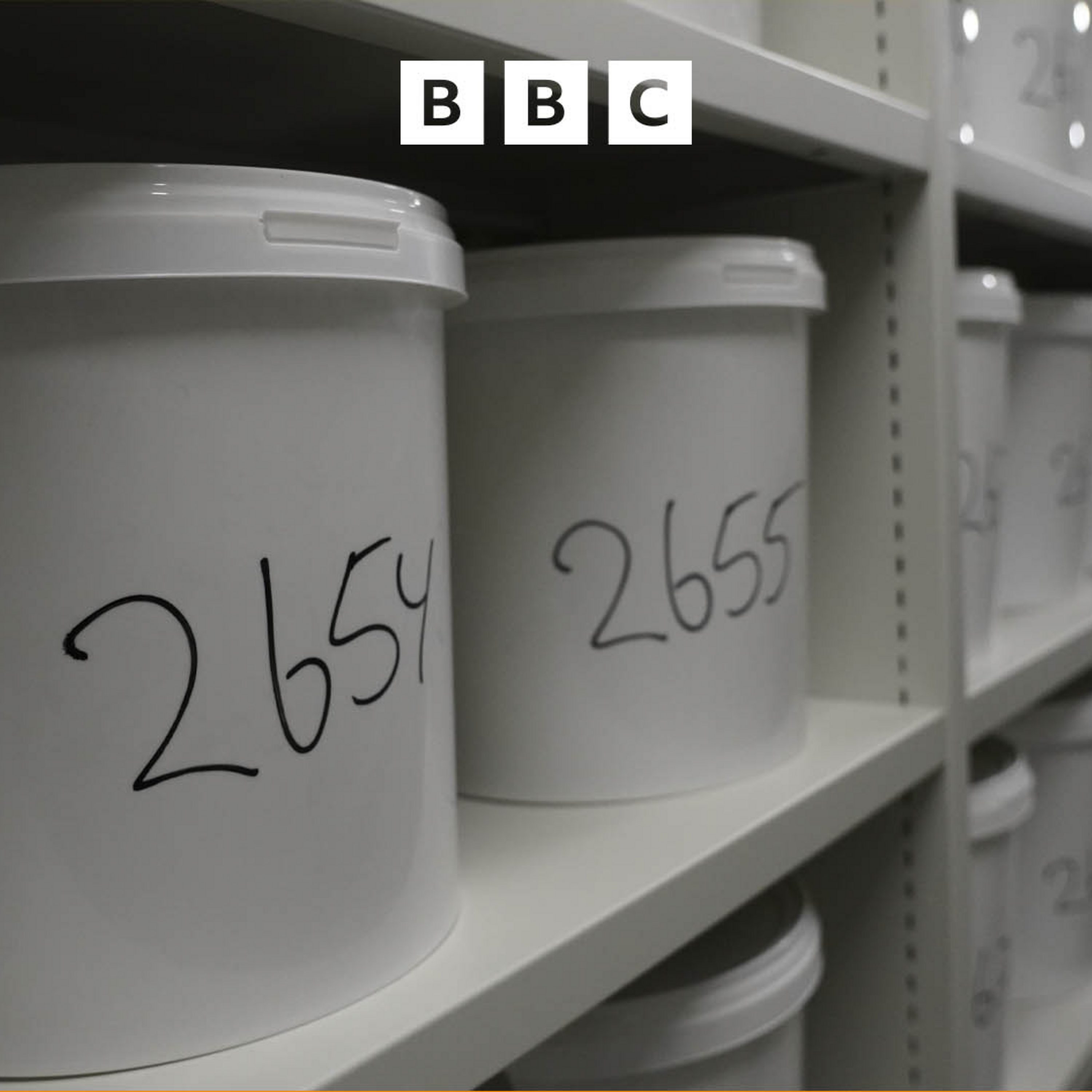
Doom and Danish brains
Max Pearson presents a collection of this week’s Witness History episodes from the BBC World Service.We hear about two of the most influential computer games of the 1990s with their creators. John Romero was one of the developers of Doom and talks about the concept of a martian military base populated by zombie soldiers. Coder Jan Tian describes how his devotion to working on the football game FIFA 94 landed him in hospital. Our guest, The Guardian newspaper's video games editor Keza MacDonald, looks back on games which had a global impact.Also how in 1945, 10,000 brains were collected from dead psychiatric patients in Denmark. It is now thought to be the world’s largest brain bank. We also find out how a group of right-wing army officers seized power in Greece in 1967 to stop the election of a social democratic government led by veteran politician George Papandreou.And 30 years on since the cult French film La Haine was released, its director Mathieu Kassovitz describes how it caught the attention of high profile politicians with its criticism of policing in France.Contributors: John Romero – Doom developer Jan Tian – FIFA 94 coder Keza MacDonald – video games editor, The Guardian Martin Wirenfeldt Nielsen – pathologist George Papandreou Jnr – former Greek Prime Minister Mathieu Kassovitz – film director(Photo: Brains stored in plastic buckets at the University of Southern Denmark. Credit: BBC)