The Hidden Economics of Remarkable Women (HERO)
Foreign Policy magazine · Foreign Policy
Show overview
The Hidden Economics of Remarkable Women (HERO) has been publishing since 2021, and across the 5 years since has built a catalogue of 74 episodes, alongside 13 trailers or bonus episodes. That works out to roughly 30 hours of audio in total. Releases follow a monthly cadence, with the show now in its 9th season.
Episodes typically run twenty to thirty-five minutes — most land between 23 min and 30 min — and the run-time is fairly consistent across the catalogue. None of the episodes are flagged explicit by the publisher. It is catalogued as a EN-language Society & Culture show.
The show is actively publishing — the most recent episode landed 1 weeks ago, with 11 episodes already out so far this year. The busiest year was 2024, with 21 episodes published. Published by Foreign Policy.
From the publisher
A Foreign Policy series about women creating change through economic empowerment, hosted by Reena Ninan. This season, we are focusing all our stories on girls. What are the real economics of girlhood? What are the hidden costs? And how could girls actually shake up the global economy? We visit girls preventing child marriages in India, advocates who helped legalize abortion in Benin, LGBTQ+ activists in Kenya, and education innovators, among others. HER♀️ is a Foreign Policy production made possible in part through funding from the Bill & Melinda Gates Foundation.
Latest Episodes
View all 74 episodesBuilding Economies That Keep Women Safe
Online Gender-Based Violence
Unlikely Allies
How to Prevent Gender-Based Violence
The Economics of Safety
Coming Soon: What Could End Gender-Based Violence?

S9 Ep 4The Amazon and the Supply Chain
The Amazon is the world's biggest tropical rainforest, spanning across nine countries in South America. It is a major source of biodiversity and plant life, containing around one tenth of the world’s known species and over a billion acres of dense forest. But for decades now, this vital resource has been under threat. Nearly 20 percent of the Amazon forest has been lost or degraded. This is largely due to deforestation, where people cut down trees and clear land for other, oftentimes more profitable purposes. A significant aspect of reducing deforestation is making it financially viable to keep the forest. But how? In our season finale of the Hidden Economics of Remarkable Women, we focus on efforts to make supply chains more sustainable: from the source to the end product. We start in the Amazon, where we look at ways to profit from the rainforest without destroying it. And we end up in the boardroom to hear from the president of the outdoor apparel brand Patagonia. First, we hear from Maria Jose “Chochi” Iturralde, executive director of the nonprofit Fundacion Pachaysana. She helped launch Fundacion Pachaysana, based in Ecuador, to provide financial incentives for local people in the Amazon to preserve their forest and their land, such as through regenerative agriculture. This is part of a new economic model called “the bioeconomy,” which uses renewable biological resources, processes, and innovations to produce food, materials, and energy. Then, we hear from leaders at Natura, a global beauty company that sources many of their products from the Amazon rainforest. We speak with Charmian Love, global ambassador at Natura, and Fernanda Rezende Facchini, Natura’s senior sustainability and procurement leader in Latin America, about their bioeconomy work in the Amazon. Finally, host Zainab Salbi sits down with Jenna Johnson, President of Patagonia. The California-based outdoor apparel brand was founded in 1973 by Yvon Chouinard, a rock climber and adventurer who cares deeply about the environment. Patagonia’s mission has always been to “save our home planet.” Their current president Jenna Johnson shares how fulfilling that mission means meticulously scrutinizing every step of their supply chain. The Hidden Economics of Remarkable Women is a podcast from Foreign Policy, supported this season by Daughters for Earth. Guests interviewed: Jenna Johnson, President of Patagonia Maria Jose “Chochi” Iturralde, Executive Director of Fundacion Pachaysana Charmian Love, Global Ambassador at Natura Fernanda Rezende Facchini, Senior Sustainability and Procurement Specialist at Natura in Latin America Recommended reading: Foreign Policy Analytics: Protecting Biodiversity and Driving Development Through Women’s Leadership Learn more about your ad choices. Visit megaphone.fm/adchoices

S9 Ep 3Lake Uru Uru and the Potential of Nature-Based Solutions
Nature-based solutions decrease the effects of climate change by using nature to help nature. Mangrove forests helping to preserve shorelines or planting cover crops to rejuvenate the soil are strong examples. According to research from the Nature Conservancy, nature-based solutions can provide up to 37 percent of the carbon emissions reductions needed by 2030. In this episode of the Hidden Economics of Remarkable Women, we focus on nature-based solutions’ enormous environmental potential. First, we head to Bolivia, where a small, indigenous group of women is making a big splash. Host Zainab Salbi speaks with Dayana Blanco Quiroga, who co-founded the Uru Uru Team. It is a grassroots initiative dedicated to restoring Lake Uru Uru, which has been heavily degraded from nearby mining and pollution. The Uru Uru Team is just one example of women’s leadership in transforming water security, as Foreign Policy research notes. Then, we talk to two investors in nature-based solutions about how they approach this work financially, which can be challenging. First, we hear from Nela Duke Ekpenyong, founding partner at Obudu Capital, a venture capital firm investing in climate tech, energy, and sustainability across Sub-Saharan Africa. And then, we talk to Alexa Firmenich, who founded an ecocentric investment firm called Naia Trust, based in Switzerland. She also hosts a podcast called Lifeworlds. The Hidden Economics of Remarkable Women is a podcast from Foreign Policy, supported this season by Daughters for Earth. Guests interviewed: Dayana Blanco Quiroga, Co-Founder of the Uru Uru Team Nela Duke Ekpenyong, Founding partner of Obudu Capital Alexa Firmenich, Founder of Naia Trust Recommended Reading: Foreign Policy Analytics: Transforming Water Security Through Women's Leadership Learn more about your ad choices. Visit megaphone.fm/adchoices

S9 Ep 2Lion Queens
When people discuss environmental solutions, they often mention its impact on our lives. This can include ensuring parts of the planet remain inhabitable in the face of extreme temperatures, maintaining biodiversity, and preventing the oxidation of our oceans. But there’s another case to be made: Investing in our planet makes sense economically. Conservation can deliver high returns on investment. According to the International Monetary Fund, every dollar spent on conservation and other green projects may yield up to seven dollars within five years. This is because of jobs created, food systems improved, and a reduction in greenhouse gases, among other outcomes. On today’s episode, we speak with Jody Allen, a philanthropist, businesswoman, and conservationist. She cares deeply about protecting wildlife and our planet. Allen is also the owner of the Seattle Seahawks. Host Zainab Salbi, who co-founded Daughters for Earth with Allen, talks with Allen about the interplay between philanthropy and conservation. We also speak with two African wildlife conservations: Dr. Shivani Bhalla, founder of Ewaso Lions in Kenya, and Dr. Moreangels Mbizah, founder of Wildlife Conservation Action in Zimbabwe. They share what community-led conservation strategies look like and what they have seen work best to decrease human-wildlife conflict. The Hidden Economics of Remarkable Women is a podcast from Foreign Policy, supported this season by Daughters for Earth. Guests Interviewed: Jody Allen, Founder of Daughters for Earth Dr. Shivani Bhalla, Founder of Ewaso Lions Dr. Moreangels Mbizah, Founder of Wildlife Conservation Action Learn more about your ad choices. Visit megaphone.fm/adchoices

S9 Ep 1The Future of the Climate Movement
We begin our newest season, all about women on the frontlines of the climate crisis, with Christiana Figueres. She served as the executive secretary of the UN Framework Convention on Climate Change. In 2015, Figueres led the process that secured the historic Paris Agreement on Climate Change, where 195 nations agreed to limit future global warming. Currently, Christiana Figueres leads a nonprofit called Global Optimism, which she launched with her fellow Paris negotiator Tom Rivett-Carnac. They also wrote a book together, The Future We Choose, and they have a great podcast with Paul Dickinson called Outrage + Optimism, where they get to be undiplomatic about the climate crisis. Host Zainab Salbi, also co-founder of Daughters for Earth, talks to Figueres about the current state of the climate movement. Where does Figueres think we should focus our energy at this difficult moment? And how does she reflect on the Paris Climate Agreement, a decade later? The Hidden Economics of Remarkable Women is a podcast from Foreign Policy, supported this season by Daughters for Earth. Learn more about your ad choices. Visit megaphone.fm/adchoices

Coming Soon: Season 9
trailerIn a special four-part series, we talk to women on the front lines of the climate crisis, including the Paris climate agreement’s chief negotiator, land and wildlife conservationists, and regenerative agriculture experts. The Hidden Economics of Remarkable Women is a podcast from Foreign Policy, supported this season by Daughters for Earth. Learn more about your ad choices. Visit megaphone.fm/adchoices

You Might Like: Face-Off: The U.S. vs China
This week, we’re bringing you an episode from the award-winning podcast Face-Off: The U.S. vs China. China’s leader, Mao Zedong famously said that “Women hold up half the sky.” But these days it doesn’t feel that way in China. Unfair marriage rules, difficulties getting a divorce, barriers to owning property and many more restrictions are challenging women to speak out, and act. On this episode, “Feminist Rebels,” we’ll hear about the Chinese “leftover women” who are veering from the traditional path and about the Chinese feminists of today. Guest: Leta Hong Fincher, author, Left Over Women. Recommended Books: Left Over Women: The Resurgence of Gender Inequality in China by Leta Hong Fincher Tiananmen Square by Lai Wen Sound design, original score, mixing and mastering by Rowhome Productions. Rowhome’s Creative Director is Alex Lewis. John Myers is Rowhome’s Executive Producer. Learn more about your ad choices. Visit megaphone.fm/adchoices

FP’s Newest Podcast, The Threshold
The Threshold is a new seven-part series from Foreign Policy about the fight to end infectious diseases around the world. In this episode, the team investigates what it will take to end the HIV/AIDS epidemic – including Lenacapavir, a new twice-yearly HIV prevention shot. Similar to HERO, The Threshold is made possible in part through funding from the Gates Foundation. If you like this episode, follow The Threshold wherever you get your podcasts. Learn more about your ad choices. Visit megaphone.fm/adchoices
The Path Forward for Family Planning
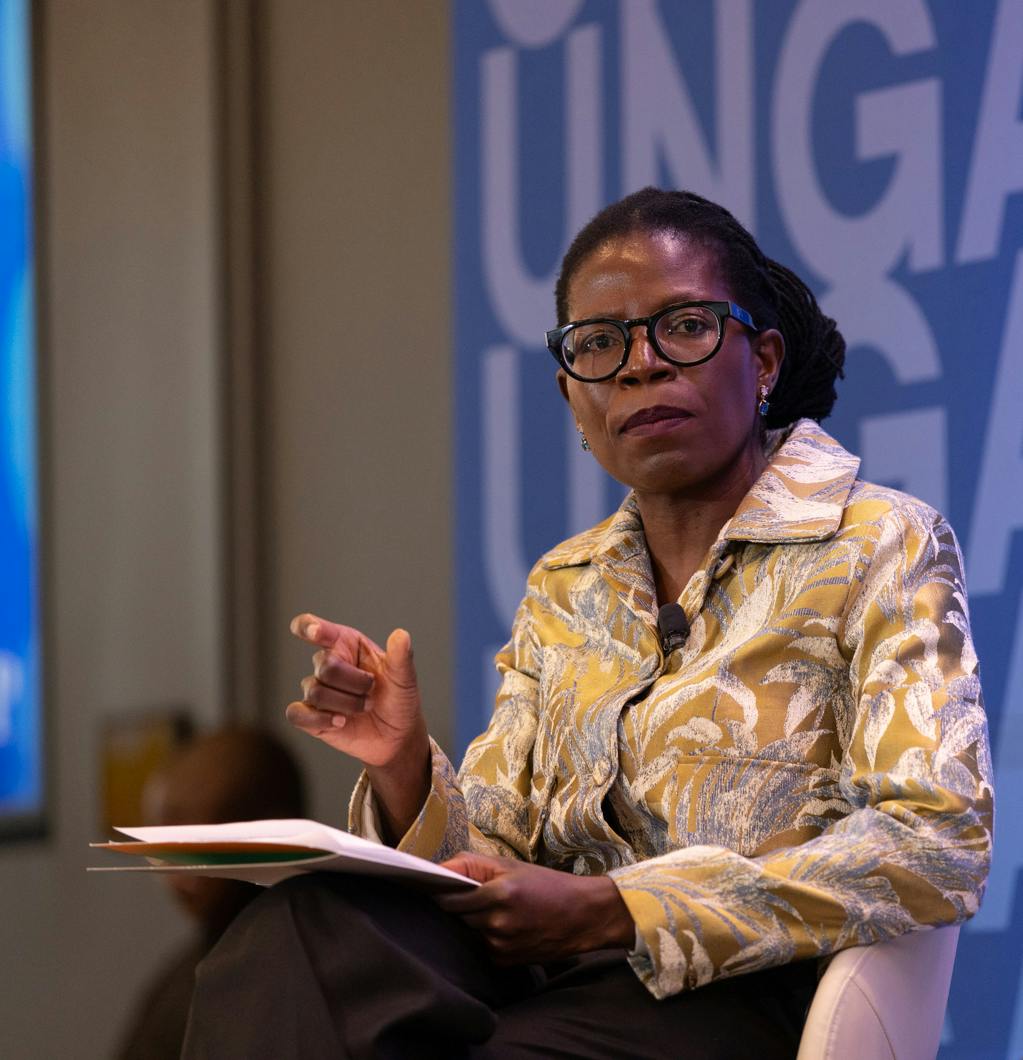
bonusLet’s face it: It’s been a challenging year for family planning and reproductive rights more broadly. What can we do from here? We were eager to catch up with family planning leaders at Foreign Policy’s Her Power Summit, which took place on the sidelines of the UN General Assembly. In a live panel discussion, host Reena Ninan spoke with Dr. Samukeliso Dube, Executive Director of FP2030 and a return guest to the show. Dr. Dube described their Made Possible by Family Planning campaign and how they have shifted their messaging since we last caught up with her in spring 2024. Dr. Dube was also joined by George Roberts, Bayer’s global lead of impact partnerships, as well as Dr. Siti Nadia Tarmizi, Director of Non-Communicable Diseases for the Indonesia Ministry of Health. They shared how the private and public sectors are approaching family planning at this time. The Hidden Economics of Remarkable Women is a production of Foreign Policy, with support for this episode from FP2030’s Made Possible by Family Planning campaign. Guests and organizations: Dr. Samukeliso Dube, Executive Director of FP203 George Roberts, Global Lead of Impact Partnerships, Bayer Dr. Siti Nadia Tarmizi, Director of Non-Communicable Diseases, Indonesia Ministry of Health Learn more about your ad choices. Visit megaphone.fm/adchoices

The Hidden Economics of Menopause
bonusIn this special bonus episode, we explore a topic the show hasn’t covered before: menopause. We delve into what would need to change with healthcare and the workforce to better support women through menopause, as well as the economic factors that could enable those policies. Host Reena Ninan speaks with Dr. Jessica Shepherd, gynecologist and author of the new book Generation M, Dr. Claus Runge, Bayer’s chief health equity officer, and Kathryn Schubert, President and CEO of the Society for Women’s Health Research (SWHR). This live panel discussion was recorded at Foreign Policy’s Her Power Summit, which took place on the sidelines of the UN General Assembly. The Hidden Economics of Remarkable Women is a production of Foreign Policy, with support for this episode from Bayer. (Photo credit: Jonathan Heisler) Guests and organizations: Dr. Jessica Shepherd, Gynecologist and Author of Generation M Dr. Claus Runge, Bayer Chief Health Equity Officer Kathryn Schubert, President and CEO of the Society for Women’s Health Research (SWHR) Suggested reading: Foreign Policy Analytics’ Report: The Health and Economic Impacts of Menopause Learn more about your ad choices. Visit megaphone.fm/adchoices

You Might Like: What Could Go Right?
This week, we’re bringing you an episode of What Could Go Right from our friends at The Progress Network. Each Wednesday on What Could Go Right, hosts Zachary Karabell and Emma Varvaloucas converse with diverse experts to have sharp, honest conversations about what’s going on in the world, even during difficult times. In this episode, they dive into the global health crisis that doesn’t get nearly enough attention - tuberculosis (TB). Tuberculosis is one of the deadliest infectious diseases in the world, yet it has been largely ignored by wealthy nations and Big Pharma. One person who refuses to let that stand is #1 New York Times bestselling author, YouTuber, and activist John Green. His new book, Everything is Tuberculosis, explores the history, science, and injustices surrounding this disease. Tune in to new episodes of What Could Go Right every Wednesday wherever you get your podcasts, and don’t miss the Friday episodes where Emma and Zachary highlight the latest progress from around the globe. Learn more about your ad choices. Visit megaphone.fm/adchoices

You Might Like: Cramped
This week, we’re sharing another show you might like. Cramped is a podcast created and hosted by Kate Downey, “because having a microphone gets you more answers than having a uterus.” In this episode, Kate talks to her mom about joining the Boston Women's Health Movement in the 1970s. Why was body literacy such a big part of feminism in the 70s, but when Kate became an active feminist in Boston in the 2000s, she didn't get information about body literacy? To learn more, Kate talks to Laura Prieto, program director of Our Bodies, Ourselves. Listen to more episodes of Cramped here: https://www.katehelendowney.com/cramped Learn more about your ad choices. Visit megaphone.fm/adchoices

You Might Like: The Most Important Question
While the show is on hiatus, we want to share a few podcasts on the HERO feed that we think you might like. We will release these episodes over the next month. This first one is from a podcast called The Most Important Question from the Important, Not Important team. When HERO first launched, Important, Not Important featured one of our early episodes. It’s a good show, and we’ve been happy to remain in touch over the years. This episode fits in well with our recent season. It’s an interview with Dr. Ticora V. Jones, who served as the chief scientist for the United States Agency for International Development (USAID). She’s currently the chief science officer at the NRDC. ----------- Have feedback or questions about the episode? Tweet at the show, or send a message to [email protected]. Want more? Get started with fan favorite episodes at podcast.importantnotimportant.com. Learn more about your ad choices. Visit megaphone.fm/adchoices
S8 Ep 4Series Reflections: Reporters’ Roundtable
First, we need to share some news. This may be our last episode. We are so grateful to the funding we have received for this podcast over the past four years. But our largest grant is ending soon. So for now, we are saying goodbye. We truly hope to be back in your feed someday. To commemorate HERO, we are doing one last “follow-up” episode. This was an idea from you, our listeners. You suggested talking to past interviewees and seeing what they are doing now. For today’s show, we’re doing a “reporters’ roundtable” where we look back and look ahead at some of our most impactful stories of the past eight seasons. Host Reena Ninan talks to Kenya-based reporters Sharon Kiburi and Eunice Maina as well as South-Africa based journalist Elna Schutz. If you are new to the show, you may want to go back and listen to the stories that Kiburi, Maina, and Schutz talk about on this episode: What Works in Defeating Workplace Sexual Harassment (Sharon Kiburi) How Men Are Trying to End Gender-Based Violence in South Africa (Elna Schutz) The Hidden Economics of Female Genital Mutilation (Eunice Maina) The Economics of Period Poverty (Elna Schutz) Fighting for LGBTQ Rights in Kenya (Eunice Maina) What the Debt Crisis in Kenya Reveals About International Lending (Sharon Kiburi) In the meantime, please stay in touch. You can email us at [email protected] or contact our senior producer Laura Rosbrow-Telem at [email protected]. We hope to be back soon. The Hidden Economics of Remarkable Women is a podcast from Foreign Policy, supported in part by the Gates Foundation and Northwestern University’s Roberta Buffett Institute for Global Affairs. Learn more about your ad choices. Visit megaphone.fm/adchoices
Sabrina Habib Reflects on Kidogo’s Growth
The idea for today’s show came from you: our listeners. Many of you wanted to hear follow-up stories. You suggested talking to past interviewees and seeing what they are doing now. In particular, you were curious if the gender equality issues they were advocating for had advanced or backslid since we first reported on them. Today, we are coming back to Sabrina Habib, who was on our very first episode in 2021. Habib is the CEO and co-founder of Kidogo, a nonprofit focused on creating affordable high-quality daycare centers in Kenya. Since we last spoke with Habib, Kidogo has greatly expanded. Host Reena Ninan asks her what led to this growth and about her recent endeavors with Melinda French Gates. The Hidden Economics of Remarkable Women is a podcast from Foreign Policy, supported in part by the Gates Foundation and Northwestern University’s Roberta Buffett Institute for Global Affairs. Learn more about your ad choices. Visit megaphone.fm/adchoices