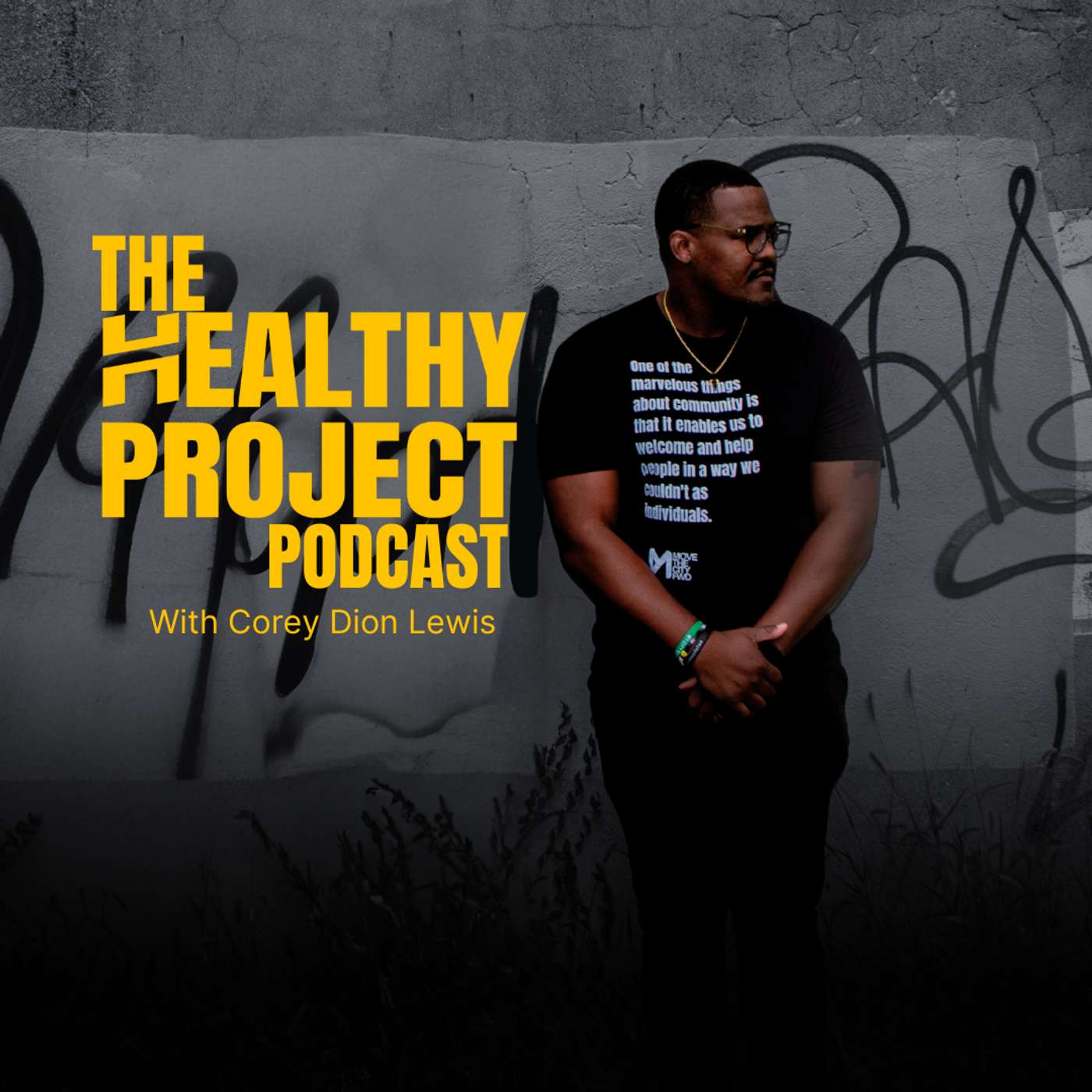
The Healthy Project Podcast
The Healthy Project Podcast explores the powerful intersection of health, society, and equity through real conversations with changemakers on the front lines of social impact.
Healthy Project Media · Corey Dion Lewis
Show overview
The Healthy Project Podcast has been publishing since 2020, and across the 6 years since has built a catalogue of 200 episodes, alongside 1 trailer or bonus episode. That works out to roughly 110 hours of audio in total. Releases follow a fortnightly cadence.
Episodes typically run twenty to thirty-five minutes — most land between 25 min and 39 min — though episode length varies meaningfully from one episode to the next. None of the episodes are flagged explicit by the publisher. It is catalogued as a EN-language Society & Culture show.
The show is actively publishing — the most recent episode landed 5 days ago, with 14 episodes already out so far this year. The busiest year was 2021, with 42 episodes published. Published by Corey Dion Lewis.
From the publisher
The Healthy Project Podcast explores the powerful intersection of health, society, and equity through real conversations with changemakers on the front lines of social impact. Each episode features thought leaders, researchers, and advocates who unpack how social structures — from policy to culture — shape the health of communities. Topics we explore include: Health equity and structural determinants Community-driven research and innovation Lived experiences of marginalized populations Public policy, systemic bias, and health outcomes Whether you're a public health professional, social science researcher, policymaker, or community advocate, this podcast brings you grounded insights, bold ideas, and practical tools to drive change where it matters most.
Latest Episodes
View all 200 episodesTy Pennington on His Mom’s Bronchiectasis and Becoming a Caregiver
Why Vaccine Trust Broke Down with Dr. Mike Myers
Ehlers-Danlos Syndrome, Pain Disparities, and the Power of Physical Therapy with Dr. Emma McCauley
Food as Medicine Was Always a Pilot. Yousuf Ahmad Is Making It Infrastructure.
Toxic Chemicals, Clean Water & the Law Protecting You ft. Sarah Vogel
The Stories We Tell: Race, Media, and the Truth About Health Inequality
Digital Literacy, AI Literacy & Youth Economic Mobility with Nancy from Pi515
Advocacy Starts with You: Cancer, Community, and Coalition Building w/ Morgan Newman
Ep 192Why Your Zip Code Might Be Killing You — Iowa's Cancer Crisis Explained
Some things are true whether we talk about them or not. Iowa has one of the highest cancer rates in the country. The people most affected by it are often the last ones to hear about it. And the systems that were supposed to catch it early — the clinics, the screenings, the outreach programs — are losing funding right now, quietly, in ways most people won't notice until it's too late. This episode is about all of that. But more than anything, it's about people.About This ConversationCorey sits down with Jason Semprini — a public health economist, a lifelong Iowan, and somebody who has spent his career translating complex data into something that can actually change how communities live. What started as a conversation about economics turned into one of the most honest, grounded discussions about health, place, and power that The Healthy Project Podcast has ever had.This one isn't for researchers. It's for anyone who has ever wondered why their community looks the way it does — and whether anybody in power is paying attention.What We Get IntoThe cancer rate nobody's talking about: Iowa ranks among the highest states in the nation for cancer. It's not a fluke. It's not a bad data year. It's consistent, it's climbing, and it's being driven by a specific set of cancers shaped by where people live and what surrounds them. Jason breaks down what the numbers are actually showing — and why the story is more complicated than any headline has captured.Agriculture, jobs, and the health trade-off nobody wants to say out loud. Iowa's ag economy is the backbone of this state. It provides livelihoods, identity, and community for generations of Iowa families. It is also, according to clear and compelling research, contributing to adverse health outcomes, including cancer. Jason doesn't flinch from that tension. Neither does Corey. Because pretending it doesn't exist isn't protecting anybody.What happens when the money disappears? Pop-up mammography clinics. Free screenings. Community health workers are going door to door. These programs exist because some people don't have a regular doctor — and for them, a pop-up clinic isn't a backup plan, it's the only plan. When federal funding gets cut, these are the first programs that feel it. Jason shares what colleagues on the ground are experiencing right now. It's not abstract. It's hitting real people in real communities today.Prostate cancer, Black men, and what the system keeps missing. This part of the conversation hits close to home for Corey — founder of Save the Homies, a prostate cancer awareness initiative through My City My Health. It's not always that Black men in Iowa are getting prostate cancer at higher rates. It's that they're getting diagnosed later. The navigation to quality care is broken. The trust isn't there. The access isn't there. Jason connects this to a framework about biology and health systems colliding — and why fixing it requires more than a screening event.The real cost of data we're not using. One of the most practical takeaways in the whole conversation: collecting health data you're not acting on isn't neutral. It costs money, it burdens patients, and it pulls resources away from interventions that would actually move the needle. If your organization is drowning in surveys nobody reads, this part is for you.What a job well done actually looks like. For Jason, success isn't a published paper. It's a policy change. An updated screening guideline. An insurance expansion that took twenty years to become the Affordable Care Act. The work is long. The patience required is real. But the outcomes are lives — and that's the only metric that matters.About Jason SempriniJason Semprini is a public health economist and researcher whose work focuses on cancer, health policy, and the systems shaping health outcomes across Iowa. A lifelong Iowan, Jason's path to this work ran through AmeriCorps, the Peace Corps, and the University of Chicago — where he developed the research and economic skills he now applies to the most pressing health challenges facing this state. His work sits at the intersection of data, policy, and real community impact.Find Jason on LinkedIn explore his research.If This Episode Hit For You — Here's What To Do NextShare it. Send this episode to somebody in your life who needs to hear it. A friend, a coworker, someone at your church, your health department, or your organization. The more people who hear this conversation, the more it can do.Subscribe to the Live. Work. Play. Pray. Newsletter This is where Corey goes deeper every week — health equity, the social determinants shaping our communities, and the stories that don't always make the headlines but absolutely should. Written for real people, not just professionals. Free to subscribe. 👉 https://substack.com/@coreydionlewisWork With Healthy Project Media. If you're a health organization, nonprofit, community health center, foundation, or health plan doing work that deserves a bigger audie
Ep 191Youth, Homelessness, Mental Health & Showing Up: A Conversation with Community Advocate Royce Wright
Quad Cities advocate Royce Wright gets real about youth mental health, the homelessness crisis, and what it means to show up consistently for kids and communities that the system keeps overlooking.SHOW NOTES:Some of the most important public health work doesn't happen in clinics or conference rooms. It happens on street corners, in shelters, and in honest conversations with kids who just need somebody to show up.This week on The Healthy Project Podcast, Corey Dion Lewis sits down with his cousin Royce Wright — a community advocate based in the Quad Cities who has built a reputation for doing exactly that. Royce works with at-risk youth navigating mental health challenges, behavioral issues, and identity crises, while simultaneously raising his voice about the growing homelessness crisis in his community. His approach is rooted in lived experience, patience, and an unshakeable belief that trust is the foundation of everything.In this conversation, Royce shares what it's really like to work with kids who are struggling, why the family unit matters just as much as the child, and how a chance encounter while filming a TikTok video led to a viral moment — and a GoFundMe — aimed at opening emergency overflow shelters and youth spaces across the Quad Cities.What We Cover:Youth Mental Health & AdvocacyWhy are so many at-risk kids caught in an identity crisis and performing toughness they don't actually feelHow adverse childhood trauma shapes behavior — and why patience is the most underrated tool in youth workWhat it means to be authentic with young people who can read you in secondsThe importance of modeling behavior, not just preaching itHow to advocate for youth mental health even if you're not on the frontlineHomelessness in the Quad CitiesHow policy changes around shelter placement have pushed the unhoused out of safe spacesWhy people become homeless faster than most of us realize — and why warm weather doesn't solve the problemThe viral TikTok moment where Royce connected with a young man who had just become homeless and didn't even know a local shelter was openWhy abandoned buildings in the Quad Cities are at the center of this conversationRoyce's Mission & How You Can HelpHow Royce went from passing out coats from his storage unit to becoming a community voiceThe GoFundMe campaign: Creating Safe Spaces for the Unhoused and At-Risk YouthA $100,000 goal to fund emergency overflow shelters and additional youth spaces in the Quad CitiesResources & Links:🔗 Royce Wright's GoFundMe — Creating Safe Spaces for the Unhoused and At-Risk Youth Follow Royce Wright:FacebookTikTok InstagramYouTubeLinkedInAbout The Healthy Project Podcast The Healthy Project Podcast is hosted by public health storyteller Corey Dion Lewis. Each week, Corey brings honest, community-first conversations about health equity, mental health, social determinants of health, and the people doing the real work in underserved communities across the country.🎙️ Subscribe, leave a review, and share this episode with someone who needs to hear it. ★ Support this podcast ★
Ep 190When the CDC Dies, Who Actually Dies?
The CDC is being cut by more than 50%. Over 100 public health programs are being eliminated. And the communities that will feel it first — and hardest — are the same ones who've always been at the back of the line. In this solo episode, Corey breaks down what's actually being dismantled, why the framing of "cutting DEI" is designed to make you look away, and what it means for Black and Brown communities when the safety net has a hole cut through the middle of it. ★ Support this podcast ★
Ep 189Building Community Trust in Public Health: 30 Years of Equity-Focused Communication Strategies with Darolyn Davis
After 30 years bridging the gap between public policy and communities, Darolyn Davis knows why most public health engagement efforts fail—and more importantly, how to fix them. In this episode of The Healthy Project Podcast, host Corey Dion Lewis speaks with Darolyn Davis, founder of D&A Communications, about the critical disconnect between well-intentioned public health initiatives and the communities they aim to serve. This conversation goes beyond surface-level community engagement to explore what it really takes to build institutional trust.Darolyn shares the pivotal moment in her career when she realized that policymakers were making decisions for communities without including the voices of those most affected. Working in the California State Legislature, she witnessed firsthand how missing perspectives—particularly women and people of color—led to unintended harmful consequences in public policy. This realization launched three decades of work focused on equity-first communication strategies, where community voices aren't just heard, but actively shape outcomes.Key Discussion Points:Why Traditional Outreach Fails Darolyn explains why treating outreach as a distribution problem rather than a relationship problem dooms most initiatives from the start. Sending mailers, holding meetings, and posting information online doesn't equal meaningful engagement—and communities see right through it.The Trust Gap in Healthcare. The conversation addresses uncomfortable truths about why communities, particularly communities of color, distrust healthcare institutions. With Black women facing maternal mortality rates 3-4 times higher than white women, and Black Americans comprising only 5-7 percent of clinical trial participants despite representing 14 percent of the population, historical and ongoing systemic failures shape present-day healthcare decisions.Measuring What Actually Matters Most agencies measure engagement success by counting meetings held or materials distributed. Darolyn argues for a completely different approach: measuring sentiment, behavioral change, and whether you've actually moved people from one understanding to another. She reveals why superficial metrics waste resources and erode trust further.Real-World Case Study: Six Years to Build Trust Darolyn shares the remarkable story of working with the Bayview Hunters Point community in San Francisco. When a public agency wanted to build a new 62 million dollar community facility, residents initially refused—they didn't trust that promises would be kept. It took six years of consistent relationship-building, honest dialogue, and demonstrating follow-through before the community agreed. The result: a state-of-the-art Southeast Community Facility that now serves as a healthcare, education, workforce training, and community hub.This case study illustrates a critical truth: meaningful change takes time, and there are no shortcuts to building trust.Institutional Responsibility vs. Personal Choice One of the most important reframings in this episode is shifting from "Why don't communities trust us?" to "What are we doing that earns trust?" When trust is treated as an institutional responsibility rather than a personal choice, the burden shifts from communities to the organizations that serve them.What Keeps Failing After 30 Years Darolyn identifies recurring problems: communities brought in too late in the decision-making process, equity treated as a checkbox, budgets too small for genuine engagement, organizations moving faster than relationships allow, and failure to acknowledge historical harms that shape current perceptions.The Question Every Public Health Leader Should Ask Before launching any campaign or initiative, Darolyn advises asking: "Who is not at the table?" This simple but profound question forces organizations to identify missing voices and perspectives before making decisions that will impact those very communities.About This Episode's Guest:Darolyn Davis is the founder of D&A Communications, an equity-first communications agency that has spent three decades specializing in public health, education, transportation, and workforce development. Her work focuses on authentic community engagement that doesn't just inform communities about decisions already made, but involves them in shaping outcomes. She built her agency on the principle that all people deserve a voice in policies that affect their lives.Why This Conversation Matters:Public health professionals, healthcare administrators, policy makers, and community organizers face increasing challenges in building trust and achieving meaningful health outcomes. Misinformation spreads rapidly, historical harms create justified skepticism, and communities increasingly push back against initiatives designed "for them" without "with them."This episode provides both diagnosis and treatment for broken engagement systems. Whether you're launching a vaccination campaign, developing health pol
Ep 188Homelessness Is a Housing Problem with Dr. Margot Kushel
Corey Dion Lewis sits down with Dr. Margot Kushel, a practicing general internist with over 30 years of experience at San Francisco General Hospital and Director of the UCSF Benioff Homelessness and Housing Initiative, to explore why homelessness is fundamentally a housing problem—not a healthcare problem—and what this means for medical professionals and communities.Dr. Kushel shares compelling insights from her three decades of clinical practice and research, revealing how the lack of affordable housing creates impossible situations for healthcare providers trying to treat patients experiencing homelessness. From managing diabetes in a tent to storing insulin without refrigeration, she illustrates why "there is no medicine as powerful as housing."What You'll Learn:Why regions with high homelessness rates are defined by housing affordability, not mental health prevalenceHow structural racism and redlining created the current crisis, with Black Americans 4-5 times overrepresented in homeless populationsThe stark reality: only 36 affordable housing units exist for every 100 extremely low-income households in AmericaWhy Housing First policies work better than Treatment First approaches, backed by evidence from veteran homelessness reductionThe hidden homeless population: workers living in cars, college students couch-surfing, and older adults losing housing for the first timeHow the politicization of Housing First policies threatens progress and patient outcomesPractical ways healthcare providers can advocate for housing as a health interventionKey Clinical Insights:Dr. Kushel explains why treating chronic conditions like diabetes, hypertension, and mental health disorders becomes nearly impossible when patients lack stable housing. She shares real stories from her practice, including a 63-year-old patient who hadn't eaten in four days while fighting eviction, and discusses how readmission penalties unfairly penalize hospitals serving homeless populations.The Evidence for Housing First:Learn about the dramatic 85% housing retention rate of Housing First approaches compared to 5-10% success rates of traditional Treatment First models, and why the George W. Bush administration adopted this evidence-based policy. Dr. Kushel also shares findings from California's comprehensive statewide homelessness study, debunking myths about people traveling from other states.For Medical Professionals:This episode is essential listening for physicians, nurses, nurse practitioners, physician assistants, medical students, residents, community health workers, social workers, case managers, and anyone in healthcare who treats patients experiencing housing instability. Dr. Kushel provides a framework for understanding how to advocate beyond the clinic walls.About Dr. Margot Kushel:Dr. Kushel is a physician and researcher who has dedicated her career to understanding and ending homelessness. She directs the UCSF Benioff Homelessness and Housing Initiative and the Action Research Center for Health at the University of California, San Francisco. Her research informs policy at local, state, and federal levels.Resources Mentioned:UCSF Benioff Homelessness Initiative: homelessness.ucsf.eduCalifornia Statewide Study of People Experiencing Homelessness"There Is No Place" by Brian GoldstoneEpisode Takeaway: "There is no medicine as powerful as housing. Homelessness is a housing problem."Whether you're a healthcare provider frustrated by social determinants of health, a medical student learning about population health, or a community advocate, this conversation will change how you think about the intersection of housing and health.SHOW NOTESEpisode: Housing as Medicine: Why Homelessness is a Housing Crisis Guest: Dr. Margot Kushel, MD Host: Corey Dion Lewis Category: Medicine Duration: ~49 minutesABOUT THIS EPISODEDr. Margot Kushel, Director of the UCSF Benioff Homelessness and Housing Initiative, explains why homelessness is fundamentally a housing crisis and how this understanding transforms medical practice and healthcare advocacy.GUEST BIODr. Margot Kushel, MDPracticing General Internist, San Francisco General Hospital (30+ years)Director, UCSF Benioff Homelessness and Housing InitiativeDirector, Action Research Center for Health, UCSFLeading researcher on homelessness and health outcomesPolicy advisor at local, state, and federal levelsKEY TOPICS & TIMESTAMPS[00:00] Introduction: The Housing-Health Connection[02:00] Homelessness is a Housing ProblemWhy mental health and substance use don't explain geographic variationsThe role of affordable housing shortagesComparing high vs. low homelessness regions[05:00] The Clinical Reality: Hands Tied Behind Our BacksTreating diabetes in patients living in tentsWhy standard medical care fails without stable housingThe frustration of healthcare providers[08:17] The Numbers: America's Affordable Housing Crisis36 units per 100 extremely low-income households nationallySan Francisco: 24 units per 10
Ep 187ICE Killings in Minnesota: Why Silence Is a Choice | The Healthy Project
Today’s episode is not the one I planned to release. I was supposed to share an interview I was excited about, but it didn’t feel right to move forward after the tragic killings by ICE agents in Minnesota. Families are grieving. Communities are scared. And pretending everything is normal felt like the wrong move.In this solo emergency episode, I speak honestly about not having the right words, but choosing to not stay silent. The Healthy Project was created to shine a light on the systems that harm people, and what happened in Minnesota is not just a headline. It is state violence. It is the predictable result of a system built on fear and enforcement.This episode is about sitting with discomfort, naming what’s happening, and turning awareness into action. I share why immigration enforcement has always been violent, why no human being deserves to die because of documentation status, and what you can do right now to support impacted communities.We talk about:The ICE killings in Minnesota and why this matters to all of usHow silence protects harmful systemsThe human cost behind immigration enforcementWays you can take action through education, mutual aid, and community supportThis is a heavy episode. But it’s a necessary one. You don’t need perfect words to show up. You just need to refuse to look away. ★ Support this podcast ★
Ep 186Healthcare at the Coverage Cliff: Sr. Mary Haddad on Medicaid Cuts and ACA Subsidy Expiration
Sister Mary Haddad, President and CEO of the Catholic Health Association, returns to The Healthy Project as 2025 ends with a major coverage threat ahead.In July 2025, Congress passed the One Big Beautiful Bill Act with major Medicaid changes that analysts warn will reduce access for millions. American Medical Association+1 At the same time, enhanced ACA premium tax credits are set to expire on December 31, 2025, which could raise premiums sharply and leave roughly 4 to 5 million more people uninsured in 2026 without an extension. KFF+2Thomson Reuters Tax+2Sister Mary explains what this means for working families, rural hospitals, emergency departments, and telehealth access. Many Medicare telehealth flexibilities are extended only through January 30, 2026, adding pressure for rural patients and health systems. telehealth.hhs.gov+1You will hear:How Medicaid cuts and expiring ACA subsidies collideWhy rural communities face higher riskWhat happens to EDs when coverage dropsWhy telehealth policy still feels temporaryWhat Congress must do nowHow you can take action beyond awarenessShow Notes 0:00 – Welcome and why this episode matters right now 2:10 – What changed with Medicaid in July 2025 American Medical Association+1 6:30 – The ACA subsidy deadline and what families are seeing in open enrollment KFF+1 11:20 – The size of the coverage risk for 2026 Thomson Reuters Tax+1 16:10 – Why rural markets and lower incomes create a sharper cliff 20:40 – Hospital strain, closures, and service reductions 25:15 – Emergency departments as the fallback system 29:50 – Telehealth lessons from COVID and what the January 30, 2026 deadline means telehealth.hhs.gov+1 34:10 – Healthcare as dignity and economic justice 38:25 – What Congress can do immediately 41:30 – What you can do as a citizen and advocate 45:00 – Closing and where to learn moreGuest Sister Mary Haddad, RSM President & CEO, Catholic Health Association of the United StatesResourcesCatholic Health Association: chausa.org Related Episode June 2025 – Medicaid at a Crossroads: A Conversation with Sr. Mary Haddad (Part 1)Call to action Follow The Healthy Project Podcast on Apple Podcasts. Share this episode with one person who cares about coverage, rural health, and health equity. ★ Support this podcast ★
Ep 185How AI Tools Like Keikku Are Reshaping Clinical Work and Patient Care
This episode explores how technology and healthcare intersect. We talk with Jhonatan Bringas Dimitriades, MD, CEO of Lapsi Health, about Keikku, the first FDA-cleared smart stethoscope with an AI scribe. You will hear how this tool impacts clinical workflows, patient communication, and the broader healthcare system.Key points covered • How clinicians use AI during real-world visits • Measurable time savings in documentation • Data privacy and HIPAA/GDPR compliance • Effects on clinician burnout and emotional fatigue • Future applications of AI in public health and care settings • Skills health professionals need as tech advancesWhy it matters • You see how AI tools shape medical decision-making and patient engagement • You get insight into how tech adoption fits into social systems and workplace culture • You hear practical examples that support ongoing conversations in public health and social scienceThink about this • How does technology influence trust in the patient-provider relationship? • What skills will workers need as AI expands in healthcare? • What policies should protect patients and providers as these tools grow?Listen and reflect on how innovation, behavior, culture, and care systems interact.Resources Mentioned:Website: https://www.keikku.health/Connect with Jhonatan: LinkedIn, Instagram, Twitter/XPhysician burnout researchStay Connected & Support the Show:Want to keep up with conversations like this that challenge the status quo and center community voices? Sign up for The Healthy Project newsletter at www.healthyproject.co for exclusive insights, resources, and updates you won't want to miss.Love what you're hearing? Support independent podcasting that prioritizes truth over trends. Join THP+ for just $5/month and get bonus content, early access to episodes, and the satisfaction of knowing you're fueling more conversations that matter.Visit www.healthyproject.co to subscribe and support today. ★ Support this podcast ★
Ep 184When “Equity” Becomes “Fairness”: Dr. Philip Alberti on Trust, Language, and Community Power
Dr. Philip Alberti joins Corey Dion Lewis to unpack what organizations risk when they remove words like equity and justice overnight without community input. The conversation focuses on trust, decision-making speed, and the difference between changing language and changing relationships.You will hear:Why fast brand shifts can damage credibilityWhat authentic community engagement requiresHow to talk about equity for all communities without creating a zero-sum storyWhat leaders can protect when the environment turns hostileA practical path to rebuilding trust through process, not slogansThis episode is for health equity leaders, communicators, and community partners who want strategy that keeps values and trust intact.Show Notes 0:00 – The post that sparked the conversation and the trust problem 3:10 – The pressure behind rapid language changes 5:29 – Why speed sent the wrong signal 8:18 – Who exited the work and what that reveals 9:09 – Why equity messaging became more contested in 2025 11:25 – Equity for all communities and why that framing matters 13:10 – The myth that equity creates winners and losers 16:30 – The burden of bridge-building and a fresh way to share it 18:09 – What should stay non-negotiable in public messaging 19:00 – Core principles for real community engagement 22:01 – How to begin partnerships by listening first 24:43 – The internal systems that make engagement real 27:57 – Public opinion signals that point to shared ground 31:49 – Example of cross-community relationship building 32:14 – Health justice as a practice that treats process as the outcomeKey Resources MentionedAAMC Center for Health Justice AAMC Principles of Trustworthiness Toolkit AAMC CHARGE “Health Equity Benefits All Communities” National Academies engagement model Dr. Sarah Gollust’s research The Vital Conditions for Health and Well-being Guest Bio Dr. Philip Alberti is the founding director of the AAMC Center for Health Justice. He focuses on community engagement, health equity research, and policy change, with an emphasis on partnerships that respect community expertise.Support the ShowThe Healthy Project newsletter THP+ healthyproject.co ★ Support this podcast ★
Ep 18383,000 Lives Lost to Health Inequity: Dr. George Rust | The Healthy Project
83,000 Americans die needlessly every year due to health inequity and systemic racism in healthcare. Dr. George Rust has spent 40 years fighting health disparities in America's most underserved communities, from migrant farmworker clinics in rural Florida to leading public health initiatives during the COVID-19 pandemic.In this powerful conversation, Dr. Rust reveals the structural inequities, racial health gaps, and preventable suffering he's witnessed throughout his career in medicine and public health. He shares hard-won lessons about earning trust in marginalized communities, navigating cultural competency challenges, and building coalitions for systemic change in American healthcare.THE REAL COST OF HEALTH INEQUITY: Research shows that eliminating the Black-white gap in health outcomes would save 83,000 lives annually. In Atlanta alone, closing premature death rates between Black and white populations would restore 43,000 person-years of life every year to Black communities. These aren't just statistics—they represent grandmother-years, wisdom-years, and family-years lost to needless suffering caused by barriers to healthcare access, discrimination in medicine, and social determinants of health.KEY TOPICS IN THIS EPISODE:Why health disparities persist in American healthcare and how systemic racism drives preventable deathsThe concept of "trust adjacency" and how healthcare providers earn trust in communities of colorWhat 40 years serving underserved populations taught one doctor about cultural humility and respect in medicineHow COVID-19 exposed America's public health vulnerabilities and political interference in scienceThe difference between "me all vs. we all" – individual autonomy versus community responsibility in public healthReal stories of needless suffering: from the $500 hand surgery barrier to cervical cancer from lack of pap smearsLessons from Morehouse School of Medicine, Dr. David Satcher, and Dr. Louis Sullivan on health justiceWhy respect matters more than you think in clinical settings and the "Lou Sullivan name tag" storyThe Tallahassee measles case and what happens when ideology trumps evidence-based medicineHow to avoid physician burnout while fighting for social justice and health equityBuilding coalitions and community partnerships for sustainable systemic changeABOUT DR. GEORGE RUST: Dr. Rust is a public health physician and professor at Florida State University with over 40 years of experience in community health, health policy, and medical education. His career spans Cook County Hospital in Chicago, the Farmworker Health Association in rural Florida, and 25 years at Morehouse School of Medicine, where he worked alongside public health legends Dr. David Satcher (former U.S. Surgeon General) and Dr. Louis Sullivan (founding president of Morehouse School of Medicine and former Secretary of Health and Human Services).His new book, "Healing in a Changing America: Doctoring a Nation of Needless Suffering" (Johns Hopkins University Press), examines how America's healthcare system creates preventable suffering through structural inequities, racial discrimination, and barriers to healthcare access. The book offers a roadmap for achieving health justice and eliminating health disparities across race, class, and geography.WHY THIS MATTERS NOW: America is undergoing demographic transformation into a multicultural, pluralistic democracy, yet health inequities continue to widen. With political polarization affecting public health policy, attacks on diversity initiatives in medical education, and ongoing debates about vaccine mandates, quarantine protocols, and government intervention in healthcare, this conversation offers critical insights for healthcare professionals, policy makers, community organizers, and anyone committed to social justice.Dr. Rust shares practical strategies for cross-cultural healthcare delivery, building trust with patients from different backgrounds, working within broken systems while advocating for reform, and maintaining resilience as a health equity advocate. His perspective combines clinical experience, public health expertise, academic leadership, and lived experience navigating racism in medicine as a white ally working in predominantly Black and Latino communities.QUOTABLE MOMENTS: "You don't come into communities carrying trust with you. You have to earn it." "83,000 lives could be saved annually just by eliminating the Black-white health gap." "It's what Fitzhugh Mullen called tin cup medicine: 'Now please sir, may I have some healthcare?'" "Would you rather deal with having somebody not go to work for two weeks, or would you rather be explaining to the public why you let a measles outbreak happen?"CONNECT WITH DR. RUST: Email: [email protected] Book: "Healing in a Changing America" available on Amazon and Johns Hopkins University PressABOUT THE HEALTHY PROJECT: The Healthy Project Podcast explores the intersection of health, equity, and justice thro
Ep 182Teleaudiology and Early Hearing Care: Advancing Health Equity for Infants
How can families in under-resourced communities access timely, culturally responsive hearing care for infants who are deaf or hard of hearing?Corey Dion Lewis is joined by Pamela Rowe, MA, CCC-SLP, and Dr. Lauren Ramsey to unpack the barriers that shape early hearing care and where teleaudiology can improve access.You will hear:How health literacy, transportation, and mistrust delay early careHow policy and insurance shape pediatric hearing accessWhy trusted relationships drive long-term engagementWhere teleaudiology fits and where it does notPractical steps providers, advocates, and policymakers can take nowThis episode is for professionals and advocates working in maternal and child health, health policy, early intervention, and community-based care.Show Notes 0:00 – Welcome and why early hearing care is a health equity issue 1:10 – Meet Pamela Rowe and Dr. Lauren Ramsey 3:00 – The current landscape of early hearing care access 5:20 – Health literacy gaps and family navigation challenges 8:10 – Transportation and time barriers for follow-up visits 11:00 – Medical mistrust and why relationships matter 14:30 – Insurance and policy drivers of access 18:00 – What teleaudiology can solve for families 21:10 – Limits of virtual care and where in-person still leads 24:00 – Building culturally responsive systems and workflows 27:10 – Action steps for providers 30:00 – Action steps for policymakers and advocates 33:00 – What success looks like for infants and families 35:10 – Closing and how to connectAbout the Guests Pamela Rowe, MA, CCC-SLPSpeech-language pathologist, public health consultant, and advocate for equitable access to communication servicesFounder of a private practice serving diverse populationsDr. Lauren RamseyPublic health researcher and consultant with 20+ years of experience in maternal and child health, health equity, and disparities in care accessLinks and ResourcesConnect with Pamela Rowe on LinkedIn Connect with Dr. Lauren Ramsey on LinkedIn Contact: [email protected] Join the movement: healthyproject.co Follow The Healthy Project Podcast on Apple Podcasts. Share this episode with one person working in maternal and child health or early intervention. ★ Support this podcast ★
Ep 181Closing the Oral Health Gap with Technology | Pamela Oren-Artzi , COO of GRIN
In this episode of The Healthy Project Podcast, host Corey Dion Lewis talks with Pamela Oren-Artzi, COO and co-founder of GRIN, a digital oral health platform reimagining how care is delivered for underserved communities. Pam shares her journey from technology leader to health innovator, the challenges of addressing oral care deserts, and how GRIN’s accessible, affordable tools are transforming the way providers reach patients—no broadband required.We explore why oral health must be recognized as a core social driver of health, the connection between oral disease and chronic conditions like heart disease and diabetes, and the ripple effects that poor access to dental care can have on individuals, families, and the economy. Pam also offers valuable insights for health tech innovators on how to build equity into products from the ground up.📌 Sponsored by GRIN – Learn more at https://www.get-grin.com/Shownotes: 00:00 – Introduction & Welcome 00:45 – Meet Pam Orrin & the GRIN Mission 03:15 – Why Oral Health is Overlooked in Health Tech 06:35 – The Global Oral Health Crisis 09:00 – Early GRIN Impact Stories in Underserved Communities 12:20 – The Link Between Oral Health & Full Body Health 14:30 – Why Oral Health is a Social Determinant of Health 17:10 – Economic & Social Ripple Effects of Poor Oral Care 19:40 – Absenteeism, Malnutrition, and Hidden Impacts 23:30 – Building Equity into Product Design 25:15 – Serving Digitally Excluded Communities 26:40 – Measuring Equity, Efficiency & Behavioral Change 31:20 – Reducing Health System Burden 34:10 – Making Care Efficient for Patients & Providers 36:05 – Uplifting Communities Through Health Technology 38:25 – The Future of Digital Oral Health 43:20 – Advice for Health Tech Innovators 44:12 – How to Connect with GRIN 46:52 – Closing Thoughts ★ Support this podcast ★