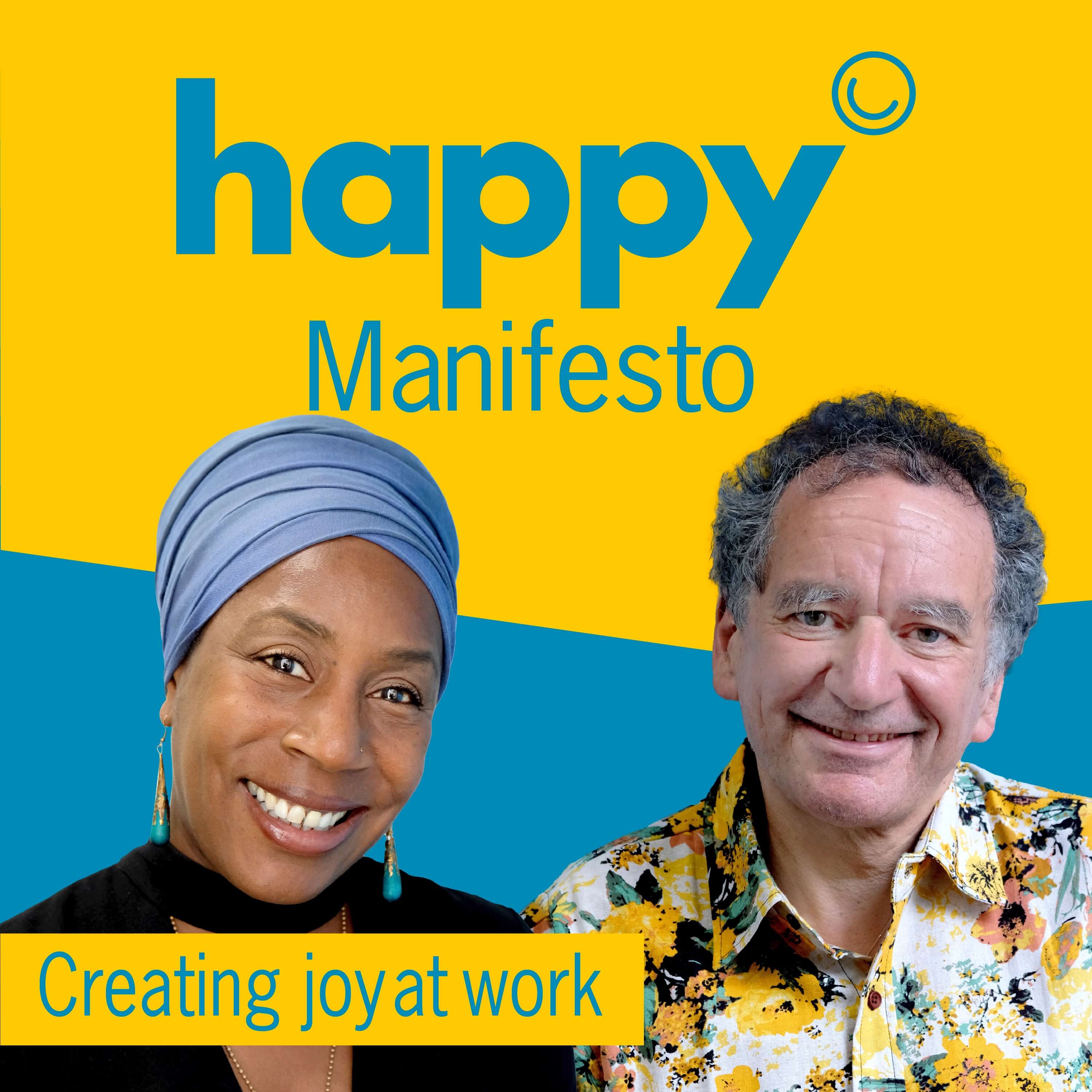
The Happy Manifesto
61 episodes — Page 2 of 2
Ep 10Beyond Budgeting, with Bjarte Bogsnes
Budgeting is time-consuming, can lead to quickly-outdated assumptions, and can stimulate unethical behaviours like resource hoarding. Beyond Budgeting is a management philosophy that challenges traditional management practices, specifically the budgeting process.In this episode, Henry speaks with Bjarte Bogsnes about the problems with budgeting, and how some companies have broken free of the budgeting mindset. Bjarte is a senior advisor at the Norwegian company Statoil, now Equinor, and has been a key figure in developing and promoting the Beyond Budgeting philosophy.Bjarte’s tip for a happier workplaceFollow the 12 Beyond Budgeting principles around governance and transparency, accountable teams, goals and rewards, and planning and controls.LinksBeyond Budgeting: Business Agility in Practice – Happy’s event on July 12thConnect with Bjarte via LinkedInThis is Beyond Budgeting: A Guide to More Adaptive and Human Organisations – Bjarte’s book
Ep 9Be kind, break rules – with Sarah Pugh
Creating a happy and productive workplace starts with a focus on culture. A coaching culture can help build trust and encourage open communication.Sarah Pugh is the CEO of Whizz-Kidz, the UK's leading charity for young wheelchair users. She shares her insights on leading a hospice to an Outstanding rating in just one year. She did this by making culture a fundamental part of the change process. She reveals how this experience has informed her work at Whizz-Kidz and the steps she’s taken there to put culture at the heart of everything.Sarah’s tips for a happy workplaceLead with kindness, and remember that kindness is a strength, not a sign of weakness.Treat people like adults and they will act like adults. Look for the potential in people and allow them the opportunity to shine.We learn so more from our mistakes than we do our successes, so eliminate blame and encourage people to learn from mistakes.LinksConnect with Sarah via LinkedInWhizz-KidzHappy’s Level 7 Senior Leadership Apprenticeship Programme – the “Happy MBA”Introduction to Liberating StructuresThe magic of leadership is empathy, with Tom Peters – Episode 1 of the Happy Manifest Podcast
Ep 8How self-management increases client and employee satisfaction, with Luke Kyte
Implementing a self-managing organisation requires a shift in mindset and a commitment to creating a positive work environment. This involves giving employees trust, freedom and responsibility, as well as promoting health and wellbeing. In this episode, Henry and Maureen speak to Luke Kyte, a senior leader whose company made this transition.Reddico is a self-managing SEO agency that implemented unlimited holiday, formed a salary panel, and measured success through metrics like the Net Promoter Score. All in place of things like pingpong tables and nights out that look great on social media, but don’t improve employee happiness or promote wellbeing.Luke's three tips for creating a happy workplaceStart with trust, building the company for the vast majority of people who want to do a great job and want ownership.Treat perks and benefits as the cherry on top, and focus on changing the organizational structure.Include people in decision-making and strategy across the business, particularly when going through a process of change.LinksConnect with Luke via LinkedInNet Promoter
Ep 7Bringing meaning to action, with Jason Mitchell
When Jason Mitchell escaped the office to reconnect with his tasks, he noticed something: he was losing sight of the relationships behind the tasks.“Action has meaning only in relationship; without understanding relationship, action on any level will only breed conflict. The understanding of relationship is infinitely more important than the search for any plan of action.” – Jiddu KrishnamurtiThis discovery led Jason to build regular check-ins with members of his team, that weren’t simply task-orientated, but were people-orientated.Jason is VP of Customer Experience at Typefi, and joins Henry to discuss what he experienced and learned through Happy’s Level 7 Senior Leadership Apprenticeship Programme, otherwise known as the “Happy MBA”.Jason’s three tips for a happy workplaceSupport your team to pursue their ideas for improvement, not yours.Embrace asynchronous working.Celebrate anything and everything you can.LinksConnect with Jason on LinkedInTypefiThe 2023 Happy Cultural PlannerLevel 7 Senior Leadership Apprenticeship ProgrammeMultipliers, Revised and Updated: How the Best Leaders Make Everyone Smart, by Liz Wiseman
Ep 6How Mayden created a self-managing workplace, with Alison Sturgess-Durden
The guiding principle at UK software firm Mayden is to manage the work, not the people. The company has put in place a clear decision-making process and a scaffolding structure that replaces most line management positions.Everyone within Mayden has access to an individual coach who is trained and experienced in coaching, and the company has retained a tier of directors who deal with residual line management responsibilities. Mayden's approach encourages individuals to manage themselves and take responsibility for decisions.The process of forming and growing a managerless team is outlined in a new book written by Mayden. And Alison Sturgess-Durden, one of Mayden’s Directors joins Henry and Maureen to dig into the details.Alison’s tips for a happy workplace:Be mindful of the people you've employed and free them up to get on with doing the job that they want to do.Empower your employees to do their jobs without fear of blame. Employees need to feel safe to make decisions and manage their work, and should feel supported if something goes wrong.Focus on respecting your employees as valuable adults and encouraging them to be be kind.LinksConnect with Alison on LinkedInMade Without Managers: One Company's Story of Creating a Self-Managing Workplace, by Alison Sturgess Durden, Chris May, and Philippa Kindon
Ep 5From diminisher to multiplier: how to elevate your leadership style, with Liz Wiseman
A Multiplier is a leader who amplifies the intelligence and capability of their team, making work feel challenging yet exhilarating. Diminishers, on the other hand, unintentionally hold people back and create an environment where people defer to them. Both types of leaders have vastly different impacts on their teams.Liz Wiseman, the author of Multipliers: How the Best Leaders Make Everyone Smarter, joins Henry and Maureen to discuss how to recognise the genius in others and create an environment that elicits the best thinking, provides challenges, encourages debate, and fosters ownership and accountability.Liz’s tips for a happy workplaceEmpower team members by giving them control, which helps them feel less like victims and more in charge of their work.Point people to where they can be most impactful and show them how their work is making a difference.Lighten the load, not by doing other people's work for them, but by doing the small things that make work easy for others.LinksImpact Players: How to Take the Lead, Play Bigger, and Multiply Your Impact – Liz’s new bookMultipliers: How the Best Leaders Make Everyone Smarter – Liz’s previous bookThe Fearless Organization - Creating Psychological Safety in the Workplace for Learning, Innovation, and Growth, by Amy EdmondsonThe Multipliers Accidental Diminisher QuizAdam Grant
Ep 4Self-managing teams, with Helen Sanderson MBE
Wholeness, self-management and evolutionary purpose are three core principles that changed Helen Sanderson’s view on teams.Helen Sanderson’s MBE is the founder of Wellbeing Teams, an organisation providing care and support at home. As a self-governing team, they are able to create greater trust and autonomy for employees. But this wasn’t a framework that can just be dropped in:I thought it was like adding a new app on your phone, but it wasn't; it was transforming the operating system.Helen’s three tips for happy workplacesIncrease autonomy and social support.Don’t be afraid to talk about feelings at work.Be clear about how we want to show up.LinksConnect with Helen on LinkedInReinventing Organizations: A Guide to Creating Organizations Inspired by the Next Stage in Human Consciousness, by Frederic LalouxWellbeing TeamsOne-page profilesStart With Why – Simon SinekConfirmation Practices - rethinking performance managementThe ‘Values’ Bit in Values-based RecruitmentDying for a Paycheck, by Jeffrey PfefferBuurtzorg and the power of self-managed teams of nurses – Lisa Gill’s Leadermorphosis podcast
Ep 3How the Stroke Association is creating greater workplace autonomy, with Chris McQueen
Henry and Maureen are in conversation with Chris McQueen from the Stroke Association. With Happy’s help, Chris and his team developed a set of five principles that drive the decisions the organisation makes, and how they want to work.The Association is a traditionally hierarchical organisation, but through Happy’s Level 7 Senior Leadership Programme, an MBA-level qualification, they’ve created more interdependence within team-members, with less need for knowledge and instructions to be passed down through the hierarchy.Chris’ three tips for a happier workplaceBuild a culture of trust.Set clear boundaries.Create a safe environment where people are willing to try new things.LinksThe Stroke AssociationLevel 7 Senior Leadership Apprenticeship ProgrammeLiberating Structures Immersion Workshop
Ep 2Creating joy at work, with Cathy Busani
What if people could spend 80% of their time at work doing things that gave them joy? That was the question Happy’s Managing Director Cathy Busani asked herself that still informs her work, now 27 years later.What Cathy found is that when people spend time doing the things they’re good at, their work feels more effortless, and thus more joyful. In this chat with Henry, Cathy lays out her strengths, and how Happy’s approach has evolved over time.Cathy’s three tips for creating happier workplacesPut your people at the heart of what you do.Start from a premise of believing the best.Stay curious.LinksRalph & Katie – the A Word spin-off show mentioned by MaureenPre-approval: What is it and why should you do it?Recruit for Attitude, Train for Skill in PracticeDo you celebrate mistakes?
Ep 1The magic of leadership is empathy, with Tom Peters
A leader needs to be prepared to be available. That means not overbooking themselves with meetings, burning out, and being unable to think creatively. To author and columnist Tom Peters, empathy is the most important skill a leader can have.In May 1986, Tom wrote about having only five levels of management, even in big multinationals. In ‘88, he wrote Stuff the Bureaucrats, Embrace the Customer, Listen to the Workers, and since the ‘90s has been speaking on the importance of having women in leadership positions.Tom’s COVID-19 Leadership SevenBe kindBe caringBe patientBe forgivingBe presentBe positiveWalk in the other person's shoesLinksConnect with Tom on LinkedInTom Peters’ Compact Guide to ExcellenceLeadership the Hard Way, by Dov Frohman and Robert HowardWhat Google learned from its quest to build the perfect teamThe Customer Comes Second: Put Your People First and Watch 'em Kick Butt, by Hal Rosenbluth and Diane McFerrin PetersResume vs eulogy virtuesKindness in Leadership, edited by Gay Haskins, Mike Thomas, and Lalit Johri
Introducing the Happy Manifesto Podcast (Trailer)
trailerLet's stop thinking about how to create joy at work, and start doing it.Join Henry Stewart and Maureen Egbe as they explore creating happy workplaces. Each episode features actionable examples from management experts and Happy clients, which you can put into practice in your own workplace.The show launches on January 11th, with new episodes arriving every two weeks.