
The Hanania Show
139 episodes — Page 2 of 3

Is Trump Serious about Annexing Canada?
This is a free preview of a paid episode. To hear more, visit www.richardhanania.comJust did a livestream with Michael Tracey. We talk about the latest news in the Ukraine War. The Ukrainians have accepted a 30-day ceasefire proposed by the Trump administration, and the ball is now in Putin’s court, in Rubio’s words. This seems to us like the minerals deal all over again, where Ukraine hawks are maneuvering in the hopes of getting Trump committed to supporting Ukraine and angry at Putin. We discuss the motivations of the various actors involved and whether anyone has an incentive to stop fighting, or alternatively whether it would make sense for Trump to pull the plug on Ukraine. Our outlook is grim, as it doesn’t seem like we are anywhere near peace. From the outside, it looks as if Putin has every reason to continue the war.Michael tries to convince me to take Trump’s supposedly expansionist aims literally, and argues for a connection between tariffs and promises to make Canada the 51st state. I at first think he’s crazy and ask what evidence he has for that link. Michael delivers by pointing to a recent Truth Social post where Trump makes the association explicit. He moved my perspective on this a bit. On the idea that Trump now sees himself as a kind of messianic figure, I loved this profile of the man and his ear from September by Olivia Nuzzi, which was truly a work of art. Near the end, we take some questions from the audience. Michael explains why he’s “Mearsheimered out,” and we give our overall outlook on the tariffs and what to expect from Trump going forward. We talk about why right-wingers are so pro-Putin these days, and I argue that it actually does mostly come down to gays, fealty to symbols of Western civilization, and a trad aesthetic. I also try to convince Michael to take seriously the idea that Russian propaganda has a major role to play in how the right is perceiving reality. See the thread here for my recent conversation with Tucker and how he has bought into a Russian influence operation regarding Ukraine selling weapons online. See also my article, “Putin as the Patron Saint of Right-Wing Misanthropy.”Note: if you’re listening to this show on your podcast app and it cuts off around 26 minutes in, you’re listening to the free preview. Become a paid subscriber to listen to or watch the whole thing.

AMA, 3/5/25
This is a free preview of a paid episode. To hear more, visit www.richardhanania.comJust did an AMA. I took questions on whether I would ever have another institutional affiliation again, why Substack is so much higher quality than Twitter, Nick Fuentes’ intelligence, what parts of the Trump agenda might be undone by a future Democratic administration, whether I watch Severance, anime, nationalism and immigration restriction, and more. Note that the new time for the weekly show is Wednesdays at 1ET/10PT, rather than 4ET/1PT. Finally, I was on Destiny’s stream on Monday. These always get massive numbers of views, and you can check out our conversation here.

The End of Zelensky?
This is a free preview of a paid episode. To hear more, visit www.richardhanania.comI did a livestream yesterday after a viral tweet on the Zelensky press conference from hell. I discuss what I saw, scroll Twitter for reactions, and take some questions from the audience. The first hour and a half or so was good, but it dragged out a bit at the end. Yet it’s all here for the superfans.

WE’RE GETTING THOSE MINERALS!!!
This is a free preview of a paid episode. To hear more, visit www.richardhanania.comI did my first weekly show with Michael Tracey today. Michael begins by discussing his experience at CPAC and his time at a DOGE appreciation party, where I was apparently a topic of contention. The bulk of our conversation is then spent talking about the deal for the US to supposedly take a cut of Ukraine’s resources, to be signed Friday according to Trump. Here is what is reportedly a copy of the current text. We try to read the mixed signals from the Trump administration, and debate what it all means. Near the end, we discuss the big announcement that Jeff Bezos is going to be making sure that the Washington Post editorial page promotes individual liberty and free markets. As announced, this is the first in what is going to be a regular show on Wednesdays at 4ET/1PT. You can join us live for free by downloading the app below or get the whole thing as a paid subscriber later.

Does God Want You to Listen to This Conversation?
I am honored to have New York Times columnist Ross Douthat on the podcast to talk about his new book Believe: Why Everyone Should be Religious. I’ve always seen atheism as my first intellectual position. Upon learning that many Christian doctrines declare that non-believers go to hell and are tortured for all eternity, I decided I needed to look into whether their claims were true and came to the conclusion that they most certainly weren’t. Yet I don’t completely dismiss the idea that something beyond the natural world might be out there. Bentham’s Bulldog writes pieces on theism and makes arguments that I’m unsure how to think about but don’t strike me as obvious nonsense. A 2020 survey showed that 19% of philosophers leaned towards theism, so it’s not like the position is akin to anti-vaxx or young earth creationism, where none of the trained experts take the claims involved seriously. The fact that people just as smart as me have thought longer and harder about the subject and arrived at the position that God exists is enough to give me perhaps a bit of doubt about my atheism. Debates around theism strike me as similar to those about AI doom. I can develop strong opinions on topics when there is empirical data we can bring to a question. So I have confident views on the best economic system, the role of heredity in determining cognitive and personality outcomes, what causes some voters to support Donald Trump, and whether humans have seen a major increase in living standards over the course of history. When it comes to speculation, trying to follow chains of reasoning, and arguments derived from analogies and thought experiments – which I think is most of what we have in debates over theism and AI doom – I don’t trust myself or other people to be able to do any of this well. Douthat is someone whose political and cultural writings I’ve always found interesting, so I decided to give his new book a try. Believe focuses mostly on attempting to convince the reader that there is something out there beyond material reality, with only the last chapter making the case for Christianity. I found myself dividing the arguments into a few baskets. The best arguments for theism I think rest on fine-tuning and the mystery of consciousness. I found the supposed evidence for the existence of the supernatural – miracles, demons, the power of prayer, near-death experiences, etc. – less compelling. This was much of the focus of his conversation with Tyler, who also sounded very skeptical. I ask Ross to assign probabilities on the supernatural being real, Christianity being true, and Catholicism being true. I then explain my main moral problem with traditional Christian dogma, which is that some portion of humanity will be sentenced to everlasting torture. We tend to think that any punishment should fit the crime one is guilty of. Few would say that an individual who has committed a dastardly act should be held down and tortured for decades, which leads to the question of why an all-knowing, all-loving God would do something similar on a much longer timescale. We talk a good bit about the role of providence in human affairs, which I found quite fun. The conversation swerves into how Ross thinks about someone like Trump playing a preordained role in history. On the surface, this might seem like a somewhat silly part of our discussion, but it actually raises intriguing questions regarding how the mechanics of God intervening in human affairs would actually work.Near the end, we get to the part of Ross’s book I’m most skeptical of, which is the alleged evidence for supernatural experience. If prayer is real, why not conduct a double-blind randomized study? I also bring up the Randi Prize challenge, which offered $1 million to anyone who could demonstrate supernatural abilities but never had to pay out. I have to confess however that I do find the story told by professional skeptic Michael Shermer about how his wife’s old radio started working on their wedding day to be very weird. I do sort of love the idea that God is like a writer for a prestige TV drama, and history has all these A and B list characters that He shuffles around in order to move the plot along. The Roman Empire is maybe its own season. World War II was the finale of the one that began as the Industrial Revolution was taking off. Now we’re in the middle of Season 8, and AI, which started out as a minor character in the background, is about to become the main protagonist. The series finale is of course Judgment Day. People like Trump and Putin are the main characters, the Starks and the Lannisters, while we lesser mortals are akin to the slaughtered hordes left on the numerous battlefields of the War of the Five Kings. The Hanania subplot is a pretty cool one. Five years ago I was nobody, now I at least have a (very bad) Wikipedia page, and can reach hundreds of thousands or millions of people on a daily basis, leading my fans closer to God or everlasting damnat

Why Conservatives Love Andrew Tate
This is a free preview of a paid episode. To hear more, visit www.richardhanania.comJust did a livestream with the beautiful gorgeous amazing brilliant stunning Claire Lehmann, editor of Quillette. You can follow them on Substack here, and also follow Claire directly to keep up with what she is doing. Follow her on X too while you’re at it.We discuss conservatives’ love affair with Andrew Tate, who the Trump administration is now trying to help get out of Romania. We also talk about the topics of some of my articles, including DOGE, conservatism as an oppositional culture, and whether AI will take the jobs of people like us. I was hurt to learn that Claire hated the AI drawing of my article on why we should all die for Ukraine.In addition to her being beautiful gorgeous amazing brilliant stunning, I continue to appreciate Claire as someone who has kept her head and remained reasonable in a time when tribalism and audience capture have ruined so many others. I enjoyed talking to her about our intellectual ecosystem and the influencer market. I ended the conversation feeling like we were going to be ok.

The Miraculous Findings of Paleogenetics
This is a free preview of a paid episode. To hear more, visit www.richardhanania.comI just had a discussion with Razib Khan about some of the exciting recent developments in paleogenetics. In 2018, I read David Reich’s Who We Are and How We Got Here and was absolutely captivated by the idea that we could learn about cultures, population movements, and other aspects of our past through the analysis of prehistoric, ancient, and more recent DNA.The field of paleogenetics is a fast-moving one, so there have been a great many discoveries in the five-plus years since the book was published. Reich was on Dwarkesh’s podcast a few months ago discussing some of them. Until another authoritative book comes out on this topic – which I was excited to learn that Razib might soon write – the best you can do is subscribe to his Unsupervised Learning newsletter, where you can find poetic articles on the intersection between genomics, culture, and history. The immediate motivation for this conversation was his recent piece on how the Indo-European explosion of 5,000 years ago actually led to a decline in civilizational complexity in Europe. After some initial chit-chat on the latest on Ukraine and debating stupid people on X, we discuss that essay, along with various other topics, including* The race of the Ancient Greeks* The fluctuations in Neanderthal admixture in humans throughout prehistory* What the Indo-Europeans looked like* The identity of the Ancient Persians and their relationship to modern Iranians* “Cold winters” theory, and why we see a looks gradient from Northern to Southern Europe* The discrediting of white nationalist ideas* Theories about group IQ differences* What paleogenetics can actually tell us about cultures, the rise and fall of civilizations, and how people lived* The irrefutable non-human DNA evidence suggesting there are unlikely to be lost civilizations yet to be discoveredNear the end, I tell Razib that he’s basically one of those guys who appears on Rogan and talks about lost civilizations and such, except that what he says is actually grounded in science. In a world with twenty more IQ points, he would be a lot better known than Graham Hancock. While the enthusiasm towards ideas about the human past of Rogan and Hancock fans is understandable, they unfortunately don’t have the judgment to distinguish between science and myth.Every time I learn more about paleogenetics, whether through reading or talking to Razib, I come away invigorated. Aside from perhaps some lessons about human nature, there is little practical knowledge to be gained from such work. Still, some of us are noble enough to want the truth about ourselves, and to be able to stand in awe of the process that has led to us knowing so much about how humans, and our humanoid cousins, lived, worked, loved, and died across tens of thousands of years based on nothing more than the artifacts and genetic material they left behind.

Race Posting Is Not a Personality
This is a free preview of a paid episode. To hear more, visit www.richardhanania.comJust did a livestream on the importance of “race posting” in right-wing culture. Things have gone well beyond being anti-woke. Young right-wingers have created a horrifying inverse of woke culture where race and attitudes towards racial issues, along with attitudes towards those who dislike racism, become the center of one’s worldview. I argue that, setting aside the question of whether one should lose a job for tweets, there is something unhealthy about people forming a community based on whether they can “out racism” each other. I bring up what I call “Red Scare Culture,” in which there are only two kinds of people in the world: those who are racist and cool with racism, and those who will put forth any criticism of racism in any context only because they’re concern trolling or trying to gain acceptance from leftists. See here for context. What annoys me perhaps most of all is that race guys become boring. There are people I know who are passionate about politics, but somehow have no strong opinions on economics or foreign policy. It’s simply race, and to a lesser extent being “based” on sex issues too. Just a pathetic existence. Don’t fall into this trap! You’re a bigger slave to woke than the academic who puts the pronouns in his bio and then goes on with his life. Partway through I’m joined by Jeff Giesea, who has experience in many of the same circles. We discuss how class conflict intersects with racial issues in America, and how we’ve ended up in a paradoxical place where race is the center of our political discourse but matters less and less in our personal lives. We can see this most clearly in the multiracial racists on the right who don’t see any contradiction in their world view.Links and further reading based on references in the conversation:On the DOGE engineer who was fired for racist tweets and subsequently brought backMy tweet from today on the topicRecent discussion on Ask a Jew on a wide range of issues including thisMe on Nietzschean ChudderyMe, “How to Not Get Cancelled” Me, “America Has Black Nationalism, Not Balkanization” Me, “Ron Unz Confronts the Far Right”

Trump, Elon, and Embracing the Future | Richard Hanania & Noah Smith
I did a livestream today with Noah Smith, someone whose writing I have admired for a long time and who I was happy to finally get to meet.We start out by talking about what’s going on with the Trump administration, and all the recent craziness, including the president’s supposed plan for the US to take over Gaza. This blends into discussions about China and Russia, and their memetic relationships with the American left and right respectively. Noah explains why he believes that Putin will not make a deal in the current conflict, and why that means we should keep supporting Ukraine. He also goes into why the current war in Ukraine reminds him of the Russo-Finnish War (1939-1940), and whether Elon Musk is destined to play the role of Franco and eventually take over the Republican Party once Trump is gone. If that’s not enough in the way of historical analogies, Noah presents his theory that Elon Musk sees himself as a Metternich-like figure, perhaps trying to form a global triumvirate with Vladimir Putin and Xi Jinping against the US foreign policy establishment and the forces of woke.We also talk about American domestic politics, including the GOP as a cult of personality and how quickly the Democrats can reform. In the process, Noah names his ideal Republican presidential candidate and talks about why he is a fan of Texas as a civilization. Near the end, going off his recent article on too many Americans being afraid of the future, I ask Noah what his elevator pitch is for embracing change. Finally, and perhaps most importantly, I present a novel theory of “horny posting,” which sees it as a way to defeat both inceldom and racism, the two great evils of the right. Relevant articlesNoah Smith, “Too many Americans still fear the future.”Noah Smith, “The chaos has arrived.”Richard Hanania, “Trump’s executive branch revolution”Betting market I created on Trump’s tariffs This is a public episode. If you'd like to discuss this with other subscribers or get access to bonus episodes, visit www.richardhanania.com/subscribe

DeepSeek: Hype and Reality
The stock market was sent reeling today as a result of the release by the Chinese company DeepSeek of an open source AI model that comes close to or matches the performance of American models, but was created for a fraction of the cost. While traditional models have cost in the range of $100 million to $1 billion to produce, the latest application from DeepSeek was reportedly created for under $6 million. Wanting to know more, I invited Brian Chau on for a livestream to discuss. Some of the questions we cover:* What does it mean for a model to be open source?* Why would a business release an open source model? * Should you sell all your Nvidia stock?* How do we know that DeepSeek really cost under $6 million to build?* Can its costs be verified?* What might the intentions of the Chinese Communist Party be in letting this happen? * Will AI take all the jobs? * Has Brian’s p(doom) changed at all?* When will us writers be replaceable?* Has Brian’s vision of a hands off approach to AI regulation won? * Did Big Yud go down with the Kamala ship? As a non-expert, I found it very useful to have an hour in which to pick Brian’s brain. I can’t recommend this conversation enough for those who want to make sense of what has happened in AI over the last few days. This is a public episode. If you'd like to discuss this with other subscribers or get access to bonus episodes, visit www.richardhanania.com/subscribe

Winning the War on DEI
This is a free preview of a paid episode. To hear more, visit www.richardhanania.comI just did a livestream with Bryan Caplan on Trump’s executive orders on DEI and my role in making them happen. For context, see my post from yesterday. We discuss the history of EO 11246 and Bryan talks about the pressure his dad got from the government to hire more minorities in the airline industry in the 1980s. One point to emphasize is that even people who think a lot about policy have been completely in the dark about the reach of the affirmative action in government contracting regime, on both the right and left. Bryan asks me to give an estimate of the probability I made the marginal difference in us getting Trump’s new executive order.Bryan leaves about halfway through, and I then provide further thoughts on the topic, along with sharing some ideas on the general “vibe shift” everyone is talking about. While this is a victory over DEI, I worry about the pendulum swing involving a backlash to immigration. To me, the fight against DEI and for more open borders is the same struggle: merit, treating people as individuals rather than members of groups, and economic progress. Yet most who are passionate about DEI are motivated by their place on a racist-antiracist axis, so a vibe shift against woke means more restrictive immigration policies. It is important to push back against this. I close by taking a few questions from the audience, including on how to think about the issue of nationalism versus globalism.

Inauguration Day Stream
This is a free preview of a paid episode. To hear more, visit www.richardhanania.comI just did a stream on the inauguration and Trump’s potential executive orders, some of which might be signed by the time you watch this. I did this stream with screensharing, so you can follow along as I scroll X, the New York Times and the Washington Post, and read about the Biden pardons, what Trump is expected to do on his first day, and more. In the midst of the Twitter scrolling, I also go on tangents about parenting, Barron’s potential, and the Elon “Roman Salute” scandal that just happened. I find this kind of stream fun and might do it more often if people want it. The recording is available audio only as a normal podcast, but you probably won’t get nearly as much out of it if you don’t see the video. I also noticed that you might need to do full screen in order to see things well enough on a computer. I think that it might actually work better on mobile. Sorry, the Substack video feature is still a work in progress.

At the 90th Percentile of Ayn Rand Appreciation
Alex Epstein (X, Substack) is a philosopher, energy expert, and the author of two New York Times bestselling books: Fossil Future and The Moral Case for Fossil Fuels.Alex and I met a few years ago through our mutual friend Bryan Caplan. A couple of months ago we were talking and he asked me how much Ayn Rand I had read. I mentioned that I’d gone through Atlas Shrugged when I was in my teens or early twenties, and by chance had picked up The Romantic Manifesto not that long before we spoke. One thing led to another, and the last few months I’ve been going through all of her published books. I’ve also read the Anne Heller biography, which the Ayn Rand Institute hates but Bryan and I both found captivating. Alex lives in Los Angeles, so we decided to meet for a podcast to discuss her ideas and work. In this conversation, I fear that I come across as not that big of a Rand fan, though that is only in comparison to Alex. As I say during the discussion, I’m probably at the 90th percentile of Ayn Rand appreciators and he’s at the 99th percentile. To me, her greatest contributions were providing a moral foundation for capitalism and a framework for self-help. I believe if you adopt Ayn Rand’s philosophy, you will both be happier and have generally correct political and moral views. We get into the question of whether Rand is anti-natalist, or even anti-family. I think kids are conspicuous by their absence in her works, and family relations are usually portrayed negatively. Alex provides a different perspective. We also go into Rand’s personal life, what if anything it tells us about her philosophy, and which novels we like more or less. I’m personally partial to We the Living, while Alex likes The Fountainhead the best. There are a few spoilers here regarding Atlas Shrugged, but none for her other fiction books. I’ll be writing more about Rand and her ideas in the coming weeks. For those who want to start reading her work, or perhaps reconnect with it, the Ayn Rand Institute allows students to get one of her books for free.Most if not all of her published essays can be found online. Below are a handful that we mentioned throughout this conversation.“Racism” (1963)“What Is Capitalism?” (1965)“Of Living Death,” (1968) on the Catholic Church’s views on contraception and sex (text, Rand speech)“Philosophy: Who Needs It?” (1974) (text, audio of speech at West Point)Update: Subsequent to this discussion, I published two articles on Ayn Rand’s life and work. See part one and part two. This is a public episode. If you'd like to discuss this with other subscribers or get access to bonus episodes, visit www.richardhanania.com/subscribe

Nietzschean Chuds and the Indian Christmas War
This is a free preview of a paid episode. To hear more, visit www.richardhanania.comA war has broken out on X between Tech Right types and populists over the question of Indian immigration. For context, see this article, or basically scroll through my entire X feed. I spent Christmas Eve and Christmas Day posting about this, as this topic is where many of my interests overlap. I’m particularly fascinated by the idea of right-wing nationalism as a radical egalitarian movement that masquerades as one that is Nietzschean. As soon as these people want to argue against high-skilled immigration, they start using talking points that are basically carbon copies of those of woke leftists, even borrowing their exact language. Another one of my recurring interests is the natural tension between the Tech Right and right-wing chuddery. I’ve previously discussed JD Vance as a figure who straddles these two worlds. The Tech Right and many classical liberals dislike the left because it is too small-minded, safetyist, and fearful of the future. Populists come from the opposite direction. While they think leftists are too concerned with the feelings and well-being of racial and sexual minorities, they are driven by a leveling instinct when it comes to whites and resentment towards successful outsiders. I discuss the two main arguments right-wing populists make against high-skilled immigration: that newcomers depress native wages, and “we are a nation, not an economy.” The first argument violates basic economic reasoning, while the second makes little sense unless you understand it as a racist dog whistle. Near the end I break down Vivek’s post today about jocks and nerds. See also my response on X. This is an issue that is going to pop up again as the Trump administration begins to govern. Few things are as important for the future of humanity as making sure that the most competent people get to the places where they can be the most innovative and productive. This is a war worth fighting, even if it includes posting through Christmas.Note: I’ve changed the name of this feed from Clown Car to The Hanania Show. The original name was meant to highlight that the show revolved around the 2024 election, but since the topics covered are now much broader, it no longer makes sense. If the audio cuts off, it is because you have the free preview feed and will need to become a paid subscriber to listen to or watch the whole thing.
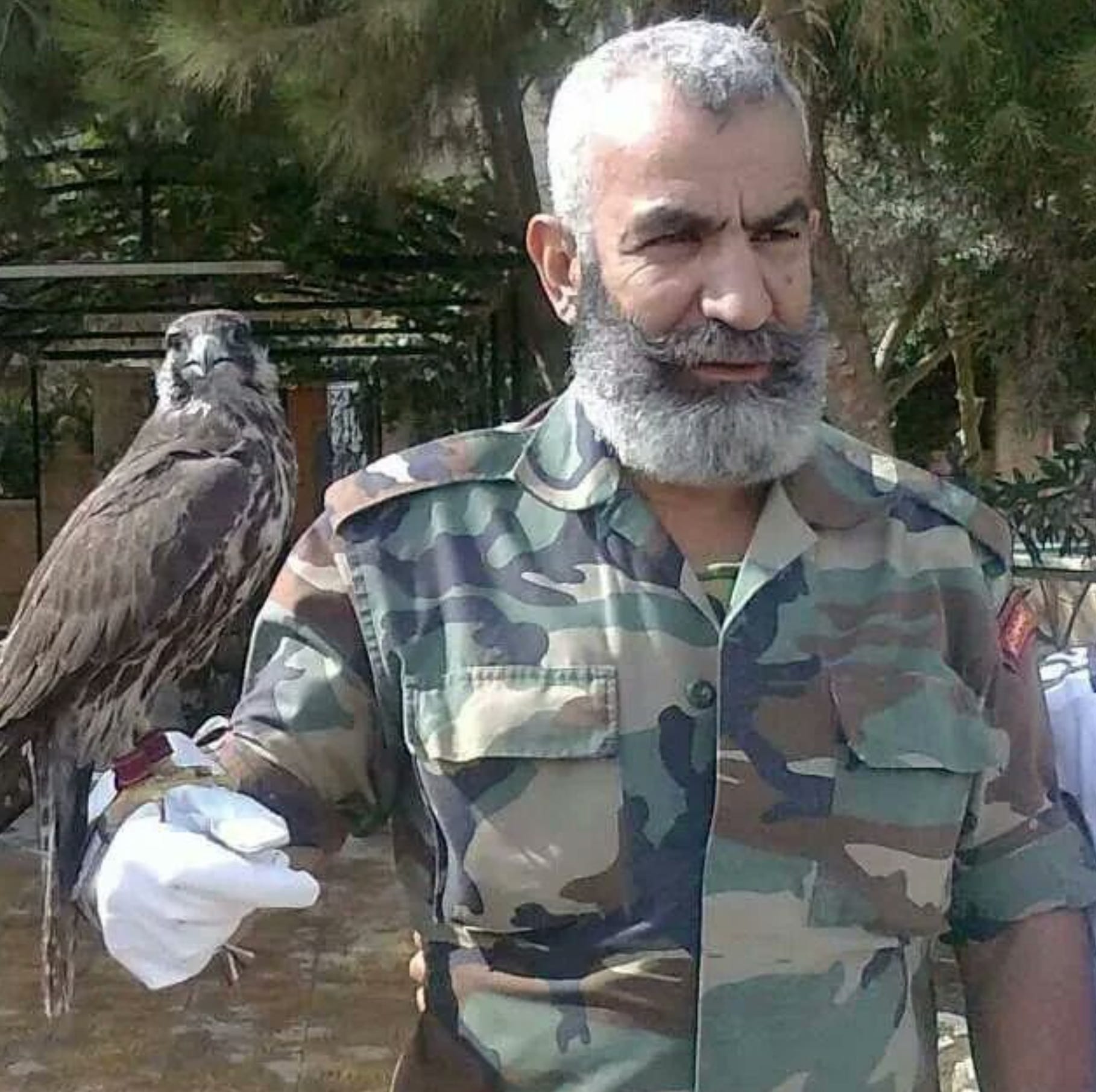
The Cowardly Lion, the Jacked Falconer, and the (Possible) Triumph of Islamo-Capitalism
This is a free preview of a paid episode. To hear more, visit www.richardhanania.comTom Khaled Würdemann (follow on X) is a PhD student at Heidelberg University. He also works as a lecturer at the Police College of the State of Hassia, Germany.He joins the podcast to talk mainly about the history of Syria and recent events in that country. I am particularly fascinated by the question of why a nation that had multiple coups in the decades before 1970 ended up being ruled by one family for over half a century. We discuss the personalities of Hafez and Bashar al-Assad, and the nature of the mafia state that they created. I knew that part of the regime’s downfall was a result of it no longer having much support from Russia, Iran, and Hezbollah, but Tom explained to me the extent to which the Syrian government itself was hollowed out and had to rely on militias domestically. Once the Assad regime turned on those militias and its foreign backers were distracted, there was no one left to face the rebels. I personally enjoyed the story of the Druze commander of the Republican Guard Issam Zahreddine, who was jacked and apparently a falconer, although I couldn’t find much detail on this picture. Here’s a hagiographic obituary that is very fun to read but should be taken with a grain of salt of course. I thought since Zahreddine posed with a falcon he was the leader of the Falcons of the Euphrates, but Tom corrected me on this and noted he was actually part of the government. This is why you talk to experts in their field. We go into the role of socialism in Baathist ideology, how that was operationalized in Syria, and the supposed economic opening under the younger Assad. Tom lists four possibilities for a new Syria, from worse to better: ISIS, the Taliban, Iran, and Turkey.Near the end we talk about the issue of Syrian refugees in Germany. Tom’s father is Syrian and his mother is German, and he teaches aspiring police candidates in Hassia, so he brings a unique perspective to this issue. There’s also some talk on German culture, which from what I’ve heard I’ve always found disturbingly weird. LinksMe, Uncle Sam as the Hegelian Hammer in SyriaMe on Assad’s last daysTom on October 7 from a comparative perspective (only published work in English)Economic growth in rebel held areas versus those of the regimeThe historic overrepresentation of Alawites in the top echelons of the Syrian military

Hanania, Tracey, Assad
This is a free preview of a paid episode. To hear more, visit www.richardhanania.comMichael Tracey joined me tonight to discuss the fall of the Syrian regime. We speculate about the future of Syria, and express surprise regarding how little Assad did to rally his troops and try to inspire them to fight on. See here for the WSJ piece we refer to.

Economic Reasoning and Self-Help
This is a free preview of a paid episode. To hear more, visit www.richardhanania.comBryan joined me on a livestream recently to talk about his new book Self-Help is Like a Vaccine. We discuss topics like parenting, how to live a stress free life, when to stick to one’s principles and when to compromise, and more. We end by taking a few questions from the audience. See Bryan on Milei and populism, which is another one of the issues we discussed. To get notifications for future livestreams, make sure to download the Substack app.

"Do Your Own Research" (from credible sources)
This is a free preview of a paid episode. To hear more, visit www.richardhanania.comStephen Goldstein (follow on X) is a postdoc in Evolutionary Virology at the University of Utah Medical School, where he specializes in coronaviruses. He joins me to discuss vaccines and whether you should get them.Short answer: yes. I’ve been delving a bit into the claims of anti-vaxxers, and every time you look at one of their arguments it falls apart in the face of the most basic scrutiny. See tweets on RFK here, here, here, and here. The debate has a certain motte-and-bailey quality. Anti-vaxxers will throw ten different things at you. They’ll dispute the term “anti-vaxx,” and claim they are only asking questions. Every question you answer leads to more ill-informed questions, and claims that this or that hasn’t been studied. Overall, we just have to step back and say that the main claims of their most prominent spokesmen – that the covid vaccine was a net negative for most people or that it led to a surge in sudden deaths, that there is any link between vaccines and autism, that vaccines have done more harm than good, etc – are false, and they have a negative influence on public life. Maybe they once in a while have a very narrow point. Perhaps young men shouldn’t get two doses of a covid vaccine if they’ve recently been infected. Who cares? If your issue is public health, the world is much more undervaccinated than it is overvaccinated, so you should take up the cause of developing and distributing more vaccines, or just pick another topic. See my previous article on the “99% Good Principle.” There’s no reason to be questioning the common recommended vaccines people get that is not rooted in a misinformed and unscientific worldview.Near the end, Stephen tells people to “do your own research.” Oh how we’ve learned what a can of worms that phrase opens up! As the success of anti-vaxxers has taught us, most people are bad at it. I reject the idea that if only elites were better or more honest, we wouldn’t have anti-vaxxers. Human stupidity doesn’t need a “root causes” explanation in the era of MAGA and the Joe Rogan Experience. Not sure what the answer is.

Hunter Gets Away, Assad Falters, and the Trump In-Laws Come to Washington
This is a free preview of a paid episode. To hear more, visit www.richardhanania.comTonight I had a livestream with Mike Tracey on the Hunter Biden pardon, Trump expressing an intent to name Kash Patel as FBI Director, the latest in Syria, and what Trump might do in Ukraine. I explain to Michael why Trump appointing both of his daughters’ fathers-in-law to positions might make sense, as in my view nepotism isn’t necessarily a bad thing in foreign policy. Near the end we do some fanfic on how Trump and Vance might have a falling out by 2028. See tweets on Patel here, here, here, and here. See the CNN summary of the Keith Kellogg plan for Ukraine here.

A New Rising Center?
This is a free preview of a paid episode. To hear more, visit www.richardhanania.comMy friend Tracing Woodgrains joined me on the live stream today. Earlier this month, he and I published articles in Quillette one day apart on a similar theme, which is the need for a sane centrism beyond woke leftism and the Trump cult. We try to distinguish between a kind of libertarian-statist axis and one that focuses on whether institutions are functioning well. I share some thoughts on whether it’s even possible to be a right-wing intellectual at this point.We do an AMA near the end. Topics that come up include the future of X, whether Blue Sky will take off (see my account and Trace’s), how Trace started working for Blocked and Reported, and Nathan Cofnas’ idea on the only way to defeat wokeness.LinksToday’s out-of-context headline controversyMy previous conversation with TraceMe telling people to shut up about race and IQ, and debating CofnasTrace’s post-election reflections, followup in Quillette

Hanania/Tracey: Gaetz Withdraws!!
This is a free preview of a paid episode. To hear more, visit www.richardhanania.comMichael Tracey joins me on a livestream today to discuss Matt Gaetz withdrawing his nomination to be Attorney General. We also talk about where MAGA is going, the increasing meaninglessness of the term “neocon”, escalation in Ukraine, and more. Here’s the video Michael sent me showing the missile attack in Dnipro today. I’ve found that livestreams are a good way to build a following on Substack. So I’ve been doing them almost daily. I’m not going to send all of the recordings out because that would just be too many emails. The ones that are really good or with other people, like this one, I’ll release to paid subscribers, while others that are less important I’ll just put on X from now on. To catch them live, you’ll have to be paying attention to my X feed or have the Substack app to get a notification. You can download it below.

Talking Trump Appointments
This is a free preview of a paid episode. To hear more, visit www.richardhanania.comI had an hour in my car today and decided to do a livestream where I talked about the Trump appointments so far. We had a few normal days and then it sort of went off the rails. The RFK and Gabbard appointments are particularly shocking, as is Gaetz in a different way. I thought that the Gribbles would be tossed aside after the election and now that they weren’t I need to rethink some things. I discuss Trump becoming a kind of mad king as he realizes just how much the right has become a cult of personality around him, along with optimistic and pessimistic scenarios for his presidency. Since he can’t run again, it’s actually an interesting question what Trump wants out of a second term. In the second half of the video, I take questions from viewers.Join me for my next stream in the app. Download it here to get a notification any time I’m live.

This is MAGA Country!!!!
This is a free preview of a paid episode. To hear more, visit www.richardhanania.comPolymarket gives Trump a 97% chance of Trump winning as I write this. Republicans are taking the Senate, and by a relatively substantial margin. Michael Tracey and I talk about what happened. We get into the Hispanic vote, what a second Trump administration will look like, Trump’s unique magic, how Michael could tell voters’ preferences by their looks, and much more.See Michael’s three threads of Pennsylvania voters. Sorry, but there’s like 15 seconds of dead sound at the beginning. I hate to put the podcast out in this condition, but this is time sensitive and I don’t have the time to fix it up tonight.

Election Day Lives Stream
This is a free preview of a paid episode. To hear more, visit www.richardhanania.comJust finished a three-hour election day live stream, which started at 1PM ET.Hour 1: Maxim Lott discusses betting markets and where we’re putting our money.Hour 2: Alex Nowrasteh on immigration, and what the vibe is like in DCHour 3: Rob Henderson, to discuss basic election stuff, the vibes, and we go on some tangents.This is probably going to be dated in a few hours, but I’m getting it to you all in time where you can listen to the whole thing before we know exactly what happened. There’s a lot that’s valuable here even if you get to it late.I plan to go back on tonight to talk to Darren Beattie at 7PM ET. I may go on Destiny’s stream tonight, and there might be other things going on. So watch the app to stay up to date. Note: Rob and I discussed the fact that Google gave you a map if you searched for “Where to vote for Harris” but not if you searched for “Where to vote for Trump.” There turned out to be an innocent explanation of this. We regret the error.

Closing Arguments: Live Stream with Michael Tracey
This is a free preview of a paid episode. To hear more, visit www.richardhanania.comI talked to Michael Tracey last night about the upcoming election, JD Vance on Rogan, Trump’s stolen election claims, Michael’s recent Liz Cheney piece, and other things. Join me for my next live video in the Substack app.Today I’ll be talking with Alex Nowrasteh on Election Day at 5ET/2PT. See you there.

Why Are Americans So Rich?
This is a free preview of a paid episode. To hear more, visit www.richardhanania.comToday I talk with Callum Williams (follow on X), senior economics editor for The Economist. I was honored to have Callum on, as I consider The Economist perhaps the most indispensable news source we have. Their latest issue, on the US economy as the envy of the world, forms the basis of our discussion. After talking a bit about what it is like working for The Economist and its ideological orientation, we get into the issue of why the United States is so much richer than Europe. This question has two components: the historical American advantage, and also our unusually strong recovery from the great recession and Covid, the two main economic shocks of the twenty-first century.Americans have been blessed in terms of both culture and policy. We have a common language, and the cultural differences between various parts of the country are relatively small. Moreover, while Europe has done a good job of creating an integrated single market for goods, there are still substantial barriers to trade in services, which make up the majority of a modern economy. Rigid labor laws also remain a problem. During covid, the United States was more willing to just directly give people money, while Europeans focused on trying to protect already existing jobs.In addition to talking about economic data, we also explore why current perceptions of the economy in the US are so negative. The two main theories we discuss are the idea that this is about inflation and that there is a general pessimism that has arisen in the culture. Later, we shift to the surprising state of the Russian economy, which has done a remarkable job of weathering the sanctions placed upon it. Finally, there is a discussion about Callum’s idea that states have become “lumbering leviathans,” today spending more money on pensions and entitlements and less on the greater good. Callum recently became a father, and so we talk some parenting in the end, along with a bit on the upcoming election, including what I call Gribblism. I have read The Economist for decades, even though before meeting Callum I could not name a single staff writer for the magazine. It is a unique institution, providing the highest caliber reporting from across the world while also avoiding many of the things that make its peer newspapers and magazines less informative and enjoyable, namely identity politics and anti-market bias. When thinking about the accomplishments of Western Civilization, people will point to things like going to the moon, modern medicine, and the accomplishments of the tech industry. But the epistemic breakdown of the last decade or so has emphasized the degree to which institutions that simply provide factual and relatively objective information about the world cannot be taken for granted. And even among media outlets that are generally honest and good when judged by realistic standards, The Economist truly stands out. One of the best things about writing for the public is getting to meet people like Callum, and I look forward to having more discussions with him in the future. LinksCallum on XThe Economist special on the US economy, introduction and first articleThe Economist on Russian resilience to sanctionsThe Economist on governments as “lumbering leviathans.” The Economist on the failure of European leaders to create a single market. Video on the small market problem (joke)Me on Critical Age TheoryMe on labor unions, part one and part two

The Peasant Theory of Communist Brutality
This is a free preview of a paid episode. To hear more, visit www.richardhanania.comAndrei Lankov is a Russian-born scholar of Korea, the director of the Korea Risk Group, and a professor at Kookmin University in Seoul. I had been familiar with his work for years, but only recently read his 2013 book The Real North Korea: Life and Politics in a Failed Stalinist Utopia after coming across this review. I invited Andrei on the podcast to talk about the book, the history of North Korea, and developments since it was published. He begins by reflecting on his time studying in Pyongyang in mid 1980s, and how the experience of being a foreigner in that country has changed over the decades. Even before he studied there, North Korea was known for its ridiculous propaganda and seen as a basket case among the communist states. We discuss the fundamental message of his book, which is that as dysfunctional as the regime looks from the outside, its behavior is rational when considered from the perspective of survival. Andrei was once among a minority of specialists who believed North Korea would never give up its nuclear weapons, a view that has since become mainstream.We also cover the North Korean negotiations with Trump and the extent to which Korean specialists influence policy. I ask Andrei why North Korea took such a unique path, and he puts forward what I call his Peasant Theory of Communist Brutality. According to this view, when communists took over peasant societies, the regimes turned out to be particularly repressive, while when they came to power in advanced states they were less so. This was not due to individual variation among leaders in peasant societies, but rather to the masses and party functionaries from below demanding harsher measures and a more authoritarian system. I’m skeptical, and ask how this theory fits with what we know about Stalinism and the early decades of the Soviet Union. I don’t know if I’m convinced by Andrei’s theory, but it is fascinating, and the discussion we have centered around it ends up addressing some deep issues regarding historical causation. In recent years, observing American politics up close, I’ve seen more and more cases of political leaders being pushed from below — something I’ve attributed to new communications technology including social media — and I wonder about the degree to which this has been true in other times and places. LinksAndrei Lankov, The Real North Korea: Life and Politics in a Failed Stalinist Utopia Andrei Lankov, “North Korea under Kim Jong-Un: Reforms without Openness?”Andrei Lankov, “North Korea’s Economic Reforms Were a Wild Success. Just Ask Defectors.”Me on Stalin and understanding great historical events

The World According to Amy Wax
This is a free preview of a paid episode. To hear more, visit www.richardhanania.comPeople love my conversations with Amy Wax. Fresh off the news that Penn has sanctioned her for making very politically incorrect but mostly true statements, she’s back on the podcast to talk about the whole experience. See here for our first discussion, which focused on immigration, and the second in the midst of the ordeal she was going through with Penn. The university tried to buy her silence to end this whole affair, but Amy characteristically refused. Penn claims to adhere to the principle of academic freedom, but says here that it is punishing conduct, not speech. This is an old trick that I discuss at length in The Origins of Woke. It is true that speech is a form of conduct, and conduct doesn’t become allowable just because it is speech. Imagine a professor who went around harassing black students by whispering racial slurs in their ears. But this is not that, nor anything that should be considered close to an edge case if the principles of free speech and academic freedom are going to mean anything at all. The position of Penn is in effect that talking about different statistical distributions across groups is conduct that can be punished.We start by going over the fallout from the Penn controversy and whether she will be planning a lawsuit. The conversation moves on to the state of the academy more generally, why things have gotten this bad, and some of the pushback we have seen and why there hasn’t been more of it.We then begin to talk about the election, and the unique appeal that Trump has to the Republican base. Amy is not exactly enamored with the man, but as a political pragmatist, she is supporting him anyway. She explains some of her main policy priorities, namely the need to save the academy, crime, and the rule of law. On the last point, I push back a bit by arguing that if this your concern, then Trump is clearly inferior to just about any other American politician one might imagine. Amy and I go into some of our differences on whether you should talk to the media, even if you think they’re likely to be unfair. In the end, she tells me that I’ve given her something to think about, which I was very glad to hear. I’ve also been on a long-running crusade to get Amy on Twitter. I think she would be uniquely good at it and build an absolutely massive following. She says that she’ll think about that suggestion too, but I unfortunately don’t believe she’ll do it, even though the world would be a much funnier and more interesting place with an Amy Wax Twitter account.Some of my previous articles come up during the conversation. See “The Biomechanics of Trumpism” and “Coping with Low Human Capital” in particular.

AMA with Rob Henderson, 9/24/24
This is a free preview of a paid episode. To hear more, visit www.richardhanania.comSubstack now allows collaborative livestreaming. Rob Henderson and I gave it a try last night. Still got some kinks to work out, but it went well. Give me any feedback you have.Unfortunately it doesn’t look like you can see what people were typing in the chat. Perhaps that option will be added in later. One thing I like about Substack is you see a constant improvement in the product.

Staring into the Abyss of MAGA
This is a free preview of a paid episode. To hear more, visit www.richardhanania.comWhen Richard Spencer (follow on X, Substack) asked me to appear on his podcast, I was a bit hesitant. Ever since our past relationship became public, I’ve wanted to forget my earlier writing career ever happened. Talking to Spencer again would just remind me and everyone else of a time in my life I’d rather ignore.That said, I’ve been paying attention to his output, and I must say he’s become one of the sharpest critics out there of the American right. With my past, there’s no way I could justify shunning Richard for his own mistakes or shortcomings. The immediate threat of cancellation is no longer salient, and enough time has passed that I can reflect a little bit on my journey and the fact that I was part of something that wound up being pretty important, even if the ultimate product doesn’t reflect who I am now and was in many ways bad for society. Plus, to be frank, I find Richard really interesting, and we’ve always gotten along well. As you’ll see, we had a lot of fun bonding over our shared contempt towards rightoids. In the end, this was a conversation I wanted to have. So I said to hell with it. Here, I’m releasing the audio and video of my appearance on his Alexandria podcast from last week. We talk about the development of the non-mainstream right over the last decade and a half, how we’ve both changed, and our shared frustration with what the right has become. We discuss possible future paths of the Republican Party, whether there are any realistic and acceptable alternatives to liberalism, and what it means to recognize liberals as the side of serious people actually able to govern. Near the end, Richard asks me about how my views have shifted on Russia and Israel, and I take a few questions from the audience. Perhaps most importantly, we get into our disagreements over the Costco Guys and how we should perceive them in the context of Nietzsche’s Last Man and Fukuyama’s idea of the End of History. Richard and I are unique in that it is rare to find someone who truly understands how bad MAGA is but who is not a leftist, and even has some views one can classify as far right. The Trump cult is not a binary thing in my experience. It’s a spectrum, but to be right-leaning at all today almost requires one to be somewhere on it, for psychological and career-related reasons. To me, a Trump cultist is not just someone who buys his NFTs, but also the analyst who constantly degrades himself by making ridiculous arguments in order to excuse or justify his behavior. Among these are ideas like: he hasn’t committed illegal acts; there are any comparisons to be made between the attempted coup in 2020 and anything Democrats have done; and liberals are too hysterical in warning about the dangers of Trumpism. If you care about ideas at all and have the least bit of intellectual honesty, you can’t say things like this. I don’t even care if you’re going to suck it up and support Trump anyway, or, like Richard, you tell people they should vote for Kamala. Our dignity as thinkers and human beings, along with my own intellectual curiosity and desire to understand the world, simply demand we speak plainly and truthfully about this man and what he represents.

The Man Who Solved the Mystery of Shakespeare
This is a free preview of a paid episode. To hear more, visit www.richardhanania.comLast month, I had a meeting with Dennis McCarthy (newsletter here), who is one of my readers. He encouraged me to read the two books he had written. At first, I thought it was highly unlikely that I would simply based on probabilistic reasoning, since I get way too many reading suggestions to take them all up. But as I talked to Dennis, I realized that this situation might be different. His first book, Here Be Dragons: How the study of animal and plant distributions revolutionized our views of life and Earth, supposedly provided a novel method to prove the truth of evolution. I had read a lot of books on Darwinism when I was younger, and always found inspiring the idea that of all the living beings that have ever existed, I could be part of the small fraction of one species that is able to understand the incredible story of how we got here. Besides providing a new perspective on evolution, Here Be Dragons was filled with fascinating tidbits about life on earth, including why mammals isolated on islands tend to get smaller while reptiles don’t; how some islands have probably seen dwarf humans, miniature elephants, and giant lizards all duking it out at the same time; the close relationship between the elephant and the tiny elephant shrew; the platypus as something in between reptiles and mammals; and microscopic bacteria that get energy from chemicals rather than sunlight and are the basis of an ecosystem at the bottom of the ocean (thread with screenshots here for X subscribers). I couldn’t put it down. This is the rare book that not only was highly enjoyable, but has changed my reading habits, making me realize that I need to go back to works on evolution as they still have the power to affect me very deeply.McCarthy’s second book is Thomas North: The Original Author of Shakespeare's Plays. When someone tells you that he knows for certain who the real Shakespeare was, it certainly gets your attention. Most people who make claims like this tend to be cranks, but Dennis mentioned that, despite not being an academic, his discoveries have been published in journals and covered in The New York Times. I’m not a big Shakespeare guy, but thought the book was worth taking a look at, and I can recommend it as a detective story and biography of Thomas North, whose exciting life in effect provided the source material for the most important literary canon in the history of the English language. Having been born into aristocratic luxury, then falling into poverty and fighting as a soldier after he is cut off from his family estate, losing political favor, and devoting himself to the life of the mind, North’s story itself is a kind of Shakespearian tragedy that could make for a captivating movie.Dennis’ book left no doubt in my mind that he has solved the Shakespeare question. He found countless phrases that appear in both North’s books, notebooks, or the marginalia of his books and Shakespeare’s plays, and never at any other time before or after in the history of written English. To take just one of many examples like this, McCarthy notes the similarities between the notes North made in the margins of Fabyan’s Chronicles and passages in Shakespeare’s Cymbeline.In the 1623 First Folio edition of Shakespeare’s Cymbeline, the play’s first known publication, the queen refers to an earlier British king who fought the Romans as “Cassibulan.” The playwright’s Cassibulan is a misspelling of Cassibelan, a king who, according to Fabyan, died 23 years before Cymbeline’s reign. In fact, though there is no known historical text prior to the First Folio that uses that spelling, the playwright also misspells the name in the same way all four times that he refers to the king. For example, in the passage below, the Roman consul Caius Lucius refers to the amount of Cassibulan’s payment of tribute. It is clear from North’s annotation that he is responsible for both the misspelling of the name and the peculiar phrasing of the amount of that tribute…Tellingly, the playwright uses North’s language. Where North refers to “tribute granted” “to Rome” by “Cassibulan,” who “paid yearly 3000 li [three thousand pounds],” Cymbeline has “Cassibulan … granted Rome a tribute, yearly three thousand pounds.” EEBO [Early English Books Online, a search engine - RH] shows that by the date of the First Folio, only one other work includes the four-word string “yearly three thousand pounds.” That work, published in 1612, post-dates the first known performances of Cymbeline in 1610–11. Even more significantly, EEBO also confirms that no work prior to the First Folio has the spelling Cassibulan. North has written out a near-quotation that would be put into the play.This is simply a few phrases in one play. The entire book is McCarthy doing this over and over again, both for Cymbeline and dozens of Shakespeare’s other plays. One chapter is literally called “80 Shakespearean Passag

Taking the Greerhead Pledge
This is a free preview of a paid episode. To hear more, visit www.richardhanania.comToday on the podcast, I am joined by Scott Greer. You can find him on X, Substack, and YouTube. Scott and I have a bit of shared history. We both wrote for very politically incorrect websites around the same time. He was outed back in 2018, which led to him losing his job at the Daily Caller. As Scott points out, few of the things he said under a pseudonym would be out of place in mainstream conservatism today. Still, it all worked out in the end, as with nearly 170,000 X followers, he has reach that most conservative writers could only dream of.Scott is a white identitarian, and although I don’t agree with him on many racial issues, he’s in a unique place where he’s “extreme” in a certain sense, but also politically pragmatic and connected to reality. I can’t stress how unusual it is to find a white identitarian who doesn’t believe in shadowy forces secretly controlling the world. Go to Scott’s Twitter feed, and you’ll often see him shoot down one conspiracy theory or another. More and more, I’ve come to see conspiratorial thinking as one of the main things that make discourse impossible. We can debate values and facts, but I don’t know how to address the kind of paranoid free association ramblings you find among many on the right now.In addition to providing political analysis, Scott also serves as a kind of Jordan Peterson-type figure to his fans. He encourages them to take the Greerhead Pledge, which involves no tattoos, not smoking pot, not watching Marvel movies, and not listening to hip-hop. Unlike many identitarians, Scott does not want white people to simply coast off their identity and sink into moral and cultural depravity. Rather, he seeks to cultivate a kind of upper-class aesthetic and sensibility. Scott and I discuss views on immigration, and I bring up the notable lack of racial tension I see in Southern California. He acknowledges that his main gripe is with poorer and more dysfunctional immigrants, which leads to me asking why not just adopt classism instead of racism. We also go into why Scott was so strongly in favor of Trump over DeSantis in the primaries this year. One thing I press him on is whether we actually need a positive white identity, and why regular conservatism with a strong stand against identity politics and wokeness isn’t enough. Scott also talks about the JD Vance pick, and his recent essay on Tim Walz and “sportslibs,” which I think is a really great term. I strongly encourage everyone interested in these issues to subscribe to Scott’s Substack, “Highly Respected.”

The Policy Panacea
This is a free preview of a paid episode. To hear more, visit www.richardhanania.comBryan Caplan joins me to talk about his new graphic novel Build, Baby, Build: The Science and Ethics of Housing Regulation. We basically agree here that NIMBYism is a straightforward case of bad government policy standing in the way of markets being able to provide goods and services people want. Bryan makes the case that housing is one of the most impo…

The Successor to Trump
This is a free preview of a paid episode. To hear more, visit www.richardhanania.comI share some thoughts on JD Vance being selected as Trump’s running mate. One thing we can say is that, for better or worse, this is the most exciting pick he could have made. People with unorthodox ideas and without the approval of mainstream institutions have more of an opportunity to have a cultural and policy impact than before. This is far from an unalloyed good, but the variance in possible outcomes is much wider than before. I discuss Vance as the true successor to Trumpism, in the sense of adhering to a politics that is centered around extreme rhetoric but moderate policies. Other topics covered include the triumph of rural white identity politics; anti-globalization as the center of the conservative soul; and the contradiction between Vance getting support from both the Tech Right and conservatives who are more hostile to free markets.

From Caliphate to Consulting
This is a free preview of a paid episode. To hear more, visit www.richardhanania.comI was going to call this “From Mosul to McKinsey,” but Rana Mallah (X, Substack) suggested this title instead. I replied that no wonder she works in consulting, since that’s pretty good! Rana and I met at Manifest a few weeks ago and I was deeply impressed with her story. She was born in 1997 in Iraq, which was probably the most…

More Births, Please
This is a free preview of a paid episode. To hear more, visit www.richardhanania.comToday I have the pleasure of talking to Daniel Hess, a father of six who goes by the name “More Births” on X. Pronatalism in the US as far as I can tell remains mostly an online movement, largely promoted through Elon Musk tweets and the work of the Collinses. To people who spend a lot of time online, this can make it seem more powerful than it actually is in the real world. Nonetheless, nearly all contemporary ideas that end up taking the world by storm start out online, and in the last few years I’ve seen more and more mainstream acknowledgment that falling birthrates are a major problem.There’s always been a straightforward utilitarian argument, which holds that life is good, and the more people the better. I would also say that there is something spiritually wrong with not continuing your line and having a stake in future generations. As one grows older, you become increasingly aware that you are disconnected from cultural and technological developments young people take for granted, and there are events happening today that will have consequences you will not be around to see. Aging without leaving something behind I think of as a miserable experience because every other part of growing old involves decay and is at its root a march towards death. There are of course more pedestrian issues with low fertility, of the kind that might get talked about in The Financial Times or The Economist like future worker-to-retiree ratios and how a younger economy is a more dynamic one. All that stuff is true, and provides a more politically palatable way to express concern about collapsing fertility, though I’d say having more people to actually enjoy growth and technological development is the main issue. We start off by Daniel telling me a little bit about himself and how he got into pronatalism. We proceed to discuss the state of the movement, and how people outside our bubble think about birth rates. The conversation goes on to cover different regions of the world, my article on low Asian fertility, possible policy responses, the Georgian miracle, the role of culture, different American states, North Korea having more official births than South Korea, religion, the causes of the Baby Boom, what makes Israel and Mongolia different, and much more. Note that Daniel shares graphs and charts about the fertility crisis throughout the conversation, which obviously won’t be available if you choose to only listen to the audio. You’ll want to watch the video to get the full experience.My favorite image he shared was the one below. In some European countries, around half of 25-34 year olds still live with their parents! The numbers range from 1.8% in Denmark to 56.6% in Hungary. These are completely different kinds of social organization, and this is just a map of Europe and the US. Seeing it made me reflect on living at home while I attended law school in my twenties and how that takes you completely out of the mindset needed to find and attract partners.As Daniel points out, the fertility issue is not going anywhere. East Asia in particular will in the coming decades be facing serious geopolitical and economic challenges as a result of not having enough young people. Daniel and I agree that this is primarily a cultural issue, which means that it can potentially be fixed by more people talking about it and spreading the good news about the personal, social, and spiritual benefits of having children. LinksMore Births on XBirth Gauge on XWorks in Progress on the Baby BoomMe on low Asian fertility and social conservatism as 4D ChessAnatoly Karlin on selection for higher fertility, part I, part II, part III, and part IV

Learning to Appreciate All Women
This is a free preview of a paid episode. To hear more, visit www.richardhanania.comBrianna Wu is not someone I would have necessarily wanted to talk to 10 years ago. Not that I would have refused to be in the same room with her or anything, but I would have been skeptical that she had much interesting to say, and so hostile to her identity as a trans woman that I would have barely been able to get over it. I wouldn’t have even called her “her,” instead standing strong for the principle that there are two sexes god damnit and you can’t change yours or force me to say otherwise!In the years since, I’ve come to take a more balanced perspective. Much on the right I’ve come to find distasteful. There’s of course the cruelty to animals and the desire to regulate some of the most intimate areas of life. But beyond that, there’s a general small mindedness and anti-intellectualism that I’ve come to loathe. This of course doesn’t mean that I’m on the left, as being pro-market remains central to my worldview, but I see factions and individual figures that I sympathize with on both sides. The freedom-totalitarian axis is not the same as right-left, and that is something that has become clear to me in recent years.Brianna was someone I’d previously vaguely heard of as being part of the Gamergate controversy, probably responsible for us not being able to see boobs in video games anymore. Recently, I’d seen her on X making spirited defenses of Israel, and standing up to leftists more generally. We started talking and decided to do a podcast together. Along the way she assures me that no, she didn’t have a problem with women’s bodies, and even shares my sorrow at what they have done to the female characters in Mortal Kombat. Over a wide-ranging conversation, we cover trans issues, public education, covid, the horseshoe of the far right and left sympathizing with enemies of the West, abortion, Trump as a threat to democracy, why progressives get Israel wrong, and of course Sydney Sweeney’s boobs. Some may be surprised to find out that Brianna rejects the idea of gender being on a spectrum, and to me this is the only way the concept of “being trans” can make any sense, since if there is no male or female essence in the first place, how can an individual say that they are trapped in the wrong body? In a more meta sense, we discuss what it is like to always be challenging your own side and the need for more conversations across political and ideological lines. I ask Brianna why leftists are always trying to police who others engage with, something that conservatives, despite their other flaws, don’t do. See here for a very well crafted troll of her haters. I used to cringe at those who argue that our problems could all be solved if we simply talked to one another. But given how little open-minded discourse between conservatives and liberals there is now, we’re probably well below the optimal amount. Hopefully people will learn something from this discussion, and it can be a model for others on how to engage with those they disagree with. All that being said, given what is in the news and the fact that we were getting along so well, looking back I feel that I tended to steer things towards the places where we are on the same page, like Israel, Trump, and Sydney Sweeney. When she told me that her favorite politician is Elizabeth Warren, that’s perhaps something that I should have explored a little bit more. We talked a little about public education, and Brianna seemed to end up agreeing with me that people should have more choices, and I granted to her that I’m open to direct redistribution for some small part of the population. We reached bipartisan consensus! Nonetheless, we could have explored actual disagreements more, and I’m sure we will in future conversations.

Haters, Left and Right
This is a free preview of a paid episode. To hear more, visit www.richardhanania.comNote: Reminder that I’ll be live streaming on X tonight, and every Thursday from now on starting at 9PM ET. I’ll go over some news of the day and also answer your questions. Submit anything you would like to ask here. I’ve previously had Walt Bismarck on the podcast, which served as a kind of announcement of his return to (anonymous) public life. This week he invited me on his own show, and I was happy to oblige. He released the conversation to his paid subscribers on Monday, and Walt is kindly letting me make it available for my own subscribers here. If you like what you hear and are interested in reading more from Walt and listening to his other podcasts, subscribe to Walt Right Perspectives.Rather than write my own show notes, below I’m reproducing those of Walt, since he did such a comprehensive job.On today’s episode of Walt Right Perspectives I speak with the man, the myth, the legend… Richard Hanania.I owe a lot to Richard—he was hugely responsible for amplifying me here on Substack and helping me become a public figure again.He also provided a successful model for deradicalizing from edgy right wing politics and entering the public discourse as a more mainstream rightist thinker, which I have been able to emulate.Topics include:* Did Richard remember to call his mom?* What is the biggest misconception people have about him?* Why do conservatives understand him less accurately than liberals?* Extremely direct nature of conservative rhetoric vs. Richard’s provocative and bombastic style on Twitter* Richard’s model that one can have heretical views without being fully “canceled”* His heritage as a Palestinian Christian* Typical perspective of Arab Christians on the Israel-Gaza war* Do Arab Christians and Arab Muslims in the US see themselves as the same group or as different people?* Is Hanania descended from Crusaders or the native Levantine population?* Did Jesus actually look like Richard Hanania?* The new proposed MENA racial category—does this reflect a genuine feeling of distinct identity? Is there a difference between Arab Christians / Muslims here?* Richard’s article The Promises and Pitfalls of RETVRN and general perspective on “Trad” ideology—how does he propose saving people from addictive dopamine traps like social media and porn?* Can social reaction to negative trends keep pace with innovation in these realms?* Is there no room for paternalism or a different standard for elites?* Is it possible to inspire a change in social behavior without changing antecedent material and legal incentive structures?* Regan’s article advocating that women exhibit more agency and accountability in their sexual choices vs. Walt’s idea that you need to change the incentive structure—who does Richard agree with more? Do women need to be protected?* Would it be practically possible to raise the legal standard of rape without coming across as anti-woman?* Walt’s proposal to introduce a new civil offense called “rakishness” to protect women from “coerced consent” situations and absorb false rape accusations.* Endocrine disruptors — women are going through puberty too soon and men are suffering from falling testosterone levels—is Richard concerned about this?* Has Richard ever done steroids?* Are humans becoming elves?* The worthlessness of most research performed in academia* Would Richard be interested in returning to the original mission of CSPI and organizing alternative research programs?* How Richard has promoted and amplified people in his community* Are too many people forming paid Substacks that people can’t afford in aggregate? Is monetizing one’s own content a good way to offset this?* How does Richard want Substack to develop? Should it scale up or remain more bigbrained and esoteric? Can Substack expand without degrading the experience?* What is the best strategy for monetizing one’s Substack?* Walt’s overtures to white nationalists vs. Richard’s greater reluctance to engage with them — does Richard feel any desire to deradicalize white nationalists or give them an “offramp” back into the mainstream?* Metapolitical sensibilities like “no enemies to the right” and “don’t punch right”* Has white identity actually taken over?* Richard’s advocacy on behalf of moderate white identity figures like Jared Taylor whose views are mainstream today but are “grandfathered into cancellation”* Richard’s pro-immigration stance — Is there a need to abolish the civil rights infrastructure before opening the borders? Is there any need to adjust immigration rates based on macroeconomic conditions?
God, Moral Realism, Utilitarianism, and Other Light Topics
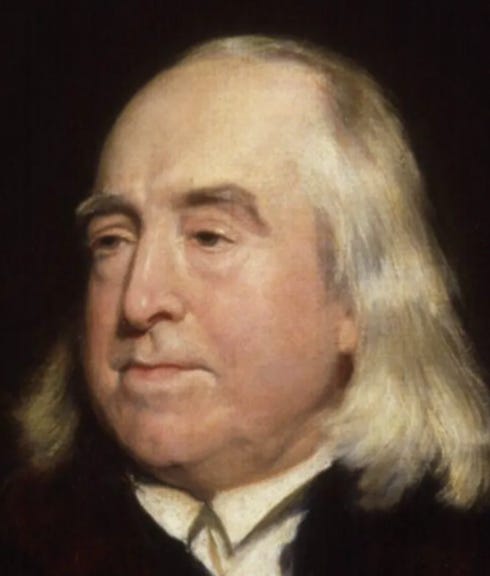
This is a free preview of a paid episode. To hear more, visit www.richardhanania.comMatthew Adelstein is a sophomore studying philosophy at the University of Michigan. You might know him from the Bentham’s Bulldog Substack. I originally invited him on to talk about my recent article taking a maximalist pro-choice position, and his response, along with my responses to his response. We meant this to be a discussion mostly about abortion, but instead we went in all kinds of other directions.Matthew begins by pretty much convincing me to become a moral realist. We also discuss the “fine tuning” argument for the existence of God. He informs me of a critique that his friend, an official “Hanania hater,” makes of me, which I found interesting. The idea is that I reject, or at least don’t care that much about, the low hanging fruit of utilitarianism, like giving money to effective charities. At the same time, I’m very eager to bite the bullet on utilitarian arguments that make people more uncomfortable, like with my staunch defense of euthanasia. Listen for my response.This leads to a conversation about how we decide which topics to focus on, how we divide our time in life, and how rational or utilitarian we choose to be. I reiterate my theory about how each individual thinks that everyone more utilitarian than him is an autistic weirdo, and everyone less utilitarian is an overly emotional moron driven by primitive instincts. And like everyone else in the world, I happen to like exactly where I’m standing right now. I particularly enjoyed the part where we talked about how I can’t get as excited about Émile Torres versus Peter Singer debates as I do about regular politics. I find this kind of introspection fun, which is a trait I share more with liberals and EAs than conservatives, who I’ve noticed have a particular aversion to it. We also cover animal rights, why you should eat beef instead of chicken, what philosophy majors at the University of Michigan are like, and whether Matthew can hope to find a job in academia given the internet profile he already has.One administrative note: since I’ve started posting the videos here along with the podcasts, it seems people are confused over whether these discussions are still available in podcast form. They indeed are. You should see the option to listen near the top on the desktop viewer, and on your phone you just need to click on “More options.” I don’t see this on the app, so make sure to copy and paste the link into a browser on your phone

The Weird Traditionalism of Korean Feminists
This is a free preview of a paid episode. To hear more, visit www.richardhanania.comZiho Park is a professor of economics at Taiwan National University. He grew up in Korea and received his PhD in economics from the University of Chicago.Ziho joins me to talk about the strange world of Korean feminism, and the backlash to it. The last time this came to my attention was when Korean feminists recently got a “sex festival” shut down. Ziho also talks about another controversy, where a pop star wore a quite modest “sexy nurse” costume and this became a major political issue. Judge for yourself its level of offensiveness.Unlike in many other countries, the backlash to feminism among young men in Korea pops out clearly from the data. In fact, Korea might have the most massive political gender gap between young people anywhere in the developed world. Along with record low birth rates, all of this looks extremely unhealthy from my perspective. Yet Korean gender controversies don’t exactly map on to our own, so I thought I would have a native come on the show to explain to me what exactly is going on.Antifeminists in the US tend to be religious, or at least traditionalists of some kind. They believe in different responsibilities and roles for men and women. In Korea, according to Ziho, young men simply demand legal equality, and things like abortion and gay marriage aren’t really issues.Another difference is that Korean feminists are extremely prudish. There’s of course a sex negative wing of feminism in the West, but censorship appears to be a top priority in Korea in a way that it isn’t here. While I agree with Ziho that Korean feminism sounds horrifying, I also find much to dislike about the backlash to it. In the West, one of the main motivations behind antifeminism is that many of us want a society where men and women have different roles and responsibilities. In Korea, the men seem to rebel against the cultural expectation that they should be breadwinners, and there are even some who think it’s unfair that they are the ones being drafted. No antifeminist in the West would demand equality in war fighting! This leads me to ask Ziho whether those of us who hate feminists in the West should actually cheer for them in Korea. Listen to hear his response. Liberalism as a political project is fine, and one I wholeheartedly support. But a liberalism that puts disproportionate focus on what women do to men strikes me as at least as culturally unhealthy as every other form of identity politics. If young Korean conservatives were consistent liberals and applied their worldview to a wide range of issues that would be one thing, but this does not seem to be what is going on here. There needs to be a positive vision of male-female relations at the heart of any antifeminist movement, and this is especially true in a country that has gone this far down the path of giving up on reproduction.Ziho tells me how much he thinks the US is to blame for exporting these ideas to the rest of the world. We also discuss K-Pop and feminism, the degree to which a Christian right exists in Korea, whether the gender war intersects with the geopolitical climate, and much more. This was a fascinating and far-reaching conversation into a completely different culture that has in a sense been mind-colonized by America but nonetheless maintains many of its unique attributes.

Sydney Sweeney Funds Ukraine
This is a free preview of a paid episode. To hear more, visit www.richardhanania.comI cover two topics this week. First of all, there is Mike Johnson finally deciding to bring to the House floor bills on providing aid to Israel, Ukraine, and Taiwan. As things stand, the texts of the bills have been released, and votes are expected to happen as early as Saturday.I’m fascinated by the role Trump has played in all this, and argue that it provides insight into what his second term foreign policy will look like. Ukraine gets $61 billion in aid. MAGA doesn’t like aid to Ukraine, so for Trump to bless it, they make $10 billion of that a loan. But the president gets to negotiate terms and can cancel the loan at any time. I argue that this represents what we saw in Trump’s first term. The man has two instincts: isolationism and wanting to look tough. The latter always wins out in policy debates, and we have no reason to think this would change if and when Trump returns to office. For some context, see Greg Sargent on Mike Johnson’s pilgrimage to Mar-a-Lago.In the second part of the monologue, I discuss the film Anyone But You (2023) starring Glen Powell and Sydney Sweeney. Don’t worry, this isn’t going to be more Sydney Sweeney analysis. The movie is worth mentioning because I think it represents where the dead center of American popular culture is at this point. Conventional looking and attractive white people as leads, with magical blacks and gays sprinkled in. Romance, fun, and living a good life are allowed. Contrast with the delusional views of many right wingers, who believe every cultural product is promoting pedophilia and polyamory. The movie isn’t very good or necessarily worth watching, but I think it demonstrates why it is good to pay attention to popular films and shows to get a grip on where the culture is rather than thinking that what one sees on the internet is everything.

The OnlyFans Aristocrats
This is a free preview of a paid episode. To hear more, visit www.richardhanania.comI first discovered Farha Khalidi, who has 1.8 million followers on TikTok, through seeing clips of her shutting down red pill and manosphere type influencers on something called the @whatever podcast, which a friend described to me as material from the lowest level of content hell. I was impressed, as before this the women in these kinds of debates seemed to serve as little more than punching bags. Yet Farha was interesting because she had the voice and affectation of a condescending leftist but the words that were coming out of her mouth were actually sensible. We connected through X and decided to meet up for a podcast when she was in town. I did a studio interview for the first time, which you can watch below. Farha brought along her friend Jazmen Jafar, a law school graduate who also makes money on OnlyFans while debating right-wing weirdos and usually coming across as smarter than them. If you’re not a paid subscriber, you can get a free preview of the discussion through the RSS feed. Both girls agree with me that while sex work might not be for everyone, for some women it makes sense. I am very privileged, getting to make a living enjoying what I do. I don’t feel I’m in the position to tell someone they have to work a normal job when they can avoid it. That’s a utilitarian argument, but not the same as Bug Man-ism where we turn into bean counters. Rather, when we diverge from utilitarianism it can only be because we are guided by a moral and spiritual commitment to freedom, whatever the consequences might be.I asked the girls about what books they read, and Jazmen replied that the only reason she has time to read books at all is because she works as an OnlyFans girl rather than a lawyer. This reminded me of an idea that has been associated with both reactionaries and leftists, which is that individuals need to be freed from the drudgery of everyday work in order to undergo moral, intellectual, and cultural development. Other topics covered include* What did their Muslim families think of their chosen profession?* In what ways do I agree with manosphere influencer types and where do they go off the rails?* In an ideal world, would more or fewer women be sex workers?* Is Farha still a virgin?* What is it like to date with an OnlyFans?* Is Farha still as woke as she seemed to be when she was writing for the Women’s Media Center?* Have the girls ever had stalkers?* What exactly is a “Jack-Off Instruction” video?* What it’s like to debate manosphere influencer types, along with the differences between Muslim-bros, Christ is King, Groypers, and other factions within that space.* Are manosphere types sincere in their views or consciously grifting? How do they treat Jazmen and Farha when they’re on their shows? * Would they encourage their daughters to become OnlyFans creators? As we discuss during the podcast, I think that a world of content creators reaching their audiences directly naturally takes us away from gender fluidity, blank slatism, and other ideas that are strongest in hierarchical institutions insulated from market forces like academia. Once people realize how easy it is for women to make money on OnlyFans, how can anyone deny sex differences? Open conversations between men and women naturally lead to discourses around things like age gaps, at what age women are most attractive, and whether having kids leads to a fulfilling life. Much of this discourse is quite stupid, but it’s not subject to top-down control, nor liable towards being funneled into a certain direction in the way that conversations always are when they’re occurring in the context of a highly institutionalized environment like the university or an HR training session. If you’re a trad, there’s much not to like with regards to the free availability of porn and how it is merging with other types of content creation. But all of this makes human nature much more difficult to lie about, and I’m inclined to see the emergence of the job category of “OnlyFans girl/public intellectual” as a step in the right direction. LinksFarha Khalidi: Twitter, TikTok, and InstagramJazmen Jafar: Reddit, Twitter (NSFW), TikTok, and Instagram

The Man in the Arena
This is a free preview of a paid episode. To hear more, visit www.richardhanania.comMy friend Brian Chau joins the podcast to talk about how life in DC is going. A few weeks ago we chatted on the CSPI podcast, and this can be seen as a followup to that discussion.Our last conversation focused on the specifics of AI doomerism and why he’s not worried about the technology killing us all. This time, we go into detail about how things have been working out for him in DC. We begin by discussing the recent conversation between Tyler and Jonathan Haidt, which I posted thoughts about on X. The discussion then moves to its main part, which focuses on what things are like in the nation’s capital. Brian whitepills me a bit on DC. The people there seem to be better than both the voters and the punditocracy. This makes me wonder whether I should move to the area, and he presents a compelling case that I should, given that I’m getting sort of sick of the online discourse space, which is often depressing. Now that the conversation is over, I feel like this is a “grass is always greener” kind of thing. Whenever I talk to someone closer to the policy arena, I want to do something similar to them, but then when I reflect for even a little bit I decide that what I’m doing is quite enjoyable. But who knows? Maybe Brian planted a seed that will eventually grow. I ask Brian about the influence of AI doomers in think tanks and government, and we discuss the landscape of the regulation debate. Part of me wonders whether regulation is something we don’t need to worry about too much due to policy inertia, but he makes the case that the danger is real enough to be a concern. We close with a grab bag of topics, including the relationship between the punditocracy and the policymaking class, and why I can’t stand to read articles about sex differences, though I promised to give Carole Hooven’s recent piece on why men dominate chess a try. To update everyone, I ended up liking it. As always, make sure to subscribe to Brian’s Substack, where you can follow his work, including what he’s been doing with Alliance for the Future. I didn’t turn on the video recording this week, so unfortunately all we have is audio. And it seems that Substack transcripts aren’t working at the moment. I’ll see if I can add it later.

A Mememaker's Journey
This is a free preview of a paid episode. To hear more, visit www.richardhanania.comWalt Bismarck (follow on X) became internet famous in 2015 for his Disney parody videos in support of Alt Right ideas and causes. Recently, he remerged on a new Substack called Alt Right 2.0, where he writes about how his political views have changed and the kind of movement he’d like to help build in the future. I found two essays he wrote, “Why I’m No Longer a White Nationalist” and “How the Alt Right Won,” to be particularly entertaining and insightful, and would recommend everyone read them. Walt and I have had somewhat similar journeys, so I invited him on the podcast to talk about his past and current thinking. He has come to realize that in many ways, his psychological profile is closer to that of liberal elites than it is to the regular Americans he once believed he was fighting for. Friend of this Substack TracingWoodgrains posted some excerpts of Walt’s article on this point that are very funny and ended up going viral. We talk about different factions of the conservative coalition, how the far right has changed over time, the political futures of Ron DeSantis and Gavin Newsom, and what comes after Trump. It’s easy to underestimate the ultimate influence of the Alt Right, as it’s not as if those prominent in the movement became major political figures, and practically nobody identifies with the term today. But for those of us who’ve been paying attention over the last decade and a half, we’ve seen, for better or worse, ideas, talking points, and memes that were once considered beyond the pale become completely normalized on the right, to the extent that young people might be unaware that things were ever different. See also my “How to Not Get Cancelled” for more on the relevant history. Walt was part of this transformation, and I’m glad to see that he has moved away from white nationalism. I also welcome his contribution to the discourse. The right has a human capital deficit, and Walt is playing some role in solving that problem by returning to the public arena. I encourage people to subscribe to his Substack, and continue to follow his work going forward.

Why the Left Loves Porn and Hates Sex
This is a free preview of a paid episode. To hear more, visit www.richardhanania.comYes, we’re going to keep milking this thing for what it’s worth. To follow up on my article on Sydney Sweeney’s breasts and their implications for the culture war, here I do some gender theory. The more I think about it, the more I realize that her not apologizing for coming from a family of MAGAs is probably a bigger sign of cultural change than her boobs themselves.I begin by talking about the ways in which many of the things that divide the two sides of the culture war are implicit in social norms and rules of interpersonal relations. I also discuss the seeming paradox in which leftists are more likely to support pornography and prostitution while being horrified by the male gaze. In many ways, turning sex into a kind of market transaction makes it more predictable and rule bound. Pornos have scripts, while real life romance does not, which makes the former in many ways less disturbing to a movement that seeks to regulate practically all aspects of human existence in the names of safety and eliminating power disparities. If one takes a broad definition of consent, it is much easier to establish in market situations. For these reasons, leftists want the standard workplace to be completely sanitized of sex, while being more comfortable with sex as work itself.I understand many women don’t want their sexuality to always be salient, so I won’t condemn everything about liberal spaces. Something I emphasize in The Origins of Woke is that one reason that the civil rights regime is so evil is that it makes how men and women relate to one another a matter of federal law, instead of letting market forces aggregate preferences. We should respect such differences, and clearly individuals have widely varying views regarding what kinds of private institutions they want to build and be a part of.

Towards a Gay Ex-Mormon Furry Centrism
This is a free preview of a paid episode. To hear more, visit www.richardhanania.comTracingWoodgrains is someone I’ve gotten to know over X and through his Substack. He’s currently a law student and works as a producer for the hilarious Blocked and Reported podcast, which I recommend everyone subscribe to. I’ve found “Trace,” as everyone calls him, to be one of the most interesting new thinkers to emerge over the last several years. He spent six years in the Air Force where he worked as a Chinese linguist, and grew up Mormon, before leaving the church and discovering he was gay as an adult.We begin by talking about Trace’s politics. He calls himself a “Lee Kuan Yew Centrist,” and we discuss what that means. Then we move on to his personal background, including what it was like growing up in a religious community and how his friends and family reacted to him coming out as gay and marrying a man. This leads to a conversation about Mormon politics more generally, including how members of the church tend to be pro-establishment and the ways in which that is out of step with conservatism in the Trump era. We also discuss the issue of low human capital on the right, a topic he recently wrote about. I ask whether there may be ways around this mattering, by conservatives getting better at ideological filtering and seeking to use political power to “de-institutionalize” society. I asked Trace which political coalition he sees as closer to representing his worldview and more potentially fixable. He and I share many positions in common, and also a kind of political aesthetic, so I was taken a bit back by his answer, and this leads us to go into why our backgrounds might make us approach the question differently. One of the things we agree on here is a need to see more spirited defenses of classical liberal ideas. In this context, we talk about the surrogacy issue, which we’ve both taken strong positions on.Near the end, I ask how he came up with the name “TracingWoodgrains,” and whether he’s actually a furry and if the whole thing is really a sublimated desire for bestiality.All of this is to say that this was a deep and wide-ranging conversation. I’ve done few podcasts that have ended up being this interesting in terms of both intellectual content and personal narrative. Enjoy.

Understanding the Blockchain
This is a free preview of a paid episode. To hear more, visit www.richardhanania.comFor a while I’ve been investing in cryptocurrency, without knowing much about what the blockchain is or its underlying mechanics. A week or two ago, I took Roko Mijic’s advice to buy some Dogecoin, and have been rewarded with a 35% return already. After that happened, I thought it was about time I sought out someone to explain to me how this all works, so I invited him on the podcast to discuss.Roko is famous for the idea of Roko’s Basilisk, which took the rationalist community by storm in the early 2010s. If you find the idea of a vengeful and all-powerful AI that will torture you plausible, you may want to skip the first 20 minutes or so of this conversation, as some believe that even learning about the argument increases your odds of punishment. According to Roko, one guy jumped out of a window after realizing its implications. Here’s the Wikipedia page if you’re brave enough. We also go into Roko’s idea that the study of AI alignment should not come at the expense of thinking about the goals we program into these systems, along with the collective action problems that the technology presents. To learn more, you can either follow Roko on X, or join his X community, where he discusses this topic with others.This is one of those conversations I am going to go back and listen to. I’ve read a few books and articles on how the blockchain works, but this discussion demonstrated how nothing can replace talking to someone who is knowledgeable about a topic. I highly recommend this podcast, and hope others find it as enlightening as I did. Listen to us talk here, or watch the video below.

The Tragedy of Womanhood
This is a free preview of a paid episode. To hear more, visit www.richardhanania.comThis week, I begin by discussing two recent articles by and about women: “How Feminism Ends” by Ginevra Davis, and “Female neediness is real, but it’s not a tragedy” by Ruxandra Teslo. These essays have a common theme in that they both emphasize the difficult hand nature has dealt women. Davis focuses on the physical pain they feel, and has a compelling explanation of the trans phenomenon that I hadn’t considered before. Ruxandra criticizes the so-called Reactionary Feminists, and makes clear that many of the complaints they have about modern societies are exaggerated and need to be understood from a comparative perspective. My view is that being a woman is difficult, there is a lot of competition between the sexes and within each sex, and we need to get beyond the idea that we’re going to find a social system that solves problems that are based in human nature. All we can do is judge societies in a relative sense and consider tradeoffs when deciding what changes we want to make, realizing that many things are determined by our inherent design interacting with the current state of technological development and therefore out of our direct control. Near the end of the discussion, I talk about Mitch McConnell stepping down as the leader of the Senate Republicans and take the opportunity to reflect on his legacy. I think it was either me or Brian Chau who coined the term “effective Republicanism” to refer to his approach. McConnell had the wisdom to understand that we are in effect a judgeocracy, and to pull the levers he needed to pull in order to ensure more conservative policy victories over the long run. He was never going to be appreciated in this populist era in which the Republican base demands buffoonery, but understanding the virtues of McConnell provides insight into how to wield power.

The Charisma Vampire
This is a free preview of a paid episode. To hear more, visit www.richardhanania.comAnatoly Karlin joins me for the second time on this podcast. In our previous conversation, he talked about his move away from Russian nationalism. This time, we discuss his new article, “Navalny Died a Barin.” I am fascinated by the idea of Putin as a kind of charisma vampire, who destroys anyone who is interesting and full of life, leaving a regime of gray mindless mediocrities willing to do his bidding. I was touched reading about how Navalny once asked the judge and court officials who were persecuting him whether this was what they wanted to be doing with their one God-given life on this earth. According to Anatoly, it doesn’t matter whether you are pro- or anti-Putin. What the regime cares about is that you don’t have your own voice and can be controlled. The enemies of liberal democracy are today boring, cowardly bureaucrats. I don’t know if this is a blue pill or a red pill, but it’s certainly a good reason to oppose modern authoritarian regimes.We discuss the logic of killing Navalny, where any future threats to the regime might come from, what would happen if Trump came back into office, and how Putin is a TV watcher driven by a combination of self-preservation instincts and mind-melting Boomer memes. At the end we touch briefly on Anatoly’s current experience in Próspera, what cryptocurrencies he’s bullish on, and whether he’s tried any gene therapy while there.I find myself disliking Putin more the longer he stays in power. After Prigozhin’s death, I noted that the man may have been a war criminal, but there was a masculine heroism in how he lived and died. If only Putin was a more worthy adversary of Western civilization! Not a guy who is still scared of covid, hides behind bureaucratic procedures to wear down his enemies, and poisons their underpants. The fact that the populist right has embraced the man only reinforces my view of how much they suck.Anatoly predicts that the Russian election next month will basically be a nonevent. The death of Navalny feels like the end of Season 4 of the show or something. Already having taken out Prigozhin and on the offensive in Ukraine, things are looking up for Putin. Assuming he gets past this election without much trouble, we’re just waiting for the next health scare, mass protest movement, economic crisis, shift in the war, or attempted coup. Russians deserve better, and may the memory of Navalny inspire them to work towards their liberation from this lifeless and particularly vicious gerontocracy.

All Hail the Moscow Supermarket!
This is a free preview of a paid episode. To hear more, visit www.richardhanania.comI go into three different topics this week. First, I discuss my debate with Curtis Yarvin from Friday on the question of democracy versus monarchy. I share some thoughts on the point of debates, impressions of who “won,” and what it was like meeting online rightists in person. The second part of the monologue goes into Tucker’s trip to Moscow, which included his interview with Putin and visits to the metro and a supermarket. I discuss the ways in which criticism of US foreign policy is often motivated by hostility to American society more generally, and why this is a trap to avoid. For previous takes on the Putin interview, see here and here. I talk about how while the subway video arguably had a legitimate point about our urban dysfunction, the supermarket one shows the ways in which anti-Americanism can cloud people’s judgment. I suggest ways in which one can find a healthier balance that involves criticizing America’s flaws while not developing too negative a perspective or romanticizing states like Putin’s Russia. Finally, I discuss Edward Luttwak’s recent piece on why Israel is winning in Gaza, and the split between PR realities and what is happening on the ground. As I previously predicted, Israel would fight to win, and it’s heartening to see that it is largely ignoring international criticism of the war effort.